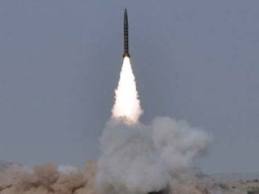
KARACHI, Nov 30: The mysterious metallic objects, which fell from the sky baffling villagers in Dadu late Wednesday night, were parts of Pakistan’s Hatf V Ghauri missile, a spokesman for the Inter-Services Public Relations (ISPR) said on Friday.
“The metal parts found in a remote area of Dadu, as reported in media today, were part of the motor body, which separated from the missile as planned, well within the safety corridor,” said a statement by the ISPR.
“It was ensured that at no point, would human life or property be at risk. There is no cause for alarm or concern,” the spokesman concluded.
Pakistan conducted a test of the mid-range nuclear capable ballistic missile on Wednesday. The liquid-fuelled missile, capable of carrying both conventional as well as nuclear payload, has a range of 1300 kilometres.
Fear and bewilderment overtook some parts of Dadu district after the mysterious objects fell on a number of villages late on Wednesday, the Dawn newspaper had reported.
The biggest fragment weighing 187 kilograms fell on a ground in Allah Jurio Lund village, 30 kilometres from Dadu. Other pieces fell on Pir Mashaikh, Shehak Rodnani and Khandhani villages.
There were no injuries or damage to property.
Military authorities were reported to have taken possession of the “heavy pieces of engine and other metallic objects, believed to be splinters of a satellite or missile”.
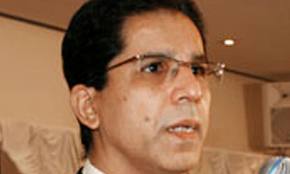
LONDON, Dec 7: The Scotland Yard raided offices located on Edgware road in London on Thursday in connection with the murder of Dr Imran Farooq, Express News reported.
Express News correspondent Naseem Siddiqui said that the London Metropolitan police raided an office on Thursday morning. Officials questioned those present in the office and also reportedly confiscated some records.
No one was arrested though.
Earlier in September, the police hinted that slain high-profile Muttahida Qaumi Movement leader, Dr Imran Farooq’s wish to actively participate in politics by pursuing his political career independently might have led to his murder.
The Metropolitan Police, also known as Scotland Yard, said that he was killed because his murderers did not want him to do so.
Appealing for an investigation, the Metropolitan police also announced a £20,000 reward for providing any information linked to his assassination.
In her posthumously published book, Reconciliation, Benazir Bhutto named a man whom she believed had tried to procure bombs for an unsuccessful attempt on her life in Karachi in October 2007:
I was informed of a meeting that had taken place in Lahore where the bomb blasts were planned … a bomb maker was needed for the bombs. Enter Qari Saifullah Akhtar, a wanted terrorist who had tried to overthrow my second government. He had been extradited by the United Arab Emirates and was languishing in the Karachi central jail … The officials in Lahore had turned to Akhtar for help. His liaison with elements in the government was a radical who was asked to make the bombs and he himself asked for a fatwa making it legitimate to oblige. He got one.
Akhtar’s story reveals much about modern Pakistan. Born in 1959, he spent two years of his boyhood learning the Quran by heart and left home at the age of 18, moving to the radical Jamia Binoria madrassah in Karachi. In 1980, he went on jihad, fighting first the Soviets in Afghanistan and later the Indians in Kashmir. In both conflicts he came into contact with Pakistani intelligence agents, who were there trying to find out what was going on and to influence events. Helped by the high attrition rate among jihadis, he rose through the ranks and by the mid-1990s, after an intense power struggle with a rival commander, emerged as the leader of Harkat ul Jihad al Islami or HUJI, once described by a liberal Pakistan weekly as ‘the biggest jihadi outfit we know nothing about’.
In 1995, Akhtar committed a crime that in many countries would have earned him a death sentence: he procured a cache of weapons to be used in a coup. Putsches in Pakistan generally take the form of the army chief moving against an elected government. This one was an attempt by disaffected Islamist officers to overthrow not only Bhutto’s government but also the army leadership.
The plot’s leader was Major General Zahir ul Islam Abbasi. In 1988, as Pakistan’s military attaché in Delhi, he acquired some sensitive security documents from an Indian contact. When the Indians found out, they beat him up and expelled him. He returned to Pakistan a national hero. Seven years later, disenchanted by the secularist tendencies of both Bhutto and the army leadership, he devised a plot to storm the GHQ and impose sharia. Akhtar’s role was to supply the weapons. He travelled to the town of Dera Adam Khel near Peshawar, a well-known centre for the production and sale of cheap weapons, and bought 15 Kalashnikovs, two rocket launchers and five pistols.
He was caught red-handed moving the weapons to Rawalpindi. No doubt cajoled by his intelligence agency handlers from Afghanistan and Kashmir, Akhtar decided to give evidence against his fellow plotters. At a stroke he was transformed from a typical jihadi into a highly trusted informant; he has been playing on his supposed loyalty to the intelligence services ever since. Many of those accused of major jihadi outrages in Pakistan have at some stage been released from detention; after Akhtar had spent just five months in prison in 1995, the chief justice set him free.
It is commonplace for the Pakistani intelligence agencies to cut deals with jihadis. In Akhtar they struck gold. While most Pakistanis never escape the class into which they are born, radical Islamists enjoy considerable social mobility. He had left his Karachi seminary in 1979 with a dream of fighting jihad; by the mid-1990s he was the leader of the HUJI and had a close relationship with Mullah Omar, the Afghan Taliban leader and de facto head of state. Indeed, he was seen as one of the few people who might have been able to bridge the growing gap between the Taliban and al-Qaida. Not only that, he expanded the HUJI’s operations to Uzbekistan, Tajikistan, Burma, China and Chechnya.
Everything changed with the collapse of the Taliban regime after 9/11. According to one account, Akhtar and Mullah Omar shared the same motorbike as they fled for sanctuary with Akhtar’s old intelligence contacts in Pakistan. He told his men to keep a low profile – the US was picking up jihadis and sending them to Guantánamo – and himself headed to the UAE, a hub for Islamists as well as Western businessmen. By 2004 he had overstretched even the UAE’s relaxed hospitality. He was arrested on charges of plotting the assassination attempt on General Musharraf in December 2003 and handed over to Pakistan.
One might think that this time his luck had run out. But that would be to misapprehend the convoluted logic of what has been described as the ‘deep state’ in Pakistan. Akhtar, and others like him, were seen not as a clear and present threat, but as powerful, not very well educated men who simply needed to be pointed in the right direction. If they could be persuaded to aim their guns not at domestic targets but at the Americans in Afghanistan or at India they could still be useful.
Akhtar would enjoy another rehabilitation because of a growing row between Musharraf and the Supreme Court. In early 2007, the court, seeking a popular issue with which it could undermine Musharraf, started inquiring about the many prisoners being held without charge. On 5 May 2007, it was told that Akhtar was not in government custody. His relatives insisted he was. Three weeks later, the government quietly released him and told the court, in the words of a National Crisis Management Cell report, that he was ‘engaged in jihadi activities somewhere in Punjab’.
Why had the Pakistani authorities held Akhtar for so long only to release him? In part in the hope of bending him to their will. But also because he knew too much about the true nature of the deep state’s relationship with radical Islamists. His lawyer, Hashmat Habib, told the Supreme Court that intelligence officials had explained to Akhtar that had he not been detained there was a strong possibility he would have ended up being interrogated by the FBI.
The publication of Reconciliation left the authorities little choice but to detain Akhtar yet again, but in June 2008, after three months of half-hearted questioning, he was released without charge. He went straight back to fighting jihad according to his own rules rather than those suggested by his intelligence handlers. Later that year, he was accused by the Pakistani press of being involved in the bombing of the Marriott Hotel in Islamabad and in 2009 was named as the key contact of five American jihadis who travelled to Pakistan with the idea of attacking a nuclear power plant. But still the ISI kept faith. In August 2010, after he was reportedly injured in a drone attack, he was taken into protective custody, given treatment in Peshawar, moved to Lahore and freed. The man formally responsible for his release, the Punjab home minister, Rana Sanaullah, told reporters in Lahore that Akhtar ‘cannot be termed a terrorist’.
Akhtar’s case is by no means unique. In a conversation with Amir Mir, a Pakistani journalist who has since tried to investigate Bhutto’s murder, Bhutto claimed that Akhtar had instructed one of his HUJI underlings, Abdul Rehman Sindhi, to organise certain aspects of the Karachi attack.[*] Like Akhtar, Sindhi had been held by the authorities for militant activity but was released without explanation. In 2012, the UN named him as an al-Qaida facilitator. We can only assume that Bhutto was given the names of Akhtar and Sindhi by a sympathiser in the deep state; their role in her death has not been established. But it is clear the state wants Akhtar’s secrets to remain secret. Despairing of Pakistan’s decline into lawlessness, the intelligence agencies cling to the hope that Islam will provide some answers. More practically, they also point to their success in controlling some militant groups, including the largest of them, Lashkar-e-Taiba, the ISI’s model of how a militant group should behave – attacking Indian forces in Kashmir, Delhi and Mumbai but causing no trouble at home. Like Akhtar, the Lashkar-e-Taiba leader Hafiz Saeed is a man often detained and often released.
Although generally feared as one of the most powerful institutions in the country, the ISI feels itself to be weak: militants have attacked its personnel with impunity. Significant amounts of Pakistani territory are now either controlled or fiercely contested by militant groups in the North-West. The army has tried military solutions but they have cost thousands of soldiers’ lives and met with only limited success. How much easier to have a word with friends from the good old days of the anti-Soviet and Kashmir struggles in an attempt to persuade them to unify their forces and to keep them under control. Even if it won’t work in the long term it does occasionally bring temporary relief – the ceasefires that were briefly established in the Swat Valley are an example.
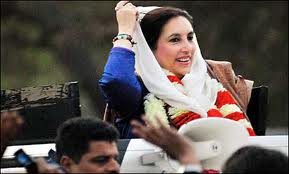
On 27 December 2007, with ten days to go until parliamentary elections, Benazir Bhutto addressed more than ten thousand supporters in Liaquat Park, Rawalpindi. She told them democracy was returning to Pakistan. ‘Long live Bhutto!’ they roared back. ‘Benazir, Prime Minister!’ The speech over, she moved to an armour-plated Toyota Land Cruiser built to her specifications in the UAE. Its roof had an escape hatch that, much to the annoyance of her security advisers, Bhutto used for waving to her followers. As the Toyota pulled away from Liaquat Park her supporters surrounded it. ‘I should stand up,’ Bhutto said, clambering up as one of her fellow passengers pulled the mechanism that opened the hatch. She stood on the back seat, her head and shoulders sticking out above the Toyota’s roof.
There were so many people by now that the car was almost at a standstill. Two of Bhutto’s guards climbed onto the rear bumper while others went to the front and the sides. But an assassin was waiting and saw his chance. Wearing a dark jacket and sunglasses, a Pashtun called Bilal, who also went by the alias Saeed, first made his way towards the front of the car. Then he moved to the side, where there were fewer people. He took out a black automatic and pointed it at Bhutto’s head. One of the guards clawed at the young man’s arm but was too far away to get a firm grip. Bilal fired three shots in less than a second. If you search for ‘new angle of Bhutto assassination’ on YouTube you can see what happened. As the second shot rang out Bhutto’s headscarf or dupatta moved away from her face. She then fell like a stone, through the escape hatch, into the vehicle. But the gunman wasn’t finished. He looked down at the ground, prepared himself for death, and set off his suicide bomb. Much of the press reported him as clean-shaven. In fact, he had probably never shaved at all. British scientists who later analysed what was left of his body estimated his age at 15 and a half.
Pakistan’s suicide bomb factories, located in the tribal areas, rely on child recruits for a practical reason: they are more impressionable. Recruits for suicide attacks are given immaculate white clothes, copious amounts of food, above average accommodation and hours of gently imparted one on one indoctrination. The other students are forbidden to talk to them and are instructed instead to bow with respect every time a recruit walks by. With such a regime it can take a few months to persuade an 18-year-old young man to mount a suicide attack; but a 15-year-old can be persuaded to do it in six weeks.
Liaquat Park was named after the first prime minister of Pakistan, Liaquat Ali Khan, who was assassinated there in 1951. In what many believe was a cover-up, the police shot his killer on the spot. One of the doctors who tried to revive him at Rawalpindi General Hospital was a certain Dr Khan. Fifty-six years later, Dr Khan’s son Mussadiq was one of the doctors trying to revive Benazir Bhutto at the same hospital. He was equally unsuccessful. On the announcement of her death, the vast majority of Pakistanis assumed that the people who ordered her assassination were senior state officials and that they would never be identified.
There are, broadly speaking, two views about what happened that day. Bhutto’s supporters maintain she was shot and that there were multiple attackers. The Pakistani authorities say the explosion knocked her head against the lever of the escape hatch. Bhutto’s supporters want to establish that there was a sophisticated, officially sponsored conspiracy; the state prefers the idea of a crude but unpreventable attack by Islamic militants.
Certainly, when Bhutto died, there were shots followed by an explosion. The pictures suggest that a bullet hit her and that she fell into the vehicle before the bomb went off. It wasn’t just that her headscarf moved after the second shot. Her movements weren’t consistent with someone ducking a bullet: it looks as if she was already dead, or at least seriously injured, when she fell. The doctors who tried to revive her failed to resolve the issue. They have given various accounts but their evidence is of limited use because they didn’t perform a proper autopsy. There were questions and conspiracy theories about the lack of a post-mortem, but the issue subsided in political terms when her husband, Asif Zardari, was offered one, but said it wouldn’t be necessary.
Under pressure because so many people assumed he had ordered the murder, Musharraf asked Scotland Yard to assist the investigators, though he restricted the terms of reference to the ‘cause and circumstances of Ms Bhutto’s death’, frustrating any hope that the British police would try to identify who was responsible. In 2008, Scotland Yard published an executive summary of its findings which backed the government’s view, failing even to discuss the mobile-phone images that suggested she had been shot. Few believed it. The full report has never been published; there it is explained that a senior radiologist from Addenbrooke’s Hospital in Cambridge who was shown the X-rays of Bhutto’s skull concluded that the explosion had forced her head down onto the escape hatch mechanism. In fact, although the precise cause of Bhutto’s death remains one of the most strongly contested issues in the case, it is largely irrelevant. The important questions are: who was the child-assassin and who persuaded him to do it?
Some of the YouTube films of the Rawalpindi rally (look for ‘Shahenshah Bhutto’) point to another controversy. While Bhutto was speaking at the rally her chief bodyguard, Khalid Shahenshah, can be seen a few feet away running his fingers along his neck while raising his eyes towards her. In July 2008, after much internet speculation about these decidedly strange movements, Shahenshah was murdered outside his home in Karachi. His conduct and his death have never been explained.
Bhutto was participating in the election campaign only because of a deal she had struck with Musharraf. It was always an awkward arrangement. Bhutto saw Musharraf as the latest incarnation of the military that had hanged her father, Zulfikar Ali Bhutto. Musharraf, for his part, saw Bhutto as a child of privilege who went on corruptly to enrich herself. After his coup in 1999, Musharraf had declared that no longer would the country’s richest families and biggest landowners be able to dominate politics. And Bhutto, he declared, would never hold power again.
The general may have led a coup against a democratically elected government but his message resonated throughout Pakistan. The good mood didn’t last, however. As each month passed, his popularity drained away and his ambitions shrank. By 2007, eight years after his coup, he was older, wiser and politically weaker. Like many Pakistanis, he had no doubt that the corruption allegations against Bhutto and Zardari were valid. But in 2007 he also had to accept that Bhutto had a rock solid popular base and that if he wanted to remain in power he needed her support. Swallowing his pride, he agreed to an MI6 suggestion that he attend a secret meeting with Bhutto in Abu Dhabi in July 2007. The encounter kicked off a series of meetings which, as they became more serious and focused, were taken over by the CIA. The basic proposition was simple enough: if Musharraf dropped all the corruption charges against Bhutto and Zardari and allowed her to return from exile to contest elections, she would not oppose his remaining president. To the Americans it looked like a dream ticket: military muscle combined with democratic legitimacy. It could never have worked. ‘I don’t believe in trust,’ Bhutto said at the time. ‘People just have interests that sometimes coincide.’ Nevertheless, the deal was done and she returned to Pakistan, flying from Dubai to Karachi on 18 October 2007. She was greeted by a triumph on an imperial Roman scale. There comes a point when a crowd is so big it’s impossible to count it. Many reckon that more than a million Pakistanis were there to welcome her home.
For eight hours she progressed in a massive, armour-plated truck from Karachi’s International Airport to the mausoleum of Pakistan’s founder, Muhammad Ali Jinnah, where she was due to give a speech. She stood on a deck on the top of the truck acknowledging the cheers of the crowds lining the road. The police deployed no fewer than nine thousand men to protect her but even so Zardari wasn’t satisfied. He organised a human shield consisting of more than two thousand volunteers known as the Jaan Nisarane Benazir, those willing to die for Benazir. Many were Zardari’s former jail mates; they surrounded her vehicle and kept pace with the procession.
After several hours standing on the truck, Bhutto’s ankles were swelling and she decided to sit down for a few minutes. She made her way down some steps to a secure cubicle located behind the driver’s seat. It was then the attack began: two bombs went off in rapid succession. The first killed, among others, three policemen and opened up a path through which the second bomber was able to move. The attack left 149 people dead and 402 wounded. But it missed its mark. As rescuers worked by the light of the flames, dragging bodies from the twisted wreckage, Bhutto stepped out of the vehicle without a scratch.
As soon as the smoke had cleared people were asking whether the first bomb had been remote-controlled. The issue was significant because the police had supposedly provided the convoy with two jammers to block any radio signals intended to detonate a bomb. Activists from Bhutto’s party claimed the jammers either hadn’t been provided or had been switched off. Both the Karachi and Rawalpindi attacks were investigated by Joint Investigation Teams (JITs) that brought together various police departments. The JIT report into the Karachi attack concedes that the Turkish-made jammers were not functioning at the time of the attack. According to a Sindh Special Branch memo, they failed because their batteries had been drained over the long course of the procession. It was a moot point. Perhaps anticipating that jammers would be deployed, the bombers had anyway decided against remote detonation: it was a double suicide attack.
Pakistan lacks skilled forensic pathologists but there have been so many suicide attacks now that even the most junior policeman knows that the first thing to look for is the ‘facemask’. For some reason, related to the way the shockwave moves from the bomb-laden waistcoat, the bombers’ faces – though very little of the head behind them – often survive intact. On this occasion, the JIT report states, one facemask was found 26.6 feet away from the point of detonation and another 78 feet away. To whom did they belong?
The Pakistani police rarely know whether their political masters want an investigation to be thorough or not. As a general rule they assume the politicians are hoping for a cover-up and actively investigate only when specifically ordered to do so. That would explain why the JIT Karachi report is such a remarkably poor piece of work: 138 pages long, it contains virtually no useful facts and plenty of contradictions. Page after page of police reporting from the scene establishes only that some vehicles were destroyed and that a lot of body parts were strewn about. Some of these were gathered and sent to the morgue while others (no explanation isgiven as to why) went to a DNA specialist, who concluded that the parts he had were from different people. The finding had no discernible significance. Basic, easily discoverable facts were not gathered. The various police documents give the time gap between the first and second explosions as between 30 and 50 seconds (Inspector General of the CID); under a minute (the Federal Investigation Agency); one minute exactly (an army explosives expert); and between one and two minutes (the bomb disposal unit travelling with the convoy). Some of the documents in the JIT report – presumably those from the intelligence agencies – are unattributed. Others, such as doctors’ handwritten notes on the death of a few, apparently randomly selected victims, are irrelevant. Indeed, the whole report has only two findings of any significance.
The first concerns the devices called ‘strikers’ that most suicide bombers in Pakistan rely on to detonate their explosives. Although its lot number was illegible, the striker sleeve found at the epicentre of the Karachi blast was marked MUV-2. The suicide attack in Karachi was the 28th to occur in Pakistan in 2007. MUV-2 striker sleeves had been used on 11 of those occasions, including bombings in Quetta, Rawalpindi, Peshawar and other smaller cities in North-West Pakistan. The targets in these 11 cases were all consistent with the Taliban having been responsible and included the police, politicians who had opposed jihadis and the Frontier Corps, which had done much of the fighting against the Taliban.
The second interesting entry was a summary of the interrogation of the man Bhutto had named, Qari Saifullah Akhtar. But the document had been doctored. After describing his childhood and his long jihadi career, the story came to an abrupt end in August 2007. It resumed in January 2008, after Bhutto’s murder had been carried out. It was a clumsy effort: the edited page is in one font, the rest of the document in another.
The JIT may have provided few answers, but it did inadvertently hint at the reason some in the deep state were so anxious about Bhutto. The report includes newspaper articles providing possible motivations for an attack on Bhutto. One quotes her as saying that if the US identified the whereabouts of Osama bin Laden on Pakistan soil she would consider co-operating with Washington in having him detained. That in itself might have provided enough motive for an attack. But there was something else. As part of her effort to win American support, Bhutto said that she would be willing to hand over the Pakistani nuclear scientist A.Q. Khan for questioning by the IAEA. At the time, Khan had accepted personal responsibility for the export of nuclear technology to Iran, North Korea and Libya, although his live TV confession of his activities was always considered suspect by the IAEA and the US, both of which believed that no single individual could have exported planeloads of nuclear material without the army’s knowledge. To this date, the military, despite insistent requests, has refused to allow foreigners to talk to Khan. Bhutto’s offer to the IAEA was seen as a real threat to Pakistan’s nuclear status.
Despite their apparent lack of interest in the failed assassination attempt, the Karachi police did eventually arrest someone. In June 2010, they raided the home of Azmatullah Mehsud, seized a pistol and accused him and his brother Abdul Wahab Mehsud (who remained at large) of involvement in the attack. As so often, the motivation of the police was unclear. It seemed Azmatullah had been arrested not so much as a result of the Bhutto case but because the police thought he was going to attack one of their own officers. The senior superintendent of the Karachi CID, Umar Shahid, told a local paper: ‘We have recorded his telephonic conversation with his brother, who directed him to attack me.’
The police have leaked a few snippets of information about Azmatullah to the press. They have said he raised funds for the Taliban and provided hideouts and medical treatment to injured militants. They also said he had links to Baitullah Mehsud, the leader of the Pakistani Taliban, and the very violent anti-Shia group Lashkar-e-Jhangvi. Azmatullah was released the next month. But if some elements of the state wanted him free, others did not. A day later, a Sindh police anti-extremism cell re-arrested him. ‘Due to a shortage of evidence, the courts released several suspects on bail but he has been detained for further investigation,’ a police official said. His current whereabouts are not known.
The JIT report on the assassination, at under forty pages including all annexes, is slightly more conscientious than the Karachi document, though hardly what you would expect of the definitive police record on such a major crime. It did at least try to identify some culprits. The report relied on two types of evidence: confessions of arrested suspects and phone intercepts. The first breakthrough came a month after Bhutto’s death, when police in the city of Dera Ismail Khan arrested a 15-year-old boy, Aitzaz Shah, suspected of planning an attack on a Shia procession there. Shah had run away from the Jamia Binoria madrassah, where he had been placed for free religious education, and made his way to Waziristan, on the border with Afghanistan, with the idea of joining the Taliban. In his confession, he said that he had been taught how to drive and persuaded to carry out a suicide attack, and was told by his trainers in October 2007 that his target would be Benazir Bhutto. He said he had met Baitullah Mehsud four times. His confession led to other arrests and helped the police put together a picture of how Bilal alias Saeed came to be in a position to kill Bhutto.
Originally from South Waziristan, Bilal’s father was a labourer in Karachi, who later said his son had left home and not been in touch for a year. One of Bilal’s accomplices, Ikram Ullah, who was near him at the time of the attack, walked away from the crime scene unscathed and his whereabouts have never been established. There were three others in Rawalpindi that day. Husnain Gul was a madrassah student who in 2005 had received small-arms training at a camp in North-West Pakistan. The JIT report says that when he was arrested he had a hand grenade and clothes belonging to Bilal. In his confession, Gul described how a friend of his had been killed when Musharraf ordered an assault on the Red Mosque in Islamabad in July 2007. The attack on the jihadis who had seized the mosque was a turning point in modern Pakistani history, persuading many Islamists that the Pakistani state was not their friend but an enemy that must be attacked. Gul decided to avenge his friend’s death and persuaded his cousin, Muhammad Rafaqat, to join him.
In 2007, the pair travelled to Waziristan in the hope of finding a militant outfit to work for. They told the police it was there that they were instructed to join the group trying to kill Bhutto. Gul had actually tried to assassinate her once before at an earlier election rally in Peshawar but was thwarted by the tight security. Together with Rafaqat he then travelled to Rawalpindi. Gul carried out a recce of Liaquat Park, then went to the bus station to meet the two designated suicide bombers, Bilal and Ikram Ullah. They had travelled with a third person, Nasrullah alias Ahmed. The morning Bhutto was due to give her speech, Rafaqat and Nasrullah took another look at Liaquat Park while Gul gave Bilal and Ikram Ullah suicide jackets, pistols, ammunition and hand grenades. The plan was simple. Bilal would stand by the exit gate and try to kill Bhutto. If he failed, Ikram Ullah would try to kill her instead.
The confessions repeatedly referred to two others as having played a leading role in the plot, one of whom, Nadir Khan, otherwise known as Qari Ismail, had been given money by Baitullah Mehsud to cover the costs. His arrest would have provided the police with a vital link to the Taliban leader. But the JIT report contains a memo which states that on 15 January 2008, just 19 days after the assassination, Nasrullah and Nadir Khan had been in a car approaching a checkpoint in the Mohmand tribal agency in North-West Pakistan. For some reason not stated in the memo the two men are said to have run away from the car. Security personnel killed both of them.
For Pakistanis it is a familiar story. The euphemism ‘encounter’ is used to refer to the phenomenon of crime suspects’ being killed as they try to flee checkpoints: the understanding is that the authorities, when they want someone dead, stage a clash in which the victims are said to have been shot while trying to escape.
Although the deaths of Nasrullah and Nadir Khan left the trail conveniently cold, the confessions of their colleagues gave a hint as to how the plot had been organised. The suspects repeatedly mentioned a particular madrassah, the Darul Uloom Haqqania, located at Akora Khattak on the road from Islamabad to Peshawar. Gul first met Nasrullah there; Nadir lived there; and it was at the madrassah that the team of assassins was briefed. The accounts even included details such as in which rooms key planning meetings had taken place.
The Darul Uloom Haqqania is run by the 75-year-old former Pakistani senator, Sami ul Haq: a man generally referred to either as Father of the Taliban or as Mullah Sandwich. In 1990, when an Islamabad brothel owner, Madam Tahira, had her business broken up by the authorities, she took revenge by naming some of her clients. One of her more memorable claims was that the pious Senator Haq, who has repeatedly demanded the introduction of sharia law, particularly enjoyed the company of two women at once, one below and the other above. Ever afterwards, the senator couldn’t make a speech in parliament without his liberal detractors heckling with cries of ‘Sandwich!’
The maulana would doubtless rather be known for his role in founding the Taliban, much of whose leadership was educated at the Darul Uloom Haqqania, the only educational establishment to have awarded Mullah Omar an honorary degree. Whenever the Taliban suffered setbacks in its military campaign to take over Afghanistan in the late 1990s, it only had to ask Sami ul Haq for help and he would close the madrassah and tell his students to go and fight instead. On the one occasion I visited, an Afghan Taliban official (they were still in power at the time) was there too and Sami ul Haq explained that he was a former student turned Taliban minister who had returned for a refresher course.
Like Akhtar, Sami ul Haq has long had a cosy relationship with the Pakistani state. Of the 12 people so far named by the authorities as part of the plot to kill Bhutto, he now accepts that four had been his students. All this strongly suggests Taliban involvement. But the state believed it had harder evidence too. Shortly after Bhutto’s death, the government put online what it claimed was a phone conversation, secretly recorded hours after the assassination, between an unidentified mullah and Baitullah Mehsud. This is the transcript of the tape.
Mullah: Asalaam Aleikum.
Baitullah Mehsud: Waaleikum Asalaam.
M: Chief, how are you?
BM: I am fine.
M: Congratulations, I just got back during the night.
BM: Congratulations to you, were they our men?
M: Yes they were ours.
BM: Who were they?
M: There was Saeed; there was Bilal from Badar and Ikramullah.
BM: The three of them did it?
M: Ikramullah and Bilal did it.
BM: Then congratulations.
M: Where are you? I want to meet you.
BM: I am at Makeen [a town in the south Waziristan tribal area], come over, I am at Anwar Shah’s house.
M: OK, I’ll come.
BM: Don’t inform their house for the time being.
M: OK.
BM: It was a tremendous effort. They were really brave boys who killed her.
M: Mashallah. When I come I will give you all the details.
BM: I will wait for you. Congratulations, once again congratulations.
M: Congratulations to you.
BM: Anything I can do for you?
M: Thank you very much.
BM: Asalaam Aleikum.
M: Waaleikum Asalaam.
People who had met and spoken with Baitullah Mehsud confirmed that the voice on the tape was his. The fact that Bhutto’s name is not mentioned has led some to believe it’s a fake, but if the Pakistan intelligence agencies were trying to frame Baitullah Mehsud they would surely have made sure his name was mentioned on the tape.
There is one further reason for suspecting Taliban involvement in the murder. In February 2008 the Pakistani ambassador to Afghanistan was kidnapped in the Khyber tribal agency. The Taliban militants holding him had one demand: the release of Aitzaz Shah, Husnain Gul and Muhammad Rafaqat.
The outpouring of sympathy that followed Bhutto’s murder propelled Zardari to power. Privately, many of Bhutto’s friends were unhappy that the man who they believed had corrupted Bhutto had secured the presidency. But they had one consolation: guided by his Sindhi honour code, which sets a high value on revenge, and with the full power of the state at his disposal, Zardari would be able to bring her killers to justice. The assassinations of Liaquat Ali Khan and President Zia ul Haq had never been solved. This time it would be different. But it wasn’t. Zardari failed to make any significant progress in the investigation. Privately, he said that the murder was part of history, another chapter in the Bhutto family story: Benazir had played her sacrificial role and there was no point in looking back. Publicly, he argued that any Pakistani investigation would lack credibility so the UN should do it instead. Yet the UN’s limited terms of reference (they were to carry out a fact-finding not a criminal inquiry) and history of political caution suggested it would be unlikely to solve the case. Furthermore, the UN was blocked. In its published report it described as mystifying ‘the efforts of certain Pakistani government authorities to obstruct access to military and intelligence sources’.
The first sign that the state would not be making any effort to establish the facts came within two hours of the assassination, when fire engines were called in to wash down the crime scene. The deputy inspector general of the Rawalpindi police, Saud Aziz, who ordered the clean-up, has claimed police officers at the bomb scene told him the atmosphere had became so hysterical that her supporters were daubing themselves in Bhutto’s blood. Fearing a total breakdown of law and order, he called in high-pressure hoses. Anyone familiar with Pakistan’s political realities will find this account unconvincing. No mid-ranking or even senior police offer would take such a decision on his own initiative. It came as no surprise that two anonymous sources told the UN inquiry that Saud Aziz received a call from a senior army officer ordering him to wash down the crime scene. The car in which Bhutto died was also cleaned even though the police had secured it.
Also suspicious is the failure to make progress with the trials of the low-level operatives who have been arrested. It took a year even to charge Aitzaz Shah. Every time the court meets there is a new reason for postponement. Excuses have ranged from the unavailability of judges to the possible future availability of new evidence. The intelligence agencies have been just as inactive. While the ISI is Pakistan’s best-known spy agency, there are many others, including the 100,000-strong Intelligence Bureau or IB. In early 2008, the IB, which had a new leadership appointed by Zardari, asked the Interior Ministry to pass on any material it had about the assassination. The IB thought they were pushing on an open door: after all, the new minister of the interior, Rehman Malik, had been Bhutto’s closest confidant during the years of exile. But Malik decreed that the files should not be handed over.
Malik’s behaviour has been mysterious in other respects too. When Bhutto left the Liaquat Park rally, Malik’s bullet-proof black Mercedes was the designated back-up car in the event that Bhutto needed to be evacuated. Despite having overall responsibility for her security (something he has subsequently tried to deny), Malik reacted to the explosion by ordering his driver to leave the area and head for Islamabad. Once he got there (a 25-minute drive) he started a series of TV interviews in which he gave contradictory accounts of how he had reacted to the attack and why. His version changed from ‘I was about four feet away and I turned around and Mohtarma’s [Bhutto’s] car was trying to get out and we led that car and got away and went to the hospital and I was present in the hospital’ to ‘when the bomb blast happened there was a distance of no more than eight feet between my car and Mohtarma’s car. So I said let’s head towards Islamabad – in the meantime we called the hospital.’ His decision to flee the scene has never been explained.
Before her murder, Bhutto had written a number of emails naming people whom she believed wanted to kill her. Seemingly anticipating the story that would be constructed after her death, she said she wanted to make it clear that if she were killed the blame should be ascribed not to the Taliban or al-Qaida but to her enemies in the Pakistani establishment. And in a letter to Musharraf she accused three men: a senior opposition politician, a former head of the ISI known for his Islamist views, and the IB chief at the time of the assassination, Ejaz Shah, who had jihadi links. Omar Sheikh, the man accused of murdering the Wall Street Journal reporter Daniel Pearl, is said to have fled to Shah’s house when he was on the run; for a ‘missing week’ Shah let Sheikh stay hidden away. Eventually, though, the case took on such a high profile that Shah was forced to arrange Sheikh’s surrender. There have been claims in the Pakistani press that Shah also had a connection with Akhtar. Neither of the police investigations dared ask questions of Shah or the others Bhutto named. All have publicly denied her accusations.
And yet despite all this conspicuous inactivity, in February 2011, more than three years after the murder, the government announced it had a new suspect. General Musharraf would be charged with her murder. So what new evidence had been uncovered? None at all. Citing ‘motive’ and ‘circumstantial evidence’ the charge sheet stated: ‘It is prima facie established that Musharraf is equally responsible with criminal “mens rea” for facilitation and abetment of assassinating Benazir Bhutto through his government’s unjustified failure in providing her with the requisite security protection her status deserved as twice prime minister.’
Although the charges made international headlines, few in Pakistan paid any attention. While it has long been accepted that Musharraf failed to give Bhutto adequate protection, the timing of the charges told its own story. They came just as he was trying to revive his political career by returning from a self-imposed exile in the UK to start a new political party in Pakistan. And it worked: he cancelled his plans.
In the weeks before her assassination, Bhutto had every reason to believe she would be killed. The failed attempt in Karachi made it clear that the jihadi leadership was willing and able to deploy its most powerful weapon – suicide bombers – against her. I and a couple of other journalists met her a few hours after that attack: the conversation was maudlin and filled with the thought that she couldn’t go on being so lucky. She fully understood her situation but accepted it. Partly she seemed to consider it a matter of fate, but perhaps she was also trying to atone for her sins. Her Swiss bank accounts were filled with millions of dollars of ill-gotten gains made during her two governments.
As for Zardari, he has said that the Taliban murdered his wife but that he is not sure who commissioned them. It’s a reasonable conclusion. But his attitude leaves many questions unanswered. Why did he allow the investigation to be blocked? Why has he not pressed his interior minister to clear up the obvious inconsistencies in his account? Why has he not objected to Akhtar’s release? And why hasn’t he moved against Sami ul Haq’s madrassah, where the murder was planned? That there are no answers to these questions doesn’t necessarily implicate Zardari any more than the clear evidence that the investigation was deliberately frustrated does. He may well fear suffering the same fate as his wife. But it does mean that there isn’t the slightest reason to believe that the people who tasked the Taliban with Bhutto’s murder will ever face justice.
ISLAMABAD: The bad news about Pakistan’s weak tax system never stops coming. The latest revelation emanating from the Federal Bureau of Revenue (FBR) is that nearly 600,000 taxpayers have ‘mysteriously disappeared’ from the tax net in the past one year.
If official documents that reveal this astonishing figure are to be believed, it simply highlights incompetence and mismanagement of the country’s top tax machinery.
So while the FBR has been claiming happily that it has in its net 1.44 million people who regularly file tax returns, it turns out that there are only 856,987 taxpayers in the country that the bureau can trace to their homes or workplaces. Does this mean that the missing numbers — 583,013 — are imaginary tax payers?
This discrepancy has emerged from the data of the National Database and Registration Authority (Nadra) when it was compared with the figures compiled and maintained by Pakistan Revenue Automation (PRAL), a subsidiary of the FBR.
The comparison was carried out recently after a request by the FBR and it was revealed that just 856,987 tax payers were there, and even among them 51,522 did not pay any taxes last year.
This lower figure emerged once discrepancy and errors in data compilation were identified and corrected.
For instance, one mistake emerged when lists of tax return filers were compared with the names submitted by employers.
As many as 676,367 people have filed income tax returns in the tax-year 2011, while 549,369 statements were submitted by employers on behalf of their employees, taking the total number of taxpayers to 1.22 million.
The data revealed that out of 1.22 million, 204,069 people overlapped — their names were present in both the list of those who filed tax returns and in the list of employees whose names were submitted by the employers.
Critics are of the opinion that the names were deliberately counted twice to present a rosier picture than the reality.
Once this discrepancy was removed, the number of taxpayers stood at a mere 1.021 million for 2011. However, further miscalculations were removed that had added an extra 164,684 to the taxpayers’ number. Eventually, the tax officials were left with the miserly 805,465 tax payers in a population of 180 million people.
The total revenue contributed by these taxpayers stood at Rs80 billion in 2011. If official figures are to be believed, out of Pakistan’s 805,465 taxpayers, each pays about Rs13, 673 as income tax every year.
The Nadra data, which has forced the FBR to accept a harsh reality, has sent its officials scurrying. A senior tax official confirmed that around 600,000 taxpayers were missing and that the FBR was clueless.
Requesting anonymity, he said the FBR was trying to locate the missing taxpayers.
Whether or not the FBR will unearth a more palatable number remains to be seen.
However, this latest revelation has driven home the low compliance of Pakistan to income tax rules.
TAX AND AID: This scandal is likely to encourage international donors who want the country to widen its tax base before asking for more aid.
Only 0.6 per cent of the population pays taxes in Pakistan, as against 4.7 per cent in India, 58 per cent in France and 80 per cent in Canada.
This is despite the fact that the government has doubled salaries of tax officials in the hope that it will improve the compliance level, but to no avail.
Pakistan continues to have the lowest number of active taxpayers per tax administrator in South Asia — 64. In India, taxpayers per tax administrator share stands at 537, in Sri Lanka 232, in the United States 1,990 and Switzerland 3,182.
According to the tax official, the FBR has already launched the system audit of PRAL to assess its performance. He said that PRAL had purchased costly software but these had not been used effectively. “We will fix the responsibility regarding the
missing taxpayers etc,” the official added.
The Five College Women’s Studies Research Center has received two grants through the Five College Digital Humanities Project supported by The Andrew W. Mellon Foundation. The grants will enable our Research Associates participating in our 2012-2013 theme of “New Media in Feminist Scholarship, Teaching, and Activism” to work closely with Five College faculty, staff and students to develop gender studies courses incorporating digital technologies and new media. With the support of the grants, five learning communities composed of Research Associates, Five College faculty members, students, and IT technicians will draw on digital technologies to promote student learning and research in the humanities.
Former Research Associate Sarah S. Kilbourne‘s new title American Phoenix: The Remarkable Story of William Skinner was released by Simon
& Schuster on October 16, 2012. For more information check out a video about Kilbourne’s book here. Kilbourne was in the Five College area
for a talk and book-signing October 15 at the Wistariahurst Museum in
Holyoke and on October 17 at the Odyssey Bookshop in South Hadley.
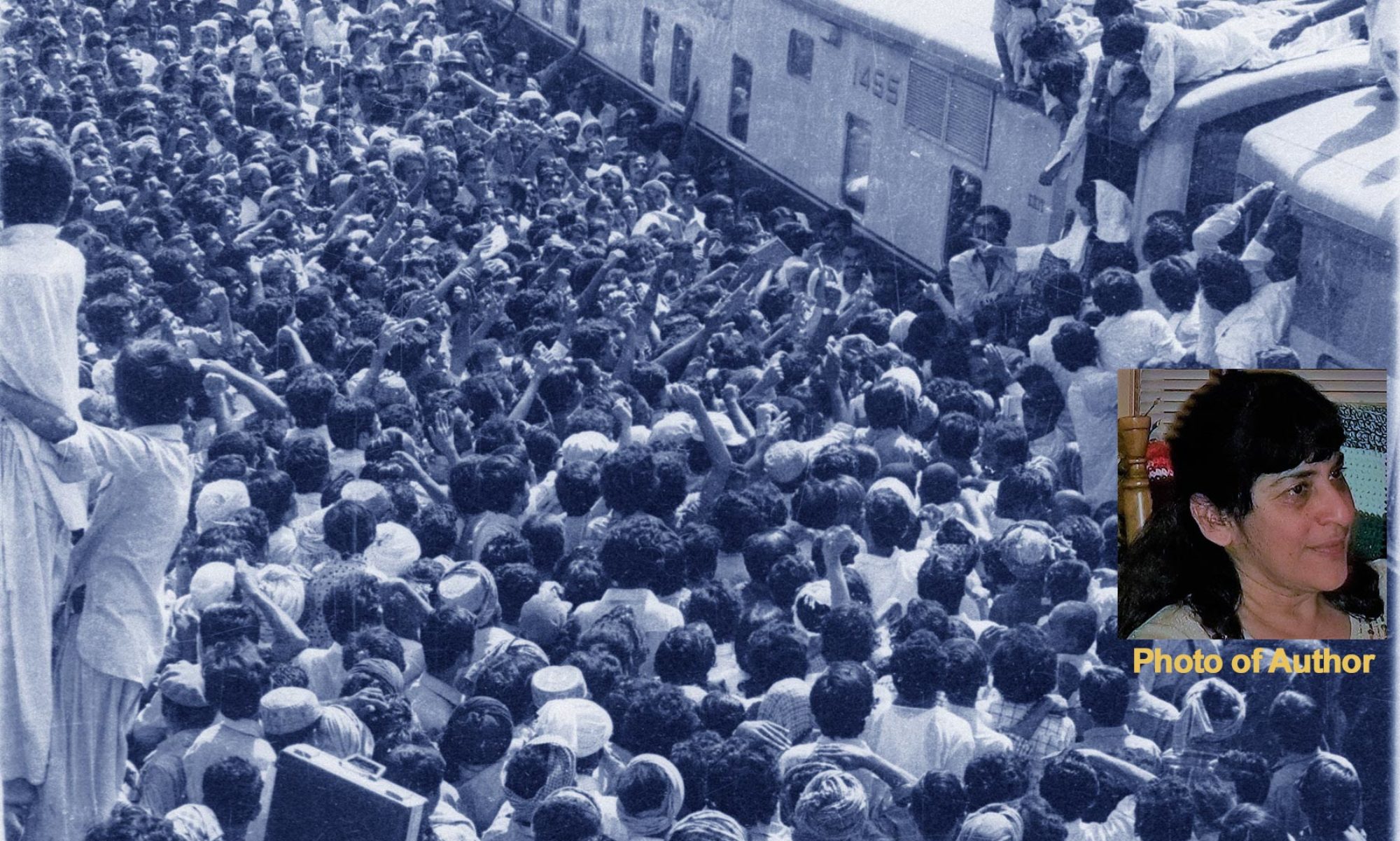
A new title by former FCWSRC Ford Associate Nafisa Hoodbhoy, Aboard the Democracy Train: A Journey Through Pakistan’s Last Decade of Democracy was released in April 2011 by Anthem Politics and
International Relations. Currently a journalist working in the United
States, from 1984-2000 Hoodbhoy was staff reporter for the English
daily Dawn newspaper in Karachi.
Spring 2012 Highlights
On Saturday, March 31 at 7:00pm in Chapin Auditorium of Mary Woolley Hall on the Mount Holyoke College campus in South Hadley, the FCWSRC was pleased to present “An Evening with Rachel Maddow” where she read from her new book, Drift: The Unmooring of American Military Power. Co-sponsored by the Odyssey Bookshop and the Mount Holyoke College Department of Gender Studies. Click on the photo below to watch Maddow’s talk.
Mount Holyoke College students perform excerpts from the Unruly Passions of Eugénie R. by Carole DeSanti on April 5, 2012 at the FCWSRC. DeSanti, a former FCWSRC Research Associate and VP and Editor at Large with the Penguin Group, read from her book that evening to a standing-room only audience at the Odyssey Bookshop in South Hadley. Her reading was followed by a celebration and performance at the FCWSRC.
ISLAMABAD, Nov 21 — A series of suicide bomb attacks on Pakistani Shiites as they observed a major religious holiday killed at least 26 people and wounded dozens on Wednesday, heightening fears of further bloodshed in the coming days.
Shiites are observing the Mourning of Muharram, a 10-day period in which lengthy processions wind through major urban centers and that culminates on Sunday.
Despite efforts to step up security, including switching off cellphone networks for hours at a time, the government has been unable to prevent Sunni extremist militants from reaching their targets.
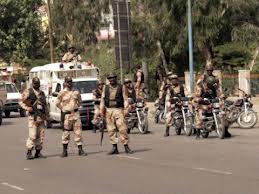
The deadliest attack occurred close to midnight in Rawalpindi, home to the military’s headquarters, when a blast ripped through a religious procession headed toward a mosque in the city center. Witnesses told local television stations that a suicide attacker had flung a grenade into the crowd before detonating explosives strapped to his body. News media reports, citing the police, said at least 23 people had been killed and 47 had been wounded.
Hours earlier, two blasts in the port city of Karachi killed at least three people and wounded at least 17. A suicide bomber riding a motorcycle rammed into a rickshaw, setting off an explosion that killed two people and wounded several others. Moments later a second blast at the same location killed another person and wounded about 10, including journalists who had rushed to the scene of the first blast.
Sectarian violence in Pakistan has acquired a deadly momentum over the past year with attacks on minority Shiites across the country, from passes in the northern mountains to the tribal belt along the Afghan border and major cities including Karachi and Quetta.
The attacks are mostly by sectarian groups, like Lashkar-e-Jhangvi, that also have ties to the Taliban, Al Qaeda and other Sunni extremist militant organizations.
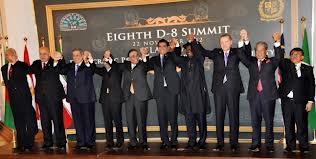
The violence coincided with Pakistan’s hosting of the Developing Eight summit meeting, an international gathering intended to promote trade and investment that brings together Bangladesh, Egypt, Indonesia, Iran, Malaysia, Nigeria, Pakistan and Turkey.
Thousands of extra police and security forces have been drafted into the capital, Islamabad, where the summit meeting is to start on Thursday. Among the leaders expected to attend are President Mahmoud Ahmadinejad of Iran, President Mohamed Morsi of Egypt and Prime Minister Recep Tayyip Erdogan of Turkey.
Other violence in Pakistan on Wednesday further underscored the precarious security situation. A bomb in Quetta, the capital of Baluchistan, exploded near a security vehicle escorting children to school, killing three soldiers and two passers-by. People suspected of being Islamist militants shot and killed four policemen near the town of Bannu, on the edge of the tribal belt.
The hosting of the Developing Eight Summit in Islamabad, which commenced on November 22, means more than a gathering of eight Muslim nations, as far as Pakistan goes. The meeting, at which President Asif Ali Zardari took over the chairmanship of the group from his Nigerian counterpart, offers Pakistan a chance to pull itself back into the mainstream of global life from the fringes to which it has been pushed, chiefly due to security reasons. The fact that five heads of state attended the event, with Bangladesh and Malaysia represented at the adviser and ministerial levels respectively, marks a rare success for Pakistan — a nation that stands increasingly isolated.
The D-8 group consists of eight nations with a combined estimated total population of one billion. The theme of the summit was ‘Democratic partnership for peace and prosperity’. Pakistan remained keen to focus on trade issues and economic cooperation during the Summit, the events in Gaza overshadowed Summit proceedings to a considerable degree, especially since Iranian President Mahmoud Ahmadinejad, Egyptian leader Mohamed Morsi and Turkish Prime Minister Recep Tayyip Erdogan are all key players in the Middle East crisis. Pakistan was also able to bring up the main item on the agenda: increasing trade between member countries from $130 billion to $507 billion by 2018.
As significant as the discussions were, the symbolism involved in the Summit, marked a major triumph for the government. The visit by Goodluck Jonathan was the first by a Nigerian leader in 28 years. To ensure safe movement to their respective destinations, massive security was put in place, creating a traffic logjam for the locals. This, however, is the price we pay for the militancy that lives on in the country — an issue also discussed at the Summit. We must hope the meeting with key leaders can bear fruit as intended by the objectives of the Summit.
Published in The Express Tribune, November 23rd, 2012.
WASHINGTON, Nov 21 — Internal emails among U.S. military officers indicate that no sailors watched Osama bin Laden’s burial at sea from the USS Carl Vinson and traditional Islamic procedures were followed during the ceremony.
The emails, obtained by The Associated Press through the Freedom of Information Act, are heavily blacked out, but are the first public disclosure of government information about the al-Qaida leader’s death. The emails were released Wednesday by the Defense Department.
Bin Laden was killed on May 1, 2011, by a Navy SEAL team that assaulted his compound in Abbottabad, Pakistan.
One email stamped secret and sent on May 2 by a senior Navy officer briefly describes how bin Laden’s body was washed, wrapped in a white sheet, and then placed in a weighted bag.
According to another message from the Vinson’s public affairs officer, only a small group of the ship’s leadership was informed of the burial.
“Traditional procedures for Islamic burial was followed,” the May 2 email from Rear Adm. Charles Gaouette reads. “The deceased’s body was washed (ablution) then placed in a white sheet. The body was placed in a weighted bag. A military officer read prepared religious remarks, which were translated into Arabic by a native speaker. After the words were complete, the body was placed on a prepared flat board, tipped up, whereupon the deceased’s body slid into the sea.”
The email also included a cryptic reference to the intense secrecy surrounding the mission. “The paucity of documentary evidence in our possession is a reflection of the emphasis placed on operational security during the execution of this phase of the operation,” Gaouette’s message reads. Recipients of the email included Adm. Mike Mullen, then the chairman of the Joint Chiefs of Staff, and Gen. James Mattis, the top officer at U.S. Central Command. Mullen retired from the military in September 2011.
Earlier, Gaouette, then the deputy commander of the Navy’s Fifth Fleet, and another officer used code words to discuss whether the helicopters carrying the SEALs and bin Laden’s body had arrived on the Vinson.
“Any news on the package for us?” he asked Rear Adm. Samuel Perez, commander of the carrier strike group that included the Vinson.
“FEDEX delivered the package,” Perez responded. “Both trucks are safely enroute home base.”
Although the Obama administration has pledged to be the most transparent in American history, it is keeping a tight hold on materials related to the bin Laden raid. In a response to separate requests from the AP for information about the mission, the Defense Department said in March that it could not locate any photographs or video taken during the raid or showing bin Laden’s body. It also said it could not find any images of bin Laden’s body on the Vinson.
The Pentagon also said it could not find any death certificate, autopsy report or results of DNA identification tests for bin Laden, or any pre-raid materials discussing how the government planned to dispose of bin Laden’s body if he were killed.
The Defense Department also refused to confirm or deny the existence of helicopter maintenance logs and reports about the performance of military gear used in the raid. One of the stealth helicopters that carried the SEALs to Abbottabad crashed during the mission and its wreckage was left behind. People who lived near bin Laden’s compound took photos of the disabled chopper.
The AP is appealing the Defense Department’s decision. The CIA, which ran the bin Laden raid and has special legal authority to keep information from ever being made public, has not responded to AP’s request for records about the mission.
ISLAMABAD, Nov 21: Advocate General Balochistan Amanullah Kinrani on Wednesday apprised the Supreme Court that the BHP, the world’s leading copper mining company, which had been given a mining lease for discovery of gold and copper reserves in Reko Diq during 1990s was not registered under Pakistani laws.
He was appearing before a three-member bench comprising Chief Justice Iftikhar Muhammad Chaudhry, Justice Gulzar Ahmed and Justice Sh. Azmat Saeed, that resumed hearing of a petition moved by late Mualana Abdul Haq.
In response to bench’s remarks, Kinrani maintained that the BHP had not been incorporated in Pakistan as foreign minerals mining company.
The chief justice observed that the Balochistan government should have known the fact as all foreign companies were required approval from the Board of Investment.
He told Khalid Anwar, counsel for Tethyan Copper Company (TCCP), that nothing like mining agreement existed prior to 1996 with the BHP, but a request for relaxation of rules was submitted.
He said the relaxation was sought when there was no agreement. “Show us any exploration agreement from any part of Pakistan with similar precedent. We will examine the instant matter on touchstone of the Pakistani laws.”
Khalid Anwar said when Chagi Hills Exploration Joint Venture Agreement (CHEJVA) was reached, there was no such requirement.
The CJ remarked, “Do not give such a free hand, we are a sovereign country.”
Khalid Anwar contended that the BHP was not entitled for such an agreement as it did not make any discovery in the area.
He said the TCCP had made a discovery in 2006 so why it was blamed for the acts of BHP.
Reading out Companies Act, he said under its provisions, Pakistani exploration companies did not require registration but it was a requirement for the foreign companies while his client TCCP was a subsidiary of the TCCA and a Pakistani company.
The counsel further apprised the bench that the negotiations for reaching an agreement for Reko Diq mining venture started way back in 1993 and after three years of elaborate discussions involving all the stakeholders, a consensus draft was agreed upon which had all the transparency.
He said the BHP made a generous offer of 25 per cent to the provincial government which was unprecedented in the exploration history at that time.
Refuting claims about corruption or any underhand deals, he said relaxation of rules did not amount to amending of Balochistan Mineral Rules of 1997.
Abdul Hafeez Pirzada, counsel for BHP, apprised the bench that they were contacting with their clients but the time difference was a matter and would assist the court with relevant record.
The advocate general Balochistan apprised the bench that barrister Aitzaz Ahsan was also engaged by the provincial government to represent it in the instant case and sought an order in this regard.
The chief justice told him that the court always welcomed everyone and had not stopped Aitzaz from appearing.
More than three years ago, I sat in an overflow room in Washington, DC’s Willard Hotel listening to General David Petraeus explain (pdf) how the only solution for the failing war in Afghanistan was a “comprehensive counterinsurgency (COIN) strategy”, modeled after the one that had allegedly achieved so much success in Iraq.
Petraeus’s speech came at the annual meeting of the Center for New American Security, a DC-based thinktank that had become a locus of COIN thinking in DC. And Petraeus was at the peak of his power and acclaim – heralded by both Democrats and Republicans as the man responsible for saving the Iraq war.
The four-star general’s in-depth powerpoint presentation (pdf), with its discussion of securing and serving the population, “understanding local circumstances” separating irreconcilables from reconcilables and living “among the people” was the apogee of COIN thinking, which dominated national security debates in Washington in 2008 and 2009. But, like Petraeus’s career, COIN and its usefulness as a tool for US military planners now lies in tatters.
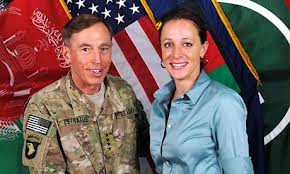
With last week’s revelations that Petraeus was having an affair as director of the CIA with his biographer Paula Broadwell, this tawdry story is likely to become the most glaring black mark on Petraeus’s career. But while his behavior was reckless, arrogant and, frankly, just plain stupid, it’s ironic that Petraeus is likely to be remembered more for that one personal act rather than his most grave professional mistake – namely, that same counter-insurgency strategy in Afghanistan for which he was one of Washington’s most influential proponents.
The event at CNAS was the quintessential example of the blinders and hubris that were so pervasive among COIN boosters and, in particular, Petraeus. They were convinced that the surge in Iraq and the use of counterinsurgency tactics there had turned the tide. But as we know now – and should have even been aware then – the reality was far more complicated.
In truth, a number of key social and political shifts occurred in Iraq in 2006 and 2007, which coincided with the US surge. There was the decision by Sunni militias to turn against al-Qaida in Iraq, a group that was responsible for initiating much of the country’s horrifying violence in 2006; there was the ethnic cleansing and enclaving that took place in Baghdad, which turned a once Sunni-dominated city into one controlled by Shiites, and gave both sides in the civil war fewer individuals to seek out and slaughter; there was the mass exodus of refugees out of the country; and later, there was the Sadr ceasefire.
What’s more, those who pushed the Iraq surge narrative suggested that a more humane and civilian-focused approach there had brought success. In reality, the number of civilians killed by US airstrikes had increased nearly four-fold in Iraq; the number of Iraqis in detention jumped 50%. This is not to suggest Petraeus deserves no credit; he smartly took advantage of these larger shifts in Iraqi society to seek an endgame to the conflict.
But the reality is that much of the decline in violence attributed to the actions of US forces was the result of decisions and actions taken by the Iraqis themselves. The US role was important, but hardly decisive.
This, of course, was a much more complicated explanation for what happened in Iraq – and one far less gratifying to US policy-makers. This more nuanced reality did little to prevent Petraeus and his acolytes from not simply taking a victory lap but far worse, using the supposed “lessons of Iraq” to justify a similar course of action in Afghanistan.
Indeed, around the same time as Petraeus’s speech, COIN boosters were regularly arguing that the key to success in Afghanistan was reducing civilian casualties – and that such a goal could be achieved by the application of counter-insurgency tactics.
In reality, the assumptions of COIN advocates were badly flawed and based on unrealistic views of what the US could accomplish. It failed to take account the key ways in which Afghanistan differed from Iraq: the resilience of and public support for the Taliban insurgency; the presence of safe havens across the border; the incompetence of the central government in Kabul; the delusion that US soldiers could be turned into miniature anthropologists with the wherewithal to have a full appreciation of Afghan cultural idiosyncrasies; and finally, an abject refusal to factor in the lack of political support in the United States for a drawn-out counterinsurgency campaign.
Worst of all, COIN advocates committed the cardinal sin of believing that a shift in military tactics or a new commander would be enough to win a military conflict in which the US was engaged. As the great Chinese war philosopher once wrote, “tactics without strategy is the noise before defeat”. That is a lesson that Petraeus, among others, simply forgot. Indeed, it’s worth remembering that when asked by President Obama, point blank, if a surge of troops to Afghanistan could turn things around in 18 months, Petraeus responded:
“Sir, I’m confident we can train and hand over to the ANA [Afghan National Army] in that time frame.”
Petraeus was wrong – badly wrong. And more than 1,000 American soldiers, and countless more Afghan civilians, have paid the ultimate price for his over-confidence in the capabilities of US troops. And it wasn’t as if Petraeus was an innocent bystander in these discussions: he was working a behind-the-scenes public relations effort – talking to reporters, appearing on news programs – to force the president’s hand on approving a surge force for Afghanistan and the concurrent COIN strategy.
But when he took over as commander of the Afghanistan war in 2010, Petraeus adopted the harsh military strategy that he’d claimed the new, more civilian-focused COIN military plan would eschew. He ramped up airstrikes, which led to more civilian deaths. He increased the use of special forces operations. Perhaps worst of all, he sought to hinder the implementation of a political strategy for ending the war, seeking, instead, a clear military victory against the Taliban.
The greatest indictment of Petraeus’s record is that, 18 months after announcing the surge, President Obama pulled the plug on a military campaign that had clearly failed to realize the ambitious goals of Petraeus and his merry team of COIN boosters. Today, the Afghanistan war is stalemated with little hope of resolution – either militarily or politically – any time soon. While that burden of failure falls hardest on President Obama, General Petraeus is scarcely blameless. Yet, to date, he has almost completely avoided examination for his conduct of the war in Afghanistan.
In an age in which military officers are practically above public reproach – glorified and exalted by politicians and the media – the repeated failures of our military leaders consistently escape analysis and inquiry. This can have serious national security implications. As Joshua Rovner, associate professor of strategy and policy, US Naval War College, said to me in an email conversation, this lack of scrutiny has had grave consequences:
“[W]e have misunderstood our recent history in Iraq and Afghanistan; we have created new myths about strategy that will persist for many years despite their manifest flaws; and we may make bad decisions about intervening in other civil wars based on these myths.”
The wars in Iraq and Afghanistan were more than just bad strategy; they reflected poor military tactics and generalship. Self-interested and incomplete interpretations of what happened in Iraq led to predictably disastrous results in Afghanistan.
Perhaps we should spend a bit more time looking at that issue, rather who was sleeping with whom.