ISLAMABAD, Nov 14 — Pakistan said it had released at least seven senior Afghan Taliban prisoners on Wednesday, rekindling fragile hopes that Islamabad may be ready to help broker peace talks with the militants as the Western military withdrawal from Afghanistan looms.
A senior Pakistani security official, speaking on condition of anonymity, said that “seven to eight” Taliban prisoners had been set free but refused to name them. A Western official said the figure could be as high as 14 prisoners. News reports citing Afghan officials said the freed prisoners included Mullah Nooruddin Turabi, a former Taliban justice minister and religious hard-liner.
It was unclear whether the men were to be transferred to Afghan custody or released in Pakistan. But the announcement was mostly seen as an initial sign of good faith by the Pakistanis — perhaps to Afghan Taliban leaders in exile in Pakistan, perhaps to Afghan or American officials who seek to open talks, most likely all of the above — in a slow-moving negotiations process that has been blighted by deep mistrust on all sides.
“Things are starting to move,” said Najam Sethi, a veteran Pakistani commentator. “This is definitely an attempt by Pakistan to change tack and show both sides that they are serious about a settlement and an endgame.”
For years, the ability of the Pakistani Army’s intelligence agency to limit the movement of Afghan Taliban leaders has been seen as a political trump card — an insurance policy that any deal between the insurgents and the Americans or Afghan government would have to go through Pakistan first. Both countries have lobbied the Pakistanis to at least agree in principle to allow more freedom for Taliban leaders to travel in order to make any attempt at peace talks possible.
The release on Wednesday came at the end of a three-day visit to Islamabad by a delegation of Afghan officials from the High Peace Council, which is spearheading the effort by the government of President Hamid Karzai to draw the Taliban into peace talks.
Prisoner releases have been a core demand of the delegation, which had canceled two trips to Pakistan over disagreements with the Pakistanis. “Our demand was that they should hand over some of those Taliban prisoners to us,” Maulavi Shafiullah Nuristani, a member of the High Peace Council, said in Kabul.
In return, the members of the Afghan delegation presented Pakistani officials with a document outlining their intentions for the faltering peace process, known in Afghanistan as “reconciliation,” for the idea that Taliban representatives could perhaps be brought into the national government in return for ending their campaign of violence.
A joint statement issued by Pakistan and Afghanistan on Wednesday evening noted that Pakistan “supports Afghanistan’s vision and road map for achieving durable and lasting peace” and that all sides would “facilitate safe passage to potential negotiators to advance the reconciliation process.”
The two countries agreed to hold a conference of religious scholars, possibly in Saudi Arabia, to discuss Islamist militancy. And they reiterated calls for the Taliban to cut its ties to Al Qaeda — a major American demand.
It was unclear how many of the freed prisoners were high-level Taliban officials. If his release is confirmed, Mullah Turabi would certainly fall in that category: He was the Taliban’s justice minister, and he had legal responsibility for the brutal public executions during Taliban rule in the 1990s and for the destruction of the Buddha statues in Bamian Province in 2001. He was set free by the Afghan government in 2002 in controversial circumstances, only to be later detained in Pakistan.
The Pakistanis made a point, however, of noting that another influential name was not on the release list: Mullah Abdul Ghani Baradar, a former deputy Taliban leader who was captured with American help in February 2010. Afghan officials say he may hold the key to unlocking a tentative negotiation process with the Taliban.
That process is seen by American officials as a crucial part of their military withdrawal from Afghanistan by the end of 2014 — even as they continue to try to weaken the Taliban’s military footing within Afghanistan. But there are many hurdles to opening talks, with distrust running deep among all four potential parties — the Taliban, the Americans, the Afghans and the Pakistanis.
Hopes of starting a negotiating process seemed to collapse in March, when the Taliban publicly rejected American efforts to set up a back channel in the Persian Gulf state of Qatar amid the Americans’ refusal to release Taliban figures held in the Guantánamo Bay prison camp in Cuba.
American officials believe that an intense debate is under way inside the Taliban leadership over whether to engage in any peace talks or to continue fighting until the bulk of Western forces are gone.
On the Afghan side, even as Mr. Karzai has repeatedly reached out to the Taliban to reconcile with his government, they have rejected the overtures, with some senior figures vowing they will never relent as long as Mr. Karzai or his allies hold power in Kabul. Further complicating matters, Mr. Karzai is suspicious of American overtures toward the Taliban that he views as attempts to go behind his back.
The Pakistani position is also mired in complexity. The United States and Afghanistan have long accused Pakistan’s Inter-Services Intelligence spy agency of providing shelter to Taliban leaders and fighters in the western province of Baluchistan and the sprawling port city of Karachi, where Mullah Baradar was captured. The ISI admits to some contact with insurgents, but insists it has no influence over militant operations.
The most contentious issue is the ISI’s hold over the Taliban ruling council, known as the Quetta Shura, named after the capital of Baluchistan, although experts believe meetings now take place in districts around the province.
In recent years, however, that grip has loosened, according to some Western officials and Pakistani analysts.
The new ISI chief, Lt. Gen. Zaheer ul-Islam, is said by some officials to be seeking to mend fences in order to strengthen his hand at any future negotiating table.
Jawad Sukhanyar contributed reporting from Kabul, Afghanistan.
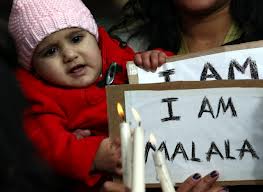
London demonstration for Malala (Credit: malala_huffingtonpost.co.uk)
LONDON, Nov 8: Tens of thousands of Britons called on the government on Friday to nominate Malala Yousufzai, a Pakistani girl shot in the head by the Taliban for advocating girls’ education, for the Nobel Peace Prize.
The 15-year-old is receiving specialist treatment in the English city of Birmingham after gunmen shot her on Oct 9 for standing up against the Taliban and openly advocating education for women.
The attack has drawn widespread international condemnation and Yousufzai has become a powerful symbol of resistance to the Taliban’s attempts to suppress women’s rights.
On Friday, a campaign led by a Pakistani-British woman urged Prime Minister David Cameron and other senior government officials to nominate Yousufzai for the Nobel Peace Prize.
“Malala doesn’t just represent one young woman, she speaks out for all those who are denied an education purely on the basis of their gender,” campaign leader Shahida Choudhary said in a statement issued by global petition platform Change.org.
More than 30,000 people have signed the petition in Britain as part of a global push by women’s rights advocates to nominate her for the prize. Similar campaigns have sprung up in Canada, France and Spain.
Under the Nobel Committee’s rules, only prominent figures such as members of national assemblies and governments are able to make nominations.
Yousufzai was unconscious and fighting for her life when she was flown to Britain a month ago but the hospital in Birmingham where she is being treated says she is recovering well.
On Friday it released photographs of Yousufzai reading a book and clutching a white teddy bear, dark bruises covering her eyelids.
She appeared serious and focused on her reading, her hair covered with a bright pink-and-white scarf.
Her father and other family members have flown to Birmingham, which has a large Pakistani diaspora, to oversee her recovery. On Oct. 26 her father said his daughter would “rise again” to pursue her dreams after hospital treatment.
Her shooting was the culmination of years of campaigning that had pitted the young girl against one of Pakistan’s most ruthless Taliban commanders, Maulana Fazlullah.
Fazlullah and his men have taken over Yusufzai’s native Swat Valley and have blown up girls’ schools and publicly executed those they deem immoral. An army offensive in Swat has however forced many Taliban fighters to flee.
The call to nominate the girl comes on the eve of this Saturday’s “Global Day of Action” for Yousufzai, marking one month since her shooting.
In October, the Nobel Peace Prize went to the European Union for promoting peace and democracy.
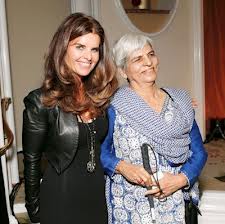
Zubeida Mustafa with Maria Shriver (Credit: Photogallery.indiatimes.com)
Zubeida Mustafa was the first woman to work in Pakistan’s mainstream media. That was more than 30 years ago. Today, because of Zubeida’s courage to use her voice, report on other women’s voices, and argue for hiring policies that would allow women to occupy all positions in the newsroom, life is different for women in Pakistan.
“I wanted to create space for women and I thought if there were more, it would give them strength,” says Zubeida.
Over her three-decade career, Zubeida worked through extreme political instability, media censorship, gender barriers and social upheaval as the assistant editor of Dawn, a widely-respected English-language daily newspaper in Pakistan.
In addition to becoming the first woman in Dawn’s newsroom, Zubeida became the first woman on the editorial board, where she fought to gain coverage in the paper for the burgeoning women’s movement. She advocated running stories with women’s voices in all sections instead of relegating them to a “women’s page.”
As Zubeida’s career evolved, the central theme of her work became the inequalities she witnessed in Pakistani society. She wrote on health, education and women’s empowerment. She was able to cover stories that men were not able to because they did not have the same access to women as Zubeida.
When she wrote an article on breast cancer, a group of religious conservatives raided Dawn and accused the paper of printing “obscene” content. Undeterred, Zubeida went on to write about contraception and reproductive health. She also covered the case of rape victim turned women’s advocate when other writers were afraid to mention it.
A mother of two daughters, Zubeida not only broke the the social barrier against women working, but of mothers working.
On Monday night in Los Angeles and last week in New York, Zubeida Mustafa was honored by the International Women’s Media Foundation and the U.S. media elite with the Courage in Journalism Lifetime Achievement Award. What follows is my interview with Zubeida.
Tabby Biddle: I want to talk about Malala Yousufzai, the 14-year-old girl who was recently shot by the Taliban for her outspoken advocacy of a girl’s right to an education. She started her blog at age 11. Is she an anomaly, or are there many girls like her who feel very strongly about having a voice in Pakistan?
Zubeida Mustafa: I think she is an exception. Malala has the support of her family, especially her father, and that really helped her. When she was campaigning, it was her father who accompanied her to many of the places that she went because she was attending seminars and meetings to speak about her experience, her love for education and how others girls should also be educated. I can say that she is rare. That is why we cherish her a lot, we appreciate whatever she did, and admire her because she is inspiring. We are happy that she is on her way to recovery and hopefully we will have more like her in the future.
TB: You were the first woman to work in Pakistan’s mainstream media. How did you break through the cultural gender barriers to get to this position?
ZM: Initially I had worked for a few years at a think tank before I joined the media. I would say that, for me, the gender barrier had been broken then because it was a major decision then to go and work in a place where there were generally all men around. I had a very good friend at the think tank. She had joined as a research officer, so we were a great support to one another. Then a few years later, I went into the newspaper. So it was not something new for me to enter a man’s world.
Of course initially I had to work hard to establish my credentials because otherwise I wasn’t taken very seriously. You see, women had been working in the media, but they were on the fringes. They were looking after women’s pages – the fashion pages, cookery, and things like that. Writing about serious issues like foreign policy was something new for a woman. I managed to make headway there because once my work was accepted the focus was more on my work than my gender. So the barriers came down.
TB: You pioneered a path for Pakistani women in journalism, beginning in the 70s, by writing about foreign policy, education, health and women’s empowerment. What is the climate like now for women journalists in Pakistan?
ZM: There are a lot more women journalists now. It is definitely a different field than when I first started. Television has helped a lot, and also electronic media. People somehow want to have women on television, whether they are anchors, newscasters or producers, but moreso when they are visible. That barrier is definitely not there. But what I would like to see more of is women at the policy-making level in the media. They are there, but we need more of them.
TB: When you were writing about issues that hadn’t been touched on before in Pakistan, like family planning, breast cancer, and abortion, were you ever afraid for your life?
ZM: No, I wasn’t afraid for my life. I would say things are more difficult in that way for men who are writing about strategic issues, terrorism, and things like that. Many of them have actually been killed because those are very sensitive issues. It was never like that for me. Actually, for me it was more about not doing something very conventional. So it was that which I had to put up with. I think somehow I didn’t care. I just wanted to do what I was doing, and I would go ahead and do it. I didn’t fear for my life. Sometimes when I wrote things, there was a strong reaction, but cultural issues don’t really create the same kind of a threat as political or strategic issues. You can be defamed, but nobody really comes and shoots you for that.
It is different these days because we have a bunch of extremists. They are using culture for their own political reasons because they want to control the country. So they bring up all these issues and make them religious or cultural and use them as an excuse to attack education in schools and women who are not adequately covered. This has always been a part of our society that we have a crust of women who are very emancipated, very highly educated, and who’ve been working in some area or another. This is very small, but it has been growing. Even now though it needs to be expanded so that women are brought into the mainstream in all professions.
TB: While the numbers of emancipated women are growing, it seems that still the large percentage of the society is gender segregated. First off, am I correct in saying this? And if so, how do you feel this affects Pakistani society from a developmental standpoint?
ZM: I think we still have a long way to go as far as women’s issues. Women should be allowed more freedom and more education. But what is happening is that there is greater awareness. I wouldn’t say it’s each and every woman because many women are still steeped in superstition and conservatism, but many of them at least want to do something. Of course they don’t have the means to do it, or the opportunities aren’t there, but at least the will is there. This is most important because I think that is what the women’s movement that started in the 80s did. Now you cannot even conceive of any political party going in for an election and not having some program for women in their manifestos or at least mentioning them. Although they don’t always do what they say, the mere fact that it is expected that they talk about some women’s issues is important.
TB: What is it like now in Pakistan in terms of women in leadership positions — in both politics and business?
ZM: It has grown, and particularly in politics. Of course I’ll mention Benazir Bhutto who became a role model for women who were in politics and who wanted to be there. There have been some ministers who have been women. Our foreign minister right now is a woman. In the provinces there are number of women in key positions. Even in places where there are very traditional societies, women have come up and are in leadership positions. It is not unusual to find women either at the top or in a very key position. So that is something that is important. I find it more important that once they are there, they open up doors for others, as I did myself. They show the way to others or provide opportunities.
TB: It sounds like things are definitely progressing, but there are still over 3 million girls out of school in Pakistan. Why is this?
ZM: First, it was wrongly believed that all men do not want to educate their girls. I think there was a time many years ago when men didn’t want to send their girls to school because they just thought that the girls are meant to stay at home and get married, so education was not required. But that was a long time ago. Now most parents want to send their girls to school. But if they are out of school it’s because the facilities are not there. I think the most important factor is that there aren’t enough schools. It’s not just having a big school in a few areas. You have to have many schools close to where the girls are because it’s hard for them to travel long distances. Girls’ security is a major factor. Sometimes the other reason girls are not in school is poverty. Men feel they cannot afford educate all the children, so the boys get entrance. Sometimes where the girls are married off early, the girls might go to school, but just for a few years. But now surveys have shown that the marriage age has gone up in Pakistan. So if the girls are out of school, I think it is partly because of lack of opportunity, partly because of poverty and partly because of culture.
TB: I read that the Pakistani government is determined to support girls’ and women’s education. Is that actually true?
ZM: I’m afraid that you’d have to ask the Pakistani government, but that is what they claim. I think they could do better.
TB: The perception is that Pakistan is very religiously conservative. Is there a progressive component to Pakistan?
ZM: One thing I can tell you is that society as a whole outside of Pakistan, and even sometimes within Pakistan, gives the impression through the media that the people generally are very narrow-minded; they are extremists; and they are ultra-religious. I really don’t believe that because I have been to many places where this is not true. Last month I was in Balochistan for a children’s literature festival and generally I found that was not the case. I would say the people are religious. I wouldn’t deny that. They believe that what they believe is between them and their God or their own community, but they would not try to impose that on everyone. Of course they may not be as emancipated and progressive as the small crust of women I talked about earlier, but they are at average and life is not difficult to live that way.
But what has happened is this impression that has been created by extremism. Extremists are armed; they are very vocal; and they create an impact. So obviously the rest of the society is not in a position to contest them because generally people are not armed in Pakistan. It’s only a few people who want to carry arms, so people are at a disadvantage with the extremists. This is what you see today as a result — the extremists are dominating.
Another thing that has come up is that at the universities and higher education institutions, there are some religious parties that are trying to get hold of students and are trying to influence them. Over there you do find some students who give you the impression of being extremely conservative with their religious views. I find that the student parties are off-shoots of the religious parties. They try to organize the students and educate them. This is one reason why I think education is so important, and that it’s important to modernize education and have a better system.
TB: How can the international community support women’s empowerment in Pakistan? And do the Pakistani women want that?
ZM: That is what I feel disappointed about. Of course I am grateful that the international community has come up in a big way and there is a lot of support for the education of girls and for women’s empowerment. But what is actually happening is that there is a lot of aid going in and it’s just making the country dependent on the donors.
What I would want is the aid to be second nature to empowering the people to be self-reliant, to creating opportunities for production and to economic opportunity. If a country increases its production in whatever areas they specialize in, it will be the best way of helping a society — rather than making them aid dependent. I feel many of the schools that have been opened in my country are actually dependent on aid. The agreement is for five years, and we do not know what will happen after that. The donors should see to it that they are making the people self-reliant and independent. Like what the Chinese say, “If a man is hungry, you can provide him fish. But teach him how to fish and he get can the fish himself.” That is what I feel should be done for women’s empowerment.
TB: If every girl and young woman in Pakistan could hear your voice, what message would you want to impart to them?
ZM: I would tell them please do whatever you can to educate yourself and educate your girls because if people are educated, many of their problems are solved. This is because they have a better understanding of the problem and they have a better understanding of how those problems get resolved. This is what I would tell each and every woman and girl in Pakistan.
The mission of the International Women’s Media Foundation is to strengthen the role of women in the news media worldwide as a means to further freedom of the press. The Courage in Journalism Awards are the only international awards that recognize the bravery of women journalists.
Islamabad, Nov 7 – As news of President Obama’s victory reaches Pakistan, many say they do not expect any substantial change in US foreign policy toward the country.
But some Pakistani officials and politicians are quietly hoping that perhaps a cabinet reshuffle and a strengthened mandate, now that reelection pressures are eased, could soften an otherwise tense relationship between the two countries.
And rumors that Sen. John Kerry (D) from Massachusetts could replace Secretary of State Hillary Rodham Clinton has some officials hoping that the former’s many-year relationship with Pakistan could pave the way for an even smoother cooperation.
“It is of course up to the US president to appoint the Secretary of State. However, if speculations about Kerry become true, then that would be a positive development – and a lot easier. Kerry has many friends in Pakistan. He obviously knows the region, and the ins and outs of our relationship,” says Fawad Chaudhury, a special assistant to Pakistan’s prime minister.
Kerry was one of the US senators who sponsored the $1.5 billion annual Kerry-Lugar-Berman aid package to Pakistan, and is known for his relationship with the country. He paid visits to Afghanistan and Pakistan following the Navy Seal raid that killed Osama bin Laden, in an effort to save the rocky partnership.
Some within the security establishment agree. “I think he is more soft and understanding toward Pakistan. There may be a better relationship between the two as a result,” says a security official who preferred to remain unnamed.
The official also predicts that Obama’s reelection could have given him a strengthened mandate to pursue the foreign policy line – and vision – that he laid out during his first presidential campaign.
“This time he might be more bold, and have more space to make his own decisions. In the first term, the CIA and Pentagon were calling the shots. Now Obama is less worried about reelection, and can ensure that the State Department sets the line,” says the official.
In an interview before the election, cricketer-turned-politician Imran Khan said he tentatively agreed that an Obama win would benefit Pakistan. “Obama’s instincts are basically right. Let’s hope if he wins the second term, we see a different Obama,” he said.
Even Pakistan’s right-wing Islamist political party Jamaat-e-Islami (JI) appears hopeful. “Less pressure on Obama could create some space for small changes in their policy. Perhaps Obama could move closer toward the message he gave the Muslim world in his Cairo speech. But time will tell,” says Fareed Ahmed Paracha, JI’s deputy secretary general.
But Dr. Paracha also echoed the broader apparent disinterest of the Pakistani public in Obama’s victory. “The bottom line is that we need to get our own house in order,” he says. “The US, as such, does not matter.”
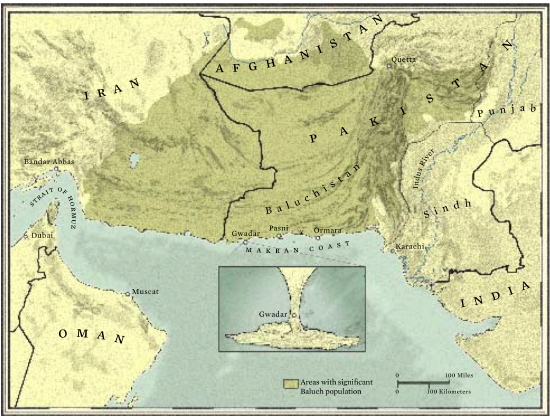
Not only does Balochistan have vast mineral resources (resources at Reko Diq alone are estimated in hundreds of billions, if not over a trillion, in dollars, sufficient to put our economic house in order for a decade or so), it also has the largest coastline available to us, housing the only deep sea port at Gawadar. But its real strategic significance is really far greater and durable than that.
Balochistan (and Gawadar) are the essence of our oft repeated ‘strategic location’.
It links us through Iran to the Middle East, and is the outlet for flow of resources from Central Asia, Western China, and Afghanistan. This is also China’s safe outlet to the Atlantic. A cursory look at the map will suffice to comprehend that from China’s eastern ports, sea-borne traffic via the Pacific poses no difficulty but to get to the Middle East or via the Gulf of Aden to the Atlantic is not merely a lengthy, circuitous route via the bottleneck at Straits of Malacca, it is peppered with US naval bases which can interdict traffic at will.
From Gawadar, however, Chinese vessels are at the mouth of the Arabian Gulf and a mere 1400 kms from the Gulf of Aden; what is more, this route is unthreatened. With the growing Chinese industry in the Chinese province of Xinkiang, coupled with an expanded KKH and a parallel rail link, this Strategic Commercial Corridor has become of vital strategic significance to China.
Finally, a Chinese naval presence at Gawadar in the not too distant future will multiply China’s options of power projection. It is in this backdrop that the Chinese warning to the US, in the aftermath of the US raid to execute Osama bin Laden on May 2nd this year when China stated that, “any future attack on Pakistan will be considered an attack on Beijing”, is comprehensible. Pakistan is, for the first time, in a position to be an equal partner in the (so-far) lopsided Sino-Pak relationship!
No wonder then, that Balochistan hosts so many international actors working to our detriment!
While ethnic based target killing has reduced in recent months, militants have now started targeting the pro-Pakistan loyalists. One example is the recent killing of Dr. Lal Bakhsh Baloch of the National Party. Reportedly, his death was ordered by Dr. Allah Nazar, BLF.
An apparently unusual development, but one which is understandable, is that the, usually peaceful Zikri community along the coast has joined the “Baloch Sarmakar”, a title denoting all Baloch insurgents. The Zikris, as we all know, have always been held in low esteem and discriminated against. To prove their “Balochness”, they have joined the insurgents and, very interestingly, I am told that Nadeem Baloch, a Zikri, has been appointed second in command by Allah Nazar!
As of last year, the area of major insurgent activity, which had rooted itself in the area ranging from Kalat to Khuzdar and Naushki, has extended to portions of the Mekran coast, due to afore-stated developments.
Traditionally, the anti-Sardari element among the Baloch were the youth and the very small middle class; these were also (mostly) patriotic and pro-Pakistan. The youth are alienated and, therefore prepared to accept distortions of their history, and are turning into insurgents; the Middle Class has gone into hibernation.
Traditional hold of Baloch Sardars is no longer very strong. All Baloch tribes have divided loyalties under sub-Sardars; all scions of the original Sardar family; most of them fighting each other. The most noteworthy exception is Sardar Khair Bakhsh Marri who enjoys the following of the bulk of his own tribe, as well as that of Baloch militants (and potential militants) and, to a far lesser degree, Ataullah Mengal.
The extent and depth of the corruption in the provincial government is well known and accepted. While many Baloch Pashtun are vehemently resentful of the rampant corruption, most Baloch seem to think it is a way of compensation to the Baloch! They seem to view the corruption as ‘stealing from Pakistan (or Punjab)’. Few, except the middle class, including Pakistan-loyalists who are relatively sidelined, advert to the fact that this corruption has actually deprived them of the development; the lack of which is their current complaint. Few are even aware of the billions of rupees that have been donated by the central government for socio-economic development, education, and human resource development, over the last decade, in addition to the annual budget.
In one instance, Zulfiqar Magsi has been quoted as having responded to a question, by Khair Bakhsh Marri, who asked him, “kiya ho raha hei?” Magsi responded, “Sab mil ke Balochistan kee XXXX XXXX rahe hein!”
Over the last year or so, resentment against the army has begun to decline and the army’s efforts to assist in health, education, and socio-economic welfare have begun to be appreciated. However, the ‘execution’ of Nawab Akbar Bugti still sticks in the Baloch craw, for which they cannot forgive the army, even though most of them are conscious of, and state, that it was on Musharraf’s orders.
On the other hand, naval cantonments along the coastline are a very sore point with the Baloch. Apparently, Naval Cantonments have made no effort to provide locals the kind of facilities that are associated with army cantonments. Very little, if any, effort is being made by PN to extend, health, education, sanitation, or social welfare. In the words of the Baloch, “They (PN personnel) are like foreigners occupying our land who treat us like dirt. We can do manual labor for them, but under armed escort. Even those (Baloch) permitted into their hospital are escorted by an armed guard”. I am not personally witness to this; however, even if this view is an exaggerated one, as we are all aware, in such instances, perceptions are more important than realities.
The general impression, with which I concur, is that there is no coordination between the various organs of the intelligence services in Balochistan, or between any of them and the FC. Consequences are frequently chaotic.
Smuggling arms, weapons, explosives, and drugs continues unabated. The general impression is that this is being done in collaboration with individuals in the intelligence agencies and the FC, in the case of the latter, almost without exception. This accusation is difficult to dispute. I have been given the name of one prominent smuggler, who is known by his pseudonym, “Beer”. Whether or not he belongs to the tribe, he now calls himself a Bizenjo and, reputedly, enjoys political patronage. Three different influential (but middle class) individuals, two of whom I consider fairly reliable, have told me that, along the border with Afghanistan/Iran, posts are vacated at certain times to facilitate free movement of smugglers.
Siraj Raisani is credited with most of the smuggling and he is laying claim to most of the killings and “missing persons”. However, he sells himself as one who enjoys support from GHQ and claims to be acting on behalf of the army/ISI.
A number of the Baloch have used words to the effect that, “if you send majors, Lt Cols, or even Brigs to such assignments, who have no future left in the army, why should they not seize the opportunity to enrich themselves”.
Some individuals have pointed out that (some) very senior officers have also taken the opportunity to make profits, if not through outright corruption, through misuse of authority. Shares procured by senior officers in various mining projects, by exerting influence, and jobs procured by them for close family members are cited as examples. I am not in a position to verify this and put it down merely to emphasize that the general view is that “Balochistan is a land that provides opportunities to rape it and enrich both; politically powerful Baloch and military officers/bureaucrats for the duration of their stay”.
Intelligence agencies and the ISI in particular, are still held responsible for the majority of deaths and ‘disappearances’. In private, however, some individuals, albeit reluctantly, acknowledge the fact that under the garb of accusations against the ISI, numerous personal vendettas, internecine rivalries, including political rivalries, inter and intra tribal ones, and between smugglers are responsible for a large number of killings, including those who are tortured; and that all these are laid at the door of the military/ISI.
In the last few years, there has been a demographic change in the population of Balochistan due to the influx of Afghan Pashtuns and Hazarvis, as well as Pashtum from Tribal Areas. The Baloch are very conscious of this fact and of the fact that, over decades past, the Pashtun of Balochistan have outstripped the Baloch in all respects: financially, in education, in employment opportunities; in every conceivable sphere.
They are also convinced that there is a deliberate effort by “Pakistan” to favor the Pashtun so as to diminish the intensity of the insurgency. If this is a policy, it might succeed in the interim but, in the long term Baloch grievances will have to be addressed.
With reference to above, some contradictory clarification is necessary, since the Pashtun complain of being under-represented in the political dispensation. Many, ethnically Pashtun Baloch tribes have adopted Baloch ways. Not only do they exclusively speak Balochi language, they claim Baloch ethnicity, like the Raisani tribe. Consequently, while Balochistan’s corrupt CM is ethnically Pashtun, for all practical purposes, from the Governor down to the IG Police; all posts are actually held by Baloch or Barahvis.
As a consequence, the traditional hostility between the Barahvi and Baloch has virtually disappeared. They have, more or less united against the common threat from Pashtun dominance engineered by “Pakistan/Punjab”. That being stated, the “Barahvi Ittehad” continues to exist.
However, the hard core Baloch militants are not, in my estimation, too large a number. I estimate them to be well under 10,000. They do, however, enjoy the willing support of their extended families, their tribe, and other Baloch.
The greatest and most urgent problem is that there are between 500,000 to 750,000 (so-called) ‘educated’ youth, some with college, others with university degrees, in search of gainful and respectable employment. They are fully conscious that their degrees are worthless and they are unfit to find respectable employment in a competitive selection. They are too proud to take up manual labor and angry enough to become potential militants and/or their supporters. I have frequently heard these words spoken in anger, even hate, but the plaintive cry beneath them is audible if one is listening, “Hum par Jihalat kyoon musallat kee jaa rahee hei”.
The youth are being fed, not only distortions of their real history, they are being fed the spiel that, “The Americans are coming. They will divide Balochistan into a Pashtun region and a Baloch region. Each Baloch family will receive a grant of $ 500,000/-“. Very few actually believe this but it serves as a “fall-back” belief, if all else fails—a ray of hope, if you will. Khair Bakhsh Marri is the main individual responsible for selling this view.
In brief, the all-pervasive view among the new generation of Baloch is that they are unequal citizens of Pakistan and are not stake-holders with a future or any hope of a future.
The fact that numerous ‘foreign hands’ are involved in stoking unrest in Balochistan is now accepted by numerous international journalists as well. This fact comes as no surprise to me or to the audience this document is addressed to. After a lengthy discussion, one young man who burst out in anger, while explaining that, with a university degree, all he could really qualify for is manual labor and added, “why should I not earn $ 100/- a day?” Since I wanted to goad him into saying more, I also asked in pretended anger, “who the hell will pay YOU $ 100/- a day?” and he immediately replied, “Indians pay $ 75/- through Iranian conduits and the CIA pays $ 100/- through Pakistani agents in Quetta.
This view has been expressed by some middle class Baloch and Punjabis, settled in Quetta for over a generation. “You (meaning Pakistan, the army, or government—take your pick) have turned Pakistan into a country of Muslims, not Pakistanis. Consequently, all Muslims from all over the world are here. The current war for control of Quetta is being fought between Iran and Saudi Arabia. Saudi supporters (presumably meaning Taliban) are occupying Kuchlag and Iranian supporters (Shias including Hazarvis) are centered round the Quetta Medical College. Kuchlag is, as you know, Pashtun, and the area was once under the iron hands of the father of Maj Ashraf Khan Nasir, former Chief Secretary Balochistan), whom I know well. There are a couple of nuances in this assessment, which need to be highlighted, since most Pakistanis refuse to acknowledge the damage done to us by Saudi Arabia and focus exclusively on the US. Firstly; that Saudis are a major part of the problem and, secondly; that, when it comes to Iranian interests, Jundallah (a Sunni organization) and Irani Shias (including the Iranian chapter of Hizbollah) and Hazarvis join hands. This opinion is shared by some Baloch Shias as well, but I am not certain that this is necessarily true.
Taliban: When the so-called “Quetta Shoora” initially moved into Quetta from Afghanistan and attempted to exert itself; it was soon silenced and, over time the prominent member of the Shoora shifted to Karachi. During my visits, between 2003 and 2009, I saw numerous Taliban roaming the streets of Kuchlag, Loralai and other Pashtun dominated regions. However, they went unarmed during daylight. My impression was that local Pashtuns were prepared to host them but kept them firmly under control. Ashraf Nasir also assured me that my impression was accurate. In 2009, however, for the first time, Ashraf Nasir sent me back to Quetta after dinner, under a heavy escort. Early this year (2011), in response to my query on Taliban, he reiterated his earlier claims of their being firmly under control, but my impression was that that was no longer true. Taliban had become independently strong.
This was very visible in other Pashtun dominated regions, including Chaman. (My impression is that this may be a deliberate response by the Pashtun of Balochistan due to being excluded from the corridors of political power.) The Pashtoonkhwa Party is being revitalized, which might also be a reactionary response.
From the above, I conclude that the claim of a ‘turf war’ between Taliban and Iran supported groups is probably a gross exaggeration but with, at least, a grain of truth. Recent events like the attack targeting the DIG FC and the one killing over two dozen Hazrvis lends some credence to this conclusion.
Underneath a rather large paint of hate to be found in the Baloch activists, is a yearning for peace and a return to normalcy. However, they are proud people who have a stated position and, therefore, need to be “seen to have won” (something) so as to acquiesce to a return to the Pakistani bosom.
I have, for long held the view that Counter Insurgency, COIN, is NOT really a military function. And, that if there is an insurgency, it is due to genuine (or perceived) socio/politico/economic grievance(s), or a combination of these. That if they have taken recourse to violence, it is because of the feeling that, without violence, their voice does not reach their target audience. Consequently, COIN as a strategy must seek to redress those grievances. To coin a phrase, insurgencies cannot be suppressed; a COIN campaign can only succeed by “out-governing” the insurgents!
This in no way implies that there is no role for the use of force, whether overtly, by security forces or covertly, by intelligence agencies. But the use of force, by either means, is only to create a situation favorable for COIN to succeed. This is a link to an article by me, originally carried in the US by Counterpunch, where I have attempted to explain my perspective of why American COIN is a perpetual failure, but it includes illustrations by example, of the selective use of force—-for those interested in wasting another 10 minutes: http://groups.yahoo.com/group/alochona/message/21219!!
It is my considered view that unless we can, with immediate effect, initiate a meaningful two-pronged COIN strategy, addressing the immediate and the mid/long term, we might end up alienating the Baloch forever.
Since the success of a comprehensive COIN strategy hinges around its effective utilization of resources, it will have no chance, if funds are routed through the corrupt provincial government or NGOs. Consequently, I find myself left with only one option i.e. organizing this through the army! I am fully conscious of the irony of this proposal after having stated above, so vehemently, that COIN is not the function of the military.
However, our political leadership is, not only magnificently unaware of this fact (that COIN is a non-military function), it has willingly been ceding in Swat and SWA all socio-economic development projects to the army’s supervision (including our very successful venture titled “Sabaoon”) and, I am certain, would willingly cede ALL aspects relating to COIN in Balochistan as well.
I am also very conscious of the fact that GHQ is overworked and would be very reluctant to assume a larger role. However, my proposal will attempt to reduce its direct involvement to a bare minimum. Nonetheless, it will have to be GHQ and the ISI that pushes for this proposal; otherwise it will not take off.
Under the garb of COIN; using the excuse that the provincial government itself offers an excuse i.e. its inability to access remote areas and those areas threatened by violence, GHQ/JCSC should assume responsibility for ALL projects relating to health, education, and socio-economic welfare of the people of Balochistan, on behalf of the provincial government, the last clause is of prime importance since then GHQ/JCSC will be seen as acting within the mandate of the 18th Amendment and not in violation of it by acting on behalf of the central government.
As stated earlier, the immediate problem is a large proportion of (supposedly) educated youth who are unemployed and have no hope of getting respectable employment, expected by young boys/girls, with college/university degrees. My short term recommendations deal with this issue.
Start numerous Vocational Institutions located in or close to all military cantonments, for the young with college degrees, youth of upto 25, though individuals elder than that need not be excluded automatically. These institutes could include basic computer skills, alongside the field of actual specialization, sewing, knitting, embroidery and similar subjects for young ladies; mechanical skills, carpentry, masonry, electrician, plumbing, etc for men.
Young men should be encouraged to move to other cities in the country to seek employment opportunities there. Even Fauji Foundation could induct a certain percentage of these youth. If they are skilled labor and acquire their skills and are employed away from home, they will earn a respectable living, without being exposed to the humiliation of having to do such work where they might be exposed to ridicule by their peers.
Young ladies, on the other hand, should be encouraged and assisted to find employment close to home. Askari Bank might be encouraged to start a venture akin to the famous “Grameen Bank” in Bangladesh, which provides small loans to (almost exclusively female “members”) to enable them to begin small business ventures on their own. Some young ladies could be encouraged to begin such ventures collectively.
Most young men over 25 might be reluctant to join vocational institutes. Those willing to, should be encouraged to move to larger cities, where job opportunities are greater. They can be assisted in finding semi-respectable employment e.g. when I ordered a V Sat connection from PTCL, two respectably dressed young men on a motorcycle, turned up to set up the gadget and explain how it works. I am certain that there are numerous other such opportunities for semi-skilled work, for which limited necessary expertise is more easily acquired. Others can be encouraged to turn to agriculture as desalination plants spring up along the coast.
Small industries for fruit packaging and export should be encouraged around Quetta. This is one industry for which, unlike the ill-fated venture of textile industries, no raw material need be imported and, logically, the packaging plant(s) should be as close to the source as possible. This too will generate employment opportunities and will be profitable. In fact Fauji Foundation or AWT could espouse this venture and set aside a fixed percentage of the profits for other welfare projects in Balochistan.
A variation on the “Sabaoon” theme is required for the Baloch youth. I am not yet in a position to spell out how or what. But as soon as I can, I will consult with people and make a separate suggestion on this.
The Baloch plea against “Jihalat” being forced upon them is both moving and merited. It must be addressed immediately, and be seen to being addressed in the long term. We have to revive their hope for a better future for the future Baloch generations in a united Pakistan.
Brian Caffo teaches a public-health course at Johns Hopkins University that he calls a “mathematical biostatistics boot camp.” It typically draws a few dozen graduate students. Never more than 70.
This fall, Caffo was swarmed. He had 15,000 students.
They included Patrycja Jablonska in Poland, Ephraim Baron in California, Mohammad Hijazi in Lebanon and many others far from Baltimore who ordinarily would not have a chance to study at the elite Johns Hopkins Bloomberg School of Public Health. They logged on to a Web site called Coursera and signed up. They paid nothing for it.
These students, a sliver of the more than 1.7 million who have registered with Coursera since April, reflect a surge of interest this year in free online learning that could reshape higher education. The phenomenon puts big issues on the table: the growth of tuition, the role of a professor, the definition of a student, the value of a degree and even the mission of universities.
“Massive open online courses,” or MOOCs, have caught fire in academia. They offer, at no charge to anyone with Internet access, what was until now exclusive to those who earn college admission and pay tuition. Thirty-three prominent schools, including the universities of Virginia and Maryland, have enlisted to provide classes via Coursera.
For his seven-week course — which covers advanced math and statistics in the context of public health and biomedical sciences — Caffo posts video lectures, gives quizzes and homework, and monitors a student discussion forum. On the first day, the forum lit up with greetings from around the world. Heady stuff for a 39-year-old associate professor who is accomplished in his field but hardly a global academic celebrity.
“I can’t use another word than unbelievable,” Caffo said. Then he found some more: “Crazy . . . surreal . . . heartwarming.”
For universities, the word for it is revolutionary. And higher education’s elite is in the vanguard.
In addition to for-profit Coursera, MOOC providers include a fledgling nonprofit competitor, edX, which has drawn hundreds of thousands of users to free online courses from Harvard University, the Massachusetts Institute of Technology and the University of California at Berkeley. On Oct. 15, the University of Texas system joined them.
“We want to dramatically increase access to learning for students worldwide while, at the same time, reinventing campus education,” said Anant Agarwal, president of edX.
A third high-traffic MOOC platform, for-profit Udacity, declares that “higher education is a basic human right.”
The courses pose questions for top universities: Are they diluting or enhancing brands built on generations of selectivity? Are they undercutting a time-tested financial model that relies on students willing to pay a high price for a degree from a prestigious institution? Or are they accelerating the onset of a democratized, globalized version of higher education?
MOOC students, for the most part, aren’t earning credit toward degrees. Educators say that before credits can be awarded, they must be assured that there are adequate systems to prevent cheating and verify student identities. But at the very least, these students can claim to have been educated by some of the world’s most prestigious universities.
“Students and families that are being asked to pony up $150,000 or $200,000 for a credential are going to start asking, ‘What’s the value of this thing?’ ” said Richard A. DeMillo, director of the Center for 21st Century Universities at Georgia Tech, which is part of the Coursera venture.
In a tech-crazed culture, many developments are heralded as “disruptive” to this or that industry. Sometimes their influence fades. But MOOCs just might merit the label .
“The real question is, if you start to get very good online MOOCs, why do you need a university?” said Joseph A. Burns, dean of faculty at Cornell University. “And what does an Ivy League university bring to the table? What do you give to students that they can’t get sitting at home and eating potato chips?” The campus ideal, he said, “of a teacher and five students crowded around their feet on a sunny lawn or something like that — that’s gone.
Burns predicted that Cornell will join the MOOC movement. Some distinguished professors, he said, are fired up about the prospect of teaching 100,000 students instead of 20.
Steven Knapp, president of George Washington University, said his school will hold off for now. He worries about quality control. “It’s like teaching a stadium,” Knapp said. “You could teach a lecture course in a stadium, but how engaged would the students be sitting in the top row?”
U-Va. joined Coursera in July, a few weeks after its president, Teresa A. Sullivan, was forced to quit and then rehired. During the upheaval, Sullivan’s critics said that she was not moving fast enough to put U-Va. at the forefront of digital innovation. The university’s participation in MOOCs helped Sullivan rebut them.
Colleges have forged rapidly into online education since the 1990s. Every year, legions of tuition-paying students earn degrees online from such schools as Liberty University in Virginia, University of Maryland University College and many others.
Exactly how MOOC platforms will make money without charging tuition remains to be seen. There is talk of selling branded certificates to students who pass a course. Another idea is to provide job-placement services.
“Quite a few employers have contacted us, unsolicited, asking to hire our top students,” said Coursera co-founder Andrew Ng, a Stanford University computer scientist. He said companies seem willing to pay for recruiting help. With student consent, Ng said, Coursera has begun making introductions to a few employers.
The company also has struck a deal with Antioch University, based in Ohio, that will enable tuition-paying students to take Coursera courses for credit at that school.
Still, Ng said, Coursera has so far generated almost no revenue. It is relying on venture capital. “Right now, we are more focused on getting the product right first than in monetizing,” Ng said.
For universities, MOOCs deliver worldwide exposure now and offer the possibility of cash flow in the future. Contracts with Coursera indicate that 6 to 15 percent of gross revenue from a given course, plus an additional share of profit, would go to the partner schools. Universities are responsible for the upfront costs of producing their courses.
Educators also believe that MOOCs will yield insights about student learning that can be applied on campus. Large lecture courses might morph if students can receive more content online, freeing up class hours for them to work with professors on projects.
“We only want to do this if it’s going to result in a better learning environment for our students,” said Mary Ann Rankin, provost of U-Md., which joined Coursera in September. “There’s potential here.”
Burck Smith, chief executive of StraighterLine, which sells low-price online courses, contends that MOOCs are overhyped. He said universities that give their product away are likely to face challenges similar to those newspapers confronted when they launched open-access Web sites.
“Free content has never really been a successful business model,” Smith said.
But it is alluring. Jablonska, 26, a college biophysics instructor, read about Coursera through a Polish news outlet. “It gives me an opportunity to learn from the best,” she wrote in an e-mail. “The courses are provided by renowned universities and this allows me to compare my education to [what is] provided by them.”
Hijazi, 23, a digital-marketing consultant in Beirut, signed up for dozens of MOOCs.
“It helps you meet people from all around the world and actually gives meaning to the term ‘global classroom,’ ” Hijazi wrote, “where tens of thousands of students from all countries work together and get to know each other.”
In Silicon Valley, Baron, 52, is taking Caffo’s course with a daughter who lives in Oregon. Sometimes he listens to lectures on a plane or in a hotel.
“I can take a course on a whim and drop it if I find I don’t like it or can’t keep up,” Baron wrote. “There’s no threat of a bad grade dragging down my GPA. In fact, I really don’t care about my grades at all. ”
Giving it away
Coursera offers about 200 courses on topics from artificial intelligence to modern poetry. As of mid-October, the eight Johns Hopkins public-health courses on Coursera had drawn more than 170,000 students.
“People ask me all the time, ‘Why do you give it away for free?’ ” said Michael Klag, dean of the university’s public-health school. “The reason, of course, is it’s consistent with our mission.” Also, he said, “it does build our brand.”
It is unclear how much Coursera students actually study. Ng estimates that 40 to 60 percent of those who register in a typical course might attempt the first assignment. Perhaps 10 to 15 percent might finish all the work.
Several weeks into his course, Caffo said about half of his students had watched at least one video. About 18 percent had taken at least one quiz. Hijazi had moved on, drawn to other MOOCs on “gamification” and “securing digital democracy.”
A biostatistician whose research analyzes data related to brain disorders and diseases, Caffo spends a few hours a week on the Coursera class, recording lectures in the school’s basement and giving feedback to online discussions. The course, which requires proficiency in calculus, teaches students about probability modeling in medical sciences. Lectures, from six to 32 minutes long, cover such topics as conditional probability, random variables and confidence intervals.
Each week, his students are given a multiple-choice quiz and a homework assignment. Their work is graded instantly by computer. Students get three chances on each quiz, and they must check a box indicating that they complied with an honor code. They can view lectures as often as they like, rewinding them to absorb key points.
“What’s also great about the courses is that I can watch them on my iPhone,” Jablonska said. “So even when I’m not at home, but have a spare moment, I can watch some videos.”
Those who finish the quizzes and score 70 percent or better pass the course and receive a statement of completion, which does not convey any official Johns Hopkins grade, credit or degree. But that does not lessen the zeal of some students. “There are people who are taking it very seriously,” Caffo said. “They want all the quizzes, all the homework and a certification that comes out of it. They want the certification for their own reasons, if only to feel good that they did it.”
If credits were at stake, test security and academic integrity would become major issues. It is inherently difficult to assess the work of tens of thousands of people from around the world without rigorous identity verification.
But the challenge is not necessarily insurmountable. In June, Udacity announced a partnership with a testing company to enable students to take proctored exams at locations in 170 countries.
Far-flung connections
In humanities courses, computer-graded quizzes are much less useful. But professors can’t be expected to grade tens of thousands of papers. Coursera’s answer: peer review.
In modern and contemporary American poetry, students were asked to write a 500-word essay about an Emily Dickinson poem that begins, “I taste a liquor never brewed.” Those who submitted an essay were then asked to comment on four other essays. There weren’t any formal grades, but there was something perhaps better: vigorous discussion among thousands of people about a major 19th-century poet.
Al Filreis, an English professor at the University of Pennsylvania, said the class of 33,000 has an unexpected intimacy. Students far from the Philadelphia campus have arranged meetings in Athens, Manila and New Jersey. On Sunday mornings, he said, a “motley crew of Angelenos” convenes at the Los Angeles County Museum of Art.
“I’ve had students write to me very sincerely, ‘I went to college for four years but never had a class that made me feel more connected,’ ” Filreis said. “This course has been an excuse for small communities to gather around with a common interest in poetry all over the world. It moves me.”
In Baltimore, Caffo spent an October afternoon recording boot camp Lecture 14 in the public health school’s Studio 3. As a series of written notes appeared on the computer screen, Caffo explained how certain operations help a biostatistician analyze what appear to be skewed data.
In a sense, there was something askew about the scene itself: A professor in a sound booth, lecturing to the world. Who knew how many students would listen and how much they would learn?
“Well, thanks, troops,” Caffo said. “That was the end of the final lecture. It was a pleasure having you in class. . . . I hope you go on to do great things with this knowledge.”
Aerial View of Hurricane Sandy (Credit: telegraph.co.uk)
When it comes to tropical cyclones like Hurricane Sandy, the climate links can be fairly difficult to pin down. On the one hand, humans have warmed the planet about 0.8°C since the Industrial Revolution. As Kevin Trenberth of the National Center for Atmospheric Research likes to say, that affects all weather events to an extent. The oceans are now warmer, there’s more moisture in the air—those things help fuel hurricanes and alter other weather patterns.
And yet trying to attribute specific hurricanes to changes in global temperature remains quite difficult. In its big report on natural disasters last year, the Intergovernmental Panel on Climate Change (IPCC) said it had “low confidence” that humans were currently affecting tropical cyclone patterns. Hurricanes are far more complicated to study than, say, heat waves and the historical record is patchier. (For more on this, Andrew Revkin has an excellent discussion with climatologists over at Dot Earth.)
Looking ahead, meanwhile, scientists can say a bit more about future hurricanes—though only a bit more. The IPCC report noted that it was “likely” that tropical cyclones in some areas would get stronger, with faster winds and heavier rainfall, as the world warmed. The overall number of hurricanes, however, would most likely “either decrease or remain essentially unchanged.”
But simply stopping there isn’t quite right either. The chaos caused by Hurricane Sandy does highlight at least one other major reason to worry about climate change: rising sea levels. Note that storm is expected to be so devastating to places such as New York City in part because it’s coming at high tide. Here’s Michael Lemonick:
This nightmare scenario — for New York and the rest of the northeast — is especially likely because Sandy’s storm surge is peaking through three high tides, which magnifies its effect. At the moment, high tide itself is higher than normal because we’re right at the full moon, when tidal effects are at a maximum.
As a result, according to National Weather Service projections and an analysis by Climate Central, it is likely that The Battery in Lower Manhattan, Sandy Hook, N.J., and Atlantic City will see the highest storm tides on record during Monday evening’s high tide. Those records go back to 1893, 1932, and 1911, respectively.
Probability of storm surges greater than six feet around New York City. Source: NOAA
While storm surges are affected by a variety of factors, higher sea levels can help magnify those surges and exacerbate flooding — not just during freakishly large storms like Sandy, but during smaller storms too.
Humans, of course, aren’t responsible for the tides. But we are warming the planet right now, causing glaciers and ice caps to melt and sea levels to rise. In the mid-Atlantic region, the coastal seas have risen about eight inches since 1900–and about a foot in New York Harbor. “That means,” notes Lemonick, “the storm tides from Sandy are that much higher than they would have been if the identical storm had come along back then.”
What’s more, sea-level rise is expected to accelerate in the decades ahead—an additional two to seven feet by 2100, some scientists project. The IPCC concludes that it is “very likely” that extreme coastal flooding during storms will become far more common in the future as a result. And that’s a big problem for cities such as New York, as Mireya Navarro wrote in a prescient piece for the New York Times last month:
Unlike New Orleans, New York City is above sea level. Yet the city is second only to New Orleans in the number of people living less than four feet above high tide — nearly 200,000 New Yorkers …
With higher seas, a common storm could prove as damaging as the rare big storm or hurricane is today, scientists say. Were sea levels to rise four feet by the 2080s, for example, 34 percent of the city’s streets could lie in the flood-risk zone, compared with just 11 percent now, a 2011 study commissioned by the state said.
You can see how a combination of rising sea levels, tides, and storms could affect different parts of the United States with this helpful GIS mapping tool from Climate Central. For New York City, the map shows just a small chance of a major six-foot surge by 2020—it takes a rare storm like Sandy and high tides to pull it off. But as the world warms and sea levels rise, the odds of a big storm surge increase. Suddenly, that freak event won’t be so rare anymore.
The endless debates about whether this or that particular hurricane can be blamed on global warming are fascinating. But they can also distract from the more basic fact that our cities and infrastructure are quite vulnerable to future temperature increases and sea-level rise. And Hurricane Sandy, unfortunately, is a grim reminder of that.
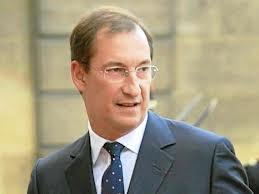
PARIS, Oct 28: An aide of French former president Nicolas Sarkozy was on Monday charged in an illegal political funding scandal known as the “Karachi Affair,” a complex probe into alleged kickbacks on arms deals.
Nicolas Bazire, the current number two of luxury group LVMH, was heard by judges for four hours and accused of handling illicit funds used for political campaigns.
A former campaign manager for ex-prime minister Edouard Balladur, Bazire had been under investigation since September.
Investigators are looking into irregularities in the financing of Balladur’s 1995 presidential campaign. Sarkozy was Balladur’s campaign spokesman and budget minister at the time.
Judges suspect Balladur’s campaign of receiving illicit “retro-commissions” from the sale of French submarines to Pakistan. Two Sarkozy political aides and a former minister are under formal investigation over the affair.
Judges are also probing claims that a 2002 bombing in Karachi that killed 11 French naval engineers was carried out by Pakistani agents in revenge for the cancellation of bribes secretly promised to officials.
The payment of arms sales commissions was legal in France until 2000, but the payment of kickbacks back to France was and is illegal.
The probe focuses on the 1994 sale of submarines to Pakistan and frigates to Saudi Arabia.
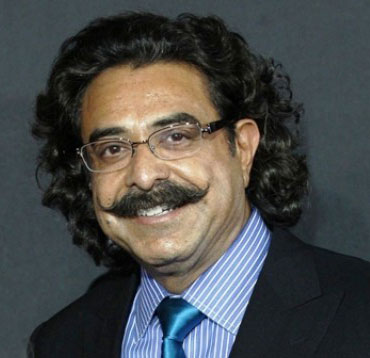
NEW YORK, Oct 26: Pakistan-born billionaire Shahid Khan has told US television newsmagazine “60 Minutes” that racist remarks when he bought the NFL’s Jacksonville Jaguars last November made him more determined to succeed.
CBS said Thursday that the report, to air on the show’s Sunday telecast, shows Khan that he felt like such remarks as “sand monkey” and “terrorist from Pakistan” were not his problem but showed the troubles of those who made them.
“(I reacted) the way I reacted most of my life, which is it’s not really my problem. It’s their problem,” he said. “It was not Jacksonville’s finest moment.”
Anti-Muslim insults did not spoil Khan’s joy at buying the Jaguars from former owner Wayne Weaver, whom Khan said was embarassed by the racist remarks and concerned they might want Khan to forget the deal.
“I think he was surprised. And he wanted to just make sure that you know, it wasn’t giving me pause,” Khan said, noting he never had a second thought about completing the purchase because of the comments.
“As a matter of fact, if it was possible for me to be more determined, it… gave me more determination.”Khan spent $760 million, according to Forbes magazine, for the Jaguars, which were founded as an expansion team in 1995. Khan had failed in a 2010 bid to purchase the St. Louis Rams, a central US NFL team much nearer his business.
Khan said Pakistan lacks the same opportunities he found in the United States, visiting where he grew up in Lahore with a CBS film crew.
“See how hard things are? Power’s going out, it’s 108 degrees. It’s tough,”Khan said. “I think the biggest impediment here is that hope, getting to the next stage, it doesn’t matter how hard you work, there are forces that kind of prevent you from being the best you can be.”
Khan came to the United States in 1967 at age 16 to attend college and went from working in a small garage to making a fortune in auto parts, his unqiue one-piece bumper design becoming a hit in vehicle manufacturing circles.
Two-thirds of all cars and trucks sold in America now have at least one part manufactured by Khan’s firm, Flex-N-Gate, and he ranks among the 400 richest Americans as categoried by Forbes.
Khan, who was born in Pakistan in 1950, graduated with an engineering degree from the University of Illinois in 1971, a year after he started working at Flex-N-Gate, which he bought in 1980. It now has $3 billion in annual sales.
“This gentleman is absolutely the American story,” Weaver said at the time of the sale. “He came to this country from Pakistan… he has factories worldwide and is one of the major producers of parts for all of the major automobile companies.
“I absolutely admire entrepreneurs and he absolutely sets the bar.”
Washington, Oct 23: Over the past two years, the Obama administration has been secretly developing a new blueprint for pursuing terrorists, a next-generation targeting list called the “disposition matrix.”
The matrix contains the names of terrorism suspects arrayed against an accounting of the resources being marshaled to track them down, including sealed indictments and clandestine operations. U.S. officials said the database is designed to go beyond existing kill lists, mapping plans for the “disposition” of suspects beyond the reach of American drones.
Although the matrix is a work in progress, the effort to create it reflects a reality setting in among the nation’s counterterrorism ranks: The United States’ conventional wars are winding down, but the government expects to continue adding names to kill or capture lists for years.
Among senior Obama administration officials, there is a broad consensus that such operations are likely to be extended at least another decade. Given the way al-Qaeda continues to metastasize, some officials said no clear end is in sight.
“We can’t possibly kill everyone who wants to harm us,” a senior administration official said. “It’s a necessary part of what we do. . . . We’re not going to wind up in 10 years in a world of everybody holding hands and saying, ‘We love America.’ ”
That timeline suggests that the United States has reached only the midpoint of what was once known as the global war on terrorism. Targeting lists that were regarded as finite emergency measures after the attacks of Sept. 11, 2001, are now fixtures of the national security apparatus. The rosters expand and contract with the pace of drone strikes but never go to zero.
Meanwhile, a significant milestone looms: The number of militants and civilians killed in the drone campaign over the past 10 years will soon exceed 3,000 by certain estimates, surpassing the number of people al-Qaeda killed in the Sept. 11 attacks.
The Obama administration has touted its successes against the terrorist network, including the death of Osama bin Laden, as signature achievements that argue for President Obama’s reelection. The administration has taken tentative steps toward greater transparency, formally acknowledging for the first time the United States’ use of armed drones.
Less visible is the extent to which Obama has institutionalized the highly classified practice of targeted killing, transforming ad-hoc elements into a counterterrorism infrastructure capable of sustaining a seemingly permanent war. Spokesmen for the White House, the National Counterterrorism Center, the CIA and other agencies declined to comment on the matrix or other counterterrorism programs.
Privately, officials acknowledge that the development of the matrix is part of a series of moves, in Washington and overseas, to embed counterterrorism tools into U.S. policy for the long haul.
White House counterterrorism adviser John O. Brennan is seeking to codify the administration’s approach to generating capture/kill lists, part of a broader effort to guide future administrations through the counterterrorism processes that Obama has embraced.
The U.S. Joint Special Operations Command, which carried out the raid that killed bin Laden, has moved commando teams into suspected terrorist hotbeds in Africa. A rugged U.S. outpost in Djibouti has been transformed into a launching pad for counterterrorism operations across the Horn of Africa and the Middle East.
JSOC also has established a secret targeting center across the Potomac River from Washington, current and former U.S. officials said. The elite command’s targeting cells have traditionally been located near the front lines of its missions, including in Iraq and Afghanistan. But JSOC created a “national capital region” task force that is a 15-minute commute from the White House so it could be more directly involved in deliberations about al-Qaeda lists.
The developments were described by current and former officials from the White House and the Pentagon, as well as intelligence and counterterrorism agencies. Most spoke on the condition of anonymity because of the sensitivity of the subject.
These counterterrorism components have been affixed to a legal foundation for targeted killing that the Obama administration has discussed more openly over the past year. In a series of speeches, administration officials have cited legal bases, including the congressional authorization to use military force granted after the Sept. 11 attacks, as well as the nation’s right to defend itself.
Critics contend that those justifications have become more tenuous as the drone campaign has expanded far beyond the core group of al-Qaeda operatives behind the strikes on New York and Washington. Critics note that the administration still doesn’t confirm the CIA’s involvement or the identities of those who are killed. Certain strikes are now under legal challenge, including the killings last year in Yemen of U.S.-born al-Qaeda operative Anwar al-Awlaki and his 16-year-old son.
Counterterrorism experts said the reliance on targeted killing is self-perpetuating, yielding undeniable short-term results that may obscure long-term costs.
“The problem with the drone is it’s like your lawn mower,” said Bruce Riedel, a former CIA analyst and Obama counterterrorism adviser. “You’ve got to mow the lawn all the time. The minute you stop mowing, the grass is going to grow back.”
An evolving database
The United States now operates multiple drone programs, including acknowledged U.S. military patrols over conflict zones in Afghanistan and Libya, and classified CIA surveillance flights over Iran.
Strikes against al-Qaeda, however, are carried out under secret lethal programs involving the CIA and JSOC. The matrix was developed by the NCTC, under former director Michael Leiter, to augment those organizations’ separate but overlapping kill lists, officials said.
The result is a single, continually evolving database in which biographies, locations, known associates and affiliated organizations are all catalogued. So are strategies for taking targets down, including extradition requests, capture operations and drone patrols.
Obama’s decision to shutter the CIA’s secret prisons ended a program that had become a source of international scorn, but it also complicated the pursuit of terrorists. Unless a suspect surfaced in the sights of a drone in Pakistan or Yemen, the United States had to scramble to figure out what to do.
“We had a disposition problem,” said a former U.S. counterterrorism official involved in developing the matrix.
The database is meant to map out contingencies, creating an operational menu that spells out each agency’s role in case a suspect surfaces in an unexpected spot. “If he’s in Saudi Arabia, pick up with the Saudis,” the former official said. “If traveling overseas to al-Shabaab [in Somalia] we can pick him up by ship. If in Yemen, kill or have the Yemenis pick him up.”
Officials declined to disclose the identities of suspects on the matrix. They pointed, however, to the capture last year of alleged al-Qaeda operative Ahmed Abdulkadir Warsame off the coast of Yemen. Warsame was held for two months aboard a U.S. ship before being transferred to the custody of the Justice Department and charged in federal court in New York.
“Warsame was a classic case of ‘What are we going to do with him?’ ” the former counterterrorism official said. In such cases, the matrix lays out plans, including which U.S. naval vessels are in the vicinity and which charges the Justice Department should prepare.
“Clearly, there were people in Yemen that we had on the matrix,” as well as others in Pakistan and Afghanistan, the former counterterrorism official said. The matrix was a way to be ready if they moved. “How do we deal with these guys in transit? You weren’t going to fire a drone if they were moving through Turkey or Iran.”
Officials described the matrix as a database in development, although its status is unclear. Some said it has not been implemented because it is too cumbersome. Others, including officials from the White House, Congress and intelligence agencies, described it as a blueprint that could help the United States adapt to al-Qaeda’s morphing structure and its efforts to exploit turmoil across North Africa and the Middle East.
A year after Defense Secretary Leon E. Panetta declared the core of al-Qaeda near strategic defeat, officials see an array of emerging threats beyond Pakistan, Yemen and Somalia — the three countries where almost all U.S. drone strikes have occurred.
The Arab spring has upended U.S. counterterrorism partnerships in countries including Egypt where U.S. officials fear al-Qaeda could establish new roots. The network’s affiliate in North Africa, al-Qaeda in the Islamic Maghreb, has seized territory in northern Mali and acquired weapons that were smuggled out of Libya.
“Egypt worries me to no end,” a high-ranking administration official said. “Look at Libya, Algeria and Mali and then across the Sahel. You’re talking about such wide expanses of territory, with open borders and military, security and intelligence capabilities that are basically nonexistent.”
Streamlining targeted killing
The creation of the matrix and the institutionalization of kill/capture lists reflect a shift that is as psychological as it is strategic.
Before the attacks of Sept. 11, 2001, the United States recoiled at the idea of targeted killing. The Sept. 11 commission recounted how the Clinton administration had passed on a series of opportunities to target bin Laden in the years before the attacks — before armed drones existed. President Bill Clinton approved a set of cruise-missile strikes in 1998 after al-Qaeda bombed embassies in East Africa, but after extensive deliberation, and the group’s leader escaped harm.
Targeted killing is now so routine that the Obama administration has spent much of the past year codifying and streamlining the processes that sustain it.
This year, the White House scrapped a system in which the Pentagon and the National Security Council had overlapping roles in scrutinizing the names being added to U.S. target lists.
Now the system functions like a funnel, starting with input from half a dozen agencies and narrowing through layers of review until proposed revisions are laid on Brennan’s desk, and subsequently presented to the president.
Video-conference calls that were previously convened by Adm. Mike Mullen, then-chairman of the Joint Chiefs of Staff, have been discontinued. Officials said Brennan thought the process shouldn’t be run by those who pull the trigger on strikes.
“What changed is rather than the chairman doing that, John chairs the meeting,” said Leiter, the former head of the NCTC.
The administration has also elevated the role of the NCTC, which was conceived as a clearinghouse for threat data and has no operational capability. Under Brennan, who served as its founding director, the center has emerged as a targeting hub.
Other entities have far more resources focused on al-Qaeda. The CIA, JSOC and U.S. Central Command have hundreds of analysts devoted to the terrorist network’s franchise in Yemen, while the NCTC has fewer than two dozen. But the center controls a key function.
“It is the keeper of the criteria,” a former U.S. counterterrorism official said, meaning that it is in charge of culling names from al-Qaeda databases for targeting lists based on criteria dictated by the White House.
The criteria are classified but center on obvious questions: Who are the operational leaders? Who are the key facilitators? A typical White House request will direct the NCTC to generate a list of al-Qaeda operatives in Yemen involved in carrying out or plotting attacks against U.S. personnel in Sanaa.
The lists are reviewed at regular three-month intervals during meetings at the NCTC headquarters that involve analysts from other organizations, including the CIA, the State Department and JSOC. Officials stress that these sessions don’t equate to approval for additions to kill lists, an authority that rests exclusively with the White House.
With no objections — and officials said those have been rare — names are submitted to a panel of National Security Council officials that is chaired by Brennan and includes the deputy directors of the CIA and the FBI, as well as top officials from the State Department, the Pentagon and the NCTC.
Obama approves the criteria for lists and signs off on drone strikes outside Pakistan, where decisions on when to fire are made by the director of the CIA. But aside from Obama’s presence at “Terror Tuesday” meetings — which generally are devoted to discussing terrorism threats and trends rather than approving targets — the president’s involvement is more indirect.
“The president would never come to a deputies meeting,” a senior administration official said, although participants recalled cases in which Brennan stepped out of the situation room to get Obama’s direction on questions the group couldn’t resolve.
The review process is compressed but not skipped when the CIA or JSOC has compelling intelligence and a narrow window in which to strike, officials said. The approach also applies to the development of criteria for “signature strikes,” which allow the CIA and JSOC to hit targets based on patterns of activity — packing a vehicle with explosives, for example — even when the identities of those who would be killed is unclear.
A model approach
For an administration that is the first to embrace targeted killing on a wide scale, officials seem confident that they have devised an approach that is so bureaucratically, legally and morally sound that future administrations will follow suit.
During Monday’s presidential debate, Republican nominee Mitt Romney made it clear that he would continue the drone campaign. “We can’t kill our way out of this,” he said, but added later that Obama was “right to up the usage” of drone strikes and that he would do the same.
As Obama nears the end of his term, officials said the kill list in Pakistan has slipped to fewer than 10 al-Qaeda targets, down from as many as two dozen. The agency now aims many of its Predator strikes at the Haqqani network, which has been blamed for attacks on U.S. forces in Afghanistan.
In Yemen, the number of militants on the list has ranged from 10 to 15, officials said, and is not likely to slip into the single digits anytime soon, even though there have been 36 U.S. airstrikes this year.
The number of targets on the lists isn’t fixed, officials said, but fluctuates based on adjustments to criteria. Officials defended the arrangement even while acknowledging an erosion in the caliber of operatives placed in the drones’ cross hairs.
“Is the person currently Number 4 as good as the Number 4 seven years ago? Probably not,” said a former senior U.S. counterterrorism official involved in the process until earlier this year. “But it doesn’t mean he’s not dangerous.”
In focusing on bureaucratic refinements, the administration has largely avoided confronting more fundamental questions about the lists. Internal doubts about the effectiveness of the drone campaign are almost nonexistent. So are apparent alternatives.
“When you rely on a particular tactic, it starts to become the core of your strategy — you see the puff of smoke, and he’s gone,” said Paul Pillar, a former deputy director of the CIA’s counterterrorism center. “When we institutionalize certain things, including targeted killing, it does cross a threshold that makes it harder to cross back.”
For a decade, the dimensions of the drone campaign have been driven by short-term objectives: the degradation of al-Qaeda and the prevention of a follow-on, large-scale attack on American soil.
Side effects are more difficult to measure — including the extent to which strikes breed more enemies of the United States — but could be more consequential if the campaign continues for 10 more years.
“We are looking at something that is potentially indefinite,” Pillar said. “We have to pay particular attention, maybe more than we collectively have so far, to the longer-term pros and cons to the methods we use.”
Obama administration officials at times have sought to trigger debate over how long the nation might employ the kill lists. But officials said the discussions became dead ends.
In one instance, Mullen, the former Joint Chiefs chairman, returned from Pakistan and recounted a heated confrontation with his counterpart, Gen. Ashfaq Parvez Kayani.
Mullen told White House and counterterrorism officials that the Pakistani military chief had demanded an answer to a seemingly reasonable question: After hundreds of drone strikes, how could the United States possibly still be working its way through a “top 20” list?
The issue resurfaced after the U.S. raid that killed bin Laden. Seeking to repair a rift with Pakistan, Panetta, the CIA director, told Kayani and others that the United States had only a handful of targets left and would be able to wind down the drone campaign.
A senior aide to Panetta disputed this account, and said Panetta mentioned the shrinking target list during his trip to Islamabad but didn’t raise the prospect that drone strikes would end. Two former U.S. officials said the White House told Panetta to avoid even hinting at commitments the United States was not prepared to keep.
“We didn’t want to get into the business of limitless lists,” said a former senior U.S. counterterrorism official who spent years overseeing the lists. “There is this apparatus created to deal with counterterrorism. It’s still useful. The question is: When will it stop being useful? I don’t know.”
Karen DeYoung, Craig Whitlock and Julie Tate contributed to this report.