Why Pakistan Is a Bigger Threat to Israel than Iran

While the United States and Israel incessantly obsess with the possibility of a future nuclear Iran, they barely ever raise such concerns about Iran’s next door Islamic neighbour Pakistan that brandishes its nuclear weapons with Islamic zeal and barely concealed contempt for the “kufaar” — Jews, Christians, Hindus, atheists and other non-Muslims.

But there are others inside Pakistan who do not share America and Israel’s myopia. The country’s leading anti-nuclear activist, physicist Pervez Hoodbhoy in his book Confronting the Bomb, has this to say about Pakistan’s nukes:

“The fear of loose [nuclear] weapons comes from the fact that Pakistan’s armed forces harbour a hidden enemy within their ranks. Those wearing the cloak of religion freely walk in and out of top security nuclear installations every day … The fear of the insider is ubiquitous and well-founded.”

Prof. Hoodbhoy is able to see through the complexity of his country’s nuclear arsenal that both the White House and Jerusalem either choose to overlook or are grossly ignorant about. Hoodbhoy maintains that there are two Pakistani armies. One led by General Pervez Ashraf Kayani and the other by Allah. “It is difficult to find another example where the defence apparatus of a modern state has been rendered so vulnerable by the threat posed by military insiders.” Even non-fundamentalist elements are “soft Islamists,” he says. Hoodbhoy describes the Pakistani army as “a heavily Islamicised rank-and-file brimming with seditious thoughts.”

As a friend of the Jewish people as well as the Arabs, the thought of a nuclear devise exploding over Israel gives me the jitters. The fact is, millions of Arabs too will be eviscerated in a nuclear attack on the Jewish State.

In meeting with leading Jewish intellectuals and academia in North America and some in Israel itself, I am struck by the lack of knowledge they have about Pakistan, let alone its nuclear program. Few write about the internal dynamics of Pakistan that has emerged as the world’s number one source of jihadi suicide bombers and ground zero for the training of Islamic terrorists.

Pakistan is not an easy subject. It is a multi-ethnic country with a multi-lingual population dominated by Punjab; a civil war in Balochistan; a disputed border with Afghanistan; hundreds of thousands of troops on war footing at the Kashmir Line of Control against India; a slow slaughter of the country’s Shia population and China’s strategic interests at the mouth of the Straits of Hormuz.

All of this makes the study of Pakistan a daunting task for any outsider. Even Britain and the USA who helped create the country to install a buffer state between the advancing USSR and India after the Second World War, have not been able to read the tea leaves with any degree of accuracy.

As I write this essay, Pakistan produces more nuclear bombs than any other nuclear power while developing longer-range missiles. On paper, these nuclear warheads and missiles are India-centric and pointed towards the east. However, Pakistan’s nuclear arsenal is not at a static location and the warheads as well as missiles are constantly on the move, and if there is one country that the Pakistan’s politicians, both on the right as well as the left, hate more than India, it is Israel.

Are Israelis aware of the vulnerabilities in Pakistan’s nuclear program that make it possible for non-state jihadi actors to strike at the Jewish State? I doubt it.

Pakistan is a society based on the hatred of the “other.” Since its creation, the Hindu and the Jew, (“Hanood wa Yahood” in the popular street lexicon of the Urdu language) has been cultivated as the enemy of the country and Islam.

In a culture of violence, three million fellow Muslims were killed in genocide in 1971 in Bangladesh. With the liquidation of the Hindu population and the total absence of Jews, the addiction to killing the “other” is now consuming the Pakistanis from within.

Just in the three years leading up to the 2011 capture and death of Osama Bin Laden in Abbotabad, Pakistan, there were 225 suicide bombings in the country killing over 3,900 people, and all of them in politically motivated attacks by Sunni Muslim jihadis. All the victims — from Ahmadi Muslims to Shia Muslims — are accused of serving the Zionist cause and thus eliminated.

Shia vs. Sunni

The irony is that while Israel considers Shia Iran as its primary enemy and nurtures a cold peace with Jordan and Egypt, the Shias of Iran are often branded as a secret Jewish sect by Sunni Muslim clerics in both Egypt and Jordan. Jews around the world seem to oblivious to this fact as they read about the slaughter of Shias in Pakistan and the open hostility towards them from places as far apart as Indonesia to Indiana (home to America’s Islamist organisation ISNA ).

If one were to study the sources of Jew-hatred, they are invariably rooted in Pakistan and the Arab World. If it comes to terrorist attacks carried out around the globe, almost all of them have either originated in Pakistan, were carried out by young men of Pakistani ancestry or by jihadi terrorists who were trained on Pakistani soil. Else, they were planned and executed by Islamabad’s intelligence agency, the ISI and its sponsored terrorist organizations. Yet, in the eyes of Israel and the Jewish Diaspora, it is Iran that is the anti-Semitic capital of the world, hell-bent on destroying the Jewish State.

Let me catalogue the role Pakistan has played in international terrorism, long before its territory was used by Osama Bin Laden and Khaled Sheikh Mohammed to plan and execute the 9/11 attack on the United States.

International Terrorism linked to Pakistan

  1. September 1986: Armed men attempt to hijack a Pan Am jet on the tarmac of Karachi airport in which 20 people died. Among the arrested were five Palestinians belonging to the Abu Nidal group and seven Pakistanis.
  2. January 1993: The CIA headquarters in Langley, Virginia is attacked, killing two CIA employees and wounding three others. The perpetrator is a Pakistani, Ajmal Kansi. Four years later in 1997 he is captured by FBI agents in rendered back to the United States to stand trial and was executed by lethal injection in 2002.
  3. February 1993: The World Trade Centre is attacked using a truck bomb. The mastermind of the attack, Ramzi Yousef is later arrested in 1995 in Islamabad, Pakistan.
  4. August 1998: American embassies in Kenya and Tanzania are bombed, killing 223 people and wounding over 4,000 others. One of the planners of this terror attack,Ahmed Khalfan Ghailani is arrested in 2004 in Gujrat, Pakistan.
  5. October 2000: Jihadi terrorists carry out a suicide attack on the United States Navy guided-missile destroyer USS Cole while it is harboured and being refuelled in the Yemen port of Aden. Seventeen American sailors are killed, and 39 injured. The Saudi mastermind behind this attack, Walid Bin Attash is later captured on April 29, 2003 in Karachi, Pakistan.
  6. May 2002: A suicide bomber kills 11 French naval engineers outside The Sheraton Hotel in Karachi, Pakistan. Three years later the bomb maker, Mufti Muhammad Sabir is arrested 2005 in Karachi, Pakistan.
  7. October 2002: Jihadi terrorists attack the Indonesian tourist resort of Bali killing 202 people and injuring another 240. Nine years later, the chief suspect in the bombing, Umar Patek of the militant group Jemaah Islamiah is arrested in 2011 in Abbotabad, Pakistan.
  8. July 2005: Jihadi terrorists carry out the now infamous 7/7 suicide bombings in London, UK, killing 52 people and injuring 700 others. Three of the four suicide bombers are of Pakistani ancestry. In January 2009, one of the planners of the London 7/7 bombings, Saudi national Zabi uk-Taifi is arrested in a village just outside Peshawar, Pakistan.
  9. December 2008: Pakistani jihadi terrorists carry out a sea-borne suicide attack on Mumbai, India, killing 166 people including a rabbi and his pregnant wife at a Jewish Centre, and injuring 308 others. The mastermind of the Mumbai attack was the Pakistani-American David Coleman Headley (born Daud Sayed Gilani). His alleged Pakistani-Canadian accomplice, Muhammad Tahwwar Rana, was acquitted in the Mumbai attacks but convicted of working for the terror group, Lashkar-e-Taiba (LeT), long suspected of being supported by Pakistan’s ISI.
  10. May 2010: A bombing at New York Times Square is foiled when street vendors discover smoke coming from a vehicle and alert an NYPD patrolman. The bomb had ignited, but failed to explode, and was disarmed before it caused any casualties. Two days later federal agents arrest a man at John F. Kennedy International Airport after he tries to board an Emirate Airlines flight to Dubai. He is Faisal Shahzad, a 30-year-old Pakistani-American.

In addition to the above list of international jihadi terror attacks associated with Pakistan, the country has been home to most of the Al-Qaeda leadership, including Osama Bin Laden. They include the following five:

  • Abu Zubaydah, a Saudi citizen currently held in U.S. custody, was arrested in March 2002 in Faisalabad, Pakistan.
  • Ramzi bin al-Shibh, a Yemeni citizen being held by the United States as an enemy combatant detainee at Guantanamo Bay in Cuba. He was captured in September 2002, in Karachi, Pakistan.
  • Khalid Sheikh Mohammed is currently in U.S. military custody in Guantánamo Bay for acts of terrorism, including mass murder of civilians, as he has been identified as “the principal architect of the 9/11 attacks”. He was captured in March 2003 in Rawalpindi, Pakistan.
  • Abu Faraj al-Libbi is the nom de guerre of a Libyan who is a senior member of al-Qaeda. [His real name is thought to be Mustafa al-‘Uzayti.] Al-Labibi was arrested in May 2005 in Mardan, Pakistan.
  • Mustafa Nasar, also known as Abu Musab al-Suri is a Syrian-born leader of al-Qaeda who holds Spanish citizenship. He is wanted in Spain for the 1985 El Descanso bombing that killed 18 people, and in connection with the 2004 Madrid train bombings. Nasar too ended up in Pakistan where he was captured in October 2005 in the Pakistani city of Quetta.

Not to mention the fact that the only time Britons have been involved in a suicide bombing attack inside Israel, it has involved men of Pakistan ancestry. In May 2003 a suicide bomber and his accomplice murdered three people and wounded scores at a Tel Aviv bar. The 21-year-old bomber, Asif Mohammed Hanif died in the attack while his accomplice as Omar Khan Sharif failed to detonate his bomb. Both were born to Pakistani parents in the U.K.

Hanif was not the first Pakistani-Briton to commit terror against Jews. In 2002, Omar Saeed Sheikh of London masterminded the kidnap and murder of Wall Street Journal journalist Daniel Pearl in Pakistan.

Compared to the acts of international terror that have a Pakistani link, terrorism that originates in Iran is few and far between.

The first international atrocity that can be traced back to Iran was committed in 1994 when the Asociacion Mutual Israelita Argentina (AMIA) Jewish Centre in Buenos Aires, Argentinewas bombed, killing 85 people and wounding 300 more. There is little doubt that senior Iranian officials were behind the attack and that their Lebanese-based Hezbollah allies carried out the attack.

The only other major act of Iranian international terror was in February 2012 when a bomb explosion targeted an Israeli diplomat in New Delhi, India.

Why Iran? Why not Pakistan?

Why then is Israel so obsessed with Iran, but not Pakistan? One of the reasons may be the presence in Israel of an influential Persian Jewish community with roots in Iran, and who have a particularly nasty experience with the regime of the Ayatollahs compared to the era when a close relationship between Israel and Iran existed during the reign of The Shah until 1979.

Iranian Jews in Israel are estimated to be 200,000 to 250,000 strong and have a far greater role in the country’s public policy making then their numbers suggest. From Dan Halutz , the former chief of Staff of the Israel Defence Forces (IDF) to the now disgraced former president of the country Moshe Katsav, Iranian Jews in Israel pull more than their weight in the affairs of the country.

Today the former Israeli Minister of Transport Shaul Mofaz, leads the Kadima Party while Michael Ben-Ari and Mordechai Zar are members of the Knesset.

Compared to Iranian Jews in Israel, Pakistani Jews do not exceed 2,000 in number, and their claim to fame is restricted to the introduction of cricket inside Israel. They mostly live in the city of Ramla and do not have any prominent figure in the Israeli political discourse. Few of these Pakistanis have any links or even memories of Pakistan and unlike their Iranian counterparts, lack any insight into the current political nature of their former homeland.

While Israel Radio runs a daily Farsi language service since the 1950s, it has no such broadcast in Punjabi, Urdu, Balochi, Puhstu, or Sindhi, the languages of Pakistan. It is no wonder that in Israel there is such a dearth of scholarship on Pakistan and that country’s involvement in international jihadi terrorism.

While the 180-million population of Pakistan and its diaspora is almost universally anti-Semitic and hostile to Israel, the ordinary Iranian is neither obsessed with Jew hatred nor seeped in convoluted theories of Jewish conspiracies that are ubiquitous among its next door Pakistani neighbours.

Israelis are justifiably worried with the rabid rhetoric that emanates from the Iranian ayatollahs. However, they need to recognise that it is Pakistan that has 100 nuclear warheads and missiles that can reach Israel, not Iran.

Obsessing with Iran while shrugging off the threats posed by Pakistan and its jihadi sponsor Saudi Arabia, may be a mistake that Jerusalem can still correct while it has a chance.

Already there are reports that Saudi Arabia’s former intelligence chief Prince Turki al-Faisal is in support of cooperating secretly with Pakistan in developing a Saudi-based nuclear program. This initiative has the backing of the current director of Saudi intelligence agency, Prince Bandar Bin Sultan.

srael needs to realize that Iran and Syria may be the dogs that bark, but it is Saudi Arabia and Pakistan who are the ones most likely to bite.
Militants kill 9 foreign tourists, 1 Pakistani at base of one of world’s highest mountains

Nanga Parbat base camp (Credit: halaat.com)
Nanga Parbat base camp
(Credit: halaat.com)
ISLAMABAD, June 23 — Islamic militants wearing police uniforms shot to death nine foreign tourists and one Pakistani before dawn Sunday as they were visiting one of the world’s highest mountains in a remote area of northern Pakistan, officials said.

The foreigners who were killed included five Ukrainians, three Chinese and one Russian, said Pakistani Interior Minister Chaudhry Nisar Ali Khan. One Chinese tourist was wounded in the attack and was rescued, he said.

The local branch of the Taliban took responsibility for the killings, saying it was to avenge the death of a leader killed in a drone strike.

The shooting is likely to damage the country’s struggling tourism industry. Pakistan’s mountainous north — considered until now relatively safe — is one of the main attractions in a country beset with insurgency and other political instability.

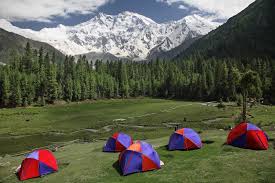
The attack took place at the base camp of Nanga Parbat, the ninth highest mountain in the world at 8,126 meters (26,660 feet). Nanga Parbat is notoriously difficult to climb and is known as the “killer mountain” because of numerous mountaineering deaths in the past. It’s unclear if the tourists were planning to climb the mountain or were just visiting the base camp, which is located in the Gilgit-Baltistan region of Pakistan.

The gunmen were wearing uniforms used by the Gilgit Scouts, a paramilitary police force that patrols the area, said the interior minister. The attackers abducted two local guides to find their way to the remote base camp. One of the guides was killed in the shooting, and the other has been detained and is being questioned, said Khan.

“The government will take all measures to ensure the safety of foreign tourists,” said the interior minister in a speech in the National Assembly, which passed a resolution condemning the incident.

Pakistani Taliban spokesman Ahsanullah Ahsan claimed responsibility for the attack, saying their Jundul Hafsa group carried out the shooting as retaliation for the death of the Taliban’s deputy leader, Waliur Rehman, in a U.S. drone attack on May 29.

“By killing foreigners, we wanted to give a message to the world to play their role in bringing an end to the drone attacks,” Ahsan told The Associated Press by telephone from an undisclosed location.

The attackers beat up the Pakistanis who were accompanying the tourists, took their money and tied them up, said a senior local government official. They checked the identities of the Pakistanis and shot to death one of them, possibly because he was a minority Shiite Muslim, said the official, speaking on condition of anonymity because he was not authorized to talk to the media. Although Gilgit-Baltistan is a relatively peaceful area, it has experienced attacks by radical Sunni Muslims on Shiites in recent years.

The attackers took the money and passports from the foreigners and then gunned them down, said the official. It’s unclear how the Chinese tourist who was rescued managed to avoid being killed.

Local police chief Barkat Ali said they first learned of the attack when one of the local guides called the police station around 1 a.m. on Sunday.

The Pakistani government condemned the shooting in a statement sent to reporters.

“The government of Pakistan expresses its deep sense of shock and grief on this brutal act of terrorism, and extends its sympathy to the families of the victims,” said a statement issued by the Foreign Ministry. “Those who have committed this heinous crime seem to be attempting to disrupt the growing relations of Pakistan with China and other friendly countries.”

Pakistan has very close ties with neighboring China and is very sensitive to an issue that could harm the relationship. Pakistani officials have reached out to representatives from China and Ukraine to convey their sympathies, the Foreign Ministry said.

Many foreign tourists stay away from Pakistan because of the perceived danger of visiting a country that is home to a large number of Islamic militant groups, such as the Taliban and al-Qaida, which mostly reside in the northwest near the Afghan border. But a relatively small number of intrepid foreigners visit Gilgit-Baltistan during the summer to marvel at the peaks of the Himalayan and Karakoram ranges, including K2, the second highest mountain in the world.

Syed Mehdi Shah, the chief minister of Gilgit-Baltistan, condemned the attack and expressed fear that it would seriously damage the region’s tourism industry.

“A lot of tourists come to this area in the summer, and our local people work to earn money from these people,” said Shah. “This will not only affect our area, but will adversely affect all of Pakistan.”

Shah said authorities are still trying to get more information about exactly what happened to the tourists. The area where the attack occurred, Bunar Nala, is only accessible by foot or on horseback, and communications can be difficult, said Shah. Bunar Nala is on one of three routes to reach Nanga Parbat, he said.

The area has been cordoned off by police and paramilitary soldiers, and a military helicopter is searching the area, said Shah. The military plans to airlift the bodies of the foreign tourists to Islamabad, he said.

“God willing we will find the perpetrators of this tragic incident,” said Shah.

The government suspended the top police chief in Gilgit-Baltistan following the attack and has ordered an inquiry into the incident, said Khan, the interior minister.

_____

Associated Press writer Rasool Dawar contributed to this report from Peshawar, Pakistan.

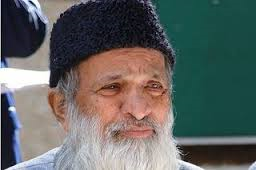
Edhi in Critical Health due to Failing Kidneys

Maulana Abdus Sattar Edhi (facebook.com)
Maulana Abdus Sattar Edhi
(facebook.com)
KARACHI, June 25: Renowned philanthropist, Abdul Sattar Edhi, is suffering from kidney failure, Dr Adib Rizvi said at a press conference on Tuesday.

Speaking at a press conference at the Sindh Institute of Urology and Transplantation (SIUT), Dr Rizvi said that both kidneys of Mr Edhi have “started failing”. He said that although a donor kidney has been requested, there were minimal chances of a successful transplant due to the frail health of Mr Edhi.

He added that in case a transplant is not conducted he (Edhi) will need daily dialysis to continue living.

Under treatment at SIUT for the past few days, the octogenarian sounded weak while speaking to Dawn.com over the telephone.

When asked about his condition, he said: “My son, Faisal, and wife Bilquis are taking care of everything. I have requested for a donor kidney. In any case if I deserve to live more years, then I’ll live.”

Considered one of Pakistan’s biggest philanthropists, octogenarian is the founder and head of the Edhi foundation.

The Edhi foundation operates a widespread ambulance service in Pakistan, said to be one of the biggest in the world.The foundation gets a large number of donations, thanks to the respect that Mr Edhi has earned from the public.

Apart from getting many nationally recognised awards, Mr Edhi was also nominated for the Nobel Peace Prize by the government in 2012.

Alternative Energy is Key to Ending Power Shortage – Nawaz

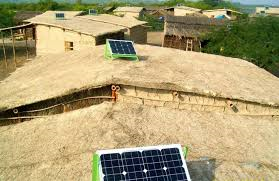
Solar panels in Thatta (Credit: facebook.com)
Solar panels in Thatta
(Credit: facebook.com)
ISLAMABAD, June 27: Prime Minister Nawaz Sharif on Wednesday said that Pakistan’s huge alternative energy potential holds the key to overcoming the acute energy crisis facing the country.

“All avenues need to be explored and every effort needs to be put in to tap in the alternative energy potential of the country,” the prime minister emphasised while speaking at a presentation given to him on solar energy resources in Pakistan and investment opportunities for a consortium of foreign and local companies. Nawaz expressed these views while speaking at a presentation given to him on solar energy resources in Pakistan and investment opportunities by a consortium of foreign and local companies.

The consortium showed confidence in the leadership of Nawaz Sharif and said that the pro-investor policies of the present government have attracted them towards investment opportunities in Pakistan. While addressing the meeting, the prime minister said that his government would go an extra mile to facilitate those companies and firms which transfer technology through their investments in the alternative energy sector in Pakistan.

The prime minister observed that Pakistan possesses huge potential of solar and wind energy and has a reservoir of coal and other fossil fuels to produce electricity which, if utilised optimally, would help improve people’s standards of living. Nawaz also took notice of non-provision of gas to thermal powerhouses and ordered that they be supplied the fuel on immediate basis and sought a report from the concerned authorities. It is noteworthy that electricity generation was affected due to the non-provision of gas to thermal powerhouses.

Nawaz Sharif will personally monitor the latest data on electricity, including availability and consumption. In this regard, the Ministry of Water and Power has installed equipment to provide latest data on electricity generation and its consumption at the Prime Minister’s Office in Islamabad. Minister for Water and Power Khawaja Asif has said that now the prime minister will personally monitor the latest electricity data and will issue directives in accordance with the situation. agencies

Multi-pronged attack in Balochistan kills 23

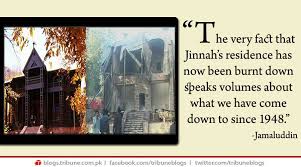
Jinnah's Ziarat residence burnt (Credit: facebook.com)
Jinnah’s Ziarat residence burnt
(Credit: facebook.com)
DAWN.COM | Syed Ali Shah

QUETTA/ISLAMABAD, June 15: At least 23 people, including 14 female students and the deputy commissioner Quetta, were killed Saturday in multiple bomb and gun attacks by militants in the capital of insurgency-hit Balochistan province.

Interior Minister Chaudhry Nisar Ali Khan told reporters at a press conference that several parts of the Bolan Medical Complex, taken under siege by terrorists, have now been cleared by security forces.

An operation was being carried out by security personnel to free the Bolan Medical Complex from heavily armed militants who had taken over parts of the hospital and were reported to have taken several people hostage.

A large number of patients and doctors were trapped inside the complex when heavily armed militants took the hospital under siege.

According to security forces, parts of the hospital have been cleared while four gunmen are still believed to be inside the complex.

Nisar confirmed that 35 hostages had now been freed by security forces.

“According to our official reports, four terrorists have been killed in the operation while one suspect has been arrested from outside the hospital,” said the interior minister.

The interior minister said further details of the ongoing operation to clear the hospital would be announced later.

Condemning the earlier attack on Ziarat Residency, he said that orders have been issued to re-build the historic monument of the country. Chaudhry Nisar also revealed that outlawed Balochistan Liberation Army (BLA) has claimed responsibility of the rocket attacks in Ziarat.

Nisar said the total death toll from the attacks in Quetta has now risen to 22, including four terrorists, four Frontier Corps personnel, Deputy Commissioner Quetta Abdul Mansoor Khan and 14 female students of the Sardar Bahadar Khan Women’s University.

The female students were killed earlier when an improvised explosive device ripped through a bus inside the university campus.

“The bomb exploded just when female teachers and students gathered inside the bus around 3 pm to proceed for Quetta city from the university,” CCPO Mir Zubair Mehmood said.

The CCPO said that most of the victims were female teachers and students. He said the bus caught fire after the powerful blast.

The injured were shifted to the Bolan Medical Complex, where half an hour later sounds of explosions and gunfire spread panic and chaos among the patients and doctors.

Several people were trapped inside the complex for hours as security personnel engaged in a grueling operation against the militants.

Security forces have now cleared most of the complex and evacuated the civilians, although CCPO Mir Zubair Mehmood said it might take another three hours to confirm that the hospital was clear of all terrorists.

Meanwhile, the Balochistan government has officially announced to observe a “day of mourning” on Sunday.

Earlier Saturday, militants attacked the Quaid-e-Azam residency in Ziarat with hand grenades, destroying the historical monument where the founder of Pakistan Mohammad Ali Jinnah spent his last days.

A policeman was killed in the attack on the Jinnah’s monumental residency.

Officials had confirmed that most of the old memorials inside the monument were destroyed, with historic photographs of the founder burnt to the ground in the resulting fire.

It was unclear if the attack on the Quaid’s residency in Ziarat was related to the later attacks in Quetta.

Federal Minister for Information and Broadcasting Senator Pervez Rashid assured full support to the Balochistan Government in the wake of the terrorist attacks in Balochistan.

Speaking to media representatives in Islamabad, Rashid strongly condemned the attacks. He said that those involved in these terrorist acts were the enemies of Pakistan and Balochistan.

He said that the entire nation was with the people of Balochistan at this critical juncture.

U.S. Presses Taliban on Qatar Office in Bid to Save Talks

By ALISSA J. RUBIN and ROD NORDLAND The New York Times

KABUL, Afghanistan — In a diplomatic scramble to keep alive the possibility of peace talks with the Taliban, American officials on Wednesday pressed the insurgents to backtrack on their effort to present themselves as essentially an alternative government at the office they opened Tuesday in Qatar, Afghan officials said.

The Afghan government, furious that assurances from the Americans that the Taliban would not use the Doha office for political or fund-raising purposes had been flouted, suspended bilateral security talks with the Americans earlier Wednesday and said they would not send their peace emissaries to Qatar to talk to the Taliban until there was a change.

American officials, worried that painstaking efforts to restart the peace process after 18 months of deadlock were crumbling right at a breakthrough moment, moved quickly to try to resolve the Afghan government’s objections to what increasingly appeared to be a publicity coup by the Taliban.

Afghans of nearly every political stripe expressed outrage and concern at widely broadcast news images of insurgent envoys raising the white Taliban flag from their days in power and speaking as if they had set up an embassy for a government in exile — including raising a sign that described the office as the political office of the Islamic Emirate of Afghanistan, the formal name of the old Taliban government. Qatari-based news organizations, including Al Jazeera, later broadcast several interviews with the envoys making their case for international attention.

Hours after President Hamid Karzai canceled talks with the Americans over a post-2014 security agreement, accusing the Americans of saying one thing and doing another, and then boycotting the Qatar peace talks, his spokesman said that he had received assurances from Secretary of State John Kerry that the Taliban office would be curbed.

The State Department spokeswoman, Jennifer R. Psaki, confirmed that, saying that Mr. Kerry had spoken twice with Mr. Karzai, on Tuesday night and again on Wednesday.

Mr. Kerry told him that Qatar’s government had assured that the Taliban’s office in the capital, Doha, had removed the Islamic Emirate sign. “The office must not be treated as or represent itself as an embassy or other office representing the Afghan Taliban as an emirate government or sovereign,” she said.

However there was much to repair from the events of the last two days, and the Afghans said they felt betrayed by their American allies and by the Taliban.

In lashing out, Mr. Karzai again showed his willingness to unilaterally halt American initiatives when his allies displeased him, after reining in American detention operations and Special Operations missions earlier this year. It struck directly at two of the most critical parts of the Obama administration’s long-term vision for Afghanistan: entering peace talks with the Taliban to help dampen the insurgency as Western troops withdraw, and reaching an agreement to allow a lasting American military force past 2014.

At the same time, it became increasingly apparent that the Taliban, at little cost in binding promises or capital, were seizing the peace process as a stage for publicity.

The rapid-fire developments on Wednesday came a day after the American military formally handed over control of security in all of Afghanistan to Afghan forces, a development that was followed hours later with the three sides’ announcement that peace talks would begin in Doha.

The opening was hailed by American officials as a breakthrough after 18 months of stalled peace efforts, though they cautioned that a long road remained ahead.

Meanwhile, the Taliban played to the cameras.

Opening their Doha office with a lavish ceremony that included a ribbon-cutting and the playing of the Taliban anthem, insurgent officials said they intended to use the site to meet with representatives of the international community and the United Nations, interact with the news media, “improve relations with countries around the world” and, almost as an afterthought, meet “Afghans if there is a need.” They did not mention the Afghan government.

Some of the other language the Taliban used closely followed the American framework for peace talks. The insurgents seemed to agree to distance themselves from Al Qaeda and other terrorist groups, saying the Taliban’s aims were only within Afghanistan and that they did not support the use of Afghan soil to plot international attacks.

In one move, showing a sudden and surprising willingness to open an office after months of resistance, the insurgents could appear to accede to an exhaustive international effort to start peace talks, even while using Qatari territory — and its globally reaching news outlets — in a new bid for acceptance as a political force.

“The way the Taliban office was opened in Qatar and the messages which were sent from it was in absolute contrast with all the guarantees that the United States of America had pledged,” said the statement from President Karzai’s office.

The statement also seemed to lump in Qatar, for its active role in facilitating the Taliban office, with the United States. “Recent developments showed that there are foreign hands behind the opening of the Taliban office in Qatar. Unless the peace process is led by Afghans, the High Peace Council will not participate in the Qatar negotiations,” the statement said, referring to a body Mr. Karzai established in 2010 during earlier peace efforts.

“The Taliban cannot call themselves an Islamic emirate,” said Aminuddin Mozafari, a member of the High Peace Council and a former mujahedeen commander who fought the Russians. “They are just a group of insurgents with no legal status.”

American officials said the Taliban overture was relatively sudden, initially signaled by Qatari officials toward the end of May. The timing, too, offered some surprise. Taliban forces in Afghanistan had been stepping up their attacks as summer neared, bloodying Afghan Army and police forces who have been taking the lead in security operations as American troops stepped back to a support role.

Almost as a reminder that the Taliban, too, could borrow a page from the “fight and talk” American road map for diplomacy in Afghanistan, insurgents struck within hours of the Doha office opening. Insurgents tripped a deadly ambush on an American convoy near the Bagram Air Base north of the Afghan capital, killing four American soldiers, Afghan officials said.

Steven Lee Myers contributed reporting from Washington, and Sangar Rahimi, Sharifullah Sahak, and Habib Zahori from Kabul.

Pakistan’s first war-ready female fighter pilot wins battle of sexes

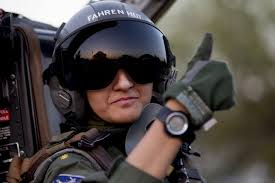
Ayesha Farooq (Credit:Pakistantimes.4com.ca)
Ayesha Farooq
(Credit:Pakistantimes.4com.ca)

MUSHAF AIR BASE, Pakistan: With an olive green head scarf poking out from her helmet, Ayesha Farooq flashes a cheeky grin when asked if it is lonely being the only war-ready female fighter pilot in the Islamic republic of Pakistan.

Farooq, from Punjab province’s historic city of Bahawalpur, is one of 19 women who have become pilots in the Pakistan Air Force over the last decade — there are five other female fighter pilots, but they have yet to take the final tests to qualify for combat.

“I don’t feel any different. We do the same activities, the same precision bombing,” the soft-spoken 26-year-old said of her male colleagues at Mushaf base in north Pakistan, where neatly piled warheads sit in sweltering 50 degree Celsius heat (122 F).

A growing number of women have joined Pakistan’s defence forces in recent years as attitudes towards women change.

“Because of terrorism and our geographical location it’s very important that we stay on our toes,” said Farooq, referring to Taliban militancy and a sharp rise in sectarian violence.

Deteriorating security in neighbouring Afghanistan, where US-led troops are preparing to leave by the end of next year, and an uneasy relationship with arch rival India to the east add to the mix.

Farooq, whose slim frame offers a study in contrast with her burly male colleagues, was at loggerheads with her widowed and uneducated mother seven years ago when she said she wanted to join the air force.

“In our society most girls don’t even think about doing such things as flying an aircraft,” she said.

Family pressure against the traditionally male domain of the armed forces dissuaded other women from taking the next step to become combat ready, air force officials said. They fly slower aircraft instead, ferrying troops and equipment around the nuclear-armed country of 180 million.

Less of a Taboo
Centuries-old rule in the tribal belt area along the border with Afghanistan, where rape, mutilation and the killing of women are ordered to mete out justice, underlines conservative Pakistan’s failures in protecting women’s rights.

But women are becoming more aware of those rights and signing up with the air force is about as empowering as it gets.

“More and more ladies are joining now,” said Nasim Abbas, Wing Commander of Squadron 20, made up of 25 pilots, including Farooq, who fly Chinese-made F-7PG fighter jets.

“It’s seen as less of a taboo. There’s been a shift in the nation’s, the society’s, way of thinking,” Abbas told Reuters on the base in Punjab’s Sargodha district, about 280 km (175 miles) east of the capital Islamabad, home base to many jets in the 1965 and 1971 wars with India.

There are now about 4,000 women in Pakistan’s armed forces, largely confined to desk jobs and medical work.

But over the last decade, women have became sky marshals, defending Pakistan’s commercial liners against insurgent attacks, and a select few are serving in the elite anti-terrorist force. Like most female soldiers in the world, Pakistani women are still banned from ground combat.

Pakistan now has 316 women in the air force compared to around 100 five years ago, Abbas said.

“In Pakistan, it’s very important to defend our front lines because of terrorism and it’s very important for everyone to be part of it,” said avionics engineer Anam Hassan, 24, as she set out for work on an F-16 fighter aircraft, her thick black hair tucked under a baseball cap.

“It just took a while for the air force to accept this.”

Rethinking Development

Good development experts have failed to get across a basic truth to Pakistan’s politicians and economic planners: If you are on a dirt road, fill the ruts – don’t dream of bullet trains and flyovers! One has to get the basics right before anything else can work. This obvious fact failed to register with the government and the Election Commission as it set in motion the recent ballot-box democracy exercise, allowing law breakers of all shades a free hand in returning to parliament. They overlooked the fact which every cook knows: clean the pans before preparing fresh meals! For those undaunted by this recent failure and blessed with an optimistic spirit, a potpourri of home truths is laid out.

A poor country like Pakistan cannot have sustainable development without reducing its population significantly through enlightened family planning. (It is best not to use the euphemism ‘developing country’, which we were in the 1960s when an attempt was made at population control.) How can we get back on track? A global perspective will help.

About 3 million children in poor countries die annually of diseases that can be prevented by basic healthcare and vaccination. The cost of providing a package of basic vaccines to a child is about Rs. 3000 – the price of a good meal in a luxury hotel. Pakistan has about 3% of the world’s population of 7 billion. Therefore roughly 250 kids die here daily. What’s the cost of avoiding these deaths? Just the price of one lavish wedding reception daily! And as for the basic healthcare for all, nothing is more important than providing potable water through community outlets, which is easily affordable.

Enlightened education, particularly of females, that encourages critical thinking is another key area needing urgent attention. Attempts at improving higher education level over a decade have overlooking the more critical lower levels where irreversible damage is presently done to impressionable minds. Education when viewed holistically should integrate all levels of education, including informal education, which brings the adult population up to steam and encourages lifelong learning. But who is going to do this?

The standard of pedagogy at all levels is poor. This failing can be corrected by a nationwide program of teachers’ training, principally in English communication skills. The world’s knowledge will continue its exponential growth in this language and we need to build on our advantage in English from the colonial era. Shortage of master trainers will require importing talent and where better to find it economically than India. Even more important is the provision of fast internet access nationally in neighborhood community cybercafés — that double up as cultural centers.

Large-scale provision of inexpensive multi-media projectors in institutions would allow students to view off-line programs of the best teachers globally with the local teacher acting as a facilitator. Our teachers and professors should use them as role models, while weaving the knowledge from the Net into the Pakistani context for their students. Above all we need a rethinking of the curriculum across the board, cognizant of the amazing range and quality of knowledge now on the Net.

Pakistan’s radio and TV are largely news and entertainment outlets than need redirection towards worthier goals of enlightening, lifelong learning. The models of the BBC in the UK and PBS and NPR in the USA – live and on the Net – can show us how this can be achieved. Such tools of the new media will help achieve full literacy in the country faster than the mere 5 years that it took some South American countries to do so using the ideas of Paulo Friere.

I conclude with brief reference to three commonly voiced concerns: energy, human and environmental security.

Instead of lurching forward into dangerous technologies such as nuclear and coal, we need to focus on our natural abundance of sunshine and hydropower (about which much has been written). While wind technology needs exploration, the area calling for immediate implementation is solar thermal, i.e. direct capture of heat energy from the sun’s rays to turn turbines for power generation – an option cheaper than wind energy. It has the advantage of our engineers accomplishing this largely themselves. At the other end, appropriate technologies such as green roofs (or simply oil painting or installing reflective high insulation tiling) could cool our homes and reduce cost, as can improving efficiency of industry, vehicles and other energy guzzlers. Some complex problems have cheap, simple solutions, see: http://tinyurl.com/kg4ows4.

Human security issues require that we establish not just peace but cordial relations with India, Afghanistan and Iran and open our borders to free exchange of people and commerce. Let’s be honest and admit that Kashmir cannot be snatched from India – ask the experienced retired general under house-arrest in his farmhouse in Islamabad! Money for wasteful military gadgets can then be diverted towards human development.

Human security would be best advanced by providing decent livelihood to the poor and disadvantaged — gimmicks such as the expensive Income Support Program will fail. What are needed are low-cost projects which provide employment and honorable income for the multitudes of unskilled and uneducated, coupled with literacy and skills training. One such project ought to be for countrywide reforestation – green cover is well below 5% of the land-area; it ought to be at least 5 times higher. The environmental and social benefits of it would be enormous.

Publicity-attracting expensive mega-projects have been dear to our leaders. The real skill of wise leaders, though, lies in generating a sense of self-worth among the citizens. Ensuring self sufficiency through transforming the country from the bottom up is the way. The new government must take up this challenge.

The author is a physicist and environmentalist

New Budget more ‘Business Friendly’ than People Friendly

Pakistan's budget presented (Credit: cnbc.com)
Pakistan’s budget presented (Credit: cnbc.com)

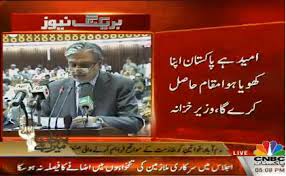
The first Rs3.6 trillion budget of Nawaz Sharif government, presented by Finance Minister Ishaq Dar in the national assembly within a week of the government formation, appears more ‘business friendly’ than people friendly.

The electorate that voted Nawaz Sharif to power might not easily accept additional burden of price increases through the increase in General Sales Tax (GST) by one per cent to 17 per cent. Their reaction will set the tone of debate in the National Assembly.

The budget, if approved in the current form, may boost investment, revive growth and enable Pakistan to qualify for the IMF loan facility as it meets pre-conditions of the key donor. The man on the street, however, might find the year ahead more challenging economically as his real income declines because of the inflationary impact of the taxation measures proposed.

The government in its first defining policy move proposed people to endure the pain of adjustments now, to enjoy gains of growth later. For economic stabilisation the budget 2014 increases the GST to 17 per cent and revises upward the income tax rates, among other measures that could hit the masses.

The corporate Pakistan, which has been reluctant to invest in the country all through Pakistan People’s Party (PPP) rule during past five years resulting in depressed three per cent average growth, has been cultivated by revising downward the corporate tax rate by one per cent from 35 to 34 per cent with promise of decreasing it to 30 per cent in four years. It will increase corporate profits by neat one per cent in the next fiscal.

The government looks keen to revive the confidence of the big business to induce them to move ahead with aggressive investment plans they have been holding back for better times. “For the big boys of business in Pakistan future has arrived,” commented an analyst.

The budget is a typical PML-N document reflecting its economic philosophy of an unfettered market economy, it speaks of homework the party must have done long before assuming power as the document does not seem to be prepared in haste. It has all those signature initiatives that are considered hallmarks of Sharif’s rule in Pakistan.

There are all kinds of low ticket initiatives for public consumption (youth internship, micro credit, income support, technical training, laptop distribution, etc) but the focus of the development budget would be on infrastructure projects (motorways and railways).

“The budget package if endorsed by the parliament will infuse confidence in the private sector that already see Nawaz Sharif as champion of market economy. I will not be surprised if by the end of the fiscal Pakistan surpasses the growth target as public and private sector investment gain steam” a senior business leader told Dawn.com over telephone.

FM Ishaq Dar proposed upward revision in GST from 16 to 17 per cent on the floor of the assembly. It would make all products dearer by at least the same percentage, though the price spiral often enhance the impact of inflationary measures and lead to more than proportional rise in prices.

He projected to chop circular debt of energy sector to reduce by as much as about half of current Rs500 billion in 60 days. It was, however, not clear thus far how he intends to do that.

The budget assumes to cover the revenue shortfall through foreign inflows. The details of sources of these inflows are not clear.

There seems to be meek effort to encourage documentation by introducing tax incentive of two per cent for firms dealing with registered suppliers and distributors.

“The budget is in line with corporate sector expectations. It will improve the business environment as the government has respected IMF’s advice and is targeting to bring the deficit down from current 8.8 to 6.3 per cent by the end of next fiscal year, a reduction of exactly 2.5 per cent suggested,” Sayem Ali, Standard Chartered spokesperson on economic policy said commenting on the budget.

“Market will cheer cut in corporate tax rate. The GST revision will not affect companies as they will pass it on to consumers. All in all the budget 2013 is a good news for the capital market,” he added.

Author is the business editor at Dawn


Good Governance is Key to Solving Pakistan’s Energy Crisis

In Pakistan’s energy scenario, the chickens have, literally, come home to roost. Years of indecisiveness coupled with the hackneyed assertions that Pakistan has more electricity than required has manifested into a situation where the nation’s foundations are now shaking. New words have entered the domestic lexicon and even the uninitiated are recognising and understanding the ramifications of these new or oft-used words. Circular debt, Rental Power Projects (RPPs), Independent Power Projects (IPPs), NEPRA, PPIB, Discos, power outages, etc are casually floated around every now and then. Moreover, WAPDA and KESC have become words of ridicule for residents in small hamlets and all the way to metropolitan cities. It seems that, today, electricity can bring political parties into power or even consign it into the wilderness.

With the advent of the new government in Islamabad, all eyes are on the actions that Prime Minister Nawaz Sharif will take to tackle this issue. It is not possible to wave the magic wand and say, “Voila! Let there be light”. What is more constructive is that all alternative channels be energised to lessen the magnitude of the power crisis. Experts and laymen have been huddling to come up with some pragmatic solutions as there is no other choice but to take the bull by its horns.

The distressing fact is that even though alternatives are available or could be harnessed, the proverbial bureaucratic red-tape, the high incidences of corruption, the inability to rewrite the rules and regulations, and the dishonourable vested interests have impeded the momentum so much that just trying to get out of these tentacles has become a gargantuan task for any investor or policymaker. Everybody and his next door neighbour are talking about the wonders of Thar coal, wind or solar power, cheap Hydel power through dams that are susceptible to provincial politics, and of course generating energy through biogas, garbage, or even imported tyres. There is also talk about fast track conversion of power plants on imported coal.

And even though the solutions listed above are doable and feasible, and some may be done on a fast track, frankly, many alternatives are still a long way into the future. What should be done immediately is to revisit the various rules and regulations that hamper or slowdown the efforts of investors and get these amended, modified or removed. These steps would introduce the concept of Merchant Power Plants (MPP) in the country.

The government must pave the way for MPPs by making it easier for investors to penetrate this field and take advantage of the back-breaking shortage of electricity. There is a need to allow potential investors to enter into a comfort zone in this sector. There should be no restriction on the use of fuel or on the minimum capacity for the MPPs. However, in keeping with the vision of the government to utilise coal, initially imported too, it is recommended that coal-based projects be encouraged. It is a good omen that NEPRA recently announced an upfront tariff of 9.65 cents per unit for large coal-based projects for 30 years while for less than 200MW it would be 8.275 cents. It is hoped that NEPRA will soon decide the tariff for less than 50 mw.

Merchant Power Plants (MPP) are not new in today’s world. Investors have developed over 200,000MW of power plants in the United States, while India has an active MPP programme too. MPPs are technically different in the sense that they are unlike the power plants operated by WAPDA or KESC who distribute power at a set price that is determined through a mechanism and approved by a regulatory body. They are legally and economically different from IPPs and plants owned by traditional power companies in Pakistan or, for that matter, even captive power plants of the industries. Unlike IPPs, the MPPs have no single sales contract for the term of their life and there is no guarantee about their continued income.

It should be understood that MPPs will not be large power plants and only generation-based. What is important is that capacity should not be the limiting factor. There are three guiding points that justify the case for MPPs. First and foremost is the yawning gap between installed capacity, between actual generation, and between immediate consumer demand. The second fact is that investment in power plants is still not forthcoming at the speed that is imperative. The third argument is that too much emphasis on regulations and the dependence on WAPDA or KESC are impeding the distribution of electricity.

Therefore, MPPs should be set up and their viability and feasibility would become sustainable through three options that could be availed by a potential MPP. An example of a MPP could be a large industrial unit that has set up a captive power plant of, say 30MW.

This unit can firstly use power for self-consumption, secondly under the system of wheeling, sell extra power to WAPDA or KESC or use the existing power lines for transmission to consumers within the area, and thirdly set up a grid to supply power to units within its own proximity. Of course, if there are more MPPs in any sector they could share ownership of the transmission lines to attain economies of scale and reduce investment costs. In each case, the rate per unit could be negotiated between the supplier and user rather than going through a plethora of documentation, useless inspections, mind-boggling regulations, and slow process of approvals. Thus, electricity would be treated as a commodity with its own market dynamics. This could attract investors from the stock exchanges and thus, in effect, become a sort of retail power market.

The rationale for allowing MPPs is pragmatic. At present the transmission and distribution losses are abnormally high and the main reason is theft, corruption, and free electricity. Secondly there is excessive governmental interference in the workings of the present energy sector companies. Thirdly, rates are regulated by the government and inefficiencies, management inadequacies, theft, overstaffing, cost of subsidies, etc are factored in to calculate the rates. Fourthly, since the government is unable to rein in the galloping circular debt, the impact is passed on to the consumer. More importantly, the gap between generation, transmission and distribution would not be reduced any time soon. Therefore, MPPs can be a game changer and for that reason should be debated and discussed by the economic planners of the country on an urgent basis.

As US Congressman from Iowa Steve King once stated: “That’s the key: get the constitution in place. Get rule of law in place, capital will come, electricity will follow.” This, in short, is the answer to our energy crisis.

The writer is former president of Karachi Chamber of Commerce and Industry