First Pakistani Women Paratroopers Make History

First women paratroopers (Credit:thenewnational.com)
First women paratroopers
(Credit:thenewnational.com)

ISLAMABAD, July 15: Pakistan’s first group of female paratroopers completed their training on Sunday, the military announced, hailing it as a “landmark achievement” for the country.

Captain Kiran Ashraf was declared the best paratrooper of the batch of 24, the military said in a statement, while Captain Sadia, referred to by one name, became the first woman officer to jump from a MI-17 helicopter.

Women have limited opportunities in Pakistan’s highly traditional, patriarchal society. The United Nations says only 40 per cent of adult women are literate, and they are frequently the victims of violence and abuse.

But in 2006 seven women broke into one of Pakistan’s most exclusive male clubs to graduate as fighter pilots — perhaps the most prestigious job in the powerful military and for six decades closed to the fairer sex.

After three weeks’ basic airborne training, which included exit, flight and landing techniques, the new paratroopers completed their first jump on Sunday and were given their “wings” by the commander of Special Services Group, Major General Abid Rafique, the military said.

The Malala Backlash

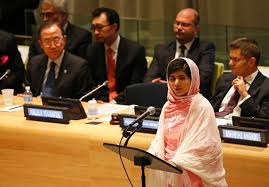
Malala Yusufzai (Credit:thebarreexpress.com)
Malala Yusufzai
(Credit:thebarreexpress.com)

WHY has Malala Yousufzai’s speech at the UN on July 12, her 16th birthday, created such admiration all over the world, only to be met with a nasty backlash against the young education activist in Pakistan?

Perhaps the negative reaction of many Pakistanis to the young girl is the carping of jealous nobodies, but it bears examining because it says something profound about Pakistan.

The reaction to Malala’s words was swift in Pakistan; barely hours after she made her inspirational speech, people began complaining about its contents, the fact that the UN had dedicated an entire day to her, and the adulation she was receiving from world leaders by her side. Ignoring the text of her speech, which spoke out for the rights of girls and women and implored world leaders to choose peace instead of war, the naysayers tore down the young woman, her father, and Western nations for supporting her in her quest for education.

The insults flowed freely: Malala Dramazai was a popular epithet that popped up on Facebook pages and Twitter. The whole shooting was staged by “the West” and America, who control the Taliban. She was being used to make Pakistan feel guilty for actions that were the fault of the Western powers in the first place. Posters were circulated that showed Mukhtaran Mai and Malala with Xs through their faces, and berated the two women for speaking out about their experiences in order to receive money, popularity and asylum abroad.

Another popular refrain was “drone attacks”. Why had Malala not spoken out about drones at the UN? Why did everyone care so much about Malala and not the other girls murdered by drones? Why did America kill innocent children with drones and then lionise the young Malala to make themselves feel good that they actually cared about the children of Pakistan and Afghanistan?

It was a shameful display of how Pakistanis have a tendency to turn on the very people they should be proud of. Prof Abdus Salam fell victim to this peculiar Pakistani phenomenon, as well as the murdered child labour activist Iqbal Masih, Rimsha Masih, who recently received asylum for the threats to her life after the blasphemy case, and Kainat Soomro, the brave child who had been gang-raped and actually dared to take on her attackers. Pakistanis have very deliberately abandoned these brave champions of justice, and each time one more joins their ranks, the accusations of fame mongering, Western agendas, and money ring out louder and louder.

The insults to Malala had a decidedly sexist tone, the comparison to Mukhtaran Mai — another Pakistani hero — making it obvious that rather than embracing female survivors of hideous, politically motivated violence, Pakistanis prefer them to shut up and go away, not to use their ordeals as a platform to campaign for justice.

What does this say about Pakistani mentality? Firstly, it illustrates the fact that most Pakistanis are very confused. As British journalist Alex Hamilton said, “Those who stand for nothing fall for anything”. Because we don’t know what to stand for, we fall victim to conspiracy theories, wild imaginings, and muddled thinking about what is so clearly right and wrong.

Secondly, people who deflect from Malala’s speech to the issue of drone attacks may believe they care about drone victims, but it is hard to find what if anything they have actually done for those drone victims besides register their displeasure on social media. Instead, it is a way of deflecting the guilt they feel about their own impotence, their own inability to make any substantial change or impact in this country.

In psychology this is called displacement: these people who feel anger and frustration about themselves channel it into feeling angry about drone victims, or angry against Malala Yousafzai, or anyone who challenges their firmly held belief that this world is controlled by forces greater than themselves. They dislike the challenge to the justification for their own inertia and inactivity, and so they strike out.

Critics are ignoring how Malala pointed out that terrorists are misusing Islam for their own selfish ends: power and control. She rightly stated that Pakhtun culture is not synonymous with Talibanism; a popular narrative used to justify the marginalisation of tribal peoples (and the use of drones and human rights excesses by the military in carrying out operations in the tribal areas of Pakistan).

These statements contradict the political arguments offered by Pakistan’s incompetent leadership in lieu of real solutions to the militancy, and the justification for acts of aggression perpetrated by Western and Nato forces on the Pakhtuns of Afghanistan and Pakistan.

A note of warning: Malala and her cause must not be hijacked by opportunists, money-makers, politicians, or those who wish to use this pure young woman for their own selfish ends. In celebrating Malala, the world should not forget about the thousands of girls who are still in danger from extremist violence in Pakistan. Nor should she be taken up as a cause célèbre by celebrities and other do-gooders to feel smug satisfaction that they are helping her cause by posing for a photograph or attending a dinner with her (Personally, I feel that a young girl who can survive being shot in the head by the Taliban is strong enough to withstand being exploited by anyone).

Malala’s beautiful words must be a source of inspiration for solid action on the ground in the areas most affected by the conflicts she describes. Whether you support her or not, nobody can deny the urgent need to bring education and peace to Pakistan. Don’t ignore this message, even if you feel like shooting the messenger all over again.

Majyd Aziz Interview to Value Chain monthly magazine

Value Chain Monthly Magazine recently talked to Majyd Aziz, Former President Karachi Chamber of Commerce and Industry, to solicit his views on the economy, especially the Federal Budget 2013-14. (The interview done on June 23, 2013 was published in the July 2013 issue

1. On the face of it, the recently announced federal budget has not imposed a new indirect tax except for a 1% increase in GST. Do you agree with this view that no new indirect taxes have been imposed?

Yes, GST has been raised from 16 percent to 17 percent and FBR expects to collect over Rs 63.5 billion while at the same time it estimates an additional Rs 18.5 billion to be realized through Federal Excise Duty.

2. What in your view are the venues for increasing direct taxes?

The prevailing culture of people to keep away from the tax net is one prime factor in government depending on indirect taxes to achieve the targets. However, the worst part is that it is through the complicity of corrupt elements in FBR that people are facilitated in evading their tax responsibilities. Moreover, FBR has seldom played the role of a facilitator and so there is a sense of averseness when it comes to entering the tax syndrome. It is therefore more convenient for FBR to reach towards the revenue target by relying more on indirect taxation.

The country has become a laughing stock in the comity of nations since her tax-to-GDP ratio is about 8.5% and continuing to decrease every year. The ideal way to collect direct taxes is to reduce the percentage of income tax and making it attractive for taxpayers to document their businesses or earnings. Although the Finance Minister did announce a reduction of 1% in corporate tax, i.e. from 35 to 34%, the bare fact is that it created ripples and not waves in corporate corridors.

It is incumbent upon FBR to identify tax evaders, to formulate a practical strategy to induce them to pay taxes, and to ensure that those who are identified are not allowed to escape the net. In well-established societies, people who pay taxes are aware that in return they would be able to get good schools, better health facilities, peaceful law and order environment, workable and sustainable physical infrastructure, accountability of errant bureaucrats and politicians, and a better and safe future for themselves, their families and businesses. When the state abdicates its responsibility, when the state wastes precious resources, and when the state treats citizens with scorn and disdain, then it loses the moral high ground to demand taxes and levies from those citizens who are obligated to pay their share in the country’s financial resources pool.

3. Will the 1% rise in GST have a significant impact on the cost of doing business and on inflation?

Government spin doctors regularly show their faces on various TV talk shows and vehemently and forcefully try to impress upon the viewers that the added 1% is not something to worry about and that there would be no negative impact on inflation or even on cost of doing business. The worrisome thought is that for the next five years, the country would be listening again to ill-informed political sycophants in the same manner and style witnessed in the last five years.

Why wouldn’t this increase in GST have an impact? There is a multiplier effect on everything that costs more or costs less. It is very simple to say that the end-user or end-consumer would not feel the added cost and would bear it in normal stride. On the contrary, whenever prices rise, for whatever reason, the impact is immediately felt and there is then the reaction to take this increase, add some more, and then pass it on. In cases where it is impractical to pass the added cost, then the producers absorb the increase and, in the process, either reduce their profit margin, either cut corners, or resort to non-documentation tactics. Another factor is that in many markets, the goods are often sold on credit and most of the time, the settlements are delayed or the credit period is longer. In that scenario, the working capital of the seller comes under pressure since the tax portion is also part of the credit given to the buyer.

4. People, business, and industry rightly expect the state to repair the infrastructure, especially the power sector, but this can’t be done without higher tax revenues. Then why is a rise in taxes resented by them?

There is generally a trust deficit between the business sector and the tax collectors. At times, there are many different tax collecting agencies, each with its own priorities and own dynamics. Trade and industry, as well as households, all expect the government to plan and provide the required and needed infrastructure so that the wheels of economy move smoothly and the citizens enjoy quality of life. Inspite of continuous lobbying and representations, Pakistan’s trade and industrial sectors are being denied their rightful share of sustainable infrastructure and the blame more often than not lies at the portals of the policymakers and the government of the day. The availability of resources is fundamental for development of any infrastructure and the low resource mobilization precludes any notion of initiating mega infrastructure projects.

The situation becomes more depressing when the government has to resort to external financing and agreeing to stringent conditionalities set by the international development financing institutions. These measures further alienate the people from the government and at times become the catalyst that sparks discontent and restlessness in the country. However, the scenario becomes deplorable when the government squanders away the resources on frivolous adventures and non-developmental expenses. That is why any increase in duties and taxes also results in agitation by trade and industry.

5. The Federal PSDP has been allocated Rs 540 billion out of which Rs 222 billion will be spent on repairing the power sector. Do you think this investment will improve electricity production and cut losses?

Public Sector Development Projects are meant to being about the positive change in the country and through which various facilities and improvements are conceived, planned and approved. Usually, due to myriad reasons, PSDP funds are under-utilized and the blame eventually is placed on non-implementation of the projects. Furthermore, whenever FBR is unable to reach revenue targets and the non-developmental expenses become a budgetary headache, or at times when natural calamities inflict monumental losses of lives and assets, the government diverts allocated PSDP funds to tackle these issues. Therefore, while PSDP funds are supposedly the outcome of a planned vision, the performance at the end of the year tells a different story.

The allocation of a formidable amount of nearly 50% of the Federal PSDP (including Federal financing of Rs107 billion while another Rs118 billion to be arranged by the Water and Power Development Authority (WAPDA) from its own kitty) towards the power sector manifests the government’s desire to address its election campaign promise to resolve the menace of loadshedding and power outages. Among the various measures in the energy strategy, such as resolution of the circular debt, prompt availability of fuel, fast track conversion of generation to coal, immediate introduction of renewable energy, etc, a very crucial step is to rehabilitate and upgrade the existing power network. Years of neglect, corruption, sabotage, use of shoddy material and other factors have affected the network in many areas. Even USAID has undertaken to provide funds and expertise to improve the power network in selected areas. The proper and judicious utilization of the funds would go a long way in bettering efficiency, reducing transmission and distribution losses, providing proper voltage to end-consumer, and maybe, just maybe, reduce costs for the power producing units. Hence, this step of the government needs to be conditionally lauded provided it achieves the purpose and objective.

6. The budget assumes that in 2013-14 exports will touch $26 billion. Will that be possible?

The government is to be complimented for focusing on a doable target rather than setting unconsidered export targets. There are many factors that debilitate a high enhancement in export figures. The horrible infrastructure scenario is a significant cause for snags in improving the country’s production of goods and services. These shortages also result in high production costs due to non attainability of economies of scale. The country’s agriculture output is also pathetically low with an annual growth not exceeding 3 to 3.5%. The agriculture sector still relies on out-dated farming equipment and methods and there is low awareness of seed technology and productivity enhancement tools. Inheritance plays a major role in division of agriculture lands and this cultural custom always impacts the cost of production and reliance of modern farming equipment. Thus Pakistan is not able to produce substantial cash crops at cheaper prices.

Pakistan has not been able to channelize software exports through a transparent and friendly official process and thus most of the software exports are out of the legal domain. Information technology software development is a 30% annual worldwide growth opportunity that this country should not miss. Mineral exports have picked up substantially in the last few years. However, the major impediment has been the mindset of the miners and the middlemen who do not subscribe to global market dynamics. They take the prevailing price as the benchmark figure and are averse to reducing it when world demand slows down. This creates frustration among exporters and the hard-earned space in global minerals market is lost to other countries whose miners are tuned in to the world market trends.

A very important factor that can enhance the export base is the attitude of the government and the official policy makers in export promotion. The present scenario is that there is a Trade Development Authority of Pakistan that is more or less concerned with improving the trade base and facilitating exporters. However, the desired advancement and effectiveness of this vital organ is nothing to write home about. Furthermore, the steps taken by the government in areas such as increase of sales tax, the withdrawal of subsidies, the late payment of duty drawback and rebate cheques, the display of cronyism and favoritism, and the proverbial red-tape and bureaucratic indolence, have all contributed towards the stagnation of exports. The stranglehold of big time exporters and godfathers, especially in the affairs of export based trade associations and chambers, have demoralized small and medium exporters who suffer from a perpetual lack of a level playing field.

There is this hope that Pakistan would be able to obtain GSP Plus status from the EU on January 01, 2014. This would surely enable the exporters, especially textiles-based, to increase exports to EU countries. At the same time, there is a need to introduce Track II diplomacy by the business community by lobbying vigorously in Washington with Congress, with labor federations, with government officials, and with business counterparts so that Pakistani products also get a wider window for entry into the United States at competitive rates vis-à-vis regional competitors. Moreover, efforts should be made to enhance exports to Afghanistan, China and India. This strategy would pave the way for boosting the export figures otherwise the stagnation in exports would in a couple of years would prove to be an unmitigated disaster.

7. To reduce the cost of doing business and contain inflation, the exchange rate of the Rupee must be stabilized, in fact improved by at least 5% but for that we need higher exchange reserves. Besides borrowing from the IMF, what other options Pakistan has and how useful they could be?

There is scant possibility of reduction in cost of doing business while the hope is that inflation would be contained in single digit figures. It should be noted that external circumstances impact upon the domestic cost of production, such as global oil rates, strong foreign currencies, and changing goalposts through various policies (introduction of Non-Tariff Barriers, denial of preferential trade facilities, regional economic blocs, etc). The incidence of imported input in textile exports is over 30% and therefore this also affects the cost of production. The continued deterioration of the Rupee in the last five years from Rs 60 to nearly Rs 100 has had a wrecking-ball impact on the various inputs.

Normally, a depreciating currency does help a country in marketing products at a favorable rate in the global marketplace. This induces buyers to source their requirements from a country that has a low currency rate, skilled manpower, and capacity to produce. Notwithstanding these advantages, Pakistan has not been able to cash in these advantages, albeit in whatever status these are. Therefore, improvement in the value of the Rupee would not bring about any marked improvement in the cost of production.

The country’s Foreign Exchange Reserves continue to dwindle down inspite of pronouncements from the State Bank of Pakistan. The situation is precarious, to say the least, and these are less than two months of imports bill. The inclusion of reserves held by banks and private citizens as if these are Treasury’s reserves is another way of hoodwinking the world. Recently, the IMF team was here and probably not satisfied with the presentations given by the Pakistani economic managers. A loan of $5 billion is being sought. What this new loan would do is to rollover the outstanding loan already due to IMF. The proverbial begging bowl has been polished once again.

Pakistan’s finance managers are banking on a steep increase in foreign remittances from expatriates and expect this amount to cross $15 billion. They are hoping that the Pakistani Diaspora would use official channels to remit the money. The government is also contemplating new incentives to boost up foreign remittances. The financial managers are advised to study the Indian, Sri Lankan and Philippine models as these are success stories. The distressing news that Saudi Arabia would deport over 50,000 Pakistani workers should be viewed with serious consternation. This would negatively impact on the inflow of remittances.

Pakistan can be the recipient of foreign exchange through export proceeds, remittances, foreign investment –portfolio and capital, grants, and foreign loans. It is advisable and important that the government concentrates more on generating revenue from domestic resources and the ideal way is to broaden the tax base, remove untargeted subsidies, facilitate capital investment, reduce the GST rate so that more units are brought into the net as it would increase revenue and not decrease as is publicized, and more importantly drastically reduce non-developmental expenses, especially colonial-era ostentation, casual foreign visits, all kinds of wastage, unbridled corruption, and excessive unannounced holidays. Prosperity comes through a full force activity of the economy. As US Congressman and Vice Presidential candidate Paul Ryan stated: “Borrowing and spending is not the way to prosperity.”
HOW THE US NABBED BIN LADEN – Abbotabad Commission report

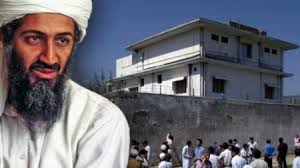
OBL in Abbotabad (Credit: Pakistankakhudahafiz.com)
ISLAMABAD: The Abbottabad Commission Report, which is yet to be made public, contains a treasure trove of information on the hunt for the world’s most wanted man – Osama Bin Laden.

Its findings reveal that the arrest of Khalid Bin Attash (an Al Qaeda member who was involved in the pre-9/11 attacks such as on USS Cole and the embassies in Africa) in ‘2002’ from Karachi led to the first major breakthrough – he is the one who identified Abu Ahmed Ali Kuwaiti (the Kuwaiti born Pakistani who was OBL’s right hand man and courier and the man who led the Americans to Bin Laden.

After this information came to light, the Kuwaiti intelligence service was contacted but it could not provide any details about the man.

During the search for this man, CIA provided four phone numbers between “2009 to Nov 2010” to Pakistan but without any details as to who they were searching for, a source privy to the report’s details has told Dawn.

Dawn has learnt that these numbers “most of the time remained off” but while the ISI kept the CIA in the loop it did so “without knowing the context and to whom these numbers belonged”.

Now in retrospect, the commission report confirms Attash’s disclosure – Kuwaiti was OBL’s right hand man.

According to what the commission has discovered, he was with OBL’s family in Karachi when it moved to the port city in Oct/Nov 2001.
In 2002, when the family (including OBL’s wives) moved to Peshawar, Kuwaiti was with them and this is where OBL joined them – in mid-2002.

From here they moved to Swat where OBL was visited by Khalid Sheikh Mohammad.

A month later, KSM was arrested in Rawalpindi, prompting the scared OBL family to move to Haripur.

Kuwaiti and his brother Ibrar (who had joined the fugitives in Swat) were with OBL and they all stayed in Haripur till 2005.
And it is here that the move to Abbottabad was planned and executed by Kuwaiti. He is the one who purchased a plot in Abbottabad by using a fake identity card and also supervised the construction of the house, which says a source was custom built.

It contained three complexes. “One open compound, an annexe where Kuwaiti and his family lived and the main three storey house,” said the source, adding that the two top storeys were used by OBL and his family.

The youngest wife stayed on the second floor while the older wives – Sharifa and Khaira – stayed on the lower floor.
Ibrar and his wife lived on the ground floor.

The source explained that the house was built so that the children of Ibrar could not see OBL.

The commission has been told that OBL never had a phone line, an internet or cable connection either in Swat, Haripur or Abbottabad though a dish was used to watch Al Jazeera in more than one city that the families stayed in.

Dawn has learnt that the commission has pointed out the violations committed by the residents of the Abbottabad House which remained unchecked by the authorities at the local level.

For instance, it has noted that a manual ID card was used to purchase land even though a computerised CNIC had been made mandatory in 2004 by Nadra – “the manual NIC was accepted by the Revenue Department, Cantonment Board and others,” said the source, adding that the identities and the addresses were never verified.

He also said that the third floor was built in violation of the building plan and once again no authority intervened.
In addition, the commission has noted that “the fort type construction remained unnoticed by cantonment board, police, intelligence agencies and the locals. The occupants also remained unchecked for non-payment of property tax since 2005”.

When the compound in Abbottabad was stormed by the Navy Seals in the middle of the night, OBL’s first reaction was to tell his family to stay calm and recite the kalima.

When the Seals reached Laden’s room, he is said to have a weapon in his hand and was searching for a grenade on a shelf — he was shot as he turned around, the source has told Dawn. It was at this point that Amal and OBL’s daughter Summaya rushed at the men to stop them, leading to Amal’s bullet injury. Summaya and Kuwaiti’s wife were asked to identify OBL after which the rest of the inhabitants of the house were told by the Seals that Laden had been killed.

Last but not least, Dawn has learnt that the commission has given recommendations to the government that are aimed at averting another May 2 like operation.

It was not possible to find out whether or not the report has investigated and/or made any recommendations to prevent fugitives such as OBL from hiding in Pakistan. Neither is it clear whether or not the commission has held anyone responsible for the presence of OBL in the country or the May raid by the Americans.

The recommendations that Dawn has learnt about are focused on checking American activity in the country and averting operations by outside forces by suggesting that the role of the post of chairman joint chiefs of staff committee be enhanced for more effective coordination between the armed forces. It has also recommended strengthening the National Security Council so that it can take immediate steps as the commission has noted that certain high government functionary could not be contacted during operation.

The commission has also recommended a probe over the issuance of visas to a large number of US contractors who established a spy network within Pakistan.

Haqqani rejects OBL commission’s findings

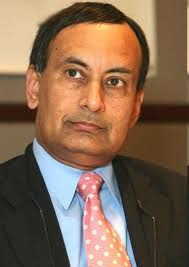
Hussain Haqqani (Credit: Pakistan.com)

WASHINGTON, July 11: Former Pakistan ambassador to the United States Husain Haqqani has rejected the Abbottabad Commission’s suggestion that as ambassador he issued visas without authorisation or was responsible for CIA agents coming into Pakistan in large numbers.

Mr Haqqani said in a statement that the US Navy SEALS who found Osama bin Laden did not come with visas and the entire controversy over visas had been manufactured to distract attention from the two vital questions. “The first question is, why Pakistan’s bloated security agencies failed to find OBL for nine years and the second, how were the US SEALS able to come into Pakistan without detection by our security forces,” he said.

The former ambassador said the commission interviewed him on Dec 19, 2011 in Islamabad and he informed it that he did not have access to official records for visas at the time but the commission had not recorded that point in its report. He added that the figures for visas were provided by officials at the embassy and the foreign ministry after he had resigned and to say that these came from him was “an absolute falsehood”.

Mr Haqqani also said that giving a visa to a person does not make him invisible within Pakistan. “Entry of that person is still recorded at the airport and he can be followed like thousands of Pakistanis and foreigners are followed by intelligence agencies,” he said.


Pakistan President’s Security Guard Killed – Washington Post

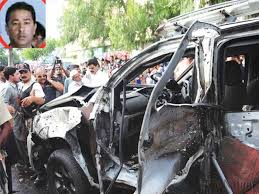
Bilal Shaikh killed (Credit: nation.com.pk)

ISLAMABAD, Pakistan — One of Pakistani President Asif Ali Zardari’s most trusted aides was killed in a suspected suicide bombing in the volatile port city of Karachi on Wednesday as he stopped his armored vehicle to buy some fruit, police said.

Pakistan has suffered a spate of attacks since Nawaz Sharif was sworn in as prime minister last month, underscoring the challenges facing the nuclear-armed nation in taming a Taliban-linked insurgency.

A senior police officer in the city said Bilal Shaikh — Zardari’s security chief, who was always spotted next to the president during public appearances — and two others were killed in a prosperous area of eastern Karachi.

“It seems that the suicide attacker walked up to Bilal Shaikh’s vehicle and blew himself up outside the front passenger seat of the vehicle where Shaikh was seated,” the officer, Raja Umar Khattab, said. About a dozen people were wounded. A police escort was accompanying Shaikh’s sport-utility vehicle at the time of the attack.

No one asserted responsibility for the blast, which took place on the eve of the start of the Muslim holy month of Ramadan, which begins in Pakistan on Thursday.

The latest wave of attacks has ended a period of relative calm after a May election that marked Pakistan’s first transition between elected civilian governments. In early June, Sharif won a parliamentary vote to become premier for the third time.

Last weekend, at least five people were killed when a bomb ripped through a busy restaurant street in the eastern city of Lahore, Sharif’s home city. On June 30, at least 28 people were killed in the southwestern city of Quetta when a suicide bomber struck in a largely Shiite neighborhood.

Shaikh, who had survived an assassination attempt near his home in Karachi about a year ago, used to change his routes several times while traveling around one of Pakistan’s most violent cities.

Like Zardari, he belonged to the Pakistan People’s Party, which had been in power before the May election. Taliban-linked militants had previously targeted the secular party.

Zardari and Sharif issued separate statements condemning the attack, a private TV channel reported.

It was the first attack in Karachi since mid-June. At least nine people were killed when a bomb targeting the convoy of a senior judge exploded in the old city area. The judge survived. The Pakistani Taliban asserted responsibility for that attack.

— Reuters

MQM chief being probed for money-laundering, hate speech: BBC

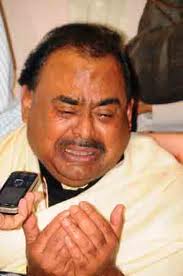
MQM chief Altaf Hussain (Credit: siasat.pk)
LONDON, July 12 : The BBC’s flagship programme ‘Newsnight’ has said that Muttahida Qaumi Movement (MQM) chief Altaf Hussain is being directly investigated for money laundering worth at least £400,000 pounds as well as for incitement to violence.

The BBC’s star interviewer Jeremy Paxman disclosed that that the Metropolitan Police had seized hard cash from two properties in two blocks — £150,000 from the MQM office and £250,000 from the house in Edgware owned by Altaf Hussain. MQM’s Deputy Convener Farooq Sattar accepted that the money had been seized by the police but protested that the Met police had failed to follow the procedures and should have provided a receipt of the items taken away.

The BBC said that “the police found hundreds of thousands of pounds of unaccounted for cash and that led to a money laundering investigation”. He questioned if Altaf was “using his London base to incite violence in Pakistan” or if his speeches were a breach of the law.

These revelations were part of a documentary the BBC broadcast focusing on the alleged violent politics of MQM and the allegations surrounding the party.

The documentary contained video clips of Altaf Hussain on different occasions – cooking, joking, singing and making potentially violent statements including “we’ll prepare your body bags” and “don’t blame me if you get killed by our supporters”, “it would be in the UK’s best interests to stop hatching conspiracies implicating me in this murder case (a reference to Dr Imran Farooq’s case)”, “we’ll tear open your father’s abdomen to get our freedom”. The BBC said that the police are now “assessing whether those speeches and others like them” breached the law of the UK.

Jeremy Paxman posed the question at the start: “Supposing if it (Britain) was offering sanctuary to an organisation that was using Britain as a base from which to threaten and persecute others?” and then went on to describe the MQM as “one of the most feared political organisations in Pakistan”.

Speaking from outside Altaf Hussain’s house in Edgware, BBC reporter Owen Bennett Jones pointed out that a police raid had taken place there on June 18 this year in connection with the Imran Farooq murder. He said that Karachi may be far away from Edgware but Hussain “exerts total control over his party”.

Legal expert Ali Naseem Bajwa QC, who also defended the accused during the spot fixing trial involving Pakistani players here, said that Hussain’s Teen Talwar speech against the Pakistan Tehreek-e-Insaf (PTI) activists in Karachi and other similar speeches believed to be inciting violence may potentially be a “terrorism offence”. He said it was clear from Hussain’s speeches that there is a of threat use of force, made for a political cause and designed to influence the government and “all seem to be made out”.

Bajwa commented that there clearly is a case to answer and “it appears an intention that the listener or the person against whom a threat is being made should take it seriously”.

Farooq Sattar, when asked about an alleged threat by the MQM chief issued to the Supreme Court of Pakistan, said: “I categorically deny and refute that Hussain would have ever said what you are saying” and said that these speeches may have “some sort of emotional outburst”. Sattar said that the MQM was open to correction and Hussain has always retracted statements that may have hurt anyone.

The documentary featured a renegade MQM activist Naim Ahmed who alleged that the orders to kill people in Karachi came from London and a policeman who said he had fled Karachi because his life was at risk from the MQM. It’s not clear at this stage whether the Met police will interview the former MQM activist about his past. Ahmed told BBC: “They (the MQM) are not a peaceful party, they are a militant group, they are like a bunch of mafias …. They are an ideal party for violence.”Ahmed said that the youth in Karachi involved in violence told him that “we got our order from London.”

The BBC also featured a former Karachi police officer who alleged that the party was involved in violence and threats. The same police while applying for asylum said that “the reason he claims asylum is because of his fear of the MQM who have already killed his wife and brother because of his activities as a police officer against them”.

This case is interesting because while granting asylum to him a senior judge Lord Bannatyne accepted on 11 November 2010 that “the MQM has killed over 200 police officers who have stood up against them in Karachi” and that his brother was killed two days after catching people wall chalking “He who is a traitor to the leader deserves to be killed” and that “attempts were made at a high level in the MQM to settle this issue with the appellant but he refused and threats to his safety were made if he did not settle the matter”.

Dr Sattar denied all charges and alleged that the left-of-centre BBC has been “influenced” by “pro-Taliban” and radical forces for the preparation of the Newsnight. He said the BBC has used Hussain’s statement “out of context”. He said Altaf Hussain never said he will put his opponents in body bags. “It’s a malicious propaganda and a media trial” against a secular and middle-class party “by the forces of status quo and corrupt political culture”. He said there is no proof of the MQM’s involvement in acts of terrorism in Karachi.

MQM Coordination Committee leader Khalid Maqbool Siddiqui said on Thursday that the broadcast of Newsnight shows that an organised conspiracy against the party has begun. He said the party had full faith in Altaf Hussain and programmes like Newsnight will help bring workers come closer to their leader.The Metropolitan said it will not comment on the Newsnight revelations about the amounts seized from three MQM properties.

Altaf fears ‘British establishment’ plotting to eliminate him

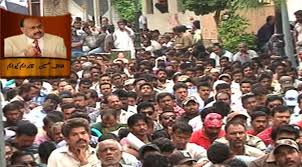
Altaf Hussain address (Credit: news.com.pk)
Altaf Hussain address
(Credit: news.com.pk)

LONDON, July 1: MQM leader Altaf Hussain opened a new front on Sunday by naming the British establishment and openly accusing Britons of hatching a plot to eliminate him and “frame” him in the murder case of Dr Imran Farooq, one of the founders of the MQM.

In an unprecedented broadcast watched by millions of Pakistanis on private TV channels on Sunday, the London-based MQM supremo, who has made Britain his permanent home after fleeing Pakistan in 1992, admitted that the Metropolitan Police had raided his home in North West London.

Dr Imran Farooq, who had been living in exile in London since 1999, was stabbed to death on his way home from work in Green Lane on September 16, 2010, outside his residence. The Met Police believe he was killed because he wanted to start his own independent political career.

The news of the search warrant being executed one of the MQM leader’s residential addresses was broken exclusively by Geo TV, stunning Pakistan. The police seemed to have taken direct aim at the MQM leader, by first raiding his home and then arresting Iftikhar Hussain, when he landed at Heathrow after attending Hussain’s niece’s wedding in Toronto,and kept him for nearly 34 hours at a police station to question about Dr Imran Farooq murder.

In his address, the MQM leader was clearly agitated and complained that the police had taken away belongings from his property and were refusing to communicate. It was in this context that he announced to relinquish charge of the party in the early hours of Sunday.

Hussain retracted his decision of leaving reins of the party in a live speech after hours of emotional appeals by the workers present at the 90 headquarters of MQM and warned that the consequences of his arrest or trial in relation to Dr Farooq’s murder may be too serious for Britain to bear.

Hussain spoke as a man who is convinced that he will be implicated in the investigation of Dr Farooq’s killing. He spoke as if it was a fait accompli. He spoke candidly and appealed to his workers to stay united if he is eliminated, charged, put on trial, or sent on a path yet unknown to him and others.

He suggested that there was a conspiracy against his leadership of the MQM and wanted a referendum from his workers if they wanted him to stay or go in obscurity. Unanimously, the workers asked Hussain on live TV to stay on or else no other leader will be accepted. It’s either you, Bhai, or no one else is worthy of leading us, they assured. Hussain took his resignation back but that was only a sideshow to the big development.

What Hussain said in his speech about Dr Farooq investigation, Britain’s role in hideous games and the alleged plot against him by his hosts, actually marks a turning point for the party that set its camp in London more than two decades ago.

The MQM has controlled Karachi from its International Secretariat in Edgware without any trouble at anytime, but those times have changed and the party leadership at the moment has three investigations going on about them, directly or indirectly: the murder investigation of Dr Imran Farooq, a money-laundering investigation and an investigation into Altaf Hussain’s ‘teen talwar’ speech.

In fact, for the first time Altaf Hussain admitted that some kind of a money laundering probe is also going on against the MQM after the raids on MQM Secretariat or the residences of MQM leaders.

The raid on his house and the arrest of Iftikhar Hussain shook the party leadership to the core and has puzzled its think tanks who have for long thought that they are always tolerable to the west because of their general liberal and secular outlook. That assessment is right and the MQM has been treated as such in Britain, but the killing in London and the rise in confrontation in Britain has set the party on a path which it didn’t choose.

“I may not be the chief in the eyes of Britain, but I am the chief in the eyes of party workers,” said Hussain.It is known that recently George Galloway, MP, instructed lawyers to seek legal action against Altaf Hussain and he has been proactively campaigning in British Parliament regarding Altaf Hussain’s activities. Lord Nazir Ahmed and Imran Khan, the Pakistan Tehreek-e-Insaaf (PTI) leader, were also mentioned, by the MQM chief as canvassing the British government.

Imran Khan had also looked at the possibility of bringing legal action against Altaf Hussain in 2007. However, it is unlikely that Galloway, Imran Khan and Lord Nazir will have had much influence on the government as the Metropolitan Police are independent of the government pressure.

It must be noted that the Met Police do have connections with the secret services of Britain, MI-5 and MI-6, and the police force works closely with both the external and internal arms of the secret service.

Hussain said he would not seek legal counsel, barrister or a solicitor if charged with the conspiracy to kill his colleague, Dr Imran Farooq. He gave the clearest indication that the police were headed in the direction and the net was closing in.

He also said that the Met Police had full cooperation from his party but also warned the Met against framing him. In Pakistan, the MQM leadership made their disgust at the Met investigation clear when they protested outside British Consulate in Karachi and warned the Met not to cross the red lines.

Altaf Hussain questioned why the house of a leader who represents millions has been raided in such a blatant manner. It is believed that the MQM is aware that the Met Police are close to taking further action which would be in the form of bringing criminal charges against certain individuals, and his speech may be seen as a pre-emptive attempt to soften the blow to his party faithful.

A foreign and commonwealth office spokesman in London says: We are aware of a planned demonstration outside our Karachi consulate. It’s a concern for us, but we will not go into details of what these concerns are. We have taken measures.”

Speaking about the comments of Altaf Hussain, the spokesman added: “Metropolitan Police are investigating the murder case of Dr Imran Farooq. The Met Police is completely independent of the government influence. It’s an independent organisation. Her Majesty’s Government doesn’t interfere with the police investigation. Whether to charge, release or raid an address—it’s nothing to do with the government. The Met Police deal with such matters.”It should be noted that conspiracy to commit murder, contrary to Section (1) 1 of the Criminal Law Act 1977, can attract a custodial sentence and imprisonment for life.

QUETTA, PESHAWARROCKED BY BLASTS: SUICIDE BOMBER KILLS 28 HAZARA MEN AND WOMEN

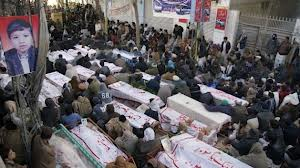
Hazara massacre in Quetta (Credit ipsnews.net)QUETTA, June 30: At least 28 men and women of Shia Hazara community were killed and 60 others injured in a suicide blast in the Aliabad area of Hazara town on Sunday night. “A suicide bomber blew himself up near a barrier close to Ali Ibn-Abu-Talib Imambargah,” DIG (Investigation) Syed Mobin Ahmed told Dawn.
The proscribed Lashkar-i-Jhangvi has claimed responsibility for the attack. A spokesman for the group who identified himself as Abubakar Siddique told a private TV channel that his group had carried out the attack in the Hazara town.

At least nine women were among the dead.

Sources said that an unidentified man on a bicycle tried to enter the area and when people standing near the barrier tried to stop him he blew himself up.

The blast occurred at the Balkhi Chowk which is near to the Imambargah.

Capital City Police Officer Mir Zubair Mehmood told reporters that prayers were being held inside the Imambargah when the blast took place.

He said the target of the bomber was Imambargah but he could not reach there because people responsible for security of the Imambargah stopped him at the barrier.

He said the head and parts of the bomber’s body had been found.

Eyewitnesses said a large number of people, including women and children, were at the place at the time of the blast.

Press photographer Saeed Ahmed told Dawn that human flesh and limbs were lying all over the place.

Soon after the blast, the sources said, security personnel rushed to the blast site and cordoned off the area. They did
not allow even rescue personnel to enter the area for fear of a second blast.

Hazara town resounded with gunfire after the explosion.

Two hand-grenades were found at the blast site which the suicide bomber reportedly carried.

The injured and the bodies were taken to the Bolan Medical College Hospital and the Combined Military Hospital.

Hospital sources said the death toll could rise because at least 10 of the injured were stated to be in serious condition.

Several nearby buildings and vehicles parked in the area were badly damaged by the blast.

This was second bomb attack in Hazara town over the past five months.

The previous blast, caused by explosive in a water-tanker on Feb 16, killed about 100 people and left over 200 injured.

Balochistan Governor Mohammad Khan Achakzai and Chief Minister Dr Abdul Malik Baloch condemned the blast and expressed grief over the loss of lives. They expressed sympathy with the bereaved families.

Official sources at the Chief Minister’s Secretariat told this reporter that the chief minister who was in Islamabad on an official visit, decided to return to Quetta after coming to know about the attack.

“The chief minister has directed officials concerned to ensure adequate medical treatment of the injured,” they said.

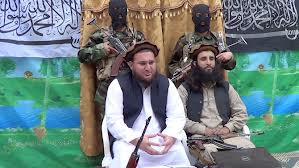
TTP and the Perils of Inertia

TTP spokespersons (Credit: dawn.com)
TTP spokespersons
(Credit: dawn.com)

IT is our war. It is America’s war. Thousands of Pakistanis have perished in this war. And all we do is take part in this debate. We do nothing to end it.

If one could put it down to a simple lack of will or spine it would have been bad enough. That a fair bit of the discourse on terrorism represents ideologically motivated obfuscation is unforgivable, particularly given how many compatriots have had to sacrifice so much.

The dominant argument is that Pakistan’s support to the US-led war in Afghanistan and the CIA’s drone attacks are the only drivers of terrorism in the country. Ergo, this support to the US is not just blamed for terrorism but also advanced as a justification for the mass murder of our people.

Refusal to accept this view in its entirety is immediately pounced upon as being tantamount to condoning or worse still supporting the drone attacks that mostly kill our civilians, women and children, and occasionally the militant in the tribal areas.

God help you if you happen to have doubts about talks with the Tehreek-i-Taliban Pakistan (TTP): “Amreeka key agent media mein bethey huey hein jo amn ke khilaf hein” (There are American agents in the media opposed to peace), Pakistan Tehreek-i-Insaf (PTI) leader Imran Khan said in his ‘first’ televised interview since his election campaign accident.

His utter contempt for anyone holding a view different to his own is always a bit upsetting but, on this occasion, it was reassuring because it established the PTI leader had been restored to good health and his former self.

Therefore, it wasn’t surprising to hear him say that if the US can facilitate the opening of an Afghan Taliban office in Doha and initiate a dialogue with them why couldn’t Pakistan do the same in case of the TTP.

Let me be open and admit that I have a soft corner for the great Khan. He gave me and countless others one of the finest moments of our lives by leading Pakistan to its only Cricket World Cup triumph. That is why we all forgave him for his “In the twilight of my career…” speech.

That the well-meaning, born-again Muslim then went on to a greater triumph in setting up and successfully running the Shaukat Khanum Memorial Hospital for specialised cancer care in memory of his mother who, like mine, died at the cruel hands of cancer was awe-inspiring.

So yes, I disagree with him but won’t call him Taliban Khan; even if he finds ideological compassion for the TTP and understanding for the atrocities committed by the group against thousands of Pakistanis.

He is free to call me an American agent or by whatever name he wishes because I oppose talks with the TTP. I do so because there is no parallel between that and the US starting a dialogue with the Afghan Taliban.

The US is now keen to get out of Afghanistan, a foreign country it invaded with UN approval and possibly a just cause, after the Taliban administration refused to hand over the mostly Saudi suspected perpetrators of the 9/11 attacks on US soil.

It went into the country seeking retribution. This retribution wasn’t possible without regime change. It did what it thought necessary. It may even have attained its main objective of attacking Al Qaeda in its sanctuary and denuding it of its capacity to attack the US on its soil again.

But a democracy it remains and its war-weary voting public is wary of continuing a bloody conflict which, they understand, cannot be won. So, the US has now embarked on its plan to shrink its giant footprint in that foreign country.

However, it also doesn’t wish a return of the pre-invasion situation in Afghanistan where Islamic militants from around the world found a safe haven and training ground to serve as a launching pad for their global jihad.

It wants guarantees that only the Taliban can give. It isn’t clear if, in line with ISI belief, the Taliban can return to their pre-war glory and rule over Kabul as well but it is clear to the US they’ll have large swathes of the country under their control as they do even now; hence, the talks.

If the admittedly imperfect Afghan democracy collapses post-US withdrawal so be it as long as the new power structures can guarantee no sanctuaries for global jihadis. The US doesn’t seem interested in ‘nation building’ any more. It’ll retain its drone programme, and possibly some residual air and special operations capability so nothing’s left to chance. We have our democracy to lose. Unless, that is, we actually believe that once the US has pulled out of Afghanistan or we have pulled out of the ‘US war’ all will be hunky-dory. We’ll need to forget the TTP is committed to their brand of Sharia in the country and beyond.

They find democracy, diversity of opinion and faith against their ideological beliefs. Groups of mass murderers such as the Lashkar-i-Jhangvi are either TTP allies or franchises. The TTP continues to offer sanctuaries to foreign fighters with global ambitions.

Thousands of soldiers have died clearing the bulk of the tribal areas of these militants. The TTP remains ensconced in its remaining stronghold of North Waziristan. That is where the serpent’s head is.

One would have said carry on with your obfuscation, talk about talks, do deals like in the past, if it wasn’t so dangerous. All this wasted time means wasted opportunities. The TTP gets bolder and bolder in its attacks; its ranks appear swollen by zealots; who knows what fear can do to people.

What if one day, battered by TTP’s bombings and filled with despair by the inertia of the state, more people turn to its ideology if only to find some respite, save themselves? What a horrifying thought. I’d rather be labelled an American agent and strive to salvage whatever is left of my Pakistan.

The writer is a former editor of Dawn.
abbas.nasir@hotmail.com