Obama-Karzai Meeting Ignores Pakistan Predicament

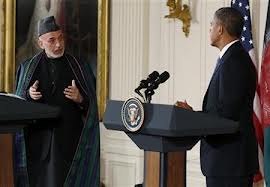
Karzai Obama meeting (Credit: news.yahoo.com)

Washington DC Jan 14:  While U.S. President Barack Obama and Afghan President Hamid Karzai reached a rough understanding this past weekend on how to wind down the longest war in U.S. history, now in its 12th year, the Afghans have been fighting continuously since the Soviet Union invaded their country in 1979. ]

But the latest agreement didn’t include the key ingredient — Pakistan.

And without Pakistan, no peaceful settlement is possible. But even with Pakistan, reeling from sectarian strife that has taken some 32,000 lives this past year, an Afghan settlement would appear a bridge too far.

Karachi, a port city of 21 million, “is a violent urban jungle with an assortment of lowlifes keeping the population hostage to their bastardly instincts,” columnist Ejaz Haider wrote last week in Pakistan’s The Express Tribune.

Haider’s description of the gigantic port city: “There are the scions of Baloch and Sindhi sardars . . . who move around in SUVs with guards brandishing weapons . . . with a rural-medieval mindset.”

Then there are, adds Haider, “crooked politicians, their guards, political storm troopers, criminal gangs, ranging from thieves to land grabbers to extortionists and murderers to hired guns; cops on the take; a government split along ethnic lines; anyone who can rent a gun and settle a score.”

And at the center of all of this, “Taliban terrorists and sectarian killers and you have, dear non-Karachiite reader, what is Karachi.”

Tehrik-i-Taliban Pakistan (TTP) is the counterpart of Afghanistan’s Taliban. With a major difference: the Pakistani Taliban recruited among the low-life and its ranks now include criminal gangs, including felons and murderers.

TTP specializes in urban terrorism where the army is loath to intervene after driving terrorists from the countryside to inner cities where law enforcement lacks counterterrorism skills — and funds.

When reading about TTP’s criminal and terrorist clout in major cities, it is tempting to conclude this is just one more foreign crisis that doesn’t concern us. But Pakistan is a nuclear power.

And not to be dismissed are opportunities for secret alliances between terrorists and younger anti-U.S. army officers on duty in underground nuclear weapons sites. Many officers believe the deluge of anti-U.S. disinformation in the Pakistani media.

Some of the Pakistani officers who were banned from traveling in the United States throughout the 1990s as retaliation for the country’s secret nuclear weapons program (designed to match India’s) are now one-, two-, or three-star generals.

With the TTP’s stepped up terrorist operations, safe and secure elections in Pakistan are pure fantasy.

On Dec. 22, a suicide bomber killed Khyber Pakhtunkhwa Minister Bashir Ahmad Bilour, a much-respected political figure, while he was attending a pre-election meeting. Bilour had survived three previous attempts to kill him. His crime: Raising his voice against TTP.

TTP accepted responsibility “in the name of war against secular elements in our political life.”

Bilour was a national figure and his Pakistan Peoples Party observed a national day of mourning across the country. The Khyber Pakhtunkhwa government shut down for three days.

TTP’s first prominent target was Benazir Bhutto, killed five years ago. Now influential moderate voices are warned they are on TTP’s hit list. And TTP also announced it planned to go international, especially against the United States.

Pakistan’s TTP terrorists, like the Afghan Taliban, have bases in the mountain tribal areas on the Afghan border and so far they appear to have escaped the U.S. drone attack strategy. They recently sent a message to the Pakistan army command about a “unilateral cease-fire in order to focus on the U.S. enemy in Afghanistan.”

Afghan peace talks cannot be conducted in isolation from a rapidly deteriorating Pakistan security situation.

TTP terrorists are executing a “devastation of Pakistan” strategy, targeting army general headquarters in Rawalpindi, the Mehran naval air station outside Karachi (where they destroyed half a dozen jet aircraft in May 2011); airports; factories; public places, including Christian, Shiite, and Sunni places of worship.

Even polio vaccination places are targeted, which forced the government to stop its anti-polio campaign.

The Taliban, reported one UPI correspondent who asked that his name be withheld for his protection, have their network of sympathizers in every walk of life. Many political and religious parties are reluctant to criticize them in public.

A number of media organs don’t report attacks by TTP. TTP moles are believed to be embedded in security agencies.

Denials notwithstanding, the Pakistani army is also protecting the “good Taliban” and crushing the “bad Taliban.”

There are no easy solutions. Political will, and security wherewithal, are missing.

A recent TTP video said, “The government will have to quit its alliance with the U.S. that will then have to abandon its war in Afghanistan that will then have to rewrite the country’s constitution according to Shariah law — and apologize for the war they launched against us.”

A mouthful — but the message and the ultimate objective are clear.

Pakistan’s nightmare scenario is an election victory for the immensely popular Dr. A.Q. Khan, the notorious nuclear black marketer, who stole nuclear bomb manufacturing secrets from the Netherlands for Pakistan’s nuclear arsenal, and then sold them to Iran, North Korea, and Libya.

On the same election ticket as Khan is fellow traveler Gen. Hamid Gul, a former head of Pakistani intelligence who was the first to launch the canard about 9/11 being the work of the CIA, Israel’s Mossad, and the U.S. Air Force.

Gul is also an admirer of the Afghan Taliban chief Mullah Omar, in hiding since the U.S. invasion of Afghanistan after 9/11. He met with Omar two weeks before 9/11.

This weekend 14 Pak soldiers were killed by a roadside bomb, a Sunni attack on Shiite Muslims killed 86 in Quetta (Baluchistan) and a “Million Man March” led by an anti-TTP cleric who spent the last six years in Canada, left Lahore for Islamabad — with 2,000 volunteers.

Forgoing is a guide for the coming week’s political upheaval in Pakistan.

Noted editor and journalist Arnaud de Borchgrave is an editor at large for United Press International. He is a founding board member of Newsmax.com who now serves on Newsmax’s Advisory Board.
Shia Massacre in Quetta threatens to unravel Pakistan

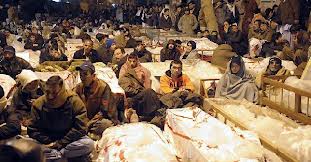
Carnage in Balochistan (Credit: chowrangi.pk)

An unprecedented protest is unfolding in the Balochistan city of Quetta in Pakistan. Thousands of people have staged a sit-in, and are using coffins to block a road to protest the slaughter of Shia Muslims by Sunni Muslim terrorists allied with the Taliban.

On Thursday night, January 10, twin bombings targeting Pakistan’s tiniest ethnic minority, the Hazaras — descendants of Central Asians and who are distinguished easily by their unique facial features — killed over 100 young men at a snooker club.

The attack was the latest in a slow-motion genocide of minority Shia Muslims in Pakistan by Sunni-Muslim extremists who consider the Shia as infidels, thus worthy of death. Many attacks against Shia Muslims are carried out by Lashkar-e-Jhangvi (LeJ), a militant Islamic group allied with al-Qaida and the Taliban. This time too the LeJ promptly claimed responsibility for the slaughter.

So far the Hazaras have endured every killing and attack with silent suffering, hoping their lack of response would be rewarded by a cessation of targeted attacks. But not this time.

The sight of 100 mangled bodies, including that of Pakistan’s leading Shia youth activist for human rights, Khudi Ali seems to be the straw that broke the camel’s back.

Instead of burying the dead, as is required by Islamic law, the Hazara Shia Muslims have taken the coffins to the streets and refused to bury the deceased unless the government assures them of protection against jihadi groups tied to the Taliban.

For over 24 hours now the Hazara Shias of Quetta have braved sub-zero temperatures that dropped to -10C, and are refusing to vacate the blocked road or to bury the dead. So far there has been total inaction by all levels of government. Frightened by the Islamic terrorists, it seems the country’s president, prime minister and the provincial chief minister, have all cowered down in their respective shelters, not knowing if it would be safe, exposing themselves among the ordinary mourning Hazaras.

As far as the military is concerned, they already administer, though unofficially, the province of Balochistan where this slaughter took place. In Balochistan, the Pakistan Army has been fighting the indigenous Baloch population for the last five years to crush their struggle for independence from Pakistan. If 100,000 troops cannot provide protection to the Hazara Shias, I doubt if another detachment of troops will help.

Although the Baloch nationalists seeking separation from Pakistan are sympathetic to the plight of the Hazara Shia and make common cause against the Taliban, they view the demand for military intervention with justified suspicion and cynicism. One Baloch activist summed it best when he tweeted:

“Hazaras Shias asking the killers to protect them? Shia Genocide Baloch Genocide being carried out by Pakistani Army & ISI in Balochistan.”

If Pakistan’s men in uniform wished to help, they could easily cut off all ties to the jihadi terrorists and liquidate them. Instead, they perform a strip-tease for America and the Pakistani population, acting as if they are fighting the jihadis while giving the Taliban leadership of Mulla Omar shelter in Quetta.

Destabilizing Pakistan before an election

The fresh slaughter of the Shia in Pakistan comes in the wake of other events unfolding in Pakistan that seem to suggest its part of an attempt to destabilize the country and thwart parliamentary elections due in a few months.

Clashes with Indian Army on the volatile Kashmir border plus a planned “long-march” by a Tahir-ul-Qadri, Sunni cleric who has arrived from Canada, point to a concerted effort to pave way for the military to step in and take over as an “interim government” to conduct “proper” elections — a tactic used in the past my army commanders.

The Sunni Islamic terrorists of the LeJ, who proudly claimed responsibility for the Thursday night massacre, are a product of the Pakistan Army in its strategy to use non-state actors to create mayhem in India and Afghanistan. No one will be surprised if it turns out the latest slaughter of Shias was merely one act in the larger theatrical play to bring democracy into disrepute and making it palpable to endure another phase of military authoritarianism in Pakistan.

No matter how this play unfolds, the Pakistan created by a Shia Muslim, Mohammed Ali Jinnah, today lies in ruins, being torn apart as vultures gnaw at its carcass. It was near Quetta, Balochistan that MA Jinnah came to die and it is perhaps Balochistan where the country he created will finally unravel into dust.

Had it not been a nuclear power with 200 missiles pointed at India and unknown western interests in the region, we could have shrugged off the failed experiment. But Pakistan today needs to be watched as the single largest source of anti-Western terrorism and the nurturing ground for the ideology of global jihad.

The Shia and Ahmadi Muslims that are being killed, together with Pakistan’s beleaguered Hindu minority as well as traumatized Christian community, should be seen as canaries in the mine. In their demise is a warning to the rest of us. A nuclear power is about to collapse.

Extremists attend more than 200 university events

Hamza Tzortzis (Credit: telegraph.co.uk)

A dozen events featured speakers with links to the fanatical group Hizb ut Tahrir – a controversial organisation banned by the National Union of Students.

Extremists were invited to a host of events despite criticism from Theresa May, the Home Secretary, that universities were “complacent” in tackling the risk of radicalisation.

The research, by campaign group Student Rights, found a total of 214 university events featured known extremists last year.

The most frequent speaker was Hamza Tzortzis who was promoted at 48 events,

Mr Tzortzis has called for an Islamic state, expressed his hostility towards Western values and stated that: “We as Muslims reject the idea of freedom of speech, and even of freedom.”

Hizb ut-Tahrir was represented at six per cent of the events even thought the NUS has a policy not to give the organisation a platform.

The research also found eight events were moved off campuses following complaints while another ten were cancelled.

In other moves, 17 video or audio clips featuring the late terrorist Anwar al-Awlaki was shared online with students.

Rupert Sutton, Head Researcher at Student Rights said: “These statistics demonstrate that the presence of extremist preachers on campus is not a figment of people’s imaginations, but a serious issue that universities cannot afford to be complacent about.

“The prevalence of material featuring terrorists such as Anwar al-Awlaki is deeply concerning, as is the relative ease with which Hizb ut-Tahrir-linked videos and literature can be shared amongst students.

“We hope that universities will use these figures as an opportunity to examine their policies and ensure that they are keeping their students safe from those who would spread intolerance and hatred on our campuses.”

In 2011, Mrs May said universities were not taking the issue of radicalisation seriously enough and that it was too easy for Muslim extremists to form groups on campuses “without anyone knowing”.

Last year a report by Student Rights and the Henry Jackson Society warned Islamic extremists were using social networking sites to radicalise students.

Videos of armed insurgents and hate-filled speeches from al Qaeda figures had been posted on websites linked to Islamic societies at several leading universities.

PPP Government Gets Reprieve after “Deal” with Qadri

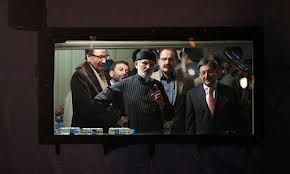
Qadri flanked by negotiators addresses supporters (Credit: guardian.co.uk)

ISLAMABAD, Jan 18: The Tehreek-e-Minhaj-ul-Quran chief Dr. Tahir-ul-Qadri late Thursday called off his mass protest in Islamabad, averting a major political crisis and reaching a deal with the government that paves the way for elections within months.

The decision, hours after the Supreme Court adjourned an alleged corruption case against Prime Minister Raja Pervez Ashraf having earlier ordered his arrest, gives the government breathing space after three days of high tensions.

Tension had been at fever pitch since Tuesday, when the court ordered Ashraf’s arrest and Tahir-ul Qadri arrived in Islamabad with tens of thousands of supporters, denouncing politicians and praising the armed forces and judiciary.

There were few signs of any significant government concessions in the deal reached on Thursday, which stated that parliament would be dissolved at any time before March 16 so that elections can take place within 90 days.

The government had previously said parliament would dissolve on March 17.

But Qadri hailed it as victory for the protesters, estimated to number around 25,000 in the largest ever demonstration in the capital since the current government took office in 2008.

“I congratulate you. Today is the day of victory for the people of Pakistan. You should go home as peacefully as you came here,” Qadri told participants after signing the deal with the prime minister.

Qadri’s supporters danced and cheered in a carnival-style atmosphere despite the chilly winter night, before packing their bags, collecting up mattresses and blankets, and getting in their vehicles to leave, an AFP reporter said.

“I am very happy. I can’t explain it. We felt the cold very badly in the last few days but we’re happy that we’ve been successful in our mission and we want rights for the next generation,” said 26-year-old housewife Muqaddas Zulfiqar, holding her two-year-old son.

“If we had to stay here longer, we would have stayed.”

Qadri, cabinet ministers and members of the coalition negotiated for hours in the bullet-proof container where the cleric has been holed up since early Tuesday while his supporters have slept on the ground outside.

“I congratulate you. Today this is another victory for democracy,” Information Minister Qamar Zaman Kaira told the crowd, standing alongside Qadri.

“This is your victory. This is Qadri’s victory. This is my victory and this is the people’s victory. This is the real face of Pakistan,” he added.

Qadri had called for parliament to be dissolved immediately and for a caretaker government to be set up in consultation with the military and judiciary to implement reforms before elections.

Chief Justice Iftikhar Muhammad Chaudhry adjourned until January 23 the case being heard against Ashraf and 15 others accused of corruption over power projects that date back to his time as water and energy minister.

Chairman of the National Accountability Bureau Fasih Bokhari said it would take time to find evidence to prosecute anyone despite the court ordering in March 2012 legal proceedings against Ashraf.

Political analyst Hasan Askari warned that it was only a temporary reprieve.

“Even if they come up with a solution to the present problems, they may get another crisis… So the government should announce elections now,” he said.

Siachen Glacier shrinking due to rising temperatures

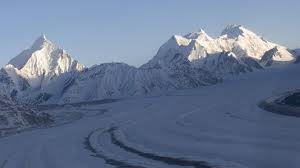
Siachen Glacier (Credit: topnews.in)

Karachi, Jan. 4: The Siachen Glacier has reduced by 5.9 km in longitudinal extent between 1989 and 2009 because of rising temperatures, researchers say.

Human presence at Siachen may also be affecting the neighbouring glaciers of Gangotri, Miyar, Milan and Janapa which feed Ganges, Chenab and Sutlej rivers, the Dawn reported.

According to the study by Dr Ghulam Rasul of the Pakistan Meteorological Department, Himalaya, Karakoram and Hindukush together make the largest mountain chain on earth and they are the custodian of the third largest ice reserves after the Polar Regions.

The glaciers in these mountain ranges feed 1.7 billion people through seven large Asian river systems, including the Indus, Ganges, Brahmaputra, Mekong and Yangtze.

These ranges are a blessing for South Asia as they protect it from the cold surges in winter associated with northerly winds.

The study says that since temperature maxima has been increasing at a greater rate, the thinning of ice and retreat of glacial extent has taken place simultaneously at an alarming rate. The decay estimates calculated by remote sensing techniques show that Siachen Glacier has reduced by 5.9km in longitudinal extent from 1989 to 2009. Thinning of its ice mass is evaluated at 17 percent.

A sharp decline in the mass of all glaciers has been seen since the 1990s. Accelerated melting process of seasonal snow and that of glacier ice from mountain glaciers have been adding to greater volume of water into the sea than normal discharges, it says.

Both precipitation and thermal regimes in Pakistan have suffered changes, especially in the recent two decades in line with a sharp jump in global atmospheric temperatures.

Visible changes in hydrological cycle have been observed in the form of changing precipitation patterns, cropping patterns, droughts, water availability periods, frequency and intensity of heat waves, precipitation events and weather-induced natural disasters.

According to the study, both minimum and maximum temperatures have increased in summer and winter almost throughout Pakistan.

Late onset and early winter ending will reduce the length of growing season for crops which will complete their biological life quickly causing reduction in yields as plants will gain accelerated maturity without reaching proper height and size.

Early winter means that temperatures will start rising in February when wheat crop reaches the grain formation stage.

The study lists recent extreme weather events which caused great losses to the socio-economic sector. They are: cloudburst events (2001, 2003, 2007, 2008, 2009, 2010, 2011), prolonged droughts (1999-2002), historic river flooding (2010), tropical cyclones (1999, 2007, 2009, 2010, 2011), severe urban flooding (2001, 2003, 2007, 2008, 2009, 2010, 2011), heatwaves in spring (2006, 2007, 2010), snowmelt flooding (2005, 2007, 2010) and drought at sowing stage (2004, 2006, 2007, 2009, 2010, 2011).

About the floods of 2010 and 2011, the study says that such back-to-back occurrence of the history’s worst flooding is at least a unique phenomenon in case of Pakistan.

In 2010, intense precipitation concentrated over the elevated plains of Khyber Pakhtunkhwa due to interaction of three weather systems from east, south and north.

Similarly, another historic climatic anomaly occurred in 2011 when the monsoon axis set its orientation from head of Bay of Bengal to southern Sindh which was commonly found parallel to the Himalayas in case of heavy precipitation in Pakistan.

The study has been published in Nature-Pakistan.

Sindhis concerned “Dream City” may marginalize them further

Oil Terminal at Zulfikarabad (Credit: city21tv)

Jan 6, Thatta: Zulfikarabad, the dream city of the president of Pakistan, has sparked another controversy in Sindh. In spite of tooth and nail opposition, the government seems ready to proceed with its plans. The project, originally named as Jheruk, was first heard of in 2009. The scheme was later relocated to further south of Thatta district in Jati, Shah Bunder, Keti Bunder and Kharo Chaan talukas.

A meeting chaired by President Asif Zardari on 28th January 2011 was told that the project would require some 1.6 million acres of land in the four coastal talukas of Thatta district. More than 1.2 million acres of the earmarked land is presently under sea and would require huge amount of money to reclaim. Sindh Land Management and Development Company has been established to acquire land for the project.

An autonomous body, Zulfikarabad Development Authority (ZDA) has been established to steer the project. The authority enjoys rare powers of approving any scheme even without seeking approval from the provincial Planning and Development Department. A high powered Executive Committee of the Authority has been empowered to take decisions. The chief secretary of the province would be just an ordinary member of the authority, ceremonially chaired by the chief minister and practically operated by the managing director. This is probably the only development scheme of its kind, for which key decisions are taken in meetings chaired by not less than the president of Pakistan.

Coastal strip is globally considered as an enticing location for commercial investments e.g. housing, tourism, industry and trade. Most expensive residential schemes are developed along coastal towns and cities. According to some estimates, approximately three billion people on earth live within 200 kilometres of coast and 14 out of 17 biggest cities of the world are located on coastline. This development is often materialised at the cost of indigenous communities. Against this backdrop, civil society has expressed its serious reservations on social and environmental implications of this scheme. Involuntary displacement of thousands of people from coastal villages is afoot.

China has shown its keen interest in the scheme. Delegations of Chinese investors frequently meet the president to lobby for major contracts in the project. The president has also recently visited China and the two countries have signed MoU to implement the project through Chinese companies.

Such high value projects nest hefty profits and poor communities become their casualty in numerous ways. Pakistan does not have impressive track record in this context. Resettlement of few thousand people of much smaller projects like Chotiari reservoir reeked with massive embezzlements and nepotism. Plight of the would-be displaced communities of Zulfikarabad is a foregone conclusion.

Key reason for Sindhis to oppose this project is lurking fear of being turned into a numeric minority in their own province. According to the 1998 census, Sindhi speaking population was 60 per cent. Sindhi speaking population in urban areas was 25.8 per cent against 78.75% Punjabi speaking in urban Punjab and 73.55% Pashto speaking in Urban KP. Demography of Karachi was even worse with Sindhi speaking population standing at 7.7%. Against this backdrop, any new city of expected population of 10 million would easily convert Sindhis into a minority within a decade. Nationalist parties in Sindh consider Zulfikarabad a tool of demographic genocide of Sindhis.

The project is also impregnated with environmental risks. Indus Delta is jewel in the crown of Pakistan’s ecological heritage. For its rich biodiversity, the Delta is declared as a Ramsar site and attains great environmental significance. According to WWF Pakistan, the area where the city is proposed houses about 50 per cent of the country’s remaining mangroves cover most of which is declared as ‘protected’ since 1950s.

Recent studies on the existing land use of the location indicate that mangrove forests, wet mudflats and seawater in various major and minor creeks cover 7.2, 40.2 and 20 per cent of the total area of the site, respectively (WWF Pakistan). The remaining one third is the inland area which comprises agriculture and inland vegetation on about 9 per cent and uncultivated agricultural land and residential areas on 24 per cent of the total area of proposed Zulfikarabad site. More than 50,000 hectors of the proposed site are covered with mangroves forests, most of which are under the administrative jurisdictions of Sindh Forest Departments. Pakistan’s Environmental Protection Act requires an Environmental Impact Assessment (to which Social Impact Assessment is a component) of such projects. Considering the scope of the project, ideally a Strategic Impact Assessment should be conducted. However, all these requirements have been violated flagrantly.

Coastal cities are no more considered salubrious locations. Environmental hazards and coastal disasters have made such cities more vulnerable. Tsunamis of East-Asian coast in 2004 and of Japan in 2011 provide ample evidence of alarming vulnerability of coastal cities. Tourism, industry, shipping and aqua-culture are some of the prime areas of interest for investors. Natural ecosystem is gradually encroached and eventually replaced by concrete and steel in such areas.

Tsunami hit East-Asian countries developed shrimp farming into a $9 billion industry by erasing mangroves forests in vast swathes. The massive wave of destruction caused by the 2004 tsunami dwarfed all economic gain that the shrimp industry claimed. According to some reports, Sindh coast witnessed an average of four cyclones in a century. However, the frequency and intensity has increased manifold and the period of 1971-2001 records 14 cyclones. From 2001 to 2010, two high intensity cyclones i.e. cyclone Yemyin and cyclone Phet narrowly missed Sindh coast. Thus, Zulfikarabad would be exposed to serious potential hazards.

The proposed city is located in an active seismic zone, where exists Allah Band Fault, a potential threat of severe earthquake. In its southeast lies Gujarat Seismic Zone (GSZ) and in north-west Makran Subduction Zone (MSZ) that pose serious threat to the proposed city. Bhuj earthquake of 2001 caused devastation in the adjoining areas across the border.

Looking at shambolic infrastructure and substandard quality of services in Sindh, one wonders why these resources cannot be veered to improve the existing system. Most of the province is devoid of vehicle-worthy highways, link roads and basic infrastructure in secondary cities. Housing, drinking water and sanitation facilities are not available in large parts of big cities and secondary towns of Sindh. Thousands of schools and health facilities are without basic facilities. According to official data, 10,722 schools are without building and 24,559 are without drinking water facility in the province (Sindh Economic Survey 2009-2011). The same document acknowledges that provision of health facilities in Sindh is grossly inadequate. The province has only 3.5 doctors per 10,000 people and only 1.1 nurses against the same number of people. Against this backdrop, the decision to pour billions of dollars to build another big city lacks prescience.


Pakistan has highest growth rate of internet users in region

Pakistan’s growth rate of internet users is second highest in SAARC countries in accordance with its population, as it standing at 16.8 percent as compared with 28.3 percent of Maldives.

According to the State Bank of Pakistan (SBP) publications quoted World Bank statistics by July 2012, Pakistan internet users showed double digit growth from past five years. The growth rate stood at 10 percent in 2007, which is now more than 16 percent.

The internet users growth rate in India is standing at 7.5 percent; 12.1 percent in Sri Lanka, 13.6 percent in Bhutan with respect to their populations, World Bank statistics said.

In Pakistan, the internet users’ growth rate is on the rise through the services of broadband internet and mobile phone services.

According to Internet Service Providers Association of Pakistan (ISPAK), the estimated internet users have reached 25 million in the country thanks to broadband and mobile phone operators

The internet users having demand of high speed services are also increasing particularly through broadband operators exploiting various technologies such as Wimax, EvDO, FTTH.

As per industry estimate, there are more than five million broadband users in the country through connections of 2 million. The internet users mainly do connect with one IP or connections and consume internet services through sharing at home, office and educational institutions.

There are 50 internet services providers in which 10 are broadband companies exploring untapped market in big cities, making it available for people to use internet with only Rs 100.

Among 25 million internet users, more than 15 million of them avail internet services trough mobile phones thanks to cellular operators’ packages and awareness drive.

The mobile phone subscribers go online through different internet services including, EDGE, GPRS and Blackberry Internet Services (BIS).

Majority of the mobile phone subscribers use internet services for browsing, emails, Facebook and Twitter as cellular phone operators introduced different affordable packages to their subscribers. Moreover low cost handsets also facilitate a large number of people to connect online 24 hours.

The cellular phone companies have been working aggressively on the promotion of Internet services for last two years mainly for earning extra revenues besides voice calls and text messages. These companies introduced different bundle packages of Internet services in their youth brands to promote Internet services as an essential for young customers for education and entertainment purposes.

The trend of using Internet is increasing rapidly with the arrival of smartphones of different handset makers though low-cost handsets are available in the market having options of online connectivity. It was further given impetus through providing easy connectivity to users for using Facebook and Twitter.

Mobile phone companies and handset makers alike have provided easy connectivity of Facebook and Twitter Internet users that gave further impetus to Internet usage among the customers

Officials of the mobile phone companies said the Internet consumption of their subscribers varies due to different needs of individuals in their daily life. They said the customers having postpaid connection are large users of Internet services due to their business and professional demands. Besides youngsters usage of Internet is limited on mobile phone as they usually avail Internet services for social networking sites, informative webs and browsing.

The cellphone operators have created demand of Internet usage among customers through different tools like applications of education, infotainment and entertainment by their own portals.

The excessive branding and marketing campaigns of mobile phone companies are generating positive results on their business in fact creating awareness among the customers before the launch of high data service—3G technology.

The rising internet utility among the masses have increased the living standard of the people not only for communications and information purpose but for commercial means such as credit and money transactions by branchless and mobile banking.

The growth in internet users pave the way towards growth in different sector particularly the access of information and entertainment at affordable purpose but it should be controlled by the watchdog, Pakistan Telecommunication Authority (PTA).

In this regard, the government should install a Firewalls system to control the objectionable and indecent material on the internet as if many countries like China, UAE and KSA have done earlier.

In this way, the government can minimize the harmful impacts of internet on its users throughout the country and the online landscape will be exploited for constructive and meaningful purposes.


Pakistan’s Impossible Year: Elections, Army Intrigue, and More

Goodbye to 2012 (Credit: asiancorrespondent.com)

Washington DC, Dec 29: On the brink of a new year, Pakistan faces an unstable future. Can the son of assassinated prime minister Benazir Bhutto break through the chaos?

Bilawal Bhutto Zardari, son of Pakistan President Asif Ali Zardari and former prime minister Benazir Bhutto, stepped onto the national stage for the first time this week, to give a speech marking the fifth anniversary of Benazir’s murder. Still too young to run for office, the 24-year-old Bhutto’s coming out adds more drama to what will be a pivotal year for Pakistan. National elections, turnover at the top military position, and the denouement in the war in Afghanistan all promise to make 2013 a critical year for a country that is both under siege by terrorism and the center of the global jihadist movement.

Bilawal’s grandfather, uncles, and mother all were murdered in political violence. Zulfikar Bhutto was hung in 1979 by Gen. Mohammad Zia ul-Haq, his two uncles died in mysterious plots, and his mother was assassinated by al Qaeda and the Taliban. His family story resembles Pakistan’s reality. Pakistanis a country in the midst of a long and painful crisis. Since 2001, according to the government, 45,000 Pakistanis have died in terrorist-related violence, including 7,000 security personnel. Suicide bombings were unheard of before the 9/11 attacks; there have been 300 since then. The country’s biggest city,Karachi, is a battlefield. One measure of Pakistan’s instability is that the country now has between 300 and 500 private-security firms, employing 300,000 armed guards, most run by ex-generals. The American intelligence community’s new global estimate rates Pakistan among the most likely states in the world to fail by 2030.

wanted on America’s counter terrorism list live in Pakistan. The mastermind of the 2008 Mumbai massacre and head of Lashkar-e-Taiba, Hafiz Saeed, make no effort to hide. He is feted by the army and the political elite, appears on television, and calls for the destruction of India frequently and jihad against America and Israel. The head of the Afghan Taliban, Mullah Mohammed Omar, shuttles between Pakistan intelligence (ISI) safe houses in Quetta and Karachi. The emir of al Qaeda, Ayman al-Zawahiri, is probably hiding in a villa not much different from the one his predecessor was living in with his wives and children in Abbottabad until May 2011.

Pakistan also has the fastest-growing nuclear arsenal in the world, bigger than Great Britain’s. The nukes are in the hands of the generals; the civilian government has only nominal control. President Zardari has only nominal influence over the ISI as well; indeed it deliberately botched the security for Benazir to help get rid of her, and it has conspired for five years to get rid of him, too.

Against the odds, Zardari has survived. By next fall, he will have served five years, becoming the first elected civilian leader to complete a full term in office and pass power to another elected government. It will be a major milestone for Pakistani democracy. Zardari has served years in prison. He often has been called a criminal by many, including in his own family, and the national symbol of corruption. Yet as president he presided over an major transfer of power from the presidency to the prime minister’s office, even the titular National Command Authority over the nukes, to ensure the country is more democratic and stable.

The parliamentary election in the spring will be a replay of every Pakistani election since 1988, pitting Nawaz Sharif’s party against the Bhuttos. Needless to say, many Pakistanis are sick of the same old stale choices. But the odds favor the old parties. Both Sharif and Zardari are committed to cautiously improving relations with India and trying to reform the Pakistani economy. Both have troubled relations with the Army.

If Sharif returns to the prime minister’s job for a third time, it will be a remarkable next turn in his own odyssey. Sharif was removed from the office in 1999 in an illegal coup and barely escaped alive to go into exile in Saudi Arabia. His decision to withdraw Pakistan’s troops in 1999 during the Kargil War prompted his fall from power, but it also may have saved the world from nuclear destruction. It was a brave move. I remember talking to him and his family in the White House the day after he made the decision to pull back. You could see in his eyes that he knew the Army would defame him, but he knew he was in the right.

But many Pakistanis want a new face to lead their country. Out of desperation, some are turning to cricket star Imran Khan to save Pakistan. The ISI is probably helping his campaign behind the scenes to stir up trouble for the others. He is a long shot at best. He is much more anti-American, anti-drone, and ready to make deals with the Taliban to stop the terror at home. Yet he understands well that Pakistanis a country urgently in need of new thinking.

Whoever wins will inherit an economy and government that is in deep trouble. Two thirds of the 185 million Pakistanis are under 30; 40 million of the 70 million ages 5 to 19 years old are not in school. Fewer than 1 million Pakistanis paid taxes last year. Power blackouts are endemic. Clean water is increasingly scarce, even as catastrophic floods are more common. Growth is 3 percent, too little to keep up with population demand.

It is no wonder that the generals prefer to have the civilians responsible for managing the unmanageable while they guard their prerogatives and decide national-security issues.

So it is no wonder that the generals prefer to have the civilians responsible for managing the unmanageable while they guard their prerogatives and decide national-security issues. As important as the elections next spring will be, the far more important issue is who will be the next chief of Army staff.

The incumbent, Gen. Ashfaq Parvez Kayani, was given an unprecedented three-year extension in 2010. He is the epitome of the Pakistani officer corps and the so-called deep state. Pervez Musharraf made him director general of the ISI in 2004. On his watch, the Afghan Taliban recovered and regrouped inQuetta, Osama bin Laden built his hideout 800 yards outside Kayani’s alma mater—the Kakul Military Academy in Abbottabad—in 2005, and planning began for the 2008 Lashkar-e-Taiba attack on Mumbai. His term expires in September.

The history of civilians choosing chiefs of Army staff is not encouraging. Zulfikar Bhutto chose Zia ul-Haq, whom he called his “monkey general” because he thought he was apolitical. Zia staged his own coup and then hanged Zulfi. Nawaz Sharif picked Pervez Musharraf, quarreled over the Kargil War, and fired Pervez, who then staged his coup. No wonder Zardari just rolled over Kayani for another three years in 2010. It was the easy way out.

The next COAS will come from the shadowy group of a dozen corps commanders who run the Army. They do not advertise their political views as a rule. By next summer, a consensus will probably emerge in the inner circle on who should succeed Kayani, and the whole world will try to decipher the implications of the choice.

Washington will be watching all of this carefully. U.S.-Pakistan relations are at a low point and may get worse. It is in Afghanistan that the relationship will be most tested in 2013. This past September, the Taliban attacked a base called Camp Bastion, destroying eight U.S. Marine jet aircraft and killing two Marines. The interrogation of the surviving Taliban fighter indicated the attack was planned at an ISI safe haven in Pakistan with Pakistani army expertise. Then in December, the head of Afghan intelligence, Asadullah Khalid, was almost assassinated by a terrorist who the Afghans say came from Pakistan and was sent by the ISI. Incidents like these promise to make 2013 another year of strained relations in the U.S.-Pakistan deadly embrace.

Five female teachers killed: Pakistan aid work imperiled

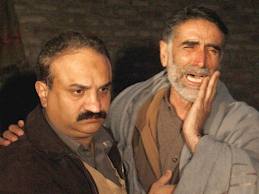
Grieving family in Swabi district (Credit: tribune.com.pk)

Islamabad, Jan. 2: Pakistani police on Wednesday searched for the gunmen behind the brazen murder of five teachers and two health workers, amid fears that public health campaigns would suffer and lead to a resurgence of polio and other preventable diseases.

There was no immediate claim of responsibility for the attack, which occurred Tuesday in Swabi, a city in the troubled northwest. The Pakistani Taliban has in the past vowed to target, among others, health workers involved in campaigns to wipe out polio.

Last year, 15 health and aid workers were killed in Pakistan, making the country one of the most dangerous in the world for aid workers, according to the British-based consultancy Humanitarian Outcomes. Most were women. Development sector experts now express concerns that those working on the ground will shy away from assignments.

“In the past, local volunteers, be they teachers, medical workers or social mobilizers, considered themselves safe and worked hand in hand with foreign aid workers and paramilitary personnel in even the most dire of circumstances,” says Hassan Belal Zaidi, a development and communication specialist, based in Islamabad. “But now, it would not be unreasonable for them to think twice and even refuse to travel to remote parts of the country if they know there is a chance they may get shot.”

The six women and one man were traveling in a van when gunmen on motorcycles stopped it Tuesday afternoon after it left a children’s community center, according to Abdur Rasheed Khan, chief of the Swabi police force. The four gunmen took a 4-year-old boy belonging to one of the women from the van, and then raked the vehicle with gunfire, he said. The child was unharmed and was later turned over to police by bystanders, he said.

Recommended: How much do you know about Pakistan? Take this quiz.

These murders come a few weeks after nine health workers with national polio campaign were killed in different parts of the country in what police said was a coordinated attack. That prompted the Pakistani government and the United Nations agencies to suspend their vaccination drive for the disease, which has seen a uptick in cases in recent years.

Pakistanis one out of the three countries where polio persists; at least 57 cases were registered in 2012. The World Health Organization last year warned Pakistan that it could face travel and visa restrictions and sanctions imposed by other countries if polio continues to spread

Distrust of public health initiatives like the polio campaign is particularly strong in districts of Pakistanwhere religious extremists have tightened their grip. That sentiment deepened in 2011 after the US raid that killed Osama bin Laden. A CIA-led operation to confirm Mr. bin Laden’s location in the city of Abbottabad used a hepatitis B vaccination campaign to gather DNA evidence on bin Laden.

The recent attacks are likely to further frighten people from working with foreign and Pakistani aid and development organizations, says Bushra Arain, chairwoman for the All Pakistan Lady Health Workers Welfare Association, which counts more than 100,000 registered members.

“We are the backbone of Pakistani health sector. If the attacks continue, with the state showing the inability it currently is demonstrating in stopping us from being targeted, we will stop working,” Ms. Arain says.

The Taliban and affiliated groups are targeting aid workers for several reasons, says Khadim Hussain, who heads one of the largest private charity school networks in the northwestern Khyber Pakhtunkhwa province. First, the militants think aid groups have an anti-Muslim agenda, spying on the local population, a suspicion that was deepened by the raid on bin Laden. Secondly, the groups equate health campaigns with modernizing society, in opposition to some fundamentalist tenets for Islamic radicals. Some groups also believe the vaccine is intended to sterilize Muslim children.

“If the attacks by the Taliban continue, there will be widespread de-motivation amongst aid workers, which I am already witnessing,” Mr. Hussain says.

While some development advocates say there needs to be a coordinated, public response by Pakistani and foreign NGOs to the attacks, others say the government should stop public education campaigns altogether and just allow aid workers to operate quietly.

“The less attention we get, the less vulnerable we will be as targets for the terrorists,” Ms. Arain says.

“We are involved with anti-polio drive, infant health awareness programs, family planning, etc. and if the government does not pull its act together, many deadly diseases can spread rapidly inPakistan,” she says. “The situation can get out of hand.”


US drone strike kills top militant Mullah Nazir in Pakistan

Maulvi Nazir (Credit: rferl.org)

US drone strikes today killed a senior Pakistani militant commander in the tribal region of South Waziristan, and also reportedly claimed the lives of three suspected al-Qa’ida operatives in Yemen.
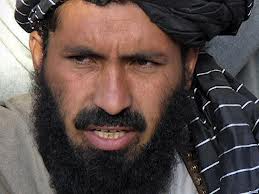
Mullah Nazir, leader of one of Pakistan’s four main militant groups, was a target for US forces despite having agreed a ceasefire deal with Islamabad. Under the agreement his group was no longer launching attacks inside Pakistan, but was still active in Afghanistan. He also hosted al-Qa’ida members at his base in Pakistan’s tribal areas.

According to Pakistani officials, Nazir was in a meeting at a house in the village of Angoor Adda when he and eight others were killed. Four more militants were killed in Mir Ali in North Waziristan by a second wave of missiles. The attacks were the first by US drones in Pakistan this year.

In return for his co-operation, Nazir was allowed to run his fiefdom with little interference from the Pakistani army. He had either killed or chased out his tribal and political enemies and recently ordered that polio vaccinations in the area be stopped, declaring the progamme to be a CIA spying ploy and also an invidious plot to make Muslims infertile. The ban was followed by murder of health workers in the region.
But it was the Mullah’s activities in Afghanistan that made him a prime target for the Americans. His group was responsible for a rise in suicide bombings and also for sending Punjabi Pakistani fighters across the border to bolster the Afghan Taliban, who have suffered heavy losses.

Pakistan’s former chief of intelligence in the country’s north-west, retired brigadier Asad Munir, maintained that Nazir’s killing will “complicate” the fight against militants in the tribal region, and could prompt retaliatory attacks against the army in South Waziristan.

Yesterday’s other strike, in southern Yemen, was the fifth by a pilotless plane in the country in just 10 days. The US has recently stepped up its assault on Al-Qa’ida in the Arabian Peninsula, the terror network’s Yemeni wing which is regarded as its most dangerous by many in the West. A government official shortly after yesterday’s strike said the attack was by a Yemeni aircraft, but locals said it came from a missile-firing drone.

US drone attacks in Pakistan, which have increased markedly under President Obama, have long been hugely controversial issue. Pakistani leaders have condemned the infringement of their sovereignty and stressed that large numbers of civilians die in the strikes.