
We Are Reading Differently in the Age of the Internet
Neuroscientists Discover “Eye Byte” Culture among Web Surfers

Age of the Internet (Credit: americastrong.com)
Age of the Internet
(Credit: americastrong.com)

Claire Handscombe has a commitment problem online. Like a lot of Web surfers, she clicks on links posted on social networks, reads a few sentences, looks for exciting words, and then grows restless, scampering off to the next page she probably won’t commit to.

“I give it a few seconds — not even minutes — and then I’m moving again,” says Handscombe, a 35-year-old graduate student in creative writing at American University.

But it’s not just online anymore. She finds herself behaving the same way with a novel.

“It’s like your eyes are passing over the words but you’re not taking in what they say,” she confessed. “When I realize what’s happening, I have to go back and read again and again.”

To cognitive neuroscientists, Handscombe’s experience is the subject of great fascination and growing alarm. Humans, they warn, seem to be developing digital brains with new circuits for skimming through the torrent of information online. This alternative way of reading is competing with traditional deep reading circuitry developed over several millennia.

“I worry that the superficial way we read during the day is affecting us when we have to read with more in-depth processing,” said Maryanne Wolf, a Tufts University cognitive neuroscientist and the author of “Proust and the Squid: The Story and Science of the Reading Brain.”

If the rise of nonstop cable TV news gave the world a culture of sound bites, the Internet, Wolf said, is bringing about an eye byte culture. Time spent online — on desktop and mobile devices — was expected to top five hours per day in 2013 for U.S. adults, according to eMarketer, which tracks digital behavior. That’s up from three hours in 2010.

Word lovers and scientists have called for a “slow reading” movement, taking a branding cue from the “slow food” movement. They are battling not just cursory sentence galloping but the constant social network and e-mail temptations that lurk on our gadgets — the bings and dings that interrupt “Call me Ishmael.”

Researchers are working to get a clearer sense of the differences between online and print reading — comprehension, for starters, seems better with paper — and are grappling with what these differences could mean not only for enjoying the latest Pat Conroy novel but for understanding difficult material at work and school. There is concern that young children’s affinity and often mastery of their parents’ devices could stunt the development of deep reading skills.

The brain is the innocent bystander in this new world. It just reflects how we live.

“The brain is plastic its whole life span,” Wolf said. “The brain is constantly adapting.”

Wolf, one of the world’s foremost experts on the study of reading, was startled last year to discover her brain was apparently adapting, too. After a day of scrolling through the Web and hundreds of e-mails, she sat down one evening to read Hermann Hesse’s “The Glass Bead Game.”

“I’m not kidding: I couldn’t do it,” she said. “It was torture getting through the first page. I couldn’t force myself to slow down so that I wasn’t skimming, picking out key words, organizing my eye movements to generate the most information at the highest speed. I was so disgusted with myself.”

Adapting to read

The brain was not designed for reading. There are no genes for reading like there are for language or vision. But spurred by the emergence of Egyptian hieroglyphics, the Phoenician alphabet, Chinese paper and, finally, the Gutenberg press, the brain has adapted to read.

Before the Internet, the brain read mostly in linear ways — one page led to the next page, and so on. Sure, there might be pictures mixed in with the text, but there didn’t tend to be many distractions. Reading in print even gave us a remarkable ability to remember where key information was in a book simply by the layout, researchers said. We’d know a protagonist died on the page with the two long paragraphs after the page with all that dialogue.

The Internet is different. With so much information, hyperlinked text, videos alongside words and interactivity everywhere, our brains form shortcuts to deal with it all — scanning, searching for key words, scrolling up and down quickly. This is nonlinear reading, and it has been documented in academic studies. Some researchers believe that for many people, this style of reading is beginning to invade when dealing with other mediums as well.

“We’re spending so much time touching, pushing, linking, scroll­ing and jumping through text that when we sit down with a novel, your daily habits of jumping, clicking, linking is just ingrained in you,” said Andrew Dillon, a University of Texas professor who studies reading. “We’re in this new era of information behavior, and we’re beginning to see the consequences of that.”

Brandon Ambrose, a 31-year-old Navy financial analyst who lives in Alexandria, knows of those consequences.

His book club recently read “The Interestings,” a best-seller by Meg Wolitzer. When the club met, he realized he had missed a number of the book’s key plot points. It hit him that he had been scanning for information about one particular aspect of the book, just as he might scan for one particular fact on his computer screen, where he spends much of his day.

“When you try to read a novel,” he said, “it’s almost like we’re not built to read them anymore, as bad as that sounds.”

Ramesh Kurup noticed something even more troubling. Working his way recently through a number of classic authors — George Eliot, Marcel Proust, that crowd — Kurup, 47, discovered that he was having trouble reading long sentences with multiple, winding clauses full of background information. Online sentences tend to be shorter, and the ones containing complicated information tend to link to helpful background material.

“In a book, there are no graphics or links to keep you on track,” Kurup said.

It’s easier to follow links, he thinks, than to keep track of so many clauses in page after page of long paragraphs.

Kurup’s observation might sound far-fetched, but told about it, Wolf did not scoff. She offered more evidence: Several English department chairs from around the country have e-mailed her to say their students are having trouble reading the classics.

“They cannot read ‘Middlemarch.’ They cannot read William James or Henry James,” Wolf said. “I can’t tell you how many people have written to me about this phenomenon. The students no longer will or are perhaps incapable of dealing with the convoluted syntax and construction of George Eliot and Henry James.”

Wolf points out that she’s no Luddite. She sends e-mails from her iPhone as often as one of her students. She’s involved with programs to send tablets to developing countries to help children learn to read. But just look, she said, at Twitter and its brisk 140-character declarative sentences.

“How much syntax is lost, and what is syntax but the reflection of our convoluted thoughts?” she said. “My worry is we will lose the ability to express or read this convoluted prose. Will we become Twitter brains?”

Bi-literate brains?

Wolf’s next book will look at what the digital world is doing to the brain, including looking at brain-scan data as people read both online and in print. She is particularly interested in comprehension results in screen vs. print reading.

Already, there is some intriguing research that looks at that question. A 2012 Israeli study of engineering students — who grew up in the world of screens — looked at their comprehension while reading the same text on screen and in print when under time pressure to complete the task.

The students believed they did better on screen. They were wrong. Their comprehension and learning was better on paper.

Researchers say that the differences between text and screen reading should be studied more thoroughly and that the differences should be dealt with in education, particularly with school-aged children. There are advantages to both ways of reading. There is potential for a bi-literate brain.

“We can’t turn back,” Wolf said. “We should be simultaneously reading to children from books, giving them print, helping them learn this slower mode, and at the same time steadily increasing their immersion into the technological, digital age. It’s both. We have to ask the question: What do we want to preserve?”

Wolf is training her own brain to be bi-literate. She went back to the Hesse novel the next night, giving herself distance, both in time and space, from her screens.

“I put everything aside. I said to myself, ‘I have to do this,’ ” she said. “It was really hard the second night. It was really hard the third night. It took me two weeks, but by the end of the second week I had pretty much recovered myself so I could enjoy and finish the book.”

Then she read it again.

“I wanted to enjoy this form of reading again,” Wolf said. “When I found myself, it was like I recovered. I found my ability again to slow down, savor and think.”
A Case of Exploding Guavas
The Killing and Crippling of Innocents in Islamabad

Islamabad fruit market (Credit: article.wn.com)
Islamabad fruit market
(Credit: article.wn.com)

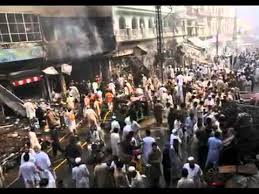
The capital of the republic is hit. Perhaps, the attack on the wholesale market of fruits and vegetables the other day in Islamabad is the biggest terrorist attack in the capital since the massive bombing of the Marriott Hotel some years ago.

According to initial reports, explosives were packed into a crate of guavas. It took more than 20 lives instantly, and about the same number of people is told to be in a critical condition. We don’t know yet how many will survive and whether they will ever be able to lead a normal life. More than a hundred are injured and hospitalised. We don’t know how many will remain able-bodied afterward and whether it will be possible for them to work again to support their families.

No act of violence is welcome. But deplorable as it may be, attacking those who are in power and seen as making decisions that go against you, or killing those who are involved in a physical battle against you can be understood at one level. Killing innocent citizens in the name of an ideology, faith, liberation movement or political cause amounts to sheer callousness. It is a blatant crime committed against common people. In Pakistan, not only do terrorists of various hues and colours commit these crimes with complete impunity, the state collapses on a daily basis to protect the lives, liberties and properties of its citizens.

But what property is to be protected for a woman or a man belonging to the working class in Pakistan? It is only her or his life. S/he has a simple and difficult life to lead, perpetually struggling to support herself and the kith and kin in order to survive, and only enjoying the liberty to move to the workplace and be back home. Even that is being taken away. What hurts more is the pride terrorist outfits would take in killing the most ordinary women and men, seeing them as soft targets. What causes much greater pain is the inability of the Pakistani state to save its citizens.

As citizens, we will not hold the militant outfits and terror groups responsible for inflicting death, pain and suffering on the people of Pakistan. It is our state and successive governments that are responsible for their wrong actions in the past or concerted inaction at present, for their continuous failure to protect us. Not to mention their massive incompetence and failure to help all citizens lead a decent, prosperous and honourable life.

Let us have a look at the profile of those killed, injured or maimed in the wholesale market of Islamabad. Most of them must be fruit and vegetable vendors, hardly making their ends meet, or common citizens who think they will save a few rupees if they buy fruits and vegetables from wholesalers than retailers.

We do not know yet who perpetrated this attack as the claim made by a Baloch separatist outfit was rubbished by the interior ministry. Even if the Baloch separatists have made a rightful claim, does that particular group of Baloch secessionists think that the guava-sellers are consulted in by the federation while making policy or by the FC when it acts in Kalat, Khuzdar or Turbat? Has eliminating or pushing out barbers, milk sellers, schoolteachers, construction labourers, carpenters and masons from Balochistan helped the cause in anyway in the recent past?

Many of us believe that Balochistan as a province and the Baloch as a people have been denied their rights in our federation for too long. We stand with them in their struggle for realisation of their economic, political and cultural rights. We stand with them in asking for an immediate end to forced disappearances and military action by the Pakistani state. We condemn mass graves found anywhere. We do not accept the view of the powers that be, which squarely place the blame on Baloch tribal chieftains for the poverty and dispossession that Balochistan is subjected to.

Again, it was the failure of our state in meeting the basic needs and ensuring the fundamental rights of its Baloch citizens, not the responsibility of the sardars – many of who collaborated with the state anyway. We recognise that for decades when chappatis were baked in Lahore on the stoves fired by the natural gas piped from Balochistan and the industry in Karachi used natural gas supplied from and metals extracted from the ores in Balochistan, the province and its people neither had gas to cook with or to heat up their homes with during the harsh winters.

We also know that schools were not built, hospitals were not established, roads were not paved and industry was not set up in areas of Balochistan that fed the Pakistani elite and middle class in other provinces and the civil and military institutions they dominate. However, it is time for the disgruntled Baloch to ask how the killing of ordinary citizens and those belonging to the working class anywhere serve their cause. Will that not escalate violence in the province and make it increasingly difficult for their genuine advocates to plead their case?

The TTP has also denied its involvement but it is now increasingly obvious to most that the outfit is not necessarily a strong monolith. There may be some from the ranks of its coalition or outsiders who were involved even if the core was not. We don’t know. But if fruit and vegetable vendors are attacked in the name of faith or an ideology by anyone, one must ask if any of these people killed or injured participated in making decisions about their country playing a part in the war on terror in Afghanistan or in the tribal regions of Pakistan.

How many cauliflower sellers on the streets of Rawalpindi and Islamabad were consulted before the Swat operation or before making air sorties in Fata? Did they ever exist for those planning drone strikes in our tribal regions? Did they help the Americans smoke out Saddam Hussein in Iraq or get Osama bin Laden trapped in his hideout near Abbottabad?

As far as the state and its ruling elite are concerned, they need to be reminded again and again what Hazrat Ali once said. “A profane state or government can surely survive but a cruel one never can.” What is meted out to them is not what the already struggling working and lower middle classes of Pakistan deserve. For them, prosperity is far away. The state is not even able to defend their right to life.

Knowing how our country and its economy works for its less privileged classes, one such attack will push hundreds of families in the throes of abject poverty. Doling out a couple of hundred thousand rupees – at the most – for each casualty will serve no purpose either. This money will be spent in a few weeks if they have to nurse the injured or else used to pay off a part of the debt such families are normally trapped in.

By killing a cobbler in the Nazimabad neighbourhood of Karachi for being a Pakhtun, an office clerk in the Baldia neighbourhood of the same city for being a Mohajir, a student leader in Khuzdar for being a Baloch rights activist, an unemployed political activist in Ghotki for being a Sindhi, a primary schoolteacher in Mastung for being a Punjabi, a shopkeeper in Quetta for being Shia, a worshipper in Lahore for being Ahmadi, a labourer in a church in Peshawar for being Christian and a fruit vendor in Islamabad for a reason still unknown, nothing will be achieved. But the state, in no uncertain terms, will dwindle fast.

Relief in Afghanistan after largely peaceful landmark election

Afghan elections (Credit: abcnews.com)
Afghan elections
(Credit: abcnews.com)

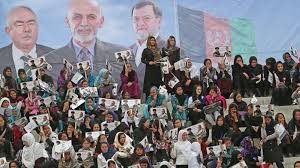
KABUL/KANDAHAR, April 5 (Reuters) – Afghanistan’s presidential election closed on Saturday amid relief that attacks by Taliban fighters were fewer than feared for a vote that will bring the first-ever democratic transfer of power in a country plagued by conflict for decades.

It will take six weeks for results to come in from across Afghanistan’s rugged terrain and a final result to be declared in the race to succeed President Hamid Karzai.

This could be the beginning of a potentially dangerous period for Afghanistan at a time when the war-ravaged country desperately needs a leader to stem rising violence as foreign troops prepare to leave.

“Today we proved to the world that this is a people driven country,” Karzai, wearing his trademark green robe and a lambskin hat, told his nation in televised remarks.

“On behalf of the people, I thank the security forces, election commission and people who exercised democracy and … turned another page in the glorious history of Afghanistan.”

One of the eight candidates will have to score over 50 percent of the vote to avoid a run-off with his nearest rival.

The Taliban threat to wreck the vote through bombings and assassination failed to materialize, and violent incidents were on a far smaller scale than feared.

Turnout was seven million out of 12 million eligible voters, or about 58 percent, according to preliminary estimates, election commission chief Ahmad Yousuf Nuristani told reporters.

That was well above the 4.5 million who voted at the last election in 2009 which was marred by widespread fraud.

“I am here to vote and I am not afraid of any attacks,” said Haji Ramazan as he stood in line at a polling station in rain-drenched Kabul. “This is my right, and no one can stop me.”

In Washington, President Barack Obama congratulated the Afghan people on the elections.

“We commend the Afghan people, security forces, and elections officials on the turnout for today’s vote – which is in keeping with the spirited and positive debate among candidates and their supporters in the run-up to the election,” Obama said in a statement.

“These elections are critical to securing Afghanistan’s democratic future, as well as continued international support, and we look to the Afghan electoral bodies to carry out their duties in the coming weeks to adjudicate the results – knowing that the most critical voices on the outcome are those of Afghans themselves,” Obama said.

The United States could point to the advance of democracy in one of the world’s most violent countries as a success as it prepares to withdraw the bulk of its troops this year.

It has spent $90 billion on aid and security training since helping Afghan forces to topple a strict Islamist Taliban regime in 2001, but U.S. support for Afghanistan’s fight against the Taliban has faded.

As U.S. troops get ready to go home, the Taliban threat and uncertainty over neighbor Pakistan’s intentions leave the worry that Afghanistan could enter a fresh cycle of violence, and once again become a haven for groups like al Qaeda.

The United States has been at odds with Karzai who has refused U.S. entreaties to sign a bilateral security agreement that would permit about 8,000 U.S. troops to remain in the country after the formal U.S. withdrawal at the end of the year.

U.S. officials are keeping open the option of leaving behind a troop contingent for training Afghan forces and for a counter-terrorism mission if an agreement can be signed later this year by Karzai’s successor.

“The United States remains ready to work with the next president of Afghanistan. We will continue to stand with the people of Afghanistan as they work to build a democratic future,” U.S. Secretary of State John Kerry said in a statement.

During Saturday’s election, there were dozens of reports of minor roadside bombs, attacks on polling stations, police and voters. In the eastern province of Kunar alone, two voters died and 14 were wounded, while 14 Taliban militants were killed.

Interior Minister Umer Daudzai said nine policemen, seven soldiers, 89 Taliban fighters were killed in the past 24 hours across the country, adding that four civilians were also killed.

Dozens died in a spate of attacks in the preceding weeks. A veteran Associated Press photographer was killed and a senior correspondent of the same news agency was wounded on Friday when a policeman opened fire on the two women in the east as they reported on preparations for the poll.

KABUL SEALED OFF

Most people had expected the election to be better run than the chaotic 2009 vote that handed Karzai a second term.

The constitution barred Karzai from seeking another term. But, after 12 years in power, he is widely expected to retain influence through politicians loyal to him.

Former foreign ministers Abdullah Abdullah and Zalmay Rassoul, and former finance minister Ashraf Ghani were regarded as the favorites to succeed Karzai.

More than 350,000 Afghan troops were deployed, guarding against attacks on polling stations and voters. The capital, Kabul, was sealed off by rings of roadblocks and checkpoints.

In the city of Kandahar, cradle of the Taliban insurgency, the mood was tense. Vehicles were not allowed to move on the roads and checkpoints were set up at every intersection.

Hamida, a 20-year-old teacher working at a Kandahar polling station, said more than a dozen women turned up in the first two hours of voting and added that she expected more to come despite the threat of an attack by the Taliban.

“We are trying not to think about it,” she said, only her honey-brown eyes visible through her black niqab.

Raising questions about the legitimacy of the vote even before it began, the election commission announced that at least 10 percent of polling stations were expected to be shut due to security threats, and most foreign observers left Afghanistan in the wake of a deadly attack on a hotel in Kabul last month.

In some areas of the country voters complained that polling stations had run out of ballot papers. The interior ministry said six officials – including an intelligence agent – were detained for trying to rig the vote, and elsewhere several people were arrested for trying to use fake voter cards.

RISK OF DELAY

If there is no outright winner, the two frontrunners would go into a run-off on May 28, spinning out the process into the holy month of Ramadan when life slows to a crawl.

A long delay would leave little time to complete a pact between Kabul and Washington to keep up to 10,000 U.S. troops in the country beyond 2014.

Karzai has rejected the pact, but the three frontrunners have pledged to sign it. Without the pact, far weaker Afghan forces would be left on their own to fight the Taliban.

The election is a landmark after 13 years of struggle that has killed at least 16,000 Afghan civilians and thousands more soldiers. Nearly 3,500 members of the U.S.-led coalition force have died since deployment in the country over a decade ago.

Karzai’s relations with the United States became increasingly strained as Afghan casualties mounted. He also voiced frustration with Washington over a lack of pressure on Pakistan to do more to stop the Taliban based in the borderlands.

Although his departure marks a turning point, none of his would-be successors would bring radical change, diplomats say.

“Whether the election will be the great transformative event that everybody expects is, I think, delusional.” Sarah Chayes, a South Asia expert at the Carnegie Endowment for International Peace told a media briefing on the eve of the vote.

(Additional reporting by Hamid Shalizi in KABUL; Sarwar Amani in KANDAHAR, Steve Holland and Arshad Mohammed in WASHINGTON; Writing by John Chalmers and Maria Golovnina; Editing by Simon Cameron-Moore and Gunna Dickson)

Women Correspondents Shot Reporting Election in Afghanistan

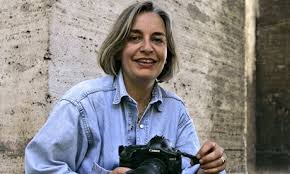
Anja Niedringhaus (Credit: theguardian.uk.com)
Anja Niedringhaus
(Credit: theguardian.uk.com)

KABUL, April 4— For the two seasoned war correspondents, it was not an unusually risky trip. Getting out to see Afghanistan up close was what Anja Niedringhaus, a Pulitzer Prize-winning photographer for The Associated Press, and Kathy Gannon, a veteran reporter for the news agency, did best.

The eastern province of Khost, where Ms. Niedringhaus and Ms. Gannon traveled to cover Afghanistan’s presidential election on Saturday, is considered dangerous, still plagued by regular Taliban attacks. But they had carefully plotted their trip, arranging to move beyond the relatively safe confines of the provincial capital under the protection of Afghan Army troops and the police.

Yet it was those precautions that proved fatal for Ms. Niedringhaus on Friday morning. As she and Ms. Gannon waited outside a government compound, a police commander walked up to their idling car, looked in at the two women in the back seat, and then shouted “Allahu akbar!” — God is great — and opened fire with an AK-47, witnesses and The Associated Press said.

Ms. Niedringhaus was killed instantly, and Ms. Gannon, shot three times in the wrist and shoulder, was severely wounded. In the span of a few muzzle flashes, the two women, who had covered the war since it began in 2001, became victims of another attack that blurred friend and foe.

For both Afghans and Westerners, the list of adversaries has expanded beyond the resilient Taliban, who have staged a series of attacks in an attempt to disrupt the election. Afghan soldiers and the police have repeatedly turned on one another and their foreign allies. The squabbling between President Hamid Karzai and American officials has grown into a deep-seated animosity.

At the same time, Afghans have seen scores of their fellow citizens killed by errant American airstrikes. And even as the United States pushes for a long-term security deal that would allow it to keep troops here beyond the end of this year, it does so with the understanding that its forces will be largely hidden away behind the high walls of fortified bases.

The dwindling number of foreigners here already live that way, frightened by a recent surge in attacks aimed at Western civilians.

Ms. Niedringhaus, 48, and Ms. Gannon, 60, had no desire to hunker down. The focus of their work over the past dozen years has been putting a human face on the suffering inflicted by the war. As a pair, they often traveled to remote corners of Afghanistan to report articles, and Ms. Niedringhaus also spent significant time embedded with coalition forces.

Many of their colleagues noted sadly that they were attacked by a police officer who appeared to have seen in the back seat of the journalists’ Toyota Corolla a pair of anonymous Westerners on whom to vent his rage. If Afghans have a dominant complaint about the West, it is that they are often treated as faceless, dismissed as nonentities by the people who say they are here to help.

That was not the case with Ms. Niedringhaus and Ms. Gannon.

In this March 30, 2003 photo by Anja Niedringhaus, Iraqi women lined up for a security check by British soldiers on the outskirts of Basra. Credit Anja Niedringhaus/Associated Press

“They just seemed so bravely willing to go into these kinds of situations and get to the places that you needed to get to tell stories that weren’t being told,” said Heidi Vogt, a reporter who worked for The A.P. in Afghanistan until last year.

“They’re the last two people you’d expect this to happen to,” she added. “It felt like they had a little protective force field around them.”

Ms. Niedringhaus, a German citizen who was based in Geneva, first came to Afghanistan after joining The A.P. in 2002, and she quickly formed a partnership with Ms. Gannon. They were among a band of female photographers and correspondents who persevered through many years of conflict in Iraq as well as in Afghanistan.

In the process, they helped redefine traditional notions of war reporting. Even as they covered the battlefield, they also focused attention on the human impact of conflicts known for their random, unpredictable violence against civilians.

Ms. Niedringhaus’s fascination with Afghanistan continued to grow even as she was pulled away to other trouble spots, including Iraq, where she was part of a team of A.P. photographers who won a Pulitzer Prize in 2005.

“If I’d told her, ‘You don’t need to do this anymore, you’ve earned your spurs, leave it to another generation,’ ” said Tony Hicks, a photo editor at The A.P., “the response would have been a series of expletives, then laughing and another pint.”

But, Mr. Hicks pointed out, Ms. Niedringhaus was equally at home at major sports events and other less high-stakes diversions, such as the Geneva auto show.

Hundreds of U.S. Marines gathered at Camp Commando in Kuwait in 2002. Credit Anja Niedringhaus/Associated Press

She was on the finish lines when Usain Bolt, the Jamaican sprinter, broke the world record for the 100-meter dash. And “she loved Wimbledon,” he said. “It was almost her second home.”

Ms. Gannon, a Canadian who is a senior writer for The A.P., arrived in Peshawar, Pakistan, in 1986 when the Afghan mujahedeen were battling the forces of the Soviet Union. She went on to serve as The A.P.’s bureau chief in Islamabad, and she was one of the few Western reporters whom the Taliban permitted to work in Kabul when they ruled Afghanistan.

Ms. Gannon was in Kabul during the American invasion in 2001, and she wrote of covering the Taliban’s last days in the city with her Afghan colleague, Amir Shah. The two cowered in the basement of a house during air raids, often working by candlelight or lantern. They tried to avoid members of Al Qaeda, who were much more hostile than the Taliban. When a bomb struck nearby, she was thrown across the room — and then went straight back to work.

“She knows Afghanistan very well,” said Mr. Shah, an A.P. reporter in Kabul, according to an article by the news agency. “She knows the culture of the people.”

But the divide between Afghans and Westerners has been deepening for years, and so-called insider attacks in which Afghan security forces turn on their coalition counterparts or one another have been the most visible symptom. Afghan and Western officials say they believe that most of the attacks are driven by personal animosity or anger about the war in Afghanistan, where many have come to view foreign forces as occupiers.

Though Western civilians working with the coalition have at times been killed in such attacks, the shooting on Friday was believed to be the first time an Afghan police officer had intentionally killed a foreign journalist.

Afghan security officials said they believed that the shooting was an opportunistic attack, not the work of the Taliban, who offered no comment.

A Marine on his way to pick up food supplies in June, 2001. Credit Anja Niedringhaus/Associated Press

The police commander, whom officials identified as Naqibullah, 50, was known for his anti-Western views, one official said. The officials did not believe he had advance notice that Ms. Niedringhaus or Ms. Gannon was headed his way.

The two spent Thursday night at the compound of the provincial governor in Khost, and they left on Friday morning with a convoy of election workers delivering ballots to an outlying area in the Tanai district, The A.P. and Afghan officials said.

The convoy was protected by the Afghan police, soldiers and operatives from the National Directorate of Security, Afghanistan’s main intelligence agency, said Mubarez Zadran, a spokesman for the provincial government. Ms. Niedringhaus and Ms. Gannon were in their own car, traveling with a driver and an Afghan freelance journalist who was working with the news agency.

Mr. Naqibullah, the police commander, surrendered to other officers immediately after shooting the journalists and was arrested.

Ms. Gannon was taken to a hospital in Khost. She underwent surgery before being evacuated to one of the main NATO bases in the country, where there is a hospital equipped to handle severe battlefield trauma. She was said to be in stable condition.

Yet even as Friday’s shooting provided a stark reminder of how broader tensions can set off violence at the most personal level, its aftermath also highlighted the bonds between old friends and strangers alike, be they Afghans or foreigners.

Aides to Mr. Karzai, who has known Ms. Gannon for years, said he tried to get her on the phone to see she how she was doing after he heard about the attack. He later spoke with her husband, and his office then put out a statement condemning the attack.

The doctor who first treated Ms. Gannon, Muhammad Shah, was distressed by the shooting.

“Not only me, but all Afghans are disappointed and sorry for this loss of life,” he said by phone Friday night from Khost Provincial Hospital, between operations. “She was a guest here in Afghanistan, a foreigner.”

Matthew Rosenberg reported from Kabul, and Farooq Jan Mangal from Khost Province, Afghanistan.

During Cold War, CIA used ‘Doctor Zhivago’ as a tool to undermine Soviet Union

Film Dr Zhivago (Credit: guardian.co.uk)
Film Dr Zhivago
(Credit: guardian.co.uk)

A secret package arrived at CIA headquarters in January 1958. Inside were two rolls of film from British intelligence — pictures of the pages of a Russian-language novel titled “Doctor Zhivago.”

The book, by poet Boris Pasternak, had been banned from publication in the Soviet Union. The British were suggesting that the CIA get copies of the novel behind the Iron Curtain. The idea immediately gained traction in Washington.

“This book has great propaganda value,” a CIA memo to all branch chiefs of the agency’s Soviet Russia Division stated, “not only for its intrinsic message and thought-provoking nature, but also for the circumstances of its publication: we have the opportunity to make Soviet citizens wonder what is wrong with their government, when a fine literary work by the man acknowledged to be the greatest living Russian writer is not even available in his own country in his own language for his own people to read.”

The memo is one of more than 130 newly declassified CIA documents that detail the agency’s secret involvement in the printing of “Doctor Zhivago” — an audacious plan that helped deliver the book into the hands of Soviet citizens who later passed it friend to friend, allowing it to circulate in Moscow and other cities in the Eastern Bloc. The book’s publication and, later, the awarding of the Nobel Prize in Literature to Pasternak triggered one of the great cultural storms of the Cold War.

Because of the enduring appeal of the novel and a 1965 film based on it, “Doctor Zhivago” remains a landmark work of fiction. Yet few readers know the trials of its birth and how the novel galvanized a world largely divided between the competing ideologies of two superpowers. The CIA’s role — with its publication of a hardcover Russian-language edition printed in the Netherlands and a miniature, paperback edition printed at CIA headquarters — has long been hidden.

[Explore a selection of the CIA documents]

The newly disclosed documents, however, indicate that the operation to publish the book was run by the CIA’s Soviet Russia Division, monitored by CIA Director Allen Dulles and sanctioned by President Dwight D. Eisenhower’s Operations Coordinating Board, which reported to the National Security Council at the White House. The OCB, which oversaw covert activities, gave the CIA exclusive control over the novel’s “exploitation.”

The “hand of the United States government” was “not to be shown in any manner,” according to the records.

The documents were provided at the request of the authors for a book, “The Zhivago Affair,” to be published June 17. Although they were redacted to remove the names of officers as well as CIA partner agencies and sources, it was possible to determine what lay behind some of the redactions from other historical records and interviews with current and former U.S. officials. Those officials spoke on the condition of anonymity to discuss material that remained classified.

Tim Gressie

The title page from a 1958 Russian-language edition of “Doctor Zhivago” that the CIA arranged to have secretly printed in the Netherlands and distributed to Soviet tourists at the 1958 world’s fair in Brussels.

A voice from the past

During the Cold War, the CIA loved literature — novels, short stories, poems. Joyce, Hemingway, Eliot. Dostoevsky, Tolstoy, Nabokov.

Books were weapons, and if a work of literature was unavailable or banned in the Soviet Union or Eastern Europe, it could be used as propaganda to challenge the Soviet version of reality. Over the course of the Cold War, as many as 10 million copies of books and magazines were secretly distributed by the agency behind the Iron Curtain as part of a political warfare campaign.

In this light, “Doctor Zhivago” was a golden opportunity for the CIA.

Both epic and autobiographical, Pasternak’s novel revolves around the doctor-poet Yuri Zhivago — his art, loves and losses in the decades surrounding the 1917 Russian Revolution. At times, Zhivago is Pasternak’s alter ego. Both the character and the writer, who was born in 1890, were from a lost past, the cultured milieu of the Moscow intelligentsia. In Soviet letters, this was a world to be disdained, if summoned at all.

Pasternak knew that the Soviet publishing world would recoil from the alien tone of “Doctor Zhivago,” its overt religiosity, its sprawling indifference to the demands of socialist realism and the obligation to genuflect before the October Revolution.

But Pasternak had long displayed an unusual fearlessness: visiting and giving money to the relatives of people who had been sent to the gulag when the fear of taint scared so many others away, intervening with authorities to ask for mercy for those accused of political crimes, and refusing to sign trumped-up petitions demanding execution for those designated enemies of the state.

“Don’t yell at me,” he said to his peers at one public meeting where he was heckled for asserting that writers should not be given orders. “But if you must yell, at least don’t do it in unison.”

Pasternak felt no need to tailor his art to the political demands of the state. To sacrifice his novel, he believed, would be a sin against his own genius. As a result, the Soviet literary establishment refused to touch “Doctor Zhivago.”

Fortunately for Pasternak, a Milan publisher had received a copy of the manuscript from an Italian literary scout working in Moscow. In June 1956, Pasternak signed a contract with the publisher, Giangiacomo Feltrinelli, who would resist all efforts by the Kremlin and the Italian Communist Party to suppress the book.

In November 1957, an Italian-language edition of “Doctor Zhivago” was released.

CIA saw a weapon

In Washington, Soviet experts quickly saw why Moscow loathed “Doctor Zhivago.”

In a memo in July 1958, John Maury, the Soviet Russia Division chief, wrote that the book was a clear threat to the worldview the Kremlin was determined to present.

“Pasternak’s humanistic message — that every person is entitled to a private life and deserves respect as a human being, irrespective of the extent of his political loyalty or contribution to the state — poses a fundamental challenge to the Soviet ethic of sacrifice of the individual to the Communist system,” he wrote.

In an internal memo shortly after the appearance of the novel in Italy, CIA staff members recommended that “Doctor Zhivago” “be published in a maximum number of foreign editions, for maximum free world distribution and acclaim and consideration for such honor as the Nobel prize.”

While the CIA hoped Pasternak’s novel would draw global attention, including from the Swedish Academy, there was no indication that the agency’s motive for printing a Russian-language edition was to help Pasternak win the prize, something that has been a matter of speculation for some decades.

Associated Press

Giant stars hanging over broad promenades added a bright touch to the Brussels Universal and International Exposition in 1958.

Associated Press

Prince Rainier III of Monaco, holding his glasses and looking skyward, and Princess Grace, with a bouquet, at the Vatican pavilion at the Brussels exposition.

As its main target for distribution, the agency selected the first postwar world’s fair, the 1958 Brussels Universal and International Exposition. Forty-three nations were participating at the 500-acre site just northwest of central Brussels.

Both the United States and the Soviet Union had built huge pavilions to showcase their competing ways of life. What was especially interesting to the CIA: The fair offered one of those rare occasions when large numbers of Soviet citizens traveled to an event in the West. Belgium had issued 16,000 visas to Soviet visitors.

After first attempting to arrange a secret printing of the novel through a small New York publisher, the CIA contacted the Dutch intelligence service, the BVD. Agency officials had been following reports of the possible publication of “Doctor Zhivago” in Russian by an academic publishing house in The Hague and asked whether it would be possible to obtain an early run of copies.

The two intelligence agencies were close. CIA subsidies in 1958 paid for about 50 of the BVD’s 691 staff members, and new Dutch employees were trained in Washington. Joop van der Wilden, a BVD officer, was dispatched to the U.S. Embassy at The Hague to discuss the issue with Walter Cini, a CIA officer stationed there, according to interviews with former Dutch intelligence officials.

Cini told him it would be a rush job, but the CIA was willing to provide the manuscript and pay well for a small print run of “Doctor Zhivago.” He emphasized that there should be no trace of involvement by the U.S. or any other intelligence agency.

Tim Gressie

The blue linen cover of the 1958 Russian-language edition of “Doctor Zhivago.”

In early September 1958, the first Russian-language edition of “Doctor Zhivago” rolled off the printing press, bound in the signature blue linen cover of Mouton Publishers of The Hague.

The books, wrapped in brown paper and dated Sept. 6, were packed into the back of a large American station wagon and taken to Cini’s home. Two hundred copies were sent to headquarters in Washington. Most of the remaining books were sent to CIA stations or assets in Western Europe — 200 to Frankfurt, 100 to Berlin, 100 to Munich, 25 to London and 10 to Paris. The largest package, 365 books, was sent to Brussels.

“Doctor Zhivago” could not be handed out at the U.S. pavilion at the world’s fair, but the CIA had an ally nearby: the Vatican.

The Vatican pavilion was called Civitas Dei, the City of God, and Russian emigre Catholics had set up a small library “somewhat hidden” behind a curtain just off the pavilion’s Chapel of Silence, a place to reflect on the suppression of Christian communities around the world.

There, the CIA-sponsored edition of “Doctor Zhivago” was pressed into the hands of Soviet citizens. Soon the book’s blue linen covers were littering the fairgrounds. Some who got the novel were ripping off the cover, dividing the pages, and stuffing them in their pockets to make the book easier to hide.

The CIA was quite pleased with itself. “This phase can be considered completed successfully,” read a Sept. 10, 1958, memo.

In the Soviet Union, meanwhile, word of the novel’s appearance quickly reached Pasternak. That month, he wrote to a friend in Paris, “Is it true that Doctor Zhivago appeared in the original? It seems that visitors to the exhibition in Brussels have seen it.”

Associated Press

Children view a statue of Pope Pius XII at the Vatican pavilion at the world’s fair in Brussels.

Contractual problems

There was only one problem: The CIA had anticipated that the Dutch publisher would sign a contract with Feltrinelli, Pasternak’s Milan publisher, and that the books handed out in Brussels would be seen as part of that print run.

The contract was never signed, and the Russian-language edition printed in The Hague was illegal. The Italian publisher, who held the rights to “Doctor Zhivago,” was furious when he learned about the distribution of the novel in Brussels. The furor sparked press interest and rumors, never confirmed, of involvement by the CIA.

The spies in Washington watched the coverage with some dismay, and on Nov. 15, 1958, the CIA was first linked to the printing by the National Review Bulletin, a newsletter supplement for subscribers to the National Review, the conservative magazine founded by William F. Buckley Jr.

A writer using the pseudonym Quincy observed with approval that copies of “Doctor Zhivago” had been quietly shipped to the Vatican pavilion in Brussels: “That quaint workshop of amateur subversion, the Central Intelligence Agency, may be exorbitantly expensive but from time to time it produces some noteworthy goodies. This summer, for instance, [the] CIA forgot its feud with some of our allies and turned on our enemies — and mirabile dictu, succeeded most nobly. . . . In Moscow these books were passed from hand to hand as avidly as a copy of Fanny Hill in a college dormitory.”

The CIA concluded that the printing was, in the end, “fully worth trouble in view obvious effect on Soviets,” according to a Nov. 5, 1958, cable sent by Dulles, the director. The agency’s efforts, after all, had been re-energized by the awarding of the Nobel Prize in Literature to Pasternak the previous month.

The Kremlin treated the award as an anti-Soviet provocation, vilified the author, and forced Pasternak to turn it down.

The CIA provided elaborate guidelines for its officers on how to encourage Western tourists to talk about literature and “Doctor Zhivago” with Soviet citizens they might meet.

“We feel that Dr. Zhivago is an excellent springboard for conversations with Soviets on the general theme of ‘Communism versus Freedom of Expression,’ ” Maury wrote in a memo in April 1959. “Travelers should be prepared to discuss with their Soviet contacts not only the basic theme of the book itself — a cry for the freedom and dignity of the individual — but also the plight of the individual in the communist society.”

Courtesy of the CIA

The miniature paperback edition of “Doctor Zhivago” that the CIA printed at its headquarters in 1959.

Clandestine edition

Prompted by the attacks on Pasternak in Moscow and the international publicity surrounding the campaign to demonize him, the CIA’s Soviet Russia Division began to firm up plans for a miniature paperback edition. In a memo to the acting deputy director for plans, the chief of the division, Maury, said he believed there was “tremendous demand on the part of students and intellectuals to obtain copies of this book.”

Officials at the agency reviewed all the difficulties with the Mouton edition published in the Netherlands and argued against any outside involvement in a new printing. “In view of the security, legal and technical problems involved, it is recommended that a black miniature edition of Dr. Zhivago be published at headquarters using the first Feltrinelli text and attributing it to a fictitious publisher.”

The agency already had its own press in Washington to print miniature books, and over the course of the Cold War it had printed a small library of literature — each book designed to fit “inside a man’s suit or trouser pocket.”

By July 1959, at least 9,000 copies of a miniature edition of “Doctor Zhivago” had been printed “in a one and two volume series,” the latter presumably to make it not so thick and easier to split up and hide. The CIA attempted to create the illusion that this edition of the novel was published in Paris by a fictitious entity, the Société d’Edition et d’Impression Mondiale. A Russian emigre group also claimed it was behind the publication.

CIA records state that the miniature books were passed out by “agents who [had] contact with Soviet tourists and officials in the West.” Two thousand copies of this edition were also set aside for dissemination to Soviet and Eastern European students at the 1959 World Festival of Youth and Students for Peace and Friendship, which was to be held in Vienna.

There was a significant effort to distribute books in Vienna — about 30,000 in 14 languages, including “1984,” “Animal Farm,” “The God That Failed” and “Doctor Zhivago.” Apart from a Russian edition, plans also called for “Doctor Zhivago” to be distributed in Polish, German, Czech, Hungarian and Chinese at the festival.

The New York Times reported that some members of the Soviet delegation to the Vienna festival “evinced a great curiosity about Mr. Pasternak’s novel, which is available here.” Occasionally it was not only available, but unavoidable. When a Soviet convoy of buses arrived in sweltering Vienna, crowds of Russian emigres swarmed them and tossed copies of the CIA’s miniature edition through the open windows.

On another occasion, a Soviet visitor to the youth festival recalled returning to his bus and finding the cabin covered with pocket editions of “Doctor Zhivago.”

“None of us, of course, had read the book but we feared it,” he wrote in an article many years later.

Soviet students were watched by the KGB, who fooled no one when these intelligence operatives described themselves as “researchers” at the festival. The Soviet “researchers” proved more tolerant than might have been expected.

“Take it, read it,” they said, “but by no means bring it home.”

Adapted from “The Zhivago Affair: The Kremlin, the CIA and the Battle Over a Forbidden Book,” by Peter Finn and Petra Couvée. Couvée is a writer and translator who teaches at Saint Petersburg State University in Russia.

The Other Threat to Pakistan

LAHORE, April 2 — At a literature festival here not long ago, I bumped into a school friend who had recently relocated from Karachi, the southern port city where we both grew up. Karachi has all the buzz, and violence, of a megalopolis — more than 2,700 people were killed there in 2013 — and none of the greenery and historic charms of Lahore, the capital of Punjab Province. “I’m loving Lahore,” she told me. “I feel like I’ve moved to Switzerland after living in a war zone.”

The contrast is not as exaggerated as it sounds. In recent years, Punjab has suffered less than the rest of the country from the suicide attacks and bomb blasts that have killed some 49,000 people since 2001. There have been dramatic exceptions: terrorist attacks against the visiting Sri Lankan cricket team and at a major Sufi shrine in Lahore, at army headquarters in Rawalpindi, and at a five-star hotel and courts in the capital, Islamabad. Anti-India militant groups like Lashkar-e-Taiba and anti-Shiite organizations like Lashkar-e-Jhangvi are based in Punjab and draw most of their recruits from the province. But these groups mostly stage their attacks elsewhere in Pakistan to maintain benign relations with the local authorities.

And so the perception that Punjab has suffered less from violence than the rest of the country prevails, creating much resentment. For non-Punjabis, the province’s relative stability is just the latest demonstration of how Punjabi elites rally to protect their own interests at the expense of their compatriots. And such interprovincial rivalries could be as great a challenge for the country’s stability as the Taliban.

It is commonly said that Punjab is synonymous with Pakistan, and vice versa, which seems to relegate the other provinces and autonomous regions to the status of outliers. Some of Punjab’s good fortune is an accident of geography: the name means “land of five rivers,” referring to the Indus River and the tributaries that flow through the province, making it the agricultural and industrial heartland of Pakistan. But politics matters even more.

Pakistan’s elites, political, bureaucratic and military have long hailed from Punjab and shaped the country’s policies to the province’s advantage. Until recently, Punjab received the lion’s share of national revenues simply by virtue of having the largest population; never mind its actual needs or contributions to the national budget. (The formula was finally revised in 2009, benefiting Sindh, Baluchistan and Khyber Pakhtunkhwa provinces.) Also, the government and the military have long allotted prime agricultural land and urban real estate in other parts of Pakistan to Punjabi officers and senior bureaucrats.

Punjab itself is not a monolith. Some of the province’s southern districts are among the country’s poorest, and their inhabitants have grudges of their own against Lahore-based politicians. Water and energy shortages kept Punjab’s economic growth rate at 2.5 percent between 2007 and 2011, compared with 3.4 percent for the country overall. But this has done little to temper the impression among non-Punjabis that the province is booming while the rest of the country is burning.

These resentments animate the politics of Pakistan’s other provinces and threaten national unity. A separatist movement in Baluchistan taps grievances against Punjabis it says are exploiting Baluch gas and mineral resources to spur industrial growth in Punjab. It also rejects efforts by the predominantly Punjabi military to suppress Baluch nationalists. Killings of Punjabi “settlers” — often school teachers and civil servants — by Baluch separatists are a brutal expression of this.

Concerns about Punjabi domination have soared since the spring of 2013, when Prime Minister Nawaz Sharif, of the Pakistan Muslim League (P.M.L.N.), was returned to power for the third time. He belongs to a Lahore-based industrial family with close ties to Punjab’s business elite and a can-do attitude to governance that features flashy development schemes. The perception that Punjab is batting in a league of its own has mounted under the Sharifs. During the general election campaign last year, while the Pakistan People’s Party, which is perceived to represent Sindhi interests, was making welfare cash transfers to impoverished women, the P.M.L.N. was distributing laptops to students.

Most of Karachi’s 18 million residents have to rely on private transport. But Lahoris commute on a rapid metrobus system, and a similar initiative in Islamabad will be the federal capital’s most expensive road project to date. While the Punjabi government is digitizing land records, automating administrative transactions and promoting what it calls e-governance, the Sindh government faces a famine in Tharparkar.

Punjab has been able to progress because it has been relatively unimpeded by terrorism. Shahbaz Sharif, Nawaz’s brother and Punjab’s chief minister since 2008, publicly appealed to the Pakistani Taliban in 2010 not to attack the province, and the request was largely heeded. His P.M.L.N. government in Punjab has not clamped down on influential sectarian militant groups in the province, instead befriending their leaders to rally votes during elections.

Likewise, the P.M.L.N. government at the center started pushing for peace talks with the Taliban in September and then even more in November, when the Taliban threatened to carry out attacks in Punjab to avenge the killing of their former leader in a U.S. drone strike in North Waziristan. The central government is considering concessions, including swapping prisoners, granting an amnesty to Taliban fighters and even giving the group a political role in the Federally Administered Tribal Areas along the border with Afghanistan.

Government officials have repeatedly stated that a peace deal is necessary because military strikes against the Taliban would lead to reprisal attacks. Given the carnage that Karachi, Quetta and Peshawar have endured in recent years, many Pakistanis describe that policy as a ploy to sacrifice the tribal areas in order to save Lahore. Such perceptions only heighten interprovincial tensions, just at a time when the country needs to be more united than ever.

Huma Yusuf is a Pakistani journalist and global fellow at the Woodrow Wilson International Center for Scholars in Washington.

Raza Rumi Narrowly Escapes Death after Hosting TV Show
Driver Killed in Attack as Express Tribune is Targeted Again

Raza after attack (Credit: awampk.com)
Raza after attack
(Credit: awampk.com)

Finally, I countenanced what I had been dreading for quite some time. Journalists and media houses being under threat is a well-known story in conflict-ridden Pakistan. I had also heard about my name being on a few hit-lists but I thought these were tactics to scare dissenters and independent voices. But this was obviously an incorrect assessment of the situation.

On Friday night, when I had planned to visit Data Darbar after my television show, my car was attacked by “unknown” (a euphemism for lethal terror outfits) assailants. The minute I heard the first bullet, the Darwinian instinct made me duck under and I chose to lie on the back of the car.

This near death experience with bullets flying over me and shattered window glass falling over me reminded me of the way my own country was turning into a laboratory of violence. Worse, that when I saved myself, it was not without a price. A young man, who had been working as my driver for sometime, was almost dead. I stood on a busy road asking for help and not a single car stopped.

A crowd had gathered and I was seeking their assistance almost like someone in a hysterical sub-continental film. The nearest hospital was a private enterprise, which initially refused to treat all three of us. I had to protest, after begging on the street and then seeking emergency medical aid. Suddenly, all that afflicts Pakistan became clear: the violence, the impunity for murderers, the failing values of a society and privatisation of essential public services.

Within minutes, my driver was declared dead, my wounds were cleaned and a third victim of barbarity struggled with a fast receding blood count. Thankfully, officers from the Punjab Police were helpful and enabled me to sort out things. This was harrowing and I became an object of all that I have condemned in recent years.

I am now at a safe location, unable to move out and have been told that my case is exceptional with six men — most armed — had attempted to eliminate me and they failed. And that the security agencies can only protect me if I remain locked up in a “safe” location.

So what is my fault, I have been wondering? I am a relatively small fry in the media and opinion industry. I am a recent entrant in the mass (electronic) media, but my views, I am told, are dangerous and invite trouble. So, I wish to ask my well-wishers the following questions: is raising the issue of minority rights unacceptable? Is demanding the inclusion of Jinnah’s August 11 speech in our Constitution and state behaviour unacceptable?

I have written a book on the shared history of India and Pakistan and this irked some. I have argued for rational engagement with the West and the outside world and that is not kosher. I reject conspiracy theories as I prefer reason over totem and this does not fit in a mindscape that considers the outside, external enemies.

Pakistan’s journalists face the oddest of challenges. They are being coerced into silence or singing praises of extremists and advocating legitimacy for their operations. Pakistan’s politicians have almost given up, as their private and public statements are at variance and they have accepted that this “new Pakistan” of fear, threats and unpunished violence is what they have to deal with.

I also know that I am not alone. There are dozens of other voices that have to be silenced by some quarters. These voices are a threat as they stand by civilian victims of terror and shun attacks on our security forces. These are voices, which also refuse to make martyrs out of terrorists. And they also hold that the greatest blasphemy is undermining humanity and using faith for spreading hatred.

The choice for me is stark. I am not willing to accept death as an option. Nor am I going to accept forced silence. I am grateful to all those who have shown support for my plight.

But it would be far more important if our collective outrage turns into public pressure to change the direction of the state and stop it from committing hara-kiri at the altar of a fabricated ideology or regional ambitions. There are no good or bad extremists. And there can be no justification for any form of violence by private actors. Who else would know, if not me?

I am haunted by the fact that a precious life has been lost while some people wanted to target me. More than that, I am worried that there may be many more lives at risk. I am not too hopeful if the current set of federal and provincial governments would deliver on security and public safety.

There is little or no will to tackle the camel that has entered the Pakistani tent and is displacing reason and humanity. Yet, there is no other recourse. So I appeal to the government to provide me security and not let me remain a victim of an ideology asserted with bullets and bombers.

Published in The Express Tribune, March 30th, 2014.

US Journalist Reviews Aboard the Democracy Train

ATDT Book Launch in US

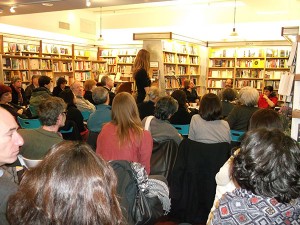
One might have preferred the title “Aboard the Democracy Train Wreck,” or even “The Little Engine That Might (as opposed to, “The Little Engine that Could”) after reading Nafisa Hoodbhoy’s harrowing account of democracy’s travails in her home country.

Nonetheless, it becomes clear, after reading this unique and marvelous little book, that some parts of the planet were not colonized long enough by the West (or escaped altogether) and so have been unable to form lasting democratic institutions and rule of law. In such places we continue to see civil society overwhelmed by sectarian violence, political corruption, and an almost absolute disregard for justice.

Yet set against all this misery is the very real desire and heroic efforts of the best of Pakistani civil society to bring about a workable and democratic country. The problem is: they’re just outnumbered.

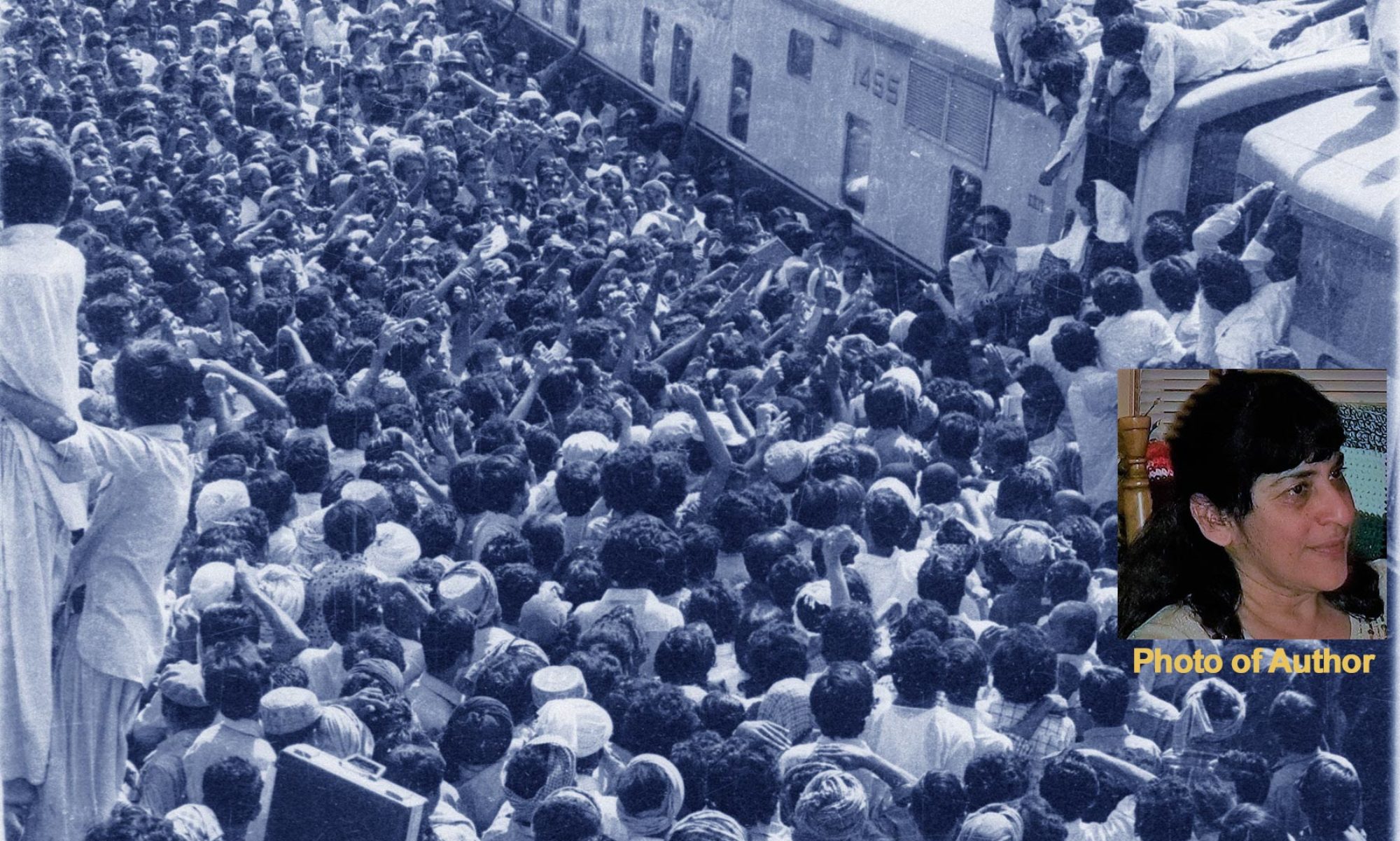
As her subtitle suggests, Ms Hoodbhoy charts that struggle with intimate details from her long career as a journalist — details long hidden from view — of a particular time marked by the end of a military dictatorship and the beginning of an extraordinarily untidy civilian rule wracked by civil unrest.

Yet another case, if one were needed, where, in the less favored parts of the world, feudal lords, tribal chiefs, ethnic and language differences make for a toxic brew where central government is weak. And then there are people who simply want to run their own family mafias at the expense of everyone else.

Yet this is not just a ringside seat to Pakistan’s recent and violent history but the story of the first female journalist in a Muslim society dominated by resentful, gender-crazed, patriarchs determined to enforce archaic and medieval customs upon women. Ms Hoodbhoy reveals what it took to walk a journalistic tightrope while all about her women were raped and murdered without recourse to justice, narrowly escaping with her life on several occasions.

This is an extraordinary book by an extraordinarily brave journalist who also happens to be a proud Pakistani woman. A must-read for anyone wanting to know what drives Pakistani history today and the region that surrounds it.

Sindhi Nationalists Killed in Mysterious Circumstances

JSQM rally (Credit: thefridaytimes.com)
JSQM rally
(Credit: thefridaytimes.com)

When the so-called national TV channels were airing footages of official celebrations of March 23, two charred bodies of workers of a Sindhi nationalist party were awaiting interment in a morgue in Karachi. Millions of Pakistanis observing the day with profound fervour had no inkling of the grimace and anguish of the people of Sindh.

The two political workers — Maqsood Qureshi and Suleman Wadho — were associated with the Jeay Sindh Qaumi Mahaz (JSQM). Their charred bodies were found in a smoldering car abandoned at a relatively deserted link road near Bhirya town of Noushehro Feroz district in the wee hours of March 21. Their postmortem report revealed that both of them were showered with bullets and their bodies were burnt after their murder.

Three workers of another nationalist party were killed in Sanghar district a few years ago.

According to reports, their vehicle was sprayed with bullets and then set ablaze with some inflammable substance. Atrocious and blatant violations of human rights are common in Sindh and Balochistan. Dumping mutilated bodies in Balochistan has already invited opprobrium of international community. Blithe state machinery bereft of even a tad of political sagacity is too obstinate to learn from history.

Young Maqsood Qureshi was brother of the former chairman of JSQM, Bashir Qureshi, who was mysteriously killed some two years ago.

Bashir Qureshi, a doughty nationalist leader, was revered for his humility and non-violent political struggle. Once an aggressive student leader, Bashir morphed into a political leader who ruled hearts of young political workers in Sindh. His death was widely mourned and resented in Sindh.

Ironically, his controversial death was never investigated in spite of frequent demands and protest by people of Sindh.

His brother, Maqsood, was an innocuous political worker who was known for his immaculate political career. His barbaric murder has ignited a strong yet admirably peaceful political reaction in Sindh.

There are discernible parallels between the two murders. Bashir had organised a humongous rally on March 23, 2012 in Karachi and was murdered within two weeks. His brother Maqsood Qureshi was killed only two days before March 23, this year — the day of the JSQM mammoth rally in Karachi.

Political leaders and human rights activists of Sindh believe that the two brothers were killed for committing the same sin of organising huge rallies on March 23.

Launched in early 1970s, the JSQM movement has remained remarkably non-violent mainly because of its founder G.M. Syed’s philosophy and practice of non-violence following the footprints of Gandhi. Many people may not be aware that about half a dozen factions of the Jeay Sindh movement each year celebrate G.M. Syed’s birth anniversary in his native town Sann, where carrying or displaying arms is strictly prohibited and not a single unpleasant incident has ever been reported on the annual ritual.

In a predominantly fractious political ambience, such characteristics are not very common and should not go unappreciated. Ghastly killings of leaders of such a peaceful movement look like a premeditated attempt to infuse violence in nationalist movement in Sindh. Credible evidences are never easy to establish that may justify implicating any specific perpetrator yet what is perplexing is that why dozens of such mysterious deaths go uninvestigated? This cannot happen without the connivance of people who command influence. Sliding all such cases under the carpet corroborates the assertion that it is not always an external hand that commits such crimes.

Higher judiciary in recent days has openly accused law enforcing agencies of forced disappearances and extrajudicial killings. Appalling human rights violations in the country are becoming more frequent and barbaric. Denying involvement of internal actors and blaming external involvement is hard to imbibe.

The flawed prescription of handling a political conflict brought an indelible ignominy in 1971 when East Pakistan became Bangladesh. The episode should have been a lesson to learn from, yet the security apparatus of the country demonstrated their inaptness by unleashing barbarity to steamroller the Movement for Restoration of Democracy (MRD) in 1983 and 1986 in Sindh. It did not stop there —the insensitivity extended towards Balochistan during the last decade has prevailed, giving a cold shoulder to repeated demands of civil society, political leadership and judiciary.

Political leadership in Bangladesh (and Balochistan) never demanded anything beyond constitution. Shaikh Mujib and his Awami League were demanding right to rule and the Baloch leadership has been demanding right over their natural resources. Both these demands are within the remits of the constitution of Pakistan.

Balochistan has become a bleeding wound, where hundreds of political activists have been killed in cold blood and dozens have been confined in clandestine internment centers. A headstrong former Chief Justice of the Supreme Court kept thundering in the courtroom but all fell on deaf ears. Missing persons and mass graves are stumbling blocks in restoration of peace in the restive province.

Amid all the uproar and embarrassment, more frequent killings of political workers are now being reported from Sindh. Dumping lacerated bodies and executing political activists in orchestrated encounters can stoke political violence which will be a recipe for disaster in this fragile national and regional security ambience.


Over six-decade history of the country is annotated with brazen trampling of human rights. What is more exasperating is that two opposite rules are being practiced in one country. Those who publicly infringe law of the country, proudly own pogroms and deride constitution are coddled as stakeholders but peaceful struggles for political rights are crushed with savagery and political activists are brutally killed. Such incidents will only sprinkle fuel on the fire and can eventually turn a peaceful nationalist movement violent.


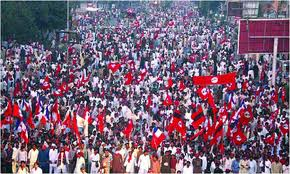
Nationalist movement of Bangladesh and Balochistan were peaceful at their inception. Unbridled killings and flagrant violations of human rights spiralled violence that ultimately brought devastating results. One glaring example of peaceful nationalist movement of Sindh was witnessed on March 23 when thousands of people marched for several miles on Shahrah-e-Faisal, the main artery of Karachi, carrying dead bodies of their leaders and not even a minor incident of violence or even indiscipline occurred.

This testifies to a paramount commitment of nationalist movement to remain steadfast with a peaceful political struggle.

Regrettably, the so-called national media channels did not bother to relay this huge rally and did not appreciate such a commendable spirit of peaceful movement for political rights. Spirit of non-violence and equanimity if not reciprocated with political sagacity, may succumb to mounting frustration.

The provincial government in Sindh has failed to investigate unabated series of extrajudicial killings happening under its nose. Not a single responsible perpetrator has been nabbed so far. Such remiss and indolence is conspicuously deliberate.

The federal government is equally ignorant of this simmering volcano that can erupt with any incendiary incident. This lunacy must end to avoid any catastrophic ramifications. Repeating fatal mistakes of past would culminate in same nightmares.

India, Pakistan Remain Lacking in Nuclear Security

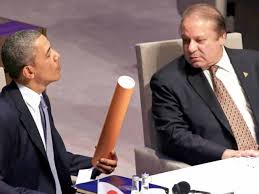
Obama-Sharif in Hague (Credit: tribune.com.pk)
Obama-Sharif in Hague
(Credit: tribune.com.pk)

As the 2014 Nuclear Security Summit gets underway in The Hague, Netherlands, world leaders and nuclear security experts will ponder the future of nuclear security in the Indian subcontinent. Nuclear-armed neighbors India and Pakistan both score poorly on several important indicators for the security of nuclear materials and their ability (or inability) to regulate their supply of both fissile material and weaponized nuclear systems is a continued cause of concern for nuclear security advocates.

The Nuclear Threat Initiative‘s 2014 Security Index, “a unique public assessment of nuclear materials security conditions in 176 countries, developed with the Economist Intelligence Unit (EIU),” scored both India and Pakistan rather poorly for nuclear material security. The NTI’s ranking examines nuclear material security indicators among the 25 countries known to possess weapons-usable nuclear material and this year’s ranking put India in 23rd place and Pakistan in the 22nd place. Only Iran and North Korea — two nations largely ostracized by the international community for their nuclear programs — scored lower. Despite its higher internal instability, Pakistan came out ahead of India on the NTI 2014 Security Index.

India’s low score on the NTI Security Index is mostly due to a series of bureaucratic failures and delays. India remains a relative newcomer to the community of normal nuclear weapon states. Despite the fact that India never signed the Nuclear Non-Proliferation Treaty, its landmark 2006 civil nuclear cooperation deal with the United States and its eventual receipt of a waiver from the Nuclear Suppliers Group in 2008 made it the first nuclear weapon state outside of the NPT framework to engage in civil nuclear commerce.

India’s nuclear security problems are myriad. Despite having excellent multilateral compliance, including fully implementing UN Security Council resolution 1540, poor regulations and laws that merely suggest but do not require oversight keep India’s nuclear security provisions below optimal levels. Two years ago, at the last Nuclear Security Summit in Seoul, India pledged to establish an independent regulatory agency for nuclear material security but has failed to do so. Other major shortcomings for India include a failure to hedge against insider threats to nuclear materials and protect materials during transport. While India’s threat environment is far less dangerous than Pakistan’s, terrorist groups have plotted to acquire nuclear materials in India.

According to India’s Economic Times, the Indian delegation to the Nuclear Security Summit in The Hague will focus on “gaps” in the international nuclear security legal framework — an area in which India is rather exemplary — to avoid drawing attention to India’s enduring shortcomings in nuclear materials security. Given India’s looming elections and the probability of the incumbent coalition falling from power, it is unlikely that the institutional and legislative changes needed will occur anytime soon (P.R. Chari has a piece over at the Carnegie Endowment for International Peace that examines the reasons for this in greater detail).

Pakistan, despite being ranked a notch above India on the 2014 NTI Security Index and winning the honor of “most improved nuclear-armed state,” comes short on nuclear security in several areas. Pakistan has the world’s fastest growing nuclear arsenal, a maturing tactical nuclear weapon program, a history of supporting insurgents against India, and a highly unstable internal threat environment. Pakistan scored the lowest for “Political Stability” on the 2014 NTI Index while taking first place for “Domestic Nuclear Materials Security Legislation” and “Independent Regulatory Agency” — scoring high on some of the areas where India has shortcomings.

Pakistan’s nuclear weapons program and nuclear security is fiercely independent of its national politics and alliance with the United States — for better and worse. Additionally, Pakistan’s Inter-Services Intelligence’s association with anti-India militant groups raises concerns of state-sponsored nuclear terrorism, even though state agents have very good reasons not to hand off a nuclear device to a terrorist group. Furthermore, we’ve seen the Pakistani Taliban and other insurgent groups within the country target military facilities in recent years — the potential of an attack succeeding against a Pakistani facility containing nuclear weapons or nuclear materials is remote but worth considering. The United States has contingency plans for precisely such an event occurring within Pakistan.

South Asia remains the world’s likeliest nuclear flash point given the high level of mutual mistrust and enmity between India and Pakistan. While the risk of an imminent strategic nuclear weapon exchange remains low given each nation’s deterrents, Pakistan’s development of tactical nuclear weapons could reduce barriers for a nuclear event in the subcontinent. Beyond nuclear weapons, the security of nuclear materials in both these countries remains inadequate. Given the multitude of variables involved in establishing a robust nuclear security architecture for these countries, domestic developments alone can do little to reduce the chance of a nuclear event. A general reduction in tensions between India and Pakistan — eventually leading to the normalization of bilateral relations — is just as important.