What Pakistan Knew About Bin Laden

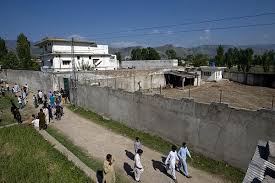
Bin Laden home in Abbotabad (Credit: csmonitor.com)
Bin Laden home in Abbotabad
(Credit: csmonitor.com)

Shortly after the Sept. 11 attacks, I went to live and report for The New York Times in Afghanistan. I would spend most of the next 12 years there, following the overthrow of the Taliban, feeling the excitement of the freedom and prosperity that was promised in its wake and then watching the gradual dissolution of that hope. A new Constitution and two rounds of elections did not improve the lives of ordinary Afghans; the Taliban regrouped and found increasing numbers of supporters for their guerrilla actions; by 2006, as they mounted an ambitious offensive to retake southern Afghanistan and unleashed more than a hundred suicide bombers, it was clear that a deadly and determined opponent was growing in strength, not losing it. As I toured the bomb sites and battlegrounds of the Taliban resurgence, Afghans kept telling me the same thing: The organizers of the insurgency were in Pakistan, specifically in the western district of Quetta. Police investigators were finding that many of the bombers, too, were coming from Pakistan.

In December 2006, I flew to Quetta, where I met with several Pakistani reporters and a photographer. Together we found families who were grappling with the realization that their sons had blown themselves up in Afghanistan. Some were not even sure whether to believe the news, relayed in anonymous phone calls or secondhand through someone in the community. All of them were scared to say how their sons died and who recruited them, fearing trouble from members of the ISI, Pakistan’s main intelligence service.

After our first day of reporting in Quetta, we noticed that an intelligence agent on a motorbike was following us, and everyone we interviewed was visited afterward by ISI agents. We visited a neighborhood called Pashtunabad, “town of the Pashtuns,” a close-knit community of narrow alleys inhabited largely by Afghan refugees who over the years spread up the hillside, building one-story houses from mud and straw. The people are working class: laborers, bus drivers and shopkeepers. The neighborhood is also home to several members of the Taliban, who live in larger houses behind high walls, often next to the mosques and madrasas they run.

The small, untidy entrance on the street to one of those madrasas, the Jamiya Islamiya, conceals the size of the establishment. Inside, a brick-and-concrete building three stories high surrounds a courtyard, and classrooms can accommodate 280 students. At least three of the suicide bombers we were tracing had been students here, and there were reports of more. Senior figures from Pakistani religious parties and provincial-government officials were frequent visitors, and Taliban members would often visit under the cover of darkness in fleets of S.U.V.s.

We requested an interview and were told that a female journalist would not be permitted inside, so I passed some questions to the Pakistani reporter with me, and he and the photographer went in. The deputy head of the madrasa denied that there was any militant training there or any forced recruitment for jihad. “We are educating the students in the Quran, and in the Quran it is written that it is every Muslim’s obligation to wage jihad,” he said. “All we are telling them is what is in the Quran. Then it is up to them to go to jihad.” He ended the conversation. Classes were breaking up, and I could hear a clamor rising as students burst out of their classrooms. Boys poured out of the gates onto the street. They looked spindly, in flapping clothes and prayer caps, as they darted off on their bikes and on foot, chasing one another down the street.

The reporter and the photographer joined me outside. They told me that words of praise were painted across the wall of the inner courtyard for the madrasa’s political patron, a Pakistani religious-party leader, and the Taliban leader Mullah Muhammad Omar. This madrasa, like so many in Pakistan, was a source of the Taliban resurgence that President Hamid Karzai and other Afghan leaders had long been warning about. In this nondescript madrasa in a poor neighborhood of Quetta, one of hundreds throughout the border region, the Taliban and Pakistan’s religious parties were working together to raise an army of militants.

“The madrasas are a cover, a camouflage,” a Pashtun legislator from the area told me. Behind the curtain, hidden in the shadows, lurked the ISI.

The Pakistani government, under President Pervez Musharraf and his intelligence chief, Lt. Gen. Ashfaq Parvez Kayani, was maintaining and protecting the Taliban, both to control the many groups of militants now lodged in the country and to use them as a proxy force to gain leverage over and eventually dominate Afghanistan. The dynamic has played out in ways that can be hard to grasp from the outside, but the strategy that has evolved in Pakistan has been to make a show of cooperation with the American fight against terrorism while covertly abetting and even coordinating Taliban, Kashmiri and foreign Qaeda-linked militants. The linchpin in this two-pronged and at times apparently oppositional strategy is the ISI. It’s through that agency that Pakistan’s true relationship to militant extremism can be discerned — a fact that the United States was slow to appreciate, and later refused to face directly, for fear of setting off a greater confrontation with a powerful Muslim nation.

On our fifth and last day in Quetta, four plainclothes agents detained my photographer colleague at his hotel. They seized his computer and photo equipment and brought him to the parking lot of the hotel where I was staying. There they made him call and ask me to come down to talk to them. “I’m in trouble here,” he told me. It was after dark. I did not want to go down to the parking lot, but I told my colleague I would get help. I alerted my editor in New York and then tried to call Pakistani officials.

Before I could reach them, the agents broke through the door of my hotel room. The lintel splintered, and they burst in in a rush, snatching my laptop from my hands. There was an English-speaking officer wearing a smart new khaki-colored fleece. The other three, one of whom had the photographer in tow, were the muscle.

They went through my clothes and seized my notebooks and a cellphone. When one of the men grabbed my handbag, I protested. He punched me twice, hard, in the face and temple, and I fell back onto the coffee table, grabbing at the officer’s fleece to break my fall and smashing some cups when I landed. For a moment it was funny. I remember thinking it was just like a hotel-room bust-up in the movies.

Continue reading the main story

Continue reading the main story

Then I flew into a rage, berating them for barging into a woman’s bedroom and using physical violence. The officer told me that I was not permitted to visit the neighborhood of Pashtunabad and that it was forbidden to interview members of the Taliban. As they were leaving, I said the photographer had to stay with me. “He is Pakistani,” the officer said. “We can do with him whatever we want.” I knew they were capable of torture and murder, especially in Quetta, where the security services were a law unto themselves. The story they didn’t want out in the open was the government’s covert support for the militant groups that were propagating terrorism in Afghanistan and beyond.

Six months later, Pakistan blew up. In the spring of 2007 in Islamabad, female students from a madrasa attached to the Red Mosque were staging a sit-in to protest the demolition of several illegal mosques in the city. The Red Mosque stood at the center of Pakistan’s support for jihad in Afghanistan and throughout the Muslim world. It was founded by a famed jihadi preacher, Maulana Muhammad Abdullah, who was assassinated in 1998, not long after he visited Osama bin Laden in Afghanistan. Al Qaeda blamed the killing on the Pakistani government at the time.

Abdullah’s sons inherited the mosque and continued its extremist teachings. The eldest, Maulana Abdul Aziz, delivered fiery Friday sermons excoriating Musharraf for his public stance on the fight against terrorism and his dealings with the American government. Despite an earlier reputation as a nonreligious bureaucrat, the younger brother, Abdul Rashid Ghazi, spoke of undergoing a conversion after his father’s death and a meeting with Bin Laden, and by 2007 he would not leave the Red Mosque compound for fear of arrest. He warned that ranks of suicide bombers would retaliate if the government moved against the student protesters.

With such leaders behind them, the students began staging vigilante actions in the streets. They were radical and obsessive, vowing to die rather than give up their protest. The government’s inaction only encouraged them. Several months after the protest began, a group of students made a midnight raid on a massage parlor and abducted several Chinese women.

Remonstrations from China, Pakistan’s most important regional ally, pushed Musharraf to take action. Pakistani Army rangers occupied a school across the street, and police officers and soldiers moved in to surround the mosque on July 3. Armed fighters appeared from the mosque, carrying rockets and assault rifles and taking up sandbagged positions on the mosque walls. Loudspeakers told the students that this was the time for bravery. A female student took over the microphone. “Allah, where is your help?” she asked in a quavering voice. “Destroy the enemies. Tear their hearts apart. Throw fireballs on them.”

Islamabad is a green, tranquil home for civil servants and diplomats, but for several days it resounded with gunfire and explosions. Crowds of worried parents arrived from all over the country to try to retrieve their children. The Red Mosque leaders tried to make the students stay. “They said if the women and others die, the people will take their side,” one father told me, and I realized then how premeditated this all was, how the girls were pawns in their plan to spark a revolution.

A week after the siege began, there was a ferocious battle. Elite Pakistani commandos rappelled from helicopters into the mosque and were raked with machine-gun fire. Perched in the mosque’s minarets and throughout its 75 rooms, the militants fought for 10 hours. They hurled grenades from bunkers and basements, and suicide bombers threw themselves at their attackers. The commandos found female students hiding in a bricked-up space beneath the stairs and led 50 women and girls to safety. Ghazi retreated to a basement in the compound. He died there as the last surviving fighters battled around him.

More than 100 people were killed in the siege, including 10 commandos. The ISI — despite having a long relationship with the mosque and its leaders, as well as two informers inside providing intelligence — played a strangely ineffective role. In a cabinet meeting after the siege, ministers questioned a senior ISI official about the intelligence service’s failure to prevent the militant action. “Who I meet in the evening and what I discuss is on your desk the next morning,” one minister told the official. “How come you did not know what was happening a hundred meters from the ISI headquarters?” The official sat in silence as ministers thumped their desks in a gesture of agreement.

“One hundred percent they knew what was happening,” a former cabinet minister who attended the meeting told me. The ISI allowed the militants to do what they wanted out of sympathy, he said. “The state is not as incompetent as people believe.”

The Pakistani military faced an immediate and vicious backlash. In the months that followed, there were strikes against convoys of soldiers in the northwest and a wave of suicide bombings against government, military and civilian targets throughout the country, including the army’s headquarters and the main ISI compound in Rawalpindi. After years of nurturing jihadists to fight its proxy wars, Pakistan was now experiencing the repercussions. “We could not control them,” a former senior intelligence official told a colleague and me six months after the Red Mosque siege.

Yet even as the militants were turning against their masters, Pakistan’s generals still sought to use them for their own purpose, most notoriously targeting Pakistan’s first female prime minister, Benazir Bhutto, who was preparing to fly home from nearly a decade in exile in the fall of 2007. Bhutto had forged a deal with Musharraf that would allow him to resign as army chief but run for another term as president, while clearing the way for her to serve as prime minister. Elections were scheduled for early 2008.

Bhutto had spoken out more than any other Pakistani politician about the dangers of militant extremism. She blamed foreign militants for annexing part of Pakistan’s territory and called for military operations into Waziristan. She declared suicide bombing un-Islamic and seemed to be challenging those who might target her. “I do not believe that any true Muslim will make an attack on me because Islam forbids attacks on women, and Muslims know that if they attack a woman, they will burn in hell,” she said on the eve of her return.

She also promised greater cooperation with Afghanistan and the United States in combating terrorism and even suggested in an interview that she would give Western officials access to the man behind Pakistan’s program of nuclear proliferation, A. Q. Khan.

President Karzai of Afghanistan warned Bhutto that his intelligence service had learned of threats against her life. Informers had told the Afghans of a meeting of army commanders — Musharraf and his 10 most-powerful generals — in which they discussed a militant plot to have Bhutto killed.

On Oct. 18, 2007, Bhutto flew into Karachi. I was one of a crowd of journalists traveling with her. She wore religious amulets and offered prayers as she stepped onto Pakistani soil. Hours later, as she rode in an open-top bus through streets of chanting supporters, two huge bombs exploded, tearing police vans, bodyguards and party followers into shreds. Bhutto survived the blast, but some 150 people died, and 400 were injured.

Bhutto claimed that Musharraf had threatened her directly, and Karzai again urged her to take more precautions, asking his intelligence service to arrange an armored vehicle for her equipped with jammers to block the signals of cellphones, which are often used to detonate bombs. In the meantime, Bhutto pressed on with her campaign, insisting on greeting crowds of supporters from the open top of her vehicle.

In late December, a group of militants, including two teenage boys trained and primed to commit suicide bombings, arrived at the Haqqania madrasa in the northwestern town of Akora Khattak. The madrasa is a notorious establishment, housing 3,000 students in large, whitewashed residence blocks. Ninety-five percent of the Taliban fighting in Afghanistan have passed through its classrooms, a spokesman for the madrasa proudly told me. Its most famous graduate is Jalaluddin Haqqani, a veteran Afghan mujahedeen commander whose network has become the main instrument for ISI-directed attacks in Kabul and eastern Afghanistan.

The two young visitors who stopped for a night at the madrasa were escorted the next day to Rawalpindi, where Bhutto would be speaking at a rally on Dec. 27. As her motorcade left the rally, it slowed so she could greet supporters in the street. One of the two teenagers fired a pistol at her and then detonated his vest of explosives. Bhutto was standing in the roof opening of an armored S.U.V. She ducked into the vehicle at the sound of the gunfire, but the explosion threw the S.U.V. forward, slamming the edge of the roof hatch into the back of her head with lethal force. Bhutto slumped down into the vehicle, mortally wounded, and fell into the lap of her confidante and constant chaperone, Naheed Khan.

As Bhutto had long warned, a conglomeration of opponents wanted her dead and were all linked in some way. They were the same forces behind the insurgency in Afghanistan: Taliban and Pakistani militant groups and Al Qaeda, as well as the Pakistani military establishment, which included the top generals, Musharraf and Kayani. A United Nations Commission of Inquiry into the circumstances of Bhutto’s death found that each group had a motive and merited investigation.

Pakistani prosecutors later indicted Musharraf on charges of being part of a wider conspiracy to remove Bhutto from the political scene. There was “overwhelming circumstantial evidence” that he did not provide her with adequate security because he wanted to ensure her death in an inevitable assassination attempt, the chief state prosecutor in her murder trial, Chaudhry Zulfiqar Ali, told me. (Musharraf denied the accusations.) A hard-working, hard-charging man, Ali succeeded in having Musharraf arrested and was pushing to speed up the trial when he was shot to death on his way to work in May 2013.

Ali had no doubts that the mastermind of the plot to kill Bhutto was Al Qaeda. “It was because she was pro-American, because she was a strong leader and a nationalist,” he told me. A Pakistani security official who interviewed some of the suspects in the Bhutto case and other militants detained in Pakistan’s prisons came to the same conclusion. The decision to assassinate Bhutto was made at a meeting of the top council of Al Qaeda, the official said.

It took more than three years before the depth of Pakistan’s relationship with Al Qaeda was thrust into the open and the world learned where Bin Laden had been hiding, just a few hundred yards from Pakistan’s top military academy. In May 2011, I drove with a Pakistani colleague down a road in Abbottabad until we were stopped by the Pakistani military. We left our car and walked down a side street, past several walled houses and then along a dirt path until there it was: Osama bin Laden’s house, a three-story concrete building, mostly concealed behind concrete walls as high as 18 feet, topped with rusting strands of barbed wire. This was where Bin Laden hid for nearly six years, and where, 30 hours earlier, Navy SEAL commandos shot him dead in a top-floor bedroom.

After a decade of reporting in Afghanistan and Pakistan and tracking Bin Laden, I was fascinated to see where and how he hid. He had dispensed with the large entourage that surrounded him in Afghanistan. For nearly eight years, he relied on just two trusted Pakistanis, whom American investigators described as a courier and his brother.

People knew that the house was strange, and one local rumor had it that it was a place where wounded Taliban from Waziristan recuperated. I was told this by Musharraf’s former civilian intelligence chief, who had himself been accused of having a hand in hiding Bin Laden in Abbottabad. He denied any involvement, but he did not absolve local intelligence agents, who would have checked the house. All over the country, Pakistan’s various intelligence agencies — the ISI, the Intelligence Bureau and Military Intelligence — keep safe houses for undercover operations. They use residential houses, often in quiet, secure neighborhoods, where they lodge people for interrogation or simply enforced seclusion. Detainees have been questioned by American interrogators in such places and sometimes held for months. Leaders of banned militant groups are often placed in protective custody in this way. Others, including Taliban leaders who took refuge in Pakistan after their fall in Afghanistan in 2001, lived under a looser arrangement, with their own guards but also known to their Pakistani handlers, former Pakistani officials told me. Because of Pakistan’s long practice of covertly supporting militant groups, police officers — who have been warned off or even demoted for getting in the way of ISI operations — have learned to leave such safe houses alone.

The split over how to handle militants is not just between the ISI and the local police; the intelligence service itself is compartmentalized. In 2007, a former senior intelligence official who worked on tracking members of Al Qaeda after Sept. 11 told me that while one part of the ISI was engaged in hunting down militants, another part continued to work with them.

Soon after the Navy SEAL raid on Bin Laden’s house, a Pakistani official told me that the United States had direct evidence that the ISI chief, Lt. Gen. Ahmed Shuja Pasha, knew of Bin Laden’s presence in Abbottabad. The information came from a senior United States official, and I guessed that the Americans had intercepted a phone call of Pasha’s or one about him in the days after the raid. “He knew of Osama’s whereabouts, yes,” the Pakistani official told me. The official was surprised to learn this and said the Americans were even more so. Pasha had been an energetic opponent of the Taliban and an open and cooperative counterpart for the Americans at the ISI. “Pasha was always their blue-eyed boy,” the official said. But in the weeks and months after the raid, Pasha and the ISI press office strenuously denied that they had any knowledge of Bin Laden’s presence in Abbottabad.

Colleagues at The Times began questioning officials in Washington about which high-ranking officials in Pakistan might also have been aware of Bin Laden’s whereabouts, but everyone suddenly clammed up. It was as if a decision had been made to contain the damage to the relationship between the two governments. “There’s no smoking gun,” officials in the Obama administration began to say.

The haul of handwritten notes, letters, computer files and other information collected from Bin Laden’s house during the raid suggested otherwise, however. It revealed regular correspondence between Bin Laden and a string of militant leaders who must have known he was living in Pakistan, including Hafiz Muhammad Saeed, the founder of Lashkar-e-Taiba, a pro-Kashmiri group that has also been active in Afghanistan, and Mullah Omar of the Taliban. Saeed and Omar are two of the ISI’s most important and loyal militant leaders. Both are protected by the agency. Both cooperate closely with it, restraining their followers from attacking the Pakistani state and coordinating with Pakistan’s greater strategic plans. Any correspondence the two men had with Bin Laden would probably have been known to their ISI handlers.

Bin Laden did not rely only on correspondence. He occasionally traveled to meet aides and fellow militants, one Pakistani security official told me. “Osama was moving around,” he said, adding that he heard so from jihadi sources. “You cannot run a movement without contact with people.” Bin Laden traveled in plain sight, his convoys always knowingly waved through any security checkpoints.

In 2009, Bin Laden reportedly traveled to Pakistan’s tribal areas to meet with the militant leader Qari Saifullah Akhtar. Informally referred to as the “father of jihad,” Akhtar is considered one of the ISI’s most valuable assets. According to a Pakistani intelligence source, he was the commander accused of trying to kill Bhutto on her return in 2007, and he is credited with driving Mullah Omar out of Afghanistan on the back of a motorbike in 2001 and moving Bin Laden out of harm’s way just minutes before American missile strikes on his camp in 1998. After the Sept. 11 attacks, he was detained several times in Pakistan. Yet he was never prosecuted and was quietly released each time by the ISI.

At his meeting with Bin Laden in August 2009, Akhtar is reported to have requested Al Qaeda’s help in mounting an attack on the Pakistani army headquarters in Rawalpindi. Intelligence officials learned about the meeting later that year from interrogations of men involved in the attack. Information on the meeting was compiled in a report seen by all of the civilian and military intelligence agencies, security officials at the Interior Ministry and American counterterrorism officials.

At the meeting, Bin Laden rejected Akhtar’s request for help and urged him and other militant groups not to fight Pakistan but to serve the greater cause — the jihad against America. He warned against fighting inside Pakistan because it would destroy their home base: “If you make a hole in the ship, the whole ship will go down,” he said.

He wanted Akhtar and the Taliban to accelerate the recruitment and training of fighters so they could trap United States forces in Afghanistan with a well-organized guerrilla war. Bin Laden said that Afghanistan, Pakistan, Somalia and the Indian Ocean region would be Al Qaeda’s main battlefields in the coming years, and that he needed more fighters from those areas. He even offered naval training for militants, saying that the United States would soon exit Afghanistan and that the next war would be waged on the seas.

Akhtar, in his mid-50s, remains at large in Pakistan. He is still active in jihadi circles and in running madrasas — an example of a militant commander whom the ISI has struggled to control yet is too valuable for them to lock up or eliminate.

In trying to prove that the ISI knew of Bin Laden’s whereabouts and protected him, I struggled for more than two years to piece together something other than circumstantial evidence and suppositions from sources with no direct knowledge. Only one man, a former ISI chief and retired general, Ziauddin Butt, told me that he thought Musharraf had arranged to hide Bin Laden in Abbottabad. But he had no proof and, under pressure, claimed in the Pakistani press that he’d been misunderstood. Finally, on a winter evening in 2012, I got the confirmation I was looking for. According to one inside source, the ISI actually ran a special desk assigned to handle Bin Laden. It was operated independently, led by an officer who made his own decisions and did not report to a superior. He handled only one person: Bin Laden. I was sitting at an outdoor cafe when I learned this, and I remember gasping, though quietly so as not to draw attention. (Two former senior American officials later told me that the information was consistent with their own conclusions.) This was what Afghans knew, and Taliban fighters had told me, but finally someone on the inside was admitting it. The desk was wholly deniable by virtually everyone at the ISI — such is how supersecret intelligence units operate — but the top military bosses knew about it, I was told.

America’s failure to fully understand and actively confront Pakistan on its support and export of terrorism is one of the primary reasons President Karzai has become so disillusioned with the United States. As American and NATO troops prepare to withdraw from Afghanistan by the end of this year, the Pakistani military and its Taliban proxy forces lie in wait, as much a threat as any that existed in 2001.

In January 2013, I visited the Haqqania madrasa to speak with senior clerics about the graduates they were dispatching to Afghanistan. They agreed to let me interview them and gave the usual patter about it being each person’s individual choice to wage jihad. But there was also continuing fanatical support for the Taliban. “Those who are against the Taliban, they are the liberals, and they only represent 5 percent of Afghans,” the spokesman for the madrasa told me. He and his fellow clerics were set on a military victory for the Taliban in Afghanistan. Moreover, he said, “it is a political fact that one day the Taliban will take power. The white flag of the Taliban will fly again over Kabul, inshallah.”

Pakistani security officials, political analysts, journalists and legislators warned of the same thing. The Pakistani military was still set on dominating Afghanistan and was still determined to use the Taliban to exert influence now that the United States was pulling out.

Kathy Gannon of The Associated Press reported in September that militants from Punjab, Pakistan’s most populous province, were massing in the tribal areas to join the Taliban and train for an anticipated offensive into Afghanistan this year. In Punjab, mainstream religious parties and banned militant groups were openly recruiting hundreds of students for jihad, and groups of young men were being dispatched to Syria to wage jihad there. “They are the same jihadi groups; they are not 100 percent under control,” a former Pakistani legislator told me. “But still the military protects them.”

The United States was neither speaking out against Pakistan nor changing its policy toward a government that was exporting terrorism, the legislator lamented. “How many people have to die before they get it? They are standing by a military that protects, aids and abets people who are going against the U.S. and Western mission in Afghanistan, in Syria, everywhere.”

When I remember the beleaguered state of Afghanistan in 2001, I marvel at the changes the American intervention has fostered: the rebuilding, the modernity, the bright graduates in every office. Yet after 13 years, more than a trillion dollars spent, 120,000 foreign troops deployed at the height of the war and tens of thousands of lives lost, Afghanistan’s predicament has not changed: It remains a weak state, prey ambitions of its neighbors and extremist Islamists. This is perhaps an unpopular opinion, but to pull out now is, undeniably, to leave with the job only half-done.

Meanwhile, the real enemy remains at large.
Footprints: Extremism in the land of Sufis

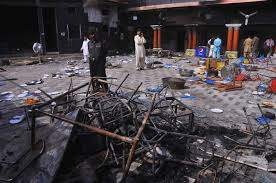
Dharmshala mandir, Larkana (Credit: nbc.com)
Dharmshala mandir, Larkana
(Credit: nbc.com)

WHEN the arsonists broke into the Seth Dhunichand Pahlumal Bhatia Hindu Dharamshala near Jinnah Bagh, Parvesh Kumar, 20, dashed up to the rooftop. A BSc student from Dokri taluka, Kumar had recently volunteered to be one of the caretakers of the community centre. As the emotionally charged men went on the rampage on Saturday night, Kumar shook nervously, praying the men did not discover him upstairs.

Situated on Station Road in Larkana, the pre-partition edifice can be easily missed as it is crammed between mobile phone and hardware shops.

Showing us around on Monday, Kumar made sure not to repeat the obvious. The white tiles of the spacious veranda had turned black as belongings and property were set alight by the men.

Chairs were set up near the rooms for community elders wanting to witness the damage. Nearby, the vice chairman of the Hindu Panchayat Dr Dharampal Bhawani’s mobile phone kept ringing. “I don’t know how to pacify people from our community. This is the first time we have to deal with an incident like this,” he said.

But an elderly local resident said the dharamshala had come under fire in the late 1950s too when a rape incident in the Indian town of Jabalpur infuriated the Muslims in the subcontinent. “A few men barged in then as well. There was no loss of life. But I remember my Muslim neighbours providing shelter to our family,” he stated.

The mood inside the dharamshala remained tense after the incident as community leaders remained non-committal in their response regarding what triggered the incident.

Half a kilometre away from Station Road, the New Leelabad — also known as New Murad Wahan — neighbourhood made news after a Hindu man was accused by a shopkeeper named Manan Sheikh of burning pages of the Quran on Saturday night.

But from the accounts of the man’s neighbours and various people of the area, it seems the suspect was well liked. A resident, G. R. Bhatti, said: “It is sad to see a simple man like him being wrongly embroiled in a controversy as scary as blasphemy.”

Walking along the narrow lanes as we made our way to the home of the suspect, Bhatti said the man accusing him was considered a “nuisance” by many in the neighbourhood. Sheikh, 22, irons clothes at a small dry-cleaning shop beside the suspect’s rented home. On a street corner stands a cream-coloured, two-storey building where the suspect, now under the protection of the ASP City Larkana, lived.

Both venues, the shop and the suspect’s home, were locked from outside. Pointing to the steps of the shop, Bhatti said: “Manan with his friends used to sit here and whistle at girls passing by. [The suspect’s] two sisters were among them. Though they were drinking buddies at night, they had many altercations about Sheikh’s wayward behaviour towards his sisters.”

As the suspect is unemployed, his sisters work at a nearby beauty salon to make ends meet. Residents said the girls would ignore advances of Sheikh and his friends.

Described mostly as a “simpleton” and “dervish-minded”, the neighbours said nobody saw the suspect burn the sacred pages. “Yes, the pages were recovered from a sewage line right in front of his home. But nobody saw him there; no one saw him burning the pages either. I don’t want to accuse anyone unjustly,” said Pervez Ali, owner of the dry-cleaning shop where Manan worked.

Living close by, Sheikh’s brother Izhar Ali was quick to present a clarification. “We have taken Manan to a safer place as we fear for his security,” he said. “A few people handed him a shopper with burnt pages of the Holy Book. I don’t know whether he did it or not. But we’ll help the police in locating who did it.”

“You just have to connect the dots,” doctor and professor at the Chandka Medical College Dr Inayat Magsi said. “A low-income neighbourhood, den of extortionists and land grabbers at the back of it, a Hindu girl refusing sexual advances, living with a brother with drinking problems — it helps many people in one go. If the men were so emotionally charged, why didn’t they go straight to a temple? Why did they plunder an off-route dharamshala first?”

He continued: “This is not Lahore or Bahawalpur where angry protesters will burn down an entire neighbourhood. Over here, people feel duty-bound to protect their neighbours. Many students from the seminary and boys from around the area surrounded the homes of other Hindu families to protect them. Otherwise, this incident could have created another Gojra from Larkana.”

Pakistan Tops Nations Suffering Religion related Hostilities

A report placed Pakistan at the top of a list of 198 countries most suffering from social hostilities involving religion, by the end of 2012.

The Pew Research Center’s report issued two indices, based on statistics from the years 2007-2012:

1) The Government Restrictions Index (GRI), which measures government laws, policies and actions that restrict religious beliefs and practices.

2) The Social Hostilities Index (SHI), which measures acts of religious hostility by private individuals, organisations or groups in society.

The results show that “Pakistan had the highest level of social hostilities involving religion, and Egypt had the highest level of government restrictions on religion.”

Neighbours Afghanistan and India were also up there with Pakistan in the SHI index.

Worldwide, except for the Americas, “the share of countries with a high or very high level of social hostilities involving religion reached a six-year peak in 2012,” while ”the share of countries with a high or very high level of government restrictions on religion stayed roughly the same in the latest year studied.”

Pakistan topped the list for most religious hostilities while showing a ‘very high’ range of scores in the other index too.

Global Trends

SHI – One third of 198 countries reviewed saw high or very high levels of internal religious strife, such as sectarian violence, terrorism or bullying in 2012, compared to 29 percent in 2011 and 20 percent in 2010.

The biggest rise came in the Middle East and North Africa, two regions that are still feeling the effects of the Arab Spring of 2010-2011, said the Pew Research Center.

As an example, the report cites an increase in attacks on Coptic churches and Christian-owned businesses in Egypt. It said China has also witnessed a big rise in religious conflict.

https://twitter.com/conradhackett/status/423109435817725953

PEW said that radical elements often target mainstream Muslims and Christians in Pakistan, Afghanistan and Somalia, while India has recurring tensions between its majority Hindus and minority Muslims and Christians.

Results for strong social hostility such as anti-Semitic attacks, assaults by Muslims on churches and Buddhist agitation against Muslims were the highest seen since the series began, reaching 33 per cent of surveyed countries in 2012 after 29 per cent in 2011 and 20 per cent in mid-2007.

Christians and Muslims, who make up more than half of the world’s population, have been stigmatised in the largest number of countries. Muslims and Jews have suffered the greatest level of hostility in six years, the report said.

Religious violence declined in the Ivory Coast, Serbia, Ethiopia, Cyprus and Romania.

GRI – The number of countries whose governments have imposed restrictions, such as bans on practicing a religion or converting from one to another, has remained more or less the same, however. Three out of ten countries have high or very high levels of restrictions, the study said.

Official bans, harassment or other government interference in religion rose to 29 per cent of countries surveyed in 2012 after 28 per cent in 2011 and 20 per cent in mid-2007.

Harassment against women and religious connotations of the way they dress has also risen in nearly a third of countries to 32 per cent, compared to 25 per cent in 2011 and seven per cent in 2007.

The five countries with the most government restrictions on religion are Egypt, China, Iran, Saudi Arabia and Indonesia.

Among the 25 most heavily populated countries, Egypt, Indonesia, Russia, Pakistan and Myanmar suffered the most religious restrictions.

The 198 countries studied account for more than 99.5 per cent of the world’s population, said the Pew center.

It did not include North Korea, whose government “is among the most repressive in the world, including toward religion.”

The Washington-based center, which is non-partisan and takes no policy position in its reports, gave no reason for the rises noted in hostility against Christians, Muslims, Jews and an “other” category including Sikhs, Bah’ais and atheists. Hindus, Buddhists and folk religions saw lower levels of hostility and little change in the past six years, according to the report’s extensive data.

Increase in hostility largest in Europe

Europe showed the largest median increase in hostility due to a rise in harrassment of women because of religious dress and violent attacks on minorities such as the murder of a rabbi and three Jewish children by a radical in France.

Tensions in Israel arise from the Palestinian issue, disagreements between secular and religious Jews and the growth of ultra-Orthodox sects that live apart from the majority.

Jews face hostility

The world’s two largest faiths, Christianity and Islam, make up almost half the world’s population and were the most widely targetted in 2012, facing official and social hostility in 110 and 109 countries respectively.

Jews suffer hostility in 71 countries, even though they make up only 0.2 per cent of the world’s population and about 80 per cent of them live in Israel and the United States.

https://twitter.com/conradhackett/status/423114904561008640

The report said there were probably more restrictions on religion around the world than its statistics could document but its results could be considered “a good estimate”.

A Stitch in Time Could Have Saved at least 62 Lives

Tharis in drought season (Credit: Fayyaz Naich)
Tharis in drought season
(Credit: Fayyaz Naich)

As global average temperatures rise, scientific models indicate that human society will suffer increased heat-related illness and death, food insecurity, water stress and spread of infectious diseases, in addition to increased climate related disasters. Pakistan is, in fact, increasingly vulnerable to floods and droughts caused by a changing climate.

At first glance it appears that the recent deaths of at least 62 children in the southern district of Tharparkar in Sindh have been caused by drought; but actually the desert region is not in the grips of a severe famine as has been reported by some sections of the media.

According to the head of the National Disaster Management Authority, “Only a mild drought was indicated in Cholistan, Tharparkar, Sukkur and Khairpur areas by the Pakistan Meteorological Department (PMD)”. The PMD’s National Drought Monitoring Centre has released a press statement dated March 7, 2014, stating that “In the wake of recent disaster confronting Tharparkar district, meteorological data has been analysed that depict that current disaster may be termed as ‘socio-economic disaster’ rather than simply drought because seasonal and annual rainfall were moderately below than climatic averages. The disaster may have occurred by moderately below average rains coupled with some epidemic and weak socio-economic settings of the area”.

The PMD’s statement further clarified that “During monsoon 2013, Tharparkar region received 70pc of its normal rainfall in which Chor received 94pc of rainfall while Mithi receive 46pc of rainfall. However, 60mm rainfall was recorded in Mithi during October 2013 that compensated the monsoon deficit in the area.” The amount of annual rainfall in the desert is generally low and around 90pc of the total annual rainfall occurs during the monsoon, from July to September. Hence the rains did not fail last year, although they fell in pockets over the district that spreads over 22,000 square km, with some Talukas receiving more and others less.

The winter months are generally a dry season in the desert and the local community copes by migrating with its livestock to the barrage-irrigated parts of Sindh to seek work as farm labourers to harvest the wheat crop. According to Zafar Junejo, the chief executive officer of the Thardeep Rural Development Programme that works in the district with local communities, “These deaths occurred from December to March and not just in one month. There is no drought as such. I attribute the deaths to a combination of factors: malnutrition, pneumonia, premature birth, low birth weight … all born to mothers who are anaemic (deficient in iron).”

He adds, “The mothers all suffer from neglected reproductive health issues. They have six to seven children each by the age of 40 and are suffering from a host of problems: anaemia, illiteracy and food insecurity, since in this district you have only one crop a year (the rest of Sindh has two crops). What is needed is long-term planning — the women need regular sources of income like milk cooperatives or women’s cooperative farming.”

He points out that while there is a widespread road network in Tharparkar connecting the district to the outside world, the local people have no purchasing power. “One time food distribution or aid is not really going to help the situation — they need more interventions and a perennial income source.”

It appears that the deaths of children were the result of a chain of events triggered by unusual cold weather in the Thar Desert this winter that led to the outbreak of pneumonia. The already weak/malnourished children then became victims of the poor medical facilities available in the district and died over the last three months.

At the heart of this disaster, however, is the growing issue of food insecurity in Pakistan. According to Oxfam GB, “Half the population is ‘food insecure’ — they can’t be sure where their next meal is coming from. This is compared to a decade ago when a third of the population was in this situation.” Pakistan’s National Nutrition Survey (NNS) 2011 found that around 60pc of Pakistan’s total population is today facing food insecurity. The results of the survey indicated a sharp decline in the nutritional status of the people of the country over the past decade.

The survey took a sample of 30,000 households nationwide covering all the provinces and found that around 57pc of the households were facing food insecurity. In these households, 50pc of the women and children were found to be malnourished. The report stated that iron deficiency and vitamin A deficiency remains widespread in the country. The survey found Sindh, Balochistan and the Federally Administered Tribal Areas to be the major hotspots for childhood malnutrition in the country.

The report noted that the increasing rate of chronic and acute malnutrition in the country is primarily due to poverty, higher illiteracy rate among mothers and the government’s lack of commitment towards ensuring food security for its citizens. The current levels of malnutrition are unacceptably high in Pakistan — instead of merely handing out relief to the people of Tharparkar our policy makers need to think about long-term solutions before further casualties take place. For now climate change might not be the reason, but as Oxfam points out “a hostile climate will become a potent risk multiplier”.

US Shifts Search for Missing Malaysian airline to Indian Ocean
Kate Hodal in Songkhla, Tania Branigan in Beijing and Gwyn Topham in London

Search for Malaysia airline (Credit: abc.com)
Search for Malaysia airline
(Credit: abc.com)

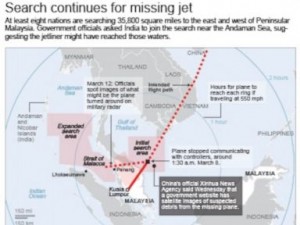
The international search operation for the missing Malaysia Airlines flight MH370 is likely widen into the Indian Ocean, as authorities moved to debunk a string of theories and apparent leads about the fate of the airliner, six days after it vanished.

With US warships already deployed in the Strait of Malacca, west of the Malay peninsula, the White House said that the search could move into the Indian Ocean after new “possible pieces of information”.

According to a report on the ABC network, a Pentagon official said there was an “indication” that the plane might have crashed into the Indian Ocean. A White House spokesman said the information was not conclusive, adding: “We are consulting with international partners about the appropriate assets to deploy.”

A US official quoted by the Associated Press said the plane was sending signals to a satellite for four hours after the aircraft went missing, an indication that it was still flying. The jet had enough fuel to reach deep into the Indian Ocean.

Earlier, Malaysian authorities said reports that more data had been transmitted automatically by the plane after it went missing were inaccurate, adding that the last information received from its engines indicated everything was operating normally.

A report in the Wall Street Journal had claimed US investigators believed the plane had flown for five hours, based on data allegedly transmitted to Rolls-Royce, the British engine manufacturers. The Journal later corrected its report, saying the information from the US was based upon an analysis of signals sent through the plane’s satellite-communication link, designed to automatically transmit the status of onboard systems.

A reporter from China waits by her camera at Kuala Lumpur International airport. Photograph: Damir Sagolj/Reuters

Malaysia Airlines’ chief executive, Ahmad Jauhari Yahyain, told reporters: “We have contacted both the possible sources of data – Rolls-Royce and Boeing – and both have said they did not receive data beyond 1.07am. The last transmission at 1.07am stated that everything was operating normally.”

Malaysia Airlines has confirmed its planes use a system that automatically monitors the engines and transmits updates on their performance, altitude and speed. They said one engine maintenance update was received during the flight. Neither Boeing nor Rolls-Royce would comment, citing international conventions on air accident investigations.

Boeing did state that an airworthiness directive about possible fuselage cracks issued by US authorities in November regarding 777s, which had been linked in some theories to flight MH370, did not apply as the missing plane did not have the specific antenna installed.

The aircraft, with 239 people on board, disappeared from civilian radar at 1.30am as it crossed the Gulf of Thailand from Malaysia. Malaysian authorities have also stated that the plane was again caught on radar at 2.30am (later denied), and on military radar at 2.15am near the Malacca strait, indicating that it had turned back from its flight path to Beijing.

A man writes a message for passengers of Malaysia Airlines flight MH370 on a banner at Kuala Lumpur International airport. Photograph: Mak Remissa/EPA

Officials are still trying to verify whether the radar blip at 2.30am was actually MH370, Malaysia’s defence and acting transport minister Hishammuddin Hussein reiterated on Thursday, and he refused to answer whether that blip had also dropped off the military radar.

“This is too-sensitive information,” Hussein told reporters. He added that Malaysia was in a “crisis situation” and was doing all it could to find the missing airliner. “There is no real precedent for a situation like this. The plane vanished,” he said.

Malaysian and Vietnamese search teams spent the day scouring waters off Vietnam’s southern tip looking for debris photographed by Chinese satellites. Nothing was found and the Malaysian transport minister said China had said the pictures were released online by accident.

A Vietnamese military official looking out of an air force plane during the search for Malaysia Airlines flight MH370. Photograph: Luong Thai Linh/EPA

The Chinese premier, Li Keqiang, reiterated that families and friends of more than 150 Chinese passengers on board the missing jet were “burning with anxiety”. He added that the Chinese government had asked Malaysian authorities to co-ordinate their activities and establish the cause of the disappearance.

With trust running low, the state broadcaster CCTV reported on Twitter that families had asked the Malaysian envoy whether the air force had shot down the plane – a suggestion Malaysia denied.

Relatives have also lashed out at Chinese officials for not doing enough to help. “I really want to see President Xi [Jinping] – I don’t know right now what could possibly be more important than the lives of these 200 people,” one young woman, who gave her family name as Wen, told Reuters as she fought back tears.

“I also want to ask Mrs Xi, if your husband, President Xi, was on the plane, just imagine, if it was you, how would your parents feel? My husband was on the plane. Every day my children are asking me about their dad. What am I supposed to do?”

Famine Draws Thar Desert into Spotlight

Tharis-in-moonlightREPORTS in the media during the past few days about a virtual famine in Tharparkar, about a sharp increase in deaths, especially of children due to malnutrition or negligence, and about desperate outward migration of residents have caused justified widespread concern and prompted governmental, judicial, civil and military responses.
While conditions certainly deserve alleviation, the doom-like scenario misrepresents a substantial part of reality.

First: severe adversity affects parts of the population and the region, not the entire area and all residents. Tharparkar is spread over 22,000 square kilometres with a population of about 1.5 million residing in 2,300 villages and urban settlements. Divided into six talukas — Mithi, Islamkot, Chachro, Dihly, Diplo and Nagarparkar — the area often receives varying levels of rainfall or none at all.

Last year, Nagarparkar taluka received plentiful rain. Crops have been cultivated in over 336,000 acres and are adequate to sustain an average tehsil population of about 212,000.

Agricultural productivity in places like Kasbo can be so high that, currently, after meeting local needs, onions from Tharparkar are being trucked all the way to Gujranwala, Punjab. No case of starvation or even of severe malnutrition has been reported in the whole taluka, and even in some others.

There was scattered, uneven rainfall in the other five talukas. Several tens of thousands are definitely affected by farming water scarcity. But this is a recurrent, periodic feature of life.

People residing in small villages in the rural “baraari” parts cope by seasonal outward migration to the barrage-irrigated parts of Sindh to serve as farm labour.

At this very time, in the normal course, such migration begins: to harvest the imminently ripe wheat crop in the weeks ahead. Thus, ongoing migration is not necessarily linked to suddenly impactful drought.

Second: apart from farming, livestock-related income is a major source of livelihood. Of about six million animals comprising cattle, sheep, camels, goats, about half a million sheep are estimated to be victims of sheep pox or other ailments.

Blanket vaccination of all animals is the best protection against fatal epidemics.

But with only 11 veterinary doctors on duty out of a sanctioned number of only 17 posts and other paucity of resources in the 135 vet units across a large region, comprehensive vaccination was not conducted in 2013, causing loss of some, but not the majority of the livestock population which continues to support the human population.

Third: the livelihoods of a large number of residents come from shop retailing, small- and medium-scale trade, construction, transport, several services, and employment in the government and non-governmental sectors.

Thus, all are not dependent entirely on rain-based crops or livestock-related incomes, though drought does impact in some ways on other spheres.

Fourth: negligence, apathy, corruption, avoidable shortages and poor governance are far bigger ‘killers’ than drought and famine. In cases of a sharp increase in infant and child mortality in the Mithi Civil Hospital, all or some of the above appear to be the main causes. Prompt diagnosis in the recurring morbidity pattern such as of diarrhoea, malnutrition, under-nourishment (as distinct from outright starvation), pneumonia, etc; quick referral to specialists, and sustained treatment with both drug and non-drug therapies could swiftly contain and reduce mortalities.

The inadequacy dimension is typified by the fact that in the Nagarparkar taluka hospital, out of the 32 sanctioned posts for doctors, only four are presently staffed. Non-governmental health centres strive to redress such gross imbalances.

Of the total of 139 governmental health units in Tharparkar, 31 BHUs and 102 dispensaries administered by the stricter-accountability measures of the PPHI intervention will hopefully also correct deficiencies elsewhere, albeit on a limited scale.

Fifth: post-2000, the awkward, inconvenient truth is that, particularly during the regime of retired General Pervez Musharraf and former chief minister Arbab Ghulam Rahim, the physical infrastructure of Tharparkar reached an unprecedented level of progress.

Where, for example, in previous times, only about two kilometres of metalled road was built in a whole year, roads of the same length and more were built every month, and in even less time, for several years.

Grid electricity to main towns, water pipelines to large settlements, preparatory infrastructure for exploitation of coal reserves including work by the post-2008 PPP government, rapid proliferation of telecommunication and mobile phones have vastly enhanced mobility, access and information flow.

This transformative change remains ignored by the media which prefer stereotypical bad news.

Sixth: there is a need for immediate relief for large numbers in some parts. But the priorities should be the efficiency, integrity and quality of relief delivery, rather than quantum alone.

Corrupt practices in relief delivery often provide more benefits to the few rather than succour for the many. Several non-governmental organisations, with their limited resources, contribute to the relief work.

Without reducing the urgency of alleviating current suffering, the far more vital subjects requiring purposeful action by legislators, public office-holders and officials is non-partisan accountability and improved governance.

The media too need to curtail their sensationalist, under-researched outpourings while remaining vigilant. The candid self-criticism of Sindh’s chief minister is a helpful step forward.

Believe It: Global Warming Can Produce More Intense Snows

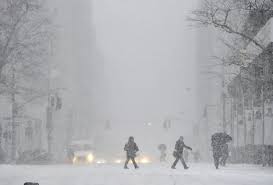
NY in grip of 2014 snow storms (Credit: news.xin.msn.com)
NY in grip of 2014 snow storms
(Credit: news.xin.msn.com)

We all remember “Snowmageddon” in February of 2010. Even as Washington, D.C., saw 32 inches of snowfall for the month of February—more than it has seen in any February since 1899—conservatives decided to use the weather to mock global warming. Oklahoma Senator James Inhofe and his family even built an igloo on Capitol Hill and called it “Al Gore’s New Home.” Har har.

Yet at the same time, scientific voices were pointing out something seemingly counterintuitive, but in fact fairly simple to understand: Even as it raises temperatures on average, global warming may also lead to more intense individual snow events. It’s a lesson to keep in mind as the northeast braces for winter storm Janus—which is expected to deliver as much as a foot of snow in some regions—and we can expect conservatives to once again mock climate change.

To understand the relationship between climate change and intense snowfall, you first need to understand that global warming certainly doesn’t do away with winter or the seasons. So it’ll still be plenty cold enough for snow much of the time. Meanwhile, global warming loads the dice in favor of more intense precipitation through changes in atmospheric moisture content. “Warming things up means the atmosphere can and does hold more moisture,” explains Kevin Trenberth, a climate scientist at the National Center for Atmospheric Research in Boulder, Colo. “So in winter, when there is still plenty of cold air there’s a risk of bigger snows. With east coast storms, where the moisture comes from the ocean which is now warmer, this also applies.”

Why does the atmosphere hold more moisture? The answer is a key physical principle called the Clausius-Clapeyron equation, stating that as atmospheric temperature rises, there is an exponential increase in the amount of water vapor that the air can hold—leading to more potential precipitation of all types. (A detailed scientific explanation can be found here.)

Indeed, scientific reports have often noted the snow-climate relationship. An expansive 2006 study of US snowstorms during the entirety of the 20th century, for instance, found that they were more common in wetter and warmer years. “A future with wetter and warmer winters…will bring more snowstorms than in 1901-2000,” the paper predicted. There is also a clear increase in precipitation in the most intense precipitation events, especially in the northeast:.

“More winter and spring precipitation is projected for the northern U.S., and less for the Southwest, over this century,” adds the draft US National Climate Assessment. Precipitation of all kinds is expected to increase, the study notes, but there will be large regional variations in how this is felt.

“The old adage, ‘it’s too cold to snow,’ has some truth to it,” observes meteorologist Jeff Masters, co-founder of the Weather Underground. “The heaviest snows tend to occur when the air temperature is near the freezing mark, since the amount of water vapor in the air increases as the temperature increases. If the climate in a region where it is ‘too cold to snow’ warms to a level where more snowstorms occur near the freezing point, an increase in the number of heavy snowstorms is possible for that region.”

In fairness, global warming is also expected to decrease overall snow cover, because intense snow events notwithstanding, snow won’t last on the ground as long in a warmer world. In fact, a decrease in snow cover is already happening.

Today’s snows will usher in a new northeast cold spell, not as intense as the “polar vortex” onslaught of two weeks ago but still pretty severe. But a temporary burst of cold temperatures doesn’t refute climate change any more than a major snowstorm does. Indeed, we have reasons to expect that the rapid warming of the Arctic may be producing more cold weather in the mid-latitudes in the Northern hemisphere. For an explanation of why, listen to our interview with meteorologist Eric Holthaus on a recent installment of Inquiring Minds (from minutes 2 through 12 below):

None of this is to say, of course, that global warming explains single events; its effect is present in overall changes in moisture content, and perhaps, in the large-scale atmospheric patterns that bring us our weather.

Still, that’s more than enough to refute conservatives who engage in snow trolling.

World Wide Web turns 25 years old

Twenty-five years ago, the World Wide Web was just an idea in a technical paper from an obscure, young computer scientist at a European physics lab.

That idea from Tim Berners-Lee at the CERN lab in Switzerland, outlining a way to easily access files on linked computers, paved the way for a global phenomenon that has touched the lives of billions of people.

He presented the paper on March 12, 1989, which history has marked as the birthday of the Web.

But the idea was so bold, it almost didn’t happen.

“There was a tremendous amount of hubris in the project at the beginning,” said Marc Weber, creator and curator of the Internet history program at the Computer History Museum in Silicon Valley.

“Tim Berners-Lee proposed it out of the blue, unrequested.”

At first, said Weber, the CERN colleagues “completely ignored the proposal.”

The US military began studying the idea of connected computer networks in the 1950s, and in 1969 launched Arpanet, the forerunner to the Internet. But the World Wide Web was just one of several ideas to connect the public.

Berners-Lee convinced CERN to adopt his system, demonstrating its usefulness by compiling a lab phone book into an online index.

A key aspect of the design put forward by Berners-Lee was that it worked across various computer operating systems. And it offered the ability to click on links to access files hosted on computers located elsewhere.

The Web was not a winner out of the gate. There were rival online services such as US-based CompuServe and France’s Minitel but they involved fees, while Berners-Lee’s system was free.

“It started as a real underdog; no one would have predicted the system would have succeeded,” Weber said.

The Gopher system owned by the University of Minnesota was beating the Web in the early 1990s.

Weber credited former US vice president Al Gore with helping the Web topple Gopher by getting government agencies in Washington to use the system.

The launch of the Whitehouse.gov website was seen as a huge stamp of approval for the Web.

In 1993, the Web system was released free into the public, while those behind Gopher started charging, according to Weber.

“Most people don’t realize that both the Web and the Internet had competitors,” Weber said.

“Had they lost the battles, we would still be going online, but it could certainly be different, a lot more top-down control like the walled garden at Facebook.”

Web competitors were online environments controlled by operators.

Under the Berners-Lee model, people were free to publish what they wished on Internet-linked computers.

Internet titans such as Google and Yahoo were built on helping people find pages of interest as the amount of information being hosted on servers exploded.

“At its birth, many of us were guilty of a lack of imagination and just didn’t see what the Web would do to the future,” Gartner analyst Michael McGuire told AFP.

“The personal computer changed the way we work, but is was the Web that disrupted and changed a lot of industries.”

The ability to freely access files on the Web has shaken traditional business models in music, film, news and more.

“The Internet pushes power to the edges,” said Jim Dempsey, vice president for public policy at the US-based Center for Democracy & Technology.

“Anybody can be a listener and anybody can be a publisher on the same network; there has never been anything like it.”

A powerful underlying tenet of the Web is that it is egalitarian and open, but those principles are under threat, according to Dempsey.

It remains to be seen whether the Web is hobbled with regulations and fragmented by governments walling off portions in countries.

“You will never stop the teenage kid from watching little snippets of cute cats,” Dempsey said.

“The trouble is you could limit the ability of people to criticize the government or make a tiered Internet in which it is harder for innovators, critics, or human rights activists to reach a global audience.”

Threats to a Web based on equality concern its creators, according to Weber.

While the Web unified the Internet decades ago, there is nothing “written in stone” saying it can’t fragment anew, the historian reasoned.

In the US, major Internet service providers have won the right to give some online traffic preferential treatment, and governments have shown willingness to invade online privacy or restrain Web freedom.

A big battle for the shape of the Web could be the effect of billions more people getting online with smartphones in parts of developing parts of the world.

“The Web is really only half built; it is not worldwide yet,” Weber said

A Pakistani Jew Comes out of the Closet
Seeks to Clean up Beni Israel Jewish grave site in Mewa Shah grave yard

Faisal & mother, Mewa Shah graveyard below (Credit: timesofisrael.com)
Faisal & mother,
Mewa Shah graveyard below
(Credit: timesofisrael.com)

His real name is Faisal Benkhald, though he has recently adopted the Yiddish first name “Fishel.” He was born in Karachi in 1987, the fourth of five children born to a Jewish mother and a Muslim father. Though registered at birth as Muslim, he considers himself Jewish and is now fighting for state recognition of his chosen religion — an apostasy.

As far as the Pakistani authorities are concerned, Fishel is still Faisal, a Muslim. That’s what’s written on his documentation. But he wouldn’t be the only Jewish Pakistani to have a Muslim identity card: The Jews of Pakistan learned to disappear long ago. Some, like Fishel’s parents, registered their children as Muslims to blend in, and all tried to hide.

Except Fishel.

In a series of Twitter exchanges and emails in recent weeks, The Times of Israel explored Fishel’s unique story.

His earliest childhood memories include the aroma of his mother’s challah, baking in the oven every Friday afternoon. Before dusk he would watch her recite blessings over the Shabbat candles.

“When she used to put her hands over her eyes it felt so serene as if she has no worries of worldly life, reciting the blessing welcoming the holy day. Her lovely eyes and smile looking at me are engraved in my memory, I always prayed with her.”

Fishel, once known as ‘Faisal,’ was born to a Jewish mother and Muslim father in Pakistan. (courtesy)

He says his mother would prepare only kosher food for him at home. She was born to religious Jewish parents who moved to Pakistan from neighboring Iran. He knows of his maternal grandparents only through the stories his mother told him as a boy.

Fishel is all that remains of what was once a small but thriving Jewish community. Estimated to have numbered about 2,500 people at the start of the 20th century, Pakistani Jewry consisted mainly of migrants from Iraq. Following Israel’s War of Independence in 1948, the central synagogue in Karachi (demolished in 1988) became a focal point for demonstrations against Israel. The majority of Jews left Pakistan for India or Israel around this time.

Fishel’s family spent as much time abroad as possible to escape from oppressive Pakistan. His father was a mechanical engineer whose work ensured they spent long stints living in North Africa. Both parents had died by his 13th birthday.

Once his parents passed away Fishel was sent to live with an uncle, a period of time he is loath to talk about. He’s estranged from two of his brothers and the other two have every intention of ignoring their Jewishness.

Fishel is an anomaly in choosing to reclaim his mother’s heritage.

‘I couldn’t be silent anymore about my Jewish roots’

“After Rosh Hashanah in September 2009, I remember just feeling sick of hearing the constant anti-Semitic propaganda and conspiracy theories popping up from the Pakistani government and media. They are constantly blaming everything wrong on an imaginary Jewish/Israeli conspiracy. My political side outgrew my fear; I felt less hesitant to claim my religion more publicly than I would have before. I couldn’t be silent anymore about my Jewish roots,” says Fishel.

As an adult Fishel chose the same path as his father and became an engineer, also taking short-term positions abroad. Anti-Semitism is the reason, he says, he spends as much time away from his native Pakistan as he can. But he is about to complete a contract in Tunisia, and is now preparing to go back to Pakistan.

Fishel is not planning to reveal his chosen religion to his neighbors and colleagues upon his return, but he is certainly going back with a mission. He intends to enter the National Database and Registration Authority (NADRA) and change his official religious status from Muslim to Jew.

If NADRA permits him to do so (which he thinks is unlikely), he will be committing the crime of apostasy, punishable by death.

“It is dangerous but I will go at least once to record my request to change the status of my religion from Islam to Judaism so that their response can be documented,” says Fishel.

In his quest to discover more about his Jewish identity, Fishel contacted the Institute for Jewish Ideas and Ideals in New York City. He has been guided by the founder and director of the institute, Rabbi Mark Angel, ever since. Fishel hopes together they can unlock more of his heritage.

The Jewish graveyard in Karachi has become a haven for vandals and drugs, says Fishel. (courtesy)

Speaking from New York, Angel tells The Times of Israel the kind of details he explained to Fishel would help him prove he is halachically Jewish: “If his mother had siblings who continued in their Jewishness, or if his mother’s mother/grandmother are buried in a Jewish cemetery. I don’t think these are easy things for him to find out, but I believe he’s trying his best,” says Angel.

Perhaps this is why Fishel is intending to fulfill his dream of cleaning up the old Beni Israel Jewish graveyard in Karachi. If one of the graves there belongs to a blood relative, he will have a much better chance of persuading halachic authorities of his Jewish roots.

Fishel insists, however, that the goal is wider than his own quest for family knowledge.

‘My dream for the near future in Pakistan is to gain some empathy from Pakistani Muslims for cleaning the Jewish graves’

“My dream for the near future in Pakistan is to gain some empathy from Pakistani Muslims for cleaning the Jewish graves. Later I will try to harness it in getting support and help in the legal process for a small synagogue in Pakistan. After getting that little piece of paper in my hand stating that legally we are allowed to have a synagogue, my dream will come true,” says Fishel.

Even from his temporary position in Tunisia, Fishel has not been idle in pursuit of this goal. He has repeatedly emailed and called Pakistan’s National Peace Council for interfaith harmony to gain permission to enter the cemetery, though so far with no reply.

Fishel has already snuck into the cemetery on several previous occasions to document the state of the graves. Upon his return he plans to step up his campaign to get the Pakistani government to provide him with the access he needs to clean the Beni Israel graveyard undisturbed.

The derelict Jewish graveyard is located within Karachi’s larger Mewa Shah graveyard. According to Fishel, it has fallen into a state of disrepair and is known as a hangout for drug addicts and criminals.

As part of his quest to help clean the Jewish graves in Karachi, Fishel has taken to Twitter where he goes by the handle @Jew_Pakistani

As part of his quest to help clean the Jewish graves in Karachi, Fishel has taken to Twitter, where he goes by the handle @Jew_Pakistani. It is here that he is searching for help both from sources in Pakistan and the wider Jewish world.

Unfortunately he has also become a magnet for Taliban apologists and often finds himself fighting the cause of Judaism against Islamic extremists.

Fishel knows he is starting from nothing and is looking for all of the help he can get in pursuit of his goals. He has managed to obtain a couple of Jewish books, but not enough to study from, and is looking for more. His thirst for knowledge about Judaism has led him to seek information online. He is now able to celebrate Passover, Yom Kippur, Rosh Hashanah and Shabbat, he says, thanks to recordings of services he has found posted on the web.

Fishel hopes to make Pakistan more tolerant to Jews and promote Pakistani interaction with Israel. Although at first glance these goals might sound insurmountable, there is room for some optimism, says Oxford University expert on Pakistan Dr. Faisal Devji.

“Bizarrely for such an anti-Semitic society, Pakistani school textbooks routinely compare the country to Israel as the world’s only two states founded in the name of religion rather than monarchy, language, ethnicity, etc. So it’s weirdly possible to propagate a pro-Israeli stance there, and indeed there have been a number of public suggestions of recognizing Israel,” says Devji.

Perhaps one day Fishel will be able to take a trip to Israel, but to do so he’d have to negotiate the obstacle of his Pakistani passport, where it is written, he reports, “This passport is valid for all countries of the world except Israel.”

Aga Khan compares Sunni-Shia conflict to Ireland

Aga Khan in Canada (Credit: monitor.co.ug)
Aga Khan in Canada
(Credit: monitor.co.ug)

OTTAWA, Feb 28: The hereditary spiritual leader of the world’s 15 million Ismaili Muslims Thursday compared a conflict between Sunni and Shia Muslims to Ireland, urging the West to engage both branches of Islam.

Speaking to both houses of Canada’s parliament, the Aga Khan said tensions between the two denominations “have increased massively in scope and intensity recently and have been further exacerbated by external interventions.”

“In Pakistan, Malaysia, Iraq, Syria, Lebanon, Bahrain, Yemen, Somalia and Afghanistan it is becoming a disaster,” he warned.

To help bring an end to the strife in these countries, the Aga Khan said “it is important for (the West) to communicate with both Sunni and Shia voices.

“To be oblivious to this reality would be like ignoring over many centuries that there were differences between Catholics and Protestants. Or trying to resolve the civil war in Ireland without engaging both Christian communities.”

Highlighting the span of the crisis, he said: “What would have been the consequences if the Protestant-Catholic struggling in Ireland had spread across the Christian world as is happening today between Shia and Sunni Muslims in more than nine countries.”

Canada is home to approximately 100,000 Ismaili Muslims, who found refuge in this country after being expelled by Ugandan President Idi Amin in 1972.

The Aga Khan himself was made an honorary Canadian citizen in 2010.