If there is a single message to be taken in Pakistan’s democratic transitional elections of 2013, it is that the voters have spoken loud and clear in favor of change.. not a Tsunami.. but the kind of experienced leadership that would address the complex task of handling terrorism and a mutilated economy.
For years, the writing was on the wall that come election day the suffering nation would take away the mantle of leadership from the default president – Asif Ali Zardari and his Pakistan Peoples Party government. Still the heavy mandate with which the twice elected, twice dismissed prime minister Mian Nawaz Sharif has emerged, has taken all the talking heads by surprise.
The erosion of the PPP from Punjab, Khyber Pakhtunkhwa and Balochistan is the kind that Benazir Bhutto attempted to avoid throughout her political life. In the 1991, when her spouse Zardari stayed in the background, I saw Benazir fret in Jacobabad, Sindh that her stay in a small town might reduce her image from a national to a provincial leader.
Given the PPP’s failure to hold rallies or even corner meetings — and its focus instead on advertisements of Zulfikar Ali Bhutto and Benazir Bhutto — has predictably confined the PPP into a Sindh based party. With PPP stalwarts defeated in all but its home province, the resignation of top party leaders has eroded much of the capital accumulated by the Bhuttos.
There is no disputing the fact that the Taliban militancy denied the liberal PPP, MQM and ANP a level playing field by killing their leaders and supporters ahead of elections. By sparing the Pakistan Muslim League and Tehrik-i-Insaf or even the JUI (F), Nawaz Sharif, Imran Khan and Fazlur Rehman were allowed to hold major rallies without significant disruption.
The greatest injustice was committed against honest and brave leaders of the Awami National Party – who took the heat of the Taliban onslaught – but were still voted out of their offices from the electorate.
Ultimately, voters argued that political parties paid the price of failing to govern amid the deteriorating situation. They demonstrated less sympathy with how the secular leadership was being killed by the Tehrik-i-Taliban and a greater concern that the political leadership failed to find a way out to end terrorism.
It ended up being a situation where some argue that democracy was “orchestrated” by the establishment using the TTP to serve their ends.
Whether or not this may prove to be the case, the fact is that people voted in large numbers, and despite terror threats by the TTP to elect a leadership that they believe would bring Pakistan back from the brink.
Meanwhile, Nawaz Sharif appears to be displaying the maturity and statesman ship that shows he is ready not only to give Imran Khan his right to form the government in Khyber Pakhtunkhwa, but also to allow representative leadership in Balochistan and Sindh.
Khan deserves the credit for giving a voice to the people… jostling complacent leaders into action… and in reaching out to the new head of government.
Bottom line. The people have spoken through their vote. It is now up to the leaders to represent all sections of society and in the best possible interest of the nation.
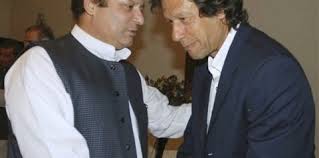
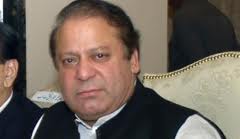
Nawaz Sharif with Imran Khan (Credit: Pakistan.com.pk)
LAHORE: Pakistan Tehrik-i-Insaf (PTI) chief Imran Khan on Wednesday vowed to cooperate with incoming Prime Minister Nawaz Sharif on terrorism and other major challenges following key elections.
Khan made the remarks from his hospital bed, where he is laid up with a fractured spine after falling at a campaign rally, after his Pakistan Tehreek-e-Insaf polled third place, behind Sharif’s Pakistan Muslim League-N (PML-N).
“We have decided that despite severe differences that we have, we will work together to resolve major national problems including terrorism,” Khan said in a video message aired during a PTI press conference.
Sharif had earlier pledged to work with Khan for the good of the country, after visiting the former cricket star in hospital on Tuesday.
“Elections are over and we all as a nation want to move forward,” Khan said, adding he wanted all politicians and the military to sit down together and find a solution to domestic terrorism, which has killed thousands of people in Pakistan.
“We cannot ensure prosperity until we eliminate the issue of terrorism,” he said.
Khan also has vowed to put together a provincial coalition government in Khyber Pakhtunkhwa and turn it into a “role model” for the rest of the country.
ECP should investigate rigging allegations
Expressed his reservations over the election process at some polling stations, Khan alleged Wednesday that vote rigging had taken place in 25 constituencies, and urged the Election Commission of Pakistan to immediately investigate allegations of rigging and irregularities and conduct a recount in four National Assembly constituencies.
“It is the responsibility of the Election Commission to satisfy the voters. We suspect polls have been rigged in 25 constituencies. Today we are giving the ECP four constituencies where recount should be carried out with the use of fingerprinting,” said Khan.
“We will submit an application today. The ECP has already ordered recount at one of these four constituencies, but without fingerprinting,” said the PTI chief, urging the use of fingerprints to make the process more credible.
“We have calculated that it will take two days for the ECP for the process of recount with fingerprints at four constituencies.”
Khan said that it was important to satisfy voters who were protesting in the streets of Lahore and Karachi. Khan also said that the exercise was also essential to curb rigging in the future, and to take the democratic process forward in a smooth and acceptable manner.
“This is the right of the people…and will ensure the democratic process grows stronger,” he said. “We expect the ECP to fulfill their responsibility.”
“These people who are protesting against alleged rigging…it is the ECP’s responsibility to satisfy them, otherwise these people will lose their faith on the democratic process and will not come out to vote in the future.”
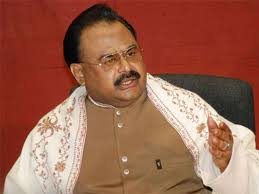
MQM chief Altaf Hussain (Credit: nation.com.pk)LONDON, May 14: Scotland Yard confirmed on Monday that it had received a “substantial number of calls and emails” from Pakistanis after Altaf Hussain, the Muttahida Qaumi Movement (MQM) leader, made a speech on Sunday and said that if the “establishment’ doesn’t like the mandate of his party, it should go ahead and detach it from the rest of the country.”
Referring to sit-in protest by Pakistani Tehrik-e-Insaf (PTI) at Teen Talwar in Karachi, Altaf Hussain had said that he had stopped his followers from confrontation but will allow them to go ahead if their patience is tested beyond limits. A Scotland Yard spokesman said on Monday: “We have received a substantial number of calls and emails from Pakistanis. We are aware of the comments and why we are being approached but no formal investigation has been started. We are looking into these complaints.”
The News is aware that Pakistani student groups, political activists and individuals approached the police and the Home Office to state that Mr Hussain had urged violence in the city of Karachi in the telephonic address. Lots of these calls were also made from Pakistan on a police number that was distributed on social media sites.
There is no chance that the British government would initiate a public inquiry as it would not like to be involved in a messy Pakistani affair, but it may quietly speak to Pakistani political parties in the UK not to say or do anything that disturbs law and order situation on its own soil.
The MQM’s Rabita Committee member Mustafa Aziziabad told The News that Altaf Hussain’s opponents were spreading “baseless and negative propaganda” about Hussain’s speech. “Altaf bhai only spoke about the continuous negative propaganda about elections in Karachi.
Analysts and anchors were continuously saying negative things about Karachi without any evidence, not mentioning anything about other parts of the country. He actually spoke in favour of Quaid-i-Azim and Allama Iqba’s Pakistan.”
Meanwhile, Pakistani students from various student societies and activists gathered outside Pakistan High Commission to register their protest against the alleged vote-rigging. Called on a short notice but attended by nearly 500, the protestors called for re-election in several constituencies and alleged that the MQM and Pakistan Muslim League (Nawaz) were involved in effective vote-rigging and used dirty tricks to deprive the PTI of its mandate.
Several students said their relatives in Karachi and Lahore were not able to vote because obstacles were created for them. They said that opponents of Imran Khan were uniting forces against “change” and were shaken because the youth of Pakistan has become active.
Ayesha Khan, a City Law School student, said: “It is our democratic right to have a fair and transparent election. Our right to vote has been sabotaged by the powerful, some have been caught red handed, others not allowing the results to be announced and clear victories have turned in close margin defeats over night.”
Amna Hayat, a student at the University of Edinburgh, said due to examinations she was not able to go home and cast her vote.
“The unfair violation of this right by MQM and PML-N is absolutely unacceptable! This peaceful protest in London is an attempt by the overseas Pakistanis to voice our anger at the situation, and show the rigging parties, the ECP, the Pakistani Government as well as the world that we will not tolerate this injustice,” she said.
Vishal Shamsi said that he had helped organise the protest because “we feel extremely helpless here sitting and doing nothing while our families and friends are out on the street protesting in Karachi and Lahore”.
The National Union of Pakistani Students and Alumni (NUPSA) said that the 11 May elections were to decide the future of Pakistan, and it seems that despite a 60% voter turnout claimed by CEC of Election Commission of Pakistan Fakhruddin G Ibrahim, the people’s mandate was not respected.
“We demand the ECP to conduct an impartial investigation of riggings done across the country and conduct re-elections under the supervision of Pakistan Army senior officials and international observers,” NUPSA said in a statement, sent to The News
As Pakistanis head to the polls for general elections on May 11, something to watch among top candidates for prime minister is how they position themselves in relation to Pakistan’s powerful military establishment. The military has essentially ruled the country for more than half of the country’s 66 years. This election marks the first transfer of power from one government to another without any military interference.
Nawaz Sharif is considered the front-runner to become Pakistan’s next prime minister.
Mr. Sharif, a business magnate, jumped into politics as a protégé of the military dictator Gen. Zia-ul-Haq during the 1980s, after the Sharif family lost much of their business under the nationalization policy of the previous civilian government.
While he was Pakistan’s prime minister from 1990 until 1993 he was popularly known for his economic liberalization policies. After taking office again in 1997 his government was upended in a coup in 1999 when Sharif tried to remove the army chief, Pervez Musharraf, from office.
He was tried on terrorism and corruption charges in a military court and given a life sentence. But Saudi Arabia, where his family did significant business, came to his rescue. And under an agreement with the Saudi government, Sharif was exiled from the country.
He returned to Pakistan in 2007 to participate in the last elections, this time as a heavy critic of the military that once brought him to power. His party, Pakistan Muslim League (PML-N), a center-right, pro-business party, came into power in Punjab Province under his leadership.
Sharif continues to run the family steel business, making his family one of the wealthiest in the country, and favored among business elites.
He’s been long criticized for suspected covert support of Islamic extremist groups like Lashkar-e-Jhangvi, which has links with Al Qaeda and is headquartered in Punjab. Sharif’s party denies alliance with extremists; however, while the Pakistani Taliban have pledged to attack the Awami National Party (ANP), the Pakistan People’s Party (PPP), and the liberal Muttahida Quami Movement (MQM) parties, no extremist groups have threatened to disrupt campaigning by the PML-N or Sharif.
He promises to take Pakistan out of many challenging crisis, including bringing an end to crippling power shortages, improving law and order, and reviving the economy. No one is quite sure how many seats his party will win, but analysts say he may have to form a coalition. Still, unlike the PPP-led government which just left office, A Sharif government is likely to be more proactive in responding to issues, and thus more popular.
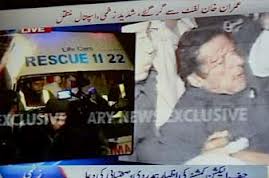
On Wednesday, doctors at the hospital where the 60-year-old was being treated said the leader of the Pakistan Tehreek-e-Insaf party (PTI) would have to remain in bed for several days to come after falling 4.5 metres (15 ft) from a makeshift lift and damaging his back.
His campaign was supposed to end with a final rally of supporters on Thursday, with polling then taking place on Saturday.
Khan, who sustained three fractured vertebrae and a broken rib, is now unlikely to take part and has ruled out going to vote in his home constituency of Mianwali, in north-west Punjab.
Faisal Sultan, his doctor, said the politician would recover if allowed to rest. He said: “The most important and reassuring thing is that the spinal canal is intact and Mr Khan is in full control of his limbs and body functions. There was no neurological compromise.”
Khan has benefited from a wave of public concern and sympathy from supporters and opponents alike, with other leading parties cancelling many campaign events on Wednesday.
The PTI has turned an interview recorded with Khan as he lay in a neck brace in a hospital bed just hours after the accident into a party political broadcast repeatedly aired by various TV channels.
The shaken looking Khan said it was up to voters to elect leaders “in the name of ideology” rather than on the basis of personality, adding: “I have done whatever I could do. Now you have to decide whether you want to make a new Pakistan.”
Mohammad Malick, a prominent journalist, said the images in the broadcast would more than compensate for the loss of time on the campaign trail. “This really resonates because people like the image of a fighter, of a warrior,” he said. “He took this terrible fall and he’s recovering quickly – that is a powerful image.”
Malick said it could also help boost voter turnout, which analysts believe will benefit Khan more than the frontrunner, Nawaz Sharif, the head of his faction of the Pakistan Muslim League (PML-N).
A poll published by the political magazine Herald on Wednesday showed the PTI and PML-N were virtually tied, with the latter leading by less than a percentage point among the 1,285 people surveyed.
Khan’s frenetic campaigning in recent weeks, which has seen him do as many as four rallies a day, appears to have galvanised the public and given the PTI momentum.
But because of the first-past-the-post, constituency-based system used in Pakistan, it is possible that Khan will win many more votes than seats. Most analysts anticipate a hung parliament, with the former cricketer turned politician holding the balance of power or leading the opposition.
Khan has in the past insisted he would never enter into a coalition with either the PML-N or the Pakistan Peoples party (PPP), which has been in power for five years.
“We are in totally uncharted waters,” said Malick. “He could get maybe between 40 to 50 seats, but we just don’t know.”
Governments require 172 seats to form a majority in parliament.
In an interview to a local television station, Khan revealed that his injuries could have been worse if he had not been wearing a bulletproof jacked under his shirt, which doctors believe protected his spine.
Pictures that have emerged of the incident show a man in a black T-shirt appeared to have accidentally pushed Khan, who lost his balance and fell to the ground along with at least three of his aides.
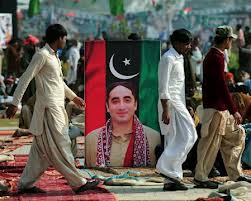
Bilawal on campaign trail (Credit: dailystar.com.lb)
THE battle lines have been drawn as polling day closes in. The outcome of these elections, now less than a week away, is perhaps the most difficult to predict since the 1970s. There may be many surprises waiting as the battle at the hustings intensifies.
It is no more a traditional fight for the crown between the two long-term rivals, the PPP and PML-N. The meteoric rise of the Pakistan Tehreek-i-Insaf (PTI) has completely changed the country’s electoral scene. A quintessential outsider is now challenging the domination of the two established parties.
Seemingly, the elections have essentially become a contest between the PML-N and PTI with the region along the Grand Trunk Road in the Punjab becoming the main battleground. Various opinion polls vindicate the widespread perception.
While the two front runners are jostling it out, the PPP seems to be out of breath. Its lacklustre election campaign does not give much hope to party loyalists. Is this the twilight moment for the party which has been at Pakistan’s political centre stage since its inception some four decades ago? Maybe, or not as yet. But the decline of the PPP’s political base is shocking.
Leaderless and rudderless sums up the current state of the PPP, as it struggles to stay in the critical race. There are no big election rallies nor is there any central leader to galvanise the electorate. For the first time, the party has gone into the election campaign without a Bhutto to lead it. Therefore there is no Bhutto charisma to revive the party’s fast-diminishing populist credibility.
Not only was Benazir Bhutto there to start the party’s 2008 election campaign, her assassination drew sympathy votes bringing back the party to power after a hiatus of 11 years. But now a critical peg to hang on to and a fight-back to regain the ground lost during its not so enviable five-year term in office appear to be missing. The party’s TV campaign advertisements reflect its desperation to clutch on to the past and resort to the politics of martyrdom.
It is largely a negative campaign targeting the past record of the PML-N. There is nothing about its own performance or what the party will offer to the electorate in the future. This illustrates the defeatist mindset of a party that is unable to defend its incompetence and corruption-ridden rule. It is a sad commentary on the state of what was once the most formidable political force in the country.
Over the past 40 years, the PPP went through many ups and downs, but it has never seen its fortunes plummeting so rapidly. It is a party now trying to live off its past without any hope for the future. One of the greatest assets of the party that kept it alive through the worst of times was its contact with the masses. That seems to have been completely lost due to the party’s new ethos of political wheeling and dealing and buying loyalties.
Not surprisingly, this new political culture is manifested in the emergence of people of the ilk of Manzoor Wattoo, Anwar Saifullah, Faryal Talpur and Owais Muzaffar ‘Tappi’ as the faces of the party. The jiyalas have long disappeared, leaving the party soulless.
The attempt to launch Bilawal Bhutto Zardari to infuse some life into the party’s dead election campaign seems to have failed because of his reported falling out with his father and paternal aunt. In any case it would have been very difficult for an untested young man with little understanding of the realities and complexities of the country’s politics to boost the flagging morale of the party and to win votes.
For long, the party’s support base in the urban areas particularly in Punjab has been shrinking, but it now seems to be heading to an expulsion there with the PTI and PML-N now fighting for the urban middle-class votes. The party’s only hope is to scavenge some seats because of the divided votes between the two main contestants.
The PPP has largely become a rural-based party with its support mainly concentrated in feudal-dominated Sindh and south Punjab. Yet, it seems hard to predict whether it can maintain its hold in those regions too in the elections. While the party is most likely to retain its domination in Sindh, it may not get the same margin of victory. The failure of the PPP government to deliver on its promises to its constituents has also eroded the party’s vote bank in its stronghold.
Having said that, the PPP may be down but it is certainly not completely out of the race. Even with a far fewer number of seats, the party will remain relevant in an expectedly fragmented house, though it is likely to not be in a position to lead the coalition.
In a scenario where the PTI gets close to the number of seats as the PML-N, it would become much more difficult to form a viable and effective coalition government. In a hung parliament the PPP with its majority in the Senate will hold the balance.
But the real issue is whether a rudderless PPP with a declining mass base is able to emerge united after a possible electoral setback or whether the situation would lead to the complete unravelling of a party that still claims to espouse liberal credentials.
The May 11 elections are indeed important for the party, but a more critical issue is whether it can ever regain its lost mass base. This is only possible if the party reforms itself in a changed political, social and cultural environment. It is certainly an uphill task for a party that depends on its past and does not seem to be looking towards the future.
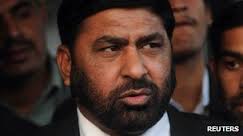
MULTAN, Pakistan, May 3 — Gunmen on Friday killed a Pakistani prosecutor who had been investigating the murder of former Prime Minister Benazir Bhutto and the 2008 Mumbai attacks.
Assailants opened fire on the prosecutor, Chaudhry Zulfikar Ali, as he drove to work from his home in a suburb of the capital, Islamabad, for a court hearing in which the former military leader, Pervez Musharraf, faces charges in relation to Ms. Bhutto’s death in 2007.
The police said that gunmen traveling by motorbike and in a taxi sprayed Mr. Ali’s car with bullets, lightly wounding his bodyguard and killing a woman who was passing by when his car veered out of control. Television footage from the scene showed a bullet-riddled vehicle crashed by the roadside.
Mr. Ali died before he reached a hospital in Islamabad, where a doctor said he had been shot 13 times. The police said that Mr. Ali’s bodyguard returned fire and managed to wound one of the attackers. The police are searching for the attackers, all of whom escaped.
There was no immediate claim of responsibility for the attack, and the police said it was too early to comment on a possible motive. But few doubted that it was linked to Mr. Ali’s work as a state prosecutor in some of the most sensitive cases in the country, and his death reinforced the vulnerability of senior government officials who challenge Islamist militants and other powerful interests.
Mr. Ali represented the Federal Investigation Agency, which has implicated Mr. Musharraf in the death of Ms. Bhutto, who was assassinated in December 2007, just before the last election.
After the previous hearing in the Bhutto case on April 30, Mr. Ali told reporters he had “solid evidence” that connected Mr. Musharraf with Ms. Bhutto’s death.
Prosecutors and Bhutto supporters accuse Mr. Musharraf of failing to provide adequate security to Ms. Bhutto after her return from exile in October 2007. Mr. Musharraf has denied those accusations.
Since Mr. Musharraf’s return from exile in March, investigators have questioned him about the security arrangements for Ms. Bhutto in 2007. He insisted that, as head of state, he was not involved in administrative matters such as security arrangements.
Mr. Ali was also involved in another sensitive case: the trial of seven people from the militant group Lashkar-e-Taiba charged with involvement in the attacks in Mumbai, India, in November 2008, which killed more than 160 people.
Seven Lashkar activists have been on trial since 2009, accused of orchestrating the slaughter from Pakistan, and one of the defendants is the group’s operational leader, Zaki ur-Rehman Lakhvi. But the hearings have been characterized by opacity and a lethargic pace.
The trial is taking place at Adila jail in Rawalpindi, ostensibly on security grounds, and the news media are barred from proceedings. Hearings have been repeatedly adjourned because of the absence of lawyers or the presiding judge.
Currently, defense lawyers are cross-examining the prosecution witnesses. Mr. Ali was scheduled to appear in court on Saturday in relation to the case.
Lashkar-e-Taiba was founded with help from the Inter-Services Intelligence Directorate, Pakistan’s spy agency, in the 1990s, and its presumed leader, Hafiz Muhammad Saeed, lives openly in the eastern city of Lahore. The spy agency says it has cut all links with the group.
Mr. Ali’s death comes at a sensitive time, with Pakistanis scheduled to go to the polls for a general election on May 11. Campaigning has been marred by widespread Taliban violence against candidates from secular parties.
In the latest attack, gunmen shot dead a candidate from the secular Awami National Party, which has borne the brunt of attacks, along with his 6-year-old son, in the port city of Karachi on Friday.
Although Islamabad suffered a number of militant attacks in 2008 and 2009, it has escaped major violence in recent years. But several prominent figures have been assassinated on its streets, including the former governor of Punjab Province, Salman Taseeer, and a minister for religious affairs.
Mir Hazar Khan Khoso, the interim prime minister, addressed the nation Friday evening and reiterated his government’s resolve to hold free, fair, transparent and peaceful elections, and he said a special security cell had been established in the Interior Ministry to coordinate with the national election commission.
“This cell will collect intelligence reports and share it with provincial government and law enforcing agencies, and this cell is also empowered to take decisions for timely action if needed,” Mr. Khoso said. “All resources will be used to improve security of the sensitive polling stations and their effective monitoring,” he added.
Mr. Musharraf returned from exile with a plan to run for Parliament in a general election. He faces charges in several cases related to his time in power, including the murder of Ms. Bhutto, the killing of a Baloch nationalist leader, and the firing of senior judges.
Mr. Musharraf, a retired general, has been disqualified from contesting the election, and this week a court banned him from politics for life. He also faces possible treason charges.
In the court hearing in nearby Rawalpindi, lawyers for Mr. Musharraf argued that he should be exempted from appearing in person in the case, Pakistani television stations reported. The hearing was adjourned until May 14.
Salman Masood contributed reporting from Islamabad, Pakistan.
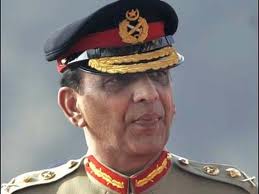
Army chief Gen. Ashfaque Pervaiz Kiyani (Credit topnews.in)
ISLAMABAD: Army chief Gen Ashfaq Parvez Kayani used the occasion of ‘Youm-i-Shuhada’ (martyrs’ day) to send more than one message to more than one audience.
Assuring everyone that the elections would be held on May 11, he tried to dispel the ever-circulating rumours about the postponement of elections.
He also made it clear that the war the army was fighting was Pakistan’s war and that the anti-democratic forces would never be acceptable, sending a message to all those watching the country’s battle with extremism and militants. And last but not least, he also indirectly expressed the military’s reservations about the treatment being meted out to his predecessor retired Gen Pervez Musharraf.
“Allah willing, general elections will be held in the country on 11th of May. We must not harbour any doubts or misgivings about it,” the army chief said while addressing a ceremony at the GHQ to mark the day.
“I assure you that we stand committed to wholeheartedly assist and support in the conduct of free, fair and peaceful elections; to the best of our capabilities and remaining within the confines of the constitution. I also assure you that this support shall solely be aimed at strengthening democracy and rule of law in the country,” he said.
Like every Pakistani, he said, Pakistan Army in its humble capacity, had endeavored to strengthen democracy in the past five years with the hope that the next elections would steer the country towards betterment.
“Now, once the destination is in sight we must not err in accomplishing our responsibilities towards the election process. We must never forget that success of any system resides in coming up to the aspirations of the masses. The success of democracy is intimately linked with the wellbeing and prosperity of the nation. The real virtue of democracy ultimately lies in the safety and welfare of the masses,” he said.
GOLDEN OPPORTUNITY: He termed the next elections “a golden opportunity” for the people that “can usher in an era of true democratic values in the country”.
In his indirect reference to the ongoing trial of former military ruler Musharraf, the army chief said: “In my opinion, it is not merely retribution, but awareness and participation of the masses that can truly end this game of hide and seek between democracy and dictatorship.”
Gen Kayani was of the view that if they succeeded in rising above all ethnic, linguistic and sectarian biases to vote solely on the basis of honesty, sincerity, merit and competence, “there would be no reason to fear dictatorship or to grudge the inadequacies of our present democratic system”.
“Our salvation resides in transforming the government into a true platform of public representation. This would come to pass once the construct of public representation in Pakistan is oriented towards affording primacy and precedence to larger public interest over personal interests. Otherwise, may it be democracy or dictatorship; governance would continue to remain a means of self-aggrandisement and that of plundering national wealth and resources,” he said.
According to the army chief, the conduct of elections is not an end in itself, “but is surely an important means towards delivering us from our present sufferings”.
He regretted that despite tremendous sacrifices, the dream of founding fathers under the leadership of Quaid-i-Azam and Allama Iqbal was yet to be realised. “Perhaps, we have either not discovered the correct path or have not remained steadfast in our journey. Yet the spirit of sacrifice and resilience of our nation remains undiminished.”
‘WAR ON TERROR’: Blaming “external enemies” for the menace of terrorism and extremism that had claimed thousands of lives in the country, the army chief criticised those busy in debating the causes and origin of the ‘war on terror’ — an apparent reference to certain political and religious groups accusing Gen Musharraf of bringing this war to the country’s soil.
“We cannot afford to confuse our soldiers and weaken their resolve with such misgivings,” he said, adding: “Considering this war against terrorism as the war of the armed forces alone can lead to chaos and disarray that we cannot afford.”He said the fact of the matter was that today it was Pakistan and its valiant people who were a target of this war and were suffering tremendously.
“I would like to ask all those who raise such questions that if a small faction wants to enforce its distorted ideology over the entire nation by taking up arms and for this purpose defies the Constitution of Pakistan and the democratic process and considers all forms of bloodshed justified, then does the fight against this enemy of the state constitute someone else’s war?”, he asked.
According to the COAS, even in the history of the best evolved democratic states, treason or seditious uprisings against the state have never been tolerated and in such struggles their armed forces have had unflinching support of the masses; questions about the ownership of such wars have never been raised.
Gen Kayani expressed the desire that all those who had “strayed and have picked up arms against the nation, return to the national fold”.
However, he said, this was only possible once “they unconditionally submit to the state, its constitution and the rule of law. There is no room for doubts when it comes to dealing with rebellion against the state.”
The army chief said the “nefarious designs of our enemy, may it be internal or external, will never succeed and we shall eventually prevail.”
He paid tribute to the 140 soldiers and officers who lost their lives in an avalanche in Gayari sector.
The event honoured the personnel of armed forces and police and the civilians killed by the terrorists and extremists.
Apart from the parents of martyred servicemen, sons of SP Syed Abdul Kalam and ANP leader Bashir Ahmed Bilour, who were killed in suicide attacks, and the children of slain journalist Nasrullah Khan Afridi also spoke.
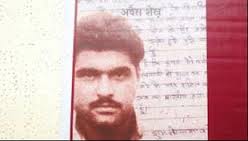
ISLAMABAD/NEW DELHI, May 2- India reacted furiously to Thursday’s death in a Pakistani jail of convicted spy Sarabjit Singh, who was badly beaten last week by fellow inmates, the latest incident to strain relations between the neighbours.
Nuclear-armed India and Pakistan have fought three wars since the partition of British-ruled India in 1947, although they began a peace process in 2004. They remain deeply suspicious of each other.
Singh was arrested in Pakistan in 1991 and sentenced to death for spying and carrying out four bomb blasts that killed 14 people. His family says he was an innocent farmer who was arrested after drunkenly wandering over the border.
Singh was hospitalized with a head injury on Friday after two fellow prisoners attacked him in jail in the eastern city of Lahore. India’s government and his family had pleaded with Pakistan to let him return to India for treatment.
“The criminals responsible for the barbaric and murderous attack on him must be brought to justice,” Prime Minister Manmohan Singh said in a statement.
“It is particularly regrettable that the government of Pakistan did not heed the pleas of the government of India, Sarabjit’s family and of civil society in India and Pakistan to take a humanitarian view of this case.”
Pakistan said it provided the best treatment for Singh, who it said had been comatose and on a ventilator following injuries sustained during a “scuffle” with fellow inmates.
“A sustainable and long lasting relationship between two countries has to be between people. That relation has been hurt by what has happened today,” Foreign Minister Salman Khurshid told reporters.
The latest flare-up follows an outbreak of violence in the disputed territory of Kashmir in January, where two Pakistani and two Indian soldiers were killed. It was the worst clash there since India and Pakistan agreed to a ceasefire nearly a decade ago, leading to angry reactions from both sides.
Indian opposition parties and Sarabjit Singh’s family came down hard on the government for being too soft with Pakistan. Parliament was adjourned for two hours after MPs shouted anti-Pakistan slogans.
“(The) centre is unable to give a strong answer to Pakistan’s inhuman acts. Beheading of our soldiers and now Sarabjit’s death are 2 recent examples,” Gujarat Chief Minister Narendra Modi, widely tipped as a prime ministerial candidate, wrote on Twitter.
Despite the recent strains, India and Pakistan’s relations have improved after nose-diving in 2008 when gunmen killed 166 people in Mumbai in a three-day rampage that India blamed on a Pakistani militant group. Last year, India hanged Pakistani citizen Ajmal Kasab, who was convicted of taking part in that attack.
(Reporting by Mubasher Bukhari in ISLAMABAD and Anurag Kotoky in NEW DELHI; Editing by Nick Macfie)
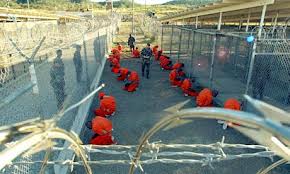
WASHINGTON — President Obama on Tuesday recommitted to his years-old vow to close the Guantánamo Bay prison following the arrival of “medical reinforcements” of nearly 40 Navy nurses, corpsmen and specialists amid a mass hunger strike by inmates who have been held for over a decade without trial.
“It’s not sustainable,” Mr. Obama said at a White House news conference. “The notion that we’re going to keep 100 individuals in no man’s land in perpetuity,” he added, made no sense. “All of us should reflect on why exactly are we doing this? Why are we doing this?”
Citing the high expense and the foreign policy costs of continuing to operate the prison, Mr. Obama said he would try again to persuade Congress to lift restrictions on transferring inmates to the federal court system. Mr. Obama was ambiguous, however, about the most difficult issue raised by the prospect of closing the prison: what to do with detainees who are deemed dangerous but could not be feasibly prosecuted.
Mr. Obama’s existing policy on that subject, which Congress has blocked, is to move detainees to maximum-security facilities inside the United States and continue holding them without trial as wartime prisoners; it is not clear whether such a change would ease the frustrations fueling the detainees’ hunger strike.
Yet at another point in the news conference, Mr. Obama appeared to question the policy of indefinite wartime detention at a time when the war in Iraq has ended, the one in Afghanistan is winding down and the original makeup of Al Qaeda has been decimated. “The idea that we would still maintain forever a group of individuals who have not been tried,” he said, “that is contrary to who we are, contrary to our interests, and it needs to stop.”
But in the short term, Mr. Obama indicated his support for the force-feeding of detainees who refused to eat.
“I don’t want these individuals to die,” he said.
As of Tuesday morning, 100 of the 166 prisoners at Guantánamo were officially deemed by the military to be participating in the hunger strike, with 21 “approved” to be fed the nutritional supplement Ensure through tubes inserted through their noses.
In a statement released earlier, a military spokesman said the deployment of additional medical personnel had been planned several weeks ago as more detainees joined the strike.
“We will not allow a detainee to starve themselves to death, and we will continue to treat each person humanely,” said Lt. Col. Samuel House, the prison spokesman.
The military’s response to the hunger strike has revived complaints by medical ethics groups that contend that doctors — and nurses under their direction — should not force-feed prisoners who are mentally competent to decide not to eat.
Last week, the president of the American Medical Association, Dr. Jeremy A. Lazarus, wrote a letter to Defense Secretary Chuck Hagel saying that any doctor who participated in forcing a prisoner to eat against his will was violating “core ethical values of the medical profession.”
“Every competent patient has the right to refuse medical intervention, including life-sustaining interventions,” Dr. Lazarus wrote.
He also noted that the A.M.A. endorses the World Medical Association’s Tokyo Declaration, a 1975 statement forbidding doctors to use their medical knowledge to facilitate torture. It says that if a prisoner makes “an unimpaired and rational judgment” to refuse nourishment, “he or she shall not be fed artificially.”
The military’s policy, however, is that it can and should preserve the life of a detainee by forcing him to eat if necessary.
“In the case of a hunger strike, attempted suicide or other attempted serious self-harm, medical treatment or intervention may be directed without the consent of the detainee to prevent death or serious harm,” a military policy directive says. “Such action must be based on a medical determination that immediate treatment or intervention is necessary to prevent death or serious harm and, in addition, must be approved by the commanding officer of the detention facility or other designated senior officer responsible for detainee operations.”
On Monday, Colonel House also said that some detainees on the “enteral feeding” list were drinking the supplement.
“Just because the detainees are approved for enteral feeding does not mean they don’t eat a regular meal,” he said. “Once the detainees leave their cell and are in the presence of medical personnel, most of the detainees who are approved for tube feeding will eat or drink without the peer pressure from inside the cellblock.”
Medical ethicists and the Pentagon also clashed during the Bush administration over hunger strikes at Guantánamo.
The current protest began in February and escalated after a raid this month in which guards confined protesting detainees to their cells. The impetus for it is disputed. The prisoners, through their lawyers, cite a search for contraband on Feb. 6, during which they say Korans were handled in a way they found offensive. The military says the Koran search followed routine procedures.
But both sides agree that the root cause is frustration over the collapse of President Obama’s effort to close the prison, which drew Congressional resistance, and the fact that no prisoners have been transferred because of restrictions on where they can be sent.
Congress has restricted the repatriation to countries with troubled security conditions, helping to jam up 86 low-level detainees who were designated for potential transfer three years ago; most are Yemeni. But since 2012, lawmakers have given the Pentagon the ability to waive most of those restrictions on a case-by-case basis, and it has not done so.
On Tuesday, Mr. Obama said he “I’ve asked my team to review everything that’s currently being done in Guantánamo, everything that we can do administratively.” It was not clear whether that was a signal that the administration may be considering using the waiver power to revive the transfer of low-level detainees.
Ramzi Kassem, a City University of New York law professor who represents several detainees, said he had talked to a Yemeni client, Moath Hamza Ahmed al-Alwi, who said a guard had shot him with rubber-coated pellets at close range during the raid. Since then, Mr. Kassem was told, the prisoners have been denied soap, toothbrushes, toothpaste and their legal papers.
Mr. Alwi said he had not eaten in 80 days and stopped drinking after the raid, Mr. Kassem said. He also said he was being force-fed twice a day after being tied to a restraint chair.
Mr. Kassem also quoted Mr. Alwi as saying: “I do not want to kill myself. My religion prohibits suicide. But I will not eat or drink until I die, if necessary, to protest the injustice of this place. We want to get out of this place. It is as though this government wishes to smother us in this injustice, to kill us slowly here, indirectly, without trying us or executing us.”
In his statement on Monday, Colonel House said the prisoners would not be allowed to die.
“Detainees have the right to peacefully protest, but we have the responsibility to ensure that they conduct their protest safely and humanely,” he said. “Detainees are given a choice: eat the hot meal, drink the supplement or be enteral fed.”