Nawaz Sharif sworn in as Pak PM, asks US to end Drone Strikes

Nawaz Sharif takes oath (Credit: online.com.pk)

ISLAMABAD, June 5: Nearly 14 years after being deposed in a military coup and forced into exile, Nawaz Sharif was sworn in as Pakistan’s prime minister for a record third term, as he vowed to revive the country’s ailing economy and called for an end to the controversial US drone strikes.

63-year-old Sharif was sworn in by President Asif Ali Zardari at a function at the presidency this evening after being formally elected as prime minister by an overwhelming majority in Pakistan’s 342-member National Assembly.

Sharif is the 27th prime minister of Pakistan, which has witnessed three military coups in its 66-year history.

He became the first person to serve as prime minister for a third term.

Sharif, served as premier during 1990-1993 and 1997-1999 but was ousted from office before he could complete his term — once on corruption charges and later because of a military coup led by Pervez Musharraf.

After spending the past five years in the opposition, Sharif led his PML-N party to victory in the May 11 general elections.

“The economic position is very bad and I will not present a fanciful image of heaven,” Sharif said while addressing the National Assembly after his formal election as the premier.

He pledged that he would not “sit easy” or allow his “team to sit easy”.

Foreign policy issues, including relations with India, did not figure in Sharif’s speech though he said that US drone strikes in Pakistan’s tribal belt “must stop”.

Sharif was formally elected prime minister by the National Assembly after bagging 244 votes in the House.

Makhdoom Amin Fahim, the candidate of the Pakistan Peoples Party that led the previous government, got 42 votes.

Veteran politician Javed Hashmi, the candidate of Imran Khan’s Pakistan Tehrik-e-Insaf party, got 31 votes.

The swearing in ceremony in an ornate hall in the presidency was attended by top leaders of the PML-N, several Pakistan Peoples Party leaders, including former premiers Yousuf Raza Gilani and Raja Pervez Ashraf, former ministers, parliamentarians, bureaucrats, and diplomats.

The president warmly shook hands with Sharif, clad in a dark sherwani, at the conclusion of the brief ceremony as the new premier’s daughter, Maryam Nawaz, looked on with a smile.

The Drone War Is Far From Over

WHEN people in Washington talk about shrinking the drone program, as President Obama promised to do last week, they are mostly concerned with placating Pakistan, where members of the newly elected government have vowed to end violations of the country’s sovereignty. But the drone war is alive and well in the remote corners of Pakistan where the strikes have caused the greatest and most lasting damage.

Drone strikes like Wednesday’s, in Waziristan, are destroying already weak tribal structures and throwing communities into disarray throughout Pakistan’s tribal belt along the border with Afghanistan. The chaos and rage they produce endangers the Pakistani government and fuels anti-Americanism. And the damage isn’t limited to Pakistan. Similar destruction is occurring in other traditional tribal societies like Afghanistan, Somalia and Yemen. The tribes on the periphery of these nations have long struggled for more autonomy from the central government, first under colonial rule and later against the modern state. The global war on terror has intensified that conflict.

These tribal societies are organized into clans defined by common descent; they maintain stability through similar structures of authority; and they have defined codes of honor revolving around hospitality to guests and revenge against enemies.

In recent decades, these societies have undergone huge disruptions as the traditional leadership has come under attack by violent groups like the Taliban, Al Qaeda in the Arabian Peninsula and Somalia’s Al Shabab, not to mention full-scale military invasions. America has deployed drones into these power vacuums, causing ferocious backlashes against central governments while destroying any positive image of the United States that may have once existed.

American precision-guided missiles launched into Pakistan’s Pashtun tribal areas aim to eliminate what are called, with marvelous imprecision, the “bad guys.” Several decades ago I, too, faced the problem of catching a notorious “bad guy” in Waziristan.

It was 1979. Safar Khan, a Pashtun outlaw, had over the years terrorized the region with raids and kidnappings. He was always one step ahead of the law, disappearing into the undemarcated international border between Afghanistan and Pakistan, the very area where Osama bin Laden would later find shelter.

I was then the political agent of South Waziristan, a government administrator in charge of the area. When Mr. Khan kidnapped a Pakistani soldier, the commanding general threatened to launch military operations. I told him to hold off his troops, and took direct responsibility for Mr. Khan’s capture.

I mobilized tribal elders and religious leaders to persuade Mr. Khan to surrender, promising him a fair trial by jirga, a council of elders, according to tribal custom. Working through the Pashtun code of honor, Mr. Khan eventually surrendered unconditionally and the writ of the state was restored. The general who had argued for using force was delighted.

We were able to get Mr. Khan without firing a single shot by relying on the three pillars of authority that have traditionally provided stability in Pashtun tribal society: elders, religious leaders and the central government.

Over the past few decades, these pillars have weakened. And in 2004, with the Pakistani army’s unprecedented assault and American drones’ targeting suspected supporters of Al Qaeda in Waziristan, the pillars of authority began to crumble.

In the vacuum that followed, the Tehrik-e-Taliban Pakistan, or Pakistani Taliban, emerged. Its first targets were tribal authorities. Approximately 400 elders have been killed in Waziristan alone, a near-decapitation of traditional society.

Large segments of the tribal population were displaced to shantytowns surrounding large cities, bringing with them traditional tribal feuds and a desire for revenge against those they saw as responsible for their desperate situation.

As the pace of the violence in the tribal areas increased, the Pakistani Taliban sought to strike the central government. They kidnapped Pakistan’s ambassador to Afghanistan, stormed Army General Headquarters in Rawalpindi, and assaulted a naval base in Karachi. In 2009, fighters attacked a military mosque, killing 36 people, including 17 children. Taking hold of children’s hair and shooting them point-blank, they yelled “Now you know how it feels when other people are killed.”

For the first time tribesmen resorted to suicide strikes — in mosques, bazaars and offices in which women and children were often the victims — something categorically rejected by both Islam and the Pashtun tribal code.

The tribesmen of Waziristan have for years seen the Pakistani government as colluding on drone strikes with the Americans, against whom their tribal kin are fighting across the border in Afghanistan. Therefore, they take revenge against the military and other government targets for those killed by drones.

Their suspicions of Pakistan complicity proved correct. Former President Pervez Musharraf admitted to CNN last month that his government had secretly given permission to the United States to operate drones inside Pakistan.

Drone strikes have made Waziristan’s already turbulent conflict with the central government worse. Almost 3,500 people have been killed by drones in Waziristan, including many innocent civilians.

Those at the receiving end of the strikes see them as unjust, immoral and dishonorable — killing innocent people who have never themselves harmed Americans while the drone operators sit safely halfway across the world, terrorizing and killing by remote control.

Mr. Obama should not assume that his pledge to scale back the drone war will have an appreciable impact on America’s image or Pakistan’s security unless the strikes stop and the old pillars of tribal authority can gradually be rebuilt.

Until then, American policy makers would do well to heed a Pashto proverb: “The Pashtun who took revenge after a hundred years said, I took it quickly.”

Akbar Ahmed, the Islamic Studies chair at American University and the former Pakistani high commissioner to Britain, is the author of “The Thistle and the Drone: How America’s War on Terror Became a Global War on Tribal Islam.”

Balochistan’s Fighting Chance

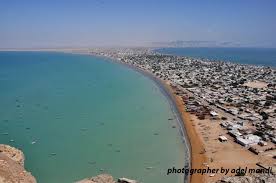
Gwadar Port in Balochistan (Credit: trekearth.com)

AFTER ages, there is a note of jubilation in the discussions on the future of Balochistan. Till about a year ago, many were convinced it didn’t even have a future.

The change is the nomination of the National Party’s Dr Abdul Malik Baloch as chief minister. He will be the first ever Baloch chief minister not embedded in the structure and from an educated, middle-class background.

His credentials as a guard of the province’s interests are apparent in his growth through the ranks of the Baloch Students Organisation, the earlier leadership of the Balochistan National Movement, the foresight of merging with the National Democratic Party to form the NP, and the issues he unflaggingly raised in the Senate during his term.

Credit is due to Nawaz Sharif for the statesmanship displayed in dealing with the assertive claims to the post made by the leadership of his own party, and placing at the helm someone who was previously a political opponent. It was a potentially fractious, hence bold political decision.

The nawab of Jhalawan, Sanaullah Zehri, showed political maturity in accepting it and standing by the decision after his own strident claims and not quitting in a huff.

Had Sardar Mengal agreed earlier to an electoral alliance with the NP, it would have been the crowning triumph. Since the 2002 elections when Gen Musharraf’s regime ushered the Muttahida Majlis-i-Amal into power, the Baloch nationalist groups have been on the defensive and outside the electoral fold.

The rising power of the religio-political alliance was at the cost of the nationalists. Their return to the electoral fold under a non-tribal steered leadership is significant.

This should have been the PPP’s moment. But the party squandered it in the same manner it did many others, by first showing long-term vision and making important structural changes, but then offsetting these with immediate-term governance disasters.

Dr Malik’s present nomination would have been a symbolic but politically ineffectual change of face had it not been preceded by the 18th Amendment and the consensually reformulated NFC award. It is devolution of powers and substantive budgets that will give this government political potency.

In that sense, the PPP paved the way for this historic opportunity, but negated its own potential by putting forward the inept nawab of Sarawan, Aslam Raisani, as its chief minister and the party’s political face in the province.

This will remain as the outgoing government’s imprint, not President Asif Zardari’s apology to the Baloch people for historic grievances, and not the unimplemented but well-crafted Aghaaz-i-Haqooq-i-Balochistan package.

Dr Malik now has the democratic mandate to rule, the support and goodwill of the central government, significant fiscal space and financial resources for development via devolution, the ability to take and execute decisions affecting the province, and the credibility to do so.

The proverbial spanner, or in this case, slammer in the works could be the role of the security establishment. The numbers of enforced disappearances attributed to the state vary wildly, with the outgoing home minister citing 55 and the Voice of the Baloch Missing Persons organisation saying 13,000, whereas former interior minister Rehman Malik acknowledged there to be 1,100.

Whatever the realistic count, the effect this practice has had has eclipsed Baloch narratives and produced immense hostility, fear and insecurity to the point that even those who disagree with the tactics of the sarmachar (as the nationalist armed fighters are called), concede that breaking away may be the only survival option.

Continued forced disappearances and recovery of tortured dead bodies as seen over the past five years, would invalidate any perceived forward steps and reassert the image of a predatory and repressive establishment.

There are signs that there may be a change in this policy as well. The Frontier Corps remain the most reviled of state institutions in Balochistan, along with the proxy death squads attributed to them.

Yet in post-election interviews, people I spoke to say there was no explicit or implicit coercion to vote for any particular candidate or party by the security apparatus. If anything, they say they were compelled by the sarmachar not to vote.

While the voter turnout remained relatively low, there was no evident political intrusion by state agencies. According to some people’s accounts, while dumped bodies are still being found, there has been a decline in the number of ‘new disappearances’ over the past few months.

This cannot be verified because the disappearances are not recorded, as when they happen the police refuse to register FIRs against the FC or security agencies and the media often blocks out such news.

For the new government to have a chance at healing wounds and ruptures with the state, it is imperative that the political victimisation and kill-and-dump policy halts.
Without this, no change is possible and Balochistan will remain poised on the brink.

Even if disappearances do end, it will not resolve all the problems. As in any conflict zone, the general law and order breakdown has led to a phenomenal increase in crime such as kidnappings for ransom and a near-complete collapse of the provincial economy.

This doesn’t even begin to touch upon the Hazara killings crisis and the impunity with which the Lashkar-i-Jhangvi has been able to operate.

The incoming government has to also panic about the Ahle Sunnat Wal Jamaat, the political face of the Lashkar-i-Jhangvi being able to poll over 20,000 votes for the National Assembly from within Quetta city under the umbrella of the Muttahida Deeni Mahaz. In others places in the province, people have been able to get elected into parliament with much fewer votes.

However small and incremental a step, the nomination of new leadership has given Balochistan breathing space and a fighting chance that it hasn’t had for a decade.

The writer conducts research and analysis in the social and development sector.

Drone Kills Tehrik-i-Taliban’s Second Senior Most Commander

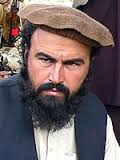
Wali-ur-Rehman (rewardsforjustice.com)

At least six people were killed in a drone strike Wednesday in northwest Pakistan, reportedly including a top Pakistani Taliban official, in the first publicized US drone attack since President Barack Obama announced he was changing policy on such strikes.

According to multiple reports, Wali-ur-Rehman, the second in command of the Tehreek-e-Taliban Pakistan, was killed in the attack in North Waziristan, a militant stronghold. The drone reportedly fired two missiles into a mud house in the village of Chashma, killing at least six and wounding four others. Reuters reports that Mr. Wali-ur-Rehman had been poised to succeed TTP leader Hakimullah Mehsud.

“This is a huge blow to militants and a win in the fight against insurgents,” one security official told Reuters, declining further comment.

RECOMMENDED: How much do you know about Pakistan? Take this quiz.

The Pakistani Taliban are a separate entity allied to the Afghan Taliban. Known as the Tehreek-e-Taliban Pakistan (TTP), they have launched devastating attacks against the Pakistani military and civilians.

Reuters reports that the Pakistani Foreign Office expressed concern over the attack, stating that “Any drone strike is against the territorial integrity and sovereignty of Pakistan and we condemn it.” Reuters notes, however that the comment was made before Wali-ur-Rehman had been identified as a casualty.

Pakistani newspaper The News International reports that the TTP denied that Wali-ur-Rehman was killed.

The drone strike comes at a precarious time for both Washington and Islamabad. Last week, President Obama announced that the White House had codified new policy guidance on the use of lethal force against terrorists, including the use of drones, The Christian Science Monitor reported.

Generally speaking, the US government has to determine that a potential drone target poses a “continuing and imminent threat to the American people,” the president said.

Drones can be used only if the US can’t capture individual terrorists.

“Our preference is always to detain, interrogate, and prosecute them,” Obama said.

And finally, before any strike occurs, there must be “near certainty” that no civilians will be killed or injured, according to the president.

Experts note, however, that at least rhetorically, the president’s guidelines match what has been said before about US drone policies, and it is unclear whether this announcement marks a change in process – particularly as most of the relevant information on drone policy remains classified.

At the same time, Pakistan is in an interim period between its recent presidential election and the formation of a new government led by Nawaz Sharif, who “has made it very clear through the election campaign that he wants all drone strikes to stop all together,” reports the BBC’s Richard Galpin.

“The plain fact here is that the drone strikes are extremely unpopular, the vast majority of the population opposed to them – recent research showing two-thirds of them, of the population were opposed to them. Nawaz Sharif, I think is pretty much obliged to bring this issue up in negotiations with the American government to see if he can persuade them to stop the strikes.”

But at the same time, says the BBC’s M Ilyas Khan, “any strike against the Pakistan Taliban would be welcomed by the Pakistani authorities because the group has for several years been exclusively focused on pursuing Pakistani – rather than Afghan – military and civilian targets.”

Our correspondent says it comes on the same day that the newly-elected parliament of Khyber Pakhtunkhwa province – which adjoins North Waziristan – holds its first meeting.

The province is now being ruled by former cricketer Imran Khan’s PTI party, which has in recent months repeatedly spoken out against drone attacks, as has Prime Minister-elect Nawaz Sharif.

Pakistan Faces Struggle to Keep Its Lights On

LONDON, May 27— A week before he is to be sworn in as Pakistan’s prime minister for the third time, Nawaz Sharif has secured one form of power, yet now faces a fierce battle to find another.

Electricity shortages, bad for years, have reached crisis proportions. Lights go out for at least 10 hours a day in major cities, and up to 22 hours a day in rural areas. As the summer heat pressed in suddenly last week — touching 118 degrees Fahrenheit in the eastern city of Lahore — Pakistanis again took to the streets to protest the chaotic state of the country’s power delivery system.

Doctors and nurses picketed outside hospitals, complaining about lacking clean water and having to cancel operations. Demonstrators burned tires, blocked traffic or pelted electricity company officials with stones.

Students cannot study for exams, morgues struggle with decomposing bodies, and even the rich complain that their expensive backup generators are straining badly — or, in some cases, blowing up from overuse.

In a bid to quell discontent, Pakistan’s interim government, which is running the country until Mr. Sharif takes over, has ordered civil servants to switch off their air-conditioners and stop wearing socks — reasoning that sandals were more appropriate in such hot conditions.

“Everyone is affected,” said Iqbal Jamil, a heat-flustered resident of Landhi, a neighborhood in Karachi.

The crisis is the product of multiple factors, from decrepit power plants to crumbling transmission lines to decades-old policy mistakes. One reason, however, stands above the others: most Pakistanis will not pay their bills.

The system is paralyzed by $5 billion in “circular debt” — basically, a long chain of unpaid bills that cuts across society, from government departments to wealthy politicians to slum dwellers. At its worst, this leaves power providers with no funds to pay for fuel, so their plants slow or shut down entirely.

As a political issue, electricity has galvanized the Pakistani public — more so, even, than Islamist militancy. Mr. Sharif swept to victory in the May 11 election in part on the appeal of slogans promising to deliver a “shining Pakistan” and to “end the darkness.”

Analysts say the question is whether Mr. Sharif has the political backbone to take the tough decisions needed to change the system, particularly as some of his own supporters, along with other rich and powerful Pakistanis, are among the bill defaulters who need to start paying their fair share.

“This is not like finding a cure for cancer — people know what needs to be done,” said Robert M. Hathaway, director of the Asia program at the Woodrow Wilson International Center in Washington, D.C., who has written a book on Pakistan’s electricity crisis. “The problem is implementation, and finding the political will.”

The crisis has hit hardest in Mr. Sharif’s home province, Punjab. In Kharian, a Punjabi town along the historic Grand Trunk Road, Malik Mazhar Iqbal Awan, a businessman, fanned himself with a newspaper as beads of sweat rolled down his forehead.

Mr. Awan owns a small marble factory. In the yard outside, a handful of workers sat quietly beside a cutting machine, waiting for the power to return. Just four years ago, Mr. Awan said, he employed 25 people. Now he has just six.

“I can’t pay their salaries,” he said, wiping away dust that had blown in through an open window. “How can I if we can only work a few hours every day?”

Mr. Awan said he had voted for Mr. Sharif, a former steel baron, because he was “110 percent sure” the candidate could turn the electricity situation around. “He’s an industrialist,” he said. “He thinks differently than the others.”

Although easing the $5 billion “circular debt” is the principal problem, experts say money is only part of the solution. Deep-rooted structural issues, exacerbated by political interference and systemic graft, lie at the heart of Pakistan’s power crisis.

Electricity theft, by rich and poor, is common. Slum dwellers steal power through illegal connections; powerful politicians and government departments simply refuse to pay their bills. Electricity officials and the police, fearing retribution, dare not cut them off.

Corruption is notorious in the private power sector, where political supporters win lucrative contracts, often at inflated costs or without even producing a megawatt of power. In 2011 the auditor general noted that the government had committed to $1.7 billion in such contracts, yet added just 62 megawatts to the national power grid.

One prominent candidate in this election — Raja Pervez Ashraf, the country’s last prime minister — has been closely identified with the power crisis. After he lost his parliamentary seat in a crushing defeat, officials with the national anticorruption body stepped in, summoning Mr. Ashraf last week to answer accusations that he had taken kickbacks worth tens of millions of dollars from foreign companies on power projects.

Even those supposed to be enforcing the law are breaking it. At one police station in Sindh Province, officers erected an illegal power connection for their air-conditioners. In other areas, electricity company officials are afraid to disconnect defaulters for fear of attack.

About 20 percent of the electricity supply disappears across the country, and up to 33 percent in the worst-affected district, as a result of dilapidated transmission lines or outright theft, said Fariel Salahuddin, a power sector consultant.

“The fastest way to improve things is to start collecting bills and come down hard on theft,” she said. “That’s easier said than done, though.”

The crisis is exacting an economic toll equivalent to at least 4 percent of the country’s gross domestic product, according to economists — greater than the estimated economic cost of the Taliban insurgency.

At the same time, government policy is a shambles. Decision-making is centered in the notoriously corrupt Energy Ministry; no major new power plant has been built for decades, and the existing ones are falling into disrepair. As a result, Pakistan relies heavily on expensive furnace oil imports.

“There is complete disarray between all entities involved,” said a report on the power crisis that was commissioned by the National Planning Commission last March.

In the short term, Mr. Sharif will seek to salve his power woes by trying to find foreign cash or fuel to get dormant power stations back on line. His officials have suggested that Saudi Arabia, a country that Mr. Sharif enjoys close relations with, could offer up to $15 billion worth of emergency oil supplies on favorable terms.

But oil and money can provide only temporary relief, and Mr. Sharif may also seek other foreign assistance to tackle the structural problems — some in the face of opposition from the United States.

Last week he asked the visiting Chinese premier, Li Keqiang, to provide Pakistan with help in building a civilian nuclear power plant. That was widely seen as an indirect rebuff to the United States, which offered similar help to Pakistan’s rival, India, in 2006 — a source of enduring resentment in Pakistan.

Similarly, President Asif Ali Zardari signed a deal with Iran last year to run a gas pipeline across the border to Pakistan. But the project would run afoul of United Nations sanctions on Iran — penalties that were championed by Washington.

The United States, for its part, has spent $225 million since 2009 in refurbishing Pakistan’s decrepit hydroelectric power plants, adding 900 megawatts to the national grid. American officials are also working with the government to improve revenue collection.

But large-scale infrastructure projects, like new hydroelectric dams, take years to come to fruition. And international donors are reluctant to commit further funds without signs of strong reform from Pakistan’s political leadership.

Pakistan’s leaders know they are running out of time. Other countries also face crippling electricity shortages, of course, in parts of the Middle East or sub-Saharan Africa. But none of those nations possess nuclear weapons, or such a rapidly growing population as Pakistan, estimated at 180 million people.

Population growth alone is adding 1,000 megawatts per year to the country’s electricity needs, said Mr. Hathaway of the Wilson Center.

“We Americans also like to defer tough decisions,” he said, referring to contentious and expensive reforms in education and social welfare. “But Pakistanis are approaching a point where they no longer have that luxury.”

Declan Walsh reported from London, and Salman Masood from Kharian, Pakistan. Zia ur-Rehman contributed reporting from Karachi.
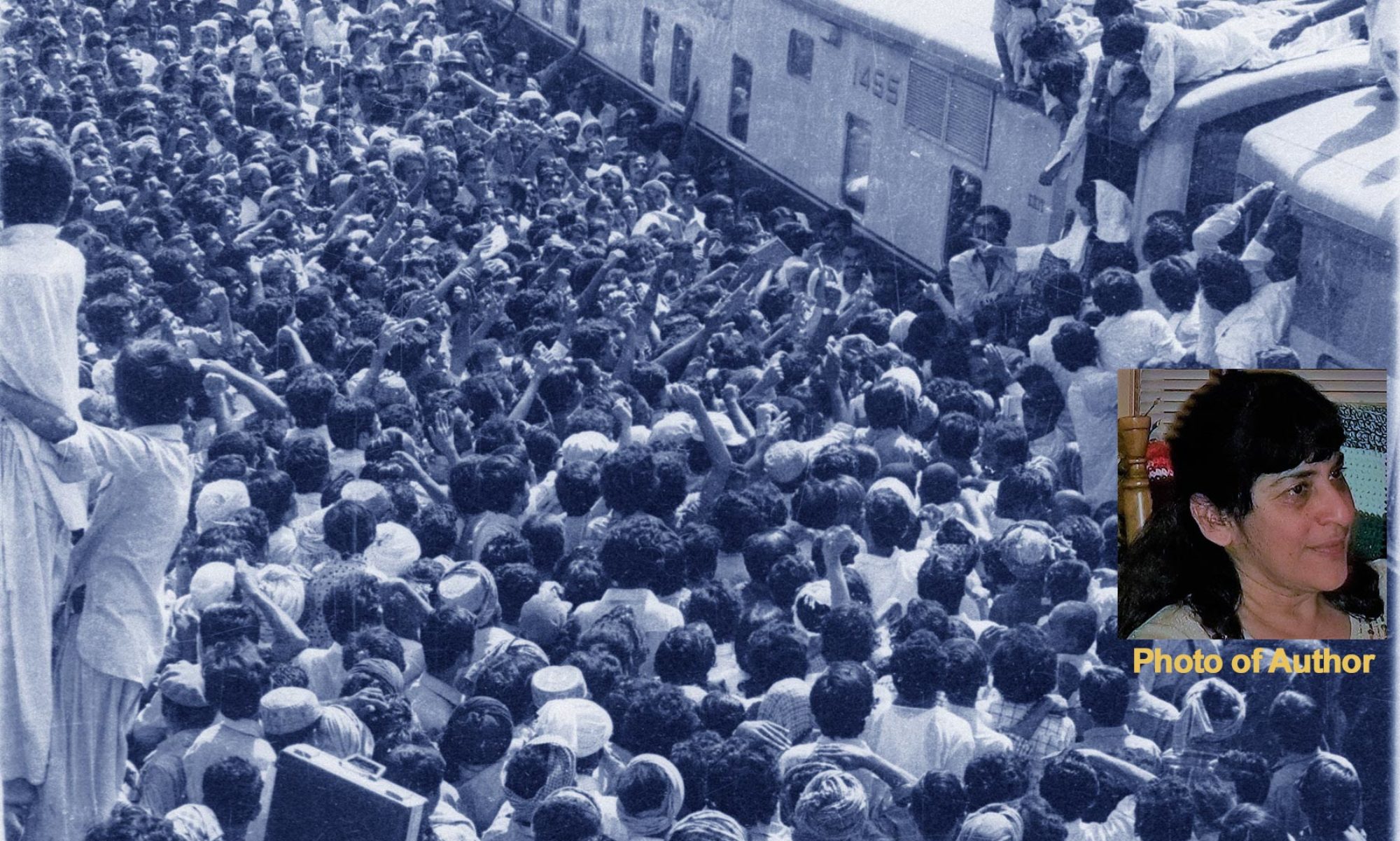
Nationalist Leader Dr Abdul Malik nominated Chief Minister of Balochistan

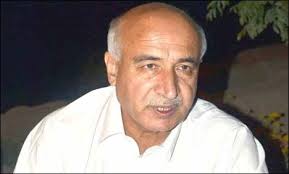
Dr Abdul Malik Baloch (Credit: thenews.com.pk)
Dr Abdul Malik Baloch
(Credit: thenews.com.pk)

Islamabad, May 25: PML-N top leaders after rejecting Nawab Sanaullah Zehri as leader of the house in Balochistan decided to elect Dr. Abdul Malik Baloch, President of the National Party, NP, as the new chief minister of the troubled province Balochistan sources said.

Baloch’s name for the niche of chief minister was proposed by Mehmood Achakzai, the head of top Pashtoon Nationalist party Pashtoonkhwa Milli Awami Party couple of days back.

“We have decided to support Dr. Malik as the Chief Minister of Balochistan as he is the deserving candidate of the slot,” senior leader PKMAP Muhammad Akram Shah told Balochistan Chronicle.

He said, Mehmood Khan Achakzai had made it clear before PML-N leaders that Dr. Baloch would be their choice as a leader of the house in Balochistan Province.

Baloch Nationalist Party, (NP) chief Dr.Malik Baloch has been elected third time as an MPA in Balochistan Assembly, and he has also served as a senator in the country.

Earlier when late Nawab Akber Bugti was chief minister in Balochistan  Dr.Malik remained as a member of the cabinet and was provincial minister of education in Baluchistan .

Observers hoped that Dr. Malik will promote better understandings in coping Baluchistan issue and will streamline the mistrust between province and the federal government.

It may also be mentioned here that, the Baloch separatists had already rejected the elections in Baluchistan and the newly elected CM has survived several times in their assaults, latest of which took place on may 11th when Baloch was moving towards a Polling Station in Turbat .

Nawab Sanaullah Zehri and Mir Changez Marri were also candidates for the slot of CM, but due to current circumstances, they were dropped as the single largest wining party of Baluchistan PKAMP supported Dr. Malik as Chief Executive of the Province.

Early some Media reports also said that the PML-Nleadership wanted to nominate Changez Khan Marri as CM of Balochistan, however Pakhtunkhwa Milli Awami Party (PkMAP) and other nationalist parties were not eager to see Changez Khan Marri as the CM.

Zehri was not ready to go out of the race for the chief minister’s slot but finally he agreed.

Writer is Bureau Chief for Baluchistan Chronicle in Islamabad.

First they came for the Communists…

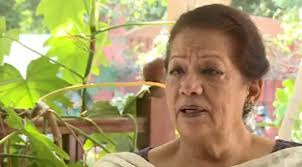
Zahra Shahid Hussain (Credit: thenews.com.pk)
Zahra Shahid Hussain
(Credit: thenews.com.pk)
Islamabad, May 22: It was a cold, misty evening in Karachi some months ago. At a friend’s place, Zahra Shahid Hussain was trying to convince a motley group of PTI enthusiasts and critics from different social and professional backgrounds on why Imran Khan showed promise like no other political leader and why the PTI must be given a chance to run the country.

The criticism we offered was harsh at times. She took it with great poise and tried her best to answer the questions raised against the party, its politics and the choices made by her leader. She was receptive, gentle and accepting – qualities rarely found in PTI neo-converts. They usually neither take any criticism in good stride nor try to respond to your comments logically. They counter you with hate mails, write against you and snub you privately or publicly. Zahra Shahid Hussain was different – an elderly, mature, self-assured and polite woman. Her cold-blooded murder outside her residence in Karachi reflects the barbarity of the perpetrators and our growing insensitivity as a people towards such gruesome acts of violence. My heart goes out to her family and friends. May she rest in peace.

While the PTI leadership in Karachi was a little more cautious and asked for immediate investigation and demanded the killers be arrested, Imran Khan was swift in apportioning blame on the MQM chief Altaf Hussain. His justification was Hussain’s earlier threats to the PTI’s demonstrators who complained of rigging and asked for a fresh round of balloting in some polling stations in Karachi. Khan’s statement came on the eve of the re-election on a select number of polling stations in NA-250, the constituency where the polling process was challenged by his party. The MQM had already rejected the ECP’s decision and boycotted the re-polling while demanding that it should be done across the constituency. The PPP and the JI had also boycotted the process for different reasons.

The MQM leader was incensed after he was blamed for being responsible for Zahra’s murder. He was also unhappy with the local MQM leadership for letting that happen. As a consequence, the workers of the party roughed up the local leaders. The party then decided to hold protest demonstrations against Khan and the PTI. Tensions have escalated in Karachi and the two parties are at daggers drawn. The MQM says that the protests will be peaceful in nature. However, the politics of Karachi tells a different story if you take stock of what has happened on the streets and in the neighbourhoods of the city over the past 25 years. Since he is also a British citizen, British authorities had already received thousands of complaints about Altaf Hussain’s incitement to violence in a speech made just after the elections – even before the murder took place.

In fairness, no one can be charged of a crime unless proper investigation is carried out. However, there are lessons to be learnt by both the MQM and the PTI from the tragic murder of Zahra Shahid Hussain. The MQM is still perceived to be a party that takes to violence if its wish and will are not followed by all concerned. No doubt it has a popular base but the realisation has to come sooner than later that it is increasingly impossible to coerce the electorate, influence the electoral process by force or keep getting the number of seats that defy the changes that have taken place over the years in both demography and political opinion in Karachi and Hyderabad.

On top of that, the MQM chief makes indefensible statements from time to time and its second-tier leadership keeps busy for weeks in contextualising and clarifying what has been said. If there are no good or bad Taliban, there is no good or bad violence either. If violence in the name of faith or sect has to be rejected, violence in the name of ethnicity or political difference cannot be accepted either – even for short-term ideological or political gains.

Zahra Shahid Hussain could have been killed by a reckless criminal or any third force but the MQM has to reflect on why it has always been blamed for such acts by its political adversaries. The party has so much ammunition in stock and there is much circumstantial evidence from the past to support these assertions. The liberal, plural and inclusive politics of the MQM and the initiatives it has taken to serve its constituents suffer a huge setback by its political tactics rooted in the late 1980s and 1990s. It is time a party as big and influential as the MQM comes of age. It is time for its leadership to realise that their clout increases across Pakistan if their image changes. Their image changes if they change their old tactics.

For the PTI, the death of one of their veteran leaders, someone who believed in the party from day one and did not opt for it after being rejected by other political forces, or after the October 2011 public meeting in Lahore, is a great loss. She is the first victim of violence from among the PTI leadership. It is time that the party leadership, its workers and supporters understand what it means to be hit by death and violence.

For instance, in case of the ANP, rather than blaming the victims and holding them responsible for their own suffering, the PTI rank and file needs to realise what happened to Bashir Ahmed Bilour, Mian Iftikhar Hussain’s son and more than 700 party leaders and workers who were killed in the last five years, including more than 100 during the election campaign and on election day. Likewise, when Ali Haider Gilani, the former PPP prime minister’s son, was kidnapped and his two aides shot down in broad daylight just two days before the general elections, the response from PTI’s supporters on social media was callous, calling the entire incident a political stunt.

When Imran Khan said – before the elections – that militants should not kill political workers and bomb political rallies but wait for the PTI tsunami to come and sweep away the political forces they dislike, imagine how an ordinary worker belonging to the ANP or the PPP would have felt. If he had let out the statesman in him, Khan would have rather clearly said that all parties must get a level playing field and no party should be threatened and kept out of the campaigning race. Like the MQM condemns faith-based and sectarian oppression and persecution but does not shun its own coercive methods, the PTI has come down hard on the MQM while being soft and apologetic to the TTP.

Violence – religious or political, in any form or for any reason – has to be condemned. Violence begets violence and spares no one in the end. Those who think they can be saved live in a fool’s paradise. Here, I remember the famous lines of Martin Niemoller, the anti-Nazi German pastor and theologian:

“First they came for the communists/and I didn’t speak out because I wasn’t a communist/Then they came for the socialists/and I didn’t speak out because I wasn’t a socialist/Then they came for the trade unionists/and I didn’t speak out because I wasn’t a trade unionist/Then they came for the Jews/and I didn’t speak out because I wasn’t a Jew/Then they came for the Catholics/and I didn’t speak out because I wasn’t a Catholic/Then they came for me/and there was no one left to speak for me.”

Email: harris.khalique@gmail.com

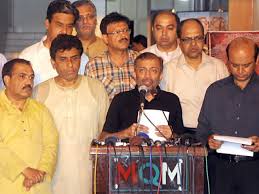
‘MQM retreat to change political landscape of city’

MQM leader Farooq Sattar (Credit: tribune.com.pk)
MQM leader Farooq Sattar
(Credit: tribune.com.pk)
Karachi, May 18: For the first time in 25 years, the Muttahida Qaumi Movement has been forced to retreat from a position of strength by another party. Political observers believe the retreat of the MQM is a major victory for the political forces struggling for a political change in Karachi.

After the election commission turned down the MQM’s request to hold re-polling in the entire NA-250 constituency, the Karachi-based party announced the boycott of re-election on May 19. The party’s decision to stay away from polling at 43 polling stations has left the field open for Imran Khan-led Pakistan Tehreek-e-Insaf. The Jamaat-e-Islami Karachi chief, Muhammad Hussain Mehanti, has already congratulated Dr Arif Alvi for winning the hotly contested seat.

Senior journalist Zahid Hussain said that for the first time, the MQM had faced public pressure on city streets and the party realised the situation and boycotted the re-election.

“It was the public challenge to the MQM that forced it to retreat from its position,” he said. “This is a major political change and can impact Karachi politics.”

The MQM won the seat in 2008 which was won by the JI in 2002. The rightwing party had also won this seat in 1993 while the Pakistan Muslim League-Nawaz emerged victorious in 1997.

This time, Imran Khan, the cricketer-cum-politician, has glamorised politics and attracted the upper- and upper-middle class to support the slogan of change.

On 11 May, after widespread complaints of rigging in all constituencies of Karachi, the JI had announced the boycotted of all elections in Karachi. So Naimatullah Khan will not participate in the re-polling. Under an electoral alliance, the PML-N withdrew its national assembly candidate against the JI in return of support for its two provincial assembly seats on PS-112 and PS-113.

The situation might change further, however, as Saleem Zia, the PML-N candidate on provincial seat, told The News that he was also an independent candidate on NA-250. But he added that he could withdraw if the PTI’s Dr Arif Alvi agreed to support him on the provincial seat.

The Pakistan People’s Party candidate Rashid Rabbani is also in the run for the national assembly seat. The PPP’s Waqar Mehdi announced the party would fully participate in the re-polling process both on national and provincial assembly seats.

Another senior journalist Babar Ayaz said the election commission must reconsider the MQM’s plea to hold re-polling in the entire NA-250 constituency. “The boycott of the MQM is not in the interest of democracy,” he claimed.

“The vote bank of the MQM has reduced indeed but the party still enjoys 18 national assembly seats in Karachi,” Ayaz said. “There will be no big political changes if the MQM loses out on one seat. I cannot see any major political changes in the near future despite the people being fed up with the law and order situation.”

The MQM had changed the political demographics in the 1980s when the party emerged as a strong political group after local body elections. Since then the party has won almost all the elections. While the people’s mindset had changed after the ethnic divide and then sectarian polarisation and the people supported the MQM, the call to change the political players attracted the people and they joined the struggle for a change.

But whatever the result of this re-polling will be, the political intensity will grow in city.

Independent observers believe that the threat for the MQM will grow in the coming days. The former coalition partners of the MQM, the Awami National Party and PPP, have also lost their popularity and support in Karachi and the re-polls will provide space for new players – a major setback for the old guards.

Pakistan’s Needs Tax Reform not Bigger Begging Bowl

Naseer Memon (Credit: tribune.com.pk)
Naseer Memon
(Credit: tribune.com.pk)

Pakistan is poised to be the largest recipient of UK aid with an expected 67 per cent increase, which will jack up the amount of aid to 446 million pounds next year. In a country blighted by a faltering economy and tumbling social care support, this magnanimity sparked a new debate. A disgruntled British parliamentary committee lamented that the increase in aid should be made contingent upon greater tax collection from the rich and clamping down on corruption in Pakistan. The chairman of the Committee, Malcolm Bruce, said that “we cannot expect people in the UK to pay taxes to improve education and health in Pakistan if the Pakistani elite do not pay meaningful amounts of income tax”.

Considering Europe’s economic recession, such vexation is likely to spiral in the coming years. Pakistan’s tax administration is debilitated by inefficiency, corruption and apathy by the elite. Except the salaried middle class who has no option, everyone else can easily escape the porous tax net. Pakistan has one of the lowest tax-to-GDP ratios, with only nine per cent of GDP contributed by taxes, and trails behind other Asian countries, e.g., Afghanistan (11 per cent), Sri Lanka (13 per cent), India (16 per cent) and Thailand (17 per cent). The chairman of the FBR made a startling revelation at a meeting of the Senate’s Standing Committee on Finance, last year, by sharing that 84 per cent of tariff and duty rates have either been exempted or reduced to benefit certain influential lobbies. He aptly termed it a “Financial NRO”. This explains another flabbergasting fact that during the past five years, the government took loans of Rs604 billionfrom the International Monetary Fund (IMF) and vitiated the benefit by issuing tax exemptions of Rs719 billion during the same years. In a country of 180 million, only 3.5 million persons are registered taxpayers, 1.5 million of whom are dormant and one million are salaried employees. It is hard for anyone on earth to countenance this obnoxious perpetuation.

The UK — one of the largest social sector financer of Pakistan — is at the cusp of stagflation and soaring youth unemployment. Concomitant yawning economic disparities and suicides have dwarfed all past records in Europe. According to a research conducted in the UK, 30 per cent of income in 2005 remained with the top five per cent of earners. The Topical youth NEET (not in employment, education and training) has crossed 1.2 million in Britain, whereas, Greece, Spain and Italy are enduring a tailspin. May Day witnessed highly charged protest rallies in major cities of Europe. In this backdrop, a teeth-baring reaction to aid is plausible. Although geopolitical interests of the US and the UK have a perforce to ensure sustained flow of aid to Pakistan, this may, however, entail stringent conditions in future years.

Pakistan, as a surrogate battlefield for the US and its allies, had been receiving a generous dole-out for decades, though, at an exorbitant price of self-esteem and pride. Aid effectiveness is yet another conundrum. While billions of dollars are funnelled, citizens are still entangled in perpetuating poverty, terrorism continues to torments lives and the country endures perennial political instability. Demand for drastic measures to reform a dishevelled polity and economy cannot be parried any longer. In a rapidly changing economic vista, in the so-called developed world, Pakistan needs to device strategies to wean away from foreign aid and plug breaches in the national exchequer. Prosperity and dignity can never be achieved through begging bowls.

Published in The Express Tribune, May 16th, 2013.

Samina Baig becomes first Pakistani woman to climb Mt Everest

Samina Baig (Credit: tribune.com.pk)
Samina Baig
(Credit: tribune.com.pk)

ISLAMABAD, May 19: The news about the first Pakistani woman summiting Mount Everest on Sunday morning spread like a wildfire.

Text messages congratulating every Pakistani started doing the rounds only half an hour after Samina Baig reached the top of the highest peak in the world at around 7:30am.

And by the afternoon, almost everyone was updating their status on the social media and pasting links to images of the 21-year-old mountaineer from the Shimshal valley of Hunza.

On Saturday night, Samina Baig sent her brother a message how she had reached Base Camp IV at the height of 7,900 metres on the South Col between Mt Everest and Lhoste, the fourth highest mountain in the world, after eight hours of hard climbing.

“Samina, Tashi and Nugshi feeling great… The weather is windy and cloudy… Worried about weather… If all goes well will leave for summit tonight… Appeal from the nation to pray for us,” Samina Baig said in her last text before her push for the summit.

To the surprise of many in the mountaineering community, Samina Baig summated Mount Everest with twin sisters from India – Tashi and Nugshi Malik – also 21 years old.

Although messages had been circulating that Samina Baig and her 29-year-old brother Mirza Ali had summated Mount Everest together, the Alpine Club of Pakistan (ACP) was still to issue an official statement about it.

“We have confirmed that Samina Baig made history by becoming the first Pakistani woman to summit the world’s highest peak at 8,848 metres high. We are still trying to confirm if her brother has also made it to the top,” said Karrar Haidri, the executive member of the ACP. Once the news is confirmed, Mirza Ali could be the youngest Pakistani to summit Mount Everest.

Both Mirza Ali and Samina Baig took everyone by surprise when they held a press conference in Islamabad a day before leaving for Nepal on March 31.

The two were joining a gathering of climbers at the Mount Everest to celebrate 60 years since it was first summated in 1953. Samina Beg said she was about to become the first Pakistani woman to be part of it.

While the climbers from around the world were celebrating the 60 years, the 21-year-old climber was accompanying her brother with another mission.

“Together we are promoting gender equality,” said Samina Baig then. Although the brother and sister had not attempted any of the five 8,000 metres plus peaks in Pakistan, the climbing community was in doubt of the pair’s success rate.

Samina Baig and her brother had been climbing for the last three years together.

In 2010, she became the first to ascend the virgin peak Chashkin Sar (above 6,000 meters) now called the ‘Samina Peak’. She conquered another virgin peak in 2011 that was named ‘Koh-i-Brobar’ or the ‘Mount Equality’ in 2011. Samina Baig and her brother were not so lucky on the 7,027 metres high Spantik Peak when bad weather forced them to abandon their summit attempts.