American embassy shift

Published : June 12, 2018

https://www.dawn.com/news/1413574

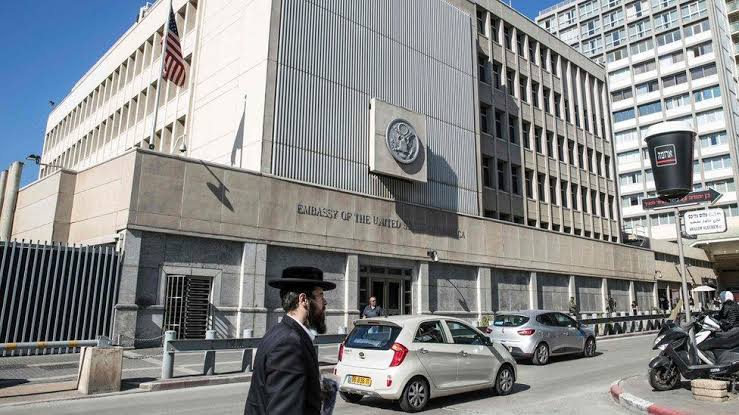
THE Trump administration’s decision to shift the US embassy from Tel Aviv to Jerusalem last month could not have come at a worse time for the Arab-Israeli conflict. In retrospect, even some Israeli politicians have said that the US should not have shifted their embassy on the anniversary of the ‘Nakba’ — the period the Palestinians allege their land was forcibly annexed by Israel 70 years ago.

Continue reading “American embassy shift”

D.C. must provide answers on the unprovoked killing of Javed Bhutto

JAVED BHUTTO was shot and killed March 1 as he unloaded groceries from the trunk of his car in the parking lot of his condo complex in Southeast Washington. His alleged killer was his neighbor, a man who had killed someone else in another unprovoked shooting but had been found not guilty by reason of insanity, and was released after 17 years of treatment at St. Elizabeths Hospital. He had been deemed safe to be released to the community, and he was supposed to have been closely monitored. Continue reading “D.C. must provide answers on the unprovoked killing of Javed Bhutto”

No sane reason Hilman Jordan was let out of a D.C. mental hospital 17 years after shooting a man. Now he’s accused of killing again.

Javed Bhutto, a caregiver to mentally disabled adults, got home from work about 11 that morning with bags of groceries in his Toyota Corolla. After his overnight shift at a residential facility, he had stopped in a supermarket with a list from his wife. In the parking lot of the small condo complex where the couple lived, he stepped out of his car in the chill March air, opened the trunk and reached for his bundles. Continue reading “No sane reason Hilman Jordan was let out of a D.C. mental hospital 17 years after shooting a man. Now he’s accused of killing again.”

Pakistani philosopher killed by suspect with history of violence, mental illness

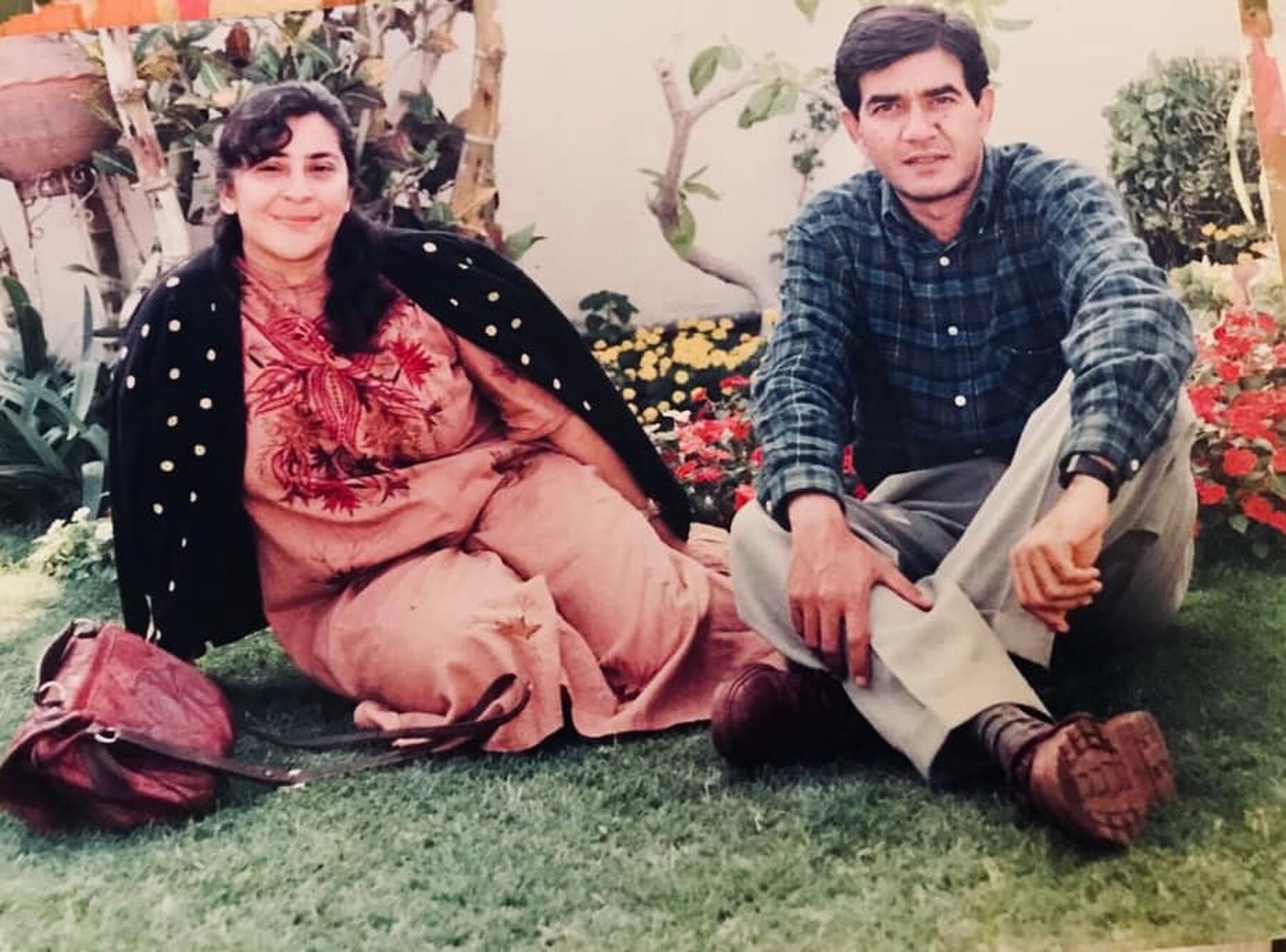
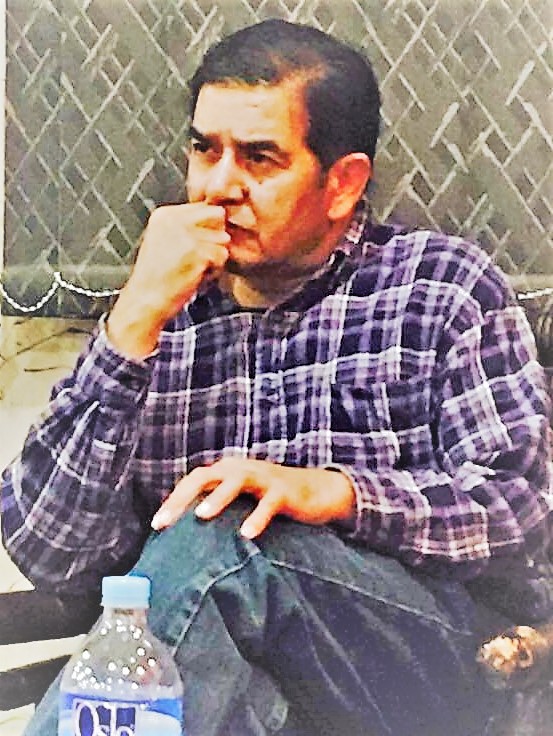
The Southeast D.C. man charged with first-degree murder for the shooting of his neighbor, Jawaid Bhutto, 64 — prominent Pakistani philosopher and scholar — was found not guilty by reason of insanity for a previous homicide in 1998.

Court documents reveal that Hilman Jordan, 45, who is currently being held without bond for the murder of Bhutto, was indicted by a grand jury 21 years ago for shooting and killing his cousin.

The documents say Jordan shot and killed his cousin, Kenneth Luke, on August 7, 1998. He was indicted later that month on charges of first-degree murder while armed, possession of a firearm during a violent crime and carrying a pistol without a license.

Jordan was committed to Saint Elizabeth’s Hospital on October 1, 1999. In 2003, the court began to order his gradual conditional release, including visits to his mother’s house on Christmas Day, New Year’s Day and Martin Luther King Jr. Day.

Jordan violated the conditions of his gradual release in 2005 when he obtained a gun from his family home and carried it to St. Elizabeth’s with the intent to kill a peer.

That violation sparked his transfer to a maximum security ward, where he remained for the next five years.

In January 2015, the government consented to a court order providing Jordan with an expanded conditional release, including overnight visits with family, unaccompanied community travel and eventual full convalescent leave.

The hospital told the court he had “sufficiently recovered from his mental illness to be granted an expansion of his conditional release privileges without posing a danger to himself or others.”

The terms of the January 2015 order prohibited Jordan from possessing firearms, or consuming alcohol or illegal drugs.

Jordan fatally shot Bhutto on Friday, March 1 around 11 a.m. in the parking lot of 2610 Wade Road S.E. — the apartment building where Bhutto resided with his wife, journalist Nafisa Hoodbhoy.

Jordan lived on the second floor of the building. Hoodbhoy told NBC Washington her husband had complained about the odor of Jordan’s smoking wafting into his residence and disturbing his sleep.

Police say they have been able to observe the entire shooting from beginning to end thanks to surveillance video. Charging documents say the video shows Jordan approaching Bhutto and firing a handgun as Bhutto exited his car in the parking lot.

Police say a search warrant of Jordan’s apartment uncovered, among other things, a 9 mm handgun and a marijuana cigarette. He was taken into custody on the balcony of his apartment.

Family members of Bhutto say his death is being widely mourned in his home region of Sindh, Pakistan. He was chairman of the philosophy department at Sindh University.

Jordan is being held without bond and is scheduled for a preliminary hearing in D.C. Superior Court on March 12.

Situationer: The killing fields

IN the heart of Mastung city, the Shaheed Nauroz Football Stadium is located on a huge, walled tract of land. This was where, in 2011, the All Pakistan Football Tournament was held. Siraj Raisani, younger brother of then chief minister Nawab Aslam Raisani, was invited as the chief guest to the final.

At the time, Baloch separatists held sway in the district, and they had warned Siraj Raisani of dire consequences if he visited.

As the final match started, locals say, he arrived with a tribal force of 200 men and as many security personnel. There were around 2,000 spectators in the stadium. All through the course of the match, Siraj’s younger son stood by him in guard; it was during the award distribution ceremony that tragedy struck.

A hand grenade was hurled at Siraj Raisani, and while he escaped the assault narrowly, his son Hakmal was badly injured. The young man succumbed to his injuries on July 29, 2011, while being moved to Quetta’s Combined Military Hospital. In addition to Hakmal, another man was killed while 39 more were injured.

Following the death of his son, which was claimed by Baloch separatists, Siraj Raisani sided completely with the state against the insurgents. Subsequently, he launched his own party, the Balochistan Muttahida Mahaz. In recent times, this was merged with the Balochistan Awami Party (BAP), and Siraj was contesting elections in PB-35 against his brother, Aslam Raisani.

In Mastung, politicians campaigned actively for the first time, holding rallies and corner meetings. But elections in PB-35 have been cancelled after the killing of Siraj Raisani.

Shabbir Baloch in Mastung says that he became fearful when he witnessed the vigorous electoral campaign here. “I told my colleagues that the elections would be bloody,” he recalled. “Graffiti, allegedly inscribed by banned Baloch outfits, appeared in the bazaar warning people to stay away from Siraj’s electoral campaign.”

On July 13, Siraj Raisani was continuing with his electoral campaign; a week ago, he had inaugurated the BAP office in Mastung. Finally, party workers set up tents in Dringrah. Candidate Usman Pirkani organised this public meeting, and had asked his Pirkani tribesmen from the remote areas of the district to attend.

A bomb explosion ripped through the crowd at 3:50pm. “I was in the crowds,” remembers Asif Pirkani. “Many of those standing died on the spot, and parts of their bodies rained down on me. I fled the destroyed tent.”

Dringarh is a vast but thinly populated area of 10 villages, with the people belonging to different tribes. It was here that in 2014 a bus carrying Hazara pilgrims was targeted by a suicide bombing that left some two dozens dead. That destroyed bus lies to this day in front of the Levies Station.

Currently, there is tight security in Dringarh and people are reluctant to talk. The victims of the July 13 attack came mostly from outside — the casualties from this area constitute mainly children. The majority of the people killed in the Mastung bombing are from the Pirkani tribe, who are mostly nomads — many don’t even have national identity cards. They did not know who Siraj Raisani was, and Usman Pirkani — who had instructed them to attend the rally — did not himself go. Mohammad Zia, in his late ’60s, lost two sons, along with his nephew. They knew nothing about politics, he said.

One of the injured is Mohammad Azim Pirkani, who is being treated in the trauma centre of the Quetta Civil Hospital. “Everyone one was going, so I joined in,” he said. Three of his colleagues were killed and another was injured. Similarly, another injured man is Rafique, who is a Sindhi man from Quetta. He is not a local of Mastung, but had gone there as a new member of the BAP.

Why did Usman Pirkani himself not go? He said that he was busy with his own corner meeting in Quetta.

The Pirkani tribes are fed up with burying their dead. Qasim Pirkani says they buried 15 men on the first day alone. By local journalist Attaullah’s account, in some places in Mastung, room in graveyards ran out.

Though this bombing was one of the biggest attacks in the country, the day it occurred it was not given adequate coverage by the media. And, beyond Balochistan, hardly anyone knew who Siraj Raisani was. It was only when COAS Qamar Javed Bajwa attended his funeral that the media tuned in.

The tragedy of the Raisani family stems partly from the coincidences: like his son Hakmal, Siraj was injured in an explosion in the same month, in the same district. He, too, died on the way to Quetta’s Combined Military Hospital.

At first, it was believed he was targeted by banned Baloch outfits, but security forces said that these organisations do not have the capability to carry out such attacks. After that, the so-called ‘Islamic State’ claimed responsibility. The security forces have reportedly taken robust action against IS and Lashkar-i-Jhangvi militants in Mastung.
Taliban Opponent in Pakistan Killed by Bomb as He Campaigns

PESHAWAR, Pakistan — A candidate from a political party opposed to the Taliban was killed in a suicide bombing late Tuesday as he campaigned in northwestern Pakistan, just weeks before the country goes to the polls.

At least 12 people were killed and dozens were wounded, several of them critically, police and hospital officials said. The death toll was expected to rise, officials said.

There was no immediate claim of responsibility, but immediate suspicion fell on the Pakistani Taliban, which has frequently attacked secularist politicians.

The attack raised concerns about the safety of candidates running in the July 25 general elections, and immediately cast a pall across Pakistan. It was the first such attack of this year’s campaign.

The candidate who was killed, Haroon Bilour, belonged to a prominent political family from Peshawar, the capital of northwestern Khyber Pakhtunkhwa Province.

Mr. Bilour, who was running for a provincial assembly seat, was at a campaign event late Tuesday night when the bomber detonated his explosives jacket, police officials said.

Mr. Bilour’s father, Bashir Ahmad Bilour, a prominent politician and a senior provincial minister, was killed in a suicide attack by the Taliban just months ahead of the last general elections, in 2013, not far from Tuesday’s explosion. Haroon Bilour’s son was wounded in the latest attack.

The Bilours belonged to the Awami National Party, whose opposition to the Taliban has made it a repeated target of the militants. Several of the A.N.P.’s leaders and at least 700 of its workers have been killed in the past decade.

The intensity of the attacks greatly affected the party’s ability to openly campaign and mobilize supporters in the last general elections and contributed to losses, party officials said. With the security situation significantly improved in the country in the last couple of years, however, members of the A.N.P. had hoped that they would be able to campaign in safety.

Haroon Bilour, the provincial information secretary of his political party, expressed such hopes in recent interviews with local news media. Mr. Bilour had survived at least two assassination attempts.

But late Tuesday, a suicide bomber managed to mingle with the supporters of Mr. Bilour as he arrived at a campaign event in Peshawar. “The suicide bomber was sitting and waiting for Haroon to arrive,” said Taj Muhammad Wazir, a local A.N.P. official.

The killing was widely condemned by Pakistan’s political leaders.

Imran Khan, the leader of Pakistan Tehreek-e-Insaf, condemned the attack and called for the state to provide proper security for the candidates.

“Yet another A.N.P. leader has sacrificed his life for the sake of peace and democracy,” Sardar Hussain Babak, the provincial general secretary of Awami National Party, said in a telephone interview.

“We have a long list of martyrs, and we will continue to fight against the forces of extremism and militancy.”

Mr. Babak, who is also running for elections, said the party leadership was getting threats from the Taliban on an almost daily basis.

“But the federal and provincial governments have failed to provide us with security,” he said. “We had made our own security arrangements.”

Salman Masood reported from Islamabad, Pakistan. Ihsanullah Tipu Mehsud contributing reporting from Islamabad.