Pakistan’s political parties have urged the government to exercise restraint in handling the grass-roots Pashtun Protection Movement (PTM), arguing that the military’s crackdown and potential collision with PTM could threaten the stability of the South Asian nation.
Continue reading “Opposition Parties in Pakistan Warn Against Ongoing Crackdown on PTM”Pakistan, US Take Action Against Militants Ahead of Trump-Khan Meeting
The United States and Pakistan this month started cracking down against armed militant groups, in what analysts describe as establishing a groundwork ahead of the meeting between the U.S. President Donald Trump and Pakistani Prime Minister Imran Khan in Washington early next week.
Continue reading “Pakistan, US Take Action Against Militants Ahead of Trump-Khan Meeting”British ‘High-Risk’ Designation for Pakistan Seen as Bad Sign for Anti-Corruption Efforts
The United Kingdom’s decision to add Pakistan to its list of “high-risk countries” for money laundering and terror financing may make it harder for Islamabad to exit the Financial Action Task Force (FATF) “gray list” in June, experts warn.
Continue reading “British ‘High-Risk’ Designation for Pakistan Seen as Bad Sign for Anti-Corruption Efforts”Remembering Siddiq Baloch
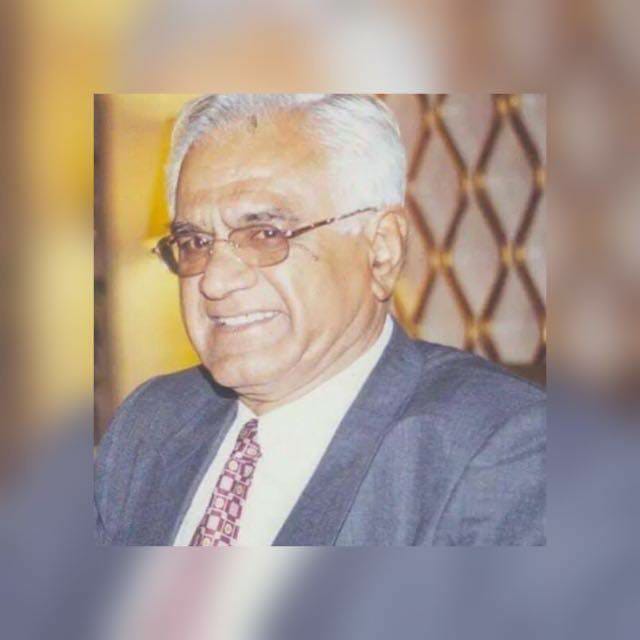
Siddiq Baloch had a personality that made a distinct impression on people who met him. He was a moving force, fiercely proud in the Baloch tradition. His inquiring mind led him to explore independently, never willing to take other people’s account of reality. It also made him a fine journalist in Pakistan’s English language newspaper, Dawn where he sought answers to the nation’s intractable problems.
I met Siddiq upon joining the Dawn Reporters Room in 1984. His rugged, warrior like appearance belied the sensitivity that lay underneath. Foremost in his personae was a commitment to seeing justice, prominently for the people of Baluchistan. Moreover, his energy and bustling humor brought life to the city desk where we reported to encapsulate the politics of an ever-burgeoning Karachi.
It was a period when Gen. Zia ul Haq had ushered in military rule and when journalists and management alike walked a tight rope of censorship. As an activist in the National Awami Party and a follower of Ghaus Baksh Bijenzo, Siddiq was imprisoned for five years by Zulfikar Ali Bhutto under the Hyderabad conspiracy case and freed only after Gen. Zia overthrew Bhutto’s government.
Notwithstanding the twists and turns in Pakistan’s politics, Siddiq kept up his unrelenting opposition to military rule. He was elected president of the Karachi Union of Journalists in 1981, at a critical juncture in history. Thereafter, he energetically worked around Gen. Zia’s draconian laws against the print media, which was then the primary source of news and information.
The MQM led by Altaf Hussain was just then consolidating its grip on Karachi. The city was divided on ethnic lines even as it burned during violence, strikes and curfew.
Driving into the Dawn newspaper compound, I would see Siddiq Baloch energetically revving up his motor bike, with our mild-mannered Sindhi colleague Ghulam Ali clutching the rear. The two would zoom off to expeditions to Liaquatabad, Nazimabad, Orangi Town and far flung areas of Karachi, where MQM was testing out its new-found strength.
By late evening the two returned triumphantly from the frontlines, with eye-witness accounts of a city that had turned into a battlefield.
Both these colleagues lived in Lyari, where the lines between Baloch and Sindhis have blurred, and which added to the sense of fraternity one saw between them.
Ghulam Ali, who sat next to me, popped a joke every few minutes. The jokes were often about martial law, and what the average person… the barber or the rickshaw driver had said about the khakis. It complemented Siddiq’s remarks, who kept up his cynical commentary on military rule.
Lighter moments with Ghulam Ali and Siddiq Baloch stand out in memory. It was a hot, muggy summer evening in the Dawn Reporters Room, when fans circulated the stale air. Sweat dribbled down my colleagues and the grumbling grew louder that we had been condemned to work in a non-ventilated cubby hole.
Suddenly, the door opened and Siddiq and Ghulam Ali entered shirtless – wearing only vests over trousers. I laughed with delight at the sight of the two of them. They looked so comic in their zeal to show the bosses our plight. Siddiq sent for a photographer, where he dutifully took pictures of the burly, sweaty men typing away without their shirts.
Word got out to the management that two planned to keep up their shirtless protest. But one day of high drama served the cause of propaganda. In due course, an air conditioner was installed in the cubby hole and we were eventually able to type away in peace.
Siddiq had a sense of camaraderie that made him engage with every colleague. In the evenings, our short statured bulky colleague, Sabihuddin Ghausi would enter the Reporters Room with aplomb – newspapers rolled in one hand and a cigar in the other. Invariably, Siddiq looked up from his typewriter and in his inimical style teased Ghausi with an affectionate slight:
“Here comes the drug mafia!”
Ghausi was unfazed. While Siddiq was getting into economic reporting, Ghausi was the soul of Dawn’s Economic and Business Review (EBR) section – ferreting news with his penetrating intellect and sense of integrity. Siddiq shared Ghausi’s serious economic bent, even as he focused on Balochistan’s political economy – of which he became a notable authority.
I would see Siddiq’s mischievous smile around our colleague, Hameed – known by his by-line H.A. Hamied. Our colleague distinguished himself from the `riff raff’ by his starched white shirts, suspenders and supercilious remarks.
Whenever I heard Hamied say, `Har Shakh pey Uloo Baitha Hai’ (there’s an owl on every branch) I knew he was heaping contempt on some character being discussed in the room. Straightforward to the core, Siddiq would join the banter. He jokingly called Hamied by his by-line, Humaiy-eed to make him sound refined.
Siddiq’s other friends from Lyari were Latif Baloch and Aleem Pathan – both of whom worked with him in the sub-editor’s room. In time, Latif Baloch also joined reporting, bringing the flair of the locality to which he and Siddiq belonged.
Fair skinned Aleem was a Pathan from Lyari, who walked slowly and smoked in deliberate fashion. He told me that foreign journalists mistook him for Italian. When Siddiq was not around, Aleem would transport Ghulam Ali on his motor bike to riot-stricken areas like Orangi town.
Even when the 1985 Mohajir Pathan riots had peaked in Orangi town, Ghulam Ali would return from the affected area with a new joke. Returning from a dangerous expedition with Aleem, Ghulam Ali narrated with his flair for drama:
“When I turned around and said Aleem… he put his finger to his lips and said, Shhh go no further.” Aleem could have been concerned that Ghulam Ali would blow his cover, that he was no foreigner!
As was his habit, Siddiq liked to chuckle at his buddy’s jokes – which changed according to the seasons.
It was this sense of camaraderie that kept us going under the toughest circumstances. Once, Siddiq walked into the Reporters Room and picked on me – the only young woman among middle aged male colleagues. He began to sound the alarm that the Taliban were coming…. they would drive me off my job and make me stay at home.
As was Siddiq’s nature, he joked so energetically that for a while I thought he was serious. But I stood my ground and returned his verbal fire, telling him that even Mohammed Bin Qasim soldiers could not put my family in purdah. Knowing that I took his banter as “friendly fire,” Siddiq withdrew his joking offensive.
On another occasion, Siddiq had just returned from Saddar where he had an altercation with a police man who tried to ticket him on the ground that his motor bike was “illegally parked.” Knowing this was a prelude to taking a bribe, he narrated to me… eyes flashing as they did when he was animated… what he had said to the policeman:
I told him, “The whole government is illegally parked, and you talk about my motorbike!”
Each week the editor of Dawn, Ahmed Ali Khan would summon our weekly meeting. The meetings were more akin to showing presence in an imperial court rather than to elicit debate. While other reporters generally spoke to please the editor, Siddiq spoke with the conviction that showed he was his own boss.
Once in a while Dawn’s editor asked Siddiq for an update on his signature pieces – among them the Saindak copper and gold mine project in Balochistan. Siddiq gave updates on how Saindak had fallen victim to bureaucratic wrangling with the Punjab. Listening to him over the years, to me the Saindak project began to sound as intractable as the problem of Kashmir.
With his fierce Baloch nationalism, Siddiq was not one to give up. As late as 2017, he returned to the issue of Saindak mines, then being run by the Chinese. In an article written in the newspaper, he owned, The Daily Balochistan Express, Siddiq expressed his life-long desire that the people of Balochistan should benefit from their own resources.
“The Federal Government should surrender all the revenue in favor of the Government of Balochistan for the simple reason that the Government had failed to develop the basic infrastructure for future development during the past 70 long years.”
While Siddiq did not live to see the Saindak mines benefit the Baloch people, he saw China help construct the road network around Gwadar Port in Balochistan. Having traveled on the roads that were built under the China Pakistan Economic Corridor, he told me with a touch of sarcasm aimed at the Pakistan government.
“More roads have been constructed in these parts in the last few years than in 70 years of Pakistan’s existence.”
Being firmly grounded among his people, it was but natural that Siddiq would leave Dawn in 1989 and move to Balochistan to start his own newspaper. It was a risky decision, given the financial capital needed to survive in a province with a low literacy rate.
Indeed, Siddiq’s first newspaper publication `Sindh Express,’ did not survive. Undeterred, he pursued his passion and a few years later began publishing `The Balochistan Express.’
I glimpsed his sense of independence at the time he left Dawn. His parting words have stayed with me:
“I’ll eat grass but I won’t eat from the `seth’ (boss).”
Seated next to me, Ghulam Ali wistfully remembered Siddiq long after he had left. With his incorrigible sense of humor, he kept joking about how all the newspapers Siddiq had been publishing… `Sindh Express,’ `Balochistan Express,’ `English Weekly Express,’… sounded like “railway timetables.”
Being an office bearer of the Pakistan Federal Union of Journalists and the Karachi Union of Journalists, Siddiq kept returning to Karachi to speak at events that promoted freedom of expression and a living wage for media workers.
After the events of September 11, 2001, I was living in the US when an international media organization, Internews sponsored me to visit the border areas of Afghanistan to report on the state of the media. My research into Balochistan’s media found numerous “dummy publications” out to get advertising revenue, and newspapers that “paid” reporters by merely giving them the organization’s visiting cards.
Despite the poverty levels and the terrorism that engulfed Balochistan because of the war in Afghanistan, Siddiq Baloch kept the flame of journalism alive. Apart from the English language newspaper, The Balochistan Express, he also became chief editor of the Urdu language Azadi newspaper.
In recent years while visiting Karachi from the US, I drove through Saddar when the light turned red. With my car stopped at the signal, lo and behold I saw Siddiq Baloch approaching on foot – with an entourage of young men behind him. Instinctively, I put out my hand and shook hands with him. His smile was just as energetic and encompassing, even though our paths had long since diverged.
In July 2016, Siddiq Baloch spoke at the launch of the expanded edition of my book `Aboard the Democracy Train,’ at the Quetta Press Club. The book had arrived late, and my ex colleague had not had the opportunity to read it. Still, he spoke generously about our years in Dawn – leaving me touched by his observations.
That was the last time I saw Siddiq Baloch. Despite being diagnosed with cancer in 2014, he had kept up a brave face. Indeed, when I expressed my concern to him about not being well, he brushed off any suggestion that his health was in decline.
Meanwhile, creeping commercialization of the electronic media also took a toll on Siddiq’s attempt to promote journalism. After 2001, investors with little experience of media had obtained TV licenses – hiring non-journalists and young women for infotainment rather than news. Their golden rule was to stay in the good books of the government.
With declining advertising revenues and a tighter military grip on news, the space shrank further for a print era journalist like Siddiq Baloch.
Indeed, Baloch nationalists who protested against the theft of their resources were still being `disappeared’ and their bodies found in wastelands. The military painted as `anti-state’ the voices that expressed concern at Baloch marginalization by China’s investment in their province.
Six months before he passed away, Siddiq sounded dejected about the government’s clampdown on the media.
It concerned me to hear Siddiq say that his right of expression was being muffled not only in print but in speech. Still, knowing him to be an adept political worker, I figured he was laying low until the wind blew over.
Despite his ailment, Siddiq was preparing his family members to run his newspapers. They would be equipped with the baton of the press that advocates the genuine rights of the people of Balochistan
In February 2018, Siddiq Baloch joined the list of my colleagues in the Dawn Reporters Room – Huzoor Ahmed Shah, Saghir Ahmed, H.A. Hamied, Aleem Pathan, Ghulam Ali, G.D. Ghauri, Ali Kabir, Shamim ur Rehman and Sabihuddin Ghausi – who departed the earth.
Among them, Siddiq Baloch stands out as a moving force who inspired a generation of journalists to write passionately about Pakistan… and his beloved province of Balochistan… at a time when the business of building the nation is still unfinished.
Finance Minister Asad Umar presents third finance bill for fiscal 2019 amidst loud protests
Finance Minister Asad Umar presented the third finance bill for the current fiscal year during the National Assembly session being held on Wednesday evening.
Earlier, Umar, without revealing any specifics, had said the ‘mini-budget’ — technically the Finance Supplementary (Second Amendment) Bill of 2019 — would help generate more revenue for the government.
Speaking amidst loud jeering by opposition lawmakers, the finance minister described the bill as a measure to address the people of Pakistan’s needs.
“This is not a budget, this is a corrective package aimed at addressing various sectors of the economy,” the finance minister clarified at the start of his speech.
________________________________________
Salient features of Finance Supplementary (Second Amendment) Bill of 2019
• Tax on income generated from loans to small businesses, agriculture sector and low-income housing to be reduced from 39pc at present to 20pc.
• Introduction of interest-free revolving credit of Rs5 billion (qarz-i-husna)
• Withholding tax on bank transactions waived off for tax filers.
• Ban on purchase of vehicles for non-filers lifted for new locally manufactured cars up till 1300CC capacity, but higher taxes will apply.
• Small businesses exempted from submitting withholding tax returns every month; will do so only twice every year.
• Rs20,000 fixed tax on marriage halls reduced to Rs5,000.
• Pilot scheme to be introduced in Islamabad to facilitate traders in filing and paying taxes.
• Duty on newsprint abolished completely.
• Investment in solar panels and wind turbines to be exempt from duties and taxation for five years.
• Reduction and abolishment (in some cases) of duties on raw materials to support export industries.
• Super tax on non-banking companies to be abolished from July 1, 2019.
• Continuation of 1pc per annum reduction in corporate income tax.
• Capital loss carry-over to be allowed for 3 years (stock trading).
• 0.02 per cent withholding tax on trading to be abolished.
• Import duties on cars with engine capacity of 1800CC and above to be increased.
• Taxes and duties on mobile phones rationalised: taxes on budget sets to be reduced, high-end sets to become more expensive.
• Machinery for greenfield projects (including renewables) to be exempt of customs duty, sales tax and income tax (for five years)
• Tax refunds to be worked out; promissory notes to be issued by mid-February.
• Gas Infrastructure Development Cess to be removed from fertiliser production.
• Duty on diesel engines for agricultural applications to be reduced to 5pc from current 17pc.
________________________________________
Starting his speech with an assessment of Pakistan’s economic condition, the finance minister said his aim had been to eliminate all factors that necessitate a return to the International Monetary Fund for a bailout package by successive regimes.
“The Constitution ensures the rights of the underprivileged segment of society and it is the Pakistani government and parliament’s responsibility to reduce the gap between the rich and the poor. Unfortunately, this responsibility was never fulfilled,” the finance minister continued. “I wish to recommend measures for the prosperity of this country,” he added.
“The people sitting on my right [the opposition] had left nothing when they were leaving the government. Instead of reforming themselves, the last ruling regime tried to buy an election. The budget deficit, as presented by them [in their budget], should have been 4.1 but the actual deficit at the end of the year clocked in [much higher],” he said, speaking above opposition shouts of “Liar, liar!”
“They destroyed the electricity [generation and distribution] system and left us a Rs450bn deficit. The gas [distribution] system which had never witnessed a deficit has now recorded Rs150bn deficit,” he complained. “Similarly, the deficit was around Rs30bn in Railways.”
“They left the country indebted with Rs2,500bn to Rs3,000bn in loans that were not shown in the books,” he further alleged.
“I wish those shouting ‘Liar, Liar!’ right now had called out their own ministers when they were in power,” he said after recounting the challenges he said he had inherited.
“We took several difficult decisions, and I appreciate that the people realised that these difficult decisions were necessary,” the finance minister said.
“I want to give them the good news that these difficult decisions are yielding dividends: the deficit is reducing, exports are increasing and imports are declining. We need to bring a balance in revenue and expenditure as it is vital for growth. Our imports are touching a dangerous point. We have to increase exports and bring reforms in the agriculture and other sectors,” he said.
“The camera is recording [when I say this]: At the time of the next election, the PTI govt will not have to purchase an election [like our opponents attempted to]. The years 2022 and ’23 will witness the highest growth as compared to the period from 2008 to 2023,” he claimed.
Umar said the opposition will guide the government in its efforts to bring reforms in the economy. He said the PTI has given preference to the livelihood of youngsters.
Considering that small and medium-sized businesses hold an important position for the growth of the economy, he announced a reduction in the tax on small and medium enterprises. A cut in interest rate was also announced on agricultural loans, along with a reduction in the low-incoming housing tax.
Announcing that the withholding tax on banking deposits and transactions is being waved off for filers, the minister said the previous government “were proud of their influence in the business community but they hit them hard”.
“Pakistan was 76th in the international ranking of ease of doing business but during the last decade, it fell to 136th rank. We are taking steps for ease of doing business. Instead of submitting their withholding tax statement every month, businessmen will have to submit it only twice a year,” he said.
He announced that the government will launch a pilot project of a scheme in Islamabad under which a simple regime for taxation will be introduced on traders’ request.
Umar revealed a second revision in PTI government’s policy on disallowing non-filers from purchasing vehicles. “We decided to lift the ban on the purchase of small [locally manufactured] vehicles up to 1300CC, but the tax ratio for non-filers is being increased so they are encouraged to become filers,” Umar said.
“Most of the news and editorials are not being published in the PTI government’s favour but we do believe that a free press is vital for true democracy … so we are completely waiving the duty on import of newsprint,” he announced.
Speaking about the need to strengthen the industrial sector, the minister said the government would reduce, and in some cases waive off, the duties on raw materials in order to make industries profitable. “Special attention has been paid to small and medium industries, including vendors of the auto industry,” he added.
Umar termed the previous government’s alleged move to tax investments as “cruelty”. Promising to bring investments to the Special Economic Zones being set up as part of the China-Pakistan Economic Corridor, he announced that all equipment brought to the SEZs will now be duty-free.
He said: “Our trade deficit’s larger chunk consists of energy imports. We want to shift our dependence to renewable electricity … we want solar panels and wind turbines to be produced locally. And so investment in this sector for local production will enjoy a five-year relaxation in duties and taxes.”
Umar said the previous government, instead of encouraging savings, had imposed a tax on savings of companies that they could use for reinvestment. “We are eliminating this foolish tax by July 1,” he announced.
Referring to the opposition’s frequent criticism of the prevailing situation at the Pakistan Stock Exchange (PSX), the minister said, “When the stock market lost 15,000 points in just seven months during their [opposition’s] tenure, there was no problem; when the market plunged by just 5,000 points during our government a hue and cry was raised that the economy had crashed.”
He added that the PSX had seen an increase of 3,000 points during the last three weeks.
In what he said was the “only item” in the supplementary budget where the tax is being increased, Umar announced that the duty on import of vehicles with engine capacity of 1800CC and above would be raised.
He said the administrative issues of exporters were being resolved and would be “revealed later”. For farmers, the minister said, the price of urea will be reduced by Rs200 per bag after legislation is passed by the parliament in this regard. In addition, production units are being increased by 50pc to facilitate the issuance of loans to farmers and the regulatory duty on components of diesel engine is being reduced from 17pc to 5pc.
“I hope that the country’s new journey of self-dependence will continue. We are ready to take difficult decisions. We may ask for assistance from the IMF but we will not let the burden pass on to poor people,” he concluded.
Earlier today, the federal cabinet headed by Prime Minister Imran Khan was given a briefing on the bill, after which it was taken to the parliament for debate.
The supplementary budget was expected to offer major incentives to boost the stock market, housing, agriculture and industrial sectors, besides imposing punitive duties on luxury imports.
According to the finance ministry’s adviser and spokesman Dr Khaqan Najeeb Khan, the mini-budget would support ease of business processes, simplify procedures and facilitate business by reducing bureaucratic red-tape.
Informed sources, however, said the government was planning to reverse documentation reforms introduced for the equity markets in a bid to turn around the declining stock index which fell from its high at 53,000 points in 2016 to around 38,000 points at present. The package was also likely to include the reduction and removal of some tax rates, commissions and capital gains tax.
Third bill for fiscal 2019
The ‘mini-budget’ would constitute the third finance bill for fiscal 2018-2019.
The National Assembly had in May 2018 passed the Finance Bill 2018-19 during the tenure of the PML-N government, the basic structure of which remained the same as announced by then Finance Minister Miftah Ismail on Apr 27, 2018.
Then, in September 2018, Umar had presented the incumbent Pakistan Tehreek-i-Insaf (PTI) government’s amendments to the budget announced by the PML-N.
The highlights of the amendment included a cut in federal development programmes and measures to bring the budget deficit down to 5.1 per cent.
Tax rates were lower than the previous year and the tax relief that had been granted by the PML-N was revoked from salaried persons earning more than Rs200,000 per month. The tax rate in the highest income tax slab was raised from 15 pc to 30 pc. The rate of withholding tax on banking transactions for non-tax filers was increased to 0.6pc
Other developments included an increase in federal excise duty on imports of luxury vehicles and duties on ‘expensive’ cell phones. Customs duty was also increased on more than 5,000 ‘luxury’ items. Regulatory duty was increased on the import of more than 900 items.
The Insaf Sehat Card facility was expanded to Fata and Islamabad Capital Territory.
Opposition opposes govt decision to announce mini-budget
On Jan 16, the government had sought the opposition’s support for the mini-budget announced today. National Assembly Speaker Asad Qaiser had facilitated two meetings between the government and opposition in which the issues of the mini-budget and formation of committees of the NA were discussed.
However, leaders of various political parties had opposed the government’s plans, saying the mini-budget “will add to the miseries of public” and “badly affect the commerce and industrial sectors in the country”.
Parliamentary leader of the PPP in the Senate, Sherry Rehman, had in a statement expressed her reservations over ever-increasing prices of various commodities.
Similarly, several PML-N leaders, including former prime minister Shahid Khaqan Abbasi, had also criticised the government’s move to present another finance bill.
Speaking at a news conference on Jan 12, the PML-N leaders had lashed out at the PTI government for what they termed “directionless and failed” economic policies, which they claimed had drastically brought down the country’s growth rate in just five months.
Opposition parties close ranks against govt
ISLAMABAD: Opposition parties in the National Assembly on Tuesday agreed to close ranks against the Pakistan Tehreek-e-Insaf (PTI) government on crucial matters and formed a special committee to evolve joint strategies on important national issues.
The decision was taken in a meeting convened by Opposition Leader Shahbaz Sharif in his chamber at the Parliament House. It was attended by top leadership of the Pakistan Muslim League-Nawaz (PML-N), the Pakistan Peoples Party (PPP), the Muttahida Majlis-e-Amal (MMA) and other parties.
Speaking to reporters after the nearly two-hour-long meeting, PML-N President Shahbaz Sharif said the opposition leaders had decided to form a committee to formulate proposals for adopting a joint course of action to help resolve national issues.
The joint committee – with representation from all opposition parties – would be responsible for holding negotiations with the government on the issue of an extension in the tenure of military courts, Shahbaz told reporters.
“A coalition agreement has been reached between the opposition parties,” said former president Zardari after the meeting. “The opposition has today adopted a very good strategy to form a committee and have a joint opposition in and outside parliament,” added Bilawal Bhutto Zardari.
Structural reforms to continue despite ‘anti-govt propaganda’: PM
The joint committee comprised Syed Khursheed Shah and Sherry Rehman of the PPP; Ahsan Iqbal, Rana Sanaullah and Marriyum Aurangzeb of the PML-N, Amir Haider Hoti of the Awami National Party (ANP), Maulana Abdul Wasay of the MMA and Akhtar Mengal of the BNP.
At the media talk, both Shahbaz and Bilawal slammed the PTI government’s economic policies. They expressed concerns over hike in the prices of gas, power, medicines and items of daily use. “The economic conditions have worsened,” Shehbaz said, adding that inflation had risen as well.
Shahbaz called for a fresh bidding for the Mohmand dam contract to ensure transparency in this mega project. On the second extension in the tenure of military courts, Shehbaz said “the combined opposition” would take the decision in the national interest.
The meeting took place after the opposition staged a walkout from the National Assembly after raising questions over the bidding process of Mohmand dam. It had become a controversial issue after the contract was awarded to a close aide of the prime minister.
At the meeting, former president Asif Zardari, PPP Chairman Bilawal Bhutto Zardari, Syed Khursheed Shah, Syed Naveed Qamar, Sherry Rahman, former prime minister Shahid Khaqan Abbasi, Khwaja Asif, Ahsan Iqbal, Rana Tanveer Hussain, Khawaja Saad Rafique, Rana Sanaullah, Senator Pervez Rashid, Senator Asif Kirmani and Marriyum Auranzeb were present.
Pressure tactic to seek NRO, says PM Imran after opposition’s NA walkout
MMA was represented by it parliamentary leader Maulana Asad Mahmood and Maulana Abdul Wasay while ANP was represented by Amir Haider Khan Hoti. Balochistan National Party’s Agha Hassan Baloch and Haji Hashim Potezai also participated in the meeting at special invitation by the opposition parties.
Their talks focused on the current political and economic situation in the country, the Mohmand dam issue, extension in tenure of military courts and the strategy of the opposition. Bilawal later said that the Charter of Democracy would be revisited, keeping in view the ground realities and political situation.
Bilawal said the opposition’s human and democratic rights were under attack from all sides by the government, but the opposition leaders were “not ready to compromise” on these two rights. He also said his party did not want to strike any deals with the government to seek an NRO-type amnesty.
The PML-N president slammed the “worst incompetence” of the PTI government and accused it of “cronyism” in awarding the Mohmand dam contract to a consortium, allegedly owned by a sitting adviser to the prime minister.
When the former president Zardari was asked whether the opposition parties would come together in the shape of an alliance, he replied: “The union has taken place.”
Later, the opposition issued a joint communiqué, alleging that the PTI government’s disastrous economic policies and utter disregard for provincial autonomy posed a grave threat to the existence and federation of Pakistan.
It stated that the dangerously falling economic growth rate and the resulting unemployment had spun out of control and the government’s economic policies had become “a clear and present danger for the country”.
“The leaders of the opposition parties in the meeting rejected the government’s mini-budget and said that the third budget by the ‘insanely incompetent’ government will be vociferously opposed in parliament because it would crush the already burdened masses of Pakistan,” it said.
The joint statement expressed grave concern over “the rapidly shrinking room for freedom of speech, freedom of the press and broadcast” and the “economic snuffing of media outlets, leading to their closure”.
The joint statement pointed out that a steep decline of 35% in the value of rupee had on the one hand added billions more to the foreign debt of Pakistan while on the other crucial sectors of national development and everyday life were severely hit by this devaluation.
“All these disastrous economic policies of the government created uncertainty in the investors that cost Pakistan more than $40 billion at the stock market and brought financial activity to a grinding halt,” the joint statement said.
PTI operating 18 undeclared bank accounts: SBP report
ISLAMABAD: A report submitted by the State Bank of Pakistan (SBP) to the Election Commission of Pakistan (ECP) has revealed that the Pakistan Tehreek-i-Insaf (PTI) is operating at least 18 undeclared bank accounts across the country.
According to the information gathered from scheduled banks and submitted to the ECP by the SBP, the PTI is operating 26 bank accounts in different cities of the country, but only eight of them have been declared before the commission. The remaining 18 bank accounts fall in the category of fake or illegal bank accounts as these have not been declared in PTI’s annual audit reports submitted to the ECP as required under the law.
The annual audit reports submitted to the ECP include a certification of authenticity and accuracy by PTI chairman Imran Khan — a legal requirement for all party heads.
It is feared that details of these illegal accounts and their money trails could put Mr Khan, Imran Ismail and others — some of whom are in senior government positions — in legal jeopardy as they are principal and co-principal signatories of these accounts.
Party claims it has submitted all central accounts to ECP
Sources said the details of these undeclared bank accounts, including two in Karachi and one each in Peshawar and Quetta, had been shared at a meeting of the ECP’s scrutiny committee headed by the commission’s director general (law) in October last year.
In July 2018, after exhausting all attempts to requisition PTI bank statements and record, the ECP wrote to the SBP to requisition the party’s bank statements. Consequently, the SBP wrote letters to the presidents of all scheduled banks, seeking PTI bank statements for the period 2009-13 to be submitted to the ECP by July 16, which was finally done.
Since the revelation of fake or illegal PTI accounts in the presence of the party’s representatives at a meeting of the scrutiny committee last year, the PTI has stopped cooperating with the ECP — a reflection of which was the absence of any PTI representative in the scheduled scrutiny committee meeting on Wednesday.
The meeting was adjourned after petitioner and PTI’s founding member Akbar S. Babar, his legal team headed by Badar Iqbal Chaudhry, the ECP director general (law) and two senior auditors from the defence establishment waited for over an hour for any PTI representative to show up.
The result of PTI’s non-cooperation is that the ECP scrutiny committee has yet to finalise the audit of PTI’s foreign funding and submit its findings to the commission since its inception in March despite holding over two dozen meetings.
Initially mandated to complete the scrutiny process in one month, but due to lack of PTI cooperation to submit its accounts and bank statements requisitioned by the committee, its time frame was extended by two months and subsequently for an indefinite period.
When contacted, Mr Babar termed the whole episode the biggest funding fraud and said that it probably required a detailed forensic audit to know the exact extent and depth. He, however, refused to divulge any information on the undeclared bank accounts of the PTI.
The PTI has been pushing for keeping the scrutiny committee’s proceedings as secret and had also filed an application to this effect in the ECP and a writ petition in the Islamabad High Court.
PTI reaction
PTI’s central finance secretary Azhar Tariq, when contacted, said: “We have submitted all the central accounts being handled by us.” He said the PTI had asked the State Bank to share the details of the accounts it had submitted to the ECP, but the SBP governor asked the party to seek information directly from the banks. He said these might include some accounts being run by the party’s provincial offices and some of them might not be operational.
He said the ECP scrutiny committee was exceeding its jurisdiction as under the Supreme Court orders it was supposed to authenticate the details submitted by petitioner Babar, which had not yet been done.
Former Senate Chairman’s Lawn Demolished in Anti Encroachment Drive (Express Tribune) Jan 6, 2019
The Capital Development Authority (CDA) on Saturday demolished the lawn of Pakistan Peoples Party (PPP) senior leader and former chairman senate Nayyar Bukhari’s house, claiming that it was built on encroached land of Quaid-e-Azam university in Islamabad.
PPP chairman Bilawal Bhutto-Zardari condemned the move and called it an act of victimisation to suppress the political opinion.
Bilawal, in a statement, said that the operation against Nayyar Bukhari’s house was a shameful act.
Anti-encroachment campaign: Traders warn of protests if alternative spaces not provided
However, Minister of State for Interior Shehryar Afridi maintained that the incumbent government did not believe in politics of victimisation.
Speaking to the media in Islamabad on Sunday, the minister said the anti-encroachment operations were being carried out in accordance with the law.
The government had retrieved 80 Kanal out of 240 Kanal encroached land of Quaid-e-Azam University and efforts were underway to acquire the remaining land, he informed.
Demolition squad: 150 shops at Karachi Zoo razed, 250 to go
Armed contingents of rangers and police rolled into the university to take back the encroached land of the varsity from encroachers.
CDA and Islamabad Capital Territory Administration officials were present during the joint operation of Bhara Kahu police and rangers.
Government had carried out the operation on repeated requests of QAU administration.
Will not allow removal of govt on JIT report: CJP Nisar
ISLAMABAD, Dec 31: The Supreme Court on Monday directed the federal government to review its decision of placing 172 suspects named in the JIT report on the Exit Control List (ECL).
When the hearing resumed Monday, Chief Justice Mian Saqib Nisar expressed anger on the government over putting CM Sindh and other politicians on the ECL list and remarked that we will not allow to dislodge the government on the basis of JIT report.
A two-member bench of the top court comprising CJP Nisar and Justice Ijazul Ahsen was hearing the case regarding an investigation into the fake transactions worth billions conducted through several mainstream banks via ‘benami’ accounts.
The court had asked the persons named in the JIT report to submit their replies but the government put their name son the no-fly list, the CJP observed. Who did this? He asked the Attorney General.
“How can you bar the Chief Executive of the country’s second largest province from traveling abroad?” he wondered.
Since Chief Minister Murad Ali Shah was named in the JIT report, the PTI is demanding his resignation and is making hectic efforts in dislodging Pakistan Peoples’ Party government in Sindh.
Senior PTI leaders claimed that they are in contact with PPP lawmakers and will move a no-confidence motion against the chief minister.
During hearing, the bench ordered the Interior Minister to appear before the court and explain the government’s position in this regard.
The CJP wondered how the JIT report was leaked to the media.
When asked, head of Joint Investigation Team, Ehsan Sadiq, stated that the contents were not leaked from the JIT Secretariat.
The court also approved a request by the counsels of PPP supremo Asif Zardari and his sister Faryal Talpur for extension in deadline to submit their reply in the case.
Pakistan ex-president Zardari faces travel ban over corruption
Asif Ali Zardari is among 172 people linked to cases of money laundering, Pakistan’s information minister says.
Pakistan’s former president Asif Ali Zardari will be banned from travelling abroad following allegations of money laundering, according to the country’s information minister.
Fawad Chaudhry told reporters in Islamabad that Zardari and his sister Faryal Talpur were among 172 people involved in cases of money laundering and use of fake bank accounts.
“All the 172 names … will be added to the ECL [Exit Control List],” he said.
Zardari, co-chairman of the opposition Pakistan People’s Party and president from 2008 to 2013, has long been the subject of corruption allegations and is widely known in Pakistan as “Mr Ten Percent”.
The announcement coincided with the 11th anniversary of the death of his spouse and two-time former Prime Minister Benazir Bhutto, who was killed in a gun and suicide bomb attack during an election rally in the garrison town of Rawalpindi on December 27, 2007.
Earlier this week, Chaudhry said a joint investigation team (JIT) had found evidence of how Zardari allegedly laundered money through fake bank accounts and companies. “I hope Zardari will now take the JIT seriously,” he said on Thursday, adding that his government would not spare anyone involved in plundering national wealth.
But Zardari dismissed the allegations, branding the government an instrument of the powerful military and calling Prime Minister Imran Khan the army’s “blue-eyed boy” at a rally marking his wife’s death in the Bhutto family’s ancestral town of Larkana, in southern Sindh province.
“They know nothing but how to appear on TV channels and make absurd comments and speeches.
They lack even basic intelligence,” he said of Khan’s government in unusually fiery comments.
Khan, who came to power in July, has vowed to end rampant corruption and recover billions syphoned from the country as his government scrambles to shore up Pakistan’s deteriorating finances and fast-depleting foreign exchange reserves.
Sharif’s sentence
Zardari’s travel ban comes days after former Prime Minister Nawaz Sharif was sentenced to seven years in prison for corruption on Monday, the latest in a long string of court cases against him.
Pakistan’s Supreme Court disqualified Sharif from politics for life over corruption allegations in 2017, ousting him from power. His Pakistan Muslim League-Nawaz was defeated by Khan in the July polls.
A Pakistani court established a commission in September to investigate corruption, finding that at least $400m had passed through “thousands of false accounts”, using the names of impoverished people.
The commission said about 600 companies and individuals “are associated with the scandal”.