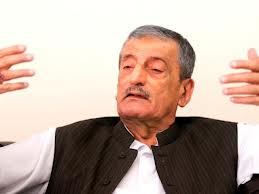
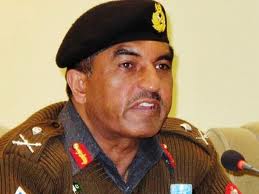
ANP MInister Ghulam Ahmed Bilour (Credit: tribune.com.pk)
PESHAWAR, Sept 26: The Pakistani Taliban say they are granting an “amnesty” to a Cabinet minister who is offering a $100,000 reward to anyone who kills the American maker of an anti-Islam film sparking deadly riots in the Muslim world.
Pakistani Taliban spokesman Ehsanullah Ehsan told reporters on Wednesday that the minister’s views represent the true spirit of Islam. Consequently, the militants have removed him from their hit list.
“We have totally forgiven him and removed his name from our hit list,” the Taliban spokesman said in a phone call from an unknown location.
Ehsan said that Taliban shoora, a top consultative body, had met on Tuesday and “praised Bilour for his sacrifice for the cause of Islam”.
“The shoora paid rich tributes to Bilour and endorsed his bounty announcement,” he said.
But Ehsan clarified that others in Bilour’s secular party – The Awami National Party (ANP), which opposes the Taliban – won’t enjoy the reprieve.
Railways Minister Ghulam Ahmad Bilour had announced a $100,000 bounty for the killing of the maker of “Innocence of Muslims” – a film which has sparked deadly protests throughout the Muslim world. Bilour had also sought the Taliban’s and al Qaeda’s help in the “noble cause” of killing the filmmaker.
Pakistan’s government says Bilour’s bounty doesn’t represent official policy, and his party, the ANP, has also distanced itself from the minister’s comments.
Bilour, however, insisted public opinion was behind him in Pakistan, which has seen widespread protests against the film including nationwide rallies on Friday that ended in bloodshed and looting, with at least 23 people killed.
“I expressed my personal view and faith. I stand by my declaration,” the 72-year-old Bilour had said on Tuesday. “My faith is non-violent, but I cannot forgive and tolerate (this insult),” he said.
Bilour had added that a businessman from Lahore had offered to put up a further $400,000 for the reward and said that freedom of speech should not be used as an excuse to insult Islam.
“Killing is not a good way, but right now it is the only way, because no action has been taken from Western countries (against the filmmaker),” he said.
Washington condemned Bilour’s reward offer as “inflammatory and inappropriate”, while the EU said it deplored it.
Bilour could not be reached for comment on Wednesday.
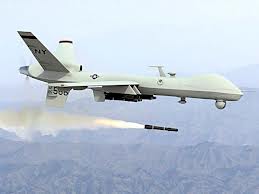
Washington/Islamabad, August 25 – Badruddin Haqqani, the key operational commander of the al Qaeda linked Haqqani network, and top Pakistani Taliban commander Mullah Dadullah are believed to have been killed in US drone and air strikes in the tribal region of Pakistan and Afghanistan. Badruddin, the son of Afghan warlord.
Jalaluddin Haqqani, is ranked as a deputy to his elder brother and the network’s chief Sirajuddin and was believed to be killed in one of the five volleys of drone strikes in Pakistan’s Taliban-controlled tribal agency of North Waziristan since August 18.
Four of the missiles hit took place in Shawal Valley, considered to be traditional area of operations of Haqqani network in North Waziristan, and US reports said he may have been killed in the August 21 strike near Miranshah.
The wave of attacks drew strongest protest from Islamabad in recent years when a senior US diplomat was summoned by the Foreign Ministry to lodge their opposition to the attacks.
Badruddin, thought to be in his mid-30s, was a member of the Miranshah Shura Council, one of the Afghan Taliban’s four regional commands, which controls all activities of the militant group in Afghanistan and Pakistan.
Senior US officials were quoted by the New York Times as saying that they had strong indications that Badruddin, the key commander of the Haqqani network which is responsible for most of the spectacular assaults on American bases and Afghan cities in recent years, was killed in a drone strike
Meanwhile, a statement by coalition forces in Afghanistan said that Tehrik-e-Taliban Pakistan leader Mullah Dadullah was among 20 militants killed in a “precision airstrike in Shigal wa Sheltan district (of) Kunar province yesterday.” Dadullah, whose real name is Maulana Mohammad Jamaluddin, was made the commander of Taliban in Pakistan’s Bajaur Agency in 2010. He fled to Afghanistan to escape an operation launched by the Pakistan Army. His deputy Shakir too was killed in the airstrike, the statement said.
Badruddin is one of the nine Haqqani family members who have been designated by the US as global terrorists. His brother Sirajuddin is the overall leader of the Miramshah Shura.
Siraj was designated by the State Department as a terrorist in March 2008 and in March 2009, the State Department put out a bounty of USD 5 million for information leading to his capture.
Giving details about the operation, American intelligence officials indicated to the Long War journal yesterday that the remotely piloted Predators and Reapers were targeting an “important Jihadi leader” in the region but his name was not disclosed.
“There are indications that Haqqani has met his demise,” a senior US official said in Washington yesterday.
He said officials were waiting to sift through evidence, including information on jihadist websites, before they could be certain that Haqqani had been killed.
The report said their caution stemmed from previous erroneous claims by American and Pakistani officials about militant deaths in Waziristan, a difficult place to get reliable information. But if confirmed, Haqqani’s death would be a “major benefit to the military coalition in Afghanistan.”
“Badruddin has been at the centre of coalition attacks in Afghanistan as well as mischief in Pakistan,” said the official. The Haqqani network has been blamed for some of the most spectacular assaults on US bases and Afghan cities in recent years.
By Friday evening, reports of Badruddin Haqqani’s death were circulating in Pakistan’s tribal belt.
In Washington, the White House and the CIA, which carries out drone strikes in Pakistan, declined to comment.
The latest string of drone attacks, most of them carried out in Shawal area of North Waziristan Agency, has renewed tensions between Pakistan and the US.
Nearly 40 suspected militants have been killed in these attacks, including a Kashmiri jihadi named “Engineer” Ahsan Aziz. Former Jamaat-e-Islami chief Qazi Hussain Ahmed recently led funeral prayers in Mirpur for Aziz, who was killed in a drone strike on August 18.
Badruddin Haqqani runs the Haqqani network’s day-to-day militant operations, handles high-profile kidnappings and manages its lucrative smuggling operations, according to a report by the Combating Terrorism Center at West Point.
In August last year, Afghan intelligence released intercepts of Badruddin Haqqani directing a daring assault on Kabul?s Intercontinental Hotel. Three years before that, he held a reporter for The New York Times, David Rohde, hostage.
The last major successful drone strike in Pakistan was the killing of al-Qaeda deputy leader Abu Yahya al-Libi in June.
US drones yesterday fired six missiles at three locations in Shawal Valley, destroying mud-walled compounds and two vehicles, Pakistani security officials and a Taliban commander said.
Among the 18 people killed was Emeti Yakuf, a senior leader of the East Turkestan Islamic Movement, a group from western China whose members are Chinese Uighur Muslim militants.
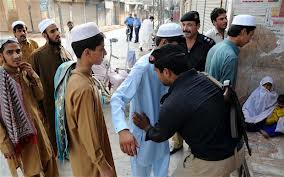
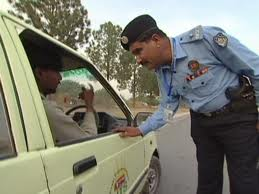
Security Search over Eid in Pakistan (Credit: telegraph.co.uk)
The draconian security measure was imposed on Sunday at 8:00 pm, at a time when millions ordinarily telephone friends and relatives with greetings for Eid al-Fitr. Networks were working again on Monday mid-morning.
Karachi and Lahore, Pakistan’s two largest cities, and the troubled city of Quetta, in the insurgency-torn province of Baluchistan, were among the places where networks were suspended.
“We regret that it had to be suspended in some cities due to the risk of terrorist attacks,” Rehman Malik, the country’s interior minister, was quoted as saying by state TV.
“We regret inconvenience caused to youths and children.”
Terrorists were plotting to target “a few areas of Punjab province”, of which Lahore is the capital, the minister said. Sindh province, where Karachi is the capital, and Baluchistan were also targets, he added.
Authorities feared that mobile telephones could be used to coordinate attacks or trigger a remote-controlled bomb.
The Eid festival marks the end of the holy fasting month of Ramadan and, in Pakistan, is accompanied by a three-day public holiday, until Thursday.
The country has been on alert for Eid and security forces stepped up their presence in major cities as celebrations got under way.
On the same day, gunmen in military uniforms pulled 20 Shi’ite Muslim travellers from vehicles and shot them dead in the northwestern district of Mansehra.
Pakistan says 35,000 people, including more than 3,000 soldiers, have been killed as a result of terrorism since the 9/11.
ISLAMABAD, Aug 16 — Pakistani Taliban militants pulled 22 Shiites off buses and gunned them down in a remote northern mountain pass on Thursday, in the latest iteration of a pattern of attacks targeting religious minorities.
In the remote district of Mansehra, at least a dozen militants dressed in military fatigues stopped three buses carrying passengers on a rugged road from Rawalpindi to Astore. The militants checked the identification papers of passengers, singled out the Shiites and then shot them dead at point-blank range, police officials said.
The victims were mostly young men returning to their villages for Id al-Fitr, the Islamic festival that marks the end of Ramadan.
“The area is very remote and desolate,” said Rina Saeed Khan, an environmental journalist who traveled through the same route back to Islamabad on Wednesday. “The road is an alternate to the Karakoram Highway,” she said, referring to a famed road built by Chinese engineers.
The Babusar Top, where the killings took place, lies two hours from Astore. “There is no cellphone coverage, and you see no villages during the four-hour drive on a dirt road,” Ms. Khan said.
The episode on Thursday was similar to an attack in February in which 18 Shiites were killed after a bus was ambushed on the Karakoram Highway in the mountainous Kohistan district of Khyber-Pakhtunkhwa Province. Ms. Khan said that after the February attack, travelers began using this alternate route in Kaghan Valley, which was still considered safe despite its harsh terrain. “Obviously, militants kept track of it, and they knew that people were returning to their homes for Id al-Fitr,” she said.
The Darra Adam Khel faction of the Pakistan Taliban claimed responsibility for the attack on the Shiites, Reuters reported. “We have targeted them because they are enemies of Sunnis and conspire against us,” Mohammed Afridi, a spokesman for the faction, was reported as saying in a telephone interview. “We will continue such attacks in the future.”
In recent months, attacks on Pakistani Shiites have increased, particularly in northern regions. Analysts have increasingly criticized the government, saying it has allowed itself to be distracted from protecting the country’s religious minorities. The government is embroiled in political turmoil, with an increasingly assertive Supreme Court that has singled out senior officials.
Ms. Khan, the journalist, said that she found a lot of anger and resentment among the locals during her visit to several northern towns.
“People are very upset,” she said. “They are asking, ‘Where is the government? Where is the military?’ ”
“Locals say Sunnis and Shiites used to live in harmony 10 years ago,” she said. “Life is too tough there, and Shiites and Sunnis used to cooperate. Locals say it’s the outsiders who are doing the killings.”
The Pakistani military said Thursday that it had opened an investigation into a predawn attack by Taliban militants on the Kamra air force base in Punjab. There has been speculation that the military is planning an offensive in North Waziristan, a haven for the Taliban and operatives of Al Qaeda, and some analysts said that the attack could have been meant as a warning against military action.
“The Taliban are telling Pakistan’s leadership, ‘If you hit us here, we’ll hit you,’ ” said Arif Rafiq, an adjunct scholar at the Middle East Institute in Washington.
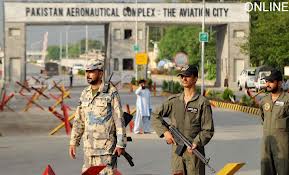
Minhas air base in Kamra (Credit: onlinenews.com.pk)
Islamabad, Aug 16: Militants targeted a major military air base some 30 miles northwest of Islamabad early Thursday morning, giving momentum within Pakistan to the prospect of a long-controversial military mission against elements in restive North Waziristan.
The battle between the military and the militants lasted for more than five hours and left nine militants and one soldier dead. Tehrik-e-Taliban Pakistan (TTP), the North Waziristan-based group, claimed responsibility for the attack.
Minhas air base at Kamra includes an aeronautical complex that produces and develops air and ground weapons. But the attack has drawn particular concern because the base has been widely reported to be equipped with nuclear weapons, though the military denies that.
Analysts in Pakistan are calling today’s attack the first of many to come in response to the reports of an operation by the Pakistani military in North Waziristan.
“The Kamra attack is an eye-opener that [the Taliban] can hit us anywhere, anytime, and the speech by the Army chief earlier had the same strategic message in it – that we need to unite against such elements and drive them out,” says a senior military official, referencing a televised speech by Gen. Ashfaq Parvez Kayani on the operation.
The TTP has strengthened itself in North Waziristan in the past five years. The area is also reported to be home to the Haqqani network, which the US government blames for orchestrating attacks inside Afghanistan.
“Thursday’s attack epitomizes the blowback of a military operation in North Waziristan. And the worrying sign is the capacity of these terrorists to attack. If still nothing is done against them, they will only grow stronger. So it reinforces what we have been hearing about, a need of an operation in North Waziristan, where these elements operate freely,” says Cyril Almeida, a columnist who writes for the largest English daily paper in Pakistan.
Defense Secretary Leon Panetta said Monday that General Kayani told US military officials that Pakistan planed to launch operations against Taliban militants in North Waziristan. Secretary Panetta acknowledged that the combat operation might not include offensives directly attacking the Haqqani network.
“We realize that the most difficult task for any Army is to fight against its own people. But this happens as a last resort. Our real objective is to restore peace in these areas so that people can lead normal lives,” the Pakistani Army chief emphasized in a speech on August 14. He then added that “no state can afford a parallel system or a militant force.”
Kayani attempted to address the popular sentiment among Pakistanis that the military was bending to America’s will. “The fight against extremism and terrorism is our own war, and we are right in fighting it,” he said in a televised speech.
However, many are skeptical about whether the operation will be effective if it does not attack the Haqqani network. “Our military is interested in acting against Pakistani-centric militants only, to stop attacks inside Pakistan like the one today,” adds Mr. Almeida.
Locals from North Waziristan also point out flaws in an operation in North Waziristan. “They have been talking about a possibility of an operation for the past three years. Do you think that the Haqqani network is going to sit around and wait?” says Safdar Dawar, president of the Tribal Union of Journalists.
According to intelligence officials who have operated in the tribal belt, the Haqqani network has more than a dozen places in Afghanistan to operate from.
“Other elements operating in North Waziristan have no place to go and can be targeted as they have been cornered into this area,” says Brig. Asad Munir, who belongs to the tribal belt and retired from military a few years ago.
Munir, who has served in key intelligence positions in the tribal belt, says the military operation will improve relations between Pakistan and America, but not for that long. And given the terrain between Pakistan and Afghanistan, security experts say it is almost impossible to seal this border.
“North Waziristan has been the most strenuous issue between the two countries, and the US believes if Pakistan acts in this area, the insurgency in Afghanistan will be controlled. But without border control from both sides, the operation may not be so successful,” the brigadier adds.
This is not the first time a military base in Pakistan has been attacked.
In 2009, the headquarters of the military came under a siege that lasted for 20 hours. And last year, an attack at a naval base in the port city of Karachi lasted for almost 15 hours.
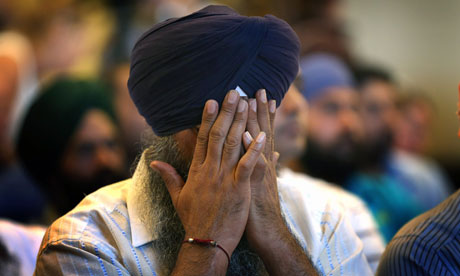
New York, Aug 6: Sikhs in New York and across the country on Monday mourned the deaths in the shooting rampage at one of their temples outside Milwaukee, and some said the killings revived bitter memories of the period just after the Sept. 11 attacks when their distinctive turbans and beards seemed to trigger harassment and violence by people who wrongly assumed that they were militant Muslims.
Nancy Powell, the American ambassador to India, where the vast majority of the world’s 25 million Sikhs live, visited a temple in New Delhi and expressed horror and solidarity. Elsewhere, Sikhs reflected on the uncomfortable fact that because their appearance sets them apart, they are sometimes mistakenly singled out as targets. Observant Sikh men often wear turbans and do not cut their hair or shave their beards.
“I have been called Osama bin Laden walking down the street, because in the popular imagination a turban is associated with bin Laden and Al Qaeda,” said Prabhjot Singh, who works in the high-tech industry near San Francisco. “But 99 percent of the people who wear turbans in the United States are Sikhs, so they face a disproportionate number of acts of discrimination.”
In collecting data about post-Sept. 11 hate crimes, the Justice Department does not draw a distinction between Sikhs and Muslims, an entirely separate religion. A report from October says, “In the first six years after 9/11, the department investigated more than 800 incidents involving violence, threats, vandalism and arson against persons perceived to be Muslim or Sikh, or of Arab, Middle Eastern or South Asian origin.”
Sikhism, a monotheistic faith that emerged from the Punjab region of India about 500 years ago, is one of the world’s youngest major religions. It emphasizes self-reliance and individual responsibility and draws its tenets from the words of 10 gurus. The last guru, named Singh, as are many Sikhs today, died in 1708.
More than many other religious practitioners, Sikh men wear a uniform: unshorn hair and a small comb covered by a turban; a steel bracelet; and, for a certain group of initiates, a sword known as a kirpan.
The religion is known for promoting women to positions of power, and has championed social justice.
British colonialists in India tended to favor the Sikhs, viewing them as more Western than the Hindus and Muslims, who made up the vast majority of the population there.
“Historically in India there has been tension between the Sikhs and the ruling elite, whether Muslim or Hindu,” said Harpreet Singh, a Sikh who is finishing a doctorate in South Asian religions at Harvard and helped found the Sikh Coalition in 2001 to help Sikhs stand up for their rights. “The gurus didn’t want to pay the non-Muslim tax. Sikhs grew in numbers and became a political force.”
The prime minister of India, Manmohan Singh, is a Sikh from Punjab, and on Monday he expressed sorrow and condemnation for the killings of six people at a Wisconsin temple on Sunday by a man who appeared to have ties to a white supremacist movement. The gunman was killed by the police.
Other recent acts of violence against Sikhs — the defacing in February of a temple in Michigan, the beating of a cabdriver in California in late 2010 — involved mistaken references to Al Qaeda or militant Islam. The first post-Sept. 11 killing classified as a hate crime took place in Arizona, where a Sikh was gunned down by a man who is now serving a life sentence.
In the Jackson Heights section of Queens on Monday, Sikh men in russet, black and peach-colored turbans swept leaves from the fronts of stores selling saris and gold jewelry, and offered discounts to passers-by. Many talked about the Wisconsin rampage.
“Very sad. I was shocked,” said Harbinder Singh, who works at a grocery. “We have not done any harm to anyone. Why are we targeted? Maybe some other religions have done harm. They think that we are the same. Maybe that’s the reason.”
Inder Mohan Singh, 73, who owns a Western Union location, lives in Woodbury on Long Island and has been in the United States for 40 years.
“I’m just an ordinary man, just like other people, just like other Americans,” he said. “I should cut my hair? No one is going to change. I’m wearing the turban. I have to do it. I don’t want to say, ‘No, now I’m not going to wear my turban because of this man.’ ”
He added: “This is our religion. We cannot leave our religion for one man.”
Pakistan police on front lines (Credit: cnn.com)WASHINGTON: Faced with mounting violence, Pakistan needs to push ahead reforms of its police force, which lacks the training, equipment and political will to be effective, a new study said.
In a lengthy report, a commission set up by the New York-based Asia Society called for Pakistan to step up police training and carry out structural reforms to boost the force’s skills and reduce corruption.
“High crime rates throughout the country, relatively low conviction rates of prisoners on trial and heightened concerns about instability spilling over from Afghanistan indicate that there is an urgent and critical need to invest in and reform Pakistan’s law enforcement infrastructure,” the report said.
The study, due to be released on Monday, said that criminals and Islamic extremists have increasingly colluded and evaded a police force hampered by “severe deficiencies” in technology and training.
Pakistan’s military and Inter-Services Intelligence agency have historically been major centers of power. But the report said the police hold primary responsibility for law and order.
“Shifting all the blame onto the police force, whether done by the public, media or government, is unfair and unproductive,” the report said.
Pakistan’s police system “simply is not structured to reward good behavior, as merit-based opportunities for professional advancement are scarce, low pay is the norm and a lack of support and resources compels even many well-intentioned officers to misuse their authority in order to survive,” the report said.
Hassan Abbas, the commission’s project director and a professor at the National Defense University in Washington, said international assistance could help. Britain and the United States have both been assisting police reform.
“However, the overall funding for these projects is no match for the resources provided to Pakistan for anti-terrorism operations throughout the last decade, very little (if any) of which ever reached police institutions because it was so largely geared toward the defense sector,” he said.
“Both are important needs, but a balanced approach is needed to help Pakistan tackle internal and external challenges more effectively.”
Pakistan has received more than $18 billion in US aid, mostly for its military, since it agreed to support the US-led war in Afghanistan after the September 11, 2001 attacks.
The country in recent years has been torn by violence, with extremists carrying out attacks in major cities, militant cells holed up in lawless border areas and an ethnic insurgency raging in Balochistan.
Pakistan’s then military ruler Pervez Musharraf in 2002 issued orders to set clear rules for the police, but the reform quickly lost steam.
The Asia Society study called for the implementation of the 2002 reforms, along with an overhaul of hiring practices, improvements in working conditions and the establishment of an independent authority to assess complaints of police misconduct.
The commission recommended the training of anti-terrorism investigators at each police station, along with special units with direct access to data from private cellular telephone operators.
The report also called for training on protecting the rights of women, children and minorities, a frequent source of concern, and efforts to recruit more women police officers.
Separately, the study called for special efforts to recruit local youth as police in Baluchistan, the southwestern province where insurgents rose up in 2004 to demand greater autonomy.
The report said that police should be put in charge of investigating charges of extrajudicial killings in Balochistan and that Pakistan should restrict the roles there of the paramilitary Frontier Corps and intelligence agencies.
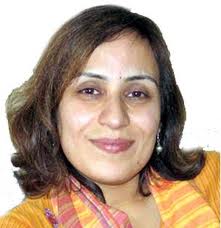
Amar Sindhu (Credit: awamiawaz.net)Hyderabad, July 10: The teachers leading the movement against the University of Sindh (SU) vice chancellor came under attack late Sunday night at the Super Highway.
Women rights activist Prof Amar Sindhu, the chairperson of the philosophy department at SU, was injured in the attack near Sajjad Restaurant as unidentified assailants opened fire at the two cars returning from Karachi with the office bearers of the SU Teachers Association inside.
The attackers sprayed the two cars with bullets and escaped. With burst tyres, the teachers took the cars to a nearby petrol pump.
The general secretary of Federation of All Pakistan Universities Academic Staff Association, Prof Arfana Mallah, was also present in the car but escaped unscathed.
Mallah, who is also a writer and hosts a current affairs talk show on a Sindhi television channel KTN, has been leading the movement at the SU for removal of its vice chancellor Dr Nazir A Mughal. The movement had started after the murder of Prof Bashir Channar on January 2, but became dormant after Mughal was sent on forced leave on February 21. The protests revived, however, with the return of the vice chancellor on June 29.
Earlier on Sunday, the teachers had held a press conference along with Pakistan Muslim League-Nawaz leader Iqbal Zafar Jhagra in Karachi. They had condemned the return of Mughal and the attitude of the provincial government regarding the higher education institutions in the province.
Mallah, who teaches at the SU, told The Express Tribune that she saw three men take positions and open fire at the cars. She ruled out the possibility of robbery since the attackers did not try to do steal their car.
“It appears to be a planned attack,” she said. At least three bullets hit her car.
A case has been lodged at the Gadap police station but due to the confusion over the police jurisdictions, the final FIR will be registered with the Sohrab Goth police.
Taliban bases in Afghanistan (Credit: longwarjournal.com)
PESHAWAR, June 25 — A relatively rare cross-border raid into Pakistan by Afghan-based Taliban militants killed at least 13 Pakistani soldiers, the military said Monday.
Pakistani officials have long faced criticism from the Americans and Afghans for failing to stop similar militant assaults in the opposite direction, and they lashed out against their neighbors over this attack, which was in the northwestern border district of Dir.
In Islamabad, the Foreign Ministry said it had called in a senior Afghan diplomat to protest “the intrusion of militants from the Afghan side.” And the new prime minister, Raja Pervez Ashraf, said he would raise the matter with President Hamid Karzai.
A senior Pakistani military official, speaking on condition of anonymity, said that more than 100 Taliban militants armed with heavy weapons had crossed the border in the attack. After initially reporting six soldiers killed and 11 missing, the official later said that seven of the missing had been “reportedly killed and then beheaded.”
A Pakistani Taliban spokesman claimed responsibility for the attack and said the militants had killed 18 soldiers. “We have bodies of 17 of them,” said the spokesman, Sirajuddin, who uses only one name, speaking by phone from an undisclosed location.
Pakistani Taliban fighters fled into Afghanistan starting in the summer of 2009 after a major assault by the Pakistani military on the Swat Valley in northwestern Khyber-Pakhtunkhwa Province.
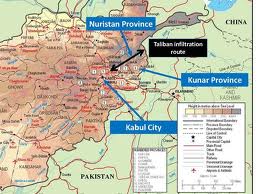
Across the border, the militants took refuge in Kunar and Nuristan Provinces; they have since strengthened their presence in those areas as American forces have withdrawn. Pakistani officials say that two senior Taliban commanders — Maulana Fazlullah from Swat and Faqir Muhammad from Bajaur — are sheltering there, while their fighters use Afghan territory to mount attacks in Pakistan.
The most violent attack occurred in August last year when Taliban fighters killed at least 30 Pakistani soldiers along the border in the Chitral district, north of Dir. The Pakistani military has since deployed a large contingent to the area.
The situation in Dir and Chitral is the mirror opposite of that of the Waziristan tribal agency, farther west along the border, where large numbers of Pakistani, Afghan and foreign fighters train and plot attacks inside Afghanistan.
American military officials are particularly angry that the Haqqani network, which has carried out some of the most spectacular attacks in Kabul and other major cities, has an apparently free hand to operate in North Waziristan. Obama administration officials say they are unsure whether Pakistan’s powerful intelligence services are assisting such cross-border attacks, tacitly acquiescing to them or incapable of stopping them.
The Pakistani Taliban, on the other hand, are intent on attacking Pakistani forces. Sunday’s attack in Dir, the third this month, shows that, as NATO troops leave Afghanistan, the militants are using that territory to mount attacks.
Residents of Dir said the militants were operating from a base just over three miles from the border, where there is no visible Afghan or NATO presence.
FC chief Maj. Gen. Obaidullah Khan (Credit: tribune.com.pk)
QUETTA, June 3: Balochistan Frontier Corps (FC) Inspector General (IG) Major-General Ubaidullah Khan Khattak has claimed that around 121 camps of the banned Baloch groups are operating in Balochistan and they are responsible for nationalist movement and deteriorating law and order situation in the province, while another 30 camps, sponsored by foreign powers, are functional in Afghanistan.
Speaking to media at FC headquarters on Saturday, Khattak said the rebel camps were being provided support from Afghanistan, while the Afghan government is neglecting their presence. He said these included 40 camps of Baloch Liberation Army (BLA), 26 of Baloch Republican Army (BRA), 19 of Baloch Liberation Front (BLF) and two camps belonged to Lashkar-e-Balochistan.
To a query, the FC IG said foreign hands were involved in deteriorating law and order situation in Balochistan and also supporting the militants financially.
“Teachers, doctors and many civilians have fallen prey to targeted killings,” said Khattak, adding that over 100,000 people had migrated from the province due to the poor law and order situation.
The FC chief insisted that the Balochistan issue was purely a political one and it should be resolved in a political manner. But at the same time, he issued a warning, saying, “Tit-for-tat action would be taken against those elements which are bent to disintegrate Pakistan and making propaganda against the country’s institutions.”
Khattak claimed that the number of terror acts had been reduced to a great extent in Balochistan as compared with the terror acts of last couple of years. However, he regretted that through a well-planned propaganda was being carried out against the law enforcement agencies personnel who had been sacrificing their lives for the security of people. “Through propaganda campaign and targeted attacks, the FC is being demoralised,” he added.
Khattak said 575 subversive incidents had occurred so far in the province during the current, year in which 254 people – including 57 FC personnel, two army men and 20 policemen – had been killed, while 258 of these incidents had been owned by the Baloch militant outfits.
“Attacks on FC have been increased during past several months which are aimed at to demoralize it physically and psychologically,” he added.
He further said the Levies Force was incapable and needed training to handle the criminals and the matter had been brought to the notice of provincial government. Situation in the ‘B Area’, which came under the Levies Force’s jurisdiction, was very serious and the FC was imparting training Levies Force so that it could be made affective, he added.
Referring to a recent interview of Baloch exiled leader Nawabzada Brahmdagh Bugti, Khattak said, “Nobody would be allowed to disintegrate Pakistan and we will continue fighting against those who talk about the breakup of the country.”
He said the FC wanted the support of Baloch people because no force could achieve the targets without their support.
To a query, Khattak dispelled the impression that the FC was not obeying the orders of provincial government. “FC is a federal force and deployed at borders; however, it was deployed in different parts of Balochistan following a request of the provincial government and is discharging its duties in accordance with the law”.
He stressed the need for unity amongst the people of the country, saying billions of dollars were being spent to destabilise the country. “Besides the security forces, it is also a responsibility of the citizens to play their role and foil the nefarious designs of anti-state elements”, he added.
The FC chief regretted that the accused persons involved in subversive activities always went unpunished by the courts. “121 accused persons involved in different incidents were arrested in 2011 but only 4 of them had been sentenced,” he added.
Referring to the hearings of missing persons case the Supreme Court, Khattak said he had appeared before the bench four times and always tried to uphold the rule of law. However, he said the way he was reported in the media was regrettable. “I had gone to Iran on an official visit and an official of FC had appeared before the bench during recent hearing behalf of me. But the media reported that IGFC is not appearing before the court,” he said, and adding that he (Khattak) was just an employee of the state. Khattak said the FC respected courts and political institutions. “There is no motive of FC but to maintain law and order and protect borders,” he added. Responding to a question, he said limited force was being used in Balochistan to eliminate the militant camps of militants; therefore, these camps still existed.
He said in the military operation of 2006-07, militants camps had been almost finished, however, following the elections of 2008, a political government came in power and the army was withdrawn and some cantonments were dismantled that helped militants to reorganize.