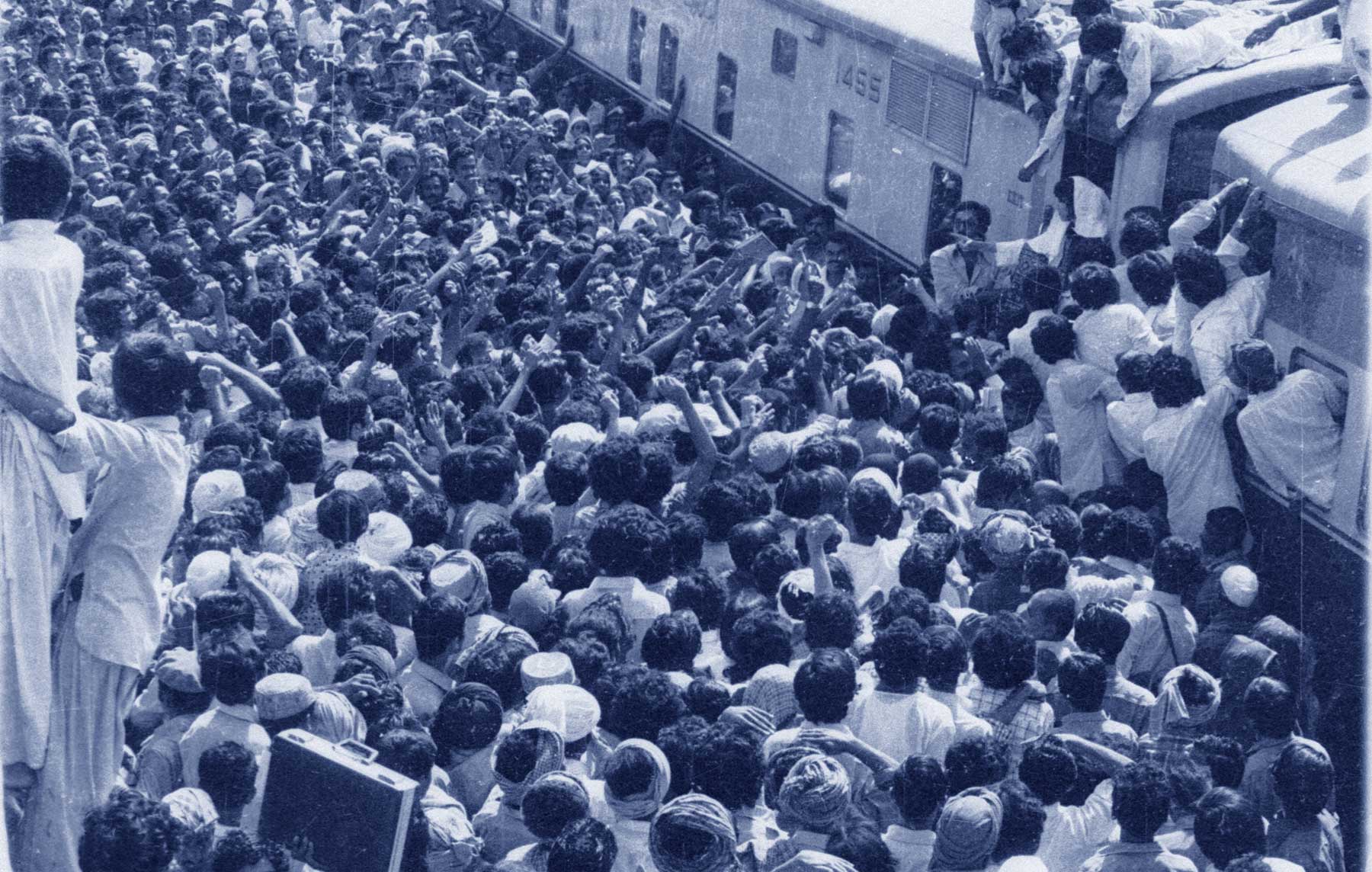
Pakistan’s Ali Wazir: The lone Marxist to win despite Taliban killing 16 of his family

A rare Communist to survive and win, Wazir refused a seat from Imran Khan, who later didn’t put up a candidate against him.

Ali Wazir, a central committee member of The Struggle, has won a seat in the national parliament of Pakistan from NA-50 (Tribal Area–XI) with 23,530 votes and his closest rival from a religious parties alliance, MMA got 7,515. Thus winning the seat with a majority of 16,015.

Ali Wazir is one of the main leaders of the Pashtun Tahafaz Movement (PTM). This year, mass meetings were organised in major cities of Pakistan to raise voices for fair compensation to the victims of the “war on terror” and to demand the release of all ‘missing’ persons or to bring them to the courts if they are guilty.

Two other leaders of the PTM also contested for the national parliament and one of them, Muhsin Dawer also won the seat after a close competition. Mohsin Javed Dawer got 16,526 votes while Aurangzeb of Imran Khan’s PTI got 10,422. However, the MMA candidate Mufti Misbahudin got a close 15,363 votes.

These two PTM leaders contested from Waziristan, an area dominated by religious fanatics. However, a strong movement for civil rights of Pashtuns had cut across the influence of the fanatics and Pashtuns voted despite all the threats to them.

Two main leaders of the PTM present in parliament has given hope to many in Pakistan that at least there would be peoples voices in a parliament dominated by feudal lords, corrupt capitalists and stooges of the military and judicial establishment.

Who is Ali Wazir?
Ali Wazir is a very special person. His personal ordeal best illustrates what prompted his demands. Ali Wazir was pursuing a degree in law at the turn of the century when his hometown, Wana, the headquarters of the south Waziristan agency, became the epicenter of global terrorism after a host of Taliban-allied groups sought shelter in the communities.

No doubt the terrorists had some individual local facilitators, but ultimately it was the state that failed to prevent them from using the territory. When his father, the chief of the Ahmadzai Wazir tribe, and other local leaders complained of their presence, government officials ignored and silenced them. Instead, Islamabad spent years denying the presence of any Afghan, Arab, or Central Asian militants.

By 2003, the militants had established a foothold in south and north Waziristan tribal agencies and were attempting to build a local emirate. Ali Wazir’s elder brother Farooq Wazir, a local political activist and youth leader, became the first victim of a long campaign in which thousands of Pashtun tribal leaders, activists, politicians, and clerics were killed with near absolute impunity. Their only crime was to question or oppose the presence of dangerous terrorists in their homeland.

In 2005, Ali Wazir was in prison when his father, brothers, cousins, and an uncle were killed in a single ambush. He was behind the bars because of the draconian colonial-era Frontier Crimes Regulations (FCR) law, that holds an entire tribe or region responsible for the crimes of an individual for any alleged crime committed in the territory.

Ali Wazir had committed no crime, never got a fair trial, and was not sentenced, yet he was prevented even from participating in the funerals for his family.

In the subsequent years, six more members of his extended family were assassinated. The authorities have not even investigated these crimes let alone held anyone responsible.

Ali Wazir and his family faced economic ruin after all of the notable men in his family were eliminated. The government failed to prevent the militants from demolishing his family owned gas stations. They later used those bricks to build bathrooms, claiming they were munafiqin (hypocrites) so even the inanimate materials from his businesses were not appropriate to build proper buildings.

His family-owned apple and peach orchards in Wana were sprayed with poisonous chemicals, and tube wells were filled with dirt to force them to surrender to the forces of darkness.

In 2016, his family-owned market in Wana was dynamited after a bomb blast killed an army officer, which was an accident. They nevertheless destroyed their livelihoods under the FCR. After the demolition, the government prevented the local community — mostly members of Ahmadzai Wazir tribe — from collecting donations to help them. They were told it would set an unacceptable precedent because the government cannot let anyone help those it punishes.

So all together 16 members of his family, including his father, two brothers were killed by Taliban during these years.

Ali Wazir was one of the main leaders of Pashtun Tahafaz Movement. He recently toured the country and organised mass rallies in Lahore, Karachi, Peshawar and Swat. Lahore Left Front was the host of Lahore public meeting which was formally not permitted by the authorities. We were not allowed to campaign, no posters or stickers were allowed to be put up in the city.

Ali Wazir and seven more were arrested a night before the public meeting and after a massive immediate response, they were released before the rally. Yet, over 10,000 participated in this public meeting.

In June this year, dozens of Pashtun Tahafuz Movement (PTM) supporters were injured and 10 were killed as a result of an attack on Ali Wazir by the “pro-government militants”, also known as the Peace Committee. However, the PTM sympathisers gathered to welcome Ali retaliated, upon which the militants fled, leaving Ali’s cousin and a Voice of America (VOA) journalist injured among others.

In an interview in April 2018, Ali Wazir said, “The past few months have transformed my life. Amid the agonies I have endured and the threats, suspicion, and accusations I face, the love, support, and respect I receive is overwhelming.

Since February, when we began protesting to draw attention to the suffering of ethnic Pashtuns — among the worst victims of terrorism — I have learned a lot about the potential of ordinary Pakistanis. Their thirst for change is inspiring and heralds a peaceful, prosperous future we must build for generations to come”.

During those difficult years, he didn’t lose faith in the mass movement and remained committed to politics of class struggle. He ran in parliamentary elections in 2008 and 2013.

In the 2013 general elections, his victory was changed to a defeat at gunpoint. He lost the election for just over 300 votes after the Taliban intimidated voters and tortured his supporters and campaign volunteers.

Amid the volcano of violence, thousands of civilians have disappeared, and thousands have fallen victim to extrajudicial killings. The leaders of PTM are profiled as suspected terrorists across the country, face humiliation at security check posts, and innocent civilians have to face violence during security sweeps and operations. As the world’s largest tribal society, the Pashtuns are known for their hospitality, commitment, and valour, yet they were falsely reduced to terrorist sympathisers despite the fact that they are their worst victims.

Ali Wazir belongs to The Struggle, a Pakistani Marxist organization that has joined the Lahore Left Front, a united platform of several Left groups and parties. However, the Lahore Left Front has organised some mass activities where Ali Wazir participated.

The general election of 2018 was the most rigged elections in the history of Pakistan. The society has pushed further to the right with Imran Khan’s Pakistan Tehreek e Insaaf (PTI) coming to power. Imran Khan called Ali Wazir prior to the elections and offered him PTI nomination from the area which Ali politely refused. However, such respect for Ali Wazir Imran Khan had that that he told him that in any case, “we will not put up our candidate against you”.

Prior to the general elections, a wholesale rigging took place on the behest of the establishment. PML(N) candidates were threatened, forced to change loyalties and so on. The PTI had open support from most of the state institutions.

In this background when a more Right-wing party PTI, than the previous ruling party PML(N), has come to power, a Marxist in parliament would be a breath of fresh air.

Although other Left groups also contested including Awami Workers Party (AWP) and had launched tremendous election campaigns, however, the election campaign of Ali Wazir had some special characteristics. He addressed few public meetings every day, went door to door with his meagre resources. Thousands cheered him at all times. We were all sure that he will win but were afraid of any incident that could cancel the elections from his constituency.

Ali Wazir has opened the gates for the entire Left. He is loved by most of the social activists, a sober person who is always down to earth in his presentation in workers meeting but speaks like a lion when he is addressing the ruling class. A fearless class fighter who has emerged as one of the most respected Left leaders in recent working-class history.

This article was originally published in the Asian Marxist Review
The Rise, Fall and Rise Again of Imran Khan, Pakistan’s Next Leader

LAHORE, Pakistan — Imran Khan, a charismatic cricket star who has fiercely criticized American counterterrorism policy in a region plagued by extremism, appeared poised on Thursday to become Pakistan’s next prime minister.

After preliminary results showed his party decisively ahead in an election that critics say was deeply marred, Mr. Khan addressed the nation on television, outlining what he would do as prime minister.

He said he would fight corruption at the highest levels, improve relations with China, seek a “mutually beneficial” relationship with the United States and create a just welfare state along the lines of what the Prophet Muhammad did centuries ago.

“We’re going to run Pakistan in a way it’s never been run before,” he said.

He also said he would never live in the prime minister’s mansion. In a country of so many poor people, he said, “I would be embarrassed” to stay in such a house.

For years, Mr. Khan had tried but failed to take the reins of this nuclear-armed Islamic republic, which has struggled with poverty, economic stagnation and instability and which is increasingly torn between its two biggest allies: China and the United States. But this time around, he found a powerful ally in Pakistan’s military.

In recent months, army and intelligence officers pressured, threatened and blackmailed politicians from rival parties, human rights groups have said, steadily thinning out Mr. Khan’s competition.

Members of rival parties said unfair practices continued during the vote, with some ballot counting done in secret, guarded by soldiers. But Pakistan’s election authorities said the vote, on Wednesday, had been fair.

“The way this stage has been set, it would have been a surprise if he didn’t win,” said Nighat Dad, the executive director of Digital Rights Foundation, an advocacy group.

Mr. Khan’s ascendance injects a volatile element into relations with the United States under President Trump, who has accused Pakistan of lying about the Taliban, Al Qaeda and other militants embedded in Pakistan and Afghanistan.

Mr. Khan has denied that and accused the United States of recklessness and murder in its use of drone strikes on suspected extremists in his country, signaling he wants them to stop.

Friends and foes describe Mr. Khan, 65, as relentless, charming, swaggering and highly unpredictable.

As a young man, his good looks, prowess on the cricket pitch and success with women made him something of a fascination in England, where he lived for a time. In 1982, he posed for a London newspaper lounging on a bed, wearing only briefs.

“Imran Khan is worried in case I portray him as a sex symbol,” wrote the London newspaper journalist sent to interview him.

“This is possibly why Imran is stretched across his hotel bed wearing only a petulant expression and a pair of tiny, black satin shorts.”

But a complex, mysterious transformation would begin soon after. In 1992, Mr. Khan captained Pakistan’s cricket team to a World Cup victory over England, the country’s former colonial ruler. It was a moment of immense Pakistani pride, and Mr. Khan was at the center of it.

But looking back on it, he told interviewers, he felt empty.

He began to stay away from the clubs, the partying, the girlfriends. He began a quest to build a cancer hospital in Pakistan for the poor; his mother had died of cancer, and the two had been close.

He turned to Islam and the Sufi sect, which he said helped lend purpose to his life.
Then he entered politics. Pakistan in the late 1990s was a mess: Its Machiavellian spy services were working with the United States and, at the same time, supporting the Taliban and Osama bin Laden. The country was poor, troubled and divided — which could still be said today.

Mr. Khan seized on a single issue: governance.

“In Pakistan, the main problem is not extremism,” he said in a recent interview with The New York Times. “We are a governance failure. And in any third world country, the moment the governance collapses, mafias appear.”

He focused on corruption, repeatedly stating that a few political dynasties had shamelessly enriched themselves while governance weakened and the country grew poorer.
But Mr. Khan’s shouts for reform were not taken seriously at first.

The Justice Movement he founded in 1996 initially won only one seat in Parliament — his — and a Pakistani newspaper ridiculed him as “Im the Dim.”

His personal life also careened back and forth, always attracting enormous attention, especially after he married a wealthy British heiress, Jemima Goldsmith. She converted to Islam, they had two children, and tried living in Pakistan together. But it did not last, and they divorced. Mr. Khan married twice more, the last time to his spiritual healer, which again raised eyebrows across Pakistan.

But he seemed adept at not letting the gossip pages distract him, and he kept hammering on about corruption. And two years ago, he received a gift from the Panama Papers.

Those files, an avalanche of millions of leaked confidential documents from a law firm in Panama, included several pieces of information that incriminated Pakistan’s prime minister at the time, Nawaz Sharif. Evidence began to build that Mr. Sharif had stolen millions of dollars from public coffers in Pakistan to buy expensive apartments in London, under the names of his children.

Mr. Khan capitalized on this and called for Mr. Sharif to resign. The Supreme Court removed Mr. Sharif from office, and just two weeks ago, right before the election, Mr. Sharif and his daughter were imprisoned.

Few would disagree that corruption is out of control in Pakistan. But many observers here saw something in Mr. Sharif’s downfall that was more selective, possibly more sinister.

The widespread suspicion was that Pakistan’s powerful military and intelligence services had pressured the judiciary to take out Mr. Sharif, clearing a path for Mr. Khan to take over. Mr. Sharif had clashed with the army chiefs, even some of those he had chosen, many times. He was a thorn in their side.

Mr. Khan, on the other hand, was someone the military bosses seemed to think they could work with. Analysts said he shared their worldview, in which Pakistan would kowtow less to the United States and talk more with the Taliban and other extremist groups.

In the prelude to the election, the military seemed to push even harder for Mr. Khan. Human rights groups, academics and members of other political parties said security officers threatened politicians to defect to Mr. Khan’s side. Several did.

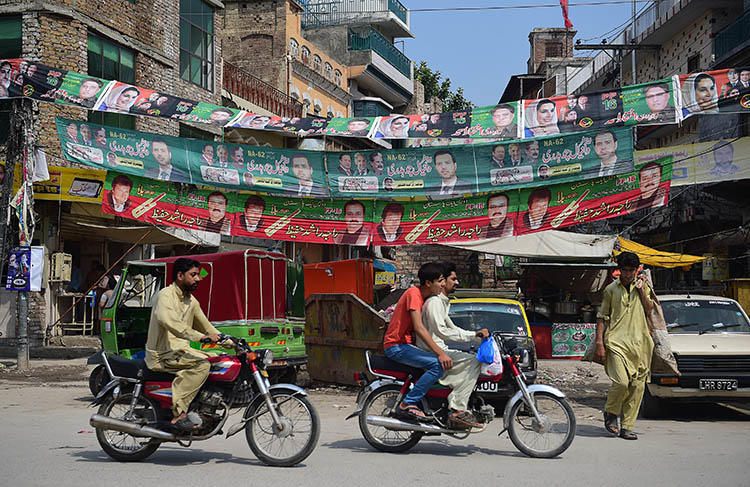
That does not mean that Mr. Khan was not genuinely popular. He was, especially among young men who lionized him as a sports hero. As elections loomed, a Khan wave swept Pakistan. His face was everywhere — on banners, lampposts and torn flags flying from the sputtering rickshaws that flit in and out of traffic. His supporters were the most energized and confident. His party’s symbol: a cricket bat.

Votes were still being tabulated on Thursday, but Mr. Khan’s party was far ahead, though still falling short of an outright majority in Parliament. According to results on state television, Mr. Khan’s party had 120 seats, Mr. Sharif’s party 61 and a party run by the Bhuttos, one of Pakistan’s most storied political families, 40.

Even with some vote rigging allegations unsettled, it is widely expected that Mr. Khan will entice politicians from several smaller parties to join a coalition government, with him as prime minister. Depending on how many smaller parties he woos, his government could be strong or weak.

What will Mr. Khan face?
Domestically, the challenges will be overwhelming. Pakistan’s electricity grid is disintegrated, its infant mortality rate is among the most distressing in Asia, its currency is sliding, and its debt — especially to China — is ballooning. So many Pakistanis are unable to find jobs that every year, countless young men set off on a desperate exodus to the Middle East to work as street cleaners, luggage handlers, anything.

Internationally, Pakistan is in a pinch. China has extended it billions to build roads and other infrastructure, which at the current rate will be impossible to repay.
At the same time, President Trump has cut hundreds of millions of dollars in foreign aid. “They have given us nothing but lies & deceit, thinking of our leaders as fools,” Mr. Trump said of Pakistan in a tweet in January. “They give safe haven to the terrorists we hunt in Afghanistan, with little help. No more!”

Mr. Khan deeply disagrees.

“To blame Pakistan for that disaster is extremely unfair,” he said in the recent Times interview. “The moment the U.S. went into Afghanistan, everyone knew what was going to happen.”

“It was the history of Afghanistan,” he added, citing the defeat of occupying Soviet troops in the 1980s. Just as with the Soviets, he said, the longer the Americans stayed, the more resistance would grow.

Pakistan, he says, has borne “the brunt of the war on terror,” and he lamented what he called a misguided strategy that has killed thousands of people in his country and deprived Pakistan of billions of dollars in lost business. For years, he has been a particularly vocal critic of American drone strikes.

All these positions play well with many Pakistanis. So does Mr. Khan’s recent support for the country’s strict blasphemy laws. Pakistan is socially conservative, and about 96 percent of citizens are Muslim.

Mr. Khan’s positions on religion have tacked like a sailboat over the years. But as the election drew closer, he seemed to set his course for the Islamists. In the past, he expressed support for the application of strict Islamic law, including hand amputations for thieves.

Mr. Khan has successfully rebranded himself as a populist alternative to Pakistan’s political elite, whom voters seemed more than ready to jettison.
But his life, in many ways, could not have been more different from that of most Pakistanis.

Born to a rich family in Lahore, Mr. Khan went to the best schools in Pakistan and in England, including Keble College, Oxford. He is independently wealthy, still travels abroad regularly and remains close to Ms. Goldsmith, despite their divorce.

Though many acquaintances credit him with being charming, he can also come across as remote and desultory. His attendance record as an elected member of the National Assembly, Pakistan’s Parliament, was one of the worst.

Many analysts wonder how long Mr. Khan’s friendship with the military will last.
“He is known to have erratic behavior and a very unpredictable personality,” said Taha Siddiqui, a journalist and critic of the military who recently moved to France, saying he feared for his safety.

Salman Masood contributed reporting from Islamabad, Pakistan; and Meher Ahmad and Daniyal Hassan from Lahore.
https://www.nytimes.com/2018/07/26/world/asia/imran-khan-pakistan-election.html

Pakistan election raises fears of ‘creeping coup’

In its 70-year history, Pakistan has alternated between quasi-democracy and pure military rule. In the process it has become embroiled in international conflicts and morphed into a home base for Islamist militancy.

Over the past decade, Pakistanis have witnessed democracy at its most undiluted thus far, but it’s now under threat from what some say appears to be a “democratic coup” of sorts.

And just as in the past, the country’s powerful military establishment remains the chief suspect behind the fresh round of political manipulation.

In the past, the military used to either stage a direct coup or use special powers to sack an elected government and then manipulate elections to ensure it wasn’t re-elected.

In 2008, those special powers were done away with, leading to a first in 2013: an elected government completing its five-year term.

But since then the tide appears to have reversed, and critics say the establishment is resorting to more primitive tactics to recover its edge.

A three-pronged approach is in evidence.
First, as some legal experts have observed, the courts have selectively applied the law to clip the wings of the outgoing government, thereby creating an advantage for its rivals.

On Sunday, Justice Shaukat Aziz Siddiqui of the Islamabad High Court said that the ISI intelligence service was interfering in the judiciary, and had pressured judges not to release convicted ex-PM Nawaz Sharif ahead of the vote.

Mr Sharif was disqualified from office by the Supreme Court on questionable grounds last year, and has since been sentenced to 10 years in jail by a trial court, in a ruling which one legal expert described as an embarrassment to his community.

According to the Dawn newspaper, Justice Siddiqui told the Rawalpindi Bar Association he was not afraid of speaking out against the powerful ISI, saying: “I am not afraid even if I am assassinated.”

Second, authorities have either looked the other way as banned militant groups have joined the election process, or have actively helped them to do so.

And third, the military has been given what many call an obscenely large role in administering the voting process on election day.

More on Pakistan’s election
 Why the election matters
 Viewpoint: Pakistan’s dirtiest election in years
 The acid attack survivor running for parliament
 The assault on Pakistan’s media

The first two stages have already unfolded enough for one to see their preliminary results.

Many candidates from Mr Sharif’s PML-N have been lured to leave the party and either join the PTI party of rival and former cricketer Imran Khan, or stand as independents.

There is evidence that those who have resisted such demands have faced physical violence, had their businesses attacked or have been disqualified from office.

Other parties with a stake in undiluted democracy, such as the PPP party of assassinated former Prime Minister Benazir Bhutto, are also under threat. The party is now led by her widower, former President Asif Zardari, and fronted by their son, Bilawal Zardari Bhutto.

Some PPP leaders have been named in renewed money-laundering allegations, while authorities in the field have been accused of disrupting its election campaign.

The party, as well as other secular groups, also faces the prospect of militant attacks.

One such party, the leftist Awami National Party, lost a prime candidate in a suicide attack in Peshawar last week. Two more candidates, including one from the PTI, have since been killed in similar attacks.

In Balochistan, a secular candidate, Gizen Marri, has been battling travel restrictions and house arrest, while a man linked by many to sectarian militancy, Shafiq Mengal, is free to stand for election in a neighbouring constituency.

Mr Marri is being stopped probably because of his strong views on provincial rights, an idea which runs contrary to the military’s strictly centrist approach.

But Mr Mengal’s reported links to the sectarian Lashkar-e-Jhangvi (LeJ) militant group and his alleged involvement in several attacks in Balochistan are being ignored, secular parties say, apparently because he has been acting as the military’s proxy against Baloch nationalists.

n June, Pakistan removed another leader with LeJ links, Maulana Mohammad Ahmad Ludhianvi, from its terror watch list, apparently to free him up to lead his group in the election campaign, which it is contesting under a different name.

The Jamatud Dawa (JuD) group, whose leader Hafiz Saeed is on a UN terror blacklist, has also been allowed to field candidates under the banner of a different party.

Mr Saeed is accused of being behind co-ordinated attacks in Mumbai, India, that killed 166 people in November 2008.

More recently, Fazlur Rehman Khalil, the founder of the Harkatul Mujahideen (HuM) militant group, ended his long hibernation to announce his support for Imran Khan’s PTI party. He is on a US terrorism black list.

Taken together, all of these moves point to a scenario where left-wing or pro-democracy parties are being squeezed by legal or physical threats.

This has left the field open for Imran Khan’s PTI party and the religious extremists.

If this is any guide to the probable outcome, the aim appears to be to ensure no clear mandate for any one party, a result which the establishment can then manipulate to determine who the next prime minister will be.

And since all of this is being done in plain sight, the media has been put under pressure – by unidentified authorities – to offer only selective coverage of events.

So while on the surface the country still seems to be going through the motions of democracy, many say that what is actually happening is far from democratic.

A former senator and columnist, Afrasiab Khattak, has called it a “creeping coup.”
This alleged effort has been “conceived by the deep state [meaning the military] and midwifed by the judiciary”, he wrote in a recent newspaper column.

And this has led, he said, to a “fascist-like strangulation of democratic freedoms and the media”.

Silence from judiciary over media attacks increases self-censorship, Pakistan’s journalists say

When it comes to the military and the judiciary, Pakistan’s journalists are “between a rock and a hard place,” Zohra Yusuf, of the independent non-profit Human Rights Commission of Pakistan, told CPJ. In recent months the judiciary, which has a history of siding with Pakistan’s powerful military, has remained largely silent amid attempts to censor or silence the press.

Ahead of elections on July 25, CPJ has documented how journalists who are critical of the military or authorities were abducted or attacked, how the army spokesman accused journalists of sharing anti-state and anti-military propaganda, and how distribution of two of Pakistan’s largest outlets–Geo TV and Dawn–was arbitrarily restricted.

The judiciary, which has power to take up cases on its own, did not intervene on behalf of the press. But it has continued its practice of threatening legal action against its critics.

Some journalists and analysts said that by not taking action, the judiciary has added to a climate of fear and self-censorship.

The judiciary has at times been seen as a strong supporter of democratic values, but Yusuf said the perception among many people in Pakistan is that the judiciary and the military “seem to be on the same page on certain aspects of our democracy.”

“Now … democracy and media are being presented as a problem,” Yusuf said, adding that journalists are bending over backwards to avoid provoking either institution.

Madiha Afzal, an adjunct assistant professor of global policy at Johns Hopkins School of Advanced International Studies and the author of Pakistan Under Siege: Extremism, Society, and the State, told CPJ she thinks the judiciary is an “all too willing pawn in the military’s hands.” Afzal added, “I also think that it is in broad agreement with the military in its stance on Pakistan’s politics.”

The judiciary did not respond to CPJ’s email and calls requesting comment.

Pakistani authorities certainly appear to be taking a tougher stance toward the press.

The country’s media regulator issued a statement this month warning news channels not to air any statements “by political leadership containing defamatory and derogatory content targeting various state institutions, specifically judiciary and armed forces.”

And Ahmad Noorani, a senior journalist with The News, told CPJ that some media houses received instructions from “certain forces” not to cover anything that favored former prime minister Nawaz Sharif or went against the judiciary. Noorani did not provide further details.

Owais Ali, the founder of the Pakistan Press Foundation, said a free media was crucial for free and fair elections. “Whatever the political issues are, they need to be discussed. These include criticisms of the judiciary and the military in the forthcoming elections. The media should not have a price to pay simply for reporting what is being discussed by the politicians and political parties.”

The lack of judicial support does not appear to be linked to court capacity. Pakistan’s chief justice came under criticism from political analysts this year for “judicial activism” — taking on suo motu cases, cases taken on the court’s initiative, Reuters reported.

The court has launched inquiries on issues ranging from water shortages, police encounters, and milk prices.

Suo motu cases seem to be taken up “at the drop of a hat,” but when Geo asked the Supreme Court to take on its case, the court refused, Imran Aslam, president of Geo TV, told CPJ, referring to how cable operators arbitrarily blocked the broadcaster’s transmission earlier this year. “I certainly think the judiciary could have done something about Geo.”

The judiciary is supposed to provide justice to the media houses and media workers, but failed to take notice of the situation that the leading news channel of the country was facing, Noorani said. The court could easily have issued an order or at least asked for a report from the relevant regulatory authority, but they didn’t provide any relief to Geo, he said.

Afzal said she thinks the restrictions on Geo and Dawn undermined the outlets’ credibility. “[It] means that many in Pakistan don’t get to hear liberal voices or voices that are critical of the military, which in turn ensures that they remain pro-military and skeptical of liberal voices,” she said.

News outlets that criticize the judiciary often find themselves threatened with legal action. Nearly every major news organization has been served contempt of court notices, Yusuf said.

Last year, Noorani and his paper’s publisher, Jang Group, were served two notices, including one over Noorani’s report on the Inter-services Intelligence. Noorani said the court withdrew the notice after he presented records of his communication and evidence backing the story.

A contempt of court order brought against TV journalist Matiullah Jan and Waqt TV in February, over claims the higher court was insulted on Jan’s talk show, was dropped after the station’s management apologized and Jan said he would exercise more caution, according to Dawn.

Fakhar Durrani, a reporter at The News, said that when he reported last year on judges who were allegedly vying for plots of land that were part of a housing scheme case they were hearing, his organization came under pressure to stop reporting. Durrani, who did not specify where the pressure came from, said he was not able to publish any follow-up stories.

“During that era, my organization was facing contempt of court notices on other issues so they tried not to indulge in any other legal matter,” Durrani said.

Issuing a contempt of court notice to just one news outlet in Pakistan is a sufficient message to all the media houses because it comes from the highest court in the country and there is no way to appeal a Supreme Court order, Noorani said. If the Supreme Court orders the closure of a news station it sends a message to all other media houses to either fall in line or face the consequences, Noorani said.

The uncertainty over what could draw a contempt of court notice exacerbates the situation.
Aslam, of Geo TV, said criticism of any kind is looked upon as almost treasonous. He added, “It’s a scary situation because you don’t know when you’ll be called up in the courts, and this has led us to tread more carefully.”

He added that objective reporting has been skewed in Pakistan because of the constraints “looming” over the media all the time. “What it induces is self-censorship, even if word doesn’t go down to reporters and everybody else, they are looking over their shoulders.”

Situationer: The killing fields

IN the heart of Mastung city, the Shaheed Nauroz Football Stadium is located on a huge, walled tract of land. This was where, in 2011, the All Pakistan Football Tournament was held. Siraj Raisani, younger brother of then chief minister Nawab Aslam Raisani, was invited as the chief guest to the final.

At the time, Baloch separatists held sway in the district, and they had warned Siraj Raisani of dire consequences if he visited.

As the final match started, locals say, he arrived with a tribal force of 200 men and as many security personnel. There were around 2,000 spectators in the stadium. All through the course of the match, Siraj’s younger son stood by him in guard; it was during the award distribution ceremony that tragedy struck.

A hand grenade was hurled at Siraj Raisani, and while he escaped the assault narrowly, his son Hakmal was badly injured. The young man succumbed to his injuries on July 29, 2011, while being moved to Quetta’s Combined Military Hospital. In addition to Hakmal, another man was killed while 39 more were injured.

Following the death of his son, which was claimed by Baloch separatists, Siraj Raisani sided completely with the state against the insurgents. Subsequently, he launched his own party, the Balochistan Muttahida Mahaz. In recent times, this was merged with the Balochistan Awami Party (BAP), and Siraj was contesting elections in PB-35 against his brother, Aslam Raisani.

In Mastung, politicians campaigned actively for the first time, holding rallies and corner meetings. But elections in PB-35 have been cancelled after the killing of Siraj Raisani.

Shabbir Baloch in Mastung says that he became fearful when he witnessed the vigorous electoral campaign here. “I told my colleagues that the elections would be bloody,” he recalled. “Graffiti, allegedly inscribed by banned Baloch outfits, appeared in the bazaar warning people to stay away from Siraj’s electoral campaign.”

On July 13, Siraj Raisani was continuing with his electoral campaign; a week ago, he had inaugurated the BAP office in Mastung. Finally, party workers set up tents in Dringrah. Candidate Usman Pirkani organised this public meeting, and had asked his Pirkani tribesmen from the remote areas of the district to attend.

A bomb explosion ripped through the crowd at 3:50pm. “I was in the crowds,” remembers Asif Pirkani. “Many of those standing died on the spot, and parts of their bodies rained down on me. I fled the destroyed tent.”

Dringarh is a vast but thinly populated area of 10 villages, with the people belonging to different tribes. It was here that in 2014 a bus carrying Hazara pilgrims was targeted by a suicide bombing that left some two dozens dead. That destroyed bus lies to this day in front of the Levies Station.

Currently, there is tight security in Dringarh and people are reluctant to talk. The victims of the July 13 attack came mostly from outside — the casualties from this area constitute mainly children. The majority of the people killed in the Mastung bombing are from the Pirkani tribe, who are mostly nomads — many don’t even have national identity cards. They did not know who Siraj Raisani was, and Usman Pirkani — who had instructed them to attend the rally — did not himself go. Mohammad Zia, in his late ’60s, lost two sons, along with his nephew. They knew nothing about politics, he said.

One of the injured is Mohammad Azim Pirkani, who is being treated in the trauma centre of the Quetta Civil Hospital. “Everyone one was going, so I joined in,” he said. Three of his colleagues were killed and another was injured. Similarly, another injured man is Rafique, who is a Sindhi man from Quetta. He is not a local of Mastung, but had gone there as a new member of the BAP.

Why did Usman Pirkani himself not go? He said that he was busy with his own corner meeting in Quetta.

The Pirkani tribes are fed up with burying their dead. Qasim Pirkani says they buried 15 men on the first day alone. By local journalist Attaullah’s account, in some places in Mastung, room in graveyards ran out.

Though this bombing was one of the biggest attacks in the country, the day it occurred it was not given adequate coverage by the media. And, beyond Balochistan, hardly anyone knew who Siraj Raisani was. It was only when COAS Qamar Javed Bajwa attended his funeral that the media tuned in.

The tragedy of the Raisani family stems partly from the coincidences: like his son Hakmal, Siraj was injured in an explosion in the same month, in the same district. He, too, died on the way to Quetta’s Combined Military Hospital.

At first, it was believed he was targeted by banned Baloch outfits, but security forces said that these organisations do not have the capability to carry out such attacks. After that, the so-called ‘Islamic State’ claimed responsibility. The security forces have reportedly taken robust action against IS and Lashkar-i-Jhangvi militants in Mastung.

White House Orders Direct Taliban Talks to Jump-Start Afghan Negotiations

KABUL, Afghanistan — The Trump administration has told its top diplomats to seek direct talks with the Taliban, a significant shift in American policy in Afghanistan, done in the hope of jump-starting negotiations to end the 17-year war.

The Taliban have long said they will first discuss peace only with the Americans, who toppled their regime in Afghanistan in 2001. But the United States has mostly insisted that the Afghan government must take part.

The recent strategy shift, which was confirmed by several senior American and Afghan officials, is intended to bring those two positions closer and lead to broader, formal negotiations to end the long war.

The shift to prioritize initial American talks with the Taliban over what has proved a futile “Afghan-led, Afghan-owned” process stems from a realization by both Afghan and American officials that President Trump’s new Afghanistan strategy is not making a fundamental difference in rolling back Taliban gains.

While no date for any talks has been set, and the effort could still be derailed, the willingness of the United States to pursue direct talks is an indication of the sense of urgency in the administration to break the stalemate in Afghanistan.

Not long after he took office, Mr. Trump reluctantly agreed to provide more resources to his field commanders fighting the Taliban, adding a few thousand troops to bring the American total to about 15,000. But a year later the insurgent group continues to threaten Afghan districts and cities and inflict heavy casualties on the country’s security forces.

The government controls or influences 229 of Afghanistan’s 407 districts, and the Taliban 59. The remaining 119 districts are contested, according the Office of the Special Inspector General for Afghanistan Reconstruction, which was created by Congress to monitor progress in the country.

Providing more authority to American diplomats, a move that was decided on last month by Mr. Trump’s national security aides, is seen as part of a wider push to inject new momentum into efforts to end the war.

Those efforts include a rare cease-fire last month, increased American pressure on Pakistan to stop providing sanctuary to Taliban leaders and a rallying of Islamic nations against the insurgency’s ideology. Grassroots peace movements in the region have also increased pressure on all sides.

Over the past few weeks senior American officials have flown to Afghanistan and Pakistan to lay the groundwork for direct United States-Taliban talks. Secretary of State Mike Pompeo briefly visited the Afghan capital, Kabul, last week, and Alice G. Wells, the top diplomat for the region, spent several days holding talks with major players in Afghanistan and Pakistan.

Efforts have particularly focused on trying to persuade the Afghan leadership that such talks are not a replacement for negotiations with the country’s coalition government, but are meant to break the ice and pave the way for those.

Because the previous Afghan government felt left out of peace efforts during the Obama administration, it resisted direct talks, which was one reason peace efforts at that time collapsed.

Neither the State Department nor a Taliban spokesman would comment on the shift of policy toward engaging the Taliban directly.

Ms. Wells, during her trip to Kabul, reported a new “energy and impulse for everyone to renew their efforts to find a negotiated settlement,” largely as a result of the cease-fire. Days earlier, Mr. Pompeo, in a statement, said that there would be no precondition for talks — and that everything, including the presence of American and NATO troops in Afghanistan, was up for discussion.

“I think Secretary Pompeo was very clear — we are prepared to facilitate, to support, to participate in — so there is nothing that precludes us from engaging with the Taliban in that fashion,” Ms. Wells said. “What we are not prepared to do is at the exclusion of the Afghan government — that is the critical difference.”

“We are doing everything we can,” she added, “to ensure that our actions help the Taliban and the Afghan government to the same table.”

With the focus now just on getting negotiations started, it is too early to assess what a final deal acceptable to both sides might look like.

President Ashraf Ghani of Afghanistan said last month at a news conference that the peace process would be a complicated, layered effort rolled out in phases that were still in the preparatory stage.

He left open the possibility of a more direct American role in the early efforts.

“Various ideas, creative ideas are floating on how to break this logjam and get started,” Mr. Ghani said.

Afghan officials and political leaders said direct American talks with the Taliban would probably then grow into negotiations that would include the Taliban, the Afghan government, the United States and Pakistan.

“If we look backwards, the Bonn process is a pretty good paradigm for what ultimately a peace process is going to look like,” Ms. Wells said, referring to the 2001 talks in the German city that established the post-Taliban government in Afghanistan.

“You are going to start off — the Afghans speaking to one another, but obviously the United States and Pakistan were critical in that inner core, and then you build out.“

A near-consensus has grown among American and Afghan officials involved in earlier and current efforts to fire up a peace process that the only way out of the war is for the United States to take a more direct role in negotiations.

That realization rests on several facts: that the Taliban are a stubborn insurgency, that they have not budged on their demand to talk directly with the Americans, and that the Afghan government, mired in infighting and marred by political opposition, would struggle to lead a cohesive peace agenda without American help.

Douglas E. Lute, a former ambassador to NATO who advised Presidents Barack Obama and George W. Bush on Afghanistan, said he supported the new marching orders for American diplomats, although he was not privy to deciding on them.

“We’re in diplomatic gridlock right now,” Mr. Lute said. “We ought to look for creative ways to move this forward.”

Officials have been moving with a sense of urgency because Mr. Trump has expressed his frustration with the war and is desperate to see its end, said a senior American official who, like many spoken to for this article, requested anonymity because he was not authorized to discuss confidential diplomatic discussions.

During last week’s NATO summit meeting in Brussels, Mr. Trump expressed agreement with a reporter’s question that contained the notion that “people are fed up” with the Afghan war.

“Yeah,” Mr. Trump said Thursday. “I agree with that. I very much agree. It’s been going on for a long time. We’ve made a lot of progress, but it’s been going on for a long time.”

An important distinguishing factor of the recent push, according to officials involved in previous efforts, is that the United States military seems very much on board.

In 2011, when the Obama administration first shifted to a policy of ending the war through negotiations, military commanders still believed they could defeat the Taliban. Now, they define their goal more modestly: keeping the Taliban from victory until a political settlement is reached.

Gen. John W. Nicholson, the commander of United States and NATO forces in Afghanistan, was instrumental in initiating last month’s rare cease-fire. As further indication that he is an active part of the new peace effort, he has as an adviser a member of the team that made the initial contacts with the Taliban around 2011.

Those early efforts fell apart after disagreements with the Afghan government, then led by President Hamid Karzai. Still, the Taliban established a political commission by moving some of their officials to Doha, Qatar, in the Persian Gulf.

In 2014, the release of Sgt. Bowe Bergdahl, the American prisoner of war who had been kidnapped by the Taliban after he walked off his base, was negotiated through the Doha office.

Another brief moment of hope occurred in 2015, when Afghan officials and representatives of the Taliban met at a resort town in Pakistan. But the credibility of the Taliban representatives who came to the table was questioned, and the process collapsed when news emerged that the Taliban’s supreme leader, Mullah Omar, in whose name they were negotiating, had actually been dead for three years.

Even if talks do begin again, many observers point to how difficult they will be.

Seth Jones, who heads the Transnational Threats Project at the Center for Strategic and International Studies in Washington, said there was little evidence that the Taliban’s senior leaders were seriously interested in settlement terms acceptable to Afghan and American officials.

“Most Taliban leaders believe they are winning the war in Afghanistan and that time is on their side,” Mr. Jones said.

David Sedney, a former deputy assistant secretary of defense who dealt with Afghanistan and Pakistan, said that while grass-roots peace movements in Afghanistan could upset old calculations, progress on the battlefield and in talks with the Taliban remains dependent on effective pressure on Pakistan, where the insurgent leaders have sanctuary.

What undermines that pressure, he said, is a lack of patience and a “reflex impulse” to judge the new American strategy as doomed so soon after it began.

Signals from the Trump administration and exceptions made to military sanctions on Pakistan indicate that the United States is already backing away from the pressure in the hope that Pakistan delivers Taliban leaders to urgent talks.

“If so, the Pakistanis will once again have taken the measure of a vacillating United States,” Mr. Sedney said. “If that was the only factor at play, then I would say that the U.S. move to engage with the Taliban again, as we did a number of times, would be another U.S. government misstep that exacerbates violence and enhances the Taliban’s hopes for a military victory.”

Mujib Mashal reported from Kabul, and Eric Schmitt from Washington. Gardiner Harris contributed reporting from Annapolis Royal, Nova Scotia.

Nawaz Sharif arrested on arrival in Pakistan as 132 people die in bombing

Pakistan’s former prime minister Nawaz Sharif was arrested in Lahore airport on Friday as he returned to face a 10-year prison sentence which he claimed was part of a wide-ranging, military-backed conspiracy to deny his party a second term in an election due on 25 July.

Military police boarded Sharif’s flight as it landed from a stop in Abu Dhabi after taking off in London. Paramilitary Rangers linked arms and battled against Sharif’s supporters to escort the 68-year-old off the aircraft, into a waiting car and then across the 200 yards to another small aircraft.

The Rangers also arrested Maryam, his daughter, who on 6 July was sentenced with her father to seven years in the trial over how the family came to own four luxury flats in London’s Park Lane, a story that resurfaced in the 2016 leak of the Panama Papers.

As the political drama unfolded in Lahore, fears of violence also surged ahead of the polls as 132 people were killed by a suicide bomber at a political rally in southwestern Balochistan province.

“Who wants to go to jail?”, Sharif told the Guardian from the Etihad airlines flight on which supporters yelled pro-Sharif slogans while in the air.

“But it is a very small price to pay for my mission, which is to establish the sanctity of the vote in Pakistan.”

The arrests ignited an otherwise lacklustre election campaign beset by allegations that the powerful military was “engineering” the vote to promote the main opposition party, Pakistan Tehreek-e-Insaf (PTI), led by the former cricketer Imran Khan.

The military has denied the allegations.

The National Accountability Bureau (NAB), Pakistan’s anti-graft court, ruled earlier this month that Sharif and his family laundered money in the 1990s to pay for the Park Lane apartments, drawing on allegations that resurfaced in the Panama Papers leak.

Before Sharif’s return, his brother Shahbaz, the former chief minister of Punjab, led tens of thousands of supporters in a welcome rally but the caravan had to negotiate a city turned into a warren of roadblocks.

Police arrested more than 500 Pakistani Muslim League (Nawaz) party (PML-N) workers in the hours before Sharif’s arrival, banned public gatherings of more than five people and cut mobile phone signals across Lahore.

The media regulator banned mentions of “convicted persons”, thwarting local journalists from broadcasting much of Sharif’s response.

“What credibility will the election have if the government is taking such action against our people?,” said Sharif.

“Somebody is forcing the caretaker government to take these actions,” he said, hinting at the role of the so-called “establishment”, whose influence Sharif attempted to limit until he was ousted in a controversial supreme court ruling last July.

A battle with the deep state, which began when the military ousted Sharif in a bloodless coup in 1999, reached its peak this week.

Sharif openly named a general at Pakistan’s intelligence service, ISI, as behind the attempts to push PML-N politicians to join the PTI, splintering the taboo by which civil leaders only refer to the armed forces in vague code; “angels” in the case of intelligence agents.

Sharif planned to appeal against his conviction on landing but analysts doubt he would receive bail before the election.

The leadership hopes that instead his sentence of “rigorous imprisonment” – which could include physical labour – will play to the party’s favour in the elections, turning him into a martyr for civilian supremacy.

Sympathy for Sharif has risen during the illness of his wife, Kulsoom, who is in a coma in a London hospital after treatment for throat cancer. In a parting photograph shared widely on social media, Sharif leans over her sickbed and touches her brow with a gloved hand, while Maryam wipes her eyes.

The latest poll shows that Khan’s party, the PTI, is marginally in front of the PML-N. On Friday, European election monitors were granted permission to deploy across the country.

Friday’s suicide attack – which was claimed by Islamic State – killed Siraj Raisani, who was running for a provincial seat with the newly formed Balochistan Awami party, the provincial home minister, Agha Umar Bungalzai, told AFP.

https://www.theguardian.com/world/2018/jul/13/suicide-bomb-attack-kills-85-and-wounds-100-at-mastung-pakistan-election-rally

Ex-Pakistan PM Nawaz Sharif returns to face ‘jail cell’

Ousted Pakistani leader Nawaz Sharif is returning to Pakistan despite facing a 10-year jail sentence for corruption.

Sharif and his daughter Maryam both face arrest when they arrive back in Lahore from London on Friday.

The three-term PM was ousted from office last year after a corruption investigation. He was sentenced in absentia to 10 years last week.

He has accused Pakistan’s security establishment of conspiring against him ahead of July 25 elections.

“There was a time when we used to say a state within a state, now it’s a state above the state,” he told supporters of his Pakistan Muslim League-Nawaz (PML-N) party in London on Wednesday.

“Despite seeing the bars of prison in front of my eyes, I am going to Pakistan.”

Thousands of supporters are expected to flock to the airport to greet Mr Sharif, who was convicted by an anti-corruption court last week over his family’s ownership of four luxury flats in London.

Hundreds of party activists in Lahore are reported to have been detained ahead of his return.

He has called for a “mass gathering of the people”.

Sharif, 67, has been one of the country’s leading politicians for most of the past 30 years. His party has blamed the military for being behind his conviction, saying it is going after the PML-N for its criticism of the security establishment and the party’s policy to improve ties with India.

In May, the Dawn newspaper published an interview with Sharif in which he questioned the wisdom of “allowing” Pakistani militants to cross the border and kill 150 people in Mumbai, referring to attacks in the Indian business capital in 2008.

The military, which has ruled Pakistan for about half of its 70-year post-independence history, has denied it has any “direct role” in the elections or the political process.

Although he was disqualified from standing in the upcoming election by the Supreme Court, Sharif remains one of the most popular politicians in Pakistan, especially in Punjab, the most populous and electorally significant province.

Sharif walks into a jail cell

Analysis by the BBC’s M Ilyas Khan in Islamabad
The last time Nawaz Sharif was sentenced to a jail term after a military coup in 1999, he chose to accept a pardon and exile under a Saudi-brokered deal. But this time, he is walking into a jail cell.
Back then, it was thought that being the spoilt son of a wealthy father, he was too soft to face the various hardships that can befall a Pakistani politician.
But his moves this time underline that he is willing to traverse tougher territory.
Sharif may well be contemplating wider protests after the election, which many believe the military has already “engineered” enough to ensure his party doesn’t win.
And he may have made a huge personal sacrifice for this. Sharif has left behind his wife Kulsoom, who has cancer, on life support in a London hospital, knowing that he may not be able to return to be by her side.

Last week the National Accountability Bureau (NAB) court ordered Sharif to serve 10 years for owning assets beyond his income and one year for not co-operating with the NAB. The sentences are to be served concurrently.

His daughter, Maryam Nawaz Sharif, received seven years for abetting a crime and one year for not co-operating – again to run concurrently – while son-in-law Safdar Awan was given a one-year sentence for not co-operating.

Sharif and Maryam also received fines of £8m ($10.6m) and £2m respectively. Their lawyers say they will appeal against the verdict but the pair will have to surrender to the NAB before the appeal can be filed.

The case, known as the Avenfield Reference, relates to a number of properties in the UK capital.

The assault on Pakistan media ahead of vote
The Panama Papers leak in 2015 revealed several of Sharif’s children had links to offshore companies, which were allegedly used to channel funds and buy foreign assets – including luxury flats in Avenfield House, on London’s Park Lane.

His family, however, insist they legitimately acquired the four properties.

As part of the ruling, the court ordered they be confiscated for the federal government.

Pakistan’s general election
Voters will elect candidates for the 342-seat Pakistan National Assembly.

The main parties are Nawaz Sharif’s PML-N, former cricketer Imran Khan’s PTI and Bilawal Bhutto Zardari’s PPP

It will mark the second time that one civilian government has handed power to another after serving a full term.

The run-up to the vote has been marred by what observers say is a crackdown on political activists, journalists and critics of the powerful military.

More than 371,000 troops will be deployed to protect the election and ensure it is “free and fair”, the army says.

Taliban Opponent in Pakistan Killed by Bomb as He Campaigns

PESHAWAR, Pakistan — A candidate from a political party opposed to the Taliban was killed in a suicide bombing late Tuesday as he campaigned in northwestern Pakistan, just weeks before the country goes to the polls.

At least 12 people were killed and dozens were wounded, several of them critically, police and hospital officials said. The death toll was expected to rise, officials said.

There was no immediate claim of responsibility, but immediate suspicion fell on the Pakistani Taliban, which has frequently attacked secularist politicians.

The attack raised concerns about the safety of candidates running in the July 25 general elections, and immediately cast a pall across Pakistan. It was the first such attack of this year’s campaign.

The candidate who was killed, Haroon Bilour, belonged to a prominent political family from Peshawar, the capital of northwestern Khyber Pakhtunkhwa Province.

Mr. Bilour, who was running for a provincial assembly seat, was at a campaign event late Tuesday night when the bomber detonated his explosives jacket, police officials said.

Mr. Bilour’s father, Bashir Ahmad Bilour, a prominent politician and a senior provincial minister, was killed in a suicide attack by the Taliban just months ahead of the last general elections, in 2013, not far from Tuesday’s explosion. Haroon Bilour’s son was wounded in the latest attack.

The Bilours belonged to the Awami National Party, whose opposition to the Taliban has made it a repeated target of the militants. Several of the A.N.P.’s leaders and at least 700 of its workers have been killed in the past decade.

The intensity of the attacks greatly affected the party’s ability to openly campaign and mobilize supporters in the last general elections and contributed to losses, party officials said. With the security situation significantly improved in the country in the last couple of years, however, members of the A.N.P. had hoped that they would be able to campaign in safety.

Haroon Bilour, the provincial information secretary of his political party, expressed such hopes in recent interviews with local news media. Mr. Bilour had survived at least two assassination attempts.

But late Tuesday, a suicide bomber managed to mingle with the supporters of Mr. Bilour as he arrived at a campaign event in Peshawar. “The suicide bomber was sitting and waiting for Haroon to arrive,” said Taj Muhammad Wazir, a local A.N.P. official.

The killing was widely condemned by Pakistan’s political leaders.

Imran Khan, the leader of Pakistan Tehreek-e-Insaf, condemned the attack and called for the state to provide proper security for the candidates.

“Yet another A.N.P. leader has sacrificed his life for the sake of peace and democracy,” Sardar Hussain Babak, the provincial general secretary of Awami National Party, said in a telephone interview.

“We have a long list of martyrs, and we will continue to fight against the forces of extremism and militancy.”

Mr. Babak, who is also running for elections, said the party leadership was getting threats from the Taliban on an almost daily basis.

“But the federal and provincial governments have failed to provide us with security,” he said. “We had made our own security arrangements.”

Salman Masood reported from Islamabad, Pakistan. Ihsanullah Tipu Mehsud contributing reporting from Islamabad.

SANA Convention Winds Down in Maryland

If there is one word that describes why over 1,000 people flocked from across the US to attend the 34th annual convention of the Sindhi Association of North America in the Greater Washington area – it is the word nostalgia.

Men, women and children from Sindhi families took advantage of the July 4 holiday in the middle of the week to stay in the North Bethesda Marriot Hotel and socialize extensively.

At the heart of the conversations was the sheer love and concern about the state of the motherland, especially Sindh, where the human index for development is among the lowest in the world.

The upcoming elections, coupled with the recent startling developments under which the thrice elected prime minister now has prison awaiting for him, was the topic that would constantly keep the circles buzzing.

Also under discussion were the extensive health, education and social welfare programs that SANA funds inside Sindh.

Keynote addresses ranged from `,What was the Idea of Pakistan at Partition, What it Should be Now,’ delivered by visiting professor Dr Pervez Hoodbhoy, `Sindh, What then must we Do,’ by Shahab Usto and `Thar Coal Project’ by Shamsuddin Shaikh.

Festivities included the annual banquet and music by Sanam Marvi and Saif Samejo.