`India is Mother of Terrorism in South Asia’: Pakistan Responds to Swaraj’s UN Speech

India is the mother of terrorism in South Asia and “a racist and fascist ideology is firmly embedded” in the Modi government, Pakistan has said in response to external affairs minister Sushma Swaraj’s speech at UN.

India sponsored and aided terrorism against all its neighbours, reports in the Pakistani media quoted its permanent representative to UN, Maleeha Lodhi, as saying.
Addressing the UN general assembly on Saturday, Swaraj tore into the neighbouring country, calling Pakistan a “pre-eminent exporter of terror”.

Earlier this week, Pakistan Prime Minister Shahid Khaqan Abbasi in his address had accused India of supporting terrorism and human rights violations in Kashmir.
Swaraj had hit back, saying while India was giving the world top-notch doctors and engineers Pakistan was producing terrorists.

Lodhi attacked the BJP and raked up Kashmir once again.

New Delhi’s “current political luminaries belong to a political organisation that has the blood of thousands of Muslims of Gujarat on their hands”, Lodhi said, referring to the 2002 Gujarat riots.

India was ruled by a fascist ideology and it should stop supporting across-the-border terrorism, she said exercising Pakistan’s right to reply at the UN.

The Pakistani envoy also criticised Yogi Adityanath’s election in Uttar Pradesh, saying “the government has appointed a fanatic as the chief minister of India’s largest state”.
“It is a government, which has allowed the lynching of Muslims.”

Lodhi also invoked Arundhati Roy to attack Swaraj’s speech and quoted the acclaimed Indian novelist’s 2015 statement: “These horrific murders are only a symptom. Life is hell for the living too. Whole populations of Dalits, Adivasis, Muslims, and Christians are being forced to live in terror, unsure of when and from where the assault would come.”

Pakistan was open to resuming a comprehensive dialogue with India but it should include Kashmir, Lodhi said as she waved a picture of a woman whose face was scarred, with what looked like pellet-gun wounds.

Use of pellet guns that has left several young Kashmiris completely or partially blinded is an emotive issue, with security forces under pressure to look for alternative ways to control crowds.

The UN general assembly for years has been a battlefield for India and Pakistan, where Kashmir has figured prominently.

This year’s speeches have been more strident as relations between the two sides continue to deteriorate over some high-profile terror attacks in India, Pakistan’s sentencing to death an Indian sailor on charges of spying and internal turmoil in the neighbouring country that is due for elections.

Pakistan, US agree to remain engaged as Abbasi meets vice president Mike Pence

Prime Minister Shahid Khaqan Abbasi met US Vice President Mike Pence on the sidelines of the United Nations General Assembly on Tuesday, with the two sides resolving to remain engaged and carry forward the relationship that has been on a downward trajectory since announcement of the US policy for Afghanistan and South Asia.

Abbasi’s meeting with VP Pence is the highest contact between the two sides since the policy was announced on Aug 21. Pakistan had after the policy announcement postponed the then planned bilateral interactions.

The meeting on the sidelines of the 72nd UNGA session in New York was held in a cordial atmosphere, a handout issued by the Foreign Office said.

“Prime Minister [Abbasi] shared Pakistan’s concerns and views with regard to the US strategy for South Asia,” it said.

Abbasi and Pence agreed to work together to carry forward the bilateral relationship and discussed matters relating to peace and stability in Afghanistan and the region.

“It was agreed that the two countries would stay engaged with a constructive approach to achieve shared objectives of peace, stability and economic prosperity in the region,” the FO statement said.

In his opening remarks, the US vice president greeted Abbasi on behalf of President Donald Trump. He recalled the strategy articulated by Trump on South Asia and said the US valued its relationship with Pakistan, a long term partnership for security in the region.

“We look forward to exploring ways so that we can work even more closely with Pakistan and with your government to advance security throughout the region,” he told Abbasi.

In response, Abbasi said Pakistan intends to continue efforts to eliminate terrorism in the area.

“We have made our contributions, we fought a very difficult war, we suffered casualties and have suffered economic losses and that is the message that we bring to the world,” he said. “We are partners in the war against terrorism.”

“It was a good meeting,” Foreign Secretary Tehmina Janjua told reporters after the 45-minute meeting that US had requested.

Responding to questions, she termed the progress made at the meeting as an “ice-breaker”. She said a US delegation will visit Pakistan next month to continue the process of bilateral dialogue, according to a Radio Pakistan report.

The foreign secretary said Abbasi during the meeting expressed concern over the greater role the new policy advocated for India.

Fractious Pakistan-US relations got further strained last month when President Trump unveiled his administration’s policy on Afghanistan and South Asia. The policy lays special emphasis on kinetic operations to subdue Taliban militancy in Afghanistan, envisions greater role for India in Afghanistan and the overall regional security, and has been particularly hawkish on Pakistan accusing it of being an insincere partner in the fight against terrorism.

The new policy, which was seen here as humiliating, disrespectful to Pakistani sacrifices in the fight against terrorism, and indifferent to Islamabad’s security concerns, prompted a re-assessment of ties at the highest level.

The process is yet to complete, but indications from different levels of government point towards an existing consensus that there is no other option, but to stay engaged with US.

Pakistan ruling party wins key by-election in Lahore Former Pakistani prime minister’s wife Kulsoom secures vacated seat in poll seen as political barometer.

Lahore, Pakistan – Ousted Pakistani Prime Minister Nawaz Sharif’s wife Kulsoom has won a hotly contested by-election seen as the ruling PML-N party’s first key political challenge following the ex-premier’s recent dismissal.

Kulsoom, 66, comfortably defeated the opposition Pakistan Tehreek-e-Insaf (PTI) candidate Yasmin Rashid in the by-poll in the eastern city of Lahore, considered the Sharifs’ political heartland, on Sunday, unofficial results showed.

Earlier in the day, long lines of voters were seen at many of the NA-120 electoral constituency’s 220 polling stations.

Kulsoom was contesting the seat vacated by Nawaz Sharif after his dismissal by the country’s Supreme Court in July over an omission in his parliamentary wealth declarations.

Her campaign has been spearheaded by Maryam Nawaz, the couple’s daughter and Nawaz’ political heir apparent, in her first real foray into electoral politics. Kulsoom herself is undergoing treatment in the United Kingdom for her recently diagnosed lymphoma.

Nawaz Sharif and three of his children, including Maryam, are currently facing a corruption investigation and trial by the country’s anti-corruption watchdog, on the orders of the Supreme Court.

Delivering a victory speech in her mother’s stead, Maryam Nawaz congratulated her party’s workers on the win.

“Today, you have not only fought against those who are visible in the battlefield, but also against those who are invisible,” she said, a veiled hint at the country’s powerful military, which has ruled Pakistan for roughly half of its 70-year history since independence.

She said the by-poll result represented a rejection of the Supreme Court’s decision by voters.

“The people have given their verdict on the verdict today,” she told a roaring crowd of hundreds gathered at the Sharif residence in Lahore.

Standing against Kulsoom was the opposition Pakistan Tehreek-e-Insaf’s Yasmin Rashid, a middle-class professional doctor who has mainly campaigned on the Imran Khan-led party’s anti-corruption platform.

The constituency, home to almost half a million of Lahore’s 11 million residents, is deep in the heart of the old city, and is considered a Sharif stronghold. His party has not lost the seat since it began contesting elections in 1985.

“It’s very difficult for them to take this from us,” said Sohail Butt, 48, a PML-N voter in the Mozang area of the city. “In our area, work only gets done if you go through [the PML-N’s] workers.”

Arif Khan, 32, a voter from the working class Bilal Ganj neighbourhood, said he voted for Sharif’s party because of its overhaul of the road, sewerage, and water network in his area.

Pakistan Tehreek-e-Insaf (PTI) voters, meanwhile, appeared to be motivated to vote more on national issues, rather than connection to their party’s local networks.

“I see this is as the first main test for Nawaz Sharif [after his dismissal],” said Zeeshan Khan, 22, a student at Punjab University. “This is a way for the people to show whether they still stand with the PML-N after the verdict.”

Digging In for Next Decade, U.S. Expands Kabul Security Zone

KABUL, Afghanistan — Soon, American Embassy employees in Kabul will no longer need to take a Chinook helicopter ride to cross the street to a military base less than 100 yards outside the present Green Zone security district.

Instead, the boundaries of the Green Zone will be redrawn to include that base, known as the Kabul City Compound, formerly the headquarters for American Special Operations forces in the capital. The zone is separated from the rest of the city by a network of police, military and private security checkpoints.

The expansion is part of a huge public works project that over the next two years will reshape the center of this city of five million to bring nearly all Western embassies, major government ministries, and NATO and American military headquarters within the protected area.

After 16 years of American presence in Kabul, it is a stark acknowledgment that even the city’s central districts have become too difficult to defend from Taliban bombings.

But the capital project is also clearly taking place to protect another long-term American investment: Along with an increase in troops to a reported 15,000, from around 11,000 at the moment, the Trump administration’s new strategy for Afghanistan is likely to keep the military in place well into the 2020s, even by the most conservative estimates.

No one wants to say when any final pullout will take place, because the emphasis now is on a conditions-based withdrawal — presumably meaning after the Afghan government can handle the war alone. But President Trump has kept secret the details of those conditions, and how they are defined.

“Until he says what the conditions are, all that means is we’ll be there as long as we want, for whatever reason we want,” said Barnett Rubin, a longtime Afghanistan expert who advised the Obama administration. “And they don’t have to lie to do that, because the conditions will never be good enough to say we’re absolutely not needed.”

In practical terms, it means that the American military mission will continue for many more years, despite its unpopularity with the American public. Many military strategists, in America and Afghanistan, have already penciled in plans well into the ’20s, and certainly past any Trump re-election campaign.

At the NATO summit meeting in Warsaw last year, the allies, including the United States, agreed to fund the development of the Afghan security forces until the end of what was termed “the transition decade,” meaning from 2014, when Afghan forces began to take charge of their own security, until 2024.

“I would guess the U.S. has to plan on being inside Afghanistan for a decade or more in order for there to be any type of resolution,” said Bill Roggio, editor of Long War Journal. “It’s definitely past his first term in office, no two ways about it.”

The Green Zone expansion is aimed at making it possible for America and its NATO allies to remain in the capital without facing the risks that have in the past year made Kabul the most dangerous place in Afghanistan, with more people killed there than anywhere else in the country — mostly from suicide bombers.

Kabul’s security area had long been a Green Zone-lite compared with its fortresslike predecessor in Baghdad, where there are massive blast walls and a total separation from the general population, enforced by biometric entry passes.

In Kabul, thousands of Afghans still commute to jobs and even schools inside the zone, with only light searches for most of them, mindful of the resentment stirred by the Soviets’ heavily militarized central zone during their Afghan occupation. And the Green Zone in Baghdad has, its critics maintain, created an out-of-touch ruling class and Western community, and provided a magnet for protests while just moving enormous bombings elsewhere, further stoking popular discontent with leaders and foreigners.

The Kabul Green Zone expansion, which will significantly restrict access, was prompted, according to both Afghan and American military officials, by a huge suicide bomb planted in a sewage truck that exploded at a gate of the current Green Zone on May 31, destroying most of the German Embassy and killing more than 150 people. The loss of life could have been far worse, but Germany had evacuated its embassy a week before the bombing, apparently tipped off by intelligence sources.

The military recently appointed an American brigadier general to take charge of greatly expanding and fortifying the Green Zone. In the first stage of the project, expected to take from six months to a year, an expanded Green Zone will be created — covering about 1.86 square miles, up from 0.71 square miles — closing off streets within it to all but official traffic.

Because that will also cut two major arteries through the city, in an area where traffic congestion is already rage-inducing for Afghan drivers, the plans call for building a ring road on the northern side of the Wazir Akbar Khan hill to carry traffic around the new Green Zone.

In a final stage, a still bigger Blue Zone will be established, encompassing most of the city center, where severe restrictions on movement — especially by trucks — will be put in place. Already, height restriction barriers have been built over roads throughout Kabul to block trucks. Eventually, all trucks seeking to enter Kabul will be routed through a single portal, where they will be X-rayed and searched.

The process of turning Kabul into a fortress started before Mr. Trump took office, of course — security measures were tightened and an obtrusive network of blast walls was established in some places years before President Barack Obama left office.

Some of the plans for long-term American assistance in Afghanistan were already in place, too, and have been enhanced. An ambitious $6.5 billion program to build a serious Afghan Air Force is scheduled to take until 2023. In Brussels last October, the United States and other donor nations agreed to continue $15 billion in development funding for the country through 2020.

Unlike Mr. Obama, Mr. Trump has suggested that American forces would remain in Afghanistan until victory.

But even his own generals have conceded that a complete military victory in Afghanistan is not possible. The only solution most see is to persuade the Taliban to sit down to peace talks — something they have refused to do as long as American soldiers remain in the country. And with the insurgents gaining ground steadily in the past two years, the Taliban have even less incentive to negotiate.

“It seems America is not yet ready to end the longest war in its history,” said the Taliban spokesman, Zabihullah Mujahid, after Mr. Trump announced his new policy. “As Trump stated, ‘Americans are weary of the long war in Afghanistan.’ We shall cast further worry into them and force American officials to accept realities.”

The Afghan ambassador to Washington, Hamdullah Mohib, said that talking about how much longer Americans may stay in Afghanistan obscures how different the years to come will be from the first 16 years.

“I think a lot of the discussions when people talk about American presence in Afghanistan, the memory comes of when they were actively involved in combat and bodies were coming back to the United States. That is no longer the case,” Mr. Mohib said. “The majority of those soldiers are helping us improve our logistics, organizational capabilities, putting systems in place. While yes, there is an element of counterterrorism operations, it’s largely airstrikes supporting the Afghan special forces.”

Despite the long-term scenario most military planners have embraced, there are still some dates that could disrupt the calendar. Next year, the country will hold elections for a new Parliament — three years late — but there are concerns that preparations for the elections will not be completed in time.

An even greater concern is the following year, 2019, when presidential elections are due. The last presidential election, in 2014, was a fiasco, and amid accusations of fraud and vote-rigging, the outcome ended up in an American-negotiated deal to form a shaky coalition government.

The United States may be willing to look past another tainted election, though the last one nearly devolved into factional conflict. Europe and the NATO allies, however, may be another matter; they have repeatedly insisted on clean and credible elections as a condition for continued support.

“This may be our last golden opportunity,” said Haroun Mir, an Afghan political analyst. “If we cannot solve our problems by 2019, if we move to an ethnic conflict, this may spread to the Afghan security forces, and that would undermine the entire U.S. effort in Afghanistan.” He doubts the United States would stay if that happened.

For now, though, the Americans and their allies seem ready to dig in.

The Taliban have been fond of quoting an old Afghan saying: “You have the watches, we have the time.”

After Mr. Trump announced his new strategy, the Afghan president, Ashraf Ghani, used a televised speech to turn that expression on its head: “The Taliban should go buy a watch,” he said, because time was now on the government’s side.

Jawad Sukhanyar contributed reporting.
A disaster in the making’: Pakistan’s population surges to 207.7 million

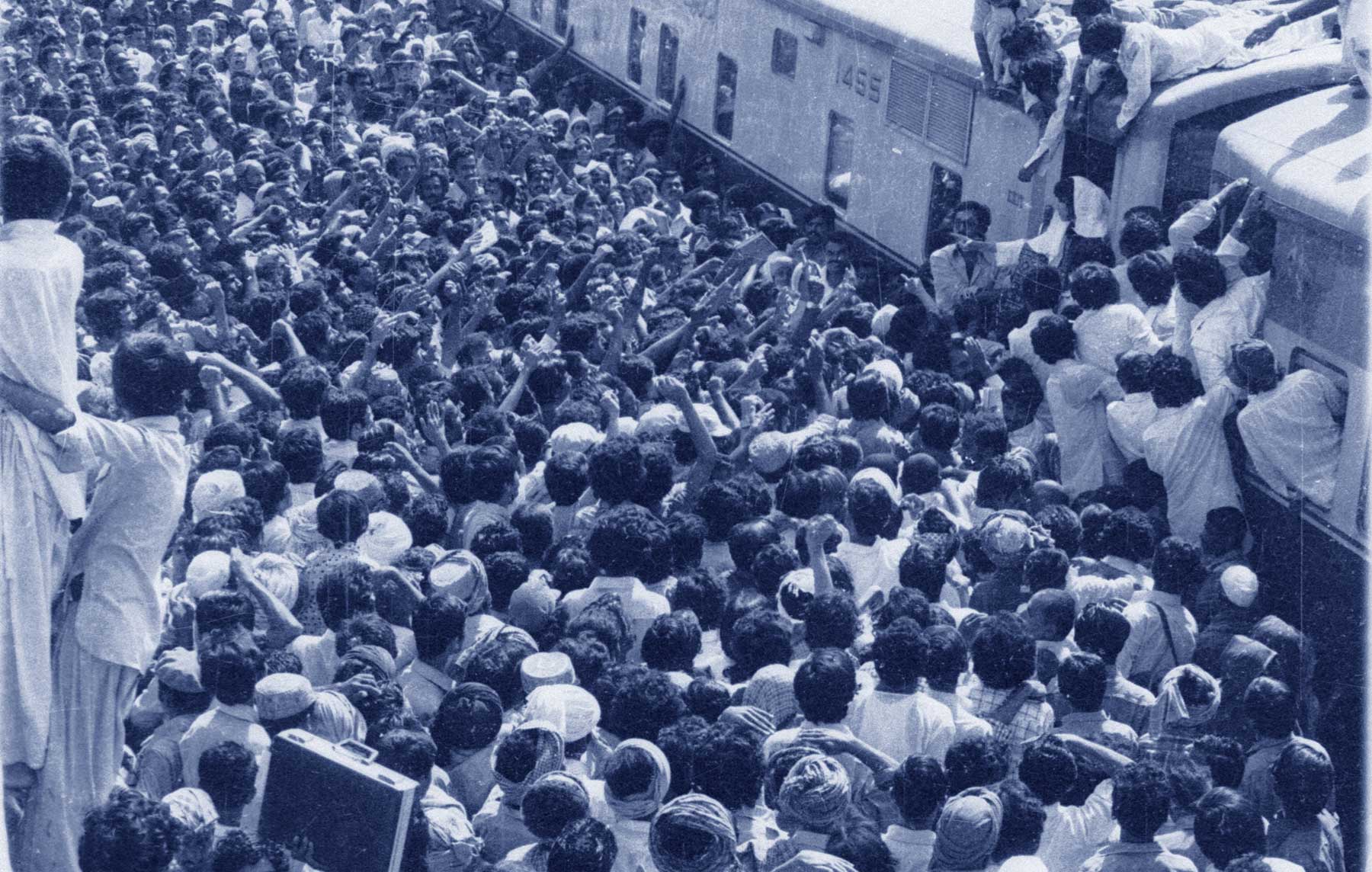
RAWALPINDI, Pakistan — For years, Pakistan’s soaring population growth has been evident in increasingly crowded schools, clinics and poor communities across this vast, Muslim-majority nation. But until two weeks ago, no one knew just how serious the problem was. Now they do.

Preliminary results from a new national census — the first conducted since 1998 — show that the population has grown by 57 percent since then, reaching 207.7 million and making Pakistan the world’s fifth-most-populous country, surpassing Brazil and ranking behind China, India, the United States and Indonesia. The annual birthrate, while gradually declining, is still alarmingly high. At 22 births per 1,000 people, it is on a par with Bolivia and Haiti, and among the highest outside Africa.

“The exploding population bomb has put the entire country’s future in jeopardy,” columnist Zahid Hussain wrote in the Dawn newspaper recently. With 60 percent of the population younger than 30, nearly a third of Pakistanis living in poverty and only 58 percent literate, he added, “this is a disaster in the making.”

The chief causes of the continuing surge, according to population experts, include religious taboos, political timidity and public ignorance, especially in rural areas. Only a third of married Pakistani women use any form of birth control, and the only family-planning method sanctioned by most Islamic clerics is spacing births by breast-feeding newborns for two years.

Even if the birthrate slows, some experts estimate that Pakistan’s population could double again by midcentury, putting catastrophic pressures on water and sanitation systems, swamping health and education services, and leaving tens of millions of people jobless — prime recruits for criminal networks and violent Islamist groups.

But instead of encouraging fresh ideas to address the population crisis, the census has triggered a rash of arguments over whether certain areas have been over- or undercounted, or reclassified as urban instead of rural. These squabbles amount to fights over political and financial spoils, including the number of provincial assembly seats and the amount of funding from the central government.

A few people, however, are paying close attention to the larger picture. One is Shireen Sukhun, a district officer for the Population Welfare Department in Punjab province. Her mission is to persuade Pakistani families to have fewer children and offer the families access to contraceptive methods — but she is keenly aware of the obstacles.

“The fatal combination we face is poverty and illiteracy,” Sukhun said. “It takes a long time to change people’s mind-sets, and we don’t have the luxury of leaving it to time.”

One outpost in her campaign is a tiny, bench-lined room in Dhoke Hassu, a congested working-class area of Rawalpindi. Inside, Rubina Rehman, a family welfare worker, listens all day to women’s problems with feverish babies, painful deliveries and other woes. Once they feel comfortable with her, she broaches the topic of contraception.

It has not been an easy sell. All the clients are Muslims, and most have little education. Some have been taught that God wants them to have many children. Some have husbands who earn too little to feed a large family but keep wanting another child. Some would like help but are too shy to discuss a taboo topic.

“When we first opened this post, women were frightened to come, and some people asked why we were against increasing the ummah [Muslim masses],” Rehman said. “But we explained how the prophet taught that you should have a gap of 24 months between each child, and that you should consider the family’s resources when making decisions. Now we do not face such opposition.”

On Thursday, a dozen women crowded into Rehman’s office, some carrying infants or toddlers. Several leaned close and whispered to her, then slipped packets of birth-control pills into their purses. One woman named Yasina, 35, explained proudly that she had gotten an “implant” — a hormone dose injected under the skin that prevents conception for several years.

“I already have five children, and that is more than enough,” she said. At first she had agreed to a tubal ligation, which the government arranges at no cost, but her husband, a laborer, would not allow it. “So I got the implant instead, and I didn’t tell him,” she said, bursting into laughter as the other women smiled.

Outside, the markets and alleys of Dhoke Hassu were teeming with a mix of Afghan refugees, migrants from rural Punjab and government workers. Some expressed confidence that God would provide for any children that came. But many said that it was important to balance family size with income and that their Muslim beliefs did not conflict with such practical needs.

“If half of our population is young, what will happen to their lives, their jobs, their needs?” mused Rizvi Salim, 29, a government railways employee carrying his only child, a 2-year-old girl, in his arms. Salim said that he was raised with seven siblings but that today, “things have changed. We do believe that God will take care of us all, but we also need to plan for our futures.”

But upwardly mobile urban communities are more open to such perspectives than rural areas, where two-thirds of all Pakistanis live. In village life, the influences of traditional culture and Islamic teachings are stronger, and the reach of public media campaigns about baby spacing is much more limited.

Attempts to open rural family welfare offices are often met with community suspicion and political opposition, but health officials say more mothers are asking about birth control. The remaining major taboo, they said, is permanent contraceptive practices such as vasectomies or tubal ligations.

In Khyber Pakhtunkhwa province, the population nearly doubled, from 17.7 million in 1998 to 30.5 million this year. The province is home to several million Afghan refugees, numerous Islamist militant groups and conservative religious leaders suspicious of supposed foreign plots to sterilize Muslims. But their views, too, are evolving.

“Islam does not contradict the idea of family planning, but it challenges the Western concept of birth control,” said Mufti Muhammad Israr, a religious scholar in Peshawar, the provincial capital. He said Islam allows “natural family planning” via breast-feeding but not “stopping the reproductive system permanently. The prophet Muhammad asked believers to marry and produce children.”

Hospital officials in Mardan, a large district in Khyber Pakhtunkhwa, said this month that they frequently deal with cases of child malnutrition and often see mothers with several very young children. They said that although more married couples are seeking family-planning services, women still have difficulty getting their husbands to cooperate.

One pregnant housewife waiting to see a gynecologist in Mardan had a small child on her lap and a 5-year-old girl by her side. All looked weak and malnourished.

“My husband doesn’t care about my health or the health of our children. He can barely support us, but he wants more,” said Zarina Bibi, 34. She said that a doctor had advised her to take a break from childbirth for several years but that she had no choice. “My husband doesn’t want birth control.”

Correction: The headline on an earlier version of this story incorrectly stated the rate at which Pakistan’s population has grown.
Haq Nawaz Khan in Peshawar contributed to this report.

Trump’s plan prompts ‘paradigm shift’ in foreign policy

ISLAMABAD, Sept 8: Pakistan on Thursday hinted at bringing a ‘paradigm shift’ in its foreign policy in view of the fast-changing situation on regional and international fronts, particularly after the new US strategy on Afghanistan and South Asia.

Foreign Minister Khawaja Asif, while speaking at a news conference, said the change was necessitated by recent developments “which are perhaps the biggest since the World War II”.

While he said Islamabad was not seeking confrontation with the US, he made it clear that relations with Washington would now be driven by Pakistan’s national interests.

Asif spoke against the backdrop of Pakistan’s ongoing push to recalibrate its approach to respond to the latest challenges thrust upon the government by President Donald Trump’s new roadmap for Afghanistan and South Asia.

The new strategy, while seeking troops surge to break the stalemate in Afghanistan, has envisaged tough measures against Pakistan to change its alleged approach towards certain militant outfits, including the Afghan Taliban and Haqqani Network.

The government summoned the envoys posted in key world capitals to seek their input in the aftermath of the Trump’s strategy.

Trump’s exit strategy from Afghanistan

Diplomats stationed in the US, Russia, the UK, Afghanistan, India, Iran and Saudi Arabia among others presented their recommendations to Prime Minister Shahid Khaqan Abbasi, who attended the concluding session of the conference.

After three days of deliberations at the Foreign Office, the envoys advised the government to avoid any ‘knee-jerk’ reactions and prefer diplomacy to confrontation for sorting out differences with the US.

Although details were not made public, official sources said senior diplomats suggested that the government tread a careful path in determining the direction of the country’s foreign policy in the wake of the Trump’s new plan.
The crux of their input was: Pakistan must seek engagement with the US and avoid taking any steps that might pit the country against the super power.

However, they agreed that the time had come for Pakistan to put its foot down to protect its national interests and to not give in to undue pressure being exerted by the Trump administration.

At the press conference, the foreign minister said the envoys reviewed the foreign policy in view of the changing scenario.

“We are undergoing a seismic shift. This is perhaps the biggest change after the World War II,” he said, adding that in view of the new alignments, Pakistan would have to review the situation ‘pragmatically’ and adjust its policies accordingly.

When asked whether the ‘paradigm shift’ means Pakistan would now deal with the US differently, Asif clarified that Islamabad was not seeking any confrontation with the US.

“We want to remain engaged with the US. The Pakistan-US relations have survived many ups and downs in the past and will survive this time too,” he insisted.

However, he made it clear that relations with the US would now be driven by ‘Pakistan’s national interests’.

Clearly drawing the line, the foreign minister said Pakistan would not allow the US and other countries to make it a ‘scapegoat’ for their own failures in Afghanistan.

One of the key aspects of the new Pakistani approach “is to reach out to regional players” for a political solution to the Afghan imbroglio.

“Pakistan strongly believes that Afghanistan is the foremost problem of regional countries – including China, Russia and Iran,” said the foreign minister, adding that emphasis should be on seeking a regional solution to the Afghan problem.

And in order to garner support for such an initiative, the foreign minister on Thursday left for Beijing where he would hold crucial meetings. From there, he will travel to neighbouring Iran, and is also expected to visit Russia and Turkey.

The envoys, said Asif, also discussed how to change the world’s perception of Pakistan and its counterterrorism campaign. Despite its enormous sacrifices as well as the gains, the world views Pakistan’s success through a different lens, he conceded.

“We have discussed this aspect in detail and agreed to work towards bridging this perception gap,” he said, while hinting at the launch of a diplomatic initiative to sensitise the world about its successes in the war on terror.

The foreign minister went on to say “whether or not the world recognises that Pakistan is winning the war on terror, 200 million people of the country bear witness that the country, by and large, is peaceful.”

NA rejects Trump’s ‘hostile, threatening’ statements

He insisted: “Pakistan is the only country that is on the verge of defeating the menace of terrorism. Our national and educational institutions and places of worship are much safer now, as the security situation has significantly improved.”

Asif also played down the hype over the BRICS joint communiqué in which leaders of the emerging economies – including China and Russia – expressed concerns over the threat posed by groups allegedly based in Pakistan.
There was nothing new in the BRICS declaration, he said and referred to the Heart of Asia Conference in December 2016 where a similar declaration was issued which was also endorsed by Pakistan.

Donald Trump’s New Policy About Afghanistan, Pakistan & South Asia

What are the processes that have led the US Republican president, Donald Trump to enunciate a much tougher policy toward Pakistan?

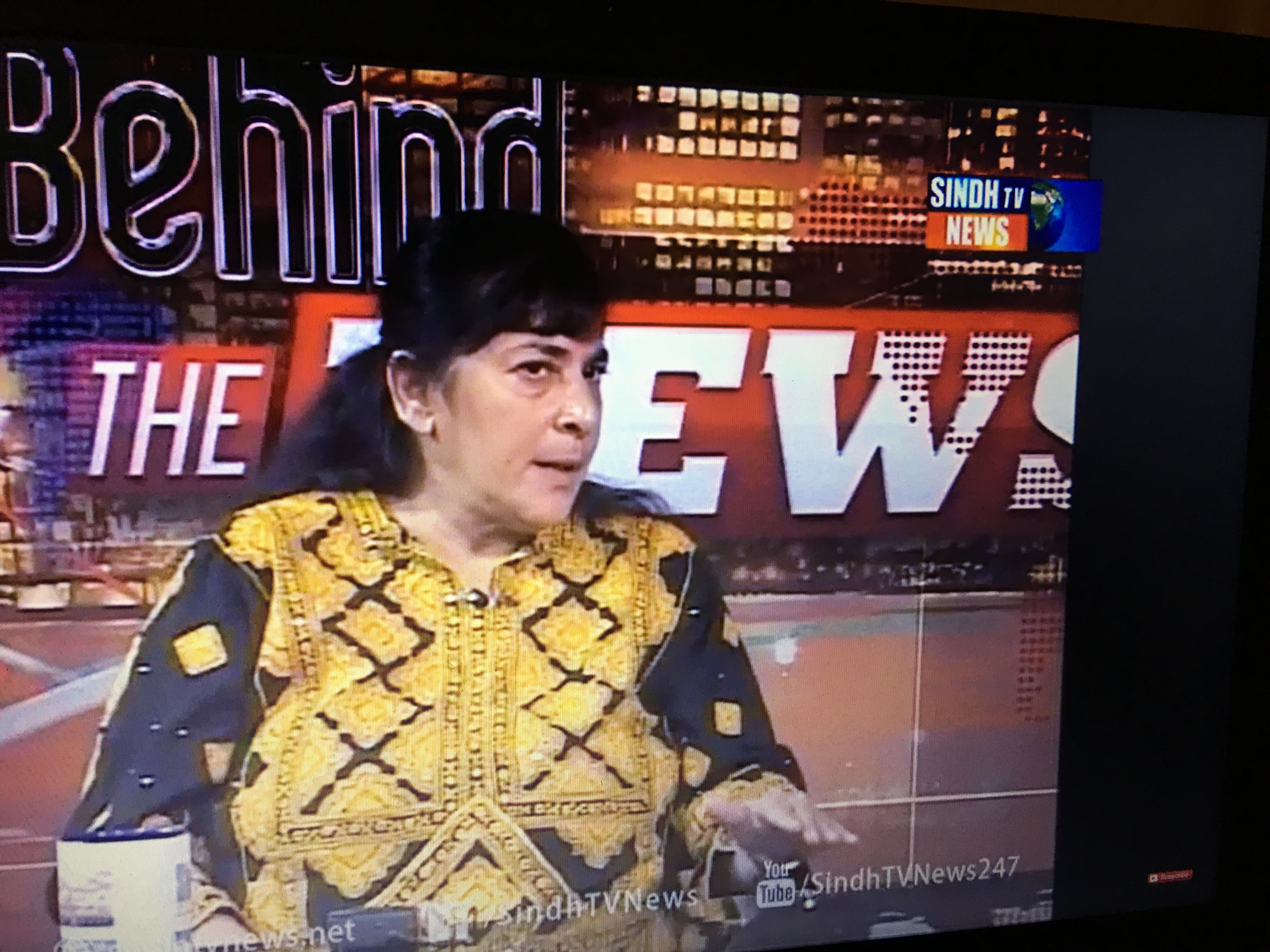
In this interview with Sindh TV, US based journalist Nafisa Hoodbhoy reveals why after 16 years of involvement in Afghanistan, the US administration has decided to enunciate an Afghan policy that includes both Pakistan and India.

It explores how the Trump administration’s policy decision that India do more business with Afghanistan is a departure from former president Barak Obama’s Af-Pak policy, that focused single handedly on the two countries.

Moreover, it discusses how Trump’s refusal to lay a time table for the withdrawal of troops from Afghanistan changes the dynamics in a war that completes its 16th year on September 11.

The interview can be heard and seen at the following address:

https://www.facebook.com/livebtn/posts/900016503489366

https://www.facebook.com/livebtn/posts/900016503489366

U.S. Gives Military Assistance to Pakistan, With Strings Attached

WASHINGTON — The Trump administration notified Congress on Wednesday that it was putting $255 million in military assistance to Pakistan into the equivalent of an escrow account that Islamabad can only access if it does more to crack down on internal terror networks launching attacks on neighboring Afghanistan.

The dueling messages sent to Pakistan — promising aid but attaching strings if the country’s counterterror efforts fall short — are part of an increasingly confrontational turn in an alliance that has long been strained.
The United States has provided Pakistan more than $33 billion in aid since 2002. But the annual funding has declined in recent years as Washington became increasingly disenchanted with Pakistan’s quiet support for the Haqqani network and the Taliban, whose attacks have been responsible for the deaths of American troops in Afghanistan.

Still, American officials have long recognized that Pakistan has tried to crack down on terror groups, and plays an important role in facilitating supply shipments to the United States military in Afghanistan.
“We can no longer be silent about Pakistan’s safe havens for terrorist organizations, the Taliban, and other groups that pose a threat to the region and beyond,” Mr. Trump said.

He added: “We have been paying Pakistan billions and billions of dollars at the same time they are housing the very terrorists that we are fighting. But that will have to change, and that will change immediately.”
State Department officials said that Mr. Trump’s promised changes would bring explicit conditions on military aid. Once Pakistan more aggressively pursues the Taliban and Haqqani network, the aid will be released — a determination to be made by Secretary of State Rex W. Tillerson, officials said.

Last week, Mr. Tillerson suggested that the United States’ patience with Pakistan was nearing a breaking point.
Get what you need to know to start your day in the United States, Canada and the Americas, delivered to your inbox.

“We’re going to be conditioning our support for Pakistan and our relationship with them on them delivering results in this area,” Mr. Tillerson said.

Critics of American aid to Pakistan said the administration was still not being tough enough.

“I would have preferred that the money just disappeared,” said C. Christine Fair, an associate professor at Georgetown University. “But if they’re going to do this, they should have said Pakistan can’t buy strategic weapons that could be used to attack India, such as F-16s.”

The $255 million in military assistance was the largest portion of $1.1 billion in aid authorized by Congress in 2016 that also included money for counternarcotics operations and health initiatives. If the State Department had failed to notify Congress in the next few weeks of its intention to spend the money, it would have been returned to the United States Treasury.

Rather than lose such a carrot, Trump administration officials said they wanted to use the money as incentive for Pakistan to change its behavior. By effectively putting the funds into escrow, the Trump administration also allows its own ongoing review of its policy toward Pakistan to continue unaffected by aid concerns, officials said Wednesday.

The Obama administration tried to use the sale of eight new F-16 fighter jets to Pakistan in the same way to persuade Pakistan’s government to better police its border with Afghanistan. Congressional strings on the deal made it less attractive to Pakistan.

In 2011, then-Secretary of State Hillary Clinton famously said at a town-hall meeting in Islamabad: “You know, it’s like the old story: You can’t keep snakes in your backyard and expect them only to bite your neighbors.”

Mr. Trump’s explicit call for India to become more engaged in Afghanistan demonstrated that Washington’s long history balancing the two South Asian rivals has tipped in India’s favor, which has deeply alarmed Islamabad.
But the Trump administration can ill afford to ignore Pakistan and its nuclear arsenal, which has served as a source for nuclear materials sent to Iran, North Korea and Libya.

The Empire Stopper By ROD NORDLAND AUG. 29, 2017 (nytimes.com)

When the American author James A. Michener went to Afghanistan to research his work of historical fiction, “Caravans,” it was 1955 and there were barely any roads in the country. Yet there were already Americans and Russians there, jockeying for influence. Later, the book’s Afghan protagonist would tell an American diplomat that one day both America and Russia would invade Afghanistan, and that both would come to regret it.

Michener’s foresight was uncanny, but perhaps that is not terribly surprising. Afghanistan has long been called the “graveyard of empires” — for so long that it is unclear who coined that disputable term.

In truth, no great empires perished solely because of Afghanistan. Perhaps a better way to put it is that Afghanistan is the battleground of empires. Even without easily accessible resources, the country has still been blessed — or cursed, more likely — with a geopolitical position that has repeatedly put it in someone or other’s way.

In the 19th century there was the Great Game, when the British and Russian empires faced off across its forbidding deserts and mountain ranges. At the end of the 20th century it was the Cold War, when the Soviet and American rivalry played out here in a bitter guerrilla conflict. And in this century, it is the War on Terror, against a constantly shifting Taliban insurgency, with President Trump promising a renewed military commitment.
Wars of the last three “empires” to invade Afghanistan coincided with the age of photography, leaving a rich record of their triumphs and failures, and an arresting chronicle of a land that seems to have changed little in the past two centuries.

The British Empire
Over an 80-year period, the British fought three wars in Afghanistan, occupying or controlling the country in between, and lost tens of thousands of dead along the way. Finally, exhausted by the First World War, Britain gave up in 1919 and granted Afghanistan independence.

It is striking, looking at these photographs, how little the rural Afghan landscape has changed between the early 19th and 21st centuries. The mud-walled fortifications of those days can still be seen throughout the country, and some of them are still in use as military facilities today. The fort in Kabul during the British occupation in 1879, shown below, looks very much like the famous Qala-i-Jang fortress in northern Afghanistan where the century’s first American combatant, a C.I.A. agent, was killed in 2001.

The insurgents’ dress, and even that of many pro-government militiamen, has changed little from the British period.

One of the books inspired by that period was “Flashman,” the first in a series of historical novels by the Scottish author George MacDonald Fraser. The book’s hilarious eponymous character, Flashman, is a caddish rake and self-described coward who manages to be the lone survivor of the Battle of Gandamack, arguably the British army’s worst ever defeat. Flashman is, of course, fictional, but he has a thoroughly modern eye when he describes the nature of the British war against the Afghans.

“There were scores of little petty chiefs and tyrants who lost no opportunity of causing trouble in the unsettled times,” Flashman recounts. “Our army prevented any big rising — for the moment, anyway — but it was forever patrolling and manning little forts, and trying to pacify and buy off the robber chiefs, and people were wondering how long this could go on.”

The British lost that Battle of Gandamack, but they were back in the next fighting season exacting vengeance, and eventually defeated the Afghans. It was for many of them a sobering experience.

A British Army chaplain, G. R. Gleig, who witnessed it, called it “a war begun for no wise purpose, carried on with a strange mixture of rashness and timidity, brought to a close after suffering and disaster, without much glory attached either to the government which directed, or the great body of troops which waged it. Not one benefit, political or military, was acquired with this war.”

Sovietstan
The Soviet Union spent the postwar period pacifying and modernizing its Central Asian republics with great success. But it was mistaken in assuming that the same program could stick in Afghanistan. The Soviets invaded in 1979 to try to quell a brewing civil war and prop up its allies in the Afghan government, and they limped out in 1989.

The Soviets brought schools and roads, civil institutions and freedoms for women. But their occupation was unbearable to a generation of Afghan insurrectionists who declared a holy war and enjoyed the extensive support of the United States, Pakistan and Saudi Arabia.

It was a brutal war, on all sides. “Two Steps from Heaven,” a novel by the Russian writer Mikhail Evstafiev — himself one of the “Afgantsy,” as Soviet veterans of that Afghan war are known — describes a set of arrangements amid perpetual conflict that seem conspicuously familiar today: “As the years passed, numerous military installations grew up on the territory adjacent to the palace. A compound covered several square kilometers. It was guarded assiduously against the Afghans and, as was to be expected, Soviet power reigned supreme in that one specific part of Kabul.”

“The distance between the Afghans and the Soviets was measured in centuries,” Evstafiev wrote. “A man felt safe and secure only inside the garrison, surrounded by barbed wire, tanks and machine guns; fate had strewn Soviet military divisions all over Afghanistan, they were like islands in an ocean, lonely, far from the mainland.”

The Soviets left the Afghan landscape permanently disfigured with the bombed-out husks of tanks, and the earth itself seeded with more mines than anywhere else on the planet. When their client state in Kabul collapsed, what ensued was years of bitter civil war that destroyed many of the cities, and led to the rise to power of the Taliban in 1996.

That first battle, fought at the Qala-i-Jangi fort, featured American personnel on horseback, using lasers to guide bombs released from jet aircraft.

Since then more than a million American servicemen and women have served in Afghanistan; 2,400 of them lost their lives, along with another 1,100 NATO and other coalition allies killed. Afghan security forces lose three or four times that number just in a year now; the conflict killed more than 3,000 Afghan civilians in the past year, as well. American casualties this year have totaled only 11, most of them Special Operations troops on counterterrorism missions. NATO casualties: zero.

By 2010, as American military numbers rose to 100,000, American and other coalition troops were in every one of the 34 Afghan provinces, often scattered — as the Soviets had been — in isolated fortresses. Now they are mostly restricted to a few major bases, and their numbers are estimated at around 12,000, including an influx of perhaps another 4,000 from President Trump’s military commanders. The Afghan security forces, at the same time, have peaked at around 330,000 — roughly the same size they were during the Soviet period.

Many years after he had researched “Caravans,” James Michener was asked which country he would most want to revisit. His answer was Afghanistan, which his American diplomat character had described as “one of the world’s great caldrons.”

“I remember it as an exciting, violent, provocative place,” Michener wrote. “Almost every American or European who worked there in the old days says the same.”

And in these days, too, Americans seem committed to return to Afghanistan for many years to come.

“We are with you in this fight,” the American military commander, Gen. John W. Nicholson Jr., told Afghans on Thursday. “We will stay with you.”

The American century in Afghanistan is far from over; its book has not been written yet.

Talks with US suspended in protest, Senators told

ISLAMABAD: Foreign Minister Khawaja Mohammad Asif said on Monday that Pakistan had suspended talks and bilateral visits with the United States as a mark of protest over the recent anti-Pakistan diatribe by US President Donald Trump.

Sources quoted the minister as telling the Senate, which converted itself into a committee prior to its regular session, that Pakistan had taken the fiery remarks seriously.

US Secretary of State for South and Central Asia Alice Wells was supposed to arrive here on Tuesday, while the foreign minister himself was to travel to the US last week under the previous schedule.

About the recently unveiled policy of the US president on South Asia, Mr Asif said it envisaged no military role for India in Afghanistan. According to the sources, the minister said it was rather a role of economic development. He claimed during the in-camera session of the committee that India would not be allowed to use Afghan soil to destabilise Pakistan.

FM Asif says Trump’s South Asia policy envisages no military role for India in Afghanistan
The remarks were surprising for many as they believed that India was already using Afghan territory for subversive activities in Pakistan. A participant in the meeting told Dawn that the members instead sought the details of the India-sponsored terror incidents in Pakistan, including the ones carried out by the under-arrest serving officer of India’s intelligence agency Research and Analysis Wing, Kulbhushan Jadhav.

The members raised questions as to what would be the mechanism to check if the enhanced Indian presence was not abused to foment terrorism in Pakistan. They also sought to know details of the unusual number of Indian consulates in Afghanistan, which it is said was more than those it had in the US.

The members also asked the government to share a fact-sheet on US assistance received after 9/11, the reimbursed amount of coalition support fund (CSF) and the financial loss incurred by the country as a frontline state against the war on terror.

Foreign Secretary Teh¬mina Janjua informed the house that a meeting of Pakistan’s envoys had been convened from Sept 5 to 7 to chalk out a strategy after announcement of the new US policy on South Asia.

It was decided that the Committee of the Whole will meet again Tuesday to finetune policy guidelines in the light of emerging realities and the role of the United States, developed by a six-member committee of the house. The policy guidelines will be given shape of a resolution which is most likely to be passed by the Senate on Wednesday.

Before the foreign minister made a request to declare the proceedings in camera, Senate Chairman Raza Rabbani reminded him of his proposal for a joint session of parliament made in the presence of Prime Minister Shahid Khaqan Abbasi. He said that if a resolution passed separately by the Senate was sent to the National Assembly, it would be sitting in judgement on a document of the other house. He said it would also not send a good message if both the houses passed different resolutions.

The foreign minister, however, said the National Assembly might endorse the resolution passed by the Senate or slightly alter it.

Senator Farhatullah Babar of the PPP noted that the substance and spirit would remain the same and there would be no harm in the two houses passing separate resolutions on the same subject
.
During its regular session shortly after the meeting of the committee of the whole, military dictators came under fire.

Speaking on the motion on creating awareness about the Constitution, Farhatullah Babar called for compulsory teaching of the Constitution and constitutionalism in all military academies in the country.

Referring to General Zia, he said a former military dictator in a newspaper interview described the Constitution as a “mere 15-page document that I can tear at will and all the politicians will follow me wagging their tails”. Another military dictator said that the Constitution could be dispensed with if the country faced threats, he added.

He said that the Quaid after his visit to Quetta in June 1948 and meeting some senior officers had said in his conversation with them he had noticed that they did not fully grasp the value of the Constitution. The Quaid then explained to them the importance of the Constitution and the value of upholding it.

Secondly, Mr Babar said that those who subverted the Constitution and their abettors must not be allowed to escape punishment. He wondered what made it possible for the last dictator who instead to going to the court turned his car towards a hospital in Rawalpindi. He called for removing the portraits of dictators from all official premises.

A resolution moved by Mr Babar to preserve the culture and heritage of the people of Kalash in Chitral and for the inclusion of this area in the Unesco World Heritage Site was passed unanimously when Law Minister Hamid Zahid said he did not oppose it.
https://www.dawn.com/news/print/1354652

Published in Dawn, August 29th, 2017