MQM Rejects BBC Report on Imran Farooq’s Murder

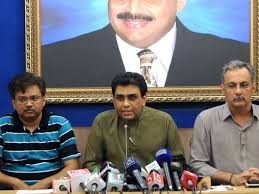
MQM press conference (Credit: tribune.com.pk)
MQM press conference
(Credit: tribune.com.pk)

KARACHI, Jan 30: The Muttahida Qaumi Movement (MQM) said on Thursday it had no links with the two persons identified in a BBC programme as suspects in the murder of Dr Imran Farooq, a senior leader of the party.

The party criticised BBC for making a documentary against the MQM and its chief Altaf Hussain and said the purpose of “the media trial” was to “influence the courts as well as the murder investigation in the UK”.

In its Newsnight programme, the broadcaster named Pakistani students Mohsin Ali Syed and Mohammad Kashif Khan Kamran as the suspects. It said the record showed that the two left the UK on Sept 16, 2010, a few hours after the assassination, and flew to Sri Lanka and then on Sept 19 to Karachi. They were detained in the city.

Mr Farooq was stabbed outside his home in Edgware, London, near the MQM’s international headquarters.

At a press conference in Karachi, MQM leader Dr Khalid Maqbool Siddiqui made it clear that the party had no links with the two “suspects” and that it was the responsibility of the British government to charge them with the murder.

He said the MQM also did not know Atif Siddique, the person named as the sponsor of the two men for their UK visa.

The MQM leader wondered why the British authorities had allowed Mr Syed and Mr Kamran to leave the UK if they were wanted for their involvement in Dr Farooq’s assassination.

Accompanied by Dr Farooq Sattar and Barrister Farogh A. Nasim, Dr Siddiqui said that the MQM was being victimised in the UK. He said Mr Hussain was a coin collector, but the British investigators had seized his collection and also the laptop of his daughter.

Rejecting the report, the MQM leaders said that Muttahida believed in freedom of the press, but the BBC programme was aimed at spreading false propaganda and “we believe it is the media trial of the MQM and Mr Hussain”. Barrister Nasim said the report was based on speculation and contained no fact.

He said he had responded to the allegation of money laundering in the BBC programme, but that part was edited out. He said BBC was being fed misleading information by the MQM’s opponents and announced that a legal course of action would be adopted against it.

PROSECUTORS’ REQUEST: According to the BBC report, British prosecutors have asked Pakistan to trace Mr Syed and Mr Kamran, who are believed to be in Pakistani custody but not under formal arrest.

The investigation has seen more than 4,000 people interviewed, but so far the only person arrested has been Iftikhar Hussain, nephew of the MQM’s chief.

Iftikhar Hussain was arrested on suspicion of conspiracy to murder, but is now on police bail. It is an arrest the MQM says was based on wrong information.

Barrister Nasim described Iftikhar Hussain as “not a person who is really with himself mentally” and added that Iftikhar Hussain had suffered at the hands of the Pakistani authorities.

In November 2011, Metropolitan Police chief Bernard Hogan-Howe said his organisation was liaising with Pakistani authorities over the arrests.

The Pakistan government has denied anyone has been arrested and officials had not replied to questions about the request from the UK’s Crown Prosecution Service.

Documents obtained by BBC from official sources in Pakistan suggest Mr Syed and Mr Kamran secured UK visas on the basis of admission to the London Academy of Management Sciences (Lams).

The documents name two other men. One is Karachi-based businessman Muazzam Ali Khan, who is believed to have endorsed the suspects’ UK visa applications and was in contact with Iftikhar Hussain throughout 2010

The other is Atif Siddique, an educational consultant in Karachi, who is believed to have processed them. Mr Siddique said he was not the agent of Lams and did not know the two suspects.

Mr Syed arrived in the UK in February 2010 and Mr Kamran in early September 2010.

Phone records indicate the two moved around together and it is believed they kept Mr Farooq under surveillance.
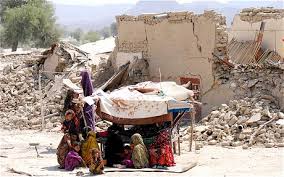
Balochistan quake victims still homeless

Awaran victims (Credit: balochsamacharan.com)
Awaran victims
(Credit: balochsamacharan.com)

Two catastrophic temblors jolted Awaran and Kech districts of Balochistan in September last year. While the episode has been obscured by a series of new headlines in media, miseries continue to shake the affectees.

According to the data of the National Disaster Management Authority, 386 people were killed and 816 injured. Malar and Mashkai tehsils of Awaran were the worst hit. The NDMA confirms more than 32,000 houses were flattened out and more than 14,000 partially damaged. Unofficial sources claim that the digits are watered down. Numbers aside, death and devastation is certainly enormous. Life is still scrambling through the heaps of debris particularly in Awaran district. Countless people are still homeless taking shelter with their relatives and acquaintances in neighbouring Lasbela, Hub and other areas.

Local communities bemoan that only a fraction of the promised compensation has been disbursed by the government. Hundreds of hapless families are unable to reconstruct their mud houses. Most of the schools and health facilities are not yet restored.

Balochistan is a chronic victim of natural and unnatural miseries. Earthquakes, floods and droughts keep visiting the province frequently. Socio-economic indicators of the province are at sub-human level and Awaran is among the bottom districts of the province. Awaran is victim of a double whammy i.e. distressful human development indicators and pervasive militancy. The district is among the least developed areas of the country and the disaster has further devastated the poverty-stricken people.

In a national ranking of districts carried out by a renowned research organisation Social Policy and Development Centre (SPDC), Awaran was 20th most deprived among 26 districts of the province in 2001. It ranked as 93rd most deprived among 100 districts in the country. Another study of SPDC “Social and Economic Development Ranking of Districts of Pakistan” also ranked Awaran at 84th number out of 94 districts. SPDC and the World Food Program reports show 54 per cent population as poor in the district.

Awaran is the 4th largest district of the province, sparsely populated with only four persons dwelling per sq. kilometre. According to the district profile of Awaran published by “Punjab Lok Sujag”, agriculture and livestock are the two major sources of livelihood. Out of 488 villages in Awaran and neighbouring Lasbela district only 83 have dispensaries. Most of these health facilities are ailing from shortage of doctors, paramedical staff, medicine and equipment.

At the time of earthquake, the district-headquarter hospital had only one doctor seen confounded to manage thousands of injured. Even first aid services were not available to meet the unexpected flow of patients. It compelled the authorities to transport hundreds of injured to Karachi and other areas to save their lives.

Poverty is rampant as 88 children out of 1000 live births die within five years and 47 per cent children are underweight. Women are at the bottom of the pit with only 11 per cent girls availing the luxury of secondary education. According to the district profile conducted by Balochistan’s Planning and Development Department in collaboration with the Unicef in 2011, the total population of Awaran district stood at 124,000 and only 49 per cent of the people had national identity cards (NICs). Not having CNIC deprives one from even relief supplies during disaster and invites humiliation when roadside frisking is carried out by security agencies.

Immediately after the earthquake, relief operations were commenced. However, the efforts of national and international humanitarian groups suffered severe impediments mainly because of security related confinements. International aid agencies were not allowed to operate and national humanitarian agencies were denied a sacrosanct NoC and thus restricted from mobilising much-needed resources. All this was done under the pretext of security concerns.

While relief work was going on, an operation was also launched in the worst-hit parts of the district. Militancy is an undeniable reality in the area. There were instances when the government functionaries were intimidated and deterred from working in the area. Rockets were fired when the chief minister visited the area with his entourage. Baloch nationalist groups alleged that security agencies are trying to control the area hitherto dominated by insurgents. It triggered a fresh spate of skirmishes.

In such a hostile situation, local youth and male family members avoided risking their lives and thus couldn’t move to collect relief goods as the routes were unsafe and local people, specially youth, were being stalked. It multiplied the miseries of ordinary disaster victims who suffered agonies and pains merely for belonging to this area. Women suffered the most as they remain immobile due to traditional strictures. Since male-folk could not move fearlessly, it deprived women affectees of food, medicine, water & sanitation and shelter support. Women-specific needs hardly drew any attention in this bedlam and chaos. In fact the government lost an opportunity to reintegrate the disgruntled local communities.

Because of harsh attitude of security personnel, local communities are already dejected. Restricting relief operation has further fortified their alienation. It would have been strategically prudent to facilitate relief work rather than hampering it to provide much needed solace to local communities. Thousands of affectees were denied rightful relief support due to unnecessary confinements.

Realising the intensity of miseries of local communities and lackluster relief work, at one stage the Chief Minister of Balochistan, Dr Abdul Malik, made a desperate appeal for international aid but the federal government rejected his requests and refused to issue no-objection certificates to the UN and other international agencies. Arguably, the appeal for international aid should be the last resort and one should realise that if a chief minister of the province resorted to that, it must have justified reasons.

If provinces are authorised to seek foreign loans and investments, there is no reason to deny their right to seek international support during emergencies if response is listless and insufficient. Whereas international aid appeal injures national self-esteem and pride, absence of adequate relief support hurts thousands of victims as well. Had there been a swift and sufficient local response, no one would have desired foreign charity.

Although international aid agencies were ostracised, some of them were willing to provide support through national humanitarian organisations but the enigmatic demand for NoC blocked all such initiatives. A simple NoC issued by the provincial authorities would have facilitated national humanitarian organisations to mobilize funds even without any appeal for international aid.

Surprisingly, the provincial government did not take up the issue with due seriousness. Although local authorities did not stop national humanitarian organisations from providing relief support, international aid agencies were reluctant to provide funding to national organisations in absence of NoC. Such approach of international humanitarian agencies, specially the UN, can also be questioned. Relief as a humanitarian support should not be subservient to host government’s NoCs. There is no justification to deny humanitarian support through national civil society on flimsy ground of no objection certificate. This confined national humanitarian organisations to rely only on meager local philanthropy which was soon dwarfed by the enormous needs on ground.

National Humanitarian Network (NHN), a network of Pakistani humanitarian organizations, also highlighted the plight of affectees due to insufficient aid, yet it fell on deaf ears of decision makers. Humanitarian response in conflict-stricken areas is a challenging task, yet it cannot be compromised because of security reasons. Thousands of disaster victims cannot be denied their right to receive relief aid at the time of misery, specially when it is a natural disaster.

State, civil society and international humanitarian community are under moral obligation to extend humanitarian aid even in the worse situation. What was even more ironic that while national civil society was restricted through NoC, religious outfits did not need such an exemption and operated freely to provide relief services. Whereas this act deserves appreciation, it has political dimensions as well.

Unlike civil society, faith-based organisations seize such opportunities to penetrate in local communities and proselytise their religious and sectarian dictums. It has been noticed during recent years that faith-based groups are facilitated to make inroads in disaster affected areas whereas civil society is systematically shackled and discouraged. This further shrinks space for already squeezed civil society. Disasters should be considered as humanitarian matter and access to relief should be considered as a basic right of affectees.

Media man pursues justice at his own risk

Abdus Salam Soomro, a poor cameraman must be rewarded, not only for capturing the historic, although horrifying scene of the killing of a boy, but for his courage to stand and record his statement before the Anti-Terrorism Court (ATC), which has now led to the sentence to five personnel of Rangers paramilitary force in Karachi.

The Sindh High Court on December 21, 2013 upheld the ATC decision and confirmed the death sentence to one Rangers personnel, life imprisonment to four others and acquittal of one for want of evidence. The trial court had sentenced Shahid Zafar to death in August 2011.

The bench observed that three eyewitnesses had categorically deposed against the appellants and identified them in court. Cameraman Soomro, who captured the scene, also fully implicated them.

The accused can now filed an appeal before the Supreme Court of Pakistan and if the apex court also upholds the decision, a mercy appeal can be filed before the President of Pakistan.

“The officials encircled the victim, one of them opened fire upon him twice. The young boy cried and begged for his life but he was not moved to the hospital and died due to heavy loss of blood,” the verdict stated.

This upholding of the law may not have been possible had Soomro not filmed the entire scene as a journalist on duty. Hats off to him for keeping his cool without giving Rangers men any idea that their actions were been recorded.

Former Chief Justice of Pakistan, Mr Iftikhar Chaudhry, took suo-moto notice of the case after Somroo’s video, initially made for his Sindhi TV channel, Awaz, which was then picked by all the news channels and described by all as ‘masterpiece journalistic evidence’ abuse of authority.


The footage of the gruesome murder shocked the entire nation, but the courageous cameraman was abandoned by his organization and he was left with no other option but to leave the city and shifted to Islamabad in the face of threats and intimidation.

The several-minute video showed victim Sarfraz Shah pleading with Rangers personnel not to shoot him as one of them pointed gun near his chest. Within seconds he was shot and injured. Later, it was reported that he died on his way to hospital.

Initially, Rangers had claimed that he was a criminal and even the investigation of a Joint Interrogation Team (JIT) bailed out Rangers’ men, and defended the accused, saying they did their work “in the line of duty.”

A few months after the incident in Benazir Shaheed Park, in Clifton neighborhood, I met Soomro at the Benazir International Airport in Islamabad while coming to Karachi. “Are you going to Karachi? I asked. “Yes, to record my statement in the court,” he said. “But have they provided any security,” I enquired. “A police official is with me,” he said.

Soomro had shifted to Islamabad after his organization did not provide much needed support in his defense and security. A leading news anchor provided him a job for his courage and standing before the mighty Rangers.

This young man not only made a historic video of a horrific act of abuse of authority, but when required recorded his evidence despite serious threats to his life.

Many in our society are witness to criminal activities but hardly anyone shows the courage to stand up and that too in an incident where the personnel of law enforcement agencies were involved in violation of law.

Soomro had spent sleepless nights for weeks and months, getting all kinds of threatening calls not to record his statement. His organization asked him to go to Islamabad, but later dumped him.

“This video is now people’s property,” he said. “To be honest I did not even think that I had recorded a historic scene. It was only after it was aired and I started getting calls from all of my colleagues and international media that I realized that I had done something extraordinary. You know I am a poor cameraman and new in this profession. Now I understand the importance of footage, which at times becomes undeniable evidence and serves as a witness.”

Well done Soomro. Keep up your good work!

When Citizens Pave the Way for a Literate Nation

CEDF bus (Credit: tribune.com.pk)
CEDF bus
(Credit: tribune.com.pk)

KARACHI, Jan 24: The Citizens Education Development Foundation (CEDF) has one goal, “Functional literacy for all”, and if students can’t come to their schools, they take the school to the students — literally.

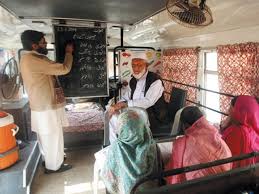
The foundation purchased their first bus in 1993 which was converted into a mobile school. The purpose of the bus is to deliver education to children in katchi abadis who do not have access to the CEDF home schools.

A new bus was commissioned in 2000 with the help of Hino Motors and painted by Vasl, an art-based NGO. When the bus became too dilapidated to serve its function, a new bus was commissioned in 2000 with the help of Hino Motors who gave CEDF a discount in lieu of a donation. Vasl, an art-based NGO, painted a bright mural on the bus free-of-charge, giving it a cheery, welcoming appearance.

“Everyone can do something, even housewives can do this,” stated Rehana Alam, secretary of CEDF.  “We are women of leisure who don’t want leisure, we want to work. We are focusing on the forgotten child here. Our aim is to provide at least enough education to these children so that they can read and write, whether they continue their education is their choice.”

The foundation exists entirely on donations — from other NGOs, its own members and concerned citizens. They provide yearly medical checkups for the students through HELP Pakistan, along with free eye checkups via the Layton Rahmatulla Benevolent Trust (LRBT).

The foundation operates without an office and only the teachers draw a salary. “We want all of the money to go to the children,” Alam said, while speaking to The Express Tribune.

Electricity for fans in the bus is provided free-of-charge by a neighbour and free water is provided by another.

The bus picks up children before parking in an empty plot within walking distance from Shah Rasool Colony. Equipped with benches, desks and a large blackboard inside, the bus serves 160 students per day with four shifts of two hours each. The students’ ages range between five to 14 years. Since some students are at different learning levels, each one is taught on an individual basis.

A teacher and a teaching assistant teach the students basics of reading and writing. CEDF attempts to provide basic literacy and, for interested students, helps them prepare for entrance exams for regular school. They also sponsor students’ further education in schools, colleges and vocational institutes.

The foundation also sponsors teachers, such as Shehzad, who works at the mobile bus part-time and also attends a private college. Another former student, Shahzeb, is also in college, studying multimedia. He was a student from the first home school of the foundation and son of the first teacher employed by CEDF, Liaqat. Shahzeb currently helps out at the foundation by computerising their records. “The environment [at the school] was brilliant, everyone was always friendly and it was like one big family,” he said proudly, in perfect English.

Some students come back to the home schools after graduating to formal schools, finding that they had difficulty managing. Despite the home schools being dedicated to basic literacy only, Liaqat, along with some members of CEDF helped the children in learning math and English.

para

“Currently, I’m helping a boy named Shakeel prepare for grade nine entrance exam,” said Samra Mansur.

A hindrance to their expansion, however, is a lack of dedicated volunteers. Currently, the CEDF comprises 16 people with common interests, but they need more volunteers. “Many organizations [like CEDF] are not well known, despite the work they do,” said Alam.

Published in The Express Tribune, January 24th, 2014.

The end of an era in Kabul: Taliban attack on cherished restaurant shatters illusion of oasis

La Taverna in Kabul (Credit: businessweek.com)
La Taverna in Kabul
(Credit: businessweek.com)

Washington, Jan 19: On a recent Friday evening in Kabul, I gathered with friends at the Lebanese restaurant that had long been a convivial and secure oasis in a harsh and unpredictable country. The occasion was a farewell meal before I left for the States — a cherished ritual in my many visits to Afghanistan over the past decade.

As always, after an abundant assortment of mezze, we raised our discreet cups of “white tea” and promised to meet there next time. As always, the proprietor, Kamel Hamade, a dapper businessman from Beirut, refused to let us pay. “Give the money to help the animals instead,” he would insist.

Kamel was an animal lover, political gadfly and the genial host of La Taverna du Liban, a cozy bistro that catered to the foreign and local elite — Western aid workers, Middle Eastern entrepreneurs, Afghan ministry officials. There was a frisson of intrigue amid the hookah smoke and hushed chatter. We jokingly called it the “Rick’s Café” of Kabul.

There was also real danger lurking outside, we all knew. Taliban militants often targeted establishments where Westerners worked or met, and Kamel had beefed up security repeatedly against possible attacks. He was a gentleman, but also a survivor of civil war and a scrappy businessman who never shied from a fight. He kept a loaded gun in his room upstairs and a formidable mastiff named Jeff in a pen by the front door.

“I’ve got to get out of here,” he swore to me a dozen times in the past several years. “There’s too much tension, too much difficulty. I’m going to open a restaurant somewhere nice, like Geneva or New Zealand.”

But although he often travelled home to Beirut or abroad on business, Kamel never did abandon Kabul and La Taverna. He stayed on, even as foreign missions began closing in anticipation of Western troop withdrawals, political instability and growing violence. He stayed on even after other restaurants folded, reservations flagged due to diplomatic security alerts, and a business dispute led to a shootout at the restaurant and landed him briefly in an Afghan jail.

As long as La Taverna remained open — as long as Kamel was there in his favorite corner, smoking cigarettes and counting change and yelling at the waiters and surveying his domain and leaping up to greet old friends — I felt as if I still had a familiar sanctuary, a small zone of comfort in Kabul.

On Friday evening, that illusion was violently shattered. At 7 p.m., the busiest dinner hour of the week, a Taliban suicide bomber detonated himself outside the front gate, right next to Jeff’s pen, and two gunmen shot their way inside, raking the dining room with gunfire. By the time Afghan security forces stormed the premises and shot them, at least 21 people were dead, including Kamel and dinner guests from half a dozen countries. So was Jeff.

I was back in Washington by then, working at my desk, when a colleague called unexpectedly from Kabul, then a friend e-mailed. A loud blast had been heard. More messages and news bulletins followed, the focus narrower, the details still sketchy but horrific. It was La Taverna. There was shooting and commotion outside but no news, nothing, from inside.

I reached an Afghan friend whose brother was a cook. He had escaped over the back wall and had seen Kamel running into the dining room with his gun. My stomach knotted in dread. I imagined him plunging into a scene of chaos and screams and blood, defending his guests and his property to the death.

Within two hours, those fears were confirmed. My friend was dead, my convivial war-zone sanctuary a charnel house. I also knew this attack had changed everything for me, my friends and the entire international community in Kabul.

There had been other Taliban assaults in the capital over the years — against international hotels and agencies and military compounds. But this was more intimate, more savage, more personal. The Taliban crowed in an e-mail Friday about eliminating foreign “occupiers,” but all I could think about was Kamel fretting over his ailing orange cat, Boy, or trying to find Jeff a mate to make him less ferocious, or refusing to let his friends pay for a meal.

I also thought about the dozens of wonderful evenings over the past decade I had shared at La Taverna with friends and colleagues and fellow animal rescuers — a veterinarian from Maine, an aid supervisor from France, an engineer from Prague, a security contractor from Australia, a diplomat from Canada, a nurse from Nashville, a lawyer from Ireland, an anthropologist from Rome, and many Afghan friends and co-workers. Now, the Taliban had made sure we would never meet there again.

On Saturday, I found my e-mail inbox flooded with messages from these now-scattered friends, some wondering if I was safe, some recounting memories of Kamel’s attentiveness to us and his beloved four-legged companions.

One close friend in Kabul wrote what we were all thinking: “Is this a horrid, isolated incident, or does it have greater long-term consequences and ramifications?”

Of Kamel, she wrote, “he still remains perhaps the kindest, most gentle, and respected of men I have met in this city. He created a unique space for himself, for the restaurant, and for all of us — expat and Afghan alike. A culture, a sanctuary and a place of civility have been lost, and will not be replaced.”

TTP Owns Attack on Security Forces, says Ready for “Talks”

Bannu attack (Credit: dunyanews.tv)
Bannu attack
(Credit: dunyanews.tv)

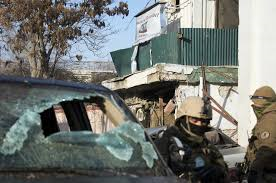
PESHAWAR, Jan 19: A bombing, targeting a security forces convoy, killed 20 people and injured 30 others near Razmak gate in Cantt area of Khyber Pakhtunkhwa’s Bannu district on Sunday. The Pakistani Taliban claimed the attack.

An ISPR spokesman said that in the attack, 20 security personnel were killed and 30 were injured.

Speaking to CNN, Shahidullah Shahid, spokesman for the proscribed Tehrik-i-Taliban Pakistan (TTP) claimed that the militant organisation was responsible for the attack and said that their attacks on security forces would continue.

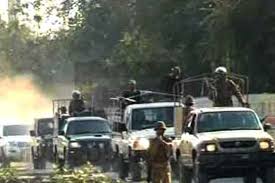
On the other hand, intelligence sources say that a convoy, comprising military and civilian vehicles, was ready to move towards Miramshah in the North Waziristan tribal region from a ground near Razmak Gate in Cantt area of Bannu when the explosion occurred in one of the coaches.

The sources added that the explosives were planted in one of the vehicles hired from a private party.

Federal Interior Minister Chaudhry Nisar Ali Khan condemning the incident has sought a report from the Inspector General of Frontier Corps with the details related to the hiring of the private vehicles for transportation.

Emergency and security forces reached the attack site and shifted the victims to a nearby hospital. Those killed in the attack included civilians and security forces personnel.

Moreover, security forces cordoned off the area as a probe into the incident went underway.

Within hours of the attack, the TTP spokesman said that the Taliban were ready for meaningful dialogue, however, the government should show its sincerity.

The northwestern town of Bannu, which stands at the gateway to the semi-autonomous Waziristan tribal region, is 150 kilometres southwest of Peshawar, the capital of KP.

The town has witnessed a number of attacks and was the scene of a massive jail break in April 2012 during which 384 prisoners escaped from its central prison.

Taliban kill Express media employees as a warning to journalists

KARACHI, Jan 18: Gunmen riding on motorcycles shot dead three Express News workers on Friday after ambushing a stationary DSNG van in a busy neighbourhood of Karachi.

This was the third and most lethal strike on Express Media Group and its staff in the space of five months. In two previous attacks, the main offices of Express Media Group, were targeted.

Friday’s ambush took the lives of a technician, security guard and a driver, all of whom were seated in the front of the van.

The Tehreek-e-Taliban Pakistan (TTP) claimed responsibility for the latest attack in a live telephone call from Afghanistan to Express News anchor Javed Chaudhry.

“We accept responsibility. I would like to present some of its reasons: At present, Pakistani media is playing the role of (enemies and spread) venomous propaganda against Tehreek-e-Taliban. They have assumed the (role of) opposition. We had intimated the media earlier and warn it once again that (they must) side with us in this venomous propaganda,” TTP spokesman Ehsanullah Ehsan told Express News.

“We have warned Express News a number of times. I have contacted Express News myself and conveyed to them our grievances,” he added.

Driver Khalid, technician Waqas and security guard Ashraf – died within moments of the incident.

“The three victims were shot multiple times from close range,” said the medico-legal officer at the hospital. “They died due to excessive bleeding,” he added.

Law enforcers found at least 17 shell casings from 9mm and 32-bore pistols at the crime scene. These were sent to the forensic division.

Investigators believe that a single group is behind all three attacks on Express Media Group.

“I am 100% certain this is a targeted attack,” said District West police chief Javed Odho. He said the terrorists who carried out the attack had been identified as Taliban.

“An investigation team has been constituted… the team will also collect the details of police officers who investigated the previous attacks on Express Media Group,” he said.

According to eyewitness accounts, the assailants were at least four in number.

“They were clad in shalwar kameez and approached the van on motorcycles,” one witness said. “After carrying out the attack, they fled in the direction of the Banaras locality,” he added.

Interestingly, a Rangers picket was set up at walking distance from the van. Some policemen were deployed near the scene of the crime as well, witnesses said.

“Still, the Rangers and police did not even think to rush towards the crime scene and rush the victims to the hospital,” a witness said.

All five cameras installed near the crime scene were also reportedly out of order.

Catalogue of terror

In the first attack on August 16, 2013, unidentified gunmen opened fire on the group’s office in Karachi, injuring one female staffer and a security guard. In the second attack, on December 2, 2013, at least four armed assailants opened fire and tossed homemade bombs at the same office, injuring a guard in the process.

Despite visiting the Express Media office in Karachi twice and constituting investigation teams to probe the two incidents, law enforcement agencies have been unable to arrest even a single perpetrator.

“The attacks [on Express Media Group] are acts of terrorism… It is not the job of the local police to deal with terrorism… responsibility for that rests with intelligence agencies and specialised units,” said District West police chief Javed Odho in response to a query by The Express Tribune.

“Despite all this, policemen are working against terrorism in Karachi,” he added.

Odho defended the police force against the charge of negligence, saying no policemen were available in the area at the time of the attack.

According to Express Media Group Coordinator Muhammad Ali, the DSNG was stationed at a routine spot. “We moved the van at around 7 in the evening to the location, as was our routine,” he said. “The staffers did not even get to eat… for them it was duty first,” he said.

The deceased Express staffers had been associated with the group for the past one-and-a-half year. As news of their killings spread, their families and relatives reached Abbasi Shaheed Hospital.

“We are poor people… We never wronged anyone,” lamented a relative of one of the deceased. “They were martyred in a cowardly act of terrorism,” he said.

Express News bureau chief Aslam Khan also condemned the attack.

“Until and unless the government and law enforcers conduct a full-fledged operation against terrorists, it will hard to stop such attacks,” he said. “One of the main reasons behind this third attack was that the law enforcers did not take the previous ones seriously.”

The inspector general of police in Sindh called for an immediate report on the attack. He also directed the Karachi police chief to look into claims of police ‘slackness and irresponsibility’ and take appropriate action — if reports were verified.

‘War of ideologies’

The TTP spokesman explained that “this is a war of ideologies and whosoever will oppose us in this war of ideologies, will play the role of enemy and we will also attack them.”

“They were killed because they were a part of the propaganda against us. I also want to tell them that they should not work at the media channels, whose names we have also mentioned. Secondly, we have sacrificed to achieve our goal,” he told Express News.

“We fight for the establishment of Islamic system in this country. To kill certain people is not our aim. We are fighting to achieve our goal. And the people who oppose us, we will fight with them. We have no personal feud with anyone,” he added.

According to Ehsanullah Ehsan, the media must “mend its behaviour” and do balanced reporting, which is impartial, which is transparent and not (tainted with propaganda) then “we will not attack anyone, neither we want to kill anyone”.

“I promise you that if Pakistani media comes out of this war and limits itself to its journalistic role, then we will not carry out any attack on them. We value journalists and I myself belong to the field of journalism. It is our desire (not) to kill any innocent person or any such person.

‘But the people who oppose us then we are compelled to do (this). I completely agree that if the media gives us proper coverage and (does not spread) what is venomous propaganda and the war of ideologies which harm our ideology, the ideology of the whole Pakistan and the ideology of Muslims, and desist from spreading nudity and obscenity then we have no war against anyone. We do not want to fight with people on a personal basis. We fight for war and we will not be strict on those who leave opposing Islam.”

The TTP spokesman said his group would “keep fighting all those who oppose Islam and Muslims, harm the ideology of Pakistan, (spread) obscenity and nudity and destroy the real face of Islam.” “And (this is) our mission and we will continue to sacrifice our lives for it.”

Published in The Express Tribune, January 18th, 2014.

Supreme Court probes assassination of human rights leader, Parveen Rahman

Parveen Rahman mourned (Credit: demotix.com)
Parveen Rahman mourned
(Credit: demotix.com)

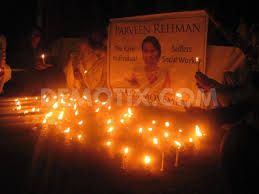
ISLAMABAD, Jan 16: The Supreme Court of Pakistan has summoned the Sindh Inspector General Police (IGP) and Advocate General (AG) to appear before the court along with complete details on the progress in the murder case of Perween Rahman.

The bench, headed by Chief Justice Tassaduq Hussain Jillani and comprising Justice Ejaz Afzal and Justice Amir Hani Muslim, heard the petition on the unsolved murder of Orangi Pilot Project’s director who was gunned down in March. The judges sought a complete progress report of the case from the Sindh government.

AS

During the hearing, Chief Justice Jillani said that due to the lawlessness in Karachi, there was a complete sense of insecurity in the minds of the residents of the city. “Under the prevailing situation, the sense of insecurity is a natural phenomenon,” remarked the chief justice.

He issued directives to the Sindh IG and AG to appear before the court next week and apprise the bench about the progress made so far in the investigation of the murder case of one of the key figures of the development sector.

The bench, however, was told that currently there is no permanent AG in Sindh. In response, the court directed the Sindh prosecutor-general to represent the provincial government in absence of a permanent AG.

As many as 800 applications have been submitted in the apex court to pursue Rahman’s murder case, out of which most were submitted by people belonging to the development sector and civil society. The petitioners include human rights activist Zohra Yusuf, PILER along with its chairperson Karamat Ali, SAIBAAN along with its head Tasneem Siddiqui, development professionals Arif Hasan and Fayyaz Baqir, journalist Zubeida Mustafa, the Women’s Action Forum through its founder Kausar S Khan, colleagues from Perween Rahman’s Orangi Pilot Project through its director, Anwar Rashid, partner organisations through Jahangir Khan of Rawalpindi, architect and Perween’s student Sobia Kapadia, and Perween’s family through her sister Aquila Ismail. The Sindh and federal governments and the provincial police have been cited as respondents in the case.

The civil society representatives have asked that an independent judicial commission led by a senior judge be formed to investigate the murder of the well-loved architect.

THE

Earlier, the petitioner’s counsel had told the court that Rahman’s murderers were still at large and were allegedly being sheltered by a political party.

Fayyaz Faqir, director of the Akhter Hameed Khan Resource Centre, told The Express Tribune that the petition aims to draw attention to the justice denied to a person who dedicated three decades of her life to redress grievances of the poor in the face of land grabbers.

On March 13, unidentified men opened fire on Rahman who received several bullet wounds and later succumbed to her injuries. Rehman was reportedly working on compiling land records of villages or goths on the outskirts of Karachi which were vanishing into the city’s vastness and were being eyed over the past 15 years by land grabbers. Rahman had also documented land in Orangi Town to protect the informal settlement from land grabbers.

Rahman was recognised in global urban planning circles as a professional who had used her skills in the service of Karachi’s poor. In recognition of that, the department of Architecture and Planning at NED University of Engineering and Technology, Karachi, has plans to offer the Perween Rahman Course on Housing and Community to its third-year students from March this year. Also noteworthy is the Perween Rahman Fellowship for Community Architects. The Asian Coalition for Housing Rights, based in Bangkok, Thailand, in a meeting of its board, approved a fellowship programme for Community Architects in Asia to be called the ‘Perween Rahman Fellowship for Community Architects.’ A total of 10 fellowships will be offered each year to architects working in the low-income settlements of Asia.

Published in The Express Tribune, January 17th, 2014.

Civil Society comes to the Rescue of Endangered Wildlife

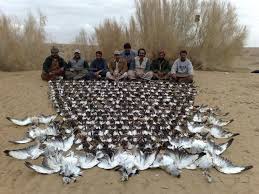
Wildlife hunting in Pakistan (Credit: pakguns.com)
Wildlife hunting in Pakistan
(Credit: pakguns.com)

In a writ petition filed by Mr Naeem Sadiq, through Sardar Kalim Ilyas Advocate Supreme Court, against hunting of internationally protected bird HOUBARA BUSTARD and challenging the 33 Special Permits issued by Government of Pakistan to Arab Shaikhs, LHC issued Notices to Ministry of Foreign Affairs, Wildlife Department and Government of Punjab. LHC directed  Foreign Affairs Ministry to submit complete list of all the foreigners (Arab Shaikhs and their family members) to whom Special Permits were issued for hunting Houbara bustards for the season 2013-14.

LHC also directed WWF & IUCN to appear & assist the Court in this matter in its next hearing on 23-01-2013.  Kalim Ilyas ASC argued that the Pakistan Wildlife Ordinance 1971 prohibits hunting of Hubara Bustards.  According to IUCN Report, Pakistan is one of the sixteen countries of the world that are breeding places for Houbara bustards.  According to the law,  it is only the Provincial government that can issue any licence and the federal government or the foreign ministry have no authority to issue such  permits or licenses.

It was said that after 18th amendment,  wildlife was made a provincial subject and only the provincial law would apply.  Punjab wildlife Act as amended in 2007, also completely prohibits hunting of  HOUBARA BUSTARDS.  Hence, all licenses and permits are issued in blatant violation of law. The petition prayed for cancellation of all permits with strict directions to the government to implement its own laws in letter and spirit.

It is worth mentioning that Advocate Sardar Kalim Ilyas is pursuing this case on pro bono basis.

Pakistan’s internet landscape reveals high engagement

Pak internet café (Credit: bbc.co.uk)

KARACHI, Jan 10: The impact of the Internet, especially state regulation and its control of cyberspace, was discussed after a comprehensive report on Pakistan’s online future was launched by Bytes for All at a local hotel on Friday.

While the blocking and filtering of content on the Internet by the state resulted in numerous violations of fundamental rights, especially the right to access to information, people successfully circumvented these blocks by using proxy servers and virtual private networks, said Jahanzaib Haque, author of the 28-page report ‘Pakistan’s Internet Landscape’.

Presenting report’s main findings and recommendations to the gathering, Mr Haque said that although the blocking and filtering of online content was becoming increasingly organised, it continued to be inconsistent.

He added that the blocking and filtering was mostly directed at the content that was deemed blasphemous or obscene, even though these terms were not properly defined. He cited examples of some educational websites that were incorrectly defined as ‘obscene’ and therefore banned by the authorities. Some members of the audience added to the discussion by relating anecdotes of students who had experienced difficulties in learning, because the You tube ban restricted them from accessing useful lectures and other study materials on the website.

Talking about the problems of hate speech and extremism in his presentation, Mr Haque, web editor at The Express Tribune, said there had been very specific and targeted attacks on well-known personalities in recent years. In this regard, he cited the hate campaigns that started in the wake of the deadly attack on Malala Yousafzai in October 2012, and those hailing Mumtaz Qadri as a hero for killing former Punjab governor Salman Taseer in January 2011.

The presentation was followed by a lively, rather informal panel discussion on the report’s findings, and their impact on the freedom of expression in the cyberspace and Internet rights in Pakistan. Panelists included Wusatullah Khan (senior journalist), Sabeen Mahmud (founder of PeaceNiche/T2F), and technologist Aleem Bawany, along with Shahzad Ahmad, Country Director of Bytes for All, Pakistan, as well as the author of the report.

The complete report — produced by Bytes for All Pakistan (B4A), a human rights organisation focusing on the Information and Communication Technologies — is available online for the public to read.

The research paper provides a detailed outline of the Internet control mechanisms deployed by the government, and describes the existing legislative measures and their applications to the Internet. It also provides a historical view of Internet censorship in Pakistan, and the state’s attempts to ‘criminalise legitimate expression’ in the cyberspace. The report also explores the current situation of Internet surveillance, its purpose, the method used, and the effects caused by such monitoring.

The event was attended by media practitioners, journalists, human rights activists, members of the civil society, politicians, researchers, as well as major stakeholders in the cyberspace.

The event concluded with the screening of a light-hearted video titled ‘Hugs to Youtube’, starring a person dressed as the You tube logo, and carrying a sign stating “Hug me if you want me back”. The video was an initiative by the #KholoBC Pakistan for All campaign that opposes all forms of state oppression and regulation of content on the Internet.