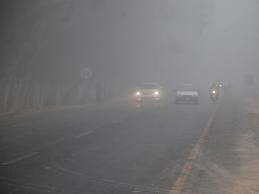
THE density of the fog that has been blanketing parts of Pakistan for some years now has been steadily increasing. Steps urgently need to be taken to mitigate its effects.
Many mistakenly think that the fog that has become the norm during the winters is the natural outcome of falling temperatures and relative humidity. However, fog created in this manner is localised and vanishes as the temperature rises.
The persistence and intensity of the haze currently enveloping parts of the country is actually the effect of the deeper problem of air pollution. While automobile exhaust, the burning of dried leaves and other polluting activities are contributors, the single biggest factor is the use of coal for the generation of electricity in thermal power plants.
In terms of air pollution, South Asia is amongst the most badly affected areas in the world. Unchecked industrial activity that uses fuels that endanger the environment has brought about severe changes in climate, including fog.
Regions that don’t have such polluting industries are not spared either: the levels of gases such as sulphur dioxide, nitrogen oxide and particulate matter have been increasing with pollutants being carried by the wind for thousands of miles. Consequently, pollution is an issue not just for the country that produces it but for other states as well.
The phenomenon of persisting fog during December and January has been increasing in Pakistan over the past 15 years. Its range also includes the Indo-Gangetic plain that stretches from Peshawar to Kolkata and beyond. The single largest contributor to air pollution in South Asia is coal-run thermal power generation.
The consumption of coal in South Asia during 2012 was around 685 million tons in total, out of which 98pc was used in India; the majority of this coal was consumed by the power sector. The share of electricity generated using coal as fuel in India is 71pc, 3.2pc in Bangladesh and 0.1pc in Pakistan. A report by the Centre for Study of Science, Technology and Policy in Bangalore reveals that the quality of Indian coal is very poor, with 35-45pc ash content and low heating value. Thus, the generation of one unit of electricity emits one kilo of carbon dioxide; annually, almost 200 million tons of ash are generated by the use of coal in the power sector.
Energy is vital for growth in India and consequently, the fog that envelopes Pakistan over the winter months has kept pace with its generation and grown thicker. Indian reports on the energy statistics of 2013 say that today India is the ninth largest economy in the world driven by a real GDP growth of 8.7pc. This has placed enormous demand on its energy resources.
The demand and supply imbalance in energy is pervasive and requires serious efforts by the government of India to augment energy supplies. The country faces possibly severe energy-supply constraints. Nevertheless, India is violating transnational environmental laws by creating negative externalities for the countries it shares borders with.
Indian scientists concede that coal-based thermal power plants are major air pollutants, including small particle pollutants — the aerosol.
Recent studies using satellite modelling show a significant increase in aerosols in the Indo-Gangetic plain. Several reports also conclude that the coal supplied to power plants is of the worst quality. This factor, coupled with the low efficiency, results in more pollution. The emission of other, more hazardous gases, fly ash and suspended particulate are responsible for aggravating the greenhouse effect.
Pakistan is suffering from dire changes in its climate. Many projects have been envisaged and some even pursued for remedying global warming, but the lack of clearly identified goals and effective strategies have resulted in zero gains.
Like the fog that envelopes much of Pakistan, these efforts have been draped in a shroud of failed promises and never accomplished aims. Climate change has evolved into an industry in the country but the only effort is in terms of getting funding. Ensuring the implementation of practical measures is hardly on the agenda of any non-governmental organisation working in the climate change sector in Pakistan.
While I appreciate the efforts of the present government for increasing cooperation with India, there is a need to augment these by taking steps to prevent environmental degradation. Pakistan needs to follow the model of the Asean agreement to come up with a ‘Transboundary Haze Pollution’ model in South Asia. At the same time, other countries including Bangladesh, Bhutan, the Maldives, Nepal, and Sri Lanka, have to find the courage to ask India to replace its coal-power plants.
The writer is adviser, water and energy, at the Sustainable Development Policy Institute, Islamabad
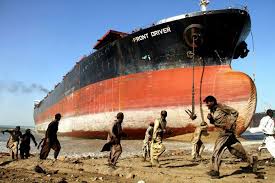
Ship breaking in Pakistan (Credit: customstoday.com.pk)
PARIS, Jan 9: Pakistan, along with India and Bangladesh, remained the market leaders in global ship breaking, with the subcontinent accounting for more than two-thirds of business, a French monitoring group said on Thursday.
In 2013, 1,119 ships went to the world’s breaker’s yards, a decline of 16 per cent over 2012 which was an “exceptional year,” the environmental watchdog Robin des Bois (Robin Hood) said.
The figures “confirm that the ship demolition sector is in good health,” Robin des Bois said.
It is the second highest tally since 2006, when the group began compiling annual reports in an effort to boost transparency in a sector with a contested environmental record.
In terms of number of ships demolished, the three South Asian countries accounted for 50 per cent of ships torn down in 2013.
India, being the world leader, tore 343 ships, or about 26 per cent of total ships demolished.
Bangladesh and Pakistan stood third and fifth in the list with 210 and 104 ships or 16 and eight per cent respectively.
In terms of tonnage, the three South Asian countries accounted for 71 per cent of the worlds scrapped ships. India came in at the top with 2.8 million tonnes or 31 per cent of total metal recycled globally, while Bangladesh and Pakistan accounted for 2.3 million (25 per cent) and 1.4 million (15 per cent) respectively.
India headed the list in both categories, but China was also a big player, ranking second in the number of ships that it demolished and third in terms of tonnage. Pakistan came in fifth (by number of ships) and fourth (by tonnage).
Turkey captured a significant market as it came in fourth by number of ships, tearing down 136 ships (10%) and fifth by tonnage with 514,000 tonnes (six per cent).
Of the 1,119 ships, 667 were scrapped after being held at ports, along with their crew, for failing to meet international safety standards, the report said.
“Port inspections are playing a solid role in cleaning up the world’s merchant fleet,” it said.
Roughly a third of ships that were broken up were bulk carriers, while container ships accounted for one in six – a sharp rise over the last six years.
According to the report, out of 1119 ships that were scrapped in 2013, 387 were bulker, 245 cargo, 180 container ships, 164 containers and 39 Ro Ro.
Environmental concerns
South Asia has long been a graveyard for merchant ships, but it also carries a reputation for poor safety and environmental hazards.
The European Union has approved regulations requiring large EU-flagged vessels to be recycled at approved facilities.
Robin des Bois described the intention as “pious,” given that only eight per cent of such vessels were scrapped at European yards in 2013, and many European ships were given a flag of convenience by their owners for their last voyage.
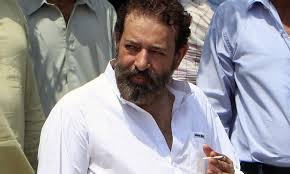
Iron Man, SP Khan, the lead character of the Bollywood movie Shootoutat Lokhandwalaand our own late Sultan Rahi of Maula Jatt fame; my friend, Chaudhry Aslam has been compared with all of these. However, the former three were merely fictional, while Aslam was the real character. After Friday prayers this week, in a leafy suburb of West London, prayers were said for his departed soul with everyone present uttering a louder than normal and heartfelt ‘ameen’ as if they all knew Aslam. This only proved that he had developed a global following, just like all these fictional heroes he has been compared with.
I can recall the early days when I got to know Aslam as a sub-inspector, serving under my late father Arif Jah Siddiqui in District Central, Karachi. Aslam had his first posting as SHO of the Gulbahar police station. Two things were very clear from the onset: he was devoted to eradicating crime and was fearless to a fault. He never had time to deal with the bureaucracy of police work — and believe me, there is a lot of it if you are responsible for a police station or a team. He would delegate all this to his trusted subordinates and instead, took up the onerous task of patrolling the roads and narrow lanes of his area. He always believed that if policemen were doing their jobs out in the open, people could see them and feel more secure, while criminals would think twice before committing a crime. His style was uncomplicated and that was the reason that officers and jawans developed a strong loyalty to him.
Aslam encountered many difficulties during his career; however, his morale was never subdued. He was imprisoned for more than a year and a half. Even during this period in Central Prison Karachi, whenever I visited him, he was in good spirits and this kept the morale of his fellow imprisoned officers and jawans high as well. He was a man with a big heart and took special care of his subordinates and their families, giving both his time and money generously to help them in their hour of difficulty. When he was bailed, he made sure that every member of his team was treated fairly. Finally, all of them were acquitted of the charges that had been levelled against them.
Despite getting rapid promotions, he never gave up frontline detective and investigative work. As a matter of routine, he would be busy all night, seeking information, planning surveillances, plotting raids and travelling to some of the most hostile parts of Sindh and Balochistan to assess the ground realities. This hard work and diligence made him a very successful police officer. He would delegate tasks but would never lose control. The junior officers knew that their boss was very much on the ground, so they had to do their jobs as thoroughly as possible.
The other aspect of his personality was his accessibility to everyone, including the vast network of his informers, journalists, colleagues and friends. He would answer his mobile directly, so much so that if anyone needed to meet him in his office, one would just need to call him on his mobile and he would ask the guard to allow the guest to come through the checkpost. He was a people’s man and had no desire for protocol, a secretariat or a posh office.
From the time he took command of the anti-extremist cell of the CID, he had to severely restrict his movements. Whenever, during my visits to Karachi, I went to see him, we would walk around the CID compound for hours exchanging notes. On occasions, I felt that he had huge pent-up energy, which needed to be released but he did not have the luxury to vent it like a normal person would, by freely moving around the city and socialising. On these instances, he came across as a lion in a cage, pacing the available space up and down.
Aslam had made many enemies, a negative fallout for all diligent police officers. The principal reason for this was that he was among the very few officers, who had the courage to take action against all types of criminal syndicates operating in Karachi. There have been some discussions about his approach towards eradication of crime. He has been marked as brutal and unforgiving. I question these commentators as they may not know the circumstances under which these officers are required to keep the average citizen safe and secure. They work on severely depleted resources, are under constant threat as are their loved ones and know that one wrong step can get them embroiled in litigation, and they may even end up facing imprisonment. Is there any other profession where a person takes on such enormous risks? One should not forget that the police service is merely a reflection of the society it serves and we fall far short of being an ideal society.
Aslam’s martyrdom is an international tragedy. His work has been instrumental in stopping large terrorist attacks in Pakistan and other countries. He delivered results at the frontline of the war on terror and in the end, gave his live in protecting innocent citizens, and eradicating crime and terror from this world.
I met him on January 31, 2013 at the funeral of another martyred officer. Little did I know that this would prove to be our last meeting. I pleaded strongly with him that he should take a break from this madness of fighting terrorism and come with me to the UK. He responded in his typical friendly style, “Aftab bhai would you take the whole of Karachi with you?” I said I could not do that but wanted him to come with me, and he said, “Bhai, don’t worry. I will be okay here,” and that was Aslam. I will always remember him as a man of high morale and a police officer dedicated to his profession to a fault.
Published in The Express Tribune, January 12th, 2014.
BEIRUT, Lebanon — The images of recent days have an eerie familiarity, as if the horrors of the past decade were being played back: masked gunmen recapturing the Iraqi cities of Falluja and Ramadi, where so many American soldiers died fighting them. Car bombs exploding amid the elegance of downtown Beirut. The charnel house of Syria’s worsening civil war.
But for all its echoes, the bloodshed that has engulfed Iraq, Lebanon and Syria in the past two weeks exposes something new and destabilizing: the emergence of a post-American Middle East in which no broker has the power, or the will, to contain the region’s sectarian hatreds.
Amid this vacuum, fanatical Islamists have flourished in both Iraq and Syria under the banner of Al Qaeda, as the two countries’ conflicts amplify each other and foster ever-deeper radicalism. Behind much of it is the bitter rivalry of two great oil powers, Iran and Saudi Arabia, whose rulers — claiming to represent Shiite and Sunni Islam, respectively — cynically deploy a sectarian agenda that makes almost any sort of accommodation a heresy.
“I think we are witnessing a turning point, and it could be one of the worst in all our history,” said Elias Khoury, a Lebanese novelist and critic who lived through his own country’s 15-year civil war. “The West is not there, and we are in the hands of two regional powers, the Saudis and Iranians, each of which is fanatical in its own way. I don’t see how they can reach any entente, any rational solution.”
The drumbeat of violence in recent weeks threatens to bring back the worst of the Iraqi civil war that the United States touched off with an invasion and then spent billions of dollars and thousands of soldiers’ lives to overcome.
With the possible withdrawal of American forces in Afghanistan looming later this year, many fear that an insurgency will unravel that country, too, leaving another American nation-building effort in ashes.
The Obama administration defends its record of engagement in the region, pointing to its efforts to resolve the Iranian nuclear crisis and the Palestinian dispute, but acknowledges that there are limits. “It’s not in America’s interests to have troops in the middle of every conflict in the Middle East, or to be permanently involved in open-ended wars in the Middle East,” Benjamin J. Rhodes, a White House deputy national security adviser, said in an email on Saturday.
For the first time since the American troop withdrawal of 2011, fighters from a Qaeda affiliate have recaptured Iraqi territory. In the past few days they have seized parts of the two biggest cities in Anbar Province, where the government, which the fighters revile as a tool of Shiite Iran, struggles to maintain a semblance of authority.
Lebanon has seen two deadly car bombs, including one that killed a senior political figure and American ally.
In Syria, the tempo of violence has increased, with hundreds of civilians killed by bombs dropped indiscriminately on houses and markets.
Linking all this mayhem is an increasingly naked appeal to the atavistic loyalties of clan and sect. Foreign powers’ imposing agendas on the region, and the police-state tactics of Arab despots, had never allowed communities to work out their long-simmering enmities. But these divides, largely benign during times of peace, have grown steadily more toxic since the Iranian revolution of 1979. The events of recent years have accelerated the trend, as foreign invasions and the recent round of Arab uprisings left the state weak, borders blurred, and people resorting to older loyalties for safety.
Arab leaders are moving more aggressively to fill the vacuum left by the United States and other Western powers as they line up by sect and perceived interest. The Saudi government’s pledge last week of $3 billion to the Lebanese Army is a strikingly bold bid to reassert influence in a country where Iran has long played a dominant proxy role through Hezbollah, the Shiite movement it finances and arms.
That Saudi pledge came just after the assassination of Mohamad B. Chatah, a prominent political figure allied with the Saudis, in a downtown car bombing that is widely believed to have been the work of the Syrian government or its Iranian or Lebanese allies, who are all fighting on the same side in the civil war.
Iran and Saudi Arabia have increased their efforts to arm and recruit fighters in the civil war in Syria, which top officials in both countries portray as an existential struggle. Sunni Muslims from Egypt, Libya, Tunisia, Saudi Arabia and elsewhere have joined the rebels, many fighting alongside affiliates of Al Qaeda. And Shiites from Bahrain, Lebanon, Yemen and even Africa are fighting with pro-government militias, fearing that a defeat for Bashar al-Assad, Syria’s president, would endanger their Shiite brethren everywhere.
“Everyone fighting in Syria is fighting for his own purpose, not only to protect Bashar al-Assad and his regime,” said an Iraqi Shiite fighter who gave his name as Abu Karrar. He spoke near the Shiite shrine of Sayida Zeinab near Damascus, where hundreds of Shiite fighters from around the region, including trained Hezbollah commandos, have streamed to defend a symbol of their faith.
Some Shiite fighters are trained in Iran or Lebanon before being sent to Syria, and many receive salaries and free room and board, paid for by donations from Shiite communities outside of Syria, Abu Karrar said.
Although the Saudi government waged a bitter struggle with Al Qaeda on its own soil a decade ago, the kingdom now supports Islamist rebels in Syria who often fight alongside Qaeda groups like the Nusra Front. The Saudis say they have little choice: having lobbied unsuccessfully for a decisive American intervention in Syria, they believe they must now back whoever can help them defeat Mr. Assad’s forces and his Iranian allies.
For all the attention paid to Syria over the past three years, Iraq’s slow disintegration also offers a vivid glimpse of the region’s bloody sectarian dynamic. In March 2012, Anthony Blinken, who is now President Obama’s deputy national security adviser, gave a speech echoing the White House’s rosy view of Iraq’s prospects after the withdrawal of American forces.
Iraq, Mr. Blinken said, was “less violent, more democratic and more prosperous” than “at any time in recent history.”
But the Iraqi prime minister, Nuri Kamal al-Maliki, was already pursuing an aggressive campaign against Sunni political figures that infuriated Iraq’s Sunni minority. Those sectarian policies and the absence of American ground and air forces gave Al Qaeda in Iraq, a local Sunni insurgency that had become a spent force, a golden opportunity to rebuild its reputation as a champion of the Sunnis both in Iraq and in neighboring Syria. Violence in Iraq grew steadily over the following year.
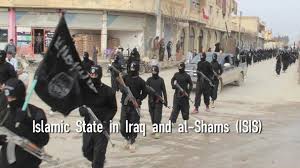
Rebranding itself as the Islamic State in Iraq and Syria, or ISIS, the group seized territory in rebel-held parts of Syria, where it now aspires to erase the border between the two countries and carve out a haven for its transnational, jihadist project. Sending 30 to 40 suicide bombers a month to Iraq from Syria, it has mounted a campaign of violence that led to the deaths of more than 8,000 Iraqis in 2013, according to the United Nations, the highest level of violence there since 2008.
In recent days, after ISIS fighters rode into the cities of Falluja and Ramadi, they fought gun battles with Sunni tribal fighters backed by the Iraqi government, illustrating that the battle lines in the Middle East are about far more than just sect. Yet the tribal fighters see the government as the lesser of two evils, and their loyalty is likely to be temporary and conditional.
As the United States rushed weapons to Mr. Maliki’s government late last year to help him fight off the jihadis, some analysts said American officials had not pushed the Iraqi prime minister hard enough to be more inclusive. “Maliki has done everything he could to deepen the sectarian divide over the past year and a half, and he still enjoys unconditional American support,” said Peter Harling, a senior analyst at the International Crisis Group. “The pretext is always the same: They don’t want to rock the boat. How is this not rocking the boat?”
The worsening violence in Iraq and Syria has spread into Lebanon, where a local Qaeda affiliate conducted a suicide bombing of the Iranian Embassy in Beirut in November, in an attack meant as revenge for Iran’s support of Mr. Assad.
More bombings followed, including one in a Hezbollah stronghold on Thursday, one day after the authorities announced the arrest of a senior Saudi-born Qaeda leader.
“All these countries are suffering the consequences of a state that’s no longer sovereign,” said Paul Salem, vice president of the Middle East Institute in Washington. “On the sectarian question, much depends on the Saudi-Iranian rivalry. Will these two powers accommodate each other or continue to wage proxy war?”
For the fighters on the ground, that question comes far too late. Amjad al-Ahmed, a Shiite fighter with a pro-government militia, said by phone from the Syrian city of Homs, “There is no such thing as coexistence between us and the Sunnis because they are killing my people here and in Lebanon.”
Ben Hubbard reported from Beirut, Robert F. Worth from Washington, and Michael R. Gordon from Jerusalem. Peter Baker contributed reporting from Washington.
This article has been revised to reflect the following correction:
Correction: January 5, 2014
An earlier version of this article misstated the year in which, according to the United Nations, more than 8,000 Iraqis died in a campaign of violence by the Islamic State in Iraq and Syria, a Sunni insurgency that had been known as Al Qaeda in Iraq, which sent more than 30 to 40 suicide bombers a month to Iraq from Syria. It was 2013, not this year
WHEN it comes to law and order, crime and insecurity, and the state’s diffident response to serious threats, the story has become a depressingly familiar one: lamentation and more lamentation; inaction and more inaction. The killing of an Islamabad leader of the Ahle Sunnat Wal Jamaat, Munir Muawia, in the federal capital on Friday ought to be alarming, but it is already destined to become yet another bloody footnote in the once-again simmering sectarian wars and the state’s inability to control them.
It is not even surprising anymore that a drive-by shooting can occur in Islamabad and the assassins simply melt away — it ought not to be the case, but helplessness seems to be the only reaction of the heavily financed and resourced capital police. And if the heart of Islamabad cannot be made safe by security officials, then what hope for Peshawar, Quetta or Karachi?
Next, a familiar question. What is the government’s strategy to handle the rising sectarian pressures? Ignorance of the problem is surely not a possibility. Punjab has long been the heartland of sectarian tensions and while the infrastructure of hate has spread far and wide across the country, Punjab, under the control of the PML-N, remains very much a hub of the problem. This is not even about immediately rolling out long-term solutions: that will necessarily require the input and full cooperation of many arms of the state, provincial and federal.
But the warning lights on sectarianism are again blinking furiously and urgent steps are needed. Fire-fighting after the problem erupts, as happened in Rawalpindi over Ashura, is only a recipe for awaiting the next big conflagration. The sectarian killers and militants are in most cases known to the intelligence apparatus. While there is sometimes random violence, much of the violence is orchestrated by small cadres at the fringe of the main sects. The religious leaders who can influence events are well known too. Why, then, the inaction by the state? There are few reassuring answers.
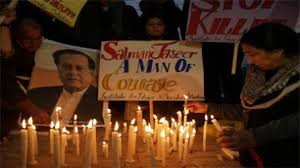
“Salmaan Taseer was a brave man who never shied away from raising his voice for the voiceless, the marginalised, the poor, and for women and minority rights. His martyrdom shook us all but it also made us realise that a brave man never dies…his legacy lives on,” Journalist Mehmal Sarfaraz said at a candle vigil to mark the third death anniversary of Salmaan Taseer, former Punjab governor, at the Liberty roundabout on Saturday.
Salmaan Taseer’s daughter, Sanam Taseer said her father’s public life and private life had been the same. He was a man of compassion and candour. “As long as Article 33 remains law and Aasia Bibi continues to languish in prison, his sacrifice has been in vain,” she said.
More than 150 participants at the vigil demanded the removal of blasphemy laws and Aasia Bibi’s release from prison. They opposed the government’s plans to hold talks with the Taliban. They chanted “Taseer, your blood will bring forth a revolution” and “religious extremism and fundamentalism are not acceptable”. They held banners emblazoned with slogans like Down with Fanaticism; Down with Extremism; Shame on the Silent Majority; and Repeal Blasphemy Laws.
Awami Workers Party general secretary Farooq Tariq said, “We are here to condemn religious fundamentalism and declare that Mumtaz Qadri, who poses as a hero, is a villain. Taseer’s only crime was to support a Christian woman falsely accused of blasphemy.”
SAP-PK deputy director Irfan Mufti said, “We are here to mark a day for anti-terrorism and anti-extremism in remembrance of Salmaan Taseer who lost his life to build a tolerant society.”
Ali Salman Alvi, a columnist for The Nation, paying tribute to the late governor, said, “Taseer was an ambassador of tolerance. He stood for the rights of minorities and the downtrodden. He had the courage to denounce the extremist mindset that has destroyed the fabric of our society. He sacrificed his life for humanity and will be sorely missed in our society which is increasingly becoming intolerant.”
Columnist Marvi Sirmed said, “I am here for Aasia Bibi. Taseer knew the danger he was in for supporting her, but he did not back out for a minute. We have seen several incidents of intolerance since, yet no one has been arrested.”
Sirmed said no FIRs had been registered against the culprits responsible for the incident at Joseph Colony and in the Rimsha Masih case…Rimsha’s family had to leave the country instead.
Journalist Sirmed Manzoor said, “We are small in number and the extremist narrative is everywhere, but I am sure we can encourage more people to take a stand against extremism.”
Syed Ahsan Abbas Rizvi of the Peoples Youth Organisation (PYO) said, “Pakistan Peoples Party has been orphaned since Taseer died on January 4, 2011.”
Taseer was shot dead by his guard Malik Mumtaz Qadri. Qadri had shot him 27 times with an MP5 sub machine gun. He had been convicted of murder and sentenced to death. Later the Islamabad High Court admitted Qadri’s appeal against the conviction.
In support of Qadri
As many as 250 students from several madrassahs in the city held a rally in support of Mumtaz Qadri on Saturday. The rally was organised by the Mumtaz Qadri Lovers’ Forum. The participants walked from the Punjab Assembly to the Press Club holding banners and chanting slogans in favour of Mumtaz Qadri. Maulana Asharaf Jalali addressing the rally said politicians like Dr Tahirul Qadri, who had called Mumtaz Qadri a murderer, were villains.
The participants demanded that the government pardon Mumtaz Qadri and release him. “Mumtaz Qadri is our hero and we will sacrifice our lives if we have to in order to get him released,” said speakers.
Published in The Express Tribune, January 5th, 2014.
In April, when a hunger strike by detainees at the prison in Guantánamo Bay, Cuba, was in its third month, Pentagon officials agreed with defense lawyers that the underlying cause was a growing despair among prisoners who have been in detention for a decade with no hope of getting out. The protest, which at its height involved 106 of the 166 prisoners there this summer, served to put the Guantánamo issue back on the radar in Washington.
The National Defense Authorization Act for 2014, signed on Thursday by President Obama, includes a long-sought provision easing the Pentagon’s ability to transfer to countries other than the United States detainees rated as low threats. Mr. Obama, who has wavered on his early vows to shut down the prison, praised Congress for this change, though he stressed that the prison remained a blight on the nation’s reputation.
The improved transfer policy helps, but a petty policy change at the prison this month shows how perverse the situation has become. The military says it will no longer report the number of prisoners on hunger strike, according to a report in the Miami Herald. A spokesman for the facility said the military “will not further their protests by reporting the numbers to the public.” The numbers of detainees being force-fed by prison authorities, which dropped into the teens in recent months, offered the world a window into the prison, which has been shrouded in secrecy even though its motto is “safe, humane, legal, transparent detention.”
Eighty-six of the remaining prisoners — more than half — were designated three years ago for transfer to another country, provided that security concerns could be satisfied. Yet the transfer plan was left adrift in the face of political combat. Even if the new defense bill spurs progress in reducing the detainee population, the delivery of credible justice for those at the Guantánamo prison camp is far from complete.
Karachi, Dec 31: Pakistan’s truck artists, who transform ugly lorries into flamboyant moving works of art, fear boom times for their trade could be at an end as NATO winds down its mission in Afghanistan.
The workhorses of the Pakistani haulage industry are often ageing, patched-up Bedford and Dodge models, but almost without exception they are lavishly decorated.
Elaborate colourful designs, calligraphy, portraits of heroes and singers, mirrors and jingling tassels are skilfully worked onto the trucks by artists such as Haider Ali.
In his open-air workshop in the heart of Karachi, a goat or two browsing the dusty ground, Ali sketches out a design for a boat.
Others include horses, partridges, tigers, the faces of former prime minister Benazir Bhutto or singer Attaullah Khan Esakhelvi.
“The design depends on the owner of the truck. Everyone wants his truck to be different from everyone else’s,” Ali, who left school to follow his father Mohammad into the truck art business, told AFP.
Truck art has become one of Pakistan’s most distinctive cultural exports in recent years, but it is still not highly regarded at home.
“The higher echelons of society don’t call it art but craft — or anything else, just not art,” said Ali.
Call it what you will, decorating trucks is big business — haulage firms and lorry owners shell out $5,000, even $10,000 a time to have their vehicles adorned.
It can take a team of half a dozen artists nearly six weeks to decorate a truck, not just painting but working up intricate arabesque collages of laminated stickers.
Jamal Elias, a truck art expert from Penn State university in the United States, said it represents the largest art sector of the Pakistani economy.
“You can’t say the gallery world or textile design begins to compare in size,” he told AFP.
But in Pakistan, he said, the artists “are never going to be treated as real artists as long as the social structure remains the way it is”.
For the past decade, hauliers in Pakistan have been making money by ferrying supplies for the NATO mission in neighbouring, landlocked Afghanistan from the port of Karachi.
Profits from this work have meant they have been happy to spend on decorating their vehicles, but with NATO withdrawing from Afghanistan by the end of 2014, the artists fear the good times could be over.
“There was a great deal of demand because of NATO trucking, and everyone was trying to get the work, but the decline has already started,” said Ali.
Noor Hussain, 76, who has been painting trucks in the garrison city of Rawalpindi, next to Islamabad, for 65 years, shares his fears.
“We’re afraid that because of the decrease in trucks circulating, people will lose their jobs in our business,” he told AFP.
“Because if there are fewer lorries in circulation, we will have fewer to decorate.”
Mumtaz Ahmed, another Karachi artist, said business surged under the rule of former army dictator Pervez Musharraf, who gave Pakistan’s support to the US-led invasion of Afghanistan after the 9/11 attacks.
A foretaste of what might happen came in late 2011 and 2012, when the Pakistan government shut NATO’s supply routes through its territory for several months in protest at a botched US air raid that killed 24 soldiers at a border post.
“We felt a real slowdown when there was the ban on NATO supplies,” said Ahmed.
“Things are just getting better now. NATO has meant a good boom for us.”
But in a country with a stagnant economy and galloping inflation, why bother spending so much just to decorate a lorry?
“It shows our pride, our love for our job and also that our trucks are in good condition and attractive,” said Mir Hussain, who was about to spend a small fortune repairing and redecorating a truck.
The more a lorry grabs the attention with its beauty, the better its owner thinks it will attract clients, though most contracts are granted without regard to looks.
Perhaps the real reason behind the slightly shaky logic is the simple love of man for his machine.
“His wife may be dying of hunger at home in the village, but the driver will still go ahead and have his truck decorated,” said mechanic Sajid Mahmood.
A U.S. government contractor kidnapped by al-Qaeda militants in Pakistan in 2011 has recorded a video message calling on the Obama administration to negotiate with his captors, saying he feels “totally abandoned and forgotten.”
Warren Weinstein looked ashen and sounded lethargic as he pleaded for renewed interest in his case and asked the U.S. government to consider releasing
al-Qaeda militants in its custody. The 72-year-old development expert from Rockville, Md., began his address by urging President Obama to step up efforts to get him released.
“You are now in your second term as president of the United States and that means that you can take hard decisions without worrying about reelection,” said Weinstein, who was recorded sitting against a white wall wearing a gray tracksuit top and a black woolen hat. No one else appeared in the video.
The video, which included the yellow logo of As-Sahab, al-Qaeda’s media production outlet, was sent in an anonymous e-mail to several journalists who have reported from Afghanistan. Included were links to a handwritten note that purports to be from Weinstein, saying “Letter to Media” at the top. The note is dated Oct. 3. It is not clear when the video was made.
A State Department spokeswoman and a member of Weinstein’s family said Wednesday night that they had not independently received the note or video. The Washington Post provided a copy to both of them.
State Department spokeswoman Marie Harf later said that U.S. officials were “working hard to authenticate” the contents of the message.
“We reiterate our call that Warren Weinstein be released and returned to his family,” she said in a statement. “Particularly during this holiday season — another one away from his family — our hopes and prayers are with him and those who love and miss him.”
Al-Qaeda leader Ayman
al-Zawahri said in a statement issued in December 2011 that Weinstein would be freed if Washington stopped launching air strikes in Pakistan, Afghanistan, Somalia and Yemen. He also demanded the release of all imprisoned members of al-Qaeda and the Taliban. The following year, Zawahri urged followers to kidnap Westerners to gain more leverage in al-Qaeda’s bid to get prominent jihadists freed from U.S. custody. Among the top priorities for the group is the release of Sheikh Omar Abdel-Rahman, a blind Egyptian who was convicted of orchestrating the 1993 World Trade Center bombing.
The Obama administration has said it will not negotiate with al-Qaeda for Weinstein’s release. The United States as a matter of policy generally does not negotiate with kidnappers, but the government devotes resources to finding Americans kidnapped overseas.
The new video appeared to be the captive’s first proof of life since a video statement released in September 2012. In that statement, Weinstein appealed to Israel’s prime minister “as one Jew to another,” asking him to help build support to meet al-Qaeda’s demands for his release.
Weinstein did not say what specific steps the Obama administration could take to secure his release. He did say, however, that his captors have agreed to arrange for relatives to visit him in custody if the United States releases unspecified prisoners as part of a “quid pro quo.”
Weinstein also addressed Secretary of State John F. Kerry, telling him his captors have kept him abreast of peace deals that the top U.S. diplomat has sought to broker. Weinstein said a “first step” to getting him released would require taking “action with respect to their people who are being held as prisoners.”
“If anyone in the Obama government can understand my predicament it is yourself,” Weinstein said. “I hope that one day soon I will be able to meet you as a free man and thank you for your efforts.”
Weinstein appeared troubled that the media have not covered his case more extensively. The handwritten note pleaded with journalists to keep his case in the news, to ensure “that I am not forgotten and just become another statistic.”
At the end of the video, he addressed his relatives, saying: “I would like them to know I love them very much and I think about each and every one of them every moment of every day.”
Weinstein was the Pakistan director of J.E. Austin Associates, a USAID contractor, when he was taken hostage in Lahore, Pakistan, on Aug. 13, 2011.
Weinstein said in the video that he is suffering from a heart condition and acute asthma.
December 27, 2013 marks the sixth anniversary of the murder of Benazir Bhutto and there is no indication that we are any closer to knowing on whose orders the killing was carried out. The PPP, led by Asif Ali Zardari, swept to a landslide victory in the election that followed her death, and it might have been expected that every resource at its disposal would have been deployed to catch those responsible. Little could be further from the reality. There was no post-mortem so there is no clear determination as to whether she died of gunshot wounds or the result of striking the door of the armoured hatchway of the armoured capsule she was in at the time — or possibly a combination of both. Whatever forensic evidence was on the scene was washed away within an hour of her murder and subsequent inquiries into her death have reached no clear conclusions either.
The UN report into the case, which had been demanded by former president Zardari, was sharply critical. It concluded that her death could have been prevented if appropriate security measures had been in place, and that the Scotland Yard forensic investigation team were gravely misled by the Pakistan police. The intelligence services were less than helpful and Rehman Malik, responsible for Benazir Bhutto’s security at the time, is said to have been unable to provide a straight answer to any of the UN team’s questions. The conclusion of this report was that the failure to properly investigate her death was deliberate and the conspiracy mill remains in uninformed overdrive. On the day she died, none of the agencies tasked with her protection were adequately discharging their duties and subsequent to her death, their investigation has been at best flawed, at worst deliberately hindered. The chances of ever getting to the truth fade almost by the day. Commemorative rallies and functions in celebration of the life of Benazir Bhutto are no substitute for an open and honest investigation. Going by the past six years we expect no early result.
Published in The Express Tribune, December 27th, 2013.