Dispatches from an Embedded Journalist in Waziristan

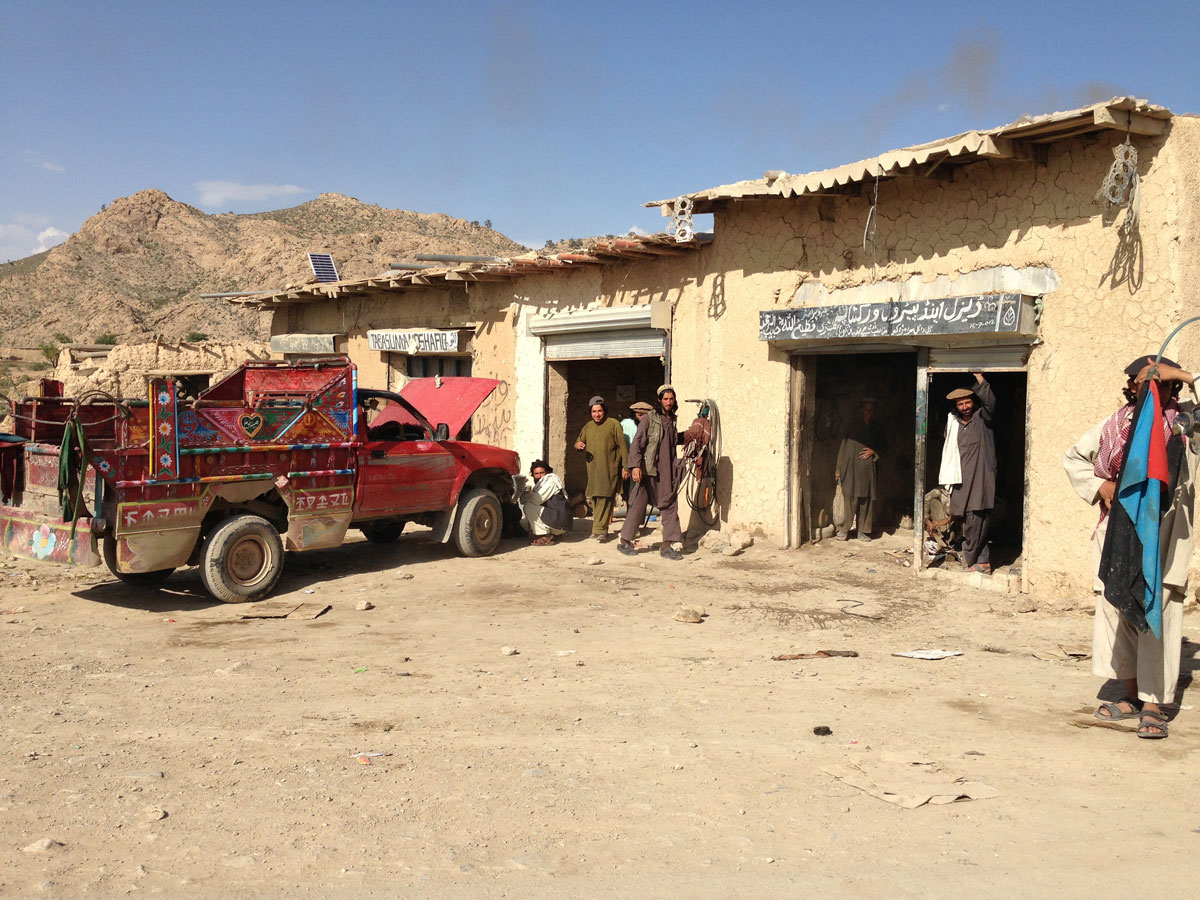
Gas Station in South Waziristan (Credit: dawn.com)
Gas Station in South Waziristan
(Credit: dawn.com)
THE LAST CHECKPOINT: Ostensibly, Angoor Adda is the last outpost in South Waziristan (which is better patrolled compared to North Waziristan because of the presence of two infantry divisions, the 40th and the 9th. A part of the evolving COIN/CT tactics is ensuring that military patrol vehicles have no obvious army markings, sometimes even non-army colours: Just the Pakistan flag and what the army calls the ‘national slogan’: “God is great”, as is seen on this converted pickup truck used by a Frontier Corps Wing.

Day 3: 1440

Sararogha,
South Waziristan,
at 327 Brigade HQ,
40th Infantry Division

“Unacceptable”

The mood here is pensive. I was here in the spring, when most of the IDPs had returned, and the brigade commander and his staff were boisterous about their recent achievements. From sanitisation operations, which are small-scale “mop up” engagements, to tracking sub-tribal politics, they seemed sure of themselves. Now, most of the junior officers (the adjutant, the brigade major) are the same, but the new brigadier is still settling in. Almost everybody is off-colour. They’ve just been recently hit, hard.

The new brigadier got a bit of a welcome party in just his first week, officers recall. They had picked up signal chatter a month ago, but they hadn’t been able to process it because the intel was too disconnected. All they knew was that the insurgents had gotten hold of some uniforms. That’s it.

Meanwhile, the army’s new “digital camo” uniforms had still not arrived for all the units stationed in this sector held by the 327 for a couple of years now. Some of the officers who had been to Pindi for down time or briefings were sporting the new gear. Most of the rest of the troops were not. That proved to be a critical logistical lapse. When they came in, around a week into the new brigadier’s stint, the six insurgents were all wearing the old uniforms. So they blended in, because so many units move up and down the new road. That allowed them to take the initiative: all you need in an engagement here.

The firefight lasted a couple of hours. Three of the insurgents were gunmen, the other three “suiciders”. Before he blew himself up, one of them even managed to get just inside the ring of fire, the Brigade Headquarters’ officers’ complex itself, ironically built around the residence of Khan Gul, a militant commander who was killed in a drone strike in 2012. The 327 took losses: one soldier was killed, two injured. They hadn’t seen them coming. That’s why the officers were pensive, even angry at themselves.

Later, visiting the public square cum market the 40th Division has built (which features a tailor, a butcher, a tea stall, a hardware depot, a blacksmith, even a barber-shop, which is a tough sell around these parts), the edginess didn’t disappear as interactions with the locals began.

“We haven’t had an attack here in months. More than a year, even,” said a captain. “An attack of such scale doesn’t mean they’re coming back. But it means they’re around. And it also means there was some sort of local support. After all we’ve been through together, the locals and us, that’s unacceptable.”

THREAT ALERT, YELLOW: A watchtower at the headquarters of the 9th Division in Wana, South Waziristan, with a newly installed alert-o-meter. Most of the attacks in South Waziristan are now limited to IEDs and not direct assaults on army installations, though a recent ‘complex attack’ on a brigade headquarters in Sararogha lasted for hours.

A Punjabi officer shouted out greetings in recently learnt Pashto, which were reciprocated. But the locals, though friendly enough, sensed the anxiety and some gave it right back. A local Malik praised the road the 40th had built. A young retailer, who had lost two of his elder brothers as they fought for the FC, showed off his wares from a shop that he had been granted for free; but there was tension. Even the local kids were apprehensive, compared to spring.

Before Rah-i-Nijat, Sararogha was the “tactical headquarters” of Baitullah Mehsud. When he conquered a Frontier Corps fort here, Mehsud razed it to the ground and distributed the bricks for people to reinforce their homes with. He was so angry with the stiff resistance the FC had put up that he forbade any of the bricks be used for a mosque. This place was the TTP’s seat of power till three divisions secured South Waziristan. Today, Sararogha has a girls’ school, though it’s not very well attended.

The Army is proud of its rehab and development work here, especially the road that runs from north to south through the town, connecting it to Jandola, and further on, to the settled area of D.I. Khan via Tank. But the army versus local divide persists, heavily dependent on how individual officers breach it. The former 327 brigade commander had actually learnt the local variant of Pashto, and was married to the place as he volunteered for a second tour here. Other officers choose to be more distant. It’s a personal choice.

SEATING ARRANGEMENTS: Medicine distribution camps, like this one just outside Sararogha, South Waziristan, run by an engineer, are an attempt by the army to regain the trust of the locals. Seats are a new induction by the organizers; camps without seats are usually subjected to chaos, as ‘queuing up’ is considered derogatory in the local ‘riwaj’, or culture.

Operationally, the weakness of gathering and then processing tactical intelligence remains, and the recent attack proved it. Though chatter gets picked up by signals officers embedded with infantry units, with local Pashto specialists aiding them, there is no one, uniform method by which intel is processed. A few officers showed me the 327’s procedure: an Excel spreadsheet, complete with smart functions, that the brigade has developed to match and tally chatter with insurgent operations; but its retrospective, they admit, not allowing them to always pre-empt a militant strike before it happens.

There’s also a capacity problem; at the brigade level and lower; crucial chatter transcriptions will not travel all the way up on busy days. They tell me about the Russians, who had a KGB officer embedded with every unit, back in the day. The Americans too have intel specialists built into smaller, forward formations, across the border. No such thing in Pakistan’s units: the old spy/soldier divide remains, and the spies only talk to the brass, at Division HQ. The directives for singular platforms, where sharing and processing of vital pre-operational data is built around ‘netcentricity’ will have to come from the Military Operations directorate, they surmise.

“They’re working on it,” says a major, accepting a warm Mountain Dew from a local bakery owner. “The MO is always working on something.”


Day 4: 2030

Spinkai-Raghzai,
South Waziristan,
Officer’s Mess of (unnamed) Baloch Regiment,
327 Brigade, 40th Division

“The Hunting Party”

“It’s VUCA,” said the commanding officer (CO), whose unit patrols the eastern shoulder of what the Army calls the ‘Mehsud Triangle’ – the gaping area once dominated by Mehsud tribesmen that is now flanked on the east by the 40th Division and held on the west by the 9th Division. “It’s totally VUCA, this place.”

“Volatile, Uncertain, Complex and Ambiguous,” he wisps into the smoke filled room, with Hamid Mir pontificating on the flat screen. “Volatile because the nature, speed, volume, magnitude and dynamics of events change all the time. Uncertain because of the lack of predictability of events and issues. Complex because of the interconnectivity of various and different parts that confound those issues. And ambiguous, because reality is hazy, mixed confusingly with the meaning of conditions.”

STILL NEEDS BODY ARMOUR: Years after the peace deal that was inked here, this trooper in Shakai’s 124 Brigade still need armour to move around his “AOR”, or area of responsibility, as volatility and violence persist. The heavy footprint chafes locals, but the army fights tensions with free medical camps and roving clinics.

We’re having, believe it or not, perfectly crusted chicken pot pie. Complete with cheese, mushrooms, potatoes and Dunhills. “I picked up the recipe at (names the Western military academy he’s recently trained at). The chef here took some time to adapt to it. We don’t have much to do here except fight and eat. So we do both…we have a lot of time to improve both those skills.”

Under a picture of the Chief of Army Staff and the colonel commandant of his regiment, there is a framed still from the field. I count 18 in all, officers and soldiers, wearing their tac-gear, bandoliers and a Waziristani sunburn, looking like they all need sleep and showers. The name and date of the operation, which happened this summer, and a commendation from the 327 Brigade, is etched under the picture.

“That was fun…A hunting party,” says the CO. “We had been picking up chatter for days and we knew, roughly, of a location that these guys were hiding out in. We had estimated around 20 to 30 of them to be there. So I put together a contingent, got permissions, and took off. We were tired of sitting around.”

“We pre-streamed two fully charged iPads with the estimated Google Maps location our intel had indicated these guys were at. We drove for half a day, till the track finished. We kept going, on foot, on light rations, and dropped our heavy weapons. We walked for two days and nights. We slept on the rocks, and hid in caves. We moved at night. We had borrowed these new lights [gear specifics cannot be named] from the SSG [Special Service Group, the army’s special operations formation], which helped us along.”

COBRA COMMANDER: An AH-1 Cobra gunship gets ready for take-off at the 9th Division’s aviation base, in Wana, South Waziristan. The army first deployed the AH-1 in the 1980s in an anti-armour role against India, especially around the South Punjab axis. But most of the army’s Cobra squadrons now rotate in and out of FATA for what are, strictly, anti-terror operations. Fitted with night-vision devices, Cobras provide air cover for ground troops, perform aerial ‘show of force’ patrols and reconnaissance, and conduct independent ambushes, pursuits and raids as well. They’ve helped the army reduce IED casualties, which mounted or on foot troops are subjected to on the ground, but they’re expensive to maintain.

“When we made contact, on the third afternoon, we had just 12 percent of batteries left on our second iPad. I remember that. Most of our cigarettes were also gone, which is always a bad sign. We were getting tired. We had Steyrs [Austrian-made sniper rifles], a couple of Dragunovs [Russian-made sniper rifles], RPGs [rocket propelled grenades], and our regular kit with SMGs {Type 56s, Chinese variants of the AK-47].”

“Our intel had been good on location, but bad about the numbers. There were more than 20 of them. Much, much more than 20. We engaged through our snipers from the high ground, then took out a couple of their compounds with the RPGs. They swarmed out, and kept coming, from a hidden enclave in the rear that we hadn’t seen. We kept engaging.

THE COMM MAP: In the COIN/CT theatre of South Waziristan, communications ‘on the fly’ mean being able to talk with dozens of check-posts and positions that are spread out over several kilometres. Here’s a ‘radio map’ mounted on an officer’s car in one of the three brigades that form the 40th Division. The map is changed often, and randomly, to stop the militants from ‘counter-intercepting’ military chatter.

“They had solar panels. They had sat phones. They had mortars. The hot part of the engagement lasted around 45 minutes.

“We eventually called in aviation. We had to, as I didn’t want to carry a single shaheed back. But Google Maps, Zindabad.

“I don’t have drones and satellites, but I have what the Americans don’t: ownership. That’s why we’re innovative. We could have just sat there and done nothing, or we could have engaged. So we engaged and had a hunting party. More pie?”


Day 7: 1400

Angoor Adda,
South Waziristan/Afghanistan border,
Wing Headquarters of (Unnamed) Wing of Frontier Corps,
9th Infantry Division

“Hotline”

This place looks like the end of the world. Ridgelines that look like blunted razors, dust that stings and sun that cuts. For many, the world does end here, as Afghanistan begins. But the locals keep on living and moving. Mostly Wazirs, they come and go across the border: on foot, on motorcycles, in pick-up trucks, sedans and lorries. The border crossing is manned by one of the older FC wings. The commandant is a Punjabi, but all the men are Pakhtun. It’s a normal day, as the FC is doing its regular border patrolling. Truck drivers are allowed to brandish weapons to protect themselves. This is Wazir land, after all.

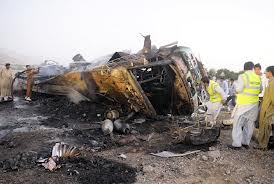
THE LAST GAS STATION ON EARTH: Less than a mile from the Durand Line, this sole petrol pump in Angoor Adda, South Waziristan, has been both a crucial lifeline for the local transport as well as the sight of several gunfights. Disagreement over priority access between armed groups, especially when supplies are low, has often resulted in violence. The station pumps all sorts of fuel: legal petrol from Pakistan, and the not-so-legal supply that comes from across the border, even Iran.

They’re more laid back than the Mehsuds, these Ahmadzai Wazirs, who dominate here with five sub-tribes, rivalled by the Sulaiman Khel, who have two sub-tribes. Four Taliban groups – Shamsullah, Halimullah, Malang and the feared Commander Nazir Group – operate here, abetted and/or rivaled by at least five “independent” Taliban field commanders: Khalid (Zali Khel), Sultan (Toji Khel), Tariq (Punjabi), Gade Khan (Toji Khel), Waliullah (Gangi Khel) and Saifullah (Toji Khel). The tribal-militant matrix is confusing, and I have to go through an organogram that the commandant makes in the dirt with his cane to understand the rules. What’s obvious enough, however, is the strongest political and physical structures in town are, ironically enough, the consortium of mosques that are led by four Maulanas of varying hues. The state doesn’t matter here, nor exist; except for the FC, whose commander gets by on good will, using his 395 Corpsmen and 26 regular army troops to build schools, repair shops, attend the jirgas and, of course, play bad cop.

A construction crew is working a new petrol pump, as the old one has seen too many firefights break out for possession and first dibs when the supply is low. As this is a transit point of a border town, I see more women – covered up of course – than I have seen so far. There are no slits in the burqas, like the ones you see in the mainland; just pierced pocks. Nor are they black, also a mainland trend, neither red, as seen in Kabul. This is white and blue burqa land. Only pre-pubescent girls are un-burqa’d, but even a four-year-old has a dupatta.

NOT THE DEVIL’S WORKSHOP: Car mechanics at work in Angoor Adda’s central bazaar. With the absence of gas stations, workshops like this also provide petrol and diesel fills, and according to an intelligence official, excellent insight about whose using the local roads, what they’re driving, and where they’re headed.

Kids in uniforms from a local school are crossing over to go back to their homes on the Afghan side. So is a chicken vendor with a low-flung Hilux filled with birds and assistants. The Durand Line is less than well imagined for these divided tribes: For them, it’s sub-fictional. Here, they’re married to their land, not their countries. My roaming indicator shows that only an Afghan cellular service provider is available. This is the Pakistani part of Tribalistan, really. The market itself is subsistence-level; everybody is driving some beat up version of a Toyota. “Woodtrade, coal, livestock, agriculture” are the professions that my intel briefing claims the locals are involved in, but I spot a few mechanics and some madressah students; most men are just ambling around.

SCHOOL OF WAR: Students, like this young one from Chagmalai Model School for Boys near Jandola, South Waziristan, have been deprived as well as enabled by the Waziristan war machine. Without the military’s presence in the region, they wouldn’t have a school to go to, as the army funds and sends volunteers and cadets to teach at such institutions. But army presence is also accompanied by military operations as well as the restrictions and dangers for the local population.

Troops from the Afghan National Army (ANA) are stationed around 30 metres away from the official border crossing, which is better paved on the Pakistani side thanks to a new road the Corps of Engineers have laid with American and UAE funding. A couple of the ANA are wearing baseball caps, one red and one yellow, and the guy with the red cap has it on backwards, like a street gang member from an American inner city. But their watchtowers are brand-new, as are their barracks and searchlights. “A gift from Nato,” mutters the commandant of the FC Wing. “Let’s see if they behave like they deserve it.”

There have been cross-border tensions here. “We took fire on March 23, heavy fire,” says the commandant, an infantryman with a big voice that is flattened by his Gold Leafs. “Then on August 14, too. Then, on the 15th, they had fireworks. Actual, colourful, fireworks.”

FC UNDER ATTACK: A sentry of the 2nd Wing of the Frontier Corps, on watch on one of the outer perimeter walls, partially damaged in a recent attack, in Angoor Adda, South Waziristan. Angoor Adda has been the site of a US ‘boots on the ground’ incursion, and is a major Af-Pak border crossing as well. After high casualties and mass surrenders in the 2000s, the FC has been forced to evolve, in tactics and even in uniform, moving from a border-security force role to that of an anti-terror force.

I can read the sub-text of the complaint: The ANA has ‘Indian backing’, allege most of the operational and intelligence officers I’ve often met on this side. But the fireworks anecdote, on India’s Independence Day, is a new one.

“Communication is the best medicine,” claims the commandant. The ill-constructed proverb has substance, though.

“Every Wednesday, at 2100 hours, I speak to my counterpart across the border. I’ve got my interpreter, who speaks Pashto. That CO there has got his Pakhtun aide, as he is a Dari speaker himself.

“We started this hotline around a couple of months ago, soon after the Americans left. When we heard that the Indians left along with the Yanks, we reached out. And it worked. Directly talking to the Afghans has helped.

“Firing is down. As are mortar engagements. They’ve shot at us to pressurise us to stop cross-border movement, which is not always controllable because of this so-called border and the demands of the tribes; but hitting us only makes matters worse because we’re forced to hit back.

“We’ve started sharing intel now. There’s still distrust, but both of us have created a window.”

My ride, an MI-17, has a crew that doesn’t appreciate sunsets, nor bunking overnight in a dusty border town’s FC Wing that’s seen two American incursions, boots on the ground and all that. Aviators are pushy, and prefer asphalt under their tires when it’s lights out. I’m summoned, and move to the helipad. Next stop, the 7th Division’s HQ.

WAITING UNDERGROUND: The below-surface “TacHQ”, or tactical headquarters of the 7th Division, the oldest formation in the army, in Miranshah, North Waziristan. Underground because it has been subjected to rocket and mortar attacks, the 7th Division will be the frontline outfit that will do the heavy-lifting if/when the time for the “mop up” operation in North Waziristan arrives.

Between the static induced by Talib jammers below us, I have an in-flight comm-set debate with the pilots about the bandwidth of the free wi-fi that awaits us, code for the longevity of the Viber chat we are looking forward to with our wives when we bunk up at the Golden Arrow Hotel (as Miranshah’s officers’ quarters are referred to, a cheeky reference to the formation sign of the 7th Division as well as the mosquitoes that plague it).

The wi-fi is not a luxury. We will need to talk to our wives: Midnight artillery fire makes for gentlemanly insomniacs. And North Waziristan is a lonely place, anyway. Even with 20,000 hardened militants willing to offer their company.

The writer is a producer/correspondent for NBC News. He tweets at @WajSKhan
Militants go on Killing Spree of Polio workers in Pakistan

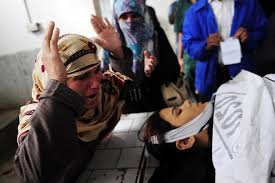
Polio health worker killed (Credit: livemint.com)
Polio health worker killed
(Credit: livemint.com)

Islamabad, Dec 19  — Health workers administering polio vaccinations came under fresh attack in Pakistan on  Wednesday, a troubling development in a nation that remains one of three in the world where the disease has yet to be eradicated.

Three workers were killed in separate attacks, a day after five others died in similar circumstances. All of them were part of a massive vaccination campaign nationwide. The attacks prompted authorities to suspend the campaign throughout the country.

— Two men opened fire on an 18-year-old worker as he was vaccinating children on the outskirts of the northwestern city of Peshawar. The worker died of bullet wounds to the head, said Dr. Janbaz Afridi, the provincial director of the polio campaign.

— Gunmen opened fire on a car carrying a vaccination campaign supervisor and her driver in Charsadda — killing them both.

— Also in Charsadda, two female workers narrowly escaped when some men began shooting at them.

— Three other female workers also escaped unhurt when they were shot at in Nowshera district.

All the attacks Wednesday took place in Khyber Pakhtunkhwa, a province rife with Islamic extremists.

On Tuesday, five workers were killed: four in Karachi; and a 14-year-old volunteer in Peshawar as she and her sister were leaving a house after administering vaccines.

Pakistanis have viewed polio vaccination campaigns with suspicion after the CIA’s use of a fake vaccination program last year to collect DNA samples from residents of Osama bin Laden’s compound to verify the al Qaeda leader’s presence there.

Bin Laden was killed by U.S. forces in May 2011.

In June, a Taliban commander in northwest Pakistan announced a ban on polio vaccines for children in the region as long as the United States continues its campaign of drone strikes in the region, the Taliban said.

CNN was not able to reach the Taliban for comment regarding the latest attacks. Polio, a highly infectious viral disease that can cause permanent paralysis in a matter of hours, has been eradicated around the world except for three countries where it is endemic: Pakistan, Nigeria and Afghanistan.

After the number of cases spiked sharply last year, Pakistan stepped up its eradication efforts. The numbers fell from 173 last year to 53 this year, according to the Global Polio Eradication Initiative.

‘Heavy fighting’ in Pakistan’s North Waziristan

North Waziristan (Credit: tribune.com.pk)
North Waziristan
(Credit: tribune.com.pk)

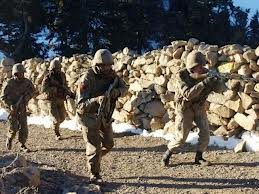
Heavy fighting involving artillery fire and helicopter gunships is taking place in the Pakistani tribal area of North Waziristan, military sources say.

The army say that it killed at least 23 militants overnight on Wednesday, but there is no independent confirmation of these figures.

On Wednesday it said at least five soldiers were killed by militants.

On Tuesday the head of the Pakistani Taliban, Mullah Fazlullah, ruled out peace talks with the government.

He vowed to continue attacks against Pakistani forces who he said were preparing to launch an operation in Waziristan.

Military sources said on Thursday that the 23 militants had been killed in exchanges of fire with security forces late on Wednesday night.

“[The] terrorists tried to ambush a convoy of security forces which was returning back from Khajori post,” they said.

“The convoy had gone to rescue injured soldiers who were attacked by a suicide bomber yesterday while they were offering prayers in a mosque at the post.

“Security forces valiantly responded and encircled [the] fleeing terrorists, inflicting heavy casualties on them. A fire fight continued for some time… and a search operation is in progress in the area.”

Locals say that at least two civilians have been killed and several houses destroyed by artillery fire in the Mir Ali area. They say that injured people cannot get to hospital because of a military curfew and continuing shelling.

The BBC’s M Ilyas Khan in Islamabad says that the violence comes after several years of comparative calm in North Waziristan and that locals now fear a wider ground operation in the area and large-scale population displacement.

On Wednesday militants drove an explosives-laden truck into a major security post at Khajori in North Waziristan, killing the five soldiers and injuring more than 20, military sources said.

The post and and a nearby military fort guard the main highway that connects the town of Miranshah in North Waziristan with Bannu, a city in north-western Khyber Pakhtunkhwa (KP) province.

The soldiers man the check-post near during daytime to monitor traffic entering and exiting North Waziristan, but move inside the fort at sunset.

The little-known Ansarul Mujahideen militant group said that it carried out the attack. Analysts say unfamiliar names are often used by Pakistani and foreign militant groups to avoid identification.

Ansarul Mujahideen has also been blamed for warning PTI party leader and former international cricketer Imran Khan not to take his anti-polio campaign into KP province.

The Taliban oppose the polio vaccination schemes, which they see as a cover for international espionage.

Mr Khan’s PTI party says that it is taking “precautionary measures” and has restricted Mr Khan’s movements.

Pakistan protests may make US fly war cargo out

PTI blockade (Credit: thenews.com.pk)
PTI blockade
(Credit: thenews.com.pk)

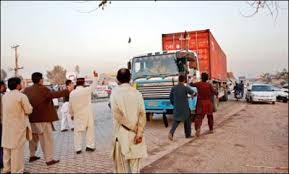
WASHINGTON, Dec 19: US officials, frustrated that hundreds of military shipments heading out of Afghanistan have been stopped on the land route through Pakistan because of anti-American protests, face the possibility of flying out equipment at an additional cost of $1 billion.

More than a week after Pakistani officials promised Defense Secretary Chuck Hagel that they would take ”immediate action” to resolve the problem, dozens of protesters are still gathering on the busy overland route, posing a security threat to convoys carrying US military equipment out of the war zone before combat ends a year from now.

US officials said Wednesday they have seen no effort by the Pakistanis to stop the protests, which prompted the US three weeks ago to halt Nato cargo shipments going through the Torkham border crossing and toward the port city of Karachi.

A Pakistani official says the government is looking for a peaceful settlement but notes that citizens have the right to protest as long as they are not violent.

The officials, speaking on condition of anonymity because they were not authorised to speak publicly about the planning, said flying the military equipment out of Afghanistan to a port will cost five to seven times as much as it does to truck it through Pakistan.

About a hundred trucks are stacked up at the border, and hundreds more are loaded and stalled in compounds, waiting to leave Afghanistan.

The shipments consist largely of military equipment that is no longer needed now that the Afghan war is ending.

Sending the cargo out through the normal Pakistan routes will cost about $5 billion through the end of next year, said a defense official.

Flying the heavy equipment, including armored vehicles, out of Afghanistan to ports in the Middle East, where it would be loaded onto ships, would cost about $6 billion if it continued through next year, said the official.

A northern supply route, which runs through Uzbekistan and up to Russia, was used for about seven months last year when Pakistan shut down the southern passages after US airstrikes accidentally killed 24 Pakistani soldiers at two border posts.

That northern route, however, was used primarily to bring shipments into Afghanistan, and is much longer, more costly and often requires cargo to be transferred from trucks to rail.

The deadlock, if not resolved, could also be costly for Pakistan.

In private meetings in Islamabad early last week, Hagel warned Pakistani leaders that unless the military shipments resumed, political support could erode in Washington for an aid program that sends them billions of dollars.

Hagel received assurances from Pakistan leaders during the meetings that they would resolve the problem, but no progress has been made.

Pentagon spokesman Adm. John Kirby said Hagel is concerned about the issue and has talked with his top commanders in the region about it. ”He knows they (the commanders) are working the issue very hard,” Kirby said.

But Marine Gen. Joseph Dunford, the top US commander in Afghanistan, was in Pakistan on Monday for a meeting with Pakistan’s new Army chief, and it wasn’t clear if he broached the issue with him.

The protesters are demonstrating against the CIA’s drone program, which has targeted and killed many terrorists but has also caused civilian casualties.

The group gathers daily at a toll booth on the outskirts of the provincial capital of Peshawar, in Pakistan’s northern Khyber Paktunkhwa province.

All traffic going into the tribal areas and on to the Torkham crossing must pass through the toll booth.

Earlier this week, a group of about 40 protesters were at the toll booth, including about 10 who were waving flags as vehicles and trucks drove past.

A makeshift enclosure was set up on the side of the road, complete with chairs arranged under a tent encircled by barbed wire to keep the protest from spilling into traffic.

A few police officers stood nearby, with orders to allow the protests to go on but ensure that no one got unruly or attacked the drivers.

”We will continue this sit-in until there is a good decision on the drones,” said Fayaz Ahmed Khalid, a political organiser with the Pakistan Tehrik-i-Insaf party.

”It’s for ourselves, for our country.” He said the group has been stopping container trucks going into Afghanistan and looking at their papers to determine whether they are carrying cargo bound for Nato troops.

If so, the protesters force the trucks to turn around.

Khalid said the group got instructions not to stop trucks coming out of Afghanistan into Pakistan, and added that they’ve also noticed there has been little traffic coming from Karachi and heading into Afghanistan.

Companies know, he said, that they will be turned back at the checkpoint. He said it has been about a week since the protesters encountered a truck carrying Nato goods.

The protesters, however, appear to be in this for the long haul — Khalid had a schedule listing who would be manning the sit-in each day through mid-January.

Karachi to Grow Quietly Nuclear

KANUPP (Credit: theguardian.com)
KANUPP
(Credit: theguardian.com)

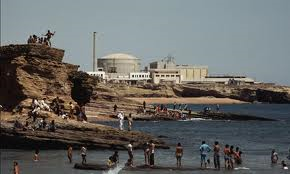
WORK has started on preparing the site for two large nuclear power plants in Karachi. Each of these reactors will be larger than the combined power of all the nuclear reactors currently operating in Pakistan.

This will be by far the largest nuclear construction project ever in Pakistan. It is not too late to ask a few basic questions so that people, especially those living in Karachi, know what they may be letting themselves in for.

Everyone knows the new reactors are being purchased from China. They will be designed and built by the China National Nuclear Corporation (CNNC).

What people may not know is that the reactors will be based on a design known as the ACP-1000 that is still under development by this Chinese nuclear power company. In effect, Pakistanis are buying reactors for the Karachi site that so far exist only on paper and in computer programmes — there is no operating reactor in China based on this design.

It was reported in April 2013 that the CNNC, the developer of the ACP-1000, had completed a “preliminary safety analysis report”, and was “working on construction design”.

This means so far there is not even a complete design. Since the new Karachi reactors will be the first of a kind, no one knows how safe they will be or how well they will work. The 20 million people of Karachi are being used as subjects in a giant nuclear safety experiment.

The Fukushima nuclear accident has shown that safety systems can fail catastrophically. The accident in 2011 struck Japanese reactors of a well-established design that had been operating for decades. Still, all kinds of things happened that were not expected by the reactor operators or managers or by nuclear safety authorities.

An important lesson of Fukushima is that nuclear establishments underestimate the likelihood and severity of possible accidents. Another important lesson is that these same establishments overestimate their ability to cope with a real nuclear disaster.

At Fukushima, the nuclear authorities failed dismally despite Japan’s legendary organisational capability, technological sophistication and social discipline.

Nearly 200,000 people living close to the Fukushima reactors were evacuated and some may never be allowed to return. Radiation was blown by the wind and contaminated the land to distances of over 30 km.

The US suggested its citizens living in that area of Japan move at least 80km away from the reactor. The government of Japan considered forced evacuation of everyone living within 170km of the reactor site and organising voluntary evacuation for people living as far as 250km from the plant.

Contaminated food and water was found at distances of 250km.

The financial cost of the clean-up so far is estimated to be about $100 billion and could eventually be much higher.

So how big, how dangerous and how costly is the nuclear experiment about to be carried out in Karachi?

An analysis undertaken two years ago, in 2011, by the science magazine Nature and Columbia University in New York showed that the nuclear reactor site in Karachi has more people living within 30km than any other reactor site in the world.

It found that, in 2011, there were eight million Karachi citizens living within this distance of the reactor. All of Karachi falls within 40km of the reactor site.

So far, there have been no public hearings or discussions of the suitability of the site for the new Karachi reactors. There is no report of an Environment Impact Assessment for the proposed new Karachi reactors. Neither the Pakistan Atomic Energy Commission nor the Pakistan Nuclear Regulatory Authority has explained what will happen in case of an accident at the proposed reactor.

A preliminary study by one of the authors found that the plume of radioactive material that could be released from a severe nuclear accident could be blown eastward by the wind over the city, engulfing the most populous areas of Karachi.

There is also no information on the terms for the supply of nuclear fuel, such as how long the very hot, intensely radioactive spent nuclear fuel will stay at the site and how will it be safely stored until it is returned to China, if it is returned at all. The spent fuel stored at Fukushima was damaged in the accident and led to the release of radioactivity.

Finally, there is no information on what emergency plans, including for possible evacuation, have been drawn up as part of preparing for these large new reactors. There is no information whether such plans even exist.

Here is a question for those in charge of Karachi, in charge of Sindh and the federal authorities in Islamabad: how do you propose to evacuate many millions of people from Karachi in case of a severe nuclear accident at the new reactors?

One expects mass panic, with people deciding to save themselves and their families as best as they could, clogging the roads, and delaying the escape of others closer to the reactor. Can any plan work in such an environment?

Finally, there is the cost in terms of money. Reports suggest the two reactors may cost $9-10 billion. They will be paid for by taking loans from China. There is little information on the details of the financing of the reactors, including the final cost of decommissioning and waste disposal.

There is not even a publicly available government study showing that these reactors are the least-cost option for producing the expected amount of electricity.

The issue of cost also must include the consequences of accidents. If there is an accident at the new Karachi reactors due to a problem with the reactor design or the construction, who will pay the vast sums needed to cover the damage and clean-up — Pakistan or China?

The people of Karachi have a right to know the answers to these questions. It is time they started asking.

The writers are physicists with an interest in nuclear issues.

How Pakistan lost its East: the Bangladesh Saga – (The News International) By Naseer Memon

Bangladesh remembers (Credit: abc.net.au)
Bangladesh remembers
(Credit: abc.net.au)

December dusts searing past to remind a reality that was preposterously denied for a quarter century and was recognized only after leaving an indelible trail of blood. While creation of Bangladesh entails a petrifying human catastrophe and an everlasting reference to state-perpetrated fratricide, it also trivialised a waffle narrative of Islamic-nationhood.

The episode reiterated that a multi-nation federation can only exist with socio-political justice, absence of which derides all ideological conjectures. Creation of Bangladesh reinforced the fact that Pakistan was not a creation of any Islamic ideology but was in fact a derivative of an ominous political alienation of Muslims in India. For Bengalis, Pakistan turned out to be a mere perpetuation of the same alienation. Flippant negation of their culture, abominable economic exploitation and brazen denial of their right to rule culminated into the birth of Bangladesh on December 16, 1971.

Undeniably, the social fabric and political configuration of East and West Pakistan were diametrically opposite to each other. While West Pakistani politics and society was yanked by a myopic feudal oligarchy, East Pakistan inherited a much refined middle-class lead socio-political ambiance. After 1857 insurgency, Bengal became the first province under British democracy. It was the first regulation province of India under the jurisdiction of a high court. Society and politics in Bengal was erected on starkly different building blocks and it did not chime-in with the other provinces of Pakistan where British rule clamped typical colonial structures.Snobbish civil and military leadership grossly underestimated the powder keg of East Pakistan that left deep scars of embarrassment in the national history. While language and culture are central to most of the ethno-national movements, economic and political marginalisation are key triggers to stoke irreversible hatred.

Landed aristocracy that shaped today’s Pakistan was trounced in Bengal in 1950 with the introduction of “East Bengal Estate Acquisition and Tenancy Act”. It effectively routed the landlordism in Bengal by fixing individual holding at only 3.3 acres per head or 33.3 acres of land per family whichever was less. Agriculture census of 1963-64 shows that out of 6.2 million farms some 6 million were of less than 12.5 acres size and 50 per cent of them were only 2.5 acres or less.

On the contrary, West Pakistan was marked by large landholdings specially in Punjab and Sindh provinces. For example, 30 per cent of the land in Sindh in 1952 was owned by only one per cent of the owners and the average holding was above 500 acres. In Punjab, 50 per cent of the land was under the control of Zamindars. This sufficiently indicates the distinct social and political milieu of the two wings. Since West Pakistan held hegemony over the decision making, the vibrant middle class-led East Pakistan often loathed the policies manufactured and imposed by the landed aristocracy of West Pakistan.

Resource hemorrhage and discrimination in pecuniary matters against East Pakistan was the key cause of conflict. In 1948-50 when East Pakistan had a net balance of payment surplus of Rs622 million, West Pakistan had a net deficit of Rs912 million. Similarly, the foreign and inter-wing trade balance of the two wings from 1949-50 to 1957-58 shows East Pakistan having a surplus of Rs3,636 million as balance of trade with foreign countries against the net deficit of Rs3,047 million of West Pakistan on the same account. The trend remained consistent during the first and second five years plans when East Pakistan had net surplus and West Pakistan had net deficit in foreign trade and the surplus of East Pakistan was used to offset the deficit. This prompted Shaikh Mujib to demand for two separate currencies for the two wings under his popular six-point formula.

Conflict on resource sharing could have been assuaged had avaricious establishment of West Pakistan maintained a judicious balance in benefit sharing. What irked Bengalis was relentless discrimination in development opportunities. For example, GDP growth in East Pakistan during the period was 2.2 per cent against the heavily skewed 3.1 per cent of West Pakistan. During the same period per capita income in East Pakistan dwindled to -0.1 per cent against +0.8 per cent increase in the West Pakistan. Likewise during five years from 1954-55 to 1959-60, GDP growth in East Pakistan was only 1.6 per cent i.e. half of the West Pakistan’s 3.2 per cent. Per capita income in East Pakistan plummeted to -0.7 per cent against +1.2 per cent in the West Pakistan.

East Pakistan having almost 54 per cent population was also discriminated in public sector development. During the first five year plan, total revenue expenditure in East Pakistan was Rs2,540 million which was less than one third of the Rs8,980 of the West Pakistan. It was marginally jacked-up in the second five-year plan from 1960-61 to 1964-65 when East Pakistan received Rs6,254 million under public sector development programme against Rs7,696 million of the West Pakistan, yet it was still 19 per cent less.

Not only that East Pakistan was kept economically deprived and politically suppressed, it was also under represented in the state structure. Share of Bengalis in senior level civil services was also flagrantly violated. During the first five years of the country, senior cadres of several departments were completely bereft of Bengalis. There were no Bengalis on any senior positions in the Departments of Commerce, Intelligence& Statistics, Supply & Development, Petroleum, Paper & Stationery Wing, Inspection Wing, General Concession Wing, Central Engineering Authority, Coal Commissioner and Textiles.

Apart from economic exploitation, West Pakistani leadership always demeaned and demonised Bengalis. General Ayub rabidly detested Bengalis. He once vented his spleen by saying that “I am surprised by Bengali outlook. They have cut themselves off from Muslim culture through abhorrence of the Urdu language…..making themselves vulnerable to Hindu culture.” On 7th September 1967, he wrote “God has been very unkind to us in giving the sort of neighbours [India] and compatriots [Bengalis]. We could not think of a worst combination. Hindus and Bengalis…. If worst comes to the worst, we shall not hesitate to fight a relentless battle against the disruptionists in East Pakistan. Rivers of blood will flow if need be, unhappily. We will arise to save our crores of Muslims from Hindu slavery”.

Gen. Ayub was no exception in his fulmination against Bengalis. Major General Khadim Hussain Raja, the then GOC, who threatened to “raze Dhakah to the ground” if Shaikh Mujib proclaimed independence during his speech at Race Course ground on 7th March 1971, has made startling revelations about moral bankruptcy of military leadership. In his recently published book “a stranger in my own country”, he has quoted nauseating turpitude of General Niazi during a debriefing meeting. He writes “Niazi became abusive and started raving. Breaking into Urdu he said: ‘Main is haramzadi qaum ki nasal badal doon ga. Yeh mujhey kiya samjhtey hain’. He threatened that he would let his soldiers loose on their womenfolk. There was pin-drop silence at these remarks. Officers looked at each other in silence, taken aback by his vulgarity. The meeting dispersed on this unhappy note with sullen faces. The next morning, we were given sad news. A Bengali Office, Major Mushtaq, who had served under me in Jessore, went into a bathroom at the Command Headquarter and shot himself in head. He died instantaneously.”

What happened in 1971 was certainly worse, yet the worst is the unremitting obnoxious intransigence of the unfazed perpetrators. Fundamental rights are denied with same zeal, forced disappearance, dumping of corpses in the name of national interest continues with alarming madness and natural endowment of federating units are being exploited ruthlessly. Oppressed segments who demand their rights are inexorably construed as traitors. What prevails in Pakistan today can potentially repeat what happened yesterday.

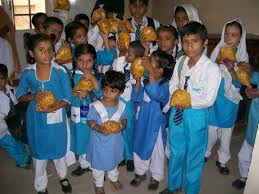
Nation to View Fight against Child Mortality in Fishing Village

Rehri fishing village (Credit: hopengo.tumblr.com)
Rehri fishing village
(Credit: hopengo.tumblr.com)

ISLAMABAD, Dec 12 : A Pakistani doctor won a $1 million grant on Tuesday to fight early child mortality in a small fishing village in southern Pakistan in a contest financed by an American entrepreneur to find innovative ways to save lives, The Caplow Children’s Prize said.

A proposal by Anita Zaidi, who heads the pediatrics department at the Aga Khan University in Karachi, beat out more than 550 other applications from more than 70 countries.

The prize was founded and funded by entrepreneur Ted Caplow to find impactful and cost-effective ways to save children’s lives, according to a press release announcing the results.

Zaidi said in a telephone interview that her project will focus on reducing child mortality rates in Rehri Goth, on the outskirts of Karachi.

According to Zaidi, 106 out of 1,000 children born in the town die before the age of five. That is almost double the worldwide under-five child mortality rate of 51 deaths per 1,000 live births in 2011, according to Unicef.

Few of the women in the area of roughly 40,000 people have access to medical care during pregnancy or money to pay for things like multivitamins, said Zaidi.

There is no nearby hospital, and women usually give birth accompanied by a birthing attendant with little or no formal training.

When women do run into complications giving birth, the babies often die while the women seek medical care, the doctor said.

The money will be used in Rehri Goth to eliminate malnutrition among expectant and new mothers and their babies, ensure that children have access to primary health care and immunisations and train a group of local women at Aga Khan University to become midwives.

Women taking part in the program would get two medical checkups to monitor their pregnancy, multivitamins to promote a healthy fetus and food if they are malnourished, she said.

Zaidi has been working in the area for the last ten years on various health-related research projects carried out by the university so she was familiar with its needs.

”I know this community. I know what its problems are,” Zaidi said. ”It’s a really good match between what the community needed and what this prize was offering.”

Caplow said Zaidi ”really gave reassurance that she would be able to do exactly what she said she would do and it would have the impact that she said it would have.”

He added that he and his wife conceived of the prize after they gave birth to triplets who spent a month in an intensive care unit.

The prize, which Caplow said would continue next year, was a way to address the disparities in medical technology available around the world.

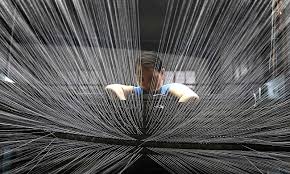
Pakistan’s Exports Win Access to European Markets

Pak garment industry (Credit: dawn.com)
Pak garment industry
(Credit: dawn.com)

ISLAMABAD, Dec 13: The European Parliament has allowed duty free access to Islamabad in a move that will augment its exports by $1 billion annually amid calls to implement international conventions on human rights, good governance, labour and environmental standards.

The EU Parliament approved the Generalised System of Preference, known as GSP Plus status, with 409 to 182 votes for 10 developing countries including Pakistan, according to a statement issued by the EU’s Embassy in Islamabad.

The GSP Plus status means there will be zero duties on over 90% of all products that Islamabad exports to the bloc of 27 nations.

The EU is Pakistan’s largest trading partner. The GSP Plus status will become effective from January 1, 2014.

“The award of GSP Plus status shows confidence of the international markets on the excellent quality of Pakistani products,” said Prime Minister Nawaz Sharif in his written statement. He congratulated the nation for the achievement.

The premier said that gaining access to European markets was the top-most priority of the government as part of the economic development agenda. The status would enable Pakistan to export more than $1 billion worth of products to the international markets each year.

“The textile industry [alone] would earn profits of more than Rs100 billion per year,” said the prime minister. He said the increase in exports would resultantly facilitate economic growth and help in the generation of additional employment.

textile

Pakistan has been suffering from huge losses after it became the frontline state in the global war on terrorism. Finance Minister Ishaq Dar said on Thursday that the country suffered over $100 billion in direct and indirect losses due to the war.

In order to compensate for the huge losses, Pakistan had long been demanding the United States and EU give it preferential treatment in trade and investment – a wish that the US has yet to fulfil despite making promises.

The European Commission’s preliminary assessment is that Pakistani exports, including textiles but also other products, such as leather, would increase by 574 million euros annually, said the EU Embassy. The Pakistani textile industry estimates that exports of textiles to the EU alone under GSP Plus will increase by $650 million in the first year, it added.

“While there is every reason to celebrate this milestone in EU-Pakistan relations, the GSP Plus regime calls for Pakistan to fully implement its commitments under 27 international conventions on human rights, good governance, labour and environmental standards,” said the EU’s Ambassador to Pakistan, Lars-Gunnar Wigemark.

He said the grant of GSP Plus shows the importance the European Union attaches to its relations with Pakistan. “We have listened to Pakistan’s plea for more trade and not just aid,” Wigemark added.

The business community can play a significant role, for instance by ensuring labour rights, employing more women in workplace and making sure that there is no exploitation of child labour. “Improving human rights, including labour standards, is win-win situation for Pakistan and the EU,” the ambassador said.

However, he stressed that there is a need to improve the business climate in Pakistan, including access to energy.

The analysts say there are apprehensions among the business community that the energy shortages may deprive the exporters to get full benefit from the GSP Plus status.

Published in The Express Tribune, December 13th, 2013.

People of Pakistan at mercy of state & non-state actors: Asian Human Rights Commission report

Pak terrorism (Credit: 3quarksdaily.com)
Pak terrorism
(Credit: 3quarksdaily.com)

Karachi, Dec 10: In 2013, the people of Pakistan have remained at the mercy of state and non-state actors which resort to violence as a means to secure power, the Hong-Kong based Asian Human Rights Commission (AHRC) said on Monday.

The detailed report has been released to mark Human rights Day that falls on December 10 (today). Rights violations are widespread due to the failures of, and lack of reform in, the country’s institutional framework, in particular key institutions of the rule of law: the police, prosecution and judiciary, according to the report.

Throughout the year 2013, the AHRC has documented how too many lives, and the dignity of those living, have been snatched by a callous state and inhuman cruelty in Pakistan.“This year, absence of a functioning criminal justice framework has allowed, or even caused, torture in custody and extrajudicial executions to increase rapidly.

“During the year, hundreds of incidents of sectarian violence, targeted killings, terrorist attacks, and suicide bombings were witnessed, as well as killings conducted,” the report said.But that is not all. In 2013, the nation faced the promulgation of two draconian ordinances that have restricted freedoms further. It also witnessed the absence of the rule of law, killings of persons from Muslim minority sects, honour killings, trafficking of women and children, torture in custody, disappearance after arrest, and extrajudicial executions, suicide attacks on religious sites, persecution of the religious minorities, forced marriages, assassination of journalists, enslavement of children, poverty levels rising to 34 percent and power blackouts that brought industrial and commercial activities to a standstill, the report said.

The year 2013 also witnessed, for the first time in Pakistan’s history, peaceful transfer of power from one civil government to another following a general election. Every political party, including that which won the May 11 election with a two-thirds majority, complained about gross vote rigging.

“The new government, on assuming power, immediately began acting on its distaste for human rights. It merged the Ministry of Human Rights with the Ministry of Law and Justice, denying the people opportunity for redress for human rights abuses. The government has turned a blind eye to the arrogance of the police and armed forces in its refusal to comply with the orders of the courts,” the report said.

The government – in attempt to limit freedom of expression, freedom of movement, constitutional protection from arbitrary arrest, security of individuals, right to property, and civil liberty – promulgated two ordinances (Pakistan Protection Ordinance and an ordinance amending the Anti-Terrorism Act 1997). With these ordinances it has provided law enforcement and security agencies unlimited powers to search houses without warrant, shoot suspects on sight, confiscate property, tap telephones, and hack computers, and has established a parallel judiciary, creating special courts and special prosecution. These ordinances were promulgated to bypass parliament and open debate.


“Balochistan remains in a grave situation in 2013. Thousands of people are missing after arrest. Human rights abuse is the norm.,” the report said.

“In 2013, four hundred and fifty (450) persons disappeared after their arrest by the Frontier Corps (FC) and other forces in Balochistan. In Sindh province 35 persons disappeared this year; the number of disappeared for KPK province is 110 persons. In Pakistan-held Kashmir, nationalists struggling for independence of both India-held and Pakistan-held Kashmir disappeared constantly – 52 such persons disappeared after their arrest.”

“As many as 180 bullet-riddled bodies of Baloch missing persons have been found this year. In Sindh, during joint operations of Pakistan Rangers and Police, 53 persons were extra-judicially killed in vast numbers of encounters. In Karachi alone, 34 persons were killed in extra-judicial executions,” the report said.

“However, intelligence agencies brazenly ignore Supreme Court’s orders to produce the missing victims. Two judicial commissions established to probe cases of disappearances have been unable to get explanations from the intelligence agencies, and their recommendations have been ignored.”

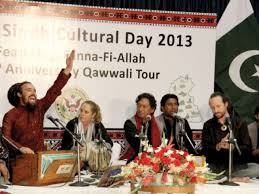
Sindh Cultural Day marked as Day of Unity

Sindh cultural day (Credit: tribune.com.pk)
Sindh cultural day
(Credit: tribune.com.pk)

KARACHI, Dec 8: The demand for Sindhi topis and Ajraks doesn’t only skyrocket on the Sindhi Cultural Day but has become a year-round fashion statement. 

While the use of Ajrak in villages has always been quite common, in the cities it was used mostly on special occasions, such as wedding ceremonies. But according to people in the business, the demand for the traditional attire, even in urban areas, was never as high as in 2013.

“Most of the younger generation didn’t like topi and Ajrak but the trend has changed now. They like to buy it in different colours and of good quality,” commented Abdul Ghafoor from Tando Muhammad Khan.

The demand for painted Ajrak is still low as compared to the printed ones since the latter are much cheaper. The printed Ajraks are sold between Rs500 to Rs800 while traditional ones, which are mostly painted by hand, start from Rs1,000 and can go up to Rs5,000.

“Thousands of printed Ajraks can be made in a single day while a traditional Ajrak needs time,” said Ajrak maker, Fayaz Hussain Soomro, from Tando Muhammad Khan, adding that it takes 20 to 25 days to make 40 traditional Ajraks. “The work is quite technical and requires concentration.”

The main Ajrak market is in Hyderabad and its surrounding areas, including Hala, Bhitt Shah and Tando Muhammad Khan. The Sindhi topis, according to its makers, have also become quite popular because of their colours and styles and remain more popular than Ajrak.

Global celebrations

The 5th Sindhi Cultural Day, which will be celebrated today [Sunday], is being celebrated with fervour not only across the province but also in America, Canada and the United Kingdom where Sindhi families and students reside in large numbers.

Multiple political and nationalist parties, civil society organisations and communities have planned to arrange walks in small towns and big cities for the revival of Sindh’s heritage. Rallies from different parts of Karachi will converge outside the Karachi Press Club.

Rallies, charged with popular folk songs such as ‘Jeay Sindh Jeay, Sindh Wara Jeayan’, were organised during the last week along with activities, such as ‘Mach Kachehries’.

Apart from Sindhis, people from other ethnic groups, swathed in the indigo block-printed Ajrak, Sindhi topis and patko with white dresses, also took part in the festivities.

Intellectual direction

The cultural day is being celebrated on the theme ‘Aikta Day’ [unity day] which Sindhi writers, poets and intellectuals think is quite fitting, saying, “This day, which falls in the last month of the year, has united different clans under a single banner.” They believe that soon, the day will not only be about wearing Ajrak and Sindhi topis but will be given a constructive direction. “It is a good sign that people own their cultural identity. It is a sign of life. It also indicates that the culture has diversity,” said renowned writer and poetess Amar Sindhu.

While talking to The Express Tribune from Lahore, Sindhu said that while the passion was visible, the spirit of Sindh was still missing from the event. “The [Sindhi] culture has gathered people from all walks of life and now it has become a mass culture. No one can stop it now.”

Poet Masroor Pirzado also called it a day of showing unity. “The sense of cultural celebrations and unity will reduce hatred among people and will lessen extremism in the society,” said Pirzado. “The cultural day should not be restricted to only wearing topis, ajrak and dancing on folk songs. It must also change attitude of the people to understand their cultural values.”

Published in The Express Tribune, December 8th, 2013.