GWADAR, PAKISTAN — Over the last six months, the skyline over the sleepy fishing city of Gwadar has been transformed by machines that dredge the Arabian Sea and cranes that set up shipping berths in what is projected to become Pakistan’s biggest international port.
Continue reading “Sleepy Pakistani Village Rises as China’s Gateway to Middle East”India, Pakistan Set for Counterterror Drills — Together, in Russia
In an unprecedented move, nuclear-capable South Asian rivals India and Pakistan are gearing up to take part in joint military drills.
Last week, Indian Defense Minister Nirmala Sitharaman confirmed that India would participate in anti-terrorism military drills alongside Pakistan.
Continue reading “India, Pakistan Set for Counterterror Drills — Together, in Russia”Opposition Parties in Pakistan Warn Against Ongoing Crackdown on PTM
Pakistan’s political parties have urged the government to exercise restraint in handling the grass-roots Pashtun Protection Movement (PTM), arguing that the military’s crackdown and potential collision with PTM could threaten the stability of the South Asian nation.
Continue reading “Opposition Parties in Pakistan Warn Against Ongoing Crackdown on PTM”Pakistan Says it Struck a Blow Against Islamic State-Khorasan
WASHINGTON — Pakistan’s Punjab province Counter Terrorism Department (CTD) this week said it killed two prominent Islamic State (IS) operatives in the province and closed “a big chapter” in the history of Islamic State Khorasan (IS-K) in the country.
Continue reading “Pakistan Says it Struck a Blow Against Islamic State-Khorasan”Pakistan, US Take Action Against Militants Ahead of Trump-Khan Meeting
The United States and Pakistan this month started cracking down against armed militant groups, in what analysts describe as establishing a groundwork ahead of the meeting between the U.S. President Donald Trump and Pakistani Prime Minister Imran Khan in Washington early next week.
Continue reading “Pakistan, US Take Action Against Militants Ahead of Trump-Khan Meeting”Pakistan’s Feminists Fight Blasphemy Cases
Pakistani feminists say they are determined to fight blasphemy charges filed in mid-April by militant Islamic groups opposed to their International Women’s Day rallies held on March 8.
Continue reading “Pakistan’s Feminists Fight Blasphemy Cases”Pakistani Official: Kashmir Issue Forced Troop Pullback From Afghan Border
The renewed tension with India has pushed Pakistan to move some of its troops from the border region with Afghanistan to the Indian Line of Control (LOC), leaving fewer resources to contain the cross-border infiltration of militants along the Afghanistan-Pakistan border, a senior Pakistani army official tells VOA.
Continue reading “Pakistani Official: Kashmir Issue Forced Troop Pullback From Afghan Border”British ‘High-Risk’ Designation for Pakistan Seen as Bad Sign for Anti-Corruption Efforts
The United Kingdom’s decision to add Pakistan to its list of “high-risk countries” for money laundering and terror financing may make it harder for Islamabad to exit the Financial Action Task Force (FATF) “gray list” in June, experts warn.
Continue reading “British ‘High-Risk’ Designation for Pakistan Seen as Bad Sign for Anti-Corruption Efforts”Pakistan’s Religious Minorities Say They Were Undercounted in Census
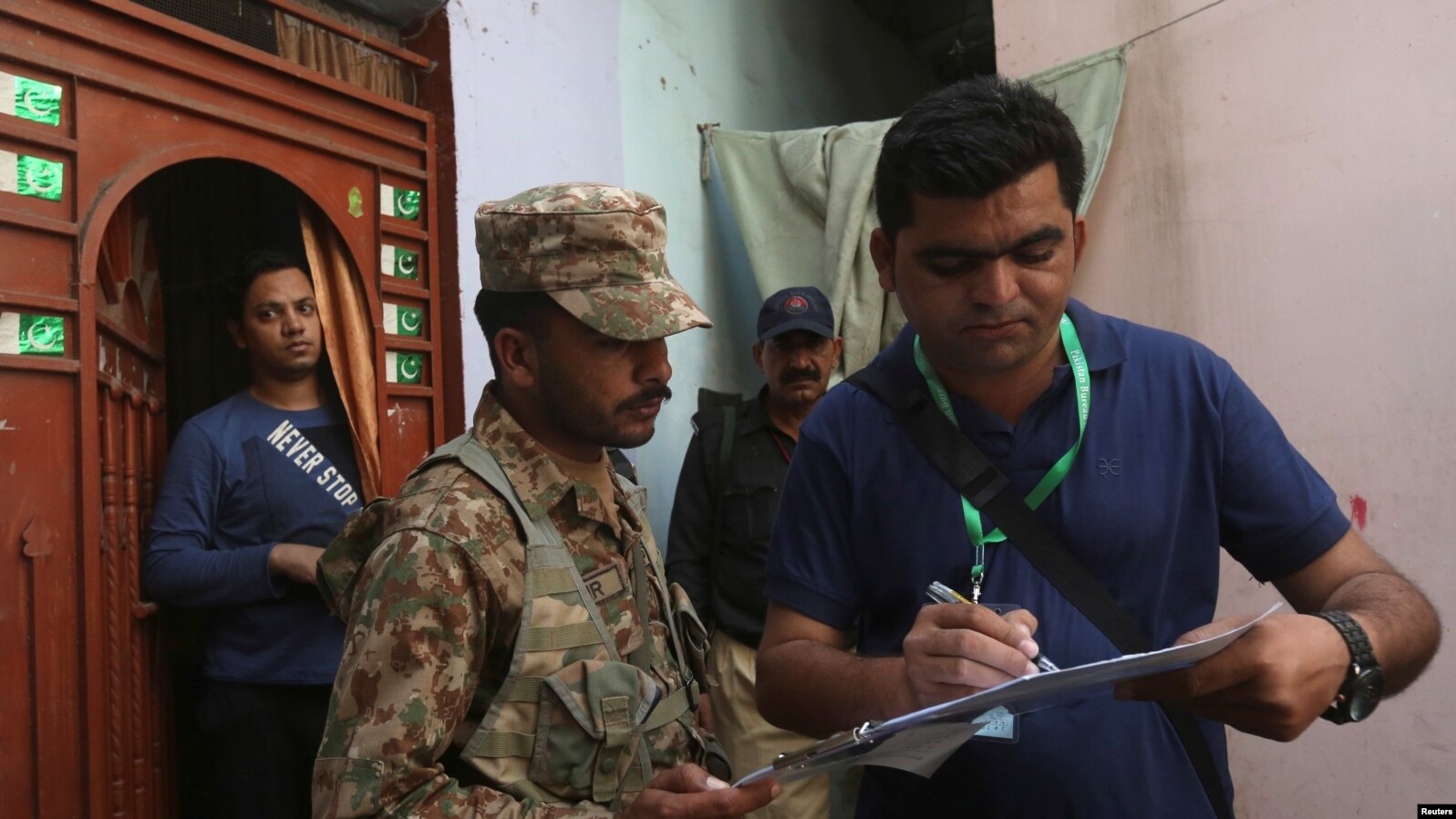
Religious minorities in Pakistan claim the country’s long-delayed census, released by the government in May, appears to have undercounted them.
Although the sixth Population and Housing Census was completed in 2017, the Pakistan Bureau of Statistics published the data on May 19. The previous census had been conducted in 1998.
Continue reading “Pakistan’s Religious Minorities Say They Were Undercounted in Census”Experts: Kashmir Issue Could Raise the Stakes for Militancy
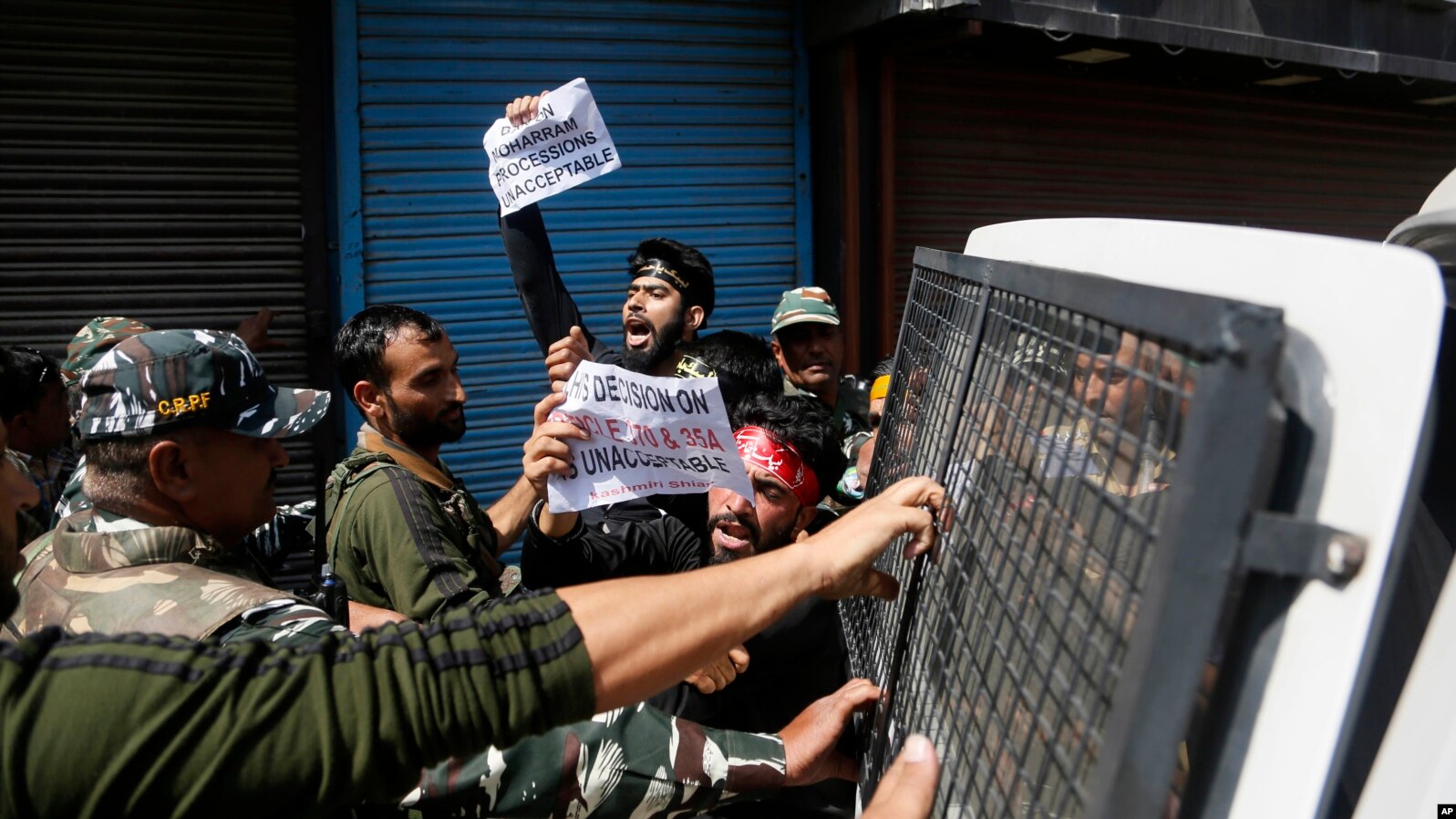
India’s recent decision to revoke the special status of Indian-controlled Jammu and Kashmir, a Muslim-majority state, has some experts concerned that the action could raise the stakes for militancy among several active terror groups in the region.
The presidential order to revoke Article 370 of the Indian constitution, ending Jammu and Kashmir’s autonomy in administrative matters, was preceded by massive troop movement and a lockdown in the state. Internet, cellphones and landline telephones reportedly were cut off.
“Indian Kashmir has been a very volatile region for a very long time,” said Ajai Sahni, a New Delhi-based political analyst at the Indian Institute for Conflict Management.
India has resorted to an “essentially repressive arrangement, in which the resistance will not go away,” Sahni told VOA.
Sahni said Indian authorities have so far managed to prevent any significant terror incident or backlash as a result of the recent move.

Militant groups
Several terror and militant groups operate in Jammu and Kashmir, including Jaish-e-Mohammad and Lashkar-e-Taiba. The latter has two other front organizations — Jamaat-ud-Dawa (JuD) and Falah-e-Insaniyat (FIF) — both of which allegedly collect charities under the pretext of helping the poor but instead fund the Kashmir cause.
LeT, JuD and FIF are led by Hafez Saeed, a U.S.-designated global terrorist who was allegedly the mastermind of Mumbai’s 2008 terror attacks in which 166 people were killed, including six Americans.
Some of these groups, like the LeT, are alleged to have links to Pakistan’s military and receive its support. Pakistan, however, denies supporting militant groups inside Kashmir.
Tauqir Gilani, chief of the Jammu Kashmir Liberation Front (JKLF), a Pakistan-based political party that believes in the unification of Kashmiris, said the situation is a cause for concern in the region and could be exploited by Pakistan.
“The situation is so volatile that Pakistan can easily exploit it and use Kashmiris as cannon fodder,” Gilani said. “Thousands of people have moved to the cease-fire line from Pakistan’s side, knowing that it is a case of now or never.”
Sahni downplayed the threat and maintains that “India’s intelligence agencies are well-aware of Pakistan’s backing of terrorist groups, and the Jammu and Kashmir police are equipped to handle the situation.”
“The international pressure has shifted in favor of stopping Pakistani support for terrorism. That has increased India’s expectations that Pakistan will not support militants in Kashmir,” he added.

Demographic change
India’s ruling Bharatiya Janata Party (BJP) returned to power earlier this year with a pledge to revoke Article 370.
The BJP, which allegedly has a nationalist Hindu base, also removed Article 35A — paving the way for non-Kashmiris to buy property inside Kashmir, which some analysts believe is a move to change the local demographics and undermine the Muslim-majority status of the region. The legislation gave the Jammu and Kashmir state legislature the power to define the term “permanent resident,” and provide those residents with special rights and privileges.
Mehbooba Mufti, a former chief minister of Jammu and Kashmir who has reportedly been under house arrest since protesting against the Indian government’s move, agreed, saying India wants to change the local demographics.
“They just want to occupy our land and want to make this Muslim-majority state like any other state, and reduce us to a minority and disempower us totally,” she told the BBC.
Sahni does not deny that India’s move will change the state’s demographics, but he argued that Pakistan has done the same thing on its side of Kashmir in the past.
“The Kashmiri movement (local resistance) is not sustainable, because Pakistan has already undertaken the demographic re-engineering of Gilgit-Baltistan,” Sahni said, referring to how Pakistan had settled non-Kashmiris in the Kashmiri territory.

Claims over Kashmir
Kashmir has been a disputed territory between India and Pakistan since 1947, when Muslim-majority Pakistan was partitioned from predominantly Hindu India, and British rule ended in the region.
Both nuclear nations have fought two major wars over Kashmir, which they each claim as an integral part of their territories.
In recent days, Indian politicians reiterated their long-standing position that their claim over Kashmir includes Pakistan-administered Kashmir, as well as the Chinese-administered Kashmiri territory of Aksai Chin.
IS and al-Qaida
There are fears that the indigenous Kashmiri groups operating within Indian-administered Kashmir could build ties with transnational terror groups like Islamic State and al-Qaida.
Malik Nadeem Abid, the New York-based executive director of Kashmir Mission USA, charges that Kashmiri groups are aware of Islamist extremists’ attempts to take over their movement.
“We have our eyes open to prevent infiltration of the Kashmiri cause by pro-Islamist groups like Islamic State and al-Qaida,” he told VOA. “Our movement is 100% indigenous and in the hands of nationalist Kashmiri leaders.”
Communication lines in Jammu and Kashmir have reportedly been cut off since India revoked the state’s special status, leaving local residents unable to communicate with the outside world.
Yusuf Jameel, a VOA reporter in Indian-administered Srinagar, described the situation as uncertain and volatile, which is forcing many people to leave.
“There is an extraordinary level of fear and apprehension among locals. Hundreds of Indian citizens and pilgrims, local workers, craftsmen and traders are leaving the valley,” he said.