Nuclear Fears in South Asia

The world’s attention has rightly been riveted on negotiations aimed at curbing Iran’s nuclear program. If and when that deal is made final, America and the other major powers that worked on it — China, Russia, Britain, France and Germany — should turn their attention to South Asia, a troubled region with growing nuclear risks of its own.

Pakistan, with the world’s fastest-growing nuclear arsenal, is unquestionably the biggest concern, one reinforced by several recent developments. Last week, Pakistan’s prime minister, Nawaz Sharif, announced that he had approved a new deal to purchase eight diesel-electric submarines from China, which could be equipped with nuclear missiles, for an estimated $5 billion. Last month, Pakistan test-fired a ballistic missile that appears capable of carrying a nuclear warhead to any part of India. And a senior adviser, Khalid Ahmed Kidwai, reaffirmed Pakistan’s determination to continue developing short-range tactical nuclear weapons whose only purpose is use on the battlefield in a war against India.

These investments reflect the Pakistani Army’s continuing obsession with India as the enemy, a rationale that allows the generals to maintain maximum power over the government and demand maximum national resources. Pakistan now has an arsenal of as many as 120 nuclear weapons and is expected to triple that in a decade. An increase of that size makes no sense, especially since India’s nuclear arsenal, estimated at about 110 weapons, is growing more slowly.

The two countries have a troubled history, having fought four wars since independence in 1947, and deep animosities persist. Prime Minister Narendra Modi of India has made it clear that Pakistan can expect retaliation if Islamic militants carry out a terrorist attack in India, as happened with the 2008 bombing in Mumbai. But the latest major conflict was in 1999, and since then India, a vibrant democracy, has focused on becoming a regional economic and political power.

At the same time, Pakistan has sunk deeper into chaos, threatened by economic collapse, the weakening of political institutions and, most of all, a Taliban insurgency that aims to bring down the state. Advanced military equipment — new submarines, the medium-range Shaheen-III missile with a reported range of up to 1,700 miles, short-range tactical nuclear weapons — are of little use in defending against such threats. The billions of dollars wasted on these systems would be better spent investing in health, education and jobs for Pakistan’s people.

Even more troubling, the Pakistani Army has become increasingly dependent on the nuclear arsenal because Pakistan cannot match the size and sophistication of India’s conventional forces. Pakistan has left open the possibility that it could be the first to use nuclear weapons in a confrontation, even one that began with conventional arms. Adding short-range tactical nuclear weapons that can hit their targets quickly compounds the danger.

Pakistan is hardly alone in its potential to cause regional instability. China, which considers Pakistan a close ally and India a potential threat, is continuing to build up its nuclear arsenal, now estimated at 250 weapons, while all three countries are moving ahead with plans to deploy nuclear weapons at sea in the Indian Ocean.

This is not a situation that can be ignored by the major powers, however preoccupied they may be by the long negotiations with Iran.
Curbing Hate Speech

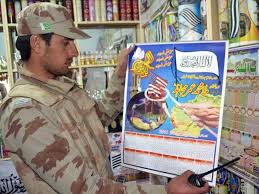
FC Seizes Hate Material (Credit: tribune.com.pk)

Following up with the counterterrorism plan of action, the police raided several hundred bookstores and offices of publishers throughout the country in January. This entailed thousands of arrests and confiscation of printed, audio and visual material. The seizures from Urdu Bazaar, Lahore were the highest as it is the largest site of the printing and publishing business in the country.

According to Amjad Saleem Minhas, Director of Sanjh Publishers, “About 90 per cent of the business in Urdu Bazaar Lahore survives on printing religious books and a large chunk of it is inflammatory and derogatory against different Muslim sects and religions while the publishers and users of the materials include various Madrassas.”

The police also launched a crackdown against the abuse of loudspeakers in mosques. A new law carrying heavier penalties was introduced days before the arrests of several hundred accused in Punjab province alone.

The arrested persons succeeded in securing release on bail using two alibis. The publishers argued that the government never specifically banned the publications in question whereas those accused of misuse of sound amplifiers reported that they were merely reciting holy verses. This shows that the issue of hate speech needs a broader, cohesive and serious response in the area of public policy rather than scattered administrative measures.

Considering the above example of inconsistency in the public policy, the hate speech is likely to find a strong alibi in its favour if the education policy was used as a standard. This area needs immediate attention considering that hate speech in the textbooks is pervasive and acute while more than 37 million students and teachers in the country use textbooks every day.

Despite painstaking efforts by experts over the years to highlight this problem, the textbooks in 2014 were no different than before. These books are approved by the Punjab Textbook Board. However, the studies carried out annually by National Commission for Justice and Peace since 2010 show that textbooks in Sindh, Khyber Pakhtunkhwa and Balochistan, were not healthier.

The History textbook for first year class of FA published by Standard Book Center and approved by Federal Board for Intermediate wants student to believe that “Hindus consumed urine of cow and women of easy virtue occupied Hindu temples”(page 4). In 2015 the course was replaced by Tareekh-e-Islam. The preface of this textbook is devoted to highlighting blasphemy against Islam by non-Muslims. Textbooks for languages, Islamic and social studies carry frequent remarks disrespecting religious diversity and illogical comparison between different creeds.

Ostensibly these textbooks pose equal, if not greater, risk of incitement to violence in the name of religion because of the sheer size of readership as well as their function and status. Stuffed with factual misrepresentations, negative portrayal of minority religions in Pakistan and stereotypes, the textbooks for schools and colleges promote a mindset misfit to live in peace with the world at large.

The textbooks are mostly copy pasted rather than authored and printed in Urdu Bazaar largely by private publishers. Authors increase the hate material trying to compete with one another.

The five education policy reviews since 1959 only added to the problem rather than addressing it as the education sector was assigned to fulfill certain political objectives of each regime rather than educating the nation. Besides low budgetary allocation, institutional overlap of responsibility and privatisation of publishing, the complacent curriculum review process was responsible for allowing the religious biases to creep into textbooks and contaminate the environment of educational institutions.

After the devolution of power to provinces under 18th Amendment, each province adopted different institutional approaches though ending up with similar and dismal results.

According to data compiled by Dr Baela Raza Jameel, the Balochistan province has a Curriculum Bureau and Textbook Board, mostly borrowing their textbooks and policy from Punjab. The Punjab government set up an Education Commission in 2011 only to abolish it in 2013. The Punjab Curriculum Authority was created in 2012 that worked along with Punjab Textbook Board. These two bodies were merged into one Curriculum and Textbook Board in February 2015 through a provincial legislation.

Despite a large resource base, Punjab did not achieve better than Balochistan in review of textbooks due to institutional overlap and swift changes. The incumbent government in Khyber Pakhtunkhwa was quick to reverse some positive changes that the Awami National Party’s government introduced in textbooks in 2012.

The Sindh government recently announced that it will introduce Quaid-e-Azam’s hallmark speech on August 11, 1947 to encourage plurality and nondiscrimination but has taken eight long years to review textbooks. It also formed an Advisory Committee on Curriculum in 2013 that is moving at a snail’s pace.

With the abolition of Curriculum Wing at national level in 2011, the provincial governments were empowered to introduce positive changes. However, their failure to do so strengthened the centralist views which claimed that provincial autonomy was ineffective in the education sector.

In 2014, the Federal Ministry of Education set up a National Curriculum Council, involving education ministries from four provinces as well as Gilgit-Baltistan, Azad Jammu and Kashmir and FATA. The council also runs the risk of becoming toothless due to lack of consensus about its powers.

This state of affairs leaves us with a vague institutional framework and a burgeoning vacuum of responsibility disabling the governments to meet the challenge of curbing hate speech in its roots. Therefore, Prime Minister Nawaz Sharif and chief ministers of the provinces need to spare some time during the Council of Common Interest to discuss and devise a policy response to the issue. Eradicating hate speech comprehensively will require a revision of education policy, allowing religious diversity, academic freedom and acceptance of cultural plurality.

The Federal Ministry of Education can set the example by undertaking the review of textbooks for schools run by the federal government to weed out religion based hate material. After all, it is against the constitution and general law to discriminate and provoke hatred against any creed, colour, gender and race.

Some Facts & Falsehoods on the Yemen Conflict

In a rare act of irrationality, the government of Pakistan announced its decision to protect the territorial integrity of Saudi Arabia. A high-level delegation comprising the defence minister, the prime minister’s adviser on national security and foreign affairs and representatives of the armed forces were promptly dispatched to take lessons on how to participate in an international military coalition built solely for the purpose of aggression against a small country. The region’s richest country has now formally asked one of the poorest for ‘boots on the ground’, ‘airplanes in air’ and ‘ships on water’ to protect its royal family.

Still grievously suffering from the wounds of our past voluntary services, we seem to have learnt very little. Here is a disaster in the offing — visible to a blind man in a dark room — waiting to embroil and push back the entire region by another few hundred years. What ‘substance abuse’ is making us ‘high’ and reckless on an issue that we need not touch with a long pole? Not only do we appear to be bending backwards to comply with the self-seeking desires of a belligerent gang, but we also seem to be fabricating lies that could easily outdo the beauty of the book 1984 by George Orwell.

There are at least six falsehoods being purposely used to mislead the people of Pakistan. The first of these fabrications suggests that we ought to support Saudi Arabia because it is a brotherly Muslim country. In doing so, we meaningfully remain silent on the fact that Yemen is also a Muslim country. If brotherhood is based on being Muslim, then all or no Muslim country should be our brother. How come we appear to have agreed to kill one group of our brothers by taking money from the other? The second falsehood that is being propagated is the impression that Yemenis are attacking Saudi Arabia. The truth is just the opposite. It is Saudi Arabia and its allies that are attacking Yemen and not the other way round.


The third falsehood is to intentionally create ambivalence about three completely different entities — the Saudi state, the Saudi Royal family and the holy sites. The fourth falsehood advocates that it is in Pakistan’s national interest to support Saudi Arabia. The fact is that Pakistan’s national interest will be irreversibly compromised by becoming an ally of the Saudi-led coalition. The coalition is blatantly violating the UN Charter by engaging in an unprovoked and illegal act of aggression against a small country.

The fifth falsehood underscores Saudi Arabia’s deep-rooted friendship with Pakistan and its people. The fact is that Saudi Arabia has funded militant groups and fought its proxy wars in Pakistan for many decades. Yemen has done no such thing. Does anyone need to be convinced on how the Saudis treat Pakistanis with servant-like contempt and disrespect, which is even worse than how the rich of Pakistan treat the guards standing outside their gates?

The sixth falsehood is built on how Pakistan’s international prestige and status will go up because of its involvement in the Saudi-led war. The fact is that Pakistan will only be looked down upon as a country that is willing to rent its services when its own house is on fire. There should be no doubt that our involvement will generate a new set of enemies — including Iran that has traditionally held good relations with Pakistan.

One finds it impossible to appeal to the good sense and sanity of our rulers. So here is a plea to the Saudi government. Please leave our country alone. We have enough on our plate, which is far more significant and far more meaningful than protecting families in foreign lands.

Published in The Express Tribune, April 4th, 2015.


On the road to nowhere

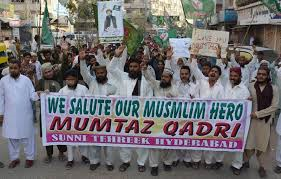
Punjab Governor Salman Taseer's killer acclaimed (Credit: demotix.com)
Punjab Governor Salman Taseer’s killer acclaimed (Credit: demotix.com)

While the media is brimming with tall claims of no relaxation to terrorists, three big fish managed to wriggle out of the clamped jaws of law during recent weeks. Simpletons are told that their lawyers were consummate enough to outshine the official mavericks in the court so the jury was constrained to let them walk free.

The case of Mumtaz Qadri is even more intriguing. In a baffling verdict while his death penalty has been maintained, the judges were convinced that the act of killing a sitting governor is not terrorism.

The Islamabad High Court (IHC) verdict says that is amazing to note that appellant (Mumtaz Qadri) took protection and rights guaranteed by the constitution, but deprived the deceased (Salman Taseer) of all constitutional guarantees. It is beyond any reasonable doubt that the murder of Salman Taseer at the hands of appellant Mumtaz Qadri was pre-planned, cold blooded and gruesome.” However about the charges of terrorism, the court observed that “it was not applicable because the incident did not create panic among the public.”

It is baffling that if a failed attempt on Gen. Musharraf can lead to hanging of the convicts, how the “pre-planned, cold blooded and gruesome” murder of the governor of a province is less than terrorism? Article 6 (2-n) of The Anti-Terrorism Act 1997 defines terrorism as an action that involves serious violence against a member of the police force, armed forces, civil armed forces, or a public servant. Also it is hard to comprehend how the grisly act did not create panic among the public? If the prosecutor was too naïve to prove these explicit facts, one even with a severest flu would still smell a rat.

More flabbergasting was the performance of two counsels for the felon. Khawaja Muhammad Sharif, a former chief justice of the Lahore High Court while arguing before the court showered his profound eulogy for the gunmen who attacked French weekly Charlie Hebdo and pronounced them “heroes”. He also pleaded before the court that the shooting of Salman Taseer was not an act of terrorism. Another lawyer of the convict, a retired judge from Punjab Mian Nazir Akhtar expressed his vehemence by saying that “I am sure Salman Rushdie would also be killed if he were to come here”.

When the IHC remarked that even a judge cannot touch an accused after awarding him punishment, yet the defence counsel insisted that a person can kill another person under unusual circumstances. These observations leave one dumbfounded as both the lawyers adorned the seat of justice for several years with such ethos. How accused of blasphemy or heresy would have been treated by an adjudicator who ardently justifies killing by the lunatic fringe. Both lawyers must also be aware that in September 2014, a prisoner guard at Adiala Jail shot a septuagenarian British-Pakistani accused over blasphemy charges. An internal inquiry revealed that the shooter was incited by Mumtaz Qadri while he was deployed outside his cell. He became a disciple of Qadri and used to seek religious lessons from him.

Incompetence and connivance of a matching magnitude was evident in the case of Zakiur Rehman Lakhvi, leader of Lashkar-e-Taiba. The Punjab government’s slouchy demeanour was too unveiled that eventually set free Zakiur Rehman Lakhvi, an alleged architect of November 2008 Mumbai carnage. Not much different is the case of Malik Ishaq, leader of a proscribed outfit who was put at ease by the Punjab government when it withdrew an appeal for extension of his confinement. The government opted to plead a weak case and facilitate his acquittal.

The list does not end here. There are even more privileged names to count who receive a VIP treatment in official corridors. An astounding news report revealed that website of TTP could not be blocked because of lack of legal mechanism. The concerned authorities have expressed their inability to this effect under the pretext of absence of requisite legal instruments. One wonders why such legal tools are not required to block word press and other sites where public opinion is aired.

According to a newspaper report, a survey carried out by the Capital Development Authority (CDA) has made a startling revelation about illegally constructed mosques in Islamabad. The report disclosed that out of 492 mosques in the city, 233 are illegally erected on state land encroaching non-perennial streams, right of way of major roads and other such expropriated public and private locations. The CDA mentioned the number of such mosques 83 in 2011. In other words, such mosques have grown threefold during past four years.

According to another survey jointly conducted by the CDA and police, the city has 160 unregistered madrassas and 72 day scholar Quranic institutes. Deobandi madrassas take the larger share of 193 out of total 329 seminaries in the city. Interestingly only one month ago, Interior Minister Chaudhry Nisar, while replying to a question in National Assembly, claimed that Islamabad has only 30 unregistered madrassas. This indicates the lack of credible information at high level decision making forums.

A newspaper reported that in line with the recommendations of the National Action Plan, provincial Auqaf departments have gathered data of madrassas from all provinces. The survey revealed that there are 8,135 unregistered seminaries in the four provinces with an enrollment of 0.3 million students. Punjab tops the list with 4,125, followed by KP with 2,411 such seminaries. Sindh and Balochistan are not immune either and are home to 1,406 and 266 such institutions respectively.

Another report puts the number of unregistered seminaries in Punjab at 6,550.
Intelligence reports have been indicating that foreboding signs are ripe in the capital city and cannot be just dismissed with flippancy. All these facts corroborate the assertion of an Interior Ministry official that the federal capital is an “extremely dangerous” city. A senior official of the Interior Ministry made this ominous disclosure while making a presentation before the National Assembly standing committee in February 2014. The official claimed that the capital city had been at high risk and has become a sleeper cell of banned organisation members, including al-Qaeda, Tehreek-i-Taliban Pakistan (TTP) and Lashkar-e-Jhangvi (LeJ). In a bid to quell the horror feelings, the Interior Minister dismissed the report and termed Islamabad a safe and secure city.

Not just Islamabad but much of the Punjab is also infested with militants. Leadership and administration of Punjab has been eschewing any confrontation and always attempted reconciliation with militants. This approach has provided safe bastions to militancy. Recently, the Interior Minister told a top level meeting that the number of proscribed organisations engaged in terrorism and extremism in Pun jab had reached 95.

Several newspaper reports indicate that intelligence agencies have been warning the Punjab government about spiraling militancy in the province but the cavalier Punjab government remained unfazed and conveniently ignored all such red alerts and slept over sprawling sleeper cells. This lax attitude of the Punjab government is not mere inaction or apathy of the PML-N government but it represents a segment within civil-military establishment that continues to believe in the fallacy of considering militants as strategic assets.

These intransigent elements always see foreign hand in every macabre incident occurring in Pakistan. This self-deceiving contentment is far from reality on ground where copious of evidences indicate internal hands as the real cause of prevalent malaise. It would be pertinent to mention that in 2013 a new chapter was added in the army doctrine that describes homegrown militancy as the biggest threat to national security. The army doctrine deals with operational preparedness and inclusion of this fact marked a major shift in the security paradigm. It is, however, yet to see how this cardinal doctrine is mainstreamed and policies and practices are fully synchronized across the board.

Militant attacks declined in Pakistan during March 2015 – PICSS Report

Airforce strikes in FATA (Credit: nation.com.pk)
ISLAMABAD, April 2: Though there was a decline in militant attacks in the wake of the operations in Karachi and Waziristan in March, 63 terror incidents were reported in different parts of the country which left 100 people dead and 162 injured.

This was stated in a monthly report released by the Pakistan Institute for Conflict and Security Studies here on Wednesday.

“In March, there was over 23 per cent decline in militant attacks, almost 12 per cent in deaths and more than 19 per cent in the number of injuries compared to February.”

The report added that militant attacks had been decreasing since the start of the operations in Fata, particularly post-National Action Plan (NAP) after the attack on the Army Public School in Peshawar on December 16, 2014.

According to the report, security forces conducted 97 actions across the country in which 230 people (mostly suspected militants) were killed, 43 others injured and 667 arrested.

Report says compared to February, there was over 23pc decline in militant attacks and 12pc in deaths

Though the number of actions remained almost the same as in February, casualties increased by almost 166 per cent, suggesting that it was due to the military operation Khyber-II in Khyber Agency, which was a sequel to the operation Khyber-I.
Militant activities in Balochistan also witnessed a decline compared to the first two months of the year. In 30 militant activities during the month, 36 people were killed, 19 others injured and five kidnapped.

However, militants continued targeting national installations, gas and electricity infrastructure.

In Fata, terror activities remained on the decrease during the first quarter of the year. In seven militant activities reported during March, 19 people were killed and 20 injured. With the start of the military operation Khyber-II, which is particularly targeting militants in Tirah Valley and close to the Afghan border, spaces for the militants are further squeezed.

The report added that militants tried to put a joint show in Khyber Agency through the recently-announced alliance between the outlawed TTP, Jamatul Ahrar and Lashker-i-Islam.

“However, the strong arm tactics of the state seemed to overpower the alliance to pose any serious threat in near future.”

Khyber Pakhtunkhwa witnessed 13 militant attacks in March in which 12 people were killed and 16 injured. Though militant activities were slightly higher than in February as well as January, the resultant deaths and injuries were less than the previous month.
In Sindh, militant activities were almost identical as were witnessed in the previous two months.

However, the number of deaths and injuries went slightly up compared to February.
In Karachi, the targeted operation by Rangers is showing positive results.
The report stated that militant activities in Punjab showed the previous trend but the number of casualties and injuries increased.

In three militant activities recorded during the month, 18 people were killed and 72 injured.

Two suicide attacks were recorded during March — one on two churches in Lahore which left 17 people dead and the other in Karachi in which two Rangers personnel were killed. Moreover, 20 bomb explosions, two grenade attacks, 18 assaults, three rocket attacks and 14 target killing incidents were also reported in March.

Defence analyst Imtiaz Gul told Dawn that though the graph of militant attacks had been falling for the last six months, after the APS incident the National Action Plan was put in place and the military operation expedited.

“A major reason for the decline in terror activities is that Operation Zarb-i-Azb was started in Fata, Rangers launched an operation in Karachi while the Balochistan government engaged nationalists in a dialogue,” he said.
Published in Dawn, April 2nd, 2015

Aboard the Democracy Train Reviewed Online

Aboard the Democracy Train has been reviewed by Book Club readers, starting in 2015, and some of their comments have been recorded below. Also listed below are the websites that can be accessed for reading ATDT and related books that are in the public domain.

Re: Aboard the Democracy Train: A Journey Through Pakistan’s Last Decade of Democracy

by Weenstoma » Sun Jan 18, 2015   7:26 am

Moderate book.


Re: Aboard the Democracy Train: A Journey Through Pakistan’s Last Decade of Democracy

by Probcentma » Sun Jan 18, 2015   6:37 pm

It turned over my worldview!


Re: Aboard the Democracy Train: A Journey Through Pakistan’s Last Decade of Democracy

by Tuthihe » Mon Jan 19, 2015   4:36 am
I can’t get over it until now.


Re: Aboard the Democracy Train: A Journey Through Pakistan’s Last Decade of Democracy

byGeodolxa » Mon Jan 26, 2015   7:20 pm

For books that are in the Public domain, look at these sites:
http://www.gutenberg.org
http://www.gutenberg.net.au/
http://manybooks.net
http://www.munseys.com
http://www.webliterature.net
http://www.feedbooks.com
http://www.fullbooks.com
http://www.bibliomania.com
http://www.classicreader.com
http://www.pagebypagebooks.com/


Saudi Arabia’s Ominous Reach Into Yemen

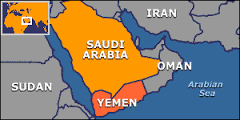
 Middle East map (Credit: news.bbc.co.uk)
Middle East map (Credit: news.bbc.co.uk)

The Saudi-led military intervention in Yemen threatens to turn what has been a civil war between competing branches of Islam into a wider regional struggle involving Iran. It could also destroy any hope of stability in Yemen. Even before the Saudis and their Arab allies started the bombing, Yemen was in severe distress; on Tuesday, the United Nations high commissioner for human rights warned that it is now on the brink of collapse.

Rather than bombing, Saudi Arabia should be using its power and influence to begin diplomatic negotiations, which offer the best hope of a durable solution. Saudi Arabia intervened last week after the Houthis, who are supported by Iran, overthrew Yemen’s Saudi-backed government and captured large chunks of land. The Sunni-run government in Saudi Arabia has watched with growing alarm as Shiite-majority Iran has gradually extended its influence throughout the region, from Lebanon to Syria and Iraq, and fears Iran is poised to do the same in Yemen, a Sunni-majority nation.

The possibility of a deal between the United States, other major powers and Iran to limit Iran’s nuclear program has alarmed Saudi Arabia and other Sunni states even more, prompting them to talk openly, and irresponsibly, about developing their own nuclear programs. The Saudis have also joined with other Sunni nations to form a military coalition, anticipated to include a 40,000-troop army, to counter Islamic extremists and Iran, which is likely to further increase tensions.

Saudi Arabia and other Sunni Arab states have reason to worry about Iran’s disruptive, sometimes brutal, policies, including its help in keeping President Bashar al-Assad in power in Syria despite a civil war that has killed more than 200,000 people, most of them Sunnis. Even so, the Arab states have their own checkered history in fueling extremists and regional unrest. The Saudis appear to be overreacting to Iran’s role in Yemen, which involves financing the Houthis but little else, according to American officials.

Yemen has been a problem for decades, and the threat there is growing more complicated. For several years, Al Qaeda in the Arabian Peninsula has been based in Yemen and is one of Al Qaeda’s most active and lethal affiliates.

Unlike that Qaeda affiliate, the Houthis are indigenous to Yemen and won’t be defeated militarily, or at least not without destroying the country. The Saudi foreign minister, Prince Saud al-Faisal, on Tuesday foreshadowed an open-ended commitment, saying the Saudi-led offensive would continue until Yemen was “returned to security, stability and unity.” Yet airstrikes alone won’t do the job. Saudi Arabia has not ruled out a ground invasion, even though its troops are inexperienced in such combat and would be at a particular disadvantage against Houthi fighters, who are battle-hardened and know the country’s forbidding terrain.

The Houthis have fought a half-dozen civil conflicts since 2004 and are still standing. The Saudi bombing may have already had one especially tragic outcome: Humanitarian workers said a strike killed at least 40 people at a camp for displaced people.

It would be a catastrophic mistake for Saudi Arabia and other Arab states to allow the Yemeni civil war to become the catalyst for a larger sectarian Shiite-Sunni war with Iran. President Obama should press this fact upon the Saudi leadership. As one of Saudi Arabia’s most reliable allies, he should use his influence to encourage all sides to work toward a political solution — both to prevent a wider conflict and to give Yemen a chance at stability


Pakistan mulling Saudi request to send ground troops to Yemen

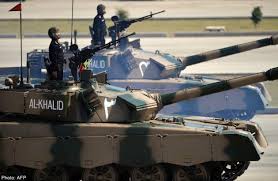
Pak ground troops (Credit: idrw.org)

Pakistan’s defense minister says his country is considering a request to provide ground troops to complement the Saudi Arabian-led airstrikes against Houthi forces in Yemen.

Saudi Arabia began air attacks on the Houthis on Thursday as the rebels advanced on the Yemeni port of Aden. The Sunni Muslim monarchy has been assembling allies to defend Yemen’s weak government against rebels backed by both Iran and a former Yemeni president.

The Pakistani foreign ministry confirmed that the Saudis have asked Pakistan contribute ground forces to Yemen, Reuters reports, but Defense Minister Khawaja Asif indicated that Pakistan is reluctant to get involved.

“We have made no decision to participate in this war. We didn’t make any promise. We have not promised any military support to the Saudi-led coalition in Yemen,” Asif told parliament.

“In Syria, Yemen and Iraq, division is being fueled and it needs to be contained. The crisis has its fault lines in Pakistan too, (we) don’t want to disturb them.”

Mr. Asif did tell Reuters that Pakistan would step in should Saudi Arabia’s territory be threatened, but that “there is no danger of us getting involved in a sectarian war.”

Nonetheless, a sectarian war threatens to emerge from the fighting in Yemen, where Houthi rebels are attempting to oust the Saudi-backed government of President Abdu Rabbo Mansur Hadi. The Houthis, members of Yemen’s Shiite minority, claim that Mr. Hadi’s government is corrupt and has violated the terms of departure of the previous president, Ali Abdullah Saleh, who was forced from power in 2011. Saudi Arabia brokered a transfer of power at the time.

Yemeni Military units allied with Mr. Saleh, who ruled Yemen for decades with US and Saudi support, are now also backing the Houthis.

The Houthis seized Sanaa, the inland capital, in January, but it was their advance towards the port town of Aden that spurred Saudi Arabia, Yemen’s neighbor to the north, to directly intervene. The Saudis have assembled a bloc of four other nations, Egypt, Jordan, Morocco, and Sudan, to drive back the Houthis. UAE, Bahrain, Kuwait, and Qatar are also involved, supplying equipment to the Saudi coalition, the BBC reports.

Rebel leader Abdel-Malek al-Houthi called the coalition’s actions “criminal” on Thursday, reports Deutsche Welle. Iran similarly called for an end to the Saudi bloc’s operations, with Iranian foreign ministry spokeswoman Marzieh Afkham saying the offensive would “bear no result but expansion of terrorism and extremism throughout the whole region.”

Though the coalition has not ruled out sending ground forces to the region, so far it is only running aerial military operations. Bloomberg reports that in their second day of bombing, Saudi planes struck in the Yemeni north, including an airbase held by Saleh-allied forces. CNN reports that overall, 15 sites were hit, and at least 10 people killed in the attacks.

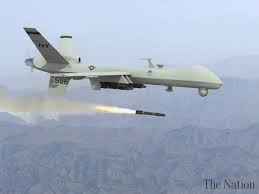
And while the US is not directly involved in the Saudi coalition, it is providing intelligence to the bloc for its strikes. Two anonymous US officials told Bloomberg that the coalition forces “made use of imagery and targeting information from US intelligence and other assets. While Saudi Arabia and other Sunni Arab nations possess attack and aerial refueling aircraft, they lack the reconnaissance satellites, drones and eavesdropping equipment in the American inventory.”

Civil Society Outcry Against Decision To Deploy Pak Armed Forces In Saudi Arabia To Fight Iran-Backed Yemeni Forces

Pakistani human rights activists and civil society organizations have raised a strong voice of protest against the reported imminent deployment of Pakistani armed forces in Saudi Arabia – at the request of the House of Saud – to fight against the Iran-backed forces in the current civil war raging in Yemen.

Civil society has strongly condemned the PML(N) government and its allies amongst the political parties for even the consideration or the remote possibility of such an unethical and wrong move.

It would be a huge strategic and tactical mistake for Pakistan, in longer-term political, military, economic and foreign policy losses, against the ruling political party’s immediate/short-term financial and monetary gains.  The mysterious “gift” of US$1.5 billion in 2014, and the reluctance of the government to be transparent about it then, begins to be comprehended now.  The government should have the courage to be open and honest now.

Firstly, it should not attempt to befool us citizens that “the holy land of Saudi Arabia (i.e. the home of Islam’s two holiest shrines) is under threat of attack” (sic).  It is not.  The fact is that Saudi Arabia is attacking Yemen, not vice versa.

Secondly, our armed forces are not a mercenary force, up for rent to the highest bidder.  We have not yet forgotten Black September: Gen. Zia-ul-Haq’s bombardment of Palestinian refugee camps in Jordan way back in 1970.  We are still paying the diplomatic and political price for that disaster.

Thirdly, we are in the midst of internal military operations against militants and terrorist networks like the Tehreek-e-Taliban Pakistan (TTP), such as Operation Zarb-e-Azb in North Waziristan, other parts of FATA, Karachi, Malakand, and the Balochistan turmoil, amongst others.  How thin can we spread our armed forces personnel and equipment? Do we even wish to do so?  Where is our priority?  The armed forces risk unpopularity, alienating Pakistani citizens and intensifying extremist sectarianism.


Fourthly, we should strictly stay out of the deadly proxy wars that Saudi Arabia and Iran are waging in several countries, including Pakistan, in addition to Syria, Iraq, Lebanon, Yemen, Bahrain, and others.  We have managed to stay out for over two and a half decades, we should not change our policy now.  Is Yemen not a Muslim country like Saudi Arabia? Is Yemen not a member of the OIC like Pakistan?  What makes fighting with Saudi Arabia against Yemen more important for Pakistan than fighting against Daaish/ISIS in i.a. Syria, Iraq, Lebanon or Libya?  Yemen ke awaam ka qatl-e-aam na manzoor na manzoor.

Is it the political clout that is bought by financial hammering, e.g. “free grant” aid, cheap oil, 0.8 million migrant workers’ remittances worth billions; or by oral shield protection at the UN Human Rights Council?  Or is it the emotive clout of the “Khaadim-e-Harimain-Sharifain”?  Or that of USA, another big donor and lender, as well as the seller of armaments to Pakistan?

Let USA play its double and triple games in the region.  We must not emulate it.  We must be ethical.  Pakistanis are no longer befooled.  We are no longer silent.  We are Awake. We are Aware.  We are Watching. We are Speaking Out.  NO TO PAKISTANI ARMED FORCES IN THE GULF REGION.

Post-Sept. 11, Cockpits Are Built to Protect From Outside Threats

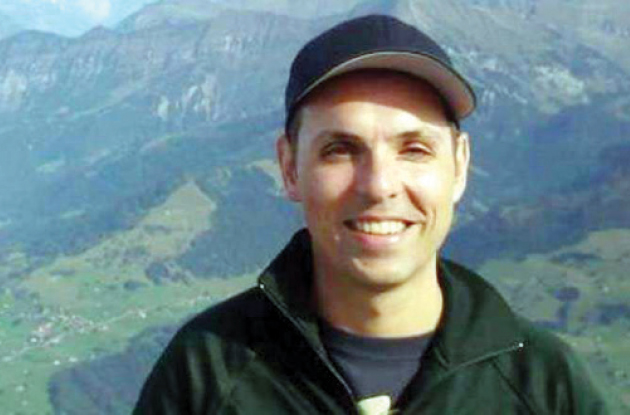
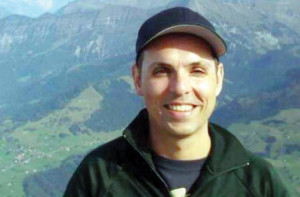
German co-pilot Andreas Lubitz (Credit: chronicle.co.zw)

Although airplane cockpits are supposed to be the last line of defense from outside aggressors, airlines have fewer options if the threat comes from within.

By apparently locking the captain out of the cockpit before a German jet crashed Tuesday, the co-pilot appears to have taken advantage of one of the major safety protocols instituted after the Sept. 11, 2001, attacks that turned cockpits into fortresses.

And the crash is already raising questions about possible gaps in how airlines review the mental health of their pilots.

The crash, which killed all 150 people aboard the Germanwings Airbus A320, highlights a major difference between European and American flight deck procedures. The Federal Aviation Administration mandates that a flight attendant must sit in the cockpit when either pilot steps into the passenger area; European regulations do not have a similar two-person rule.

“It is shocking to me that there was not a second person present in the cockpit,” said Mark Rosenker, a former chairman of the National Transportation Safety Board.

Access to the cockpit is strictly regulated in the United States. Passengers are not allowed to congregate near the cockpit door, and whenever the door is open, no one is allowed in the forward bathroom and flight attendants usually block aisle access, sometimes using a food cart.

But the two-person rule did not come about out of a concern of having to deter or fend off a rogue pilot. Rather, the thinking was to never leave a pilot alone in case of illness or incapacitation.

And while a small percentage of American pilots carry guns, the two-person rule is still not a fail-safe against a rogue pilot, experts say.

The Germanwings accident also points to potential shortcomings in how pilots are screened for mental problems, a recurring concern for an industry that demands focus and discipline in an increasingly technical job, often in stressful situations.

“I think that this incident is going to have a profound effect on the industry and how pilots are screened on an ongoing basis and what they are screened for,” said Peter Goelz, a former managing director at the National Transportation Safety Board.

While the issue of pilot health has been a longstanding concern in the industry, detecting psychological problems can be a major challenge, Mr. Rosenker said.

In 2012, a well-regarded pilot with JetBlue, one of the airline’s earliest employees, was physically restrained by passengers on a flight from New York to Las Vegas after displaying erratic behavior. In that case, the co-pilot locked the pilot out of the cabin and made an emergency landing in Amarillo, Tex.

Afterward, David Barger, the airline’s chief executive at the time, described the pilot as a “consummate professional.”

“I’ve known the captain personally for a long period of time,” Mr. Barger said, “and there’s been no indication of this at all.”

A training video produced in 2002 by Airbus shows the workings and features of the reinforced cockpit door, similar to the one on the Germanwings plane that crashed in the French Alps this week.

Mr. Rosenker said, “You are dealing with humanity, with human frailty, with the human mind.”

Officials at Germanwings and its parent company, Lufthansa, seemed to grapple with this issue on Thursday in trying to explain the incomprehensible.

“We have no indication what could have led the co-pilot to commit this terrible act,” Carsten Spohr, Lufthansa’s chief executive, said at a news conference. “Such an isolated act can never be completely ruled out. The best system in the world can’t stop it.”

The co-pilot, a 27-year-old German identified as Andreas Lubitz, apparently enjoyed his job and had passed all certification tests and medical exams. “He was 100 percent flightworthy without any limitations,” Mr. Spohr said.

In the United States, pilots are screened for medical and psychological issues before being hired and are randomly tested afterward for drug and alcohol use. They must undergo medical examinations once a year if they are under 40, and twice after that, to keep their certification with the F.A.A.

But these exams, performed by general medical practitioners approved by the agency, are not always thorough, according to some pilots, though the agency said they typically include questions about psychological conditions. Still, the airlines and the F.A.A. rely on pilots to voluntarily disclose any physical or mental health problems they may be having or medication they are taking.

Pilots who fail to do so, or who falsify information, face fines that can reach $250,000, according to the F.A.A.

Some pilots, however, may be reluctant to disclose such information, out of fear of losing their jobs. In addition to this self-reporting standard, airlines also rely on other crew members to report suspicious behavior or monitor the health of their co-workers. (That essentially was what happened on the 2012 JetBlue flight.)

“In the U.S., pilots are pretty much allowed to choose their own doctor” from a list of approved practitioners, Mr. Goelz said. “It is not the most rigorous process.”

Cases of a pilot intentionally crashing a plane filled with passengers are rare. There have been at least a half dozen such crashes since the early 1990s, including a Mozambique Airlines jet that went down in Namibia in 2013 and an EgyptAir flight that went down in the Atlantic Ocean in 1999.

Still, such crashes happen often enough to raise concerns at a time when flying is generally safer than it has been in years, according to safety experts.

“We are looking for 100 percent guarantee,” Mr. Rosenker said of mental health screenings. “You can certainly weed out the easy cases. But when you go to deeper areas, there are no guarantees.”