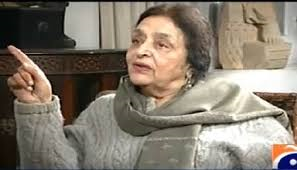
LAHORE, March 25: Veteran leftist activist Tahira Mazhar Ali was laid to rest in a graveyard near her home in Shah Jamal on Tuesday.
She had been unwell since 2009. She passed away on Monday.
Advocate Abid Hasan Minto recalls Tahira as a campaigner for the rights of the working people. He says her work on issues pertaining to women’s rights and their political empowerment was part of a broader lifelong commitment to the cause of marginalised communities.
Minto says he had known her since 1949 when as a teenager she became a founding member of the Communist Party of Pakistan (CPP). “I was based in Rawalpindi but I got to see her once in a while at the meetings of the CCP central committee in Lahore,” he says. In 1950, Tahira established the Democratic Women’s Alliance (DWA), first leftist organisation in the country particularly for women. With the CCP and its subsidiary bodies banned in 1954, Minto recalls, Tahira was amongst the core group of activists who kept the political left alive across the country through various underground organisations.
Later on, Tahira remained active with the National Awami Party and after it’s disbanding with the Socialist Party and the National Workers Party. She was also part of the Women Action Forum established in the 1980s to counter the dictatorship of General Ziaul Haq.
“I believe Tahira’s most important legacy is her work amongst working women,” he says. “She did not just restrict her work to the educated middle class women. She was amongst the first activists to have started organising women relatives of the railways workers,” he says.
Activist Farooq Tariq says Tahira would call him up every day and tell him about issues relating to the working people that she thought needed immediate attention. He says the calls stopped only in 2009 when she fell ill. He says Tahira was amongst the first people who generously donated books to a library set up by him and his other colleagues at the Labour Education Forum in 1998.
Tahira was the daughter of united Punjab’s chief minister and unionist politician Sir Sikandar Hyat Khan. She married her cousin Mazhar Ali Khan when she was 17. They remained lifelong political activists. Tahira has left behind a daughter, Tauseef Hyat, and two sons, Tariq Ali, a renowned left-leaning writer, and Mahir Ali, a journalist.
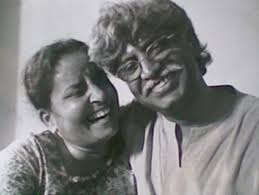
Tahira & Mohammed Ali Shah (Credit: dawn.com)Tahira Ali Shah, long time social activist and rights campaigner for Pakistan’s fisherfolk community, passed away this month in a car accident in Sindh.
I remember when I first met her, at my first official meeting after joining the Pakistan Fisherfolk Forum (PFF) in January 2010, at the PFF’s Secretariat, Ibrahim Hydri – the largest village of fishing community in Pakistan.
I noticed a simple yet graceful lady in her mid-40s, taking notes of the discussion, and humbly raising her hand when she wanted clarification on some points.
She seemed to be very serious about the issues of fisherwomen; their education and health; their role at the unit (village), district and central governing body of the PFF. One of the senior colleagues told me that she was elected Senior Vice Chairperson of the PFF.
That was the first occasion where I observed the leader in her.
Born in a middle class Syed family, it was hard for Tahira to even get an education. But even harder for her was to get married – against social norms and her family’s wishes – to Muhammad Ali Shah, who belonged to a comparatively lower class of the fishing community.
Ultimately, Tahira took the bold, rebellious step to get married to him in court. She was confident that she knew what to do with her life.
Together, the couple started working for the rights of the fishing community at a very local level, under the platform of their first, small organisation, ‘Anjum-e Samaji Behbood’.
Later, Tahira realised that the issues of women were not being addressed appropriately and neither did the women have any effective say in the decision-making of the organisation.
That’s when she founded a separate organisation only for women, named ‘Saheriyen Sath’ (group of womenfolk).
She visited women door-to-door, organised and mobilised them, made them understand the roots of their problems and showed them a way to resolve their problems.
In 1998, the couple, along with other companions, founded a countrywide organisation of the fisherfolk community and named it the Pakistan Fisherfolk Forum (PFF).
Not only did she speak up, she made other women speak up too against the discrimination based on gender, caste and religion.
This one time, the PFF had organised a caravan journey under their ‘Keep Rivers Free’ movement. Of the hundreds of participants in this caravan, a few happened to belong to the Hindu scheduled castes. Tahira learned that some of the other women participants were discriminating against the Hindus.
She intervened at once. She mingled with the women like they were old friends, shared meals with them, did away with all the discrimination and ensured that their feelings of inferiority were washed away.
She was indeed a genuine leader.
A brave, tenacious woman
Tahira’s real struggle started with the Pakistan Rangers – the paramilitary force occupied the lakes in the coastal areas of the Badin district.
She pulled the fisherwomen out of their homes and onto the streets, organised demonstrations, observed hunger strikes and sit-ins in front of the Press Club. To lead a struggle against the illegal occupation by the Rangers like this required some bravery.
When her husband Muhammad Ali Shah was in jail, Tahira fought on to strengthen the fisherfolk community’s cause and continued to face the hardships she had willingly chosen.
Soon, everyone saw Tahira meet with success as the powerful Rangers bowed down to her even in a semi-martial law era.
In Sanghar, the journalist community was suppressed under the influence of feudal landlords. Many of my friends say it was Tahira who gave voice to the Press Club of Sanghar district, after the PFF launched a campaign against the illegal occupation of the landlords on the Chotiyarion Reservoir.
Tahira worked her magic again and led thousands in protest on the streets of Sanghar city. She made fiery speeches in front of the Press Club and openly challenged the feudals. Soon, Sanghar’s journalists were emboldened enough to cover her speeches and struggle.
Tahira was a multi-dimensional personality. Where she led with courage and organised with discipline, she also worked as hard as an ordinary worker of the organisation. She could always be seen meticulously taking notes during discussions and preparing reports of community meetings.
In the community events of the fisherfolk, she sang folk songs and danced. In workshops and seminars, she was a great listener and always polite, though those who have heard her speeches in processions and rallies know very well that she was a great, fiery orator too. Most of all, she was a rock; an upright leader who would never leave her companions alone, no matter how dangerous the situation.
Tahira was generous enough to support a number of poor families. Every person she met has their own story with her. Everybody in the fishing community across Pakistan calls her Jeeji (mother).
Jeeji was simple. She never wore jewelry or make up, even at ceremonies and festivals, where other women would insist that she put on some make up. But Tahira always preferred to wear her natural smile instead.
During the PFF’s struggle for the protection of mangroves, two of our comrades had been martyred by notorious land grabbers. Tahira never hesitated to openly call out the names of the murderers every time she spoke at a forum.
I considered that to be extremely risky. I approached her and requested, “Jeeji! Please avoid becoming overbold; it can be dangerous at this time.”
She replied, “I would never want to die a death of suppression. I would be proud to rather sacrifice my life for the truth and for this struggle.”
That was not the first time she did so. I recall a number of occasions when we asked her to take time out for some rest, or to visit the doctor when we she was unwell. Her reply was the same: “I want to die in the fight for the rights of my community, not on the bed in illness.”
Even the day before her demise, our senior colleague Dr Ely Ercelan noticed that her blood pressure was high and suggested that she avoid continuous travelling. She responded the same way:
“I shall go in a glimpse, not in inches.”
And she did.
She went in a blink and right in the center of the path of the struggle, for she was travelling to Badin with her husband to lead a rally there, celebrating the International Rivers Day. They had an accident and their car plunged into a deep pond, proving fatal for Tahira. Considering her sacrifices and struggle for the restoration of environmental flow in the Indus river, she has been titled by the civil society as ‘The Martyr of the Indus’.
She may not be with us physically, but her vision, dedication and courage are always be. She lived as she wanted and she died as she wished.
Live long Jeeji Tahira, Live long the PFF.
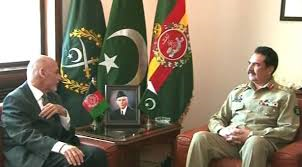
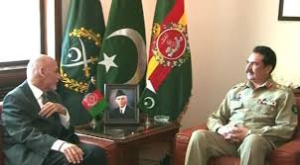
Afghan president with Pak army chief (Credit: thenews.com.pk)
KABUL, March 21: Afghanistan faces a difficult spring in terms of security as the so-called “fighting season” with the Taliban begins, Afghan President Ashraf Ghani said on Saturday, adding that Pakistan was “pushing a major series of global terrorist networks onto” war ravaged country.
“The winter has been extraordinarily difficult. And barring major breakthroughs in the region, spring will be difficult,” he told a press briefing at the presidential palace, several hours before leaving on a four-day official visit to the United States.
Ghani, who came to power in September, said he had not asked for any specific aid from the United States nor any changes to planned troop withdrawals.
“What I’ll be explaining to the Congress of the United States is what we’re doing. What we’re underlining is both the nature of the threat and what we’re doing with the existing resources and capabilities,” he said.
Ghani will be travelling to the US along with Chief Executive Officer Dr Abdullah Abdullah. They are due to meet with President Barack Obama at the White House on March 24.
“A partnership is about appreciation of conditions…. You cannot just simply request assistance,” the president added.
The United States was due to reduce its 10,000 troops to 5,500 by December, but that number is expected to be reassessed.
Pakistan ‘pushing’ terrorists onto Afghanistan
According to Ghani, Pakistan’s military operations in Waziristan and Khyber “are pushing a major series of global terrorist networks onto us”.
But he stressed he considers neighbouring Pakistan a key partner in the peace process, saying success depends on “an enduring peace” with Islamabad.
Creating conditions for talks with the Taliban
The Afghan government has been “actively engaging” with its neighbours in the region over the past few weeks “from Azerbaijan to India” to create conditions for discussions with the Taliban, Ghani said.
“We have not had face-to-face discussions, we’re preparing the conditions for those,” he added.
Diplomatic efforts to bring the Taliban to the negotiating table have gained pace recently, even as security forces have launched offensives against the insurgent group without NATO assistance for the first time since 2002.
For their part, the Taliban have yet to officially acknowledge that talks are being held. They continue to impose their own tough conditions, including the absence of any foreign troops on Afghan soil, as a precondition to negotiations.
IS ‘swallows its competitors’
Ghani and his Chief Executive Abdullah Abdullah will also have an opportunity to discuss the emergence of the Islamic State group (IS) on their US visit.
Ghani said IS “swallows its competitors”.
“If you compare al Qaeda and Daesh, it’s like going from Windows 1 to Windows 5,” he said, referring to IS by an alternative name.
“These groups do not fit with the classic insurgency.”
The Middle East-based group has not formally confirmed it is operating out of Afghanistan, though Pakistani and Afghan commanders have pledged their allegiance to the outfit in recent months.
In the United States, Ghani said he expects to field questions about the country’s finances.
“The question we will be asked is about fiscal sustainability. Will we be able to afford our own forces?” the president said.
“This is precisely why we’re examining the system of expenditure — the efficiency, the effectiveness, the transparency from top to bottom.”
The trip is also seen as an important step toward mending relations between the United States and Afghanistan, which deteriorated towards the end of former president Hamid Karzai’s ten-year rule.
Mariam was a sixth-grader in Toronto when her family started pressuring her to get engaged. They sent her on a summer trip to their native Pakistan, ostensibly to study but actually to meet a fiance chosen by her aunt. When she protested after returning home, she said, her mother kept insisting and wearing her down.
“She cried a lot. She prayed loudly to God that I would change. She refused to speak to me for days. She told me the family’s honor was at stake,” recounted Mariam, now 20, who asked that her last name not be published. “I wanted to finish school and go to college, but at times I almost said yes, just so she would stop crying.”
Finally, when she turned 17, Mariam decided to leave home — an unthinkable act in her culture. With encouragement from a women’s rights group, she slipped out early one morning, taking a small bag. No shelter would accept her, because she had not been physically abused, and she felt racked with guilt and loneliness. Eventually, though, she found housing, friends and a measure of emotional independence.
Today, Mariam is active in a growing movement in the United States and Canada to promote public awareness and legal protections for victims of forced marriage. She visited Washington last week as part of a nationwide tour organized by the Tahirih Justice Center, a legal aid and advocacy group in the Virginia suburbs that helps immigrant women facing abuse.
According to officials at Tahirih, a 2011 survey of social agencies and other experts reported as many as 3,000 suspected or confirmed cases of forced marriage in the United States over the previous two years. They said the practice is found in many immigrant communities, especially among South Asians, from the Washington suburbs to ethnic enclaves in cities including Houston, New York and San Francisco.
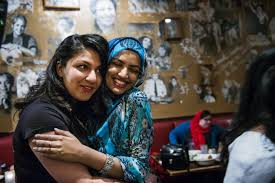
Kathana R., 24, left and Aruba A., 20, right, rehearse, “When We Leave,” a play that explores the complexities of family violence, including forced marriage, at a Busboys and Poets in Washington. (Amanda Voisard/For the Washington Post)
Nevertheless, they said, there is no U.S. law against the practice, and laws that could help victims in some regions, including the District and Virginia, are more geared to victims of kidnapping or physical violence. Moreover, many shelters and welfare agencies are unfamiliar with forced marriage and ill-equipped to help young women fleeing it.
Many traditional societies observe the custom of arranged marriage, in which family relationships matter more than individual choice. Such weddings forge lifelong alliances between families and are seen as ensuring that young couples have compatible backgrounds. The intended bride and groom meet, spend time together and consent to the union.
Forced marriage is less common and illegal in most countries, but it is harder to define or prove. A daughter may be ordered to marry someone she may not know or like, such as an older relative, a stranger or someone who is owed a debt. If she is extremely young, she may not know the arrangement has been made. Even if she finally agrees under pressure, activists assert that such marriages are neither fair nor legitimate.
“Families use a range of coercive tactics, and there is a lot of emotional blackmail,” said Jeanne Smoot, the legal director at Tahirih. “If a mother says to her daughter, ‘You will be dead to your parents,’ or ‘This will kill your grandmother’ or ‘I will kill myself if you don’t marry him,’ ” Smoot said, “that is as coercive as a gun to the head.”
Tahirih has been working for the past three years with a coalition of women’s groups in North America on the campaign to curb forced marriage. They met with White House officials last week, asking for national legislation similar to a new law in the United Kingdom that makes forced marriage a crime, and they have put on dramatic readings and skits in five U.S. cities this spring that tell the stories of girls like Mariam.
Although better laws can help young women resist family pressure or report physical abuse, they can also backfire in complicated domestic situations and add to public prejudice against certain immigrant groups. Many young victims of forced marriage are loath to bring charges against their parents because of the shame it would bring.
“It is important for us not to criminalize all of South Asian culture, to suggest that the West is a safe place where girls flee from terrible oppression,” said Aaliya Zaveri, an official of a South Asian women’s aid group in New Jersey called Manavi. “In cultures where family duty and honor are so important, this is not what the girls themselves want.”
Chenthoori. M, 22, enters the “Honoring Our Heartbeats: A Tour to End Forced Marriage in the U.S” event at a Busboys and Poets in Washington. (Amanda Voisard/For the Washington Post)
What victims do want, the advocates said, is a way to escape from intolerable, even if well-intentioned, pressure to marry. But they often face dead ends, because most shelters and service agencies do not view such pressure as an abusive emergency and local laws fall short of offering full protection, even if a girl is about to be flown abroad to marry against her will.
In one such case in Virginia, Tahirih officials said, a high school student sought help from school counselors, saying her parents had arranged her marriage back in their homeland and were punishing her for resisting. The local child protective services office declined to take her case, so Tahirih lawyers appealed to a judge to protect her. The girl was sheltered in a private house, and the judge confiscated her family’s passports.
“Legally, we were skating on thin ice,” said Layli Miller-Muro, executive director at Tahirih, explaining that child protection laws in Virginia, Maryland and the District are geared more for kidnapping and trafficking than family conflicts. “If the judge hadn’t bent over backwards, we could have been charged with aiding a delinquent minor. This is why we need laws that are clearly designed for scenarios of forced marriage.”
In a case in Texas, a counselor said she could do nothing to help a young woman who called as her parents were preparing to fly her to Pakistan for a wedding. She came back married and called the counselor again, saying her parents were now pressuring her to sign immigration papers for the groom.
“They wanted her to sponsor a spouse she had never wanted to marry,” said Nusrat Ameen, the case manager at a women’s legal aid center in Houston. “They stopped paying her school fees and took away her car. She keeps calling me, and I tell her to be assertive about her rights, but there are a lot of gray areas and strong cultural feelings that you have to obey your parents. It can be very hard to define abuse.”
In many such families, disputes over early marriage can be part of broader generational conflicts in which Asian-born parents seek to control and protect their Western-raised daughters, who yearn for modern freedoms such as dating boys, staying out late, and wearing makeup and party clothes.
But advocates at Tahirih and other agencies said they have made few inroads into family counseling or public education within immigrant communities, partly because of cultural resistance and partly because they place a higher priority on rescuing or protecting the young women who call their hotlines for help.
“Many times, families are not interested in intervention,” said Usha Amachandran, who runs a women’s aid program in San Francisco. “In the South Asian community, no one wants to talk about things like domestic violence or forced marriage. But we are in the business of talking about uncomfortable things, and it is very much needed.”
In Washington last week, Mariam and several other young women performed skits at a Busboys and Poets cafe in the District that reflected their contradictory feelings about parental demands. One played both herself and her parents calling her a slut and a “bad daughter.” Another held an imaginary phone conversation with her mother, saying she believed “family comes first” but insisting that if she stayed at home and acquiesced to marriage, “I’ll have to bury part of myself.”
Mariam said she eventually overcame her guilt and sorrow about leaving home. She was able to enroll in college and earn money making clothes, and she plans to become a fashion designer while keeping up her activism. She never fully reconciled with her parents but said she keeps in touch with them “on my own terms.”
“For me, it is important to talk to victims who are in situations like I was, to let them know they do have options,” she said. “The system failed me, and it fails many girls.”
A marriage ceremony in India ended in a most unconventional of ways: the bride tested the groom’s math skills, and he failed, police confirmed.
The groom-to-be was allegedly asked what 15 plus six is, to which he incorrectly answered 17.
The bride then left, and despite all the best efforts of the groom’s family to coax her into returning, she refused. She said she has been misled regarding the groom’s education.
“The groom’s family kept us in the dark about his poor education,” the bride’s father, Mohar Singh, said.
“Even a first grader can answer this.”
Rakesh Kumar, a local police officer in the area where the incident took place, confirmed that all jewellery and gifts exchanged before the wedding had been returned by both sides following mediation by the police.
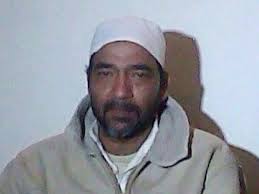
Saulat Mirza (Credit: tribune.com.pk)KARACHI/ISLAMABAD: Saulat Mirza, in a video statement aired on Geo News, hurled startling allegations on Muttahida Qaumi Movement (MQM) and its top leadership, just a few hours before his execution was scheduled to take place on Thursday at 5:30AM. Mirza’s execution has now been postponed for 72 hours.
Mirza said he was an MQM worker and received direct orders from MQM leader Babar Ghauri to assassinate KESC chief Shahid Hamid. “I was summoned at Babar Ghauri’s house where I took Altaf Hussain’s orders via telephone. Altaf Hussain would usually pass on instructions through Babar Ghauri,” alleged Saulat Mirza.
Speaking to ARY News, MQM Chief Altaf Hussain said, “Without any proof or evidence, Saulat Mirza’s statement will not have any effect on the party.” Hussain termed the allegations a conspiracy against MQM.
Babar Ghauri speaking to Geo News dismissed Mirza’s statement as a “fable” and denied having given any order for a murder.
“This is a made up story, we are not allowed to call workers to our house and deal with them there,” he said. When asked if Saulat Mirza has never come to his house, Ghauri said “no”.
“When he [Mirza] was in North Nazimabad, I met him then as an MPA,”.
“Then he was removed from the party and I maintained no communication or relationship with him.”
Mirza, however, said workers like him were used as “tissue papers” by MQM, and were disposed off when there was no use left for the party. “Other workers should take a lesson from my ending,” said Mirza. “Criminals in the party would get protection under Governor Sindh,” he claimed.
Meanwhile Sindh Governor’s spokesperson has stated that Dr. Ishratul Ibad has never supported any accused or criminal.
Saulat went on to say that workers in the MQM who gained popularity among the public are eventually sidelined.
“Mustafa Kamal was humiliated and then sidelined from the party because he had grown popular and Azeem Tariq was murdered for the same reason,” Mirza said.
“I have no vested interest in making these allegations at this hour. I just want to leave a message for those who wish to join, or are part of political organisations, to learn from my mistakes,” said the death-row inmate.
Meanwhile, Machh Jail Deputy Superintendent Sikandar Kakar while talking to DawnNews confirmed that they have received orders to postpone the hanging of Saulat Mirza for three days.
Mirza was found guilty of murdering the then managing director (MD) of Karachi Electric Supply Corporation (KESC), now K-electric, Malik Shahid Hamid, his driver Ashraf Brohi, and his guard Khan Akbar outside Hamid’s residence in DHA on July 5, 1997.
Previously a resident of Block J in North Nazimabad, Karachi, Saulat was his parents’ fourth child.
Having received his intermediate education from Pakistan Shipowners’ College in Karachi, he became active in student politics and joined the All Pakistan Mohajir Students Organisation (APMSO), the students’ wing of MQM, then an acronym for Mohajir Qaumi Movement.
His name first appeared on intelligence and security agencies’ radar in 1994, after the killing of two US diplomats at Karachi’s Shahrah-i-Faisal and murder of four workers of an American oil company, Union Texas, near PIDC bridge.
He was believed to have been arrested from Karachi airport after his arrival from Bangkok; police confirmed his arrest at a press conference on December 11, 1998.
During that press conference, in the presence of the then Karachi DIG, Ameen Qureshi, Saulat Mirza made revelations about his involvement in the murder of scores of innocent people, including several high-profile personalities.
Mirza was initially detained by FIA immigration officials for traveling on a fake identity but was handed over to the then Station House Officer (SHO) of Gulbahar police station, Mohammad Aslam Khan (Chaudhry Aslam), who was also present at the airport on intelligence reports.
Shrugging off allegations of being politically motivated, the law enforcers showed Wednesday morning that even the big guns could be silenced. A heavy contingent of Rangers raided Nine Zero, the headquarters of the Muttahida Qaumi Movement (MQM) in Karachi’s Azizabad area, detained around 20 criminals and seized a large cache of illegal weapons and ammo.
In the operation, which was managed and executed by members of the paramilitary force alone, a number of party workers, including MQM’s Rabita Committee member Amir Khan, and notorious convicts were detained during the raid which also incidentally claimed the life of a young MQM supporter.
After breaking barricades leading to MQM headquarters, Rangers personnel cordoned off the area and searched through departments of the party’s offices. During the raid, the Rangers cut off the telephone lines at Nine Zero, disabling communication with MQM’s international secretariat.
Scores of activists and party members protested the raid by Rangers by chanting slogans. Aerial firing also ensued outside Nine Zero as activists attempted to break the Rangers’ cordon. As the situation turned chaotic, Waqas Ali Shah of MQM’s Central Information Committee was killed during the raid while Express News cameraman Waseem Mughal was injured in the firing.
Shah’s death invoked the need of an enquiry into the incident as it remained unclear if he died due to Rangers’ aerial firing or someone at the spot killed him.
MQM spokesperson Wasay Jalil claimed that Shah was killed in straight fire by Rangers personnel around 7:45am Wednesday.
“Dozens of mobiles of Rangers appeared at Nine Zero around 6am. Personnel proceeded to raid 50 offices in our headquarters. They went to each office, went through all the files and broke telephones.”
Sindh Police Additional IG Ghulam Qadir Thebo said that Shah was not shot by Rangers personnel, but that the bullet fired was from a handgun.
Rangers Director General (DG) Major General Bilal Akbar said that MQM activist Shah was shot with a TT pistol and the fact would become clear once the medical board’s report is received.
SINDH CITIES COME TO A STANDSTILL:
MQM announced a day of peaceful protest against the search operation by Rangers and urged for transport services to be suspended throughout the day.
MQM leader Farooq Sattar termed the raid “deeply upsetting and worth investigating”. He said that MQM is compliant of all laws and instead of appreciating the party’s efforts of promoting peace, it is being treated with contempt.
He demanded of Prime Minister Nawaz Sharif, Interior Minister Chaudhary Nisar and Sindh Governor Ishratul Ebad to play their due roles. Sattar also warned that the situation could be a setback to the enhancement of democratic process.
Commercial activity was suspended with shops, markets and educational institutions remained closed not just in Karachi but in other cities of the province, such as Hyderabad, Sukkur, Nawabshah, Jamshoro and Mirpur Khas.
Petrol pumps and private schools in several areas of Karachi were also reportedly shut down as activists in large numbers protested against the Rangers. Children who managed to get to schools were sent back to their homes and examinations were cancelled in colleges and universities.
While the MQM has maintained that the protest against the Rangers raid will be peaceful, a bus was set alight at Gulistan-i-Jauhar while a rickshaw was torched in Karimabad.
MQM leaders and activists gathered outside the headquarters but were not allowed to enter its premises.
RANGERS MAKE IT CLEAR:
A press release issued by Rangers soon after the raid on MQM’s headquarters said: “Pakistan Rangers Sindh has conducted a series of targeted raids at surrounding areas of 90 including Khursheed Memorial Hall today. During the above mentioned action, following hardcore criminals have been arrested: Faisal Mota, Farhan Shabbir aka Mullah Amir, Nadir and Ubaid K 2.”
Faisal Mota was awarded the death sentence in absentia on March 1, 2014 by an anti-terrorism court in the murder case of Wali Khan Babar, a Geo TV reporter while Nadir had also been convicted and sentenced 13 years imprisonment.
Rangers spokesperson Colonel Tahir called the two-hour raid a “purely information-based operation” and divulged that the Khursheed Memorial Hall at Nine Zero has been sealed and will be handed over to police for further investigation.
Col Tahir added that ammunition stolen from NATO containers was also seized during the search operation.
Speaking to media, MQM leader Faisal Subzwari and Haider Abbas Rizvi admitted that weapons were seized during the raid, but said that they were all licensed and were being kept for security in view of the threats being received from “the Taliban and other extremist elements”.
“After the Army Public School attack, even schools and colleges are now being asked to keep weapons for security. We were also told to keep weapons for our security,” Subzwari said.
MQM CHIEF DILLYDALLIES:
Contrary to his party leaders’ statement, MQM chief Altaf Hussain claimed that the weapons presented were “brought by the Rangers themselves in blankets”.
Claiming that the Establishment does not tolerate MQM’s presence, he maintained that the ammunition seized from Nine Zero by Rangers does not belong to MQM. He further said that if the weapons belonged to MQM, they would not have been stored in Nine Zero.
In a telephonic address, Hussain denounced the raid by Rangers on Nine Zero and said that this was the first time that the house and office of a political party chief was raided.
Addressing Rangers personnel, he remarked that Rangers have authority but “they are unable to deliver justice”. Claiming that more than 60 people were arrested during the raid by Rangers, he demanded that “terrorism in the name of search operations” be stopped.
However, later retracting from his stand point, MQM chief told a news channel that he was supportive of cracking down on criminals irrespective of where they were. In the same breath, he maintained that his party headquarters was not harbouring terrorists but “they were just living in the vicinity”.
Earlier, the MQM chief had stated in a telephonic address that “people who had committed mistakes should not have stayed at the MQM headquarters as they had jeopardised the security of others”. “Such people should have sought refuge elsewhere as I have been staying in Britain for the last 20 years,” said the MQM chief.
After condemning the raid, Altaf Hussain apparently appreciated the “valour” of Rangers personnel for “having dared to raid his house”. In an apparent naked threat, Hussain said that the Rangers’ officers who participated in the raid at his elder sister’s house “would soon become a part of the past”.
The MQM has in the recent past accused the Rangers of involvement in illegal detention and extrajudicial killings of its members and the raid and arrests appear to be the climax of the complex dynamics between the two sides.
The Rangers last month in a report implicated the MQM in the Baldia Town factory inferno fire that claimed the lives of at least 258 factory workers, a charge the party vehemently denies. The JIT report also contains several other disclosures about the involvement of MQM workers in several criminal cases as well rigging in the 2013 general elections.
LAHORE, March 15 — Suicide bombers attacked two Christian churches during Sunday services in the Pakistani city of Lahore, killing at least 15 people and wounding dozens in the latest attack on religious minorities in the country.
The attacks occurred in quick succession outside Catholic and Protestant churches in Youhanabad, one of Pakistan’s biggest Christian neighborhoods.
A man rigged with explosives blew himself up outside the main gate of St. John’s Catholic Church after being prevented from entering by a security guard, said Haider Ashraf, a senior police officer.
A second blast went off minutes later in the compound of Christ Church, about half a mile away.
In the aftermath of the attacks, an enraged crowd lynched two people suspected of being accomplices in the bombings, one of whom was wrenched from police custody. Local news outlets reported that the mob set their dead bodies on fire.
The crowd also prevented the police from entering the scene of the attacks, and angry protests spread across the city. Demonstrations were also reported in Karachi and other cities.
Jamaat-ul-Ahrar, a splinter faction of the Pakistani Taliban, claimed responsibility for the attack.
Local television stations broadcast images of wailing and distraught relatives in hospital corridors. One woman wept hysterically as relatives tried to calm her.
Pervez Masih, 45, who was in one of the churches, said the explosion went off just as the prayer service was concluding. “Afterward people were running here and there, trying to save their lives,” he said.
Religious minorities including Shiites, Christians and Ahmadi Muslims have been under violent attack for years in Pakistan. At least 85 people were killed in an attack on All Saints Church in Peshawar in September 2013.
There have also been sporadic attacks on Christians in Punjab, the country’s most populous province, often triggered by accusations of blasphemy against the Prophet Muhammad.
But Pakistan has been particularly on edge in recent months since a Taliban assault on a Peshawar school that killed at least 150 people, most of them children.
Nabila Ghazanfar, a spokeswoman for the Punjab police, said the deaths from the attack on Sunday included 13 worshipers, two police officers deployed for security outside the churches and the two suspects beaten to death by the mob, in addition to the two bombers.
Television images showed police officials struggling to keep the angry crowd away from one of the men who was later lynched.
Dr. Muhammad Saeed, the chief doctor at Lahore General Hospital, where scores of the wounded were brought, said that many were in critical condition.
Sohail Johnson, a witness who lives close to the churches, said the Sunday services were usually attended by more than 1,000 worshipers.
Salman Masood contributed reporting from Islamabad, Pakistan.
Files recovered from Osama bin Laden’s compound in Abbotabad reveal that the prime minister’s brother, Punjab chief minister Shahbaz Sharif, sought to strike a peace deal with the Tehreek-e-Taliban Pakistan (TTP) through al Qaeda, The Long War Journal reported.
The files were revealed in terror convict Abid Naseer’s trial by a Brooklyn jury earlier this month. One of the files is a letter written by Atiyah Abd al Rahman (Mahmud), who was then the general manager of al Qaeda, to Osama bin Laden (identified as Sheikh Abu Abdallah) in July 2010.
The letter reveals a complicated nexus involving Al Qaeda, the Pakistani Taliban, Punjab Chief Minister Shahbaz Sharif, and the ISI.
According to one letter from Rahman, one of bin Laden’s top deputies, dated July 2010, Bin Laden was informed that Shahbaz Sharif wanted to cut a deal with the TTP, whose leadership was close to Bin Laden. The government “was ready to reestablish normal relations as long as [the Pakistani Taliban] do not conduct operations in Punjab.”
Attacks elsewhere in Pakistan were apparently acceptable under the terms of the alleged proposal.
Rahman’s letter stated that Punjab Chief Minister Shahbaz Sharif initiated negotiations with the militant group. In the letter, Rahman informed TTP commanders Hakeemullah Mehsud and Qari Husayn that Shahbaz Sharif “sent them a message indicating they [the government] wanted to negotiate with them, and they were ready to reestablish normal relations as long as they do no conduct operations in Punjab.”
Rahman clarified that the deal was limited to the “governmental jurisdiction” of Punjab and did not include Islamabad.
“The government said they were ready to pay any price…and so on,” the letter states. “They told us the negotiations were under way.”
Read: Osama wanted to rebrand Al Qaeda: Whitehouse
Rahman then made it clear that the TTP was to keep Al Qaeda leadership in the loop at all times. “We stressed that they needed to consult us on everything, and they promised they would.”
According to the report, Shahbaz Sharif’s willingness to negotiate is consistent with his public opinion at the time. The chief minister was a vociferous critic of General Pervez Musharraf’s policies and “blamed the escalation of violence in Pakistan on Pervez Musharraf.”
ISI’s role
The report states that al Qaeda’s negotiating tactic was simple. They wanted Pakistanis to either leave them alone, or they would suffer more terrorist attacks. Rahman’s letter reveals how bin Laden’s men sought to convey their message. They relied on Haqqani Network leader, Siraj Haqqani, which has been supported by the military and intelligence establishment.
One of Pakistani intelligence’s emissaries was Fazlur Rehman Khalil, leader of Harakat ul Mujahedin (HUM). Khalil was an ally of Osama bin Laden ally. The intelligence agency used Khalil’s HUM to send al Qaeda a letter.
“We received a messenger from them bringing us a letter from the Intelligence leaders including Shuja Shah, and others,” Rahman wrote, according the US government’s translation. “They said they wanted to talk to us, to al Qaeda. We gave them the same message, nothing more.”
Read: Pakistan probably knew Bin Laden’s whereabouts, says former ISI chief
Beyond his role as a leader in Pakistani intelligence, “Shuja’ Shah” is not further identified in the letter. Ahmad Shuja Pasha was the head of Pakistan’s Inter-Services Intelligence (ISI) agency at the time. Some have alleged that Pasha knew bin Laden was located in Abbottabad.
Pasha has repeatedly denied this. Rahman’s letter does not indicate that “Shuja Shah” or Pakistani intelligence knew of the Al Qaeda chief’s whereabouts, but it shows that they knew how to get in touch with his top lieutenants.
ISI got in touch with al Qaeda again a “little later,” sending the “same man” who had acted as a messenger the first time.
Rahman noted: “This time the surprise was that they brought Hamid Gul into the session, and Fazlur Rehman Khalil attended with them as an adviser!” Hamid Gul headed the ISI in the late 1980s.
“Be patient with us for a little bit,” Rahman quoted them as saying, indicating that the Pakistan had requested a cooling off period of up to two months.
If “we can convince the Americans,” the Pakistanis said, then we “have no objection to negotiating with you and sitting with you,” the letter states further.
‘Al Qaeda was cautious, but willing to make a deal’
In July 2010, Rahman wrote another letter to bin Laden, revealing that group was cautious but willing to strike a deal with the negotiators.
“Are the Pakistanis serious, or are they playing around and dissembling?” Rahman wrote. He believed that “Caution is mandatory, as is preparedness, awareness, and staying focused on the mission and resolve.”
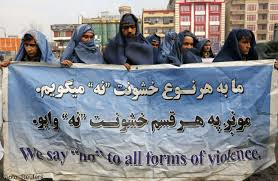
Burqa clad Afghan men (Credit: fedgeno.com)KABUL, March 8: A group of Afghan men marched through Kabul on Thursday to draw attention to women’s rights by donning head-to-toe burqas. The men marched under a leaden sky, with the bright blue burqas falling over their heads down to muddy sneakers and boots.
The demonstrators, associated with a group called Afghan Peace Volunteers, said they had organised the march ahead of International Women’s Day on March 8.
“Our authorities will be celebrating International Women’s Day in big hotels, but we wanted to take it to the streets,” said activist Basir, 29, who uses one name. “One of the best ways to understand how women feel is to walk around and wear a burqa.”
The march by about 20 men drew a mixed reaction.
Traffic policeman Javed Haidari, 24, looked bemused and slightly annoyed.
“What’s the point of this?” he wondered. “All of the women in my family wear burqas. I wouldn’t let them go out without one.” Several of the men said wearing a burqa felt “like a prison”. They carried signs reading “equality” and “Don’t tell women what to wear, you should cover your eyes”.
Some men stopped to watch, laughing and heckling. Some were confused; others said women’s rights encouraged prostitution.
Some female passersby were also nonplussed. “We don’t need anyone to defend our rights,” said Medina Ali, a 16-year-old student wearing a black veil that showed only her eyes and woolly gloves on a cold morning.
“This is just a foreign project to create a bad image for the burqa and Afghanistan. They’re trying to make those of us who cover our faces feel bad.”
An older woman, who wore a burqa herself, was less affronted. “My husband and son tell me I should take my burqa off,” said Bibi Gul, who thought she was around 60.
“But I’m used to it. I’ve been wearing this for 35 years.”