Blow back of N. Waziristan Operation kills 60 in Lahore

LAHORE, Nov 2: At least 60 people were killed on Sunday in a blast near the Wagah border, the responsibility of which was claimed separately by the outlawed Jundullah and TTP-affiliated Jamaat-ul-Ahrar outfits.

Victims include 10 women and seven children, while more than 110 people have been injured.

Punjab police chief Inspector General Mushtaq Sukhera told AP that the bomb exploded outside a restaurant near a paramilitary soldiers’ checkpoint at Wagah border on the outskirts of Lahore city. He also added that the explosion could have been the result of a suicide blast.

Lahore police chief Amin Wains confirmed it was a suicide attack. “People were returning after watching the parade at Wagah border when the blast took place. Ball bearings were found at the scene,” he said.

Emergency has been declared at all hospitals in Lahore. Prime Nawaz Sharif has taken notice of the explosion and called for a report on the incident.

Wagah is the only road border crossing between the Indian city of Amritsar and the Pakistani city of Lahore.

An Indian security official told Reuters that the Indian side of Wagah border is “safe” after blast on Pakistani side.

The Jamaat-ul-Ahrar splinter group of the proscribed Tehreek-i-Taliban Pakistan (TTP) claimed responsibility for the Wagah border attack as its spokesman Ehsanullah Ehsan, speaking to Dawn on telephone from Afghanistan, said it was carried out by one of their men.

When asked if it was more than one suicide bomber, he said one man carried out the attack.

“We will continue such attacks in the future,” Ehsan said.

“Some other groups have claimed responsibility of this attack, but these claims are baseless. We will soon release the video of this attack,” he said.

“This attack is revenge for the killing of innocent people in North Waziristan,” the banned militant group’s spokesman said.

Earlier Jundullah, another outlawed group which was behind a suicide bombing that killed at least 78 Christians at a church in Peshawar last September, had also claimed responsibility for the Wagah border attack.

The spokesman of the splinter group of the TTP Ahmed Marwat via telephone said that the attack is a reaction to military operation Zarb-i-Azb and Waziristan operation.

Jundullah and the much larger Pakistani Taliban are among loosely aligned militant groups that frequently share personnel, tactics and agendas. Claims for specific incidents are often hard to verify.

The group has claimed various attacks including the October 23 attack on Maulana Fazlur Rehman in Quetta.

On September 22, 2013, a twin suicide bomb attack had killed 127 people at a Peshawar church. This was the deadliest attack on the Christian minority in the history of Pakistan. Jundallah had wasted no time in accepting responsibility of this attack too.

18 Shia Muslims traveling from Rawalpindi to Gilgit-Baltistan on a bus in February 2012 were stopped in Kohistan and massacred based on their religious affiliation by individuals dressed in Military uniforms. Jundallah had also claimed responsibility for the act by contacting the media.

In June 2013, Jundallah had claimed responsibility for the killing of tourists and their Pakistani guide in Gilgit–Baltistan. The tourists were mountain-climbers who had hoped to climb Nanga Parbat. The dead included five Ukrainians, three Chinese, and their guide.

Scenes at the hospital

As most of the dead and injured were shifted to the nearby Ghurki Hospital, reporters said the premises was swarming with police, security agencies and the families of victims.

Hospital administration confirmed that at least 40 dead and over 50 injured have been received by hospital authorities.

“We received 35 bodies including those of women and children and 60 to 70 were wounded,” Deputy Medical Superintendent of Ghurki Hospital near the Wagah border crossing, identified only as Dr Khurram, told domestic television channels earlier.

Later, medical superintendent Dr Iftikhar confirmed that over 100 people have been brought to Ghurki Hospital. More injured have been shifted to Lahore hospitals as GH does not have the capacity to treat further patients.

Timing of Explosion

The explosion reportedly took place as the Rangers concluded the ceremony at Wagah, and the flags were being lowered.

For years, a military flag-lowering ceremony that takes place every evening at the Wagah border post, which draws crowds of partisan tourists who cheer every hostile strut and stare traded by the border guards on both sides.

DG Rangers confirms suicide blast

Director General Rangers Punjab Khan Tahir Khan confirmed that the explosion is a suicide blast.

“The parade venue is about 600 metres ahead of the blast site. Because of the strict checking the suicide bomber detonated the bomb away from the parade venue.”

Blast site

Footage shows shops and nearby buildings destroyed at the site of the blast. Security and rescue personnel rushed to the site of the blast.

Journalists have been instructed to clear the area, which the Rangers have cordoned off for security reasons. Forensic teams are currently present at the site and are collecting evidence as part of the investigation.

An eyewitness speaking to DawnNews said people were coming out of the shops when the bomb explosion took place.”There were several bodies at the scene of the blast. It was a very powerful blast.”

Who’s Afraid of Nilofer?

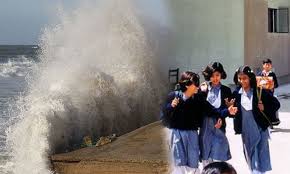
Cyclone Nilofer in Karachi (Credit: thenewstribe.com)
Cyclone Nilofer in Karachi
(Credit: thenewstribe.com)

KARACHI, Oct 30: The Sindh government has announced a holiday on Friday, declared emergency in the metropolis and four other districts and made arrangements for the board and lodging of coastal area residents being shifted to safe places in view of the cyclone that is heading towards the coast at a speed of 14 kilometres per hour.

Nilofar — the cyclone heading towards Sindh and Indian Gujarat — may slam the coastal areas here on Thursday afternoon with the possibility of heavy rains in the lower parts of Sindh over the next two days, a weather report indicated.

The Sindh government declared emergency in all the six districts of Karachi, besides Thatta, Badin, Sujawal and Tharparker, while it announced that all government offices and educational institutions would remain closed on Friday, said Sindh Information Minister Sharjeel Inam Memon while briefing media persons in his office in Clifton after attending the cabinet meeting held on Wednesday at the CM House.

The meeting, which was presided over by Chief Minister Syed Qaim Ali Shah and attended by ministers, bureaucrats and army and navy officers, discussed a cyclone, the drought in Tharparker and security situation in context of Muharram.

The minister said emergency centres had been set up in all the coastal areas, while appeals were being made to residents of the areas to shift for a few days to safe places within their district. He said Rs10 million was released to the district governments concerned to make proper arrangements to look after them.

He said the Sindh government had also made arrangements for the transportation of fishermen and others from all the coastal areas to safe places, where arrangements had been made for their free board and lodging.

He added that people had been asked to restrict their movement to escape accidents from gusty winds and heavy rains during the next two days.

In order to avoid loss of life, the government started removing large hoardings and also directed the owners to remove their billboards otherwise in case of losses they would be held responsible and action would be initiated against them, he added.

People have been advised not to come out from their homes, unless unavoidable, from Thursday noon until the cyclone threat was over, according to the minister.

However, he added, these measures were not aimed at creating fear and harassment among people but to take all precautionary measures.

In reply to a question, he said 80 per cent fishermen had already returned while remaining were also sent radio messages through coast guards, navy and maritime agencies and hoped that they would also return before the cyclone hit the coastal areas.

In reply to another question, Mr Memon said the Met Office had forecast 30 to 50-millimetre rainfall in Karachi while the coastal areas would receive over 100mm of rainfall and above.

Published in Dawn, October 30th, 2014

Prayer leaders booked to prevent sectarian clashes

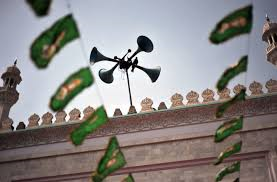
Moharram measures (Credit: dawn.com)
Moharram measures
(Credit: dawn.com)

ISLAMABAD, Oct 24: Prayer leaders (Khateebs) of 73 worship places in the city were booked for violating the ban on the use of loudspeaker during the Friday prayers.

A police officer said the use of amplifier for any speech except Azan was banned in the capital city. After a bloody clash between two religious groups in Rawalpindi on Ashura last year, the capital police have decided to implement the ban strictly.

He said the clash outside a worship place located on the Ashura route in Raja Bazaar last year was caused by the misuse of the loudspeaker.

“Last Friday, police officials met the Khateebs of all mosques and imambargahs in the capital city and asked them not to violate the ban,” he said. The Khateebs were further directed that their voice should remain confined to the premises of the worship places.

“In this regard, undertakings were also taken from them with the warning that legal action would be taken against them if the ban was violated.”


Violations were detected by police officials during Friday prayers


The officer added: “Today, a vigilance was mounted around all the worship places – 584 msoques and 30 imambargahs – in the city with the deployment of policemen in plain clothes to listen to the sermons of the Khateebs.

During the surveillance, the police officials found violations of the ban in the 73 worship places.

He said the khateebs of worship places belonging to the Deoband, Ahle Hadis, Barelvi and Shia sects found involved in the violation of the ban were booked under the amplifier act.

Nine cases were registered by the Sabzi Mandi police, six by Industrial Area, five each by the Aabpara, Bhara Kahu, Golra, Loi Bher, Nilor, Shahzad Town and Tarnol police. Four cases each were lodged with the Koral and Banigala police, two with the Secretariat and one case with the Ramna police.

There was no complaint about the violation of the ban in any worship place located in the jurisdiction of the Kohsar police.

However, the officer said the police deliberately delayed the arrest of the Khateebs. In the first step, the cases were registered against the violators for their refusal to follow the law.

There are over 600 worship places in the city and majority of them followed the law and did not commit any violation.

The police officer said arrests would be made if the Khateebs again violated the ban. Besides, their amplifier system would also be confiscated.

Senior Superintendent of Police (SSP) Asmatullah Junejo directed all the subdivisional police officers and the SHOs to ensure the implementation of the ban to maintain sectarian harmony and peace in the city.

Published in Dawn, October 25th , 2014

Hazara Blood Spilled Again as LEJ Grows Unstoppable

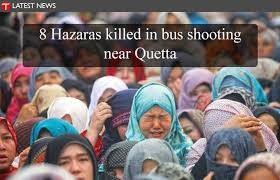
Hazaras mourn bus attack (Credit: twitter.com)
Hazaras mourn bus attack
(Credit: twitter.com)

Pakistan has its share of Voldemorts – the dark lords who cannot be named – but none as powerful as this lot: the banned sectarian outfits and their leaders. They kill with impunity, and then move on with their business without the fear of ever being caught, or convicted.

They are brazen and flagrant, they cannot be stopped. And, egregiously, they cannot be named, at least not without risking one’s life.

Owen Bennett Jones, in his book Pakistan: Eye of the storm, narrates a bloodcurdling tale of a Bollywood style drama that unfolded in Lahore during the days Riaz Basra, founder of Lashkar-e-Jhangvi, was still alive.

Contrary to popular belief that PML-N is sympathetic towards their cause, the Nawaz-led government was cracking down hard against sectarian outfits. The bounty on Basra’s head had been increased to make him the most wanted terrorist in the country, and the police were employing all energies to apprehend him.

Miffed at this, Basra decided to send a strong message.

He crept into one of the public meetings held by the Prime Minister, placed himself right behind Nawaz, allowing an accomplice to take pictures in the process; and then three days later sent the print of the same to the PM house, with his and Nawaz’s head encircled, and an inscription underneath reading,

It’s that easy.

It indeed is easy for them to wriggle into the most secure places. Easier still to go ahead and shoot anyone.

No surprises should then come when the common folks, such as the Hazaras, are murdered in dozens with the government failing to provide protection.

Take a look: Situationer: Hazaras: Fault in their faces

Convenience, as expediency in so many other matters, demands that we do not even identify this as a sectarian bloodshed. We shut our eyes, look elsewhere, ignore the elephant in the room and hope peace would somehow prevail.

Where we do indeed identify the killings as being sectarian in nature, we refuse to attribute direct blame; to name names and identify perpetrators. No political party has the guts to directly confront these outfits or to censure them for being completely out of sync with the religion they preach.

Why make enemies of such barbarians?

Hardened by this attitude, the outfits rage on with their sprees.

What had started off as the targeting of hitmen of organisations affiliating with other sects – back in the times when, as Jalib would put it, Zulmat (Darkness) insisted on being called Zia (Light) – slowly moved on to becoming a campaign against the notables. Doctors, lawyers, intellectuals and government servants were the targets in this phase.

Not satiated with the bloodshed and the rewards they had accumulated for the hereafter, these organisations took it a step further.

Thus began indiscriminate sectarian killings.

Pakistanis are killing Pakistanis; Muslims are murdering Muslims. Ubaidullah Aleem had written some 40 years ago:

Main yeh kis ke naam likhoon, Jo alam guzar rahay hain
Meray shehar jal rahay hain, Meray log mar rahay hain

(Whom should I blame for these afflictions; my cities are burning, my people are dying).

Koi aur to nahin hai pas-e-khanjar aazmai
Ham hi qatl ho rahay hain, Ham hi qatl ker rahay hain

(It is not an outsider behind the swashing dagger; we are the ones getting killed and we are the ones doing the killing).

The weapon of choice employed by these outfits to put their point across is violence. The fact that the government has been unable to keep its monopoly on the legitimate use of violence – as a punishment to prevent perpetuation of crime – renders it a failure.

The government too, however, despite the criticism heaped upon it, fails not because of lack of intent but because of failure of mechanism.

There were 40 plus cases registered against Malik Ishaq (the second of the three founders of Lashkar-e-Jhangvi), and of these, he has already been acquitted in about 30. The reason: the witnesses either did not turn up due to fear, went missing, or were killed.

No judge would punish a person if evidence is lacking, even if the perpetrator had owned up to killing at least a hundred Shias in an interview with an Urdu Newspaper in 1997.

Together with a lack of evidence is the predicament of having to contain the sympathy these criminals win with security agencies. The problem of reverse-indoctrination, where prisons instead of acting as the reformation centres end up becoming recruitment fields, further complicates the matter.

Until these issues are addressed head on, and the government is better empowered to deal with them, we are left with only two pitiable solutions:

Solution one: every time a tragedy of the sorts where Hazaras are sprayed with bullets occurs, we shake our heads, condemn the actions of ‘namaloom afraad‘ (unknown people/assailants), gain some mileage by politicising the matter and within days move on, waiting for another such incident to occur in the future.

Solution two: where lack of evidence would merit acquittal of the accused – the extrajudicial killing of criminals in police ‘encounters’.

As a lawyer committed to human rights, I am against both. The former for its passivity, the latter for fear of an innocent person being murdered.

We are trapped.

Balochistan Grows Poorer Sitting on Mounds of Gold

Reko Diq (Credit: thenewstribe.com)
Reko Diq
(Credit: thenewstribe.com)

QUETTA, Oct 25: The Balochistan government is under pressure to accept a negotiated settlement in a dispute with a company – Tethyan Copper Company (TCC), which was engaged in mining at Reko Diq Copper and Gold Project and which now seeks monetary compensation for federal and Balochistan governments’ ‘breaches of contract and treaty rights’ at an international court. 

During the recent two-week long hearing of the case, after which International Centre for Settlement of Investment Disputes (ICSID) in Paris reserved its judgment, the Pakistani legal team was also joined by political leadership – apparently for an out-of court settlement.

“Two committees were formed at federal and provincial level which went to Paris with a sole agenda—to have a negotiated deal with the TCC and out of court settlement,” an insider said on the condition of anonymity.

“The government committees had a separate briefing with the TCC and its parent companies – Antofagasta and Barrick Gold on Reko Diq project,” he said.

1

He said much before the hearing, the Attorney General of Pakistan had sent a letter to the Balochistan government, saying the case of Pakistan and Balochistan was weak and the latter was likely to lose out. “The AGP said the government would have to pay a fine of billions of dollars. So it was better to make an out-of-court settlement,” he said.

He said the Balochistan government was trapped now as it was trying to negotiate and also protect the interests of its people so that they would not be equally blamed for putting the invaluable resources on sale at throwaway prices.

Upon his return from Paris, Balochistan Chief Minister Dr Abdul Malik Baloch had said he would protect the interest of his people. He had not revealed anything about the possible deal but said he would take a decision in the best interest of Balochistan.

A government official said that Balochistan government is also trying to resolve the issue with the TCC before International court gives verdict.  The TCC has invested over 220 million US dollars in the project since 2006. “The company now claims around 12 billion US dollars in monetary damages,” a source told The Express Tribune.

Another government official said the TCC was not willing to work in Pakistan now. “Government is trying to resolve the issue because if the government is found guilty, then we have to pay billions of dollars in fine,” he said.

2

He said that since Balochistan did not have resources to pay such a huge amount, the federal government would pay the money from Balochistan government’s funds. Citing previous examples of federal government’s discriminatory policies, he said: “The federal government will pay the money from Balochistan’s National Finance Commission (NFC) Award or Federal Public Sector Development Programme (PSDP),” he added.

Sources in the provincial government said federal government did not care whether the contract was finalised with the TCC or a Chinese company and it only wanted to start the project to get maximum amount.

“Not a single person in Balochistan will agree to have a contract with Chinese mining companies,” an official said, adding that the companies involved in Saindak project at Chagai and Lead and Zinc Project in Dudar, Lesbela did nothing for the local communities or provincial economy ‘but ruthlessly exploited the resources.’

Published in The Express Tribune, October 25th, 2014.

Political debut for scion of Pakistan’s Bhutto dynasty

BILAWAL DEBUT (CREDIT: SBS.COM.AU)
BILAWAL DEBUT
(CREDIT: SBS.COM.AU)

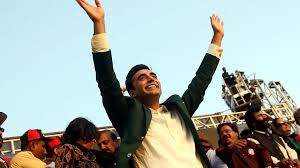
Islamabad, Oct 18 – ISLAMABADII The only son of Pakistan‘s assassinated Prime Minister Benazir Bhutto told hundreds of thousands of supporters on Saturday that he would fight for his party’s revival, in an appearance intended to mark the official launch of his political career.

“The fountainhead of our power is the people,” Bilawal Bhutto Zardari, 26, told the crowd in the port city of Karachi, Pakistan’s financial heart and home to 18 million people.

“If you want to save Pakistan, the only answer is Bhuttoism and the PPP,” he said, referring to his party’s acronym.

Police said 150,000 people attended the rally.

Symbolically, he stood on the roof of the same bus where his mother was assassinated exactly seven years ago in a gun and bomb attack after holding an election rally in the city of Rawalpindi in 2007. At least 180 people were killed that day.

The Bhutto dynasty has had a turbulent history, reflecting Pakistan’s own rises and falls in past decades. Bilawal’s grandfather, the founder of the Pakistan People’s Party (PPP), was hanged by a former military ruler in 1979.

The PPP ruled Pakistan from 2008 to 2013 until it was voted out in a landmark election that marked the first time in Pakistan’s military coup-prone history one elected civilian government replaced another.

The emergence of Bilawal Bhutto as an opposition figure is a worry for Prime Minister Nawaz Sharif, whose standing has been shaken by weeks of protests led by Imran Khan, a former cricket star, and Tahir ul-Qadri, a firebrand cleric.

The PPP’s five years in power, however, were marked by a series of confrontations with the powerful Supreme Court over a slew of corruption cases, and people gradually became disillusioned with its policies.

Bhutto, who bears a striking resemblance to his mother, was joined at Saturday’s rally by hundreds of high-ranking officials, including his father Asif Zardari, a former president and now co-chairman of the PPP.

Dozens of police, including female officers, stood guard near the stage as Bhutto and other senior leaders of the PPP delivered speeches.

POLITICAL REVIVAL?

Political observers say the election defeat last year has reduced the PPP to a provincial party with a vote bank only in Sindh province, its powerbase – a perception Bhutto will try to reverse.

Bhutto’s young age did not prevent huge crowds turning up for Saturday’s rally. He was not yet old enough to contest the 2008 elections as the minimum age is 25, but he will be old enough for the next vote in 2018.

Wearing a green blazer, the colour of the Pakistani national flag, he arrived by helicopter as thousands of supporters chanted “Prime Minister Bilawal Bhutto has arrived.”

Benazir Bhutto’s killer has never been caught and a U.N. inquiry found that Pakistani authorities had failed to protect her or properly investigate her death. The United Nations also said that high-ranking Pakistani officials had tried to block its investigation.

Benazir Bhutto has become a powerful symbol for the ruling party, which often refers to her as a martyr. The capital’s airport and a scheme to give cash to poor families have been named after her.

The Bhuttos have often championed the rights of the poor in a country where feudal landlords own vast tracts of land and agricultural workers often live in deep poverty. Many rally participants waved portraits of Benazir Bhutto wearing her trademark white headscarf.

Her husband Asif Ali Zardari, elected following her death and president of Pakistan until 2013, is less popular. Zardari was jailed on corruption charges from 1996 to 2004 that he says were politically motivated.

Pakistan’s Changing Political Landscape

AT the risk of gross generalisation, here is the takeaway from Multan’s by-election. One, ideological politics is dead. The left-right divide in terms of which we have analysed election prospects for the last four decades is no longer a useful analytical tool. Those whose political consciousness was shaped in the late ’60s and early ’70s by politics of left and right, liberalism and conservatism are now a minority. With an average national age of 23.5, the politicised youth of Pakistan that will decide the fortunes of political parties is non-ideological.

Two, the two-party system that emerged during the ’90s is undergoing a metamorphosis. PTI has emerged as the new mainstream party that is giving the traditional mainstream parties — PML-N and PPP — a run for their money. But the three-way contest in a non-ideological environment is more bad news for PPP than PML-N. The myth of the ’90s that the PPP voter stayed at home when unhappy as opposed to voting for another party stands busted. The PPP voter seems to be opting for PTI.

Three, in Punjab, PPP’s decline (or demise) has enhanced the number of floating votes. Not bound to the manifesto or ideology of a political party, this vote is portable. (This may also be because with no real difference between the socio-economic agendas of parties, the rhetoric in their manifestos is hardly distinguishable.) The floating voter makes snap choices. Absent ideology or competing reform agendas, such choice is influenced by tailwind built upon the credibility, rhetoric and charm of top leaders.


The Multan by-poll’s message is only indirectly for the PML-N and essentially for the PPP in Punjab.


Four, the average urban Punjabi voter seems to believe that the crisis of Pakistan has been caused by the absence of honest and capable leadership. The choice is thus not between PML-N and PTI, but between Nawaz Sharif and Imran Khan (which also partly explains the decline/demise of the Zardari-led PPP in Punjab). It might seem ironical that those who decry Sharif’s monarchical style believe that in replacing one man with another lies our panacea. For now the form of change that has captured public imagination is the reign of an untested ‘saviour’.

Five, because none of our mainstream parties have set out an agenda that carries mass appeal (such as Bhutto’s roti, kapra aur makan), the hope for change rests on the ability of a saviour to miraculously fix all things broken. The contemporary political conflict has come to be defined as one between incumbency and change. Imran Khan has built his brand as a system-outsider and change agent with Sharif as the status quo symbol. For Khan’s mesmerised supporters anyone backed by him becomes an agent of change by association.

Javed Hashmi was a change agent while on Khan’s right side and became part of the wicked old order as soon as he fell out with Khan. Are critics wrong to claim that PTI is selling old wine in a new bottle (with Shah Mehmood Qureshi and Amir Dogar representing change in Multan and Sheikh Rasheed in Rawalpindi)? In a political setting driven by individuals sans ideology, PTI is using Imran Khan’s oversight as the cleansing agent for ‘electables’ capable of managing elections locally, notwithstanding their past, and it seems to be working.

Bhutto could nominate a pole in the 1970 elections and it would win, so went the belief. It was Bhutto’s charisma combined with the promise of change backed by a reform agenda that led to the victory of nobodies nominated by PPP back then. The vote garnered by PTI in the 2013 elections established that Khan is now a vote puller. But his pull produced victories largely where it was complemented by the local candidate’s ability to manage the election. The message was reinforced when bad candidates cost PTI the seats its chief vacated in Peshawar and Mianwali.

The Multan by-election’s real message is only indirectly for PML-N and essentially for PPP in Punjab. That it is getting wiped out. What does this mean for political families and clans still associated with PPP (ie the likes of Amir Dogar, PPP’s ex-secretary general for southern Punjab)? And what happens if PTI manages to pull significant numbers in PPP’s heartland in Larkana to back its claim that its message is resonating across Pakistan?

If despite Yousuf Raza Gilani’s best efforts, PPP could only bag 6,000 votes in Multan (southern Punjab being PPP territory prior to 2013 and all) and is seen struggling to keep its support intact even in Sindh, the message heard in Punjab will be simple: the next electoral conflict will be between PML-N and PTI, with PPP being a sideshow. Post-Larkana, those PPP-ites interested in pursuing careers in Punjabi politics might be tempted to jump ship and join PTI while it is still in the business of whitewashing electable politicos from other parties.

What does this mean for the timing of change? Unfortunately for PTI, the mechanics of change haven’t changed. The Multan by-election reminds us that while rallies are important markers of public opinion, public mandate only flows out of elections. The two non-representative institutions with some ability to instigate mid-term polls are the army and the judiciary. When the khakis could have intervened during the recent stand-off on Constitution Avenue, the army chief said no thank you. He won’t retire till the end of 2016.

The post-Iftikhar Chaudhry judiciary also seems disinterested in playing a role in shaping the country’s political landscape and rightly so. No number of jalsas will cause Sharif to call an early election. Resignation from the 30-odd seats PTI has in parliament won’t trigger mid-term polls. PPP and MQM have no incentive to invite early elections through mass resignations; both parties might lose seats if an election is held today, and in a status quo vs change election they will both be pitted against PTI.

In a nutshell, PTI’s politics of street agitation might keep a dazed PML-N government rickety, but there presently exists no conceivable mechanism to bring it down. Whether PTI with its ongoing romance with expediency will be able to induce reformative change in Pakistan if voted into power is an entirely different question.

Mortenson returns to Afghanistan, trying to move past his ‘Three Cups of Tea’ disgrace

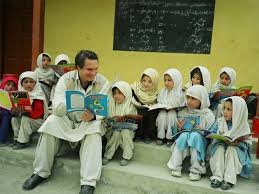
Greg Mortenson (Credit rferl.org)MOHAMMAD AGHA, Afghanistan Oct 12 — Greg Mortenson is hurtling down the dusty back roads of eastern Afghanistan, hoping the Taliban won’t attack his Toyota 4Runner. There are no police checkpoints, no American troops and no sign of any foreign development projects — including his own.

A few years ago, when the author of “Three Cups of Tea” was one of the world’s most beloved activists, there would have been a host of American officials waiting for him. But now, with his reputation in a shambles, he has slipped back into Afghanistan quietly.

When he arrives at an unmarked blue gate in a mud wall, his driver stops. Inside, Mortenson says, lies “the other side of the story” — hundreds of Afghan girls getting an education, thanks to him.

Except no one is answering the door. The place looks abandoned.

“Maybe everyone is at a wedding,” he says with a forced laugh. He squirms in his seat.

Mortenson won fame as a humanitarian who built hundreds of schools in Afghanistan. Four-star U.S. generals sought his advice on Afghan tribal dynamics. President Obama donated $100,000 of his Nobel Prize winnings to Mortenson’s charity. Former president Bill Clinton praised him. Four million people bought his book.

Many of his former advocates now see him as a fraud.

A 2012 investigation into his charity, the Central Asia Institute, found that he spent millions in donations on his expenses, including travel and clothing. His book turned out to contain large-scale fabrications. Some of the schools he boasted of had no students. Some appeared not to have been built at all.

Now, Mortenson is trying to start over, to emerge from years of pain and disgrace. His donations have crashed. His co-author committed suicide by kneeling in front of a train. His daughter tried to take her life. He almost died of heart failure.

Mortenson, 56, is wearing Afghan clothing — a flowing tunic and flat wool cap. He sits in the truck on this sunny morning, staring at the blue gate, which remains closed. He is tapping his foot. The minutes pass slowly.

Then the gate opens.

The girls are everywhere, skittering near the front steps of the school, in blue uniforms and white headscarves. Mortenson’s face lights up. He bounds from the SUV and embraces the male teachers, putting his hand on their hearts, a sign of respect here. He shakes the hands of the little girls.

“This is where I belong,” he says.

Return to public life

In Afghanistan, Mortenson is still “Mr. Greg,” the man who can transform a village of illiterate farmers by writing a check. Word of his disgrace barely arrived here.

He has come back to Afghanistan several times since his fall from grace, quietly visiting schools. But on a trip this summer, he invited a reporter to spend a few days with him. It was a first step in Mortenson’s return to public life — one he hardly seems ready for.

He is a man who struggles to find the right words. Back when he was appearing on TV and giving speeches, he had to train himself to project confidence, to memorize snappy one-liners about girls’ education.

Today, Mortenson prefers to regard his celebrity as an accident.

“Americans want heroes to believe in. Once the machine kicks in, you can be pretty much anyone, and people will flock to you,” Mortenson had said as his truck bounced along the 20-mile road between Kabul and the girls’ school, in Logar province.

Still, he had embraced his fame. He had long been a misfit: a white kid in Tanzania, the son of Lutheran missionaries, then a teenager who got beaten up when the family returned to Minnesota and he identified himself as African. Then, he was a traveling nurse in South Dakota and Indianapolis who struggled to put down roots.

He aspired to do great work but was never the best at anything. Then, suddenly, the world was praising him as the man deified in “Three Cups of Tea,” a book carefully, even deceptively, crafted to make Mortenson look heroic.

For an America at war in faraway Afghanistan, he had at least some credibility. He had traveled for years in Pakistan and Afghanistan, and built his first school in rural Pakistan in 1996. When the book came out a decade later, his insights were marketable.

For U.S. generals trying to apply counterinsurgency theory, he shuttled tribal elders from remote villages to Kabul. For suburban American book clubs, he explained: “War will ultimately be won with books, not with bombs.” The phrase didn’t even resonate with him — he knew of plenty of hardened militants who would never allow a secular school in their village — but it somehow seemed to with everyone else.

Donations shot to nearly $23 million in 2010. And then came the downfall. In 2011, the television show “60 Minutes” said the book was largely fabricated and that he was taking money from his charity.

Jon Krakauer, whose e-book “Three Cups of Deceit” remains the most authoritative account of Mortenson’s misdeeds, accused him of lying about practically everything — “the noble deeds he has done, the risks he has taken, the people he has met, the number of schools he has built.”

Recounting his mistakes

Three years later, sitting in the garden of his run-down Kabul hotel, Mortenson admits some mistakes. Take his account in “Three Cups of Tea” of how he found his cause. An amateur mountaineer, he was descending Pakistan’s famed K2 peak in 1993. He was weak and delirious, the book recounts, when he stumbled into a village called Korphe. The book describes how the locals took him in and how he developed a “routine” in the village, where he was deeply moved by the poverty.

Now, Mortenson says, he was only in Korphe for a few hours. His relationships with the villagers, he says, developed in subsequent visits.

“It was obviously a lie,” he said. “I stand by the story, but there were compressions and omissions.”

He said that he didn’t pay close attention to the writing of the book, thinking of it mostly as a vehicle for raising awareness and donations. The book was largely penned by his co-author, David Oliver Relin.

Then there is the question of how many schools Mortenson built. When he was asked for statistics, he says, he would sometimes guess.

“It was misleading,” he said.

In truth, even the U.S. military has difficulty keeping track of how many of the schools it built are still operating. Sometimes, Mortenson just says what he thinks will make people happy — at least that’s what his therapist told him.

Mortenson acknowledges that the Central Asia Institute (CAI), which he founded in 1996, kept poor records.

“Myopic passion,” his wife, Tara Bishop, called it — explaining how her husband’s devotion to his cause outstripped his management abilities.

For all his admissions, Mortenson hasn’t given up on the image of himself as an altruist. After meeting a reporter, he began forwarding old e-mails from Hollywood figures.

“I very much enjoyed our meeting and look forward to following your travels,” actor Brad Pitt wrote in 2010.

“You have already turned the daunting and the impossible into reality,” a film producer wrote in 2008.

“I turned all film offers down, even when the offers went high,” Mortenson said in an e-mail.

Financial issues revealed

The biggest indictment of Mortenson is his financial mismanagement — specifically his use of CAI donations to fund speaking tours in which he promoted “Three Cups” and a sequel, “Stones into Schools.” Mortenson was paid tens of thousands of dollars per speech in addition to receiving royalties from book sales. In many cases, he even charged his charity for expenses covered by other sponsors.

In 2012, the attorney general’s office in Montana, where he lives, ordered him to return more than $1 million to the charity, which he paid from his book profits. He was forced to step down as a voting member of CAI’s board of directors. Mortenson is still a senior staff member, earning more than $150,000 a year.

But even now, trying to calculate his income and the amount he donated to CAI over the years, Mortenson gets lost in a series of incomprehensible Excel spreadsheets. Trying to explain them to a reporter, he attempts to do the arithmetic, gets it wrong and starts all over.

“I suck as an administrator,” he said. “The book was the best thing we had. By promoting the book, I was bringing in money to CAI.”

There is an alternative explanation. For years, employees of the charity had badgered him to document his expenses and improve management practices. “He resisted and/or ignored them,” the attorney general’s report said.

Krakauer, writing recently for Medium.com, described Mortenson as a natural con artist.

“Mortenson’s success at dodging accountability can be explained in part by the humble, shambling Gandhi-like persona he’s manufactured for public consumption,” he wrote.

Success despite scandal

Yet Mortenson can’t just be dismissed as a greedy opportunist. He still takes considerable risks to see his schools. Because of security threats, many foreign aid workers based in Kabul rarely visit their projects.

Despite all of his mistakes, CAI is still one of the largest education nonprofits in South and Central Asia, with thousands of children attending his schools, most of them girls. That’s partly due to the amount of money Mortenson was able to raise. But his charity also managed to forge unusually strong bonds with the rural communities where he built schools.

Ahmed Rashid, a well-known Pakistani journalist and expert on the Taliban, recalled his shock at meeting Mortenson. “He has odd socks on and odd shoes on. He’s not a smooth guy,” he said in an interview.

But the more Rashid spoke to Mortenson, the more the journalist was impressed with the American’s knowledge of local tribes.

“He’ll come out of a village and tell you who is al-Qaeda, who is Northern Alliance, who is pro-government,” Rashid said.

It is true that some of Mortenson’s promised schools aren’t functioning. Last year, a Washington Post reporter trekked across the Wakhan Corridor in northeastern Afghanistan, where many of the charity’s schools were built. Several of them were vacant. In one, the desks and chairs were in a pile. Many of CAI’s schools were clearly built in the wrong places — away from population centers.

But nearly every aid organization here has had failures. In some cases, foreign donors constructed schools and handed them to the government to run; they weren’t maintained. U.S. military units often built schools that closed as soon as those troops withdrew from the area.

At Mortenson’s school in Logar, every classroom was full. In one, he pointed to a girl wearing a black headscarf.

“Her father is a Taliban commander,” he whispered to a reporter. “When she came to the school, other families felt it was safe to send their daughters, too.”

It was not possible to confirm such deals. But the Taliban had shuttered nearby schools, deeming their curricula “un-Islamic.”

In the school, Mortenson was a man transformed. He went room to room, teaching arithmetic with a handful of stones. Suddenly, the inarticulate man was funny and no longer self-conscious. He made eye contact with every student.

CAI has $20 million in reserves, but donations have dried up. According to its financial report, it raised about $3 million last year but spent more than $5 million. As he watches the funds dwindle, Mortenson feels guilty and angry.

“I just don’t understand why all these people are trying to bring me down instead of help me,” he said.

‘Almost broke’

In June, nearly as soon as Mortenson arrived in Kabul, the cellphone of the CAI employee who handles his communications started ringing nonstop. Men in Nuristan province wanted a new school. A group in Nangarhar province wanted higher salaries for teachers.

The Nuristani group, long-bearded men from a war-torn province, met him at Kabul’s Intercontinental Hotel, home to a restaurant with white tablecloths and waiters in suits. In the lobby, Mortenson grew nervous, mumbling to himself — not only could he not promise them a school, but he worried about the cost of their dinner.

The Montana attorney general is keeping a close watch on CAI’s expenditures these days. Mortenson says legal costs and the attorney general’s fine have left him “almost broke.”

“It’s probably very expensive,” he said in the hotel lobby.

Mortenson might not be the foremost expert on Afghan culture, but he knew that it would be inappropriate to turn away a group of visitors. When the bill came, he picked it up. It was about $250. He told the men he would try his best to build the school, even though he knew it was out of his hands.

“Before everything happened, I could have done more,” he said later. “There hasn’t been a school in Nuristan for years.”

Uncertain future

At its height, CAI’s Kabul office was buzzing with employees. These days, it’s nearly empty. The employees are mostly cataloguing financial records — cabinets full of paper receipts and handwritten attendance records, which Mortenson points to with pride.

He is hoping his organization can stay afloat; its board has been pushing him to resume public appearances, to jump-start fundraising. But its future is as uncertain as his own.

When he’s at his home in Bozeman, Mont., he spends much of his time reading about Afghanistan and Pakistan on the Internet, and posting links on Facebook.

But he also daydreams about leaving his charity behind. He could spend more time with his wife and children: Khyber, 12, named after the Khyber Pass, and Amira, 18, which means “female leader” in Persian.

Amid all the pain of recent years — his co-author’s suicide after the public disgrace, his near heart failure, which confined him to bed for months — his biggest regret is how he neglected his children during the years of his soaring celebrity. His daughter’s suicide attempt drove that home.

“I’d just been out of the picture. I feel terrible about that,” he said, his voice wavering in a rare display of emotion.

Now, he is weighing his options. He could try to return to public life, to write another book or advise those looking to start nonprofits. But he often seems unready to reemerge.

“Sometimes, I think it would be better if I just stopped talking,” he said. “This stuff from the past is going to come for a long time, whether I say everything was or wasn’t a lie.”

During one of his classroom visits in Kabul, he walked from desk to desk, asking 9-year-old girls what they planned to do when they got older. Some wanted to be midwives or doctors. Others wanted to be teachers. As he saw it, their ambition was another validation, another sign that he shouldn’t give up.

He came to the desk of a girl with a wide smile.

“I want to be a lawyer.”

Mortenson shook her hand.

“I could use some more of those.”

He has, at least, made one concrete plan for his own future. Next year, he’ll enroll in graduate school courses on organizational leadership.

“I’d really like to understand what it is to really be an ethical leader,” he said.
Foreign fighters flow to Syria

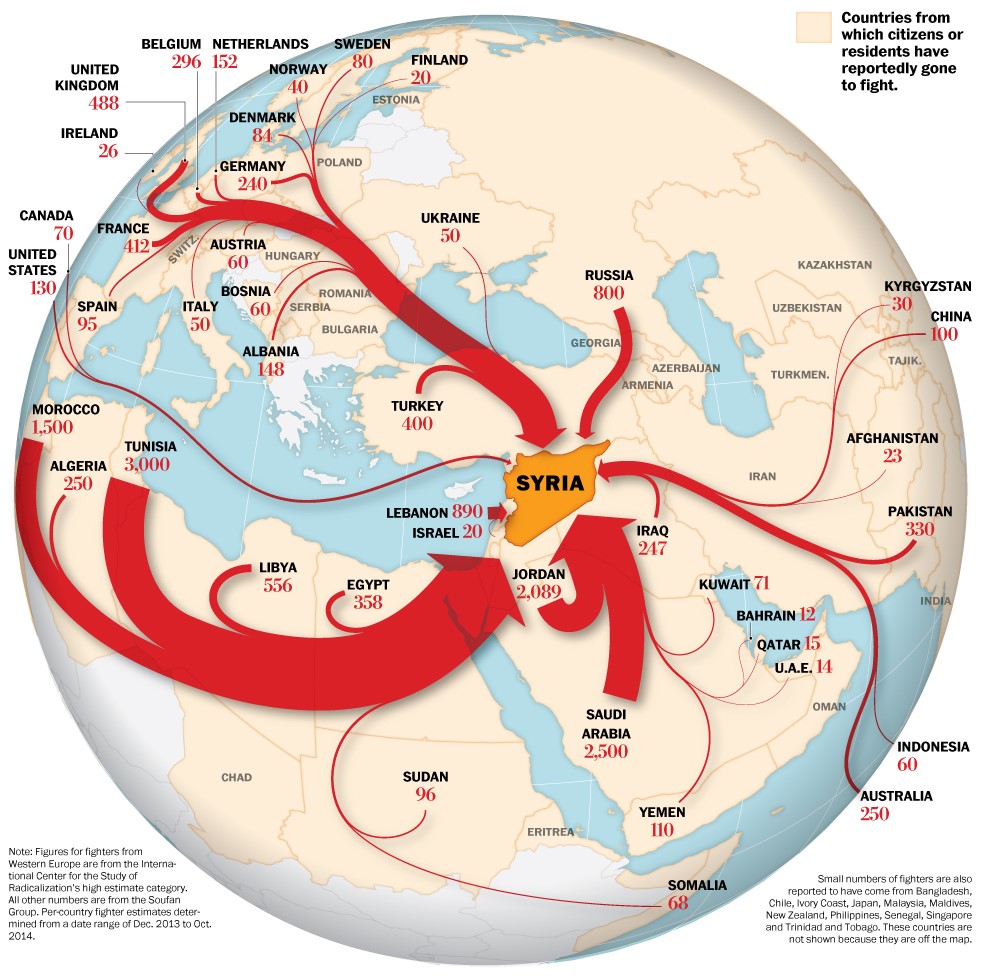
An estimated 15,000 militants from at least 80 nations are believed to have entered Syria to help overthrow the regime of President Bashar al-Assad according the CIA and studies by ISCR and The Soufan Group. Many of these fighters are believed to have joined units that are now part of the Islamic State. Western officials are concerned about what these individuals may do upon returning to their native countries.

According to the International Center for the Study of Radicalisation and Political Violence, at least 330 Pakistani youth have already left for Syria to join the hard-line Islamic State to help overthrow Asad’s government. The Tehrik-i-Taliban Pakistan led by Fazlullah has declared allegiance to the Islamic State. Fazlullah freely operates across the border, kept out only by the current Pakistan military operation in FATA. However, the free movement of the Afghan Taliban into Pakistan threatens to undercut the gains of Zarb-i-Azb.

Observers believe the bigger threat could come from middle class Pakistani youth returned from Europe and the US, with good computer skills and acceptance of the prevailing fatalist religious mind-set in Pakistan.  While overseas, the cultural background of these young men made them recoil against liberal, Western values, including the ubiquitous presence of women. Finding themselves at home amidst a failing economy and exposed to religious fatalism, they are prime candidates for `jihad,’ be it in Afghanistan or Syria.

ISIS Global Appeal (Credit: washpost.com)
ISIS Global Appeal
(Credit: washpost.com)

International Center for the Study of Radicalisation and Political Violence  (ISCR), The Soufan Group, CIA. Gene Thorp, Julie Tate and Swati Sharma. Published on October 11, 2014, 6:44 p.

Rangers Foil TTP Affiliates Escape through Karachi Jail Tunnel

KCJ tunnel detected (Credit: dawn.com)
KCJ tunnel detected
(Credit: dawn.com)

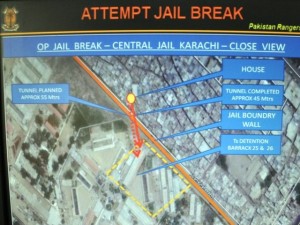
KARACHI, Oct 15: A 45-metre-long and 10-metre-deep tunnel being built just a few metres from the Karachi Central Jail to spring 100 ‘dangerous militants’ was discovered in a house situated in a neighbouring locality, an officer disclosed on Monday.

Several suspects belonging to a banned outfit were arrested when the house was raided this weekend, while five more suspects were later picked up on information provided by them during interrogation. The move was followed by a jail operation during which all prisoners were searched physically that led to the recovery of electric wires, scissors, radios, jihadi literature, knives, party flags and a modified ladder, said a Rangers spokesperson.

The house situated in Ghausia Colony, a shanty town close to the main penitentiary in Karachi, had been bought by the suspects some five months ago, said Col Tahir Mehmood of Pakistan Rangers, Sindh, while speaking at a press conference at the Rangers Headquarters.

“They were only 10 metres from their target when the raid was conducted,” the colonel said.


80pc digging work had been done when suspects caught


There’s an underground water tank in the house where the suspects had started tunnelling their way to the jail, the officer said. He explained that they were using ‘sophisticated equipment’ for digging, besides having arranged lights and some wooden stuff to keep the tunnel dry.

He added that the activity had been on for the past four and a half months.

“The suspects had dug up the tunnel up to 45 metres and they needed 10 metres more to reach their target” when the house was raided with the help of a national security institution on the night between Oct 11 and 12, he said.

Their intended target appeared to be a barrack unit housing around 100 ‘dangerous militants’ and they had planned to reach the target through a dry well, said the officer. Due to ‘groupings’ inside the jail, prisoners belonging to one school of thought were kept in same barracks, said a senior official of the home department. He added that 100 prisoners could be kept in a single barrack unit of the jail that housed over 5,000 prisoners.

While Col Tahir did not disclose the number of suspects picked up from the house and name of the militant group they belonged to, he did confirm that the suspects belong to ‘a banned outfit’ and that ‘five more suspects’ were rounded up on information provided by them.

Speaking about the location of the house, he said there was a road between the central prison and its adjacent neighbourhood Ghausia Colony. As it was an ‘unauthorised’ settlement, he added, the law-enforcers were investigating to ascertain the actual owner of the house.

However, provincial minister for prisons Manzoor Wasan, who along with the inspector general of prison Nusrat Mangan visited the house, told the media that its owner was a policeman who had sold it at a price four times its market price some months ago.

“The actual price of the house was Rs0.3 million but the policeman had sold it for Rs1.4 million,” said the minister. He said the police official whose name he did not disclose would also be interrogated.

To find out if the suspects had ‘inside help’, a committee led by the home secretary was constituted, said Mr Wasan.

In reply to a question, the minister for prisons said that security around the central jail was mainly the responsibility of Rangers, police and other institutions.

Asked about the dry well mentioned by the Rangers officer at the press conference, Mr Wasan made it clear that there was no dry well in the house. “Instead there was a gutter adjacent to a mosque, which leads to the prison,” he added.

Mr Wasan said the suspects had dug up tunnel up to 45 metres but they had not crossed the road yet.

High-security prison

Meanwhile, progress on a proposal for setting up a ‘high security prison’ in Nooriabad, where all ‘dangerous prisoners’ would he shifted, was reviewed at a meeting presided over by Sindh Chief Secretary Sajjad Saleem Hotiana.

The meeting was informed that the project would cost Rs1.5 billion.

The chief secretary directed the special secretary finance for early release of the fund.

Mr Hotiana said that a committee, led by DIG South Barrister Abdul Khalique Shaikh, was set up to probe the matter and submit its report within a week. Additional home secretary, representative of the jail administration and others would be part of the committee that the chief secretary said had been constituted with the approval of the chief minister.

The meeting also reviewed the security of prisons in Hyderabad, Sukkur and other areas.

Published in Dawn, October 14th, 2014