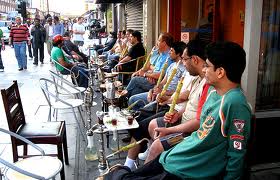
Edgeware Road – Melting Pot or Salad Bowl?

Edgeware road (Credit: mideastposts.com)

When I first moved to London, an Italian colleague at the American law firm where I then worked told me that “in Central London, the Americans live in Chelsea, the Italians in Knightsbridge, the French in South Kensington, the Australians in Earl’s Court, and the Arabs in Mayfair.”

“Where then do the English live?” I had asked.

“Zone 3 and beyond,” he responded, referring to the London underground tube map, where stops in zone 1 represent the most central locations, followed by zone 2, and so on.

Of course, his description of central London was a bit of an exaggeration but there is little doubt that recent immigrants make up an increasingly large proportion of London’s cosmopolitan centre.

Within this amalgam of cultural diversity, one street stands out more than any other.

Edgware Road – home to a myriad of Lebanese restaurants, doner kebab outlets, shawarma stands and halal butchers on every corner – is the focal point for much of central London’s Muslim population (which stands at 12.4 per cent as of the 2011 census).

Although Edgware Road is located in the borough of Westminster which is the only borough of London’s 33 boroughs where Arabic is the most commonly spoken language other than English; walk up and down the street and you are as likely to hear Kurdish, Farsi, Urdu, Pashto and Punjabi.

There may be nothing unusual about immigrant communities concentrating in certain areas of today’s global cities, enhancing them with diverse cuisine and culture. But what is unique about Edgware Road is that it is located so close to the heart of London, smack-dab in the centre, intersecting the iconic Marble Arch and famous Oxford Street, and simply moments away from Buckingham Palace.

If one were to compare, perhaps, Chinatown in San Francisco may have a similarly prominent location but other ethnically-rich and diverse areas in the West often tend to be further away from city-centres.

Certainly, this takes a fair bit of tolerance from the indigenous population, permitting a cultural take-over of sorts, of prized central real estate, as it’s not just exotic food that is enriching Britain via Edgware Road, but also impromptu Quran recitations freely broadcast in some of the stores and Ashura processions mandating traffic diversions on the 10th of Muharram.

But, perhaps, such is the beauty of a liberal democracy coupled with a free-market economy.

The makeup of Edgware Road and its impact on central London could not have been feasible without the international jet-setters who were able to buy several properties in this key location and give it the cultural feel that they desired. Nor could it have been possible without the working immigrants who toil at the grocery stores, butchers, and restaurants that make this truly international experience possible.

This is not to suggest that there is no resentment on the part of the locals.

I was once told that properties adjacent to “Downtown Dubai” (as Edgware Road is derisively called sometimes) would only attract a certain kind of buyer, suggesting the well-heeled gora, or perhaps also his wannabe desi counterpart, who would never contemplate living in the vicinity.

The politically-charged religious fervour at times also leads to reactions as during Ramazan, while the Pakistani restaurants went into over-drive advertising iftaar sherbets and some Arab ones put up “Free Gaza” placards, a group of locals regularly lined the street to distribute free Bibles in Arabic. Nevertheless, this freedom of expression has not as yet resulted in any significant clash.

To the contrary, Edgware Road delights tourists and locals of all colours, particularly on summer nights, when the street truly comes alive.

Unlike Paris, Rome, Madrid, New York or Los Angeles, London, apart from its busy clubbing scene and the drunks loitering about in Leicester Square, tends to shut down early. Except Edgware Road, where even the pharmacies are open till midnight.

The overwhelming Muslim population that frequents Edgware Road ironically likes to party as much as it likes to pray.

And thus a post-dinner walk down Edgware Road provides good entertainment for those of us who grew up in warmer climates and feel more alive once the sun sets.

With Arabic music blaring from an assortment of over-priced pedicabs, fully hijabed passengers dancing to disco-like beats, roadside cafes and sheesha bars full of people-watchers and families out and about well past midnight, comfortable in the knowledge that they are more or less secure on this street.

It is a nostalgic, if unfortunate, scene that depicts what tourists from Egypt, Nigeria, Pakistan, Saudi Arabia or Algeria love about Edgware Road. It provides them with a cultural ease, coupled with the freedom to exercise simple pleasures which, for different reasons, have become unthinkable in their home countries.
In Secret, Obama Extends U.S. Role in Afghan Combat

WASHINGTON, Nov 21 — President Obama signed a secret order in recent weeks authorizing a more expansive mission for the military in Afghanistan in 2015 than originally planned, a move that ensures American troops will have a direct role in fighting in the war-ravaged country for at least another year.

Mr. Obama’s order allows American forces to carry out missions against the Taliban and other militant groups threatening American troops or the Afghan government, a broader mission than the president described to the public earlier this year, according to several administration, military and congressional officials with knowledge of the decision. The new authorization also allows American jets, bombers and drones to support Afghan troops on combat missions.

In an announcement in the White House Rose Garden in May, Mr. Obama said that the American military would have no combat role in Afghanistan next year, and that the missions for the 9,800 troops remaining in the country would be limited to training Afghan forces and to hunting the “remnants of Al Qaeda.”

The decision to change that mission was the result of a lengthy and heated debate that laid bare the tension inside the Obama administration between two often-competing imperatives: the promise Mr. Obama made to end the war in Afghanistan, versus the demands of the Pentagon that American troops be able to successfully fulfill their remaining missions in the country.

The internal discussion took place against the backdrop of this year’s collapse of Iraqi security forces in the face of the advance of the Islamic State as well as the mistrust between the Pentagon and the White House that still lingers since Mr. Obama’s 2009 decision to “surge” 30,000 American troops to Afghanistan. Some of the president’s civilian advisers believe that decision was made only because of excessive Pentagon pressure, and some military officials believe it was half-baked and made with an eye to domestic politics.

Mr. Obama’s decision, made during a White House meeting in recent weeks with his senior national security advisers, came over the objection of some of his top civilian aides, who argued that American lives should not be put at risk next year in any operations against the Taliban — and that they should have only a narrow counterterrorism mission against Al Qaeda.

Continue reading the main story

But the military pushed back, and generals both at the Pentagon and Afghanistan urged Mr. Obama to define the mission more broadly to allow American troops to attack the Taliban, the Haqqani network and other militants if intelligence revealed that the extremists were threatening American forces in the country.

The president’s order under certain circumstances would also authorize American airstrikes to support Afghan military operations in the country and ground troops to occasionally accompany Afghan troops on operations against the Taliban.

“There was a school of thought that wanted the mission to be very limited, focused solely on Al Qaeda,” one American official said.

Continue reading the main story

But, the official said, “the military pretty much got what it wanted.”

On Friday evening, a senior administration official insisted that American forces would not carry out regular patrols or conduct offensive missions against the Taliban next year.

“We will no longer target belligerents solely because they are members of the Taliban,” the official said. “To the extent that Taliban members directly threaten the United States and coalition forces in Afghanistan or provide direct support to Al Qaeda, however, we will take appropriate measures to keep Americans safe.”

In effect, Mr. Obama’s decision largely extends the current American military role for another year. Mr. Obama and his aides were forced to make a decision because the 13-year old mission, Operation Enduring Freedom, is set to end on Dec. 31.

The matter of the military’s role in Afghanistan in 2015 has “been a really, really contentious issue for a long time, even more contentious than troop numbers,” said Vikram Singh, who worked on Afghanistan policy both at the State Department and the Pentagon during the Obama administration and is now at the Center for American Progress in Washington.

American officials said that while the debate over the nature of the American military’s role beginning in 2015 has lasted for years, two issues in particular have shifted the debate in recent months.

The first is the advance of Islamic State forces across northern Iraq and the collapse of the Iraqi Army, which has led to criticism of Mr. Obama for a military pullout of Iraq that left Iraqi troops ill-prepared to protect their soil.

This has intensified criticism of Mr. Obama’s Afghanistan strategy, which Republican and even some Democratic lawmakers have said adheres to an overly compressed timeline that would hamper efforts to train and advise Afghan security forces — potentially leaving the them vulnerable to attack from Taliban fighters and other extremists in the meantime.

This new arrangement could blunt some of that criticism, although it is also likely to be criticized by some Democratic lawmakers who will say that Mr. Obama allowed the military to dictate the terms of the endgame in Afghanistan.

The second factor is the transfer of power in Afghanistan to President Ashraf Ghani, who has been far more accepting of an expansive American military mission in his country than his predecessor, Hamid Karzai.

According to a senior Afghan official and a former Afghan official who maintains close ties to his former colleagues, in recent weeks both Mr. Ghani and his new national security adviser, Hanif Atmar, have requested that the United States continue to fight Taliban forces in 2015 — as opposed to being strictly limited to operations against Al Qaeda. Mr. Ghani also recently lifted the limits on American airstrikes and joint raids that Mr. Karzai had put in place, the Afghan officials said.

The new Afghan president has already developed a close working relationship with Gen. John F. Campbell, the allied commander in Afghanistan.

Continue reading the main story Continue reading the main story

Continue reading the main story

“The difference is night and day,” General Campbell said in an email about the distinction between dealing with Mr. Ghani and Mr. Karzai. “President Ghani has reached out and embraced the international community. We have a strategic opportunity we haven’t had previously with President Karzai.”

American military officials saw the easing of the limits on airstrikes imposed by Mr. Karzai as especially significant, even if the restrictions were not always honored. During the summer, Afghan generals occasionally ignored Mr. Karzai’s directive and requested American air support when their forces encountered trouble.

Now it appears such requests will no longer have to be kept secret.

One senior American military officer said that in light of Mr. Obama’s decision, the Air Force expects to use F-16 fighters, B-1B bombers and Predator and Reaper drones to go after the Taliban in 2015.

“Our plans are to maintain an offensive capability in Afghanistan,” he said.

The officer said he expected the Pentagon to issue an order in the next several weeks detailing the military’s role in Afghanistan in 2015 under Operation Resolute Support, which will become the new name for the Afghanistan war.

The Pentagon plans to take the lead role in advising and training Afghan forces in southern and eastern Afghanistan, with Italy also operating in the east, Germany in the north and Turkey in Kabul.

But by the end of next year, half of the 9,800 American troops would leave Afghanistan. The rest would be consolidated in Kabul and Bagram, and then leave by the end of 2016, allowing Mr. Obama to say he ended the Afghan war before leaving office.

America’s NATO allies are expected to keep about 4,000 troops of their own in Afghanistan in 2015. The allies are expected to follow the American lead in consolidating and withdrawing their troops.

The United States could still have military advisers in Kabul after 2016 who would work out of an office of security cooperation at the United States Embassy. But the administration has not said how large that contingent might be and what its exact mission would be.

And it remains unclear how the continuing chaos in Iraq — and Mr. Obama’s decision to send troops back there — will affect the administration’s plans for an Afghanistan exit.

As the president said in the Rose Garden in May, “I think Americans have learned that it’s harder to end wars than it is to begin them.”

Ashraf Ghani visit may mark new chapter in Afghan-Pakistan relations

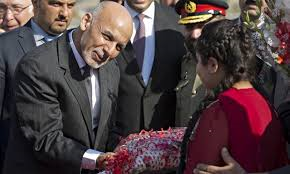
Afghan president Ashraf Ghani in Islamabad (Credit: guardian.com)

Islamabad, Nov 14: It has been a long time since Pakistan’s diplomats and politicians have truly looked forward to a visit from the president of Afghanistan. Senior officials who dealt with Hamid Karzai still shudder at the memory of a deeply mercurial man whose attitude towards Pakistan veered wildly between occasional spasms of warmth and long periods of outright hostility.

So the arrival in Islamabad on Friday of Karzai’s successor Ashraf Ghani making his first visit to Pakistan has triggered an outbreak of optimism. “There is a real desire among both the military and civilians to start a new chapter with Ghani,” said one diplomat. “In the end they all just found Karzai too difficult.”

There will be extensive opportunities to woo the new president during his two-day visit, during which he will join the Pakistani prime minister, Nawaz Sharif, in watching a cricket match between teams representing the two nations.

In recent weeks Pakistan’s de facto foreign minister, its army chief and its spy master have all visited Kabul carrying what were described as messages of support and cooperation. The army offered to help train Afghan soldiers and provide equipment for an entire infantry brigade.

But in a region wracked by terrorism and insecurity, fixing the fraught relationship between the two countries could reap far bigger dividends than just military training and matériel. Most experts believe that if the two feuding neighbours were to bury the hatchet, the chances of increased stability in the region would increase dramatically.

It is thought that Pakistan – if it wished – could push the Taliban towards a peace process that the international community has struggled with for years.

Pakistan’s undoubted influence over the Taliban is due to the fact that the insurgent group enjoys safe haven inside the country. The security establishment, despite Pakistan nominally being a US ally, has long been accused of covertly assisting the Taliban and other insurgent groups – most recently in an report by the US defence department.

Advertisement

Adding to the murk of the region’s so-called double game, in the last year Pakistan has publicly accused Afghanistan of also supporting terrorists. It says Kabul deliberately turned a blind eye to the presence of senior members of the Pakistani Taliban, an allied movement that aims to topple the Pakistani state, who are hiding in the Afghan borderlands.

Mushahid Hussain, a senator who takes a close interest in Afghan affairs, said: “With ‘fighting fatigue’ on either side of the Durand line [the disputed border between the two countries], both countries feel the need to grasp this new opportunity.”

Afghanistan has never accepted the Durand line, which in 1893 gave swaths of Afghan territory to the British empire – land that now lies inside Pakistan. The issue has soured relations ever since: Afghanistan tried to block Pakistan’s admission to the United Nations in 1947, and in the 1970s Kabul was particularly vocal in claiming its lost territory. That prompted Pakistan to train and arm anti-government Islamist groups in Afghanistan for the first time, a tactic that was later greatly increased in the 1980s and 1990s.

Even in recent years when there has been little serious discussion about redrawing borders, Islamabad has been repeatedly angered by Karzai’s attempts to present himself as a leader of Pakistani Pashtuns, the ethnic group that predominates in Afghanistan.

Pakistan’s worries are heightened by its anxiety that arch-enemy India is attempting to encircle it through its extensive diplomatic and development presence in Afghanistan.

Pakistan’s past attempts to get Afghanistan to heed its concerns triggered some of Karzai’s most bitter outbursts against a country that is deeply unpopular with ordinary Afghans.

Martine van Bijlert, an expert at the Afghanistan Analysts Network, said: “Ghani can be quite temperamental himself and also has a feel for populism. He may play this coolly and diplomatically, or much more emotionally.”

Despite the deep roots of an old conflict, Hussain said he was optimistic that things could improve, not least because China – Pakistan’s closest ally – is increasingly anxious for the decade-long insurgencies in Afghanistan and Pakistan to end. Beijing is worried about the threat from some of its own Islamist militants from the western province of Xinjiang currently fighting in the borderlands straddling the Durand line.

Moreover, Pakistan and Afghanistan are both faced with a fundamental new reality as the US withdraws troops from the region, said Hussain. “Islamabad and Kabul now realise that regional countries will have to largely fend for themselves, no longer banking on distant godfathers in Washington to pull their chestnuts out of the fire.”

Pakistani army chief’s trip to U.S. likely to be marked by greater optimism, trust

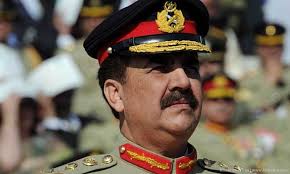
Pak Army chief Raheel Sharif (Credit: Khaama.com)

ISLAMABAD, Nov 14 — The last time a Pakistani army chief visited Washington, he got an earful from U.S. leaders worried that he was not a reliable partner in efforts to combat militant groups responsible for devastating attacks in Afghanistan.

Four years later, Pakistan’s newest military chief, Gen. Raheel Sharif, is scheduled to arrive in Washington this weekend on his first official U.S. visit. And this time, the most powerful man in Pakistan is expected to be greeted with far less skepticism.

Since becoming army chief a year ago, Sharif has overseen a broad military campaign against Islamist extremists in northwestern Pakistan. Although it could take months or years to fully assess its effectiveness, U.S. officials say the operation has boosted their confidence in Pakistan’s commitment to combating terrorist groups operating within its borders.

Last week, Lt. Gen. Joseph Anderson, a senior commander of U.S. and NATO forces in Afghanistan, told reporters that the Haqqani network — a Pakistan-based Afghan insurgent group — is now “fractured.”

“That’s based pretty much on the Pakistan ops in North Waziristan this entire summer-fall,” Anderson said in a video conference from the Afghan capital. “That has very much disrupted their efforts here and has caused them to be less effective in terms of their ability to pull off an attack here in Kabul.”

Although other U.S. officials are more guarded in their assessments, Anderson’s remarks are helping to set the tone for Sharif’s visit. The week-long trip also coincides with growing optimism that relations among the United States, Pakistan and Afghanistan are improving now that Hamid Karzai is no longer the Afghan president.

“Both sides are aware of this historical moment and are taking steps to seize this moment,” U.S. Ambassador Richard G. Olson said in a speech Wednesday in Islamabad.

On Friday, Afghanistan’s new president, Ashraf Ghani, traveled to Islamabad and met with Raheel Sharif. Ghani also plans talks with Pakistani Prime Minister Nawaz Sharif, who is not related to the general, over the weekend. The Pakistani leader plans to take Ghani to a cricket match.

For many analysts, the two visits signal that the space for meaningful engagement on counterterrorism issues is expanding with a new power-sharing government in place in Afghanistan.

Karzai, who had been Afghanistan’s only leader since shortly after U.S.-backed forces ousted the Taliban from power in 2001, was deeply skeptical of Pakistan and widely considered it the root of many of Afghanistan’s woes. He also repeatedly clashed with the Obama administration, setting limits on U.S. military operations and refusing to allow a residual American troop presence after the NATO mission in Afghanistan ends this year.

But Ghani, within days of taking office, signed an agreement that will keep about 9,800 U.S. troops in Afghanistan next year.

Last month, in a sign of thawing relations between Pakistan and Afghanistan, the two nations agreed to jointly import power from Kyrgyzstan and Tajikistan, Olson noted. Ghani also recently announced that he is reevaluating Karzai’s efforts to buy weapons from India for the Afghan army. The new president’s move was widely interpreted as an olive branch to Pakistan, which has fought three major wars with India since 1947.

Salman Zaidi, a military and political expert at the Islamabad-based Jinnah Institute, said there appears to be a genuine effort to put past tensions “back in the box.”

“There is still a lot of debris lying around [in the relationships] from the last 10 years, both in terms of Pakistan-U.S. ties and Pakistan-Afghanistan, but the attempt is now there,” Zaidi said. “Karzai was a mercurial personality, and everybody found it difficult to deal with him.”

For years, Pakistani military and intelligence officials have been accused of secretly providing support to some militant groups, including the Haqqani network, thwarting U.S. efforts to contain the flow of fighters and weapons from Pakistan into Afghanistan.

In widely reported remarks in 2011, Adm. Mike Mullen, then chairman of the Joint Chiefs of Staff, told the Senate Foreign Relations Committee that the Haqqanis were operating “with impunity” in Pakistan and were relying on state support.

Although Gen. Ashfaq Kayani, Pakistan’s army chief at the time, oversaw two military operations in the Swat Valley and another in South Waziristan, he resisted calls to invade North Waziristan, which had become a haven not only for the Pakistani Taliban but also for al-Qaeda and the Haqqani network.

But in June, Raheel Sharif ordered the military into North Waziristan. Since then, Pakistani officials say, more than 1,200 terrorists have been killed or captured. Seventy Pakistani soldiers also have been killed.

Last month, in a move that surprised many analysts, the army chief expanded the operation to the Khyber Agency, also in Pakistan’s unruly tribal areas.

“This time, the army is not letting up,” said Javed Ashraf Qazi, a retired general and former head of Pakistan’s spy agency. “The air force, the gunship helicopters hit them wherever they are, and the army is slowly and gradually moving up into the mountains to their last refuges.”

Still, Pakistan’s military has not released the names of any high-value terrorists killed in the operation. And Anderson’s comments notwithstanding, many U.S. officials remain unconvinced that Pakistan’s military is poised to deliver a lasting blow to the Haqqani network, which has carried out several attacks on coalition forces in Afghanistan.

A senior U.S. official, who spoke on the condition of anonymity because of the sensitivity of the matter, said the military offensive has “disrupted” but “not damaged” the Haqqanis. Still, the official said ties between the United States and Pakistan have greatly improved since the 2011 U.S. operation that killed Osama bin Laden in Pakistan.

“Pakistan now has substantial control over their whole territory — they have expended a lot on this operation, and we have to give them credit,” the official said. “We also have to hold them to their repeated commitment not to allow [the Haqqani network] to operate from Pakistan.”

Here in Islamabad, analysts expect Raheel Sharif to quickly forge a productive relationship with his U.S. counterparts.

Imtiaz Gul, executive director of the Islamabad-based Center for Research and Security Studies, said Sharif is known to be “assertive, aggressive” and outspoken. Kayani, who served as the military chief from late 2007 until last November, was known to be reserved and often said little during meetings.

“I think [Pentagon leaders] will feel quite at home with him, because his style is more the American style,” Qazi said of Sharif. “But actions speak louder than words, and, so far, he is giving them action.”

In Shift, Pakistanis Fleeing War Flow Into Beleaguered Afghanistan

GULAN CAMP, Afghanistan (Nov 15) — Through three decades of war, waves of Afghans have fled their homes along the eastern border areas, many of them seeking shelter in the Pakistani tribal regions next door.

Last summer another wave of refugees surged through the area. But in a reversal, it is Pakistanis, not Afghans, who are fleeing war at home.

“There was fighting everywhere,” said Sadamullah, a laborer who fled with his family last month from Dattakhel, a district in Pakistan’s tribal areas. “There was shelling, and military forces were firing mortars on our villages. They carried out an operation in our area, and a woman was killed by them.”

Mr. Sadamullah, who like many tribesmen here has only one name, was speaking about the Pakistani military’s continuing offensive against Islamist militants in the North Waziristan region. The military has been clearing territory in the region since June, forcing an exodus of at least 1.5 million residents. As many as 250,000 of them have since crossed the border into Afghanistan, officials say.

The tribal communities on both sides of the border are Pashtun, and many of the refugees from the Pakistani side have found shelter with relatives or sympathetic families on the Afghan side, mostly in Khost and Paktika Provinces. In some cases, refugees have been able to rent or borrow a patch of land or a walled compound for their families and some livestock.

But the poorest — about 3,000 families, according to the United Nations refugee agency — are perched in Gulan Camp, a stretch of rough stones and reed bushes in the Gorbuz district of Khost, just a few miles from the border.

Canvas tents spread out toward the brown crags of the horizon. Women are cloistered behind flimsy screens, and children, who make up 65 percent of the camp population, dart in and out under the canvas flaps. The men have started building mud walls around the tents in an attempt to give better protection against the coming winter.

Most families came on foot, and often fled in haste with few belongings. Many tell the same story: a public warning by the Pakistani Army giving them three days to leave their homes, desperate negotiations as elders tried to win permission for civilians to stay, and then the terror of the artillery and aerial bombardments of their villages.

Continue reading the main story

“We left everything — hens, ducks, carpets,” said a widow, Shakila Saidgi, who fled her village in June. “We slept on the way in the mountains.”

She said that Pakistani forces began bombarding her village in Waziristan at four in the morning, striking the mosque where the men were gathered for dawn prayer. Her nephew was among the wounded. “When the sun rose, we left,” she said.

Refugees arriving in recent days said the five-month-old operation was continuing and even expanding. They told of Pakistani jets bombing villages and the army firing artillery barrages.

“The fighting was between the Taliban and the government, but our villages were bombarded and that’s why the people got fed up and left the area,” said Musa Kalim Wazir, a shepherd from Tank village in Dattakhel district. People did not dare to return to their homes, because whenever the army came under attack by insurgents it responded by bombarding nearby villages, he said.

Continue reading the main story Continue reading the main story

Continue reading the main story

Afghan officials, still grappling with a host of problems of their own, not least a continuing insurgency and thousands of internally displaced, now face an added burden of a quarter of a million refugees from Pakistan whose presence is turning into a long-term prospect.

“Winter is already here and all of the refugees are facing a shortage of assistance,” said Muhammad Akbar Zadran, the governor of Gurbaz district. “A group of refugees came to my office, and they told me that different diseases were spreading among their children. If they don’t get urgent treatment then it is possible that in coming days we will witness a precarious situation.”

He said: “All of the refugees have many problems; they have come here with just the clothes on their backs, and they left everything behind. If the government and people don’t respond to their needs then it will be a great problem.”

Afghanistan’s latest trial comes amid growing refugee crises around the world and a global shortage of humanitarian funding. The United Nations appealed for $25 million to assist the Pakistani refugees through the end of the year, but assistance organizations have gathered only about $10 million, said Bo Schack, representative in Afghanistan for the United Nations High Commissioner for Refugees.

“There are so many other humanitarian priorities, and having refugees inside Afghanistan arriving from another country was not what anybody really expected,” he said in a telephone interview. “But this time we are seeing very significant numbers crossing the border in one go.”

“It may end up being another protracted kind of situation which clearly everybody would like to avoid,” he added.

For many of the refugees, Afghanistan represents a relief not only from bombardment but from the draconian rule of the Pakistani Taliban and foreign Islamist fighters. In North Waziristan, the militant groups had largely forced out any civilian or tribal leadership, in a brutal reign that left much of the local population alienated and frightened.

“If you did not help the Taliban or the foreigners, you were killed,” said Mushtaq, a refugee who goes by only one name.

Another refugee, who did not want his name used because he was afraid of reprisal, described years of hell as the militants took firmer hold in North Waziristan.

“They started harassing people a lot, and people became disenchanted,” he said. “Then they started killing people and accusing them of spying for the government. They were trying to terrify the people. They used to wear masks on their faces and they would drag out anyone they wanted and take him to their base.” The fear led some to join the militants for protection. “They created an environment so they could easily attract people,” the refugee said. “If someone joined them they would become powerful. Some of my relatives joined them.”

In that environment, much of the population supported the idea of a military offensive. Yet few said they trusted the Pakistani military, and their fears were borne out when they saw the militants escape ahead of the offensive and the bombardment. “The operation itself is right, but the way they conduct it is wrong, and it is harming me more than the fighters,” Umar Khan, a tribal elder who has represented refugees in meetings with Afghan officials, said in July. “It damaged my house, my village and my land. And I lost everything.”

By the end of October, he said he did not believe government figures of hundreds of Taliban killed. But he warned that the military was still killing civilians in the operation. “Waziristan has been completely destroyed by the military forces,” he said.

Afghans have long accused Pakistan of sheltering militants seeking to kill government and international forces in Afghanistan. Now, the concern is that some of those militants are still able to operate, and will seek to infiltrate the refugees.

Refugees have complained since the start that many militants escaped ahead of them and officials say some have settled on the Afghan side of the border. The issue has been a point of tension between the Afghan and Pakistani governments. “If our government and the international community don’t help these people on time,” Mr. Zadran warned, “then someone — in particular the Taliban — will get the chance to influence these people.”

Haris Kakar contributed reporting from Khost Province, Afghanistan.

Parveen Rahman – Symbol of Resistance against Land mafia

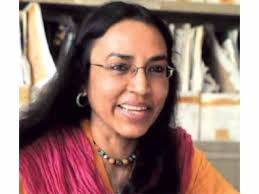
Late Parveen Rahman (Credit: expresstribune.com)

ISLAMABAD, Nov 12: Sindh Police have started probing land grabbers allegedly involved in the murder of Orangi Pilot Project (OPP) former director Parveen Rahman.

“A questionnaire has been sent to the Board of Revenue Sindh to find out the details of Katchi Abadis, record of land grabbers and land mafia,” Deputy IG west zone Karachi has said in the progress report submitted in the Supreme Court on Wednesday.

The report has also provided details of the 5th session of the Joint Investigation Team (JIT) held on October 15 regarding the murder case, the copy of which is available with The Express Tribune.

Giving details of the JIT meeting, the report says a representative of Intelligence Bureau (IB) briefed that the process of regularisation of Katchi Abadies and goths was stalled since Rahman’s assassination, pointing to the involvement of those benefitting from land mafia.

Similarly, representative of special branch briefed the JIT and said that investigations had revealed that land grabbers affiliated with the Tehreek-e-Taliban Pakistan (TTP), Naseebullah Kakar and Thorani Afghani did not like Rahman because she was active against land grabbers, tankers mafia and also supported NGOs in the anti-polio vaccination campaign.

Rehman was murdered in Karachi on March 13, 2013.

The special branch representative further said that the place of Rahman’s murder, near Pakhtoon market in Manghopir, is under the influence of Abid Muchar and Shamsur Rahman groups of the TTP, who were also apprehensive of Rahman’s growing social activities.

Meanwhile, the three-judge bench of the apex court headed by Chief Justice Nasirul Mulk while resuming the case hearing on Wednesday directed the Sindh Police to arrest all culprits involved in the murder within a month.

Justice Dost Muhammad Khan observed that there were clues that land mafia is involved in Rahman’s murder but no investigation had been carried out in this regard previously.

He asked the police to investigate groups against regularisation of Katchi Abadies.

During the hearing, DIG CID Sultan Khawaja told the bench that IB was asked about the details of nine people suspected to be involved in the case.

Khawaja added that Pakistan People’s Party leader Taj Haider had told to the investigation team that Rahman had with her a map of land which had been allegedly occupied by wings of different political parties.

The chief justice, though, asked the DIG to focus on the murder case only.

The DIG further said that a person named Raheem Sawati was obstructing her social welfare work but he has left Karachi now, adding that police was trying to trace him.

The chief justice observed that no doubt, the case is difficult but not impossible.

The court directed that the investigation should continue, with a focus on finding the real culprits. It asked for another progress report to be filed in the next hearing scheduled for December 15.

A game of land?

Human Rights Commission of Pakistan and 11 other petitioners had, through their counsel Reheel Kamran Sheikh, previously submitted that they suspected the JIT was deliberately ignoring the presence of land mafia because of vested interests of a range of ‘influential parties’.

The petitioners pointed out that the JIT had failed to take into account the fact that Rahman was collaborating with the government of Sindh for identification, survey and mapping of various settlements in parts of Karachi for their regularisation and that all regularisations came to a halt following her murder.

“Nearly 1,063 settlements were regularised by the Sindh government through the efforts of Rahman, whereas more than 1,000 were left,” the application said.

“When a settlement is regularised it becomes difficult to evict the residents as they become lawful lessees. Consequently, the price of the land also increases. Both these factors make it difficult for the land mafia and the real estate developers to grab land through forced eviction or fraudulent/coercive transactions,” it adds.

The application added that residents of various settlements were approaching Rahman seeking her assistance in regularisation.

“Rahman had, therefore, become a symbol of resistance against the land mafia and real estate developers,” it says.

Indian Muslims Lose Hope in National Secular Party

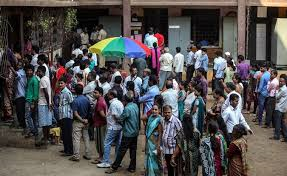
Indian Voters (Credit: nytimes.com)
Indian Voters
(Credit: nytimes.com)

MUMBAI, India — When he set out on a muggy morning in mid-October to vote in the Maharashtra State legislative elections, Zubair Azmi intended to cast his ballot, as usual, for the Indian National Congress, the party that has promised for years to protect Muslims like him.

But as he walked the streets of Byculla, a once-affluent South Mumbai neighborhood fallen on tougher times, Mr. Azmi sensed a shift in the tide. At every street corner, young Muslim men were beseeching passers-by to back a new political force in the state: the All India Majlis-e-Ittehadul Muslimeen, known as the M.I.M. And kites, the party’s symbol, seemed to be everywhere.

“Young men in Byculla were speaking in one voice,” said Mr. Azmi, who heads a group promoting Urdu language and culture.

He was already disenchanted with Congress, whose local leaders paid little attention to the neighborhood or its people. By the time he got to his polling place, he said, he had changed his mind, and voted for the M.I.M.

With a stridently right-wing Hindu nationalist group, the Bharatiya Janata Party, sweeping to victory after winning elections across India, the delicate balance between the country’s religious and ethnic minorities, and especially its Muslims, and the majority Hindu population is shifting. Their faith in the avowedly secular Congress party, which ruled India for decades, is dwindling, and the emergence of a strong Muslim party in Maharashtra suggests a possible consequence.

The Bharatiya Janata Party, also known as B.J.P., leadership’s penchant for making provocative remarks and stoking communal tensions, combined with the trend away from Congress is leaving Indian politics more polarized on sectarian lines, as the election results in Maharashtra illustrated. The B.J.P. won overall, but M.I.M., making its first foray into the state with a field of mostly novice candidates, won two seats, including Byculla, whose population is 40 percent Muslim.

Waris Pathan, a criminal defense lawyer who grew up in the neighborhood, decided to join the party and be its candidate the day before the deadline for nominations. Despite his inexperience, after just 12 days of campaigning he managed to beat the Congress incumbent, Madhu Chavan, in a close race.

“The so-called secular parties took the votes of Muslim people, but they never did anything for their betterment,” Mr. Pathan said in an interview in his South Mumbai office. “We want to be their voice in the assembly.”

The party he joined has its roots in an organization begun in the 1920s to safeguard Muslim interests in Hyderabad, a princely state that had a mainly Hindu population but, in those days, a Muslim prince and ruling class. The group became a political party in 1959, and its leaders these days are known for practicing an aggressive brand of communal politics, just as some B.J.P. leaders are. Until now, the party’s influence was confined to its home state Andhra Pradesh, while Muslims in most parts of the country pegged their hopes to the Congress.

Akbaruddin Owaisi, a party leader and fiery orator known for his vitriolic speeches, has been charged several times with hate speech over remarks denigrating Hindu gods and inciting violence. He was arrested last year on charges of inciting communal enmity, sedition and criminal conspiracy for speeches he made in Andhra Pradesh, where he was quoted as saying that India’s Muslims “can take care of” the country’s Hindu majority “if the police stay away for 15 minutes.” In a speech in Mumbai before the election, he accused Hindus of similar sentiments: “They want to finish off Muslims, and end secularism,” he said, according to The Indian Express. His speeches, posted on YouTube, were very popular in Byculla before the election.

“The spirits of the Muslim youth were very diminished” after Narendra Modi led the B.J.P. to national victory and became prime minister in May, said Mr. Azmi, the Byculla resident. “His speeches reflected what was going on in their minds and gave them hope.”

Voters in the neighborhood were ready for the message after complaining for years about neglect by the Congress’s political establishment.

“People were angry,” said Mohammad Zahid Khan, 50, who lives in Byculla and runs a perfume store. “In the last 15 years, the Congress has not done anything.” He added that the incumbent, Mr. Chavan, would have won “if they had taken even a little care of the Muslims of this area.”

Most voters felt that no other secular party had a chance of winning, Mr. Khan said, and they did not want to waste their vote, so they turned to sectarian parties.

Many felt that the rise of the B.J.P. had caused Muslims to feel threatened. “We are insulted and humiliated,” said Imran Khan, a kite seller who lives in Byculla. “The insecurity, the fearmongering, is growing. We need to make our voice heard.”

Muslims make up about 13 percent of the national population, but won only 4 percent of the seats in the new Parliament, the smallest share since Indian independence. Analysts said that in recent times, mainstream political parties have been putting fewer minority candidates on their tickets because of concerns that they will not be able to win, producing alienation.

“When a minority community withdraws from the broad secular parties and decides to go it alone, that is an unhealthy sign for democracy on the whole,” said Eswaran Sridharan, a political scientist and the academic director of the University of Pennsylvania Institute for the Advanced Study of India in New Delhi. “It signals that a significant section of society is feeling excluded from political representation.”

Though M.I.M. represents only a small slice of India’s Muslims so far, “it is part of a larger trend of greater assertiveness of religious identity in public life in India,” said Rochana Bajpai, senior lecturer in politics at the School of Oriental and African Studies in London. “Its rise suggests that there is an urgent need to rebuild Indian models of secularism and multiculturalism.”

Adnan Farooqui, an assistant professor of political science at Jamia Millia Islamia, a New Delhi university, said M.I.M.’s agenda “is reactionary at its core,” and he compared the group with right-wing Hindu parties that have practiced violent communal politics for years. “It promises to deliver, as far any physical threat to the community is concerned, much like the Shiva Sena,” Mr. Farooqui said.

However, Mr. Pathan, the newly elected M.I.M. legislator, insisted that his party’s ideology was wholly secular and that its agenda was the welfare of all minorities, not just Muslims. He said his goals were to reopen shuttered schools, provide medical facilities to the needy and provide legal aid to the many young Muslim men who have been detained without trial in terrorism-related cases.

“We are not against any community, but we are certainly against the ideology of certain communal parties,” Mr. Pathan said, his voice soft but strained. “If anybody voices communal sentiments against any minority, we are not going to take it lightly. We are replying. That does not make us communal — we are just defending ourselves.”

US Senior Advisor to Pakistan is under FBI Investigation

Robin Raphael (Credit: dailytimes.com.pk)
Robin Raphael
(Credit: dailytimes.com.pk)

Washington DC, Nov. 6: A veteran State Department diplomat and longtime Pakistan expert is under federal investigation as part of a counterintelligence probe and has had her security clearances withdrawn, according to U.S. officials.

The FBI searched the Northwest Washington home of Robin L. Raphel last month, and her State Department office was also examined and sealed, officials said. Raphel, a fixture in Washington’s diplomatic and think-tank circles, was placed on administrative leave last month, and her contract with the State Department was allowed to expire this week.

Two U.S. officials described the investigation as a counterintelligence matter, which typically involves allegations of spying on behalf of foreign governments. The exact nature of the investigation involving Raphel remains unclear. She has not been charged.

A spokesman for Raphel said she was cooperating with investigators but has not been told the “scope or nature or that she is the target” of any probe.

U.S. officials spoke on the condition of anonymity because the investigation is ongoing. Spokesmen with the FBI and the Justice Department’s National Security Division declined to comment.

Details of federal counterintelligence investigations are typically closely held and the cases can span years. Although Raphel has spent much of her career on Pakistan issues, it was unknown whether the investigation, being run by the FBI’s Washington Field Office, was related to her work with that country.

“We are aware of this law enforcement matter,” State Department spokeswoman Jen Psaki said. “The State Department has been cooperating with our law enforcement colleagues.”

“She is no longer employed by the State Department,” Psaki said.

Raphel did not respond to attempts to reach her by phone and e-mail. Her daughter also declined to comment, instead referring questions to a family spokesman.

The spokesman, Andrew Rice, said Raphel’s security clearances were put on hold last month and that she is no longer employed by the State Department.

“She is aware and can confirm there is some kind of investigation,” he said.

Rice declined to say whether Raphel had hired a lawyer and refused to answer questions about her whereabouts.

U.S. officials acknowledged that the FBI conducted a search at Raphel’s home Oct. 21 but would not provide details of the search. Agents removed bags and boxes from the home, but it is not clear what was seized there or at her office.

At the State Department, Raphel’s office remained dark and locked Thursday.

At the time of the raid, Raphel was a senior adviser on Pakistan for the office of the special representative on Afghanistan and Pakistan. In that job, she was chiefly responsible for administering nonmilitary aid such as U.S. economic grants and incentives.

The 67-year-old longtime diplomat was among the U.S. government’s most senior advisers on Pakistan and South Asian issues. She is a former assistant secretary of state for South Asia and a former ambassador to Tunisia. At the time of the FBI search of her house, she had retired from the Foreign Service but was working for the State Department on renewable, limited contracts that depended in part on her security clearances.

As a prominent woman among a generation of mostly male diplomats and the former wife of a storied U.S. ambassador, Arnold Raphel, she was among the most recognizable State Department officials and a well-liked and often outspoken career diplomat.

Arnold Raphel was U.S. ambassador to Pakistan when he was killed aboard a plane carrying then-Pakistani President Mohammed Zia ul-Haq in 1988. The cause of the mysterious plane crash has never been proved, but the crash is widely assumed to have been an assassination of the military dictator.

Robin Raphel was divorced from Arnold Raphel when he died. She was then a State Department political officer serving in South Africa but had spent earlier portions of her career in Pakistan. She was also posted in Washington, Britain, India and elsewhere. In 1993, then-President Bill Clinton named her as the first assistant secretary of state for South and Central Asian affairs.

Raphel began her government career as a CIA analyst, according to a State Department biography. She served 30 years in the Foreign Service and retired from the State Department in 2005. She returned to the State Department in 2009 to work as an adviser to Richard Holbrooke, who had been named by then-Secretary of State Hillary Rodham Clinton to the new post of special representative for Afghanistan and Pakistan.

Prior to returning to the State Department, Raphel worked as a lobbyist for Cassidy & Associates, a Washington-based government relations firm. She represented Pakistan, Equatorial Guinea and Iraq’s Kurdistan Regional Government, according to federal disclosure forms.

A spokesman for Cassidy said the firm had not been contacted by the U.S. government about Raphel and was unaware of any investigation related to its former employee.

Espionage cases involving State Department officials are relatively rare. In the last major case, a former State Department official, Walter Kendall Myers, was sentenced in 2010 to life in prison after he and his wife, Gwendolyn Steingraber Myers, were convicted on charges of spying for Cuba over three decades. She received nearly seven years in prison.

The pair provided “highly classified U.S. national defense information” to Cuba, according to the Justice Department.

Missy Ryan and Julie Tate contributed to this report.

Human Development Declines Further in Pakistan – UNDP Report

The UNDP has released its flagship document Human Development Report 2014 entitled “sustaining human progress: reducing vulnerabilities and building resilience”. The annual report provides status of all countries against vital indicators of human development.

Pakistan, ranked at 146 out of 185 countries, has been bracketed among low human development countries. Pakistan barely maintained last year’s ranking when it shared 146th position with Bangladesh. However, Bangladesh this year moved four rungs up and stood at 142nd position. With such an ignominious ranking, a nuclear power, flaunting atom bomb has been outshined by all other SAARC countries except the war-ravaged Afghanistan. Even Afghanistan has improved its position from 175th in 2012 to 169th this year.

Interestingly, all SAARC countries have improved their ranking compared to the previous year except India and Pakistan who just maintained their ranking. Sri Lanka is the only SAARC country that has been grouped among high human development fraternity. It has taken enviable stride from 92nd number in 2012 to 73rd position this year.

A cursory glance at Pakistan’s ranking on various indicators narrates a sorry state of human development in the country. Except Afghanistan, all other countries have humbled Pakistan on most of the indicators. Pakistan has the second highest maternal mortality ratio in the region. 260 mothers die during 100,000 live births in the country. This ratio for Maldives is only 60 and just 35 in Sri Lanka.

Similarly, the country has second highest infant mortality rate (IMR) after Afghanistan. 60 children out of 1000 live births die before the age of one year. Comparatively, the infant mortality rate in India is 44, in Bangladesh 33 and in Nepal 34. Even African countries Rwanda, Cameroon and Sudan have lesser IMR i.e. 39, 61 and 49 respectively.

Similarly, 86 out of 1000 children die before their fifth birth anniversary in Pakistan. Barring Afghanistan with 99 such deaths, all other countries have much lesser child mortality rate. Maldives, Sri Lanka, Bhutan registered only 11, 10 and 45 deaths under five year age. Even war-torn Sudan performed better with 73 deaths of under-five infants.

Likewise, Pakistan has third highest child malnutrition only better than Afghanistan and India. Alarmingly, 43.7 per cent children below five-year age are stunted in Pakistan. Bhutan, Maldives and Sri Lanka have 33.5, 18.9 and 17 per cent of stunted children respectively. Sudan has lesser percentage i.e. 35 of stunted children.

Education is another area of inglorious performance of the country. Pakistan’s adult literacy rate 54.9 per cent is second lowest in the region after Bhutan. Maldives has an impressive adult literacy of 98.4 per cent followed by Sri Lanka with 91.2 per cent. African countries Cameroon (71.3) and Rwanda (71.3) have better adult literacy than Pakistan. Similarly, Pakistan has the lowest youth literacy rate. With 70.7 per cent youth literacy, the country is trailed behind by Bangladesh with 78.7 percent and India with 81 per cent.
Pakistan has also the lowest gross enrollment ratio (GER) of primary and secondary education. Afghanistan’s GER in primary education is 97 per cent compared to 93 per cent of Pakistan. Bhutan’s GER in secondary education is 74 per cent.

The UNDP report is in consonance with Pakistan’s status on Millennium Development Goals (MDGs). The government’s own report on status of MDGs in 2013 admits that out of 33 targets, Pakistan could achieve only 3 and the progress on 23 targets is off-track.

Being a chronic security state, the country drains much of its resources on traditional security measures. Contemporary concepts of human security are alien to the policy makers. Paranoia of internal and external threats has fettered human development since inception. Even war-torn countries are earmarking better resources on human development.

For instance, Pakistan spends only 0.6 per cent of GDP on health which is dwarfed by even highly unstable Afghanistan with 3.9 per cent. Pakistan spends only 2.4 per cent of GDP on education which is significantly lower than 5.8 per cent of Bhutan and 4.7 per cent of Nepal. Even Congo spends 6.2 per cent on this account.

Ignoring human security has devastating implications for society. In 2010, a UNICEF report made startling revelations by comparing the state of nutrition in Sindh with Chad and Niger. The report sends a wave of chill through spine by claiming that hundreds of thousands of children are at risk due to alarming malnutrition prevalent in the province. The malnutrition rate was reported as 23.1 per cent in north Sindh and 21.2 per cent in the South.

This scale of malnutrition has surpassed 15 per cent, the emergency threshold of World Health Organization and far exceeds the global average of 13.9 per cent in flood hit areas. The report also reveals that 11.2 per cent pregnant and lactating women were suffering from malnutrition in north Sindh and 10.2 per cent in the South.

The security mania has eclipsed the basic needs of citizens. It is an implausible idea to secure borders without securing basic human needs of citizens. According to a report of Social Policy and Development Centre “Social Impact of the Security Crisis”, allocation for health and nutrition in federal government’s public sector development program registered a marginal average annual increase of 0.4 per cent over the last five years. Whereas the security related expenditure during last ten years registered an average growth of 20.6 per cent. The figures speak volumes for our misplaced priorities.

Security across the world is biting human development needs and countries like Pakistan are a laboratory to gauge its social and political ramifications. In a country where “haves” and “have-nots” are multiplying exponentially, remiss of state to lifeline necessities of its subjects can culminate in a catastrophic socio-political vortex.

The ubiquitously prevalent felony has its roots in decades-long socioeconomic inequalities that kept diverging with every passing day. Emaciated social sector had not only been starving for resources, it was also pulverised by frequent natural disasters and multitude of conflicts. Elite political fabric coupled by over-centralised and unjust resource distribution has decimated weaker segments of society.

On external front, a trigger-happy foreign policy has been a causative factor to perpetuate border acrimonies. The security monster gobbled up the scant resources meant for development of millions of impoverished masses. Unremitting wars have created a black hole that continues to gulp down hard earned revenues.

It is an ignominious irony that we funnel our hard-earned resources in wars but ask tax payers of developed world to dole out coins to resuscitate our derelict education and health sectors. Basic social services are primary responsibility of the state, which has abdicated its role and tossed citizens at the mercy of a rudderless market. Boasting power to trounce every enemy, the state has kneeled before polio virus.

Pakistanis are the only creature required to show polio vaccination evidence at immigration desk for overseas travel. This year Pakistan has ashamed its own past record of polio cases by breaking psychological barrier of 200 cases in a year. Two other countries of the polio club Nigeria and Afghanistan have shown remarkable improvement to rein in polio, whereas we are on a polio proliferation spree. The world is watching us with trepidation to become the only polio sanctuary on earth.
We have a distinction of hosting more than 80 per cent polio cases in the world. More scandalous is the fact that polio virus with Pakistani provenance is now sneaking into polio-free countries prompting disconcerting travel embargoes. Dengue and malaria mosquitos deride our hubris of being a nuclear power. Terrorism, bad governance, corruption and failure on human development are some of the factors impinging on image of Pakistan.

Characterised as a security state, the country has developed an image of a problem child in the region. Enigmatically, the decision-makers are hardly sensitive to the faltering image of the country. Their unremitting obduracy and addiction to a confrontational approach is ostracising Pakistan in the world community.

Europe’s Muslims Feel Under Siege

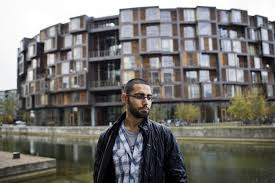
A stereotyed Danish Muslim (Credit washingtonpost.com)COPENHAGEN, Nov 1 — On a continent where Muslim leaders are decrying a surge in discrimination and aggression, Alisiv Ceran is the terrorist who wasn’t.

The 21-year-old student at the University of Copenhagen recently hopped on a commuter train to this stately Scandinavian city, his bag bulging with a computer printer. Feeling jittery about a morning exam, he anxiously buried his nose in a textbook: “The United States After 9/11.”

A fellow passenger who reported him to police, however, saw only a bearded Muslim toting a mysterious bag and a how-to book on terror. Frantic Danish authorities launched a citywide manhunt after getting the tip. Ceran’s face — captured by closed-circuit cameras — was flashed across the Internet and national television, terrifying family and friends who feared he might be arrested or shot on sight.

“It was the first time I ever saw my father cry, he was so worried about me,” said Ceran, who called police when he saw himself in the news, then hid in a university bathroom until they arrived. “I think what happened to me shows that fear of Islam is growing here. Everybody thinks we’re all terrorists.”

Ceran’s ordeal is a sign of the times in Europe, where Muslims are facing what some community leaders are comparing to the atmosphere in the United States following the attacks of Sept. 11, 2001.

Then, fears were linked to al-Qaeda. Today, they are tied to the Islamic State — and, more specifically, to the hundreds of Muslim youths from Europe who have streamed into Syria and Iraq to fight. Though dozens of Americans are believed to have signed up, far more — at least 3,000 — are estimated to have come from Europe, according to the Soufan Group, a New York-based intelligence firm.

One French returnee staged a lethal attack in Belgium last year. After more alleged terror plots were recently disrupted in Norway and Britain, concern over the very real risk posed by homegrown militants is now building to a crescendo among European politicians, the media and the public.

“It’s a clash of civilizations,” said Marie Krarup, a prominent lawmaker from the Danish People’s Party, the nation’s third-largest political force. “Islam is violence. Moderate Muslims are not the problem, but even they can become extreme over time. In Islam, it is okay to beat your wife. It is okay to kill those who are not Muslims. This is the problem we have.”

Muslim leaders point to a string of high-profile incidents and a renewed push for laws restricting Islamic practices such as circumcision that suggest those fears are crossing the line into intolerance.

In Germany, a protest against Islamic fundamentalism in Cologne last Sunday turned violent when thousands of demonstrators yelling “foreigners out” clashed with police, leaving dozens injured.

Muslim leaders also cite a string of recent incidents in Germany, ranging from insults of veiled women on the streets to a Molotov cocktail thrown at a mosque in late August.

In Britain, Mayor Boris Johnson was recently quoted as saying “thousands” of Londoners are now under surveillance as possible terror suspects. In Paris last week, a woman in Islamic garb that obscured her face was unceremoniously ejected from a performance of La Traviata at the Opéra Bastille. Although France passed a ban on the wearing of full Muslim veils in public in 2010, the incident involved a rare enforcement of the law by private management who did not take the necessary legal step of calling police first.

Even moderate Muslims say they are increasingly coming under fire, particularly in the European media. A recent commentary in Germany’s Bild tabloid, for instance, condemned the “disproportionate crime rate among adolescents with Muslim backgrounds” as well as the faith’s “homicidal contempt for women and homosexuals.”

“This is the hour when critics of Islam are engaging in unchecked Muslim-bashing,” said Ali Kizilkaya, chairman of the Islamic Council of Germany.

The current mood, Muslim leaders say, is less a sudden shift than a worsening of a climate that had already been eroding for years.

After the horrific transit bombings that killed hundreds in Madrid and London in the mid-2000s, Muslims in Europe faced increased pressure and scrutiny. The Islamic community has been increasingly challenged for the inability — or unwillingness — of many Muslim immigrants and their children to assimilate into progressive European societies. In recent years, France and Belgium passed laws banning full Muslim veils. Switzerland barred the construction of new mosque minarets.

In Britain, negative sentiments spiked last May after the slaying of a British Army soldier in London by two homegrown radicals. After the killing, Asimah Sheikh, 36, a mother of two who helps out at her brother’s Islamic clothes shop in northwest London, said the tires were slashed on her car and “go back home” was written on the windshield. This year, she said, the rise of the Islamic State — a group known for beheadings, crucifixions and mass executions — has again worsened the climate.

“They call me ‘Batman’; they call me ‘jihadi.’ They ask, ‘What have you got hiding under that scarf?’ ” she said.

Few countries in the region have seen a fiercer debate over Islam than here in Denmark, which became the target of Muslim rage in 2006 after the publication of satirical caricatures depicting the prophet Muhammad in a Danish newspaper. More recently, nearly 100 mostly young Muslims have left Denmark to fight in Syria and Iraq.

Progressives have hailed a program in one city — Aarhus — that is trying to aid returning jihadis by finding them jobs and places in school. But nationwide, Muslim leaders and progressive Danish politicians say tensions are rising amid an increasingly toxic public debate over Islam itself.

Earlier this year, Denmark set new curbs on the Muslim tradition of halal slaughter, and national lawmakers are now debating a law that could set new limits on religious circumcision, a move that could impact Muslims and Jews alike. Some politicians are calling for a new ban on immigration from Muslim countries.

Some young Muslims like Ceran — an English and Mandarin major who works as a mentor for underprivileged youths and is the son of Turkish immigrants to Denmark — are beginning to contemplate whether it’s wise to stay.

“The stigma against Muslims is just getting worse, and I have considered moving across the border to Sweden,” he said. “I feel that here, they are saying that integration means forgetting your religious values. I don’t agree with that.”

Stephanie Kirchner in Berlin and Karla Adam in London contributed to this report