Pakistan Enters Defining Moment for Change

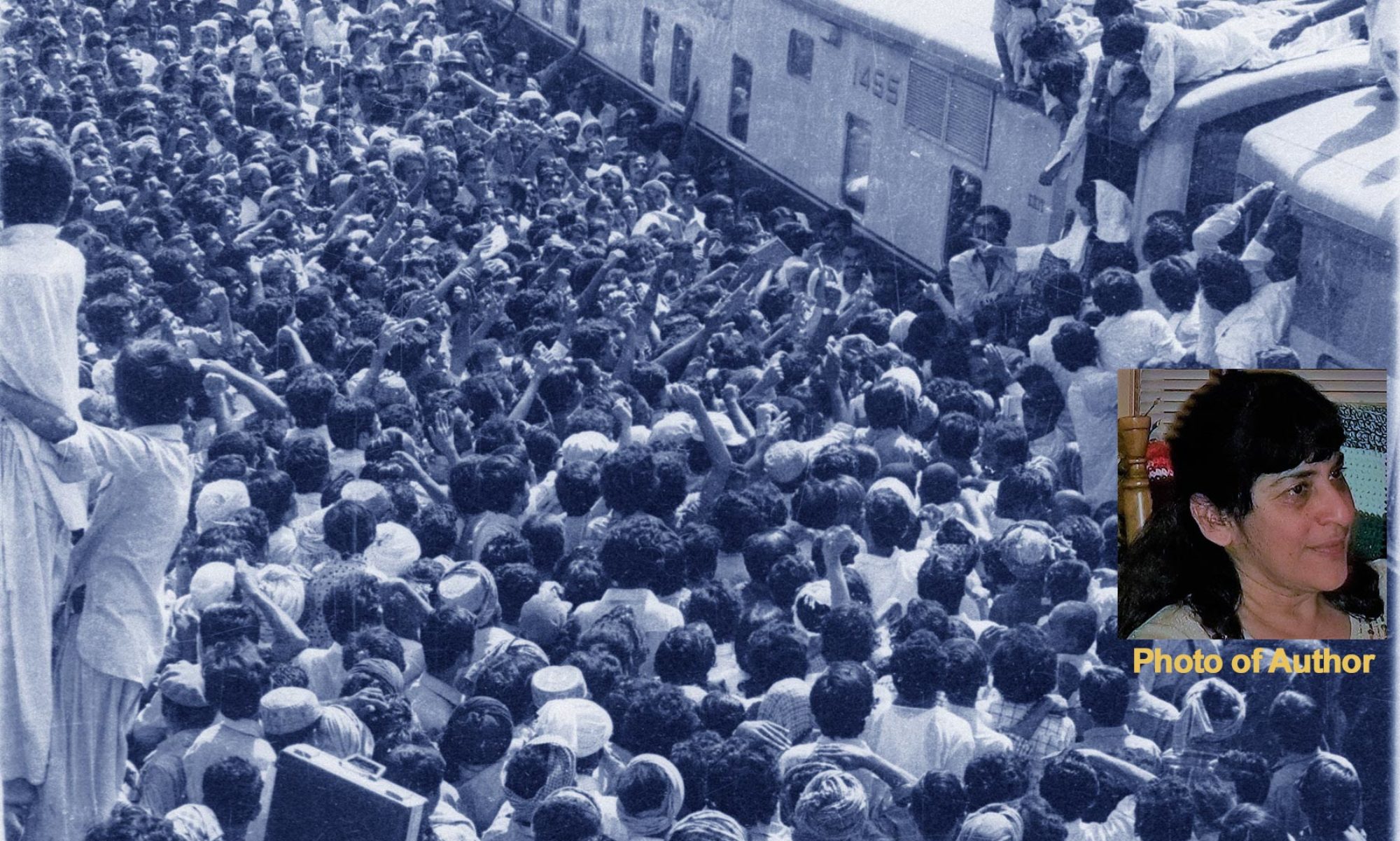
Reluctantly but finally, Pakistan has been drawn into an inescapable battle that it ought to have initiated many moons back. The reality is that we have entered a defining battle that would decide if Pakistan will emerge as a strong, tolerant and law-abiding nation or be overrun by a barbaric militia. For both sides, the only acceptable solution would be a complete meltdown of the other party. The government and the people of Pakistan must therefore understand that the long, hot season of ineptness, indecisiveness and deception is over. It may just be the final roll call to stand up and deliver — for history is never kind or forgiving to those who default on this account.

Extraordinary developments place extraordinary expectations on the government and the people of Pakistan. While the army engages the militants, there is simultaneously a need to organise and push for real reforms and accountability within the lifeless body of our trumped-up democratic order. The election commission, a collection of archaic bureaucrats, needs to be replaced with a structure that can prevent the same lot of corrupt, fake and criminal elements from taking turns. All this would not be possible without a massive peoples’ movement for electoral reforms.

Despite persistent demands by members of the civil society, the state has emphatically refused to understand and act upon the deep link between crime, militancy and the instruments that are used to execute these unlawful acts. Weapons, illegal vehicles, untraceable SIMs and a hugely unprofessional and politicised police come together to form a lethal combination that breeds and promotes crimes of all shades. A nationwide programme to forcibly withdraw weapons from all individuals and private militias and cancel all gun licences must be the first logical step in our fight against violence and militancy.

It is heartening to note that the government has designated ‘surrender points’ for the TTP militants who wish to bid farewell to arms. This, however, needs to be massively advertised by newspapers, radio, TV and by dropping pamphlets from air. Also, the ‘surrender points’ should be extended to all towns and cities of Pakistan. Need we remind ourselves that the war against militancy will remain a facade unless we force every urban, rural and tribal militant to lay down weapons.

Pakistan’s police force became dysfunctional a long time back. It has now graduated to being a partner in most crimes. An SSP working in a remote town of Sindh can have five policemen accompany his son in Karachi to go and kill an A-level student — all in the line of duty. An organisation doing more harm than good must be shut down and replaced by a completely new structure.

Finally it is time for Pakistan to take charge and establish its writ uniformly over all territories that constitute the state. All tribal territories must be brought under complete state control and state laws. An effective civilian management system must be in place to take over from the army, once the militants are flushed out. Biometric verification of citizens, telephone SIMs and vehicle owners must be put in place for all territories, including the tribal areas. Pakistan’s thoughtful and committed citizens must come together for change and reform a system that its ruling class is hell-bent to preserve. If there was ever a time to push for change and reform in Pakistan — it is here and now
Swat’s Wood Sculpting Artists Keep Buddhist Tradition Alive

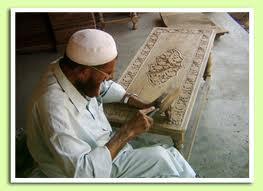
Wood carver in Swat (Credit: valleyswat.net)
Wood carver in Swat
(Credit: valleyswat.net)

MINGORA, June 23: Artists from Swat skilled in relief carving and sculpting wood have urged government and non-government organisations to support them in conserving the craft. Woodcarving was once widely practised in the region during the ancient Uddiyana Kingdom, purported to be located in the valley.

Woodcarving in Swat can be traced back to the early Buddhist period of Kushan rulers and glimpses of the Greco-Buddhist style are still visible in furniture, buildings and monuments across the valley.

The delicate strokes represent the area’s tradition, culture and heritage, while their intricate floral designs represent Swat’s history and its civilization.

The craft has been passed on from generation to generation and is still a source of livelihood for several families. Although the number of carvers has dwindled, the quality of their work has not suffered.

Keeping the chisels busy

Nasar Sheen, a renowned woodcarver from Swat said, “The artist inside me was woken by the great Gandharan art reflected in buildings and structures around me. I began carving in my childhood but with the idea of taking the ancient craft into the modern era,” said Sheen.

“In a way, woodcarving is an inherent part of our culture. We see it on furniture, doors, pillars and it has been with us for a long time.”

Sheen has not learnt the art from a teacher; several of his friends are artists who taught him. “In truth, my teacher is Ghandharan art which I am surrounded by,” says the carver. His works uphold themes of strong cultural values, women’s education, peace, human rights, culture and music.

Artists, archaeologists and cultural activists in Swat say this unique art needs the attention for its conservation and promotion. “Frequent exhibitions on a national and international level will not only promote the art but also will encourage artists to improve their work. Later generations will also be motivated to learn the craft, which will keep it alive,” added Sheen.

In the eyes of the world

Sir Aurel Stein, a British-Hungarian archaeologist who visited Swat in 1926 wrote a book on his time in the valley. In An Archaeological Tour in Upper Swat and Adjacent Hill Tracts, Stein says, “The other local craft of Upper Swat retains evidence of the ancient skill that is woodcarving.”

Commenting on the quality and beauty of the craft, Stein writes, “I was struck by the amount of woodcarving, old and new, to be seen in mosques and houses.

These traditions clearly left their mark in a variety of decorative motifs of purely Greco-Buddhist style, plentifully displayed in the woodcarving on the pillared loggias of mosques and on the doors of headmen’s houses.”

Indology professor Doris Meth Srinivasan in her article ‘The Tenacity of Tradition: Art From the Valley of Swat’ states, “On land nestled between peaks that thrust higher than 5,500 metres, a rich artisanal tradition has flourished that reflects cultural intermingling that has taken place there. Among the varied artistic traditions of the Islamic world, the art of the Vale of Swat is unique.”

Published in The Express Tribune, June 23rd, 2014.

Drones hit Taliban hideouts in ‘joint Pakistan-U.S.’ raid, say officials

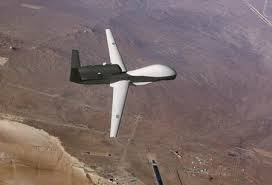
Drones in N. Waziristan (Credit: epakistan.com)
Drones in N. Waziristan
(Credit: epakistan.com)

ISLAMABAD/MIRANSHAH  June 12 – U.S. drones fired missiles at Taliban hideouts in Pakistan killing at least 10 militants in response to a deadly attack on Karachi airport, officials said on Thursday, in the first such raids by unmanned CIA aircraft in six months.

Two top government officials said Islamabad had given the Americans “express approval” for the strikes – the first time Pakistan has admitted to such cooperation.

Underlining Pakistan’s alarm over the brazen Taliban attack on the airport, just weeks after peace talks with the Islamist militants stalled, the officials told Reuters a “joint Pakistan-U.S. operation” had been ordered to hit the insurgents.

Another official said Pakistan had asked the United States for help after the attack on the country’s busiest airport on Sunday, and would be intensifying air strikes on militant hideouts in coming days.

Pakistan publicly opposes U.S. drone strikes, saying they kill too many civilians and violate its sovereignty, although in private officials have admitted the government supports them.

“The attacks were launched with the express approval of the Pakistan government and army,” said a top government official, requesting not to be named as he was not authorised to discuss the issue with the media.

“It is now policy that the Americans will not use drones without permission from the security establishment here. There will be complete coordination and Pakistan will be in the loop.

We understand that drones will be an important part of our fight against the Taliban now,” the official added.

The strikes were the first in the nuclear-armed South Asian nation since an attack in December last year in which three suspected militants were killed. The CIA conducts covert drone operations against terrorism suspects.

Speculation has been rising that Pakistan is preparing for a full-scale military operation in North Waziristan, a scenario Prime Minister Nawaz Sharif has resisted for months in favour of a negotiated end to the insurgency.

But talks with the Taliban have collapsed many times since Sharif announced his plan in February and set up a committee of negotiators, mainly over Taliban demands that the government withdraw all troops from tribal areas and impose Sharia law.

AFGHANISTAN CONNECTION

Pakistan military sources said six militants including four Uzbeks were killed in the first strike on Wednesday around five km (three miles) north of Miranshah, the capital of the North Waziristan tribal region where Taliban insurgents are holed up.

The second attack killed four militants in the same area around 2 a.m. on Thursday.

Another source, a senior member of the Afghan Taliban, put the death toll at 16, with 10 killed in the second strike.

A senior member of the Afghan Taliban said all the 10 militants killed in the second strike were affiliated with the feared Haqqani network that regularly launches attacks on Western forces in Afghanistan and which until last month held U.S. soldier Bowe Bergdahl.

“The drones targeted two mini vans which were carrying Taliban fighters associated with the Haqqani network to Afghanistan for an attack,” the Taliban commander said.

The twin drone strikes came after at least 38 people, including 10 insurgents, were killed when militants raided Karachi airport on Sunday night. The Pakistani Taliban are allied with the Afghan militants of the same name and share a similar jihadist ideology.

But they operate as a separate entity, focused entirely on toppling the Pakistani state and establishing strict Islamic rule, whereas the Afghan Taliban are united by their campaign against invading foreign forces.

Sunday’s assault destroyed prospects for peace talks between the Taliban and Sharif’s government, after months of failed attempts to engage the al Qaeda-linked militants in dialogue on how to end years of violence.

The Pakistan government officially condemned the latest strikes and said such attacks “have a negative impact on the government’s efforts to bring peace and stability in Pakistan and the region”. But top officials privately admit the Pakistani government is weighing all options after the Karachi attack.

(Additional reporting by Asim Tanveer in Multan and Jibran Ahmed in Peshawar; Editing by Maria Golovnina and Jeremy Laurence)

Pakistan Condemns Drone Attacks in N. Waziristan

FO spokeswoman (Credit: pakistantribe.com)
FO spokeswoman
(Credit: pakistantribe.com)

ISLAMABAD, June 19: The government of Pakistan condemned the two incidents of US drone strikes that took place near Miramshah, North Waziristan during the early hours of Wednesday.

According to a statement from the Ministry of Foreign Affairs on Wednesday, where they termed the strikes as a “violation of its sovereignty and territorial integrity.”

“These strikes have a negative impact on the government’s efforts to bring peace and stability in Pakistan and the region.”

Wednesday’s strikes killed at least six people. On June 11, two successive drone strikes reportedly killed around 16 people and injured few others.

There have been three drone strikes this year, killing around 20 people.

Pakistan begins long-awaited offensive to root out militants in North Waziristan

Pak offensive in North Waziristan (Credit: guardian.co.uk)
Pak offensive in North Waziristan
(Credit: guardian.co.uk)

Islamabad, June 15 – A long-awaited military campaign to destroy militant safe havens in a Taliban-dominated part of Pakistan‘s borderlands began , years after the US first demanded action.

The army said it had launched a “comprehensive operation against foreign and local terrorists who are hiding in sanctuaries in North Waziristan”, the troubled tribal region that has served as a staging area for attacks across Pakistan and Afghanistan.

Military sources said as many as 30,000 troops could be involved in the operation to secure the border region, which the army believes must be completed before the end of Nato combat operations this year in Afghanistan.

An official statement said “Operation Zarb-e-Azb” had been launched “on the directions of the government”, but the decision follows months of public controversy over the issue, with leading politicians arguing any attempt to seize control of the area would provoke a violent backlash by the Pakistani Taliban in the country’s cities.

Pakistan’s prime minister, Nawaz Sharif, had instead tried to negotiate a peace deal with militants, something most experts said had no chance of success given the record of militants breaking ceasefires.

Sharif’s obstinacy in the face of army demands for North Waziristan to be dealt with before summer has exacerbated tensions between Pakistan’s civilian and military leaderships, who have clashed over the treason trial of former military ruler Pervez Musharraf.

The military statement said the country could not afford to wait any longer. “Using North Waziristan as a base, these terrorists had waged a war against the state of Pakistan and had been disrupting our national life in all its dimensions, stunting our economic growth and causing enormous loss of life and property,” it said.

Pakistan’s military had already ramped up pressure on militant groups in North Waziristan in recent weeks, launching air strikes and limited ground operations which it described as limited acts of retaliation against Taliban attacks.

The latest came early on Sunday when the army claimed fighter jets killed 80 terrorists, most of whom it said were Uzbeks involved in last week’s lethal attack on Karachi’s airport. Military sources said Abdul Rehman, a senior commander from the Islamic Movement of Uzbekistan who is said to have masterminded the airport attack, was among the dead.

North Waziristan is part of a swath of forbidding, mountainous border territory that fell under Taliban control after militants fled there from Afghanistan following the US-led invasion of 2001.

It soon became a global hub for a plethora of terrorist groups, including al-Qaida and the Pakistani Taliban.

The presence of a large safe haven next to Afghanistan enraged bWashington and Kabul who complained the region was being used to hatch plots, train fighters and prepare suicide bombers who could cross the border to kill Afghan and Nato troops.

But Pakistan refused to act, even after the attempt by a Pakistani American terrorist to bomb New York’s Times Square was traced back to the Pakistani Taliban in North Waziristan.

In 2011 the North Waziristan-based Haqqani Network, an Afghan militant group, launched a rocket attack on the US embassy in Kabul.

In response the White House expanded the use of missile strikes by unmanned drones to kill suspected militants, although the increase in strikes caused outrage in Pakistan.

Pakistan’s refusal to act in North Waziristan reinforced suspicions that it continues to support and protect some militant groups, including the Afghan Taliban, in order to gain influence in Afghanistan, a country historically feared by Islamabad because of its refusal to drop claims to Pakistani territory and long-standing ties with arch enemy India.

The army argued it was taking action, methodically clawing back control of parts of the tribal north-west that had slipped into militant hands by launching major operations in the Swat Valley and South Waziristan.

Some observers remain sceptical despite Sunday’s announcement. They argue the Haqqani Network and other militant groups regarded as useful allies are likely to be left untouched by the operation or will simply move into unsecured parts of western Afghanistan.

On Sunday the army insisted it would “eliminate these terrorists regardless of hue and colour”.

Despite the dangers posed by North Waziristan, many analysts, including one senior western security official in Islamabad, warn an operation may only succeed in forcing dangerous militants into other parts of the country, including the already turbulent city of Karachi where the Pakistani Taliban has made dramatic inroads in recent years.

They say the police are simply not prepared to fight an urban insurgency.

Speaking on local television defence minister Khawaja Asif said “terrorists may carry out attacks, we have to be watchful”. But he vowed that the operation would be carried through “to its logical conclusion”.

“Any group that uses Pakistan’s soil for terrorism will be eliminated, the operation will continue till the complete destruction of terrorism,” he said.

Pakistan’s Hub for Global Jihad Is Under Siege

`But even as the US-leaked memos and statements accused the ISI of secretly supporting the Afghan Taliban, Pakistan put its foot down on allowing the US to operate inside settled areas. While US drone missile strikes grew more frequent, they were only allowed to operate in the FATA belt along Afghanistan. Drones became a weapon of choice in North Waziristan, where Al Qaeda’s foreign fighters and Taliban congregated but where the military held off from conducting any operation.

The UN has questioned the legality of drone attacks because of the highly covert nature of the strikes. Although the true extent of civilian casualties are unknown, a study by the New America Foundation shows that while drones have killed more than 1,300 people, the civilian fatality rate is approximately 30 percent of that figure.

On the other hand, Washington has ramped up drone attacks because they avoid the loss of US lives, and there is no media to record the blood spilled on the ground. But the strikes remain highly unpopular in Pakistan, where common people pay the ultimate price. These drone attacks have been avenged by the militants through a spree of almost indiscriminate suicide attacks in Pakistan.’

Women cops defy stereotypes, take on terrorists in violence-hit Karachi

SHO Syeda Ghazala (Credit: thenews.pk.com)
SHO Syeda Ghazala
(Credit: thenews.pk.com)

Just days into her job running a police station in Pakistan’s largest city, Syeda Ghazala had to put her training to the test: she opened fire with her .22-caliber pistol at a man who shot at police when they tried to pull him over during a routine traffic stop.

It’s not clear whether it was Ghazala’s shots that wounded the man before he was arrested, but as the first woman to run a police station in Pakistan’s often violent port city of Karachi, she’ll likely have many more chances to hit her mark.

When Ghazala joined the police force two decades ago, she never dreamed that one day she would head a police station staffed by roughly 100 police officers — all men. Her recent promotion is part of efforts by the local police to increase the number of women in the force and in positions of authority. Shortly after she assumed her new job the city appointed a second woman to head another police station.

In a country where women have traditionally not worked outside the home and face widespread discrimination, the appointments represent a significant step for women’s empowerment.

“The mindset of people is changing gradually, and now they (have) started to consider women in leading roles. My husband opposed my decision to join the police force 20 years ago,” said the 44-year-old mother of four. But by the time this job rolled around, he had come full circle and encouraged her to go for it. “It was a big challenge. I was a little bit hesitant to accept it.”

The station house is in Clifton, a posh area home to the elite of this sprawling metropolis of more than 18 million people. Crimes ranging from petty theft and muggings to terrorism or murder are all part of a day’s work, Ghazala says.

Running a station is a high-profile job in the Pakistani police, one that requires the officer to constantly interact with the public and fellow officers. It’s also a key path to advancement. Senior police officer Abdul Khaliq Sheikh, said he and others in the top brass hope Ghazala’s appointment leads to more women joining the force.

“Our society accepts only stereotype roles for women. There is a perception that women are suitable only for particular professions like teaching,” he said.

The police force is also training the first batch of female commandos, a group of 44 women going through a physically intensive course involving rappelling from towers or helicopters and shooting an assortment of weapons.

Currently, the two in Karachi are the only women running police stations in Pakistan. In Khyber Pakhtunkhwa, where women make up less than one per cent of the roughly 75,000-member police force, women only run stations specifically designed to help female crime victims.

In Balochistan, there are only 90 women on the police force and no women station heads. In Punjab, only one woman has ever run a station house, back in 2005, but currently no women hold the position.

Ghazala said most people she has encountered in her new job have been supportive, and she’s become a bit of a celebrity in the neighbourhood.

TTP’s Uzbek Allies Killed after Claiming Karachi Airport attack

Islamic Movement of Uzbekistan (Credit: bbc.co.uk)
Islamic Movement of Uzbekistan
(Credit: bbc.co.uk)

The first U.S. drone strikes in Pakistan in almost six months targeted militants from Afghanistan’s Haqqani network, killing one of the insurgent group’s senior commanders, Pakistani intelligence officials said on Thursday.

Drones struck two locations in Pakistan’s North Waziristan tribal region, near the border with Afghanistan, killing at least 11 suspected militants on Wednesday, these officials added. The second strike, at around 2:30 a.m. local time on Thursday, hit a Haqqani network compound near Miranshah, North Waziristan’s capital, killing at least eight.

Among those eight was Haji Gul, described by Pakistani intelligence officials and local militants as a senior Haqqani field commander whose advice was regularly sought by the group’s leadership.

The Haqqani network is part of the Afghan Taliban but operates autonomously, mostly in eastern Afghanistan. Its main base is in North Waziristan.

A vehicle, rigged for use in a suicide attack, was also destroyed in the attack, Pakistani officials said. They said the militants were preparing for a mission across the border in Afghanistan.

The Haqqani network has carried out a series of high-profile attacks in Afghanistan against Western targets, including the Sept. 13, 2011, assault on the U.S. Embassy in Kabul.

The U.S. Department of State formally designated it a terrorist organization in 2012.

Several U.S. officials have accused Pakistan’s Inter-Services Intelligence agency of backing the Haqqanis, a charge the ISI denied. In 2011, then-chairman of the Joint Chiefs of Staff Adm. Mike Mullen described the group as a “veritable arm” of the ISI.

The U.S. has long been asking Pakistan to go after militant groups in North Waziristan. Pakistan so far hasn’t launched a full-scale military offensive in the region, where several militant groups, including al Qaeda and the Pakistani Taliban, operate. However, it has regularly carried out airstrikes and limited ground operations against the Pakistani Taliban in North Waziristan.

In the first drone strike, which broke the near-six-month lull around 8:30 p.m. on Wednesday, Uzbek and ethnic Punjabi militants were targeted. At least three were killed.

The Pakistani Taliban and its ally, the Islamic Movement of Uzbekistan, separately claimed responsibility for Sunday’s attack on Karachi’s Jinnah International Airport, in which at least 35 people were killed, including 10 attackers.

There is widespread opposition among Pakistanis to U.S. drones, and the government officially condemns the strikes as violations of Pakistan’s sovereignty and calls them counterproductive to peace and stabilization efforts. The Pakistani government on Thursday condemned the two North Waziristan drone strikes.

“These strikes are a violation of Pakistan’s sovereignty and territorial integrity,” the Ministry of Foreign Affairs said. “Additionally, these strikes have a negative impact on the government’s efforts to bring peace and stability in Pakistan and the region.”

Prime Minister Nawaz Sharif’s government began a tentative peace process with the Pakistani Taliban in January, which led to a cease-fire in March. There was little progress, however, and the cease-fire ended in April.

Islamabad hasn’t formally abandoned peace efforts, but talks have hit a deadlock and officials say an operation against militants in North Waziristan is being considered.

Maulana Sami-ul-Haq, a prominent cleric nominated by the Pakistani Taliban to negotiate with the government, told reporters on Thursday that negotiations are the only way to end the conflict with the Taliban. “Drone strikes kill innocent people, and they have started because the negotiations have stopped,” Mr. Haq said.

‘We felt like sitting ducks,’ passenger says of Pakistan airport terrorist attack

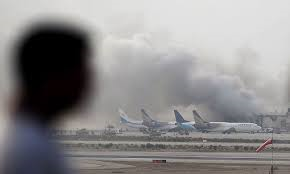
Karachi airport burns (Credit: dawn.com)

Karachi, Pakistan (CNN) — Terrorists entered Karachi’s Jinnah International Airport at two different spots with a big plan: to destroy a group of parked airplanes and “bring down our aviation industry,” according to the Pakistani government.

It was late Sunday night, and the militants were armed with guns, grenades and suicide vests. They went into the cargo area, about a kilometer (0.62 miles) from where commercial planes take off.

In a “heroic” effort, security forces “laid down their lives” to block the terminal and stop the attackers, surrounding them and killing all of them, the prime minister’s office said in a statement.

There were 10 terrorists, military spokesman Maj. Gen. Asim Bajwa said, and two of them detonated suicide vests.

By the time the attack was over, 28 people were dead, including eight members of airport security forces, two Pakistan International Airlines employees and one ranger. Another 24 people were injured, the military said.

The Pakistani Taliban claimed responsibility for the assault on the country’s largest and busiest airport.

Speaking from an undisclosed location, Pakistani Taliban commander Abdullah Bahar said the attack was retaliation for the death of former chief Hakimullah Mehsud, who was killed in a U.S. drone strike in November in North Waziristan.

Bahar warned more attacks will follow.

“As long as we are breathing, our attacks will be continuing ’til the end of our lives,” he vowed.

Fire followed attack

A building caught fire in the attack, but no planes were damaged, Bajwa said. The airport reopened Monday.

Some Pakistani media reported a renewed gun battle at the airport later Monday morning. But officials told CNN the noise was from fire-heated chemical containers exploding.

Still, as a precaution, security forces opened fire, said Ahmad Chinoy of the Citizen’s Police Liaison Committee. He said he was 100% sure there were no militants left in the airport.

Several days ago, Pakistan’s government had warned provincial officials of a possible “high-profile attack on a sensitive or key installation,” said Qaim Ali Shah, chief minister of Sindh province. But the warning, he said, did not mention the airport.

‘We felt like sitting ducks’

Farooq Sattar, a member of parliament, was on a plane at the airport when the attack took place.

“My aircraft was on the tarmac ready to take off when suddenly, from what I understand, a message came to the pilot saying to get off the runway and return to the gate,” Sattar told CNN. “I heard shots and saw smoke.”

“Before the pilot could announce anything, I had text messages blowing up my phone saying ‘Karachi airport under attack.’ We were in the aircraft for three hours, full of fuel. They locked the doors.

“The airport was poorly guarded. It was only due to some airport security personnel that the attack got thwarted and the militants didn’t make it to our part of the airport. Passengers were extremely nervous. They started looking at me for answers.”

“We felt like sitting ducks on the tarmac,” he added.

Two crew members who were on their first ever flight “freaked out,” Sattar said.

History of terror

The Pakistani Taliban, which is formally known as Tehreek-i-Taliban Pakistan (TTP), has long conducted an insurgency against the Pakistani government.

“Their primary target is the Pakistani state and its military,” said Raza Rumi of the Jinnah Institute, a Pakistani think tank.

“It resents the fact that (Pakistan) has an alliance with the West, and it wants Sharia to be imposed in Pakistan.”

The group claimed responsibility for a December 2009 suicide bombing at the United States’ Forward Operating Base Chapman in Khost, Afghanistan.

The attack killed seven U.S. citizens, including five CIA officers and a member of Jordanian intelligence.

The U.S. Justice Department charged Mehsud in 2010 for his alleged involvement in the attack.

Mehsud took over from Baitullah Mehsud, a fellow clan member, in 2009 after the latter was killed in a U.S. drone strike. Four years later, Hakimullah Mehsud suffered the same fate.

More claims and threats

Another TTP member claimed that the Pakistani government has been “abducting and killing innocent people,” and explained why the airport was targeted.

“We chose a location where there would be less civilian and more official casualties,” TTP representative Shahidullah Shahid said.

Shahid warned the group will engage “in a full-out war with the Pakistani state, starting on June 10.”

But “if even now the Pakistani government backs down,” Shahid said, “we are ready to engage in meaningful dialogue.”

Karachi airport attackers were disguised as security workers

More violence

The airport wasn’t the only site of violence in Pakistan on Sunday.

Twin suicide attacks near the border with Iran left 24 people dead, including four terrorists, authorities said. Qambar Dashti, commissioner of the Quetta Division, told CNN two suicide bombers blew themselves up in a hotel where dozens of Shia pilgrims from Iran were staying.

Dashti said 14 out of 18 wounded pilgrims were in critical condition.

Extremist Sunni militant group Jaish el-Islam, a splinter group of Lashkar e Jhangvi, claimed responsibility.

On Monday, while Karachi operated as usual, there was violence in other parts of the country.

Three soldiers were killed and many others were wounded in a suspected suicide attack at a checkpoint in North Waziristan, military officials said.

Pakistan Suspends License of Leading TV News Channel

GEO transmission suspended (Credit: southasianmedia.net)
GEO transmission suspended
(Credit: southasianmedia.net)

LONDON JUNE 6, 2014  — The Pakistani government on Friday suspended the broadcasting license of Geo News, a popular television news channel, in a major escalation of Geo’s dispute with the country’s powerful Inter-Services Intelligence spy agency.

The Pakistan Electronic Media Regulatory Authority said the off-air suspension would last for 15 days. It also imposed a $104,000 fine.

The dispute between the channel and the spy agency began with accusations that the agency was behind a gun attack on a senior Geo journalist on April 19. It has broadened into a wider confrontation that is seen as a threat to press freedom in Pakistan and a sign of growing tensions between the country’s civilian and military leaders.

Even before Friday’s announcement, Geo News and its sister channels for sports and entertainment were effectively off the air in much of Pakistan because cable television operators had pulled the stations from their services, apparently under pressure from the military.

Station managers say advertising revenue has collapsed, four of their vehicles have been burned in different cities, and a journalist in Multan, a large city in central Pakistan, was beaten up by unidentified assailants who called him a traitor.

“It seems that justice has bowed down to forces that are above the law,” said Imran Aslam, the president of Geo.

The station’s chief executive, Mir Ibrahim Rahman, said, “We are left alone, as usual.”

Geo News stopped transmission within an hour of Friday’s suspension. The channel has come to dominate Pakistan’s thriving television news media sector over the past decade, with punchy programming and an often populist tone that has prompted accusations of sensationalism.

The channel’s initial commercial success and editorial heft made it a lucrative asset for its owner, the Jang Group, but also made it a source of worry for powerful institutions like the military.

The current dispute started after the attack, on Hamid Mir, a senior Geo newscaster. The station prominently aired angry accusations from Mr. Mir’s relatives that the ISI was behind the attack. The military rejected the accusations, and days later asked the national media regulator to cancel Geo’s broadcast license.

The Jang Group, a media company headed by Mr. Rahman, appeared to have anticipated Friday’s suspension. Morning editions of The News, an English-language newspaper that it owns, announced that Jang was suing the ISI for defamation over accusations that the company was “anti-state.” Lawsuits of that nature against the feared spy agency are extremely rare in Pakistan, and likely to further increase the stakes in the dispute.

“More than 8,000 journalists, workers and professionals attached to the group and their families are not only being harassed but also attacked and tortured across Pakistan,” the group said in a statement.

The Pakistan Tehreek-e-Insaf, a political party that has joined the ISI criticism of Geo in recent weeks, said the 15-day suspension was not enough.

“What happens after 15 days?” asked Shireen Mazari, the party’s information secretary. “Will Geo be allowed to go back to its old ways?” Imran Khan, a former cricket star who runs the party, has accused Geo of colluding with the senior judiciary to fix the results of the May 2013 general elections.

For many Pakistani journalists, the dispute is an ominous sign of the military’s intent to influence media coverage of sensitive topics, like the insurgency in Baluchistan Province and relations with India.

Mr. Mir, who is recovering from his injuries, had prominently covered reports of human rights abuses by the military in Baluchistan, while Geo had participated in a peace initiative with Indian news outlets that has come under fierce attack in recent weeks.

The battle is also a product of broader tensions between Prime Minister Nawaz Sharif’s government, which is viewed as siding with Geo, and the military, which has clashed with Mr. Sharif over Gen. Pervez Musharraf, the former military ruler charged with treason.

Salman Masood contributed reporting from Islamabad, Pakistan.