How an arrest in London sparked chaos in Karachi

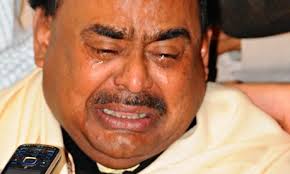
Altaf Hussain after Imran Farooq murder (Credit: theguardian.com)
Altaf Hussain after Imran Farooq murder
(Credit: theguardian.com)

London, June 3: On Tuesday, police in London arrested a man on suspicion of money laundering. Thousands of miles away in Karachi, Pakistan’s turbulent coastal metropolis, traffic snarled, shops shuttered, trains stopped, embassies closed and millions braced for further havoc. (As of Tuesday evening, there were reports of gunfire and 12 vehicles set aflame, but no casualties.)

The man taken in by Scotland Yard is Altaf Hussain, leader of Muttahida Qaumi Movement (MQM), the dominant political party in Karachi. Despite living in self-imposed exile in Britain for more than two decades out of fear for his life, Hussain has remained a kingpin in this megacity of nearly 20 million, depending on how you count it. He casts a long, dark shadow over the city, notorious for its gangland violence and volatile political divisions.

The MQM draws support from Karachi’s large population of mohajirs, the descendants of those who migrated to Pakistan from what is now India in 1947, when colonial India was cleaved in two by the departing British. The party commands a crucial bloc of seats in Parliament, almost all of which are concentrated around Karachi in southern Sindh province.

The city’s ethnic polarization — it’s also home to huge ethnic Pashtun and Sindhi populations — has led to years of sectarian tensions, punctuated by attacks and street battles. The MQM’s vast political machinery is complemented by brass knuckles. A leaked 2008 U.S. diplomatic cable, citing local police, claimed that the party maintained its own parallel militia of as many as 10,000 active fighters, with 25,000 in reserve.

British authorities have been investigating Hussain, 60, since the 2010 assassination in London of a MQM official, Imran Farooq, who had grown estranged from the party. Last week, they froze Hussain’s bank accounts. MQM officials said today that he was brought in only for questioning, but it seems clear that he is under arrest.

Hussain is considered a charismatic, larger-than-life figure. Ensconced in his compound in northwest London, he would coordinate the operations of his party via teleconference and get beamed over satellite to address mass gatherings and rallies.

While the MQM has staunch middle-class backing and is credited with running Karachi efficiently, it is thought to benefit from a whole slew of underworld activities, including extortion and targeted attacks on opponents. MQM officials routinely deny any connection to such wrongdoing.

Hussain himself has earned notoriety for his incendiary rhetoric — once telling an aggressive journalist that he had “his body bag ready” and, in another instance, warning critics to end their “false allegations” against him. “Don’t blame me, Altaf Hussain, or the MQM,” he said, “if you get killed by any of my millions of supporters.”

Scotland Yard may struggle to charge him with incitement to violence or prove a direct link to Farooq’s death. So it appears its most solid case surrounds Hussain’s funds and their use in Britain. Earlier raids on Hussain’s house led to the impounding of about $600,000 in cash.

Meanwhile, in Karachi, MQM officials have called for calm, sending out mass text messages throughout the city advising residents to ignore rumors that could cause further disruption or violence. Like many political parties in South Asia, the MQM’s cohesion depends greatly upon the presence of its towering founding figure. The doubts and fears in Karachi are as much about what happens at home as they are about what happens in a British courtroom far away
Obama Outlines Plan on Ending Longest War in US History
`Its harder to end wars than to begin them’ – US president

Afghan transition (Credit: downwardtrend.com)
Afghan transition
(Credit: downwardtrend.com)

WASHINGTON, May 27- U.S. President Barack Obama on Tuesday outlined a plan to withdraw all but 9,800 American troops from Afghanistan by the end of the year and pull out the rest by the end of 2016, ending more than a decade of military engagement triggered by the Sept. 11 attacks on the United States.

The decision means that Obama will leave office in early 2017 having extricated the country from the longest war in U.S. history. He ended Washington’s combat presence in Iraq in 2011.

Obama’s White House Rose Garden announcement prompted criticism from Republicans that the hard-fought gains made against the Taliban could be lost in much the same way that sectarian violence returned to Iraq after the U.S. withdrawal.

Obama, who made a whirlwind visit to U.S. troops in Afghanistan over the weekend before American combat operations conclude at the end of 2014, appeared to anticipate concerns that he is abandoning Afghanistan. He said it is time for Afghans to secure their country.

“We have to recognize that Afghanistan will not be a perfect place, and it is not America’s responsibility to make it one,” Obama said.

Under his plan, 9,800 U.S. troops would remain behind into next year. By the end of 2015, that number would be reduced by roughly half.

By the end of 2016, the U.S. presence would be cut to a normal embassy presence with a security assistance office in Kabul, as was done in Iraq.

The 9,800 troops would take an advisory role backing up Afghan forces. They would train Afghan troops and help guide missions to rout out remaining al Qaeda targets.

Any U.S. military presence beyond 2014 is contingent on Afghanistan’s government signing a bilateral security agreement with the United States.

Outgoing Afghan President Hamid Karzai has refused to sign it. But U.S. officials were encouraged that the two leading candidates in Afghanistan’s presidential race, Abdullah Abdullah and Ashraf Ghani, have both pledged to sign quickly should they be elected in the second round of voting set for June 14.

Obama said the lengthy U.S. presence in Afghanistan is proof that “it’s harder to end wars than it is to begin them.”

“But this is how wars end in the 21st century: not through signing ceremonies but through decisive blows against our adversaries, transitions to elected governments, security forces who are trained to take the lead and ultimately full responsibility,” he said.

While Americans have long since grown weary of a conflict in which nearly 2,200 U.S. troops have been killed, some Republicans greeted the news with skepticism.

They continued a drumbeat of criticism of the president’s handling of foreign policy and national security ahead of a speech on the subject Obama is to give on Wednesday at the U.S. Military Academy in West Point, New York.

“The president’s decision to set an arbitrary date for the full withdrawal of U.S. troops in Afghanistan is a monumental mistake and a triumph of politics over strategy,” Republican Senators John McCain and Lindsey Graham said in a statement.

A senior Obama administration official bristled at the notion that the United States would be leaving Afghan forces to do battle against the Taliban alone.

“We never signed up to be the permanent security force in Afghanistan to fight against the Taliban,” the official, speaking on condition of anonymity, told reporters.

The United States now has about 32,000 troops in Afghanistan. U.S. military leaders had pushed for a force of at least around 10,000, saying it was the minimum required.

Remaining U.S. and NATO forces will advise Afghan forces, focusing on functions such as budgeting, logistics, and support for security institutions.

NATO countries have helped build Afghanistan’s military and other forces from scratch since 2001. While Afghan forces have grown more independent, they lack key skills such as intelligence collection and air power.

As part of the post-2014 force, a small number of U.S. soldiers is expected to conduct counterterrorism operations against al Qaeda and other hardline militants, located mainly in remote areas along Afghanistan’s eastern border with Pakistan.

(Additional reporting by Phil Stewart, Missy Ryan, David Alexander, Patricia Zengerle, Jeff Mason and Roberta Rampton; Editing by David Storey and Jonathan Oatis)

Taliban’s Mullah Omar Celebrates Prisoner Swap for Bergdhal

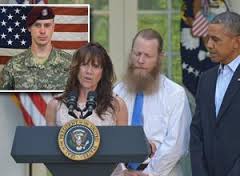
Bergdhal (inset) with parents & Obama (Credit: nydailynews.com)
Bergdhal (inset) with
parents & Obama
(Credit: nydailynews.com)

Afghan Taliban leader Mullah Mohammad Omar has issued a rare public statement hailing the exchange of five Guantanamo Bay detainees for a Taliban-held US soldier as a “big victory”.

Sgt Bowe Bergdahl, 28, was handed to US forces in Afghanistan on Saturday.

US Defence Secretary Chuck Hagel has defended the exchange amid criticism Congress was not given 30 days’ notice before the detainees were released.

He said the US had to act quickly to save the soldier’s life.

Mullah Omar, who has made no public appearances or speeches since fleeing Afghanistan in 2001 when US-led forces toppled the Taliban after the 9/11 attacks in the US, said: “I extend my heartfelt congratulations to the entire Afghan Muslim nation.”

The Afghan government, which was not informed of the deal until after the exchange had taken place, has condemned it as a breach of international law.

Sgt Bergdahl, who is said to be in good condition and has been flown to Germany for more treatment, was the only US soldier being held by the Taliban in Afghanistan.

The five senior Afghan detainees are thought to be the most senior Afghans held at the US detention facility in Cuba, having been captured during America’s military campaign in 2001.

Republican opponents have criticised the Pentagon for not giving Congress the required 30-day notification before releasing the five.

But Mr Hagel, who reportedly met some of the special forces team involved in the operation on a visit to Afghanistan on Sunday, said the military believed the soldier was in danger, and had to act quickly “essentially to save his life”.

US National Security Adviser Susan Rice told US television there had been extensive consultations with Congress in the past about getting Sgt Bergdahl back, and lawmakers knew about the idea of trading detainees.

Mohammad Fazl served as the Taliban’s deputy defence minister during America’s military campaign in 2001. Accused of possible war crimes, including the murder of thousands of Shia Muslims.

Khirullah Khairkhwa was a senior Taliban official serving as interior minister and governor of Herat, Afghanistan’s third largest city. Alleged to have had direct links to Osama Bin Laden.

Abdul Haq Wasiq was the Taliban’s deputy minister of intelligence. Said to have been central in forming alliances with other Islamist groups to fight against US and coalition forces.

Mullah Norullah Noori was a senior Taliban military commander and a governor. Also accused of being involved in the mass killings of Shia Muslims.

Mohammad Nabi Omari held multiple Taliban leadership roles, including chief of security. Alleged to have been involved in attacks against US and coalition forces.

While hopeful the prisoner exchange could lead to a breakthrough in negotiations with the Taliban, Mr Hagel said getting Sgt Bergdahl back had been the priority.

Afghan President Hamid Karzai was informed of the prisoner-swap “after the fact”, he added.

In a statement, the Afghan ministry of foreign affairs insisted that “handing over prisoners to a third country is a breach of international law”.

It added: “We are strongly opposed to it. We want Qatar and the US government to let the men go free.”

Parents Robert and Jani Bergdahl said they were “joyful and relieved” to hear of their son’s release, adding that he was having trouble speaking English due to his long captivity.

The US president, who was joined at the White House by Sgt Bergdahl’s parents, Robert and Jani, said ”he was never forgotten”

President Obama said on Saturday that he had received security guarantees from Qatar – which mediated the deal and where the five Afghan men have been flown – “that it will put in place measures to protect our national security”.

Under the deal, they will be banned from leaving Qatar for at least a year.

A video grab image from 2010 showed Sgt Bergdahl in captivity

The soldier, of Hailey, Idaho, was serving with an infantry regiment in Paktika province near the Pakistani border and went missing on 30 June 2009, months after being deployed to Afghanistan.

The circumstances of his capture remain unclear, with speculation he may have walked away from his base out of disillusionment with the US campaign.

US officials say any decision over possible desertion charges will be made by the army, but there is a feeling the soldier has suffered enough.

Throughout his captivity, the soldier’s hometown had continued to remember him with special events and yellow ribbons tied to trees

TTP Split May Strengthen Haqqani Network

A LONG-rumoured and much-encouraged — both by the military before and the PML-N government now — split in the TTP appears to have come to pass. A chunk of the so-called pro-state, pro-peace Mehsud fighters in the TTP has rejected the leadership of Mullah Fazlullah, the emir of the TTP, in a move that could have significant ramifications for internal security and foreign policy in the weeks and months ahead. To begin with, the so-called Sajna faction of the Mehsuds in the TTP’s verbal and actual fighting with other elements in the proscribed group may presage a resumption of the government’s dialogue process, but this time with just the militants who do want to cut a deal with the government. The government would paint such an outcome as a validation of its dogged pursuit of dialogue. But would it really be a victory?

A basic problem is the ideological affinity and political allegiances of the Sajna-linked TTP militants: they lean heavily towards the Haqqani network and Mullah Omar’s Afghan Taliban — which means that the price for agreeing not to fight against the Pakistani state inside its territory will likely be a demand to turn a blind eye to stepped-up activities across the border in Afghanistan. That, just as the Obama administration has signalled its intention for an Iraq-like withdrawal from Afghanistan over the next couple of years, could have a destabilising effect at the very moment that some kind of stability is needed to help the incoming Afghan administration pursue its own negotiated settlement with the Afghan Taliban. Moreover, does Pakistan really want to be in the position internationally of officially giving space to militants with an avowed agenda of fighting in a neighbouring country?

If the foreign dimension is troubling enough, what would it mean for internal security if the TTP is split and at war with itself and encouraged to do so by the state? Surely, state and society will themselves become collateral damage. Already, there is speculation of fresh violence in Karachi, because involuntary migration from Fata in recent years has replicated many of the militants fault lines there in Karachi itself. Beyond that, while the Fazlullah-led group —including TTP Swat, Mohmand and Bajaur — is seeing its influence wane and its ability to strike inside Pakistan hampered by a leadership hiding in Afghanistan, it would be foolish to underestimate Fazlullah and his men. After all, he is the man who was all but written off after his fiefdom in Swat was taken away — and yet he returned to snatch the leadership of the TTP. Setting all of that aside, there still remains a fundamental problem in the government’s dialogue-driven quest for peace: ought there really to be space for a group such as the Sajna-led militants in Pakistan going forward?

Pakistani Taliban Faction Condemns Violence, Breaks Away

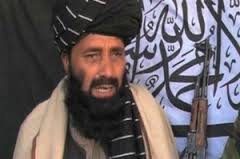
TTP's Azam Tariq (Credit: geotv)
TTP’s Azam Tariq
(Credit: geotv)

LAHORE, May 28—A major faction of the Pakistani Taliban broke away and condemned violence on Wednesday, weakening the militant group allied with al Qaeda that seeks to overthrow the Pakistani state.

The split in the Pakistani Taliban, known formally as Tehreek-e-Taliban Pakistan, comes after months of attempted peace negotiations between the government of Prime Minister Nawaz Sharif and the militant organization. It also followed weeks of bloody infighting within the TTP.

The move could push Pakistan closer to an army operation against the remainder of the TTP, an offensive that Washington has long wanted.

Although the stated aim of the talks was to forge a peace deal with the whole TTP, Pakistani officials had privately said the realistic goal was to see which factions were amenable to peace and which were irreconcilable. An operation planned by the army was put on hold when Mr. Sharif launched peace talks in late January.

The breakaway faction is led by a warlord named Sajna who is also known as Khan Said or Khalid Mehsud, announced a “complete separation from the current organization that has lost its way.”

Sajna represents most of the militants from the fierce Mehsud tribe, who made up much of the TTP. His faction, now calling itself Tehreek-e-Taliban Pakistan Mehsud group, accused the rest of the TTP of criminality.

The breakaway group, if it goes on to agree to a peace deal with the government, could now join the ranks of the so-called good Taliban—jihadist groups that don’t fight within Pakistan such as an outfit led by Gul Bahadur, which is active in Afghanistan.

“We consider kidnapping for ransom, extortion, damage to public facilities and bombings to be un-Islamic,” said a statement from the breakaway faction.

“Tehreek-e-Taliban Mehsud group believes in stopping the oppressor from cruelty, and supporting the oppressed.”

The breakaway group was originally led by a commander named Waliur Rehman, who was killed in a U.S. drone strike last year.

It was always considered relatively moderate, It was involved in many of the activities it now condemns and is likely responsible for the deaths of thousands of Pakistanis, analysts said.

The TTP, which works independently of the Afghan Taliban, was formed in 2007 in the lawless tribal areas under the influence of al Qaeda to target Pakistan.

The breakaway group pledged allegiance to the Afghan Taliban.

“We have the deepest respect for jihadist organizations of the right beliefs fighting against evil powers,” the group said.

The rest of the TTP is still led by Mullah Fazlullah, a militant from the Swat district outside the tribal areas who isn’t a Mehsud.

The leadership of the TTP passed outside the Mehsuds for the first time when Mr. Fazlullah was made chief in November after the previous leader, Hakimullah Mehsud, was killed in a U.S. drone stroke.

Many from the Mehsud clan never accepted the new leader.

Rahimullah Yusufzai, a veteran journalist who was formerly part of the government’s negotiating committee for the peace talks, said he expected some other factions of the TTP from the tribal areas to join the breakaway faction.

Parts of the so-called Punjabi Taliban—militants from the country’s most populous Punjab province—could also possibly join.

“Now you will have one less enemy,” Mr. Yusufzai said.

“The Mehsuds have always been the backbone of the TTP. I expect Fazlullah will become weaker, day by day.”

Pakistan’s national-security adviser, Sartaj Aziz, and the Interior Ministry, which is handling the peace talks, both declined to comment on the latest development.

Mr. Fazlullah is believed to be based in eastern Afghanistan, putting him beyond the reach of Pakistan’s armed forces.

A relatively small group of the Mehsud clan militants, led by a commander named Shehryar, remains loyal to Mr. Fazlullah. . Fighting between the Sajna and Shehryar factions has left dozens of militants dead in recent weeks.

Parts of the TTP allegedly have support from Afghan intelligence, a connection made public last year when a TTP commander was snatched from Afghan custody by U.S. forces in Afghanistan.

The breakaway faction said that “using the TTP platform, people in the current organization are tools of secret agencies.”

The Afghan government denies it supports the TTP, and didn’t immediately comment on Sajna’s defection.

Pakistan’s military is thought to be getting impatient for military action against the TTP, one of the sources of its tension with the civilian government.

Following a visit to troops in the tribal areas Tuesday, the army chief, Gen. Raheel Sharif, said: “Together the whole nation has rejected the misplaced ideology of the terrorists, who have clearly lost their cause already and are being marginalized.”

Rifaat Hussain, a security analyst based in Islamabad, said airstrikes by the Pakistani military in recent weeks, along with limited ground action, pointed toward a coming offensive that would target the Fazlullah-led group.

“The army has declared its intention very clearly to launch an operation,” said Mr. Hussain. “The military sees this as an opportunity to finally break the stranglehold of the TTP on the tribal areas.”

The TTP has tentacles across the country and has a major presence in Pakistan’s largest city, Karachi, where they dominate areas around the periphery of the city and, according to police, use it to raise funds through extortion and other criminality.

Saifullah Mahsud, director of the FATA Research Center, an independent think tank in Islamabad, said that Sajna group had emerged as the dominant TTP faction in Karachi, so his departure from the TTP and his pledge against violence could help the law and order situation in Karachi.

“This is a change in strategy for the Sajna people and it helps Pakistan keep its options open,” he said.

— Safdar Dawar and Qasim Nauman contributed to this article.

Pakistani man protesting ‘honor killing’ admits strangling first wife

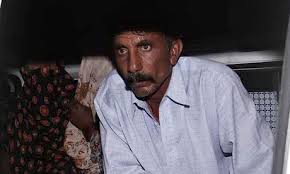
Mohd Iqbal (Credit: theguardian.com)
Mohd Iqbal
(Credit: theguardian.com)

Islamabad, May 29: A Pakistani man demanding justice after his pregnant wife was murdered outside Lahore’s high court this week admitted on Thursday to strangling his first wife, in an admission that is likely to focus even more attention on the prevalence of so-called “honour” killings in the country.

Muhummad Iqbal, the 45-year-old husband of Farzana Parveen, who was beaten to death by 20 male relatives on Tuesday, said he strangled his first wife in order to marry Parveen.

He avoided a prison sentence after his family used Islamic provisions of Pakistan‘s legal system to forgive him, precisely those he has insisted should not be available to his wife’s killers.

“I was in love with Farzana and killed my first wife because of this love,” he told Agence France-Presse.

Police confirmed that the killing had happened six years ago and that he was released after a “compromise” with his family.

Iqbal has also claimed that Parveen’s family killed another one of their daughters some years ago. Speaking to a researcher from the Aurat Foundation, a women’s rights organisation, he claimed that Parveen’s father, Muhammad Azeem, had poisoned the other woman after falling out with her husband-in-law.

The foundation has been unable to confirm Iqbal’s claim about a second killing.

The extraordinary twists to the affair came after Pakistan’s prime minister, Nawaz Sharif, ordered an urgent investigation into the killing of Parveen, a woman who had enraged her family after marrying without their consent.

In a statement he said the crime was “totally unacceptable and must be dealt with in accordance with the law promptly”.

He also ordered the chief minister of Punjab province, his younger brother Shahbaz Sharif, to take immediate action and launch an urgent investigation.

The deadly attack on Parveen, which reportedly lasted for around 15 minutes, began soon after she and Iqbal arrived at the court where she was due to testify against her father’s claim that she had been kidnapped and coerced into marriage.

Her father, who is the only one of the group to be have been arrested so far, told police that his daughter had been killed because he had dishonoured her family.

Iqbal has claimed that Parveen’s father only withdrew his support for their marriage after demanding more money than had initially been agreed at the start of a long engagement. Sharif’s intervention followed international uproar, including a lengthy and stinging condemnation from the UN high commissioner for human rights, Navi Pillay, who said Pakistan must take “urgent and strong measures to put an end to the continuous stream of so-called ‘honour killings’ and other forms of violence against women”.

She said: “The fact that she was killed on her way to court shows a serious failure by the state to provide security for someone who – given how common such killings are in Pakistan – was obviously at risk.”

The Human Rights Commission of Pakistan said that the media had reported thatnearly 900 women had been killed in “honour” crimes in 2013 alone, but the actual figure is likely to be far higher.

Until Thursday there had been little comment on the case domestically, with newspapers and television stations focussing on other stories.

One journalist, an editor of an Urdu national paper who did not want to be named, said the country’s media reflected its audience.

“Although we have some educated people, most are still living in semi-tribal societies in far-flung rural areas,” he said. “In a country where people are being killed every day by miscreants and militants it is not so important when one woman is killed by one husband.”

Some members of the public in Lahore clearly share the media’s ambivalence.

Muhammad Yaqub, a student at a private university in the city, said he understood the loss of honour for the family but disliked the brutal way the woman had been killed.

“He did some right and some wrong,” he said.

Twitter agrees to block `blasphemous’ tweets in Pakistan

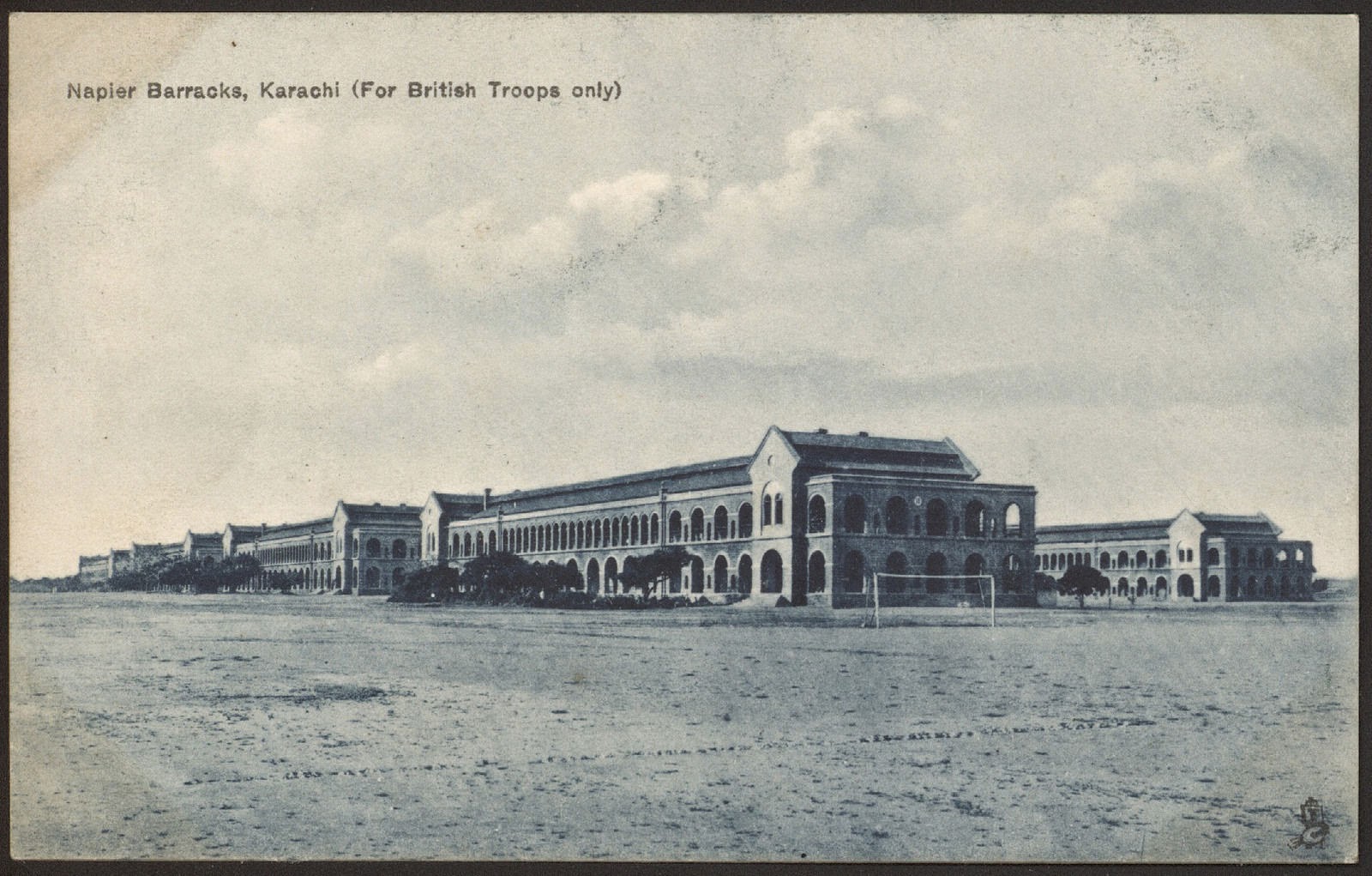
At least five times this month, a Pakistani bureaucrat who works from a colonial-era barracks in Karachi, just down the street from the former home of his country’s secularist founder, Mohammed Ali Jinnah, asked Twitter to shield his compatriots from exposure to accounts, tweets or searches of the social network that he described as “blasphemous” or “unethical.”

All five of those requests were honored by the company, meaning that Twitter users in Pakistan can no longer see the content that so disturbed the bureaucrat, Abdul Batin of the Pakistan Telecommunications Authority: crude drawings of the Prophet Muhammad, photographs of burning Qurans, and messages from a handful of anti-Islam bloggers and an American porn star who now attends Duke University.

The blocking of these tweets in Pakistan — in line with the country-specific censorship policy Twitter unveiled in 2012 — is the first time the social network has agreed to withhold content there. A number of the accounts seemed to have been blocked in anticipation of the fourth annual “Everybody Draw Muhammad Day” on May 20.

This censorship comes as challenges to Pakistan’s draconian blasphemy law have become increasingly deadly, amid a flurry of arrests, killings and assassination attempts on secularists.

The Pakistani journalist Raza Rumi survived an assassination attempt in March that killed his driver. He and other liberals have been targeted for criticizing Islamist militancy and a blasphemy law.

This week, a local edition of the International New York Times was printed in Pakistan with a large blank space instead of an Op-Ed article headlined “Pakistan’s Tyranny of Blasphemy.”

Twitter, which has trumpeted its commitment to free speech, argues that it is a lesser evil to block specific tweets that might violate local laws than to have the entire site blocked in certain countries. The company posts a record of every request it agrees to in the Chilling Effects Clearinghouse, a database maintained by eight American law schools and the Electronic Frontier Foundation.

In previous cases, Twitter has agreed to withhold the tweets of an outlawed neo-Nazi group from users in Germany, and this week it blocked the account of an ultranationalist Ukrainian group from users in Russia.

Eva Galperin, a global policy analyst for the Electronic Frontier Foundation, wrote on Thursday that Twitter’s decision to block the Ukrainian group Pravy Sektor’s tweets from Russians was “disappointing” for two reasons.

“First, Twitter has no employees or assets in Russia, so it should not have to comply with a Russian court order at all,” Ms. Galperin argued. “And the order isn’t even about a Russian account — it’s a Ukrainian one. Worse yet, Pravy Sektor’s account is plainly political. If Twitter won’t stand up for political speech in a country where independent media is increasingly under attack, what will it stand for?”

Ms. Galperin also pointed out that a civil rights group in Pakistan concerned with Internet access, Bolo Bhi, called “the legitimacy of the requests forwarded by Pakistan Telecommunication Authority” to Twitter questionable. The law that defines the regulator’s power, the group explained, “does not in any form give P.T.A. the authority to arbitrarily restrict content on the Internet.”

Close scrutiny of the law, the Pakistani rights group argued, suggests that “content removal, whether by itself or through another, is beyond the ambit of powers of the P.T.A. or of any government authority for that matter.”

Despite those concerns, the P.T.A. has dedicated a page of its website to making it easy for citizens to report “Blasphemous URLs,” as Omar Quraishi, the opinion page editor of Karachi’s Express Tribune, noted on Twitter.

Pakistani Military Says It Killed 60 Militants in Raids

North Waziristan bombed (Credit: thenews.com.pk)
North Waziristan bombed
(Credit: thenews.com.pk)

ISLAMABAD, May 21 — The Pakistani military said it killed at least 60 militants, and injured at least 30, in aerial raids on terrorist hide-outs across the North Waziristan tribal region near the Afghan border early Wednesday. Local residents, however, said the dead also included women and children.

The strikes were carried out in retaliation for recent attacks by the Taliban and came a day after Prime Minister Nawaz Sharif and the chief of the army, Gen. Raheel Sharif, met to review the security challenges facing the country.

“Confirmed militant hide-outs were targeted early morning today in North Waziristan through precision aerial strikes,” said a senior security official, who spoke on the condition of anonymity to divulge details of the strikes.

The official said the strikes had been carried out after security forces received intelligence reports that “terrorists involved in recent attacks” in Peshawar and two other areas were “in these hide-outs.”

Another security official said that foreign militants were the main targets of the strikes. “Pakistani militants and foreign militants from Eastern Turkistan Islamic Movement were the targets,” the security official said.

There were unconfirmed reports that two Pakistani militant commanders were killed in the airstrikes. The tribal region that borders Afghanistan in inundated with local and foreign militants, and Pakistani state control is very limited.

The Eastern Turkistan Islamic Movement, also known as the Turkistan Islamic Party, is based in North Waziristan and is made up largely of Turkic-speaking foreign militants including Uzbeks and Muslim Uighurs from the oil-rich northwestern Chinese province of Xinjiang, which has seen an increase in violence recently. China blames the Turkistan Islamic Party for the attacks.

The aerial strikes in North Waziristan came almost two weeks after at least nine soldiers were killed there when a powerful explosion hit a convoy carrying security forces.

Though the military denied there were any civilian casualties in Wednesday’s raid, local tribesmen said that at least 10 civilians were killed in the strikes. The claims could not be independently verified.

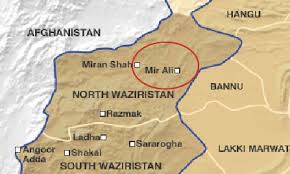
The strikes were carried out around 2 a.m. in different parts of Miranshah, a town in the restive North Waziristan tribal region, which has long been a bastion for militant factions.

The strikes prompted the local government to impose a curfew in the area for fear of possible reprisals against security forces.

“In Mosaki village in Mirali, a house came under attack during aerial shelling, killing 10 civilians inside,” Haji Ghulam Khan, a local tribal elder, said by phone.

“Initially, they carried out bombardment through gunship helicopters and jets, followed by intensive artillery shelling,” Mr. Khan said. “Local people are running for their lives towards the nearby hills.”

A resident of Miranshah reached by phone, who asked not to be named, said that the death toll from the airstrikes was around 70, and that the dead included some women and children. He based his claim on contacts with local residents in Datta Khel, near Miranshah.

Phones went dead in most parts of the tribal region after the strikes and there was no independent confirmation of the number of casualties.

This was the second attack since the Pakistani Taliban announced on April 16 that they were ending a 40-day cease-fire. While the military has been eager to use force against the militants, the civilian government has insisted on holding peace talks. The talks grew out of an initiative announced Jan. 29 by Mr. Sharif, who said he would pursue a dialogue with the Taliban despite their attacks and growing calls in Pakistan for military action against them.

But dialogue between the government and the Taliban has faltered in recent weeks as each side has accused the other of not taking the talks seriously. There has been no public contact between Taliban and government representatives since March 26.

“The Taliban are ready for peace talks and very much serious, but the government side is lacking seriousness,” said Maulana Yousaf Shah, a Taliban representative. “At the moment, the government is the main hurdle.”

He said that the interior minister had announced a meeting between the negotiating committees of the government and the Taliban to discuss the prospects of the talks but that “so far nothing has happened.”

Separately, six people were shot dead by unidentified gunmen in southwestern Baluchistan Province, local news media reported.

Armed gunmen forced their way into the house of Abdul Hameed Baloch, a schoolteacher, in Dasht Chot village, about 25 miles (40 kilometers) from Turbat, a small town in the province, and opened fire at 4:30 a.m.

Those killed included two of Mr. Baloch’s brothers.

Baluchistan, a natural resources rich province, has long witnessed a simmering separatist movement, led by Baluch nationalists.

Blasphemy Charge Attempts to Rein in Jang Group
Intelligence agencies go for the Kill

Veena Malik wedding (Credit: pakistanyan.com)
Veena Malik wedding
(Credit: pakistanyan.com)

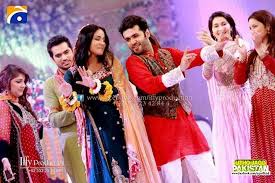
Islamabad, May 18: Pakistan police today registered a criminal case against against Geo TV owner Mir Shakeel-ur Rehman and Jang media group for showing a programme that allegedly contained blasphemous content, an official said.

Geo channel on Wednesday staged a mock marriage ceremony of controversial actress Veena Malik as a religious song was played in the background.
District and sessions judge of Okara in Punjab province yesterday ordered that a case be registered against Geo media group owner Rehman, anchor Shaistan Lodhi, actress Veena, her husband Asad Khatak and others over the programme.

Police officer Rana Aziz said Veena, her husband Asad and programme hostess Lodhi were also named in the case registered with Margalla police station in the capital Islamabad.

“They have been charged under Section 295 A, 295 C and 298 A of Pakistan Penal Code, which deal with insulting the religion, and Section 7 of anti-terrorism act,” he said.

Veena has recently married and the channel was celebrating the event.

The song eulogizes the marriage of one of the daughters of the Prophet and various clerics and right wing groups said that the way it was played at the mock marriage had hurt religious sentiments of Muslims.

Rallies have been held in several cities and protestors demanded registration of case against them under blasphemy laws, which prescribe maximum death sentence.
Geo group has since suspended Lodhi’s programme.

Lodhi has apologised to her viewers for hurting their sentiments after the programme drew bitter reaction from them.

Geo today published an apology on its Urdu paper ‘Jang’.

The channel administration has already sacked the entire team of the popular morning show, ‘Utho Gago Pakistan’.

The group is already under the hammer for criticizing spy agency ISI after its leading anchor Hamid Mir was attacked by unknown gunmen in Karachi last month.

The Defense Ministry has formally asked Pakistan Electronic Media Regulatory Authority, which controls media, to ban Geo for vilifying the security institutions.

The media group is also facing criticism from former cricketing hero Imran Khan, which has alleged that it was funded by foreign government and works against national interests.

Muzzling Pakistan’s Media

Karachi, Pakistan — Pakistan’s media is in upheaval these days. But it’s not because of the stuttering “talks” between the government and militant groups, who have publicly vowed to target journalists.

The current upheaval began with the attempted assassination in Karachi on April 19 of Hamid Mir, arguably Pakistan’s most recognizable talk show host and journalist. Mr. Mir survived despite taking six bullets. The real furor came not in reaction to the attack but to Mr. Mir’s employer — Geo Television — which broadcast Mr. Mir’s distressed brother’s statement accusing the country’s premier spy agency, Inter-Services Intelligence, of being behind the attempted murder.

Most Pakistanis were stunned by these blunt accusations. Even with stronger proof, charges against the I.S.I. or serving military officers are unheard of in a country that has spent half of its existence under military rule and where the intelligence services still exert a powerful and often-intimidating influence.

There have been allegations of military complicity in the targeting of journalists before — most notably in the killings of Hayatullah Khan in 2006, Syed Saleem Shahzad in 2011 and Abdul Razzak Baloch in 2013 — but the difference this time was that the accusations were being made by family members of a man who had survived and could corroborate them.

The military’s spokesperson, while sympathizing with the Mir family’s distress, termed the allegations “emotional” and Geo’s conduct in continuing to air them, “irresponsible.” But far more remarkable was the conduct of some of Geo’s competitors. Attempting to be more loyal than the king, they jumped into the fray, criticizing Geo for its “lack of editorial control” and “flouting of journalistic ethics” in allowing the accusations to be broadcast.

In normal circumstances, Pakistan’s boisterous TV channels are loath to even mention competitors’ names. But efforts to curry favor with the military combined with commercial interests and petty personal issues between owners — Geo News is three times as popular as its closest competitor and attracts up to 70 percent of advertising revenue on news channels — seem to have trumped all previous restraint.

The vitriolic attacks on Geo and its parent company, the Jang Group, have increased with each passing day. One competitor devoted all its talk shows and 20 minutes of every hourly news bulletin for several days to Geo’s faults. Despite the veneer of discussing journalistic ethics, the underlying message was that accusations against a military agency were unacceptable.

Then the military moved in for the real kill. It petitioned Pakistan’s media regulators to ban Geo for defaming the military as well as its associated newspapers, Jang and The News. It also called for unprecedented criminal prosecution of Geo’s owners and journalists.

Cable operators were informally pressured to take Geo off the air. Demonstrations, often by militant religious parties, suddenly began springing up all over Pakistan in support of the I.S.I. and against Geo — probably the first time anyone in the world has rallied to defend an intelligence agency. Now even some mainstream political parties, including the one led by former cricket star Imran Khan, have raised the banner against Geo.

Did Geo make poor editorial decisions? Perhaps. Could it be sued for defamation for airing specific accusations, even by distressed family members, without proof? Possibly. Is the military’s reaction a vast overkill? Most definitely.

From his hospital bed, Mr. Mir has now also pointed his finger at the I.S.I. or elements within it. Suddenly, his credentials as a patriot are being called into question by Geo’s competitors. Mr. Mir has long been a controversial figure and is certainly no saint, but now there are explicit attacks on his character and even his most principled views.

Contrary to conventional wisdom, this naked attempt to suppress media dissent isn’t a sign that Pakistan’s security establishment is reasserting control over the media; rather it demonstrates the establishment’s crumbling control over political narratives and its increasingly desperate measures to put the genie back in the bottle.

But attempts to intimidate and muzzle Pakistan’s media are destined to be futile. When Pakistan’s previous military ruler, General Pervez Musharraf, freed the electronic media from state-controlled monopoly in 2002, he scarcely could have imagined it would prove his own undoing five years later. Sure enough, his attempts to rein in an increasingly unruly media in 2007 only spurred greater defiance and dissent. The world had changed, technology provided alternative ways to access information, the public had found a voice. And within a year, he was forced from power.

The biggest loser in this sordid spectacle has been Pakistan’s media itself. Geo’s competitors and those journalists dissembling on the side of ethics while supporting the military’s hubris are being extremely short-sighted. Pakistan’s vibrant print media earned whatever freedom it has through a long process of standing up to despotic rulers rather than bowing down. Freedom of dissent for the electronic media won’t be presented on a platter; journalists will need to fight for it or risk suffering the same fate as Geo down the road.

At a time when all of Pakistan faces an existential threat from extremist groups, needless distractions and attacks on the free press are the last thing Pakistan needs from its army.

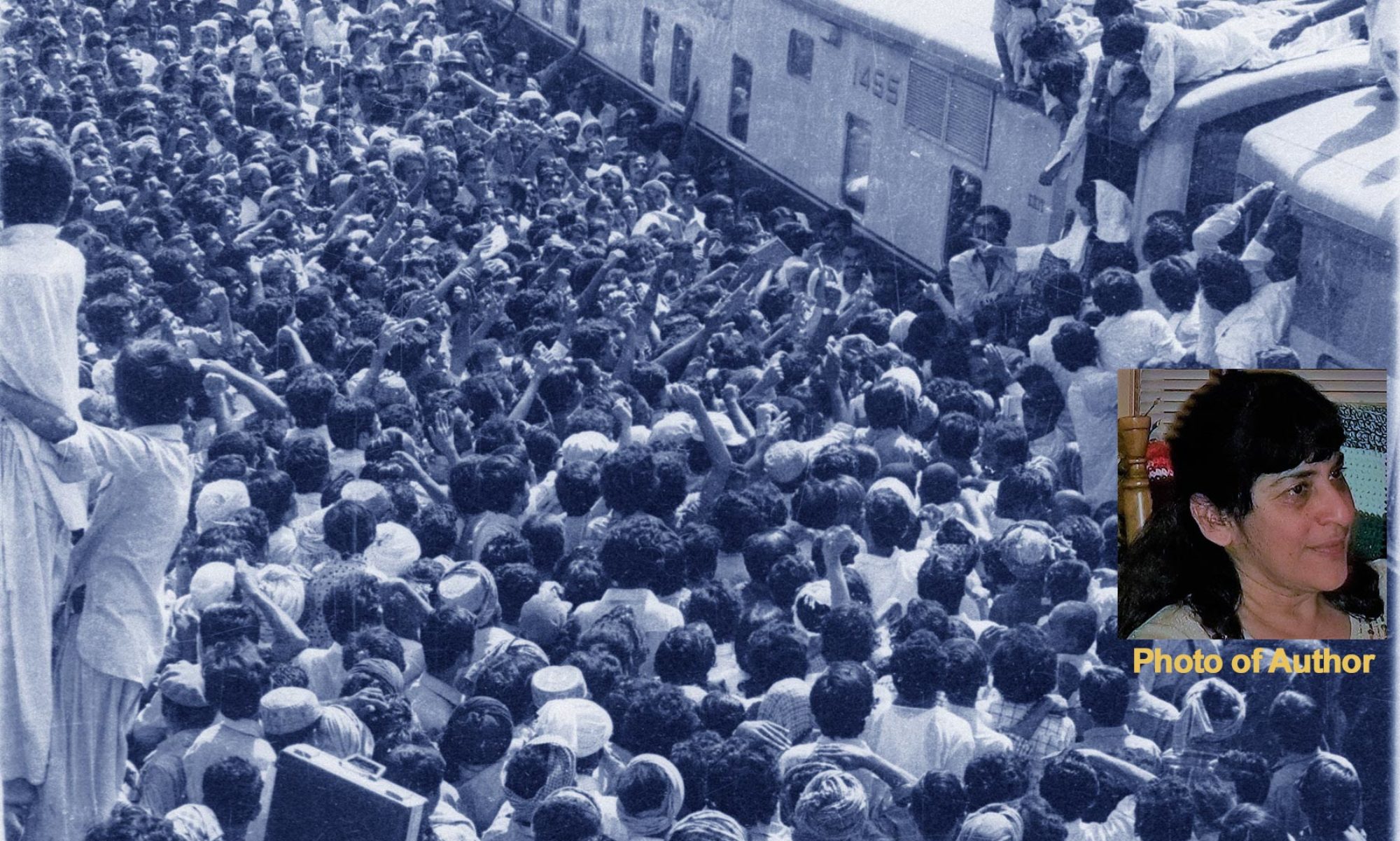
Hasan Zaidi is a Pakistani filmmaker and media analyst and a former Pakistan correspondent for NBC News.