Taliban’s Key Financier Killed in Islamabad

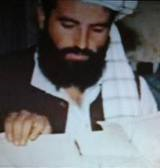
Naseeruddin Haqqani (Credit: longwarjournal.com)

Islamabad, Nov 11: One of the most senior leaders of the Haqqani militant network has been shot dead near the Pakistani capital, Islamabad, reports say.

Nasiruddin Haqqani, who was in his early 30s, was the group’s financier and a son of its founder Jalaluddin.

Reports say his body has been taken for burial to the North Waziristan tribal area near the Afghan border.

It is not clear who shot him or why. Nasiruddin Haqqani was on a US list of global terrorists.

The details of his death are still unclear, but reports say he was killed in a shooting incident in the city of Rawalpindi, next to Islamabad, on Sunday night.

Another Haqqani brother, Badruddin, who had been the group’s operational commander, was killed in a drone strike in August last year.

Nasiruddin’s elder brother, Sirajuddin Haqqani, now leads the group, while Jalaluddin remains its figurehead.

As the group’s main fundraiser, Nasiruddin frequently travelled to the oil-rich sheikhdoms of the Middle East to solicit donations.

Jalaluddin Haqqani (right) is seen here as Taliban minister of tribal affairs in 2001

He represented the Haqqani network in last year’s efforts to set up a Taliban office in Doha for peace talks with the United States.

He was also the group’s main contact person for pro-Taliban elements in Pakistan, as well as its representative with the Afghan Taliban.

‘Well-dressed networker’

Unlike his father and many of his brothers, Nasiruddin Haqqani and two of his uncles did not to live in Miran Shah in North Waziristan. He chose to base himself near Islamabad, from where he made his many journeys abroad to secure funds.

Some sources said he had major business interests in the Gulf, including a transport company.

Nasiruddin is not thought to have been publicly photographed.

Those who have met him describe a tall, educated, well-dressed man who travelled in expensive cars and networked an extensive list of contacts all the time.

They say his appearance gave no clue to his militant connections. His code name was “the doctor”, possibly because of a degree that he had studied for.

His death, if confirmed, will be a major blow to the Haqqanis, who will need to find someone else to spearhead their efforts to secure financing.

BBC correspondents say the killing will pile pressure on the Pakistani government because Nasiruddin’s death is reported to have happened on Pakistani soil.

Afghan authorities will be angry that someone who had been working to facilitate peace moves with the Afghan Taliban has been removed from the picture.

His death comes just 10 days after a US drone killed Pakistani Taliban leader Hakimullah Mehsud, who was also reported to be on the verge of entering peace talks with the government in Islamabad.

Those moves towards talks are now over, and he has been replaced by the more hardline Mullah Fazlullah, who swiftly ruled out any negotiations.

Attempts to begin talks between the US, the Afghan Taliban and the government in Kabul have been stalled since June.
Taliban takes Revenge through Election of New Leader

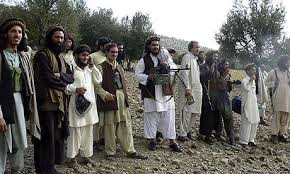
Mullah Fazlullah (Credit: thenewstribe.com)

The new head of the Pakistani Taliban, Mullah Fazlullah, has ruled out peace talks with the government, vowing revenge for his predecessor’s death.

A Taliban spokesman told the BBC the militants would instead target the military and the governing party.

Mullah Fazlullah was named the new leader six days after Hakimullah Mehsud was killed in a drone strike.

Mullah Fazlullah is a particularly ruthless commander whose men shot the schoolgirl activist Malala Yousafzai.

‘Just a trap’

Prime Minister Nawaz Sharif came to power in May pledging a negotiated settlement to the insurgency.

Mullah Fazlullah, believed to be in his mid to late 30s, led a brutal campaign in Swat between 2008 and 2009, enforcing hardline Islamic law that included burning schools, and public floggings and beheadings.

A military operation was launched to retake the area.

Mullah Fazlullah fled over the border into Afghanistan but Islamabad says he has continued to orchestrate attacks in Pakistan.

He was accused of being behind a roadside bomb in September that killed Maj Gen Sanaullah Niazi, the top commander in Swat, along with two other military personnel.

Mullah Fazlullah was known for his radio broadcasts calling for strict Islamic laws and earning him the nickname “Mullah Radio”.

In one undated video he pledges to do everything possible to introduce the laws, saying: “We will eliminate anything that will get in the way of achieving this goal: father or brother, soldier or police.”

The shooting of Malala Yousafzai in October 2012 sparked outrage in Pakistan and across the globe.

The teenager had spoken out against the Taliban’s restrictions on girls’ education.

She was airlifted to the UK for hospital treatment and now lives in Birmingham with her family.

This year Malala, now 16, addressed the UN General Assembly and won the European Union’s Sakharov human rights prize.

Prior to the latest Taliban announcement, the BBC’s M Ilyas Khan in Islamabad said that Mullah Fazlullah was not a member of the Mehsud clan and, if appointed, would face a challenge to control the Mehsud fighters, who make up the bulk of the Taliban’s manpower.

The TTP is a loose umbrella organisation of about 30 militant groups.

Khalid Haqqani has been named deputy leader of the TTP, but he is not thought to be linked to the Haqqani network that is fighting Nato-led troops in Afghanistan.

October 2013 Review of ‘Aboard the Democracy Train’

Unputdownable! Required reading for anyone who is interested in how Pakistan came into being, developed into the country that it is today and what it was like in between being the only women journalist during dictator Zia ul Haq’s military rule. Nafisa Hoodbhoy is a an extremely brave and defiant woman and a great writer whose storytelling qualities enable one to live through the different times as she has. Certainly worth reading a second time.

Karen McFly is an Eastern German living in the UK

Stricken Taliban Leader’s Life style is Wake up Call

Hakeemullah & co (Credit: thegatewaypundit.com)
Hakeemullah & co
(Credit: thegatewaypundit.com)

MIRAMSHAH: With marble floors, lush green lawns and a towering minaret, the $120,000 farm where feared Pakistani Taliban leader Hakimullah Mehsud died in a US drone strike was no grubby mountain cave.

Mehsud spent his days skipping around Pakistan’s rugged tribal areas to avoid the attentions of US drones.

But his family, including two wives, had the use of an eight-roomed farmhouse set amid lawns and orchards growing apples, oranges, grapes and pomegranates.

As well as the single-storey house, the compound in Dandey Darpakhel village, five kilometres north of Miramshah, was adorned with a tall minaret, purely for decorative purposes.

Militant sources said the property in the North Waziristan tribal area was bought for Mehsud nearly a year ago for $120,000, a huge sum by Pakistani standards, by close aide Latif Mehsud, who was captured by the US in Afghanistan last month.

An AFP journalist visited the property several times when the previous owner, a wealthy landlord, lived there.

With the Pakistan army headquarters for restive North Waziristan just a kilometre away, locals thought of Mehsud’s compound as the “safest” place in a dangerous area.

Its proximity to a major military base recalls the hideout of Osama bin Laden in the town of Abbottabad, on the doorstep of Pakistan’s elite military academy.

“I saw a convoy of vehicles two or three times in this street but I never thought Hakimullah would have been living here. It was the safest place for us before this strike,” local shopkeeper Akhter Khan told AFP.

This illusion of safety was shattered on Friday when a US drone fired at least two missiles at Mehsud’s vehicle as it stood at the compound gate waiting to enter, killing the Pakistani Taliban chief and four cadres.

The area around Dandey Darpakhel is known as a hub for the Haqqani network, a militant faction blamed for some of the most high-profile attacks in Afghanistan in recent years.

Many left the area during the Taliban’s rule in Afghanistan, coming back after the US-led invasion following the 9/11 attacks.

Samiullah Wazir, a shopkeeper in the area, told AFP he would regularly see a convoy of four or five SUVs with blacked-out windows leave the compound early in the morning and return after sunset.

“We thought that somebody very important must be living in this house,”Wazir said.

“One day, I saw a man wearing a white shawl entering the house and I thought he looked like Hakimullah, but I thought ‘How can he live here because he could be easily hit by a drone strike?’” But Hakimullah it was and on Friday he returned to his compound for the final time.

“We were closing the shop when his vehicle came and was about to enter the house when a missile struck it,” Wazir said.

“Moments later, an army of Taliban came and they cordoned off the area.”

TTP alleges ‘double dealing’ by government

PESHAWAR, Nov 4: Blaming the Pakistan government for the killing of Hakimullah Mehsud in the US drone attack, the Taliban on Sunday announced they would not hold any peace talks with the government and threatened to avenge the killing of their leader.

There were reports about differences among various factions of the banned Tehrik-e-Taliban Pakistan (TTP) over finding a successor to Hakimullah Mehsud. The Taliban, however, denied that.

“After consultation with all the factions, it has been unanimously decided that we will not hold any peace talks with the government. It’s a puppet government of the US and it deceived us in the name of peace talks,” the TTP spokesman Shahidullah Shahid told this correspondent from his Afghan cell phone.

He claimed the TTP leadership knew that the government was not sincere in peace talks but the Taliban leadership decided to hold negotiations for the sake of the Pakistani people.
“We did not want innocent Pakistani people to suffer any more and therefore decided to hold negotiations with the government. But the government, by helping the US in the killing of Hakimullah Mehsud, proved that there was zero sincerity in the mind of the rulers. It was neither sincere nor serious in peace negotiations,” a seemingly furious Taliban spokesman noted.

He warned the government would have to pay the price for, what he termed playing a double game with the TTP.

Shahidullah said Hakimullah Mehsud’s killing was a “huge loss” to the Pakistani Taliban, adding they would always feel his absence.“We are passing through a difficult phase and are still in the state of mourning. And that’s the reason we could not sit to choose his successor,” he remarked.

He said the TTP Shura would hold its meeting within the next few days and would choose the next Taliban leader. When told about reports that the Shura had held its meeting in North Waziristan but could not develop consensus over one name, the Taliban spokesman said it was not true.

He said all the Shura members had been informed about the meeting and they would soon gather at a safe place to choose Hakimullah’s successor. For the time being, Shahidullah said the Taliban commander from Jandola in the Frontier Region Tank, Asmatullah Shaheen Bhittani, had been appointed as Ameer of the TTP central Shura.

“He is not an acting Ameer of the TTP as reported by the media. He would work as Ameer of the TTP central Shura and would, along with other members of the Shura, oversee affairs of the network till the new Ameer is nominated,” the spokesman explained.

About the announcement of the Pakistan Tehreek-e-Insaf-led government in Khyber Pakhtunkhwa to stop the Nato supplies through the province, the spokesman said, “It is an encouraging attempt as it would at least cause some damage to our enemy but it will not help restore our trust in the government.”

However, other militant leaders welcomed this decision of the PTI government.“Though we oppose the PTI leadership as it is now a party to the system, we appreciate this decision of stopping the Nato supplies,” a senior militant commander operating in Afghanistan said.
He, however, said they would soon start targeting the Pakistan Muslim League-Nawaz (PML-N) leadership for its alleged support to the US in the region.Meanwhile, Taliban sources said the TTP Shura had started its meeting but after a day-long session, the participants could not reach a consensus on the nomination of the TTP leader.

“The Shura held several sessions on Sunday but they could not convince each other on one name. The meeting has been postponed for three days. It has been decided to invite senior members of the TTP and create a consensus on one name,” one of the Shura members told this correspondent.

Pleading anonymity, he said three names of senior Taliban commanders were presented at the Shura meeting. They were Maulana Fazlullah, Hafiz Saeed Khan and Maulana Gul Zaman.
Maulana Fazlullah is the leader of the Swat Taliban and is presently based in Afghanistan’s Kunar province. Hafiz Saeed Khan is the TTP leader in Orakzai Agency. He belongs to the Orakzai tribe and is a resident of the Mamozai area in the militancy-plagued Orakzai Agency. Among the militant circles, he is known as one of the most hardline and dangerous militant commanders. Besides his native Orakzai Agency, Taliban sources said he had organised dozens of deadly attacks on key installations in major cities of the country, including the US Consulate in Peshawar through four suicide bombers, the Peshawar airport, military checkpoints, mourning processions of the Shia community and worship places of Ahmadis. It is said it was Said Khan who organised a suicide car blast on the tribal jirga in Orakzai Agency on October 10, 2008 and killed over 50 people. He proudly claimed the recent suicide car attack on the compound of Mulla Nabi Hanafi in Orakzai Agency.

Like Maulana Fazlullah, he, too, had two wives and is the father of three children.The third militant commander is Maulana Gul Zaman. He, too, belongs to the Orakzai Agency and is the TTP Ameer in the Khyber Agency.

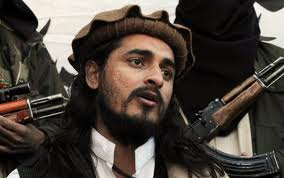
Stream of Reports Say Pakistani Taliban Leader Died in Drone Strike

Hakeemullah Mehsud (Credit: telegraph.co.uk)

LONDON, Nov 1 — An American drone strike killed the leader of the Pakistani Taliban, Hakimullah Mehsud, on Friday, according to Pakistani intelligence officials and militant commanders in the tribal belt.

If confirmed, his death would be a major achievement for the covert C.I.A. program at a time when drones have come under renewed scrutiny over civilian casualties in both Pakistan and the United States.

While prior reports of Mr. Mehsud’s death have proved false, and the Pakistani Taliban offered no comment, there was a proliferation of accounts of his death on Friday from multiple sources, including the militants, within hours of the missile attack. Mr. Mehsud, a showy and ruthless militant leader whose group has been responsible for the death of thousands of civilians across Pakistan as well as many soldiers, had a $5 million United States government bounty on his head.

The strike occurred in Danday Darpakhel, a well-known Pakistani Taliban stronghold in the North Waziristan tribal agency, near the Afghan border.

Pakistani intelligence officials said that American drones fired at least four missiles toward a compound that had been constructed for Mr. Mehsud about a year ago, and which he has used intermittently since then.

A government official in Peshawar, citing intelligence reports, said five militant commanders had been killed in the attack, including Mr. Mehsud, his uncle and a bodyguard, and two wounded.

The strike killed Mr. Mehsud’s deputy, Abdullah Behar, who had just taken over from Latif Mahsud, a militant commander who was detained by American forces in Afghanistan last month, the official said.

“The chances of Hakimullah Mehsud being killed are pretty high,” said another Pakistani official, requesting he not be named. “Our reports said that he was there at the time of the drone strike.”

A local Taliban commander, speaking by phone and insisting on anonymity, said Mr. Mehsud had been killed. “Hakimullah has been martyred in the attack,” he said.

Haji Ghulam Jan Dawar, a resident of North Waziristan whose nephew fights with the Taliban, said he had learned that Mr. Mehsud was dead. “My nephew told me that Emir Sahib is no more,” said Mr. Dawar, employing an honorific to refer to Mr. Mehsud.

Mr. Mehsud’s death could also throw into disarray — or possibly render redundant — controversial plans by the Pakistani government to engage in peace talks with the Pakistani Taliban.

The Pakistani government did not immediately confirm the killing of Mr. Mehsud, and Chaudhry Nisar Ali Khan, the interior minister, was initially quoted as saying that the drone strike was aimed at sabotaging the peace talks.

A three-member delegation representing the Pakistani government is due to meet militant representatives in Peshawar and the town of Bannu, near the tribal belt, on Saturday.

Mr. Mehsud’s death would also represent payback, of sorts, for the C.I.A.: Mr. Mehsud orchestrated a major suicide bombing against a C.I.A. base in southern Afghanistan in 2009 that killed seven Americans and two other people.

The drone strike comes just over a week after Pakistan’s prime minister, Nawaz Sharif, met with President Obama in the White House. Mr. Sharif has repeatedly stated his opposition to drone attacks, which are a hot-button political issue in Pakistan.

“There is an across-the-board consensus in Pakistan that these drone strikes must end,” the Foreign Ministry statement said.

But steady media leaks and other reports in recent months have suggested that some senior Pakistani civilian and military leaders have quietly cooperated with the drone strikes, and even approved of some.

Still, after the strike on Friday, Pakistan’s Foreign Ministry issued a pro-forma condemnation, employing the usual language about the American action’s being a violation of Pakistan’s “sovereignty and territorial integrity.”

Reports of Mr. Mehsud’s death met an uneasy welcome across Pakistan.

Some feared a violent backlash led by militants carrying out suicide attacks across the country. Right-wing politicians described it as a setback for peace efforts.

Shireen Mazari, a leader of the Tehreek-e-Insaf party, blamed the United States for creating instability in Pakistan.

“Terrorism will increase and attacks will increase,” Ms. Mazari told the Express News television channel. “We should shoot the drones down.”

But others welcomed news of Mr. Meshud’s demise. Athar Abbas, a former army general and spokesman, said in a television interview that the United States may have “helped Pakistan, by eliminating a person who was damaging the state of Pakistan.”

Hours before the strike, three American congressmen and the American ambassador to Pakistan, Richard Olson, met with Sartaj Aziz, the prime minister’s adviser on national security and foreign affairs, in Islamabad.

In a statement, the Foreign Ministry said that Mr. Aziz had “expressed satisfaction at the upward trajectory in bilateral relations between Pakistan and the United States.”

Declan Walsh reported from London, Ishanullah Tipu Mehsud from Islamabad, and Ismail Khan from Peshawar, Pakistan. Salman Masood contributed reporting from Islamabad.


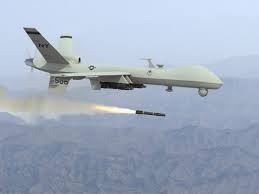
‘Drone Strikes will End Soon – Obama’

Drones over Pakistan (Credit: dronewars.net)

ISLAMABAD, Oct 25: While any mention of the drone issue was conspicuously missing in their joint statement, US President Barack Obama has privately assured Prime Minister Nawaz Sharif that the controversial programme will end soon, according to a senior Pakistani official.

The official, who was accompanying the prime minister on his just-concluded visit to Washington, told The Express Tribune that ‘significant progress’ has been made on the drone issue.

Speaking on condition of anonymity because of the sensitivity of the matter, he said Washington was considering ending the drone campaign once the “few remaining targets” had been eliminated from Pakistan’s tribal belt. According to the official, President Obama told Prime Minister Nawaz that the CIA had already eliminated most of the high-value targets (HVTs) from the region.

Although the American president did not give a timeline for halting the drone campaign, Islamabad expects the unilateral strikes will end in a matter of months, he said.


Another source, meanwhile, pointed out that, unlike previous assessments, the Obama administration informed the new government that the drone programme would not continue beyond 2014.

Nawaz Sharif, who was on a first bilateral trip to US since his party swept to power following the May 11 elections, raised the issue of drone strikes in his meeting with Obama. But the US president remained silent on the matter at the joint news conference at the Oval Office in the White House.

Behind closed doors, however, Obama assured Premier Nawaz that drone strikes would only be used as a last option, claimed the senior official. He said the US president also said that he had directed the CIA to ensure greater transparency in conducting the strikes and avoiding collateral damage while eliminating the remaining HVTs.

The Express Tribune has also learnt that the US may temporarily suspend drone strikes in the tribal areas in an effort to allow the government to conduct peace talks with the Taliban.

Prime Minister Nawaz himself hinted on Thursday that the drone issue would “settle down somehow.”

“Hopefully, the drone issue will be resolved according to the wishes of the Pakistani people soon… There was definitely some progress on the matter [during the meetings] and I think this issue will now settle down somehow,” he said while talking to reporters during a brief stopover in London on his return to Pakistan.

Earlier, Prime Minister’s Adviser on National Security and Foreign Affairs Sartaj Aziz had also hinted at a possible end to drone attacks.

In an interview with Al Jazeera, Aziz claimed that the US administration had given assurances to consider Islamabad’s request on drone attacks behind the scenes. He did not give further details, however.

The US considers the drone programme as crucial to eradicate high value targets associated with al Qaeda and the Taliban from the tribal areas.

Pakistan has publicly condemned such strikes and in recent years has been more vocal against the CIA-led campaign.

Published in The Express Tribune, October 25th, 2013.


Before Malala

William Dalrymple (Credit: emel.com)

NEW DELHI — Ever since Malala Yousafzai recovered from her shooting by the Taliban last year, she has been universally honored: As well as a nomination for the Nobel Peace Prize, she has been given everything from the Mother Teresa Award to a place in Time Magazine’s “100 Most Influential People in the World.”

Malala’s extraordinary bravery and commitment to peace and the education of women is indeed inspiring. But there is something disturbing about the outpouring of praise: the implication that Malala is a lone voice, almost a freak event in Pashtun society, which spans the border areas of Afghanistan and Pakistan and is usually perceived as ultraconservative and super-patriarchal.

Few understand the degree to which the stereotypes that bedevil the region — images of terrorist hide-outs and tribal blood feuds, religious fanatics and the oppression of women — are, if not wholly misleading, then at least only one side of a complex society that was, for many years, a center of Gandhian nonviolent resistance against British rule, and remains home to ancient traditions of mystic poetry, Sufi music and strong female leaders.

While writing a history of the first Western colonial intrusion into the region, I heard many stories about the woman Malala Yousafzai is named after: Malalai of Maiwand. For most Pashtuns, the name conjures up not a brave teenage supporter of education, but an equally brave teenage heroine who turned the tide of a crucial battle during the second Anglo-Afghan war.

Malalai does not appear in any British account of the Battle of Maiwand, but if Afghan sources are accurate, her actions led to the British Empire’s greatest defeat in a pitched battle in the course of the 19th century.

According to Pashtun oral tradition, when, on July 27, 1880, a British force was surprised by a much larger Pashtun levy, the British initially made use of their superior artillery and drove back the Afghans. It was only when Malalai took to the battlefield that things changed. Seeing her fiancé cowed by a volley of British cannon fire, she grabbed a fallen flag — or in some versions her veil — and recited the verse: “My lover, if you are martyred in the Battle of Maiwand, I will make a coffin for you from the tresses of my hair.” In the end, it was Malalai who was martyred, and her grave became a place of pilgrimage.

Malalai was not alone. The more I read the Pashtun sources for the Anglo-Afghan wars, rather than the British ones, the more I saw that prominent women were in the story.

The Afghan monarch at the turn of the 19th century, Shah Shuja ul-Mulk — a direct tribal forebear of President Hamid Karzai — was married to a Pashtun woman, Wafa Begum, who most contemporaries judged to be the real power behind the monarchy. (The British praised her for her “coolness and intrepidity.”) When the shah was overthrown and imprisoned in Kashmir, his wife negotiated his release in return for his most valuable possession, the Koh-i-Noor diamond, the largest in the world.

She then played a crucial role in freeing him from a second captivity in Lahore. She helped organize an elaborate escape plan involving a tunnel, a sewer, a boat and a succession of horses. Wafa Begum later charmed the British into giving her asylum, thus providing members of her dynasty with the base from which they would eventually return to their throne in Kabul. She died in 1838, just before the British put her husband back on the Afghan throne. Many have attributed the ultimate failure of that enterprise to the absence of her strategic good sense.

The region also has a great tradition of peaceful resistance. In the 1930s, the North-West Frontier, under the Pashtun leader Badshah Khan, became an unlikely center of Gandhian nonviolence against the British Raj. A prominent group of activists called the Khudai Khidmatgars, or Servants of God, drew direct inspiration from Gandhi’s ideas of service, disciplined nonviolence and civil disobedience to defy the colonial authorities. They also championed education, in order to marginalize the influence of the conservative ulema — the religious scholars. As the leading modern writer on the movement, Mukulika Banerjee, has shown, the Khudai Khidmatgars have been virtually erased from the nationalist historiography of post-partition Pakistan.

The fact that all this history surprises us as much as it does is a measure of how far we have allowed the extremists to dominate our images of what it means to be a Muslim in general, and Pashtun in particular. It is certainly true that both sides of the Afghanistan-Pakistan border have been lacerated by violent extremism and misogyny — ever since the United States, the Saudis and Pakistan’s intelligence agency armed religious extremists in Peshawar in the 1980s to take on the Soviet Union. But it should be remembered that the main resistance to extremism has been the local Pashtuns themselves.

We owe it to Malala and many others who share her ideals to refuse to allow the radicals to win the battle of perceptions. It is, and has always been, possible to be a Muslim Pashtun and to embrace nonviolence and a prominent role for women in public affairs. Indeed the greatest weapon we have in the war on terrorism in that region is the courage and the decency of the vast proportion of the people who live there.

William Dalrymple is the author, most recently, of “Return of a King: The Battle for Afghanistan, 1839-42.”


UN Women Committee Selects ATDT for Book Reading

UN Book Reading (Credit: unwomen-unsc.org)
The Gulf Coast Chapter Book Club will read from Nafisa Hoodbhoy’s book `Aboard the Democracy Train,’ in Sarasota, Florida on Nov. 4, 2013, The book reading will include comments taken from the author, including hopeful signs of change such as greater access to schools and the internet by girls and women in Pakistan.

The Gulf Coast Chapter Book Club focuses on reading books about women in developing countries and also serves as an educational, as well as literary and enjoyable monthly forum. The book club meets every second Monday at the Sarasota North County Library from 2:30-4:00. All members are invited to attend. For further information, please contact Leita Kaldi Davis at lkaldi@hotmail.com

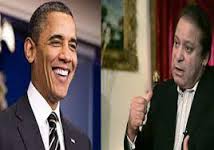
Sharif to Obama: Stop drone attacks on Pakistani soil

Obama Sharif meeting (Credit: internationalreporter.com)

WASHINGTON, Oct 23 — Pakistani Prime Minister Nawaz Sharif said he’d told President Barack Obama on Wednesday that U.S. drone strikes in his country needed to end.

The remarks came as the two leaders met in person for more than two hours in high-level talks aimed at beginning to mend a historically troubled relationship.

Sharif, who described the Oval Office talks as “cordial and comprehensive,” said Pakistan and the U.S. had agreed to cooperate further on counterterrorism measures, but he nevertheless said he’d raised the issue of drone strikes with Obama, “emphasizing the need for an end to such strikes.”

His visit came a day after the White House defended the drone program as it disputed claims by two human rights groups that its targeted-killing program violates international law and often has killed civilians, including a grandmother in Pakistan.

Obama didn’t mention the controversial targeted-killing program, but he did say the two leaders had talked about the need to work together to curb terrorism and extremism – in ways that “respect Pakistan’s sovereignty” and address both countries’ concerns.

“I’m optimistic that we can continue to make important strides in moving forward,” the president said, noting that terrorist attacks have affected both countries. “It’s a challenge. It’s not easy, but we committed to working together and making sure that rather than this being a source of tension between our two countries that it can be a source of strength.”

Obama said the U.S. considered Pakistan “a very important strategic partner” and thought “that if Pakistan is secure and peaceful and prosperous, that’s not only good for Pakistan, it’s good for the region and it’s good for the world.”

The president said the two had “spent a lot of time” talking about Pakistan’s economy and that the U.S. would look to boost trade opportunities with the country.

They also discussed Afghanistan, and Obama said he’d pledged to “fully brief” Sharif on the Afghan elections and “long-term strategy for stability in the region.” Sharif said Pakistan was committed to a “peaceful and stable Afghanistan.”

The president said he was encouraged by Sharif’s recent meeting with the Indian prime minister, Manmohan Singh, on the sidelines of the United Nations General Assembly in New York last month.

“I think he is taking a very wise path and exploring how the tension between India and Pakistan could be reduced,” Obama said, adding that Sharif had pointed out that billions of dollars had been spent on an arms race in response to the discord.

Obama also was expected to raise the case of Shakil Afridi, a Pakistani doctor who was sentenced last year to 33 years in prison for treason after helping the CIA hunt for Osama bin Laden in Pakistan.

The U.S. thinks Afridi’s treatment has been “unjust and unwarranted” and that he should be released, White House Press Secretary Jay Carney said. He said before the meeting that bringing bin Laden to justice “was clearly in Pakistan’s interest, and the prosecution and conviction of Dr. Afridi sends exactly the wrong message about the importance of this shared interest.”

Neither leader mentioned Afridi in his remarks.

Outside the gates of the White House, supporters of Pakistani former military dictator Pervez Musharraf protested his arrest in the December 2007 assassination of former Prime Minister Benazir Bhutto.

Musharraf ruled Pakistan from 1999 to 2008 after leading an October 1999 coup d’etat against Sharif, who was then in his second term as prime minister and is now back in the office after his party won elections in May.