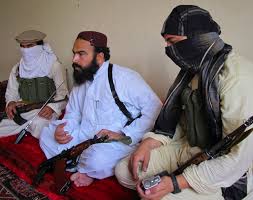
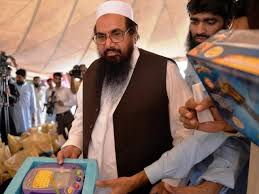
TTP (Credit: centralasiaonline.com)Peshawar, Oct 22: Freedom Network expressed concern at circulation of an old Fatwa, or religious decree, attributed to Pakistani Taliban-linked clerics encouraging attacks on media for coverage of ongoing militancy in Pakistan.
“We are concerned at the circulation of the fatwa (edict) with pictures of Mr Hasan Nisar and Mr Hamid Mir, one of the country’s leading columnists and journalists, and urge the federal government of Prime Minister Nawaz Sharif to move against elements encouraging violence against media,” FN, the country’s first media watchdog organization monitoring press freedom violations and freedom of expression and online journalism, said in an alert on 22 October.
The circulation of the fatwa comes days after Federal Minister for Information and Broadcasting Pervez Rasheed committed the present government to supporting the UN Plan of Action on impunity of crimes against media in Pakistan.
A special publication by little-known ‘Jihad-e-Pakistan’ gives insight into the banned Tehreek-e-Taliban Pakistan (TTP)’s mindset about national and international media organizations and journalists working for them.
The decree, according to FN research, was issued last year when coverage of attack on Malala Yousafzai angered the TTP lobbing open threats against media organizations carrying the Malala with prominence. However, its circulation on social media has been alarming with particular reference to carrying pictures of the two senior journalists.
“It will have double-edge impact on followers of the TTP organization who may be tempted to physically assault the two journalists in particular and others in general,” FN underscored the danger to personal safety of the two and many other independent journalists due to the edict’s circulation purposely.
The Pakistani Taliban-linked religious scholars had issued the edict against the media for what they claimed journalists are “siding with secularism and the West” in the ongoing war on terror and militancy, referring to the “mujahideen” as terrorists and anti-peace, using the word of martyr for slain security forces and promoting vulgarity and obscenity among the Muslims.
Posted on a website of the Taliban militants, the decree has named certain Urdu and regional languages radio stations and called for actions against their reporters and other media persons.
The Urdu language ‘fatwa’, translated by senior journalist Tahir Khan, said that the media persons should first be given “a warning and pardoned if they stop ‘enmity with Islam’ and propaganda against Muslims.” But action should be taken in line with Jehad policy against those who continued their work.”
The decree, issued by “Shura Ulema-e-Mujahideen” of the TTP, said using the word of martyr for the slain security personnel was “part of the anti-Taliban propaganda.”
Although the TTP distanced itself from the edict but it has renewed old stance to take on such media who what the banned militant organization said was “spreading vulgarity.”
Speaking to The News newspaper, the TTP spokesman denied his organization had any connection with the fatwa. “No edict has been issued by TTP in this regard,” the spokesman, Shahidullah Shahid, told the newspaper from undisclosed location.
“The media sparks sentiments against the Muslims and the mujahideen and is showing anti-Taliban plays,” the edict said, adding media persons were using referring to the “mujahideen (a reference to the Taliban)” as “terrorist, miscreants, extremist and anti-peace” elements.
Islamabad-based senior journalists held the view that a third party might be using the fatwa to pressure independent journalists. “The circulation of this fatwa is purposely and the aim is to terrorize journalists to change current media narratives,” they confided to FN.
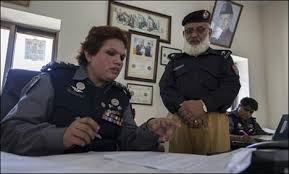
ABBOTTABAD, Oct 20: When Shazadi Gillani, the highest ranking female police officer in Pakistan’s most conservative province, wanted to join the force she had to defy her father, forego marriage and pay for her own basic training.
During the next 19 years, Inspector Gillani and her faithful sidekick Rizwana Zafar, brought up as a boy after becoming her frustrated father’s ninth daughter, have battled bandits, earthquakes and militants.
The Taliban are so pervasive in Gillani’s northern Khyber Pakhunkhwa province that she wears a burqa, a head-to-toe robe with a small mesh window for the eyes, when she travels.
Zafar dons a fake moustache to escort her.
But the women’s biggest challenge is helping new female police recruits.
Women make up just 560 of the province’s 60,000-strong force.
Police chiefs hope to double that within a year, but tough working conditions make recruitment hard.
There have been small victories.
Germany funded female dormitories at three training colleges.
Women recruits no longer wait years for basic training.
This summer, the province opened women’s complaint desks in 60 male-run police stations.
Many Pakistani women face horrifying violence and officials hope more abused women will report attacks. Tradition forbids them from speaking to male officers.
The province opened two women-only police stations in 1994.
But they have long been starved of resources and responsibility.
“We are fighting a war in the workplace,” said Zafar, whose uniform sports a karate patch. “We are supporting our juniors. There was no one to support us.”
From schoolgirls to cops
As a schoolgirl, Gillani wanted to join the army like her father. They were not recruiting, so she proposed the police instead. Her father and seven brothers were horrified.
“They said police disrespected women,” she said, auburn hair peeping out from her cap. “I had a lot of opposition.”
After a week of refusing to eat, and lobbying by her college lecturer mother, Gillani’s father gave in. He had three conditions: Be brave. Marry your job. Bring a friend.
So Gillani recruited her school friend Zafar.
Zafar cut her hair short and dressed like a boy. She taught herself to ride motorbikes, use computers and fix engines. She is Gillani’s bodyguard, assistant and friend.
“I don’t cook. I don’t have a dress. I’m not scared of anyone except God,” Zafar said. “We protect each other, we guard each other. When one is sleeping, the other is awake.”
When a colleague tried to force his way into their tent after an earthquake levelled their town, Zafar and Gillani fought him off together.
Women police were not respected when Gillani joined, but the military was.
Her army major father shoehorned them into courses and footed the bill.
Gillani’s training cost $2,000.
The money was returned eight years later.
Not everyone had a powerful father.
Rozia Altaf joined 16 years ago and waited six years and submitted more than 50 applications to get her basic training.
Now head of the women-only station in the provincial capital of Peshawar, she says things have changed, a little.
“We were neglected,” she said, waving a dismissive hand. “But now I make sure my junior officers get training and promotions on time.”
The Peshawar women-only station gets about 50 complaints a year, far less than a male-run station.
The last crime reported at the Abbottabad women-only station was in 2005.
Station head Samina Zafar sits at a bare desk in an empty room lit by a single naked bulb.
“We are not given good facilities,” she said. “I want this place to be like a man’s police station.”
Attackers rarely prosecuted
Women do prefer to confide in female officers, says professor Mangai Natarajan, who studied women police stations.
She says domestic violence accounted for two-thirds of cases reported to women’s stations in India’s Tamil Nadu state.
Police mediation reduced violence for half the complainants.
No Pakistani data exists.
The women’s desks in Khyber Pakhtunkhwa receive a complaint every few days, mostly domestic violence.
The attacker is usually simply rebuked. Victims fear a formal case will bring further violence.
But some policemen still say no woman willing to join the police is worth having.
“Women who join the force don’t care for their reputations or have nowhere else to go,” said one senior officer.
Gillani and Zafar are infuriated by such talk.
“If people see women police doing their jobs well, they will change their minds,” said Gillani, supervising the fingerprinting of a tearful accused kidnapper.
While she must wear a burqa to head home, she refuses to do so in the station.
“If we are doing the job of a man, why should we not show our faces?” she asked. “Change is a challenge for all of society, not just police.”
PESHAWAR, Oct 16: At least eight people, including Khyber Pakhtunkhwa law minister Israrullah Gandapur, were killed Wednesday when a suicide bomber exploded outside his residence in Dera Ismail Khan, police said.
More than 30 people were wounded in the attack, including Gandapur’s elder brother, said Irfan Mahsud, the assistant commissioner in Dera Ismail Khan.
Deputy Superintendent of police, Jan Mohammad Khan, confirmed the minister’s death.
Provincial health minister Shaukat Yousafzai also confirmed Gandupar’s death. “I talked to the minister’s brother and he told me that Gandapur has been martyred,” he said.
According to eyewitnesses, the provincial law minister was exchanging Eid greetings with people at his residence in tehsil Kullachi, about 50 kilometres from Dera Ismail Khan, when the suicide bomber detonated his suicide vest.
“I saw so many dead people and injured people crying for help,” said eyewitness Haseeb Khan, whose new white holiday clothes were drenched in blood. “There were arms, legs and heads everywhere.”
It was not immediately clear who was responsible for the attack.
Gandapur was a member of the ruling party in Khyber Pakhtunkhwa province, the Pakistan Tehrik-i-Insaf (PTI), a party led by former cricketer Imran Khan which favours peace talks with the Pakistani Taliban.
He is the most senior member of the party to have been killed so far.
The Pakistani Taliban have said they are open to talks. But they also say they will not disarm, do not recognise the Pakistani constitution, and will not talk to the government until the army pulls back from their strongholds and all their prisoners are released.
Prime Minister Nawaz Sharif and President Mamnoon Hussain strongly condemned the incident.
“Pakhtunkhwa lost an astute parliamentarian, a decent Pashtun and a brave leader in the martyrdom of Israr Gandapur. May he rest in peace,” tweeted prominent politician Afrasiab Khattak.
ISLAMABAD: The chief of the Jamaat-ud-Dawa (JuD), Hafiz Mohammad Saeed, on Monday accused the US and India of trying to hamper efforts to help victims of Pakistan’s earthquake.
Saeed’s statement comes a day after the US and India agreed to step up cooperation and prevent financing of “extremist groups”, including the Lashkar-e-Taiba (LeT) and Jamaat-ud-Dawa (JuD).
In annual talks between top economic officials, India and the US spoke of “expanding cooperation on countering illicit financing, including targeting the financial networks and fund-raising activities of terrorist organisations,” Indian Economic Affairs Secretary Arvind Mayaram said Sunday.
Saeed, however, once again denied accusations of any involvement in terrorism of the Jamaat-ud-Dawa, which is known in Pakistan for its relief work after natural disasters, particularly the 2005 Kashmir earthquake and 2010 floods.
“Their aim is to hamper the relief work of our charity Falah-e-Insaniyat foundation in the earthquake hit Balochistan, that’s why they are trying to stop our funding,” Saeed told reporters.
A 7.7-magnitude quake shook the southwestern province of Balochistan on Sep 24, killing more than 370 people and leaving more than 100,000 homeless.
Indian accuses JuD of being a front organisation for Laskhar-e-Taiba, which investigators blame for the three-day carnage in Mumbai that killed 166 people in 2008.
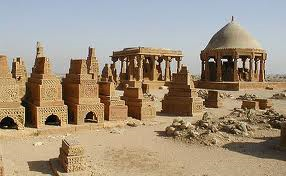
Makli (Credit: migrant-ackermariano.blogspot.com)Karachi, Oct 15: Unusual rain patterns across Sindh in 2010, essentially caused by climate changes, coupled with man-made disasters, have adversely affected Makli, one of the world’s largest necropolis, situated in Thatta District in southern Pakistan.
“As a result of the climate change, high humidity levels, which had previously been confined to the port city of Karachi, were recorded throughout Sindh,” said Zafar Junejo, chief executive officer of the Thardeep Rural Development Programme, a non-profit NGO.
“The rainfall was unusual to say the least; continuous and with raindrops that were thrice the size of those recorded in previous years,” he told The News, “Add to that the inappropriate interventions made at the site, which include incidents such as certain tombs serving as makeshift toilets.”
“In the recent past, Makli has witnessed the worst kind of pollution,” he said, “Many of the tombs were already damaged and their condition was not helped by the antics of several NGOs. These particular organizations not only started plying their vehicles at the necropolis, they even organized cricket matches there.”
Junejo added that a few other NGOs were so careless that they collected artefacts from the necropolis to present as gifts to donors, including tiles used to adorn graves. The situation has deteriorated to the point where UNESCO has hinted that Makli’s status as a world heritage site might be revoked.
However, the Sindh government has been granted more time for conservation efforts at the necropolis, as, in a report submitted to the World Heritage Committee, a team of experts had suggested that the body wait to see results of the steps actually being taken, before deciding whether to include it in the List of World Heritage in Danger.
As reported by a leading English daily of Pakistan last year, the recommendation has been made in a report prepared after a joint team of UNESCO and the International Council of Sites and Monuments (ICOMOS) conducted a visit to Makli from May 5 to May 10, 2012.
Junejo said the natural depression of Makli is towards Kinjhar Lake but influential agriculturalists have occupied significant portions of the necropolis, blocking the natural terrain and water flow.
The most damage, however, was caused after the floods of 2011 as the government set up makeshift arrangements in Makli, which is on higher ground, for the displaced victims. According to Junejo, the necropolis is under severe pressure from three or four districts: Karachi, Thatta, Kirthar Range and Badin. According to a book, ‘History on Tombstones: Sindh and Baluchistan’, published by the Sindhi Adabi Board and authored by (late) Ali Ahmed Brohi, the entire five-kilometre stretch of the Makli Hill is dotted by various mausoleums, sepulchres, vaulted domes, arches, towers, porticos and gateways which rise in a long succession above shapeless heaps and mounds.
It is impossible to guess when the Makli Hill was first used as a cemetery. The area has had a vague sacredness associated with it from a very early time. With the tomb of Jam Nando Nizamuddin, we enter recorded history. This tomb, which represents a distinctly Hindu design and style of architecture, was built in 1508 AD, according to Brohi.
In fact, the very name ‘Makli’ suggests the existence of the ancient temple of ‘Mahakali’, from which the present term seems to have been derived. Thatta has been the capital of lower Sindh since the times of the Sammas, but its architectural glory started with the Tarkhan rulers. The mausoleum of Mirza Isa Tarkhan is built entirely of stone but that of his son, Mohammad Baqi, and all subsequent tombs of distinction comprise of glazed tiles and brick masonry of a very superior order. Many of the edifices, the tombs of Amirs, Jams and Begs, were completed after years and years of patient labour. The interiors of the tombs are almost wholly covered with carvings largely consisting of texts from the Holy Quran in the Arabic or Persian script, writes Brohi.
The principal tombs are those of Mirza Jani Beg (1599), Mirza Ghazi Beg (1612), Mirza Isa Tarkhan II (1644), Mirza Dughral Beg, Diwan Shurfu Khan (1638), Amir Khalil Khan (1580), Mirza Isa Tarkan (1573), Jam Nizamuddin (1508) and Syed Amir Shirazi (1572).
The southern extremity of the tombstone has an inscription in Persian that reads:
“Died the pitied, the forgiven, who attained the protection of the most gracious king, Badi-al-Zaman, son of Shah Rukh Khan, in the year 11 (1011 A.H/1602-03 A.D).”
The bird-serpent in Zoroastrian lore represents a conflict between the forces of light and darkness. Similarly, in Indian mythology, this symbol represents a continuous conflict between the heavenly and worldly forces, writes Brohi.
The motif of the bird of prey, whether a falcon, a peacock or a double-headed eagle, holding a snake in its claws, is popularly believed to be a Buddhist symbol. In Turkish paintings, the episode of Adam and Eve being tempted by Satan is represented in the form of a serpent watched by an eagle and a peacock, according to Brohi.
Responding to queries from The News, ex-Sindh Culture Secretary, Aziz Uquali, said, “A UNESCO mission comprising of Mr Michael Jansen and Princess Alexandra visited all World Heritage Sites (WHS) in Pakistan in early 2011. They made certain observations on almost every WHS, which have been duly attended to. The steps taken by Government of Sindh, Culture Department, include (a) preparation of a master plan for Makli, which is in the final stages; (b) conservation/preservation of individual monuments (recently taken up); (c) signing of MoU (in February 2012) between the Culture Department and Heritage Foundation of Pakistan for documentation and preservation of Samma Cluster of Makli Necropolis and capacity building of officials of the Archaeology Department; and (d) preparation of Disaster Management Plan for flood victims and collaboration with District/Civil Administration, Thatta.”
When questioned over whether there was any truth to reports that former culture minister Sassui Palijo’s father has encroached upon a considerable portion of the necropolis, the ex-secretary denied the claims, stating, “This is factually incorrect. It is a baseless allegation, without any evidence or substance.”
In reply to another question regarding whether any action will be initiated over the construction of government offices on land falling under the limits of the necropolis, Uquali said, “A few office buildings, constructed decades ago by Federal Department of Archaeology & Museums, Ministry of Culture for administration and management of the WHS, are in accordance with the Antiquities Act, 1975. There is neither any violation of law nor any negligence whatsoever. There is no plan to remove these buildings.”
When questioned over the criminal negligence of the irrigation department in maintenance of canals, which had caused much damage to the necropolis during the floods, and how the government plans to prevent further damage, he said, “That does not pertain to the Sindh Culture Department and the Irrigation Department will be in a better position to answer the question. Flooding does not pose a direct threat to the Makli, it affects the necropolis indirectly, when flood victims occupy the area, as was the case in 2010. In this regard, the Culture Department has prepared a Disaster Management Plan to effectively handle any such situation in the future.”
Kevin Gallagher, the local representative of the Food and Agriculture Organization (FAO) of the United Nations based in Islamabad, in response to a query by The News, said: “You raise some interesting issues – especially on cultural heritage sites which I have not thought about. UNESCO may have some information. Also, I have noted the different roles of the World Food Program and FAO. Basically, WFP assists in food distribution while FAO works to get people back to productive work and also to recover assets such as irrigation, livestock and seeds. The UN works closely with government agencies to ensure common goals are met through joint actions as an inter-governmental organization, in which Pakistan is a key player globally! (e.g. one of the top UN peacekeeping forces, UN Security Council member). Indeed, I think this aspect of Pakistan’s contribution to international agencies should be highlighted more to acknowledge the work done by Pakistan and to build the image and confidence of Pakistanis, who should know that they are in fact a strong member of the international community. Many people seem to feel that Pakistan is a victim of the international community rather than a full player!”
Dr. Kozue Kay Nagata, Director/Representative of UNESCO Pakistan said she was not sure about the extent of the damage suffered by the Makli necropolis in and after 2010’s flooding. “This is a question for the Sindh government, as it is their responsibility,” she said, “UNESCO is assisting the government in many ways and we have a few projects, staff trainings, DRM components etc. that we have conducted in the past and will continue in the future.”
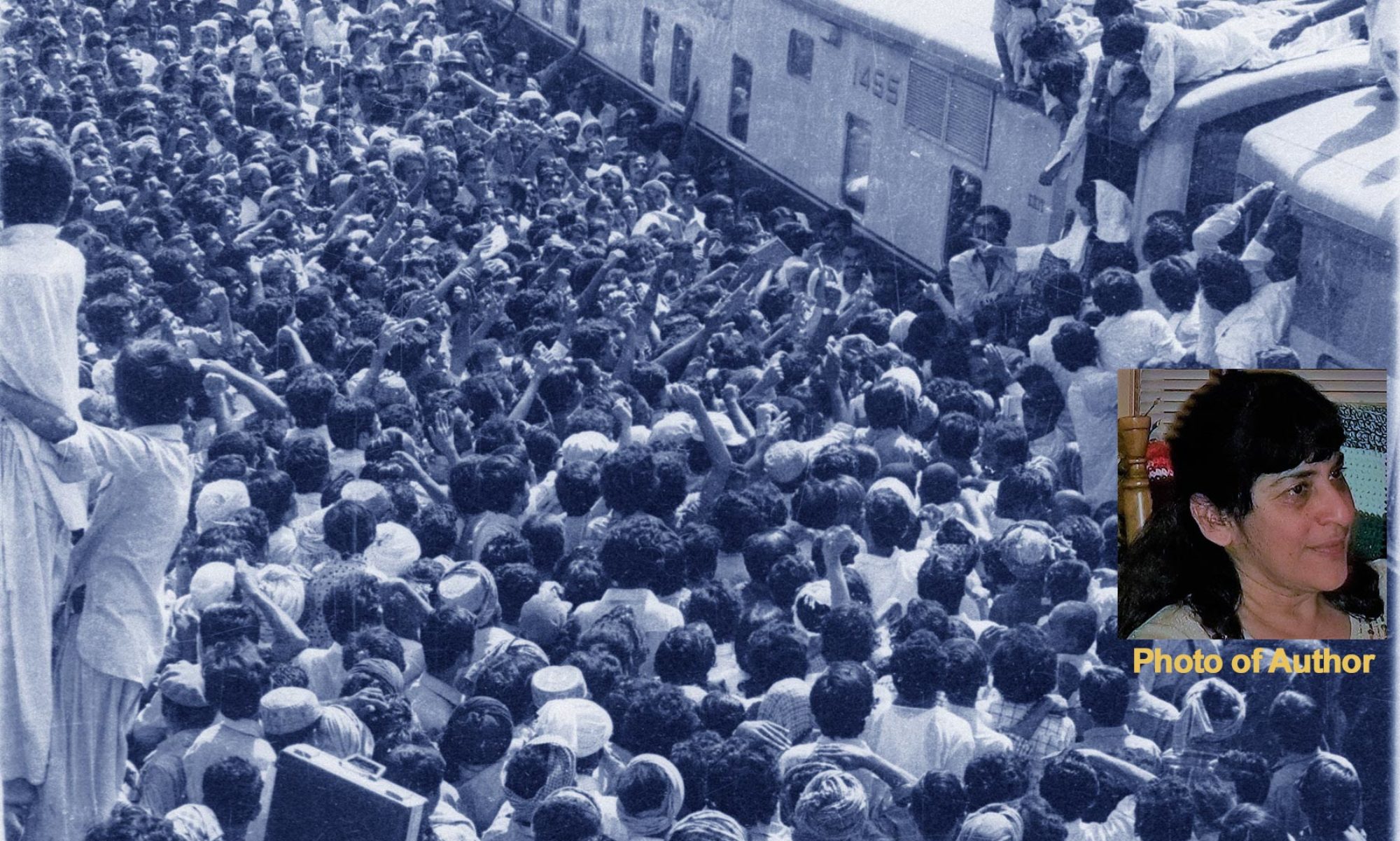
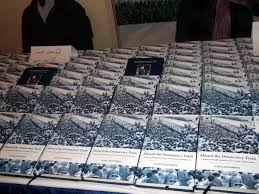
There have been many people throughout history who made the ultimate sacrifice to move us all along the road to enlightenment. Aboard the Democracy Train: A Journey through Pakistan’s Last Decade of Democracy is the story of Benazir Bhutto and her efforts to provide “food, shelter and clothing” for those in need. What makes her endeavor even more difficult is Pakistan’s inequality for women. The author is not just a journalist who did her homework but, as a woman herself, faced dangers her male peers could only imagine. Ms. Hoodbhoy did not pay the ultimate price like Benazir Bhutto, who lost her life in the pursuit of democracy, but she came awfully close.
If you are a student of history and or freedom and wonder how recent events will stand the test of time then your ticket is already waiting for you to climb Aboard the Democracy Train: A Journey through Pakistan’s Last Decade of Democracy by Nafisa Hoodbhoy. It is an extremely revealing look, not just inside Pakistan, but in human beings and the struggles that affects us all.
D. Lamont Smith, author of Omicron Crisis: Adventures from Alpha Centauri
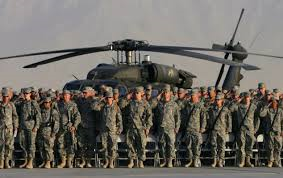
KABUL, Oct 4— The United States and Afghanistan have reached an impasse in their talks over the role that American forces will play here beyond next year, officials from both countries say, raising the distinct possibility of a total withdrawal — an outcome that the Pentagon’s top military commanders dismissed just months ago.
American officials say they are preparing to suspend negotiations absent a breakthrough in the coming weeks, and a senior administration official said talk of resuming them with President Hamid Karzai’s successor, who will be chosen in elections set for next April, is, “frankly, not very likely.”
“The time to conclude for us is now,” the administration official said on Friday. In the absence of a deal, “this fall, we are going to have to make plans for the future accordingly.”
The impasse, after a year of talks, has increased the prospect of what the Americans call the zero option — complete withdrawal — when the NATO combat mission concludes at the end of 2014. That is precisely the outcome they hoped to avoid in Afghanistan, after having engaged in a similarly problematic withdrawal from Iraq two years ago.
Moreover, a complete withdrawal from Afghanistan could be far costlier than it was in Iraq. It would force European powers to pull their forces as well, risking a dangerous collapse in confidence among Afghans and giving a boost to the Taliban, which remain a potent threat.
It could also jeopardize vital aid commitments. Afghanistan is decades away from self-sufficiency — it currently covers only about 20 percent of its own bills, with the rest paid by the United States and its allies.
“It is a practical truth,” the administration official said, that without a deal, “our Congress would not likely follow through on the assistance promises we’ve made, nor would other partners.”
Many contentious matters in the talks have already been settled, like legal immunity for American troops, which is what scuttled the Iraq deal, Afghan and American officials said. Yet officials on both sides say two seemingly intractable issues remain.
The first is Afghanistan’s insistence that the United States guarantee its security, much like any NATO ally, and the second is Mr. Karzai’s refusal to allow American forces to keep searching in Afghanistan for operatives of Al Qaeda. Instead, he has proposed that the United States give its intelligence information to Afghan forces and let them do the searching, said Aimal Faizi, a spokesman for the president.
American officials have rejected both Afghan proposals. The security pact is especially problematic, they say, because it could legally compel American forces to cross the border into Pakistan, resulting in an armed confrontation with an ally — and a nuclear-armed power.
“The deal is like 95 percent done,” said another American official in Washington, “and both sides are holding out.”
President Obama, in an interview with The Associated Press published Saturday, made what appeared to be a reference to the impasse in the talks, saying that he would consider keeping troops in Afghanistan “if in fact we can get an agreement that makes sure that U.S. troops are protected, makes sure that we can operate in a way that is good for our national security.”
“If we can’t, we will continue to make sure that all the gains we’ve made in going after Al Qaeda we accomplish, even if we don’t have any U.S. military on Afghan soil,” Mr. Obama said in the interview, which was conducted Friday.
Mr. Faizi said Mr. Karzai was now taking a lead role in the talks. But, he cautioned, the Afghan leader could not agree to a deal that allowed American forces to raid Afghan villages and not at the same time go after militant havens in Pakistan.
“Killing people in homes and killing people in villages is bringing the war on terror to Afghans,” Mr. Faizi said in an interview. “This is not focusing on the root and support systems behind the terror.”
Only months ago, top American generals, including Gen. Martin E. Dempsey, the chairman of the Joint Chiefs of Staff, dismissed the possibility that negotiations could falter. The Obama administration has been far more ambiguous. Over the summer White House officials began to seriously weigh the zero option.
The officials say they, too, would prefer that American troops stay in Afghanistan. But “at the right price,” said a senior European diplomat familiar with the American position. “The price that Mr. Karzai is asking is too high for Obama.”
The administration has instructed the lead American negotiator, Ambassador James B. Cunningham, to make one more push this month to bring Mr. Karzai around, officials said. It may consider letting the talks go into November, if necessary. But officials are loath to see the talks become an issue in the Afghan presidential campaign.
This week, the administration also considered sending Secretary of State John Kerry, who has a good relationship with Mr. Karzai, to personally intervene in the talks, American and Afghan officials said. But in a reflection of the administration’s deepening pessimism — and its preoccupation with other priorities — officials decided Mr. Kerry’s time was better spent on an Asian trip that Mr. Obama canceled because of the government shutdown, according to another American official, although that could change if there was movement in the talks in Kabul.
So for now, it is up to Mr. Cunningham, who has told his Afghan counterparts that talks would be suspended until after Afghanistan’s presidential election if no progress was made soon, according to Mr. Faizi and other Afghan and American officials.
Assuming the election takes place on time, it would still push talks to the middle of next year, and many Western officials in Kabul say the election could be delayed until the summer. In the estimation of many Western officials in Kabul and Washington, that is perilously close to the drop-dead date of Dec. 31, 2014. Mr. Karzai, who has served two terms, cannot run for a third.
Adm. James G. Stavridis, who retired in May as NATO’s military commander, said the logistics of organizing a post-2014 force could prove daunting if a deal was not struck soon. Each of the allies has separate logistics, training, supply and transportation requirements, and “we are getting close to the red line for people to be able to put those forces together,” Admiral Stavridis said Friday at a forum in Washington sponsored by the Fletcher School of Law and Diplomacy, where he is now dean.
The impasse in the talks has been apparent to negotiators since late summer, according to Afghan and Western officials. But both sides had kept the divisions quiet until this week, when the presidential palace issued a statement saying Mr. Karzai had told a gathering of tribal elders that he would not allow American military raids to continue after next year.
American officials have not issued any formal response to the palace’s statement. Officials said they did not want Afghans to see the deadline as a ploy. They discussed the talks only under the condition of anonymity.
Afghan officials, however, said they believed the deadline and the leaks were solely about pressuring them into signing a deal.
Mr. Faizi said the Afghan government had no deadline, and Mr. Karzai would rather wait to get “the right deal.”
The differences between the two sides are as much about perspectives as they are about the legalities of raids and bases and security arrangements. Afghanistan believes the threat posed by the Taliban is largely driven from Pakistan. In the American view, the Pakistani havens are but one facet of a conflict that is mainly internal.
It is a subtle difference, but one that informs diverging approaches to combating the Afghan insurgency, which remains a threat despite the American-led efforts to quash it that began with the invasion after the Sept. 11, 2001, attacks.
American officials have said they have no intention of fighting the Taliban after 2014. The bulk of the forces left in Afghanistan — administration officials have said they would total 9,000 or less — would train Afghan forces, which are already doing most of the fighting here.
But the United States wants to keep using Special Operations forces to target the roughly 75 operatives that American commanders estimate remain in Afghanistan.
“President Karzai says that has been happening for 12 years, and how come we cannot find them?” Mr. Faizi said. “How much longer will it continue? One year? Five years? Ten years?”
Ultimately, though, the issue is one of sovereignty, Mr. Faizi said. American-led forces have killed civilians in dozens of attacks, he said, and Afghanistan has concluded that foreigners cannot be trusted with the lives of innocent Afghans.
“After 2014, will any foreign military be free to go where it pleases and operate the way it pleases in Afghanistan?” Mr. Faizi said. “The answer is no.”
Eric Schmitt, Thom Shanker and Michael R. Gordon contributed reporting from Washington.
MINGORA / LONDON, Oct 8: Iconic teenage activist Malala Yousafzai on Monday said she wanted to change the face of Pakistan by venturing into politics in future.
The 16-year-old activist has also backed dialogue with the Taliban, despite repeated death threats by the militants. “I will be a politician in my future. I want to change the future of my country and I want to make education compulsory,” Malala told the BBC in an interview.
“If I’m saying that there is no-one who is doing anything for education, if I say there is no electricity, there is no natural gas, the schools are being blasted, and I’m saying no-one is doing this, why don’t I go for it, why don’t I do this?”
Malala said, talking about her ambitions to pursue politics. “The best way to solve problem and to fight against war is through dialogue, and is through peaceful way,” she said.
“But for me the best way to fight against terrorism and extremism is a simple thing – educate the next generation.”
Talking about issues of terrorism and dialogue with the Taliban, Malala said it was not her job, “It’s the government’s job, and not an issue for me,” she said, adding “It’s also the job of America.”
Malala said it was important that the Taliban discussed their demands. “They must do what they want through dialogue,” she told the BBC. “Killing people, torturing people and flogging people – it’s totally against Islam. They are misusing the name of Islam.”
The teenager is also among the favourites to win the Nobel Peace Prize, which will be announced on October 11.
During the interview, Malala said winning the peace prize would be ‘a great opportunity’ but that universal education remained her true goal.
“If I win Nobel Peace Prize, it would be a great opportunity for me, but if I don’t get it, it’s not important because my goal is not to get Nobel Peace Prize, my goal is to get peace and my goal is to see the education of every child,” she explained.
Schoolgirls pray for Malala
In her hometown, school friends hope to see Malala win the Nobel Peace Prize this week – but they dream in secret, under pressure from a society deeply ambivalent about the teenage activist. Peeling off from a group of girls at a high school in Mingora, the main town in Swat, Malala’s longtime friend Safia spoke confidently about her and said she deserves it.
“A bicycle cannot run with only one wheel – society is like a bicycle, with the male education as the first wheel and female education as the second one,” she told AFP.
Safia’s sentiments are shared by many schoolgirls in Mingora, who want their country and their area to be known for something other than the Taliban and bombs.
“Malala is a model, not only for us but for the whole of Pakistan,” said 14-year-old Rehana Noor Bacha.
Education has improved in Swat since the Taliban days. Since 2011, the proportion of girls going to school has risen to nearly 50%, from 34%, while that of boys is close to 90%.
Malala’s rise to stardom in the West, and her frequent appearances in the media, have brewed suspicion in a society that expects women to remain out of sight and is quick to blame foreign powers for its ills. The head of girls’ education in Swat, Dilshad Begum, explained that in Pashtun society “people don’t like to see women in front of cameras”.
Maulana Gul Naseeb, a prominent figure in the JUI-F, was more forthright. “America created Malala in order to promote their own culture of nudity and to defame Pakistan around the world,” he told AFP.
Bizarre theories like this have gained ground on social networking sites, with users declaring themselves shocked to see the West elevate a girl ‘only’ wounded while forgetting Afghan and Pakistani children killed by American bombs.
Safia said even people from Malala’s village had opposed her, but the critics were ‘hypocrites and jealous’.
Safia says she is optimistic and determined, and is doing better after spending three months feeling traumatised by the attack.
This week as the Nobel announcement approaches she will pray for Malala’s chances, but warns it will make little difference if she wins. “It will take at least three generations to make things change here,” she sighed.
ISLAMABAD: Pakistan’s Supreme Court on Wednesday granted bail to former president Pervez Musharraf over the death of Baloch rebel leader Akbar Bugti, bringing closer the former dictator’s possible release after nearly six months of house arrest.
Musharraf has now been granted bail in three major cases against him, including one relating to the assassination of former prime minister Benazir Bhutto.
His lawyer said the ruling meant he was a “free man”. But he is likely to remain under heavy guard at his villa on the edge of Islamabad, where he has been under house arrest since April, because of serious threats to his life.
A two-judge bench of the apex court, headed by Justice Nasirul Mulk, heard Musharraf’s appeal against the Balochistan High Court’s rejection of his bail application in the Nawab Akbar Bugti murder case.
The bench observed that substantial evidence was not available to involve Musharraf in the criminal conspiracy regarding Bugti’s murder and granted bail to the former president.
His lawyer Ibrahim Satti said the three-member bench had granted bail in the Bugti case in return for surety bonds worth two million rupees.
Though the court had summoned Jamil Bugti, a son of Nawab Akbar Bugti, who is a complainant in the case, he remained absent from today’s hearing.
Musharraf ‘a free man’
“Pervez Musharraf is a free man now after getting bail in the Bugti case,” said Qamar Afzal, another counsel for the former president.
As well as the Bugti and Bhutto cases, Musharraf also faces cases over the suspension of judges during emergency rule, which he imposed in 2007.
The Taliban have threatened to kill the 70-year-old former general, who as president allied Pakistan with Washington in the US “war on terror” in the wake of the September 11, 2001 attacks.
Security remained tight at Musharraf’s villa, an AFP reporter at the scene said, with no sign of any preparations for departure.
Musharraf’s spokesman Raza Bokhari said the general was “gratified” by the bail ruling but determined to clear his name of charges which he has always maintained were politically motivated.
“After all these formalities are finalised he would be free to travel within and outside Pakistan, but this is just the beginning. These court cases are a long-run process,” said Bokhari.
“He will continue to fight these cases until his name is clear of these false, fabricated and fictitious charges.”
‘No decision to leave Pakistan’
The secretary-general of Musharraf’s political party, the All Pakistan Muslim League, said he expected “progress” on Thursday after the bonds are paid but denied Musharraf planned to leave Pakistan.
“There has been no deal with the government, nor has Musharraf taken any decision to immediately leave the country,” Muhammad Amjad told reporters.
Musharraf returned to Pakistan in March to run in the general election, vowing to “save” the country from economic collapse and militancy.
But he was barred from contesting the election, won convincingly by Prime Minister Nawaz Sharif – the man he ousted from power in 1999 – and was hit with a barrage of criminal cases dating back to his rule.
He has been living in part of his 1,100 square metre house, declared a “sub-jail” under the auspices of the Adiala prison in Rawalpindi, where he is guarded by some 300 police, paramilitaries and marksmen.
Reports have claimed he is enjoying a comfortable life in detention. He has even had the services of his personal cook because of his fears of being poisoned.
Since Sharif won the election there have been repeated rumours that a deal would be reached to allow Musharraf to leave Pakistan before his trials were completed.
Musharraf spokesman Bokhari insisted no such arrangement had been cooked up.
One theory was that Musharraf might be allowed to visit his sick elderly mother in Dubai on compassionate grounds, but APML spokesman Amjad rejected the idea.
“Musharraf’s mother has been quite unwell for quite some time but he has not reached any deal nor has he made any request to leave the country to see his mother,” Amjad said.
Baloch nationalist leader Nawab Akbar Khan Bugti was killed in August 2006 in an explosion in a cave where he had taken refuge during a military crackdown ordered by Musharraf who was president and army chief at the time.
Bugti had led an armed campaign to press for provincial autonomy and a greater share of profits from Balochistan’s natural resources.
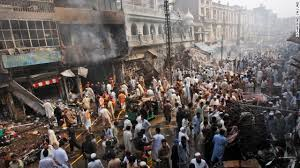
Terrorist attack in Qissa Khwani bazaar (Credit: cnn.com)Washington DC, Oct 3: Three consecutive terrorist attacks in Peshawar – which have killed and injured hundreds of innocent people – reflect a growing impatience of the Taliban for the “pre-selected” candidates of 2013 elections to deliver to their demands.
These terrorist attacks – waged by criminal elements in a growing array of Taliban factions – have come after a long period of inactivity. In the lull before the storm, political parties held an All Parties Conference in Islamabad to vote for talks with the TTP. Spear heading the APC were prime minister, Mian Nawaz Sharif and the king maker of the Khyber Pakhtunkhwa government, Imran Khan.
Here it is relevant to mention that just prior to this year’s elections, the Pakistan army blessed this set of politicians in their bid for power – with the end game of Afghanistan in mind.
But the army – which has since 9/11 supported the Afghan Taliban, while restraining the Pakistani Taliban – has been unable to stop the militants blow back. Instead, its strategy for a pro-Pashtun government in Afghanistan has had major consequences. As Pashtuns from both sides of the Durand line will testify, the Pak-Afghan border is a meaningless entity. A fierce Taliban resurgence in Afghanistan has emboldened their Taliban partners to attack military and state institutions in Pakistan.
In this complex scenario, the newly elected political parties like Pakistan Muslim League (Nawaz) and Pakistan Tehrik-i-Insaf – which were spared from attacks prior to the elections – are now boxed in between terrorist attacks by militants and the demand for military action against them.
The Taliban is not monolithic, but divided in a bewildering array of groups. Among those striking ferociously of late has been the faction led by Maulvi Fazlullah – who has been sheltering in Afghanistan since the military operation in Swat in 2009.
The Taliban have correctly identified the US and Pakistan military as responsible for drone strikes. However, any moral argument they had won in favor of ending the strikes.. or ending the military operation in FATA.. have been weakened by their killing of common people.
The KP government’s failure to condemn the perpetrators of civilian attacks has apparently emboldened terrorists. Adding fuel to fire, the Pakistan Tehrik-i-Insaf chief followed the massacre of Christians with the demand that the Taliban be allowed to open offices for negotiations.
Those who voted for “change,” – on the PTI’s call – have discovered that the brutal spilling of innocents blood, was not exactly the change they had in mind.
Indeed, if history is to serve as a rear view mirror, politicians need to heed that the worst terrorist attacks in Pakistan took place in 2008, after Musharraf and his coalition partners – the Mutehidda Majlis-i-Amal – concluded a series of peace accords with the Taliban. The accords were preceded by MMA-Taliban talks that looked the other way as the militants organized themselves.
In the present scenario, Taliban groups have unleashed terror against civilians even before talks have begun. Their modus operandi appears to be to keep spilling blood until the army withdraws from the tribal areas. The next step, as the Taliban declared in 2009 (prior to the Swat operation), would be to overthrow the constitution of Pakistan and avowedly implement Shariah (Islamic law). In practice, this means tribal law that ushers in pre-Islamic customary laws with a vengeance.
The TTP’s demands ought to give the army and politicians pause as to exactly who they may be negotiating with. The ruthless killing of civilians is hardly adding to the Taliban’s populist base. Perhaps overconfidence by militants that they have politicians in their pocket facilitates these rapid attacks. However, it is the politicians – and ultimately military response – that will determine the security and stability of Pakistan.
In the meantime, the PML (N) government has announced that it will first give peace a chance by holding talks with the Tehrik-i-Taliban Pakistan. At the same time, it is on record for saying that the violation of a cease-fire by the militants could result in a sustained military operation against them.
With tens of thousands already killed in Pakistan since 9/11, it is critical for the army to draw a workable strategy for the region. Given that US withdrawal from Afghanistan is in sight, Pakistan is throwing weight behind select Pushtun Taliban next door. What is important is that in pursuing the Great Game, it does not lose Pakistan.