SECURITY INTELLIGENCE BOOK REVIEW The Spy Chronicles: RAW, ISI and the Illusion of Peace

The book The Spy Chronicles: RAW, ISI and the Illusion of Peace, co-authored by the former chief of Pakistan’s Inter-Services Intelligence (ISI), General Asad Durrani, and A S Dulat, the former chief of India’s Research and Analysis Wing (RAW), has created a buzz around South Asia.

Former counterparts from the rival countries’ intelligence services coming together to produce a book on sensitive issues related to back-door diplomacy and the events related to security and foreign-policy matters is a unique venture. The book is narrated in a conversational style, with journalist Aditya Sinha initiating the dialogue between Durrani and Dulat.

Quite interestingly, Durrani is the one who occupies most of the pages of the book, while Dulat remains a bit conservative in his approach and only repeats the same mantra of India being a target of ISI and Pakistani non-state actors.

The first chapter is all about setting the stage for the beginning of the conservation between Durrani and Dulat, and it gives readers a chance to become familiar with the backgrounds of the spymasters penning their experiences.

After engaging the reader, the book opens with Pakistan’s ISI-vs-RAW war. It is the third chapter that actually looks behind the channels of diplomacy and the activities of both spy agencies in Kashmir.

While Durrani states that India has a status-quo power edge over Kashmir and that the only solution to the problem is a composite dialogue, Dulat is of the view that there is no benefit for India in burning resources in Kashmir.

Durrani’s admission about Pakistan not understanding Amanullah Khan, the president of the Jammu Kashmir Liberation Front, is interesting. JKLK wanted a free Kashmir independent of any influence from either Pakistan or India. Durrani is of the view that Pakistan should have backed Amanullah Khan instead of backing Lashkar-e-Taiba.
Having had the chance to meet Amanullah Khan personally on few occasions, I in my early youth was convinced that his formula was the only way forward for both India and Pakistan, so one wonders why it took three decades for Durrani and his colleagues to understand this very simple point.

The book gives a detailed Indo-Pakistani perspective on Afghanistan and the proxy wars between the two countries, but the controversial point that generated the backlash is about Osama bin Laden. Durrani maintains in the book that Pakistan came to be aware of bin Laden’s presence at some stage and used him as a bargaining chip.

His revelations about the Abbottabad operation are nothing new, as every knowledgeable person in Pakistan is aware that the operation was conducted mutually and that Pakistan agreed to show ignorance about it to avoid the wrath of hyper-nationalist organizations. Durrani also states that hyper-nationalism is the obstacle in the way of Pakistan’s peace and progress.

Dulat and Durrani both also agreed to pay money to separatists and non-state actors in Kashmir and Baluchistan, which are proxy battlefields for Pakistan and India.

There are different aspects and interesting points in the book for intellectual consumption, but at the same time, it focuses more on Pakistan than India. That raises the question of whether it is a deliberate effort by a third party to exploit the weak links in Pakistan’s narrative and get them endorsed by an ex-ISI chief. For example, the statement from Durrani that both India and Pakistan should reunite again seems like an endorsement of the Akhand Bharat ideology. Durrani is of the view that Pakistan and India should one day be reunited, and likely will be. For this to happen he proposes different steps to be taken, and a detailed outline of how this can be achieved can be found in the book.

While for the establishment it is high time to think about their narrative as the Bin Laden operation details given by Durrani raise some serious questions. If the Abbottabad operation was mutually agreed, then why was the nation’s money and time wasted by the Pakistani establishment by forming a commision on the Abbottabad incident, the report on which has still not been made public.

Durrani’s statement regarding the Kargil War is a confession that Nawaz Sharif saved the day for the establishment in that conflict. Durrani’s statement is highly disliked by the establishment in Pakistan as he states in the book that the prime minister was not briefed properly and that this misadventure was initiated by then army chief Pervez Musharraf.

Durrani’s revelations are not appreciated by the establishment in Pakistan; he is already the focus of a military inquiry into the leaking of national secrets and his name is on the exit control list so he cannot flee the country.

Durrani’s point in the book regarding the establishment disliking Sharif because of his soft stance regarding India and his participation in Indian Prime Minister Narendra Modi’s oath-taking ceremony also reflects the fact that there are double standards as far as foreign policy is concerned. If a dictator in uniform such as Musharraf pleads to Atal Bihari Vajpayee to make a deal on Kashmir and shows a soft approach towards India, it is considered patriotism and a good diplomatic approach, while the same stance from an elected prime minister is termed as a security risk influenced by the Indian lobby.

Durrani’s statement regarding the military establishment camp disapproving of Sharif also validated the former prime minister’s point that he was ousted by the invisible forces for asserting his authority on foreign policies.

For policymakers, it seems like the right time to step back from the hegemonistic foreign-policy narratives, and they should leave some space for elected representatives to work as well.

The propaganda drive against Durrani concerning leaked national secrets is baseless, as he did not disclose any secrets; in fact, he has pointed out the Pakistan’s Army’s vulnerabilities, and he identified senior officers involved in corruption.

Durrani’s revelations are not appreciated by the establishment in Pakistan; he is already the focus of a military inquiry into the leaking of national secrets and his name is on the exit control list so he cannot flee the country.

One wonders why instead of suppressing facts, the Pakistani military establishment has started an inquiry into the questionable policies and narratives of the last 70 years. Instead of dragging Durrani into an inquiry, a commission should be formed to investigate who hijacked Muhammad Ali Jinnah‘s vision of a welfare state and turned it into a security state. Who was responsible for foreign-policy failures, the Kargil blunder, the fall of Dhaka, the incidents at Ojhri camp in Rawalpindi, Who created non-state actors, and who pushed the country first into a dollar-sponsored Afghan war and then into to the great game of occupying Afghan territory in the early 2000s?

Who controls the policies and narratives of the state, and why should they not be brought to justice?

The only way forward for Pakistan is to establish a truth and reconciliation commission and to accept the mistakes and blunders of the past 70 years. Probably Durrani has provided the military establishment in Pakistan with an opportunity to come forward and accept their failures in shaping rotten and unsuccessful narratives.
It is high time for the establishment step back and let state affairs and narratives be controlled and shaped by elected governments.

India, Pakistan Set for Counterterror Drills — Together, in Russia

Washington, May 3: In an unprecedented move, nuclear-capable South Asian rivals India and Pakistan are gearing up to take part in joint military drills.

Last week, Indian Defense Minister Nirmala Sitharaman confirmed that India would participate in anti-terrorism military drills alongside Pakistan.

The two nations, partitioned in 1947, agreed to train under the auspices of the eight-member Shanghai Cooperation Organization (SCO) in the Ural Mountains of Russia in August.

The SCO is an economic, security and political organization founded in Shanghai in 2001. China, India, Kazakhstan, Kyrgyzstan, Pakistan, Russia, Tajikistan and Uzbekistan are the member countries.

The founder of India’s Defense Intelligence Agency, Kamal Dawar, said that Pakistan’s participation in the drills should not be “merely symbolic.” He said that India and Pakistan had worked together as peacekeepers at the United Nations and that it would be a good thing to re-establish communications.

Pak Rangers

FILE – Pakistan Rangers stand before taking their positions during a counterterrorism training demonstration on the outskirts of Karachi, Feb. 24, 2015.

​Sincerity questioned
However, Dawar, author of Tryst with Perfidy: The Deep State of Pakistan, is skeptical about whether Pakistan’s army, intelligence agencies and “multiple terror organizations” would be sincere in working with India to defeat terrorism.

Retired Colonel Farooq Ahmed, former deputy director of the Pakistan military’s media wing, the Inter Services Public Relations (ISPR), told VOA that Pakistan was “very excited” to participate in the drills, but that “India needs to stop pointing fingers at Pakistan and resist interfering in its internal affairs.”

India and Pakistan, which have been feuding over Kashmir since the two nations were partitioned, will most likely keep fighting over the disputed territory, even if they line up on the same platform. The Kashmir region has been a flashpoint between the two countries and they have fought two wars over it.

Dawar had a visceral response at the bare mention of Kashmir. “Pakistan should forget about Kashmir. Kashmir is an integral part of India,” he said.

He said Pakistan’s “interference” in Kashmir was unwarranted and the reason why its “deep state” would never allow it to work with India.

But Brussels-based security analyst Khalid Farooqi said Pakistan’s “moral position” on Kashmir was recognized by the United Nations. In his words, the Kashmiris’ struggle for self-determination had resulted in 100,000 killed, 10,000 disappeared and thousands widowed.

Indian soldiers

FILE – Indian army soldiers pay tribute to a colleague killed in cross-border firing with Pakistan, during his cremation at Nachlah village in Samba District of Jammu and Kashmir, India, Feb.5, 2018.

Indian Prime Minister Narendra Modi also recently met China’s President Xi Jinping and agreed to defer the Indo-China territorial dispute by joining China’s anti-terrorism drills in Russia

Pakistan acknowledges that it agreed to conduct military patrols alongside India after the Pakistan chief of army staff, General Qamar Bajwa, recently visited Russia.

Korean model
Mushtaq Mehar, Pakistan’s former ambassador to Turkey, said recent signs of a detente between North and South Korea could serve as a model for India and Pakistan and pave the way for a softening of tensions between the two countries.

Pak commandos

FILE – Pakistani commandos from the Special Services Group march during a military parade in Islamabad, March 23, 2016.

According to him, America’s status as a superpower allows it to intervene in a “complicated matter” like the Korean Peninsula situation.

Mehar said the United States and Europe were also keen to see the militaries of India and Pakistan fight on the same side, not only to reduce tensions between the two nuclear-armed nations but also to curb the potential for terrorism exploding beyond the region.

COMMENT: Trump’s India connect

There are few countries where the U.S. President’s business interests are so strong, and relations with the U.S. so robust.

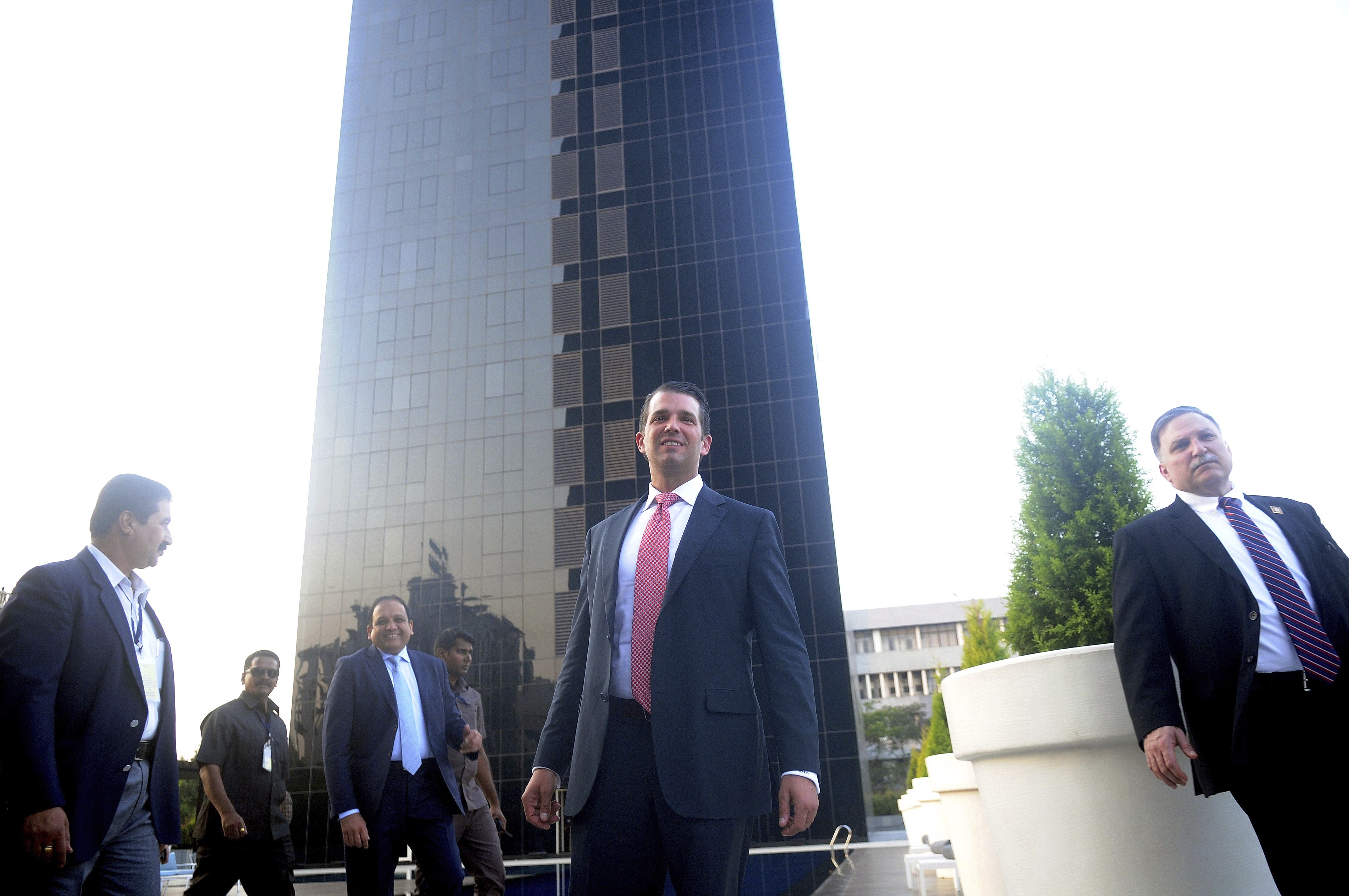
Donald Trump Jr. is in India for an extraordinary visit, to play the role of both businessman and diplomat. While mainly helping sell properties tied to the Trump Organization, where he serves as executive vice president, Mr. Trump Jr. is also delivering a policy address on “Reshaping Indo-Pacific ties”.

It’s hard to imagine this type of trip taking place in other countries. U.S. President Donald Trump and some of his progeny are personae non grata in many nations, including top allies such as the U.K. Aside from the issue of unpopularity is one of ethics. Many countries would be reluctant to host the U.S. President’s son for a visit that includes the opportunity for buyers of Trump-branded apartments to pay to meet with Mr. Trump Jr. The fact that India rolled out the red carpet for Mr. Trump Jr. amplifies the uniqueness of U.S.-India relations at this moment in time: There are few, if any, countries in the world where President Trump’s business interests are so strong, and relations with the U.S. so robust.

Business opportunities
Take the commercial side first. The Trump Organization features business dealings in more than two dozen countries, from Trump-branded condos in Seoul to a golf course in Ireland. And yet a Washington Post investigation has concluded that “the Trump Organization has more business entities in India than in any other foreign country.” The study, released in November 2016, contended that Mr. Trump is “involved in at least 16 partnerships or corporations” in India. Mr. Trump Jr. has himself said that India constitutes the largest market outside the U.S. for the type of real estate deals pursued by the Trump Organization.

It’s not just Mr. Trump and his family who value business opportunities in India; members of his cabinet do too. In 2006, Wilbur Ross, who is now Commerce Secretary, established a $300 million fund focussed on India and bought the textile company OMC India Ltd. In 2008, he bought $80 million in convertible bonds issued by the airline SpiceJet. (He subsequently sold it.) Goldman Sachs, the previous employer of Treasury Secretary Steven Mnuchin, boasts a significant presence in India and has provided support to the Indian renewable energy firm ReNew.

Now consider the diplomatic side. Since Mr. Trump took office, Washington’s relationships with traditional foes such as North Korea have worsened, while those that had enjoyed recent periods of relative détente (Pakistan, Iran) have regressed. Most strikingly, relations with some top allies (the U.K., Germany, and Australia) have taken tumbles.

Strengthening ties
By contrast, the U.S.-India relationship has continued to flourish under Mr. Trump. It’s easy to understand why. The two core strategic concerns that have long brought the two together — China’s growing influence and international terrorism — resonate strongly with the Trump administration. Also, arms sales and technology transfers — two main engines of the defence partnership that powers U.S.-India relations — are welcomed by a Trump administration that is unabashedly transactional in its foreign relations. Furthermore, President Trump and Prime Minister Narendra Modi share much in common, from their conservative politics to their fractious relationships with the mass media and strong embraces of social media.

To be sure, there are bones of contention, from the Trump administration’s immigration policies that could deleteriously affect Indian workers in America to Washington’s refusal to pull the plug on its problematic partnership with Pakistan. The two sides also fail to agree on what should constitute their strategic partnership. Washington wants New Delhi to participate in joint operations and other types of alliance behaviour to which India remains allergic. Yet, deep repositories of goodwill and sharp convergences of interests enable the U.S.-India relationship to weather these policy disconnects.

Essentially, Mr. Trump’s expansive business interests in India coupled with rock-solid bilateral relations help explain why New Delhi has pulled out all the stops for Mr. Trump Jr.’s tendentious trip. Could the First Son take his salesman-in-chief/senior diplomat double act elsewhere overseas? Only two possible destinations come to mind: Israel and Saudi Arabia. If he does venture to those locales, however, his achievements this week would be a hard act to follow. Mr. Trump Jr.’s visit to India coincided with that of Canadian Prime Minister Justin Trudeau. The son of the most controversial U.S. President in modern history has not only stolen the spotlight from one of the world’s most beloved and photogenic leaders, he has also enjoyed much warmer treatment.
Michael Kugelman is the deputy director of the Asia Program at the Woodrow Wilson International Centre for Scholars in Washington, DC

http://www.thehindu.com/opinion/op-ed/trumps-india-connect/article22818013.ece

`India is Mother of Terrorism in South Asia’: Pakistan Responds to Swaraj’s UN Speech

India is the mother of terrorism in South Asia and “a racist and fascist ideology is firmly embedded” in the Modi government, Pakistan has said in response to external affairs minister Sushma Swaraj’s speech at UN.

India sponsored and aided terrorism against all its neighbours, reports in the Pakistani media quoted its permanent representative to UN, Maleeha Lodhi, as saying.
Addressing the UN general assembly on Saturday, Swaraj tore into the neighbouring country, calling Pakistan a “pre-eminent exporter of terror”.

Earlier this week, Pakistan Prime Minister Shahid Khaqan Abbasi in his address had accused India of supporting terrorism and human rights violations in Kashmir.
Swaraj had hit back, saying while India was giving the world top-notch doctors and engineers Pakistan was producing terrorists.

Lodhi attacked the BJP and raked up Kashmir once again.

New Delhi’s “current political luminaries belong to a political organisation that has the blood of thousands of Muslims of Gujarat on their hands”, Lodhi said, referring to the 2002 Gujarat riots.

India was ruled by a fascist ideology and it should stop supporting across-the-border terrorism, she said exercising Pakistan’s right to reply at the UN.

The Pakistani envoy also criticised Yogi Adityanath’s election in Uttar Pradesh, saying “the government has appointed a fanatic as the chief minister of India’s largest state”.
“It is a government, which has allowed the lynching of Muslims.”

Lodhi also invoked Arundhati Roy to attack Swaraj’s speech and quoted the acclaimed Indian novelist’s 2015 statement: “These horrific murders are only a symptom. Life is hell for the living too. Whole populations of Dalits, Adivasis, Muslims, and Christians are being forced to live in terror, unsure of when and from where the assault would come.”

Pakistan was open to resuming a comprehensive dialogue with India but it should include Kashmir, Lodhi said as she waved a picture of a woman whose face was scarred, with what looked like pellet-gun wounds.

Use of pellet guns that has left several young Kashmiris completely or partially blinded is an emotive issue, with security forces under pressure to look for alternative ways to control crowds.

The UN general assembly for years has been a battlefield for India and Pakistan, where Kashmir has figured prominently.

This year’s speeches have been more strident as relations between the two sides continue to deteriorate over some high-profile terror attacks in India, Pakistan’s sentencing to death an Indian sailor on charges of spying and internal turmoil in the neighbouring country that is due for elections.

Pakistan finds itself on the defensive in Trump’s Afghan war strategy

It feels like a lifetime ago, but it was just in November, weeks after his election, that then-President-elect Trump was lavishing praise on Pakistan, calling it a “fantastic place … doing amazing work.”

But as Trump said in outlining his new strategy in South Asia, things look different from behind a desk in the Oval Office, and his views toward Pakistan seem to have changed since that strange phone call with former Prime Minister Nawaz Sharif.

Sharif is gone, having resigned last month in the wake of a corruption scandal, leaving Pakistan’s military as unquestionably the most powerful force in the country. But that military — one of the United States’ most troublesome allies and the recipient of billions of dollars in U.S. aid — now finds itself on the defensive as Trump demands it “change immediately” its policy of harboring the Taliban and other militant groups carrying out attacks in Afghanistan.

Trump’s tough talk signaled a possible shift as the U.S. tries to restart its failing 16-year war in Afghanistan. Many Afghans on Tuesday praised Trump’s blunt assessment of Pakistan and expressed hope that more American troops could reverse Taliban insurgents’ momentum and stem the mounting casualties suffered by Afghan security forces and civilians.

With the Taliban holding more territory than at any point since the U.S.-led invasion in 2001, Trump’s announcement of a “fight to win” strategy — though lacking in specifics — soothed Afghans who worried the United States was abandoning its longest war as it had settled into a bloody stalemate.

“I am grateful to President Trump and the American people for this affirmation of support for our efforts to achieve self-reliance and for our joint struggle to rid the region from the threat of terrorism,” Afghan President Ashraf Ghani said in a statement.
“The Afghan government welcomes renewed U.S. emphasis on seeing security in Afghanistan as part of a wider regional package.”

Pakistan scrambled to respond to the criticism. Foreign Minister Khawaja Asif met with the U.S. ambassador in Islamabad and “underlined Pakistan’s continued desire to work with the international community to eliminate the menace of terrorism.”

Late Tuesday, following a two-hour Cabinet meeting, Pakistan’s government issued a statement saying it had “taken note” of Trump’s Monday night address and rejected his “false narrative” that it provided safe havens to militant groups.

“No country in the world has done more than Pakistan to counter the menace of terrorism. No country in the world has suffered more than Pakistan from the scourge of terrorism, often perpetrated from outside our borders,” the statement said.

“It is therefore disappointing that the U.S. policy statement ignores the enormous sacrifices rendered by the Pakistani nation in this effort.”

Pakistani officials were particularly stung by Trump’s embrace of its rival India, which the U.S. has not often included in its Afghan strategy despite its being the largest country in the region.

Trump “has given a negative message to Pakistan,” said Sherry Rehman, a Pakistani lawmaker and former ambassador to Washington. “The best possible way forward is to promote peace and harmony in the region instead of dividing Pakistan and India.”

Opposition leader Imran Khan lashed out on Twitter, saying Pakistan had lost tens of thousands of lives to terrorism and was “being made scapegoats for the policy failures of the U.S. and India.”

Pakistan’s military — which denies allegations that it nurtures terror groups who attack India and Afghanistan — appeared to anticipate Trump’s criticism, holding a news conference on Monday to trumpet the success of Zarb-e-Azb, a years-long operation involving around 200,000 troops to eliminate militant havens in the northern tribal areas.

In between slides showing statistics — officials say around 3,500 militants have been killed and thousands arrested — the military played short films set to dramatic music showing Pakistani troops in the remote region.
Pakistan has carried out dozens of such offensives and been accused of picking and choosing which militant groups it confronts. The Haqqani network, which U.S. officials blame for some of the deadliest attacks against its forces in Afghanistan, has largely escaped the effect of more than a decade of Pakistani military operations.

But Pakistani officials insist this time is different. They argue that terrorism-related deaths in Pakistan have fallen by about half since 2014. They blame several high-profile terror attacks on militants who, they say, enjoy safe havens in Afghanistan and the backing of Indian intelligence agencies.

“A militant resurgence is now out of the question,” Pakistani military spokesman Maj. Gen. Asif Ghafoor told reporters Tuesday. “They want to regain lost influence, but it won’t happen. It’s too late for that.”
Congress already has reduced funding for the Pakistani army and denied it the chance to purchase U.S.-made F-16 fighter jets at subsidized prices. But because U.S. strategic planners fear that Pakistan’s nuclear weapons could fall into the hands of militants, Washington has been reluctant to exert too much pressure on the Pakistani security establishment.

“Anyone who thinks this shift in Pakistan strategy will be easy to implement, remember: Pakistan negotiates with a gun to its own head,” tweeted Vipin Narang, an MIT political science professor who studies South Asia.
Many Afghans said they hoped U.S. pressure would force Pakistan to bring Taliban leaders to the negotiating table and curtail their ability to direct attacks from across the border.

“I believe the U.S. has seen Pakistan in a better light than Afghanistan, so I would be optimistic and support the new strategy of the United States if it implements it honestly,” said Nasir Karimi, a 22-year-old psychology student at Kabul University.

“Still,” Karimi added, “I can’t trust that the U.S. will be honest.”

Afghans’ wariness is rooted in a history of U.S. inconsistency in the country. U.S. forces quickly ousted the Taliban government from power in Afghanistan following the Sept. 11 terrorist attacks but then diverted troops and focus to the Iraq war, allowing Taliban fighters to stream back into the country.

President Obama announced a troop increase in 2009 but, in the view of many Afghans, undermined the strategy by setting a withdrawal deadline that reassured the Taliban that it could simply lie in wait. Trump, too, once advocated for bringing all U.S. troops home before saying in his Monday night address that he had changed his mind after months of consultations with Cabinet and military officials.

As the U.S. troop presence dwindled from more than 100,000 to 8,400 today, the Taliban has regained control of large chunks of northern and southern Afghanistan while the government holds just 60% of the country’s 407 districts, according to the most recent assessment by the Special Inspector General for Afghanistan Reconstruction.

Trump did not specify how many additional U.S. troops would be deployed, but Pentagon officials have said the number is expected to be about 4,000. They will be focused on “killing terrorists,” Trump said, including the Taliban, Islamic State loyalists and remnants of Al Qaeda.

“President Trump has embraced a strategy that gives Afghanistan what it needs,” said the Afghan ambassador to Washington, Hamdullah Mohib, including “a shift away from talking about timetables and numbers to letting conditions on the ground determine military strategy.”

United States as terrorist groups are active in Afghanistan and Pakistan, “the highest concentration in any region anywhere in the world.” Some observers noted that neither country is subject to Trump’s travel ban on citizens from countries deemed prone to terrorism.

Trump’s speech provoked mixed reactions in India, where officials welcomed the promise to be tougher on Pakistan but questioned his call for New Delhi to play a greater role in building Afghanistan’s economy.

The Indian foreign ministry issued a statement saying India “has been steadfast in extending reconstruction and development assistance to Afghanistan,” which has included hundreds of millions of dollars in aid and constructing a new parliament building.

And Indian analysts chafed at Trump’s reference to the U.S. trade deficit with India when he said that because “India makes billions of dollars in trade with the United States,” it should “help us more with Afghanistan.” Indian investment in Afghanistan is based on its own regional security and should not be tied to demands from Washington, said Kabir Taneja, associate fellow at Observer Research Foundation in New Delhi.

“I think President Trump needs to understand, or someone needs to explain to him, that everything cannot be equated to trade data,” Taneja said.

“New Delhi does not act at America’s behest on its Afghanistan policy. It knows better,” he added. “Attaching possibilities of better joint cooperation over security in Afghanistan to some sort of trade [spreadsheet] is a self-defeating act for Washington.”

‘At the Stroke of Midnight My Entire Family Was Displaced’

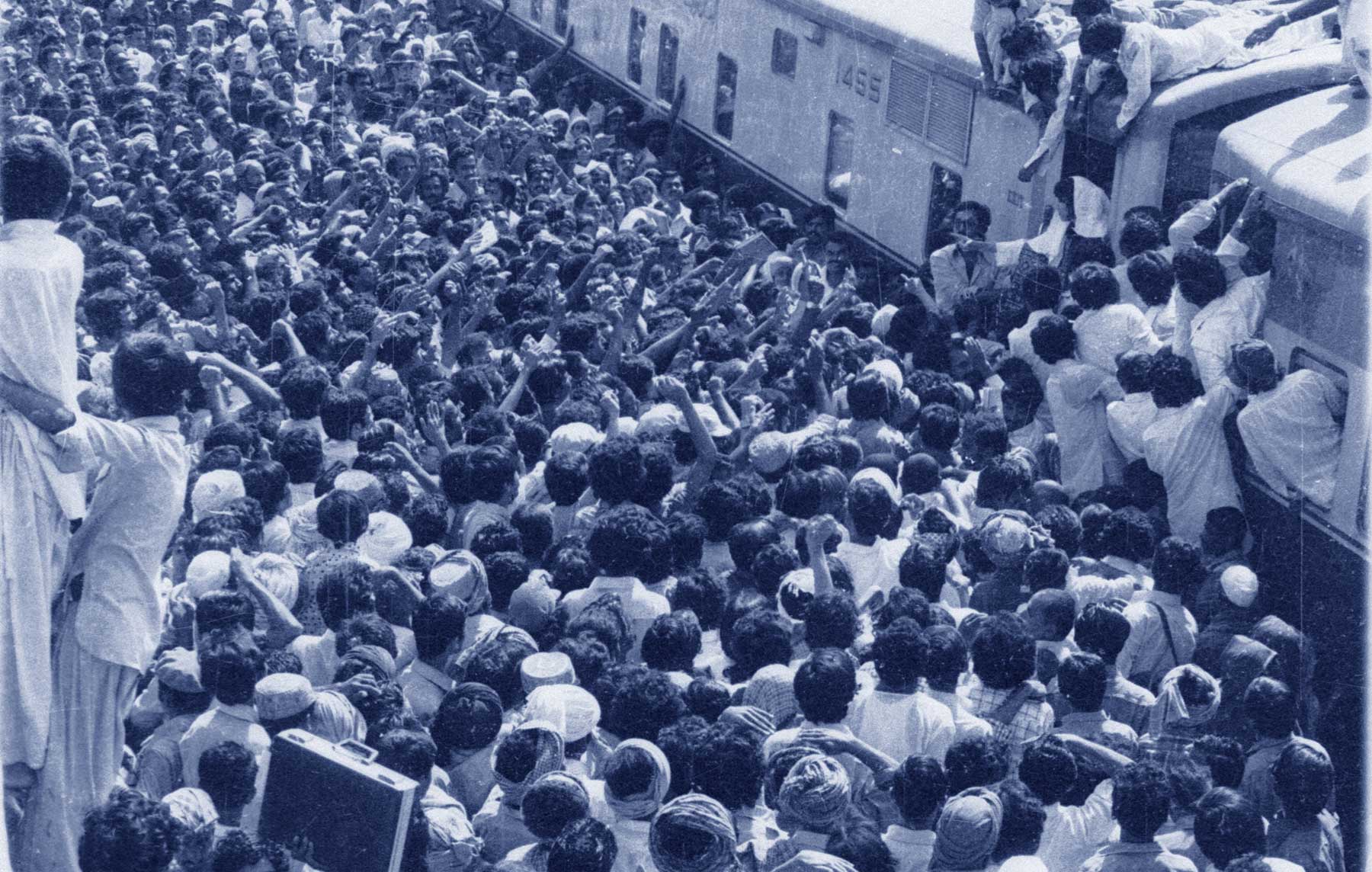
August marks the 70th anniversary of the end of British colonial rule in India and the creation of the two independent countries of India and Pakistan, carved along religious and political lines. More than 10 million people were uprooted. We asked readers how they or their families were affected. These are some of their stories.

‘Was he calling out for me?’

In 1947 I was 10. We lived in comfort in Jammu and Kashmir state.

We lost everything at the time of the creation of Pakistan. Things can be replaced, not lives.

My father, an intellectual and educationalist, was murdered. Eight of us crossed into Pakistan dressed in summer clothes and nothing else. Winter came and we had nothing to wear and no roof over our heads. By the following summer my feet had outgrown my shoes and I had to walk barefoot on scorching earth. My feet sometimes still feel that hot surface.

Even today I get nightmares about my father’s murder. As a physician I wonder how the end came. Was he in pain, was he cold, was he thirsty, was he calling out for me?

‘My father recalled hiding in a Muslim family’s house’
My father, Anand B. Khorana, was about 10 years old at the time of partition. His father was a civil engineer and the whole family (my grandparents, father and his five siblings) had recently moved into a new home they built as a mark of their “middle-class” status. The oldest child, a daughter, had recently become engaged. The family had lived for generations in the state of Punjab and could not conceive of living any place else. As my late father told it, everyone had heard rumblings about the state being divided into a Pakistani half and an Indian half, but few thought it would happen imminently.

At the stroke of midnight my entire family was displaced. Their land and home were deemed to be on the Pakistani side and in a few days it was pretty clear that a Hindu family, regardless of their prior status, was in danger. I don’t know all the details but, unlike most families who decided to emigrate immediately (many losing their lives on the trains in the process), my father’s family went into hiding for a few months. My father recalled hiding in a Muslim family’s house (a former employee of my grandfather’s).

Eventually, things calmed down and the family made the trek to India and resettled, initially in Delhi in refugee quarters. My grandfather was able to find a job similar to his prior one. All of their property, including the house they had recently built, was lost but the family was grateful to have made it out alive — unlike so many others. The only person believed lost was the eldest daughter’s fiancé but, a year later, she spotted him at a train station in Delhi. They married and had several children.

‘We carried the heavy utensils, because we thought copper was more valuable than silver’

My parents were young when they walked from what’s now Bangladesh to India. Baba called East Pakistan “home” until he died in 2004. His family, landowners in Dhaka, fled with their belongings; copper utensils, large bowls, plates. He used to say, “We never needed anything, so we didn’t know the value of money. We carried the heavy utensils, because we thought copper was more valuable than silver. We were children, what were we to do?”

When Baba’s bank job moved him to New Delhi, he spent days recreating his childhood vegetable garden. Cabbage, cauliflower, peas, spinach, okra, we had it all. He used to say, “Our pumpkins were bigger than the sun!” and I would believe him. Everything in Bangladesh, the place he left, was better. The roses were more fragrant, the eggplants more purple, the fish were fresher — Delhi could never compete.

Ma was 12 when her family fled Barisal for Kolkata. They sold everything, including Ma’s favorite school books. She mourned those books until she died, in 2008. But she was proud that she hadn’t marked any of them with a pen or pencil. “They were pristine,” she would say, “so Thakur da could sell them at a premium. That money helped us escape.”

My father’s family was part of the British colonial administration. During partition my father was in Pakistan attending school while the rest of his family was in Pune, India. As hostilities erupted between Hindus and Muslims, my father was cut off from his family. He couldn’t get British citizenship because most of his papers were lost during the upheaval. So, in the ’50s, he made his way to the United Arab Emirates by ship and started a family there.

My siblings and I have been effectively stateless. Although we are familiar with Indian and Pakistani culture, we belonged to neither culture. We grew up in the Middle East, in Dubai, among other Asians but could not identify with them.
—
‘He would never forgive himself if anything happened to her’

When partition was announced, my father, who worked for the British Indian Government, was posted in Bombay. He was advised that as a Muslim he would have better career opportunities in Pakistan. He was asked to report to offices in Rawalpindi as soon as possible. He left and my mother, Rosy, who was 20, and their six-month-old daughter stayed behind until he could arrange for their accommodation. Because of the chaos he could not come back to get them, so he asked my mother to take a train to Lahore. On the train a Sikh gentleman noticed my mother alone with an infant and asked her where she was going. When she told him Lahore, he was shocked and told her about the massacres that were taking place on trains going to Pakistan — my mother and father hadn’t known.
He said he was traveling to Amritsar (30 miles from Lahore) but would accompany her to Wagah, a border town between India and Pakistan, because he would never forgive himself if anything happened to her. He told my mother that if anyone asked, she was his daughter. He thought her name, Rosy, was fine since it was secular. But my sister’s name, Shahina, was distinctly Muslim, so if anyone asked her name was Nina.

He stayed with them until Wagah and walked with them to the Pakistani border, kissed them both on their foreheads and told them he wished he could take them all the way to Lahore, but he would not make it back alive.
My sister, who lives in Karachi, is still called Nina by everyone in the family. My mother insisted on that.

‘We prayed as we imagined the worst. Almighty God had other plans.’

On Sept. 7, a bespectacled Sikh man, much like my father, was killed in town and a rumor spread that he had come to set fire to the local mosque.

The next day dislocated families from surrounding villages who had taken shelter in schoolyards, grain markets and other vulnerable locations were attacked. I can still hear the cries of people shot or stabbed outside the Gurdwara and the gunfire that began around 4 p.m., as the last train left the Jaranwala Railway Station, in Pakistan, and continued into the evening.

That night women and children were sheltering in a room on the second floor of the Gurdwara with instructions on what to do if the militia broke through the doors and entered the temple. The thought still gives me chills. The temperature outside was in the 90s Fahrenheit, but inside the heat was oppressive. Some men stayed on the main floor or on the rooftop lookout, armed with sticks, swords, a pistol and one double-barreled gun. We were certain our end was imminent. We prayed as we imagined the worst.

Almighty God had other plans. For the next three days we holed-up in the Gurdwara. Our ranks swelled with the addition of the injured who were able to escape. We heard rumors that we would be attacked on Sept. 12, after Friday prayers. But there was a knock at the giant door of the temple around 10 a.m. and four Sikh military officers ordered us to leave in ten minutes and said they would escort us to the caravan of refugees that was passing. Everyone scrambled and ran with the clothes on their backs, relieved and hopeful to live another day or die with others traveling toward the new border and sanctuary of India.

‘I was probably the first member of my family to visit the home since 1947’

My father was a refugee and a migrant. As his child I have lived a peripatetic life, but have always been able to maintain connections with my family in Pakistan. I lived in Aligarh while I was researching my dissertation and visited the home where my father and my grandmother were born. I met the son of the family who had migrated from Lahore and received the home as refugee property (though he had been born later, in independent India). I was probably the first member of my family to visit the home since 1947 and met people who remembered my family, who were known for their love of rooftop kite flying. The family who lives there now sent homemade sweets for me to take to my Pakistani family.

‘He spent days carrying two Muslims from the East to the West’
My mother’s younger brother lived in Jammu and must have been a lad of 15 at the time of the partition. He was aware of the mass violence around him, but he did not take up arms and perpetuate the violence. He was a strong swimmer, and he spent days carrying two Muslims from the East to the West and then two Hindus from the West to the East on his shoulders — back and forth. My uncle’s story reminds me that people can stop the cycle of violence.

‘It was not a national tragedy for him, but a very personal one’
My paternal grandfather and grandmother moved to Bombay during partition with their two little sons. I shared a room with my grandfather growing up and heard stories of how things were before and silences about what happened during. In his last year my grandfather would often weep about partition. It was not a national tragedy for him, but a very personal one.

My maternal grandfather moved to Lucknow in India at the height of the violence. They lost many cousins and relations, but the immediate family made it safely. He restarted an optical shop called Lahore Opticals, named after the city of his birth, and became successful. When Hindu-Muslim strife breaks out in India, the shop is invariably targeted. But my grandfather never changed the name. His shop is now run by my uncle and is still named after the city they fled, now in Pakistan.

Washington’s stance on Kashmir unchanged, assures McCain

ISLAMABAD, July 3: Former presidential candidate and veteran congressman Senator John McCain on Sunday made it clear that there was no change in the United States policy on the longstanding Kashmir dispute, stressing the need for an end to the current unrest in disputed Himalayan region.

McCain, the Chairman Senate Armed Services Committee, is leading a delegation of US senators including Senator Lindsey Graham, Senator Elizabeth Warren, Senator David Perdue and Senator Sheldon Whitehouse to Pakistan for talks with civil and military authorities on a host of issues covering bilateral ties, current regional and international situation.

The US delegation is visiting Islamabad against the backdrop of recent visit by Indian Prime Minister Narendra Modi to Washington.

During Modi’s visit, the US and India signed new defence deals as well as urged Pakistan not to allow its soil to be used against other countries.

In order to appease New Delhi, the Trump administration also declared prominent Kashmir leader Syed Salahuddin a global terrorist. Pakistan reacted sharply to the development and termed the decision of equating Kashmir freedom struggle with terrorism as unfair.

The joint statement issued after the Trump-Modi visit gave the impression as if the US has decided to depart from its traditional position on Kashmir.

Washington has long considered Kashmir as a dispute between Pakistan and India and in the past avoided taking sides while urging the two nuclear-armed neighbours to resolve the issue bilaterally.

After holding talks with Prime Minister’s Adviser on Foreign Affairs Sartaj Aziz here at the foreign office, Senator McCain told the state-run PTV that there was no change in the US policy on Kashmir dispute.
He said the United States wanted to see an end to the violence in the disputed region and also believed that resolution to the longstanding problem could only be found through dialogue.

After Modi’s visit, there have been concerns that Pakistan might lose its strategic importance in the eyes of the United States.

However, during the meeting between Sartaj Aziz and US delegation, it was evident that Pakistan still remains relevant for Washington for the regional peace and stability.

A statement issued by the Foreign Office said Senator McCain, thanking the adviser on behalf of the delegation, appreciated the contributions and sacrifices made by Pakistan in the fight against terrorism.

He said that continued engagement with Pakistan, a close friend and ally of the US, was important.

The Senators also praised the economic turnaround, as manifested by investors’ interest and confidence in Pakistan.

The two sides agreed with the need for the US and Pakistan to forge closer cooperation in confronting the peace and security challenges in the region and beyond.

Senator McCain, who frequently visits this part of the region, has always advocated strong and deep cooperation with Pakistan. Last year after visiting Islamabad, he wrote an article in The Financial Times warned that ignoring Pakistan would be dangerous.

McCain argued that without Pakistan’s cooperation, the US mission in Afghanistan would become “immeasurably more difficult”.

According to the Foreign Office, the adviser underscored the significance of the longstanding cooperation between the two countries and the need to make this partnership diverse and multidimensional.

Pakistan and US strategic partnership, he said, was critical to achieve peace and stability in the region and beyond.

Sartaj also apprised the US Senate delegation, comprising of very prominent Senators from both Democratic and Republican parties, about Pakistan’s success in combating terrorism through Operation Zarb-e-Azb and Radd-ul-Fassad and informed that the terrorist networks have been dismantled, their sanctuaries eliminated under the overarching National Action Plan.

The dividend of these policies, he stressed was empirically verifiable.

The adviser said that Pakistan remained committed to support efforts for lasting peace and stability in Afghanistan. Adviser noted that QCG process remains a credible and effective vehicle to facilitate reconciliation and restore peace, stability and economic prosperity in Afghanistan.

Pakistan looked forward to constructive engagement with the United States on all efforts and initiatives that would lead to a stable and prosperous Afghanistan.

He said that Pakistan was also ready to strengthen and deepen its partnership with the US to counter the new and emerging terrorism threats including the expanding footprint of Da’ish in the region.

The adviser also raised concern over the gross human rights violations by the Indian security forces in Kashmir and international community’s silence over the reign of terror unleashed by India on innocent and unarmed Kashmiris.

He stressed that Pakistan firmly believed in the legitimacy of the Kashmir cause and the peaceful struggle of the Kashmiri people to claim the right to self-determination promised to them by the international community through the UN Security Council resolutions.

Modi’s enthusiastic bear hug beats Trump’s handshake

Indian Prime Minister Narendra Modi has responded to the infamous “Trump handshake” with his own diplomatic tool of choice – the bear hug.

A series of awkward greetings and handshakes between Mr Trump and other world leaders has left many wondering who could “beat” his approach.

French President Emmanuel Macron was deemed a winner when he gripped and refused to let go of Mr Trump’s hand.
But for many observers, Mr Modi – an experienced hugger – has outdone that.

The Indian prime minister’s propensity to hug global leaders goes back a long way – this BBC blog called him “the most physically demonstrative Indian leader in years”.

It is also a true diplomatic masterstroke – Mr Macron may have “beaten” the Trump handshake last month, but it was a tense encounter with both men’s knuckles turning white.

But who could possibly object to a hug?

The choreography of the bear hug

The success of the Modi bear hug is in no small part down to its athletic choreography – that disarmed Mr Trump before he could respond.

The initial approach was slow with arms outstretched and there was no hint of the embrace to come, though if Mr Trump’s advisers had done their homework they would have seen how Mr Modi has clung to other world leaders.

He slowly reels President Trump in with first one hand then the other and there is little of the trademark Trump awkwardness in his slow but sure progress towards the Indian leader.

He finally barrels at the US president, avoiding all eye contact and presses his head on his chest in a gesture at once disarming and confident.

Mr Trump draws away slightly but not without looking down at Mr Modi with what could even be affection, although their eyes do not meet.

And as they draw away Mr Modi keeps hold of the US president’s hand and lingers in a firm double hand-lock.
They retreat to their podiums and carry on as if nothing has happened.

For many observers the hug was both natural and commanding and left neither of the leaders at a loss – in stark contrast to numerous other Trump greetings with world leaders.

And many on social media marvelled at what they called Mr Modi’s “craftsmanship”.

Of course both sides are likely to have prepared for the meeting. Like football coaches before international matches, their political aides and advisers may well have studied the techniques of either leader and there could well have been briefings on how to handle that first contact.

How likely is that really to have happened?
KC Singh, a former secretary in India’s external affairs ministry, told the BBC that “given Mr Modi’s hugging record, it would have been a very ill-informed US team that would not have known Mr Modi was going to go for Donald Trump”.

Mr Singh added that the gesture seemed to be done more for viral value than anything else, noting that even in India “no one hugs each other randomly”.

Going by social media, Mr Modi’s mastery was largely expected in India. There was quite a lot of humour about it, as well as some pride. But quite a few found this effusive display a bit embarrassing as well. Others had seen it coming.

It looks as though world leaders have become more tactical about responding to the Trump handshake after both Japanese Prime Minister Shinzo Abe and British Prime Minister Theresa May were seen as faring poorly against it.
South Korean president Moon Jae-in is due to meet Mr Trump next.

It remains to be seen if he can best the hug.

Indian spy Jadhav appeals to COAS to ‘spare his life’; army releases new video confession

Convicted Indian spy Kulbhushan Jadhav, who is currently on death row, has appealed to Chief of Army Staff (COAS) Gen Qamar Bajwa for mercy.

“Commander Kulbushan Sudhir Jadhav, the serving Indian Naval Officer who has been sentenced to death on charges of espionage, sabotage and terrorism, has made a mercy petition to the Chief of Army Staff,” the army’s media wing said in a press release issued Thursday.

“In his plea, Commander Jadhav has admitted his involvement in espionage, terrorist and subversive activities in Pakistan and expressed remorse at the resultant loss of many precious innocent lives and extensive damage to property due to his actions.

“Seeking forgiveness for his actions, he has requested the Chief of Army Staff to spare his life on compassionate grounds,” the Army said.

Commander Jadhav has reportedly exhausted an appeal to the Military Appellate Court, it emerged from the press release. If his appeal for clemency is rejected by Gen Bajwa, he will have recourse to appeal to President Mamnoon Hussain.

A new confessional video, released by Inter-Services Public Relations along with the news of Jadhav’s petition, purports to detail the crimes Jadhav has sought absolution from.

In the video, Jadhav can be heard saying that Indian spy agency Research and Analysis Wing (RAW) sponsored various terrorist activities in Pakistan in order to disrupt economic activities linked to the China-Pakistan Economic Corridor (CPEC) and foment socio-political disturbance and strife in Balochistan and Karachi.

‘RAW-sponsored terrorism’
Jadhav, in his “confession”, has said that one Anil Kumar “on behalf of RAW” sponsored terrorist activities in Pakistan. These included encouraging sectarian violence targeting Hazara and Shia citizens, particularly those travelling between Iran, Afghanistan and Pakistan on pilgrimage.

The purpose of sponsoring various attacks in the region was so that “instability or some kind of fear is set into the mindsets of the people of Pakistan”, Jadhav said, saying that the high-profile assassination of Superintendent Police Chaudhry Aslam was an example of the kind of disturbance India wanted to create.

According to Jadhav, RAW also ‘directly sponsored’ the targeting of Frontier Works Organisation workers in Balochistan and sponsored Improvised Explosive Device (IED) attacks carried out by “Baloch sub-nationals” within Quetta, Turbat and various other cities of Balochistan.

The spy said that “various financing which subsequently happened for the Tehreek-i-Taliban Pakistan (TTP) and various other Afghan anti-Pakistani terrorist groups led to the attack by TTP on one of the Mehran Naval Bases in which a lot of damage was cost to the Pakistani Navy.”

Other attacks that Jadhav said were “funded and directly supported by Anil Kumar” included a “sort of radar installation attack, the Sui pipeline gas attack, then attacks on civilian bus stations where some, I suppose, Pakistani nationals were being targeted by sub-nationals and murdered and massacred” in order to cause disruptions in the China-Pakistan Economic Corridor (CPEC).

“He wanted it [the attacks] to be raised to the next level so that complete disruption and complete stoppage of the CPEC between Gwadar and China is achieved,” Jadhav added.

A ‘military-style’ attack on the Pakistani consulate in Zahidan was also planned by RAW officials along with Baloch insurgents, Jadhav confessed.

“The aim was to either attack it with a grenade or some kind of Rocket-Propelled Grenade or IED attack or then try to harm the consul-general or some kind of vicious attack on the Pakistani consulate in Zahidan,” he said.

Additionally, he said, RAW had sponsored the creation of a new website for the Baloch movement in addition to handling an existing website “which was luring people from within Pakistan for various activities to be carried out in the future.”

Funding for these activities took place through hawala and hundi operations, Jadhav said, with finances moved from Delhi and Mumbai via Dubai into Pakistan.

Jadhav’s trial
Jadhav had previously been tried by a Field General Court Martial under Section 59 of the PAA and Section 3 of the official Secret Act of 1923 and sentenced to death.

Jadhav had confessed before a magistrate and court that he was tasked by RAW to plan, coordinate and organise espionage and sabotage activities seeking to destabilise and wage war against Pakistan through impeding the efforts of law enforcement agencies for the restoration of peace in Balochistan and Karachi, the ISPR had said earlier.

Jadhav’s first confession
Jadhav’s first confessional statement was aired by former ISPR head Lt Gen Asim Bajwa, in which the spy admitted to involvement in terror activities in Balochistan and Karachi.

Terming the Indian spy’s arrest a ‘big achievement’, Bajwa said at the time that Jadhav was directly handled by the RAW chief, the Indian National Security Adviser and the RAW joint secretary.

“His goal was to disrupt development of the China-Pakistan Economic Corridor (CPEC), with Gwadar port as a special target,” Bajwa had said, adding, “This is nothing short of state-sponsored terrorism… There can be no clearer evidence of Indian interference in Pakistan.”

“If an intelligence or an armed forces officer of this rank is arrested in another country, it is a big achievement,” Bajwa had said, before going on to play a video of Jadhav confessing to Indian intelligence agency Research and Analysis Wing (RAW) involvement in Balochistan separatist activities in Pakistan.

Case goes to ICJ
A 10-member bench of the International Court of Justice (ICJ), the United Nations’ top court, is hearing an urgent bid by India to stop Pakistan from executing Jadhav.

The ICJ in a hearing of the case on May 18 restrained Pakistan from executing Jadhav and rejected India’s request to delay proceedings in Jadhav’s case until December.

India was also ordered to submit a response by September 13 regarding the case.

Rejecting Pakistan’s argument that the court did not have jurisdiction in the matter, the court reasoned it could hear the case because it involved, on the face of it, an alleged violation of one of the clauses of the Vienna Convention, which both Pakistan and India ascribe to and whose interpretation falls under its purview.

“[Meanwhile] Pakistan should take all measures to ensure that Mr Jadhav is not executed till the final decision of this court,” the court said at the time.

The court also said Pakistan should inform it of all measures taken in implementation of the order.

India’s Call-Center Talents Put to a Criminal Use: Swindling Americans

THANE, India — Betsy Broder, who tracks international fraud at the Federal Trade Commission, was in her office in Washington last summer when she got a call from two Indian teenagers.

Calling from a high-rise building in a suburb of Mumbai, they told her, in tones that were alternately earnest and melodramatic, that they wanted to share the details of a sprawling criminal operation targeting Americans. Ms. Broder, who was no stranger to whistle-blowers, pressed the young men for details.

“He said his name was Adam,” she said, referring to one of the pair. “I said: ‘Your name is not Adam. What does your grandmother call you?’ He said, ‘Babu.’”

Babu was Jayesh Dubey, a skinny 19-year-old with hair gelled into vertical bristles, a little like a chimney brush. He told her that he was working in a seven-story building and that everyone there was engaged in the same activity: impersonating Internal Revenue Service officials and threatening Americans, demanding immediate payment
If they reached a person who was sufficiently terrified or gullible — this was known in the business as a “sale” — they would instruct that person to buy thousands of dollars’ worth of iTunes cards to avoid prosecution, they said; the most rattled among them complied. The victim would then send the codes from the iTunes cards to the swindlers, giving them access to the money on the card.

As it happened, the United States government had been tracking this India-based scheme since 2013, a period to cover back taxes during which Americans, many of them recent immigrants, have lost $100 million to it.

Though India had no reputation as a large-scale exporter of fraud in the past, it is now seen as a major center for fraud, said Suhel Daud, an F.B.I. agent who serves as assistant legal attaché at the embassy in New Delhi. Several trends have converged to make this happen, he said: a demographic bulge of computer-savvy, young, English-speaking job seekers; a vast call-center culture; super-efficient technology; and what can only be described as ingenuity.

“They have figured all of this out,” Mr. Daud said. “Put all of these together, with the Indian demographics in the U.S., and it’s a natural segue. Whatever money you’re making, you can easily make 10 times as much.”
‘I Want Money. That’s Why.’

Pawan Poojary and Jayesh Dubey, best friends and college dropouts, were impressed with the Phoenix 007 call center in Thane, a suburb northeast of Mumbai. The interviewer carried an iPhone; there were racing sport bikes parked outside, and, as Mr. Poojary put it, “girls roaming here and there.” The monthly salary was average for call centers, 16,000 rupees (about $230), they said, but the bonuses were double or triple that, based on sales.
The two friends had been playing a video game for up to eight hours a day, pausing occasionally to eat. They wanted in.

“At that time, in my mind is that I want money,” Mr. Poojary, 18, said. “That’s it. I want money. That’s why.”
They said they showed up for training in a room of young Indians like themselves, the first in their family to be educated in English. They were a slice of aspirational India: Mr. Poojary’s father, who owned two welding shops, was adamant that his son would rise to a higher place in society, an office job. Mr. Poojary was afraid to tell him he had dropped out of college.

The trainer assigned them names, Paul Edward and Adam Williams, and handed out a six-page script that started out, “My name is Shawn Anderson, with the department of legal affairs with the United States Treasury Department,” the teenagers said.

“We read the script, and I asked, ‘Is this a scam?’” Mr. Poojary said. “He said, ‘Yes.’”

“At that time I am money-minded. I thought, ‘O.K., I can do this,’” he said.

Mr. Poojary was excited and nervous about speaking to an American for the first time, and he was alarmed by the resulting bursts of profanity. Mr. Dubey said he tried to commit the entire experience to memory, in case he and Mr. Poojary someday decided to start a business of their own.

“I just wanted to become a great scammer,” Mr. Dubey said. “Everyone was scamming around me. I thought, ‘I will also become a great scammer.’”

The key to the whole thing, Mr. Dubey decided, was a psychological fact: Americans fear their state.

“I think they actually are really afraid of their government,” he said. “In India, people are not afraid of police. If anyone wants to come and arrest, they say, ‘Come and arrest.’ It is easy to get out of anything. But in America they are afraid. We just need to tell them, ‘You are messing with the federal government,’ and that is all.”

Preying on Fear

Inaben Desai, of Sugar Land, Tex., came home from grocery shopping, and her mother handed her the phone, eyes wide with alarm. Someone was on the line from the government, her mother said. They had called three or four times while she was out.

Ms. Desai, 56, worked as a cashier at Walmart. When she picked up the phone, a gruff-voiced man told her that she had failed to pay fees when she got her United States citizenship, in 1995, and that unless she did so she would be deported back to India, she said. When Ms. Desai said she needed to call her husband, a woman got on the phone, speaking sympathetically, in her native Gujarati.

“She said, ‘If you involve your husband, there’s going to be more problems,’” Ms. Desai said. “‘Your husband is going to get in trouble, too. Don’t involve your husband.’”

Ms. Desai had begun to cry. Still on the line with the woman, she took all the cash she had on hand and drove to a nearby grocery store, where she bought $1,386 in prepaid debit cards. Then the woman instructed her to go to her bank, transfer close to $9,000 to the account of someone named Jennifer, in California, and then fax confirmation and confidential details about her account.

“The bank lady tried to stop me, and she said, ‘This is your personal information,’” Ms. Desai said. “But I’m scared, and I faxed it to them because I’m scared of what would happen to my family.” The swindlers, who now had access to her bank balance, called back to demand another sum close to $9,000. Ms. Desai had to drive to another bank branch to make the transaction. The total amount she transferred, $17,786, was nearly all her savings.

Mr. Poojary was not the person who called Ms. Desai, whose case dates to 2014. But a similar conversation prompted him to contact the United States government. He recalled the woman’s name as Regella, and said that when she begged him to give her a little time, Mr. Poojary felt so sorry for her that he went to his supervisor, who told him to push harder.

“I just feel guilty at that time,” he said. “We are also Indians. We also don’t have money. They also don’t have money.”

A few days later, he called the main switchboard at the I.R.S. and said he wanted to pass on information about a crime. “They are not listening, they are just laughing at me,” he said.

Finally, he was transferred to Ms. Broder, the Federal Trade Commission’s counsel for international consumer protection.

“He was fairly insistent,” she recalled. “He was determined. The number of times he called me was overwhelming. I would guess that is why he was reaching out to me, because he wanted some form of law enforcement to take it down.”

The Raid

The risk of expanding a fraud aggressively is that the range of potential informants also expands. Supervisors may humiliate employees in front of their peers; paychecks may arrive late or not at all; ringleaders may spend so freely that they attract tax officials’ gaze.

The so-called Mira Road scam, named for the building’s neighborhood, had moved into a single floor of the seven-story high-rise in early 2016. By summer it filled the whole building.

“It got big,” said Mr. Daud, the F.B.I. agent. “And when it gets big, you leave bread crumbs.”

Nitin Thakare, a senior police inspector at the crime branch in Thane, will not say much about the person who contacted him in September with a tip.

But he will describe the raid, in loving, cinematic detail: How at 10 p.m., after the last of the call center staff had arrived for the night shift, 200 police officers streamed up the main staircase, blocking every exit and detaining all 700 people who worked inside.

As morning approached, the street outside filled with the workers’ parents, wives and girlfriends, said Amar Verma, who sells tea on the corner. “There was lots of sobbing,” he said. “There was one mother who came with her car. She was crying alone, the poor thing. She was sitting on the pavement in front of me, crying. Her child had not come home.”

Inside, the police cut the phone lines. Under interrogation, the suspects, one after another, insisted that they had been planning to quit just as soon as they collected their next paycheck, Mr. Thakare said. But the money made it hard to walk away, and after a few pay cycles, their qualms had faded. He felt for them.

“These are the youth of our nation,” he said. “They were misguided. For the first few days it seems glamorous. Someone is teaching them an accent, people are smoking, there are women. There’s freedom and night life. The youth love that.”

The police said that others, like the landlord who had rented the building to the swindlers, wondered why the authorities cared in the first place. “He said, ‘What happened?’” said Parag Manere, a deputy commissioner of police. “‘We are not cheating people in India! We are cheating people in the U.S.! And the U.S. cheats the whole world!’”

What they had stumbled on, it became clear, was a branch of a much larger network, the police said. Five days later, the police organized a second raid, of facilities in Ahmedabad, Gujarat, which they believed to be a nerve center. The Justice Department had come to the same conclusion: It has since released an indictment tracing 1.8 million calls targeting American residents to five call centers in Ahmedabad that used various schemes to defraud more than 15,000 people out of hundreds of millions of dollars.

By the time the police arrived at the Ahmedabad location, though, the syndicate was gone. “The place where we raided, it was a thousand-seat call center,” Mr. Manere said. “When we got there it was empty. Empty. Nothing. Not a piece of paper. Empty halls.”

‘It Will Not Stop’

Mr. Poojary said he happened to be at a job interview when he learned that the call center in Mira Road had been raided.

It was an honest, mundane customer service job, advising the customers of Delta Air Lines on such matters as lost baggage and frequent-flier miles, for a mediocre monthly salary of $150. He was sitting on a waiting room sofa when he picked up The Times of India and read that 700 of his co-workers had been detained the night before.
The first person he contacted was Ms. Broder, to tell her that the raid had hit the same operation he had described to her. That night, he and Mr. Dubey, who had left the Mira Road center after contacting Ms. Broder, celebrated over drinks.

“We brought it down,” Mr. Dubey said. “It started out as fun, then it got boring, then we truly understood the good and dirty parts of the job. Then we decided to bring it down.”

Whistle-blowers’ motives are often murky, and in their early conversations, Ms. Broder wondered fleetingly whether the two friends were calling on behalf of the scheme’s organizers to determine what American investigators knew. In an interview with The New York Times, the two men acknowledged being fired from the call center after getting into an altercation with co-workers.

Their claim to have brought down the center is unfounded, according to Indian and American investigators, who said that the raid in Thane was carried out entirely by the local police, without assistance from American officials. The Thane police said their informant was not employed by the swindlers. The raid was international news, and in the weeks that followed, the number of fraudulent I.R.S. calls to Americans dropped 95 percent, according to the Better Business Bureau.

But those who believe that the drop is permanent should consider this: In the weeks after Mr. Poojary and Mr. Dubey left the center, several lucrative job opportunities were presented to them. Each involved a phone scheme targeting Americans, they said. There was the Viagra scam, in which callers offered to sell cut-rate Viagra; there was a low-interest loan scam, in which people were asked to deposit $1,000 as proof of income. There was a tech scam, which warned Americans that their computer had been infected by a virus, and an American Express scam, which involved gathering personal information to break through security barriers on online accounts.

“Even if you shut down 400 buildings in India, it will not stop,” said Mr. Dubey, now known by his Delta clients as Jacob Davis. The two friends say they have given up on the notion of getting rich quickly, or of being paid by the United States government for the information they provided.

It has been replaced by a new hope — that, perhaps as a result of the public service they have provided, they will be granted visas to the United States, the home of so many of their favorite things: “The Fast and the Furious,” Vin Diesel and Robert Downey Jr. “I’ve spent so much time getting to know it, familiarizing myself with its states, talking to its people,” Mr. Dubey said. “I feel a bond.”