Ghani, Modi lash out at Pakistan on terrorism at Heart of Asia moot in Amritsar

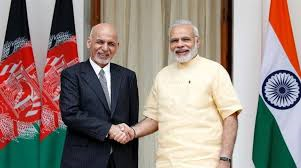
Afghan President Ashraf Ghani and Indian Prime Minister Narendra Modi joined hands to lash out at Pakistan on terrorism as the subject took centre stage at the inauguration of the sixth Heart of Asia ministerial conference on Sunday in Amritsar.

The theme of the conference is ‘enhanced cooperation for countering security threats and promoting connectivity in the Heart of Asia region’, and speculation was rife that India and Afghanistan would seek to pin Pakistan on terrorism.

Ashraf Ghani opened the conference by snubbing a $500 million pledge from Pakistan for development projects in Afghanistan, saying Afghanistan ‘needs aid to fight terrorism’, Times of India reported.

“We need to identify cross-border terrorism and a fund to combat terrorism. Pakistan has pledged $500m for Afghanistan’s development. This amount can be spent to contain extremism,” Ghani said, directly addressing Foreign Affairs Adviser Sartaj Aziz who was in attendance at the two-day moot.

“Afghanistan suffered the highest number of casualties last year. This is unacceptable… Some still provide sanctuary for terrorists. As a Taliban figure said recently, if they had no sanctuary in Pakistan, they wouldn’t last a month,” the Afghan president thundered.

“I don’t want a blame game, I want clarifications on what is being done to prevent the export of terror,” Ghani said.

He emphasised the need to “confront the fifth spectrum in the room, which is terrorism” and called on Pakistan to “verify cross-border activities”.

The Afghan president appreciated India’s support to Afghanistan, which he said comes “with no strings attached”.

“The relationship is based on shared values and beliefs,” Ghani said.

Must counter terrorists: Modi
Indian Prime Minister Narendra Modi in his opening remarks termed terrorism “the biggest threat to Afghanistan’s peace and the region,” Indian media reported.

Although the Indian premier did not refer explicitly to Pakistan in his speech at the Heart of Asia conference, Modi has vowed to step up a drive to isolate Pakistan diplomatically following the Uri army base attack in September, which it blames on Pakistan ─ an allegation Islamabad denies.

Hours after the Uri attack occurred, Indian Home Minister Rajnath Singh termed Pakistan a ‘terrorist state’ and accused Pakistan of involvement.
Addressing the moot, Modi said, “We must counter terrorists and their masters. We must demonstrate strong collective will to defeat terror network that cause bloodshed and spread fear.”

“Silence and inaction on terror in Afghanistan and the region will only embolden terrorists and masters and those fund them,” he said.

Modi said India is committed to ‘durable peace’ in Afghanistan, and announced plans to connect India and Afghanistan via an air link, as well as discussed the possibility of trilateral cooperation over Iran’s Chahbahar port.

“India-Afghanistan-Iran cooperation on the Chahbahar port will help Afghanistan to connect its economy to the rest of the world,” Modi said.

Aziz slams Ghani’s ‘baseless accusations’, says Pakistan wants peace with India
Adviser to the Prime Minister on Foreign Affairs Sartaj Aziz slammed Ghani’s ‘baseless accusations’ on Pakistan and called for evolving a joint and purposeful strategy for lasting peace in Afghanistan, Radio Pakistan reported.

“It is simplistic to blame only one country for the recent upsurge in violence. We need to have an objective and holistic view,” he said.

“Peaceful resolution to all the longstanding issues is the only way forward for regional cooperation and connectivity,”

“Pakistan is ready to extend every kind of cooperation for lasting peace in Afghanistan,” he said, adding that Afghanistan should avoid levelling false and baseless accusations at Pakistan.

He underlined the need to address through effective and collective efforts the continuing wave of terrorism and violence in Afghanistan which had claimed scores of human lives and observed that the signing of a peace agreement between the Afghan government and Hizb-i-Islami may serve as a model for talks with other groups in the future.

The adviser said that peace talks between the Afghan government and Taliban had not produced positive results, adding that Pakistan was making a serious effort to facilitate peace talks through the Quadrilateral Coordination Group (QCG).
He urged all QCG members to continue their efforts for talks between the Afghan government and Taliban. “In our view, there is no military solution to the Afghan conflict and all our efforts should be to achieve a politically negotiated settlement through an Afghan-led and Afghan-owned process,” he said.
Aziz also regretted the postponement of the South Asian Association for Regional Cooperation (Saarc) summit scheduled in Islamabad, by saying that it was a setback to efforts for promoting regional cooperation and undermined its spirit.

Speaking to journalists in Amritsar earlier, Aziz said Pakistan prioritises peace and is ready for talks with India if New Delhi desires the same, the Press Information Department said in a statement.

“Terrorism is one of the issues to be discussed under the composite dialogue with India,” Aziz said, adding that both countries should sit together and discuss issues instead of engaging in heated debate in the media.

“If we do not have structured dialogue, then the dialogue through media increases hostility and negative perceptions,” he said.

“Pakistan is committed to peace and security of the region and to promote multilateral peace for this purpose,” he said, adding that this was one of the reasons he attended the conference in India.

Aziz arrives in Amritsar
The two-day moot kicked off amidst a media frenzy as a handshake between Foreign Affairs Adviser Sartaj Aziz and Indian Prime Minister Narendra Modi sparked speculation regarding the possibility of a Pak-India meeting on the sidelines of the event.

Reports speculated whether Sartaj Aziz’s early arrival in India on Saturday presaged a ‘chance’ bilateral meeting with Indian PM Modi, who is hosting the multilateral conference on Afghanistan.

Indian Ministry of External Affairs Spokesman Vikas Swarup has, however, rubbished the rumours citing “a climate of continued terrorism” as the reason bilateral talks may not take place. “India will never accept continued terrorism as the new normal of the bilateral relationship,”

Prior to the meet, Modi and Afghan President Ashraf Ghani held bilateral talks focusing on a range of issues, including trade, investment, infrastructural development and increasing defence and security ties.

Sartaj Aziz also met Indian National Security Advisor Ajit Doval and Ashraf Ghani separately on the sidelines of the ministerial conference.

Heart of Asia process
The initiative was launched in 2011 in Istanbul, Turkey for encouraging economic and security cooperation between Afghanistan and its neighbours for dealing with the common problems of terrorism, extremism and poverty

A senior officials’ meeting of the Heart of Asia process, themed ‘Addressing Challenges, Achieving Prosperity’, was held on Saturday and their deliberations were to feed into the ministerial session today.
Pakistan, Afghanistan, Azerbaijan, China, India, Iran, Kazakhstan, Kyrgyzstan, Russia, Saudi Arabia, Tajikistan, Turkey, Turkmenistan and the United Arab Emirates are part of the Heart of Asia initiative.

Six key areas in which the 14 countries have been pursuing confidence-building measures since the 2013 Almaty meeting are disaster management, counter-terrorism, counter-narcotics, trade and investment, regional infrastructure, and education.

The process is supported by 17 other, predominantly Western, countries, and 12 international organisations which are also sending senior representatives.

21m deaths, ozone layer to vanish if Indo-Pak nuclear war erupts

Nuclear cloud over Indo Pak (Credit: en yibada.com)
Nuclear cloud over Indo Pak
(Credit: en yibada.com)

If India and Pakistan fought a war detonating 100 nuclear warheads (around half of their combined arsenal), each equivalent to a 15-kiloton Hiroshima bomb, more than 21 million people will be directly killed, about half the world’s protective ozone layer would be destroyed, and a “nuclear winter” would cripple the monsoons and agriculture worldwide.

According to the 2007 study by researchers from Rutgers University, University of Colorado-Boulder and University of California, Los Angeles, all in the USA, the real costs would be higher and not just in India and Pakistan, where the first 21 million people – half the death toll of World War II – would perish within the first week from blast effects, burns and acute radiation.

Another two billion people worldwide would face risks of severe starvation due to the climatic effects of the nuclear-weapon use in the subcontinent, according to a 2013 assessment by the International Physicians for the Prevention of Nuclear War, a global federation of physicians.

Pakistan has an estimated 110 to 130 nuclear warheads as of 2015 – an increase from an estimated 90 to 110 warheads in 2011 – according to a report from the Bulletin of the Atomic Scientists, a global disarmament advocacy. India is estimated to have 110 to 120 nuclear warheads.

Pakistan’s nuclear weapons capability has previously deterred India from responding to previous attacks.

“At the end of the day, India has to ensure that the options it exercises–particularly the military ones – do not leave it worse off than before in terms of casualties and costs,” wrote analyst Manoj Joshi in The Wire.

It does not really matter if India has fewer nuclear weapons than Pakistan, IndiaSpend reported in April 2015, primarily because of the doctrine of “mutually assured destruction”, or MAD, as it is commonly known.

According to a report from the Bulletin of the Atomic Scientists, as many as 66 per cent of Pakistan’s nuclear warheads are mounted on 86 land-based ballistic missiles.

A major attack by Pakistan’s nuclear-tipped medium-range ballistic missiles (MRBMs) would likely target India’s four major metropolitan cities – New Delhi, Mumbai, Bengalore and Chennai (depending on where the missile is fired from), according to Sameer Patil, fellow, national security, ethnic conflict and terrorism at Gateway House, a think-tank in Mumbai.

The MRBMs would also target “the major commands of the Indian Army”, Patil told IndiaSpend.

Nearly half (40) of Pakistan’s ballistic missile warheads could be mated to Ghauri (named after 12th-century Afghan king Shahbuddin Ghauri, also known as Muhammad of Ghauri) MRBMs.

The missile has a claimed range of 1,300km and can target Delhi, Jaipur, Ahmedabad, Mumbai, Pune, Nagpur, Bhopal and Lucknow, according to a 2006 report on Pakistan’s ballistic missile programme by the National Institute of Advanced Studies (NIAS), Bengalore.

Pakistan has an estimated eight warheads which could be mated to the Shaheen (Falcon) II. This MRBM has a range of 2,500 km and can target most major Indian cities, including Kolkata on the east coast.

An estimated 16 warheads could be fired atop the short-range Ghaznavi (named after the 11th-century Afghan invader Mahmud Ghazni) ballistic missile. With a range of 270km to 350km, it can target Ludhiana, Ahmedabad and the outer perimeter of Delhi.

Pakistan has an estimated 16 nuclear-tipped Shaheen1 (falcon), short-range ballistic missiles (IRBM), having a 750km range which can reach Ludhiana, Delhi, Jaipur and Ahmedabad.

Pakistan has an estimated six 60-km range Nasr missiles, which could be mated to nuclear weapons. These tactical nuclear missiles could target “advancing battle formations of the Indian Army”, according to Patil.

Pakistan also has eight nuclear-tipped 350-km Babur cruise missiles with nuclear warheads.

An estimated 36 nuclear warheads, accounting for 28 per cent of Pakistan’s total, can be delivered using aircraft. US-made F-16 A/B aircraft can deliver 24 nuclear bombs while the French-made Mirage III/V can deliver 12.

India has deployed 56 Prithvi (earth) and Agni (fire) series of surface-to-surface ballistic missiles, which carry 53 per cent of India’s 106 estimated warheads, according to the Bulletin of Atomic Scientists.

This doesn’t take into account the estimated 12 warheads for the K-15 Sagarika submarine-launched ballistic missiles (SLBMs), which India has possibly produced for the nuclear-powered ballistic missile submarine INS Arihant.

Once commissioned, Arihant would give India a strategic nuclear triad and second strike capability, as this July 2015 IndiaSpend report notes.

“Given the smaller geographical size of Pakistan,” said Patil, India would likely target “Islamabad, Rawalpindi, Lahore and Karachi and the Pakistani Army Armed Corps headquarters at Nowshera”.

However, he cautioned: “The fallout of the nuclear attacks on Lahore and Karachi, for instance, would not just be restricted to the Pakistani territory, and depending on the wind directions, can affect both Indian and Afghan border territories.”

The 250 km-range Prithvi SRBM acts as a delivery system for 24 of India’s warheads. These are capable of hitting major Pakistani cities, such as Lahore, Sialkot, the capital Islamabad, and Rawalpindi, according to this May 2015 IndiaSpend analysis.

India has 20 nuclear-tipped Agni I SRBM and eight Agni II intermediate range ballistic missiles (IRBMs), with ranges of 700km and 2,000km, respectively. These are capable of covering almost all Pakistani cities, including Lahore, Islamabad, Rawalpindi, Multan, Peshawar, Karachi, Quetta and Gwadar.

Agni III, IV and V, with their longer ranges, might be able to reach all of Pakistan, but it can be safely said that they are directed more towards China.

India also possesses an estimated two ship-launched 350-km range Dhanush SRBM, which could be fitted with nuclear warheads.

India’s aircraft can deliver an estimated 45 per cent of 106 warheads. The Indian Air Force’s Jaguar fighter bombers can deliver about 16 nuclear warheads, while the French-built Mirage-2000 fleet can deliver 32.

Fears of a war between the two South Asian rivals erupted after a suspected militant attack on an army garrison in Uri Sector of Indian-held Kashmir claimed the lives of 18 Indian soldiers.

Tension between Pakistan and India has been high since an Indian crackdown on dissent in Kashmir following the killing by security forces of Burhan Wani, a young separatist leader, in July.

Both the South Asian rivals claim Kashmir in full, but govern separate parts, and have fought three wars since independence from Britain in 1947, two of them over Kashmir.

Courtesy: Hindustan Times

China sees Kashmir dispute as an obstacle to Silk Road

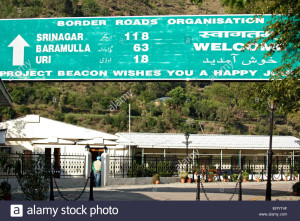
Indian Kashmir (Credit: alamy.com)
Indian Kashmir
(Credit: alamy.com)

Growing tensions between India and Pakistan is persuading the Chinese establishment to focus on the Kashmir issue as an impediment to Beijing’s One Belt One Road (OBOR) initiative, with the China Pakistan Economic Corridor (CPEC) at its core.

The Uri incident, which has escalated India’s efforts to garner international support to dock Pakistan as a sponsor of terrorism, after 18 Indian soldiers were killed in a cross-border raid, and Islamabad’s re-energised drive to internationalise Kashmir, has fueled considerable anxiety in Beijing. The Chinese Foreign Ministry has on two occasions since the Uri incident, called upon India and Pakistan to exercise restraint and resume their stalled dialogue.

Military tensions a threat

Apart from the nuclear dimension, which turns military tensions between India and Pakistan into a lurking threat to international peace and security, analysts say that the Chinese have a more pressing and immediate, concern — the fallout of Indo-Pak friction on the viability of the CPEC.

The CPEC links the Pakistani port of Gwadar with Kashgar in Xinjiang. It is part of China’s high-stake OBOR connectivity initiative in Eurasia, which would allow China to gate-crash as an indispensable rule-maker of international trade and commerce. Coupled with its aspiration to develop a string of ports and coastal economic hubs, along its maritime trading routes, China’s Maritime Silk Road (MSR), would also be central to Beijing’s rise as a mature global power.

China hopes to replicate its dramatic success in developing coastal hubs such as Shanghai and Shenzhen as models for developing new shore-based icons along the Indian Ocean coastline.

Passing through Baluchistan, PoK

Unsurprisingly, the CPEC, which passes through a section of Pakistan Occupied Kashmir (PoK), was apparently the primary focus of talks between Chinese Prime Minister Li Keqiang and his Pakistani counterpart, Nawaz Sharif at their meeting on the sidelines of the United Nations General Assembly (UNGA). A posting of the September 21 talks, on the Chinese Foreign Ministry website underscored that Prime Minister Li “pointed out that at present, bilateral practical cooperation, with China-Pakistan economic corridor as the priority, has achieved positive progress.”

Yet, Mr. Li did not hide Beijing’s security concerns, when he stressed, “It is hoped that Pakistan can reinforce prevention on the security risk of the projects and continue to provide safety protection to the programme construction and Chinese personnel in Pakistan.”

Bugti’s asylum

A large part of the CPEC passes through Baluchistan. India has raised Pakistan’s alleged human rights violations in the province at the international level — a policy shift that was underscored by New Delhi’s assertions on the Baluch issue, earlier this month, at the UN Human Rights Council in Geneva. New Delhi has also signaled its possible readiness to provide asylum to Baluchistan Republican Party (BRP) leader Brahamdagh Bugti.

The Hong Kong based South China Morning Post quoted Pakistan commentator Najam Sethi as saying that “Bugti’s asylum suggests that India will make Baluchistan a central plank of its strategy, politically and diplomatically.” He added: “China is beginning to worry about all these.”

‘Disaster for whole region’

India’s exertions in Baluchistan have not gone unnoticed in China. In an earlier interview with The Hindu, Chinese scholar Hu Shisheng highlighted that Prime Minister Narendra Modi’s reference to Baluchistan in his independence day address signaled “a watershed moment in India’s policy towards Pakistan in the future.” He added: “We cannot figure out what could be its result and consequences, but my personal hunch is that it could be disastrous for the whole region; for all the relations — especially between Pakistan and India, China and India, especially among the three countries. That is the real concern.”

He also pointed out the contrary to the perception that China was developing the CPEC to lower its commercial dependence on the Malacca straits, the prime strategic motivation behind the project was to ensure Pakistan’s economic stability. In turn, it was assumed this would help dry up terror sanctuaries in Pakistan, and prevent the outflow of militants, in the region, including China and Central Asia — all part of the expanding OBOR network.

It is in the K-word

Chinese academics have also begun to debate the regional fall-out of the Kashmir issue, and the benefits to the CPEC, in case a modus vivendi is achieved to address this thorny dispute. “If India and Pakistan can resolve the Kashmir problem, CPEC would not be an obstacle among China, India and Pakistan,” Professor Long Xingchun, Director of Center of India Studies, at China West Normal University, told The Hindu. He added: “The CPEC can then be renamed as China-South Asia corridor benefiting all participants.”

Nevertheless, Professor Long noted that though the CPEC is a link between the land corridor of the Silk Road and the MSR, “its emergence was more important to Pakistan than to China.”

‘India’s armed forces still lack a brain’

Indian army soldiers patrol near the Line of Control, a ceasefire line dividing Kashmir between India and Pakistan, in Poonch district in this August 7, 2013 file photo. PHOTO: REUTERS/FILE

In a damning assessment of India’s armed forces, The Economist has published a report on how the country’s international ambitions simply don’t match its military muscle.

“India is not as strong militarily as the numbers might suggest,” says the article, going on to claim how despite looking good on paper, India’s armed forces are in fact outdated or ill-maintained.

‘Pakistan 1,000 times stronger than in 1965’

“Our air defence is in a shocking state,” the report quoted Ajai Shukla, a commentator on military affairs, as saying. He said, “What’s in place is mostly 1970s vintage, and it may take ten years to install the fancy new gear.”

The report said that on paper, India’s air force is the world’s fourth largest, with around 2,000 aircraft in service. “But an internal report seen in 2014 by IHS Jane’s, a defence publication, revealed that only 60% were typically fit to fly,” it said.

The report quoted another earlier report this year by a government accounting agency estimated that the “serviceability” of the 45 MiG 29K jets that are the pride of the Indian navy’s air arm ranged between 16% and 38%.

India’s limited war option

They were intended to fly from the carrier currently under construction, which was ordered more than 15 years ago and was meant to have been launched in 2010. According to the government’s auditors the ship, after some 1,150 modifications, now looks unlikely to sail before 2023.

India fields the world’s second-biggest standing army, after China, with long fighting experience in a variety of terrains and situations. “Yet there are serious chinks in India’s armour. Much of its weaponry is, in fact, outdated or ill maintained.”

The report also addressed how India’s military is scandal-prone. “Corruption has been a problem in the past, and observers rightly wonder how guerrillas manage to penetrate heavily guarded bases repeatedly. Lately the Indian public has been treated to legal battles between generals over promotions, loud disputes over pay and orders for officers to lose weight.”

India incapable of waging war on Pakistan, experts say

The deeper problem, the report added, with India’s military is structural. The three services are each reasonably competent, say security experts; the trouble is that they function as separate fiefdoms. “No service talks to the others, and the civilians in the Ministry of Defence don’t talk to them,” says Shukla.

Indians demand government action after temperatures hit 51C

Heat in Indo Pak (Credit: guardian.co.uk)
Heat in Indo Pak
(Credit: guardian.co.uk)

Mumbai/Islamabad: Residents of a city in the north-west of India have called for government action as temperatures reached 51C (123.8F), the highest the country has experienced since records began.

Phalodi, in the desert state of Rajasthan, is suffering an unprecedented medical crisis as a result of the record temperatures, which are high even by local summer standards and which smashed the previous record, set in 1956, of 50.6C.

“[Thursday] was the hottest temperature ever recorded in the country: 51C in Phalodi,” BP Yadav, a director of India’s meteorological department, said on Friday.

In Phalodi, where the temperature can fall below zero in winter and reach extreme peaks in the summer, the local government hospital has seen patient numbers double in the last few days as people report more heat-related illnesses.

Shiv Prakash Chanda, who works as a nursing officer in the hospital, said: “It is incredibly hot. None of the air-conditioners or coolers are working. We have running water, but the water is stored in tanks on top the buildings, and when it comes out of the tap the water is so hot that you can’t even wash your hands with it. You can’t even go to the toilet.”

Ranjeet Singh, a local police constable, said: “The ground is so hot, you could cook chapatis on it.”

One man from the town died from heatstroke on Friday at a nearby railway station. Chanda said the heat was so extreme that the hospital was struggling to meet demand from patients. Children are particularly vulnerable to sunstroke, and the hospital has seen a rise in the number of cases of diarrhoea and vomiting.

“The government needs to do something – they need to put up tents and offer cold water in places like railway stations where people gather. The local administration has done nothing so far,” Chanda said. Last year, more than 1,500 people died in India because of heatwaves.


Ambitious scheme to channel water from regions with a surplus to drought-prone areas could begin in days, but Bangladesh has raised concerns.

Chanda has written a letter to the chief minister of the state urging the government to delay a national polio vaccination programme because of the temperature. “Going door todoor in this heat can be fatal,” he said. “The vaccines may be spoiled. Plus we need more people in the hospital here because so many people are coming in.”

The heat has disrupted the regular working day in Phalodi, where people say they are afraid to leave their homes. Residents start work at sunrise and come home at about 10am to protect themselves from the midday sun, before returning to work in the evenings.

However, the heatwave’s worst effects are not being felt as badly in the city – where residents know how to cope with the hot weather – as in the surrounding rural areas, where there is no infrastructure to protect people from the sun.

In a nearby village called Pratapgarh, Chanulal said the heat had devastated this year’s harvest. “The trees and saplings have all dried up,” he said. “We can’t even leave our homes. I am an old man, and I can’t do anything. I eat whatever my children bring home.”

There is no electricity in Pratapgarh and villagers have to walk miles to get drinking water. “There are no fridges or coolers here,” said Chanulal. “Only the wind – that’s your cooler.”

For the last few weeks, severe heatwaves have swept across India, and temperatures are expected to stay high in June. A devastating drought, which has left many villages and towns without a regular water supply is adding to the effects of the heat.

Schools have had to close down, and some hospitals have stopped performing surgeries. In some regions, cooking in the daytime has been banned because of the risk of starting fires.

Across the border, Pakistan is increasing its hospital capacity, digging more graves and consulting clerics about religious fasting guidelines as it, too, braces for another possible deadly heatwave.

Last year, more than 1,300 people died when temperatures soared to their highest summer levels in nearly 35 years.

Particularly badly affected was the southern province of Sindh and its capital, Karachi, which suffers from crumbling infrastructure and a punishing “heat island” effect in the most built-up areas.

In 2015, hospitals were overwhelmed by heat stroke victims, many of them labourers and slum dwellers, complaining of dehydration, stomach pains and low blood pressure. At one point, bodies were piling up so quickly authorities were forced to bury them before they could be identified by relatives.

This year, hospitals in the city have added extra beds and emergency response points have been set up on street corners.

In a perfect storm of problems, in 2015 the city was struck by record-breaking heat and power cuts caused by soaring demand for electricity. The power cuts were so bad that many people sought relief by sleeping outside in parks and on the city’s beaches.

The extreme temperatures struck in the middle of the fasting month of Ramadan when Muslims abstain from food and drink during daylight hours.

This year, provincial government officials have promised they will consult religious scholars about the possibility of publishing reminders that people can break their fast for health reasons.

Chinese pressure sees Pakistan mull constitutional status of Gilgit-Baltistan

Pak China friendship tunnel (Credit: samaa.tv)
Pak China friendship tunnel
(Credit: samaa.tv)

ISLAMABAD, Jan 7: Pakistan is mulling upgrading the constitutional status of its northern Gilgit-Baltistan region, which is also claimed by India, in a bid to provide legal cover to a multi-billion-dollar Chinese investment plan, officials said Thursday.

The move could signal a historic shift in Pakistan’s position on the future of the wider Kashmir region, observers have said, dealing another potential blow to fragile peace talk efforts that received a boost after India’s Prime Minister Narendra Modi visited Lahore in December.

The proposal would see the mountainous region mentioned by name for the first time in Pakistan’s constitution, bringing it one step closer to being fully absorbed as an additional province.

Islamabad has historically insisted the parts of Kashmir it controls are semi-autonomous and has not formally integrated them into the country, in line with its position that a referendum should be carried out across the whole of the region.

Sajjadul Haq, spokesperson for the chief minister of Gilgit-Baltistan Hafiz Hafeez ur Rehman, told AFP: “A high level committee formed by the prime minister is working on the issue, you will hear good news soon.”

Rehman, who arrived in Islamabad Thursday, was working on the finishing touches to the agreement, a senior official said, adding the document could be unveiled “in a few days”.

In addition to being named in the constitution, Gilgit-Baltistan would also send two lawmakers to sit in the federal parliament — though they would be given observer status only.

A third top government official from Gilgit-Baltistan said the move was in response to concerns raised by Beijing about the China Pakistan Economic Corridor, an ambitious $46 billion infrastructure plan set to link China’s western city of Kashgar to the Pakistani port of Gwadar on the Arabian Sea.

“China cannot afford to invest billions of dollars on a road that passes through a disputed territory claimed both by India and Pakistan,” the official, speaking on condition of anonymity, said.

The corridor plans have been strongly criticised by New Delhi, with India’s Foreign Minister Sushma Swaraj in June calling the project “unacceptable” for crossing through Indian-claimed territory.

India and Pakistan have fought two full-scale wars over Kashmir, and any changes to the status quo could prove a further setback to hopes for dialogue that were revived after Modi made the historic Lahore visit.

Those efforts were already seen as fragile following a deadly attack on an Indian air base near the Pakistan border Saturday that was followed by a 25-hour siege on an Indian consulate in Afghanistan on Monday.

But according to Pakistani strategic analyst Ayesha Siddiqa, the move could also signal Islamabad’s desire to end the Kashmir conflict by formally absorbing the territory it controls — and, by extension, recognising New Delhi’s claims to parts of the region it controls, such as the Kashmir valley.

“If we begin to absorb it so can India. It legitimises their absorption of the Valley,” she said.

The Lessons of Mumbai were Learned by the Jihadis

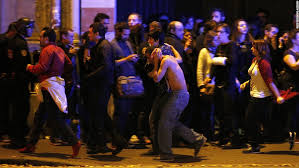
Paris carnage (Credit: cnn.com)
Paris carnage
(Credit: cnn.com)

In November 2008, a new form of terrorism filled our television screens as a 10-man cell dispatched by Pakistan-based terror group Lashkar-e-Taiba wreaked murder and mayhem across Mumbai. Choosing prominent targets filled with foreigners and Indians, the terrorists opened fire on anyone they came across, butchering 266 before dying fighting the authorities.

In so doing, they took over global headlines for days as well as bringing one of Asia’s super-cities to a standstill. Terrorist groups around the world celebrated this horror and began to discuss how they might try to emulate this success. Seven years later in Paris, the playbook has been copied.

This has been the longstanding fear of Western security agencies. Aware of the perceived success of the Mumbai attack, police and intelligence services across Europe have been ramping up their preparedness and training. Most recently, in June, the UK’s emergency and intelligence agencies did a dry run for a marauding shooter attack in London. And there have been scares. In 2010, a network of European cells that seemed to indicate al-Qaeda was attempting a Mumbai-style assault, with training camps in Pakistan’s badlands, was apparently disrupted.

Then earlier this year, Paris was racked by the Charlie Hebdo murders. But whereas those attacks, initially at least, were selective in their targets, Friday’s were utterly indiscriminate. The bombers at the stadium must have known the French President was in the environs, though they blew themselves up outside, killing whoever happened to be nearby. The other cell liberally targeted Parisians on a Friday night out. This is a markedly different form of horror and one that requires deep indoctrination, preparation and training. It is also a step up in terms of atrocity from what we had seen before in Europe. Mumbai-style terrorism has reached European shores.

At least one of the attackers has been uncovered as having some French background. While unsurprising given the threat picture that we have seen, this is particularly disturbing within the context of the sort of attack they undertook. To brutally shoot and execute fellow nationals pleading for their lives is something which would have required intense commitment. This training may have occurred in Syria, but in many ways this no longer matters. Islamic State (Isis) has shown an interest in stirring chaos and misery around the world with little apparent concern for its strategic impact.


Unlike the Madrid bombings, which had the effect of prying apart the coalition in Iraq, the attacks that Isis has inspired, instigated or directed, have been aimed at killing as many as possible in “enemy” countries and stirring tensions in societies. France in particular has been at the epicentre of this threat. In May 2014, Frenchman Mehdi Nemmouche opened fire at a Jewish Museum in Brussels killing three. He was later reported to have fought alongside Isis. In August this year, another young man with links to France, Ayoub el Khazzani, was barely prevented from shooting at passengers on a high-speed train from Amsterdam to Paris.

His background remains unclear, but he was linked to a network in Turkey that was linked to Isis and connected to Sid Ahmed Ghlam, a 24-year-old Algerian French resident who was reportedly plotting to attack churches in Paris. He was detained after he called an ambulance to his home having shot himself accidentally in the leg. He was already of concern to French security services.

And none of this is to talk about the numerous plots that French authorities have faced where individuals have launched attacks in advance of jihadist ideologies with no clear evidence of any sort of network. Around Christmas last year there was a spate of random attacks using knives or cars, and in June, Yassin Salhi decapitated his boss and tried to drive a car bomb into a chemical factory in Lyon. He strung up his boss’s head on a fence, took pictures of it with an Islamist flag and sent them to a fighter he knew in Syria.

This, sadly, is the nature of the current threat. And while obtaining the high-powered rifles required to cause such mass slaughter is much harder in the UK, it could strike here. Each wave of terrorism has to cause greater mayhem to have the same impact over time, and consequently for Isis to distinguish itself from al-Qaeda, it must create greater impact and misery.

Timeline of Paris attacks

While the UK can draw comfort from the fact weapons are harder to get here, British people abroad have fallen foul of these plots. The massacre in Sousse particularly affected British nationals, and at least one Briton was caught up in Friday’s Paris attacks. Terrorism has to continually evolve and cause greater brutality to maintain impact and attract attention. And while France is currently the epicentre, the ideology and groups are ones that are keen to equally target the UK.

Raffaello Pantucci is director of  international security studies at the Royal United Services Institute

After Obama-Sharif meet, US categorically rules out nuclear deal with Pakistan

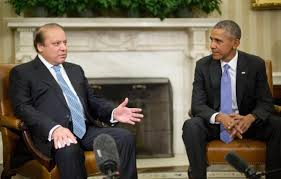
Sharif-Obama 2015 meeting (Credit: usnews.com)
Sharif-Obama 2015 meeting
(Credit: usnews.com)

Washington, Oct 23: The US has “categorically ruled out” any kind of negotiations with Pakistan on India-type civil nuclear deal, terming the reports in American media “completely false”.

“Let me state categorically, we have not entered into negotiations on 123 Agreement with Pakistan nor are we seeking an exception for Pakistan within the nuclear supplier group in order to facilitate civil nuclear exports,” a senior Administration official said after US President Barack Obama met Pakistani Prime Minister Nawaz Sharif here on Thursday.

The official, speaking on condition of anonymity, was responding to questions on reports appearing in the American media that US was considering a civil nuclear deal with Pakistan.

“There is no such thing as a nuclear deal which has been reported in the media is some short of a civilian nuclear package alleged to be something like that the US concluded with India 10 years ago.

“Let me just assure you categorically that the press allegations of a 123 agreement with Pakistan are completely false,” the official added.

Pakistan has made it clear its interest in civilian nuclear cooperation and it is called socio-economic imperative because of energy shortfalls, the official noted.

Leaders of the two countries, however, did discuss on Pakistan’s nuclear safety and security which is an ongoing discussion.

The 123 Agreement signed between the US and India is known as Indo-US nuclear deal. The framework for this agreement was done in 2005.

“We have a long standing dialogue with Pakistan about its nuclear program, and various developments in this program. We are particularly concerned and have expressed these concerns to Pakistan that there is requirement of all countries possessing nuclear weapon to ensure the safety, security of these weapons and do everything it can to promote strategic stability. So we will continue to engage in dialogues like this with Pakistan,” the official said.

It is the understanding of the US that Pakistan is very well aware of the full range of potential threat to nuclear arsenal including from terrorist groups that operate on its soil. Other Pakistani military facilities have been attacked.

“So they are very well aware of the terrorist threats including to all aspects of their military installations and its our understanding that they have a dedicated security apparatus that understands the importance of nuclear security,” the official said.

In a readout of the Obama-Sharif meeting, the White House said the President stressed the importance of avoiding any developments that might invite increased risk to nuclear safety, security, or strategic stability.

“The leaders pledged to continue their strong cooperation on nuclear security, including at the upcoming Nuclear Security Summit,” the readout said.

According to a joint statement, Obama and Sharif discussed the continuing threat of nuclear terrorism. Obama welcomed Pakistan’s constructive engagement with the Nuclear Security Summit process and its cooperation with the International Atomic Energy Agency and other international forums, it said.

The leaders noted Pakistan’s efforts to improve its strategic trade controls and enhance its engagement with multilateral export control regimes, the joint statement said.

“Recognising the importance of bilateral engagement in the Security, Strategic Stability and Non-Proliferation Working Group, the two leaders noted that both sides will continue to stay engaged to further build on the ongoing discussions in the working group,” the statement added.

“More generally, the US urges all Nuclear Weapons states including Pakistan to exercise restraint in nuclear weapon and missile and capabilities.”

“In particular, we have discussed measures to strengthen safety and security for Pakistan and continue to hold regular discussions on Pakistan on these issues,” the senior administration official added.


UNGA speech: Nawaz proposes 4-point peace initiative with India

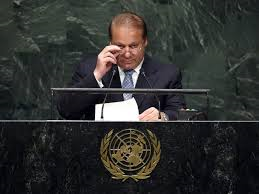
Nawaz Sharif at UN (Credit: tribune.com.pk)
Nawaz Sharif at UN
(Credit: tribune.com.pk)

Prime Minister Nawaz Sharif raised the issue of Kashmir, spoke about the continuing offensive against terrorism, and more importantly put the ball in India’s court by offering a new four-point peace initiative in his speech at the 70th UN General Assembly on Tuesday.

Nawaz proposes 4-point peace initiative with India

1. We propose Pakistan and India formalise and respect 2003 understanding of a  complete ceasefire in Kashsmir and LoC

2. We propose Pakistan and India reaffirm that they will not resort to the threat of force under any circumstances

3. Steps must be taken to demilitarise Kashmir

4. Agree to mutually withdraw troops from Siachen

Nawaz Sharif said the two countries should address and resolve the causes of tension and take all possible measures to avert further escalation.

“Wisdom dictates that our immediate neighbour refrains from fomenting instability in Pakistan. Cooperation, not confrontation, should define our relationship.”

The prime minister declared Pakistan neither wants to, nor is it engaged in, an arms race in South Asia.

‘Need a more democratic, transparent Security Council, not an expanded club of privileged and powerful’

“Pakistan supports a comprehensive reform of the United Nations, including that of Security Council, says Nawaz. “We need a Security Council that is more democratic, accountable, and transparent. A council that reflects the interests of all member states, in accordance with the principle of sovereign equality. Not a council that is an expanded club of the powerful and privileged.”

‘Three generations of Kashmiris have only seen broken promises’

“Three generations of Kashmiris have only seen broken promises and brutal oppression,” says PM Nawaz. “Over 100,000 have died in their struggle for self-determination. This is the most persistent failure of the United Nations.”

Pakistan to help promote peace, stability in Afghanistan

Pakistan will persist in the endeavour to help resume the dialogue process and promote peace and stability in Afghanistan,” says OM Nawaz.

“We can, however, do so only if we receive the required cooperation from the Afghan government. Tensions between Afghanistan and Pakistan are in neither country’s interests.”

The prime minister says global threat of terrorism cannot be defeated unless its underlying causes are addressed.

“Poverty and ignorance are part of the problem. Extremist ideologies must be opposed.”

‘Pakistan will continue to support the objectives of nuclear disarmament and non-proliferation’

“We have maintained the highest standards of nuclear security and have established an effective regime to ensure the safety and security of our nuclear facilities and stocks,” says Nawaz.

India responds to Nawaz Sharif’s U.N. speech

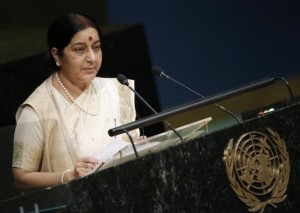
India External Affairs Minister Sushma Swaraj (Credit: reuters.com)
India External Affairs Minister
Sushma Swaraj
(Credit: reuters.com)

India hits back after Pakistan Prime Minister Nawaz Sharif brings up the Kashmir issue at the U.N. Here is the full text of the statement by First Secretary, Permanent Mission of India to the United Nations:

Statement by Mr. Abhishek Singh, First Secretary, Permanent Mission of India to the United Nations exercising India’s Right of Reply during the General Debate of 70th session of UN General Assembly.

September 30, 2015

Mr. President,

It is regrettable that the delegation of Pakistan has once again chosen to misuse the High Level Segment of the UN General Assembly Session to distort reality and portray a false picture of the challenges in our region.

Pakistan claims to be the primary victim of terrorism. In truth, it is actually a victim of its own policies of breeding and sponsoring terrorists. Seeking to mask its activities as though an outcome of domestic discontent in the Indian State of Jammu & Kashmir carries no credibility with the world.

Mr. President,

It was stated that Jammu and Kashmir is under foreign occupation. It is, except that the occupier in question is Pakistan. In fact, India’s reservations about the proposed China-Pakistan Economic Corridor stem from the fact that it passes through Indian territory illegally occupied by Pakistan for many years.

Pakistan apparently regrets that the dispute over Jammu and Kashmir remains unresolved and that our dialogue has not progressed. If it is so, this is because Pakistan has chosen to disregard its commitments, whether it was under the 1972 Simla Agreement, the 2004 Joint Declaration forswearing terrorism, or more recently, the understanding between our two Prime Ministers at Ufa. On each occasion, it is India that has extended the hand of friendship. India remains open even today to engage Pakistan on outstanding issues in an atmosphere free of terrorism and violence.

Mr. President,

Reference was made to ceasefire violations and exchanges of fire along the Line of Control and the International Boundary. The world knows that the primary reason for firing is to provide cover to terrorists crossing the border. It needs no imagination to figure out which side initiates this exchange.

It is not uncommon for states, when confronted with serious challenges, to shift responsibility on others. That is the case with Pakistan and terrorism, reflecting the inability to recognize that this is a home grown problem that has begun to bite the hand that fed it. We agree that terrorism has underlying causes – in this case, poverty of wisdom and ignorance of consequences.

Mr. President,

The heart of the matter is a state that regards the use of terrorism as a legitimate instrument of statecraft. The world watches with concern as its consequences have spread beyond its immediate neighbourhood. All of us stand prepared to help, if only the creators of this monster wake up to the dangers of what they have done to themselves.