The failure of India and Pakistan to hold the planned meeting between their National Security Advisers, as was agreed in Ufa six weeks ago, is unfortunate, indeed disquieting. It should give pause to both Islamabad and New Delhi on what kind of relations they could possibly expect to have in the foreseeable future. Arguments to the effect that there were earlier periods when they had agreed to disagree are at best disingenuous.
At Ufa there was a limpid agreement on the agenda for the New Delhi meeting: that the NSAs would “discuss all issues connected to terrorism”. Ufa had also yielded a discernible road map to bring about a modicum of peace and tranquillity along the border and the Line of Control (LoC), which has been witnessing rounds of wanton firing and unacceptable casualties. External Affairs Minister Sushma Swaraj put the number of ceasefire violations since Ufa at 91. Barely a week after Ufa raised modest hopes of an upturn in relations, there was firing in the Akhnoor sector. Foreign Secretary S. Jaishankar spoke of four attempts made by the Director-General of the Border Security Force to “make telephonic contact with Sector Commander Sialkot” as per laid-down procedures, which met with no response. He mentioned how this was unacceptable. Now, with the prospects of even a limited engagement having receded, the question that arises is: how will the two nuclear-capable neighbours deal with each other?
There is no doubt that through its grandstanding on Kashmir and Hurriyat, Islamabad reneged on the understanding reached in Ufa. It is equally obvious that New Delhi has recalibrated its Pakistan policy, willing perhaps to take a calculated risk that the world would be better disposed to its preferences in the matter of dealing with Pakistan, almost 14 years after 9/11. Yet, the new situation may have willy-nilly rendered India vulnerable to facing gratuitous advice, possibly worse. To assume that those who formulate India’s Pakistan policy believed Islamabad would respect the sudden red line drawn on the Hurriyat, would stretch credulity. The Hurriyat certainly does not have a place in bilateral processes. It is at best a Pakistani side-show with some nuisance value and without much consequence. India had indeed learnt to tolerate that. Now, New Delhi’s actions may have the unintended effect of making the outfit larger-than-life — which is an avoidable prospect. Pakistan has also not covered itself with glory by overloading the agenda with issues that the two NSAs meeting for an hour or two wouldn’t have been able to come to grips with. It is best at this point to open a discreet back channel that ensures better bilateral deliverables than has been the case over the last year and a half. There is simply no alternative to talks.
ISLAMABAD, Aug 2: Interior Minister Chaudhry Nisar Ali Khan lambasted Muttahida Qaumi Movement (MQM) Chief Altaf Hussain on Sunday for his last night’s speech, saying the purpose of such a speech was to bring a bad name to Pakistan and its institutions.
“Speeches made from London have crossed limits of all the principles, laws and regulations,” said Chaudhry Nisar while addressing a press conference here.
He said Altaf’s invitation for NATO forces to come to Pakistan and launch an operation is completely preposterous and that his speech is tantamount to waging a war against the country.
The minister also said that the government is reviewing all aspects of Hussain’s speeches and the issue will be raised with the British government legally.
The interior minister said the MQM’s reaction to the ongoing operation in Karachi has grown intense over the past few weeks. “MQM is actually angry at the cases being faced by Altaf Hussain in London,” he added.
He clarified that Pakistan has nothing to do with Altaf Hussain’s cases in Britain.
He also dispelled the perception that the ongoing operation in Karachi is targeting only MQM. “No political party including MQM is being targeted in the Karachi crackdown; the operation is being pursued indiscriminately against all the criminal elements,” he explained.
Nisar said people belonging to various parties were apprehended during the operation and those who were arrested wrongly were released later.
He said there has been a marked improvement in criminal activities in Karachi including targeted killing, extortion and kidnapping for ransom. He added that targeted killing saw an 87 percent decline in the month of July 2015 alone while not a single case of kidnapping for ransom was reported in the same month.
Altaf Hussain’ speech from last night:
MQM Chief Altaf Hussain asked his party workers to stage protests in front of United Nations, White House and NATO to raise the demand for sending their troops to Karachi.
Addressing MQM’s Annual Convention in the US city of Dallas via telephone, Altaf said India itself is a coward country, if it had some honour it would not have allowed ‘bloodshed of Mohajirs’ on Pakistani soil.
He also reiterated the demand for a separate province for Mohajirs.
The United States and other nuclear powers failed to use a recent United Nations conference to advance the cause of nuclear disarmament. The meeting in May was supposed to strengthen international efforts to contain nuclear weapons. Instead, it was a reminder of the deep divisions over the future of nuclear weapons and what efforts should be made to eliminate them.
The conference is held every five years to review compliance with the 1970 Nuclear Nonproliferation Treaty, the agreement known as the NPT under which the countries recognized by the treaty as having nuclear weapons — the United States, Russia, China, Britain and France — committed to pursue nuclear disarmament.
The other 186 signatories promised to forgo nuclear weapons. India and Pakistan did not sign the treaty, and both have nuclear weapons. Neither did Israel, which refuses to admit that it has a nuclear arsenal, and South Sudan, which has none. North Korea, once an NPT member, withdrew in 2003 and is now believed to have perhaps as many as 16 nuclear weapons.
This year’s conference, after four weeks of often acrimonious debate and finger-pointing, collapsed on May 22 without the members formally agreeing on a plan of action. All decisions must be made by consensus, and the United States, Britain and Canada rejected the final communiqué.
One reason for the failure was a dispute between Egypt and Israel, which was backed by the United States, over banning nuclear weapons in the Middle East. This was not the first time Egypt and Israel had clashed over a proposal for a nuclear-weapons-free zone. The 2010 NPT review conference called for a meeting in 2012 on a regional weapons ban, infuriating Israel. Israel eventually agreed to attend planning sessions, but the 2012 meeting never took place, which angered Egypt and other Arab nations.
During this year’s NPT conference, Egypt and its allies tried to accelerate the process by proposing that the United Nations secretary general convene a meeting on a Middle East weapons-free zone by March 2016, even if Israel refused to agree on an agenda; Israel insisted on including the broad range of security challenges in the region. The conflict is unfortunate because both nations view Iran’s nuclear program as a major threat.
The problems with the nuclear conference went beyond this dispute. Relations between the United States and Russia have deteriorated in recent years, and efforts to further reduce their nuclear arsenals have stalled. The Russian government has not only refused President Obama’s offer to negotiate a further one-third cut in deployed nuclear weapons beyond the 2010 New Start treaty limits of 1,550, Russian officials have made outrageous threats about using nuclear weapons in the confrontation with NATO over Ukraine. Russia has also been violating the 1987 Intermediate-range Nuclear Forces Treaty by testing a new cruise missile, and Washington and Moscow have embarked on costly programs to modernize their nuclear stockpiles.
Such behavior makes it harder to argue for nuclear restraint with countries like China, India and Pakistan, which have an estimated 100 to 250 nuclear weapons each but are expanding their arsenals.
Despite the disappointments and backsliding in disarmament efforts, there is one real bright spot — the negotiation between Iran and the major powers on an agreement that would curb Iran’s nuclear program in exchange for lifting international sanctions. If a sound and verifiable deal is reached, it should inspire new initiatives to rid the world of the most dangerous weapons, including in the Middle East.
Baloch separatists executed (Credit: detroitnewstime.com)Pakistan has executed three Baloch separatists who hijacked a plan and attempted to fly it to India in the hope of disrupting Islamabad’s first nuclear tests.
Two of the men, Shahsawar Baluch and Sabir Baluch were hanged in Hyderabad prison in southern Sindh province while the third, Shabir Rind, was hanged in Karachi, officials said.
The executions were carried out on the 17th anniversary of the tests, which made Pakistan the world’s seventh nuclear-armed power – a landmark event for the impoverished Muslim country of 200 million people.
Prime Minister Nawaz Sharif lifted ban on the death penalty for those convicted on terrorism charges on December 17 last year after Taliban gunmen killed 136 children at an army-run school.
The trio were sentenced to death for hijacking a Pakistan International Airlines aircraft with 30 passengers on board on 24th May 1998 – four days before the country’s first nuclear test.
The flight took off from the port town of Gwadar in Baluchistan and was set to land in the southern port city of Karachi when the men stormed the cockpit and tried to force the pilot to fly to India.
The world’s attention has rightly been riveted on negotiations aimed at curbing Iran’s nuclear program. If and when that deal is made final, America and the other major powers that worked on it — China, Russia, Britain, France and Germany — should turn their attention to South Asia, a troubled region with growing nuclear risks of its own.
Pakistan, with the world’s fastest-growing nuclear arsenal, is unquestionably the biggest concern, one reinforced by several recent developments. Last week, Pakistan’s prime minister, Nawaz Sharif, announced that he had approved a new deal to purchase eight diesel-electric submarines from China, which could be equipped with nuclear missiles, for an estimated $5 billion. Last month, Pakistan test-fired a ballistic missile that appears capable of carrying a nuclear warhead to any part of India. And a senior adviser, Khalid Ahmed Kidwai, reaffirmed Pakistan’s determination to continue developing short-range tactical nuclear weapons whose only purpose is use on the battlefield in a war against India.
These investments reflect the Pakistani Army’s continuing obsession with India as the enemy, a rationale that allows the generals to maintain maximum power over the government and demand maximum national resources. Pakistan now has an arsenal of as many as 120 nuclear weapons and is expected to triple that in a decade. An increase of that size makes no sense, especially since India’s nuclear arsenal, estimated at about 110 weapons, is growing more slowly.
The two countries have a troubled history, having fought four wars since independence in 1947, and deep animosities persist. Prime Minister Narendra Modi of India has made it clear that Pakistan can expect retaliation if Islamic militants carry out a terrorist attack in India, as happened with the 2008 bombing in Mumbai. But the latest major conflict was in 1999, and since then India, a vibrant democracy, has focused on becoming a regional economic and political power.
At the same time, Pakistan has sunk deeper into chaos, threatened by economic collapse, the weakening of political institutions and, most of all, a Taliban insurgency that aims to bring down the state. Advanced military equipment — new submarines, the medium-range Shaheen-III missile with a reported range of up to 1,700 miles, short-range tactical nuclear weapons — are of little use in defending against such threats. The billions of dollars wasted on these systems would be better spent investing in health, education and jobs for Pakistan’s people.
Even more troubling, the Pakistani Army has become increasingly dependent on the nuclear arsenal because Pakistan cannot match the size and sophistication of India’s conventional forces. Pakistan has left open the possibility that it could be the first to use nuclear weapons in a confrontation, even one that began with conventional arms. Adding short-range tactical nuclear weapons that can hit their targets quickly compounds the danger.
Pakistan is hardly alone in its potential to cause regional instability. China, which considers Pakistan a close ally and India a potential threat, is continuing to build up its nuclear arsenal, now estimated at 250 weapons, while all three countries are moving ahead with plans to deploy nuclear weapons at sea in the Indian Ocean.
This is not a situation that can be ignored by the major powers, however preoccupied they may be by the long negotiations with Iran.
A marriage ceremony in India ended in a most unconventional of ways: the bride tested the groom’s math skills, and he failed, police confirmed.
The groom-to-be was allegedly asked what 15 plus six is, to which he incorrectly answered 17.
The bride then left, and despite all the best efforts of the groom’s family to coax her into returning, she refused. She said she has been misled regarding the groom’s education.
“The groom’s family kept us in the dark about his poor education,” the bride’s father, Mohar Singh, said.
“Even a first grader can answer this.”
Rakesh Kumar, a local police officer in the area where the incident took place, confirmed that all jewellery and gifts exchanged before the wedding had been returned by both sides following mediation by the police.
Pollution on Indo Pak border (Credit: darkroomindopakborder.com)
NEW DELHI, India, Feb 14 — For years, this sprawling city on the Yamuna River had the dirtiest air in the world, but few who lived here seemed conscious of the problem or worried about its consequences.
Now, suddenly, that has begun to change. Some among New Delhi’s Indian and foreign elites have started to wear the white surgical masks so common in Beijing. The United States Embassy purchased 1,800 high-end air purifiers in recent months for staff members’ homes, with many other major embassies following suit.
Some embassies, including Norway’s, have begun telling diplomats with children to reconsider moving to the city, and officials have quietly reported a surge in diplomats choosing to curtail their tours. Indian companies have begun ordering filtration systems for their office buildings.
“My business has just taken off,” said Barun Aggarwal, director of BreatheEasy, a Delhi-based air filtration company. “It started in the diplomatic community, but it’s spread to the high-level Indian community, too.”
The Delhi skyline is hidden on a November morning. A study will look at reducing exhaust from trucks, a major source of pollution. Credit Prakash Singh/Agence France-Presse — Getty Images
The increased awareness of the depth of India’s air problems even led Indian diplomats, who had long expressed little interest in climate and pollution discussions with United States officials, to suddenly ask the Americans for help in cleaning India’s air late last year, according to participants in the talks. So when President Obama left Delhi after a visit last month, he could point to a series of pollution agreements, including one to bring the United States system for measuring pollution levels to many Indian cities and another to help study ways to reduce exhaust from trucks, a major source of urban pollution.
One driver for the change is a deluge of stories in Indian and international news outlets over the last year about Delhi’s air problems. Those articles, once rare, now appear almost daily, reporting such news as spikes in hospital visits for asthma and related illnesses. One article about Mr. Obama’s visit focused on how, by one scientist’s account, he might have lost six hours from his expected life span after spending three days in Delhi.
“We felt this was an issue we should take up, and we have taken it up,” said Arindam Sengupta, executive editor of The Times of India, whose campaign against air pollution has helped give prominence to the problem.
But Nicholas Dawes, a top editor at The Hindustan Times, said the media coverage was just one reason for the attitude shift. “I think the people of Delhi are increasingly unwilling to tolerate tough circumstances,” he said.
At least so far, that has not translated into much meaningful action by the government. In fact, the problem is likely to get worse as the government of Prime Minister Narendra Modi works to reboot the economy. His government recently promised to double its use of coal over the next five years.
But Dr. Joshua S. Apte, an assistant professor of environmental engineering at the University of Texas at Austin, who has studied Delhi’s air pollution since 2007, said recognition was a start. “The thing that gives me greatest hope is the huge increase in awareness that I’ve seen in Delhi just in the past year,” he said.
Delhi’s air is the world’s most toxic in part because of high concentrations of PM2.5, particulate matter less than 2.5 micrometers in diameter that is believed to pose the greatest health risk because it penetrates deeply into lungs. While Beijing’s air quality has generated more headlines worldwide, scientists say New Delhi’s air is often significantly worse, especially during the winter, when choking smog often settles over the sprawling city.
Four city monitors found an average PM2.5 level of 226 micrograms per cubic meter between Dec. 1 and Jan. 30 — a level the United States Environmental Protection Agency calls “very unhealthy” and during which children should avoid outdoor activity. The average in Beijing for the period was 95, according to the United States Embassy monitor there.
Indeed, there has not been a single 30-day period in Beijing over the past two years during which the average PM2.5 level was as bad as it was in December and January in Delhi.
Worse yet, the numbers tell only half the story because Delhi’s PM2.5 particles are far more dangerous than those from many other locales because of the widespread burning of garbage, coal and diesel fuel that results in high quantities of toxins such as sulfur, dioxins and other carcinogenic compounds, said Dr. Sarath Guttikunda, director of Urban Emissions, an independent research group based in Delhi.
“Delhi’s air is just incredibly toxic,” said Dr. Guttikunda, who recently moved to Goa to protect his two young children from Delhi’s air. “People in Delhi are increasingly aware that the air is bad, but they have no idea just how catastrophically bad it really is.”
Delhi residents attribute their longtime stoicism about the city’s pollution to a combination of fatalism, loyalty to their city and a sense of immunity.
Veena Dogra, 65, notices that family members who visit from abroad snuffle and sneeze, and she is aware that her usual black nasal discharge stops when she leaves India, and returns when she does. But she said she eventually forgets the contrast between Delhi and everywhere else, which is why she resists her daughters’ suggestions that she buy air purifiers or wear masks.
“Am I going to shut myself into just one room in my house?” Ms. Dogra asked. “You have to be tough to live in Delhi. If you’re not, you should leave. And I have too much family here to think about doing that.”
Dr. Anupama Hooda Nehra, director of medical oncology at Max Cancer Center in New Delhi, said she joined a morning cancer fund-raising walk this month even though she ended her own morning walks last year because she decided they were doing more harm than good and could encourage a cancer’s growth. “But I had to go to the fund-raiser because it was supported by my hospital,” she said. “And I worried that if I wore a mask, I would scare everyone since I’m an oncologist. It’s hard to know what to do.”
Dr. Nehra said her greatest worry is that her daughters, ages 14 and 8, will suffer lifelong effects from living in Delhi, a concern that has increasingly spooked Delhi’s expatriate community.
After Dr. Apte gave a presentation about Delhi’s air pollution to a hall packed with anxious parents recently at the American Embassy School, the administration invested in indoor air filters and increasingly restricts children’s outdoor activities when pollution levels are especially high. Even so, the sidelines during school soccer games are lined with players’ medicinal inhalers.
“I’m surprised kids there can even play soccer,” said Dr. James Gauderman, a professor of preventive medicine at the University of Southern California and an author of a landmark 2004 study on the effects of air pollution on children’s lungs.
In his study, Dr. Gauderman found that children raised in towns with PM2.5 levels of 30 had substantial reductions in lung function compared with those raised in towns with levels of 5. In the decade since his study was published, “we don’t see any evidence that functional loss is reversed,” Dr. Gauderman said. “The deficit appears to be permanent. I can’t imagine what that deficit would be with pollution levels almost 10 times higher. No one has studied that.”
“Writing is a horribly lonely profession. You’ll never know where you stand, whether you will be compensated; it’s not like other professions which have an infrastructure,” said author of ‘Home Boy’, H.M. Naqvi, during the Iowa Silk Route Residency Program session at the Karachi Literature Festival 2015 (KLF).
The session, which saw local and international writers, was engaging, informative and whimsical as the speakers drew on their individual experiences as residents of Iowa University’s three-month residency program at different periods in time and also shared a number of anecdotes.
Formed in 1997, the program hosts 1400 writers from more than 140 countries — writers not only work on their own projects but also hold book readings, discussions among other things.
Narrating her experience, popular Karachi-based writer and columnist Bina Shah said that living in Iowa city was the most American and un-American experience.
“American because it is the heartland of the United States and un-American because the city almost feels like an international society as hosting writers has made Iowa so rich.”
Indian writer Sridala Swami’s wit was at her best when she exclaimed how doing the residency programme was like being married to several people – an allusion to the global nature of the programme.
She also drew chuckles from the audiences when she relayed how she and Shandana Minhas, author of ‘Tunnel Vision’, met at the programme in 2013, discovered that they were from India and Pakistan, respectively, and also found themselves in rooms facing off each other.
Perhaps it was this very question that prompted two members in the audience to later ask why there was so much of love ruining hate at the national level between the two neighbouring countries and why couldn’t they resolve their differences.
Indian writer Kavery Nambisan responded saying that ‘politicians are generally hardbrained people’ and also added that it was not completely fair to put the onus on the government and that citizens were equally responsible.
“We need more events like KLF – I have got to know so much about Pakistan through it.” Her reply ensured that the session did not go dangerously askew, politically.
As most of the speakers are established writers to their credit, an interesting question asked from one of the members in the audience was the impact of the residency programme on their writing.
Minhas said she had heightened confidence in her capabilities and embraced her craft anew, following completion of the program.
Earlier, she also divulged how her father always told everyone that she was a journalist, despite the fact that she was a writer, as the latter is not so well-received and respected which bore testament to the fact that writing still has a long way to go before it cements its place as a mainstream, lucrative profession in Pakistan.
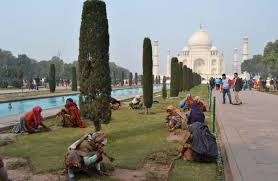
INDIA, Jan 23: As he scrubs the road to India’s Taj Mahal on his knees for less than five dollars a day, Ramjeet beams with pride at the thought of US President Barack Obama admiring his handiwork.
“If everything is clean then he will be impressed,” said the aching man as he took a rest with another 10 kilometres (six miles) of road still to be scoured by him and his co-workers.
“It’s hard on the knees and back,” admitted the cleaner, who is being paid just 300 Indian rupees (around $4.80) a day for his part in a massive makeover.
Ramjeet, who does not have a last name, is one of 600 cleaners mobilised in the city of Agra ahead of Tuesday’s visit by the US president and First Lady Michelle Obama to the world’s most famous temple of love.
Apart from cleaning white lines on the roads, authorities have been rounding up stray dogs, clearing cows from the streets, and have ordered a lockdown around the complex.
“There are a lot of spit stains and such that need to be washed away. The streets need to be spick and span,” said India’s former chief achaeologist KK Mohammed, who has guided world leaders around the white marbled mausoleum.
“You cannot have a VVVIP of the world come to the Taj Mahal and let him see that,” Mohammed told AFP.
The spruce-up, which comes after Modi himself launched a national clean-up campaign last October, reflects a wider determination to ensure the Obamas get to see India at its finest.
In the capital Delhi, workers have been coating buildings and bollards with fresh paint ahead of the Obamas’ attendance at a military parade on Monday.
But the frenzy has been most intense in Agra, no stranger to hosting heads of state or royalty such as Britain’s late Princess Diana.
The Obamas’ visit will be covered by a massive press pack and organisers want to ensure a picture-perfect backdrop.
Pradeep Bhatnagar, chairman of the Taj Trapezium Zone, a buffer region around the monument, said ongoing beautification work has been halted for 10 days to allow dust to settle before the guests arrive.
Suresh Chand, who is in charge of the clean-up, said stray dogs — a common sight in any Indian city — have been rounded up, and more than two tonnes of rubbish pulled from the nearby polluted Yamuna river in just two days.
Another official said cows and buffaloes roaming the streets also “would have to go”.
“When a guest comes to our house then we have to do something better than the normal,” said Chand, Agra municipal council’s chief engineer.
Inside the Taj complex, a dozen barefoot women were busy trimming lawn edges with trowels.
“Obama, Obama,” one lady, who has worked at the Taj for more than two decades and earns 100 Indian rupees a day, said with a grin.
Some 3,000 police are on duty and will conduct boat patrols of the river, said Agra police senior superintendent Rajesh Modak.
Tourists will be turned away while the Obamas are touring the Taj, built by Mughal emperor Shah Jahan as a tomb for his beloved empress who died during childbirth in 1631.
Locals teeming the alleys around the Taj — which took 20,000 labourers 16 years to build — said they have been ordered to stay indoors.
Not everyone is happy about the lockdown, with some saying it has made them feel like criminals.
“You can’t go outside, you can’t go onto the roof, you can’t go outside to the bathroom — it’s like a curfew,” grumbled Anil Kumar Sonkar, who runs a sweet shop a stone’s throw from the Taj.
“We should be open for business and Obama should be allowed to come and sample my world-famous petha,” said Sonkar of the sweet made from sugar and pumpkin.
A similar shutdown occurred during US president Bill Clinton’s visit in 2000, prompting him to ask officials if he was visiting a ghost town, according to locals.
“We were (then) rounded up and made to stand in a line and Mr Clinton came past in his car and shook our hands,” said Sunehri Lal, as he watched children play in a rubbish heap.
“If Obama did something like that, it would be overwhelming.”
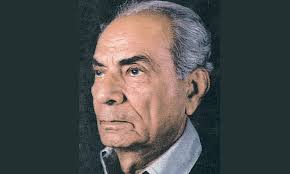
Sobho Gianchandani, one of Pakistan’s last leaders from its first generation of Marxists, has died at the age of 94.
He suffered a heart attack and was cremated in his native village near the southern city of Larkana on Tuesday.
Gianchandani was a member of the Communist Party of Pakistan and stayed active after it was banned in 1954.
He was one of the last remaining Pakistani students of Rabindranath Tagore, a literary figure and Nobel laureate from West Bengal in India.
Gianchandani’s death closes the chapter on a generation of leftist politicians who organised peasants and industrial workers during 1940s, 50s and 60s.
Analysts say it was this work that led to the 1970 election victory of the overtly socialist Pakistan Peoples Party in an otherwise conservative and religious country.
Gianchandani’s family said he had died in his chair after being served morning tea on Monday.
He had been suffering from cardiac problems complicated by a severe chest infection and had been in hospital twice in recent weeks.
Communist and Hindu
Gianchandani was born on 3 May 1920 to a Hindu family in Bundi village near the famous archaeological site of Mohenjo-Daro in Larkana district, Sindh province.
He went to school in Larkana and Karachi.
Later he studied fine arts at a university set up by Rabindranath Tagore at Shantiniketan, his native village in West Bengal.
In a subsequent interview, Gianchandani said he had espoused communism during his time at this university.
He said Tagore, who was then in his late 70s, used to call him “the man from Mohenjo-Daro”.
In 1942, Gianchandani participated in the Congress-led anti-British Quit India movement, and was arrested for the first time.
He was repeatedly jailed for his views and politics during a political career that lasted until the mid-1960s.
But he continued as an ideologue, intellectual and writer of several books.
In an interview in 2009, recalling the active period of his political life, he said he had become a “three-headed monster” for the Pakistani establishment.
“I am a communist, I am Hindu and I am Sindhi,” he said, light-heartedly referring to his minority identity within Pakistan