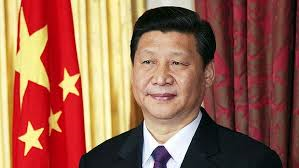
Chinese president Xi Jinping (Credit: asianet.com)
NEW DELHI, Sept 5: Chinese PresidentXi Jinping has cancelled his mid-September trip to Pakistan amid political chaos in Islamabad, in what could be a strong signal to Beijing’s allweather friend that it must get its act together before hosting a big visit.
This would be music to India’s ears which had long opposed clubbing of visits to India and Pakistan every time a Chinese President or premier came to the sub-continent. It is no secret that Delhi has strong reservations against the Sino-Pak nuclear axis and Beijing’s support for infrastructure projects in Pakistan Occupied Kashmir.
Their decadesold defence partnership has been India’s Achilles heel. Xi’s visit was crucial for Pakistan, during which a number of economic and defence deals were expected to be signed between the two countries. Xi was scheduled to lay the foundation stone of the Lahore-Karachi motorway section, launch power projects and give final touches to the proposed Pakistan-China railway link.
The two countries are finalising plans to build an economic corridor between China’s Xinjiang and Pakistan’s Gwadar Port which is being developed by Chinese firms. China has announced $32 billion to be invested in next seven years in various Pakistani projects for infrastructure building and power During the September trip, Xi had planned to visit India and then Pakistan followed by Sri Lanka.
However, his proposed dates were clashed with President Pranab Mukherjee’s trip to Vietnam from September 14-17. As India was unwilling to reschedule the President’s trip to Hanoi, Xi decided to first visit Pakistan, followed by Sri Lanka and then reach India. This will be Xi’s first visit to the subcontinent after taking over as president.
Xi may announce big support for Indian infrastructure sector during his trip from September 17-19. Former High Commissioner G Parthasarathy told ET, “there would have been serious security concerns for a Chinese President to cancel his trip to Pakistan, a close partner for Beijing. By taking this step, he is trying to send a strong signal to Islamabad to strengthen architecture to address security concerns and also control extremist forces.”
Xi’s security delegation was in Islamabad on Wednesday to review the security situation in the light of the protests, and was not satisfied with the arrangement. Instead, it was suggested that he should visit Lahore instead of Islamabad.
However, his security team did not give clearance for that either. Last month, Sri Lankan President Mahinda Rajapaksa also cancelled his visit to Pakistan in the wake of the country’s political situation. The cancellation was seen as a major blow to the Pakistan government.
Islamabad, Aug 31 – Pakistan‘s army has instructed the country’s embattled government to solve its political crisis without violence on Sunday following a night of clashes in the capital between police and thousands of protesters demanding the prime minister step down. The demand came after an emergency meeting of the army’s high command and was the latest intervention by the country’s powerful military in the drawn out standoff between the government and followers of former cricketer Imran Khan and populist cleric Tahir-ul-Qadri.
The army has toppled civilian governments in the past, including one led by the current prime minister Nawaz Sharif, either by directly assuming power in coups or by installing caretaker governments. In language that underlined the institution’s undimmed ability to dictate events, an army statement said it was “committed to playing its part in ensuring security of the state”.
It added its “serious concern” about violence in Islamabad and that the situation should be “resolved politically without wasting any time and without recourse to violent means.”
Political accommodation appears unlikely, given that the government and its opponents are deadlocked over the future of the prime minister, who won a landslide victory in last May’s election that Khan claims was secured by massive vote rigging. Khan and Qadri, who marched from the city of Lahore to Islamabad on 14 August in a bid to oust the government, insist Sharif must go.
The government has been at pains to avoid an ugly stand off with demonstrators, ordering police not to confront them as they advanced ever closer to the heart of the capital, even allowing them to hold a protracted sit-in on the road directly in front of parliament and other key government buildings.
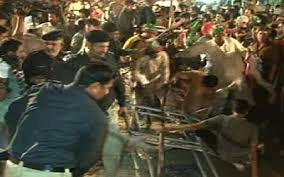
But, on Saturday night, Khan and Qadri urged their supporters to seize Sharif’s official residence, forcing police to respond with tear gas and rubber bullets to swarms of demonstrators who succeeded in smashing a gate and flooding into the grounds of parliament. Almost 500 people were injured and three died, although one was the victim of a heart attack.
The police response was criticised as excessive by some, though many of the protesters were equipped with gas masks and armed with bamboo staffs, slingshots and other weapons.
The main opposition Pakistan People’s party, which has generally supported Sharif throughout the crisis, criticised the crackdown. And the Muttahida Qaumi Movement party, which has a significant vote block in parliament, joined calls for the government to step down.
Sporadic clashes continued throughout the day on Sunday, with some protesters using slingshots to fire glass marbles at police.
But, by night-time, it seemed neither Khan nor Qadri were preparing to provoke another confrontation, with Khan appearing on the top of the converted sea container in which he has been living for more than two weeks to announce he was going to have a rest. The government will struggle to defend key buildings without using force in any future attempt to seize them.
“Sharif is now in the tightest of corners,” said commentator Mosharraf Zaidi. “The army does not want to intervene in this political dispute but it also clearly indicates that it will not defend prime minister Sharif.”
A noticeably gloomy editorial in Dawn, a respected English-language daily paper, asked whether Sharif could survive Sunday’s crisis.
“The answer, in these frantic hours, must surely be a miserable, despondent no,” it concluded.
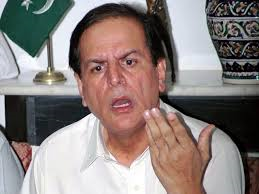
ISLAMABAD, Aug 31: Pakistan Tehreek-e-Insaf (PTI) President Javed Hashmi has stated that Imran Khan’s decision to move forward to the PM House was against that of the party.
Addressing a press conference here Sunday, Hashmi disclosed that Imran Khan had assured that they would not move forward from Constitution Avenue.
Hashmi said Imran Khan changed his stance after Sheikh Rasheed and Saifullah Niazi delivered a message to him. The PTI president said that he was not informed of what prompted the decision to move forward despite asking Imran Khan. Hashim said he was told by Imran Khan that he could leave if he had difference.
Hashmi regretted that there was no democracy in the party. “I had advised Imran to wait till the result of negotiations”, he said. “Shah Mehmood Qureshi had also supported my viewpoint.”
He said: “No distance has been left between martial law and us”.
According to Javed Hashmi, the Pakistan Awami Tehreek (PAT) would not proceed to the PM House until they received the go ahead from Imran Khan.
The PTI president called on the government to end the barbaric action and asked Imran Khan to return, stating that he would stand by him if he did so.!
The PTI President also said, if democracy is derailed Imran Khan will be responsible for it.
Imran Reacts
Addressing his supporters from his container, Imran Khan said he is disappointed at Javed Hashmi’s statements and announced that from this day forward his path and Javed Hashmi’s path are different.
Pakistan faces very big problems: a failing economy; a Taliban insurgency; and persistent tension with India, which has resulted again in exchanges of cross-border fire. The country’s leaders and citizens obviously need to join in common cause to put the country on a steadier course.
Alas, this is Pakistan. For the past two weeks, thousands of protesters in Islamabad have been demanding the resignation of Prime Minister Nawaz Sharif. His critics have every right to express their views peacefully. But forcing his resignation is the last thing Pakistan needs.
It would further polarize society, weaken the fragile democratic institutions and strengthen a powerful military, which says it wants to be out of politics but has regularly staged coups and otherwise sought to control civilian governments for three decades.
Mr. Sharif came to office in a parliamentary election 15 months ago, the first peaceful, democratic transition of power between civilian leaders in the country’s history. It was a hopeful moment; some 60 percent of voters turned out, and most people seemed willing to accept his victory.
The current anti-Sharif anger is being stoked by two men. Imran Khan, a prominent cricketer turned politician, wants new elections. Muhammad Tahir-ul Qadri, a cleric of the Sufi Islam sect, is pushing for the creation of a unity government. The protesters have demanded electoral reforms and Mr. Sharif’s removal because of alleged corruption in the 2013 election. Some believe that the army, which has an uneasy history with Mr. Sharif, has had a hand in the crisis. Reports that Mr. Khan and Mr. Qadri are negotiating with the army chief of staff are unsettling.
Mr. Sharif’s brief tenure has been marked by sectarian tensions, power outages, insurgent-related violence and a failure to deliver on campaign promises of economic revival. He has also named cronies to high posts. But forcing him out now and in this way is not the answer. A smarter approach is to make democratic processes work through reforms to prevent electoral fraud and rampant cronyism. It will also require negotiation and compromise.
The United States, preoccupied with crises elsewhere, has shown little urgency in trying to calm the situation, even though Pakistan’s stability is crucial to regional order — especially as American troops withdraw from Afghanistan. It should be pressing Pakistan’s army, in particular, to reject any idea of staging a coup. Mr. Sharif should resolve to govern better while the military focuses on its primary concern, defeating the Taliban threat.
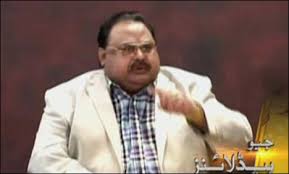
LONDON, Aug 27: Muttahida Qaumi Movement (MQM) chief Altaf Hussain terming all demands of Pakistan Awami Tehreek (PAT) chief Dr Tahirul Qadri as ‘valid’, has said that it would be in the country’s interest if the government voluntarily stepped down to avoid any bloodshed, DawnNews reported.
Talking about the anti-government sit-ins being held in the federal capital city and a possible government reaction, Hussain said that the government should consider the safety of women and children, participating in the sit-ins.
He further cited that the ‘third force’ would have to intervene, if Tahirul Qardi did not step back voluntarily.
Also read: Altaf calls for resolving dispute to avert martial law
“No one calls for a Martial law or ventilator with delight,” he added.
MQM chief said that amendments could be made in the demands through dialogues, but added “How can the talks prevail if the government refuses to accept valid demands?”
He made it clear that he had no intentions of becoming prime minister, nor president, but only wanted a peaceful atmosphere in the country.
The MQM chief said that he considered any one in opposition to the local governmental system and power of the people as an enemy of democracy.
It is worth mentioning here that contrary to MQM’s balanced stance, where Altaf Hussain urged both sides to neutralise tensions, the party has pressed the government to step down in a changed scenario.
Earlier on Wednesday, Tahirul Qadri announced ‘Revolution day’ while Imran Khan also declared to put talks on hold till the resignation of Prime Minister Nawaz Sharif.
Both PTI and PAT have been holding anti-government protests and sit-ins in Islamabad’s Red Zone area and are demanding Prime Minister Nawaz Sharif’s resignation.
London, Aug 27: Scotland Yard late on Wednesdayreleased a suspect arrested in connection with the murder of former Muttahida Qaumi Movement (MQM) leader Dr Imran Farooq, Express News reported.
The suspect has been asked to appear before the police again in mid-November this year.
Earlier, a spokesperson for the Scotland Yard confirmed to The Express Tribune that the suspect was arrested from East London this morning. He is currently being kept in custody where he is being interrogated. The suspect is reportedly a British Pakistani, but Scotland Yard did not confirm the nationality of the suspect.
He is said to be an MQM UK unit member, party officials told The Express Tribune.
The suspect is the second man to be arrested in the case so far. Last June, the Scotland Yard arrested a nephew of MQM chief Altaf Hussain, 52-year-old man Iftikhar Hussain. He was arrested on suspicion of conspiracy to murder and is currently on bail.
Further, in May, Scotland Yard released pictures of two suspects allegedly involved in the murder of Farooq.
Scotland Yard claimed that the two suspects, identified as Mohsin Ali Syed and Mohammed Kashif Khan Kamran, were believed to be in Pakistan and had traveled to London on student visas. They are also believed to be residents of Karachi.
Farooq, 50, was a former leader of MQM and had lived in London in self-imposed exile from 1999. He was on his way back from work when he was attacked outside his home in Edgware, north London, in September 2010. A post-mortem gave the cause of death as multiple stab wounds and blunt trauma to the head. A kitchen knife and a house brick used in the attack were recovered at the scene.
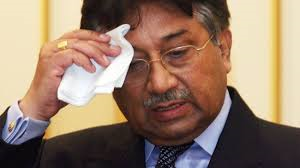
LAHORE, Aug 23: With so much uncertainty and speculation already surrounding the ongoing political crisis in Islamabad, former president Pervez Musharraf’s party has thrown its own curveball in the mix.
The All Pakistan Muslim League (APML) has called upon Prime Minister Nawaz Sharif to immediately withdraw the government’s treason trial against Musharraf as part of what it called a ‘compromise’ to unlock the current political crisis.
In a statement released on Saturday, political advisor to Musharraf Chaudhry Sarfraz Anjum Kahlon stated that it was “compulsory for any discussion concerning an end to the current national political crisis to include the immediate withdrawal of the politically-motivated treason trial against Musharraf.”
Describing the treason trial as a “fundamental element of the ongoing political crisis,” Kahlon claimed he has received “assurances from senior members of the Pakistan Tehreek-e-Isaf (PTI) and the Pakistan Awami Tehreek (PAT) that the withdrawal of the treason trial would be privately presented as a fundamental demand in negotiations with the government.”
According to the statement, in June 2013, Kahlon lead private discussions with the PTI and the PAT in which it had been agreed that both parties would provide support to Musharraf “at the right time”.
Kahlon added, in the statement, that “Nawaz Sharif has lost his political mandate to pursue the baseless treason trial, which has served to undermine the country’s democratic system.”
LONDON, Aug 23 — Only last year, Imran Khan was casting himself as the savior of Pakistani politics: a playboy cricketer turned opposition leader who enjoyed respect and sex appeal, filling stadiums with adoring young Pakistanis drawn to his strident attacks on corruption, American drone strikes and old-school politics. When Mr. Khan promised that he would become prime minister, many believed him.
Now, though, Mr. Khan’s populist touch appears to have deserted him.
He led thousands of supporters into the center of the capital, Islamabad, a week ago in a boisterous bid to force the resignation of Prime Minister Nawaz Sharif, whom he accuses of election fraud. But the crowds he attracted were much smaller than his party had hoped, and the protest movement has been messy, inchoate and inconclusive.
Mr. Khan, 61, delivers speeches every day from atop a shipping container opposite the Parliament building, while his supporters sleep on the streets of a paralyzed city. But because he lacks the clout to break the political deadlock, he has turned to inflammatory tactics.
In recent days, he has called for a tax boycott, threatened to have his supporters storm the prime minister’s house, and pulled his party’s lawmakers from Parliament. In interviews, he has compared himself to Gandhi and to Tariq ibn Ziyad, an eighth-century Islamic general. In speeches, he has threatened his enemies and taunted Mr. Sharif, at one point challenging him to a fistfight.
The rest of the political opposition and much of the news media in Pakistan have turned against Mr. Khan, who is seen as having disastrously overreached. “Go Home Imran,” said a politically conservative newspaper, The Nation. Another writer called him “the Sarah Palin of Pakistan.”
But many worry that Mr. Khan’s brash tactics could endanger the country’s fragile democracy. Breaking its sphinxlike stance, the military intervened in the turmoil on Tuesday, urging politicians to resolve their differences with “patience, wisdom and sagacity.” Though benignly worded, the statement caused anxious flutters among the political class, who note Pakistan’s long history of military coups.
The protests in Islamabad “threaten to upend the constitutional order, set back rule of law and open the possibility of a soft coup, with the military ruling through the back door,” the Brussels-based International Crisis Group warned on Thursday. Hours later, the American Embassy in Islamabad said pointedly in a statement that its diplomats “strongly oppose any efforts to impose extraconstitutional change.”
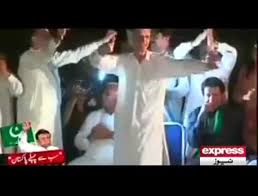
On the streets, Mr. Khan’s movement has the boisterous feel of a midsummer music festival. Pop stars introduce his speeches, which are punctuated by songs during which his supporters, many of them women, burst into dance. A disc jockey known as DJ Butt is part of his entourage.
But Mr. Khan’s stewardship of that exuberant crowd has seemed erratic. When the marchers arrived in Islamabad on Aug. 15 after a punishing 36-hour journey from Lahore, the capital was being pounded by rain. While his supporters slept on the wet streets, Mr. Khan retreated to his villa outside the city to rest, drawing sharp criticism.
In speeches, he has used extensive cricket analogies, referring to himself as “captain,” and his heated, often intemperate style has alienated some supporters. At one point, he threatened to send his political enemies to the Taliban so the insurgents could “deal with them.”
Mr. Khan’s call for supporters to stop paying taxes and utility bills met with widespread derision because few Pakistanis pay income taxes, and the country is already crippled with power shortages. His attack on the United States ambassador, Richard G. Olson, was seen as pandering to anti-American sentiment. “Are we, Pakistanis, children of a lesser god?” he said in that speech.
The protests stem from accusations of vote-rigging in the May 2013 general election. Mr. Khan accuses Mr. Sharif’s party of fixing the vote in a number of constituencies in Punjab Province. Critics of Mr. Khan call his accusations sour grapes: Although international observers noted some irregularities, the election was accepted as broadly free and fair.
Suspicions that the military, whose relations with Mr. Sharif’s government have been tense, might have something to do with Mr. Khan’s protest movement were heightened by the appearance of Muhammad Tahir-ul Qadri, a mercurial cleric whose parallel movement has, in recent days, outshone Mr. Khan’s.
Mr. Qadri, who wants to replace Mr. Sharif’s government with one of technocrats, appears to have attracted a larger and more disciplined crowd, and to be benefiting from a simpler message. Normally based in Canada, he controls no seats in Parliament, and his populist manifesto is filled with laudable but vague notions like an end to terrorism.
Mr. Sharif’s government, which initially reacted to the protests in a clumsy and sometimes brutal manner, has taken a more sophisticated approach in recent days. The police have allowed Mr. Khan’s and Mr. Qadri’s supporters to reach the area outside Parliament, although the building itself is surrounded by hundreds of soldiers.
On one level, the dispute is about control of Punjab, Pakistan’s most populous province and Mr. Sharif’s political heartland. Mr. Khan’s party, the Pakistan Tehreek-e-Insaf, knows it must challenge Mr. Sharif in Punjab to stand a chance of beating him nationally.
Negotiations started Wednesday, but Mr. Khan called them off a day later, demanding that Mr. Sharif resign first. Addressing a crowd, he railed against the prime minister in language considered coarse even by the rowdy standards of Pakistani politics.
Pressure to resolve the crisis is rising, both from hard-liners in Mr. Sharif’s party and from residents of Islamabad, who complain about the strain the protests have put on the capital. Protesters dry their laundry on the lawn of the Supreme Court and slip behind bushes to defecate.
The former president, Asif Ali Zardari, has offered to help mediate between the parties and met with Mr. Sharif on Saturday. But the situation on the streets remains fluid. An outbreak of violence or an overreaction by the police could shift the advantage to Mr. Khan and endanger the government, analysts say.
Few Pakistanis believe that a military coup is imminent. But the crisis has weakened Mr. Sharif, who has squabbled with the generals over policy toward India, peace talks with the Taliban and the fate of the former military ruler Pervez Musharraf, who faces treason charges.
“The military doesn’t need to impose martial law now,” said Amir Mateen, a political analyst based in Islamabad. “Imran has weakened the entire political class, and the government is on its knees. The military can have its agenda fulfilled without doing anything.”
The next move, though, is up to Mr. Khan, who, having played an ambitious game, now needs to find a way to end it peacefully.
Salman Masood contributed reporting from Islamabad, Pakistan.
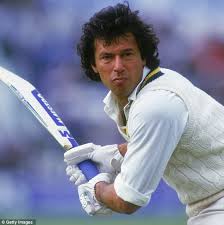
ISLAMABAD, Aug 17: Cricket hero Imran Khan rode a wave of discontent to finally break through as a serious player in Pakistani politics at last year’s election. Now he is aiming even higher, leading thousands on a march to the capital in a bid to unseat the prime minister.
But in taking his campaign to force out Nawaz Sharif on to the streets of Islamabad, Khan may have overplayed his hand. This weekend his crowd of followers was already thinning out, and without overt support from the military his protests are unlikely to be a game-changer.
Thousands showed up for his rally on Saturday, but some supporters grumbled they had slept out in the rain while Khan relaxed in his nearby mansion.
“The path he’s chosen is one of protest,” said Samina Ahmed, South Asia director of the Brussels-based International Crisis Group think tank. “Now the question is: does he have a strategy beyond the protest?”
Even if the protest movement fizzles, however, Sharif will have been left weakened and less likely to challenge the country’s powerful military on security and foreign policy, which Pakistan’s generals have long considered to be their domain.
Khan accuses Sharif of rigging last year’s election, which marked the first democratic transition in Pakistan’s turbulent history, and last week vowed to occupy Islamabad until the prime minister resigns.
The government has warned that his protest, and another led by fiery cleric Tahir ul-Qadri, could destabilise the nuclear-armed nation of 180 million, which has seen a succession of military coups and is struggling to stifle a Taliban insurgency.
It fears Khan is trying to force a confrontation so the army will once again intervene, or that the military is manipulating Khan from behind the scenes.
There is no doubt that the military brass dislike Sharif, who stormed back to power for a third time last year after his party won a clear majority of parliament’s seats.
Sharif has put former military head Pervez Musharraf, who abruptly ended his last stint as prime minister in a 1999 coup, on trial for treason.
He has also dithered over a military offensive to quash the Taliban, sided with the Jang Group that accused the military of shooting one of its journalists and sought reconciliation with arch-foe India, the perceived threat that the army uses to justify its prominent position.
One political analyst said it was unlikely Khan was encouraged by the army to challenge Sharif, and much more likely that Khan had decided to pounce because the prime minister’s sparring with the generals had left him vulnerable.
“If the relationship with the military had not gone out of kilter, then Imran would not have seized this opportunity,” said the analyst, who declined to be named due to the sensitivity of the issue. “He saw Sharif was on shaky ground.”
In recent months, Sharif’s resistance to the military has softened. An anti-Taliban offensive began in June and the treason trial against Musharraf has quietly ground to a halt.
The army has not commented publicly on the protests, but insiders say it has no appetite for forcing Sharif out – which would involve a showdown with Pakistan’s increasingly powerful judiciary.
That makes it all the more likely that Khan’s protest will fizzle out unless he forces a confrontation.
“When I asked him, ‘what’s your exit strategy?’, he said: ‘I play to win,’” said the analyst.
“It’s a sportsman’s calculus.”
In the past, the military may have seen Khan as a useful figure to ensure it remains the real centre of power.
Had Sharif not won so handsomely, Khan would have been a forceful opposition in parliament, keeping mainstream parties on the defensive and acting as a safety valve for popular anger over the graft and incompetence of the political class.
But the military also see him as a nuisance for seeking an end to the fight against the Taliban and a negotiated peace. He has sometimes been ridiculed as “Taliban Khan” for his views on the insurgency and hostility towards U.S. drone strikes.
Another reason for the military’s reluctance to back Khan may be the performance of his party in Khyber Pakhtunkhwa province, home to the Taliban insurgency, since it took power there last year.
Khan’s provincial government has hiked the education budget and tried to reform the police. It has also legislated on citizens’ rights to government information and services such as gas, power and water, and forbidden officials to engage in business that conflicts with their duties.
But residents say implementation of those laws is spotty, and some other promised reforms have failed to materialise.
Now, as Khan’s supporters camp out in Islamabad, some in his own provincial capital of Peshawar are becoming impatient.
“We voted for Imran Khan’s party in our province but they have engaged themselves in other issues,” said furniture maker Mohammad Ikram. “They should solve the problems of the people of this province first and then criticise the federal government.”
Islamabad, Aug 20: The political soap opera being currently played on the capital’s stage is getting more melodramatic. The story is unfolding strictly according to the script in this season of ‘revolutions’. It begins with the march on Islamabad. Now we are into the second episode: the storming of the ‘red zone’. What next? Breakdown of the order and entrance of the arbiter. There is little suspense about the ending, but the next episode is going to be critical.
If not macabre, at the very least the situation is bizarre. Imran Khan came to storm the citadel of power and destroy the old order, but may have killed his own and his party’s political future in the bargain. He is trying to rock the boat that may sink him too. His call for civil disobedience followed by the decision to resign from the assemblies is a high-stakes game that he may never win.
Imran Khan seems to have boxed himself and his party in a blind alley with no exit. One wonders if there is any logic behind this apparent madness. How can a leader of a major political party be so thoughtless in his decisions — decisions that not only threaten the entire system but also politically isolate him and his party?
He may be strictly following a prepared script, but the situation seems to be getting out of control. Can there be a new twist to the story? One is not sure. We still have to wait for the end of the political stage show gripping the capital. It may not be too long now, with the fast unfolding situation.
The support of parliament is still the biggest strength for the prime minister provided he wakes up from his slumber
Away from the screen and the 24/7 hysteria, it was a different story on the ground at the Pakistan Tehreek-i-Insaf’s dharna. It was not even remotely close to the ‘massive sea of humanity’ as projected by party leaders and some television commentators. Over the next five days, it turned into a part-time dharna with the protesters reassembling in the evenings — almost corresponding to prime time TV viewership — to listen to the unending rants of their leaders with the blare of song and music in the background. The atmosphere was more festive than charged with revolutionary zeal.
The disconnect between the leadership and the audience could not be more obvious. While the leaders would return to the comfort of their place of residence after the end of the late-night dharna sessions, those who came from other towns were left to spend nights in the rain. It was a chaotic setting for the struggle that promised to deliver change.
Just a few minutes’ walk across the road it was a completely different milieu where Qadri is staging his separate dharna, a round-the-clock vigil with leaders fully integrated with the cadres and the crowd much bigger and more organised and disciplined.
What has been most impressive is the huge participation of women and those who are surely more ideologically motivated. Qadri’s support comes largely from the educated lower middle class. It is a mix of religious and political following. Notwithstanding his highly questionable background such dedicated support is remarkable.
A powerful demagogue, Qadri has upstaged Imran Khan with his more radical pitch. He proclaims himself a revolutionary in the “cast of Marx and Lenin with a strong Islamic shade”. His ‘revolutionary manifesto’ presents the outline of a ‘utopia’ where everyone will be equal. In contrast, what has been lost on the kaptan is that politics is not a game of cricket. Not being in electoral politics Qadri has nothing to lose, whatever the outcome of this confrontation.
But most intriguing has been the complete disappearance from the scene of the prime minister, regarded as the villain of the piece. He has not emerged since the Aug 14 Independence Day ceremonies where his glum expression was most noticeable. He is occasionally seen in the news in a huddle with his brother. His seems to be getting more dysfunctional in the face of the Khan/Qadri challenge. The suspicion of the military backing the anti-government marches seems to have compounded his inertia.
His decision to set up a Supreme Court commission to investigate the allegations of fraud in the last parliamentary elections is not only too little too late, but may not even be implemented because of some legal and constitutional hitches. Both Imran Khan and Qadri have closed doors on any offer for talks.
A new political alignment is emerging as the threat of the winding up of the system becomes real. All major political parties have closed ranks as the country descends into chaos. Even the Jamaat-i-Islami, the PTI’s only political ally, is not willing to support its decision to quit the assemblies and call for civil disobedience.
The destructive politics of the PTI seems to have given Sharif some space to regain his initiative. The support of parliament still is the biggest strength for the prime minister provided he wakes up from his deep slumber. But it may already be too late. His options are running out as he gets more deeply mired in the turbulent waters. Even support from other political forces is not much of help. The balance of power is already shifted to Rawalpindi.
Once again Pakistani politics has taken a unique twist just when a feeling had crept in of a return to the democratic process. Whatever the outcome of the last episodes of the melodrama, it has broken that slow reassurance amongst most Pakistanis. This confidence, important both for citizens and our image internationally, has been broken by the kaptan leaving deep scars on Pakistan’s already bleeding politics.
The vacuum created by the confrontation would inevitably be filled by horsemen already in the saddle. Sharif is paying the ultimate price for his hubris, ineptness and more importantly for his conflict with the military. The sound of the boots is getting louder, pushing the country deeper into a state of uncertainty and instability.