How Pakistan lost its East: the Bangladesh Saga – (The News International) By Naseer Memon

Bangladesh remembers (Credit: abc.net.au)
Bangladesh remembers
(Credit: abc.net.au)

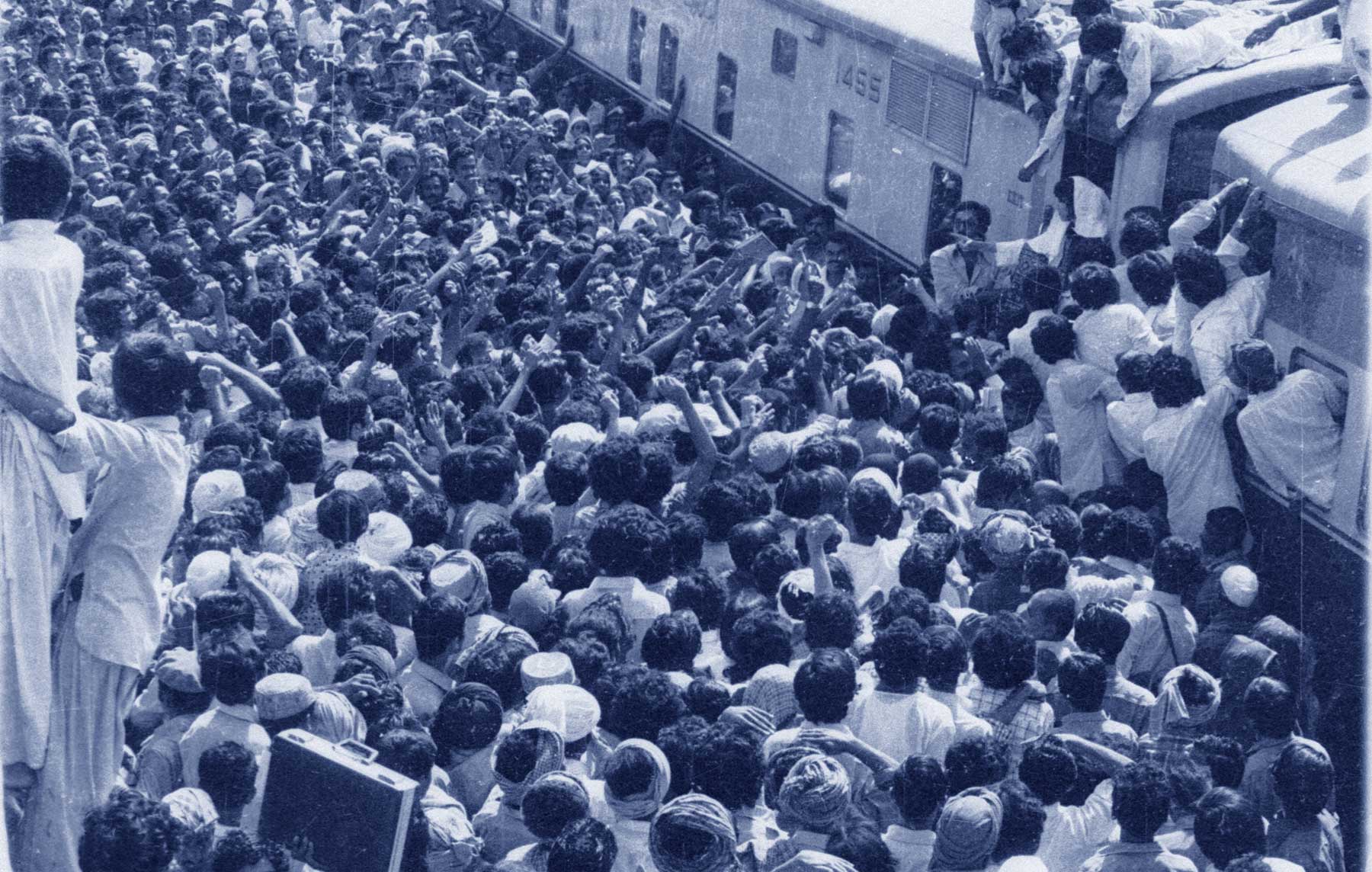
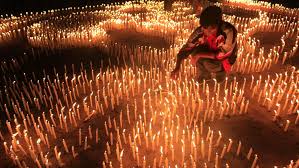
December dusts searing past to remind a reality that was preposterously denied for a quarter century and was recognized only after leaving an indelible trail of blood. While creation of Bangladesh entails a petrifying human catastrophe and an everlasting reference to state-perpetrated fratricide, it also trivialised a waffle narrative of Islamic-nationhood.

The episode reiterated that a multi-nation federation can only exist with socio-political justice, absence of which derides all ideological conjectures. Creation of Bangladesh reinforced the fact that Pakistan was not a creation of any Islamic ideology but was in fact a derivative of an ominous political alienation of Muslims in India. For Bengalis, Pakistan turned out to be a mere perpetuation of the same alienation. Flippant negation of their culture, abominable economic exploitation and brazen denial of their right to rule culminated into the birth of Bangladesh on December 16, 1971.

Undeniably, the social fabric and political configuration of East and West Pakistan were diametrically opposite to each other. While West Pakistani politics and society was yanked by a myopic feudal oligarchy, East Pakistan inherited a much refined middle-class lead socio-political ambiance. After 1857 insurgency, Bengal became the first province under British democracy. It was the first regulation province of India under the jurisdiction of a high court. Society and politics in Bengal was erected on starkly different building blocks and it did not chime-in with the other provinces of Pakistan where British rule clamped typical colonial structures.Snobbish civil and military leadership grossly underestimated the powder keg of East Pakistan that left deep scars of embarrassment in the national history. While language and culture are central to most of the ethno-national movements, economic and political marginalisation are key triggers to stoke irreversible hatred.

Landed aristocracy that shaped today’s Pakistan was trounced in Bengal in 1950 with the introduction of “East Bengal Estate Acquisition and Tenancy Act”. It effectively routed the landlordism in Bengal by fixing individual holding at only 3.3 acres per head or 33.3 acres of land per family whichever was less. Agriculture census of 1963-64 shows that out of 6.2 million farms some 6 million were of less than 12.5 acres size and 50 per cent of them were only 2.5 acres or less.

On the contrary, West Pakistan was marked by large landholdings specially in Punjab and Sindh provinces. For example, 30 per cent of the land in Sindh in 1952 was owned by only one per cent of the owners and the average holding was above 500 acres. In Punjab, 50 per cent of the land was under the control of Zamindars. This sufficiently indicates the distinct social and political milieu of the two wings. Since West Pakistan held hegemony over the decision making, the vibrant middle class-led East Pakistan often loathed the policies manufactured and imposed by the landed aristocracy of West Pakistan.

Resource hemorrhage and discrimination in pecuniary matters against East Pakistan was the key cause of conflict. In 1948-50 when East Pakistan had a net balance of payment surplus of Rs622 million, West Pakistan had a net deficit of Rs912 million. Similarly, the foreign and inter-wing trade balance of the two wings from 1949-50 to 1957-58 shows East Pakistan having a surplus of Rs3,636 million as balance of trade with foreign countries against the net deficit of Rs3,047 million of West Pakistan on the same account. The trend remained consistent during the first and second five years plans when East Pakistan had net surplus and West Pakistan had net deficit in foreign trade and the surplus of East Pakistan was used to offset the deficit. This prompted Shaikh Mujib to demand for two separate currencies for the two wings under his popular six-point formula.

Conflict on resource sharing could have been assuaged had avaricious establishment of West Pakistan maintained a judicious balance in benefit sharing. What irked Bengalis was relentless discrimination in development opportunities. For example, GDP growth in East Pakistan during the period was 2.2 per cent against the heavily skewed 3.1 per cent of West Pakistan. During the same period per capita income in East Pakistan dwindled to -0.1 per cent against +0.8 per cent increase in the West Pakistan. Likewise during five years from 1954-55 to 1959-60, GDP growth in East Pakistan was only 1.6 per cent i.e. half of the West Pakistan’s 3.2 per cent. Per capita income in East Pakistan plummeted to -0.7 per cent against +1.2 per cent in the West Pakistan.

East Pakistan having almost 54 per cent population was also discriminated in public sector development. During the first five year plan, total revenue expenditure in East Pakistan was Rs2,540 million which was less than one third of the Rs8,980 of the West Pakistan. It was marginally jacked-up in the second five-year plan from 1960-61 to 1964-65 when East Pakistan received Rs6,254 million under public sector development programme against Rs7,696 million of the West Pakistan, yet it was still 19 per cent less.

Not only that East Pakistan was kept economically deprived and politically suppressed, it was also under represented in the state structure. Share of Bengalis in senior level civil services was also flagrantly violated. During the first five years of the country, senior cadres of several departments were completely bereft of Bengalis. There were no Bengalis on any senior positions in the Departments of Commerce, Intelligence& Statistics, Supply & Development, Petroleum, Paper & Stationery Wing, Inspection Wing, General Concession Wing, Central Engineering Authority, Coal Commissioner and Textiles.

Apart from economic exploitation, West Pakistani leadership always demeaned and demonised Bengalis. General Ayub rabidly detested Bengalis. He once vented his spleen by saying that “I am surprised by Bengali outlook. They have cut themselves off from Muslim culture through abhorrence of the Urdu language…..making themselves vulnerable to Hindu culture.” On 7th September 1967, he wrote “God has been very unkind to us in giving the sort of neighbours [India] and compatriots [Bengalis]. We could not think of a worst combination. Hindus and Bengalis…. If worst comes to the worst, we shall not hesitate to fight a relentless battle against the disruptionists in East Pakistan. Rivers of blood will flow if need be, unhappily. We will arise to save our crores of Muslims from Hindu slavery”.

Gen. Ayub was no exception in his fulmination against Bengalis. Major General Khadim Hussain Raja, the then GOC, who threatened to “raze Dhakah to the ground” if Shaikh Mujib proclaimed independence during his speech at Race Course ground on 7th March 1971, has made startling revelations about moral bankruptcy of military leadership. In his recently published book “a stranger in my own country”, he has quoted nauseating turpitude of General Niazi during a debriefing meeting. He writes “Niazi became abusive and started raving. Breaking into Urdu he said: ‘Main is haramzadi qaum ki nasal badal doon ga. Yeh mujhey kiya samjhtey hain’. He threatened that he would let his soldiers loose on their womenfolk. There was pin-drop silence at these remarks. Officers looked at each other in silence, taken aback by his vulgarity. The meeting dispersed on this unhappy note with sullen faces. The next morning, we were given sad news. A Bengali Office, Major Mushtaq, who had served under me in Jessore, went into a bathroom at the Command Headquarter and shot himself in head. He died instantaneously.”

What happened in 1971 was certainly worse, yet the worst is the unremitting obnoxious intransigence of the unfazed perpetrators. Fundamental rights are denied with same zeal, forced disappearance, dumping of corpses in the name of national interest continues with alarming madness and natural endowment of federating units are being exploited ruthlessly. Oppressed segments who demand their rights are inexorably construed as traitors. What prevails in Pakistan today can potentially repeat what happened yesterday.
People of Pakistan at mercy of state & non-state actors: Asian Human Rights Commission report

Pak terrorism (Credit: 3quarksdaily.com)
Pak terrorism
(Credit: 3quarksdaily.com)

Karachi, Dec 10: In 2013, the people of Pakistan have remained at the mercy of state and non-state actors which resort to violence as a means to secure power, the Hong-Kong based Asian Human Rights Commission (AHRC) said on Monday.

The detailed report has been released to mark Human rights Day that falls on December 10 (today). Rights violations are widespread due to the failures of, and lack of reform in, the country’s institutional framework, in particular key institutions of the rule of law: the police, prosecution and judiciary, according to the report.

Throughout the year 2013, the AHRC has documented how too many lives, and the dignity of those living, have been snatched by a callous state and inhuman cruelty in Pakistan.“This year, absence of a functioning criminal justice framework has allowed, or even caused, torture in custody and extrajudicial executions to increase rapidly.

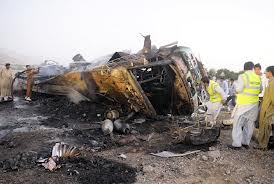
“During the year, hundreds of incidents of sectarian violence, targeted killings, terrorist attacks, and suicide bombings were witnessed, as well as killings conducted,” the report said.But that is not all. In 2013, the nation faced the promulgation of two draconian ordinances that have restricted freedoms further. It also witnessed the absence of the rule of law, killings of persons from Muslim minority sects, honour killings, trafficking of women and children, torture in custody, disappearance after arrest, and extrajudicial executions, suicide attacks on religious sites, persecution of the religious minorities, forced marriages, assassination of journalists, enslavement of children, poverty levels rising to 34 percent and power blackouts that brought industrial and commercial activities to a standstill, the report said.

The year 2013 also witnessed, for the first time in Pakistan’s history, peaceful transfer of power from one civil government to another following a general election. Every political party, including that which won the May 11 election with a two-thirds majority, complained about gross vote rigging.

“The new government, on assuming power, immediately began acting on its distaste for human rights. It merged the Ministry of Human Rights with the Ministry of Law and Justice, denying the people opportunity for redress for human rights abuses. The government has turned a blind eye to the arrogance of the police and armed forces in its refusal to comply with the orders of the courts,” the report said.

The government – in attempt to limit freedom of expression, freedom of movement, constitutional protection from arbitrary arrest, security of individuals, right to property, and civil liberty – promulgated two ordinances (Pakistan Protection Ordinance and an ordinance amending the Anti-Terrorism Act 1997). With these ordinances it has provided law enforcement and security agencies unlimited powers to search houses without warrant, shoot suspects on sight, confiscate property, tap telephones, and hack computers, and has established a parallel judiciary, creating special courts and special prosecution. These ordinances were promulgated to bypass parliament and open debate.


“Balochistan remains in a grave situation in 2013. Thousands of people are missing after arrest. Human rights abuse is the norm.,” the report said.

“In 2013, four hundred and fifty (450) persons disappeared after their arrest by the Frontier Corps (FC) and other forces in Balochistan. In Sindh province 35 persons disappeared this year; the number of disappeared for KPK province is 110 persons. In Pakistan-held Kashmir, nationalists struggling for independence of both India-held and Pakistan-held Kashmir disappeared constantly – 52 such persons disappeared after their arrest.”

“As many as 180 bullet-riddled bodies of Baloch missing persons have been found this year. In Sindh, during joint operations of Pakistan Rangers and Police, 53 persons were extra-judicially killed in vast numbers of encounters. In Karachi alone, 34 persons were killed in extra-judicial executions,” the report said.

“However, intelligence agencies brazenly ignore Supreme Court’s orders to produce the missing victims. Two judicial commissions established to probe cases of disappearances have been unable to get explanations from the intelligence agencies, and their recommendations have been ignored.”

New Sheriff in Town

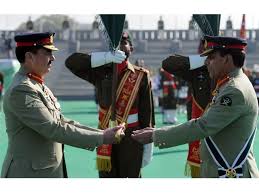
Raheel Sharif new army chief (Credit: tribune.com.pk)

ISLAMABAD, Nov 29: Outgoing military chief General Ashfaq Kayani on Friday handed over the command of the army to Chief of Army Staff Gen Raheel Sharif.

He passed the baton of command to Gen Sharif at a ceremony held in the Army Hockey Stadium, close to the General Headquarters (GHQ).

The entire area around the venue of the ceremony was blocked off with military and police personnel deployed in the area. Except for the invitees, no one was allowed to move into the area.

The change of command ceremony was attended by federal ministers, services chiefs, diplomats and senior serving and retired officers.

Speaking at the ceremony prior to handing over the baton of command to Gen Sharif, Kayani said leading Pakistan army was an honour for him. He said during his time as army chief he had experienced a wide array of challenges on which the military focused its full attention as a national institution.

The military worked with honesty and dedication, Kayani said, adding that it was only through the sacrifices rendered by the soldiers and the officers that peace could be established in some of the most challenging parts of the country.

He said the army had never disappointed the nation, the support of which was imperative for the military to continue its work with dedication.

He paid his respects to those killed during the “difficult time” that the country was going through, including the women and children whose lives were lost.

On Wednesday, the government had announced career infantry officer Raheel Sharif to succeed Kayani. Gen Rashad Mehmood was named the chairman of Joint Chiefs of Staff Committee the same day.

Just prior to his appointment, Gen Sharif was serving as Inspector General Training and Evaluation with the rank of a Lt General.

Gen Sharif also holds the Hilal-i-Imtiaz military award, and is the younger brother of late Major Shabbir Sharif, who received the Nishan-i-Haider for his services in the 1971 war.

Gen Sharif’s selection as army chief selection implies that frontrunner and the senior most military officer Lt Gen Haroon Aslam was ignored for the elevation. Lt Gen Aslam retired soon after the latest key military appointments.

The post of army chief is arguably the most powerful in Pakistan and anxiety had prevailed in Pakistan on who will replace the taciturn, chain-smoking Kayani.

Kayani’s retirement from the post comes after rules were relaxed to grant him an extension in July 2010 by the PPP-led coalition government in what then prime minister Yousuf Raza Gilani said was in the interest of continuity at a time when the war on terror was successfully continuing against elements who wanted to impose a system of their choice on the country.

Pakistani Party Identifies Man It Says Is C.I.A. Station Chief

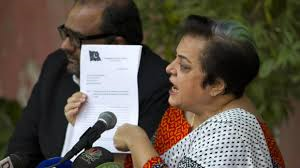
Shireen Mazari at press conference (Credit: watchinga.com)

The political party of the former cricket star Imran Khan on Wednesday identified a man it described as the Central Intelligence Agency’s top spy in Pakistan, in an escalation of Mr. Khan’s campaign to end American drone strikes in the country.

In a letter to the Pakistani police, Mr. Khan’s information secretary, Shireen Mazari, accused the C.I.A. director, John O. Brennan, along with a man identified as the agency’s Islamabad station chief, of “committing murder and waging war against Pakistan.”

In Washington, a C.I.A. spokesman declined to comment on the case.

Ms. Mazari demanded that the authorities prevent the station chief, whose identity has not yet been confirmed, from leaving the country so that he can face prosecution in a Pakistani court.

That seems unlikely, but the move is expected to infuriate American officials, who had to recall a previous C.I.A. station chief in 2010 after he was identified in the local news media, also in relation to a legal suit brought by anti-drone campaigners.

But while that outing was blamed on smoldering tensions between the C.I.A. and Pakistan’s Inter-Services Intelligence spy agency, this time it appears to be driven more by Mr. Khan’s increasingly confrontational stance against drone strikes.

In an appearance on a television talk show on Wednesday evening, Mr. Khan said he had named the station chief essentially to punish the C.I.A. for a deadly drone strike this month in the province his P.T.I. party controls, Khyber-Pakhtunkhwa. Now, he said, it was up to Prime Minister Nawaz Sharif’s government to take the next step against the American spy agency.

He has vowed to block NATO supply lines into Afghanistan in retaliation for the Nov. 1 drone strike that killed the leader of the Pakistani Taliban, Hakimullah Mehsud. On Saturday, his supporters moved to deliver on that promise by searching trucks and roughing up drivers as they passed through Khyber-Pakhtunkhwa province on the way to Afghanistan.

In her letter on Wednesday, Ms. Mazari claimed that the station chief did not enjoy diplomatic immunity, and suggested that if interrogated by the police he might divulge the names of the pilots who fly the drones.

The high-profile attempt to obstruct C.I.A. operations in Pakistan was said to be a response to the Nov. 21 drone strike that struck a seminary linked to the Haqqani network, a Taliban-affiliated militant group at the center of American security concerns in Afghanistan. The strike, which killed the Haqqanis’ spiritual leader and five others, occurred in the Hangu district of Khyber-Pakhtunkhwa, in a rare drone strike outside Pakistan’s tribal areas.

Mr. Khan has been a leading advocate of ceasing military action against the Pakistani Taliban, even though Khyber-Pakhtunkhwa has been the region hardest hit by Islamist violence this year, with hundreds killed in attacks. The Taliban also sprung several hundred prisoners to freedom in an embarrassing and well-organized jailbreak in July.

Mr. Khan has used the drone issue to leverage his popularity against Prime Minister Sharif, who is his main electoral competitor in Punjab Province, and indeed has largely succeeded in framing the political debate on drones in recent years.

Some Sharif supporters criticized Mr. Khan for trying to score political points by outing the C.I.A. station chief. “This a thoughtless move,” said Siddiqul Farooq, a central leader of the governing Pakistan Muslim League party. “It is selfish and compromises the national interest.”

Since the escalation of the C.I.A.’s drone war in Pakistan in 2008, the Islamabad station has grown to become one of the spy agency’s largest outposts in the world. The agency’s expansion in Pakistan has been an irritant to America’s relations with Pakistan, with one of the low points coming in January 2011 when an agency contractor, Raymond Davis, shot and killed two men in Lahore.

The influence of the C.I.A.’s Islamabad’s station chief has sometimes eclipsed even that of the American ambassador in Pakistan. A previous station chief clashed repeatedly in 2011 with Cameron Munter, the ambassador at the time, over the intensity of the drone campaign. The Obama administration ended up siding with the C.I.A., and Mr. Munter later resigned.

When the identity of an earlier C.I.A. station chief was made public in 2010, it was also as part of litigation related to the drone campaign. But such court applications are mostly seen as public relations devices, and at the time American officials privately accused the ISI spy agency of a gross breach of trust.

While the C.I.A. station chief discloses his identity to senior Pakistani intelligence officials, he is technically a covert operative and his name is not commonly known in Pakistan or elsewhere.

The C.I.A. did not say whether its station chief would be affected by Wednesday’s action. Similar disclosures in Israel in 1999 and Argentina in 2001 led to the C.I.A. station chiefs in those countries being recalled to the United States.

Reporting was contributed by Salman Masood from Islamabad, Pakistan, and Mark Mazzetti from Washington.


Pakistan Sheds Crocodile Tears on Drone Attacks

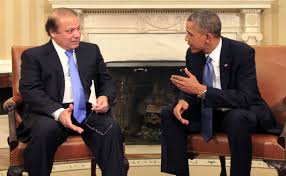
Pak PM with US President (Credit: McClatchy.com)
Pak PM with US President
(Credit: McClatchy.com)

The Nawaz Sharif government – perhaps because of its history of emerging from the womb of the army – is eliminating ‘bad Taliban’ much more covertly than its predecessors.

Behind the angry posturing of Pakistan Muslim League (N) interior minister Chaudhry Nisar Ali Khan and a coterie of politicians publicly denouncing the US for `sending a drone through peace talks,’ the US and Pakistan are coordinating against Taliban militants who threaten Western interests and attack inside Pakistan.

The discrepancy between what Pakistan says and does, came to light on Oct 23, when prime minister Nawaz Sharif met US President Barak Obama and denounced drone attacks. Around the same time, victims of drone strikes in Pakistan testified in the Capitol against the killing of innocent people in the tribal areas.

But US House of Representatives Foreign Affairs Committee member, Alan Grayson gave food for thought when he told the media: “With all due respects to an ally, it is well within Pakistan’s capability to end those drone strikes tomorrow.” He called Pakistan’s air force “very powerful,” – with the capability of controlling its own air space.

So long as the US calls the shots and gives aid to Pakistan, the government uses its officials to counter public anger. While the interior minister Chaudhry Nisar is the “bad cop,” who spews anger at the US for “violating Pakistan’s sovereignty,” the prime minister’s advisor, Sartaj Aziz is the “good cop,” promising the US will halt strikes during talks with the Tehrik-i-Taliban Pakistan.

It is an old military strategy with a new set of characters. Mark Mazetti, author of the `Way of the Knife,’ writes that Pakistan asked the US to launch its first predator drone strike in 2004 to eliminate tribal leader, Nek Mohammed, after he led a rebellion against the state. Afterwards, Pakistan claimed it had fired the missile that killed the tribal leader who it had once patronized.

Apparently, like his predecessors, Nek Mohammed and Baitullah Mehsud, the Tehrik-i-Taliban Pakistan (TTP) commander – Hakeemullah Mehsud – killed in a drone strike on Nov 1 – had become dispensable. The US offered $5 million for his capture after Hakeemullah coordinated with a Jordanian agent in December 2009 – and wiped out a sizeable staff of CIA employees stationed in Khost, Afghanistan. Pakistan too put PKR 50 million head money on him for his lethal attacks against the state.

Before the drone was lobbed against Hakeemullah, the government let the garrulous media chatter about its plan to engage with its Taliban militants. It simultaneously took JUI (F) chief Maulana Fazlur Rehman into confidence about arranging a “peace meeting” with the Taliban in North Waziristan.

But as events unfolded, Sharif’s visit to Washington.. followed by his announcement from London, Oct 31 that “peace talks with the Taliban have begun,” .. were met by puzzled silence in Pakistan. The TTP spokesman, Shahidullah Shahid told journalists the same day that they were unaware of any talks. And, parliamentary leaders publicly complained that they had been kept in the dark.

Still in North Waziristan, months of friendly communiqués between the government apparently put militants at ease. The administration’s imposition of curfew added to the impression that it was for upcoming TTP-government talks. On Nov. 1, the Taliban gathered in a mosque near Hakeemullah’s sprawling farm house – bought by his cousin, Latifullah Mehsud – for a meeting on whether to talk to the government.

The US had set the ball rolling to nab Hakeemullah shortly after NATO troops snatched Latifullah in early October from the custody of Afghan intelligence officials – and interrogated him at Bagram base. Latifullah was a key link between the Taliban groups in Pakistan and Afghanistan. The Karzai government had planned to use him as an interlocutor in “peace talks” with the Taliban, despite the TTP’s known role of attacking state institutions inside Pakistan.

These increased cross border attacks have in recent months caused Pakistan’s Foreign Office to complain that Afghanistan is being used as a safe haven for TTP militants.

For two days, US drones fired missiles into North Waziristan.. searching for their target. The second attack on Nov 1 was successful. Hakeemullah and his two companions were killed outside his $120,000 farm house, after the TTP returned from the mosque meeting. Neighbors reported surprise at seeing the Taliban commander before his vehicle was struck. Hakeemullah was understandably a rarity here, being on the run from drone attacks that occur mostly in this Pak-Afghan border area.

With the assassination of the TTP chief, and his replacement by Mulla Fazlullah – who escaped the 2009 military operation against him in Swat – an enraged Taliban pledged attacks on the military and senior government officials in the Punjab for being a “slave” of the US.

But, Islamabad says it will continue to pursue peace talks with its Taliban. In so doing it has found Pakistan Tehrik-i-Insaf chief Imran Khan’s reactions especially useful to soak up the anger. Khan’s visible shock at Hakeemullah’s assassination – and angry moves by the PTI and religious parties toward stopping NATO convoys to Afghanistan has served to deflect attention and let off steam.

It is the same strategy that Gen. Musharraf used after 9/11 -when public anger at the US invasion of Afghanistan helped propel the coalition of Islamic parties, Mutehidda Majlis-i-Amal in the border areas. Then too, the US was allowed to become the favorite whipping boy of the masses.

But as the US prepares for withdrawal of its troops from Afghanistan in 2014, it is less interested in Pakistan’s domestic politics and more in achieving its aims. Only a day after Sartaj Aziz said that drone attacks would be temporarily halted while it talks to the TTP, the US lobbed a drone missile over a madressah in the settled Hangu area and killed members of the Haqqani network. These Afghan Taliban were instrumental on attacks on NATO troops in Afghanistan.

The killing of Afghan Taliban financier, Naseerullah Haqqani in Islamabad also indicates cross intelligence agencies at work… and a falling out between multiple Taliban groups, once loosely commandeered by Hakeemullah Mehsud.

Meanwhile, the federal government – which earlier found Imran Khan’s anger “useful,” is less amused that he is carrying out his threat to block NATO supplies as a lever to stop drone attacks. That is being treated as an attempt to disrupt law and order.

As a dozen years of war has revealed, the younger generation of Taliban is angrier and less controllable than the militants trained by Pakistan in the 1990s to take over Afghanistan. Indeed, there is a shortage of “good Taliban,” like Mullah Omar, Mullah Baradar and the Haqqani network.. taking refuge in Pakistan.. who merely attack NATO troops in Afghanistan and don’t attack state interests within Pakistan.

Instead, the Taliban today fight the US, Afghanistan and Pakistan.. even as they forge bonds across the Durand Line. This so called border between Afghanistan and Pakistan is ignored from Pashtuns from both sides, at the cost of growing militancy in the region.

Inside Pakistan, the failure to tell the truth to nearly180 million people fuels the conspiracy theories being regurgitated in the media. While the Western world acts out of their own interest, officially naming it as the scapegoat has only served to spew venom and hatred toward outsiders.

In this complex scenario, how Pakistan gets rid of its ‘bad Taliban,’ while deflecting anger away from it.. and simultaneously gains a foothold in Afghanistan.. will be a high wire act worth watching.

Reko Diq project – take a decision before it is too late

Reko Diq Balochistan (Credit: tethyan.com)

CHAGAI, Nov 17: The CEO of Tethyan Copper Company (TCC) manages to wear local attire (shalwar kameez) for a meeting with the then chief minister of Balochistan. An hour prior to the meeting, I go and meet the secretary mines who is busy in other matters.

As he sees me: “Oh yes, we do have a meeting in one hour, let me call the section officer concerned to give me a briefing.”

A project of national importance is going to be discussed and the secretary wants to have a briefing of just a few minutes from his section officer before he goes for the meeting for a multi-billion-dollar project that could change the fate of the country and the province.

As the TCC team walks in, greeted by the then chief minister and seated, the meeting starts with the chief minister in his humorous style, saying: “We are going to do the project ourselves.”


At first, I thought that he was just joking but when he repeated the sentence three times, I could realise that it was the end of his humour. It seemed that all including the secretary finance and the secretary mines were taken by surprise. I, being the only person in that room who had physically monitored the execution of a similar project (Saindak copper and gold project), replied: “Sir, there is no way that you can do the project yourself and I can tell you why?” But he was not ready to listen.

Another meeting followed with a very senior officer of the government of Balochistan. During this half-hour meeting, we had no eye contact understood that perhaps this upright and honest man had to toe the line of his boss and did not want to say what he had to.

TCC, Saindak project and NFC award were discussed and my apprehensions expressed during this meeting unfortunately proved to be true as nowhere could be seen the kind of development against the amount of funds spent from the NFC award. Where has all that money gone?

The desire of the then provincial government to operate a copper project could have been a dream fulfilled by taking over the already operating Saindak project but this somehow never happened. The same running contract was simply extended rather than being negotiated for much better terms that could have become an additional source of revenue for the province.

This is where the previous government miserably faltered, on one hand, adamant on working on the Reko Diq project and on the other hand let the Saindak project slip away. Money for jobs further added to the agonies of the masses in Balochistan.


The delay due to indecisiveness by the government made the TCC to shift its stance from specific performance to damages claim. The country can face dire consequences and it can be devastating in case the decisions in international courts go against the government. The claim against damages could amount to billions of dollars and at this stage, the country is in no position to meet such a liability.

Although elaborated by the present CM on the floor of the house several times, there seems to be a very strong restraining factor that is not allowing the government of Balochistan to initiate fresh negotiations and an out-of-court settlement with TCC that could prevent an impending “calamity”.

While there is still time before the proceedings in international courts kick off in January 2014, the province should be allowed to take a decision unilaterally on merit before it is too late.

Deprivation in Balochistan is the main impeding factor and this project has the capacity to eliminate this deficiency.

It would be a wishful thinking for the present government to fix responsibility for merely extending the Saindak contract rather than it being negotiated for much better terms for the province or for the Saindak project being run by the provincial government instead?

At present, 1,250 Pakistanis with a supervisory staff of only 200 Chinese are running the Saindak project. Surprisingly, there have been no serious counter-checks or monitoring of the blister copper that is being exported.

In spite of the passage of 18th Amendment, it is yet to be seen that this amendment is implemented in letter and spirit in Balochistan in particular. However, if the Council of Common Interests (CCI) was religiously followed, it could transform into an effective mechanism to regulate centre-province relations, upholding the constitution, but the CCI is also being taken too casually.

The use of force combined with the centre’s denial of an absolute political and administrative autonomy and authority to the Balochistan government is further fuelling the grievances of the Baloch, thereby incapacitating the present chief minister in addressing their grievances and bringing them back to the political mainstream.

Although the chief minister has the acumen, the will and the desire to change the fate of Balochistan and its people, but this can only be possible provided entire trust is reposed in him by the centre and he is fully empowered to make this dream come true.

The writer is the former project director and deputy managing director of Saindak Copper Gold Project, Chagai district, Balochistan

Published in The Express Tribune, November 18th, 2013.


Taliban takes Revenge through Election of New Leader

Mullah Fazlullah (Credit: thenewstribe.com)

The new head of the Pakistani Taliban, Mullah Fazlullah, has ruled out peace talks with the government, vowing revenge for his predecessor’s death.

A Taliban spokesman told the BBC the militants would instead target the military and the governing party.

Mullah Fazlullah was named the new leader six days after Hakimullah Mehsud was killed in a drone strike.

Mullah Fazlullah is a particularly ruthless commander whose men shot the schoolgirl activist Malala Yousafzai.

‘Just a trap’

Prime Minister Nawaz Sharif came to power in May pledging a negotiated settlement to the insurgency.

Mullah Fazlullah, believed to be in his mid to late 30s, led a brutal campaign in Swat between 2008 and 2009, enforcing hardline Islamic law that included burning schools, and public floggings and beheadings.

A military operation was launched to retake the area.

Mullah Fazlullah fled over the border into Afghanistan but Islamabad says he has continued to orchestrate attacks in Pakistan.

He was accused of being behind a roadside bomb in September that killed Maj Gen Sanaullah Niazi, the top commander in Swat, along with two other military personnel.

Mullah Fazlullah was known for his radio broadcasts calling for strict Islamic laws and earning him the nickname “Mullah Radio”.

In one undated video he pledges to do everything possible to introduce the laws, saying: “We will eliminate anything that will get in the way of achieving this goal: father or brother, soldier or police.”

The shooting of Malala Yousafzai in October 2012 sparked outrage in Pakistan and across the globe.

The teenager had spoken out against the Taliban’s restrictions on girls’ education.

She was airlifted to the UK for hospital treatment and now lives in Birmingham with her family.

This year Malala, now 16, addressed the UN General Assembly and won the European Union’s Sakharov human rights prize.

Prior to the latest Taliban announcement, the BBC’s M Ilyas Khan in Islamabad said that Mullah Fazlullah was not a member of the Mehsud clan and, if appointed, would face a challenge to control the Mehsud fighters, who make up the bulk of the Taliban’s manpower.

The TTP is a loose umbrella organisation of about 30 militant groups.

Khalid Haqqani has been named deputy leader of the TTP, but he is not thought to be linked to the Haqqani network that is fighting Nato-led troops in Afghanistan.

TTP alleges ‘double dealing’ by government

PESHAWAR, Nov 4: Blaming the Pakistan government for the killing of Hakimullah Mehsud in the US drone attack, the Taliban on Sunday announced they would not hold any peace talks with the government and threatened to avenge the killing of their leader.

There were reports about differences among various factions of the banned Tehrik-e-Taliban Pakistan (TTP) over finding a successor to Hakimullah Mehsud. The Taliban, however, denied that.

“After consultation with all the factions, it has been unanimously decided that we will not hold any peace talks with the government. It’s a puppet government of the US and it deceived us in the name of peace talks,” the TTP spokesman Shahidullah Shahid told this correspondent from his Afghan cell phone.

He claimed the TTP leadership knew that the government was not sincere in peace talks but the Taliban leadership decided to hold negotiations for the sake of the Pakistani people.
“We did not want innocent Pakistani people to suffer any more and therefore decided to hold negotiations with the government. But the government, by helping the US in the killing of Hakimullah Mehsud, proved that there was zero sincerity in the mind of the rulers. It was neither sincere nor serious in peace negotiations,” a seemingly furious Taliban spokesman noted.

He warned the government would have to pay the price for, what he termed playing a double game with the TTP.

Shahidullah said Hakimullah Mehsud’s killing was a “huge loss” to the Pakistani Taliban, adding they would always feel his absence.“We are passing through a difficult phase and are still in the state of mourning. And that’s the reason we could not sit to choose his successor,” he remarked.

He said the TTP Shura would hold its meeting within the next few days and would choose the next Taliban leader. When told about reports that the Shura had held its meeting in North Waziristan but could not develop consensus over one name, the Taliban spokesman said it was not true.

He said all the Shura members had been informed about the meeting and they would soon gather at a safe place to choose Hakimullah’s successor. For the time being, Shahidullah said the Taliban commander from Jandola in the Frontier Region Tank, Asmatullah Shaheen Bhittani, had been appointed as Ameer of the TTP central Shura.

“He is not an acting Ameer of the TTP as reported by the media. He would work as Ameer of the TTP central Shura and would, along with other members of the Shura, oversee affairs of the network till the new Ameer is nominated,” the spokesman explained.

About the announcement of the Pakistan Tehreek-e-Insaf-led government in Khyber Pakhtunkhwa to stop the Nato supplies through the province, the spokesman said, “It is an encouraging attempt as it would at least cause some damage to our enemy but it will not help restore our trust in the government.”

However, other militant leaders welcomed this decision of the PTI government.“Though we oppose the PTI leadership as it is now a party to the system, we appreciate this decision of stopping the Nato supplies,” a senior militant commander operating in Afghanistan said.
He, however, said they would soon start targeting the Pakistan Muslim League-Nawaz (PML-N) leadership for its alleged support to the US in the region.Meanwhile, Taliban sources said the TTP Shura had started its meeting but after a day-long session, the participants could not reach a consensus on the nomination of the TTP leader.

“The Shura held several sessions on Sunday but they could not convince each other on one name. The meeting has been postponed for three days. It has been decided to invite senior members of the TTP and create a consensus on one name,” one of the Shura members told this correspondent.

Pleading anonymity, he said three names of senior Taliban commanders were presented at the Shura meeting. They were Maulana Fazlullah, Hafiz Saeed Khan and Maulana Gul Zaman.
Maulana Fazlullah is the leader of the Swat Taliban and is presently based in Afghanistan’s Kunar province. Hafiz Saeed Khan is the TTP leader in Orakzai Agency. He belongs to the Orakzai tribe and is a resident of the Mamozai area in the militancy-plagued Orakzai Agency. Among the militant circles, he is known as one of the most hardline and dangerous militant commanders. Besides his native Orakzai Agency, Taliban sources said he had organised dozens of deadly attacks on key installations in major cities of the country, including the US Consulate in Peshawar through four suicide bombers, the Peshawar airport, military checkpoints, mourning processions of the Shia community and worship places of Ahmadis. It is said it was Said Khan who organised a suicide car blast on the tribal jirga in Orakzai Agency on October 10, 2008 and killed over 50 people. He proudly claimed the recent suicide car attack on the compound of Mulla Nabi Hanafi in Orakzai Agency.

Like Maulana Fazlullah, he, too, had two wives and is the father of three children.The third militant commander is Maulana Gul Zaman. He, too, belongs to the Orakzai Agency and is the TTP Ameer in the Khyber Agency.

KP Law Minister Killed in Suicide Attack over Eid

Israrullah Gandapur (Credit: pakp.gov.pk)

PESHAWAR, Oct 16: At least eight people, including Khyber Pakhtunkhwa law minister Israrullah Gandapur, were killed Wednesday when a suicide bomber exploded outside his residence in Dera Ismail Khan, police said.

More than 30 people were wounded in the attack, including Gandapur’s elder brother, said Irfan Mahsud, the assistant commissioner in Dera Ismail Khan.

Deputy Superintendent of police, Jan Mohammad Khan, confirmed the minister’s death.

Provincial health minister Shaukat Yousafzai also confirmed Gandupar’s death. “I talked to the minister’s brother and he told me that Gandapur has been martyred,” he said.

According to eyewitnesses, the provincial law minister was exchanging Eid greetings with people at his residence in tehsil Kullachi, about 50 kilometres from Dera Ismail Khan, when the suicide bomber detonated his suicide vest.

“I saw so many dead people and injured people crying for help,” said eyewitness Haseeb Khan, whose new white holiday clothes were drenched in blood. “There were arms, legs and heads everywhere.”

It was not immediately clear who was responsible for the attack.

Gandapur was a member of the ruling party in Khyber Pakhtunkhwa province, the Pakistan Tehrik-i-Insaf (PTI), a party led by former cricketer Imran Khan which favours peace talks with the Pakistani Taliban.

He is the most senior member of the party to have been killed so far.

The Pakistani Taliban have said they are open to talks. But they also say they will not disarm, do not recognise the Pakistani constitution, and will not talk to the government until the army pulls back from their strongholds and all their prisoners are released.

Prime Minister Nawaz Sharif and President Mamnoon Hussain strongly condemned the incident.

“Pakhtunkhwa lost an astute parliamentarian, a decent Pashtun and a brave leader in the martyrdom of Israr Gandapur. May he rest in peace,” tweeted prominent politician Afrasiab Khattak.


Islamic Militants Fill Vacuum for Balochistan Quake Victims

JUD chief (Credit: tribune.com.pk)

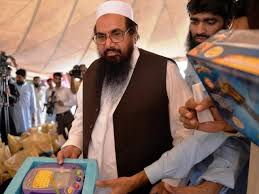
ISLAMABAD: The chief of the Jamaat-ud-Dawa (JuD), Hafiz Mohammad Saeed, on Monday accused the US and India of trying to hamper efforts to help victims of Pakistan’s earthquake.

Saeed’s statement comes a day after the US and India agreed to step up cooperation and prevent financing of “extremist groups”, including the Lashkar-e-Taiba (LeT) and Jamaat-ud-Dawa (JuD).

In annual talks between top economic officials, India and the US spoke of “expanding cooperation on countering illicit financing, including targeting the financial networks and fund-raising activities of terrorist organisations,” Indian Economic Affairs Secretary Arvind Mayaram said Sunday.

Saeed, however, once again denied accusations of any involvement in terrorism of the Jamaat-ud-Dawa, which is known in Pakistan for its relief work after natural disasters, particularly the 2005 Kashmir earthquake and 2010 floods.

“Their aim is to hamper the relief work of our charity Falah-e-Insaniyat foundation in the earthquake hit Balochistan, that’s why they are trying to stop our funding,” Saeed told reporters.

A 7.7-magnitude quake shook the southwestern province of Balochistan on Sep 24, killing more than 370 people and leaving more than 100,000 homeless.

Indian accuses JuD of being a front organisation for Laskhar-e-Taiba, which investigators blame for the three-day carnage in Mumbai that killed 166 people in 2008.

The JuD denies any links to terrorist activities.