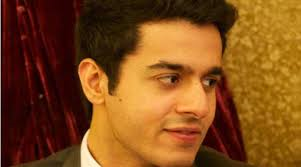
ISLAMABAD, Oct 11 – Senior columnist of Dawn Cyril Almeida has been put on Exit Control List after his ‘misleading’ story regarding purported deliberations in a meeting on the security issues stirred controversy.
The writer announced Government’s latest move against the controversial story on Twitter.
Dawn’s editor Zaffar Abbas defiantly replied after the Government placed its staffer Cyril Almeida on the Exit Control List.
The writer created a buzz in Pakistan and India by reporting on October 6 that the government of Prime Minister Nawaz Sharif had delivered a “blunt” warning to the powerful military that the country facing growing international isolation if it failed to tackle terror.
The ECL is a system of border control maintained by the Government of Pakistan under the Exit from Pakistan (Control) Ordinance. Persons on the list are prohibited from leaving Pakistan.
The PM Office had strongly rejected the story, terming it not only speculative but misleading and factually incorrect. “The fact that the report itself states that none of the attributed statements were confirmed by the individuals mentioned in the story clearly makes it an example of irresponsible reporting”, he said in a statement issued on Thursday.
Earlier today, the civil-military leadership expressed concern over the publication of a fabricated news story in Daily Dawn pertaining to security issues purportedly discussed in a meeting of National Security Committee in the last week.
Also, the participants of meeting were unanimous that the published story was clearly violative of universally acknowledged principles of reporting on national security issues and has risked the vital state interests through inclusion of inaccurate and misleading contents which had no relevance to actual discussion and facts.
The participants felt that it was imperative that the print and electronic media refrained itself from speculative reporting and issues of national security and interests of the state.
PM Nawaz took serious notice of the violation and directed that those responsible should be identified for stern action.
ISLAMABAD, Oct 7: The Pakistan Peoples Party (PPP) played the role of a vibrant opposition party today when it asked the government some tough question about its handling of the Kashmir issue.
On the third day of the joint session of Parliament today when a resolution was passed on Kashmir, PPP lawmakers systematically criticised what they said was the government’s inability to make a strong case for Pakistan on the international stage.
“The day Prime Minister Nawaz Sharif says the name of Kulbushan Jadhav, I will donate Rs50,000 to the blind association,” said Senator Aitzaz Ahsan. He was referring to PM Nawaz’s UNGA speech, where he failed to mention the Indian spy caught by military officials months earlier.
PPP Senator Sherry Rehman slammed Pakistan’s foreign policy, asking “Why are we not able to mount a serious, sustained, protracted defence of the federation of Pakistan?”
“Kashmir is one of the most important issues for us regarding our foreign policy… You cannot build your foreign policy through one speech,” Rehman said, referring to Prime Minister Nawaz Sharif’s UNGA speech.
Rehman echoed Aitzaz’s address to the joint session a day earlier, during which the premier failed to mention the Indian spy caught by military officials months earlier.
Aitzaz Ahsan also had something to say about Jadhav during today’s session: “The day Prime Minister Nawaz Sharif says the name of Kulbushan Jadhav, I will donate Rs50,000 to the blind association.”
The Indian National Security Adviser Ajit Doval said if there was another terrorist attack in India, Pakistan would lose Balochistan, Rehman said. “Who is the NSA of India to say this?” she questioned. “How dare any Indian speak about the federation of Pakistan?”
“One-seventh of India is constantly under insurgency. That is their internal matter. Why did you not bring this matter up?” the PPP lawmaker said, addressing the prime minister who was not present at today’s session.
India has made us appear responsible for terrorism before the whole world, the lawmaker lamented. “The US is already their ally. They have already started making bases there. Afghanistan is already blaming us,” she continued. “You have no interests in common with the super powers,” she said.
“Who is defending Pakistan? Our parliament is doing it. Our Army is fighting the largest inland war against terrorism in the world today and nobody knows about it,” she said. “This is a failure of your diplomacy,” she added to applause from the PPP benches.
“The military should always be the last line of defence. The first line is the foreign ministry, the foreign minister and its ambassadors.
“The military’s job is to be standing there in the trenches. Do not make them do your job for you,” she warned the government, “Because that’s what they are being forced to do.”
“They have to give speeches, they have to take positions, they have to take journalists to the Line of Control for briefings. What have you done?” she asked the government.
“You held a traditional ‘All Parties Conference’. You didn’t even do a DGMO briefing. What are you afraid of? What will happen? Where is a vacuum, someone always fills it,” she warned.
Rehman also touched upon Indian Prime Minister Narendra Modi’s decision to suspend Indus Waters Commission talks after the Uri attack.
“On the Indus Waters Treaty, India touched that which hadn’t been touched in three wars. And this treaty is not a fair or just treaty with Pakistan. India has built dam upon dam.
“India has weaponised water. What answer did you give?” she asked.
Senator Rehman Malik also addressed the session, terming Indian Prime Minister Narendra Modi a “chief terrorist”, held India responsible for “exporting terrorism to Pakistan”.
Rehman Malik urged lawmakers not to isolate the Kashmir issue from CPEC. “What is happening right now is because of CPEC ─ certain world powers don’t want it to be successful,” he claimed.
Resolution on Kashmir
Adviser to the Prime Minister on Foreign Affairs Sartaj Aziz presented a resolution on Kashmir in the assembly which was unanimously endorsed by lawmakers in attendance.
The resolution highlighted Indian atrocities in Kashmir, calling for implementation of UNSC resolutions, rejected Indian accusations of Pakistani involvement in the Uri attack and condemned Indian sponsorship of subversive activity in Pakistan. It also took notice of India’s efforts to isolate Pakistan diplomatically.
Senator Taj Haider addressing parliament earlier had said, “We should not move back even one millimetre from our point of view.”
He added, “We have to voice very clearly that plebiscite in Kashmir is the only solution. We have to find a method to hold free and fair plebiscite without any pressure on Kashmir.”
The senator raised concerns of smaller provinces over the CPEC, echoing the stance PPP Senator Aitzaz Ahsan took during yesterday’s joint session.
Fata MNA Dr G.G. Jamal pointed out that a large number of the armed forces were deployed to the western border for Operation Zarb-i-Azb.
“The world should know that India, indirectly, does not want Zarb-i-Azb to finish. Indirectly, they don’t want terrorism to end, they are helping it,” he claimed.
Jamal said that India is diverting the world’s attention towards war so that state terrorism in Kashmir is forgotten.
Senator Kamil Ali Agha, during the session said: “We have to see that the UN resolutions are in place, the Kashmiris are sacrificing so where are we lacking? Why is the world not paying attention?”
Agha also raised questions about CPEC. “Why has Gilgit-Baltistan been left out of CPEC?” and asserted that GB carries the potential to generate electricity.
“The corridor cannot be completed without investment in Gilgit-Baltistan,” he maintained.
During yesterday’s session, PPP and PML-N lawmakers clashed over Panamagate and allegations of corruption in the house just days after political leaders announced they were united on the Kashmir issue following an ‘All Parties Conference’.
The upper and lower houses together also unanimously approved the anti-honour killing and anti-rape bills during Thursday’s session.
WE grew up with our grandmother often making references to the ‘Sulaimani topi’ , the proverbial cap that made the wearer magically disappear from view. Much, much later, the concept came into play in J.K. Rowling’s Harry Potter books in which Harry used the ‘cloak of invisibility’.
In both instances, the disappearing act was pure fiction. Tragically, in Pakistan today 24/7 news channels and all media houses (the honourable exception being just that) seem to be making increasing use of the Sulaimani topi.
This week the Akhtar Mengal-led Balochistan National Party held a public meeting in Quetta which, going by the photos/clips on social media, was one of the biggest public gatherings in the provincial capital in a long time.
________________________________________
What the Baloch see as a burning issue ie disappearances, has more or less been ‘disappeared’ from the media thanks to the cloak of invisibility.
________________________________________
As I scanned the various news channels and newspapers, I struggled to find even a small mention of it. Sardar Akhtar Mengal and his party contested the 2013 general election and do not fall in the ‘separatist-terrorist’ category by any stretch of the imagination.
But in an environment where a suicide bombing that wiped out an entire generation of lawyers — many of whom were staunch believers in human rights and were forever striving to further that cause — was blamed on the enemies of the China-Pakistan Economic Corridor rather than the religious extremists who claimed responsibility for it, the patriotic media prefers to err on the side of caution.
After all, Sardar Akhtar Mengal and his party talk of the rights of the Baloch people. Such politicians and activists, in the eyes of the patriotic media, are walking a very, very thin line that divides the ‘acceptable’ from the treasonous. So why should they take chances? Better to use a collective Sulaimani topi — and bingo! The thousands-strong gathering disappears from view.
In any case, what the Baloch see as a burning issue ie disappearances, has more or less been ‘disappeared’ from the media thanks to the cloak of invisibility. In late July, a Karachi social worker Comrade Wahid Baloch was returning home on a coach after a visit to interior Sindh when, on the outskirts of the city, plainclothesmen took him away after stopping the vehicle.
Four weeks later, the media continues to hold a Sulaimani topi over his head, with hints coming from unnamed official sources that some ‘separatists’ may have met Wahid Baloch in Digri where he had gone to condole the passing of a friend. Someone has also advised those making inquiries about the missing man to wait as he might return one of these days after he has been debriefed.
Then, there is the case of MQM worker Aftab Ahmed who was tortured to death (as the autopsy established) in custody in early May this year. After the army chief ordered an inquiry into the incident, the Rangers said the personnel involved had been suspended and would be proceeded against. Four months on, we await the details of action against them.
Where the authorities, followed by the media, have the capacity to ‘disappear’ people and issues, the Sindh Rangers have also been able to do the reverse. As news reports of a Senate sub-committee proceedings have told us, there now exists a ‘Human Rights Commission South Asia’ which, a Rangers submission to the Senate said, has given it a clean bill of health in terms of its record in Karachi.
Apart from an obscure website, nobody can find this organisation or any of its functionaries especially after one of the two men cited as its representatives in Pakistan has disavowed any association with it. In fact, he says he has not even heard of the body. The other rep is not reachable using his contact information provided on the site.
This report was wholly unnecessary simply because ask anyone in Karachi and they will tell you that the Rangers and police have done a great job in clipping the wings of the various parties’, most notably the MQM’s, militant cadres.
This is remarkable indeed in a city which resembled a lawless jungle with various armed groups holding sway over its different parts. These ruthless armed groups also appeared to be at liberty to indulge in land-grabbing and extortion, and carry out targeted killings, till the start of the Rangers-led operation a mere three years back. Now most of their networks have been smashed and trades shut down.
It is only fair to the bulk of the Rangers in Karachi and their khaki counterparts in the terrorist-infested areas in the north-western reaches of the country, who have offered blood sacrifices and fought back the existential threat to Pakistan that where some of their colleagues stray from the lawful path these are also mentioned for the purpose of course correction.
When some of us cry ourselves hoarse over the free rein that certain religious militant groups enjoy, leading to confusion about the direction of the operation against terrorism, I am not using the words of Sushma Swaraj and John Kerry as some in the media have taken to alleging. How could I?
I remember well Ms Swaraj was the person who briefed the press on behalf of the Indian hardliners and thwarted the only sane course for her country to extricate itself from the Kashmir quagmire when Pervez Musharraf and Atal Behari Vajpayee were nearing agreement at Agra in 2001.
Given the popular, indigenous (yes, indigenous) uprising in India-held Kashmir and the repressive measures being used to crush the renewed azadi movement, as we speak, frankly makes me livid even after all these years at the pain Ms Swaraj and her political stablemates have caused.
Such views, and that too across the whole range of issues, don’t make someone a super-patriot or whatever is the exact opposite. Saying what is right and what is wrong is something some of us, no matter how few, are not prepared to give up. The ultrapatriotic critics are welcome to have a go. That is their right.
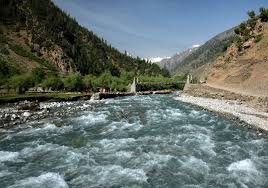
Shawwal river (Credit: flickr.com)RAWALPINDI, Sept 1: Director-General (DG) Inter-Services Public Relations (ISPR) Asim Bajwa on Thursday gave an exhaustive rundown of progress made during Operation Zarb-i-Azb.
Zarb-i-Azb commenced on June 15, 2014, after an attack on Karachi’s Jinnah International Airport. The operation which has gone on for over two years is now in its final phase.
“In 2014, the security environment when Operation Zarb-i-Azb started was such that the country faced various instances of terrorism,” the DG ISPR said. “There were 311 IED blasts, 74 attacks, and 26 suicide blasts in 2014.”
“The salient operational guidelines for Zarb-i-Azb were that it would be an indiscriminate operation, it would avoid collateral damage and it would be mindful of human rights,” he said.
________________________________________
Summary of progress made during Operation Zarb-i-Azb
War against terror has cost Pakistan $107bn
North Waziristan, Shawal, Khyber Agency cleared by Army
900 terrorists killed during Khyber I and Khyber II
66pc locals have returned to tribal areas
Daesh designs in Pakistan ‘foiled’, 309 arrested
Over 21,000 IBOs carried out across Pakistan, nearly people 1,400 arrested
536 soldiers killed, 2,272 injured during IBOs
3,500 terrorists killed in IBOs
Afghan govt, Nato forces did not take adequate action against terrorists
Poor deployment of armed forces along Afghan side of the border
Gates to be built at all crossing points along Pak-Afghan border
________________________________________
‘Afghan authorities did not take action against terrorists’
The DG ISPR displayed a map showing what he said was the concentration of terrorists in North Waziristan.
“No one could think of going to North Waziristan. It was the epicentre [of terrorism]. It was home to the largest communications infrastructure,” he said. The origin of most instances of terrorism was North Waziristan, he said.
“After the operation, when we cleared the valley, reaching Dattakhel and were moving towards the border, some terrorists came out from there via Afghanistan and reached the fringes of Khyber Agency.”
“Before we started the operation, Pakistan had informed all stakeholders ─ political, diplomatic and military ─ of the operation. The Afghan president, political govt, military leadership, Resolute Support Mission in Afghanistan were all informed of the operation and requested that if terrorists cross the border, they would have to catch them.
“They are your people, you will have to take action against them. But that didn’t happen,” Bajwa said.
‘Killed 900 terrorists during Khyber ops’
“When the terrorists went towards Khyber Agency, we relocated some forces from the North Waziristan operation [to Khyber] and conducted operations Khyber I and Khyber II.”
“We recovered weapons, ammunition, IEDs, explosives, communications equipment, hate literature and discovered tunnels,” he said.
“There was enough explosive material there to carry out five IED blasts every day for 21 years. They could have caused 134,000 casualties with the amount of material we recovered.”
“North Waziristan has very challenging terrain but despite that, our armed forces went there and cleared all their hideouts, caves and tunnels. But Khyber was even more challenging. It has snowy mountains and was home to hideouts from the Afghan war and had a very high density of IEDs.”
The Army killed 900 terrorists during the Khyber operation, Bajwa said, and dismantled the network of terrorists that was threatening areas in the immediate surroundings, such as Peshawar.
‘Shawal is like Switzerland now’
“We started operations in Shawal, where all the terrorists from North Waziristan went. It was their last stronghold and they had nowhere to go after that. The operation went well and we cleared every village, every house, every school and every mosque in Shawal.”
“Shawal is like Switzerland now,” Bajwa claimed. “The residents are slowly returning, but they want the Army to stay on and provide stability and revive the economy. Pine nuts are grown in great quantities there. Terrorists were selling them to fund themselves, but now the locals will benefit.”
‘Daesh in Pakistan planned attacks on Islamabad’s diplomatic enclave’
The DG ISPR said that Daesh ─ another name for the militant Islamic State group ─ would not be allowed to have a presence in Pakistan.
“We created a comprehensive intelligence picture and saw that Daesh was trying to come into Pakistan. They organised themselves into two groups, the Kutaiba Haris (planning wing) and Kutaiba Mubashir (militant wing) and were trying to get local criminal and terrorist groups to join them,” Bajwa said.
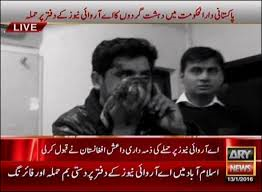
“Terrorists were frustrated at the time with all the Intelligence-based Operations (IBOs) going on and tried to change hats. The core group had 20-25 people,” he said. These people were responsible for the attacks on the Faisalabad Dunya office, Lahore Din News office, Express News Sargodha office, and ARY News Islamabad office, he said.
About 309 people who were part of the organisation were arrested, including Afghans and people of Middle Eastern origin. About 157 small freelance groups were also arrested, he said.
Even people who did wall-chalking and graffiti for Daesh in Pakistan for Rs1,000 were also arrested, Bajwa said.
The group had planned to attacks in the capital’s diplomatic enclave, particularly on the Ministry of Foreign Affairs and on foreign embassies, consulates and their employees, Bajwa said. They had also planned to target Islamabad airport and prominent public figures.
Border management: armed deployment low on Afghan side of border
There are 18 major crossing points between Pakistan and Afghanistan along the 2,600-kilometre-long shared border, Bajwa said. “We wanted to seal those areas so that terrorists from this side of the border don’t go there and vice versa,” he said.”
“Lots of terrorists who crossed into neighbouring districts in eastern Afghanistan have built concentration camps.”
“After clearing Fata… We began emphasising border management and the Torkham Gate was part of that. There will be proper gates made at all crossing points in addition to immigration staff posts,” the DG ISPR said. He also said hundreds of small posts will be set up where FC forces will be deployed.
“Additional FC wings will be raised, but until that happens, Army troops will provide reinforcement in many areas.”
“Other related agencies, including Nadra, will have staff posts and crossing will only be possible using valid documents on both sides of the border,” he said.
“We have posts along the border and have our own forces reinforcing the Frontier Corps, but the same kind of deployment doesn’t exist on the Afghan side of the border. Because of that void, there is a lot of presence and movement of terrorists there.”
“There will be a lot of patrolling to ensure no one can cross the border illegally. It will take time, but we are moving ahead steadily,” he said.
‘Over 21,000 IBOs carried out across Pakistan’
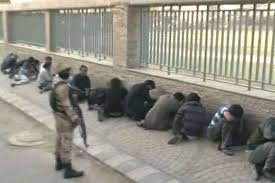
Intelligence-based operations (IBOs), special IBOs and combing operations have been carried out across the country, Bajwa said. The IBOs targeted terrorists, their facilitators, sleeper cells, financiers and abettors.
Around 2,578 were carried out in Balochistan, 9,308 in Punjab, 5,878 in Sindh and 3,263 in Khyber Pakhtunkhwa.
Special IBOs commenced the night the suicide blast at Lahore’s Gulshan-i-Iqbal park earlier this year, Bajwa said. So far, 477 special IBOs have been carried out, with 1,399 people apprehended.
“We have increased the scope with the leads we received… We will continue going wherever we need to without any hesitation,” he said.
‘War against terrorism has cost us $107bn’
The entire nation has borne the cost of the war against terrorism, which tallied up to $106.9 billion, Bajwa said.
During Operation Zarb-i-Azb, 536 soldiers were killed and 2,272 were injured, Bajwa said, whereas 3,500 terrorists were killed.
About 66 per cent of locals have returned to areas badly affected by terrorism. “But it is not enough that we take them back [to their homes]. We have to help them prosper by means of reconstruction efforts, ensure that the areas are better off [than before], create opportunities for livelihood and revive the local economy so that this kind of terrorism doesn’t recur.”
Infrastructural development projects in the region include a 705km road inside North and South Waziristan, a 75km road from Peshawar to Torkham, solar-powered water schemes and the Mirali Tehsil headquarters hospital, the DG ISPR said.
In addition to the above, market complexes, mosques, schools and colleges have also been built in these areas, Bajwa said.
‘Anti-Pakistan slogans will not be tolerated’
Responding to a question about Muttahida Qaumi Movement chief Altaf Hussain’s anti-Pakistan statements, Bajwa termed Hussain a foreigner residing 5,000km away from Pakistan.
“It is unacceptable for every Pakistani if Altaf Hussain raises anti-Pakistan slogans. The government is already taking action on this issue.
“There has been lots of action on the ground against his incitement to violence. People have been caught and action taken… Everything is before you,” Bajwa said.
Farooq Sattar press conference (Credit newsanato.com)KARACHI, Sept 1: Muttahida Qaumi Movement leader Farooq Sattar announced that MQM has made the “required” amendments in its constitution to formally dissociate from Altaf Hussain and removed his name as the party’s supreme leader and the decision making authority in party affairs.
While addressing a press conference in the metropolis on Thursday, Sattar said the amendments have been made in accordance with the assurances given in earlier announcement, and added that “MQM will not let anyone use the party platform to chant anti-Pakistan slogans”.
“Since we had to prove we are running party affairs from Pakistan, and not from elsewhere, we have substituted Article 7(b) in our constitution,” said Sattar.
“It was necessary that our party members and advisory board approves and endorses our decisions of August 23, which they did, following which the amendments in party constitutions were made.”
“Missing persons should be returned to their families and this demand is as important as us changing our party’s constitution,” said the MQM leader while referring to the party’s earlier demands in reference to its missing workers.
Sattar also demanded that the party’s female workers arrested following the August 22 incident should be set free.
The MQM leader also requested the authorities to unseal Khursheed Memorial Hall and the party’s headquarters at Nine zero.
“It is against the country’s Constitution to seal the offices of any political party,” maintained Sattar.
He announced the name of four leaders who have been included in the central coordination committee, in addition to Khawaja Izhar ul Hassan, these leaders are Syed Sardar Ahmad, Khalid Maqbool Siddiqui, Sohail Mansoor and Rauf Saddiqui
ISLAMABAD, Aug 29: PPP’s Aitzaz Ahsan on Monday criticized the Rangers-led operation in Karachi and said it would benefit Muttahida Qaumi Movement (MQM) and Altaf Hussain.
Ahsan also said the operation will “benefit MQM’s militant wing.”
“There is a strong impression that Sindh Rangers have been operating a dry cleaning machine and everyone who is set free by them comes out as a clean man,” said the PPP stalwart while talking to the media.
Ahsan said Farooq Sattar and Asif Husnain announced their disassociation from the MQM supremo after being released by the Rangers.
“Sattar and Husnain should have announced their disassociation from Altaf Hussain before they were arrested by the Rangers,” Ahsan said.
The PPP senator also said the Rangers were exceeding their legal powers and it would create further “space for the militant wing of MQM”.
“The party is still belongs to Altaf Hussian,” reiterated Ahsan.
He suggested that the Rangers should dispel the impression of running a dry-cleaning machine and not be involved in changing political affiliations.
Referring to Altaf Hussain, he said, “I don’t think that British government will proceed against Altaf Hussain on its own.”
He asked the government to approach the British government for action to be taken against the MQM chief.
Altaf’s speech
Altaf Hussain’s diatribe last week took many by surprise who were convinced that state institutions will use the speech as a justification for a strong action against MQM activists.
Parts of the speech that went viral on social media minutes after the violence broke out in the city’s south districts showed that while addressing the MQM workers protesting outside the Karachi Press Club against “enforced disappearances and extrajudicial killings of workers”,
Hussain not only raised slogans against Pakistan but also called the country “a cancer for entire world”.
“Pakistan is cancer for entire world,” he said. “Pakistan is headache for the entire world. Pakistan is the epicentre of terrorism for the entire world. Who says long live Pakistan…it’s down with Pakistan.”
The MQM supremo later apologised to the military for his ‘anti-Pakistan’ remarks and, in a statement released by MQM Spokesman Wasay Jalil on Tuesday, announced he would be handing over party affairs to the Coordination Committee in Pakistan.
Hussain has been running the day-to-day organisational affairs of the party over phone from the confines of his palatial London residence and the international secretariat for a long time, although he does not hold any office in the MQM, which is a political party registered with the Election Commission of Pakistan in the name of Dr Farooq Sattar.
It is worth remembering that it is not the first time that Hussain has been practically sidelined by the Pakistan-based MQM leadership.
In Dec 1992, Hussain announced retirement from politics in favour of then MQM chairman Azeem Ahmed Tariq. However, about three months later, he became active again, formed a coordination committee and appointed the late Ishtiaq Azhar its convener.
The Nine-Zero headquarters were opened again by Azhar and later on Tariq was assassinated in his Federal B Area home on May 1, 1993.
The political party that dominates Pakistan’s largest city is facing one of the most serious crackdowns in its history after an intervention by its exiled leader in London led to a night of violence followed by the detention of senior party members and shutdown of its headquarters.
On Tuesday, officials closed the “Nine Zero” offices of the Muttahida Quami Movement (MQM) in Karachi after supporters of the party – a highly disciplined movement of Karachi’s Urdu-speaking Muhajir population – ransacked two television stations in a rampage that left one person dead and eight injured.
Mustafa Kamal says Altaf Hussain’s party has taken money from Indian intelligence and claims he ‘stays drunk for days’
The violence came after MQM’s leader in exile, Altaf Hussain, lambasted Pakistan as a “cancer for the entire world” and the “epicentre of terrorism” in a speech broadcast over loudspeakers to a crowd in the city from his base in north London, where he has run the party since the early 1990s.
By appearing to incite his followers to attack the media for not covering his speeches, Hussain triggered an unprecedented challenge to his control over a party that has dominated the politics and commerce of Pakistan’s business capital for decades.
He urged his supporters to “move” on ARY and Samaa, two private television news stations, to “get justice”.
Pakistani paramilitary rangers cordon off a street leading to headquarters of the Muttahida Qaumi Movement.
Immediately afterwards, two television stations and their satellite trucks were attacked, including with gunfire. One person was killed in the violence while police vehicles were also torched.
The rangers, a nominally civilian police force controlled by the army, acted swiftly, rounding up senior MQM leaders, including the party’s top parliamentarian, Farooq Sattar.
The MQM is based in London on the first floor of an office building in Edgware.
Also held was Aamir Liaquat, a popular light-entertainment television personality who is involved in the party.
The police responded to Hussain’s speech by lodging a treason case against him.
The commander of the rangers, Maj Gen Bilal Akbar, vowed to take action and promised to detain anyone who had listened to Hussain’s speech and who could be identified by security camera footage.
Zahid Husain, a leading commentator, said the incident was a “defining moment for the party” that it might not survive.
“I have never heard anyone speaking like that, inciting violence and raising slogans against Pakistan,” he said. “The party was already under huge pressure and this has completely discredited it. The leaders in Pakistan cannot defend it.”
On Tuesday, Hussain apologised for his remarks, claiming he had been under severe mental stress.
The apology was not enough to assuage party leaders in Karachi who have been repeatedly embarrassed by Hussain’s outbursts.
In a highly unusual public rebuke of Hussain, Sattar told a press conference after his release on Tuesday afternoon that the MQM “won’t allow this to happen in future”.
“Whatever the reason given for yesterday’s tragedy – mental stress, health or anything else – it is not tolerable and it is not justified,” he said. “We disassociate ourselves with yesterday’s slogans and we recognise Pakistan constitution and laws.”
Although Sattar did not announce a complete break with Hussain, as some analysts had speculated, he said decisions would now be “taken in Pakistan by local leaders”.
“Decisions will be taken by MQM Pakistan until Altaf Hussain’s health issues are resolved,” he said.
Speaking at the MQM’s headquarters in London, Wasay Jalil – a member of the coordination committee – denied the party was involved in extremism and blamed the rangers for triggering Monday’s violence.
Jalil dismissed talk of a split between the London and Karachi branches of the MQM and said there was no prospect that the MQM’s London-based founder Altaf Hussain might resign or be toppled.
“Mr Hussain is not a party worker. He’s the ideologue of the MQM. We make decisions in Pakistan. He ratifies the decisions.”
He added: “He’s the undisputed leader of the Muhajir nation. He has charisma, he’s self-made and that’s why the Pakistani establishment hates him.”
The MQM has come into ever greater conflict with the rangers in the last two years as both the central government in Islamabad and the powerful army have sought to impose order on the unruly port city of 20 million people.
The party, which was established by Hussain in 1984, has long dominated the city through the loyal support of Karachi’s Muhajir community – relatively well-off Urdu speakers who migrated from India after independence in 1947, and their descendants.
While the party promotes a secular politics that staunchly opposes Islamist militancy, it also runs a violent enforcement wing that dominates the city’s criminal economy.
From an unassuming office in Edgware, the Pakistani metropolis is ruled by a party Imran Khan accuses of murdering his Movement for Justice colleague Zhara Shahid Hussain
In March 2015, assault rifles were found during a raid on MQM’s offices. The last year has seen a ban on media coverage of speeches by Hussain.
Senior leaders have also been arrested, including Waseem Akhtar, who was set to be elected as Karachi’s new mayor.
Akhtar was arrested in July and is accused of multiple crimes, including instigating riots that shook the city in 2007.
The former MP has been held for more than a month at Karachi’s central prison and is unlikely to be released any time soon, meaning he could run the city from behind bars.
The party has also bitterly complained about what it claims are illegal attacks against its party workers by the rangers. It says 130 of its activists have been illegally detained and 62 killed.
ISLAMABAD, Aug 22: The Pakistan Bar Council (PBC) has announced boycott from all courts of Pakistan against Quetta hospital suicide blast in which more than 70 lawyers including journalists were killed, 24 News HD reported on Monday.
According to details, lawyers’ community is protesting in all provinces of Pakistan while protest against the killings of lawyers will be held in front of the Parliament to observe solidarity with blast victims. Lawyers’ community is also not appearing in courts proceedings.
The Lahore High Court Bar has also announced boycott from the courts proceedings. The Punjab Bar Council (PBC) said that lawyers’ will observe protest against the Quetta blast till the Chehlum of the victims.
The PBC administrative body and other senior lawyers are also participating in a protest outside the National Assembly.
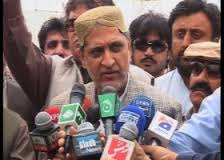
While talking to media persons, PBC President Barrister Ali Zafar has presented a photo of a suspicious person believed to be involved in Quetta hospital blast.
He further said that the photo has been sent by the Quetta Superintendent of Police (SP), claiming the man wearing a black coat was allegedly involved in Quetta hospital blast.
The PBC president also requested the law enforcement agencies to arrest the suspect of the attack. Barrister Ali Zafar also announced that they will observe black day on September 8th against the tragedy.
Pakistan Peoples Party (PPP) senior leader and Advocate Aitzaz Ahsan said that the unity of lawyers show that they are eliminating injustice from the society. He said that protection of the lawyers should be included in government’s priorities.
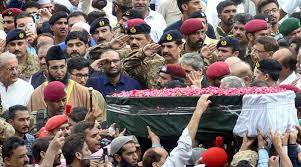
Islamabad, July 10: Abdul Sattar Edhi, the founder of one of Pakistan’s largest public welfare charities, has become the first Pakistani in more than a quarter of a century to be honoured with a state funeral.
Edhi, believed to be in his early nineties, died of kidney failure in a Karachi hospital on Friday night having become increasingly frail in recent years.
Abdul Sattar Edhi runs a sprawling health charity from a Karachi slum, but that doesn’t stop the religious right condemning him for not saying his prayers
The pomp and military ceremony of his funeral at Karachi’s national stadium on Saturday was in stark contrast to the famously humble style of the man who only owned two sets of clothes and lived in a windowless room next to his small office in a Karachi slum.
From there, Edhi and his family ran a massive nationwide enterprise that relies almost entirely on public donations to sustain hundreds of medical centres, maternity wards, orphanages and women’s shelters.
More than 1,200 minivan ambulances ply the country’s roads, always seeming to reach the scene of the country’s frequent terrorist attacks within moments, while thousands of people owe their lives to the Edhi Foundation taking in abandoned babies who otherwise would have been left to die.
Nawaz Sharif, Pakistan’s prime minister, said the country had “lost a great servant of humanity”.
“He was the real manifestation of love for those who were socially vulnerable, impoverished, helpless and poor,” he said. “This loss is irreparable for the people of Pakistan.”
Sharif announced a national day of mourning and a state funeral, the first time anyone has been so honoured since General Zia ul-Haq, the military dictator who died in a plane crash in 1988.
“If anyone deserves to be wrapped in the flag of the nation he served, it is him,” Sharif said.
Although the prime minister remained in London following heart surgery last month, the funeral was attended by most of Pakistan’s ruling elite.
Edhi’s body was wrapped in Pakistan’s green and white flag and honoured with a gun salute by the army. Afterwards he was due to be buried at the Edhi Village, a shelter on the outskirts of the city for the mentally ill, older peaople and abandoned women.
In a final act of modesty, his family said he had insisted on being buried in the clothes he died in. He offered his organs for donation, although only his cornea was healthy enough for transplantation.
As a young man, Edhi first moved to Karachi from Gujarat in India just six days after Pakistan was formed as an independent, Muslim-majority state.
It was in the port city that his charity empire first emerged in the 1950s when, appalled by the suffering he saw around him, he established small drug dispensaries.
In 1957, his efforts shifted up a gear when he established a makeshift hospital to take care of the victims of flu epidemic that had ripped through the city.
He bought his first ambulance in 1965 in the wake of a war with India in which Karachi was bombed. He took it upon himself to collect up body parts of dead civilians and organise dozens of funerals.
“My heart became so hard after that,” he told the Daily Times in 2009. “I made humanity my religion and devoted my life to it.”
Despite its scale and complexity, Edhi and his wife, Biquis, always remained at the helm of the lightly managed organisation, often answering emergency calls himself or heading out in one of his ambulances to the scene of disasters.
that plague Karachi would spare his vehicles emblazoned with the red Edhi lettering.
In a country increasingly afflicted by sectarianism and religious intolerance, Edhi won praise for caring for anyone who needed help, with many Pakistanis arguing he should have been recognised with a Nobel prize.
His open-mindedness earned him the distrust of some hardliners and militant groups that have increasingly sought to set up their own welfare organisations modelled on the Edhi Foundation.
In a 2015 interview with the Guardian, Edhi dismissed his critics on the religious right who have smeared him as an infidel who will not be granted access to heaven. “I will not go to paradise where these type of people go,” he said. “I will go to heaven where the poor and miserable people live.”
Kidnapped Owais Ali Shah (Credit: Indianexpress.com)
ISLAMABAD, June 26: Interior Minister Chaudhry Nisar Ali Khan on Saturday said that the assassination of renowned Qawwal Amjad Sabri and kidnapping of Owais Ali Shah, son of Chief Justice Sindh High Court Sajjad Ali Shah in Karachi, are aimed at creating panic in the port city.
Speaking to Geo News, Khan said that these two incidents did not raise question mark on Karachi operation.
Nisar said he was in touch with all the agencies for the recovery of Barrister Owais Ali Shah.
The minister strongly condemned the killing of Amjad Sabri and said the purpose of Qawwal’s killing was to create panic among the masses.
He was optimistic the security agencies would soon bring to book the murderers of Amjad Sabri.
Sabri was travelling with an associate when two gunmen on a motorcycle opened fire on his car on Wednesday.
He was shot multiple times and pronounced dead by medics at a local hospital where he was taken after the attack.
On Monday, The son of Justice Sajjad Ali Shah was kidnapped by unknown persons in Karachi and the law enforcement agencies seem to be clueless about his whereabouts.
This is not the first high-profile kidnapping in the country. In August 2011, slain governor Punjab’s son Shahbaz Taseer was kidnapped from Lahore by the Taliban. He returned home after four years of torture in captivity in March this year.
Former Prime Minister Yousuf Raza Gilani’s son Ali Haider Gilani was kidnapped from an election rally in Multan in May 2013. He was rescued in an operation in Afghanistan by American forces in May this year.
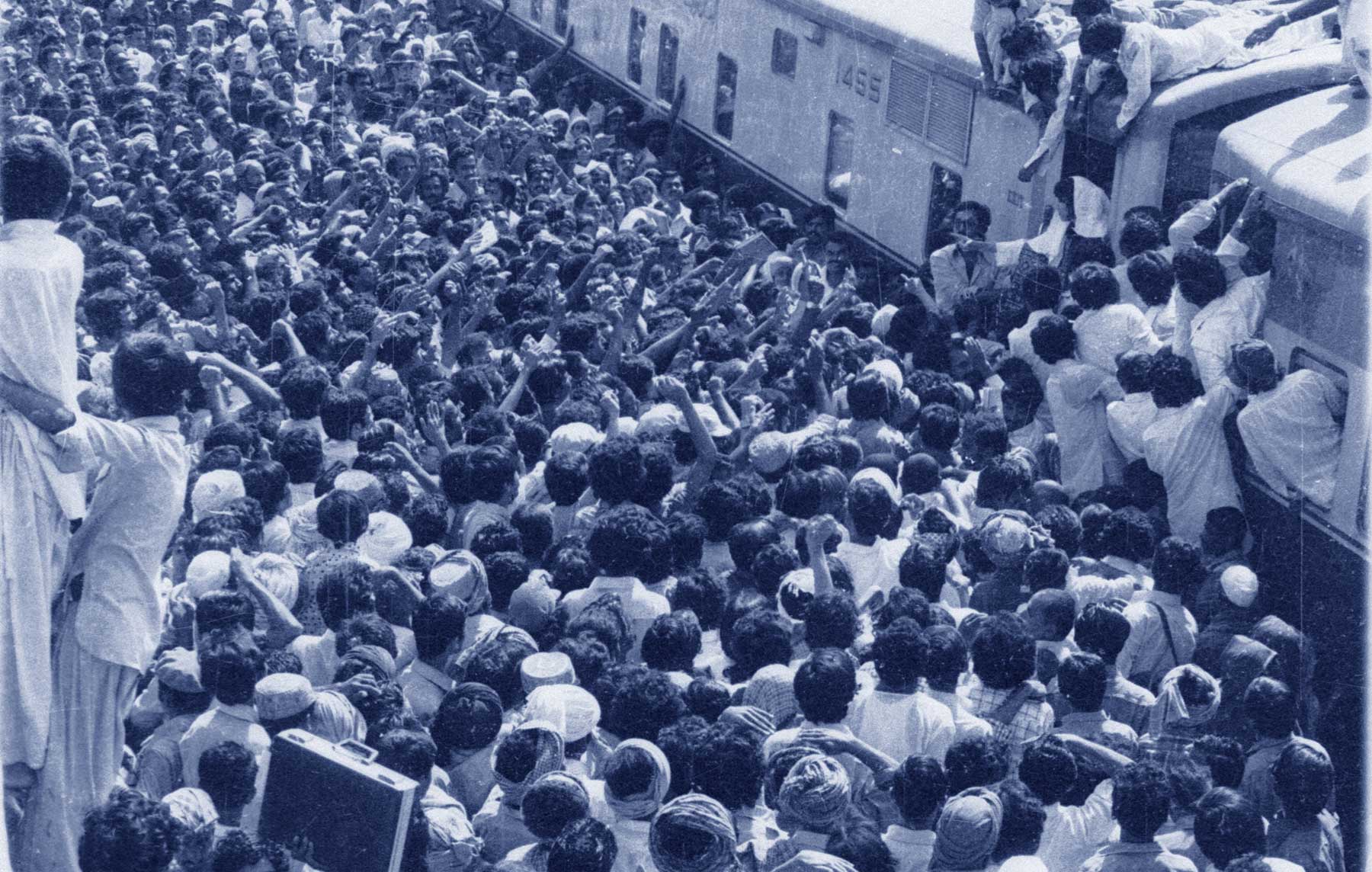
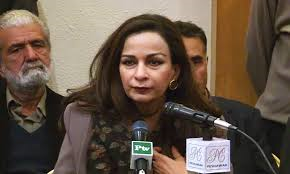

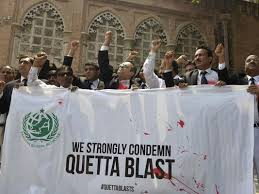
 ISLAMABAD, Aug 22: The Pakistan Bar Council (PBC) has announced boycott from all courts of Pakistan against Quetta hospital suicide blast in which more than 70 lawyers including journalists were killed, 24 News HD reported on Monday.