‘We felt like sitting ducks,’ passenger says of Pakistan airport terrorist attack

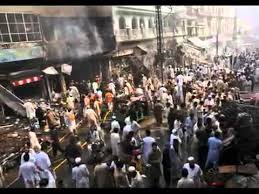
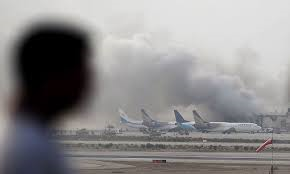
Karachi airport burns (Credit: dawn.com)

Karachi, Pakistan (CNN) — Terrorists entered Karachi’s Jinnah International Airport at two different spots with a big plan: to destroy a group of parked airplanes and “bring down our aviation industry,” according to the Pakistani government.

It was late Sunday night, and the militants were armed with guns, grenades and suicide vests. They went into the cargo area, about a kilometer (0.62 miles) from where commercial planes take off.

In a “heroic” effort, security forces “laid down their lives” to block the terminal and stop the attackers, surrounding them and killing all of them, the prime minister’s office said in a statement.

There were 10 terrorists, military spokesman Maj. Gen. Asim Bajwa said, and two of them detonated suicide vests.

By the time the attack was over, 28 people were dead, including eight members of airport security forces, two Pakistan International Airlines employees and one ranger. Another 24 people were injured, the military said.

The Pakistani Taliban claimed responsibility for the assault on the country’s largest and busiest airport.

Speaking from an undisclosed location, Pakistani Taliban commander Abdullah Bahar said the attack was retaliation for the death of former chief Hakimullah Mehsud, who was killed in a U.S. drone strike in November in North Waziristan.

Bahar warned more attacks will follow.

“As long as we are breathing, our attacks will be continuing ’til the end of our lives,” he vowed.

Fire followed attack

A building caught fire in the attack, but no planes were damaged, Bajwa said. The airport reopened Monday.

Some Pakistani media reported a renewed gun battle at the airport later Monday morning. But officials told CNN the noise was from fire-heated chemical containers exploding.

Still, as a precaution, security forces opened fire, said Ahmad Chinoy of the Citizen’s Police Liaison Committee. He said he was 100% sure there were no militants left in the airport.

Several days ago, Pakistan’s government had warned provincial officials of a possible “high-profile attack on a sensitive or key installation,” said Qaim Ali Shah, chief minister of Sindh province. But the warning, he said, did not mention the airport.

‘We felt like sitting ducks’

Farooq Sattar, a member of parliament, was on a plane at the airport when the attack took place.

“My aircraft was on the tarmac ready to take off when suddenly, from what I understand, a message came to the pilot saying to get off the runway and return to the gate,” Sattar told CNN. “I heard shots and saw smoke.”

“Before the pilot could announce anything, I had text messages blowing up my phone saying ‘Karachi airport under attack.’ We were in the aircraft for three hours, full of fuel. They locked the doors.

“The airport was poorly guarded. It was only due to some airport security personnel that the attack got thwarted and the militants didn’t make it to our part of the airport. Passengers were extremely nervous. They started looking at me for answers.”

“We felt like sitting ducks on the tarmac,” he added.

Two crew members who were on their first ever flight “freaked out,” Sattar said.

History of terror

The Pakistani Taliban, which is formally known as Tehreek-i-Taliban Pakistan (TTP), has long conducted an insurgency against the Pakistani government.

“Their primary target is the Pakistani state and its military,” said Raza Rumi of the Jinnah Institute, a Pakistani think tank.

“It resents the fact that (Pakistan) has an alliance with the West, and it wants Sharia to be imposed in Pakistan.”

The group claimed responsibility for a December 2009 suicide bombing at the United States’ Forward Operating Base Chapman in Khost, Afghanistan.

The attack killed seven U.S. citizens, including five CIA officers and a member of Jordanian intelligence.

The U.S. Justice Department charged Mehsud in 2010 for his alleged involvement in the attack.

Mehsud took over from Baitullah Mehsud, a fellow clan member, in 2009 after the latter was killed in a U.S. drone strike. Four years later, Hakimullah Mehsud suffered the same fate.

More claims and threats

Another TTP member claimed that the Pakistani government has been “abducting and killing innocent people,” and explained why the airport was targeted.

“We chose a location where there would be less civilian and more official casualties,” TTP representative Shahidullah Shahid said.

Shahid warned the group will engage “in a full-out war with the Pakistani state, starting on June 10.”

But “if even now the Pakistani government backs down,” Shahid said, “we are ready to engage in meaningful dialogue.”

Karachi airport attackers were disguised as security workers

More violence

The airport wasn’t the only site of violence in Pakistan on Sunday.

Twin suicide attacks near the border with Iran left 24 people dead, including four terrorists, authorities said. Qambar Dashti, commissioner of the Quetta Division, told CNN two suicide bombers blew themselves up in a hotel where dozens of Shia pilgrims from Iran were staying.

Dashti said 14 out of 18 wounded pilgrims were in critical condition.

Extremist Sunni militant group Jaish el-Islam, a splinter group of Lashkar e Jhangvi, claimed responsibility.

On Monday, while Karachi operated as usual, there was violence in other parts of the country.

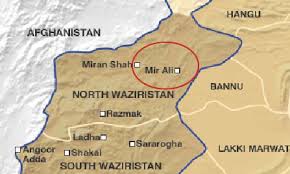
Three soldiers were killed and many others were wounded in a suspected suicide attack at a checkpoint in North Waziristan, military officials said.
Pakistani Military Says It Killed 60 Militants in Raids

North Waziristan bombed (Credit: thenews.com.pk)
North Waziristan bombed
(Credit: thenews.com.pk)

ISLAMABAD, May 21 — The Pakistani military said it killed at least 60 militants, and injured at least 30, in aerial raids on terrorist hide-outs across the North Waziristan tribal region near the Afghan border early Wednesday. Local residents, however, said the dead also included women and children.

The strikes were carried out in retaliation for recent attacks by the Taliban and came a day after Prime Minister Nawaz Sharif and the chief of the army, Gen. Raheel Sharif, met to review the security challenges facing the country.

“Confirmed militant hide-outs were targeted early morning today in North Waziristan through precision aerial strikes,” said a senior security official, who spoke on the condition of anonymity to divulge details of the strikes.

The official said the strikes had been carried out after security forces received intelligence reports that “terrorists involved in recent attacks” in Peshawar and two other areas were “in these hide-outs.”

Another security official said that foreign militants were the main targets of the strikes. “Pakistani militants and foreign militants from Eastern Turkistan Islamic Movement were the targets,” the security official said.

There were unconfirmed reports that two Pakistani militant commanders were killed in the airstrikes. The tribal region that borders Afghanistan in inundated with local and foreign militants, and Pakistani state control is very limited.

The Eastern Turkistan Islamic Movement, also known as the Turkistan Islamic Party, is based in North Waziristan and is made up largely of Turkic-speaking foreign militants including Uzbeks and Muslim Uighurs from the oil-rich northwestern Chinese province of Xinjiang, which has seen an increase in violence recently. China blames the Turkistan Islamic Party for the attacks.

The aerial strikes in North Waziristan came almost two weeks after at least nine soldiers were killed there when a powerful explosion hit a convoy carrying security forces.

Though the military denied there were any civilian casualties in Wednesday’s raid, local tribesmen said that at least 10 civilians were killed in the strikes. The claims could not be independently verified.

The strikes were carried out around 2 a.m. in different parts of Miranshah, a town in the restive North Waziristan tribal region, which has long been a bastion for militant factions.

The strikes prompted the local government to impose a curfew in the area for fear of possible reprisals against security forces.

“In Mosaki village in Mirali, a house came under attack during aerial shelling, killing 10 civilians inside,” Haji Ghulam Khan, a local tribal elder, said by phone.

“Initially, they carried out bombardment through gunship helicopters and jets, followed by intensive artillery shelling,” Mr. Khan said. “Local people are running for their lives towards the nearby hills.”

A resident of Miranshah reached by phone, who asked not to be named, said that the death toll from the airstrikes was around 70, and that the dead included some women and children. He based his claim on contacts with local residents in Datta Khel, near Miranshah.

Phones went dead in most parts of the tribal region after the strikes and there was no independent confirmation of the number of casualties.

This was the second attack since the Pakistani Taliban announced on April 16 that they were ending a 40-day cease-fire. While the military has been eager to use force against the militants, the civilian government has insisted on holding peace talks. The talks grew out of an initiative announced Jan. 29 by Mr. Sharif, who said he would pursue a dialogue with the Taliban despite their attacks and growing calls in Pakistan for military action against them.

But dialogue between the government and the Taliban has faltered in recent weeks as each side has accused the other of not taking the talks seriously. There has been no public contact between Taliban and government representatives since March 26.

“The Taliban are ready for peace talks and very much serious, but the government side is lacking seriousness,” said Maulana Yousaf Shah, a Taliban representative. “At the moment, the government is the main hurdle.”

He said that the interior minister had announced a meeting between the negotiating committees of the government and the Taliban to discuss the prospects of the talks but that “so far nothing has happened.”

Separately, six people were shot dead by unidentified gunmen in southwestern Baluchistan Province, local news media reported.

Armed gunmen forced their way into the house of Abdul Hameed Baloch, a schoolteacher, in Dasht Chot village, about 25 miles (40 kilometers) from Turbat, a small town in the province, and opened fire at 4:30 a.m.

Those killed included two of Mr. Baloch’s brothers.

Baluchistan, a natural resources rich province, has long witnessed a simmering separatist movement, led by Baluch nationalists.

Mosque named after Taseer’s killer

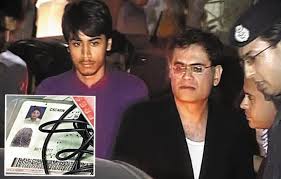
Qadri's assassin is hugged (Credit: visitpak.com)
Qadri’s assassin is hugged
(Credit: visitpak.com)

ISLAMABAD, April 30: In the suburbs of the capital, along the road to the airport, lies Ghori Town, a housing society near Khanna Bridge. This otherwise unassuming neighbourhood, however, has a curious claim to fame and an unexpected link with the man who was convicted of murdering former Punjab governor Salmaan Taseer and is currently awaiting confirmation of his death sentence in prison.

Taseer was shot and killed by Mumtaz Qadri, a member of his own security detail, at the Kohsar Market in Sector F-6 on January 4, 2011. The shooter Qadri has become a divisive figure in Pakistani society. He is hailed as a ‘hero’ by some and denounced as a cold blooded murderer by others. Clerics from the Barelvi school of thought are among those proclaiming Qadri’s ‘heroism’.

Perhaps this is why a mosque in the suburbs of the very city Taseer was killed in, has been named after Mumtaz Hussain Qadri. The mosque is constructed on a 10-marla plot of land, next to a girls’ seminary, the Jamia Rehmania Akbaria Ziaul Binaat. Even though the housing society is not fully developed and several houses in the neighbourhood are still under construction, there are already four mosques, catering to people from different schools of thought, in close proximity to each other.

The mosque’s prayer leader, Mohammad Ashfaq Sabri, told Dawn: “The mosque was built to pay tribute to the services of the man who taught a lesson to a blasphemer,” adding that the name was chosen in consultation with religious scholars and residents of the area.

Sabri said the main prayer hall was constructed by the housing society’s developers, but more storeys are expected to be added, which will be paid for by donations.

But those living in Ghori Town say no one asked them. In fact, several residents Dawn spoke to refused to be named for fear of reprisals.

“I know who Qadri is and what he did. I have a very different opinion of him, but I can’t speak out because I’m afraid something might happen to me or my family,” said one of the mosque’s neighbours.

Another Ghori Town-resident, Mohammad Tufail, said: “Have you ever heard of clerics consulting anyone in the neighbourhood before naming a mosque? But I figure, what’s in a name? We just go there, pray and come back. I don’t want to get involved in the politics of these Maulvis.”

“I cannot comment on whether this is right or wrong. I work to provide for my family and I don’t want religious fundos beating down my door because they don’t like something I said,” said Faisal Rasool, another resident of Ghori Town.Saleem Janjua, who also lives close to the Mumtaz Qadri mosque, offers his own interpretation of events.

“Some religious leaders or the owners of the housing society probably wanted cheap publicity. This will make the mosque popular and fund raising easier,” he told Dawn.

When word of the mosque’s controversial name got out, it triggered a major backlash on social networking sites. The late governor’s daughter Sheherbano Taseer, Oscar winner Sharmeen Obaid-Chinoy, Aseefa Bhutto-Zardari and dozens of others condemned the decision to name the mosque after “a murderer”.

Civil society, politicians expressed concern

“It is clear that the fabric of our society has changed,” Ayesha Siddiqa, a security analyst who has also studied banned organisations, told Dawn.

“Extremism and violence terrify the common man and stop them from speaking out on such issues. There are people who would oppose such a move, but they have no voice,” she said.

Pakistan People’s Party (PPP) Senator Farhatullah Babar also expressed his shock.

“A mosque had been named after a self-confessed murderer. This will not promote peace and harmony in society, only deepen divisions”.


TTP says it has “gifted” a lull in terror in Pakistan

ISLAMABAD, May 2 : Accusing the government of using the dialogue process as a political tool and to increase military operations, the Tehrik-i-Taliban Pakistan (TTP) on Thursday said they did not know who to talk to in Islamabad, as they believed the government had no powers to reach an amicable solution.

In a statement, TTP spokesman Shahidullah Shahid said they did not know whether they should talk to the government or the military.Shahid said talks and war could not go together adding that the Taliban had the right to defend themselves. He said, on the one hand, the government claimed it was interested in the dialogue but, on the other hand, it hurled threats at the Taliban.

He said the army had imposed a war on the people in Babar and Shaktoi areas of South Waziristan in the last two days. He also condemned the police action against the relatives of missing persons in Islamabad and said such a situation could not provide an environment for a meaningful and serious dialogue.

“The TTP has insisted that it is ready to talk in the interest of Islam and the Muslims of Pakistan. But we will not accept that the dialogue is used as a political tool and to pursue war startegy,” he said.

Shahid said the TTP had shown sincerity and seriousness during the talks and gifted a 45-day ceasefire to the people and the country but the government had not shown any seriousness since the talks took off.

He said the Taliban had left it to the people of Pakistan to decide whether a war or talks could go together and asked if it was the responsibility of the Taliban only to make the process successful.

He said the Taliban will not step back from serious and useful talks but would not accept the politics of threats and war.“We are fighting for the supremacy of Sharia and our Mujahideen have the capability to face any difficult situation and know how to give a befitting response to the enemy,” the TTP spokesman said.

Journalists, civil society condemn attack on Hamid Mir

Hamid Mir (Credit: thenews.com.pk)
Hamid Mir
(Credit: thenews.com.pk)

LAHORE, April 21: Journalists, civil society activists and politicians have demanded early arrest of the perpetrators of the attack on anchorperson Hamid Mir, while terming it an attack on the freedom of speech and expression in Pakistan.

A large number of journalists and civil society activists gathered at the Lahore Press Club where they held a protest demonstration after passing a condemnation resolution. Hamid Mir sustained three bullet injuries in an attack on Faisal Avenue in Karachi by four unidentified gunmen, on Saturday. Doctors said one bullet pierced his intestine while two others wounded his leg and pelvic area, however he was out of danger.

The Lahore Press Club condemnation resolution and protest rally was joined by Pakistan Tehreek-e-Insaf Punjab President Ejaz Chaudhry, MNA Shafqat Mahmood, Andleeb Abbas, Punjab Federation of Union of Journalists leaders Rana Azeem, Afzal Butt and other office-bearers. LPC President Arshad Ansari, Afzaal Talib were also present there. Senior journalists including Geo Lahore bureau chief Khawar Naeem Hashmi and other journalist from Jang Group also joined the demonstration.

Civil society activists including former chairperson of Human Rights Commission of Pakistan and former President Supreme Court Bar Association Asma Jehangir, Hina Gilani, IA Rehman, Abid Hassan Manto, Imtiaz Aalam, Jungo Mohin, Mehmal Sarfraz also participated in the protest rally and demanded early arrest of culprits involved in attack on Hamid Mir besides arrest of their mastermind. The protestors were holding various placards inscribed with slogan in support of Hamid Mir and press freedom.

LPC president Arshad Ansari said that the journalist community would boycott covergare of the government if proper and quick inquiry was not made and justice was denied. Khawar Naeem Hashmi said three bullets cannot stop him (Hamid Mir) from speaking truth. “Our fight which is continue from past will continue for the sake of truth and for the country.”

Earlier, a condemnation resolution was passed in LPC demanding a transparent investigation and bringing the culprits to the book. Separately, Opposition Leader in National Assembly Khursheed Shah, while talking to media at Lahore airport condemned attack on Hamid Mir and urged the government to hold a transparent probe into the incident. PU vice chancellor Professor Dr Mujahid Kamran, Punjab University Academic Staff Association president Ihsan Sharif and secretary Javed Sami have also condemned the attack.

PU Institute of Communication Studies, the alma mater of Hamid Mir, where his father Waris Mir also served as chairman, has prayed for the early recovery of their journalists. ICS teachers and students have demanded the government to book the culprits at the earliest possible.

Punjab Chief Minister Muhammad Shahbaz Sharif has said the attack on a senior journalist Hamid Mir is tragic and highly condemnable. He prayed for early recovery of Hamid Mir. He was talking to media after inaugurating Walton Flyover Sunday.

The chief minister prayed that Hamid Mir take up his journalistic responsibilities again. He said that attack on Hamid Mir was an attack on freedom of press. He said that the federal government would conduct inquiry into the incident and ensure punishment to the culprits. He said that the elements involved in this heinous act will soon be apprehended and brought to justice so that no one could dare attack journalists again.

Federal Information Minister Pervauz Rasheed while talking to media at Lahore airport said as per a directive of Prime minister a committee was being constituted to conduct a transparent probe into the incident. He expressed his complete solidarity with the Hamid Mir and his family as well as the journalists community.

The attack on Hamid Mir has brough large-scale criticism of the government as well as the law enforcement agencies by the Pakistani and foreign media. India media has launched a campaign against ISI quoting a statement of Amir Mir, the brother of Hamid Mir, who is also an investigative journalist.

An ISI spokesman has condemned the attack on Mir and the allegations against the ISI: “The spokesman has condemned the incident of firing on senior anchor Hamid Mir, prayed for his wellbeing and quick recovery. The spokesman said that an independent inquiry must immediately be carried out to ascertain the facts.

A Case of Exploding Guavas
The Killing and Crippling of Innocents in Islamabad

Islamabad fruit market (Credit: article.wn.com)
Islamabad fruit market
(Credit: article.wn.com)

The capital of the republic is hit. Perhaps, the attack on the wholesale market of fruits and vegetables the other day in Islamabad is the biggest terrorist attack in the capital since the massive bombing of the Marriott Hotel some years ago.

According to initial reports, explosives were packed into a crate of guavas. It took more than 20 lives instantly, and about the same number of people is told to be in a critical condition. We don’t know yet how many will survive and whether they will ever be able to lead a normal life. More than a hundred are injured and hospitalised. We don’t know how many will remain able-bodied afterward and whether it will be possible for them to work again to support their families.

No act of violence is welcome. But deplorable as it may be, attacking those who are in power and seen as making decisions that go against you, or killing those who are involved in a physical battle against you can be understood at one level. Killing innocent citizens in the name of an ideology, faith, liberation movement or political cause amounts to sheer callousness. It is a blatant crime committed against common people. In Pakistan, not only do terrorists of various hues and colours commit these crimes with complete impunity, the state collapses on a daily basis to protect the lives, liberties and properties of its citizens.

But what property is to be protected for a woman or a man belonging to the working class in Pakistan? It is only her or his life. S/he has a simple and difficult life to lead, perpetually struggling to support herself and the kith and kin in order to survive, and only enjoying the liberty to move to the workplace and be back home. Even that is being taken away. What hurts more is the pride terrorist outfits would take in killing the most ordinary women and men, seeing them as soft targets. What causes much greater pain is the inability of the Pakistani state to save its citizens.

As citizens, we will not hold the militant outfits and terror groups responsible for inflicting death, pain and suffering on the people of Pakistan. It is our state and successive governments that are responsible for their wrong actions in the past or concerted inaction at present, for their continuous failure to protect us. Not to mention their massive incompetence and failure to help all citizens lead a decent, prosperous and honourable life.

Let us have a look at the profile of those killed, injured or maimed in the wholesale market of Islamabad. Most of them must be fruit and vegetable vendors, hardly making their ends meet, or common citizens who think they will save a few rupees if they buy fruits and vegetables from wholesalers than retailers.

We do not know yet who perpetrated this attack as the claim made by a Baloch separatist outfit was rubbished by the interior ministry. Even if the Baloch separatists have made a rightful claim, does that particular group of Baloch secessionists think that the guava-sellers are consulted in by the federation while making policy or by the FC when it acts in Kalat, Khuzdar or Turbat? Has eliminating or pushing out barbers, milk sellers, schoolteachers, construction labourers, carpenters and masons from Balochistan helped the cause in anyway in the recent past?

Many of us believe that Balochistan as a province and the Baloch as a people have been denied their rights in our federation for too long. We stand with them in their struggle for realisation of their economic, political and cultural rights. We stand with them in asking for an immediate end to forced disappearances and military action by the Pakistani state. We condemn mass graves found anywhere. We do not accept the view of the powers that be, which squarely place the blame on Baloch tribal chieftains for the poverty and dispossession that Balochistan is subjected to.

Again, it was the failure of our state in meeting the basic needs and ensuring the fundamental rights of its Baloch citizens, not the responsibility of the sardars – many of who collaborated with the state anyway. We recognise that for decades when chappatis were baked in Lahore on the stoves fired by the natural gas piped from Balochistan and the industry in Karachi used natural gas supplied from and metals extracted from the ores in Balochistan, the province and its people neither had gas to cook with or to heat up their homes with during the harsh winters.

We also know that schools were not built, hospitals were not established, roads were not paved and industry was not set up in areas of Balochistan that fed the Pakistani elite and middle class in other provinces and the civil and military institutions they dominate. However, it is time for the disgruntled Baloch to ask how the killing of ordinary citizens and those belonging to the working class anywhere serve their cause. Will that not escalate violence in the province and make it increasingly difficult for their genuine advocates to plead their case?

The TTP has also denied its involvement but it is now increasingly obvious to most that the outfit is not necessarily a strong monolith. There may be some from the ranks of its coalition or outsiders who were involved even if the core was not. We don’t know. But if fruit and vegetable vendors are attacked in the name of faith or an ideology by anyone, one must ask if any of these people killed or injured participated in making decisions about their country playing a part in the war on terror in Afghanistan or in the tribal regions of Pakistan.

How many cauliflower sellers on the streets of Rawalpindi and Islamabad were consulted before the Swat operation or before making air sorties in Fata? Did they ever exist for those planning drone strikes in our tribal regions? Did they help the Americans smoke out Saddam Hussein in Iraq or get Osama bin Laden trapped in his hideout near Abbottabad?

As far as the state and its ruling elite are concerned, they need to be reminded again and again what Hazrat Ali once said. “A profane state or government can surely survive but a cruel one never can.” What is meted out to them is not what the already struggling working and lower middle classes of Pakistan deserve. For them, prosperity is far away. The state is not even able to defend their right to life.

Knowing how our country and its economy works for its less privileged classes, one such attack will push hundreds of families in the throes of abject poverty. Doling out a couple of hundred thousand rupees – at the most – for each casualty will serve no purpose either. This money will be spent in a few weeks if they have to nurse the injured or else used to pay off a part of the debt such families are normally trapped in.

By killing a cobbler in the Nazimabad neighbourhood of Karachi for being a Pakhtun, an office clerk in the Baldia neighbourhood of the same city for being a Mohajir, a student leader in Khuzdar for being a Baloch rights activist, an unemployed political activist in Ghotki for being a Sindhi, a primary schoolteacher in Mastung for being a Punjabi, a shopkeeper in Quetta for being Shia, a worshipper in Lahore for being Ahmadi, a labourer in a church in Peshawar for being Christian and a fruit vendor in Islamabad for a reason still unknown, nothing will be achieved. But the state, in no uncertain terms, will dwindle fast.

Women Correspondents Shot Reporting Election in Afghanistan

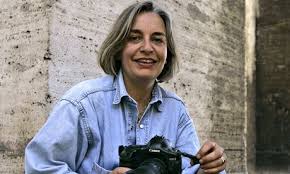
Anja Niedringhaus (Credit: theguardian.uk.com)
Anja Niedringhaus
(Credit: theguardian.uk.com)

KABUL, April 4— For the two seasoned war correspondents, it was not an unusually risky trip. Getting out to see Afghanistan up close was what Anja Niedringhaus, a Pulitzer Prize-winning photographer for The Associated Press, and Kathy Gannon, a veteran reporter for the news agency, did best.

The eastern province of Khost, where Ms. Niedringhaus and Ms. Gannon traveled to cover Afghanistan’s presidential election on Saturday, is considered dangerous, still plagued by regular Taliban attacks. But they had carefully plotted their trip, arranging to move beyond the relatively safe confines of the provincial capital under the protection of Afghan Army troops and the police.

Yet it was those precautions that proved fatal for Ms. Niedringhaus on Friday morning. As she and Ms. Gannon waited outside a government compound, a police commander walked up to their idling car, looked in at the two women in the back seat, and then shouted “Allahu akbar!” — God is great — and opened fire with an AK-47, witnesses and The Associated Press said.

Ms. Niedringhaus was killed instantly, and Ms. Gannon, shot three times in the wrist and shoulder, was severely wounded. In the span of a few muzzle flashes, the two women, who had covered the war since it began in 2001, became victims of another attack that blurred friend and foe.

For both Afghans and Westerners, the list of adversaries has expanded beyond the resilient Taliban, who have staged a series of attacks in an attempt to disrupt the election. Afghan soldiers and the police have repeatedly turned on one another and their foreign allies. The squabbling between President Hamid Karzai and American officials has grown into a deep-seated animosity.

At the same time, Afghans have seen scores of their fellow citizens killed by errant American airstrikes. And even as the United States pushes for a long-term security deal that would allow it to keep troops here beyond the end of this year, it does so with the understanding that its forces will be largely hidden away behind the high walls of fortified bases.

The dwindling number of foreigners here already live that way, frightened by a recent surge in attacks aimed at Western civilians.

Ms. Niedringhaus, 48, and Ms. Gannon, 60, had no desire to hunker down. The focus of their work over the past dozen years has been putting a human face on the suffering inflicted by the war. As a pair, they often traveled to remote corners of Afghanistan to report articles, and Ms. Niedringhaus also spent significant time embedded with coalition forces.

Many of their colleagues noted sadly that they were attacked by a police officer who appeared to have seen in the back seat of the journalists’ Toyota Corolla a pair of anonymous Westerners on whom to vent his rage. If Afghans have a dominant complaint about the West, it is that they are often treated as faceless, dismissed as nonentities by the people who say they are here to help.

That was not the case with Ms. Niedringhaus and Ms. Gannon.

In this March 30, 2003 photo by Anja Niedringhaus, Iraqi women lined up for a security check by British soldiers on the outskirts of Basra. Credit Anja Niedringhaus/Associated Press

“They just seemed so bravely willing to go into these kinds of situations and get to the places that you needed to get to tell stories that weren’t being told,” said Heidi Vogt, a reporter who worked for The A.P. in Afghanistan until last year.

“They’re the last two people you’d expect this to happen to,” she added. “It felt like they had a little protective force field around them.”

Ms. Niedringhaus, a German citizen who was based in Geneva, first came to Afghanistan after joining The A.P. in 2002, and she quickly formed a partnership with Ms. Gannon. They were among a band of female photographers and correspondents who persevered through many years of conflict in Iraq as well as in Afghanistan.

In the process, they helped redefine traditional notions of war reporting. Even as they covered the battlefield, they also focused attention on the human impact of conflicts known for their random, unpredictable violence against civilians.

Ms. Niedringhaus’s fascination with Afghanistan continued to grow even as she was pulled away to other trouble spots, including Iraq, where she was part of a team of A.P. photographers who won a Pulitzer Prize in 2005.

“If I’d told her, ‘You don’t need to do this anymore, you’ve earned your spurs, leave it to another generation,’ ” said Tony Hicks, a photo editor at The A.P., “the response would have been a series of expletives, then laughing and another pint.”

But, Mr. Hicks pointed out, Ms. Niedringhaus was equally at home at major sports events and other less high-stakes diversions, such as the Geneva auto show.

Hundreds of U.S. Marines gathered at Camp Commando in Kuwait in 2002. Credit Anja Niedringhaus/Associated Press

She was on the finish lines when Usain Bolt, the Jamaican sprinter, broke the world record for the 100-meter dash. And “she loved Wimbledon,” he said. “It was almost her second home.”

Ms. Gannon, a Canadian who is a senior writer for The A.P., arrived in Peshawar, Pakistan, in 1986 when the Afghan mujahedeen were battling the forces of the Soviet Union. She went on to serve as The A.P.’s bureau chief in Islamabad, and she was one of the few Western reporters whom the Taliban permitted to work in Kabul when they ruled Afghanistan.

Ms. Gannon was in Kabul during the American invasion in 2001, and she wrote of covering the Taliban’s last days in the city with her Afghan colleague, Amir Shah. The two cowered in the basement of a house during air raids, often working by candlelight or lantern. They tried to avoid members of Al Qaeda, who were much more hostile than the Taliban. When a bomb struck nearby, she was thrown across the room — and then went straight back to work.

“She knows Afghanistan very well,” said Mr. Shah, an A.P. reporter in Kabul, according to an article by the news agency. “She knows the culture of the people.”

But the divide between Afghans and Westerners has been deepening for years, and so-called insider attacks in which Afghan security forces turn on their coalition counterparts or one another have been the most visible symptom. Afghan and Western officials say they believe that most of the attacks are driven by personal animosity or anger about the war in Afghanistan, where many have come to view foreign forces as occupiers.

Though Western civilians working with the coalition have at times been killed in such attacks, the shooting on Friday was believed to be the first time an Afghan police officer had intentionally killed a foreign journalist.

Afghan security officials said they believed that the shooting was an opportunistic attack, not the work of the Taliban, who offered no comment.

A Marine on his way to pick up food supplies in June, 2001. Credit Anja Niedringhaus/Associated Press

The police commander, whom officials identified as Naqibullah, 50, was known for his anti-Western views, one official said. The officials did not believe he had advance notice that Ms. Niedringhaus or Ms. Gannon was headed his way.

The two spent Thursday night at the compound of the provincial governor in Khost, and they left on Friday morning with a convoy of election workers delivering ballots to an outlying area in the Tanai district, The A.P. and Afghan officials said.

The convoy was protected by the Afghan police, soldiers and operatives from the National Directorate of Security, Afghanistan’s main intelligence agency, said Mubarez Zadran, a spokesman for the provincial government. Ms. Niedringhaus and Ms. Gannon were in their own car, traveling with a driver and an Afghan freelance journalist who was working with the news agency.

Mr. Naqibullah, the police commander, surrendered to other officers immediately after shooting the journalists and was arrested.

Ms. Gannon was taken to a hospital in Khost. She underwent surgery before being evacuated to one of the main NATO bases in the country, where there is a hospital equipped to handle severe battlefield trauma. She was said to be in stable condition.

Yet even as Friday’s shooting provided a stark reminder of how broader tensions can set off violence at the most personal level, its aftermath also highlighted the bonds between old friends and strangers alike, be they Afghans or foreigners.

Aides to Mr. Karzai, who has known Ms. Gannon for years, said he tried to get her on the phone to see she how she was doing after he heard about the attack. He later spoke with her husband, and his office then put out a statement condemning the attack.

The doctor who first treated Ms. Gannon, Muhammad Shah, was distressed by the shooting.

“Not only me, but all Afghans are disappointed and sorry for this loss of life,” he said by phone Friday night from Khost Provincial Hospital, between operations. “She was a guest here in Afghanistan, a foreigner.”

Matthew Rosenberg reported from Kabul, and Farooq Jan Mangal from Khost Province, Afghanistan.

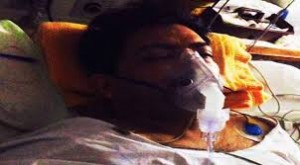
Raza Rumi Narrowly Escapes Death after Hosting TV Show
Driver Killed in Attack as Express Tribune is Targeted Again

Raza after attack (Credit: awampk.com)
Raza after attack
(Credit: awampk.com)

Finally, I countenanced what I had been dreading for quite some time. Journalists and media houses being under threat is a well-known story in conflict-ridden Pakistan. I had also heard about my name being on a few hit-lists but I thought these were tactics to scare dissenters and independent voices. But this was obviously an incorrect assessment of the situation.

On Friday night, when I had planned to visit Data Darbar after my television show, my car was attacked by “unknown” (a euphemism for lethal terror outfits) assailants. The minute I heard the first bullet, the Darwinian instinct made me duck under and I chose to lie on the back of the car.

This near death experience with bullets flying over me and shattered window glass falling over me reminded me of the way my own country was turning into a laboratory of violence. Worse, that when I saved myself, it was not without a price. A young man, who had been working as my driver for sometime, was almost dead. I stood on a busy road asking for help and not a single car stopped.

A crowd had gathered and I was seeking their assistance almost like someone in a hysterical sub-continental film. The nearest hospital was a private enterprise, which initially refused to treat all three of us. I had to protest, after begging on the street and then seeking emergency medical aid. Suddenly, all that afflicts Pakistan became clear: the violence, the impunity for murderers, the failing values of a society and privatisation of essential public services.

Within minutes, my driver was declared dead, my wounds were cleaned and a third victim of barbarity struggled with a fast receding blood count. Thankfully, officers from the Punjab Police were helpful and enabled me to sort out things. This was harrowing and I became an object of all that I have condemned in recent years.

I am now at a safe location, unable to move out and have been told that my case is exceptional with six men — most armed — had attempted to eliminate me and they failed. And that the security agencies can only protect me if I remain locked up in a “safe” location.

So what is my fault, I have been wondering? I am a relatively small fry in the media and opinion industry. I am a recent entrant in the mass (electronic) media, but my views, I am told, are dangerous and invite trouble. So, I wish to ask my well-wishers the following questions: is raising the issue of minority rights unacceptable? Is demanding the inclusion of Jinnah’s August 11 speech in our Constitution and state behaviour unacceptable?

I have written a book on the shared history of India and Pakistan and this irked some. I have argued for rational engagement with the West and the outside world and that is not kosher. I reject conspiracy theories as I prefer reason over totem and this does not fit in a mindscape that considers the outside, external enemies.

Pakistan’s journalists face the oddest of challenges. They are being coerced into silence or singing praises of extremists and advocating legitimacy for their operations. Pakistan’s politicians have almost given up, as their private and public statements are at variance and they have accepted that this “new Pakistan” of fear, threats and unpunished violence is what they have to deal with.

I also know that I am not alone. There are dozens of other voices that have to be silenced by some quarters. These voices are a threat as they stand by civilian victims of terror and shun attacks on our security forces. These are voices, which also refuse to make martyrs out of terrorists. And they also hold that the greatest blasphemy is undermining humanity and using faith for spreading hatred.

The choice for me is stark. I am not willing to accept death as an option. Nor am I going to accept forced silence. I am grateful to all those who have shown support for my plight.

But it would be far more important if our collective outrage turns into public pressure to change the direction of the state and stop it from committing hara-kiri at the altar of a fabricated ideology or regional ambitions. There are no good or bad extremists. And there can be no justification for any form of violence by private actors. Who else would know, if not me?

I am haunted by the fact that a precious life has been lost while some people wanted to target me. More than that, I am worried that there may be many more lives at risk. I am not too hopeful if the current set of federal and provincial governments would deliver on security and public safety.

There is little or no will to tackle the camel that has entered the Pakistani tent and is displacing reason and humanity. Yet, there is no other recourse. So I appeal to the government to provide me security and not let me remain a victim of an ideology asserted with bullets and bombers.

Published in The Express Tribune, March 30th, 2014.

Taliban Tentacles Fasten Grip around Karachi

Taliban Penetrate Karachi (Credit: onlinewallstreetjournal.com)
Taliban Penetrate Karachi
(Credit: onlinewallstreetjournal.com)

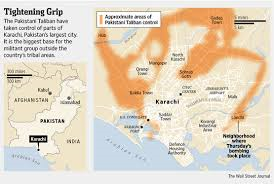
KARACHI, Feb 2014 — The Pakistani Taliban have tightened their grip over the country’s commercial hub, officials and residents said, despite a five-month government crackdown here.

On Thursday, tentative peace talks with the government were thrown into disarray when the militants claimed responsibility for a roadside bombing that killed at least 12 police officers when the bus taking them to duty was destroyed near the city’s southeastern Landhi neighborhood, an area the Taliban dominate.

Karachi is likely to pay a steeper price if efforts by Prime Minister Nawaz Sharif’s government to forge a peace deal with the al Qaeda affiliate’s leadership in tribal areas collapse and a military operation is launched there.

“If the peace talks fail, we fear that a big terrorism wave will hit Karachi,” said Raja Umar Khattab, a senior officer in the counterterrorism Crime Investigation Department of the Karachi police.

The Pakistani Taliban are a national threat, with Karachi providing the group a vital financial lifeline. Money raised in Karachi from extortion, land-grabbing, kidnapping and robberies is sent to the group’s leadership in the tribal areas along the Afghan border, security officials said.

The January assassination of Karachi’s most prominent counterterrorism police officer, Chaudhry Aslam, showcased the militants’ reach and had a chilling effect on the police force, officers said.

“Everyone now is at a loss about who will step into Chaudhry Aslam’s shoes,” said Omar Shahid Hamid, a senior counterterrorism officer now on leave. “He had become a symbol, someone who is standing up to [Tehreek-e-Taliban Pakistan]

In January, the militant group attacked police officers, shot and killed three journalists, repeatedly bombed paramilitary Rangers who are helping carry out the crackdown, gunned down three polio-vaccination workers, and slit the throats of six devotees visiting a shrine. Karachi police said 27 officers were killed in January, after 168 were killed last year.

Mr. Sharif, concerned that his economic-revival plans would be undermined by spreading mayhem, initiated the security operation in September. Karachi, a fast-growing city of at least 20 million, has a huge industrial base, the country’s only major port and is the nation’s center of banking and finance.

Some officers said they fear local political support is fading for the Karachi operation, which they view as a last chance to regain control of the city from TTP and other militias. The operation’s implementation depends largely on the Sindh provincial government, which is run by the opposition Pakistan Peoples Party, and which controls Karachi’s police. There are signs of tension between the Rangers, who answer to Islamabad, and the provincial government, which is based in Karachi, security officials and politicians said.

“This is a difficult path,” said Interior Minister Chaudhry Nisar Ali Khan, visiting Karachi on Thursday. “But, God willing, we will bring peace back to Karachi.”

Ahmed Chinoy, head of the Citizens Police Liaison Committee, a statutory body that works with the police to reduce crime, said parts of Karachi were still too dangerous for regular patrols, while the crackdown targeted regular crime. “While the focus of the operation was on other crimes, the militants got breathing space and took advantage.”


Last year, five different police chiefs served Karachi, disrupting the battle against crime. The current chief, Shahid Hayat, said that at any given time, he had about 7,000 officers available to be deployed on the streets, out of a total force strength of 27,000—9,000 officers are kept on personal security duty for politicians and other officials.

It is only in recent weeks, he added, that the operation has shifted focus to jihadi groups such as TTP.

“I’m being asked to control Karachi with such small numbers of police,” said Mr. Hayat. “Policemen are being killed day in, day out. But we’re still fighting.”

More than 13,000 people have been arrested in the sweep since September, in more than 10,000 raids by police and the paramilitary Rangers force, the provincial Sindh government said. But officials and residents said it has left largely untouched the poor outlying neighborhoods that remain under TTP control, encircling the city, including one adjacent to the new U.S. Consulate compound.

TTP is the most aggressive armed group operating in multiethnic Karachi, alongside the ethnic Baluch gangs in Lyari, and the Muttahida Qaumi Movement, a party that represents the descendants of Muslim migrants from current India, and that has traditionally dominated Karachi politics.

The Karachi security operation led to the arrest of just 63 TTP members through the end of January, police said. That compared with the arrest of 296 people affiliated with the MQM, 101 with links to the Awami National Party—a secular Pashtun political party—and 171 members of Lyari gangs.

Sharfuddin Memon, the adviser to the Sindh provincial chief minister on security issues, said the operation had led to a 50% drop in assassinations and kidnapping for ransom in the city. He said police “morale is high” but the conviction rate for serious crimes is just 5%.

“There has been an impact from the operation, but if we don’t sustain it, we are in trouble,” said Mr. Memon.

Research by The Wall Street Journal, based on conversations with security officials and urban planners, shows TTP still control or dominate about 470 square miles of Karachi, or nearly a third of its area, where at least 2.5 million people live.

TTP’s sway in Karachi extends right up to Saddar—the city center—and into areas such as Sultanabad, a ramshackle community next to the new U.S. Consulate compound.

These are districts with a majority population of Pashtuns, the same ethnic group as TTP’s leadership. These areas that encircle the city include Baldia and the Sindh Industrial Trading Estate to the west and Gadap in the north. Residents in these areas said TTP’s hold had gotten stronger over the past year.

“There’s been no action against the main body of the TTP, just against some smaller factions,” said Khawaja Izharul Hassan, a provincial MQM lawmaker.

In addition to the main TTP faction from the Mehsud tribe of South Waziristan in the tribal areas, long established in Karachi, the city is increasingly plagued by another TTP faction from the Mohmand tribal area, police officers said, along with TTP Swat.

Islamist militants also have influence over some non-Pashtun districts of the city, such as Lyari in the southwest where TTP ally Lashkar-e-Jhangvi has a base. TTP has an ability to stage attacks across Karachi.

TTP dominates 33 of Karachi’s 178 administrative units—known as union councils— security officials said. These tend to be the larger, peripheral, districts, with ever expanding shanty settlements that eat into the surrounding desert. The militants are also now getting more educated recruits, including non-Pashtuns, and spreading to neighboring areas outside Karachi, including Hub to the west and Jamshoro to the northeast.

In the areas it controls, TTP is levying a tax on residents and businesses, said a businessman in Sohrab Goth, a Taliban-run neighborhood just north of the city center.

The militant group has set up courts in neighborhoods to resolve disputes, which give written judgments, handling matters that include disagreements over land ownership and regulating levels of theft from power lines that they allow, residents said.

“The Taliban milk money from their own communities,” the businessman said. “They have calculated the worth of every person here.”

For instance, on a monthly income of 40,000 rupees ($380), TTP takes a levy of 1,000 rupees. Concentrate blocks made for use in construction—a major business in the Pashtun areas—are sold for 18 rupees each, of which three rupees goes to the Taliban. The businessman said TTP’s hold had hardened over the past year.

“The Taliban have complete control of Karachi,” said Bashir Jan, a senior member of the Awami National Party, the main secular Pashtun political party in the city. “They can go anywhere and do what they want.”

Gas shortage after blasts brings misery to Punjab

Gas pipelines to Punjab (Credit: bbc.co.uk)
Gas pipelines to Punjab
(Credit: bbc.co.uk)

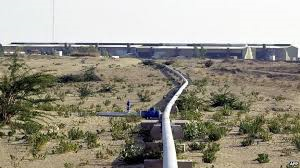
LAHORE, Feb 10: Civic, industrial and commercial activities almost came to a halt as most areas of Punjab passed Monday without gas due to an explosion in three main pipelines in Rahimyar Khan the previous day. Gas authorities say the situation will start improving from Tuesday (today).

“It is perhaps the worst-ever gas pipeline blast in Punjab as it caused over 45 per cent gas shortfall (700mmcfd) in the 1650mmcfd quota allocated for the province in winter. Before the incident, 950mmcfd was flowing in the blown-up pipelines,” Minister for Petroleum and Natural Resources Shahid Khaqan Abbasi told Dawn on Monday.

He said SNGPL teams had started repair work and hoped that supply to domestic consumers would be restored by Tuesday afternoon and that to industry by Wednesday afternoon.

He said the gas pipelines of 18-, 42- and 36-inch diameter had been damaged by the blasts, but luckily a 24-inch pipeline remained safe. This enabled the SNGPL to provide gas to domestic consumers partially on Monday. “However, most domestic consumers are either facing extreme low gas pressure or getting no gas,” Mr Abbasi said.

He said he had asked an additional secretary of the ministry to hold an inquiry into the blast. Rahimyar Khan District Police Officer Sohail Zafar Chattha said initial police findings suggested that the blasts might have been caused by gas leakage. He said police had collected some metal parts from the site and sent them to a laboratory for analysis. Police will be in a position to say whether it was a terrorist activity or accident only after receiving a report from the laboratory.

Mr Chattha said police had found an IED (improvised explosive device) in the same site a month ago. “We gave a cash award of Rs10,000 to the man who provided the information about presence of the IED.”

He said police had recently provided SNGPL security guards to protect its pipelines and other installations, but the company was required to hire its own guards.

Life was badly affected in Lahore, Faisalabad, Multan, Sargodha, Sahiwal and other towns and cities in the province.

In Lahore, the situation was miserable as a majority of people, including schoolchildren, left homes without having breakfast. There was no gas for commercial ovens (Tandoor), leaving the people with no option but to arrange food from bakeries.

People were also seen either buying firewood or LPG cylinders for cooking.

“You cannot imagine how we spent the whole day. After sending my children to school and husband to his office on empty stomach, I myself came out to purchase some wood to prepare lunch,” said Sakina of Rehmanpura (Ichra).

Aqeel Ahmad, of Wapda Town, said he burnt some waste furniture wood lying at his home to help his wife cook something.

Saleem Shahid adds from Quetta: The banned Baloch Republican Army has claimed responsibility for the blasts in the gas pipelines in Rahimyar Khan. Calling journalists from an unidentified place on Monday, its spokesman Sarbaz Baloch said the BRA had blown up the pipelines because these were supplying gas to Punjab from the Sui gas field in Dera Bugti district, Balochistan.