Missing Persons found in Mass Graves in Balochistan

Baloch youth picked up (Credit: balochistanhcrblogspot.com)
Baloch youth picked up
(Credit: balochistanhcrblogspot.com)

KHUZDAR – Khuzdar administration on Monday exhumed at least 11 more decomposed bodies from a mass grave discovered in Mayy area of Tutak, about 50-kilometre from Khuzdar city. The bodies are too decomposed to be recognised. A couple of days earlier on Sunday, two bodies were recovered from same area.

“At least 11 decomposed bodies were brought to District Headquarters Hospital Khuzdar,” said medics at hospital adding, “The bodies were decomposed beyond recognition like the two discovered earlier in Tutak, a desolate place far away from the main population centre.”

Total 13 bodies have so far been recovered and all of them were buried in Police Line graveyard in Khuzdar in presence of law enforcing agencies.

Deputy Commissioner Khuzdar Waheed Shah said that Balochistan levies personnel have again started digging the area. The identity of the bodies could not be ascertained; however, he added, that DNA test might help determine the identities.

“There could be few more, as we saw human remains,” said an official on the condition of anonymity. Presence of vulture and other wild birds attracted the attention of the shepherds who informed the district administration about the mass grave.

Baloch nationalist parties and relatives of the missing persons claimed that the victims could have been abducted and killed in official custody. “We fear that these bodies belonged to missing persons. Judiciary and Human Rights Watch should press the government to carryout a transparent investigation into this humanitarian issue,” said nationalists.

A shutter-down strike was observed in different Baloch-dominated districts on the call of Baloch National Front. The strike was observed in Turbat, Panjgour, Nushki, Kalat, Mastung and others area of the province where shops and markets remained shut.
Meanwhile, the Human Rights Commission of Pakistan voiced its serious concern over the discovery of decomposed bodies in Khuzdar district, calling upon the federal and Balochistan government to urgently establish identity of the deceased and their killers.

In letters written to the federal interior minister and Balochistan chief minister, the HRCP noted that the bodies were far too decomposed to be recognisable. So far there was no information about who the deceased were and who killed them. Initial reports suggested that the persons had died around a month earlier and parts of their bodies had been eaten by wild animals.

According to reports and eye-witness accounts, there was a camp in the neighbourhood where some proxy gangs operated against the tribesmen who were not supporting them. It is more possible that the opponents were picked up, killed and dumped in the mass grave as a part of policy.

The HRCP demanded that a thorough probe must be initiated and all efforts made to establish the facts in the case and bring the perpetrators to justice. If necessary, DNA tests should be conducted at the earliest to identity the deceased, it added.
“Such an investigation is all the more vital in view of the spate of violence, targeted killings and enforced disappearance and dumping of dead bodies of missing persons in Balochistan in recent years. The HRCP also called upon the government to facilitate relatives of missing persons who are keen to learn if the deceased included their dear ones.

The HRCP also urged the federal and provincial governments to find a solution to the violence, lawlessness and killings in Balochistan and stressed that such a solution must respect due process and human rights and that emphasis should be placed on finding political means to address the challenges.
US Puts Lashkar-i-Jhangvi chief on Global Terror List

LEJ chief Malik Ishaq (Credit: pakistantoday.com)
LEJ chief Malik Ishaq
(Credit: pakistantoday.com)

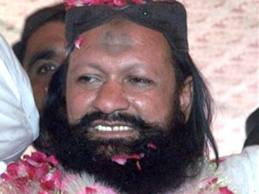
LAHORE, Feb 7- The US has added the founder of a banned Pakistani militant group to its list of global terrorists, blaming him for the deaths of hundreds of Pakistanis.

Malik Ishaq is the founding member and leader of the Lashkar-e-Jhangvi (LJ), a banned Sunni Muslim organization dedicated to killing or driving out Pakistan’s minority Shi’ite Muslims.

“In 1997, Malik Ishaq admitted his involvement in terrorist activity that resulted in the deaths of over 100 Pakistanis,” the US State Department said on its Web site in a statement posted on Thursday.

It noted he had also been arrested in connection with twin bombings in the western Pakistani city of Quetta that killed about 200 people last year.

“LJ specializes in armed attacks and bombings and has admitted responsibility for numerous killings of Shi’ite religious and civil society leaders in Pakistan,” the State Department said.

The designations means anyone who supports Ishaq or Lashkar-e-Jhangvi could have their assets frozen by the US government.

Ishaq’s deputy and spokesman said the decision to list Ishaq was the result of a conspiracy between the United States and Iran, a majority Shi’ite country.

About 20 percent of Pakistan’s 180 million people are Shi’ite.

“The US administration took the step on Iran’s instigation,” said the spokesman, Hafiz Ghulam Rasool Shah.

“Malik Ishaq was acquitted by Pakistan’s courts and he is leading the life of an honorable and peaceful citizen of Pakistan.”

Ishaq has spent 14 years in jail on dozens of murder or terrorism charges and was in prison when some of the attacks happened. He was eventually acquitted.

“The US made the decision in the wake of attack on Sri Lankan Cricket team in Lahore. When the incident occurred, Ishaq was in Multan district jail,” he said, referring to a deadly 2009 attack on the sports team.

“Right now, Ishaq is in jail on the charges of making hatred speeches only.”

In 2012, Ishaq told Reuters that Shi’ites were the “greatest infidels on earth” and that Pakistan should declare them non-Muslims.

“Whoever insults the companions of the Holy Prophet should be given a death sentence,” Ishaq declared.

UK probes links between MQM chief & party leader’s murder

UK prosecutors have asked Pakistan to trace two suspects believed to have been involved in the 2010 murder of Imran Farooq, a senior leader of the Muttahida Qaumi Movement (MQM).

He was stabbed outside his home in Edgware, London, close to the Pakistani political party’s international HQ.

Documents obtained by BBC Newsnight name the suspects as Mohsin Ali Syed and Mohammed Kashif Khan Kamran.

They are believed to be in Pakistani custody but not under formal arrest.

The investigation into Mr Farooq’s murder has seen more than 4,000 people interviewed, but so far the only person arrested in the case has been Iftikhar Hussain, the nephew of MQM’s London-based leader Altaf Hussain.

Iftikhar Hussain was arrested on suspicion of conspiracy to murder, but is now on police bail. It is an arrest the party says was based on wrong information.

MQM senator Farogh Naseem has described Iftikhar Hussain as “not a person who is really with himself mentally”. He said Iftikhar Hussain had suffered at the hands of the Pakistani authorities.

In November 2011 – 14 months after the murder – Metropolitan Police chief Bernard Hogan-Howe said his force was liaising with Pakistani authorities over two arrests believed to have been made in Karachi.

Since then, however, the force has refused to confirm or deny that it is seeking Pakistani assistance.

The Pakistani government has denied anyone has been arrested and officials have failed to respond to questions about the request from the UK’s Crown Prosecution Service.

The documents, obtained by Newsnight from official sources in Pakistan, suggest Mohsin Ali Syed and Mohammed Kashif Khan Kamran secured UK visas on the basis of being granted admission to the London Academy of Management Sciences (LAMS), in east London.

The documents name two other men. One is Karachi-based businessman Muazzam Ali Khan, of Comnet Enterprises, who is believed to have endorsed the suspects’ UK visa applications and was in regular contact with Iftikhar Hussain throughout 2010.

In 2011, police released an e-fit image of a suspect in the murder case

The other is Atif Siddique, an educational consultant in Karachi, who is believed to have processed them.

Atif Siddique said he was not the agent of LAMS and did not know the two suspects.

Mr Ali Khan has not responded to e-mails and phone calls offering him the chance to respond.

A director of the college, Asif Siddique – Atif Siddique’s brother – has confirmed the two students were meant to study there. One of them registered, but failed to attend.

LAMS is designated as a “highly trusted” partner of the UK Border Agency, which means it is supposed to report the non-attendance of students within 10 days of the 10th missed student encounter with staff. Asif Siddique said the college had reported one of the student’s non-attendance to the UK authorities in May 2012.

‘Under surveillance’

The Home Office has refused to say whether or not it believes LAMS broke the rules for reporting non-attendance, but has said it is not currently investigating the college.

Mohsin Ali Syed, in his late 20s, arrived in the UK in February 2010. He moved between a number of London addresses, including bedsits in Tooting, in south London, and Whitchurch Lane, in Edgware.

Mohammed Kashif Khan Kamran arrived in the UK in early September 2010. Phone records indicate the two moved around together and it is believed they kept Mr Farooq under surveillance.

Altaf Hussain has widespread support in Karachi but is based in Edgware

The murder weapons were left at the scene of the crime and the documents seen by Newsnight state that the British authorities are seeking DNA samples as evidence that could be used in a British court.

Records show that both men left the UK on 16 September 2010, a few hours after the murder had happened, and flew to Sri Lanka, and then on to Karachi on the 19 September.

According to immigration officials in Pakistan, security officials picked them up on the tarmac before they left Karachi airport. Pakistani security sources deny that the men were picked up as a result of a British tip-off.

Whereabouts unknown

Documents lodged with Sindh High Court refer to another man, Khalid Shamim, who is believed to have helped the two suspects return to Pakistan. His wife has started legal proceedings in the court in an attempt to trace his whereabouts.

The MQM, Karachi’s dominant political party, describes itself as a modern, secular and middle class party. Senior party figures say it offers the best chance of opposing the rise of the Taliban in Pakistan’s largest city.

It insists it is a peaceful party, but its opponents complain that the UK allows it to use London as a safe haven from which it can organise its violent control of Karachi.

The party says it wants to co-operate with the murder inquiry, but insists it has nothing to do with the case and accuses UK police of harassment.

Last month, Altaf Hussain complained police were making his life “hell”.

The end of an era in Kabul: Taliban attack on cherished restaurant shatters illusion of oasis

La Taverna in Kabul (Credit: businessweek.com)
La Taverna in Kabul
(Credit: businessweek.com)

Washington, Jan 19: On a recent Friday evening in Kabul, I gathered with friends at the Lebanese restaurant that had long been a convivial and secure oasis in a harsh and unpredictable country. The occasion was a farewell meal before I left for the States — a cherished ritual in my many visits to Afghanistan over the past decade.

As always, after an abundant assortment of mezze, we raised our discreet cups of “white tea” and promised to meet there next time. As always, the proprietor, Kamel Hamade, a dapper businessman from Beirut, refused to let us pay. “Give the money to help the animals instead,” he would insist.

Kamel was an animal lover, political gadfly and the genial host of La Taverna du Liban, a cozy bistro that catered to the foreign and local elite — Western aid workers, Middle Eastern entrepreneurs, Afghan ministry officials. There was a frisson of intrigue amid the hookah smoke and hushed chatter. We jokingly called it the “Rick’s Café” of Kabul.

There was also real danger lurking outside, we all knew. Taliban militants often targeted establishments where Westerners worked or met, and Kamel had beefed up security repeatedly against possible attacks. He was a gentleman, but also a survivor of civil war and a scrappy businessman who never shied from a fight. He kept a loaded gun in his room upstairs and a formidable mastiff named Jeff in a pen by the front door.

“I’ve got to get out of here,” he swore to me a dozen times in the past several years. “There’s too much tension, too much difficulty. I’m going to open a restaurant somewhere nice, like Geneva or New Zealand.”

But although he often travelled home to Beirut or abroad on business, Kamel never did abandon Kabul and La Taverna. He stayed on, even as foreign missions began closing in anticipation of Western troop withdrawals, political instability and growing violence. He stayed on even after other restaurants folded, reservations flagged due to diplomatic security alerts, and a business dispute led to a shootout at the restaurant and landed him briefly in an Afghan jail.

As long as La Taverna remained open — as long as Kamel was there in his favorite corner, smoking cigarettes and counting change and yelling at the waiters and surveying his domain and leaping up to greet old friends — I felt as if I still had a familiar sanctuary, a small zone of comfort in Kabul.

On Friday evening, that illusion was violently shattered. At 7 p.m., the busiest dinner hour of the week, a Taliban suicide bomber detonated himself outside the front gate, right next to Jeff’s pen, and two gunmen shot their way inside, raking the dining room with gunfire. By the time Afghan security forces stormed the premises and shot them, at least 21 people were dead, including Kamel and dinner guests from half a dozen countries. So was Jeff.

I was back in Washington by then, working at my desk, when a colleague called unexpectedly from Kabul, then a friend e-mailed. A loud blast had been heard. More messages and news bulletins followed, the focus narrower, the details still sketchy but horrific. It was La Taverna. There was shooting and commotion outside but no news, nothing, from inside.

I reached an Afghan friend whose brother was a cook. He had escaped over the back wall and had seen Kamel running into the dining room with his gun. My stomach knotted in dread. I imagined him plunging into a scene of chaos and screams and blood, defending his guests and his property to the death.

Within two hours, those fears were confirmed. My friend was dead, my convivial war-zone sanctuary a charnel house. I also knew this attack had changed everything for me, my friends and the entire international community in Kabul.

There had been other Taliban assaults in the capital over the years — against international hotels and agencies and military compounds. But this was more intimate, more savage, more personal. The Taliban crowed in an e-mail Friday about eliminating foreign “occupiers,” but all I could think about was Kamel fretting over his ailing orange cat, Boy, or trying to find Jeff a mate to make him less ferocious, or refusing to let his friends pay for a meal.

I also thought about the dozens of wonderful evenings over the past decade I had shared at La Taverna with friends and colleagues and fellow animal rescuers — a veterinarian from Maine, an aid supervisor from France, an engineer from Prague, a security contractor from Australia, a diplomat from Canada, a nurse from Nashville, a lawyer from Ireland, an anthropologist from Rome, and many Afghan friends and co-workers. Now, the Taliban had made sure we would never meet there again.

On Saturday, I found my e-mail inbox flooded with messages from these now-scattered friends, some wondering if I was safe, some recounting memories of Kamel’s attentiveness to us and his beloved four-legged companions.

One close friend in Kabul wrote what we were all thinking: “Is this a horrid, isolated incident, or does it have greater long-term consequences and ramifications?”

Of Kamel, she wrote, “he still remains perhaps the kindest, most gentle, and respected of men I have met in this city. He created a unique space for himself, for the restaurant, and for all of us — expat and Afghan alike. A culture, a sanctuary and a place of civility have been lost, and will not be replaced.”

TTP Owns Attack on Security Forces, says Ready for “Talks”

Bannu attack (Credit: dunyanews.tv)
Bannu attack
(Credit: dunyanews.tv)

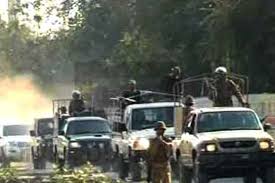
PESHAWAR, Jan 19: A bombing, targeting a security forces convoy, killed 20 people and injured 30 others near Razmak gate in Cantt area of Khyber Pakhtunkhwa’s Bannu district on Sunday. The Pakistani Taliban claimed the attack.

An ISPR spokesman said that in the attack, 20 security personnel were killed and 30 were injured.

Speaking to CNN, Shahidullah Shahid, spokesman for the proscribed Tehrik-i-Taliban Pakistan (TTP) claimed that the militant organisation was responsible for the attack and said that their attacks on security forces would continue.

On the other hand, intelligence sources say that a convoy, comprising military and civilian vehicles, was ready to move towards Miramshah in the North Waziristan tribal region from a ground near Razmak Gate in Cantt area of Bannu when the explosion occurred in one of the coaches.

The sources added that the explosives were planted in one of the vehicles hired from a private party.

Federal Interior Minister Chaudhry Nisar Ali Khan condemning the incident has sought a report from the Inspector General of Frontier Corps with the details related to the hiring of the private vehicles for transportation.

Emergency and security forces reached the attack site and shifted the victims to a nearby hospital. Those killed in the attack included civilians and security forces personnel.

Moreover, security forces cordoned off the area as a probe into the incident went underway.

Within hours of the attack, the TTP spokesman said that the Taliban were ready for meaningful dialogue, however, the government should show its sincerity.

The northwestern town of Bannu, which stands at the gateway to the semi-autonomous Waziristan tribal region, is 150 kilometres southwest of Peshawar, the capital of KP.

The town has witnessed a number of attacks and was the scene of a massive jail break in April 2012 during which 384 prisoners escaped from its central prison.

Taliban kill Express media employees as a warning to journalists

KARACHI, Jan 18: Gunmen riding on motorcycles shot dead three Express News workers on Friday after ambushing a stationary DSNG van in a busy neighbourhood of Karachi.

This was the third and most lethal strike on Express Media Group and its staff in the space of five months. In two previous attacks, the main offices of Express Media Group, were targeted.

Friday’s ambush took the lives of a technician, security guard and a driver, all of whom were seated in the front of the van.

The Tehreek-e-Taliban Pakistan (TTP) claimed responsibility for the latest attack in a live telephone call from Afghanistan to Express News anchor Javed Chaudhry.

“We accept responsibility. I would like to present some of its reasons: At present, Pakistani media is playing the role of (enemies and spread) venomous propaganda against Tehreek-e-Taliban. They have assumed the (role of) opposition. We had intimated the media earlier and warn it once again that (they must) side with us in this venomous propaganda,” TTP spokesman Ehsanullah Ehsan told Express News.

“We have warned Express News a number of times. I have contacted Express News myself and conveyed to them our grievances,” he added.

Driver Khalid, technician Waqas and security guard Ashraf – died within moments of the incident.

“The three victims were shot multiple times from close range,” said the medico-legal officer at the hospital. “They died due to excessive bleeding,” he added.

Law enforcers found at least 17 shell casings from 9mm and 32-bore pistols at the crime scene. These were sent to the forensic division.

Investigators believe that a single group is behind all three attacks on Express Media Group.

“I am 100% certain this is a targeted attack,” said District West police chief Javed Odho. He said the terrorists who carried out the attack had been identified as Taliban.

“An investigation team has been constituted… the team will also collect the details of police officers who investigated the previous attacks on Express Media Group,” he said.

According to eyewitness accounts, the assailants were at least four in number.

“They were clad in shalwar kameez and approached the van on motorcycles,” one witness said. “After carrying out the attack, they fled in the direction of the Banaras locality,” he added.

Interestingly, a Rangers picket was set up at walking distance from the van. Some policemen were deployed near the scene of the crime as well, witnesses said.

“Still, the Rangers and police did not even think to rush towards the crime scene and rush the victims to the hospital,” a witness said.

All five cameras installed near the crime scene were also reportedly out of order.

Catalogue of terror

In the first attack on August 16, 2013, unidentified gunmen opened fire on the group’s office in Karachi, injuring one female staffer and a security guard. In the second attack, on December 2, 2013, at least four armed assailants opened fire and tossed homemade bombs at the same office, injuring a guard in the process.

Despite visiting the Express Media office in Karachi twice and constituting investigation teams to probe the two incidents, law enforcement agencies have been unable to arrest even a single perpetrator.

“The attacks [on Express Media Group] are acts of terrorism… It is not the job of the local police to deal with terrorism… responsibility for that rests with intelligence agencies and specialised units,” said District West police chief Javed Odho in response to a query by The Express Tribune.

“Despite all this, policemen are working against terrorism in Karachi,” he added.

Odho defended the police force against the charge of negligence, saying no policemen were available in the area at the time of the attack.

According to Express Media Group Coordinator Muhammad Ali, the DSNG was stationed at a routine spot. “We moved the van at around 7 in the evening to the location, as was our routine,” he said. “The staffers did not even get to eat… for them it was duty first,” he said.

The deceased Express staffers had been associated with the group for the past one-and-a-half year. As news of their killings spread, their families and relatives reached Abbasi Shaheed Hospital.

“We are poor people… We never wronged anyone,” lamented a relative of one of the deceased. “They were martyred in a cowardly act of terrorism,” he said.

Express News bureau chief Aslam Khan also condemned the attack.

“Until and unless the government and law enforcers conduct a full-fledged operation against terrorists, it will hard to stop such attacks,” he said. “One of the main reasons behind this third attack was that the law enforcers did not take the previous ones seriously.”

The inspector general of police in Sindh called for an immediate report on the attack. He also directed the Karachi police chief to look into claims of police ‘slackness and irresponsibility’ and take appropriate action — if reports were verified.

‘War of ideologies’

The TTP spokesman explained that “this is a war of ideologies and whosoever will oppose us in this war of ideologies, will play the role of enemy and we will also attack them.”

“They were killed because they were a part of the propaganda against us. I also want to tell them that they should not work at the media channels, whose names we have also mentioned. Secondly, we have sacrificed to achieve our goal,” he told Express News.

“We fight for the establishment of Islamic system in this country. To kill certain people is not our aim. We are fighting to achieve our goal. And the people who oppose us, we will fight with them. We have no personal feud with anyone,” he added.

According to Ehsanullah Ehsan, the media must “mend its behaviour” and do balanced reporting, which is impartial, which is transparent and not (tainted with propaganda) then “we will not attack anyone, neither we want to kill anyone”.

“I promise you that if Pakistani media comes out of this war and limits itself to its journalistic role, then we will not carry out any attack on them. We value journalists and I myself belong to the field of journalism. It is our desire (not) to kill any innocent person or any such person.

‘But the people who oppose us then we are compelled to do (this). I completely agree that if the media gives us proper coverage and (does not spread) what is venomous propaganda and the war of ideologies which harm our ideology, the ideology of the whole Pakistan and the ideology of Muslims, and desist from spreading nudity and obscenity then we have no war against anyone. We do not want to fight with people on a personal basis. We fight for war and we will not be strict on those who leave opposing Islam.”

The TTP spokesman said his group would “keep fighting all those who oppose Islam and Muslims, harm the ideology of Pakistan, (spread) obscenity and nudity and destroy the real face of Islam.” “And (this is) our mission and we will continue to sacrifice our lives for it.”

Published in The Express Tribune, January 18th, 2014.

In Memory of Slain Police Chief Chaudhry Aslam

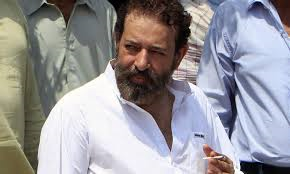
Police chief Chaudhry Aslam (Credit: dawn.com)
Police chief Chaudhry Aslam
(Credit: dawn.com)

Iron Man, SP Khan, the lead character of the Bollywood movie Shootout at Lokhandwala and our own late Sultan Rahi of Maula Jatt fame; my friend, Chaudhry Aslam has been compared with all of these. However, the former three were merely fictional, while Aslam was the real character. After Friday prayers this week, in a leafy suburb of West London, prayers were said for his departed soul with everyone present uttering a louder than normal and heartfelt ‘ameen’ as if they all knew Aslam. This only proved that he had developed a global following, just like all these fictional heroes he has been compared with.

I can recall the early days when I got to know Aslam as a sub-inspector, serving under my late father Arif Jah Siddiqui in District Central, Karachi. Aslam had his first posting as SHO of the Gulbahar police station. Two things were very clear from the onset: he was devoted to eradicating crime and was fearless to a fault. He never had time to deal with the bureaucracy of police work — and believe me, there is a lot of it if you are responsible for a police station or a team. He would delegate all this to his trusted subordinates and instead, took up the onerous task of patrolling the roads and narrow lanes of his area. He always believed that if policemen were doing their jobs out in the open, people could see them and feel more secure, while criminals would think twice before committing a crime. His style was uncomplicated and that was the reason that officers and jawans developed a strong loyalty to him.

Aslam encountered many difficulties during his career; however, his morale was never subdued. He was imprisoned for more than a year and a half. Even during this period in Central Prison Karachi, whenever I visited him, he was in good spirits and this kept the morale of his fellow imprisoned officers and jawans high as well. He was a man with a big heart and took special care of his subordinates and their families, giving both his time and money generously to help them in their hour of difficulty. When he was bailed, he made sure that every member of his team was treated fairly. Finally, all of them were acquitted of the charges that had been levelled against them.

Despite getting rapid promotions, he never gave up frontline detective and investigative work. As a matter of routine, he would be busy all night, seeking information, planning surveillances, plotting raids and travelling to some of the most hostile parts of Sindh and Balochistan to assess the ground realities. This hard work and diligence made him a very successful police officer. He would delegate tasks but would never lose control. The junior officers knew that their boss was very much on the ground, so they had to do their jobs as thoroughly as possible.

The other aspect of his personality was his accessibility to everyone, including the vast network of his informers, journalists, colleagues and friends. He would answer his mobile directly, so much so that if anyone needed to meet him in his office, one would just need to call him on his mobile and he would ask the guard to allow the guest to come through the checkpost. He was a people’s man and had no desire for protocol, a secretariat or a posh office.

From the time he took command of the anti-extremist cell of the CID, he had to severely restrict his movements. Whenever, during my visits to Karachi, I went to see him, we would walk around the CID compound for hours exchanging notes. On occasions, I felt that he had huge pent-up energy, which needed to be released but he did not have the luxury to vent it like a normal person would, by freely moving around the city and socialising. On these instances, he came across as a lion in a cage, pacing the available space up and down.

Aslam had made many enemies, a negative fallout for all diligent police officers. The principal reason for this was that he was among the very few officers, who had the courage to take action against all types of criminal syndicates operating in Karachi. There have been some discussions about his approach towards eradication of crime. He has been marked as brutal and unforgiving. I question these commentators as they may not know the circumstances under which these officers are required to keep the average citizen safe and secure. They work on severely depleted resources, are under constant threat as are their loved ones and know that one wrong step can get them embroiled in litigation, and they may even end up facing imprisonment. Is there any other profession where a person takes on such enormous risks? One should not forget that the police service is merely a reflection of the society it serves and we fall far short of being an ideal society.

Aslam’s martyrdom is an international tragedy. His work has been instrumental in stopping large terrorist attacks in Pakistan and other countries. He delivered results at the frontline of the war on terror and in the end, gave his live in protecting innocent citizens, and eradicating crime and terror from this world.

I met him on January 31, 2013 at the funeral of another martyred officer. Little did I know that this would prove to be our last meeting. I pleaded strongly with him that he should take a break from this madness of fighting terrorism and come with me to the UK. He responded in his typical friendly style, “Aftab bhai would you take the whole of Karachi with you?” I said I could not do that but wanted him to come with me, and he said, “Bhai, don’t worry. I will be okay here,” and that was Aslam. I will always remember him as a man of high morale and a police officer dedicated to his profession to a fault.

Published in The Express Tribune, January 12th, 2014.

Six Years on, Benazir’s Murder remains Mystery

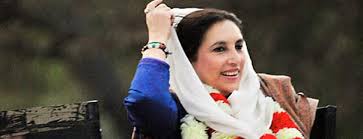
Benazir Bhutto's last rally (Credit: dawn.com)
Benazir Bhutto’s last rally
(Credit: dawn.com)

December 27, 2013 marks the sixth anniversary of the murder of Benazir Bhutto and there is no indication that we are any closer to knowing on whose orders the killing was carried out. The PPP, led by Asif Ali Zardari, swept to a landslide victory in the election that followed her death, and it might have been expected that every resource at its disposal would have been deployed to catch those responsible. Little could be further from the reality. There was no post-mortem so there is no clear determination as to whether she died of gunshot wounds or the result of striking the door of the armoured hatchway of the armoured capsule she was in at the time — or possibly a combination of both. Whatever forensic evidence was on the scene was washed away within an hour of her murder and subsequent inquiries into her death have reached no clear conclusions either.

The UN report into the case, which had been demanded by former president Zardari, was sharply critical. It concluded that her death could have been prevented if appropriate security measures had been in place, and that the Scotland Yard forensic investigation team were gravely misled by the Pakistan police. The intelligence services were less than helpful and Rehman Malik, responsible for Benazir Bhutto’s security at the time, is said to have been unable to provide a straight answer to any of the UN team’s questions. The conclusion of this report was that the failure to properly investigate her death was deliberate and the conspiracy mill remains in uninformed overdrive. On the day she died, none of the agencies tasked with her protection were adequately discharging their duties and subsequent to her death, their investigation has been at best flawed, at worst deliberately hindered. The chances of ever getting to the truth fade almost by the day. Commemorative rallies and functions in celebration of the life of Benazir Bhutto are no substitute for an open and honest investigation. Going by the past six years we expect no early result.

Published in The Express Tribune, December 27th, 2013.

Militants go on Killing Spree of Polio workers in Pakistan

Polio health worker killed (Credit: livemint.com)
Polio health worker killed
(Credit: livemint.com)

Islamabad, Dec 19  — Health workers administering polio vaccinations came under fresh attack in Pakistan on  Wednesday, a troubling development in a nation that remains one of three in the world where the disease has yet to be eradicated.

Three workers were killed in separate attacks, a day after five others died in similar circumstances. All of them were part of a massive vaccination campaign nationwide. The attacks prompted authorities to suspend the campaign throughout the country.

— Two men opened fire on an 18-year-old worker as he was vaccinating children on the outskirts of the northwestern city of Peshawar. The worker died of bullet wounds to the head, said Dr. Janbaz Afridi, the provincial director of the polio campaign.

— Gunmen opened fire on a car carrying a vaccination campaign supervisor and her driver in Charsadda — killing them both.

— Also in Charsadda, two female workers narrowly escaped when some men began shooting at them.

— Three other female workers also escaped unhurt when they were shot at in Nowshera district.

All the attacks Wednesday took place in Khyber Pakhtunkhwa, a province rife with Islamic extremists.

On Tuesday, five workers were killed: four in Karachi; and a 14-year-old volunteer in Peshawar as she and her sister were leaving a house after administering vaccines.

Pakistanis have viewed polio vaccination campaigns with suspicion after the CIA’s use of a fake vaccination program last year to collect DNA samples from residents of Osama bin Laden’s compound to verify the al Qaeda leader’s presence there.

Bin Laden was killed by U.S. forces in May 2011.

In June, a Taliban commander in northwest Pakistan announced a ban on polio vaccines for children in the region as long as the United States continues its campaign of drone strikes in the region, the Taliban said.

CNN was not able to reach the Taliban for comment regarding the latest attacks. Polio, a highly infectious viral disease that can cause permanent paralysis in a matter of hours, has been eradicated around the world except for three countries where it is endemic: Pakistan, Nigeria and Afghanistan.

After the number of cases spiked sharply last year, Pakistan stepped up its eradication efforts. The numbers fell from 173 last year to 53 this year, according to the Global Polio Eradication Initiative.

People of Pakistan at mercy of state & non-state actors: Asian Human Rights Commission report

Pak terrorism (Credit: 3quarksdaily.com)
Pak terrorism
(Credit: 3quarksdaily.com)

Karachi, Dec 10: In 2013, the people of Pakistan have remained at the mercy of state and non-state actors which resort to violence as a means to secure power, the Hong-Kong based Asian Human Rights Commission (AHRC) said on Monday.

The detailed report has been released to mark Human rights Day that falls on December 10 (today). Rights violations are widespread due to the failures of, and lack of reform in, the country’s institutional framework, in particular key institutions of the rule of law: the police, prosecution and judiciary, according to the report.

Throughout the year 2013, the AHRC has documented how too many lives, and the dignity of those living, have been snatched by a callous state and inhuman cruelty in Pakistan.“This year, absence of a functioning criminal justice framework has allowed, or even caused, torture in custody and extrajudicial executions to increase rapidly.

“During the year, hundreds of incidents of sectarian violence, targeted killings, terrorist attacks, and suicide bombings were witnessed, as well as killings conducted,” the report said.But that is not all. In 2013, the nation faced the promulgation of two draconian ordinances that have restricted freedoms further. It also witnessed the absence of the rule of law, killings of persons from Muslim minority sects, honour killings, trafficking of women and children, torture in custody, disappearance after arrest, and extrajudicial executions, suicide attacks on religious sites, persecution of the religious minorities, forced marriages, assassination of journalists, enslavement of children, poverty levels rising to 34 percent and power blackouts that brought industrial and commercial activities to a standstill, the report said.

The year 2013 also witnessed, for the first time in Pakistan’s history, peaceful transfer of power from one civil government to another following a general election. Every political party, including that which won the May 11 election with a two-thirds majority, complained about gross vote rigging.

“The new government, on assuming power, immediately began acting on its distaste for human rights. It merged the Ministry of Human Rights with the Ministry of Law and Justice, denying the people opportunity for redress for human rights abuses. The government has turned a blind eye to the arrogance of the police and armed forces in its refusal to comply with the orders of the courts,” the report said.

The government – in attempt to limit freedom of expression, freedom of movement, constitutional protection from arbitrary arrest, security of individuals, right to property, and civil liberty – promulgated two ordinances (Pakistan Protection Ordinance and an ordinance amending the Anti-Terrorism Act 1997). With these ordinances it has provided law enforcement and security agencies unlimited powers to search houses without warrant, shoot suspects on sight, confiscate property, tap telephones, and hack computers, and has established a parallel judiciary, creating special courts and special prosecution. These ordinances were promulgated to bypass parliament and open debate.


“Balochistan remains in a grave situation in 2013. Thousands of people are missing after arrest. Human rights abuse is the norm.,” the report said.

“In 2013, four hundred and fifty (450) persons disappeared after their arrest by the Frontier Corps (FC) and other forces in Balochistan. In Sindh province 35 persons disappeared this year; the number of disappeared for KPK province is 110 persons. In Pakistan-held Kashmir, nationalists struggling for independence of both India-held and Pakistan-held Kashmir disappeared constantly – 52 such persons disappeared after their arrest.”

“As many as 180 bullet-riddled bodies of Baloch missing persons have been found this year. In Sindh, during joint operations of Pakistan Rangers and Police, 53 persons were extra-judicially killed in vast numbers of encounters. In Karachi alone, 34 persons were killed in extra-judicial executions,” the report said.

“However, intelligence agencies brazenly ignore Supreme Court’s orders to produce the missing victims. Two judicial commissions established to probe cases of disappearances have been unable to get explanations from the intelligence agencies, and their recommendations have been ignored.”