Pakistan’s Caretaker Setup Tackles Violence Across Nation

For those whose hearts beat with Pakistan, the preparations for elections under a caretaker set-up has given rise to hopes of a new spring for the 65 year old  – which, in sympathetic terms, still ranks as an adolescent in the life of nations.

Granted it takes a good deal of optimism to see change coming any time soon. Presently, UN reports put Pakistan’s poverty levels at 49 percent and a human development index only slightly higher than the least developed African nations. With rampant corruption, that includes political appointees and funds paid off to win support, institutions have gone in decline. To top it all, a  fierce Taliban resurgence threatens to bomb, kill and maim potential voters in upcoming polls.

It is a situation that worries the armed forces — whose  India centric policies of “strategic depth” have now forced it to attempt to keep  the ‘Good Taliban’ (Afghan fighters) separate from the `Bad’ Pakistani Taliban. Despite that, with ideologically charged militants blowing hot on both sides of the Pak-Afghan border, the Tehrik-i-Taliban has kept up suicide attacks  against law enforcement targets, sectarian groups and individuals that conflict with their interests.

In Karachi, the TTP have added to the toxic mix of political parties – PPP, MQM and ANP – which even while in coalition furthered their party interests through militant wings and patronage of criminals – including the land mafias.

Just when it seemed that the situation could not get worse, the PPP government completed its five years –  and it is now almost time to vote again.

The proverbial light at the end of the tunnel has come with the nomination of Justice Fakhruddin G. Ebrahim to head the Election Commission of Pakistan. As Chief Election Commissioner, he has made the right moves, including appointing a caretaker prime minister from Balochistan – Mir Hazar Khan Khoso and using his powers of persuasion to get Baloch nationalists to participate in upcoming elections.

Balochistan is ripe for representative government. Given that the nationalists boycotted 2008 elections, Islamabad had resumed governing the province through remote control. What better example than the fact that Balochistan’s dissolved parliament comprised of ministers, without any opposition. It led to a situation where even some members of the Balochistan parliament were implicated in crime, including `kidnappings for ransom.’

With the backslide set in motion during Musharraf, the last five years saw state agencies and nationalists locked in battle. The problem of “missing persons,” that peaked under the former general, remains Balochistan’s dark reality.

Taking advantage of jungle law, the Lashkar-i-Jhangvi ensconced itself in Mastung. Here they drew on the conflict between state militias and Baloch nationalists to kill hundreds of Shia Hazaras in horrific terrorist attacks.

Given the deterioration of law and order across Pakistan, good news became rarer than rainfall in the Tharparkar desert. That is starting to change, thanks to  decisions taken by the Election Commission — and at times  judgments by the Supreme Court of Pakistan.

Taking the bull by the horns, the caretakers governments have foremost assessed that Pakistan needs to step up security. Little surprise that without any Western pressure, Pakistan has begun to crack down on  ideological militants that have for over a decade terrorized the nation and attempted to push it back into the medieval ages.

Earlier this year, the army made a paradigm shift in its `Green Book,’ when it deemphasized  the “Indian threat,” to declare that the real threat lay “within” – from sub-conventional warfare waged by the Tehrik-i-Taliban and Afghan militants crossing its porous borders.

Indeed, with platoons of young soldiers wiped out by suicide attacks along the Pak-Afghan border, the army has come to realize that it has little choice than to defend the state from attack.

In Karachi, the deployment of Rangers and Frontier Corp against Taliban influx is beginning to yield results. Although Rangers are in the first line of fire – as seen in the toll on their lives – the army has had success in raids conducted across TTP strongholds of Mangophir, Sohrabgoth, Baldia and Orangi town.

In Balochistan, the Inspector General of the Frontier Corp has taken credit for the reduction in terrorist violence and horrific levels of crime seen in Quetta. Even while nationalists are not convinced about laying down their arms, some have shown an inclination to participate in upcoming polls.

Meanwhile as the Election Commission scrutinizes 17,000 plus nomination papers, cleared candidates are already in the field rallying for votes for the elections next month.

Today, elections have become Pakistan’s biggest hope for change. In this backdrop, the deployment of adequate security at sensitive polling stations is incumbent to yield a good turnout — and grant legitimacy to the elections.

With almost 50,000 people killed in terrorist attacks in Pakistan since September 11, 2001, the nation seeks relief from interminable wounds. For that, it  foremost needs to stop the hemorrhage . Only then, can it begin to address long standing issues of governance — which when combined with jumpstarting the economy can take Pakistan down the road of a more representative democracy.
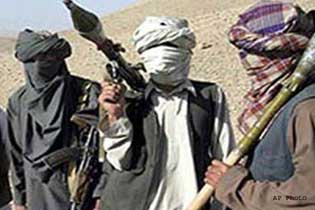
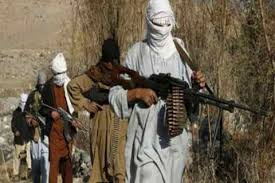


Taliban Spread Terror as New Gang in Town

Taliban in Karachi (Credit: nitcl.com)

KARACHI, March 28 — This seaside metropolis is no stranger to gangland violence, driven for years by a motley collection of armed groups who battle over money, turf and votes.

But there is a new gang in town. Hundreds of miles from their homeland in the mountainous northwest, Pakistani Taliban fighters have started to flex their muscles more forcefully in parts of this vast city, and they are openly taking ground.

Taliban gunmen have mounted guerrilla assaults on police stations, killing scores of officers. They have stepped up extortion rackets that target rich businessmen and traders, and shot dead public health workers engaged in polio vaccination efforts. In some neighborhoods, Taliban clerics have started to mediate disputes through a parallel judicial system.

The grab for influence and power in Karachi shows that the Taliban have been able to extend their reach across Pakistan, even here in the country’s most populous city, with about 20 million inhabitants. No longer can they be written off as endemic only to the country’s frontier regions.

In joining Karachi’s street wars, the Taliban are upending a long-established network of competing criminal, ethnic and political armed groups in this combustible city. The difference is that the Taliban’s agenda is more expansive — it seeks to overthrow the Pakistani state — and their operations are run by remote control from the tribal belt along the Afghan border.

Already, the militants have reshaped the city’s political balance by squeezing one of the most prominent political machines, the Pashtun-dominated Awami National Party, off its home turf. They have scared Awami operatives out of town and destroyed offices, gravely undercutting the party’s chances in national elections scheduled for May.

“We are the Taliban’s first enemy,” said Shahi Syed, the party’s provincial head, at his newly fortified office. “They burn my offices, they tear down my flags and they kill our people.”

The Taliban drift into Karachi actually began years ago, though much more quietly. Many fled here after a concerted Pakistani military operation in the Swat Valley in 2009. The influx has gradually continued, officials here say, with Taliban fighters able to easily melt into the city’s population of fellow ethnic Pashtuns, estimated to number at least five million people.

Until recently, the militants saw Karachi as a kind of rear base, using the city to lie low or seek medical treatment, and limiting their armed activities to criminal fund-raising, like kidnapping and bank robberies.

But for at least six months now, there have been signs that their timidity is disappearing. The Taliban have become a force on the street, aggressively exerting their influence in the ethnic Pashtun quarters of the city.

Taliban tactics are most evident in Manghopir, an impoverished neighborhood of rough, cinder-block houses clustered around marble quarries on the northern edge of the city, where illegal housing settlements spill into the surrounding desert.

In recent months, Taliban militants have attacked the Manghopir police station three times, killing eight officers, said Muhammad Aadil Khan, a local member of Parliament.

In interviews, residents describe Taliban militants who roam on motorbikes or in jeeps with tinted windows, delivering extortion demands in the shape of two bullets wrapped in a piece of paper.

A factory owner in Manghopir, speaking on the condition of anonymity out of fear for his safety, said that several Pashtun businessmen had received demands for $10,000 to $50,000. The figure was negotiable, he said, but payment was not: resistance could result in an assault on the victim’s house or, in the worst case, a bullet to the head.

Mr. Khan said he had not dared to visit his constituency in months. “There is a personal threat against me,” he said, speaking at the headquarters of his party, the Muttahida Qaumi Movement, which represents ethnic Mohajirs, in the city center.

The militant drive has even distressed Manghopir’s most revered residents: the dozens of crocodiles who inhabit a pool near a Sufi shrine here.

The Muslim pilgrims who come here to pay homage to the shrine’s saint have long also brought scraps of meat for his reptile charges.

But lately, as visitor numbers have dwindled from hundreds per day to barely a few dozen, the roughly 120 crocodiles here have grown hungry, according to the animals’ elderly caretaker.

Police officials, militant sources and Pashtun residents say that three major Taliban factions operate in Karachi — the most powerful one, which is rooted in South Waziristan and dominated by the Mehsud tribe, and two others from the Swat and Mohmand areas.

A senior city police officer, speaking on the condition of anonymity, said that militant commanders with those factions send operational orders to Karachi from the tribal belt; while some captured militants have tried to justify their activities by citing the authorization of religious clerics in the northwest.

In cases, he added, regular criminal groups have posed as Taliban fighters in a bid to increase their power of intimidation.

Just why the Taliban are adopting such an aggressive profile in Karachi right now is unclear. Some cite the greater number of militants fleeing Pakistani military operations in the northwest; others say it may be the product of dwindling funds, as jihadi donors in the Persian Gulf states turn to the Middle East.

In any event, it has shaken the city’s bloody ethnic politics.

Since the 1980s, armed supporters of the Mohajir-dominated Muttahida Qaumi Movement have engaged in tit-for-tat violence with those of the Pashtun-dominated Awami National Party. In the worst periods, dozens of people have died in a day. Now, faced with a common enemy, figures in both parties say they have declared an uneasy, unofficial truce.

As well as the attack on the Awami party — which have seen it close 44 of its district offices across the city — the Pakistan Taliban claimed responsibility for two attacks on the Muttahida Qaumi Movement — first, a bombing that killed four people, then the assassination of a party parliamentarian.

In a recent interview with The New York Times in North Waziristan, the Taliban spokesman Ehsanullah Ehsan said the group was targeting both parties — as well as President Asif Ali Zardari’s Pakistan Peoples Party — for their “liberal” policies.

The security forces, shaken out of complacency, have begun a number of major anti-Taliban operations. The latest of those occurred on March 23 when hundreds of paramilitary Rangers raided a residential area in Manghopir, near the crocodile shrine, confiscating a cache of more than 50 weapons and rounding up 200 people, 16 of whom were later identified as militants and detained.

“I don’t think the Taliban would like to set Karachi aflame, because they fear the reaction against them,” said Ikram Seghal, a security consultant in Karachi. “The police and intelligence agencies have very good information about them.”

Other factors limit the Pakistani Taliban’s ingress into Karachi. One of the more provocative ones is that allied militants — particularly the Afghan Taliban — might not like the added publicity. The Afghan wing has long used the city as place to rest and resupply. There are longstanding rumors that the movement’s leader, Mullah Muhammad Omar, is taking shelter here, and that his leadership council, known as the Quetta Shura, has met in Karachi.

In such a vast and turbulent city, the Taliban may become just another turf-driven gang. But without a determined response from the security forces, experts say, they could also seek to become much more.

Ihsanullah Tipu Mehsud contributed reporting from North Waziristan, Pakistan.


Fall of Tirah Valley

Tirah Valley falls to Militants (Credit: nation.com.pk)

The fall of the Tirah Valley to the Tehreek-e-Taliban Pakistan (TTP) and the Lashkar-e-Islam (LI) is not sudden; the valley, which remains excommunicated from the rest of the country, has been a war zone for three militant outfits — the TTP, the LI and the Ansarul Islam (AI). The LI and the AI have been battling each other for over seven years in the Bara tehsil of Khyber Agency, with turf wars being waged based on sectarian grounds. The area became a stronghold of the TTP after operations were launched in the nearby Orakzai and Kurram tribal agencies. The LI then sought an alliance with the TTP and the AI, previously a banned outfit, which was later considered a tribal militia that was protecting boundaries of the valley from “foreign influence”. In June last year, the TTP took over the majority area held by the Kukikhel tribe, while reports of the presence of the Taliban from as far as the Mohmand Agency also surfaced. Hundreds of people were reportedly killed; however, because of the area being isolated, little information made it to the mainstream media, till almost 90 per cent of the valley went into the TTP’s hands.

On March 16, two press conferences were held at Peshawar Press Club. While the AI spokesperson demanded that the surrounding areas of Peshawar be handed over to the AI because they could protect them “better”, the head of the ANP’s jirga for the tribal areas claimed that there were Uzbeks, Chechens and Arabs who had their bases in the area. Ironically, two days later, the TTP took over the Tirah Valley.

As general elections approach, security officials are now concerned that the routes that lead to Peshawar are also under the control of militants. While opening up a new front for a renewed operation in Tirah is inevitable, there is a serious threat that elections may not be held in a peaceful manner. Even though the Peshawar High Court has ordered the election commission to hold election at the IDP camps, the recent bombing at the Jalozai camp is a grim reminder of the volatile security situation.

Published in The Express Tribune, March 28th, 2013.


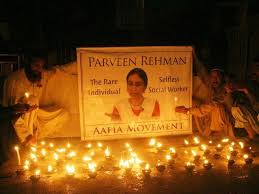
My Last Meeting with Slain Parveen Rehman

Tribute to Parveen (Credit: blogs.tribune.com.pk)

“Did you find that religious extremism has grown in Pakistan on this trip?” asked Sheema Kirmani, sitting cross-legged in the front of the crowd, after I had finished presenting my book at a session of the Karachi Literary Festival.

“Oh yes,” I responded. “But its not just religious, but also ethnic extremism that’s taken hold of Karachi. I think that the more violence permeates society, it causes individuals to fall back on the groups that give them a sense of identity.”

Sitting in the audience was Parveen Rehman. She had promised to attend after I went to her sister, Aquila Ismail’s presentation of her book “Martyrs and Marigolds,” a couple of hours before my launch.

During Aquila’s presentation, the moderator mentioned her family was also present in the audience, I  turned to meet Parveen’s glance. She waved back to me enthusiastically, with that warm smile that I knew from back in the 80s, when I visited the Orangi Pilot Project to report for Dawn.

After her sister’s presentation, we went outside, where Parveen hugged me and we exchanged notes. “I thought you resembled Aquila,” I had said, as we parted… not knowing it was for the last time.

Barely a month later, March 13, Parveen was murdered at a roundabout in Orangi Town, Karachi. The administration has since claimed to have arrested her killer – a Tehrik-i-Taliban commander – whose party affiliates have ensconced themselves in this outskirt of Karachi, where Parveen worked for 25 years.

Unlike Malala – who rose to world fame – had the bullets missed Parveen, she might have become known to the world for her pioneering work for the voiceless poor.

There was no shortage of death threats for Parveen, who grew to become director of the OPP — begun by  late Dr Akhter Hameed Khan. Amongst her pioneering work was to take a stand against land grabbing mafias – patronized by city officials.

Under Parveen, OPP compiled a report on 1500 Sindhi villages where the inhabitants were forcibly evicted by the land mafia – – and their land divided into plots for commercial usage. Although she shunned the limelight, Parveen took a clear stand against forced eviction of indigenous Sindhi and Baloch from their native villages and worked to enable them to acquire tenant rights.

The land grabber mafia even had an eye on the prized land on which OPP was built. Only a year ago armed gun men had burst into its building with the aim of occupying it.

Parveen told an interviewer that in order to save the building they engaged a “thug,” who scared off the occupants by threatening retaliatory fire.

Despite death threats, Parveen characteristically dismissed them, saying, “At the most what will they do. Kill me?”

And kill her they did.

In losing Parveen, the world has lost a courageous woman who fought for justice under the most difficult circumstances. The next government needs to pause and reflect on the tentacles being wrapped by land grabbing mafias on prized land in urban settings — where they will not stop even if it means killing an innocent woman like Parveen.


Parveen Rahman – Pakistan Loses a Courageous Woman Working for Upliftment of the Poor

Sketch of Parveen (Credit: tribune.com.pk)

KARACHI, March 15: A media-shy social worker who devoted her life to the development of the impoverished neighbourhoods across the country, was gunned down near her office in Orangi Town on Wednesday. She was 56.

Parveen Rehman was born in Dhaka in 1957. She did part of her schooling in the former East Pakistan and migrated to Karachi after the fall of Dhaka.

She received a bachelor’s of engineering in architecture from Karachi’s Dawood College of Engineering and Technology in 1981 and joined a private architect’s firm.

A few months later, she left the job and joined the Orangi Pilot Project initiated by Akhtar Hameed Khan to bring healthy changes to the lives of impoverished residents of Orangi.

“The late Akhtar persuaded her to join the OPP. We both joined the OPP in 1982 and since then we worked in close association,” said Anwer Rashid, co-director of the OPP-RTI (Orangi Pilot Project-Research and Training Institute).

Mr Rashid choked on words as he described his working relationship with Ms Rehman.

Noted town planner Arif Hasan, who is member of the OPP’s board, briefly visited Ms Rehman’s home and left early as he was deeply distressed like dozens of her friends and colleagues who had gathered at her house in Safari Boulevard in Gulistan-i-Jauhar.

“She was a courageous and brave lady. She was a true pupil of Akhtar Hameed Khan who worked in an environment where most people will avoid to work,” said Mr Rashid.

Soon after the private TV networks flashed news of her death, a large number of people flocked to the Abbasi Shaheed Hospital, where her body had been shifted.

Eyewitnesses said those who gathered in the hospital and outside her home, where she was living alone with her octogenarian mother, included dozens of residents of Orangi who were mourning her death.

“She was a great help for us. She was just like an elder sister to whom we would go whenever a problem struck us,” said a middle-aged man who identified himself as Azmat Ali.

Arif Pervez, development professional and a friend of hers, said Ms Rehman had been receiving death threats for a long time, apparently from the mafia involved in grabbing precious land on the fringes of the city.

“She had been receiving threats on her life for a long time. We had discussed this several times but every time I advised her to take care of herself, she smiled, waved her hand and said what will they do, I have to work a lot and that too in the middle of the people,” Mr Pervez said.

Ms Rehman was an ardent compiler of the record of precious lands, which were on the fringes of the city in shape of villages but were speedily vanishing into its vastness because of ever-increasing demand by thousands of families who were shifting to Karachi every year from across the country.

She said on record that around 1,500 goths (villages) had been merged into the city since 15 years. Land-grabbers subdivided them into plots and earned billions by their sale.

“She documented everything about the lands that have been grabbed. Another sin of her was to help those whose lands had been grabbed. Yet, she never hesitated to go to the area where her life was constantly under threat,” Mr Pervez said.

“Many people certainly have lost their elder sister,” he said.

Noman Ahmed of NED University said Ms Rehman’s great achievement was to get involved and empower communities in development work.

“She involved communities in development work and her cautious endeavour was to empower people and lessen their sense of deprivation. Her motto was way forward. She saw it as a defeat to terrorists by not changing her routine to help people,” Mr Ahmed said.

Besides her mother, Ms Rehman is survived by her two brothers and a sister, living abroad.


TTP affiliates have dug into Karachi – ATDT author

PPP Senator Dr Karim Khawaja (left) listens to ATDT author

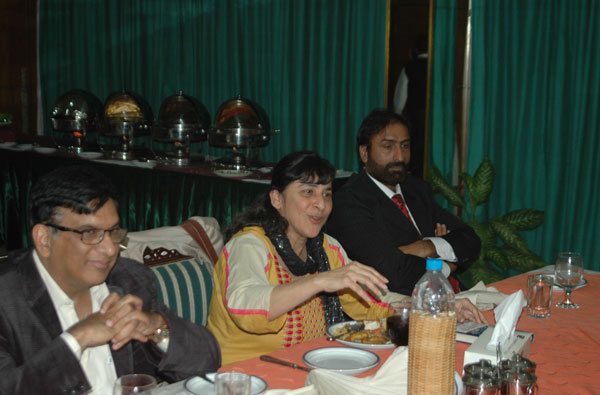
Karachi, Feb 6: The author of Aboard the Democracy Train, Nafisa Hoodbhoy, gave an international perspective on Pakistan’s political situation at a luncheon reception hosted by PPP Senator Dr Karim Khawaja at the Defense Housing Authority Club in Karachi.

The get-together with PPP officials and senior television and print journalists became an occasion for the author to talk about how Pakistan  changed in the post 9/11 era. She used her experience as a US based journalist to talk about the winding down of Washington’s offensive in Afghanistan and how that would likely affect Pakistan.

PPP office bearers & supporters

The author focused on the inroads made by the Tehrik-i-Taliban and their affiliates in Karachi, which have unnerved residents. She told the gathering about some of the forces behind the sectarian wars that have now taken hold of  the city, previously wracked by ethnic wars.

Hoodbhoy also spoke of how television anchors have themselves become mouth pieces for power brokers – planting their own perspective instead of allowing invitees the opportunity to present their points of view.

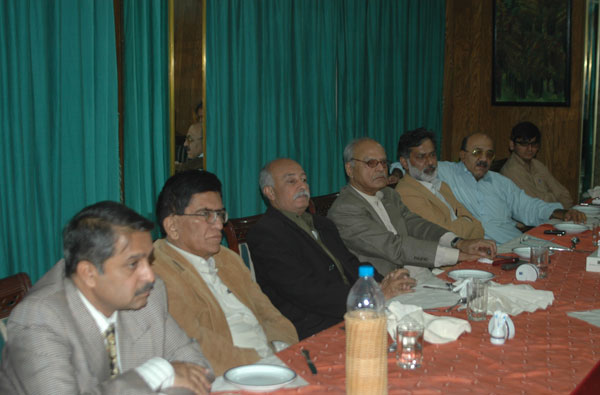
Senior Journalists at DHA club

The PPP office bearers sat through the frank discussion about the opportunism of mainstream political parties,  including the  absence of governance by the ruling party during their last five years in power.


Pakistan Remains Major Hub of Global Jihad

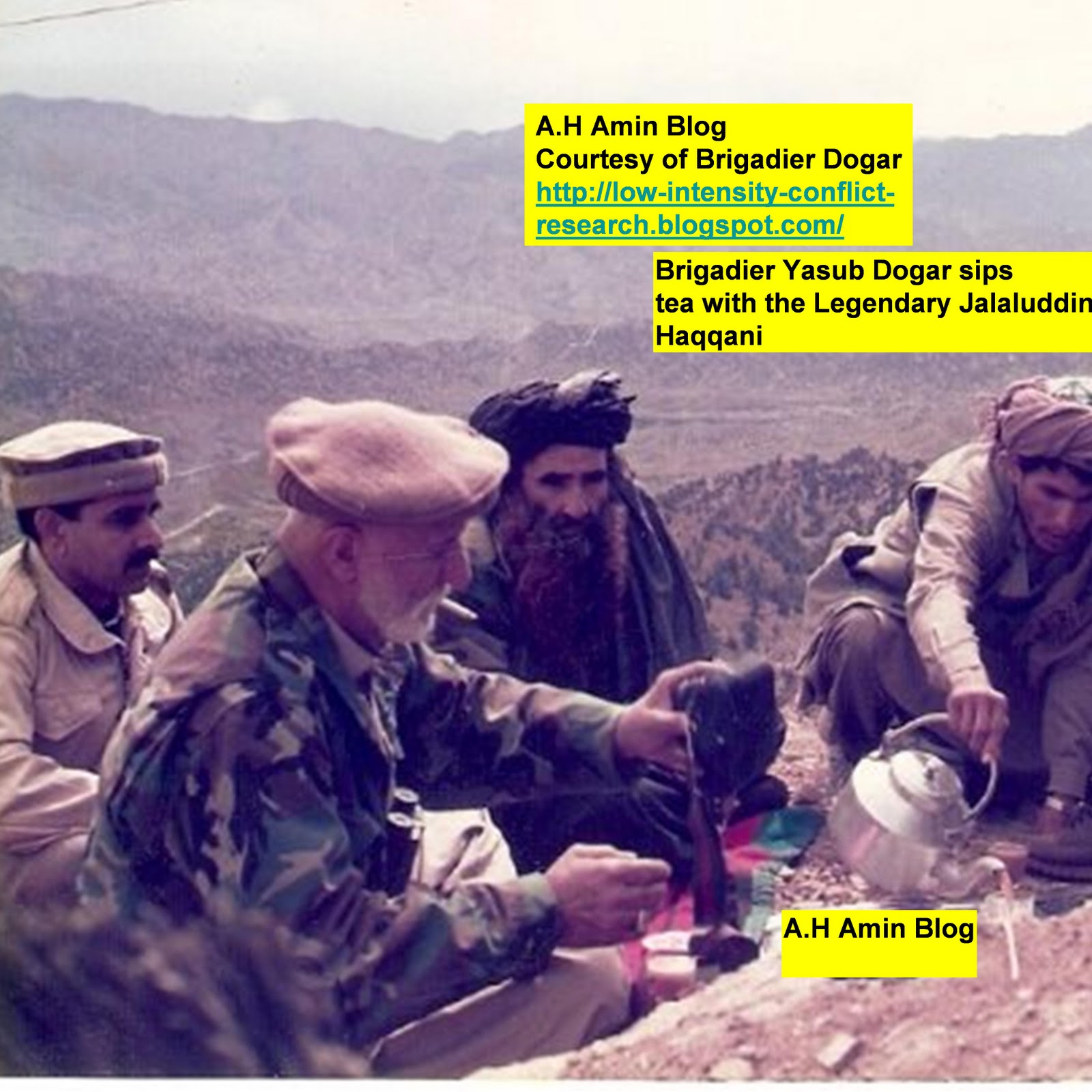
Whose side are you on? (Credit: A.H. Amin blog)

PESHAWAR: Pakistan is still a major destination for radicalised Muslims bent on a life of jihad, despite hundreds of US drone strikes, the death of Osama bin Laden and the fracturing of Al-Qaeda.

New battlegrounds have sprung up in Africa and the Middle East, but the number of foreign recruits smuggled into the northwestern tribal belt is increasing and they come from more diverse countries. Since the 1980s “jihad” to expel Soviet troops from Afghanistan, Muslim fighters from all over the world have lived and trained on the Afghan-Pakistan border, moulded into Al-Qaeda and a host of spin-off militant networks. After US-led forces in late 2001 evicted the Taliban in Kabul for sheltering Al-Qaeda, Afghan Taliban fled across the border into Pakistan.

But Washington and NATO will end their combat mission in Afghanistan next year and these days the Taliban say their foreign allies are drawn to other conflicts, despite their support networks in a region outside direct government control. “Al-Qaeda is shifting its focus to Syria, Libya, Iraq or Mali,” one member of the Afghan Taliban told AFP on condition of anonymity in northwest Pakistan. Local officials estimate the number of Arab fighters has fallen by more than a half or two thirds in the last 10 years, to below 1,000.

In the last two years, some Al-Qaeda Arabs, particularly Libyans and Syrians, left to take part in the civil war in Syria and the violent uprising that overthrew Libya’s dictator Moamer Khadhafi in 2011. Others migrated to Iraq in 2003, and others to Somalia and Yemen.

But Saifullah Khan Mehsud, executive director of the FATA Research Center, a think-tank focused on the tribal belt, says uprisings in the Middle East have had a minimal effect on the Arab presence in Pakistan. “Arab fighters are not leaving in big numbers,” he told AFP. “They have been there for 30 years and it continues,” he added. The number of fighters from other countries is also rising, say witnesses in Miranshah, the main town of North Waziristan — the district with the largest concentration of Taliban and Al-Qaeda fighters

“The overall number of foreign jihadis has increased in the last two years. Every week we see new faces,” says one regular visitor. There could be around 2,000 to 3,500 foreign fighters in the border areas from around 30 different countries. During the 1980s, the number was also estimated to have been several thousand.

Most of the current crop are Turkmens and Uzbeks, numbering between 1,000 and 3,000 fighters according to local officials, who have fled authoritarian secular regimes in their home countries to set up their own groups. The Islamic Jihad Union, which splintered from the Islamic Movement of Uzbekistan, is based in Pakistan’s border areas. It is committed to toppling the government in Uzbekistan, and fights alongside insurgents in Afghanistan. It has also plotted an attack in Germany, which was foiled.

US officials say covert drone strikes have played a huge role in destroying training camps and disrupting Al-Qaeda in Pakistan. According to the London-based Bureau of Investigative Journalism, 362 US drone strikes have been reported in Pakistan since 2004 — 310 of them since US President Barack Obama took office in 2009. Although North Waziristan locals say the strikes kill more Taliban than Al-Qaeda operatives, they have condemned foreign fighters to a life underground. “They are low profile, they dress like locals, they avoid big meetings and above all they move all the time,” a local journalist told AFP.

Mehsud says that foreigners are coming from a more diverse number of countries than in years past. “A few months ago, we even welcomed some (two or three) people from Fiji for the first time!” says the Taliban member who spoke with AFP. “There are more nationalities because they face the same problems. They tell us that they feel left aside by capitalism and discriminated by unfair laws, like the Swiss one on minarets or the French one on hijabs,” he adds.

Local and Western officials say the number of Western militants have fallen to dozens compared to the several hundreds of a few years ago. A Canadian, who uses the name Mohammad Ibrahim, told AFP that he had been in Pakistan for three years but was now preparing to leave to wage jihad at home.

“Foreigners are now afraid to come to Pakistan because of the drone strikes,” he says, putting the number of his compatriots at 14, compared to “60 to 85 three years ago”. A mechanical engineer by training, he says he works in “technical and logistic affairs” but does not elaborate further. “I often met British, Spanish, Italians, Algerians and Germans. But now… our movements have been limited because of the drone strikes,” he says.

Shia Massacre in Quetta threatens to unravel Pakistan

Carnage in Balochistan (Credit: chowrangi.pk)

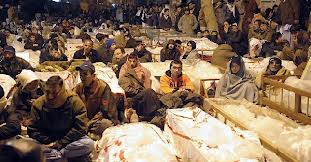
An unprecedented protest is unfolding in the Balochistan city of Quetta in Pakistan. Thousands of people have staged a sit-in, and are using coffins to block a road to protest the slaughter of Shia Muslims by Sunni Muslim terrorists allied with the Taliban.

On Thursday night, January 10, twin bombings targeting Pakistan’s tiniest ethnic minority, the Hazaras — descendants of Central Asians and who are distinguished easily by their unique facial features — killed over 100 young men at a snooker club.

The attack was the latest in a slow-motion genocide of minority Shia Muslims in Pakistan by Sunni-Muslim extremists who consider the Shia as infidels, thus worthy of death. Many attacks against Shia Muslims are carried out by Lashkar-e-Jhangvi (LeJ), a militant Islamic group allied with al-Qaida and the Taliban. This time too the LeJ promptly claimed responsibility for the slaughter.

So far the Hazaras have endured every killing and attack with silent suffering, hoping their lack of response would be rewarded by a cessation of targeted attacks. But not this time.

The sight of 100 mangled bodies, including that of Pakistan’s leading Shia youth activist for human rights, Khudi Ali seems to be the straw that broke the camel’s back.

Instead of burying the dead, as is required by Islamic law, the Hazara Shia Muslims have taken the coffins to the streets and refused to bury the deceased unless the government assures them of protection against jihadi groups tied to the Taliban.

For over 24 hours now the Hazara Shias of Quetta have braved sub-zero temperatures that dropped to -10C, and are refusing to vacate the blocked road or to bury the dead. So far there has been total inaction by all levels of government. Frightened by the Islamic terrorists, it seems the country’s president, prime minister and the provincial chief minister, have all cowered down in their respective shelters, not knowing if it would be safe, exposing themselves among the ordinary mourning Hazaras.

As far as the military is concerned, they already administer, though unofficially, the province of Balochistan where this slaughter took place. In Balochistan, the Pakistan Army has been fighting the indigenous Baloch population for the last five years to crush their struggle for independence from Pakistan. If 100,000 troops cannot provide protection to the Hazara Shias, I doubt if another detachment of troops will help.

Although the Baloch nationalists seeking separation from Pakistan are sympathetic to the plight of the Hazara Shia and make common cause against the Taliban, they view the demand for military intervention with justified suspicion and cynicism. One Baloch activist summed it best when he tweeted:

“Hazaras Shias asking the killers to protect them? Shia Genocide Baloch Genocide being carried out by Pakistani Army & ISI in Balochistan.”

If Pakistan’s men in uniform wished to help, they could easily cut off all ties to the jihadi terrorists and liquidate them. Instead, they perform a strip-tease for America and the Pakistani population, acting as if they are fighting the jihadis while giving the Taliban leadership of Mulla Omar shelter in Quetta.

Destabilizing Pakistan before an election

The fresh slaughter of the Shia in Pakistan comes in the wake of other events unfolding in Pakistan that seem to suggest its part of an attempt to destabilize the country and thwart parliamentary elections due in a few months.

Clashes with Indian Army on the volatile Kashmir border plus a planned “long-march” by a Tahir-ul-Qadri, Sunni cleric who has arrived from Canada, point to a concerted effort to pave way for the military to step in and take over as an “interim government” to conduct “proper” elections — a tactic used in the past my army commanders.

The Sunni Islamic terrorists of the LeJ, who proudly claimed responsibility for the Thursday night massacre, are a product of the Pakistan Army in its strategy to use non-state actors to create mayhem in India and Afghanistan. No one will be surprised if it turns out the latest slaughter of Shias was merely one act in the larger theatrical play to bring democracy into disrepute and making it palpable to endure another phase of military authoritarianism in Pakistan.

No matter how this play unfolds, the Pakistan created by a Shia Muslim, Mohammed Ali Jinnah, today lies in ruins, being torn apart as vultures gnaw at its carcass. It was near Quetta, Balochistan that MA Jinnah came to die and it is perhaps Balochistan where the country he created will finally unravel into dust.

Had it not been a nuclear power with 200 missiles pointed at India and unknown western interests in the region, we could have shrugged off the failed experiment. But Pakistan today needs to be watched as the single largest source of anti-Western terrorism and the nurturing ground for the ideology of global jihad.

The Shia and Ahmadi Muslims that are being killed, together with Pakistan’s beleaguered Hindu minority as well as traumatized Christian community, should be seen as canaries in the mine. In their demise is a warning to the rest of us. A nuclear power is about to collapse.

Five female teachers killed: Pakistan aid work imperiled

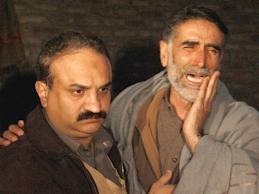
Grieving family in Swabi district (Credit: tribune.com.pk)

Islamabad, Jan. 2: Pakistani police on Wednesday searched for the gunmen behind the brazen murder of five teachers and two health workers, amid fears that public health campaigns would suffer and lead to a resurgence of polio and other preventable diseases.

There was no immediate claim of responsibility for the attack, which occurred Tuesday in Swabi, a city in the troubled northwest. The Pakistani Taliban has in the past vowed to target, among others, health workers involved in campaigns to wipe out polio.

Last year, 15 health and aid workers were killed in Pakistan, making the country one of the most dangerous in the world for aid workers, according to the British-based consultancy Humanitarian Outcomes. Most were women. Development sector experts now express concerns that those working on the ground will shy away from assignments.

“In the past, local volunteers, be they teachers, medical workers or social mobilizers, considered themselves safe and worked hand in hand with foreign aid workers and paramilitary personnel in even the most dire of circumstances,” says Hassan Belal Zaidi, a development and communication specialist, based in Islamabad. “But now, it would not be unreasonable for them to think twice and even refuse to travel to remote parts of the country if they know there is a chance they may get shot.”

The six women and one man were traveling in a van when gunmen on motorcycles stopped it Tuesday afternoon after it left a children’s community center, according to Abdur Rasheed Khan, chief of the Swabi police force. The four gunmen took a 4-year-old boy belonging to one of the women from the van, and then raked the vehicle with gunfire, he said. The child was unharmed and was later turned over to police by bystanders, he said.

Recommended: How much do you know about Pakistan? Take this quiz.

These murders come a few weeks after nine health workers with national polio campaign were killed in different parts of the country in what police said was a coordinated attack. That prompted the Pakistani government and the United Nations agencies to suspend their vaccination drive for the disease, which has seen a uptick in cases in recent years.

Pakistanis one out of the three countries where polio persists; at least 57 cases were registered in 2012. The World Health Organization last year warned Pakistan that it could face travel and visa restrictions and sanctions imposed by other countries if polio continues to spread

Distrust of public health initiatives like the polio campaign is particularly strong in districts of Pakistanwhere religious extremists have tightened their grip. That sentiment deepened in 2011 after the US raid that killed Osama bin Laden. A CIA-led operation to confirm Mr. bin Laden’s location in the city of Abbottabad used a hepatitis B vaccination campaign to gather DNA evidence on bin Laden.

The recent attacks are likely to further frighten people from working with foreign and Pakistani aid and development organizations, says Bushra Arain, chairwoman for the All Pakistan Lady Health Workers Welfare Association, which counts more than 100,000 registered members.

“We are the backbone of Pakistani health sector. If the attacks continue, with the state showing the inability it currently is demonstrating in stopping us from being targeted, we will stop working,” Ms. Arain says.

The Taliban and affiliated groups are targeting aid workers for several reasons, says Khadim Hussain, who heads one of the largest private charity school networks in the northwestern Khyber Pakhtunkhwa province. First, the militants think aid groups have an anti-Muslim agenda, spying on the local population, a suspicion that was deepened by the raid on bin Laden. Secondly, the groups equate health campaigns with modernizing society, in opposition to some fundamentalist tenets for Islamic radicals. Some groups also believe the vaccine is intended to sterilize Muslim children.

“If the attacks by the Taliban continue, there will be widespread de-motivation amongst aid workers, which I am already witnessing,” Mr. Hussain says.

While some development advocates say there needs to be a coordinated, public response by Pakistani and foreign NGOs to the attacks, others say the government should stop public education campaigns altogether and just allow aid workers to operate quietly.

“The less attention we get, the less vulnerable we will be as targets for the terrorists,” Ms. Arain says.

“We are involved with anti-polio drive, infant health awareness programs, family planning, etc. and if the government does not pull its act together, many deadly diseases can spread rapidly inPakistan,” she says. “The situation can get out of hand.”


US drone strike kills top militant Mullah Nazir in Pakistan

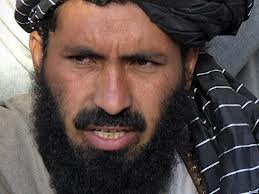
Maulvi Nazir (Credit: rferl.org)

US drone strikes today killed a senior Pakistani militant commander in the tribal region of South Waziristan, and also reportedly claimed the lives of three suspected al-Qa’ida operatives in Yemen.
Mullah Nazir, leader of one of Pakistan’s four main militant groups, was a target for US forces despite having agreed a ceasefire deal with Islamabad. Under the agreement his group was no longer launching attacks inside Pakistan, but was still active in Afghanistan. He also hosted al-Qa’ida members at his base in Pakistan’s tribal areas.

According to Pakistani officials, Nazir was in a meeting at a house in the village of Angoor Adda when he and eight others were killed. Four more militants were killed in Mir Ali in North Waziristan by a second wave of missiles. The attacks were the first by US drones in Pakistan this year.

In return for his co-operation, Nazir was allowed to run his fiefdom with little interference from the Pakistani army. He had either killed or chased out his tribal and political enemies and recently ordered that polio vaccinations in the area be stopped, declaring the progamme to be a CIA spying ploy and also an invidious plot to make Muslims infertile. The ban was followed by murder of health workers in the region.
But it was the Mullah’s activities in Afghanistan that made him a prime target for the Americans. His group was responsible for a rise in suicide bombings and also for sending Punjabi Pakistani fighters across the border to bolster the Afghan Taliban, who have suffered heavy losses.

Pakistan’s former chief of intelligence in the country’s north-west, retired brigadier Asad Munir, maintained that Nazir’s killing will “complicate” the fight against militants in the tribal region, and could prompt retaliatory attacks against the army in South Waziristan.

Yesterday’s other strike, in southern Yemen, was the fifth by a pilotless plane in the country in just 10 days. The US has recently stepped up its assault on Al-Qa’ida in the Arabian Peninsula, the terror network’s Yemeni wing which is regarded as its most dangerous by many in the West. A government official shortly after yesterday’s strike said the attack was by a Yemeni aircraft, but locals said it came from a missile-firing drone.

US drone attacks in Pakistan, which have increased markedly under President Obama, have long been hugely controversial issue. Pakistani leaders have condemned the infringement of their sovereignty and stressed that large numbers of civilians die in the strikes.