Revealing a Gap Between the Leaders and the People

WESTFIELD, Mass. – A group of women from India and Pakistan who came here for a peace conference in April returned home to find their countries on the brink of a nuclear catastrophe. One of the delegates wrote back to me about the “horrific atmosphere of war,” which can be averted, she said, only through “sheer good luck.”

Luck, of course, plays a magnified role in the lives of many on the subcontinent who cannot rely on receiving the staples that most Westerners take for granted. But sheer chance is not what anybody wants to think is the only thing between rice-for-lunch-as-usual and a nuclear conflagration that U.S. experts estimate could kill as many as 12 million people.

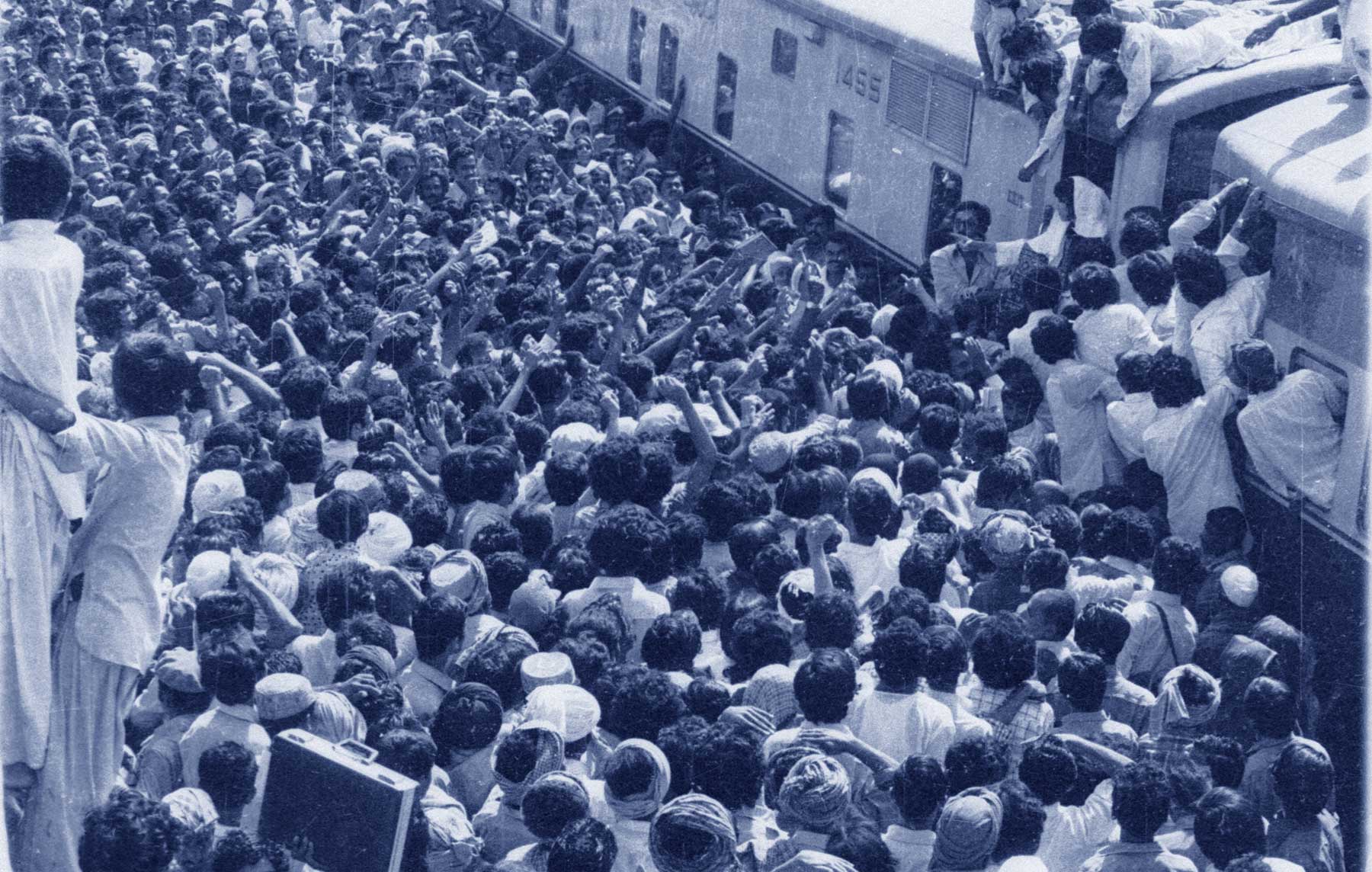
Yet that is what the escalating political rhetoric has made women like these believe — that the tensions, the saber-rattling, the missile tests and the brutal deaths on either side of the Line of Control in predominantly Muslim Kashmir have less to do with the hopes of the ordinary people than with the self-serving and mercurial goals of their leaders. With a leader like President Gen. Pervez Musharraf, who came to power in 1999 in a military coup, Pakistanis fear all the more that their country’s response will be a military one. How ironic it was, one Indian delegate pointed out during the conference, that with flights and overland travel between their countries cut off, these women had to travel to the United States — more than 7,000 miles away from home — in order to meet face to face with their counterparts.

The delegates had gathered at the conference, titled “Women of Pakistan and India: Rights, Ecology, Economy and Nuclear Disarmament,” at Westfield State College just as the war clouds were forming over the subcontinent. Tensions had been building since January, when India accused Pakistan of supporting the Kashmiri militants’ attacks on its parliament in Dehli on Dec. 13 — and retaliated by massing its troops on the border. The potential for a nuclear exchange has since been triggered by the Islamic militants’ attack on an army camp in mid-May. The raid killed more than 30 soldiers and family members. That’s when Indian Prime Minister Atal Bihari Vajpayee rallied troops for an all-out war. In a show of defiance, Pakistan tested three missiles last week (all of them named after Muslim conquerors of India) that are capable of launching a nuclear attack on the Indians. The United States is taking all of this seriously, urging Americans to get out of India and withdrawing all but essential embassy personnel.

For the 10 women from India and Pakistan, coming to Westfield was an occasion to analyze how governments on each side had hijacked discourse to portray the other as the “enemy.” Growing up in Pakistan, I was a witness to the constant hammering by state-controlled television about “Indian atrocities in occupied Kashmir.” In fact, the phrase masla-i-Kashmir (“the problem of Kashmir”) has for me become a metaphor for any problem that can never be solved.

I heard those thoughts echoed in the views of the Indian women at the conference. Journalist Kalpana Sharma blamed her nation’s worsening relations with Muslims, and by association with Pakistan, on the rise of the Hindu fundamentalists in India — the ruling Bharatiya Janata Party (BJP) and its coalition partner, the Vishwa Hindu Parishad (VHP). India, Sharma said, had buckled under fundamentalist pressure and escalated its military budget after the disastrous conflict near the Kargil area of Kashmir that nearly led to war in 1999. And the costs for ordinary people are clear. India has cut back on the social sector, she said, and instituted higher taxes on its people.

For Anis Haroon, director of a women’s non-governmental organization in Karachi, the U.S. support for Musharraf after Sept. 11 “had carved out a permanent role for the army in Pakistan.” This, she said, had come with costs, strengthening the military crackdown on demonstrations by political parties, civil liberties groups and women protesting against discriminatory laws. In early May, for example, Pakistani authorities arrested women gathering to oppose the Hudood Ordinances, which demonstrators say end up punishing female victims of rape.

Civil liberties have taken a beating inside India as well, agreed the Indian women. Ruchira Gupta, a member of a women’s group in Bombay, pointed to the Indian parliament’s passage of the Prevention of Terrorism Act (POTA) on March 26 as an example. POTA was advocated by BJP Home Minister L.K. Advani to counter what he called “the terrorism” launched by Pakistan. But Gupta argued that the act would cramp the press, militarize the society and lead to injustices for Muslim minorities.

Both governments, these women believed, were responsible for recent atrocities. The Indians blamed the massacre of Muslims in Gujarat in February following an attack on Hindus in a train on the “frenzy whipped up by the BJP” which forms the central government in Gujarat. The Hindu delegates said that organizations they belonged to had visited the area to distribute food and clothing to Muslim victims. Correspondingly, Pakistani delegates said that the Gujarat violence had not resulted in reprisals against Hindus in Pakistan — showing that such violence is not supported by ordinary people.

Indeed, my experience shows that all too often it is the self-serving leaderships in the two countries that thwart the people’s desire for peace. I saw this firsthand in 1995. As a journalist, I was invited to join the official Pakistan delegation to the Fourth World Women Conference in Beijing. The country was then ruled by Prime Minister Benazir Bhutto, who was keen to portray a liberal image at the conference. But we were instructed by a male leader of our group to counter the Indian delegates each time the subject of Kashmir came up. I watched as the leaders of both the Indian and Pakistani delegations engaged in allegations and counter-allegations over Kashmir. Slowly the hall began emptying as U.N. delegates walked out of a meeting that was supposed to unite the women of the world.

The discussions at Westfield did not fracture along these lines because the women were not here to promulgate their governments’ policies. Instead, they discussed how Sept. 11 has caused India and Pakistan to vie for U.S. attention over Kashmir. Even as India conducts its propaganda war against militants, it stopped Kashmiri women from attending our conference. The pressure was coming from the Hindu right wing, who, as Indian delegate Urvashi Batalia noted, had been cashing in on the “demonizing of Muslims.”

U.S. dependence on Pakistan in its fight against terrorism appears to have given legitimacy to the military government, argued Zubeida Mustafa, a senior editor from Pakistan’s daily Dawn newspaper. In Pakistan’s April referendum, journalists observed few voters at the polling booths. A colleague wrotethat a polling officer he visited had recorded only 125 votes by closing time. The officer told him rather casually that he forged the remaining votes after deadline because the local police directed him to show a voter turnout of nearly 900 and to ensure a “yes” vote of around 98 percent, giving Musharraf five more years in office.

With only the facade of being elected, Pakistan’s military government has not had to answer to its people about the failure to improve law and order. Earlier this year, targeted killings of Shia doctors by Sunni extremist groups forced physicians to flee the country. However, no action was taken until last month, when a suicide bomber killed 14 people in Karachi, including 11 French men working on a submarine project. Under severe international pressure, the Musharraf government cracked down on the Sunni militant groupLashkar-i-Jhangvi — which has been linked to the killings of Shia doctors. Later, three members of this same group were accused in the brutal murder of American journalist Daniel Pearl.

In December, when I last visited Pakistan, I was curious to see how the Musharraf government would rein in Kashmiri militants. The Islamic militants who were brought into the region by the United States during the Cold War had turned to jihad in Kashmir after the Soviets withdrew from Afghanistan in 1989. Since then about two dozen militant Islamic groups fighting for Kashmir under the United Jihad Council have established headquarters in Pakistan.

It’s not as if Kashmiris welcome such support. One Kashmiri from Srinagar, Farooq Lone, who now lives in Islamabad, told me that Kashmiris are “fed up” with Pakistan-based militants who attack Indian forces and leave the Kashmiris to face the vengeance of the repressive Indian troops. More than 35,000 people have been killed in Kashmir since the militants entered the fray 13 years ago. Lone’s family supports the All Parties Hurriyet Conference, whose moderate Kashmiri separatist leader, Abdul Ghani Lone, was recently assassinated. Although India has never allowed a plebiscite in which the Kashmiris could decide their own fate, the Indian government had been wooing moderates such as Lone for elections planned in Kashmir in September. His murder deals a further blow to any peace prospects. And it is a further example of the voice of the people being stifled.

The issue of Kashmir — left dangling by the British in 1947 when they divided India and then departed without forcing a plebiscite — has come to haunt the United States almost 55 years later. It is an issue that is not going be resolved by luck or through a U.S. admonition to Pakistan to stop abetting militants. Instead, the United States will have to throw its weight behind the United Nations to enable the people of Kashmir to decide their own fate. That appears to be the only choice if the world is to be successful in fighting the roots of terrorism.

Source: Washington Post
A Future Veiled in False Hopes

Twelve years ago, I was astonished by what I found on a trip from my native Pakistan to Afghanistan. I couldn’t have imagined a neighboring Muslim country with so many women in public places. Each morning, the Afghan capital was abuzz with young professionals on their way to work, most dressed in Western clothes and some even in miniskirts and high heels as they vied with their fashion-conscious counterparts in Paris.

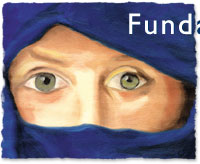
Kabul University, where I saw more female than male students, was another surprise. But even then, the occasional gunfire and bomb blasts in the city — ruled by Soviet-supported President Najibullah — were a reminder that these freedoms could prove elusive. Young women on campus, clutching their notepads in the streaming February sunlight, told me apprehensively, “If the mujaheddin take over, they will force us to veil.” The encumbering full-length burqas that women now have to wear have become a symbol for Westerners of the ruling Taliban government’s oppressive policies.

Even President Bush acknowledged as much last week when he condemned the current regime under which “women are imprisoned in their homes, and are denied access to basic health care and education.” But it would be an oversimplification to imagine that simply ousting the Taliban will restore basic human rights to women there. Indeed, in its determination to use whatever means necessary to destroy Osama bin Laden and his al Qaeda network, the administration is in danger of exacerbating the rivalries among Afghanistan’s tribes, whose practices are shrouded in traditions few Americans comprehend.

Even though there has been much talk in the West about how to establish a broad-based post-Taliban government that would guarantee the rights of women and ethnic minorities, the United Nations has not seriously begun addressing the role of women in any future form of government. If history is any guide, neither a government led by the exiled former king, Mohammed Zahir Shah, nor one dominated by the Northern Alliance would readily grant women freedom. Instead, the dramatic changes in women’s fortunes over the past century are testimony to their fragile position in Afghanistan’s oft-rent social fabric. I got a clear sense of that during my 1989 visit.

Although many Afghan women I spoke with expressed trepidation about a takeover by Islamic fundamentalists, they could not have predicted how oppressive their lot would soon become. After all, they grew up in a relatively liberal Muslim society; many in Kabul and Kandahar had working mothers — nurses and doctors, engineers, journalists, factory workers and, of course, teachers. Soviet forces had withdrawn from the country just two weeks before my arrival, and the question foremost on everyone’s mind was whether the Soviet-backed Najibullah government would survive the onslaught by the Islamist radicals.

As if anticipating his eventual death at the hands of Taliban fundamentalists, the embattled Najibullah was clearly taking no chances — and he was even recruiting women to help him. At a training school in Kabul, I came across a female trainee reserve force engaged in combat exercises. They told me that their job was to arrest and hand over mujaheddin suspects to authorities. They knew full well what a formidable force the mujaheddin had become. With their most radical factions in Northern Pakistan, they were receiving millions of dollars’ worth of arms from the United States, funneled through Pakistan’s military ruler, all directed at the goal they would accomplish a few years later — removing Najibullah from power.

I asked Afghan officials then whether such threats of future instability might put women’s freedom on the line. The president of the Afghan Women’s Council at the time, Massuma Esmaty Wardak, argued that, on the contrary, women’s emancipation was deeply rooted in Afghan history. She pointed out that the country’s most famous reformer, King Amanullah, who was inspired by Turkey’s secular nation builder Mustafa Kemal Ataturk, encouraged sweeping changes for women in the early 20th century. He introduced Western dress, she pointed out, sent girls to study abroad, banned the sale of women, raised the marriage age and abolished the tribal custom known as levirate (where a widow is obliged to marry her brother-in-law).

What Wardak and others I talked to failed to mention was that King Amanullah was ousted in 1929, after a brief reign, when conservative tribesmen revolted against his liberal policies. Thereafter, King Zahir Shah, Afghanistan’s longest-reigning monarch (1933-1973) — whom the U.N. has now selected to head the post-Taliban government — slowed down the changes for women. Yes, women came to enjoy greater liberation than in some other Muslim countries, but encouraging freedom also risked provoking a backlash from the conservatives.

Ever since, the role of women has continued to reflect the volatile nature of Afghan society — and of the dangers of trying to alter traditions by imposing outside standards on the people. The Soviet occupation that followed the bloody communist Saur Revolution in 1978 attempted to force top-down changes in Afghanistan. Peoples Democratic Party of Afghanistan (PDPA) workers fanned out into the villages to stop Afghans from selling their daughters and coerced the girls instead to go to school. Conservative tribesmen retaliated by murdering PDPA workers.

These changes also triggered a vast exodus of Afghan tribes. Some 3 million Afghans fled the country. Many of those who grew up as orphans of war in Pakistan’s refugee camps have become today’s Taliban; others are that regime’s fiercest critics. The most militant Islamist groups who resisted the Soviet influence banded together under mujaheddin leader Gulbuddin Hekmatyar in Peshawar, northern Pakistan. They objected fiercely to Muslim women not wearing the veil and to their working outside the home. Some of his supporters threw acid on women wearing Western dress in Kabul.

When I interviewed Hekmatyar in Karachi in 1986, I was surprised to find a soft- spoken man who was fluent in English. But his supporters included Pakistan’s Jamaat-e-Islami, the radical Islamist party that enforced gender segregation at Karachi University with acid attacks on female students. (This group has now given an ultimatum to the Pakistani government to stop supporting the U.S.-led anti-terrorist coalition or be overthrown.) Hekmatyar has refused to join the Northern Alliance now backed by the United States in its battle with the Taliban. But many other mujaheddin leaders are members of that alliance, and even less radical ones than Hekmatyar punish women who refuse to wear a burqa.

The tribal beliefs in the submission of women go far beyond the Taliban. The stability that the Taliban offered when it snatched power from the warring mujaheddin in 1996 came at a further cost to women. Made up of ethnic Pashtuns, the Taliban enforced the strict Pashtunwali code of honor that requires women to be treated as the property of their men. The militia barred women from working in the professions. Without female teachers, schools soon closed. The Taliban issued a decree that forbade all girls from going to school. Women who organized the early protests against the ragtag militia were beaten back.

Only two ways of earning a living were left open to them — beggary and prostitution. Last week I spoke with two Afghan women who have been helping refugees as U.N. staff. They told of women’s isolation, cowering in their houses behind darkened windows so that they cannot be seen from the street. Few can read. Many are depressed. Nafisa Nezam, who was in Northern Afghanistan until last month, said that the Taliban have “brought about a new interpretation of ‘jihad’ to mean fighting women who wear lipstick, nail polish and jewelry.” Some have reputedly had their fingers cut off for painting their nails.

There have been some brave voices of dissent. Afghan women in Pakistan have banded together as the Revolutionary Association of the Women of Afghanistan (RAWA). The group’s members told me in Islamabad in 1999 that they lived in mortal fear of being discovered. They know how the extremists treat women who dissent. RAWA’s founding president, Meena, was murdered in 1987 — allegedly by the mujaheddin — for speaking out against the fundamentalists. About half of the 4 million or so people who fled Afghanistan over the past 20 years are women, and many of them would love to return to their home country once the Taliban is overthrown.

Among them, Tahira Shairzai, a former schoolteacher in Kabul who now works in the United States, told me she favors the U.N. choice of an interim government headed by King Zahir Shah. The 86-year-old exiled monarch shares Pashtun ethnicity with the Taliban, but he is popular because he treated ethnic groups even-handedly during his 40-year rule of Afghanistan. Tahira also holds out hope that the Northern Alliance, which allows girls’ schools to remain open in the area it controls, will take a positive attitude toward working women. However, the past behavior of the Alliance leaders offers little indication that women’s rights will be taken seriously under the next regime.

A mishmash of conservative and more moderate tribal leaders, the Alliance is united for the sole purpose of combating the Taliban. A recent meeting of anti-Taliban leaders in Peshawar demonstrated that women’s rights do not figure in their deliberations. What’s more, as U.S. bombs hit civilians, the Pashtuns are becoming even more radicalized. The United States has had little success in wooing moderate Pashtuns away from the Taliban — a move that the administration recognizes is necessary not only to win the current war but because Afghanistan’s future stability depends upon cooperation among tribal factions.

As the U.S. bombing continues, thousands of armed Pashtun tribesmen are gathering on the Pakistan-Afghan border to fight alongside the Taliban. Political analysts I have spoken with in Pakistan predict that even if the Taliban is routed, it will likely withdraw into the hills and fight the new government. Moreover, the Northern Alliance could plunge into internecine strife. So although there is no doubt in my mind that women will fare somewhat better if the Taliban is overthrown, I wonder what comes next. Unless there is a means of ensuring durable peace, women’s rights do not have a fighting chance in Afghanistan.

Source: Washington Post

Fundamentalism and Social Exclusion

The emergence of fundamentalist movements in Muslim countries, more properly known as Islamism, is being viewed by some scholars as the last wave of anti-imperialism of the 20th century. Muslim fundamentalist movements that show militancy against Western colonial influences include the Hezbollah and AMAL in Lebanon, the HAMAS in Palestine, the National Islamic Front in Sudan, the Islamic Salvation Front in Algeria, the Muslim Brotherhood in Egypt, Khomeinism in Iran, the Jamiat-I-Ulema Islam (with its multiple splinter groups) in Pakistan, the Mujahideen and the Taliban in Afghanistan.

While the Islamists have different interpretations of the Sharia (Islamic jurisprudence), they believe that all Muslim societies are subjugated and subordinated because of their deviation from the true Islamic path. When Islamists blame the West for co-opting their leaders, they also use Islam as a political ideology to mobilize the disenfranchised Muslim ‘Umm’ (community of believers) against the “corrupting” and “self-serving” ways of the West.

Gender and Muslim Fundamentalism

Women form the core of Islamist debate. Muslim fundamentalists across the board agree on restoring complementary roles between men and women based on their biology – men as wage earners and women as mothers and homemakers. Given the traditional, patriarchal Muslim view of women’s sexuality being ‘disruptive of the social order because of her power to attract the opposite sex,’ Islamists demand that women be veiled and segregated from men at every level of society.

The extremist behavior of fundamentalists and Islamists in particular has proved harmful for the rights of women wherever they have captured state power. Their promulgation of “Islamist” laws and policies in Pakistan, Iran and Afghanistan, have introduced even more patriarchal norms into these predominantly feudal and tribal societies, and attempted to erode their existing diversity.

The Veil and Four Walls – Women in Pakistan

The Islamists supported the military government of Zia ul Haq, who took over in a military coup in Pakistan in 1977 and ruled for the next 11 1/2 years. This was the period when the concept of ‘chadar and chardiwar’ (veil and four walls) was pushed upon Pakistan women. Women began being discriminated against in the workplace and in the streets. The state used the electronic media to mount scathing attacks on working women and projected the “Islamic woman” as devoted to home and family.

The Zia government passed a series of laws against women. The Zina Ordinance (part of Hudood Ordinances, 1979) makes sex outside marriage a crime against the state. It also does not give maximum sentence on the basis of women’s testimony. Discounting women’s testimony has to date resulted in imprisonment for thousands of poor women, who have been accused of adultery or even been victims of rape. In addition, the equality granted to women under Pakistan’s constitution was subverted with the passage of the Laws of Evidence, 1984 (in which two women’s testimony is equated with one man in financial matters) and the Qisas and Diyat Ordinance, 1985 (in which the blood money for a deceased woman is half that for a man). 1

The effects of the Islamist ideology have seeped into the rural areas of Pakistan where customary laws hold sway. In the last two decades there has been an appreciable increase in tribal customs like honor killings in which the unfortunate woman and her lover can be killed by her immediate family and get away with a lesser sentence.

Religious Minorities in Pakistan

The Blasphemy Laws, passed by General Zia ul Haq have deprived religious minorities in Pakistan – Christians, Hindus and Parsees (Zorastrians) – full citizenship. These laws award the death penalty for anyone charged with ‘blasphemy’ against Prophet Mohammed. At times they have been used as a pretext against non-Muslims who might be involved in a land dispute. Blasphemy charges are also used against the Ahmediya community, who offend the sensibilities of the mainstream Muslims by denying that Mohammed is the last Prophet.

Religious minorities in Pakistan have become further isolated because General Zia’s introduction of separate electorates. The latter requires non-Muslims to elect non-Muslim candidates. With reserved seats for non-Muslims, candidates are now required to contest elections on a countrywide basis rather than from a particular region. This, as non-Muslim voters have testified, makes the candidate unaccountable to his particular constituency and leads to a further neglect of the religious minorities.

The Classic ‘Islamist’ State – Iran

Iran has even less diversity than Pakistan in terms of its religious sects, ethnic communities and women’s movements. The Shia clerics who ushered in Ayatollah Khomeini’s revolution in 1979 had been in power for only two weeks when they decreed that women ought to be veiled and segregated. Iran became the classic ‘Islamist’ state where Khomeni received support from all sectors of society, including women, against the Shah’s pro Western policies. Once victorious, the Shia clerics pushed women into the veil, after referring to those in Western dress as “Westoxicated” and, the “painted dolls of the Shah.”

One of the first acts of the Khomeini government was to suspend the Shah’s Family Protection Act. In one go, women lost all their rights of family law. Although the FPA was restored in amended form in 1992, Iranian laws presently weigh heavily against women. Women are treated as subjects within marriage: men can divorce more easily and remarry without seeking permission from their wives, polygamy is more common, temporary marriage has been re-instituted and child custody made more difficult for women. The legal age for marriage for girls has been dropped to nine years, eliminating their chances for finding a life outside marriage and motherhood.

Perhaps the biggest challenge to middle-class women in Iran is the gender
segregation in education and employment. Female literacy has dropped. At the same time, forbidding girls to be taught by male teachers has significantly narrowed their education opportunities. Women’s employment has increased marginally after the 1979 Islamic revolution, but only because of their induction into sex segregated occupations like teaching, “female oriented” fields of medicine and in government agencies that deal with women.

Since the death of Khomeini in 1988, a relatively liberal breed of Shia clerics (presently led by President Khatami) has encouraged “Islamic feminists”. The latter, who are “deconstructing” the Quran and Hadith (sayings of the Prophet) work with secular feminists to improve women’s rights in Iran. They have had limited success. Even these “Islamic feminists” occasionally risk the wrath of hard-line clerics by publishing articles by women poets and interviews of filmmakers from outside the mainstream. Even more likely to get arrested are unveiled women or those espousing secular views.

Inside the Burqa – Outside the Decision-Making Process. Women in Afghanistan
The Taliban, a Pashtun ethnic group who have ruled Afghanistan since 1995, rode the wave of Islamic militants brought into the region by the United States, Pakistan, and Saudi Arabia to fight the Soviet Union’s invasion of Afghanistan. Though the Taliban has an Islamic fundamentalist image, its practices are tribal rather than Islamic. For example, it allows the ‘Jirga” (consultative body of male tribal elders) to make communal decisions on the basis of the Pashtunwali code of honor and shame. Women are totally excluded from participating in this decision-making process.

Since the Taliban took power in Afghanistan, they have imposed the ‘burqa’ – a voluminous covering which women must wear from head to foot with only a mesh for the eyes. Women have been barred even from their Islamic rights of inheritance. Instead, the Afghan tribes are now resorting to a pre-Islamic custom whereby widowed women are being inherited by their brother-in-laws or stepsons. Also, stricken by dire poverty, Afghan farmers (who previously received a bride price for their daughters) are now selling their daughters to pay off loans.

Today Afghanistan tops the list of fundamentalists attempting to stamp out diversity. About 100,000 women teachers, doctors, nurses, administrators and civil servants, who worked mostly in Kabul, have been sent home. Primary schools for girls have been closed (for want of women teachers), while Kabul University – once bustling with female students – has been closed to women.

Religious Minorities in Afghanistan

From time to time, the Taliban clashes with the other minorities – Hazaras, Tajiks, and Uzbeks – who remain unrepresented in this Pashtun based government. Tajik leader Ahmed Shad Massoud continues to fight the Taliban from the North of Afghanistan. In addition, the Sunni Taliban and the Iranian Shia militants have been sighting their battles on Pakistani soil. This has created sectarian clashes between the Shai and Sunni population in Pakistan, mostly to the detriment of Pakistan’s minority Shia population.

The Islamic fundamentalists export of terrorism to the West has now come full circle. Indeed, if any lessons are to be derived from the emergence of Islamists, it is to recognize that the West acted short-sightedly in the background of the Cold War and the oil crisis. The U.S. support to the fundamentalist regimes in Pakistan and Afghanistan not only weakened Pakistan and Afghanistan’s civil societies, it sparked the return of illegal immigration, heroin, debt liabilities and terrorism. It is high time the UN, world governments and religious leaders realized that a hard-line approach to the Muslim world will only elicit more fundamentalist responses – to the detriment of all concerned.

Nafisa Hoodbhoy has worked as a journalist for the last 16 years in Karachi, Pakistan for the English language daily newspaper,`Dawn’. In 1995 she was nominated by Amnesty International as a ‘human rights defender. Presently, she is a Visiting Lecturer at Amherst College, teaching a course on the `Regulation of Sexual Activities and Identities’ relating to Pakistan, Iran and Afghanistan.

Source: ICSW