Gwadar the tiger

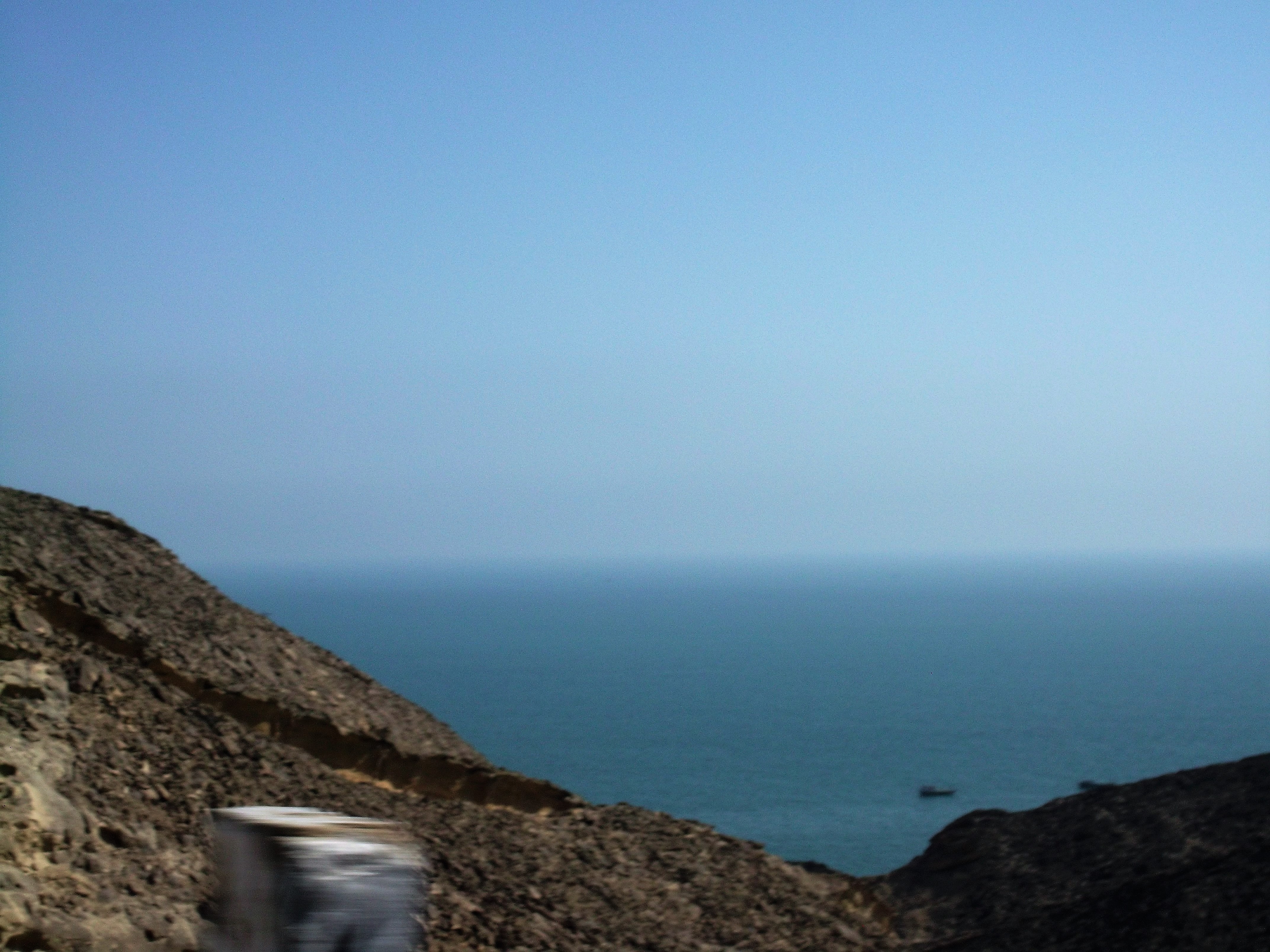
PAKISTAN would be Asia’s and Gwadar Pakistan’s tiger with the completion of projects under the China-Pakistan Economic Corridor (CPEC), said Nawaz Sharif at a recent public meeting held in Balochistan’s port city. “I am the first prime minister who stayed overnight in Gwadar as earlier the leaders neglected the area,” he remarked.

He also claimed that peace had returned to the insurgency-prone area during his tenure and gave the credit to the armed forces, police, local administration and the nation. I wish he had taken the nation into confidence regarding progress on the aspect of the National Action Plan pertaining to reconciliation with the Baloch sub-nationalists involved in a ‘low-intensity insurgency’ in their homeland. Former chief minister Dr Abdul Malik had initiated the process and also met some of the dissident leaders ensconced in European safe havens. Have policymakers in Quetta and Islamabad taken any confidence-building measures to bring about a reconciliation? I am afraid the security establishment strongly feels that any level of militancy or insurgency can be tackled with force and coercion.

Meanwhile, the London-based, self-exiled Khan of Kalat Mir Suleman Ahmedzai brands China and Pakistan as ‘plunderers’ and tilts toward India to stop or subvert CPEC’s execution. He recently told the media that Indian PM Modi was a “friend of Balochistan”. Then there is Baloch Liberation Army leader Hyrbyair Marri who too is safely based in London and trying to create unrest in the Bolan Pass area near Quetta and Sibi. Similarly, Brahmdagh Bugti is inciting his followers from his cool Geneva haven to play with fire in Sui and Dera Bugti areas. Remember, these are Baloch sardars who, while living in plush European lands, cannot inspire the poor and downtrodden people of Balochistan to follow their diktat.

The festering wounds that have given impetus to the Baloch insurgency should be healed.

The real threat to the state agencies comes from the dissident Baloch youth and the Baloch Liberation Front leadership perched in the mountainous terrain around Turbat, Gwadar, Panjgur and Kharan. A bright, middle-class student, Dr Allah Nazar, started to lead the youthful insurgents in 2006. These angry young Baloch men and women are the ones who require our state security stakeholders’ attention. Instead of alienating them, efforts should be made to give them respect and listen to their voices of dissent. Their spokesmen are, in fact, those Baloch politicians who chose ballot over bullets and contested the 2013 elections. These elected leaders are not against Pakistan.

A multi-party conference (MPC) on CPEC was hos¬ted by the Balochistan National Party-Mengal in Islamabad on Jan 10, 2016. It approved the following resolutions: one, complete control of the Gwadar Port mega project should be handed over to Balochistan in accordance with the Constitution. Ownership rights and powers to make decisions on Balochistan’s resources should be accepted. Two, the unanimous resolution passed at the MPC convened by the prime minister on May 28, 2015 should be implemented in letter and spirit. CPEC’s western route should be completed first and people living in undeveloped areas of Khyber Pakhtunkhwa, Punjab and Balochis¬tan must derive benefits from all aspects of CPEC.

Three, steps should be taken to prevent the Baloch becoming a minority in their province. There should be a complete ban on the issuance of identity cards, local certificates and passports from Gwadar to new settlers so that their names are not included in electoral rolls. Four, facilities of clean drinking water, hospitals, schools, technical colleges and centres for skilled persons related to the port and a maritime university should be established, and people of Gwadar given preference in them. Five, locals should get priority in appointments at Gwadar Port and related mega projects. Six, in order to prevent local fishermen from economic deprivation, alternative means of earning should be provided. All restrictions on people of Gwadar, including an unannounced ban on political activities, should be removed and they should be allowed freedom of movement.

Seven, people of Gwadar should be provided free medical facilities, technical training in foreign countries and scholarships in reputed educational institutions in other provinces. Eight, in order to overcome Gwadar’s backwardness, its residents should be given free education and health facilities. They should be given immunity on taxes and utility bills for three years. Nine, the confiscation of thousands of kanals of local people’s ancestral land was unjust and these should be returned to their real owners. Ten, there should be legislation to ensure partnership of local people in investment projects in Gwadar. Eleven, locals should be inducted into security forces to protect their rights and self-respect.

These resolutions by various mainstream political forces reflected a consensus that the state should have addressed so that the festering wounds that have provided impetus to the Baloch insurgency could be healed.
Another significant development was the decision to lay a railway track to connect Gwadar with the Iranian port city of Chabahar. Chief Minister Sanaullah Zehri and an Iranian delegation led by the governor of the Iranian province of Sistan-Balochestan, Aaqa Ali Hosth Hashmi, reached the agreement on Jan 11, 2016 in Gwadar. Officials from both sides discussed security, drug trafficking, illegal border crossing, etc and also decided to take up plans for border trade, a new shipping service and flights from Gwadar to Iranian cities.

This appeared to me to be too good to be true. I am reminded of US ambassador Ryan Crocker’s farewell courtesy call on me in 2007 while I was IGP Balochistan. I broached the subject of the Iran-Pakistan gas pipeline. He said it would not be feasible due to the poor law and order situation in Balochistan. I told him Pakistani security agencies were capable of providing secure transit to a pipeline parallel to the Gwadar-Karachi coastline. After some hedging, he reluctantly conceded that the project was not in US interests.

So that is it. National interests of global powers determine what goes on in our region. For once, we should start thinking what is best for us in the regional context. Neighbour Iran is too vital for us as a potential CPEC trading partner.

The strategically located and resource-rich province of Balochistan calls for mature, long-term decisions by all stakeholders, particularly the federal government and all-powerful military establishment. The voice of the Baloch should not be ignored any longer.

The writer is former IGP Balochistan.

Published in Dawn, April 1st, 2017

Pakistan blast: Parachinar bomb leaves at least 22 dead

At least 22 people have been killed and more than 70 injured in a blast outside a mosque in north-west Pakistan.
The explosion happened in the city of Parachinar, a mainly Shia Muslim area on the Afghan border.
Reports say a car packed with explosives was left near the women’s entrance of the mosque as people gathered for Friday prayers.

A faction of the Pakistani Taliban (TTP), Jamaat-ul-Ahrar (JuA), said it had carried out the attack.
Many shops and vehicles close to the mosque were damaged in the powerful blast.

“People were screaming for help… When I looked back everything was filled with dust,” shopkeeper Sardar Hussain told AFP news agency.

The Pakistani Army sent a helicopter to help take the injured to hospital.

A doctor at a local hospital said an appeal was being made for blood donors to help treat the wounded.

“Patients are being brought to us in private cars and ambulances and we have received over three dozen patients so far,” the doctor told Reuters news agency.

‘Security failures’ – By M Ilyas Khan, BBC News, Islamabad

This bombing in Parachinar, in Kurram district, is the second since January, and just as deadly. Many among the injured are said to be in a critical state.

Kurram is the only Shia Muslim region in a predominantly Sunni country. Sunni hardliners, currently operating through different Taliban factions including the Islamic State group, consider them heretics and worthy of death. These groups have sanctuaries in Afghan and Pakistani areas surrounding Kurram, and have launched frequent attacks against civilians in Parachinar.

Locals blame the military for security failures and allege its policy of tolerating some Sunni militant groups has given extremists a new lease of life. They also point to the illegal border trade in the region, which they say goes on under the watch of the military and creates openings for militants to infiltrate.

Prime Minister Nawaz Sharif condemned the attack, saying his government would keep working to “eliminate the menace of terrorism”.

It was followed by protests in Parachinar as angry crowds accused the security forces of failing to protect them.

Russian military delegation visits North, South Waziristan

A Russian military delegation, accompanied by senior officers of the Pakistan Army, visited Miran Shah in North Waziristan Agency and Wanna in South Waziristan Agency, said a statement by the Inter-Services Public Relations (ISPR).

The delegation of the Russian army, the first ever to visit the conflict-stricken areas, was led by Deputy Chief of General Staff Colonel General Israkov Sergi Yuryevich.

“The delegation was briefed about Pakistan Army’s efforts to clear FATA from terrorists of all hue and colours,” said the ISPR statement.

The visiting Russian military officers were also briefed about border management on the Pak-Afghan border and socio economic development projects in the area.

“The delegation acknowledged and appreciated Pakistan Army’s achievements in the fight against terrorism and efforts to bring stability in the region,” added the statement.

Cooperation between the armed forces of Russia and Pakistan has grown in recent times.

In September 2016, a contingent of Russian ground forces arrived in Pakistan for the first ever joint Pak-Russian exercise.

Around 200 military personnel of both countries participated in the drills. The special operations drills codenamed ‘Druzhbha-2016’ — a Russian word meaning “friendship” — saw Russian troops and Pakistani special forces working in close cooperation.

Building upon the cooperation, Russian Navy’s largest anti-submarine warfare ship Severmorsk arrived in Pakistan for participation in the Aman 2017 international naval exercises in February 2017.

Pakistan also confirmed purchase of Mi-35 ground attack helicopters in 2015.

The Art of a Deal With the Taliban

WASHINGTON, March 29 — This year, America’s war in Afghanistan will pass a grim milestone as it surpasses the Civil War in duration, as measured against the final withdrawal of Union forces from the South. Only the conflict in Vietnam lasted longer. United States troops have been in Afghanistan since October 2001 as part of a force that peaked at nearly 140,000 troops (of which about 100,000 were American) and is estimated to have cost the taxpayers at least $783 billion.

Despite this heavy expenditure, the United States commander in Afghanistan, Gen. John W. Nicholson Jr., recently called for a modest troop increase to prevent a deteriorating stalemate. The fall of Sangin in Helmand Province to the Taliban this month is a tactical loss that may be reversed, but it certainly suggests the situation is getting worse. With the Trump administration’s plan to increase the military budget while slashing the diplomatic one, there is a risk that American policy toward Afghanistan will be defined in purely military terms.

Absent from the current debate is a clear statement of our objectives — and a way to end the Afghan war while preserving the investment and the gains we have made, at the cost of some 2,350 American lives. It has always been clear to senior military officers like Gen. David H. Petraeus, who was the American commander in Afghanistan from 2010 to 2011, as well as to diplomats like me, that the war could end only through a political settlement, a process through which the Afghan government and the Taliban would reconcile their differences in an agreement also acceptable to the international community.

The challenges of bringing about such a reconciliation are formidable, but the basic outline of a deal is tantalizingly obvious. Despite more than 15 years of warfare, the United States has never had a fundamental quarrel with the Taliban per se; it was the group’s hosting of Al Qaeda that drove our intervention after the Sept. 11 attacks. For its part, the Taliban has never expressed any desire to impose its medieval ideology outside of Afghanistan, and certainly not in the United States.

The core Afghan government requirements for a settlement are that the Taliban ceases violence, breaks with international terrorism and accepts the Afghan Constitution. The Taliban, for its part, insists that all foreign forces withdraw. No doubt, both sides have additional desiderata, but the basic positions do not seem unbridgeable. This is particularly the case now that the Islamic State has emerged in Afghanistan, in conflict with both the government and the Taliban.

Under President Ashraf Ghani and Chief Executive Abdullah Abdullah, the Afghan government has supported reconciliation efforts. And there is no question that ordinary Afghans overwhelmingly support peace, even as most also oppose a return of the Taliban’s brutal regime of the 1990s.

At its heart, the Afghan conflict is between rural traditionalists and urban modernizers, and this has been the case since Afghan Communists seized power in 1978. However, regional powers have also played a predatory role.
Pakistan’s cynical support for the Taliban is merely the most visible of the hedging strategies that various neighbors, including the Iranians and the Russians, have adopted to ensure that they have some armed Afghan faction beholden to their interests. A comprehensive political settlement would remove the security dilemma that drives these counterproductive interventions.

So what is the way forward for an Afghan peace process?

The first step is clear, and has come close to fruition over the years. The Taliban should be allowed to open an office, most likely in Doha, Qatar, to conduct peace talks with the Afghan government. This was very nearly accomplished in 2013, but the Taliban overreached by raising its flag and putting up signs identifying the office as representing the “Islamic Emirate of Afghanistan.” The American government and the Afghan government, under President Hamid Karzai, rightly rejected these trappings of an embassy, and the deal collapsed.

All potential partners, including the government of Qatar, have learned the lessons of that debacle and have every incentive to avoid repeating it. This is an area for quiet diplomacy, led by the United States.

Once talks begin, our government will have to define its position. Even after all these years of fighting, the United States sometimes deludes itself into thinking it is not a party to the conflict; the Taliban believes otherwise. In coordination with our Afghan allies, the United States should be prepared to put on the table the conditions under which we would consider pulling our forces out of Afghanistan. Any withdrawal would have to be phased in response to the Taliban’s living up to its commitments, including guarantees that Afghan territory will never be used to enable attacks on America.

The more difficult aspect of the discussion will be among the Afghans themselves as they address the central issues that have divided them for decades. The American position should be to ensure there is no backsliding from the progress Afghanistan has made on human rights, including women’s rights, and constitutional government.

Since there have been no negotiations yet, it is difficult to assess what the Taliban’s actual demands would be. Their concern about the Afghan Constitution may be simply that they were not a party to its drafting. Like other countries’ constitutions, Afghanistan’s can be amended.

The United States must remain committed throughout to strengthening the Afghan state, including support for the Afghan Army, so that the Afghan government delegation has a strong negotiating position. Any final settlement would have to include the terms under which the Taliban enters the political system under the Constitution, specific arrangements to ensure that Afghan territory would not be used to attack others and regional commitments to end proxy warfare on Afghan territory.

I hold no brief for the Taliban — two of my friends were murdered by the group. It is brutal and indiscriminate in its violence, and its position on women’s rights has rightly been condemned by the international community. But these are not good arguments for perpetuating conflict in one of the world’s poorest countries. That would not only be a disservice to the Afghan people, but would also probably be unsupportable among the American people.
We have a president who believes in the art of a deal. We should negotiate a hard bargain with the Taliban.
Richard G. Olson was the United States ambassador to Pakistan from 2012 to 2015 and the special representative for Afghanistan and Pakistan from 2015 to 2016.

Pakistan says starts fencing Afghanistan in `high threat zones’

Pakistan has begun building a fence on its disputed 2,500 km (1,500 mile) border with Afghanistan to prevent incursions by militants, Pakistan’s army chief said, in a move likely to further strain relations between the two countries.

Pakistan has blamed Pakistani Taliban militants it says are based on Afghan soil for a spate of attacks at home in recent months, urging Kabul to eradicate “sanctuaries” for militants.

Citing the attacks, Islamabad earlier this month temporarily shut the main crossing points along the colonial-era Durand Line border, drawn up in 1893 and rejected by Afghanistan.

General Qamar Javed Bajwa said initial fencing will focus on “high threat zones” of Bajaur and Mohmand agencies in the Federally Administered Tribal Areas (FATA), which border eastern Afghan provinces of Nangarhar and Kunar.

“Additional technical surveillance means are also being deployed along the border besides regular air surveillance,” the military said in a statement over the weekend, citing Bajwa.

There was no immediate comment from Afghan authorities.

Relations between Kabul and Islamabad have been tense in recent years, with both countries accusing each other of not doing enough to tackle Pakistani and Afghan Taliban militants.

Afghanistan has accused Pakistan of turning a blind eye to Afghan Taliban commanders on its soil and even of supporting the militant group, something Islamabad denies.

Bajwa said Pakistan was working on plans to “evolve a bilateral security mechanism” with Afghanistan.

“A better managed, secure and peaceful border is in mutual interest of both brotherly countries who have given phenomenal sacrifices in war against terrorism,” Bajwa added.

Pakistan has long harbored ambitions to seal its border, which is largely unpatrolled and mountainous for large chunks.

In 2007, the military said it was fencing and mining a 35 km (22 miles) stretch of border in the North Waziristan region of FATA to prevent militants crisscrossing the rugged terrain.

Efforts to establish a more permanent presence on the disputed frontier have angered Kabul. Last year, Pakistan’s attempt to build a barrier on the main Torkham crossing ended in brief cross-border skirmishes.

In recent weeks at least two U.S. drone strikes have targeted Pakistani militants on the Afghan side of the frontier.

(Writing by Drazen Jorgic)

Laptop ban hits Dubai for 1.1 million weekend travelers

DUBAI, March 25: Dubai International Airport and its flag carrier Emirates began implementing a ban on laptops and tablets on direct flights to the US Saturday, on one of the busiest travel weekends of the year.

1.1 million people are expected to pass through the busiest international airport as the city marks UAE spring break, Dubai Airports’ senior vice president for communications Anita Mehra said.

An estimated 260,000 travellers were expected to pass through each day from Friday through Monday. Dubai International Airport expects 89 million passengers this year.

The United States announced a ban on all electronics larger than a standard smartphone on board direct flights out of eight countries across the middle East. US officials would not specify how long the ban will last, but Dubai-based Emirates told AFP that it had been instructed to enforce it until at least October 14.

Travellers using 10 airports across the Middle East and North Africa are subject to the ban.

The ban also covers all electronics sold at Dubai Duty Free, Dubai Airports CEO Paul Griffiths told local radio earlier this week.

Government-owned Emirates operates 18 flights daily to the United States out of Dubai. In an attempt to appease its customers, the airline announced it would be offering complimentary packing and shipping services at gates to enable passengers to use their electronic devices after check-in and until boarding.

Adding to the complication on Saturday, a number of flights out of Dubai and Abu Dhabi airports were delayed due to thunderstorms, including an Emirates flight to Houston.

The US ban affects nine airlines from eight countries: Turkey, Morocco, Jordan, Egypt, the United Arab Emirates, Qatar, Saudi Arabia and Kuwait.

Britain has also announced a parallel ban, effective Saturday, targeting all flights out of Egypt, Turkey, Jordan, Saudi Arabia, Tunisia and Lebanon.

Abu Dhabi, home to UAE national carrier Etihad Airways, is one of the few international airports with a US Customs and Border Protection Facility, which processes immigration and customs inspections before departure.

“All Etihad Airways guests travelling to the United States clear US Immigration and Customs at the US Preclearance facility in Terminal 3, the only one of its kind in the Middle East,” read a statement emailed to AFP.

“When guests land in the US, they arrive as domestic passengers with no requirement to queue for immigration checks again.”

The bans have come under criticism for targeting majority-Muslim countries. The US ban in particular has raised eyebrows for covering airports from which US airlines do not operate direct flights.

The United States and Britain have cited intelligence indicating passenger jets could be targeted with explosives planted in such devices.

US Investigating Mosul Strikes Said to Have Killed Up to 200 Civilians

Baghdad, March 24: The American-led military coalition in Iraq said Friday that it was investigating reports that scores of civilians — perhaps as many as 200, residents said — had been killed in recent American airstrikes in Mosul, the northern Iraqi city at the center of an offensive to drive out the Islamic State.

If confirmed, the series of airstrikes would rank among the highest civilian death tolls in an American air mission since the United States went to war in Iraq in 2003. And the reports of civilian deaths in Mosul came immediately after two recent incidents in Syria, where the coalition is also battling the Islamic State from the air, in which activists and local residents said dozens of civilians had been killed.

Taken together, the surge of reported civilian deaths raised questions about whether once-strict rules of engagement meant to minimize civilian casualties were being relaxed under the Trump administration, which has vowed to fight the Islamic State more aggressively.

American military officials insisted on Friday that the rules of engagement had not changed. They acknowledged, however, that American airstrikes in Syria and Iraq had been heavier in an effort to press the Islamic State on multiple fronts.

Col. John J. Thomas, a spokesman for the United States Central Command, said that the military was seeking to determine whether the explosion in Mosul might have been prompted by an American or coalition airstrike, or was a bomb or booby trap placed by the Islamic State.

“It’s a complicated question, and we’ve literally had people working nonstop throughout the night to understand it,” Colonel Thomas said in an interview. He said the explosion and the reasons behind it had “gotten attention at the highest level.”

As to who was responsible, he said, “at the moment, the answer is: We don’t know.”

Iraqi officers, though, say they know exactly what happened: Maj. Gen. Maan al-Saadi, a commander of the Iraqi special forces, said that the civilian deaths were a result of a coalition airstrike that his men had called in, to take out snipers on the roofs of three houses in a neighborhood called Mosul Jidideh. General Saadi said the special forces were unaware that the houses’ basements were filled with civilians.

“After the bombing we were surprised by the civilian victims,” the general said, “and I think it was a trap by ISIS to stop the bombing operations and turn public opinion against us.”

General Saadi said he had demanded that the coalition pause its air campaign to assess what happened and to take stricter measures to prevent more civilian victims. Another Iraqi special forces officer, who spoke on the condition of anonymity because of the sensitivity of the subject, said that there had been a noticeable relaxing of the coalition’s rules of engagement since President Trump took office.

Before, Iraqi officers were highly critical of the Obama administration’s rules, saying that many requests for airstrikes were denied because of the risk that civilians would be hurt. Now, the officer said, it has become much easier to call in airstrikes.

Some American military officials had also chafed at what they viewed as long and onerous White House procedures for approving strikes under the Obama administration. Mr. Trump has indicated that he is more inclined to delegate authority for launching strikes to the Pentagon and commanders in the field.

This is the second time this week that the military has opened an investigation into civilian deaths reported to have been caused by American airstrikes. On Tuesday, Central Command said it was investigating an American airstrike in Syria on March 16 that officials said killed dozens of Qaeda operatives at a meeting place that activists and local residents maintain was part of a religious complex.

Pentagon officials said that intelligence had indicated that Al Qaeda used the partly constructed community meeting hall as a gathering place and as a place to educate and indoctrinate fighters.

This is indefensibly sloppy work by the military, and as the Commander-in-Chief will not take responsibility for his actions.

But the Syrian Observatory for Human Rights said that 49 people had been killed in what the group described as a massacre of civilians who were undergoing religious instruction in an assembly hall and dining area for worshipers. The group has produced photos taken at the site after the strike that show a black sign outside a still-standing adjoining structure that identified it as part of the Omar ibn al-Khatab mosque.

Chris Woods, director of the observatory, a nonprofit group that monitors civilian deaths from coalition airstrikes in Syria and Iraq, said that in March alone the number of reported civilian fatalities has shot up to 1,058, from 465 in December, the last full month of the Obama administration.

“We don’t know whether that’s a reflection of the increased tempo of the campaign or whether it reflects changes in the rules of engagement,” he said. But, he added, the recent spike in numbers “does suggest something has shifted.”

American military officials said that what has shifted is that the Iraqi military, backed by the American-led coalition, is in the middle of its biggest fight so far — the battle to retake Mosul from the Islamic State, also known as ISIS or ISIL.

In particular, the campaign for West Mosul has involved block-by-block fighting in an urban environment.
“There’s been no loosening of the rules of engagement,” said Capt. Jeff Davis, a Pentagon spokesman. “There are three major offensives going on right now, at the same time,” he said, citing the battle for West Mosul; the encirclement of Raqqa, Syria, the Islamic State’s de facto capital; and the fight for the Tabqa Dam in Syria.
Captain Davis said that the investigation was looking into whether Islamic State fighters were responsible for the explosion in Mosul, or if an airstrike set something off.

“There are other people on the battlefield, too,” he said. “It’s close quarters.”

American officials said that even the timing of the strike was still in question. Col. Joseph E. Scrocca, a spokesman for the American-led command in Baghdad, said in a statement Friday that the strike under investigation happened between March 17 and Thursday.

The civilian death toll in Mosul was already widely described as heavy on account of Islamic State snipers and bombs, and intensified urban fighting in which artillery has been used. But there have been numerous reports from witnesses, including rescue workers and residents fleeing the fighting, about bodies being buried under rubble after heavy air bombardment.

Many of the reports centered on the Mosul Jidideh neighborhood, where residents said airstrikes hit a number of houses in recent days, killing dozens, including many children.

Capt. Ahmed Nuri, a soldier with Iraq’s elite counterterrorism forces, who work closely with the American military and call in airstrikes, said on Thursday that his men, facing heavy sniper fire, helped collect five bodies from the rubble of a destroyed home. He said four of them were brothers — named Ali, Omar, Khalid and Saad — whose bodies were delivered to their grieving mother.

The mother, Captain Nuri said, identified the fifth dead body as that of an Islamic State sniper who had been firing at advancing Iraqi forces from the roof of their house.

Local officials have reacted with outrage at the latest civilian deaths, warning that they will make it more difficult to fully take the city, and will alienate civilians still in Mosul, whom the Iraqi government is counting on for assistance.

“The repeated mistakes will make the mission to liberate Mosul from Daesh harder, and will push civilians still living under Daesh to be uncooperative with the security forces,” said Abdulsattar Alhabu, the mayor of Mosul, using the Arabic acronym for the Islamic State.

Mr. Alhabu estimated that at least 200 civilians had been killed in airstrikes in recent days in Mosul.

Four dead, at least 20 injured in UK parliament “terrorist” attack

LONDON, March 22 (Reuters) – Four people were killed and at least 20 injured in London on Wednesday after a car plowed into pedestrians and an attacker stabbed a policeman close to the British parliament in what police called a “marauding terrorist attack.”

The dead included the assailant and the policeman he stabbed, while the other two victims were among those hit by the car as it tore along Westminster Bridge before crashing into railings just outside parliament.

“We’ve declared this as a terrorist incident and the counter-terrorism command are carrying out a full-scale investigation into the events today,” Mark Rowley, Britain’s most senior counter-terrorism officer, told reporters.

“The attack started when a car was driven over Westminster Bridge, hitting and injuring a number of members of the public, also including three police officers.

“A car then crashed near to parliament and at least one man, armed with a knife, continued the attack and tried to enter parliament,” Rowley said.

It was the deadliest attack in London since four British Islamists killed 52 commuters and themselves in suicide bombings on the city’s transport system in July 2005, London’s worst peacetime attack.

Reuters reporters inside parliament during Wednesday’s attack heard loud bangs and shortly afterwards saw the knifeman and the stabbed policeman lying on the ground in a courtyard within the gates of parliament.

A Reuters photographer saw at least a dozen people injured on the bridge. His photographs showed people lying on the ground, some of them bleeding heavily and one under a bus.

A woman was pulled alive, but with serious injuries, from the Thames, the Port of London Authority said. The circumstances of her fall into the river were unknown.

Three French schoolchildren aged 15 or 16 were among those injured in the attack, French officials said.

Several members of parliament (MPs) and senior officials were caught up in the chaos. Tobias Ellwood, a junior Foreign Office minister, was pictured attempting to resuscitate a man lying unconscious, reported to be the stabbed policeman..

The attack took place on the first anniversary of attacks by Islamist militants that killed 32 people in Brussels.
Prime Minister Theresa May chaired a meeting of the government’s crisis response committee.

“The thoughts of the PM and the government are with those killed and injured in this appalling incident, and with their families,” her office said in a statement.

London Mayor Sadiq Khan said there would be additional police officers on the city streets to keep Londoners and visitors safe.

“We stand together in the face of those who seek to harm us and destroy our way of life. We always have, and we always will. Londoners will never be cowed by terrorism,” he said.

Parliament’s lower House of Commons, which was in session at the time, was suspended and lawmakers were asked to stay inside.

In a telephone call with May, President Donald Trump offered Britain the full cooperation and support of the United States, the White House said. U.S. Secretary of State Rex Tillerson condemned the attack as “horrific acts of violence.”

German Chancellor Angela Merkel and NATO Secretary-General Jens Stoltenberg were among foreign leaders who expressed shock and solidarity.

Eyewitnesses described scenes of panic during the attack.

“I just saw a car go out of control and just go into pedestrians on the bridge,” said Bernadette Kerrigan, who was on a tour bus on the bridge at the time, in an interview with Sky News.

“As we were going across the bridge, we saw people lying on the floor, they were obviously injured. I saw about 10 people maybe. And then the emergency services started to arrive. Everyone was just running everywhere.”

“NO SIGNS OF LIFE”
Polish former Foreign Minister Radoslaw Sikorski, who witnessed the attack from a taxi as he crossed the bridge, said he saw five victims and made a video of the scene.

“I heard something that sounded like a small car crash. Then I looked out of the window and saw that there was one person lying on the asphalt,” he told Reuters.

“I did not see the face of the person lying on the asphalt, but the person was not moving, it was not showing any signs of life. One of the men I saw, his head was bleeding very badly. But the person I filmed — no, that person was not showing any signs of life.”

Journalist Quentin Letts of the Daily Mail newspaper told LBC radio that he had witnessed the stabbing of the policeman and the shooting of the assailant from his office in the parliament building.

“He (the assailant) ran in through the open gates … He set about one of the policemen with what looked like a stick,” Letts said.

“The policeman fell over on the ground and it was quite horrible to watch and then having done that, he disengaged and ran towards the House of Commons entrance used by MPs and got about 20 yards or so when two plain-clothed guys with guns shot him.”

In Edinburgh, the Scottish parliament suspended a planned debate and vote on independence as the news from London came in.

Britain is on its second-highest alert level of “severe” meaning an attack by militants is considered highly likely.

The most recent deadly attack in London to be treated as a terrorist incident was in May 2013, when two British Islamists stabbed to death soldier Lee Rigby on a street.

(Additional reporting by Kylie Maclellan, Elizabeth Piper, Costas Pitas, Alistair Smout, Michael Holden, Kate Holton, Elisabeth O’Leary, Andy Bruce, David Milliken and William Schomberg, Lidia Kelly; Writing by Estelle Shirbon; Editing by Stephen Addison, Guy Faulconbridge, Giles Elgood and Catherine Evans)

PML-N looks to make inroads into PPP’s powerbase

KARACHI, March 19: The ruling PML-N, which has its powerbase in Punjab, is looking to make forays into the stronghold of rival PPP after neglecting its Sindh chapter for almost four years. And as part of the plan, Prime Minister Nawaz Sharif will tour rural Sindh to announce development packages in an effort to garner support for his party.

Premier Sharif alluded to the plan during his interaction with the Sindh-based leaders of his party in Karachi last week. “After Lahore, we have to win Lyari [the stronghold of the PPP in Karachi],” he had said. Sharif was advised by party leaders to live up to his earlier pledges of turning the focus to Sindh in order to change the perception that the PML-N’s politics was Punjab-centric.

PM ‘committed to Balochistan uplift’
“We have planned a number of activities in the coming days. We will see him [Premier Sharif] amongst us. He will not only interact with the people at the district level, but will also announce development packages for different cities and towns in Sindh,” a senior PML-N leader told The Express Tribune requesting anonymity.

“After his recent visits to Thatta and Karachi, the prime minister will now travel to Hyderabad on March 25 where he will meet the office-bearers of his party and business community,” he said. “A development package will also be announced for the city.”

The next mega event, according to sources, will be held in April in Jacobabad where Premier Sharif will address a big public gathering. “Rallies have also been planned in Jamshoro, Badin, Mirpurkhas and Dadu districts in the next couple of months,” he added.

Once hit by terror: Balochistan becoming ‘economic tiger of Pakistan’
Karachi-based PML-N leaders say Premier Sharif has decided to focus on Sindh after dozens of politicians quit his party accusing the prime minister and the party leadership of neglecting them. Prominent among them are Ghous Ali Shah, Hakeem Baloch and Mumtaz Bhutto, Liaquat Jatoi and Arbab Ghulam Rahim.

However, the turning point came when the Sheerazi brothers of Thatta also threatened to quit the party. “We are being victimised by the PPP but the PML-N leadership has abandoned us as it does not care. This is the time to say goodbye to the party,” one of the Sheerazi brothers conveyed this message to Sharif in the first week of February.

Premier Sharif promptly responded to the message and called the Sheerazi brothers to Islamabad for a detailed meeting in the presence of Punjab Chief Minister Shehbaz Sharif. It was here that Premier Sharif decided to visit Thatta and announce a development package for the dirt-poor region.

PML-N, military not on same page over militancy: Imran
Subsequently, Sharif not only visited Thatta and announced many projects but also surprised many within one week by attending an event organised in connection with the Holi festival in Karachi where he announced a Rs500 million for the Hindu community.

When asked if the money would actually be provided, PML-N’s Minority Wing Secretary General Khehal Das said Sharif had already formed a committee to oversee this project and identity other neglected areas in various districts where development work would be started. “At least six hospitals funded by the government will be established in various districts, including Thatta, Badin, Tharparkar, Jacobabad and Mirpurkhas,” he said.
Political observers see these activities as part of preparations for the upcoming elections. “The prime minister is now trying to make inroads into the areas traditionally considered the turf of either MQM or PPP in Karachi and other districts of Sindh. You will soon see more activities,” a senior leader said.

Sources in the PML-N say Sindh Governor Mohammad Zubair has been tasked to approach the estranged PML-N leaders in Sindh before the 2018 general elections. “Now, the Governor House will be the epicentre of the PML-N’s political activities,” one leader said.

Governor Zubair has started meeting PPP’s rivals for possible alliances and has activated the PML-N’s social media wing to counter the opposition’s allegations and to defend the government’s policies.

However, some political analysts do not take these efforts seriously given the past record of the PML-N. “Premier Sharif and his team have been making and breaking promises. I don’t see the party winning more seats in Sindh,” said senior journalist Ayoub Shaikh. “Mumtaz Bhutto and Murtaza Jatoi had merged their parties with the PML-N, but now they regret their decision,” he said.

According to some experts, there is a possibility to fill the political gap in the province as people have no alternate for the PPP in Sindh. However, they believe Premier Sharif’s efforts are little late to give Sindh’s ruling party a tough time in the next general election. “I think he has little time to prove something before the next elections,” Shaikh added.

Published in The Express Tribune, March 19th, 2017.

In Pakistan, Carrying On a Legacy of Answering SOS Calls

KARACHI, Pakistan — For decades, the sight of Abdul Sattar Edhi pleading for donations was enough to press even the most tightfisted of Pakistanis into reaching for their wallets.

Such was the impact of Mr. Edhi, a humanitarian icon in Pakistan who died last summer after a prolonged illness. In a country where many citizens have given up on the government, Mr. Edhi’s expansive philanthropic network acts as a benefactor, providing everything from emergency assistance to welfare services.

Now his son Faisal Edhi is carrying on his legacy and trying to ensure the survival of the philanthropic foundation at a time when donors have grown tired of being asked to respond to a string of disasters and as competition from Islamic charities mounts.

“I would ask him how we would continue in his absence,” Faisal Edhi said. “He would say: ‘I have put up the building. Now you have to paint and decorate it.’”

as support of the foundation in Pakistan has declined. Faisal Edhi has accused the government of impeding the import of vehicles for ambulances, and has reported a drop in donations since his father’s death.
The word Edhi is akin to an SOS call for many Pakistanis. They trust the foundation with their donations and with performing last rites for the dead. The Edhi Foundation runs Pakistan’s largest free ambulance service and its network includes shelters, nursing homes, orphanages and morgues.

Edhi volunteers appear at every disaster zone and crime scene, bearing stretchers and shrouds. It is hard to imagine Pakistan’s cities functioning without the Edhi Foundation. As the noted urban planner Arif Hasan put it in the 1990s, “Without the Edhi Trust one does not know how Karachi would cope with its victims of violence.”

“He carries this huge responsibility on his shoulders,” said Dr. Seemin Jamali, the head of emergency services at the Jinnah Postgraduate Medical Center in Karachi, who has worked with the Edhi Foundation for 25 years. “He is upbeat, and with a lot of public support, he can do it. The foundation has already been set, and now he needs to carry it forward.”

Mr. Edhi, 40, spent time as a teenager in Florida and New York. He has worked with the Edhi Foundation for half of his adult life, mostly handling administrative affairs, and slowly trying to raise the standard of services and digitize record keeping.

The foundation’s systems are antiquated — records and receipts are mostly on paper — and the voluntary nature of the organization comes with its set of challenges.

“The staff is sometimes hesitant when they don’t know how to use a computer,” he said. “We’re trying to train them. It’s a slow process.”

“A revolution causes a lot of damage,” he added with a laugh. “So we’re trying to do this through evolution.”
At the foundation’s offices in the historic Mithadar district of Karachi, where Abdul Sattar Edhi began work in the 1960s, a large painting of him cradling a baby is propped up in the reception area. A “get well soon” card is still affixed to the wall, along with a fading calendar that juxtaposes his image with that of Mother Teresa, and a framed commemorative stamp issued by the government after his death.

In the later years of his life, he made headlines with politically charged statements, like calling for a military takeover of Pakistan, and declaring politicians corrupt, or sounding alarmist notes about the state of the country.

At work, he would meet with the dozens of people who needed assistance with everything from adoptions to ambulances, or answer the phone himself, a rarity in a country where meeting anyone requires going through layers of middlemen and assistants.

It is the part of the job with which Faisal Edhi is still struggling. “I’m stretched,” he said.
The foundation is managed by a trust that comprised its founder, his wife, Bilquis — a philanthropist in her own right — and their children, Faisal and Kubra, while managers from outside the family handle the daily operations.
“The children are all very hard-working and down to earth, and they’re always available,” said Jameel Yusuf, the former head of Karachi’s Citizens-Police Liaison Committee. “It’s a tough job. Edhi covered everything from east to west, north to south; he didn’t leave any stone unturned on all issues involving citizens and their plight.”
Faisal Edhi’s loss is double-edged: He lost a father and his backbone of support at work. “Now I’m alone,” he said. “I don’t feel like leaving his room empty. I still sleep on a cot near his, because that’s where I’d slept for the last few years.”

He is excited about an ambitious new project to train midwives, nurses and paramedic staff at an Edhi-run hospital, just as he worries about the financial health of the organization.

Islamic charities, he said, have undercut individual donations to Edhi by dividing people along sectarian lines, since Islamic charities are often closely linked to a particular sect.

Religious pressures have long been a challenge for the foundation. Detractors of the elder Mr. Edhi accused him of apostasy and questioned why he would rescue and take in abandoned babies, or work for non-Muslims.
Faisal Edhi recalled that people from the family’s Bantva Memon ethnic community would even sometimes refuse to greet his father.

But Mr. Edhi is adamant about upholding the policies set by his father, such as the foundation’s refusal to accept donations from donor agencies or any government. “It has always been supported by ordinary Pakistanis,” he said.

Work at the foundation has not stopped for a day, he said, not even for his father’s state funeral in July.
“The government may have announced a three-day mourning period,” he said. “But we kept working.”

On a Monday morning, volunteers at the Edhi office in Mithadar fielded myriad queries from people stopping by and answered a near-constantly ringing phone. In another corner, a volunteer wrote out donation receipts worth $250 for Edhi to enact the ritual of animal sacrifices and meat distributions on their behalf before the Islamic holiday of Eid. Mr. Edhi occasionally popped out of his office to talk to staff members.

The work of the foundation carries on.
“He wanted to make Pakistan a social welfare state without participating in politics,” Mr. Edhi said of his father. “That was his dream, and this will be my aim as well; to go from village to village, to make a parallel setup that can help improve people’s lives.”

He added that he believed the state was unwilling to help the people. “In smaller districts, you can find advanced weaponry at local police stations, but when you go to the local hospitals, there’s no advanced equipment,” he said. “Our ruling class is not ready to give services to the people.”