Federal Judge Blocks Trump’s Latest Travel Ban Nationwide

A federal judge in Hawaii issued a nationwide order Wednesday evening blocking President Trump’s ban on travel from parts of the Muslim world, dealing a stinging blow to the White House and signaling that Mr. Trump will have to account in court for his heated rhetoric about Islam.

The ruling was the second major setback for Mr. Trump in his pursuit of a policy he has trumpeted as critical for national security. His first attempt to sharply limit travel from a handful of predominantly Muslim countries ended in a courtroom fiasco last month, when a federal court in Seattle halted it.

Mr. Trump issued a new and narrower travel ban, affecting six countries, on March 6, trying to satisfy the courts by removing some of the most contentious elements of the original version.

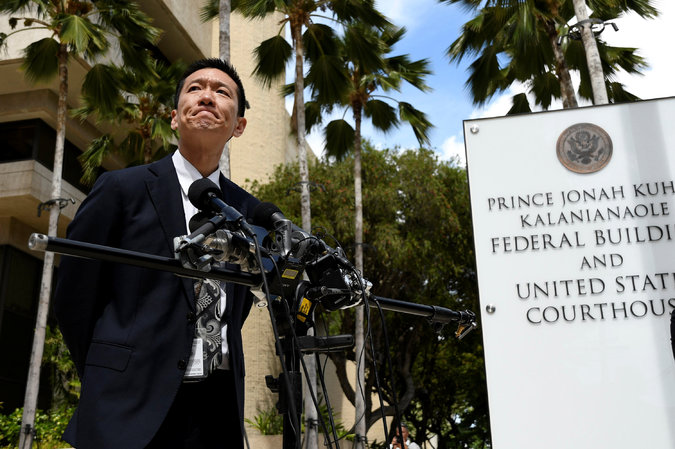
But in a pointed decision that repeatedly invoked Mr. Trump’s public comments, the judge, Derrick K. Watson of Federal District Court in Honolulu, wrote that a “reasonable, objective observer” would view even the new order as “issued with a purpose to disfavor a particular religion, in spite of its stated, religiously neutral purpose.”

Mr. Trump lashed out at Judge Watson during a campaign-style rally in Nashville late on Wednesday. Raising his voice to a hoarse shout, Mr. Trump accused the judge of ruling “for political reasons” and criticized the United States Court of Appeals for the Ninth Circuit, which upheld the earlier decision against his administration and will hear any appeal to the Hawaii ruling.

“This ruling makes us look weak, which by the way we no longer are, believe me,” Mr. Trump said, to mounting cheers from a loyal crowd.

Mr. Trump even said he might reissue the initial version of the order, rather than the one blocked on Wednesday, which he described as “a watered-down version of the first one.”

After he signed the revised ban, Democratic attorneys general and nonprofit groups that work with immigrants and refugees raced back into court against Mr. Trump, alleging that his updated decree was still a thinly veiled version of the ban on Muslim migration that he had pledged to enact as a presidential candidate.

Judge Watson, who was appointed by President Barack Obama, ruled that the State of Hawaii and an individual plaintiff, Ismail Elshikh, the imam of the Muslim Association of Hawaii, had reasonable grounds to challenge the order as religious discrimination. And he concluded that allowing the travel restrictions to go into effect at midnight, as scheduled, could have caused them irreparable harm.

Judge Watson flatly rejected the government’s argument that a court would have to investigate Mr. Trump’s “veiled psyche” to deduce religious animus. He quoted extensively from the remarks by Mr. Trump that were cited in the lawsuit brought by Hawaii’s attorney general, Doug Chin.

“For instance, there is nothing ‘veiled’ about this press release,” Judge Watson wrote, quoting a Trump campaign document titled “Donald J. Trump is calling for a total and complete shutdown of Muslims entering the United States.”

Judge Watson singled out Mr. Elshikh, an American citizen whose Syrian mother-in-law had been pursuing a visa to enter the United States, as having an especially strong claim that the travel regulations would harm him on the basis of his religion.

“This is a great day for democracy, religious and human rights,” Mr. Elshikh, who was out of the country, said in a message relayed through Hakim Ouansafi, the chairman of the Muslim Association of Hawaii. “I am very pleased that the processing of my mother-in-law’s paperwork will not stop now but more importantly that this Muslim ban will not separate families and loved ones just because they happen to be from the six countries.”

Mr. Elshikh, who is Egyptian and previously worked in Michigan, was recruited to the Hawaii mosque more than a decade ago, Mr. Ouansafi said. And when the association began recruiting someone to serve as a plaintiff, the imam, who became a citizen last year, agreed to do so without reservation, Mr. Ouansafi said.

After Mr. Elshikh became the face of the lawsuit, he received several threats from the mainland, Mr. Ouansafi said. “If we lived in any other state, I would not have asked him to come forward,” he said.

In addition to the Hawaii suit, federal judges in Washington State and Maryland heard arguments in several other cases challenging the constitutionality of Mr. Trump’s order, including one brought by a coalition of Democratic attorneys general, and others from a collection of nonprofit groups. Judge Watson was the only one who ruled on Wednesday.

Administration lawyers have argued that the president was merely exercising his national security powers. In the scramble to defend the executive order, a single lawyer in the United States solicitor general’s office, Jeffrey Wall, argued first to a Maryland court and then, by phone, to Judge Watson in Honolulu that no element of the order, as written, could be construed as a religious test for travelers.

Mr. Wall said the order was based on concerns raised by the Obama administration in its move toward stricter screening of travelers from the six countries affected.

“What the order does is a step beyond what the previous administration did, but it’s on the same basis,” Mr. Wall said in the Maryland hearing.

After Mr. Trump’s speech in Nashville, the Justice Department released a more muted statement disputing the Hawaii decision, calling it “flawed both in reasoning and scope.” Sarah Isgur Flores, a spokeswoman for the department, said it would continue to defend the legality of the presidential order.

Refugee organizations and civil rights groups greeted the ruling with expressions of triumph and relief.

Marielena Hincapié, executive director of the National Immigration Law Center, hailed the ruling on a conference call as “a strong and unequivocal rejection of the politics of hate.”

At the same time, advocates for refugees and immigrants acknowledged that significant uncertainty would hang over some of their more practical decisions, as a longer legal process plays out around Mr. Trump’s order.

“It’s a preliminary decision, but it recognizes that there continue to be problems with the constitutionality of this revised order, particularly with discriminatory intent toward Muslims,” said Betsy Fisher, policy director at the International Refugee Assistance Project at the Urban Justice Center.

The original ban, released on Jan. 27, unleashed scenes of chaos at American airports and spurred mass protests. Issued abruptly on a Friday afternoon, it temporarily barred travel from seven majority-Muslim nations, making no explicit distinction between citizens of those countries who already had green cards or visas and those who did not. It also suggested that Christian refugees from those countries would be given preference in the future.
After the federal court in Seattle issued a broad injunction against the policy, Mr. Trump removed major provisions and reissued the order. The new version exempted key groups, like green card and visa holders, and dropped the section that would have given Christians special treatment.

Mr. Trump also removed Iraq from the list of countries covered by the ban after the Pentagon expressed worry that it would damage the United States’ relationship with the Iraqi government in the fight against the Islamic State.
Yet those concessions did not placate critics of the ban, who said it would still function as an unconstitutional religious test, albeit one affecting fewer people — an argument Judge Watson concurred with in his ruling.
The lawsuits have also claimed that the order disrupts the operations of companies, charities, public universities and hospitals that have deep relationships overseas. In the Hawaii case, nearly five dozen technology companies, including Airbnb, Dropbox, Lyft and TripAdvisor, joined in a brief objecting to the travel ban.

The second, now-halted executive order preserved major components of the original. It would have ended, with few exceptions, the granting of new visas and green cards to people from six majority-Muslim countries — Iran, Libya, Somalia, Sudan, Syria and Yemen — for at least 90 days. It would have also stopped all refugees from entering for 120 days and limited refugee admissions to 50,000 people in the current fiscal year.

Mr. Obama had set in motion plans to admit more than twice that number.

Mr. Trump has said the pause is needed to re-evaluate screening procedures for immigrants from the six countries. “Each of these countries is a state sponsor of terrorism, has been significantly compromised by terrorist organizations, or contains active conflict zones,” he wrote in the order.

Judge Watson’s order was not a final ruling on the constitutionality of Mr. Trump’s ban, and the administration has expressed confidence that courts will ultimately affirm Mr. Trump’s power to issue the restrictions.
But the legal debate is likely to be a protracted and unusually personal fight for the administration, touching Mr. Trump and a number of his key aides directly and raising the prospect that their public comments and private communications will be scrutinized.

The lawsuits against the ban have extensively cited Mr. Trump’s comments during the presidential campaign. Attorney General Bob Ferguson of Washington, who successfully challenged Mr. Trump’s first order, has indicated that in an extended legal fight, he could seek depositions from administration officials and request documents that would expose the full process by which Trump aides crafted the ban.

As a candidate, Mr. Trump first proposed to bar all Muslims from entering the United States, and then offered an alternative plan to ban travel from a number of Muslim countries, which he described as a politically acceptable way of achieving the same goal.

The lawsuits also cited Rudolph W. Giuliani, the former New York City mayor who advises Mr. Trump. Mr. Giuliani said he had been asked to help craft a Muslim ban that would pass legal muster.

And they highlighted comments by Stephen Miller, an adviser to the president, who cast the changes to Mr. Trump’s first travel ban as mere technical adjustments aimed at ushering the same policy past the review of a court.

Yes, the Russian ambassador met Trump’s team. So? That’s what we diplomats do.

At the center of many allegations swirling around the Trump administration’s relationship with Moscow is one man: Sergey Kislyak, the Russian ambassador. As U.S. intelligence agencies contend that his country attempted, through hacking and other efforts, to influence November’s election, Kislyak’s discussions with Trump campaign associates — including former national security adviser Michael Flynn (who resigned for not disclosing them) and Attorney General Jeff Sessions (who did not) — have been the subject of intense reporting and speculation.

While it is one thing to question Russia’s efforts or the truthfulness of American officials, this debate is threatening the time-honored tradition of foreign ambassadors freely meeting political figures in their country of accreditation. There is nothing inherently wrong with meeting a foreign ambassador — even one from a rival nation; even one from a rival superpower on which the United States has imposed sanctions. As Pakistan’s ambassador to the United States, I saw firsthand, in the assassination of Osama bin Laden, just how essential such consultations were.

[Chill, America. Not every Trump outrage is outrageous.]
We don’t know what Kislyak’s particular motivations were or what he discussed in these meetings, but the question before the American public is whether Trump’s allies comported themselves honorably and legally, not whether Kislyak did. Diplomacy is the process by which foreign enemies are turned into friends and friends are converted into allies. Democratic countries such as the United States have always taken pride in the relative ease with which foreign diplomats can meet Americans of all political persuasions. (This is not the case in more-restrictive nations, such as Russia.) No matter what Moscow’s policy holds, the free interaction of Americans with foreign ambassadors works to America’s advantage.
* * * * * * * *
I became Pakistan’s ambassador in May 2008, soon after the country’s return to civilian rule after nine years of military dictatorship under Gen. Pervez Musharraf. The George W. Bush administration had forged an alliance with Musharraf in the aftermath of the 9/11 terrorist attacks, hoping that economic incentives and offers of military hardware would turn Pakistan away from its long-standing policy of supporting Islamist militants, including the Afghan Taliban, as instruments of regional influence.

By 2007, Bush had realized that Musharraf either “would not or could not” fulfill his promises in fighting terrorism, as he wrote later, and the president welcomed Pakistan’s return to democracy. The civilian leaders who appointed me as ambassador — President Asif Ali Zardari and Prime Minister Yousuf Raza Gilani — looked forward to U.S. backing in reversing Musharraf’s policies at home and abroad. They said they wanted to end Pakistan’s support for the Taliban, improve relations with India and Afghanistan, and limit the role of Pakistan’s military intelligence service in defining the country’s foreign policy. In return, they sought generous U.S. aid to improve the ailing Pakistani economy.

[How Trump got his party to love Russia]
I had an advantage most ambassadors did not: I’d lived most of the Musharraf years in exile in Washington and had established close ties with members of Congress and others influential in policymaking. But I began my job in the middle of the 2008 election campaign, and I knew that the Bush administration’s policies might not continue under a new president. Within weeks of presenting my credentials to Bush that June, I was communicating with campaign officials in both parties, and soon had meetings with aides to both Sen. John McCain and Sen. Barack Obama.
The State Department facilitated the participation of Washington-based ambassadors in the Democratic and Republican national conventions that year. In Denver and in Minneapolis-St. Paul, we were briefed by officials from both campaigns. More active and better-connected ambassadors, including myself, were able to meet personally with people we expected to have major roles in the conduct of foreign policy after the election. There was nothing unusual, let alone treasonable, in this.

As a presidential candidate, Obama argued that U.S. success in Afghanistan was more important than the war in Iraq, which he had opposed. In a major speech that summer, he pledged to make “the fight against al-Qaeda and the Taliban the top priority.” He also had a particular message for my country: He said terrorists and insurgents in Pakistan’s tribal areas were waging war against the Afghan government. “We must make it clear that if Pakistan cannot or will not act, we will take out high-level terrorist targets like bin Laden if we have them in our sights.”

From Obama’s public positions and from my meetings with his aides, it was clear that a democratic, civilian government in Pakistan could join with him to help attain his objectives in Afghanistan in exchange for support of consolidation of democracy with greater U.S. economic assistance. I sent this message to my bosses in Islamabad and told Obama’s campaign team that we would be willing to play ball. Once Obama took office, this is exactly what happened: Civilian aid to Pakistan was enhanced to record levels in an effort to secure greater cooperation in defeating the Taliban.

[Trump is getting payments from foreign governments. We have no idea what they are.]
What’s more, the relationships I forged with members of Obama’s campaign team also led to closer cooperation between Pakistan and the United States in fighting terrorism over the 31/2 years I served as ambassador. These connections eventually enabled the United States to discover and eliminate bin Laden without depending on Pakistan’s intelligence service or military, which were suspected of sympathy toward Islamist militants. Friends I made from the Obama campaign were able to ask, three years later, as National Security Council officials, for help in stationing U.S. Special Operations and intelligence personnel on the ground in Pakistan. I brought the request directly to Pakistan’s civilian leaders, who approved. Although the United States kept us officially out of the loop about the operation, these locally stationed Americans proved invaluable when Obama decided to send in Navy SEAL Team 6 without notifying Pakistan.

Unfortunately, the United States did not attain victory in Afghanistan, and the Pakistani government’s behavior toward militant Islamists did not change on a permanent basis. But for the period I was in office, the two nations worked jointly toward their common goals — the essence of diplomacy.
* * * * * * * *
After I began reading about the affairs of Kislyak, I rummaged through my files and diaries to retrace my steps as ambassador in the fall of 2008. I maintained relations with three teams of American officials, politicians and professional staffers: the Bush administration and the two major-party candidates. I met senior members of the Republican and Democratic national committees, more than a dozen senators and congressmen from each party, and several individuals from both sides who were tipped to emerge in senior government positions after the election. This is totally normal for ambassadors.

Kislyak, who presented his credentials just a couple of months after I did, has probably advanced shared Russian-American interests through similar contacts in the three U.S. presidential election cycles that he has covered as ambassador. I do not know if he reached out to Hillary Clinton’s camp as vigorously as he did to Trump’s (he probably already knew Clinton’s top foreign policy players from his work with the Obama administration, in which many of them had served), but it does not matter: Ambassadors do not make policy. They only facilitate understanding between countries that leads to policymaking in their respective capitals. Any Russian decision to covertly interfere in the U.S. election would have been made in Moscow, not necessarily with Kislyak’s knowledge, just as Pakistan’s breach of promises with the Obama administration occurred in Islamabad, not in my embassy.
[How Russian ‘kompromat’ destroys political opponents, no facts required]

In November 2011, I was forced to resign as ambassador after Pakistan’s military-intelligence apparatus gained the upper hand in the country’s perennial power struggle. Among the security establishment’s grievances against me was the charge that I had facilitated the presence of large numbers of CIA operatives who helped track down bin Laden without the knowledge of Pakistan’s army — even though I had acted under the authorization of Pakistan’s elected civilian leaders.

Russia is, of course, unlike Pakistan, but U.S.-Russia relations have seesawed, too, and Kislyak’s means were no different from what probably every ambassador of every country hopes to use, even if his ends were unique.
Americans have a legitimate interest in figuring out whether Russia tried to covertly influence U.S. politics. Investigating officials who may have perjured themselves about their diplomatic contacts also seems reasonable. It should not, however, create the impression that engagement between a foreign ambassador — even one from a country with which relations are strained — and people who might hold senior positions in a future administration is inherently sinister. Such engagement is essential if new presidents want to translate their foreign policy plans into reality.

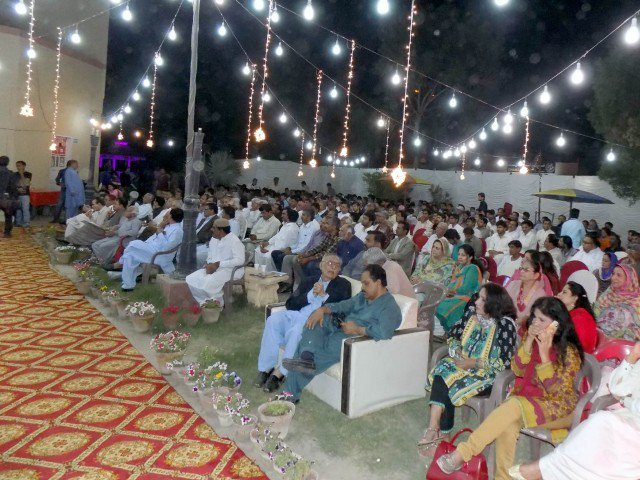
Book Readers at Karachi Press Club get International Perspective on Pak Politics

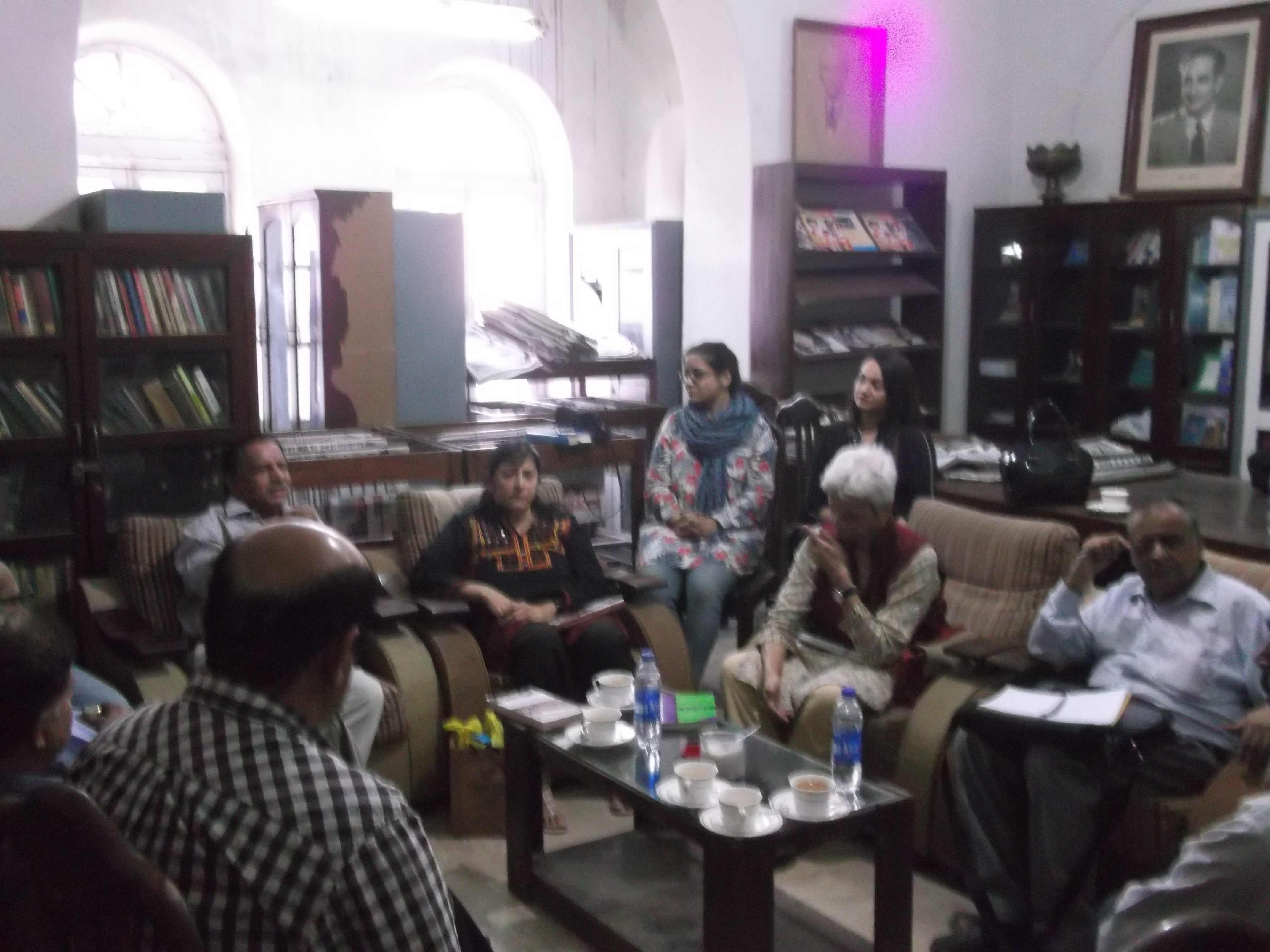
Karachi, March 10: Journalists, writers, poets and political activists heard Nafisa Hoodbhoy speak about the final updated edition of her book, `Aboard the Democracy Train, Pakistan Tracks the Threat Within,’ at an event held at the Karachi Press Club on Friday.

Moderated by senior journalist and anchor person, Mujahid Barelvi, the audience also heard from former assistant editor of Dawn and writer Zubeida Mustafa. A 20 minute presentation about the book by the author was followed by questions and comments from the audience.

The author said that while her original book was published in 2011 by Anthem Press, London, the updated edition was reprinted in 2016 in hard cover by Paramount Books, Pakistan, and is now available in leading book stores around the country.

She said that the story begins when Gen Zia ul Haq’s plane explodes in 1988 and she is deputed by Dawn newspaper to cover the bid by Benazir Bhutto to become the first woman prime minister of Pakistan.

In response to critique about her coverage of ethnic conflict of the 1980’s, she said that “without prejudice toward any ethnic group,” her day-to-day reporting in Karachi’s hospitals had exposed her to the deep sense of insecurity suffered by Sindhis in the aftermath of the September 30, Hyderabad carnage case.

The author said that the third section of the book views Pakistan from the US, when both nations entered an uneasy relationship after the events of 9/11. It includes narrations about the tenure of former Gen. Pervaiz Musharraf and first hand meetings with Benazir Bhutto in Washington DC – shortly before the aspiring prime minister was assassinated.

The author said that she decided to expand the book and have it reprinted in Pakistan in 2016, to address the policy shift in the army that finally acknowledged that the `enemy within’ was a bigger threat than India.

According to her, this last chapter, written from Washington, captures the somersaults that Pakistani politicians made to fall in line with the military’s decision to eliminate the Tehrik-i-Taliban Pakistan. It further encapsulates Pakistan’s drift away from the US, and realignment with China.

In his remarks, Mujahid Barelvi said that the author has been a `hard core’ news reporter. Despite the `dry’ nature of the subject, he said she had made the book readable because of an engaging style.

The governments’ fading actions

The Feb 16 suicide attack on the shrine of Shahbaz Qalandar has sent shockwaves across the country, especially in Sindh which is considered as the last bastion of religious and sectarian harmony in Pakistan.
The shrine is revered by millions of devotees. Its characteristic drumbeat and dhamaal is an icon of spiritual ecstasy.

Sindh, the land of Sufis, has endured traumatic incidents of terrorism during recent years, yet Sindhi society is responding to this challenge with towering spirit and unflinching resolve — political leadership, civil society, local media and common people will not be cowed by this wave of terrorism.

More than 80 people died in the evening on February 16, yet the following day began with the roar of dhamal when mourners broke all barriers and thronged the shrine to demonstrate their defiance to terrorism. After a few days, the shrine was visited by a group of civil society activists that performed dhamal to fight fear.

A hairline crack is already conspicuous in Sindh despite being largely liberal, harmonious and secular. Sufi saints of Sindh are revered by people beyond identities that symbolises the Sindhi culture of inclusiveness, tolerance, diversity and harmony. Perhaps, that is the main reason behind targeting of shrines by obscurantist elements. Bloodshed at the Qalandar’s shrine is a continuity of the streak of blood smeared at the shrines of Shah Noorani, Abdullah Shah Ghazi, Data Gunj Bakhsh, Bari Imam and Rehman Baba.

The fact that the terrorist involved in the recent incident was brought from the other side of the border indicates sheer incompetence of the security web. He must have breached several tiers of security, and several facilitators, before detonating himself.

Such failure of intelligence and security merits serious introspection.

Lahore also witnessed a similar carnage only a few days ago, which was followed by a series of terrorist attacks in Balochistan and KP. These incidents should have been considered as a forewarning by the Sindh government.
Sehwan was among the predictable targets, yet the provincial government took no security precautions to avert any mishap. A place routinely frequented by flocks of thousands was left at the mercy of five policepersons, two dysfunctional walkthrough gates and a bunch of malfunctioning cameras.

After an illusive hiatus, terrorism has returned with its usual horror. Lack of political will is an undeniable reality that revitalises terrorist groups.

Local health facility is grossly understaffed supported by only one ambulance and inadequate supplies. A place like Sehwan should not be equated with normal taluka headquarters to determine the status of health, security and emergency services. Rather than its administrative status, the number of visitors routinely swarming the town and the level of alert should have been used as a benchmark to provide emergency response facilities.

The provincial government underestimated the threat level and failed to act proactively. Two day after the blast was too late for the chief minister of Sindh to order a security audit of worship places.

We know that in recent years militancy has crept into Sindh. The intelligence agencies informed the provincial government only a few months ago about 93 madrassas having solid links with proscribed outfits. Only two months ago, provincial home ministry reported that 62 banned groups were active in the province. The Sindh government had been wrangling with the Federal Interior Ministry over its slouchy response on a 46-page report sent by the provincial government.

The Sindh government’s own inaction was equally confounding, as it possesses constitutional and legal powers to take action against such potentially subversive bodies. The provincial government also failed to implement hitherto announced actions to forestall the terrorists’ onslaught.

In October 2016, the chief minister ordered a crackdown against 93 seminaries for having links with terrorists groups, and on unregistered immigrants living in Karachi. In August 2016, the Sindh cabinet approved a draft of the bill to register all madrassas in Sindh. In the meeting of the provincial Apex Committee, IG police informed that out of 9,590 seminaries reported in the province, 3,087 were unregistered. In February 2016, the provincial government decided to regulate the Friday sermon. According to newspaper reports, the Sindh police had started analysis and audit to trace the funding of seminaries in the province.

Regrettably, all these lofty ideas have yet to see the light of day.

Cowardice on part of the government of Sindh is also evident from the fact that it hastily scuttled an operation launched in November 2016 to lay hands on suspects taking shelter in 93 seminaries under question. The provincial government also backtracked on unanimously adopted landmark legislation against forced conversions to placate religious parties.

The provincial government belatedly decided to launch a crackdown on the Sindh-Balochistan border district one week after the carnage. These areas are infested by extremist groups and the provincial government knew it long before. It needs a comprehensive strategy and a long term plan rather than a reactionary crackdown which will end up in random police witch-hunting mostly targeting innocent people to extract money. Such perfunctory roars are commonly witnessed after every massacre, but each time the government cringes on the promised actions and capitulates before the pressure of religious groups. With the passage of time, the government actions fade away.
The federal government’s slumber on the National Action Plan (NAP) and the absence of a credible action in Punjab has also been a root cause of incessant terrorist acts. It is widely believed that certain elements in the Punjab-rooted ruling party have been pandering to proscribed militant outfits. An uncanny state of denial persists among the PML-N stalwarts.

Two days after a suicide assault that killed 73 people in a recreational park in Lahore in March 2016, Rana Sanaullah challenged that everyone can visit any region of Punjab and show him a single safe haven of militants. Repeated repudiation of action against militants’ sanctuaries in Punjab is commonly construed as an implicit complicity of the ruling establishment of the province.

In January 2017, the federal interior minister flabbergasted the Senate by justifying his meeting with a delegation that included a banned outfit. In February 2016, the minister had also said that madrassas are like a bulwark against terrorism. In the first week of February 2017, Rana Sanaullah successfully exhorted a PML-N legislator to withdraw her resolution seeking sanitisation of syllabus of seminaries by expunging hate speech. A newspaper report on February 20, 2017 revealed that some powerful government functionaries were opposing effective action against sectarian outfits in Punjab for political reasons.

While security establishment liberally uses its muscle to operate in other provinces, its reluctance to launch a decisive purge in Punjab triggers many questions. The Punjab dominated establishment’s laxity on eradicating militants’ safe havens is now spewing its perils in all parts of the country. After failure in containing terrorism, the security establishment found a reason to launch a fresh operation in the country.

After an illusive hiatus, terrorism has returned with its usual horror. Lack of political will is an undeniable reality that revitalises terrorist groups. There is no dearth of verbal gallantry but words often lack congruent actions of the government. Security establishment can use arsenal to halt terrorists’ advance but its more formidable political dimensions need a complex, multidimensional and compressive response that falls under the ambit of political government.

Unless the political leadership stands steadfast with its own towering claims, terrorism cannot be eradicated.

I was handcuffed and tied but it was worth my fight against One Unit

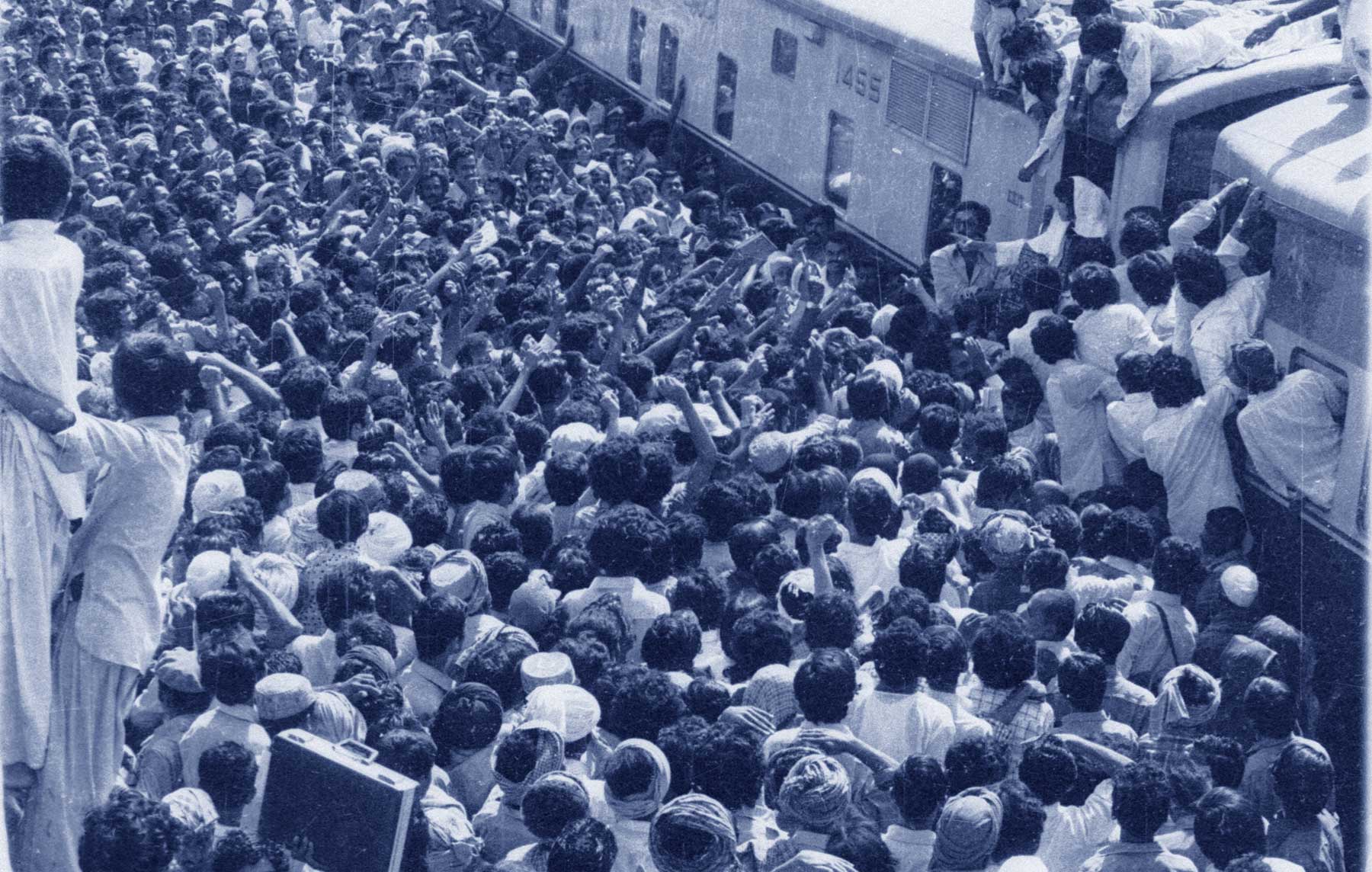
50 years ago, 4th March, 1967 marked a watershed event in the post-Partition history of Sindh. It was the day when 207 students were arrested en masse at the G.M. Barrage between Jamshoro and Hyderabad as they staged a rally against the One Unit scheme that had been in place in the country since 1955.

The protests were a culmination of the unrest among Sindhi students that had been simmering beneath the surface for a long time against One Unit. Its causes went deep into the humiliations suffered by Sindh and its people on cultural, political, administrative and economic levels.

Sindhi, a 2,500 year-old language, had no official status in what became the province of West Pakistan. It was stripped of all its rights as a medium of instruction, except in primary schools in the rural areas of Sindh. Sindhis were thus deprived of all opportunities of promoting their culture and language.

Politically and administratively, One Unit meant that Sindh disappeared as an entity and was reduced to looking to the capital Lahore for the pettiest matters.
________________________________________
On the economic level – and this situation continues to this day – it had to concede much of the lands rendered cultivable by the construction of barrages to the higher bureaucracy and military.
________________________________________
Last but not the least, the demographic changes due to Partition, which saw mass influx of Muslim migrants from India and an outflow of Sindhi Hindus, meant that the major cities of the province, including Karachi, became virtual no-go areas for Sindhis as far as jobs and economic opportunities were concerned.

Final straw
The movement itself was sparked when the Vice Chancellor of Sindh University, Hasan Ali Abdur Rehman, was dismissed in February 1967 by the Governor of West Pakistan, Nawab Amir Mohammad Khan Kalabagh.

Rehman, the first Sindhi Vice Chancellor of the university, was dismissed for his efforts for facilitating the admission of Sindhi students in professional colleges by allotting quotas for the far-flung districts of Sindh. The students agitated and demanded Rehman to be reinstated.

On March 4, a general-body meeting of students of Sindh University, Liaquat Medical College, and Engineering College was planned in Sindh University’s City Campus in Hyderabad. Students were proceeding to the venue in university buses when the police encircled them near the G.M. Barrage. The students were beaten up and all 207 of them were arrested.

The police brutality resulted in mass protests all over the province. Although the dismissal order against the Vice Chancellor was not taken back, this moment, which came to be known as the 4th March Movement and is commemorated every year, gave rise to wide-scale political awakening in Sindh.

My contribution
I was a first-year student at the university’s Hyderabad campus. I remember it was another pleasant evening when the news of the mass arrest spread.

This development was grave not only because students had been targeted, but because the authorities had been trying to divide the students on linguistic basis. In order to counter the unrest against the dismissal of the Vice Chancellor, the Commissioner of Hyderabad, Masroor Ahsan, had attempted to rally those who were regarded as leaders of Urdu-speaking students behind him.

________________________________________
The outrage felt by the students against the victimisation of the first Sindhi Vice Chancellor of Sindh University, who had dared resist the attempts by the West Pakistan government to undermine the autonomy of the university, was given a parochial colour.
________________________________________

Given that most Urdu-speaking students seemed to be supportive of government action, a few of us decided that something had to be done, even symbolically, to prevent the cleavage between the students on parochial lines. This could only be done by showing solidarity with the arrested students. A minimum would be to write slogans on walls against the police action.

So me and my comrade Inayat Kashmiri took up a brush to paint slogans against the police and the Ayub dictatorship in the area around Tilak Charri, where most of the education institutions of Hyderabad were located at the time.

While writing on the walls, we had our eyes fixed on the on-coming traffic on the one-way road, ready to slip into the side streets if a police van came. We were too naïve to know that police in this country does not observe basic traffic rules.

A police van came full-speed from the opposite direction and before we could do anything, we received the full brunt of lathis on our backs, were lifted up and thrown inside the van. Direction: Market Thana. There ensued salvos of invectives in Punjabi centred on one’s lower anatomy.

We were handcuffed and remained tied between two chairs in the SHO’s office for four days and nights. This made of us far greater rebels than the books we had lately become fond of: Maxim Gorky’s Mother and, of course, the Communist Manifesto.

Market Thana was located just near the red light area of Chakla. A large part of police activity in this thana consisted of rounding up prostitutes from the bazaar and bringing them in for extortion and entertainment.
________________________________________
The language of communication in the thana was Punjabi – not its Heer of Waris Shah variant but an outpouring of its filthiest variety. This made us understand all the more the resentment in Sindh against One Unit, the suppression of the smaller provinces and their merger into West Pakistan with its capital in Lahore.
________________________________________
During this time, we were hardly given any food and we avoided drinking water as we did not want to beg our unworldly hosts to take us to toilet. After four days, Hafeez Qureshi, one of the leading advocates of Hyderabad and a nationalist leader, came looking for us. He asked the SHO for a copy of the FIR so that he could engage legal procedures for our release. But an FIR there was none.

Apparently the SHO hadn’t even cared to inform his higher authorities of our arrest. He panicked and handed us over to the lawyer and even excused himself, saying that if he knew we were students, he would have let us go after admonition. Luckily for us, it was not yet the era of missing persons and kill and dump.

The discovery of Sindh
This small act of solidarity earned us lot of recognition and friends in the university. I already knew Jam Saqi, the great Sindhi nationalist leader whom I held in awe for his dedication and selflessness. He came from a far-off village in Tharparkar. I was a frequent visitor to his small kholi in a building on Tilak Charri.

He used to cook his only meal of the day late in the evening on a small stove. Even then, he used to insist on sharing it with me. I had never come across such a man in my family environment. I realised that life was much deeper and vaster than what family confines could offer. The real human beings were found where I was taught not to look for inspiration.

4th March served me as initiation into the soul of the province that had offered refuge to thousands of Urdu-speaking families like mine when they migrated to this country after Partition. With time, on becoming proficient in Sindhi language and going to the various cities and rural areas of Sindh as an activist, I impregnated myself with the deeply humanistic substrate of the Sindhi civilisation. With Jam Saqi, I came to meet luminaries like Hyder Bakhsh Jatoi, Ibrahim Joyo, Sobho Gianchandani, Usman Diplai and others.

What struck me the most in these people was their simplicity and total absence of pretension of any kind. I became more and more repulsed by the type of hostility that the great majority of educated Urdu-speakers maintained against the people of Sindh at the time.

The importance of 4th March
It will not be wrong to say that 4th March crystallised the defiance of the people of Sindh against the treatment meted out to them by the dominant players of the country. Ground was prepared for it first of all by an unprecedented flourishing of Sindhi literature in all of its genres, especially poetry. Poets like Shaikh Ayaz felt and mirrored the pain of Sindh in their poetry.

No wonder that after 4th March, a recurrent event Sindhi Sham became the main form of assertion of Sindhi identity and pride. Behind an innocuous cultural façade, Sindhi Sham was a forum for voicing dissent against the unjust policies perpetrated in the name of one nation.

Countless literary periodicals burgeoned in Sindh after 4th March. To this day, the most vibrant daily press of the country, closest to the ordinary citizens, is the Sindhi press.

Unfortunately, most historians and political specialists in and outside Pakistani, with some honourable exceptions like Dr Tanvir Ahmed who wrote the Political Dynamics of Sindh, have failed to take due account of the landmark nature of the 4th March Movement.
________________________________________
The Movement was an important component of the overall democratic upsurge in Pakistan that led to the falling of Ayub Khan’s dictatorship and dismemberment of One Unit. Even the books written on student movements in Pakistan seem to overlook the fact that Sindh, after having been wiped out from the country’s map by virtue of One Unit, struck back hard and reentered the political frame due to the defiance and courage of its students.
________________________________________

It is 50 years since that fateful evening of 4th March, 1967. It is long ago but so near that it is impossible to forget it. Time has not erased the deep pride I have always felt in making a very small contribution to that great event.

I will finish with a prayer by the inimitable Latif Sain:
سائينم سدائين ڪرين مٿي سنڌ سڪار
دوست مٺا دلدار، عالم سڀ آباد ڪرين
Saim sadaein karein mathan Sindh Sukar
Dost mitha dildaar Aalam subh aabad karein
My Lord keep Sindh always on top
Dear Friend also make prosperous the entire world
________________________________________

Rumblings of a ‘Deep State’ Undermining Trump? It Was Once a Foreign Concept

WASHINGTON — President Trump’s allegations that former President Barack Obama tapped his phone and his assertions that the bureaucracy is leaking secrets to discredit him are the latest signs of a White House preoccupation with a “deep state” working to thwart the Trump presidency.

The concept of a “deep state” — a shadowy network of agency or military officials who secretly conspire to influence government policy — is more often used to describe countries like Egypt, Turkey and Pakistan, where authoritarian elements band together to undercut democratically elected leaders. But inside the West Wing, Mr. Trump and his inner circle, particularly his chief strategist, Stephen K. Bannon, see the influence of such forces at work within the United States, essentially arguing that their own government is being undermined from within.

It is an extraordinary contention for a sitting president to make. Mr. Trump, who last year angrily dismissed the conclusion of intelligence officials that the Russians interfered in the presidential election to boost his candidacy, has now asked both his staff and a congressional committee investigating Moscow’s influence on the election to turn up evidence that Mr. Obama led an effort to spy on him.

How the White House and its allies see the deep state threat
“What President Trump is discovering is that he has a huge, huge problem underneath him, and I think he’s shocked that the system is as hostile as it is,” said Newt Gingrich, a top adviser to Mr. Trump’s campaign who said he has spoken with Mr. Bannon many times about his suspicion of the deep state and what he sees as its pernicious influence.

“We’re up against a permanent bureaucratic structure defending itself and quite willing to break the law to do so,” Mr. Gingrich said.

Neither Mr. Trump nor Mr. Bannon has used the term “deep state” publicly. But each has argued that there is an orchestrated effort underway, fueled by leaks and enabled by the news media, to cut down the new president and interfere with his agenda.

“Reports concerning potentially politically motivated investigations immediately ahead of the 2016 election are very troubling,” Sean Spicer, the White House press secretary, said on Sunday.

Mr. Bannon, speaking last month at the Conservative Political Action Conference, said a central element of Mr. Trump’s presidency would be the “deconstruction of the administrative state.” It was his latest articulation of a dim view of federal agencies that he argued had grabbed power at the behest of the “progressive left.”

Breitbart News, the conservative site Mr. Bannon used to run, uses the term deep state frequently in its coverage, including in a story on Sunday headlined “DeepStateGate: Trump Ends the Wiretapping Innuendo Game by Dealing Himself In.” The term has gained currency on other right-leaning websites, conservative talk radio and on social media, where Mr. Trump’s supporters are inflamed by the notion that a powerful secret cabal is plotting his downfall.

Projecting a new role for Obama

Veterans of prior administrations have been alarmed by the charge, arguing that it suggests an undemocratic nation where legal and moral norms are ignored.

“ ‘Deep state’ I would never use,” Michael V. Hayden, the former Central Intelligence Agency director under both Mr. Obama and former President George Bush, said on MSNBC on Monday. “That’s a phrase we’ve used for Turkey and other countries like that, but not the American republic.”

Loren DeJonge Schulman, a former top official in Mr. Obama’s National Security Council who is a senior fellow at the Center for a New American Security, said presidents and top White House officials often bristle at what they consider to be a sluggish bureaucracy. But it is jarring for an administration in power to claim that civil servants are actively working to subvert the government.

“A deep state, when you’re talking about Turkey or Egypt or other countries, that’s part of government or people outside of government that are literally controlling the direction of the country no matter who’s actually in charge, and probably engaging in murder and other corrupt practices,” Ms. Schulman said. “It’s shocking to hear that kind of thinking from a president or the people closest to him.”

Yet to Mr. Trump’s allies and supporters, the president is giving voice to a favorite theory.

“We are talking about the emergence of a deep state led by Barack Obama, and that is something that we should prevent,” said Representative Steve King, Republican of Iowa. “The person who understands this best is Steve Bannon, and I would think that he’s advocating to make some moves to fix it.”

Mr. King cited as evidence of a thriving deep state Mr. Obama’s decision to stay in Washington after leaving the White House, a decision he said was driven by the former president’s desire to frustrate Mr. Trump’s agenda. (Mr. Obama has said he is remaining in Washington until his younger daughter, Sasha, graduates from high school in 2019.)

Mr. Trump “needs to purge the leftists within the administration that are holdovers from the Obama administration, because it appears that they are undermining his administration and his chances of success,” Mr. King said.

Pakistan, home to military coups, is considered Exhibit A

The deep state is a phrase often heard in countries where there is a history of military coups and where generals often hold power independent of elected leaders.

Pakistan is Exhibit A: The deep state is often invoked in serious discussions about the role of the Pakistani military and its intelligence service, the Directorate of Inter-Services Intelligence.

Wide swaths of the population see the unseen hand of the security services behind major political events and all kinds of everyday happenings, such as random traffic stops.

The views are not without basis — there have been repeated military coups in Pakistan, and the military and the spy service often operate largely independent of the country’s politicians.

“The deep state concept emerges in places where the army and the security apparatus creates boundaries within which the civilian political people are allowed to operate,” said Peter Feaver, a specialist in civil-military issues at Duke University and a national security aide to Mr. Bush. “If they transgress those boundaries, then the deep state interferes to reorder things, often using military force.”

Leaks vs. serious opposition

“There are milder forms of it in healthier democracies,” Mr. Feaver said, arguing that American presidents have often chafed against the constraints of the federal bureaucracy.

“Nixon shared a similar kind of distrust of the government and felt the government was out to get him at points,” Mr. Feaver added. “President Trump’s view seems to be more on the Nixon part of the spectrum, which is far from the Pakistan part.”

In the United States, it is hardly unusual for dissent among warring factions inside the government to burst into public view. Under former President Ronald Reagan, the secretary of state, George P. Shultz, and the secretary of defense, Caspar W. Weinberger, were often at odds and would feud through dueling news reports.

“Just because you see things like leaks and interference and obstruction doesn’t necessarily mean there’s a deep state — that’s something we’ve seen before, historically, and it’s nothing new,” said James Jay Carafano, a fellow at the Heritage Foundation who advised Mr. Trump’s transition. “What would be different is if there were folks from the previous administration that were consciously orchestrating, in a serious way, inside opposition to the president.”

In the absence of evidence one way or the other, Mr. Carafano added, “It’s hard to know: Is this Trump using some strong political rhetoric, or an actual theory?”

ISIS Hates Our Saint Because He Belongs to Everyone

LONDON — Last Thursday a suicide bomber affiliated with the so-called Islamic State attacked Sehwan Sharif, one of the most revered Sufi shrines, in the southern Sindh Province of Pakistan, killing more than 80 people, including 24 children, and wounding more than 250.

Why the terrorists hate Sehwan is why we love it. The saint and his shrine at Sehwan belong to everyone, to Sunnis and Shiites, to Hindus and Muslims, transgender devotees, to believers and questioners alike. The inclusiveness, the rituals and music born of syncretic roots make shrines like Sehwan Sharif targets in the extremist interpretations of the Islamic State and other radical Wahhabi militants.

As a child in the late 1980s and early ’90s, I would visit the town of Sehwan with my family on our way from Karachi to Larkana, my family’s hometown. After driving along bumpy roads deserted but for palm trees and solitary men standing on the open highways selling lotus flower seeds, we would stop near the western bank of the Indus River to visit the shrine of Sehwan’s patron saint, Lal Shahbaz Qalandar, a 13th-century Persian mystic and poet who was a contemporary of Rumi.

Qalandar, whose real name was Syed Mohammad Usman Marwandi, is adored in music and poetry as the Red Falcon. As you drive through the narrow, dusty streets of Sehwan, the air becomes perfumed with the scent of roses, sold in small plastic bags and body-length garlands that devotees lay at his tomb.

I was 7 when I first saw Sehwan during Ashura, when Shiites mourn the Prophet Muhammad’s grandson Hussain, who was killed in 680 by an unjust ruler at Karbala, in what is now Iraq.

I remember thousands of men and women together in collective, ritualized mourning in the courtyard of Lal Shahbaz Qalandar’s shrine. They walked barefoot over glass and the embers of burning cigarette butts, their black shalwar kameez drenched in sweat, their palms striking their chests rhythmically. Even as a 7-year-old, I found something hypnotic, something fierce, something pure about Sehwan.

Over the years, I kept returning to Sehwan to sit in that courtyard, the shrine illuminated by red and green fairy lights, its golden dome and turquoise minarets soaring above a town of modest roofs.

The cool tiled floor of the shrine is often carpeted with devotees, some carrying tiffins of food on outings with their children, others in fraying and torn shalwar kameez prostrate in prayer. Even wealthy urbanites visit to lay their anxieties at the feet of the buried saint, tiptoeing gingerly through the crowds. In a country built and maintained on immovable divisions of ethnicity, gender, class and belief, the shrine at Sehwan welcomed all. It was an egalitarian oasis formed by the legacies and practice of Islam, Hinduism and Buddhism merging into one.
On Thursday evenings people congregate to listen to the religious songs called qawwali and perform a devotional dance, dhamal. They arrive with offerings of bruised rose petals, sugared almonds and what money they can spare. They seek solace from their pain; pray for safety in a harsh, unjust world; beg for an answer to a forgotten prayer. Those who can’t offer anything arrive empty-handed. Sehwan’s shrine promised the weak, the worried and the poor that they would always be safe here.

Every time we visited the shrine, a deaf and mute man named Goonga welcomed my brother, Zulfi, and me. A servant and a guardian of the shrine, Goonga wore his hair in a turban and had a matted beard. On the breast pocket of his shalwar kameez, he sometimes wore a picture of Hussain. Goonga would walk us through the shrine that was his home and refuge.

In the courtyard of the shrine, men in flowing robes and long dreadlocks sing:
Shahbaz Qalandar – Qawwali journey to Sehwan Sharif with Fanna-Fi-Allah Video by Tahir Faridi Qawwal
O laal meri pat rakhio bala Jhoole Laalan,
Sindhri da Sehwan da, sakhi Shahbaaz Qalandar,
Dama dam mast Qalandar,
which translates to:
O red-robed, protect me always, Jhule Lal,
Friend of Sindh, of Sehwan, God-intoxicated Qalandar,
Every breath intoxicated by you, Qalandar.
No matter how far from Sehwan I have traveled, how far from lands where Urdu is spoken and heard, just to hear “Dama dam mast Qalandar” is to be transported home.

My brother called me after the attack on the shrine. “Goonga,” he asked. “Is he alive?” We were trying to find out. But no one had seen Goonga since the blast. We Pakistanis always believed our saints protected us. In Karachi, where we live by the sea, we believe that the shrine of Abdullah Shah Ghazi, overlooking the Arabian Sea shore, saved the city from cyclones and tsunamis.

Before Qalandar arrived here, before Islam came to the subcontinent, Sehwan was known as Shivistan after the Hindu god Shiva. In time, the town’s name was changed, but Sindh has long remained a home to all faiths. At the annual festival of Qalandar, a Hindu and a Muslim family together drape a ceremonial cloth over Qalandar’s grave. A lamp-lighting ceremony reminiscent of Hindu rites is also performed.

The shrine in Sehwan was attacked because it belongs to an open, inclusive tradition that some in Pakistan would rather forget than honor. Though it was founded as a sanctuary for Muslims, in its early incarnation, Pakistan was a home for all those who wished to claim it. Parsis, Sikhs, Christians and Jews remained in Pakistan after the bloody Partition in 1947.

Gen. Mohammad Zia ul-Haq, Pakistan’s brutal military dictator in the 1980s, aided by Saudi money and supported by the United States, destroyed Pakistan’s progressive, syncretic culture. In the 11 years that General Zia presided over Pakistan, our textbooks were rewritten, exclusionary, intolerant laws were passed, and primacy was given to the bearers of a closed, violent worldview. Pakistan never recovered. Only pockets of the country still imbibe the generous welcome once afforded to all faiths. Sehwan is one of them.

After the attack, Pakistan’s military closed the border with Afghanistan and complained that the attackers had been given haven in Afghanistan. In retaliation, 100 people accused of being terrorists have been killed by the military.

Sehwan has no proper hospital, no trauma centers. For all its historical, religious and cultural significance, it was — like so much of this wounded country — abandoned by those who rule the province. There is no real governance here, no justice and no order. For life’s basic necessities, people must supplicate themselves before dead saints.

On the morning after the blast, the caretaker rang the bell, just as he always had. Devotees broke through the police cordons and returned to dance the dhamal on Saturday. Zulfi texted, “Goonga is alive.”

On my last visit to the shrine, after Goonga walked me through the crowded marketplace selling food and offerings, I sat on the floor besides a mother who had brought her son, crippled with polio, in the hopes that her prayers would ease his suffering. I had come to the shrine to see the blue and white floral kashi tiles, to walk around the perimeter and to be in a part of Pakistan that still operated on that rarest of currencies: hope.

Fatima Bhutto is the author of the memoir “Songs of Blood and Sword,” about the Bhutto political family, and the novel “Shadow of the Crescent Moon.”

Land rush around Gwadar port triggered by Chinese investment

LAHORE, Feb 23: Real estate giant Rafi Group made a ten-fold profit last year from its sale of hundreds of acres of land in the remote fishing town of Gwadar, acquired soon after the government announced plans for a deep-sea port there.

The windfall came after 12 years of waiting patiently for the Gwadar port to emerge as the centrepiece of China’s ambitious plans for a trade and energy corridor stretching from the Persian Gulf, across Pakistan, into western Xinjiang.

“We had anticipated the Chinese would need a route to the Arabian Sea,” Rafi Group Chief Executive Shehriar Rafi told Reuters. “And today, all routes lead back to Gwadar.”

China to build $1.5 billion power line across Pakistan
Gwadar forms the southern Pakistan hub of a $57-billion China-Pakistan Economic Corridor (CPEC) of infrastructure and energy projects Beijing announced in 2014.

Since then, land prices have skyrocketed as property demand has spiked, and dozens of real estate firms want to cash in.

“Gwadar is a ‘Made in China’ brand and everyone wants a piece,” said realtor Afzal Adil, one of several who shifted operations from the eastern city of Lahore in 2015.

Last year, government welcomed the first large shipment of Chinese goods at Gwadar, where the China Overseas Ports Holding Company Ltd took over operations in 2013. It plans to eventually handle 300 million to 400 million tons of cargo a year.

Forget India, profit from ‘quiet rise’ of Pakistan: Barron’s Asia

It also aims to develop seafood processing plants in a nearby free trade zone sprawled over 923 hectares (2,281 acres).

The route through Gwadar offers China its shortest path to the oil-rich Middle East, Africa, and most of the Western hemisphere, besides promising to open up remote, landlocked Xinjiang.

Last year, the Applied Economics Research Centre estimated the corridor would create 700,000 jobs in Pakistan and a Chinese newspaper recently put the number at more than 2 million.

Authorities have completed an expressway through Gwadar, which has a 350-km (218-mile) road network. A new international airport kicks off next year, to handle an influx of hundreds of Chinese traders and officials expected to live near the port.

The volume of Gwadar property searches surged 14-fold on Pakistan’s largest real estate database, Zameen.com, between 2014 and 2016, up from a prior rate of a few hundred a month.

“It’s like a gold rush,” said Chief Executive Zeeshan Ali Khan. “Anyone who is interested in real estate, be it an investor or a developer, is eyeing Gwadar.”

Prices, which have risen two- to four-fold on average, are climbing “on a weekly basis,” said Saad Arshed, the managing director of online real estate marketplace Lamudi.pk.

Regional fishermen have held strikes during the last two years, to protest against being displaced by the port.
To keep pace with the interest, urban officials are struggling to computerise land management and record-keeping. “We are trying to upgrade as fast as we can,” said Zakir Majeed, an official of the Gwadar Development Authority (GDA).

But Gwadar lacks basic education and health facilities, in contrast to the gleaming towers and piped drinking water of the “smart city” envisioned by the GDA.

“For commercial projects, things are moving fast,” Lamudi’s Arshed said. “But people actually living there, that will take a long time.”

Port officials expect the population to hit 2 million over the next two decades, from about 185,000 now.

Risk
The government commissioned work on the Gwadar port in 2002, but development was held up by chronic instability in the surrounding resource-rich province of Balochistan.

Since China announced the corridor plan in 2014, security has improved, with government setting up a new army division to ensure protection, while hundreds of rebels surrendered arms.

Real estate firms dismiss fears the “Gwadar bubble” might still burst, pointing to China’s enduring interest.

“The risk is always there,” Rafi said. “But our confidence comes from knowing this is not a Pakistani initiative, but a Chinese city on the Arabian Sea coast. And the Chinese will see that it is built.”

Kabul ready to talk intelligence cooperation with Pakistan ‘at any level’: Afghan official

KABUL, Feb 21: Afghanistan is ready to hold dialogue with Pakistan for intelligence cooperation at ‘any level’, an Afghan security official has told members of the Pak-Afghan track-II dialogue in Kabul.

The Afghan official, speaking informally and off-the-record, said senior security officials of the two countries had planned a ‘interaction’ but three major attacks in Kabul, Kandahar and Helmand on January 10 delayed the process. Nearly 60 people, including five UAE diplomats were killed in the attacks. The UAE ambassador, who was injured in the blast, died of wounds last week.

The remarks by the Afghan security official came amid growing tensions over the recent wave of terrorist attacks in Pakistan last week, which claimed the lives of about 100 people and injured over 300 more.

“We are ready for deep discussions on intelligence cooperation. We need a better environment. We need engagement. But only meetings and shaking hands will not give results. Sincere and effective engagement is a must to remove the mistrust,” the Afghan official told members of the dialogue titled ‘Beyond Boundaries’ which concluded on Monday.

President Ashraf Ghani had put a pause on a memorandum of understanding between the National Directorate of Security (NDS) and the Inter-Services Intelligence (ISI) in 2015. As the two sides struck the ground-breaking agreement to share intelligence and resources to combat terrorism, it was opposed in Afghanistan and some leaders, including Hamid Karzai, publicly opposed the deal as against the ‘national interests’. Afghan media had also reported then NDS Chief Rahmatullah Nabil had refused to sign the accord.

But the Afghan official said that Kabul is open for talks on intelligence cooperation at any level to explore options how to deal with the security challenges. “We also want Pakistan to extend its counter terrorism strategy to the region,” he said.

“Pakistan may be concerned only about TTP, China has apprehensions about ETIM, Arab states will be worried about Da’ish and al Qaeda, Iran may have fears about Jundullah, Uzbekistan would expect dangers of IMU but Afghanistan is fighting against nearly 30 groups.” He claimed that the Afghan Taliban have provided space to many of these groups as they all have same approach.

The Afghan official said bilateral track for Pakistan and Afghanistan is the best option to deal with the security problems and end violence in both countries as ‘no one will bring stability for us’.
He also renewed Kabul’s suggestion for a third party’s verification of the claims by both countries about the presence of the armed groups on both side of the border. The verification could either be by the US or China, he said.

On peace talks with the Taliban, he said peace dialogue is more important to Afghanistan but “we want action to be taken against the Taliban if they decline the dialogue.”

Trainer of suicide bombers killed in artillery shelling by Pakistan army

ISLAMABAD, Feb 18: Nearly a dozen training camps and hideouts of terrorist groups have been destroyed and over a dozen terrorists – including a top trainer of suicide bombers – have been killed in two days of artillery shelling by Pakistan’s military, Afghan sources confirmed on Saturday.

The confirmation came hours after Kabul summoned Pakistan’s ambassador to lodge a protest over what it called ‘cross-border rocket firing’. A day earlier, sources said four training compounds of the outlawed Jamaatul Ahrar (JuA) terrorist group had been decimated in the areas opposite Mohmand and Khyber agencies.

According to Afghan sources, 10 to 12 training camps and hideouts of the JuA and Tehreek-e-Taliban Pakistan (TTP) – including that of JuA commander Wali – and ammunition dumps have been destroyed in the blitz. “Fifteen to 20 terrorists, among them Commander Rehman Baba, have been killed and many more injured,” one Afghan source added.

Army decimates four Jamaatul Ahrar camps
Rehman Baba, a high-value target, was responsible for training suicide bombers and young terrorists. Sources said on Friday that four JuA terrorist camps – including one run by the group’s deputy chief Adil Bacha – had been decimated.

The outlawed TTP and its breakaway faction JuA have set up ‘safe havens’ across the border in Afghanistan which they use as a springboard for launching attacks inside Pakistan. The two groups have been behind most terrorist attacks in the country.

The security situation along the Pak-Afghan border in Khyber Agency remains fluid. An official of the local political administration said as many as 4,000 tribesmen living in the Shinpokh and Samsay villages of Shalman have been asked to evacuate. A day earlier 400 households in the Samsai area had been evacuated amid a military operation in the villages near the border with Afghanistan.

Meanwhile, fresh contingents of security forces have reached the bordering areas of Shalman, Rena and Parchao.

Pakistan shuts down border with Afghanistan
Pakistan shut the main Torkham border crossing with Afghanistan following a string of deadly attacks, including Thursday’s suicide bombing at the shrine of Sufi saint Lal Shahbaz Qalandar, in the country last week.
Long queues of container trucks were stranded on both sides of the border as transit trade between the two countries remained suspended due to their strained relations. Movement of people to and from Afghanistan is not allowed. However, border guards and political administration allow the transportation of corpses and bereaved families as a goodwill gesture.