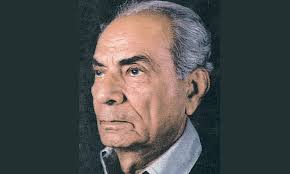
Sobho Gianchandani, one of Pakistan’s last leaders from its first generation of Marxists, has died at the age of 94.
He suffered a heart attack and was cremated in his native village near the southern city of Larkana on Tuesday.
Gianchandani was a member of the Communist Party of Pakistan and stayed active after it was banned in 1954.
He was one of the last remaining Pakistani students of Rabindranath Tagore, a literary figure and Nobel laureate from West Bengal in India.
Gianchandani’s death closes the chapter on a generation of leftist politicians who organised peasants and industrial workers during 1940s, 50s and 60s.
Analysts say it was this work that led to the 1970 election victory of the overtly socialist Pakistan Peoples Party in an otherwise conservative and religious country.
Gianchandani’s family said he had died in his chair after being served morning tea on Monday.
He had been suffering from cardiac problems complicated by a severe chest infection and had been in hospital twice in recent weeks.
Communist and Hindu
Gianchandani was born on 3 May 1920 to a Hindu family in Bundi village near the famous archaeological site of Mohenjo-Daro in Larkana district, Sindh province.
He went to school in Larkana and Karachi.
Later he studied fine arts at a university set up by Rabindranath Tagore at Shantiniketan, his native village in West Bengal.
In a subsequent interview, Gianchandani said he had espoused communism during his time at this university.
He said Tagore, who was then in his late 70s, used to call him “the man from Mohenjo-Daro”.
In 1942, Gianchandani participated in the Congress-led anti-British Quit India movement, and was arrested for the first time.
He was repeatedly jailed for his views and politics during a political career that lasted until the mid-1960s.
But he continued as an ideologue, intellectual and writer of several books.
In an interview in 2009, recalling the active period of his political life, he said he had become a “three-headed monster” for the Pakistani establishment.
“I am a communist, I am Hindu and I am Sindhi,” he said, light-heartedly referring to his minority identity within Pakistan
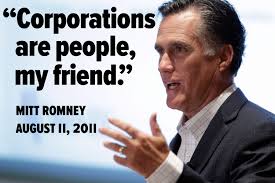
Republican presidential nominee Mitt Romney (Credit: handbill.us)Start with Wal-Mart in America, where the goods are cheap because they have low manufacturing costs, sustained by overseas workers earning small wages. With high consumer spending by Americans, Wal-Mart amasses big profits. That has enabled the corporation to get on par with the GDP of the 25th largest economy in the world, surpassing 157 smaller countries.
We’ve found 25 major American corporations whose 2010 revenues surpass the 2010 Gross Domestic Product of entire countries, often with a few billion to spare.
Even some major countries like Norway, Thailand, and New Zealand can be bested by certain U.S. firms.
Yahoo is bigger than Mongolia
Mongolia’s GDP: $6.13 billion
Yahoo’s Revenue: $6.32 billion
Yahoo would rank as the world’s 138th biggest country.
Source: Fortune/CNN Money, IMF
Visa is bigger than Zimbabwe
Zimbabwe’s GDP: $7.47 billion
Visa’s Revenue: $8.07 billion
Visa would rank as the world’s 133rd biggest country.
Source: Fortune/CNN Money, IMF
E-Bay is bigger than Madagascar
Madagascar’s GDP: $8.35 billion
E-Bay’s Revenue: $9.16 billion
E-Bay would rank as the world’s 129th biggest country.
Source: Fortune/CNN Money, IMF
Nike is bigger than Paraguay
Paraguay’s GDP: $18.48 billion
Nike’s Revenue: $19.16 billion
Nike would rank as the world’s 102nd biggest country.
Source: Fortune/CNN Money, IMF
Consolidated Edison is bigger than the Democratic Republic of the Congo
Democratic Republic of the Congo’s GDP: $13.13 billion
Con-Edison’s Revenue: $13.33 billion
Con-Edison would rank as the world’s 112th biggest country.
Source: Fortune/CNN Money, IMF
McDonald’s is bigger than Latvia
Latvia’s GDP: $24.05 billion
McDonald’s Revenue: $24.07 billion
McDonald’s would rank as the world’s 92nd biggest country.
Source: Fortune/CNN Money, IMF
Amazon.com is bigger than Kenya
Kenya’s GDP: $32.16 billion
Amazon.com’s Revenue: $34.2 billion
Amazon would rank as the world’s 86th biggest country.
Source: Fortune/CNN Money, IMF
Morgan Stanley is bigger than Uzbekistan
Uzbekistan’s GDP: $38.99 billion
Morgan Stanley’s Revenue: $39.32 billion
Morgan Stanley would rank as the world’s 82nd biggest country.
Source: Fortune/CNN Money, IMF
Cisco is bigger than Lebanon
Lebanon’s GDP: $39.25 billion
Cisco’s Revenue: $40.04 billion
Cisco would rank as the world’s 81st biggest country.
Source: Fortune/CNN Money, IMF
Pepsi is bigger than Oman
Oman’s GDP: $55.62
Pepsi’s Revenue: $57.83 billion
Pepsi would rank as the world’s 69th biggest country.
Source: Fortune/CNN Money, IMF
Apple is bigger than Ecuador
Ecuador’s GDP: $58.91 billion
Apple’s Revenue: $65.23 billion
Apple would rank as the world’s 68th biggest country.
Source: Fortune/CNN Money, IMF
Microsoft is bigger than Croatia
Croatia’s GDP: $60.59 billion
Microsoft’s Revenue: $62.48 billion
Microsoft would rank as the world’s 66th biggest economy.
Source: Fortune/CNN Money, IMF
Costco is bigger than Sudan
Sudan’s GDP: $68.44 billion
Costco’s Revenue: $77.94 billion
Costco would rank as the world’s 65th biggest country.
Source: Fortune/CNN Money, IMF
Proctor and Gamble is bigger than Libya
Libya’s GDP: $74.23 billion
Proctor and Gamble’s Revenue: $79.69 billion
Proctor and Gamble would rank as the world’s 64th biggest country.
Source: Fortune/CNN Money, IMF
Wells Fargo is bigger than Angola
Angola’s GDP: $86.26 billion
Wells Fargo’s Revenue: $93.249 billion
Wells Fargo would rank as the world’s 62nd biggest economy.
Source: Fortune/CNN Money, IMF
Ford is bigger than Morocco
Morocco’s GDP: $103.48 billion
Ford’s Revenue: $128.95 billion
Ford would rank as the world’s 60th biggest country.
Source: Fortune/CNN Money, IMF
Bank of America is bigger than Vietnam
Vietnam’s GDP: $103.57 billion
Bank of America’s Revenue: $134.19 billion
Bank of America would rank as the world’s 59th biggest country.
Source: Fortune/CNN Money, IMF
General Motors is bigger than Bangladesh
Bangladesh’s GDP: $104.92 billion
GM’s Revenue: $135.59 billion
GM would rank as the world’s 58th biggest country.
Source: Fortune/CNN Money, IMF
Berkshire Hathaway is bigger than Hungary
Hungary’s GDP: $128.96 billion
Berkshire Hathaway’s Revenue: $136.19 billion
Berkshire Hathaway would rank as the world’s 57th biggest economy.
Source: Fortune/CNN Money, IMF
General Electric is bigger than New Zealand
New Zealand’s GDP: $140.43 billion
GE’s Revenue: $151.63 billion
GE would rank as the world’s 52nd biggest country.
Source: Fortune/CNN Money, IMF
Fannie Mae is bigger than Peru
Peru’s GDP: $152.83 billion
Fannie mae’s Revenue: $153.83 billion
Fannie Mae would rank as the world’s 51st biggest country.
Source: Fortune/CNN Money, IMF
Conoco Phillips is bigger than Pakistan
Pakistan’s GDP: $174.87 billion
Conoco Phillip’s Revenue: $184.97 billion
Conoco Phillips would rank as the world’s 48th biggest country.
Source: Fortune/CNN Money, IMF
Chevron is bigger than the Czech Republic
Czech Republic’s GDP: $192.15 billion
Chevron’s Revenue: $196.34 billion
Chevron would rank as the world’s 46th biggest country.
Source: Fortune/CNN Money, IMF
Exxon Mobil is bigger than Thailand
Thailand’s GDP: $318.85 billion
Exxon Mobil’s Revenue: $354.67 billion
Exxon Mobil would rank as the world’s 30th biggest country.
Source: Fortune/CNN Money, IMF
Walmart is bigger than Norway
Norway’s GDP: $414.46 billion
Walmart’s Revenue: $421.89 billion
Walmart would rank as the world’s 25th biggest country.
Source: Fortune/CNN Money, IMF
Adnan Shukrijumah (Credit: newsasiaone.comWANA, Pakistan — Pakistani helicopter gunships swooped on a militant hideout in a predawn raid on Saturday and shot dead a top al-Qaeda operative who was wanted in the United States for planning to bomb the New York subway system, the military said.
The Federal Bureau of Investigation had offered a $5 million reward for the capture of Saudi national Adnan el-Shukrijumah, 39, who it said was believed to be al-Qaeda’s external operations chief at one time.
Shukrijumah, a Saudi Arabian native with a Guyanese passport, is the most senior al-Qaeda member ever killed by the Pakistani military.
“In an intelligence borne operation, top al-Qaeda leader Adnan el Shukrijumah was killed by (the) Pakistan Army in an early morning raid in Shinwarsak, South Waziristan today,” the military statement said. The remote region borders Afghanistan.
“His accomplice and local facilitator were also killed in the raid,” the statement said.
The military said that Shukrijumah had recently been forced to move by a Pakistani military operation in neighboring North Waziristan.
The region was the Taliban’s key stronghold in Pakistan and a hotbed of militancy until the military launched an offensive to retake the territory on June 15.
PREDAWN RAID
In Wana, the capital of South Waziristan, all phone lines and mobile phone signals were shut down overnight and the roads were blocked, a Reuters reporter there said.
Residents awoke just before dawn to the thudding of helicopter gunships and the growl of convoys of military vehicles approaching from several directions.
They were heading to a small house on a main road less than five kilometers from the main market on the outskirts of town, a witness said. Residents say the neighborhood is known to be sympathetic to the Taliban and the house had been used to shelter Afghan Taliban fighters for years.
One military official said security forces first heard that Chinese hostages were held at that location and then learned about Shukrijumah’s presence and planned a large operation, the officer said.
Two intelligence officers said the militants opened fire on the Pakistani military and Shukrijumah, who one described as “an Arab national,” was killed in the ensuing gun battle. One soldier was killed and another wounded, the military said.
A military official said five other militants were taken into custody during the raid, but intelligence officials said they were Shukrijumah’s wife and four children.
Shukrijumah is wanted in the United States for conspiracy to use weapons of mass destruction and to commit murder in a foreign country.
“The charges reveal that the plot against New York City’s subway system, uncovered in September of 2009, was directed by senior Al-Qaeda leadership in Pakistan,” the FBI website said.
The subway plot was described by prosecutors at the time as described as the most serious threat to New York since the September 11, 2001 attacks.
Shukrijumah was also linked by U.S. authorities to other suspects, including a group of men accused of planning to bomb fuel pipelines at New York’s John F. Kennedy International Airport.
(Additional reporting by Saud Mehsud in Dera Ismail Khan, Jibran Ahmad in Peshawar and Katharine Houreld in Islamabad; Writing by Katharine Houreld; Editing by Tom Heneghan)
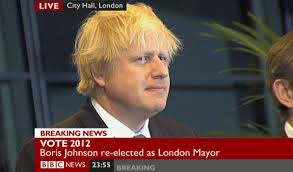
Boris Johnson’s has the unique ability to be ridiculous and charming at the same time. The London mayor and his inexplicable haircut can offend entire cities, get stuck on zip lines in front of crowds of journalists and be sacked from government for lying about an affair (“an inverted pyramid of piffle,” he claimed), yet still somehow end up one of Britain’s most important and beloved politicians. Many think he will be prime minister sooner or later.
However, Johnson’s charm may well fall flat with one organization: The U.S. Internal Revenue Service.
The mayor’s dispute with American tax-collectors was brought to light recently when he traveled to the United States and did a blitz of interviews with the American news media. While talking to WAMU’s Diane Rehm Show, Johnson explained that the U.S. government was forcing him to pay the capital gains tax on the sale of his Islington home. “Can you believe it?” he exclaimed. When asked by Rehm if he intended to pay the bill, he said that he would not. “I think it’s absolutely outrageous,” he added.
Johnson’s problem comes down to one important factor: His dual-citizenship. Despite being very, very British, Johnson was born in New York and lived in the United States until he was 5, hence becoming a natural born citizen. And despite some threats to renounce his citizenship (“After 42 happy years I am getting a divorce from America,” he wrote in 2006 after a spat with a U.S. immigration officer), he renewed his U.S. passport just two years ago.
It’s certainly tempting to dismiss Johnson’s dilemma as the simple case of a very rich man attempting to float the law (“Come on, Boris!,” the New York Times’s Roger Cohen wrote this week. “Give us a break.”) but there is a degree of sympathy to be found here: American citizenship carries with it a uniquely vexing taxation problem. The United States is one of only two countries where taxation is based on citizenship rather than residence (Eritrea is the other). If Johnson lived in the United States, for instance, he would not have to file a British tax return.
The unusual U.S. policy dates back to the Civil War and the Revenue Act of 1862, which called for the taxing of American citizens abroad, in part to punish men who fled the country to avoid joining the Union army.
In practice, this is usually often just an annoying bit of paperwork for foreigners — while the average citizen would have to file a tax return, it’s unlikely they’ll have to pay anything. However, it can become expensive for higher earners, especially when tax laws don’t line up. As Lisa Pollack, an American expat herself, explains for the Financial Times, this is what appears to have happened for poor old Boris:
In the U.K., gain on the sale of one’s home is not subject to tax. In the U.S., a gain above $250,000 (for a single filer) is subject to capital gains tax. Also in the US, home ownership is subsidised by a deduction against income of mortgage interest. In short, the countries have different tax breaks on housing.
Johnson’s U.S. tax bill for the sale of his home in London is thought to be in six figures. Given that the home is in the country he lives and works in, and he has not lived in the U.S. since he was 5, you can see why he thinks it’s “outrageous.”
Johnson does have the option of giving up his citizenship. If he did so, he would be joining a growing number of Americans: Last year 2,999 people renounced their American citizenship or green card status, the largest number ever revealed by the U.S. government, and its thought that number may end up being higher this year. The United States recently increased the administrative fee for renouncing one’s citizenship from $450 to $2,350, in what is unlikely to be a coincidence.
Experts believe that the increasing number of Americans renouncing their citizenship is due to a 2010 law called the Foreign Account Tax Compliance Act (FATC), which forced foreign banks to help claim back tax money from U.S. citizens living abroad. FATC has become a deeply unpopular with American expatriates. So far, it’s thought that the campaign has netted the U.S. Treasury $6 billion, the Wall Street Journal reports.
There are significant upsides to being a U.S. citizen, of course, and if Johnson wants to keep his passport, perhaps he could kick up a fuss. He might point toward the fact that the U.S. Embassy in London owes more than $10 million in fines related to the city’s congestion charge. He could also side with the legal battle being started by other expats against America’s taxation policies and the foreign governments that work with them.
Better still, he could put his very expensive citizenship to use: As an American citizen who was born in the United States, Johnson could one day run for president. His absurd charm could well win over American voters, too.
Torture Victim Sarwech Pirzado (Credit: iaojwordpress.com)PAKISTAN, Dec 3 : Disappearances and extra judicial killings of Sindhi nationalists continues unabated; in many cases disappearances have occurred following arrest by the police and at times by plain clothed persons, presumably from intelligence agencies; thereafter being taken into custody, most often tortured and ultimately their bodies are found dumped on the streets.
In the Sindh Province, the security forces have made secular and nationalist forces and activists their main target, in order to keep them in illegal detention centres, torture them and thereafter are extra judicially executed in an effort to eliminate any evidence of the disappearances. During the year 2014, more than 100 activists from nationalist groups particularly from the group ‘Jeay Sindh Muttahida Mahaz’ (JSMM), a banned organisation, have been arrested and are missing. On the other hand all the banned Muslim militant groups have made the Sindh Province their safe haven and hiding place.
Accusations are levelled by the nationalist groups that security forces are targeting nationalist forces to provide a space for religious militant groups and the Taliban, similar to what took place in the Baluchistan Province – where today as a result, the sectarian and militant groups are operating freely and every year they are involved in killing more than 1,000 persons in such sectarian violence.
In Sindh, the Jeay Sindh Muttahida Mahaz (JSMM) is the worst victim of the intelligence agencies in this regard. Although the members of the Jeay Sindh Qaumi Mahaz (JSQM), one of the major Sindhi nationalist parties, Jeay Sindh Tehrik (JST) and other parties have been facing no different situation, it’s worse for JSMM because they, unlike the other parties, openly support an armed movement for the freedom of Sindh.
On 15th August 2014, Mr. Asif Panhwar was arrested in a police raid at his friend’s house in Nasim Nagar, Hyderabad, in the Sindh Province and since then he has been missing. After 100 days of his disappearance his bullet riddled and torture marked body was found on the 25th of November this year. Asif Panhwar was a local leader of a banned secular nationalist organisation, the ‘Jeay Sindh Muttahida Mahaz’ (JSMM). Following his arrest and disappearance his brother filed a petition in the Sindh High Court for his recovery. As is the usual practice, the Sindh High Court did nothing, despite the appeals by his brother that Asif Panhwar might be killed in detention by the security agencies.
In another such incident on 15th October 2014, Paryal Shah, an activist of the JSMM was abducted by the Pakistan security agencies and since then he has been missing. His mutilated body was later found on 7th November 2014 with clearly visible marks of torture. His body was dumped near the city of Rahim Yar Khan in the Punjab Province where military is operating torture cells in their Cantonment area. Shah hosted the Baloch long march last year for the recovery of Baloch missing persons. Victim’s brother, Zamin Shah was also killed by the armed forces in fake encounter.
The bullet ridden body of Mr. Abdul Waheed Lashari, 37 years old, was found after his disappearance after 15 days after being arrested in the first week of November 2014 while he was travelling in a passenger bus. Mr. Lashari was affiliated with the Jeay Sindh Qaumi Mahaz (JSQM) Arisar group.
On 25th November 2014, a third-year student of Mehran University of Engineering and Technology, in the Sindh Province went missing from the Sindh University Housing Society, Jamshoro. Mr. Kamlesh Kumar was standing at a photocopy shop when two police mobile vans and a car approached them and dragged him in a police van. His only alleged crime was that he belongs to the Hindu community and he was participating in the protests against the persecution of religious minority groups. He was not affiliated with any political group. The family searched for Kamlesh at the police stations in Jamshoro and Hyderabad and to no avail.
Many such activists who stand up against the kidnapping of Hindu victims often go missing in the Sindh Province. The Chairman of Sindh Human Rights Organization (SHRO), Fayaz Shaikh was abducted from the city of Karachi. He has been organizing demonstrations on behalf of several Hindu girls who have been kidnapped in Pakistan. He has been abducted by unknown persons on 24th November 2014. His disappearance came on the eve of yet another demonstration he was supposed to organize under the auspices of the Sindh Human Rights Organization on behalf of the nine Hindu girls kidnapped by the Islamic seminaries in the Sindh Province. This is ironic since he was a leading voice who began a campaign to approach the United Nations Secretary General, Ban Ki-Moon, to take notice of the enforced disappearances of young Sindh activists and to call for an end to all such kidnappings and abductions of minorities and human rights activists there.
Another activist Mr. Rohel Laghari, 22 years old also belonging to the JSMM was abducted on the 1st April 2014 from Hyderabad and his whereabouts too are todate unknown.
Mr. Sarvech Pirzado who was yet another activist belonging to the group JSMM and an employee of a private medical company was abducted from the impress market in Karachi on 12th September 2014 by plain clothed persons and was later hurled into a four wheel type jeep. His family has filed a petition before the Sindh High Court for his recovery but as in all the other instances, to date no decision has been taken by the Court.
On October 11, the bullet riddled body of an activist of JSMM, Mr. Shakeel Konhari, was found dumped near the Malir Military Cantonment, Karachi. He was arrested from his house by the unknown persons.
The Asian Human Rights Commission urges the Government of Pakistan to stop the persecution of the Sindhi nationalists and halt once and for all these illegal and unconstitutional methods of enforced disappearances and extra judicial killings in Pakistan. If the law enforcement agencies have the evidences against the suspects and if there are criminal charges against them the government must bring them before the civil courts of law and tried.
The AHRC also urges the government to immediately ratify the International Convention for the Protection of All Persons from Enforced Disappearance and implement its provisions in law, policy and practice, and in particular include a new and separate crime of enforced disappearances in the penal code, as the government has already pledged before the United Nations visiting team, the working group of enforced and involuntary disappearances in 2012.
It would be a challenge for any leader: balance the books after years of systemic corruption, battle a resurgent rebellion and form a government despite entrenched ethnic divisions. But Afghan’s new president, Ashraf Ghani, must do all this as thousands of foreign troops pull out, taking their services, experience, hardware and dollars with them.
Ghani’s most pressing task at a summit with international donors in London on 3-4 December may be to make sure the world does not forget Afghanistan once foreign soldiers are no longer fighting on its soil.
Nato troops are due to withdraw from Afghanistan by 31 December. From a peak of around 140,000 in 2011, the force will shrink to 12,000 soldiers, who will stay mainly to train Afghan security forces.
The withdrawal leaves Afghanistan more vulnerable to Taliban insurgents, who have been gaining ground this year, and deprives the economy of the benefits of having tens of thousands of foreign troops stationed in the country.
“The Afghan economy is a war bubble and we are seeing it slowly deflate,” says Graeme Smith, senior analyst at International Crisis Group. He says the budget deficit was $300m-750m, with security costs eating up around $650m of the government’s meagre funds.
“If the Afghans were not paying that … to fight the war which, to be frank, we started, then most of these budgetary pressures would disappear overnight,” he says. “While we’re putting Afghanistan through these shocking political and military transitions, it behoves us to try to ease the economic transition, to smooth the way with some cash.”
However, many international partners are disillusioned after 13 years of rampant administrative corruption. Although Ghani represents a new start after Hamid Karzai’s discredited presidency, it is not clear yet whether this will be enough to guarantee continued, long-term financial support.
At the London conference, Afghanistan and its international partners are meant to review progress against the 2012 Tokyo mutual accountability framework, which includes commitments on governance, democracy, finance and rights.
Omar Samad, a former Afghan ambassador to France and Canada, says Ghani may want to recast some of these commitments to try to make aid more effective and accountable.
“This is going to be seen by the new Afghan government as an occasion to renew ties with the international community and to receive strong political and … development support for [its] agenda,” Samad says.“It’s a very critical moment because the glass is seen as half-full from the Afghan side. We need to solidify the gains of the last 13 years but we also need to enhance and … grow in a sustainable manner.”
There is real fear of gains being lost in the sphere of women’s rights, with activists warning that women could be excluded from future peace talks with the Taliban, endangering their status and protection. Peace talks are seen as inevitable despite a decade of failed negotiations with the insurgents, who are partly funded by profits from the illegal opium trade, which fuels corruption and subverts the legal economy.
Aid groups have urged British and Afghan authorities to make it clear in London that women’s rights are non-negotiable. The main conference meeting on 4 December will be preceded by a civil society event – the Ayenda conference, which means “future” in Dari – on 3 December. Britain’s Department for International Development said it expects women to be actively involved throughout the two days.
The withdrawal of most Nato troops has triggered soul-searching about the achievements of a military mission that cost billions of dollars and thousands of lives, including 2,210 American and 453 British soldiers.
Ghani, too, may be reassessing his options, with some signs that he may turn increasingly to China, which has signalled willingness to take a more active role in Afghanistan, with which it shares a narrow, mostly impassable, border.
“Ghani is making a very rational move by reaching out to China, not only because China has legitimate economic interests in Afghanistan and Afghanistan desperately needs new economic partners, but also because of China’s significant sway over Islamabad, and Islamabad’s very significant influence over the [Taliban] insurgency,” Smith says.
An Afghan woman buys silk yarn for weaving from a shop in Herat. Photograph: Aref Karimi/AFP/Getty Images
Samad says the greatest gains since 2001 include the creation of greater political, economic and social spaces, especially for women and young people. But governance and rule of law are still lacking, infrastructure projects are not well thought out, and there is a middle-management skills gap.
The troop withdrawal will affect every aspect of life: Smith says there will no longer be demand for armies of trucks to carry gravel, diesel or other inputs to military bases, and construction activity is expected to slow.
David Haines, country director for Mercy Corps, says employment rates among people who have completed the aid group’s vocational training in Helmand province have already dropped significantly for men and dramatically for women this year as fighting raged and business slowed.
He hopes the London conference will underline international support for Ghani to allow him “to get his house in order” over the next few years. “If he has to try and negotiate peace with the Taliban, deal with a massive falling economy, deal with corruption and a lack of accountability of public servants … it’s an impossible task to ask of anybody,” he says.
Smith says history has shown that when troops pull out of a country, funds tend to follow. “When you don’t have fresh-faced British soldiers whose lives are at risk, it’s much easier to turn off the tap. And that’s the real danger now for Afghanistan: that the world will forget.”
IK at Nov 30 rally (Credit: dawn.com)ISLAMABAD, Nov 30: Pakistan Tehreek-i-Insaf (PTI) Chairman Imran Khan threw down yet another gauntlet for the PML-N led government on Sunday, announcing the party’s plan to paralyse major cities – and eventually “shut down” the entire country by December 16.
Addressing a crowd of thousands assembled at D-Chowk, Imran unveiled “Plan C”:
“On Thursday (December 4), I will go to Lahore and shut it down. On December 8 I will shut down Faisalabad; on December 12 I will go to Karachi and shut it down. By December 16 I will close down all of Pakistan.”
The PTI rally and the announcement of “Plan C” was a critical next-step for the party, which had lost political mileage and steam since the massive anti-government movement launched in August.
Reiterating demands for Prime Minister Nawaz Sharif’s resignation and a fair probe into alleged rigging of the 2013 elections, the PTI Chairman appeared confident that his new push for street agitation would succeed.
“I know the people of Lahore are ready… I know all of Faisalabad is ready… and Karachi, I know they are waiting for me,” he said.
Lambasting the ruling PML-N, Imran said a further “Plan D” would be revealed on Thursday.
“The ball is in your court, Nawaz Sharif — do your talks, do your investigations and solve the issue. We will close Pakistan down when December 16 comes, and what I do after that you will not be able to bear it…It has been 109 days and Naya Pakistan is waking up every day. We can all see it,” Imran said.
Maintaining an aggressive tone while addressing his opponents, the PTI Chairman reiterated claims that the PML-N and Pakistan Peoples Party (PPP) colluded to rig the 2013 elections.
“I am a Pakistani who can see my country going down, you [Nawaz] and Zardari both in the 2013 election fixed the match. Zardari says there was rigging in Punjab; Nawaz says [there was] rigging in Sindh, Fazlur Rehman also says there was rigging… Balochistan parties say there was rigging,” he said.
“I want to ask all lawyers and educated people — if all parties are saying there was rigging then why is only PTI and Imran Khan asking for an investigation this rigging?”
“Mian sahib, if a country progresses just based on new roads, then make Malik Riaz the prime minister — a country progresses when money is spent on the citizens for their betterment,” he said, referring to the prime minister’s announcement earlier this week of the government’s plans for improved infrastructure and roads across the country.
Shah Mehmood Qureshi speaks
Addressing the gathering, PTI Vice-President Shah Mehmood Qureshi said the time for speeches was over.
“Today we will not make decisions – you will make all the decisions. Do you have the courage to implement Imran Khan’s next big plan?” he asked.
“Should we quietly go home? If you don’t want to go back make a decision – are you ready for the next step?”
A police official estimated that nearly 100,000 people gathered at Parade Avenue.
Supporters had poured into the capital from all over the country to attend the rally, making it one of the largest turn-outs in Islamabad since the start of the sit-in in August.
Participants at the rally said Parade Avenue was full of PTI workers sitting atop containers set up by the government. Nearly 80 per cent of the crowd was reported to be 18 to 40 year olds.
Sheikh Rasheed breathes fire
Chief of Awami Muslim league Sheikh Rasheed on Sunday spoke ahead of the PTI Chairman, and reiterated the anti-government protesters’ demand that the government must go.
“When the time comes, Nawaz falls to his knees… when the time is up, he goes to Havelian,” Rasheed says, referring to the premier’s recent visit to Abbottabad where he lambasted the PTI.
“Imran Khan will finish the governance of tyranny,” Rasheed said, adding that if cases can be registered against a former army chief and prime minister, then there is basis to register a case against Nawaz Sharif for “changing the votes of the people.”
“I wanted to make a long speech but I am aware that every household is awaiting Imran’s speech,” Rasheed said.
Rasheed condemned the killing JUI-F leader Khalid Soomro, however, he added that JUI-F leader Maulana Fazlur Rehman’s attitude has ruined his party’s politics.
Capital, rally kept secure
Radio Pakistan reported that the government deployed thousands of security personnel for the PTI rally.
The report said the government deployed 15,000 security personnel to ensure security of the PTI rally, and the Red Zone in Islamabad. Special security arrangements were also made for public and private buildings in the area.
According to an Interior Ministry spokesperson, security forces including FC, Rangers and police, were placed in four cordons. The spokesman said containers had not been placed in the city, except the venue of the public meeting.
New Delhi, Nov. 8: A tip from Indian soil which shed new light on how US diplomat Robin Raphel empowered the Taliban may have hastened her downfall in Washington.
Accounts from Raisina Hill, the seat of government in New Delhi and from Chanakyapuri, the capital’s diplomatic enclave, however, indicated that India’s official apparatus was not involved in the tip. The US embassy was behind relaying the information, albeit in the course of routine transmission of material.
The long-running counter-intelligence probe of Raphel, who began her American civil service career with the CIA, appears to have taken a critical turn when Hamid Mir, executive editor of Pakistan’s Geo TV, made credible revelations about her nearly two-decade-old support for the Taliban to senior editorial staff of The Indian Express in the third week of October.
Mir, along with Shafqat Mahmood, a leader of Imran Khan’s Tehrik-e-Insaf, said in the course of an exchange on India-Pakistan relations with the editors in New Delhi that Raphel had weighed heavily on then Pakistan Prime Minister Benazir Bhutto in 1995 to throw Islamabad’s weight behind the Taliban. At that time, the world viewed the Taliban as a curiosity and it was mistaken by many countries as a nascent student movement for reforming Afghanistan and getting rid of its endemic corruption and war-lordism.
Raphel was then the assistant secretary of state for South Asia, a new entity created with much fanfare in the state department. A middle-ranking diplomat at the US embassy in Chankayapuri, Raphel was catapulted to head the new bureau over several others her senior because she was an “FoB,” Friend of Bill.
Like Strobe Talbott, another FoB who became deputy secretary of state as a political appointee, Bill Clinton brought in a number of his old friends from his Oxford and London years into his administration. Of all of them, Raphel is the one who did maximum damage to America, albeit in retrospect.
She had no excuse for confusing the Taliban for an innocent student movement. She was already an expert on Pakistan and had her resourceful CIA experience behind her. Raphel’s husband (they were divorced by then) gave up his life travelling with General Zia-ul-Haq on their fatal flight in Bahawalpur in 1988.
Here is what Mir said on the record in the third week of October: “The Taliban movement emerged in Afghanistan in 1994. In 1995, I was travelling with then Prime Minister Benazir Bhutto to the US. Bhutto met ambassador Robin Raphel in New York. We came to know that Raphel had asked Bhutto to announce her support to the Taliban. It was very disturbing. I wrote in my column from New York that here is the first elected woman Prime Minister in the whole Muslim world, the Taliban are imposing a ban on girls’ education (in Afghanistan) and she had been asked by Robin Raphel, another woman, to announce her support for the Taliban.”
Benazir did not take kindly to Mir and other journalists getting wind of what had transpired at the meeting with Raphel and she was even less kindly to Mir for writing a column revealing Raphel’s advice.
Here is Mir again in his own words: “When we were coming (back home) from New York, the Prime Minister met me on the plane and said, ‘You are criticising me’. I replied, ‘Yes, this is democracy, I don’t like the Taliban and you are supporting the Taliban at the behest of Raphel’. So she instructed her interior minister to brief me why the Taliban are good for Pakistan.”
A few days passed. “The interior minister organised a briefing for me and Nusrat Javed, a colleague, and explained that we (Pakistan) were using the Taliban as the ‘pipeline police’. We wanted a gas pipeline from Uzbekistan to Pakistan and there was nobody who could protect it because the government in Kabul, the Northern Alliance, was supported by the Indians and the Iranians and they might destroy the gas pipeline.”
Now Mir demanded his price for changing course. “I said OK, I would like to meet Mullah Omar (the Taliban chief). The interior minister said ‘OK’. I met Mullah Omar in Kandahar…. I was astonished he was not aware Raphel was American.”
With Mir’s talk of the pipeline stake, there may be wheels within wheels in the raid on Raphel by the FBI. Not that the investigating agencies did not know. But Mir’s account is confirmation of what the FBI may have long suspected.
Three days after Mir spoke to the editors in New Delhi, Raphel lost her security clearance. This week’s developments, including the sealing of her state department office and a search of her residence, are a follow-up to the revocation of her security clearance.
US embassies across the world routinely send to the state department material such as Mir’s statements that are in the public domain. Sometimes, as in Raphel’s case, they have rare and unexpected consequences.
It was well-known in South Block in the 1990s, the period under review, that the Americans were willing to overlook ideological anathema, including Islamic extremism, for the sake of energy and mineral resources in Central Asia and Afghanistan.
Those who approached India as lobbyists on behalf of US oil companies during those years include some big names: Condoleezza Rice, who later became US national security adviser and secretary of state; and Zalmay Khalilzad, an Afghan American who was later US ambassador to Afghanistan and Iraq, and whom the US unsuccessfully tried to foist on Kabul as President in succession to Hamid Karzai.
When the Taliban took power in Kabul in December 1996, Raphel was the assistant secretary of state in charge of South Asia. At her persuasion, the US extended recognition to the Taliban, only to withdraw it 10 minutes later.
Even though Raphel left her post a year after the Taliban takeover of Kabul, the US continued her policy of mollycoddling the Taliban, nurturing a monster that would devour the US in association with al Qaida on September 11, 2001.
That policy was abandoned only in August 1998 after two US embassies in east Africa were bombed by terrorists.
During the George W. Bush and Barack Obama years, Raphel held the purse strings to US aid to Pakistan and she shuttled between Islamabad and Washington, residing alternately in both of her favourite cities.
It is not known if the latest FBI probe covers the huge amount of money she disbursed and whether it went into the hands of those who are a threat to America, like the Taliban.
Every day, shortly after breakfast, more than 150 noisy and eager-eyed kids, coated in dust from top to toe, troop into a mud cowshed in a sun-baked village among the cotton fields of southern Pakistan. The shed is no larger than the average American garage; the boys and girls squeeze together, knee-to-knee, on the dirt floor.
Words scrawled on a wooden plank hanging outside proudly proclaim this hovel to be a “school,” although the pupils have no tables, chairs, shelves, maps or wall charts — let alone laptops, water coolers or lunch boxes.
Nor are there any teachers, except for one very young woman who is sitting serenely in front of this boisterous throng, occasionally issuing instructions, watched by a cow and a couple of goats tethered a few feet away. Her name is Aansoo Kohli.
Aansoo is a 20-year-old student in the final stages of a bachelor’s degree. She is the only person in this village with more than a smattering of education. Her mission is to change that: “I’ll make these children doctors,” she says. “I’ll make them teachers and engineers.”
The kids in Aansoo’s cattle shed are from Pakistan’s Hindu community — a marginalized, sometimes victimized, minority in an overwhelmingly Muslim nation. Their village has for centuries subsisted on the tiny income produced by picking cotton and green chilies for feudal landlords.
The mass exodus of Hindus to India — 50 miles to the east — during the 1947 partition of the Subcontinent seems to have passed by this remote community.
The village, Minah Ji Dhani, lies deep in the countryside of Pakistan’s Sindh province; you have to drive across fields to reach it. There is no road. Nor is there electricity or running water. Its inhabitants are among the poorest of Pakistan’s roughly 200 million population.
A crude wooden crutch lies at Aansoo’s side. She needs this because she lost the use of a leg as an infant due to a botched medical procedure. Her father, an illiterate farm worker, realized she would be unable to work in the fields, so he packed her off every day to a government-run school miles away.
As an impoverished and disabled Hindu girl in a highly conservative and patriarchal rural society, Aansoo says her school years were difficult. “People would laugh at me when I went to school,” she recalls. “They’d say, ‘What’s she going to do once she’s educated?'”
Aansoo’s cowshed “school” is her answer to that question. She has no teaching qualifications and works without pay. This hasn’t deterred her from pushing ahead with a personal campaign to give her village’s children — girls as well as boys — the chance to get educated.
“I love these kids,” she says. “I’m urging them to study.”
You only have to watch Aansoo at work for a short while to realize that to describe her cattle shed as a school, or her as a teacher, really is a stretch.
Overwhelmed by numbers, she teaches some of the older children, who then squat on the ground and impart what they have just learned to the smaller kids, some as young as three. Somehow the village whipped up enough money to buy some dog-eared government textbooks and hand-held blackboards.
But there is another goal here. Talk to Aansoo, and it soon becomes clear she has assembled these kids in part to draw attention to a chronic problem blighting her country’s young, especially the poor.
Over the years, government teaching jobs in Pakistan have routinely been handed out as political favors. Thousands of so-called “teachers” pocket wages but do not go to work. There’s a girls’ school less than a mile from Aansoo’s village that has long been closed because the teachers never showed up.
Aansoo Kohli, 20, is in the final stages of a bachelor’s degree. She is the only person in Minah Ji Dhani with more than a smattering of education. Abdul Sattar for NPR hide caption
itoggle caption Abdul Sattar for NPR
Aansoo Kohli, 20, is in the final stages of a bachelor’s degree. She is the only person in Minah Ji Dhani with more than a smattering of education.
Abdul Sattar for NPR
Aansoo’s aim is to generate the kind of publicity that will send a message to people far beyond the confines of her village: “I want to tell Pakistan’s teachers that you have a duty to the nation’s children. Please come to school and teach!”
“Aansoo is posing a question for all of Pakistan,” says Janib Dalwani, a Muslim social activist from a nearby village who’s playing a central role in Aansoo’s seven-month-old campaign, publicizing her efforts and rallying villagers to the cause. “If someone with her disadvantages can teach, then why can’t teachers who’re sitting at home drawing salaries go out and teach?”
The task of persuading parents to allow their kids to go along to Aansoo’s cattle shed fell to Dalwani. He says they were initially reluctant to release their children from working in the fields and doubtful about the benefits of education.
“I told them God’s on their side,” says Dalwani. “He’ll help them.”
This seems to have worked. Ram Chand, a farm worker, has allowed three of his daughters to go to the cattle shed: “I am very happy,” he says. “We don’t want the children to lead the life we’ve led.”
Aansoo’s message is being heard beyond her village. Liaquat Ali Mirani, a principal in the Sindhi city of Larkana, runs a website that publishes the names and photos of absentee teachers in the hope this will shame them into doing their jobs.
“I fully support Aansoo and have a lot of sympathy for her. May God help her,” says Mirani.
He estimates four out of 10 teachers in the province never set foot in a school: “Some of them run shops, some work in the media, some for feudal landlords.”
In 2010, Pakistan’s federal constitution was amended to make education compulsory and free for all children age 5 to 16. But education is run by provincial governments; they haven’t yet turned this amendment into law and it seems unlikely they will. This helps explain why, according to estimates, nearly half of Pakistan’s 58 million kids of school age are not in school.
“The state of education is very bad in Pakistan,” says Farhatullah Babar, a leading figure in the Pakistan People’s Party (PPP), the late Benazir Bhutto’s party that governs Sindh. “In fact, we have what we call education emergency.”
Babar says that although the PPP bears much responsibility for the education crisis in Sindh, it plans to fire absentee teachers and make government teachers take a proficiency test.
“I think these measures indicate a very strong realization on the part of the PPP that if it was responsible for the mess, it is also determined to clean the mess,” says Babar.
For now, though, the kids in the cattle shed are on their own. Their chief hope is Aansoo’s determination — and their own enthusiasm
LONDON, Nov 19 — Mazher Mahmood was 21 when he first posed as a wealthy sheikh. A reporter from Birmingham, England, intent on exposing a prostitution ring at a local hotel, he donned a white robe he had bought for 12 pounds at an Islamic bookshop, checked into the hotel, the Metropole, and persuaded the concierge to send women to his room.
Three decades later, Mr. Mahmood owns at least a dozen sheikh outfits and a Rolex costing 5,000 pounds to perfect his disguise. With an entourage of pretend bodyguards, assistants and even three stand-in sheikhs, the man known here as “the fake sheikh” has exposed drug deals, immigration fraud and, four years ago, one of the biggest match-fixing scandals in the history of cricket.
But he has also targeted second-tier celebrities, embarrassed royalty and baited a politician with anti-Semitic jokes. Under investigation for perjury after a judge accused him of lying in court, Mr. Mahmood was suspended in July from the newspaper The Sun on Sunday.
He now faces the sort of public embarassment that some of his targets once faced: Last week, the BBC aired a 30-minute documentary that included interviews with some of his former targets and assistants and, for the first time, high-definition footage of Mr. Mahmood himself.
Photo
Mazher Mahmood in a screen grab from a BBC documentary, which was posted on YouTube after a judge refused to block it. Credit BBC Panorama, ‘The Fake Sheikh Exposed’
In one instance highlighted in the documentary, he flew a 24-year-old model to the Canary Islands in 1996, promised her a lucrative modeling contract in the Middle East and then encouraged her to buy him cocaine from a dealer he had specially hired for that purpose. His story in the now-defunct tabloid The News of the World branded her “a mob-connected drugs pusher.”
In Britain’s pantheon of notorious tabloid reporters, the “fake sheikh” is among the most notorious. Long a star in Rupert Murdoch’s British tabloid stable, Mr. Mahmood has become a symbol of the excesses of British journalism at a time when the country is still reeling from the fallout of the newspaper phone hacking scandal.
Since the scandal broke in 2011, more than 200 people have been arrested, among them private investigators, police officers and about 60 journalists. Rebekah Brooks, the head of Mr. Murdoch’s British newspaper business until 2011 and onetime editor of The News of The World, was acquitted this year. But her successor as editor, Andy Coulson, was convicted, along with five others who had pleaded guilty. Last month, Ian Edmondson, a former news editor at the tabloid, was sent to jail for eight months. More cases are pending, including several concerning the bribery of public officials..
“The big picture here is that the commercial pressure to deliver stories that will sell the paper and make more money is an irresistible force in those newsrooms,” said Nick Davies of The Guardian and author of “Hack Attack,” about the scandal. “What it translates into is reporters being told, ‘Do whatever you need to do, and if that involves breaking the law, that’s O.K.’ ″
“Mazher Mahmood is part of that culture of ruthlessness,” Mr. Davies added. “He was given free rein. He was given vast amounts of money to protect his identity as a fake sheikh. But often he is simply exposing people he has manipulated into doing something wrong.″
In 1997, Mr. Mahmood put on his sheikh costume and offered a popular television actor film roles alongside Robert De Niro and Al Pacino. Footage from a meeting at the Savoy Hotel in London, obtained by the BBC, shows the actor John Alford nervously decline both alcohol and drugs. But pressed to buy drugs for the sheikh, he eventually delivered a small amount of marijuana and cocaine and ended up in jail for nine months.
“I lost my house, I lost my career,” Mr. Alford told the BBC. “I’m lucky to be here. There were times when I’ve really thought of ending it. For the last 18 years, I’ve been through hell.”
More than 90 people have served jail time as a result of Mr. Mahmood’s reporting.
Now 51, Mr. Mahmood has denied any wrongdoing, saying that he used legitimate investigative methods. His lawyer, Angus McBride, called the BBC program “deeply misleading and inaccurate,” and said it was not representative of his client’s work and should not have been allowed to air while he is under police investigation.
Mr. Mahmood tried to stop the BBC from revealing his identity, claiming that his life would be at risk. Twice, the program was delayed. But a judge ruled that there was not enough evidence to support this claim, pointing out that Mr. Mahmood had written his autobiography, “Confessions of a Fake Sheik,” under his real name. It was published in 2008 with photographs of the author that merely concealed his eyes with a thin black strip.
Others have tried to blow his cover: George Galloway, a left-wing British politician and supporter of the Palestinian cause, published Mr. Mahmood’s photo on his website in 2006 and accused Mr. Mahmood of disguising himself as an Arab businessman and trying to entice him to make anti-Semitic comments over lunch.
Besides the infamous sheikh, British tabloid journalism has featured Benji the Binman, who scavenged through celebrity trash cans, and Ms. Brooks, who once dressed as a cleaner and sneaked into the building of a rival newspaper to snatch a paper off the presses and match an exclusive report on the royal family.
But Mr. Mahmood was a legend — and for the most part a respected one. He counted 500 exclusives at The News of the World, where he worked for two decades, and won Reporter of the Year at the 1998 British Press Awards. His former editor at The News of the World, Phil Hall, called him “the most diligent reporter we had.” After Mr. Murdoch shut the tabloid in 2011, a consequence of the scandal, Mr. Mahmood was hired by The Sun on Sunday, which was started a year later.
Last year, Mr. Mahmood dressed up again, this time as a wealthy Indian film mogul. He flew the singer Tulisa Contostavlos and two of her friends to Las Vegas first class and offered her a £3 million film contract for a role alongside Leonardo DiCaprio. Mr. Mahmood then pressed her to buy him cocaine. When she did, he wrote a front page “world exclusive” in The Sun on Sunday: “X Factor star caught setting up secret deal with drugs pal.”
But Ms. Contostavlos fought back and won. Dismissing the case in July, Judge Alistair McCreath said there were strong grounds to believe Mr. Mahmood had told him “lies” and had been “manipulating the evidence” in the case against Ms. Contostavlos. Since then, prosecutors have dropped a number of pending cases that relied on his evidence, and some of his former targets are planning to sue. Mr. Mahmood has been questioned by the police, his lawyer said.
“The actions of the fake sheikh are more far reaching than phone hacking,” Mark Lewis, a lawyer representing some of Mr. Mahmood’s targets, said in an email message. “People’s lives have been ruined. People have been sent to prison for committing crimes solicited by Mazher Mahmood.”
Mr. Lewis has called for an investigation into the role of law enforcement officials. He said the BBC program, watched by 2.5 million people last Wednesday, had made litigation inevitable.
“There will be some very worried people in the police, prosecution and at News Corp.,” he said. “Maybe one day we will have a free press in U.K. telling us what really happened.”