RCD Highway to Link Pakistan with Central Asia

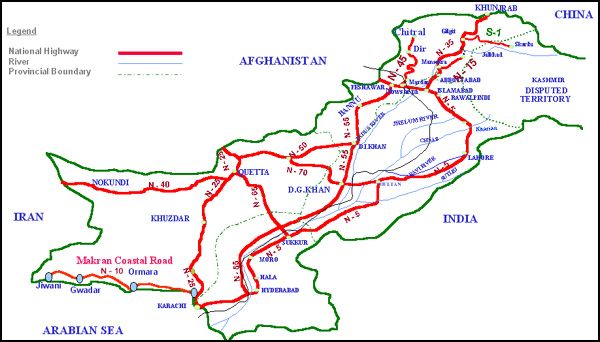
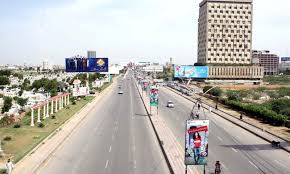
N-25 Highway (Credit: urbanpakistan)
N-25 Highway
(Credit: urbanpakistan)

ISLAMABAD, May 13 – Pakistan and United States on Monday entered into an agreement for the construction of N-25 highway connecting Chaman to Kalat through Quetta.

According to agreement signed by US Ambassador and Minister for Planning Ahsan Iqbal, U.S will provide $64 million to the Federal Government for this vital project immediately, and an additional $26 million shall be allocated later on.

“The United States is proud to partner with the Government of Pakistan in rebuilding essential infrastructure. When completed, this highway will become part of the growing legacy of partnership between our two nations, as it will serve the people of Pakistan for generations to come,” U.S Ambassador said on the occasion.

The construction of this highway will restore a major trade route between Afghanistan and the Central Asia. It will also lead to be a crucial link between Balochistan and rest of the Pakistan including Karachi.

USAID will fund this construction project of the remaining part of 111 kilometers needed to complete the total 247 kilometer-long highway.

The upgradation and rehabilitation work on N-25 started in 2004, but was halted in 2010 due to security challenges in the area. The sections of the road completed so far were built as per NHA-Specifications and standards under supervision of International Consultants. The N-25 National Highway also called RCD Highway is 813 km long, passing through Karachi, Bela, Khuzdar, Kalat, Quetta and Chaman and continuing into Afghanistan. The NHA will be responsible for all construction work.

Army & Govt Come Together Over Karachi Security

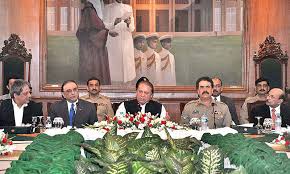
Sharifs in Karachi (Credit: dawn.com)
Sharifs in Karachi
(Credit: dawn.com)

Karachi, May 15 —Prime Minister Mian Muhammad Nawaz Sharif said on Wednesday that the morale of Pakistan Army would never be allowed to let down and the intelligence agencies should expand their intelligence sharing network so that peace and tranquility in the country in general and in Karachi in particular be maintained.

Prime Minister Mian Muhammad Nawaz Sharif, presiding over a high level meeting at Sindh Governor House expressed his resolve with firm determination that peace in Karachi was precious than anything else and the federal government would not hesitate taking any action of any scale for complete restoration of peace and tranquility in Karachi. Karachi was the economic hub of the country and hence this city would not be left alone at the mercy of criminals.

On the occasion, the Chief of Army Staff General Raheel Sharif told the meeting that Pakistan Army was standing beside the civilian government for the cause of restoration of peace in the metropolis.

It was the highest meeting ever held with the Chief of Army Staff General Raheel Sharif, Inter-Services Intelligence chief General Zaheer ul Islam, Karachi Corps Commander Lieutenant General Sajjad Ghani, Federal Interior Minister Chaudhry Nisar Ali Khan, Intelligence Bureau Director General, Pakistan Rangers, Sindh, Director General Maj. Gen. Rizwan Akhtar, former President Asif Ali Zardari, Sindh Governor Dr Ishrat ul Ebad Khan, Sindh Chief Minister Syed Qaim Ali Shah Jilani, Sindh Chief Secretary Sajjad Saleem Hotyana, Acting Inspector General of Police, Sindh Ghulam Haider Jamali, Muttahida Qaumi Movement’s Coordination Committee member Haider Abbas Rizvi, Awami National Party Sindh chapter President and Senator Shahi Sayed, Jamaat-e Islami Karachi Ameer Hafiz Naeem ur Rehman and others.

Nawaz Sharif asked Sindh Chief Minister that being the captain of ongoing targeted operation in Karachi; he should not make the operation a test cricket match but treat it like it was a T-20 cricket match. He questioned as why the process of blocking all illegal and unregistered mobile SIMs was not completed as yet and ordered that it should be completed now without fail to ensure elimination of network of criminals and terrorists operating within the country and from abroad.

He enquired about reasons for delay in issuance of red warrant for arresting the criminals and terrorists, who had escaped from Pakistan to neighbouring countries.

The Premier told the meeting that top civil and military leadership would now monitor the ongoing targeted operation against terrorists and criminals in Karachi. He lauded Pakistan Rangers Sindh for their effective operation and major achievements in Lyari regarding busting gangs of militants.

In this regard, the meeting decided to make the blockage of all such illegal and unregistered mobile SIMs as mandatory within the specified duration and the law enforcement agencies should be given complete free hand.

The meeting updated the Prime Minister about measures being initiated for arresting of criminals and terrorists, who had fled to foreign countries through the Interpol.

Pakistan Rangers Director General informed the meeting that the land mafia, drug mafia and banned religious organisations were behind wreaking havoc in the city and they were sabotaging the efforts of the government for restoring peace and tranquility in the metropolis.

The meeting made lengthy deliberations over reservations of MQM on kidnappings of its workers and extra-judicial murders. The meeting reviewed the pace and strategy of the targeted operation in Karachi, details of arrested suspects, recovery of illegal weapons and issuance of red warrants for arresting the hardened criminals and terrorists.

The meeting briefed the Premier about shifting of the anti-terrorist courts to district Malir, installation of scanners on all routes of entry and exit in Karachi, progress on construction of a high security prison, operation against illegal occupation of land and encroachments and establishment of new Police stations in sensitive areas of the city. The meeting also briefed the Prime Minister about effective implementation of Protection of Pakistan Ordinance and transparent appointments in Police Department.

INP adds: Former President and PPP Co-Chairman Asif Ali Zardari Wednesday pledged that Sindh government was ready to extend its support to Interior Minister Chaudhry Nisar Ali regarding maintenance of law and order in Karachi. “We are ready to help the interior minister in every possible way,” Zardari said. The former president stressed the need to demonstrate patience and said that there was need to help everyone. More than 2,000 army jawans have been recruited in police force, he said, adding that police needed to be equipped with facilities.

Few Hard Back Seats Left Aboard the `Democracy Train’

Book Launch in Hyderabad

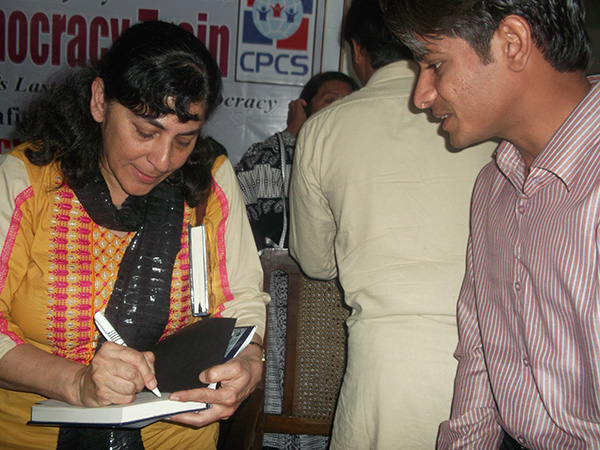
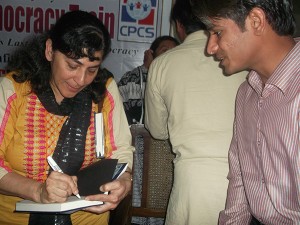
WASHINGTON DC/KARACHI: About a year after Aboard the Democracy Train was reprinted by Paramount Books in 2013 and launched across Pakistan, the hard back edition is practically sold out. A recent visit to the homeland revealed that non governmental organizations have been in the forefront of purchasing the book, which also documents the struggles by civil society for tolerance and rule of law.

While the train of current events keeps rushing on, the book is based on the philosophy that in order to understand the future one has to know the past. Hence the Amazon website (which sells the book internationally), has on and off rated the book as a best seller  within the category of `Pakistan history.’

Inside Pakistan, the remaining copies of the book can be ordered individually through the Assistant Manager Sales, Marketing & Administration, Furqan Arbi (Telephone: (021) 34310030/1 ext 213). Alternately, online delivery may be assured  by clicking on the Paramount website: http://www.paramountbooks.com.pk

Outside Pakistan, Aboard the Democracy Train is available in electronic form, including Kindle. The paper back print edition can still be purchased internationally through Anthem Press, London, Anthem Press website and a host of online sellers.

Persistent Drought led to Decline of the Indus Valley Civilization
Mohenjo daro’s new master plan may shed more light

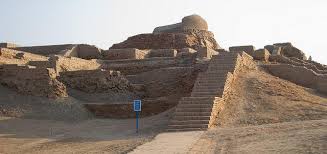
Moenjodaro (Credit: Smithsonian.org)
Moenjodaro
(Credit: Smithsonian.org)

The rise and decline of the Indus Valley Civilisation has always been a mystery. Various archaeologists and anthropologists have tried to unfold this mystery through different theories. This question was recently answered in the scientific weekly, ‘Nature’, in its edition of the first week of March.

The article says that a 200-year drought doomed the Indus Valley Civilisation. palaeoclimatologist, Yama Dixit, at Cambridge University and her colleagues examined sediments from Kotla Dahar, an ancient lake near the northeastern edge of the Indus Valley area in Haryana, India, that still seasonally floods.

The researchers suggest that the monsoon cycle, which is vital to the livelihoods of all of South Asia, essentially stopped here for as long as two centuries. The decline of civilisations in Egypt, Greece and Mesopotamia has already been attributed to a long-term drought that began around 4200 years ago.

The Indus civilisation, according to archaeological research accounts, was characterised by large, well-planned cities with advanced municipal sanitation systems and a script that has never been deciphered. However, it slowly lost urban cohesion, and its cities were gradually abandoned. Archaeologists and historians, over the generations, have been laying out various assumptions that led to its decline.

Research on the Indus civilisation, has always been an ignored area in our part of the world. However, in his early tenure, Zulifkar Ali Bhutto took some solid efforts that laid to the foundation of its international recognition. This was pioneered with an international seminar – Sindh through Centuries – held in 1975, where researchers and scholars revealed various aspects.

After four decades, the Sindh Madresatul Islam University held another, second International Sindh through Centuries conference on March 24-26 this year and tried to reconnect the past with the present through latest research on the origin and decline of the Indus civilisation, including deciphering its script.

Termed as one of the largest and oldest urban settlements in the world, the headquarters of the Indus Civilisation – Mohenjodaro – is one of the 981 world heritage sites declared so by the Unesco in 1980. Reportedly, this famous world heritage site is fast deteriorating.

Mohenjodaro has been in the headlines recently. Two months ago, it was in the spotlight when PPP Chairman Bilawal Bhutto inaugurated the Sindh Festival on February 1 within its premises. Experts had already warned that the inaugural ceremony would add more danger to this fast deteriorating site. The personal involvement of Bilawal Bhutto, attracting national and international tourists, is a positive sign, which needs to be harnessed into.

The media has been reporting that some walls are crumbling and others fast decaying due to rain, dust storms and water logging. The condition of the laboratory, museum, motel and other facilities, reportedly, is also very poor. More depressingly, a few years back, even the Mohenjodaro museum was looted. Many of its famous seals remain unrecovered, except ceremonial police reporting and questionable raids on the possible hideouts of stolen treasures – largely believed to be smuggled offshore.

In the aftermath of the 18th Amendment, the custodian of the site is its provincial government. With this, it reportedly received an amount of Rs75 million from the federal government under the National Fund for Mohenjodaro. The fund, during the last four decades, is told to have generated a huge sum of $23 million, mainly through an international campaign jointly run by the federal government and Unesco. The Sindh chief minister, reportedly, also contributed Rs100 million to the fund.

With the takeover of this world heritage site, the government of Sindh has revised the technical committee – an apex body, to preserve and promote the dying site, under the Ministry of Culture. The much-acclaimed authority on the Indus Valley Civilisation German archeologist Dr Michael Jansen has been made its chairperson. Under his guidance, reportedly, new project preparations are told to be in process, for the second master plan, estimating at least Rs1000 million, which needs intensive deliberations with all concerned stakeholders.
Besides money, Mohenjodaro also needs a strong team of professional researchers, trained staff and skilled labour.

The newly envisaged Mohenjodaro master plan can definitely result in better protection of the site, if merit and expertise is not compromised. Provincial interdepartmental coordination is urged to attract more tourists. For this, it needs a dedicated website, promotional literature, incentivised packages, economised travel, and most of all security and safety. This is how, besides preservation and promotion, we may create a qualitative environment, where holistic research on the rise and fall of the Indus civilisation can also be undertaken at our own level, as per international standards.

The writer is an anthropologist and development professional.

New York Police Recruit Muslims to Be Informers

New York, May 10 – One man was a food cart vendor from Afghanistan, arrested during an argument with a parking enforcement officer over a ticket. Another was an Egyptian-born limousine driver, picked up in a prostitution sting. Still another was an accounting student from Pakistan, in custody for driving without a valid license.

The men, all Muslim immigrants, went through similar ordeals: Waiting in a New York station house cell or a lockup facility, expecting to be arraigned, only to be pulled aside and questioned by detectives. The queries were not about the charges against them, but about where they went to mosque and what their prayer habits were. Eventually, the detectives got to the point: Would they work for the police, eavesdropping in Muslim cafes and restaurants, or in mosques?

Beginning a few years after the terrorist attacks on Sept. 11, 2001, a squad of detectives, known as the Citywide Debriefing Team, has combed the city’s jails for immigrants — predominantly Muslims — who might be persuaded to become police informants, according to documents obtained by The New York Times, along with interviews with former members of the unit and senior police officials.

Last month, the Police Department announced it had disbanded a controversial surveillance unit that had sent plainclothes detectives into Muslim communities to listen in on conversations and build detailed files on where people ate, prayed and shopped. But the continuing work of the debriefing team shows that the department has not backed away from other counterterrorism initiatives that it created in the years after the Sept. 11 attacks.

Indeed, in the first quarter of this year, according to police officials, the team conducted 220 interviews.

The Times reviewed two dozen reports generated by the debriefing team in early 2009. Together, the documents and the interviews offered an up-close view of how the squad operates, functioning as a recruiter for the Intelligence Division, the arm of the department that is dedicated to foiling terrorist plots. But they also showed that the division’s counterterrorism mission had come to intersect in some new — and potentially uncomfortable — ways with the department’s more traditional crime-fighting work.

They showed that religion had become a normal topic of police inquiry in the city’s holding cells and lockup facilities. Some reports written by detectives after debriefing sessions noted whether a prisoner attended mosque, celebrated Muslim holidays or had made a pilgrimage to Mecca. The report on the food cart vendor described the location of his Flushing mosque and noted that worshipers were a “mix of Afghani, Persian (Iranians) and Pakistani.” The Egyptian limousine driver said he “considers himself to be a Sunni Muslim” but “has not prayed at a Mosque in quite some time,” according to the report.

Debriefing Prisoners

Detectives have long relied on informants, including drug addicts and underworld figures. But the informants are typically asked to provide information about crimes they know about or other criminals with whom they are acquainted. By contrast, the Citywide Debriefing Team has sought to recruit Muslims regardless of what they know. Police officials described the interviews as voluntary, but several Muslim immigrant interviewees reached by The Times said they were shaken by the encounters.

Continue reading the main story

John Miller, the deputy commissioner in charge of the Police Department’s Intelligence Division, said the debriefing team had emerged from the department’s urgent need in the aftermath of the Sept. 11 attacks for a cadre of sources around the city who might be helpful in counterterrorism. One way to fill that gap, he said, was to look to the hundreds of thousands of people arrested by the department every year.

“We were looking for people who could provide visibility into the world of terrorism,” he said. “You don’t get information without talking to people.”

The debriefing team, he said, was extending an old, proven police technique — debriefing prisoners for what they might know about local crimes — and applying it to counterterrorism. “Has it had a learning curve?” said Mr. Miller, who previously led police counterterrorism efforts in Los Angeles under Commissioner William J. Bratton. “Yes, but it has also been effective.”

A former lieutenant in the Intelligence Division, William McGroarty, who retired last year, described the team as a “great asset” and said it provided “a big percentage” of the informants who were later parceled out to other units in the Intelligence Division.

The department’s wide-ranging surveillance of mosques and Muslim civic institutions and businesses has stoked controversy since The Associated Press first published documents detailing the monitoring in 2011. The A.P. mentioned the existence of the debriefing team that year but did not elaborate on its activities. Little had been publicly known about how the detectives went about identifying potential informants and the nature of their jailhouse interviews.

Police officials described the debriefing team’s interviews as “conversations,” as opposed to interrogations. But many of those interviewed said that as Muslim immigrants in a post-9/11 world, they felt they had little choice but to cooperate.

Reduced Charges

Bayjan Abrahimi, the food cart vendor from Afghanistan, was expecting to be released quickly after his arrest in March 2009 because of a dispute over a parking ticket. But three detectives came to interview him at the Harlem station house where he was being held.

They wanted to know “about Al Qaeda, do you know these people?” recalled Mr. Abrahimi, 31, who moonlights as a D.J. at Afghan weddings in Queens.

Mr. Abrahimi pleaded ignorance, but the questions continued. Detectives asked him about the mosque he attended and the nationalities of other Muslims who prayed there. They wanted to know about his brother, a taxi driver in Mazar-i-Sharif, in eastern Afghanistan. In the end, they made him a proposition: Would he be willing to visit mosques in the city and gather information, maybe even travel to Afghanistan?

“I say, ‘O.K., O.K., O.K., because I want to finish,’ ” Mr. Abrahimi said. “At this time, I’m really scared.”

The detective’s report on Mr. Abrahimi offered a sense of just how far into his personal life they had plumbed, noting that Mr. Abrahimi’s father had died fighting the Russians in Afghanistan a generation before and that Mr. Abrahimi now lived with his mother and a brother in Flushing, Queens. He spent his “free time in library reading and learning English,” according to the report. The report noted that Mr. Abrahimi agreed to provide detectives with the overseas phone number of his brother, the taxi driver. “Subject believes other family members would help if asked,” the report stated. Mr. Abrahimi was willing, if the Police Department requested, “to attend services at other locations and travel,” according to the report, which concluded by endorsing Mr. Abrahimi as “suitable for assignments locally and outside the city” and described him as showing “high potential to be used as an asset.”

Continue reading the main story

Continue reading the main story

After his release from jail — Mr. Abrahimi is uncertain but said he believed that the charges against him were simply dropped — he never heard from the detectives again, he said. In a recent interview, however, he remained troubled by the 2009 episode, trembling at the memory.

Moro Said, the Egyptian-born limousine driver picked up on prostitution charges, provided a similar account of what happened to him the month before Mr. Abrahimi’s arrest. Mr. Said, 57, said he was driving in Flushing when he pulled over because he thought a woman needed directions. The woman was an undercover police officer, and Mr. Said was arrested and brought to central booking in Queens.

Mr. Said expected to be brought before a judge, when officers led him out of a holding cell. He found himself in a small room, where a police officer offered to make his case go away.

“If you can help us, everything will be O.K.,” Mr. Said recalled the man as saying. When Mr. Said asked what was wanted in return, “He says, ‘You just go to the mosque and the cafe and just say to us if somebody is talking about anything, anything suspicious.’ ”

Mr. Said said he found it coercive that they would ask him to become an informant while he was in custody. While he was waiting, Mr. Said said an Afghan prisoner was also taken out and interviewed by the same investigator.

“It’s not appropriate,” said Mr. Said. “They’re fishing. You’re in trouble with the law and they are the law.” He said that by agreeing to do some of what the investigator asked him to do, he was simply trying to placate the police, “because I’m in a situation and they can make it bigger, believe me, they can make it bigger.” He said that when a detective called him about a week later to schedule a meeting, he declined, and “then I hang up.”

“I don’t want to be a spy on anybody,” Mr. Said said in a phone interview. “I hate spying.”

‘Noncoercive Sessions’

Mr. Miller described the debriefings as “noncoercive sessions where people had the ability to opt out at any time.” The goal was not to conduct an interrogation but to start a conversation and eventually build a relationship, he said. Investigators were trained to let the interview subject drive the conversation, he said, adding that religion might come up in that context.

“It’s not a thing where they sit down and say, ‘Are you a Muslim or a Sunni or a Shiite?’ ” Mr. Miller said. “That’s the kind of thing that comes up in conversation.”

Police officials credited the debriefing team, which they said dated to at least 2004, with generating a string of important cases and investigations. It was instrumental, they said, in identifying an informant who was later involved in the case against Jose Pimentel, a Manhattan man who had become fascinated by the American-born Muslim militant Anwar al-Awlaki, and later pleaded guilty to a terrorism charge. Police officials said the debriefing team also had led to information about individuals providing weapons to the Taliban, as well as fraudulent visas to the United States originating out of Guyana.

The NYC police department has become like a terrorist organization itself. If they were not trying to intimidate people, why didn’t they…

In 2007 and 2008, the squad’s 10 investigators conducted more than 1,000 interviews, mostly in jails and during home visits with people on probation, according to the documents reviewed by The Times. Police officials say the pace has remained roughly the same, along with the size of the unit. A document dated Nov. 19, 2008, notes that in less than two years, the debriefing team shared the names of 171 people who expressed willingness to become confidential informants with other detective squads, including one known as the Terrorist Interdiction Unit.

Mr. McGroarty, the former Intelligence Division lieutenant, said that when detectives needed an informant for a specific investigation, they would ask the debriefing team to help them find a suitable person.

Bobby Hadid, a former sergeant with the unit and himself a Muslim immigrant from Algeria, said he had become increasingly uncomfortable with what he and his colleagues were doing, particularly when it came to asking questions about religion of many of the prisoners, who had been arrested for petty crimes or violations.

“We are detectives of the New York Police Department’s Intelligence Division,” he said. “We are there to collect intelligence about criminal activity or terrorism. Why are we asking, ‘Are you Muslim?’ ‘What mosque do you go to?’ What does that have to do with terrorism?”

Once a well-regarded investigator who had worked on the F.B.I.-led Joint Terrorism Task Force before being tapped to join the Intelligence Division, Mr. Hadid was eventually removed from the force after being convicted of perjury in a case unrelated to his counterterrorism work. The conviction, which he is appealing, involved his role as a translator in a murder investigation that had led to his being sent to France.

According to Mr. Hadid, each morning, detectives with the debriefing unit received a list of immigrants, cataloged by country of origin, who had been arrested in New York the previous day. Arrestees from Middle Eastern and other predominantly Muslim countries, typically, attracted the most interest from detectives, along with prisoners with Arabic-sounding names, Mr. Hadid said. Periodically, there would be directives for the detectives to focus on immigrants of a specific nationality.

A 2007 document showed the team interviewed 564 people from 66 countries. More than a third came from the Middle East; another sixth came from Southeast Asia; and just under a tenth came from Africa.

Held a Few Hours Longer

“Please don’t let him through until my guys talk to him,” Mr. Hadid recalled saying when calling ahead to a precinct or lockup facility to ask that a prisoner be held until his detectives arrived. As a result, Mr. Hadid said, these immigrants remained locked up a few hours longer.

After each interview, the detectives filed detailed reports about the prisoner that were entered into a database. In many instances, they included the names of relatives, including children: “Subject daughter is ‘Myriam’, age 6 and youngest child is ‘Omar’ age 2 years,” stated part of a six-page report filed about a furniture salesman, who had been arrested for driving without a license and making an improper left turn.

At times, the information supplied would seem of greater relevance to a sociologist studying assimilation than to police detectives. During one interview, a detective asked about where Somali immigrants tended to gather. “Subject stated that a popular restaurant for Somalis is uptown in NYC,” the detective wrote. “This is a Korean ‘all you can eat’ restaurant.”

In reports reviewed by The Times, prisoners provided information about crimes or people who were harassing them. One report provided information about suppliers of khat leaves, a stimulant popular among immigrants from the Horn of Africa. In another report, an Egyptian immigrant who joined the United States military named several men who he believed were part of the Muslim Brotherhood of Egypt and who were pressuring him to hand over his military pay because “it was unholy money.”

Not every interview ended with a prisoner agreeing to become an informant. One Somali, a detective noted in his report, “wishes to get out of jail first before making a decision.”

In interviews, other men said they had agreed to become informants to placate the police, but had little intention of following through. “You’re going to agree with the cops and try to help your situation in any way possible,” said one man, the son of Egyptian immigrants, who was arrested at age 19 over a stolen fountain pen.

Continue reading the main story 4Comments

The man, who insisted on anonymity because of the sensitivity of the matter, recalled being surprised when detectives began asking him where he prayed and other queries “that had nothing to do with the incident.”

After he was released from the station house, the man began getting calls from a detective. They met once at a shopping mall, and the detective offered to pay him if he would visit different mosques and report back to the police on “what was going on.”

He said he had told the detective that he needed to focus on college and could not become an informant. When the detective called again, the man did not pick up.

Matt Apuzzo contributed reporting.
Mosque named after Taseer’s killer

Qadri's assassin is hugged (Credit: visitpak.com)
Qadri’s assassin is hugged
(Credit: visitpak.com)

ISLAMABAD, April 30: In the suburbs of the capital, along the road to the airport, lies Ghori Town, a housing society near Khanna Bridge. This otherwise unassuming neighbourhood, however, has a curious claim to fame and an unexpected link with the man who was convicted of murdering former Punjab governor Salmaan Taseer and is currently awaiting confirmation of his death sentence in prison.

Taseer was shot and killed by Mumtaz Qadri, a member of his own security detail, at the Kohsar Market in Sector F-6 on January 4, 2011. The shooter Qadri has become a divisive figure in Pakistani society. He is hailed as a ‘hero’ by some and denounced as a cold blooded murderer by others. Clerics from the Barelvi school of thought are among those proclaiming Qadri’s ‘heroism’.

Perhaps this is why a mosque in the suburbs of the very city Taseer was killed in, has been named after Mumtaz Hussain Qadri. The mosque is constructed on a 10-marla plot of land, next to a girls’ seminary, the Jamia Rehmania Akbaria Ziaul Binaat. Even though the housing society is not fully developed and several houses in the neighbourhood are still under construction, there are already four mosques, catering to people from different schools of thought, in close proximity to each other.

The mosque’s prayer leader, Mohammad Ashfaq Sabri, told Dawn: “The mosque was built to pay tribute to the services of the man who taught a lesson to a blasphemer,” adding that the name was chosen in consultation with religious scholars and residents of the area.

Sabri said the main prayer hall was constructed by the housing society’s developers, but more storeys are expected to be added, which will be paid for by donations.

But those living in Ghori Town say no one asked them. In fact, several residents Dawn spoke to refused to be named for fear of reprisals.

“I know who Qadri is and what he did. I have a very different opinion of him, but I can’t speak out because I’m afraid something might happen to me or my family,” said one of the mosque’s neighbours.

Another Ghori Town-resident, Mohammad Tufail, said: “Have you ever heard of clerics consulting anyone in the neighbourhood before naming a mosque? But I figure, what’s in a name? We just go there, pray and come back. I don’t want to get involved in the politics of these Maulvis.”

“I cannot comment on whether this is right or wrong. I work to provide for my family and I don’t want religious fundos beating down my door because they don’t like something I said,” said Faisal Rasool, another resident of Ghori Town.Saleem Janjua, who also lives close to the Mumtaz Qadri mosque, offers his own interpretation of events.

“Some religious leaders or the owners of the housing society probably wanted cheap publicity. This will make the mosque popular and fund raising easier,” he told Dawn.

When word of the mosque’s controversial name got out, it triggered a major backlash on social networking sites. The late governor’s daughter Sheherbano Taseer, Oscar winner Sharmeen Obaid-Chinoy, Aseefa Bhutto-Zardari and dozens of others condemned the decision to name the mosque after “a murderer”.

Civil society, politicians expressed concern

“It is clear that the fabric of our society has changed,” Ayesha Siddiqa, a security analyst who has also studied banned organisations, told Dawn.

“Extremism and violence terrify the common man and stop them from speaking out on such issues. There are people who would oppose such a move, but they have no voice,” she said.

Pakistan People’s Party (PPP) Senator Farhatullah Babar also expressed his shock.

“A mosque had been named after a self-confessed murderer. This will not promote peace and harmony in society, only deepen divisions”.


The irresistible lure of Pakistan’s ‘killer mountain’

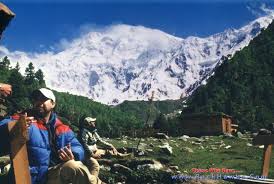
Nanga Parbat (Credit rockhawks.com)   Category: Environment
Nanga Parbat
(Credit rockhawks.com)

ISLAMABAD May 4: Gunmen shot dead 10 foreign tourists at its base camp last year, but for serious mountaineers, the allure of Pakistan’s “killer mountain” remains irresistible.

Militants stormed Nanga Parbat base camp on the night of June 22, 2013, dragging the climbers out of their tents and shooting them point blank along with their local guide.

The massacre badly hit tourism in Pakistan’s wild, mountainous north, which is home to some of the world’s highest peaks and most challenging climbs.

But three winter summit attempts have brought fresh hopes for the industry, crucial to the local economy, as it gears up for the summer climbing season.

Nanga Parbat, Pakistan’s second-highest peak at 8,125 metres (26,660 feet), has never been climbed successfully in winter because of the treacherous weather conditions.

Its fearsome Rupal Face, rising more than 4,000 metres from base to top, presents one of the most difficult — and tantalising — challenges in climbing.

Simone Moro, one of the world’s leading Alpinists, was among those to return unsuccessful from Nanga Parbat this winter.

The Italian has now made two attempts to climb the peak in winter and the mountain is drawing him to make a third.

“I have felt strange feelings there, feelings that I have never felt before at the foot of a mountain,” he said.

“Nanga is not just a mountain, it is a whole world on its own to be discovered and explored — a planet apart from the Himalayas.”

“The Rupal Face is incredible, its like a giant planet standing in front of you, seducing you to climb it.”

Nanga Parbat earned its grisly nickname after more than 30 climbers died trying to conquer it before the first successful summit in 1953.

The events of last June gave the name a new, more sinister overtone but Moro says the incident was a blip and he wants to encourage others to come to Pakistan.

“I consider Nanga Parbat as the most safest place in Pakistan,” he said.

“What happened last year was just a tragic episode, accidents can happen anywhere in the world but that never means it will always repeat itself.”

David Goettler, a German member of the expedition led by Moro who has twice attempted K2 — Pakistan’s highest peak and the world’s second-highest — said he was astonished by the attack.

“I could not believe it, I was like ‘how on earth did the terrorists come there?’” he said.

“I have visited Pakistan six times in the past and I have a super good relationship with the people there.”

The regional government in Gilgit-Baltistan has slashed the fee for climbing in winter by 95 percent to $270.

But Moro said it was very difficult for mountaineers to get visas for Pakistan — a common gripe from tourists who face seemingly endless bureaucratic hurdles to visit even for a short time.

“You have to literally fight for six to seven months to get a visa for Pakistan — you need to open your doors in order to let people come in,” said Moro.

Ashraf Aman, the first Pakistani climber to scale K2, says the government is making no serious effort to encourage tourism.

The country’s powerful intelligence services — which keep a close watch on foreigners travelling outside of major cities — make life difficult for those who do arrive, said Aman, who now runs a tour operating company.

“It is very difficult to get a visa and if a tourist’s luck wins him a visa he regrets his decision the moment he arrives in Pakistan,” he said.
“The security and intelligence agencies start never-ending sessions of questions, one after another at each destination.”

Nestled between the western end of the Himalayas, the Hindu Kush mountains and the Karakoram range, Gilgit-Baltistan houses 18 of the world’s 50 highest peaks.

It is also home to three of the world’s seven longest glaciers outside the polar regions and hundreds of its mountains have never been climbed.

But it is the lure of Nanga Parbat that draws Moro back, the famous names that have climbed it in the past — Reinhold Messner, Steve House, Tomaz Humar.

“Climbing Nanga Parbat is like crossing an ocean or a desert, heading to the peak with the idea of joining two points across a treacherous nowhere,” said Moro.

MQM Forces Karachi to shut down

Karachi strike (Credit: dawn.com)
Karachi strike
(Credit: dawn.com)

KARACHI, May 2: The country’s financial capital was shut down due to a call for observing a ‘day of mourning’ by the Muttahida Qaumi Movement (MQM) against extra-judicial killings of its party members, DawnNews reported.

The party has called for a day of mourning in protest against the ‘extrajudicial killing’ of four MQM workers shot dead on Wednesday.

On MQM’s appeal to observe a day of mourning, traders closed down their businesses, commercial centres and shops in Karachi.

Due to absence of public transport on roads, it became quite difficult for people to reach their destinations.

Transporters have also said they would support the party’s call by keeping their vehicles off the roads. Petrol and CNG stations as well as major and minor business centres were shut across the city.

The Private School Management Association on Thursday had announced that schools operating privately would remain shut.

Moreover, the Matriculation and Intermediate boards also postponed all examinations scheduled for today, the new dates for which would be announced later.

Funerals of two of the deceased workers were held yesterday where as funerals of the remaining two, whose bodies were found at Super Highway on Thursday, is scheduled to take place at Numaish chowrangi on Friday afternoon.

Sindh Chief Minister Syed Qaim Ali Shah had also taken notice of the killings of the MQM workers and ordered the formation of a committee headed by DIG Karachi East Munir Ahmed Shaikh to probe the matter.

TTP says it has “gifted” a lull in terror in Pakistan

ISLAMABAD, May 2 : Accusing the government of using the dialogue process as a political tool and to increase military operations, the Tehrik-i-Taliban Pakistan (TTP) on Thursday said they did not know who to talk to in Islamabad, as they believed the government had no powers to reach an amicable solution.

In a statement, TTP spokesman Shahidullah Shahid said they did not know whether they should talk to the government or the military.Shahid said talks and war could not go together adding that the Taliban had the right to defend themselves. He said, on the one hand, the government claimed it was interested in the dialogue but, on the other hand, it hurled threats at the Taliban.

He said the army had imposed a war on the people in Babar and Shaktoi areas of South Waziristan in the last two days. He also condemned the police action against the relatives of missing persons in Islamabad and said such a situation could not provide an environment for a meaningful and serious dialogue.

“The TTP has insisted that it is ready to talk in the interest of Islam and the Muslims of Pakistan. But we will not accept that the dialogue is used as a political tool and to pursue war startegy,” he said.

Shahid said the TTP had shown sincerity and seriousness during the talks and gifted a 45-day ceasefire to the people and the country but the government had not shown any seriousness since the talks took off.

He said the Taliban had left it to the people of Pakistan to decide whether a war or talks could go together and asked if it was the responsibility of the Taliban only to make the process successful.

He said the Taliban will not step back from serious and useful talks but would not accept the politics of threats and war.“We are fighting for the supremacy of Sharia and our Mujahideen have the capability to face any difficult situation and know how to give a befitting response to the enemy,” the TTP spokesman said.

In Memory of Dawn’s I.H. Burney

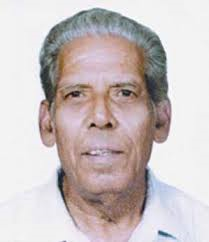
I.H. Burney (Credit: shehritv.com)
I.H. Burney
(Credit: shehritv.com)

When somebody you have known for 54 years suddenly passes away, it is always a shock. When, however, the person has been in a coma for some considerable time and then pegs down from unnatural causes, it somehow lessens the feeling of distress, for one is forewarned that the worst could happen –– like in the case of Izharul Hasan Burney, popularly referred to as IH Burney. He had had a fall at home and went into a long coma from which he never recovered. Burney was a founding member of the Karachi Press Club. He never won any laurels or honours, but was a ceaseless campaigner for the freedom of the press. He came across as a strict disciplinarian who did his job to the best of his ability. He was a journalist from the old school –– a gentleman, correct, disciplined and hardworking –– a newspaper man to the core who never missed a deadline. He played by the rules –– something that a lot of younger journalists do not do. He knew the difference between news and views and corrected those who didn’t. And above all, he knew the importance of correct English.

burney

Burney was a veteran of the fourth estate with a fierce sense of loyalty. He joined Dawn in 1958, in the hot metal-and-Linotype days when the paper was housed in a ramshackle clutch of barrack-like rooms on the embankment of a drain on south Napier Road –– and moved with the establishment when it was carted lock, stock and barrel to its imposing current location on Dr Ziauddin Ahmed Road. In his 54-year career with the paper, he started off as a crime reporter where he came into contact with the seamy side of the underworld. I still remember his account of an interview he conducted with the station house officer of Jacob Lines who had an inordinate fondness for gambling. He described the fellow as a lower order tyrant with a short fuse who always looked as if he was in desperate need of a drink. Later, he covered other areas of interest; and after his retirement from Dawn was rehired on contract as editor of The Star, the evening newspaper of the Group, where his colleagues described him as a hard taskmaster. He also spent some years in Dubai when Mahmoud Haroon was setting up the Khaleej Times, which belonged to Abdul Rahim and Abdul Latif Galadari. His last assignment was as director of the chairman’s secretariat.

Burney was exceptionally fond of cricket, which along with war was the only other thing that united the Pakistani nation. Of course he had his favourites, like everybody else, which usually changed with the seasons. He was also very fond of chess and we often indulged in a Round Robin contest at the Karachi Press Club with Hasin Ahmed, a former employee of the US consulate general in Karachi, Ghazi Salahuddin of Geo, and Nargis Khanum who contributes articles and reviews to the Business Recorder. On one occasion while the telly was crackling in the background during a match between India and Pakistan, and our batsmen were giving their very best shot at snatching defeat from the jaws of victory, Hasin Ahmed decided to act as commentator. What followed was a highly spirited commentary on the virtue of each of our players in chaste Urdu. When he had finished Burney turned to me and asked who I thought was the greatest batsman that ever lived. I unhesitatingly replied it is Sachin Tendulkar. “Well, now that is settled, can we get on with our chess game?”

Published in The Express Tribune, April 27th, 2014.