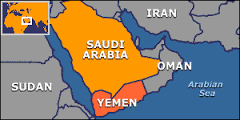
The Saudi-led military intervention in Yemen threatens to turn what has been a civil war between competing branches of Islam into a wider regional struggle involving Iran. It could also destroy any hope of stability in Yemen. Even before the Saudis and their Arab allies started the bombing, Yemen was in severe distress; on Tuesday, the United Nations high commissioner for human rights warned that it is now on the brink of collapse.
Rather than bombing, Saudi Arabia should be using its power and influence to begin diplomatic negotiations, which offer the best hope of a durable solution. Saudi Arabia intervened last week after the Houthis, who are supported by Iran, overthrew Yemen’s Saudi-backed government and captured large chunks of land. The Sunni-run government in Saudi Arabia has watched with growing alarm as Shiite-majority Iran has gradually extended its influence throughout the region, from Lebanon to Syria and Iraq, and fears Iran is poised to do the same in Yemen, a Sunni-majority nation.
The possibility of a deal between the United States, other major powers and Iran to limit Iran’s nuclear program has alarmed Saudi Arabia and other Sunni states even more, prompting them to talk openly, and irresponsibly, about developing their own nuclear programs. The Saudis have also joined with other Sunni nations to form a military coalition, anticipated to include a 40,000-troop army, to counter Islamic extremists and Iran, which is likely to further increase tensions.
Saudi Arabia and other Sunni Arab states have reason to worry about Iran’s disruptive, sometimes brutal, policies, including its help in keeping President Bashar al-Assad in power in Syria despite a civil war that has killed more than 200,000 people, most of them Sunnis. Even so, the Arab states have their own checkered history in fueling extremists and regional unrest. The Saudis appear to be overreacting to Iran’s role in Yemen, which involves financing the Houthis but little else, according to American officials.
Yemen has been a problem for decades, and the threat there is growing more complicated. For several years, Al Qaeda in the Arabian Peninsula has been based in Yemen and is one of Al Qaeda’s most active and lethal affiliates.
Unlike that Qaeda affiliate, the Houthis are indigenous to Yemen and won’t be defeated militarily, or at least not without destroying the country. The Saudi foreign minister, Prince Saud al-Faisal, on Tuesday foreshadowed an open-ended commitment, saying the Saudi-led offensive would continue until Yemen was “returned to security, stability and unity.” Yet airstrikes alone won’t do the job. Saudi Arabia has not ruled out a ground invasion, even though its troops are inexperienced in such combat and would be at a particular disadvantage against Houthi fighters, who are battle-hardened and know the country’s forbidding terrain.
The Houthis have fought a half-dozen civil conflicts since 2004 and are still standing. The Saudi bombing may have already had one especially tragic outcome: Humanitarian workers said a strike killed at least 40 people at a camp for displaced people.
It would be a catastrophic mistake for Saudi Arabia and other Arab states to allow the Yemeni civil war to become the catalyst for a larger sectarian Shiite-Sunni war with Iran. President Obama should press this fact upon the Saudi leadership. As one of Saudi Arabia’s most reliable allies, he should use his influence to encourage all sides to work toward a political solution — both to prevent a wider conflict and to give Yemen a chance at stability
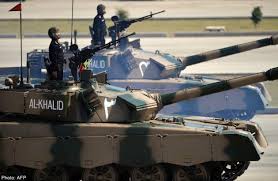
Pakistan’s defense minister says his country is considering a request to provide ground troops to complement the Saudi Arabian-led airstrikes against Houthi forces in Yemen.
Saudi Arabia began air attacks on the Houthis on Thursday as the rebels advanced on the Yemeni port of Aden. The Sunni Muslim monarchy has been assembling allies to defend Yemen’s weak government against rebels backed by both Iran and a former Yemeni president.
The Pakistani foreign ministry confirmed that the Saudis have asked Pakistan contribute ground forces to Yemen, Reuters reports, but Defense Minister Khawaja Asif indicated that Pakistan is reluctant to get involved.
“We have made no decision to participate in this war. We didn’t make any promise. We have not promised any military support to the Saudi-led coalition in Yemen,” Asif told parliament.
“In Syria, Yemen and Iraq, division is being fueled and it needs to be contained. The crisis has its fault lines in Pakistan too, (we) don’t want to disturb them.”
Mr. Asif did tell Reuters that Pakistan would step in should Saudi Arabia’s territory be threatened, but that “there is no danger of us getting involved in a sectarian war.”
Nonetheless, a sectarian war threatens to emerge from the fighting in Yemen, where Houthi rebels are attempting to oust the Saudi-backed government of President Abdu Rabbo Mansur Hadi. The Houthis, members of Yemen’s Shiite minority, claim that Mr. Hadi’s government is corrupt and has violated the terms of departure of the previous president, Ali Abdullah Saleh, who was forced from power in 2011. Saudi Arabia brokered a transfer of power at the time.
Yemeni Military units allied with Mr. Saleh, who ruled Yemen for decades with US and Saudi support, are now also backing the Houthis.
The Houthis seized Sanaa, the inland capital, in January, but it was their advance towards the port town of Aden that spurred Saudi Arabia, Yemen’s neighbor to the north, to directly intervene. The Saudis have assembled a bloc of four other nations, Egypt, Jordan, Morocco, and Sudan, to drive back the Houthis. UAE, Bahrain, Kuwait, and Qatar are also involved, supplying equipment to the Saudi coalition, the BBC reports.
Rebel leader Abdel-Malek al-Houthi called the coalition’s actions “criminal” on Thursday, reports Deutsche Welle. Iran similarly called for an end to the Saudi bloc’s operations, with Iranian foreign ministry spokeswoman Marzieh Afkham saying the offensive would “bear no result but expansion of terrorism and extremism throughout the whole region.”
Though the coalition has not ruled out sending ground forces to the region, so far it is only running aerial military operations. Bloomberg reports that in their second day of bombing, Saudi planes struck in the Yemeni north, including an airbase held by Saleh-allied forces. CNN reports that overall, 15 sites were hit, and at least 10 people killed in the attacks.
And while the US is not directly involved in the Saudi coalition, it is providing intelligence to the bloc for its strikes. Two anonymous US officials told Bloomberg that the coalition forces “made use of imagery and targeting information from US intelligence and other assets. While Saudi Arabia and other Sunni Arab nations possess attack and aerial refueling aircraft, they lack the reconnaissance satellites, drones and eavesdropping equipment in the American inventory.”
Pakistani human rights activists and civil society organizations have raised a strong voice of protest against the reported imminent deployment of Pakistani armed forces in Saudi Arabia – at the request of the House of Saud – to fight against the Iran-backed forces in the current civil war raging in Yemen.
Civil society has strongly condemned the PML(N) government and its allies amongst the political parties for even the consideration or the remote possibility of such an unethical and wrong move.
It would be a huge strategic and tactical mistake for Pakistan, in longer-term political, military, economic and foreign policy losses, against the ruling political party’s immediate/short-term financial and monetary gains. The mysterious “gift” of US$1.5 billion in 2014, and the reluctance of the government to be transparent about it then, begins to be comprehended now. The government should have the courage to be open and honest now.
Firstly, it should not attempt to befool us citizens that “the holy land of Saudi Arabia (i.e. the home of Islam’s two holiest shrines) is under threat of attack” (sic). It is not. The fact is that Saudi Arabia is attacking Yemen, not vice versa.
Secondly, our armed forces are not a mercenary force, up for rent to the highest bidder. We have not yet forgotten Black September: Gen. Zia-ul-Haq’s bombardment of Palestinian refugee camps in Jordan way back in 1970. We are still paying the diplomatic and political price for that disaster.
Thirdly, we are in the midst of internal military operations against militants and terrorist networks like the Tehreek-e-Taliban Pakistan (TTP), such as Operation Zarb-e-Azb in North Waziristan, other parts of FATA, Karachi, Malakand, and the Balochistan turmoil, amongst others. How thin can we spread our armed forces personnel and equipment? Do we even wish to do so? Where is our priority? The armed forces risk unpopularity, alienating Pakistani citizens and intensifying extremist sectarianism.
Fourthly, we should strictly stay out of the deadly proxy wars that Saudi Arabia and Iran are waging in several countries, including Pakistan, in addition to Syria, Iraq, Lebanon, Yemen, Bahrain, and others. We have managed to stay out for over two and a half decades, we should not change our policy now. Is Yemen not a Muslim country like Saudi Arabia? Is Yemen not a member of the OIC like Pakistan? What makes fighting with Saudi Arabia against Yemen more important for Pakistan than fighting against Daaish/ISIS in i.a. Syria, Iraq, Lebanon or Libya? Yemen ke awaam ka qatl-e-aam na manzoor na manzoor.
Is it the political clout that is bought by financial hammering, e.g. “free grant” aid, cheap oil, 0.8 million migrant workers’ remittances worth billions; or by oral shield protection at the UN Human Rights Council? Or is it the emotive clout of the “Khaadim-e-Harimain-Sharifain”? Or that of USA, another big donor and lender, as well as the seller of armaments to Pakistan?
Let USA play its double and triple games in the region. We must not emulate it. We must be ethical. Pakistanis are no longer befooled. We are no longer silent. We are Awake. We are Aware. We are Watching. We are Speaking Out. NO TO PAKISTANI ARMED FORCES IN THE GULF REGION.
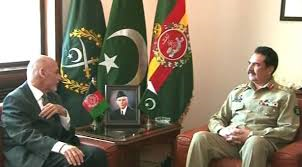
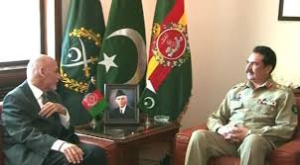
Afghan president with Pak army chief (Credit: thenews.com.pk)
KABUL, March 21: Afghanistan faces a difficult spring in terms of security as the so-called “fighting season” with the Taliban begins, Afghan President Ashraf Ghani said on Saturday, adding that Pakistan was “pushing a major series of global terrorist networks onto” war ravaged country.
“The winter has been extraordinarily difficult. And barring major breakthroughs in the region, spring will be difficult,” he told a press briefing at the presidential palace, several hours before leaving on a four-day official visit to the United States.
Ghani, who came to power in September, said he had not asked for any specific aid from the United States nor any changes to planned troop withdrawals.
“What I’ll be explaining to the Congress of the United States is what we’re doing. What we’re underlining is both the nature of the threat and what we’re doing with the existing resources and capabilities,” he said.
Ghani will be travelling to the US along with Chief Executive Officer Dr Abdullah Abdullah. They are due to meet with President Barack Obama at the White House on March 24.
“A partnership is about appreciation of conditions…. You cannot just simply request assistance,” the president added.
The United States was due to reduce its 10,000 troops to 5,500 by December, but that number is expected to be reassessed.
Pakistan ‘pushing’ terrorists onto Afghanistan
According to Ghani, Pakistan’s military operations in Waziristan and Khyber “are pushing a major series of global terrorist networks onto us”.
But he stressed he considers neighbouring Pakistan a key partner in the peace process, saying success depends on “an enduring peace” with Islamabad.
Creating conditions for talks with the Taliban
The Afghan government has been “actively engaging” with its neighbours in the region over the past few weeks “from Azerbaijan to India” to create conditions for discussions with the Taliban, Ghani said.
“We have not had face-to-face discussions, we’re preparing the conditions for those,” he added.
Diplomatic efforts to bring the Taliban to the negotiating table have gained pace recently, even as security forces have launched offensives against the insurgent group without NATO assistance for the first time since 2002.
For their part, the Taliban have yet to officially acknowledge that talks are being held. They continue to impose their own tough conditions, including the absence of any foreign troops on Afghan soil, as a precondition to negotiations.
IS ‘swallows its competitors’
Ghani and his Chief Executive Abdullah Abdullah will also have an opportunity to discuss the emergence of the Islamic State group (IS) on their US visit.
Ghani said IS “swallows its competitors”.
“If you compare al Qaeda and Daesh, it’s like going from Windows 1 to Windows 5,” he said, referring to IS by an alternative name.
“These groups do not fit with the classic insurgency.”
The Middle East-based group has not formally confirmed it is operating out of Afghanistan, though Pakistani and Afghan commanders have pledged their allegiance to the outfit in recent months.
In the United States, Ghani said he expects to field questions about the country’s finances.
“The question we will be asked is about fiscal sustainability. Will we be able to afford our own forces?” the president said.
“This is precisely why we’re examining the system of expenditure — the efficiency, the effectiveness, the transparency from top to bottom.”
The trip is also seen as an important step toward mending relations between the United States and Afghanistan, which deteriorated towards the end of former president Hamid Karzai’s ten-year rule.
China joined the Nuclear Suppliers Group — whose members agree not to transfer to treaty non-signers any technology that could be used to develop a nuclear weapon — in 2004. But it claims that it had already promised to help Pakistan, allowing it to continue developing the reactors.
Beijing is helping Pakistan build reactors at the same time that the Obama administration is trying to implement a 2008 deal that would smooth the way for U.S. companies to invest in new nuclear power plants in India. India, which first tested a nuclear weapon in 1974 and remains Pakistan’s chief rival, has also balked at signing the nonproliferation treaty. Both President Obama and former president George W. Bush have sought an exception for India.
“China’s expanding civilian nuclear cooperation with Pakistan raises concerns and we urge China to be transparent regarding this cooperation,” the U.S. Embassy said in a statement Thursday.
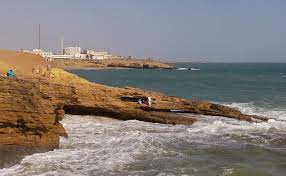
Until now, Pakistani leaders have faced little public discontent over the country’s nuclear advances. After all, Pakistan celebrates a national holiday each May marking the anniversary of its first atomic weapons test in 1998. But the country’s progressive movement is evolving, sparking novel protests over environmental and public safety issues. And the prospect of 20-story reactors rising next to a public beach used for swimming, camel rides and picnics is a vivid illustration of what’s at stake.
Though international monitors generally give Pakistan satisfactory reviews for safeguarding nuclear materials, industrial accidents causing hundreds of fatalities remain common here. There are concerns that Pakistani technicians won’t be able to operate or maintain the Chinese nuclear technology.
Karamat Ali, chairman of the Pakistan Institute of Labor Education and Research, noted that the world has already experienced three major nuclear accidents — at Three Mile Island in the United States in 1979 and Chernobyl in the former Soviet Union in 1986, in addition to the Fukushima disaster.
“Those are three highly advanced countries,” Ali said. “This is Pakistan. We don’t live on technology and science. In fact, we are quite allergic to that.”
Of particular concern is the threat of terrorism, especially considering Karachi’s long history of head-scratching security lapses.
Terrorists overran a Pakistani naval base in Karachi in 2011, killing five people and setting several aircraft on fire. A similar attack occurred in June, but this time Pakistan Taliban militants stormed a section of Karachi International Airport, killing about two dozen people. And in September, al-Qaeda militants, perhaps with help from renegade sailors, attempted to hijack a heavily armed Pakistan navy frigate docked in Karachi’s port. It took hours for security forces to repel the assault.
If a major attack or accident were to occur at a nuclear power plant, activists say there would be unimaginable chaos.
Karachi, whose population has doubled in just the past two decades, includes vast, packed slums, as well as districts under the thumb of criminal gangs and Islamic militants. And with more than 2.7 million registered cars, buses, rickshaws and motorcycles, it can take hours to cross the city.
“You couldn’t even dream of evacuating Karachi,” said Hoodbhoy, the physicist. “The minute an alarm was sounded, everything would be choked up. There would be murder and mayhem because people would be trying to flee. Others would be trying to take over their homes and cars.”
But Azfar Minhaj, general manager of Karachi’s reactor project, said Pakistan sought the ACP-1000 reactor because it makes a radiation leak far less likely. Each reactor will have a double containment structure capable of withstanding the impact of a commercial airliner, he said, adding that there is also an elaborate filtration system and that the reactor will be able to cool itself for 72 hours without power.
“If a new car comes with an air bag, would you start thinking, ‘This is a new feature, it’s never been tested in Pakistan, never built in Pakistan. Should we use it or not?’ ” Minhaj asked.
Because of the enhanced safety features, Minhaj said, authorities are planning for an impact zone no greater than three miles in the event of a worst-case accident. Most of the affected residents would be asked to shelter in place, not evacuate, he said. Hoodbhoy points out that even today, the no-go zones around the Chernobyl and Fukushima plants are 18 and 12 miles, respectively.
Minhaj said concerns about the effect of a tsunami are also overblown because the new reactors are being built on a rock ledge about 39 feet above sea level. Pakistan’s meteorological office recently concluded that Karachi could face a tsunami of up to 23 feet in the event of a 9.0-magnitude earthquake in the region.
Mark Hibbs, a senior associate at the Carnegie Endowment for International Peace, said he suspects that the new Chinese design is indeed less prone to accidents. But he noted that most poorer countries have shied from developing a nuclear energy footprint since Fukushima.
“If there was a lesson we learned from the Fukushima accident, it’s that, if you are going to get into the nuclear business, and if you don’t have world-class technology, good logistics, enough personnel, a lot of money and experience managing crisis situations, then you are not going to be able to manage a severe accident,” Hibbs said.
Zia Mian, a Pakistani physicist at the Program on Science and Global Security at Princeton University who is also fighting the project, notes that the existing Canadian reactor was designed in the 1960s to generate just 100 megawatts of electricity. The new reactors will produce 22 times that amount and use a combined 40 to 60 tons of enriched-uranium fuel each, he said. And each year, one-third of that spent fuel will also be removed from the core and stored in large containment pools at the plant, Mian said.
“You put all of that together, and the hazards are unimaginably larger,” he said.
After Sharif showed up in Karachi in December 2013 to break ground on the new reactors, Pirzada and other activists began organizing against it on Facebook. Last summer, they filed a lawsuit against the Pakistan Atomic Energy Commission and the Pakistan Nuclear Regulatory Authority alleging that construction began without a proper environmental impact study.
In December, a court halted vertical construction — but allowed excavation work to continue — until a new environmental assessment is completed, about a month from now. If major construction is then allowed to resume, the reactors will have an expected life span of at least 60 years.
“Of course, we need electricity, but we don’t need electricity to commit suicide,” Ali said.
Musadaq Malik, a Sharif adviser on energy issues, counters that a country that trusts its military to possess nuclear weapons can also trust its government to maintain a Chinese nuclear power plant.
“We may look irresponsible, but we are not that irresponsible,” Malik said. “We have engineers, we have scientists, we have our security apparatus. . . . Like other nations, we have done all of this before, reasonably well.”
Whenever I hear these empty notions of ‘No Space for Extremism Left’ so confidently floated in wake of Peshawar Attack, I remain unconvinced.
My doubts about these ‘Anti-terrorism’ measures strengthen when I give a cursory look at the present unchecked activities of International Islamic University Islamabad (IIUI).
The national consensus against extremism means nothing when you know that Saudi’s takfiri ideology is being expanded every day, inch by inch, into small towns of KPK and Punjab with the launch of IIUI Schools & Colleges.
I studied Environmental science in IIUI. Among the 46 courses that I took over the period of 4 years, I also had to study Arabic, Sharia and Law, Pakistan studies, and Islamic studies. Environmental economic teacher used to patiently wait outside our class; he would cough and clear his throat loudly and wait until our Class Representative (CR) would come out and assure him that every girl in the class had their ‘nangey sar’ covered with dupatta.
Pakistan studies teacher used to write the contact number of Al-Huda in addition to writing Hadiths and Quranic verses on white broad whenever she took the class. Class discussions in Social Studies would invariably divert to state of Islam and purdah in Pakistan.
Chemistry teacher would start talking about water cycle and move swiftly to discussing the scientific miracles of Quran and the number of times water cycle is mentioned in Quran. Because chemistry in Quran was a miracle, so we were to memorize the ‘facts’ of both the world and incorporate them into one single comprehensible answer in order to get credit hours for that course.
Ecology teacher talking about human population curves and population boom would dutifully remind us that we are Muslim so there is NO concept in Islam about population control, and some ‘Islamic scholars’ even consider use of contraceptives haram- “No wonder that there are going to be more women burning in fiery depth of hell”- she would laughingly chirp later as an afterthought.
Burqa catwalk was a real event. Notice boards were sometimes liberally used as JI and Al-Huda activity promotion board. Canteen walls were amply plastered with warnings and premonition of hell for those who were not careful enough and brought Shezan juice.
In the morning, when university buses poured-in from all parts of twin cities, the campus entrance would often be dotted with burqa cladded women distributing pamphlets. No one was missed; everyone got a copy of her Al-Huda course announcement advertisement paper, or a pamphlet bemoaning the cruelty of state against the innocent students of Lal Masjid.
Pamphlets that cursed America and wanted Afia Sadiiqa back and pamphlets warning bey-purdha immodest women about fiery depths of hell were also shoved into hands.
Pamphlets told us every day that Blasphemous cartoon makers should be killed. All blasphemers should be killed. Salman Taseer should be killed.
Some papers demanded justice for students who were arrested form hostels in ‘alleged’ connection with the terrorists.
Piety came before curiosity. That was the lesson overriding all other lessons. Learning did not mean that one had to abandon moderate behavior.
Women campus and Men campus might have been a separate universe, but news often came floating one way or other. Women campus once held a festival, ferris wheel and merry-go-rounds were installed, students shrieked in excitement as the amusement ride caught speed. But then sounds waves could not be contained and males who existed beyond the barbed wires of female campus heard the shrieks.
Modesty came under a threat instantly. JI came into action and women happy shrieks potentially became a means of sexual arousal for some males.
Sickness of thought came over everyone, everyone was ashamed. The rides had to be dismantled. Modesty had to be restored. So the festival was cut-short and modest Islam reigned again.
If you wanted your transcripts on emergency basis then you were in for a churning that would take every ounce of your best temperament.
It took me almost three weeks to sort-out office formalities and get my transcripts, after the sum total of getting four page fees clearance documents signed.
Why? Because it was the Holy month of Ramzan, and the holiest of the places, i.e. an education institution was under siege by holy men and women, not doing their duty but attending Quran and Hadith dars, all in Al-Huda and Tableeghi style.
During those three weeks I would come to the university, and would often go back, without moving an inch forward in my desperate efforts to get my degrees and transcripts. Upon reaching the administration office, I would find offices desks and chairs stacked neatly close to the wall- making a space in the middle of the office hall room- white chadder laid out and all women employees sitting on floor, with one pious lady giving them dars and educating them about the fazaail of prayer in Ramzan.
Some were listening silently and some women were crying (may be out of sheer exhaustion and hunger) but none were found at their desks doing their job.
I don’t know if those women found blessing of Ramzan, but I was certainly showered with all the blessing of the holy-month that one could hope for.
Not to mention that these employees were sure to draw their halaal salary that month.
Conspiracy was juicy. Conspiracy gave legitimacy to claims that IIUI is serving Islam and is under attack by liberal forces all the time. Any change in the faculty was taken a conspiracy against Islam.
Once a teacher was inducted in Sharia and Law department, nothing unusual about hiring a teacher. No one would have known that the newly inducted teacher was slightly liberal until a spat with Sharia students got intensified and one day that poor ‘liberal’ teacher was thrown down stairs for being part of an Amereekan conspiracy.
So I could totally understand the fears of one visiting faculty teacher who taught us Globalization and Foreign Policy, as he often used to stop him-self short during a lecture and would say that he cannot carry-on the discussion further because his opinions on politics should remain outside the boundary of this Fort of Islam i.e International Islamic University Islamabad.
If Pakistanis are really serious about eradicating extremism and terrorism, this University (IIUI) and the likes of it should sever ALL links with Saudi Arabia.
The administration of IIUI must go directly under the authority of government of Pakistan.
A foreign Arabic speaking Saudi national should not be the overseer i.e. Pro-chancellor of this university.
The funding of this university has to be checked. The spread of extremist ideology under the cover of promoting ‘modern’ education needs to be checked by HEC. The course contents should be standardized and modernized.
But of course we are busy fighting a war on extremism, and all our fights will be fought on wrong fronts.
We are a poor country, we need money. So let the money pour in from all shady sources and let us produce a brainwashed educated middle class that likes to sit on the fringes and silently watch Taliban wreak havoc in Pakistan.
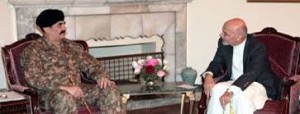
Pak Army chief with Afghan president, Feb 17 (Credit: aajtv)
Islamabad/Kabul, Feb 19 – After more than a decade of war, formal talks between the Afghan government and the Taliban will begin in the coming weeks, the country’s president has told key aides.
According to a senior government official, the president, Ashraf Ghani, believes meetings could begin in early March after Pakistan signalled its support for the move.
Previous western-sponsored attempts to get Afghan government and Taliban representatives around the same table failed under Ghani’s predecessor, Hamid Karzai.
Although the Afghan Taliban’s spokesman denied there were any plans for talks, hopes are rising following Pakistan’s decision to pressurise the insurgent leadership.
On Tuesday, Gen Raheel Sharif, Pakistan’s powerful military chief, travelled to Kabul to tell Ghani the Taliban were increasingly amenable to discussions.
Pakistan has considerable influence over the Taliban, a movement that was supported by Islamabad in the 1990s and which since 2001 has been free to use Pakistani territory to launch attacks against the western-backed government in Kabul.
Since becoming president last year, Ghani has worked assiduously to secure Pakistan’s help in bringing the Taliban to the negotiating table by addressing Pakistani fears that Afghanistan is a base for its enemies.
Ghani has won plaudits from Islamabad by putting on a hold an arms deal with Pakistan’s arch-rival India and by deploying troops against anti-Pakistan militants based in Afghan territory.
In return Ghani expects Pakistan to tell the Taliban to enter negotiations and drastically reduce the surge in militant attacks inside Afghanistan.
Sartaj Aziz, the foreign affairs adviser to Pakistan’s prime minister, said reports of an immediate breakthrough were premature but that progress had been made amid the “quite unprecedented” improvement in relations between Afghanistan and Pakistan.
“These things have been going on for the last few weeks,” he said, referring to contacts between Taliban and the Afghan government. “We suggest the right kind of people to talk to and that kind of thing, but this is an Afghan-led process.”
Pakistan has also been pressured to bring the Taliban to the negotiating table by powerful ally China, which is alarmed by the overspill of militancy in the region into western China.
Previous attempts to find a political solution to the 13-year war in Afghanistan came to nothing. In 2013, the Taliban was allowed to open an “office” in Doha, the capital of the Gulf state of Qatar, where talks could be held.
But the process collapsed before it could begin after the Afghan government reacted furiously to the Taliban being allowed to raise their flag over the building as if it was the embassy of a sovereign power.
On Thursday, the US embassy in Kabul denied reported claims by Afghan Taliban sources that insurgent leaders would hold an initial round of talks with US officials as early as Thursday.
“There is no truth to the reports of US involvement in direct talks with the Taliban,” a US diplomat said.
Ajmal Obaid Abidy, spokesman for Ghani, said the international community had accepted demands that peace talks be conducted between the Afghan government and the Taliban, not with outside actors. So the reports of directs talks between the US and the Taliban, Abidy said, “are only rumours”.
Michael Semple, one of the world’s experts on the movement, said Doha was the most likely site of any talks as the Taliban’s “political commission” is already based there.
But he warned there was no guarantee talks would succeed given the Taliban have ramped up attacks in recent months.
“I don’t think we’ve seen the signs on the Taliban side that they are preparing to end the war,” he said. “Maybe there will be a round of talks, but the real test will be whether there will be another spring military campaign.”
Afghan analysts say Ghani will not be able to sustain his tilt towards Pakistan, which is proving unpopular with sections of the public, unless he is rewarded with a sharp decline in violence.
This week Ghani attempted to sooth the concerns of powerbrokers, including former president Hamid Karzai, who was famously distrustful of Pakistan.
“Ghani’s biggest challenge is if the coffins keep coming,” said Bilal Sarwary, one of the country’s top journalists. “But the Taliban have only been preparing to fight.”
Afghans arrest Uighurs (Credit: thediplomat.com)Kabul, Feb 20 – Afghanistan arrested and handed over several Muslim Uighur militants from China’s west in an effort to persuade China to use its influence with Pakistan to help start negotiations with the Taliban, Afghan security officials said on Friday.
The deal sheds light on China’s increasing importance in Afghanistan and Pakistan, with its involvement in efforts to end the war with Taliban, who have been fighting since 2001 to re-establish Islamist rule in Afghanistan.
Hopes for a peace process were raised on Thursday when Pakistani and Afghan officials said members of the Taliban leadership had signaled they were willing to begin talks as soon as next month.
The apparent Taliban change of position was said to have been made under pressure from Pakistan, although the official Taliban spokesman denied any move toward negotiations with the Afghan government.
Pakistan has been under pressure from China, which is concerned about Islamists among its Muslim minority, to step up pressure against militants. Three senior Afghan police and intelligence officials described the operation last month to capture ethnic Uighur militants, members of a separatist movement opposed to Beijing’s rule over the Xinjiang region, which is home to the Turkic-speaking, mostly Muslim Uighurs.
“We offered our hand in cooperation with China and in return we asked them to pressure Pakistan to stop supporting the Taliban or at least bring them to the negotiating table,” said one of the security officials, who attended a meeting with Chinese officials to arrange transfer of the prisoners.
Chinese officials in Beijing and at the embassy in Kabul did not respond to requests for comment.
The Uighurs, who the Afghan officials said had trained in militant camps across the border in Pakistan, were handed over to Chinese officials last month.
A second security official said a total of 15 Uighurs were arrested – three in the capital, Kabul, and 12 later in the eastern province of Kunar bordering Pakistan.
They had been in contact with al Qaeda and other militants operating in Pakistan, according to a member of Afghanistan’s intelligence agency.
A Pakistani Taliban commander in the border area said by telephone that a group of Uighurs had been based in the Pakistani border region of North Waziristan but left when the Pakistani army launched an offensive there last year.
“They have shifted to Afghanistan,” he said.
‘PLAYING ITS ROLE’
China has increasingly been concerned about activists from Xinjiang getting militant training in Pakistan. It says Uighur militants were behind attacks in Xinjiang and other parts of the country in recent years in which hundreds have been killed.
Exiled Uighur groups and human rights activists, however, say repressive government policies in Xinjiang, including controls on Islam and on Uighur culture, have provoked unrest.
China’s concerns have led it to engage in the so far fruitless effort to negotiate an end to the Afghan war, said Barnett Rubin, a former State Department official who is now a senior fellow at the Center on International Cooperation.
In particular, China is believed to have used its influence with Pakistan to persuade it that it was not in Pakistan’s interests to turn a blind eye to the Afghan Taliban and other militants operating along its border.
“Pakistan’s attitude to militant groups fighting in Afghanistan has evolved … China has played a role in Pakistan’s evolution because China is very concerned about militants from Xinjiang province receiving training in Pakistan,” Rubin said.
China is likely to have played a significant role in moves toward starting talks with the Taliban, he said.
“I’m sure they have weighed in quite decisively, quietly.”
Pakistan is seen as having other reasons for pushing the Afghan Taliban to talk to Kabul, in particular the hope of Afghan help in tackling Pakistani Taliban hiding in east Afghanistan and launching attacks in Pakistan, including the massacre of 153 people at an army-run school in December.
Pakistan has long seen the Afghan Taliban as a tool if old rival India were to become too influential in a hostile Afghanistan.
But Afghan President Ashraf Ghani, who took office last year, has made improving relations with both Pakistan and China a cornerstone of his administration.
Ghani’s first foreign visit was to Beijing in October when he assured Chinese President Xi Jinping of Afghanistan’s help in fighting militants.
Last week in Pakistan, visiting Chinese Foreign Minister Wang Yi said China would help mediate in efforts to engage the Afghan Taliban in negotiations.
A week later, Pakistan’s powerful army chief visited Afghanistan with a message for Ghani that Taliban leaders had signaled they were open to talks.
It is not clear how significant Afghanistan’s arrest of the Uighurs was in the push for negotiations. A Pakistani military officer said China was “playing its role” in the effort.
Pakistani Foreign Office spokeswoman Tasnim Aslam said it was unfair to suggest that China or any other outsider was behind Pakistan’s involvement in pushing for talks.
“Peace and stability in Afghanistan are in Pakistan’s interest,” she said.
(Additional reporting by Katharine Houreld and Mehreen Zahra-Malik in Islamabad and Saud Mehsud in Dera Ismail Khan, Pakistan; Writing by Kay Johnson; Editing by Robert Birsel)
A British jihadi nicknamed “Barbie” who sneaked back to the UK from a training camp in Syria has been jailed for 12 years.
Imran Khawaja, a “poster boy” for an Isil-linked terror group, got fed up with the conditions in the war-torn region, so he faked his own death by falsely spreading rumours online and fled for the UK, a court heard.
But the 27-year-old bodybuilder was caught trying to re-enter the UK at Dover and was today handed a 17-year extended sentence, 12 of which will be spent in custody.
Woolwich Crown Court heard that Khawaja – who has links with British hostage executioner Jihadi John – had complained of a lack of toileteries, cocoa butter and condoms for the “war booty” during his six-month stint with the Rayat al-Tawheed (RAT) insurgents in the Middle East last year.
ICSR / King’s College London
Extremist: Imran Khawaja got fed up with the conditions in Syria
During the two-day sentencing hearing, the court was shown disturbing footage of Khawaja reaching into a bag of severed heads before pulling one out with his bare hand, getwestlondon.co.uk reports.
The 27-year-old can be heard saying: “Heads, kuffars [non-believers]. Disgusting.”
However, a psychological assessment of the defendant concluded he had restricted cognitive ability, a lack of critical thinking, poor concentration and an IQ that was within the lowest 12% in the country.
As a consequence he was found to be vulnerable to manipulation and radicalisation.
Khawaja travelled to Syria in January 2014 and became a leading figure within Rayat al–T awheed (RAT), a group linked to the Islamic State of Iraq and the Levant, the court was told.
By the end of May the group had released an image of the defendant, who pleaded guilty to terror charges last month, claiming that he had been killed in battle.
He was, in fact, on his way back to the UK, being driven by his co-defendant and cousin Tahir Bhatti, 45, from Watford.
In text messages read out in court, Khawaja – who was also known as Imz, Iron, Immi, Touchi and Cashew – complained of not having moisturiser and toilet paper while in Syria.
He had demanded cocoa butter and toiletries as well as “condoms for the war booty” and complained when his friends failed to send it.
Psychological assessment: Jihadi fighter Imran Khawaja has an IQ that within the lowest 12% of the UK Woolwich Crown Court was told
The court heard that Khawaja’s family repeatedly begged him to come home even cajoling him with images of Nando’s food.
He lied and told them he was doing charity work, telling his sister that he cared more for Allah than his family.
His sister replied on many occasions saying that “their parents’ hearts were breaking” and that if “he didn’t come home she would come and get him”.
In messages home, Khawaja put pressure on his friends and family to send him money because “guns, cars cost money” and he wanted a “Rambo gun” and needed “shooters”.
When that failed, prosecutor Brian Altman QC told the court that Khawaja decided, in May 2014, to briefly come back to the UK to sort funds out himself.
He was stopped by port officials at Dover while trying to regain entry to the UK with his cousin Bhatti.
Jihadi: Southall bodybuilder Imran Khawaja was jailed for 12 years
In a letter to the court, Khawaja apologised for his actions and urged other young Britons not to make the same mistakes he had.
In the note to the judge, he said: “I will just like to apologise for the laws I have broke [sic]. I am sincerely sorry. I have let my country, my family and my community down.
“I have nightmares about Syria. I am lucky to be alive. I would hate to see the young men of Britain to make the same mistake I made and say to them ‘do not get attracted by the propaganda’.”
Jailing Khawaja at Woolwich Crown Court today, judge Jeremy Baker handed him a 17-year term for the most serious offence.
It will comprise a 12-year custodial term before being released on licence.
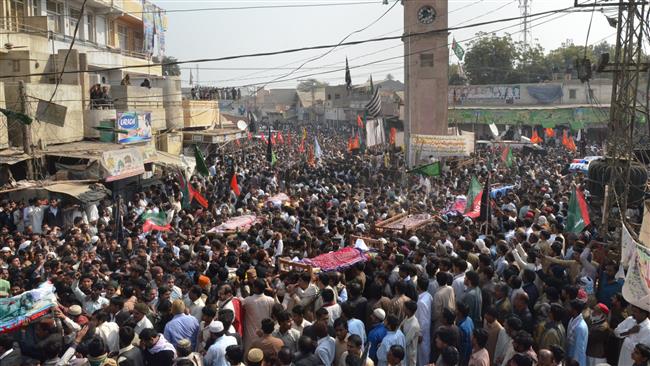
Lakkhi Dar, Shikarpur (Credit: presstv.ir)SHIKARPUR, Pakistan Jan 30 – At least 49 people were killed in a powerful explosion at a crowded Shi’ite mosque in Pakistan during Friday prayers, the latest sectarian attack to hit the South Asian nation.
Police said the blast was caused either by a suicide bomber or an explosive device which went off when the mosque was at its fullest on Friday afternoon in the center of Shikarpur, a city in Pakistan’s southern province of Sindh.
Radical Sunni Islamist groups often target mosques frequented by minority Shi’ites, whom they see as infidels.
Earlier this month, six people were killed and 17 wounded by a suicide bomber outside a Shi’ite mosque in the city of Rawalpindi, also after Friday prayers.
“We are trying to ascertain the nature of the blast,” said Shikarpur police chief Saqib Ismail Memon. “A bomb disposal squad is examining the scene.”
Saeed Ahmed Mangnejo, head of the regional civil administration, told Reuters that the death toll had reached 49.
In chaotic scenes that followed the blast, part of the mosque collapsed after the explosion, burying some of the wounded under rubble. Bystanders pulled people from the debris and piled them into cars for the journey to hospital.
Locals said there were not enough ambulances and the army later sent additional vehicles to transport people to hospitals.
The atmosphere was tense in Shikarpur after the explosion, with shops boarded up and crowds of emotional residents massing outside hospitals.
“The entire city is in lockdown and there is tension in the air. There is a heavy police presence and the Rangers are patrolling the city,” said Pariyal Marri, a local resident.
“THEY ARE OUR ENEMIES”
Jundullah, a splinter group of Pakistan’s Taliban which last year pledged support for the Islamic State group based in Syria and Iraq, claimed responsibility.
“Our target was the Shia mosque … They are our enemies,” said Fahad Marwat, a Jundullah spokesman. He did not elaborate.
Majlis Wahdat-e-Muslimeen, a Shi’ite organization, has called for a province-wide strike on Saturday in protest.
Sain Rakhio Merani, a regional police official, said the blast was probably caused by a bomb, although Pakistani television quoted some residents as saying they saw a man wearing a suicide vest.
The attack came as Pakistan tries to adopt new measures to tackle Islamist extremists following a massacre of 134 children last month at an army-run school in the northwestern city of Peshawar.
The government has pledged to crack down on all militant groups, reintroduce the death penalty, set up military courts to speed convictions and widen its military campaign in lawless tribal areas.
Yet Pakistan’s religious minorities, among them Ahmadis, Christians and Hindus, say the government is doing little to alleviate their daily struggle against humiliation, discrimination and violence.
Shi’ites make up about a fifth of Pakistan’s mainly Sunni population of around 180 million. More than 800 Shi’ites have been killed in attacks since the beginning of 2012, according to Human Rights Watch.
(Additional reporting by Syed Raza Hassan in Islamabad and Saud Mehsud in Dera Ismail Khan; Writing by Maria Golovnina; Editing by Mike Collett-White)