Middle East Providing Funds to Religious Seminaries – Inspector Generals

ISLAMABAD: During Friday’s session of the Senate, Minister of State for Interior Baligur Rehman informed the House that Middle Eastern countries namely Saudi Arabia, Kuwait, Qatar, Iran and the United Arab Emirates were giving aid to religious seminaries in three provinces.

The information was compiled on the basis of a report sent by provincial Inspector Generals (IGs). However, Rehman said he would not support or defend the statements made by the IGP on the matter.

According to the report presented before the Senate, 23 religious seminaries in the country are receiving foreign assistance. Out of the 23 seminaries, five belong to the Shia sect and are located in Balochistan.

Other seminaries are based in KP, Sindh and Balochistan and are part of the Sunni sect. No information was given with regards to the province of Punjab. However reports have said that the seminaries in Punjab are not receiving any assistance.

Following a demand made by Senator Sughra Imam, Acting Chairman of the Senate Sabir Ali Baloch referred the question to Senate Privileges Committee with directives that IG of Punjab police may be summoned before the committee to explain his position on foreign assistance being received by religious seminaries in Punjab.

The federal minister told the Upper House of Parliament that according to the anti-money laundering law, financial transaction of religious seminaries and Non Governmental Organisations (NGOs) would be monitored.

The minister further told the House that some NGOs are receiving assistance from the United States, Netherlands and Australia.

Earlier, the opposition also walked out from the proceedings of the House over the absence of Interior Minister Chaudhry Nisar and Minister of State for Interior.

Later, on directives issued by the chair, Rehman showed up at the house and responded to the questions relating to the Interior Ministry.

The Senate has been adjourned to meet again on Monday at 4 pm.

JUI-F chief warns govt‏ against stopping foreign funding
Meanwhile, Jamiat Ulema-i-Islam Fazal (JUI-F) chief Maulana Fazlur Rehman has warned the government against stopping foreign assistance from being received by Pakistan’s religious seminaries.

“The government cannot stop this and if the buildings of seminaries are occupied, we would continue to teach under the shadow of trees,” he told the media after chairing a parliamentary committee meeting on Kashmir.

He said the government was taking this action to please the United States which he alleged was creating disturbance within the country.
Saudi Oil Blurs Criticism of its Human Rights Violations

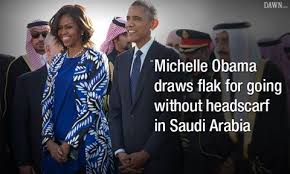
Michelle Obama in Saudi Arabia (Credit: facebook.com)
It is clear that any attempt to draw the West’s attention to Saudi Arabia’s history of glaring human rights violations, would require an urgent amendment to the terminology we regularly use to describe the Saudi regime.

The most genial words have been pouring in from across the world for King Abdullah, the “reformer”.

President Obama cancelled his trip to the Taj Mahal to fly to Saudi Arabia.

In his statement on the death of King Abdullah, Obama spoke about the king’s initiatives “that will outlive him as an enduring contribution to the search for peace in the region”.

The National Defense University in the US announced an essay competition to pay tribute to the deceased Saudi monarch.

The Japanese government praised him as a “peacekeeper”.

Perhaps the most baffling commendation came from the IMF’s Christine Lagarde, who called King Abdullah “a strong advocate for women”.

The four adult daughters reportedly house-arrested by King Abdullah, just to keep them from returning to his ex-wife were apparently not available to rebut Lagarde’s tribute.
Nor were the millions of other Saudi women who, regrettably, could not leave their homes without their husbands’ permission.

David Cameron applauded the Saudi monarch for his “commitment to peace and for strengthening understanding between faiths”. This, in spite of a leaked diplomatic cable in which Abdullah personally prodded the US to invade Iran; and in spite of his support for extremist outfits engaged in what can only be described as a ‘Shia genocide’.

While praise has been pouring in from nearly every corner of the world, there’s a reason for us foregrounding the West’s adoration of Abdullah in particular.

There is a stark contrast between these countries’ official advocacy for democracy and freedom, and the kind of non-democratic rulers they choose to lionise.

Many Western nations, particularly the United Kingdom, have visible sympathy for monarchism. Never mind the fact that the unelected monarch is basically a ‘dictator’, the British have nevertheless taken great comfort in their country’s “symbolic dictatorship”.

This ‘soft corner’ for monarchism is periodically displayed with utmost zeal, as the common Englishmen proceed to curtsy before the men and women of supposedly superior bloodlines.

Monarchism – which is basically the arbitrary division of humans into peasants and high-borns, based simply on the accident of birth – is systematically glorified in art, music, children’s literature, and even mainstream politics in a surprising number of countries.
It’s easy to imagine why the word ‘King’ may appear less threatening to the denizens of such nations.

“Dictators” are men like Saddam Hussein and President Bashar Al-Assad. Kings and Queens are decorated, well-starched, and assuredly benign figures that inspire us with their radiant smiles and gentle waves.

Problematically, the Elizabethan/Disney description of a monarch gets projected onto the assuredly non-benign figures of the Middle East, and beyond.
These diplomatic geniuses have always used the simple power of linguistics to route and reroute global outrage, however they find profitable – subjectively sifting out the ‘rebels’ from the ‘terrorists’, and a ‘coup’ from a ‘takeover’.

We say the word “killed” when we want to provoke outcry, and the word “died” where an outcry is politically inconvenient.

Yes, “died”, like from high cholesterol or old age.

Now, with the ideological boundaries between the brutal Saudi administration and ISIS growing blurrier by the day, we find ourselves engaged in Olympics-grade verbal gymnastics, trying to wedge them apart.

Let’s not do that.

An unelected ruler of a country that publicly decapitates and lashes its citizens – often hastily and for archaic, moralistic reasons – and exports fanatical ideas to many politically volatile corners of the world, may be safely described with a word less lenient than “King”.

Shia Militia Capture Yemen Threatening Iran Saudi Proxy War

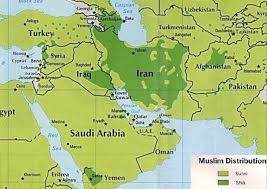
Shia Sunni divide in ME (Credit: Geocurrents.com)

It wasn’t long ago that President Obama touted Yemen as a success in the fight against terrorism. “This strategy of taking out terrorists who threaten us while supporting partners on the front lines is one that we have successfully pursued in Yemen and Somalia for years,” he said in a major speech in September, outlining his approach to defeating Islamic State. Within weeks of that pronouncement, the Iranian-backed Houthi militia occupied the capital city of San’a. Now matters are getting worse.

On Tuesday Houthi forces seized the presidential palace along with the headquarters of the presidential guard, taking dozens of hostages and seizing an arsenal of tanks and artillery. The country’s nominal president, the U.S.-backed Abed Rabbo Mansour Hadi, was last seen inside his residence; his fate wasn’t clear as we went to press. The U.S. Embassy in San’a reported that Houthi gunmen fired on one of its diplomatic vehicles, though nobody was injured.

This comes days after the West was brutally reminded in Paris that it cannot remain indifferent to chaos in a poor Arab country. At least one of the Kouachi brothers had weapons training in Yemen, and the Yemen-based branch of al Qaeda took credit for sponsoring the attack on the editorial offices of Charlie Hebdo. If the Houthi have now overthrown our partner government in Yemen, we’ll need either a new partner or a new strategy.

The Houthi are often described as a sect or a tribe. But it’s more accurate to say they are a radical Shiite political movement similar to Hezbollah, whose guiding slogan is “God is Great, Death to America, Death to Israel, Curse on the Jews, Victory to Islam.” Last year, the Houthi gained control of the Yemeni port city of Al Hudaydah, just north of the Bab El-Mandab strait separating the Red Sea from the Indian Ocean. Along with the Strait of Hormuz, this gives Iran the ability to threaten both maritime chokepoints surrounding the Arabian peninsula.

One temptation will be to see a silver lining in the Houthi takeover, on the theory that the Shiite group is at war with al Qaeda and its radical Sunni affiliates. But the “let Allah sort it out” approach to foreign policy espoused by Sarah Palin won’t work, given that neither side is likely to defeat the other and a de facto partition of the country into two radical camps would complicate and multiply the dangers. The Hadi government cooperated with U.S. forces targeting al Qaeda in Yemen, but the Houthi won’t do the same. We could face two terrorist havens.

What should the U.S. do? The Obama Administration should insist that the Houthi guarantee Mr. Hadi’s safety and release him if he’s in custody. The U.S. and Saudi Arabia may also need to coordinate a strategy to dislodge the Houthi from San’a. The collapse of Yemen is another reminder, along with Iraq, that counterterrorism-lite doesn’t work, and that the U.S. has to do more to prop up its allies, if necessary with troops on the ground.

If it can’t be reversed, the fall of Yemen takes the Mideast closer to a regional war between radical Sunnis and radical Shiites, with U.S. allies caught in the middle. It’s an illusion to think that if we withdraw the carnage will stay over there.


Federal minister accuses Saudi govt of destabilising Muslim world

Federal Minister Riaz Hussain Pirzada (Credit: dawn.com)
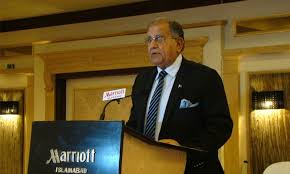
ISLAMABAD, Jan 25: Federal Minister for Inter-provincial Coordination (IPC) Riaz Hussain Pirzada has accused the Saudi government of creating instability across the Muslim world, including Pakistan, through distribution of money for promoting its ideology.

Addressing a two-day ‘Ideas Conclave’ organised by the “Jinnah Institute” think tank in Islamabad, the federal minister said ‘the time has come to stop the influx of Saudi money into Pakistan’.

He also blasted his own government for approving military courts in the presence of an ‘independent and vibrant judiciary’ and said that military courts reflect ‘weak and coward leadership’.

“Such cowardly leadership has no right to stay in power,” Pirzada added.

In her opening remarks, Chairperson of Jinnah Institute Sherry Rehman said that the two-day conference would deliberate upon new ideas needed for a progressive and better Pakistan.

Pakistan Tehreek-i-Insaf (PTI) leader Shafqat Mehmood said the government has failed to address the problems being faced by the common man.

Awami National Party (ANP) leader Afrasiab Khan Khattak expressed regret over military courts and said their establishment ‘has eroded democracy’. He called upon democratic elements to play their role in reversing the 21st constitutional amendment.

Muttahida Qaumi Movement (MQM) leader Farooq Sattar supported military courts and said there was no other option to deal with terrorists.

The Federal Minister for Commerce Khurram Dastgir while addressing the conference, said that for an elected government to deliver, they need at least a modicum of security that their leadership will exist tomorrow.

He said that lawmakers have little incentive to read legislation. They are judged by their constituents on how much patronage they can deliver.

“We are answerable to the people. No general would stand up here and take your criticism,” said Dastgir.

He further added that there is no excuse for not holding local body elections.

India clears cows, dogs, dust for Obama Taj Mahal trip

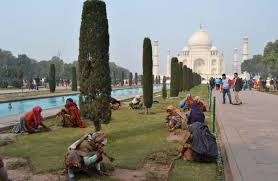
Taj Mahal cleanup (Credit: ibtimes.co.in)

INDIA, Jan 23: As he scrubs the road to India’s Taj Mahal on his knees for less than five dollars a day, Ramjeet beams with pride at the thought of US President Barack Obama admiring his handiwork.

“If everything is clean then he will be impressed,” said the aching man as he took a rest with another 10 kilometres (six miles) of road still to be scoured by him and his co-workers.

“It’s hard on the knees and back,” admitted the cleaner, who is being paid just 300 Indian rupees (around $4.80) a day for his part in a massive makeover.

Ramjeet, who does not have a last name, is one of 600 cleaners mobilised in the city of Agra ahead of Tuesday’s visit by the US president and First Lady Michelle Obama to the world’s most famous temple of love.

Apart from cleaning white lines on the roads, authorities have been rounding up stray dogs, clearing cows from the streets, and have ordered a lockdown around the complex.

“There are a lot of spit stains and such that need to be washed away. The streets need to be spick and span,” said India’s former chief achaeologist KK Mohammed, who has guided world leaders around the white marbled mausoleum.

“You cannot have a VVVIP of the world come to the Taj Mahal and let him see that,” Mohammed told AFP.

The spruce-up, which comes after Modi himself launched a national clean-up campaign last October, reflects a wider determination to ensure the Obamas get to see India at its finest.

In the capital Delhi, workers have been coating buildings and bollards with fresh paint ahead of the Obamas’ attendance at a military parade on Monday.

But the frenzy has been most intense in Agra, no stranger to hosting heads of state or royalty such as Britain’s late Princess Diana.

The Obamas’ visit will be covered by a massive press pack and organisers want to ensure a picture-perfect backdrop.

Pradeep Bhatnagar, chairman of the Taj Trapezium Zone, a buffer region around the monument, said ongoing beautification work has been halted for 10 days to allow dust to settle before the guests arrive.

Suresh Chand, who is in charge of the clean-up, said stray dogs — a common sight in any Indian city — have been rounded up, and more than two tonnes of rubbish pulled from the nearby polluted Yamuna river in just two days.

Another official said cows and buffaloes roaming the streets also “would have to go”.

“When a guest comes to our house then we have to do something better than the normal,” said Chand, Agra municipal council’s chief engineer.

Inside the Taj complex, a dozen barefoot women were busy trimming lawn edges with trowels.

“Obama, Obama,” one lady, who has worked at the Taj for more than two decades and earns 100 Indian rupees a day, said with a grin.

Some 3,000 police are on duty and will conduct boat patrols of the river, said Agra police senior superintendent Rajesh Modak.

Tourists will be turned away while the Obamas are touring the Taj, built by Mughal emperor Shah Jahan as a tomb for his beloved empress who died during childbirth in 1631.

Locals teeming the alleys around the Taj — which took 20,000 labourers 16 years to build — said they have been ordered to stay indoors.

Not everyone is happy about the lockdown, with some saying it has made them feel like criminals.

“You can’t go outside, you can’t go onto the roof, you can’t go outside to the bathroom — it’s like a curfew,” grumbled Anil Kumar Sonkar, who runs a sweet shop a stone’s throw from the Taj.

“We should be open for business and Obama should be allowed to come and sample my world-famous petha,” said Sonkar of the sweet made from sugar and pumpkin.

A similar shutdown occurred during US president Bill Clinton’s visit in 2000, prompting him to ask officials if he was visiting a ghost town, according to locals.

“We were (then) rounded up and made to stand in a line and Mr Clinton came past in his car and shook our hands,” said Sunehri Lal, as he watched children play in a rubbish heap.

“If Obama did something like that, it would be overwhelming.”


Why don’t more moderate Muslims denounce extremism?

Why don’t Muslim leaders speak out?

That question comes up every time terrorists purporting to be deeply religious Muslims carry out armed attacks that kill innocent people. Where, commentators ask, are the moderate Muslim leaders and why aren’t they decrying the horrors perpetuated by fellow Muslims?

In fact, mainstream Muslims are speaking out, clearly and consistently. Leaders around the world, many of whom I know personally through my work at the Foundation for Ethnic Understanding, have issued strong and unambiguous statements virtually every time a violent attack has occurred, condemning such acts as immoral and counter to the fundamental precepts of Islam.

Yet somehow their responses are not being heard, barely registering in the public consciousness.

Recently, there were two major news stories of Islamist extremist attacks on innocent civilians — the holding of 17 hostages in downtown Sydney, Australia by a pro-Islamic State fanatic and the slaughter of 145 people, nearly all of them schoolchildren, in the city of Peshawar by the Pakistani Taliban.

The outcry against these evil acts by responsible Muslim leaders was nearly instantaneous. While the hostage drama was still unfolding at the Lindt Chocolate Café in Sydney, Grand Mufti Ibrahim Abu Mohamed, the country’s highest Islamic office holder, said he felt devastated by the attack, commenting:
‘The Grand Mufti and the Australian National Imams Council condemn this criminal act unequivocally and reiterate that such actions are denounced in part and in whole in Islam.

Numerous Muslim scholars and community leaders have repeatedly denounced the Islamic State as barbaric and un-Islamic.

Meanwhile, the horrific mass murder of schoolchildren by the Pakistani Taliban was met with near universal revulsion across the Islamic world. Dr. Zaruful Islam Khan, President of the All India Muslim Majlise Mushawarat, termed the attack “a blot in the face of Islam,” adding, “We don’t have words to condemn such barbaric act and savagery … There is no justification of killing of innocent children. It has nothing to do with humanity, leave aside Islam.” The Islamic Society of North America repeatedly speaks out against extremism of all kinds and were among the first Muslim organizations to denounce Boko Haram.

This is nothing new. During The summer of 2014, the war between Israel and Hamas in Gaza triggered an explosion of violent anti-Semitism across Europe; many acts were committed by Muslims. While the media highlighted the very real and deeply troubling upsurge of violence in countries like France, Germany and Belgium, they rarely reported on Muslim leaders who denounced the violence.

For example, after riots by a predominantly Muslim crowd in the Paris suburb of Sarcelles attacked a synagogue and Jewish businesses, the local Muslim Association sent a letter of solidarity and support to the vice president of the synagogue. National Muslim leaders took part in an interfaith ceremony that denounced the violence and called for reconciliation. French Council of the Muslim Faith head Dalil Boubakeur, who attended the ceremony, affirmed that the vast majority of French Muslims are not anti-Semitic. How could they be, he asked, when they themselves are battling racism?

Those responses should have been part of the story. But too often, Islam is portrayed negatively, and as a monolithic entity. People don’t realize that there is a diversity of opinion within Islam and that most Muslims condemn extremism and violence.

Yes, Islamist extremism is a genuine threat to world peace. But those who lump all Muslims together, and dismiss as meaningless the courageous stand of the moderate majority against extremism, aren’t helping to win that battle. Rather, they’re strengthening extremism by perpetuating a false narrative of perpetual conflict between Islam and the West. That is something which we must fight with all our might.

Pakistan bans Haqqani network after security talks with Kerry

Pakistan has outlawed the Taliban-linked Haqqani network, officials said on Friday, days after US Secretary of State John Kerry urged Prime Minister Nawaz Sharif’s government to fight groups that threaten Afghan, Indian and US interests.

American officials blame high-profile attacks in Afghanistan on the powerful Haqqani network, which mainly operates out of Pakistan’s border areas.

Senior Pakistani government officials told Reuters a formal announcement of the ban would be made “within weeks”.

“We have decided to ban the Haqqani network as a step in implementing the National Action Plan devised after the (Peshawar) school attack,” said a cabinet member, referring to a massacre of 134 children by Taliban gunmen last month.

“The military and the government are on the same page on how to tackle militancy. There is no more ‘good’ or ‘bad’ Taliban.

“Kerry specifically pressed for action against the Haqqanis, including banning the group,” the official added.

A second official, a minister who spoke on condition of anonymity, confirmed the decision to outlaw the Haqqani group.

The United States accuses the Pakistani intelligence agency of supporting the Haqqani militants and using them as a proxy in Afghanistan to gain leverage there against the growing influence of its arch-rival India. Pakistan denies this allegation.

A formal announcement of the ban would show the government is keen to convince the United States it will no longer differentiate between ‘good’ and ‘bad’ militants.
But it remains to be seen if the ban will translate into significant action.

There has been intense debate within the government on whether to brand the group a terrorist organisation.

Some officials have argued the move would have little battlefield impact but risks setting back Afghan reconciliation efforts and unleashing more attacks against Pakistan.
In June last year the Pakistan army launched a long-expected military operation in the troubled North Waziristan region, said to be the base of the Haqqani group.

“Pakistan has done a lot already to disrupt the activities of the Haqqanis…within Pakistan,” said a Western diplomat.
“But they must also take follow up steps … to ensure the Haqqanis and other groups are not allowed to regroup or return to sanctuaries, their assets are frozen, their funding is blocked and their networks dismantled.”

Is Pakistan Worth America’s Investment?

It doesn’t take much to stir controversy over America’s relationship with Pakistan. The latest dust-up involves $532 million in economic assistance that the United States expects to provide later this year. Last week, Pakistani officials jumped the gun by suggesting the money is closer to being disbursed than it is; the news annoyed India, which doesn’t think the aid is merited.

That is a familiar complaint. Since 9/11, the United States has provided Pakistan with billions of dollars, mostly in military aid, to help fight extremists. There are many reasons to have doubts about the investment. Still, it is in America’s interest to maintain assistance — at a declining level — at least for the time being. But much depends on what the money will be used for. One condition for new aid should be that Pakistan do more for itself — by cutting back on spending for nuclear weapons and requiring its elites to pay taxes.

Doubts about the aid center on Pakistan’s army, which has long played a double game, accepting America’s money while enabling some militant groups, including members of the Afghan Taliban who have been battling American and Afghan troops in Afghanistan. The relationship hit bottom in 2011 when Osama bin Laden was found hiding in Pakistan and was killed by a Navy SEAL team. But it has since improved. Secretary of State John Kerry is expected to visit Islamabad soon.

After militants massacred 148 students and teachers at an army-run school in Peshawar last month, Pakistan’s government promised that it would no longer distinguish between “bad” militant groups, which are seeking to bring down the Pakistani state, and “good” militant groups that have been supported and exploited by the army to attack India and wield influence in Afghanistan. But there is little evidence that the army has gone after the “good” groups in a serious way.

This double game is a big reason that the administration has been unable to fulfill Congress’s mandate to certify that Pakistan has met certain requirements, including preventing its territory from being used for terror attacks, as a condition of assistance. Instead, officials have had to rely on a national security waiver to keep aid flowing.

There is a case for doing that. After much foot-dragging, the Pakistani army is finally battling militants in the North Waziristan region, and American officials say there has been real progress.

Also, Pakistan has allowed American drone attacks against militants along the border to resume, and is cooperating with the new Afghan president, Ashraf Ghani. Pakistan’s help is essential as Mr. Ghani pursues peace talks with the Taliban. It also counts as progress that Pakistan completed a transition from one civilian government to another in 2013 and that the current government, while fragile, remains in place.

American officials say aid has allowed them to maintain some modest leverage with Pakistan’s leaders and to invest in projects that advance both countries’ interests, including energy, more than 600 miles of new roads and support for democratic governance. But it makes no sense to subsidize Pakistan’s policy failures, which include an obsession with nuclear weapons, paltry investments in education and a refusal to seriously combat extremism.

Pakistan still receives more assistance than most countries, a holdover from the days when Washington mistakenly thought it might be a real partner. But the levels are declining and should continue to do so. Cutting aid precipitously would be unwise, but a managed decrease is in line with more realistic expectations about the diminished potential for bilateral cooperation.

Europe’s Muslims Replace ‘JeSuis Charlie’ with ‘I am Ahmed’

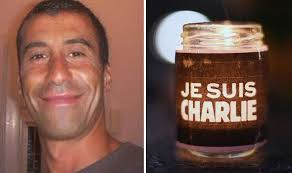
Paris policeman Ahmed Merabet (Credit: arabnews.com)

Ahmed Merabet, the police officer gunned down in the Charlie Hebdo attack, was killed in an act of barbarity by “false Muslims” his brother said in a moving tribute on Saturday, where he also appealed for unity and tolerance.

Speaking for a group of relatives gathered in Paris, Malek Merabet said the terrorists who ignored his brother’s plea for mercy as he lay wounded on the street may have shared his Algerian roots, but had nothing else in common.

“My brother was Muslim and he was killed by two terrorists, by two false Muslims,” he said. “Islam is a religion of peace and love. As far as my brother’s death is concerned it was a waste. He was very proud of the name Ahmed Merabet, proud to represent the police and of defending the values of the Republic – liberty, equality, fraternity.”

Malek reminded France that the country faced a battle against extremism, not against its Muslim citizens. “I address myself now to all the racists, Islamophobes and antisemites. One must not confuse extremists with Muslims. Mad people have neither colour or religion,” he said.

“I want to make another point: don’t tar everybody with the same brush, don’t burn mosques – or synagogues. You are attacking people. It won’t bring our dead back and it won’t appease the families.”

His brief speech was a moving tribute to the slain officer, loved as a son, brother, companion and uncle, but also a powerful call for harmony.

Ahmed Merabet’s death was captured in a graphic video, as he was wounded by one of the two attackers and then shot in cold blood. Photograph: Twitter

There has been a rising tide of Islamophobia in France following the Paris killings, including a grenade attack on one mosque, an explosion in a kebab shop beside a mosque and gunfire at a Muslim family in a car, although there have been no casualties.

Advertisement

Merabet’s death was captured in a graphic video, as he was wounded by one of the two attackers and then shot in the head in cold blood. He is shot in the groin, then falls to the pavement groaning in pain and holding up an arm as though to protect himself.

The second gunman moves forward and asks the policeman: “Do you want to kill us?” Merabet replies: “No, it’s OK mate,” but the terrorist then shoots him in the head.

The images were widely shared online and one was published on the front page of a national newspaper.

Malek berated media outlets and websites that showed the graphic content, which he said was extremely painful for the family. “How dare you take this video and broadcast it? I heard his voice, I recognised him, I saw him being killed and I continue to hear him every day.”

Ahmed’s partner, Morgane Ahmad, who said she had watched footage of the shooting without realising it was him, also appealed for calm.

“What the family and I want is for everyone to be united, we want everyone to be able to demonstrate in peace, we want to show respect for all the victims and that the demonstration should be peaceful,” she said.

Ahmed had been a pillar of the family since his father died 20 years earlier, Malek said. The 42-year-old grew up in Livry-Gargan, in the north-eastern suburbs of Paris, and graduated from the local lycée in 1995. He ran a cleaning company before joining the police force eight years ago, and worked hard for a promotion.

“Through his determination, he had just got his judicial police officer [detective] diploma and was shortly due to leave fieldwork. His colleagues describe him as a man of action who was passionate about his job,” Malek said.

Merabet was called to the scene of the attack while on a bicycle patrol and arrived just as the killers were making their escape. They stopped to add him to the long list of victims.

“He was on foot, and came nose to nose with the terrorists. He pulled out his weapon. It was his job, it was his duty,” said Rocco Contento, a colleague who was a union representative at the central police station for Paris’s 11th arrondissement, where Merabet was based. He described him as a quiet and conscientious officer who was always smiling and widely liked.

As news spread that the gunned down policeman was a Muslim, the hashtag #JeSuisAhmed began spreading on Twitter in solidarity. One user, identified as @Aboujahjah, said: “I am not Charlie, I am Ahmed the dead cop. Charlie ridiculed my faith and culture and I died defending his right to do so.”

Jailed Saudi is Publicly Flogged for running Liberal Website

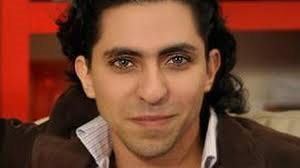
Raif Badawi (Credit: bbc.co.uk)

Saudi Arabia, which has described itself as the “guardian of Islam,” released a statement on Wednesday through its official news agency condemning the attack on Charlie Hebdo as a “cowardly terrorist act” that is “incompatible with Islam.” But on Friday, the government pulled a blogger named Raif Badawi from his jail cell in Jeddah, brought him to a square in front of a mosque, and administered the first phase—fifty lashes—of a public flogging. As with Charlie Hebdo, Badawi’s offense involved the exercise of freedom of expression, often with a touch of sarcasm. He is scheduled to get another fifty lashes every Friday for the next nineteen weeks. He also faces ten years in prison and a fine that exceeds a quarter of a million dollars.

Badawi, who is thirty, ran a Web site called Saudi Liberal Network, which dared to discuss the country’s rigid Islamic restrictions on culture. One post mocked the prohibition against observing Valentine’s Day, which, like all non-Muslim holidays, is banned in Saudi Arabia. (Even foreigners aren’t allowed to buy trees for Christmas.) Religious police, known as the Commission for the Promotion of Virtue and Prevention of Vice, have reportedly patrolled flower shops and chocolate shops to warn against selling items that commemorate an infidel celebration. The Web site scoffed, “Congratulations to us for the Commission on the Promotion of Virtue for teaching us virtue and for its eagerness to insure that all members of the Saudi public are among the people of paradise.”

The site was also known to criticize conservative Muslim preachers. Saudi Arabia’s brand of Wahhabi Islam is extremely fundamentalist; Osama bin Laden was an adherent, as are many members of Al Qaeda and one of its franchises, Al Qaeda in the Arabian Peninsula (A.Q.A.P.). The two shooters in Paris, Chérif and Saïd Kouachi, are said to have invoked A.Q.A.P. during their rampage. United States officials say that one of them trained in Yemen, where A.Q.A.P. has been based since it was forced out of Saudi Arabia.

Badawi’s site, which the government ordered taken down, often pressed the Saudi monarchy to show the same degree of religious tolerance that is customary in the West. In one article, which has been translated and reposted elsewhere, Badawi wrote:

We have not asked ourselves how it is that America allows Islamic missionaries on its territory, and how it is that we reject under all circumstances the freedom to proselytize within our Kingdom’s land. We can no longer hide our heads like an ostrich and say that no one can see us or that no one cares. Whether we like it or not, we, being a part of humanity, have the same duties that others have as well as the same rights.

When Badawi, a father of three, was arrested, in 2012, the charges against him included undermining Saudi security. A judge initially recommended that he be charged with apostasy, which carries an automatic death sentence. A noted Saudi cleric, Sheikh Abdul-Rahman al-Barrak, issued a religious ruling that Badawi was an “unbeliever,” because his site declared that Muslims, Jews, Christians, and atheists were equal, according to Human Rights Watch.

In 2013, when Badawi’s sentence was handed down, Nadim Houry, of Human Rights Watch, said, “This incredibly harsh sentence for a peaceful blogger makes a mockery of Saudi Arabia’s claims that it supports reform and religious dialogue.” The punishment also included an additional three months in prison for uquq, or parental disobedience, because Badawi had argued publicly with his father over the years.

After the sentencing, the French foreign ministry issued a statement expressing concern about “freedom of opinion and expression” in Saudi Arabia. On Thursday, in a rare intervention in the Saudi judiciary system, the State Department called on the Kingdom to “cancel this brutal punishment” and review both the case and the “inhumane punishment.” Jen Psaki, speaking for the State Department, said, “The United States strongly opposes laws, including apostasy laws, that restrict the exercise of these freedoms, and urges all countries to uphold these rights in practice.”

Saudi Arabia has also sentenced Badawi’s lawyer, Waleed Abu al-Khair, to fifteen years in prison—with an additional fifteen-year ban on leaving the country—for insulting the judiciary, inciting public opinion, and undermining the regime and its officials. In October, three other lawyers were sentenced to between five and eight years for criticizing the Justice Ministry. Over the past four months, the government has also detained women for driving automobiles and f0r using social media to publicly challenge the driving ban.

“These prosecutions show just how sensitive the Saudi authorities have become to the ability of ordinary citizens to voice opinions online that the government considers controversial or taboo,” Sarah Leah Whitson, of Human Rights Watch, said. “Instead of pursuing their peaceful online critics, Saudi officials would be better employed in carrying out much-needed reforms.”