Spoilers threaten Pakistan India Peace Process

Indo Pak peace process threatened (Credit: thenewstribe.com)

ISLAMABAD: Deadly violence over the last week along the disputed Kashmir border between Pakistan and India threatens to sabotage recent efforts by the nuclear-armed rivals to improve ties, illustrating how vulnerable the normalization process is to spoilers from both sides.

The most dangerous of these potential spoilers are Islamic militants who have historically been nurtured by the Pakistani military to fight a covert war over Kashmir and may feel threatened by any indication the government is cozying up to India.

The Pakistani army and its militant proxies have a history of using violence to sabotage outreach to India by civilian leaders, and suspicion about the generals’ intentions still runs high in New Delhi.

But many Pakistani analysts believe the army’s leaders have little interest in rocking the boat now, raising the worrying possibility that the recent violence was sparked by militants who have gone rogue or are operating in cooperation with lower level military officials sympathetic to their cause.

”This has really pulled the rug from under the feet of Nawaz Sharif and Manmohan Singh,” the prime ministers of Pakistan and India, said Moeed Yusuf, a Pakistan expert at the United States Institute of Peace. Both leaders have expressed a desire to improve ties, especially to increase cross-border trade.

The US is likely watching the current tension closely, both because of the nuclear arms on both sides and the spillover effect that conflict between the two countries has in neighboring Afghanistan.

The US has long suspected Pakistan of supporting Taliban militants in Afghanistan to counter Indian influence.

Majority Muslim Pakistan and predominantly Hindu India have fought three major wars since they both gained independence from Britain in 1947, two of them over Kashmir. The disputed territory is divided between the two countries but claimed in its entirety by both.

A 2003 cease-fire agreement has largely calmed the disputed border between the countries, although they occasionally accuse each other of violating it by firing mortars or gunshots, and several soldiers were killed on each side in January in cross-border attacks.

The latest round of violence began last Tuesday when, according to the Indian military, 20 heavily-armed militants and Pakistani soldiers crossed the Kashmir border and killed five Indian troops.

The Pakistani military has denied that its soldiers killed any Indian troops and accused Indian soldiers of killing a pair of civilians and wounding two others along the border over the last week.

The latest accusation came Wednesday when a Pakistani military official said Indian troops shelled the Battal sector of Pakistan-held Kashmir on Tuesday night, killing one civilian and seriously wounding another.

An Indian army officer denied the allegation, saying there was no shelling or exchange of gunfire in the sector. Both the Pakistani and Indian officials spoke on condition of anonymity in line with military policy.

Pakistan’s new prime minister, Sharif, took office in June with a pledge to improve relations with India to help turn around his country’s stuttering economy.

Trade between the two countries is around $2 billion per year and could go as high as $11 billion once trade is normalized, according to some estimates.

Pakistani Finance Minister Muhammad Ishaq Dar indicated earlier this week that the government was backing off granting most favored nation trading status to India in the wake of the violence on the Kashmir border.

But Sharif has expressed hope that the normalization process would continue and said he looks forward to meeting with his Indian counterpart on the sidelines of the U.N. General Assembly meeting in New York in September.

”Pakistan will continue to respond to the situation with restraint and responsibility in the hope that steps would be taken by India to help reduce tensions,” Sharif said Wednesday. ”Our objective is peace. For that, what we need is more diplomacy.”

Sharif, who has served as prime minister twice before, has experience being undermined in his efforts to reach out to India.

He signed a landmark agreement with the country in February 1999 that sought to avoid nuclear conflict, but the goodwill didn’t last long.

In May 1999, the Pakistani army chief at the time, Gen. Pervez Musharraf, quietly sent soldiers into an area of Indian-held Kashmir called Kargil, sparking a conflict that cost hundreds of lives and could have led to nuclear war.

Sharif said the army acted without his knowledge. Five months later, Musharraf toppled Sharif in a coup and sent him into exile in Saudi Arabia, not allowing him to return until 2007.

Yusuf, the Pakistani expert, said he believes the army’s leaders are now on the same page as Sharif in terms of gradually improving ties with India because the military has its hands full fighting a deadly Taliban insurgency.

Al Qaeda shifts away from base in Pakistan

Ayman Zawahiri (Credit: news24.com)

ISLAMABAD: As Al Qaeda marks its 25th anniversary this month, analysts say the recent security threat in Yemen shows the organisation’s centre of gravity is shifting away from its base in Pakistan.

US President Barack Obama has cautioned that affiliates such as Al Qaeda in the Arabian Peninsula (AQAP), a unit of the extremist group that effectively controls parts of Yemen, still pose a threat despite successful efforts to disrupt the organisation’s core leadership.

His warning came after the United States closed 19 diplomatic missions in the Middle East and Africa last week after reported intelligence intercepts from Al Qaeda suggested an attack was imminent.

Reports indicated the intercepts involved some kind of group communication between Al Qaeda supremo Ayman al-Zawahiri, and AQAP leader Nasser al-Wuhayshi.

Zawahiri assumed Al-Qaeda leadership when Osama bin Laden was killed in a US special forces raid in Pakistan in 2011 and the 62-year-old Egyptian is believed to be hiding in the border region with Afghanistan.

Rahimullah Yusufzai, an expert on Islamist groups in Pakistan, said that while the traditional core leadership of Al-Qaeda — which was was founded in Peshawar, northwest Pakistan, in 1988, still retains symbolic importance, its operational centre of gravity has moved.

“In terms of strength, of power, of effectiveness, we can say it has shifted,” he told AFP. “It is no longer Pakistan or Afganistan, so most of the fighters, most of the affiliates, are not in Pakistan and Afghanistan. By and large, the plans are not coming from Zawahiri.”

Zawahiri, who has a $25 million US government bounty on him, lacks the charisma of bin Laden but has long been seen as the brains of Al Qaeda.

Pakistani author and security analyst Imtiaz Gul said that while Al Qaeda’s operational leadership had spread into regional franchises, Zawahiri remained an “inspirational force.”

”They don’t need someone as charismatic as Osama bin Laden was and they have I think ideological ammunition, ideological fuel which is helping them stay afloat,” he told AFP.

The recent revelation of an ambitious plot in Yemen to seize control of two cities, as well as an oil export terminal, showed AQAP to be highly motivated, and Wuhayshi is believed to have been promoted to second in command of the global organisation behind Zawahiri.

Daveed Gartenstein-Ross, senior fellow at the Foundation for Defence of Democracies, in Washington, said Wuhayshi’s promotion indicated Al Qaeda was broadening the ‘core’ leadership as AQAP grew in expertise.

“When we talk about Al-Qaeda core there’s no reason it can only exist in Afghanistan-Pakistan, Wuhayshi being made the general manager, that very clearly makes him part of the core,” Gartenstein-Ross told AFP.

“We see a geographic shift towards Yemen but that’s not necessarily a shift to AQAP and away from the core, the way I see it, the core is expanding.”

Al Qaeda was established when the Soviet Union withdrew from Afghanistan, to unite disparate groups of fighters who had come to battle the occupation, with the aim of taking the jihad to a bigger, more global scale, attacking targets around the world.

But Al Qaeda franchises across the Middle East and north Africa have been increasingly active in recent years and Yemen’s geographical location makes it a more convenient base than Pakistan or Afghanistan for communicating with these groups, Gartenstein-Ross noted.

Washington has been keen to trumpet its successes against Al Qaeda’s central leadership, pointing to the bin Laden raid and commanders killed in the long-running US drone campaign in northwest Pakistan and more recently Yemen.

But a recent report by Canadian intelligence gave a more cautious assessment, pointing out Al Qaeda leadership’s resilience and adaptability in surviving for a quarter of a century in the face of a concerted onslaught.

The report also warned the withdrawal of US-led forces from Afghanistan next year, coupled with the Pakistani authorities’ apparent inability or unwillingness to crack down on the organisation, could give it the cross-border physical sanctuaries it needs to survive.

Saifullah Khan Mehsud of Islamabad’s FATA Research Center, an expert on Pakistan’s tribal belt along the Afghan border that has been an important haven for Islamist militants since the 1980s, agreed.

“If Afghanistan is able to come to a common platform, if they agree with each other to have a common political vision for the country in some kind of alliance between different groups, then it will be very difficult for Al-Qaeda to find sanctuaries there,” he said.

“But if there is civil war Al Qaeda will be in a better position to find sanctuary there.”The Taliban, which sheltered bin Laden until the US-led invasion in the wake of 9/11, has said it will not let Afghan territory be used to attack other countries.

Militants kill Investigators of Slain Tourists

Gilgit Baltistan investigators killed (Credit: tribune.com.pk)

GILGIT, Aug 8: Security forces intensified search on Wednesday for militants of the Tehreek-i-Taliban Pakistan in the remote northern town of Chilas, headquarters of the Diamer district, after the killing of three high-profile security officials in the area the previous day. The TTP had claimed responsibility for the shooting.

The slain officials — an army colonel, a captain and a senior superintendent of police (SSP) — were investigating the June 23 killing of nine foreign tourists and one of their Pakistani guides in the area.

Victims of the mountain assault included climbers from China, Lithuania, Nepal, Slovakia, Ukraine and one person with joint US-Chinese citizenship. One Chinese climber had escaped the attack.

“We are at present engaged in a search operation against murderers and are very much hopeful of arresting them soon because 14 suspects have already been taken into custody and are being interrogated,” Ali Sher, Deputy Inspector General of Police who is heading the operation in the area, told Dawn.

Police said hideouts of Taliban were being raided.

Law-enforcement agencies, backed by Pakistan Army, have sealed all entry and exit points of the small town which has a population of 40,000. The town is visited by people of the entire district for different purposes.

The police official said that a rally was also held in the area to condemn the murder of the security officials.

People of the area were in a state of shock and an air of gloom and fear enveloped the area because of the rising number of acts of terror which were previously unknown to them.

The DIG said the entire populace of the area should not be linked with terrorism as this would bring nothing but destruction.

Mr Sher pointed towards activists of banned outfits, but did not say which organisation is behind the attack.

“They (militants) have undergone training at various places and are now totally brainwashed,” he said, adding that they could only be stopped if a political solution was found out.

He said that some possible attacks on other police officials were foiled after a tip-off.

“We arrested a man along with weapons who was trying to kill a superintendent of police in Astore and another in Gilgit. Both are now behind bars and they have confessed before courts. Their cases are being heard,” Mr Sher said.

He said hundreds of houses had already been searched to arrest militants wanted by police.

“Do you know I was also a target in some other areas, but Allah Almighty saved me, but the SSP fell victim,” he said.

The DIG spoke kindly about the people of Diamer, saying they had nothing to do with acts of terrorism, but some hidden powers wanted them in the arena.

US Pakistan to talk security at new level

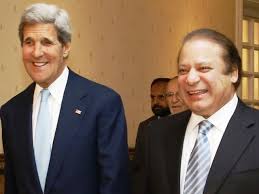
Kerry meets Sharif (Credit: tribune.com.pk)
ISLAMABAD, Aug 1 — U.S. Secretary of State John Kerry and his Pakistani counterpart, Sartaj Aziz, said Thursday that the two countries will resume high-level negotiations over security issues.

Kerry also said he had invited Pakistan’s newly elected Prime Minister, Nawaz Sharif, to come to Washington to meet with President Barack Obama.

“I’m pleased to announce that today, very quickly, we were able to agree to a resumption of the strategic dialogue in order to foster a deeper, broader and more comprehensive partnership between our countries,” Kerry said at a press conference with Aziz in Islamabad.

He said the talks will cover “all of the key issues between us, from border management to counterterrorism to promoting U.S. private investment and to Pakistan’s own journey to economic revitalization.”

The U.S. and Pakistan launched high-level talks on a wide swath of security and development programs in 2010. But the talks stalled in November 2011 after U.S. airstrikes on a Pakistani post on the Afghan border accidentally killed 24 Pakistani soldiers. Even before that, the bilateral relationship was severely damaged by a variety of incidents, including a CIA contractor shooting to death two Pakistanis in the eastern city of Lahore and the covert U.S. raid that killed Osama bin Laden in Pakistani town of Abbottabad.

The resumption of the strategic dialogue indicates that the relationship between the two countries has improved since that low point. But there is still significant tension and mistrust between the two countries, especially regarding U.S. drone strikes and Pakistan’s alleged ties with Taliban militants using its territory to launch cross-border attacks against American troops in Afghanistan.

“It is also no secret that along this journey in the last few years we’ve experienced a few differences,” Kerry said. “I think we came here today, both the prime minister and myself, with a commitment that we cannot allow events that might divide us in a small way to distract from the common values and the common interests that unite us in big ways.”

Kerry was also asked about progress on a bilateral security agreement with Afghanistan that would keep some U.S. forces in that country after 2014.

“I am personally confident that we will have an agreement, and the agreement will be timely,” he replied. “And I am confident that the president has ample space here within which to make any decisions he wants to make regarding future troop levels.”

While this is Kerry’s first visit to Islamabad as secretary of state, he has a long history of dealing with Pakistan as former chairman of the Senate Foreign Relations Committee. Sharif described him as “a wonderful friend,” and Kerry said, “I have had the pleasure of visiting (Sharif’s) home and having a number of meals with him.”

Before heading into a closed-door meeting, Sharif asked Kerry about his wife, Teresa Heinz Kerry, who was hospitalized after a seizure last month.

“She’s doing better,” Kerry said.

Sharif came to power in an election that marked the first time in Pakistan that a civilian government completed its full five-year term and transferred power in democratic elections. The country has a history of civilian leaders being overthrown in military coups.

“This is a historic transition that just took place,” Kerry told U.S. Embassy employees. “Nobody should diminish it.”

Senior administration officials traveling with Kerry told reporters that while relations with Pakistan have grown touchy in recent years, there is the prospect of resetting those ties with Sharif’s government and working together on major issues – counterterrorism, energy, regional stability, economic reforms, trade and investment. The officials spoke on condition of anonymity because they weren’t authorized to publicly discuss Kerry’s agenda.

The U.S. wants to help strengthen the role of the civilian government in Pakistan, where the military long has been dominant, and wants Sharif to tackle rising extremist attacks inside his country.

The prison break this week that freed hundreds of inmates raises serious questions about Pakistan’s ability to battle an insurgency that has raged for years and killed tens of thousands. Suspected Islamic militants killed at least 160 people during the new government’s first month in office. Sharif’s government has not articulated an alternate strategy.

The U.S. also wants Pakistan to pressure leaders of the Afghan Taliban to negotiate with Afghan President Hamid Karzai’s government, renounce violence and sever ties with al-Qaida.

Officials in neighboring Afghanistan are demanding that Pakistan dismantle extremists’ havens inside Pakistan and push the Taliban to join the peace process. Both the U.S. and Afghanistan say that if attacks are allowed to continue, the region will never become stable. Pakistani officials say they do not control the Taliban, but Karzai’s government isn’t convinced.

Drone strikes are another point of contention.

Washington says it needs to attack dangerous militants with drones because Pakistan’s government refuses to engage them militarily. Pakistan contends the drone strikes are a fresh violation of its sovereignty, and they have increased widespread anti-American sentiment in the country.

The United States has reduced the number of drone attacks against militants in Pakistan and limited strikes to top targets. These moves appear to have appeased Pakistan’s generals for now, U.S. officials said. But some officials worry about pushback from the new civilian officials, including Sharif, who wants the attacks ended.

There have been 16 drone strikes in Pakistan this year, compared with a peak of 122 in 2010, 73 in 2011 and 48 in 2012, according to the New America Foundation, a U.S.-based think tank.

After Kerry wraps up his meetings in Islamabad, he is scheduled to fly to London. The State Department said he will meet there with United Arab Emirates Foreign Minister Abdullah bin Zayed Al-Nahyan to discuss Egypt, Syria and Middle East peace.

___

Associated Press writer Sebastian Abbot contributed to this report.

CIA closing bases in Afghanistan as it shifts focus amid military drawdown

CIA closing bases (nytimes.com)
Washington, July 24: The CIA has begun closing clandestine bases in Afghanistan, marking the start of a drawdown from a region that transformed the agency from an intelligence service struggling to emerge from the Cold War to a counter¬terrorism force with its own prisons, paramilitary teams and armed Predator drones.

The pullback represents a turning point for the CIA as it shifts resources to other trouble spots. The closures were described by U.S officials as preliminary steps in a plan to reduce the number of CIA installations in Afghanistan from a dozen to as few as six over the next two years — a consolidation to coincide with the withdrawal of most U.S. military forces from the country by the end of 2014.

Senior U.S. intelligence and administration officials said the reductions are overdue in a region where U.S. espionage efforts are now seen as out of proportion to the threat posed by al-Qaeda’s diminished core leadership in Pakistan.

The CIA faces an array of new challenges beyond al-Qaeda, such as monitoring developments in the Middle East and delivering weapons to rebels in Syria. John O. Brennan, the recently installed CIA director, has also signaled a desire to restore the agency’s focus on traditional espionage.

“When we look at post-2014, how does the threat in Afghanistan and Pakistan measure against the threat in North Africa and Yemen?” said a senior administration official who spoke on the condition of anonymity to discuss government deliberations. “Shouldn’t our resources reflect that?”

U.S. officials stressed that the CIA is expected to maintain a significant footprint even after the pullback, with a station in Kabul that will remain among the agency’s largest in the world, as well as a fleet of armed drones that will continue to patrol Pakistan’s tribal belt.

The timing and scope of the CIA’s pullback are still being determined and depend to some extent on how many U.S. troops President Obama decides to keep in the country after 2014. The administration is expected to reduce the number from 63,000 now to about 10,000 after next year but recently signaled that it is also considering a “zero option,” in part because of mounting frustration with Afghan President Hamid Karzai.

The CIA may be in a unique position to negotiate with Karzai, who has publicly acknowledged accepting bags of money from the agency for years. The CIA also has provided much of the budget and training for the Afghan intelligence service. The agency wants to maintain the strength of those ties.

Even so, a full withdrawal of U.S. troops would probably trigger a deeper retrenchment by the CIA, which has relied on U.S. and allied military installations across the country to serve as bases for agency operatives and cover for their spying operations. The CIA’s armed drones are flown from a heavily fortified airstrip near the Pakistan border in Jalalabad.

The CIA’s presence in the country has already dropped well below the peak levels of several years ago, when more than 1,000 case officers, analysts and other employees had been deployed to support the war effort and hunt al-Qaeda leaders, including Osama bin Laden.

The CIA declined to comment on the withdrawal plans.

“Afghanistan fundamentally changed the way the agency conducts business,” said Richard Blee, who served as the CIA’s senior officer in Afghanistan and Pakistan before he retired in 2007. “We went from a purely espionage organization to more of an offensive weapon, a paramilitary organization where classic spying was less important.”

Some of the bases being closed served as important intelligence-gathering nodes during the escalation of the agency’s drone campaign, raising the risk that U.S. counterterrorism capabilities could deteriorate and perhaps allow remnants of al-Qaeda to regenerate.

U.S. officials played down that danger. “There’s an inherent imbalance,” the administration official said. “The effectiveness of our operations has reduced the threat to the point that it’s entirely appropriate that we have a smaller counterterrorism footprint.”

White House officials have been weighing a shift of some of those resources to other regions, including Yemen and North Africa, where al-Qaeda affiliates are now seen as more dangerous than the network’s base. The White House discussions have been part of the overall deliberations over U.S. troop levels in Afghanistan.

The CIA drawdown coincides with Afghanistan-related personnel moves. The agency recently appointed a new station chief in Kabul, a selection that raised eyebrows among some because the veteran officer is known mainly for his tours in Latin America and had not previously served in Afghanistan.

The top military post at CIA headquarters is also changing hands. U.S. Army Maj. Gen. Tony Thomas, who was in charge of Special Operations units in Afghanistan, is set to begin serving as associate CIA director for military support in September, replacing an Air Force general with drone expertise.

Current and former U.S. officials familiar with the agency’s plans said they call for pulling most agency personnel back to the CIA’s main station in Kabul, plus a group of large regional bases — known as the “big five” — in Bagram, Kandahar, Mazar-e Sharif, Jalalabad and Herat.

“The footprint being designed involves six bases and some satellite [locations] out of those,” said a former senior CIA officer who also spoke on the condition of anonymity. The agency may also rely on “mobile stations” in which a small number of operatives move temporarily into remote locations “where they trust the tribal network,” the former officer said. “Protection issues are going to be critical.”

The base closures involve compounds along the Pakistan border, part of a constellation used by CIA operatives and analysts to identify drone targets in Pakistan. The bases, including locations in the provinces of Zabul, Paktika and Khost, have relied heavily on U.S. military and medical evacuation capabilities and were often near larger military outposts.

Among them is Forward Operating Base Chapman, in Khost, where seven CIA employees were killed by a suicide bomber posing as a potential informant in 2009. It is unclear whether the CIA will pull its personnel out of Chapman, which remained active even after that attack.

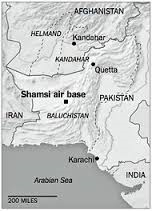
Administration deliberations over troop levels could also determine where the agency operates its drones. During the early years of the campaign, the aircraft were flown from Shamsi Air Base in Pakistan, but the agency moved most of its fleet to Jalalabad as public opposition to strikes mounted in Pakistan and relations with the government broke down.

The tempo of the CIA’s drone campaign has already tapered off. The 17 strikes this year in Pakistan are far off the peak pace of 2010, when there were 117 strikes, according to the Long War Journal, a Web site that tracks drone attacks. Over the past decade, the campaign has killed as many as 3,000 militants and dozens if not hundreds of civilians, according to independent estimates.

U.S. officials said that preferred troop-level options would allow U.S. forces to remain at Jalalabad, in part so that the CIA’s flights could continue. But officials said the drones could also be shifted to airstrips at Bagram or Kandahar. The latter has already served as a base for stealth drones used to conduct secret surveillance flights during the bin Laden raid and over Iran.

This year, President Obama approved new counterterrorism guidelines that call for the military to take on a larger role in targeted killing operations, reducing the involvement of the CIA.

But the guidelines included carve-outs that gave the agency wide latitude to continue armed Predator flights across the border and did not ban a controversial practice known as “signature strikes,” in which the agency can launch missiles at targets based on patterns of suspicious behavior without knowing the identities of those who would be killed.

The senior Obama administration official said the United States may propose a shift to military drone flights inside Pakistan as part of the discussions with Afghanistan and Islamabad over U.S. troop levels.

The negotiations are seen as the “one shot you have” to raise the issue, the official said, adding that it was doubtful but “not impossible” that Pakistan would consent. Islamabad has never formally acknowledged its cooperation on the drone program and is seen as unlikely to allow a covert — if not exactly secret — CIA operation to give way to an overt campaign involving U.S. military flights.

Despite the pullout of U.S. troops and CIA operatives, officials said the drone campaign in Pakistan and elsewhere is expected to continue for years. Mike Sheehan, the assistant defense secretary for Special Operations, testified recently that such counterterrorism operations will probably last an additional 10 years or more.

The administration official said others believe the end is closer. The strikes will probably last “some period of years,” the official said. “But I don’t think you can project out five or 10.”

Pakistan’s Religious Extremists leave for Greener Pastures

Pakistan Militants (Credit: Dawn.com)

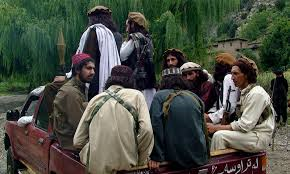
ISLAMABAD: Suleman spent years targeting members of the Shia community in his home country of Pakistan as a member of sectarian terrorist group Lashkar-e-Jhangvi (LeJ). Now he is on his way to a new sectarian battleground, Syria, where he plans to join rebels battling President Bashar Assad’s regime.

The short and stocky man, who identified himself using only his first name for fear of being targeted by authorities, is one of an increasing number of militants who have left Pakistan for Syria in recent months.

The fighters have contributed to a growing presence of extremists and complicated US efforts to help the rebels. Many fighters like Suleman believe they must help Syria’s Sunni majority defeat Assad’s Alawite regime.

The presence of religious extremists in Syria looms large over US efforts to help the rebels, especially when it comes to providing weapons that could end up in the hands of America’s enemies. The extremists have also sparked infighting with more secular rebels concerned about their increasing power. Most of the foreign fighters in Syria are from Arab countries, including Al Qaeda militants from Iraq on the rebel side and Hezbollah fighters from Lebanon on the regime’s side. The flow of militants from Pakistan adds a new element to that mix.

Pakistani Interior Ministry spokesman Omar Hamid Khan said provincial authorities throughout Pakistan deny that militants have left the country for Syria. But three Pakistani intelligence officials based in the tribal region that borders Afghanistan, as well as militants themselves, say the fighters leaving Pakistan for Syria include members of Al Qaeda, the Pakistani Taliban and the LeJ.

The fighters fall mainly into two categories. One includes foreign combatants from places like Uzbekistan, Turkmenistan and likely the Middle East who came to Pakistan’s tribal region to fight US-led forces in neighbouring Afghanistan and are now heading to Syria because they view it as the most pressing battle, said the Pakistani intelligence officials, speaking on condition of anonymity because they were not authorised to talk to the media. This group includes members Al Qaeda who trained the Pakistani Taliban in areas such as bomb-making and are now moving on to the battlefield in Syria, said Pakistani Taliban fighters, speaking on condition of anonymity.

Neither the intelligence officials nor the Pakistani militants were able to provide the total number of fighters who have left the country for Syria, or the route they were taking to get to the Middle East. An activist based in northern Syria, Mohammad Kanaan, said there are Pakistanis fighting in his area but not in large numbers. ”Most … are Arab fighters from Tunisia, Algeria, Iraq and Saudi Arabia,” he said Sunday. ”But we have seen Pakistanis and Afghans recently as well.”

The second group leaving Pakistan includes mostly domestic members of the Pakistani Taliban and LeJ who are heading to Syria, saying they are being so closely monitored by Pakistani authorities that it makes it difficult for them to carry out operations at home, said a Pakistani Taliban fighter who identified himself only as Hamza.

These militants are under surveillance because they have been detained previously in connection with attacks, or are on Pakistan’s radar because of their importance in their organisations, Hamza said. The group includes Suleman, who was detained during a 2009 attack on an intelligence building in the eastern city of Lahore that killed at least 35 people. He was eventually released, he told the AP in an interview before leaving for Syria more than a week ago.

Suleman is one of about 70 militants who have been sent to Syria in the last two months by a network jointly run by the Pakistani Taliban and LJ, Hamza said. The militants came from various parts of Pakistan, including the provinces of Balochistan, Punjab and Khyber Pakhtunkhwa (KP), and the southern city of Karachi, Hamza said.

Another group of 40, including Hamza, is expected to leave in the coming weeks, he said. These militants are not going to fight with Jabhat al-Nusra, or the Nusra Front, the most powerful Islamic militant group in Syria, Hamza said. But he did not know which group they would join. The head of the network sending these militants is a former leJ leader named Usman Ghani, Hamza said.

Another key member is a Pakistani Taliban fighter named Alimullah Umry, who is sending fighters to Ghani from KP, Hamza said.The militants are traveling to Syria by various routes, and some are taking their families. The most closely watched are secretly taking speed boats from Balochistan’s coast to the Omani capital of Muscat and then traveling onward to Syria, Hamza said.

Others are flying from Pakistan to various countries, including Sri Lanka, Bangladesh, the United Arab Emirates and Sudan, and then making their way to Syria. The financing is coming from sources in the United Arab Emirates and Bahrain, Hamza said. Suleman flew to Sudan with his wife and two children using fake passports, he said. He will leave his family in Sudan and then travel to Syria. There are families of other Pakistanis who have gone to Syria already living in Sudan and being taken care of, Suleman said. A member of Jamaat-e-Islami said a small number of its followers have also gone to fight in Syria, but not through any organised network. He spoke on condition of anonymity for fear of being persecuted by the government.

The Malala Backlash

Malala Yusufzai (Credit:thebarreexpress.com)
Malala Yusufzai
(Credit:thebarreexpress.com)

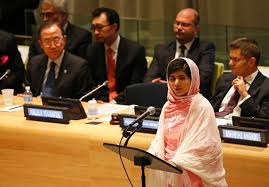
WHY has Malala Yousufzai’s speech at the UN on July 12, her 16th birthday, created such admiration all over the world, only to be met with a nasty backlash against the young education activist in Pakistan?

Perhaps the negative reaction of many Pakistanis to the young girl is the carping of jealous nobodies, but it bears examining because it says something profound about Pakistan.

The reaction to Malala’s words was swift in Pakistan; barely hours after she made her inspirational speech, people began complaining about its contents, the fact that the UN had dedicated an entire day to her, and the adulation she was receiving from world leaders by her side. Ignoring the text of her speech, which spoke out for the rights of girls and women and implored world leaders to choose peace instead of war, the naysayers tore down the young woman, her father, and Western nations for supporting her in her quest for education.

The insults flowed freely: Malala Dramazai was a popular epithet that popped up on Facebook pages and Twitter. The whole shooting was staged by “the West” and America, who control the Taliban. She was being used to make Pakistan feel guilty for actions that were the fault of the Western powers in the first place. Posters were circulated that showed Mukhtaran Mai and Malala with Xs through their faces, and berated the two women for speaking out about their experiences in order to receive money, popularity and asylum abroad.

Another popular refrain was “drone attacks”. Why had Malala not spoken out about drones at the UN? Why did everyone care so much about Malala and not the other girls murdered by drones? Why did America kill innocent children with drones and then lionise the young Malala to make themselves feel good that they actually cared about the children of Pakistan and Afghanistan?

It was a shameful display of how Pakistanis have a tendency to turn on the very people they should be proud of. Prof Abdus Salam fell victim to this peculiar Pakistani phenomenon, as well as the murdered child labour activist Iqbal Masih, Rimsha Masih, who recently received asylum for the threats to her life after the blasphemy case, and Kainat Soomro, the brave child who had been gang-raped and actually dared to take on her attackers. Pakistanis have very deliberately abandoned these brave champions of justice, and each time one more joins their ranks, the accusations of fame mongering, Western agendas, and money ring out louder and louder.

The insults to Malala had a decidedly sexist tone, the comparison to Mukhtaran Mai — another Pakistani hero — making it obvious that rather than embracing female survivors of hideous, politically motivated violence, Pakistanis prefer them to shut up and go away, not to use their ordeals as a platform to campaign for justice.

What does this say about Pakistani mentality? Firstly, it illustrates the fact that most Pakistanis are very confused. As British journalist Alex Hamilton said, “Those who stand for nothing fall for anything”. Because we don’t know what to stand for, we fall victim to conspiracy theories, wild imaginings, and muddled thinking about what is so clearly right and wrong.

Secondly, people who deflect from Malala’s speech to the issue of drone attacks may believe they care about drone victims, but it is hard to find what if anything they have actually done for those drone victims besides register their displeasure on social media. Instead, it is a way of deflecting the guilt they feel about their own impotence, their own inability to make any substantial change or impact in this country.

In psychology this is called displacement: these people who feel anger and frustration about themselves channel it into feeling angry about drone victims, or angry against Malala Yousafzai, or anyone who challenges their firmly held belief that this world is controlled by forces greater than themselves. They dislike the challenge to the justification for their own inertia and inactivity, and so they strike out.

Critics are ignoring how Malala pointed out that terrorists are misusing Islam for their own selfish ends: power and control. She rightly stated that Pakhtun culture is not synonymous with Talibanism; a popular narrative used to justify the marginalisation of tribal peoples (and the use of drones and human rights excesses by the military in carrying out operations in the tribal areas of Pakistan).

These statements contradict the political arguments offered by Pakistan’s incompetent leadership in lieu of real solutions to the militancy, and the justification for acts of aggression perpetrated by Western and Nato forces on the Pakhtuns of Afghanistan and Pakistan.

A note of warning: Malala and her cause must not be hijacked by opportunists, money-makers, politicians, or those who wish to use this pure young woman for their own selfish ends. In celebrating Malala, the world should not forget about the thousands of girls who are still in danger from extremist violence in Pakistan. Nor should she be taken up as a cause célèbre by celebrities and other do-gooders to feel smug satisfaction that they are helping her cause by posing for a photograph or attending a dinner with her (Personally, I feel that a young girl who can survive being shot in the head by the Taliban is strong enough to withstand being exploited by anyone).

Malala’s beautiful words must be a source of inspiration for solid action on the ground in the areas most affected by the conflicts she describes. Whether you support her or not, nobody can deny the urgent need to bring education and peace to Pakistan. Don’t ignore this message, even if you feel like shooting the messenger all over again.

HOW THE US NABBED BIN LADEN – Abbotabad Commission report

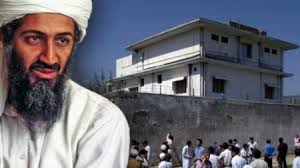
OBL in Abbotabad (Credit: Pakistankakhudahafiz.com)
ISLAMABAD: The Abbottabad Commission Report, which is yet to be made public, contains a treasure trove of information on the hunt for the world’s most wanted man – Osama Bin Laden.

Its findings reveal that the arrest of Khalid Bin Attash (an Al Qaeda member who was involved in the pre-9/11 attacks such as on USS Cole and the embassies in Africa) in ‘2002’ from Karachi led to the first major breakthrough – he is the one who identified Abu Ahmed Ali Kuwaiti (the Kuwaiti born Pakistani who was OBL’s right hand man and courier and the man who led the Americans to Bin Laden.

After this information came to light, the Kuwaiti intelligence service was contacted but it could not provide any details about the man.

During the search for this man, CIA provided four phone numbers between “2009 to Nov 2010” to Pakistan but without any details as to who they were searching for, a source privy to the report’s details has told Dawn.

Dawn has learnt that these numbers “most of the time remained off” but while the ISI kept the CIA in the loop it did so “without knowing the context and to whom these numbers belonged”.

Now in retrospect, the commission report confirms Attash’s disclosure – Kuwaiti was OBL’s right hand man.

According to what the commission has discovered, he was with OBL’s family in Karachi when it moved to the port city in Oct/Nov 2001.
In 2002, when the family (including OBL’s wives) moved to Peshawar, Kuwaiti was with them and this is where OBL joined them – in mid-2002.

From here they moved to Swat where OBL was visited by Khalid Sheikh Mohammad.

A month later, KSM was arrested in Rawalpindi, prompting the scared OBL family to move to Haripur.

Kuwaiti and his brother Ibrar (who had joined the fugitives in Swat) were with OBL and they all stayed in Haripur till 2005.
And it is here that the move to Abbottabad was planned and executed by Kuwaiti. He is the one who purchased a plot in Abbottabad by using a fake identity card and also supervised the construction of the house, which says a source was custom built.

It contained three complexes. “One open compound, an annexe where Kuwaiti and his family lived and the main three storey house,” said the source, adding that the two top storeys were used by OBL and his family.

The youngest wife stayed on the second floor while the older wives – Sharifa and Khaira – stayed on the lower floor.
Ibrar and his wife lived on the ground floor.

The source explained that the house was built so that the children of Ibrar could not see OBL.

The commission has been told that OBL never had a phone line, an internet or cable connection either in Swat, Haripur or Abbottabad though a dish was used to watch Al Jazeera in more than one city that the families stayed in.

Dawn has learnt that the commission has pointed out the violations committed by the residents of the Abbottabad House which remained unchecked by the authorities at the local level.

For instance, it has noted that a manual ID card was used to purchase land even though a computerised CNIC had been made mandatory in 2004 by Nadra – “the manual NIC was accepted by the Revenue Department, Cantonment Board and others,” said the source, adding that the identities and the addresses were never verified.

He also said that the third floor was built in violation of the building plan and once again no authority intervened.
In addition, the commission has noted that “the fort type construction remained unnoticed by cantonment board, police, intelligence agencies and the locals. The occupants also remained unchecked for non-payment of property tax since 2005”.

When the compound in Abbottabad was stormed by the Navy Seals in the middle of the night, OBL’s first reaction was to tell his family to stay calm and recite the kalima.

When the Seals reached Laden’s room, he is said to have a weapon in his hand and was searching for a grenade on a shelf — he was shot as he turned around, the source has told Dawn. It was at this point that Amal and OBL’s daughter Summaya rushed at the men to stop them, leading to Amal’s bullet injury. Summaya and Kuwaiti’s wife were asked to identify OBL after which the rest of the inhabitants of the house were told by the Seals that Laden had been killed.

Last but not least, Dawn has learnt that the commission has given recommendations to the government that are aimed at averting another May 2 like operation.

It was not possible to find out whether or not the report has investigated and/or made any recommendations to prevent fugitives such as OBL from hiding in Pakistan. Neither is it clear whether or not the commission has held anyone responsible for the presence of OBL in the country or the May raid by the Americans.

The recommendations that Dawn has learnt about are focused on checking American activity in the country and averting operations by outside forces by suggesting that the role of the post of chairman joint chiefs of staff committee be enhanced for more effective coordination between the armed forces. It has also recommended strengthening the National Security Council so that it can take immediate steps as the commission has noted that certain high government functionary could not be contacted during operation.

The commission has also recommended a probe over the issuance of visas to a large number of US contractors who established a spy network within Pakistan.

Haqqani rejects OBL commission’s findings

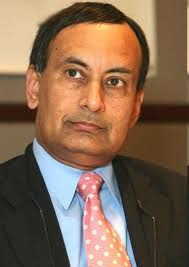
Hussain Haqqani (Credit: Pakistan.com)

WASHINGTON, July 11: Former Pakistan ambassador to the United States Husain Haqqani has rejected the Abbottabad Commission’s suggestion that as ambassador he issued visas without authorisation or was responsible for CIA agents coming into Pakistan in large numbers.

Mr Haqqani said in a statement that the US Navy SEALS who found Osama bin Laden did not come with visas and the entire controversy over visas had been manufactured to distract attention from the two vital questions. “The first question is, why Pakistan’s bloated security agencies failed to find OBL for nine years and the second, how were the US SEALS able to come into Pakistan without detection by our security forces,” he said.

The former ambassador said the commission interviewed him on Dec 19, 2011 in Islamabad and he informed it that he did not have access to official records for visas at the time but the commission had not recorded that point in its report. He added that the figures for visas were provided by officials at the embassy and the foreign ministry after he had resigned and to say that these came from him was “an absolute falsehood”.

Mr Haqqani also said that giving a visa to a person does not make him invisible within Pakistan. “Entry of that person is still recorded at the airport and he can be followed like thousands of Pakistanis and foreigners are followed by intelligence agencies,” he said.


Altaf fears ‘British establishment’ plotting to eliminate him

Altaf Hussain address (Credit: news.com.pk)
Altaf Hussain address
(Credit: news.com.pk)

LONDON, July 1: MQM leader Altaf Hussain opened a new front on Sunday by naming the British establishment and openly accusing Britons of hatching a plot to eliminate him and “frame” him in the murder case of Dr Imran Farooq, one of the founders of the MQM.

In an unprecedented broadcast watched by millions of Pakistanis on private TV channels on Sunday, the London-based MQM supremo, who has made Britain his permanent home after fleeing Pakistan in 1992, admitted that the Metropolitan Police had raided his home in North West London.

Dr Imran Farooq, who had been living in exile in London since 1999, was stabbed to death on his way home from work in Green Lane on September 16, 2010, outside his residence. The Met Police believe he was killed because he wanted to start his own independent political career.

The news of the search warrant being executed one of the MQM leader’s residential addresses was broken exclusively by Geo TV, stunning Pakistan. The police seemed to have taken direct aim at the MQM leader, by first raiding his home and then arresting Iftikhar Hussain, when he landed at Heathrow after attending Hussain’s niece’s wedding in Toronto,and kept him for nearly 34 hours at a police station to question about Dr Imran Farooq murder.

In his address, the MQM leader was clearly agitated and complained that the police had taken away belongings from his property and were refusing to communicate. It was in this context that he announced to relinquish charge of the party in the early hours of Sunday.

Hussain retracted his decision of leaving reins of the party in a live speech after hours of emotional appeals by the workers present at the 90 headquarters of MQM and warned that the consequences of his arrest or trial in relation to Dr Farooq’s murder may be too serious for Britain to bear.

Hussain spoke as a man who is convinced that he will be implicated in the investigation of Dr Farooq’s killing. He spoke as if it was a fait accompli. He spoke candidly and appealed to his workers to stay united if he is eliminated, charged, put on trial, or sent on a path yet unknown to him and others.

He suggested that there was a conspiracy against his leadership of the MQM and wanted a referendum from his workers if they wanted him to stay or go in obscurity. Unanimously, the workers asked Hussain on live TV to stay on or else no other leader will be accepted. It’s either you, Bhai, or no one else is worthy of leading us, they assured. Hussain took his resignation back but that was only a sideshow to the big development.

What Hussain said in his speech about Dr Farooq investigation, Britain’s role in hideous games and the alleged plot against him by his hosts, actually marks a turning point for the party that set its camp in London more than two decades ago.

The MQM has controlled Karachi from its International Secretariat in Edgware without any trouble at anytime, but those times have changed and the party leadership at the moment has three investigations going on about them, directly or indirectly: the murder investigation of Dr Imran Farooq, a money-laundering investigation and an investigation into Altaf Hussain’s ‘teen talwar’ speech.

In fact, for the first time Altaf Hussain admitted that some kind of a money laundering probe is also going on against the MQM after the raids on MQM Secretariat or the residences of MQM leaders.

The raid on his house and the arrest of Iftikhar Hussain shook the party leadership to the core and has puzzled its think tanks who have for long thought that they are always tolerable to the west because of their general liberal and secular outlook. That assessment is right and the MQM has been treated as such in Britain, but the killing in London and the rise in confrontation in Britain has set the party on a path which it didn’t choose.

“I may not be the chief in the eyes of Britain, but I am the chief in the eyes of party workers,” said Hussain.It is known that recently George Galloway, MP, instructed lawyers to seek legal action against Altaf Hussain and he has been proactively campaigning in British Parliament regarding Altaf Hussain’s activities. Lord Nazir Ahmed and Imran Khan, the Pakistan Tehreek-e-Insaaf (PTI) leader, were also mentioned, by the MQM chief as canvassing the British government.

Imran Khan had also looked at the possibility of bringing legal action against Altaf Hussain in 2007. However, it is unlikely that Galloway, Imran Khan and Lord Nazir will have had much influence on the government as the Metropolitan Police are independent of the government pressure.

It must be noted that the Met Police do have connections with the secret services of Britain, MI-5 and MI-6, and the police force works closely with both the external and internal arms of the secret service.

Hussain said he would not seek legal counsel, barrister or a solicitor if charged with the conspiracy to kill his colleague, Dr Imran Farooq. He gave the clearest indication that the police were headed in the direction and the net was closing in.

He also said that the Met Police had full cooperation from his party but also warned the Met against framing him. In Pakistan, the MQM leadership made their disgust at the Met investigation clear when they protested outside British Consulate in Karachi and warned the Met not to cross the red lines.

Altaf Hussain questioned why the house of a leader who represents millions has been raided in such a blatant manner. It is believed that the MQM is aware that the Met Police are close to taking further action which would be in the form of bringing criminal charges against certain individuals, and his speech may be seen as a pre-emptive attempt to soften the blow to his party faithful.

A foreign and commonwealth office spokesman in London says: We are aware of a planned demonstration outside our Karachi consulate. It’s a concern for us, but we will not go into details of what these concerns are. We have taken measures.”

Speaking about the comments of Altaf Hussain, the spokesman added: “Metropolitan Police are investigating the murder case of Dr Imran Farooq. The Met Police is completely independent of the government influence. It’s an independent organisation. Her Majesty’s Government doesn’t interfere with the police investigation. Whether to charge, release or raid an address—it’s nothing to do with the government. The Met Police deal with such matters.”It should be noted that conspiracy to commit murder, contrary to Section (1) 1 of the Criminal Law Act 1977, can attract a custodial sentence and imprisonment for life.