
Trump seen hardening line toward Pakistan after Afghan war review

WASHINGTON, June 20: President Donald Trump’s administration appears ready to harden its approach toward Pakistan to crack down on home-based militants launching attacks in neighbouring Afghanistan, US officials tell Reuters.
Potential Trump administration responses being discussed include expanding US drone strikes, redirecting or withholding some aid to Pakistan and perhaps eventually downgrading Pakistan’s status as a major non-NATO ally, the officials said, speaking on condition of anonymity.

Some US officials, however, are skeptical of the prospects for success, arguing that years of previous US efforts to curb Pakistan’s support for militant groups have failed, and that already strengthening US ties to India, Pakistan’s arch-enemy, undermine chances of a breakthrough with Islamabad.
US officials say they seek greater cooperation with Pakistan, not a rupture in ties, once the administration finishes a regional review of the strategy guiding the 16-year-old war in Afghanistan. Precise actions have yet to be decided.

The White House and Pentagon declined to comment on the review before its completion. Pakistan’s embassy in Washington did not immediately respond to a request for comment. “The United States and Pakistan continue to partner on a range of national security issues,” Pentagon spokesperson Adam Stump said.

But the discussions alone suggest a shift toward a more assertive approach to address safe havens in Pakistan that have been blamed for in part helping turn Afghanistan’s war into an intractable conflict. Experts on America’s longest war argue that militant safe havens in Pakistan have allowed Taliban-linked insurgents a place to plot deadly strikes in Afghanistan and regroup after ground offensives.

Although long mindful of Pakistan, the Trump administration in recent weeks has put more emphasis on the relationship with Islamabad in discussions as it hammers out a regional strategy to be presented to Trump by mid-July, nearly six months after he took office, one official said. “We’ve never really fully articulated what our strategy towards Pakistan is. The strategy will more clearly say what we want from Pakistan specifically,” the US official said, speaking on condition of anonymity.

Other US officials warn of divisions within the government about the right approach and question whether any mix of carrots and sticks can get Islamabad to change its behaviour. At the end of the day, Washington needs a partner, even if an imperfect one, in nuclear-armed Pakistan, they say.

Congressman urges Trump to consider resuming airstrikes in Pakistan
The United States is again poised to deploy thousands more troops in Afghanistan, an acknowledgment that US-backed forces are not winning and Taliban militants are resurgent. Without more pressure on militants within Pakistan who target Afghanistan, experts say additional US troop deployments will fail to meet their ultimate objective: to pressure the Taliban to eventually negotiate peace.

“I believe there will be a much harder US line on Pakistan going forward than there has been in the past,” Hamdullah Mohib, the Afghan ambassador to the United States, told Reuters, without citing specific measures under review. Kabul has long been critical of Pakistan’s role in Afghanistan.

Pakistan fiercely denies allowing any militants safe haven on its territory. “What Pakistan says is that we are already doing a lot and that our plate is already full,” a senior government source told Reuters, speaking on condition of anonymity. The source doubted the Trump administration would press too hard, saying: “They don’t want to push Pakistan to abandon their war against terrorism.”

Afghan president blames Pakistan for home-grown violence
Pakistani officials point towards the toll militancy has taken on the country. Since 2003, almost 22,000 civilians and nearly 7,000 Pakistani security forces have been killed as a result of militancy, according to the South Asia Terrorism Portal, which tracks violence. Experts say Pakistan’s policy towards Afghanistan is also driven in part by fears that India will gain influence in Afghanistan.

Is Pakistan an ally?
Nuclear-armed Pakistan won the status as a major non-NATO ally in 2004 from the George Bush administration, in what was at the time seen in part as recognition of its importance in the US battle against al Qaeda and Taliban insurgents.

The status is mainly symbolic, allowing limited benefits such as giving Pakistan faster access to surplus US military hardware. Some US officials and experts on the region scoff at the title. “Pakistan is not an ally. It’s not North Korea or Iran. But it’s not an ally,” said Bruce Riedel, a Pakistan expert at the Brookings Institution.
But yanking the title would be seen by Pakistan as a major blow.

SCO membership likely to pose fresh challenges for Pakistan
Lisa Curtis, senior director for South and Central Asia at the National Security Council, co-authored a report with Husain Haqqani, Pakistan’s former ambassador to Washington, in which they recommended the Trump administration warn Pakistan the status could be revoked in six months. “Thinking of Pakistan as an ally will continue to create problems for the next administration as it did for the last one,” said the February report. It was unclear how seriously the Trump administration was considering the proposal.

The growing danger to Afghanistan from suspected Pakistan-based militants was underscored by a devastating May 31 truck bomb that killed more than 80 people and wounded 460 in Afghanistan’s capital, Kabul.

Afghanistan’s main intelligence agency said the attack – one of the deadliest in memory in Kabul – had been carried out by the Haqqani network with assistance from Pakistan, a charge Islamabad denies. Washington believes the strikes appeared to be the work of the Haqqani network, US officials told Reuters.

US frustration over the Haqqani’s presence in Pakistan has been building for years. The United States designated the Haqqani network as a terrorist organisation in 2012. US Navy Admiral Mike Mullen, then the top US military officer, told Congress in 2011 that the Haqqani network was a “veritable arm” of the ISI.

American soldiers wounded, not killed in incident at Afghan base: US official

The potential US pivot to a more assertive approach would be sharply different than the approach taken at the start of the Obama administration, when US officials sought to court Pakistani leaders, including former Army chief General Ashfaq Kayani.

David Sedney, who served as Obama’s deputy assistant secretary of defense for Afghanistan, Pakistan and Central Asia from 2009 to 2013, said the attempt to turn Islamabad into a strategic partner was a “disaster.” “It didn’t affect Pakistan’s behaviour one bit. In fact, I would argue it made Pakistan’s behaviour worse,” Sedney said.

More drones, cash cut-off
Pakistan has received more than $33 billion in US assistance since 2002, including more than $14 billion in so-called Coalition Support Funds (CSF), a US Defense Department programme to reimburse allies that have incurred costs in supporting counter-insurgency operations.

It is an important form of foreign currency for the nuclear-armed country and one that is getting particularly close scrutiny during the Trump administration review. Last year, the Pentagon decided not to pay Pakistan $300 million in CSF funding after then-US Secretary of Defense Ash Carter declined to sign authorisation that Pakistan was taking adequate action against the Haqqani network.

US officials said the Trump administration was discussing withholding at least some assistance to Pakistan. Curtis’ report also singled out the aid as a target. But US aid cuts could cede even more influence to China, which already has committed nearly $60 billion in investments in Pakistan.

Top career US diplomat in China embassy steps down
Another option under review is broadening a drone campaign to penetrate deeper into Pakistan to target Haqqani fighters and other militants blamed for attacks in Afghanistan, US officials and a Pakistan expert said. “Now the Americans (will be) saying, you aren’t taking out our enemies, so therefore we are taking them out ourselves,” the Pakistan expert, who declined to be identified, said.

Army chief General Qamar Javed Bajwa last week criticised “unilateral actions” such as drone strikes as “counterproductive and against (the) spirit of ongoing cooperation and intelligence sharing being diligently undertaken by Pakistan”.
Understanding the China-Pakistan Economic Corridor

As Chinese philosophy decisively asserts, “you cannot live in a castle made of glass while your neighbour lives in the stone ages”. This maxim offers a stark contrast to the case of the United States, a highly developed state that faces tremendous migration problems from its neighbours Mexico and Puerto Rico due to the existence of a glaring development gap in the region. Instead of increasing aid to these destitute countries, the current US administration is considering the construction of a “wall” to keep migrants out. There has not been a conclusive agreement upon which side of the border will bear the financial burden of this project.

On the contrary, in accordance with the Chinese wisdom aforementioned, the Chinese mega project, One Belt, One Road (OBOR) initiative, worth approximately $900 billion, is a regional plan which will enrich the entire Euro-Asiatic region, including China.

OBOR is a regional connectivity strategy that comprises 65 countries and six economic corridors and caters to two-thirds of the world’s population. It aims to improve infrastructure in these countries and enhance the movement of goods and people, promoting trade and exchange, generating more economic activities and employment opportunities for the whole region.

This will definitely better the standard of living for people in this region of the world. The China-Pakistan Economic Corridor (CPEC) is one of the six economic corridors proposed under the OBOR initiative. It is the shortest, most convenient and most feasible corridor, among them all. It is also the flagship project, as both governments attribute high value to its success, and are striving to make it the prototype for the rest of the world.

CPEC is not a completely novel idea. It was introduced by the first Chinese ambassador to Pakistan, General Geng Biao, in the 1960s. Geng was a visionary diplomat, general, and politician. He proposed the road linkage between China and Pakistan through Khunjerab. That is how the Karakoram Highway came to fruition. This highway was a blessing for the people of Gilgit-Baltistan (G-B) because prior to its construction, locals used to travel by foot or horseback to reach Punjab and the journey often took a couple of months.

With the commencement of this road, the travel was reduced to less than 24 hours. The topography of G-B encompasses a very tough terrain, high altitudes (Khunjerab Pass lies at approximately 4000m above the sea level), solid hard rocks, mountains, and extreme climate (some of the areas have minus 50 degree Celsius). Thus, the construction of the Karakoram Highway was a miracle and it is considered the eighth wonder of the world. Due to budgetary constraints and the lack of modern technology, however, the quality of the road was rather poor, with many sharp curves and steep slopes. The average speed of a vehicle could not be more than 40 kilometres per hour. But recently, the highway has been upgraded and a decent speed of 120 kilometres per hour can be maintained. Nevertheless, some sections of the Karakoram Highway are still under construction and hopefully, within the next couple of years, it will turn into a proper motorway.

Under CPEC, a huge network of highways and motorways are in progress. The ML1 railway track from Karachi to Peshawar is being upgraded. Some tunnels and bridges are under construction to maintain the high speed of trains and shorten distances. A huge dry port linked by railway and motorway is under construction at Havelian, which will be a logistic hub for CPEC in the future.

Oil and gas pipelines are now in an advanced stage of completion throughout the country. One of them is an oil and gas pipeline from Gwadar to Nawabshah constructed by a Chinese company, and another from Karachi to Lahore is under the initial stages of construction by a Russian company. In the future, transportation of energy (oil, gas, LNG, etc) will be conveniently transported by pipelines, instead of with costly trucks that cause pollution. In the next few years, these pipelines will also be transporting oil and gas from Gwadar to inside China through Khunjerab, at a fraction of the cost of the sea containers going through Malacca Strait. Even if China imports only ten per cent of its requirements through CPEC pipelines, Pakistan will be earning billions of dollars in revenue, and this makes it a win-win situation for both countries.

Among the 51 projects signed during the visit of Chinese President Xi Jin Ping, priority was given to power projects that amounted to a total worth of 33 billion. Some of these power projects have been completed and have begun adding power to the National Grid. However, several of the mega projects will take some time to complete. Upon completion of these projects, it is expected that Pakistan will have sufficient power, and there will be no more shortage of power. The next stage of CPEC is under planning, also referred to as the “industrialisation” phase. The Chinese industrial sector is saturated and increasing labour cost is forcing Chinese industries to shift out of China. Pakistan is the best destination for the Chinese industry. Pakistan is planning industrial parks, special economic zones and science parks to facilitate the flourishing of the Chinese industry in Pakistan. After overcoming the power shortage, the shifting of Chinese industries into Pakistan will be accelerated.

CPEC will directly or indirectly generate around two million jobs. In the beginning, Chinese workforce will be hired in Pakistan, but gradually within a few years once Pakistan trains its workforce to the Chinese standard, Pakistanis will replace the workforce. Chinese industry will increase our productivity, reduce our imports, and enhance our exports. The economy will grow on an unprecedented scale. It will also improve the security situation in Pakistan as well as in the whole region. The aforementioned is possible if we unite and work hard. We need visionary and sincere leadership to execute this. The common man in Pakistan is honest, simple, hardworking and willing to devote himself to the cause of a prosperous nation.

On his 71st birthday, Trump expected a quiet morning and woke up to a shooting

WASHINGTON, June 14 — It was supposed to be a quiet morning at the White House as President Donald Trump marked his 71st birthday, with nothing on his public schedule until the late afternoon. But that was shattered by early reports that a shooter had opened fire on Republican lawmakers and staff at a baseball practice across the Potomac River in Virginia.

White House staff canceled Trump’s scheduled public events Wednesday and scrambled to bring details to the president as he watched the developments on television, including the news that the House Majority Whip Rep. Steve Scalise, R-La., and a congressional aide were shot.

Trump posted on Twitter shortly before 9 a.m. that Scalise, “a true friend and patriot, was badly injured but will fully recover. Our thoughts and prayers are with him.”

Scalise was shot in the hip on the ball field in Alexandria, Va., shortly after 7 a.m. and was taken to George Washington University Hospital in Washington for surgery.

Aides told reporters Trump would cancel his scheduled speech at the Department of Labor on Wednesday afternoon, and Trump’s senior advisers huddled to decide how the president would react to the shooting.

Vice President Mike Pence canceled a morning speech at the National Assn. of Home Builders in Washington to stay in the West Wing with Trump to help manage the administration’s response.

“The vice president and I are aware of the shooting incident in Virginia and are monitoring developments closely,” Trump said in a statement. “We are deeply saddened by this tragedy. Our thoughts and prayers are with the members of Congress, their staffs, Capitol Police, first responders, and all others affected.”

In the hours immediately after the shooting, Secret Service agents closed off large sections of Lafayette Park in front of the White House. By 10:30 am, the park was open to the public again, and tourists were taking photos in front of the White House fence.

Pakistan faces a diplomatic conundrum over the Gulf crisis (DW)

The Saudi-Qatari standoff poses a great diplomatic challenge to Pakistani authorities as they enjoy close economic and geopolitical ties with both Riyadh and Doha. Can Pakistan afford to remain neutral in the conflict?
Pakistani Prime Minister Nawaz Sharif embarked Monday on a one-day visit to the Kingdom of Saudi Arabia along with the country’s army chief Qamar Javed Bajwa and the foreign ministry staff.

The urgency of the trip shows that Sharif faces a tough diplomatic challenge in Riyadh.

Islamabad enjoys cordial relations with both Saudi Arabia and Qatar, but the diplomatic standoff in the Gulf region, which saw Saudi Arabia, Bahrain, Egypt, Yemen and the United Arab Emirates (UAE) sever ties with Qatar, means the Pakistani government now faces a predicament – to choose between Riyadh and Doha.

For now, Pakistani authorities do not want to take sides, but in the coming days, and with Saudi officials’ increasingly belligerent stance toward Iran and its allies in the region – including Qatar – remaining neutral could prove to be difficult.

“Since Pakistan enjoys good relations with Saudi Arabia, Iran and Qatar, we will try our best to resolve the differences between the Arab countries,” PM Sharif told journalists during a recent visit to Kazakhstan.
Pakistan also denied reports that it had sent some 2,000 troops to Qatar’s aid after the crisis erupted.

Foreign Office Spokesperson Nafees Zakaria stressed that “these false reports appear to be part of a malicious campaign aimed at creating misunderstanding between Pakistan and brotherly Muslim countries in the Gulf.”
Besides the obvious diplomatic dilemma, Pakistani authorities are also in a quandary because of their nation’s economic ties with Saudi Arabia, Qatar and the UAE.

The Islamic country receives large revenue from the Pakistani citizens working in the Arab countries. More than 1.9 million Pakistanis live in Saudi Arabia, while the UAE hosts 1.2 million, according to government data. Qatar hosts some 115,000 Pakistani nationals.

“The Pakistani government has close economic ties with Doha. PM Sharif signed a crucial gas deal with Qatar to ease the country’s energy crisis,” Usama bin Javed, an Islamabad-based Middle East expert, told DW.
London-based Pakistani analyst, Farooq Sulehria, says that the largest sum of Pakistan’s foreign exchange comes from Saudi Arabia. “There is a mammoth work force of Pakistani laborers in the Arab countries. It would be ‘suicidal’ to offend the Saudis,” Sulehria told DW.

Diplomatic predicament
Even if the Saudi-Qatari dispute gets resolved through regional and international efforts – the United States and the European Union have urged a quick resolution of the standoff – Pakistan’s long-term problems in relation to the Saudi-Iranian rivalry won’t go away easily. After all, Riyadh’s main concern about Doha is the latter’s alleged ties with terrorist groups that Saudi authorities say are promoting Tehran’s geopolitical agenda in the region.

Saudi authorities have leverage over Pakistan, and they have been persistent in their demands that Islamabad assists them in the Yemeni war as well as a larger regional security alliance led by Riyadh.

Despite parliament’s decision last year against becoming a party to the intensifying Saudi-Iranian conflict in the Middle East, in April Islamabad approved the appointment of Raheel Sharif, the country’s former army chief, as head of the 39-member Saudi-led military coalition. Riyadh says the Muslim nations’ alliance was formed to fight terrorism in the region, but experts point out that it is primarily an anti-Iran grouping. Naturally, Tehran is not part of the coalition.

The Pakistani government has sent mixed signals about Raheel Sharif’s position in the alliance in the past few weeks, especially after US President Donald Trump’s last month’s visit to Saudi Arabia. Media reports claim that Raheel Sharif is contemplating heading back to Pakistan as a result of Washington and Riyadh’s now official anti-Iran posture. But Raheel Sharif’s speculated departure from Saudi Arabia is as much shrouded in mystery and secrecy as was his decision to join the Saudi-led alliance.

“Pakistani armed forces are already part of the Saudi military alliance. This gives Islamabad an opportunity to mediate in the crisis. But it has to be very careful,” analyst Javed said, adding that Pakistan could not afford a prolonged Gulf crisis.

Security analyst Sabir Karbalai suggests Islamabad should take the issue to the Organization of Islamic Cooperation (OIC), a 57-member forum of Muslim-majority nations.

“If Pakistan can’t leave the Saudi alliance, it should put its activities on hold and together with Turkey try to resolve the dispute between Riyadh and Doha,” Karbalai told DW.

But it’s probably easier said than done. With Saudi Arabia-US alliance stronger than ever after Trump’s coming to power in the US, Pakistan cannot afford to cozy up with Iran. In the rapidly changing geopolitical milieu, Islamabad has aligned itself by forging closer ties with China and Russia, but it cannot afford to go all the way against Washington and Riyadh.

Sectarian strife
Pakistan’s intelligentsia and civil society have advised PM Sharif to remain neutral in the Gulf crisis as Islamabad’s support to Saudi Arabia could also increase the Sunni-Shiite tension in the South Asian country. Analysts believe that Pakistan’s Sunni militant groups already feel emboldened by the fact that the nation’s ex-army chief is linked with the Saudi security alliance.

The sectarian strife in Pakistan has been ongoing for some time now, with militant Islamist groups unleashing terror on the minority Shiite groups in many parts of the country. Most of these outfits, including the Taliban, take inspiration from the hardline Saudi-Wahabi Islamic ideology.

For Pakistan’s Islamic fanatics, the country “is already a ‘Sunni Wall’ against Shiite Iran,” Siegfried O. Wolf, an expert at the University of Heidelberg’s South Asia Institute, told DW in an interview.

Experts say that while Pakistan will try to demonstrate its neutrality in the Saudi-Iran regional rivalry, in practice and in terms of policies, its closeness to Riyadh and the hardline Sunni ideology will remain intact. But domestically, this will plunge Pakistan into a bigger security crisis than it is already in.

Additional reporting by Sattar Khan, DW’s Islamabad correspondent.

Trump accuses Iran of fuelling ‘fires of sectarian conflict and terror’

US President Donald Trump on Sunday urged Islamic leaders to take a stand against violence done in the name of religion, describing the struggle against extremism as a “battle between good and evil”.

In a highly anticipated speech in Saudi Arabia, Trump lashed out at Iran, accusing Tehran of fuelling “the fires of sectarian conflict and terror” and calling for its international isolation.

Saying he came with “a message of friendship and hope and love”, Trump told dozens of Muslim leaders that the time had come for “honestly confronting the crisis of religious extremism”.

“This is a battle between barbaric criminals who seek to obliterate human life, and decent people of all religions who seek to protect it. This is a battle between good and evil.”

The speech came on the second day of a visit to Saudi Arabia, part of Trump’s first foreign tour that will take him next to Israel and the Palestinian territories and then to Europe.

The White House has sought to draw a clear distinction during the visit with Trump’s predecessor Barack Obama, who Saudi Arabia and its Arab allies saw as lecturing and soft on their rival Iran.

“From Lebanon to Iraq to Yemen, Iran funds, arms and trains terrorists, militias and other extremist groups that spread destruction and chaos across the region,” Trump said.

“Until the Iranian regime is willing to be a partner for peace, all nations of conscience must work together to isolate it.” He appealed to Muslim nations to ensure that “terrorists find no sanctuary on their soil” and announced an agreement with Gulf countries to fight financing for extremists.

Introducing Trump, Saudi King Salman called Iran “the spearhead of global terrorism”.

Unlike the Obama administration which would often raise concerns over civil liberties with longstanding Arab allies, Trump had made no mention of human rights during his visit so far.

“We are not here to lecture — we are not here to tell other people how to live… or how to worship. Instead, we are here to offer partnership — based on shared interests and values,” Trump said.

Some 35 heads of state and government from Muslim-majority countries were in Riyadh for the Arab Islamic American Summit, mainly from states friendly to Saudi Arabia.

Much of the focus during the summit was on countering what Gulf states see as the threat from Iran, which opposes Saudi Arabia in a range of regional conflicts from Syria to Yemen.

‘Tremendous’ first day
Trump’s speech was touted as a major event — along the lines of a landmark address to the Islamic world by Obama in Cairo in 2009.

It was especially sensitive given tensions sparked by the Trump administration’s attempted travel ban targeting several Muslim-majority nations and his previous remarks on Islam.

In December 2015, Trump told a campaign rally he was calling for a “total shutdown” of Muslims entering the United States “until our country’s representatives can figure out what the hell is going on”.

His words shocked many Americans, with Trump detractors noting that the US Constitution prohibits religious discrimination.

“I think Islam hates us. There is a tremendous hatred there. We have to get to the bottom of it,” Trump said in a March 2016 interview with CNN.

Still, Trump was welcomed warmly in Saudi Arabia, where he and first lady Melania Trump were given an extravagant reception by King Salman and the rest of the Saudi royal family.

The first day saw the announcement of hundreds of billions of dollars in trade deals, welcome news for Trump as he faces mounting troubles at home linked with the probe into alleged Russian meddling during last year’s election campaign.

Among the agreements was an arms deal worth almost $110 billion with Saudi Arabia, described as the largest in US history.

The trade deals announced on Saturday were said to be worth in excess of $380 billion, and Trump proudly declared the first day of his visit “tremendous”.

On Sunday he held a series of meetings with other Arab leaders, including Egyptian President Abdel Fattah al-Sisi, Qatar’s Emir Sheikh Tamim bin Hamad Al-Thani and Bahrain’s King Hamad.

Warm talks with ‘friend’ Sisi
The meeting with Sisi — an avowed fan of the president — was especially warm and Trump said he would “absolutely” be putting Egypt on his list of countries to visit “very soon”.

Trump referred to Sisi as “my friend” and Sisi said the US president was a “unique personality” and “capable of doing the impossible”, to which Trump responded: “I agree!” Trump even complimented Sisi on his footwear, saying: “Love your shoes.

Boy, those shoes. Man…” Sisi has faced harsh criticism of his human rights record since he led the military overthrow of Islamist predecessor Mohamed Morsi in 2013.

Trump, who travels on Monday to Israel and the Palestinian territories before visiting the Vatican, Brussels and Italy for Nato and G7 meetings, is taking his first steps on the world stage as he faces increasing scandal at home.

The last week has seen a string of major developments in Trump’s domestic woes, including the announcement that James Comey, the former FBI chief fired by Trump, has agreed to testify publicly about Russian interference in the US elections.

Reports have also emerged that Trump called Comey “a nut job” and that the FBI has identified a senior White House official as a “significant person of interest” in its probe of Russian meddling.

Nawaz Sharif set to attend ‘Arab Nato’ summit in Riyadh

ISLAMABAD/WASH¬INGTON: Prime Minister Nawaz Sharif will travel to Riyadh on Sunday to attend the first-ever Arab-Islamic-American Summit being held to develop a security partnership against a growing threat of violent extremism.

Mr Sharif is among the 54 leaders who would join US President Donald Trump for the summit being held on Sunday.
On Friday, President Trump left Washington for Riyadh for a visit that he and his allies hope could lay the foundations for an “Arab Nato force” to push back Iran’s growing influence in the Middle East as well as combat terrorism.

The decision to choose the Muslim holy lands for Mr Trump’s first foreign visit has been noted with interest in Washington but his decision to speak about Islam in his address to the summit in Riyadh has generated even more interest, and some derisions too.

Saudi King Salman bin Abdulaziz invited Mr Sharif for the summit. The invitation was delivered by Saudi Information Minister Awwad bin Saleh al Awwad, who visited Islamabad last week.

The official website set up by the Saudi government in connection with President Trump’s trip, while explaining the objective of the summit, states: “US President Donald Trump and leaders of the world’s Islamic nations will meet to address ways of building more robust and effective security partnerships to counter and prevent the growing threat of terrorism and violent extremism around the globe through promoting tolerance and moderation.”

The Arab-Islamic-American summit is one of the three Riyadh has planned for President Trump’s visit. The other two summits being held on this occasion are the Saudi-US Summit, and Gulf Cooperation Council-US Summit. The purpose of the entire exercise, apparently, is to reassert the Kingdom’s position as the main political and security force in the region. The eager Saudis have been running a countdown clock on the website for the trip, which started late on Friday night.

‘Fantasy of Arab Nato’
Pakistan is one of the closest allies of the Kingdom. The two maintain a strong defence partnership. The Pakistani government granted special permission to the former army chief retired Gen Raheel Sharif to lead the multinational military force being created by the Saudis. British journalist Robert Fisk, an expert on Middle Eastern affairs, in his article in the Independent wrote that Mr Trump’s visit was for realising “the fantasy of an Arab Nato”.

Mr Sharif, while accepting the invitation for the summit, has reaffirmed Pakistan’s alliance with the Kingdom by recalling the commonality of views of two countries on most regional and international issues and their collaboration for achieving common interests and objectives.

It is unlikely that Prime Minister Sharif would get a one-on-one bilateral meeting with President Trump on the sidelines of the summit. At least, Mr Trump’s schedule does not show any possibility for such an interaction. The Foreign Office was silent on chances of a speculated meeting between the two.

The Washington-based Pakistani media, however, have learned that the Saudis are backing Pakistan’s request for a brief Sharif-Trump meeting before the US president flies out to Israel and then to Europe for more talks with America’s Nato allies.

Diplomatic sources in Washington say that since scores of world leaders are attending the summit, it would be difficult to arrange exclusive meetings between the US president and other leaders but “Americans are trying to find space for a very brief one-on-one between Mr Sharif and Mr Trump”.

“Unfortunately I don’t have anything for you,” a State Department official told Dawn when asked if the two leaders were going to have an exclusive meeting. Officials at the Pakistan Embassy said that since this matter was handled in Islamabad, they had no information about this.

The summit is being discussed at every forum in the US, from Congress to think tanks and the media. The US media and think tanks pointed out that days before the summit, the Trump administration announced two major arms deals: $1 billion worth of missiles for the UAE and a much larger, $100bn deal with Saudi Arabia.

Media reports pointed out that these weapons would be used to equip “a Muslim Nato army,” headed by Saudi Arabia. The reports also noted that Gen Raheel would lead this force.

An anti-Iran alliance?
Reports also pointed out that while 54 leaders from across the Arab and Muslim worlds had been invited to the summit, Iran has been kept out. Commentators in Washington noted that Iran’s absence made it look like an anti-Iranian alliance, despite its declared aim of fighting terrorism.

And President Trump’s meetings and conversations with Arab and Muslim leaders opposed to Iran’s growing influence in the region, particularly in Syria, consolidated this impression.

A readout of President Trump’s meeting with Crown Prince Mohamed bin Zayed al Nahyan of the United Arab Emirates at the White House said that the two leaders did talk about “the threat to regional stability posed by Iran.”
The US media reported that the UAE Crown Prince, who is also the Deputy Supreme Commander of his nation’s armed forces, is helping prepare Mr Trump for the summit. This was his second visit to the White House since Mr Trump took office.

They also discussed “steps to deepen our strategic partnership and promote stability and prosperity throughout the Middle East,” said the White House. “Bilateral defence cooperation, counterterrorism and resolving the conflicts in Yemen and Syria” were some of the other key issues that the two leaders discussed.

Comey infuriated Trump with refusal to preview Senate testimony: aides

WASHINGTON, DC: The anger behind Donald Trump’s firing of FBI Director James Comey on Tuesday had been building for months, but a turning point came when Comey refused to preview for top Trump aides his planned testimony to a Senate panel, White House officials said.

Trump, Attorney General Jeff Sessions and deputy Attorney General Rod Rosenstein had wanted a heads-up from Comey about what he would say at a May 3 hearing about his handling of an investigation into former Democratic presidential candidate Hillary Clinton’s use of a private email server.

When Comey refused, Trump and his aides considered that an act of insubordination and it was one of the catalysts to Trump’s decision this week to fire the FBI director, the officials said.

“It gave the impression that he was no longer capable of carrying out his duties,” one official said. Previews of congressional testimony to superiors are generally considered courteous.

Comey, who testified for four hours before the Senate Judiciary Committee, said it made him feel “mildly nauseous” that his decision to make public his reopening of a probe into Clinton’s handling of classified information might have affected the outcome of the Nov. 8 presidential election. But he said he had no regrets and would make the same decision again.

Trump’s sudden firing of Comey shocked Washington and plunged Trump deeper into a controversy over his campaign’s alleged ties with Russia that has dogged the early days of his presidency.

Democrats accused the Republican president of firing Comey to try to undermine the FBI’s probe into Russia’s alleged efforts to meddle in the 2016 election and possible collusion with members of the Trump campaign, and demanded an independent investigation. Some of Trump’s fellow Republicans called his dismissal of Comey troubling.

The Trump administration said on Tuesday Comey was fired because of his handling of the Clinton email probe.
Before he axed Comey, Trump had publicly expressed frustration with the FBI and congressional probes into the Russia matter. Moscow has denied meddling in the election and the Trump administration denies allegations of collusion with Russia.

A former Trump adviser said Trump was also angry because Comey had never offered a public exoneration of Trump in the FBI probe into contacts between the U.S. ambassador to Russia, Sergei Kislyak, and Trump campaign advisers last year.

According to this former adviser, Comey’s Senate testimony on the Clinton emails likely reinforced in Trump’s mind that “Comey was against him.”

“He regretted what he did to Hillary but not what he did to Trump,” the former Trump adviser said of Comey.
Clinton has said that the Comey decision to announce the renewed inquiry days before the election was a likely factor in her loss to Trump.

Aides said Trump moved quickly after receiving a recommendation on Monday to terminate Comey from Rosenstein, who began reviewing the situation at the FBI shortly after taking office two weeks ago.

Trump’s move was so sudden that his White House staff, accustomed to his impromptu style, was caught off guard. Stunned aides scrambled to put together a plan to explain what happened.

White House spokesman Sean Spicer ended up briefing reporters about the move in the dark on Tuesday night near a patch of bushes steps away from the West Wing.

Comey, who was in Los Angeles meeting with FBI employees on Tuesday and returned later to Washington, has made no public comment on his firing.

Many questions remained about what caused Trump to move so quickly.

Two former senior Justice Department officials said it made little sense to fire Comey while the Justice Department Inspector General was still doing a review of the FBI’s handling of the Clinton email investigation.

“I take Rod (Rosenstein) at his word that be believed everything in that memo but he must know that it’s going to be used as a fig leaf to fire Comey,” one former official said.

U.S. Senator Dianne Feinstein, the top Democrat on the Senate Judiciary Committee, told reporters it was her “understanding” Comey had been seeking more resources for his investigation into the tangled Russia controversy.

White House spokeswoman Sarah Huckabee Sanders said Trump had pondered dumping Comey as soon as he took office on Jan. 20, but decided to stick with him.

Trump shrugged off the political firestorm he created with Comey’s dismissal as he met with former U.S. Secretary of State Henry Kissinger in the Oval Office on Wednesday.

Asked by reporters why he fired Comey, Trump said, “He wasn’t doing a good job, very simply. He wasn’t doing a good job.”

(Additional reporting by Joel Shectman, Julia Edwards Ainsley and Susan Cornwell; Editing by Caren Bohan and Frances Kerry)

Sleepy Pakistani Village Rises as China’s Gateway to Middle East

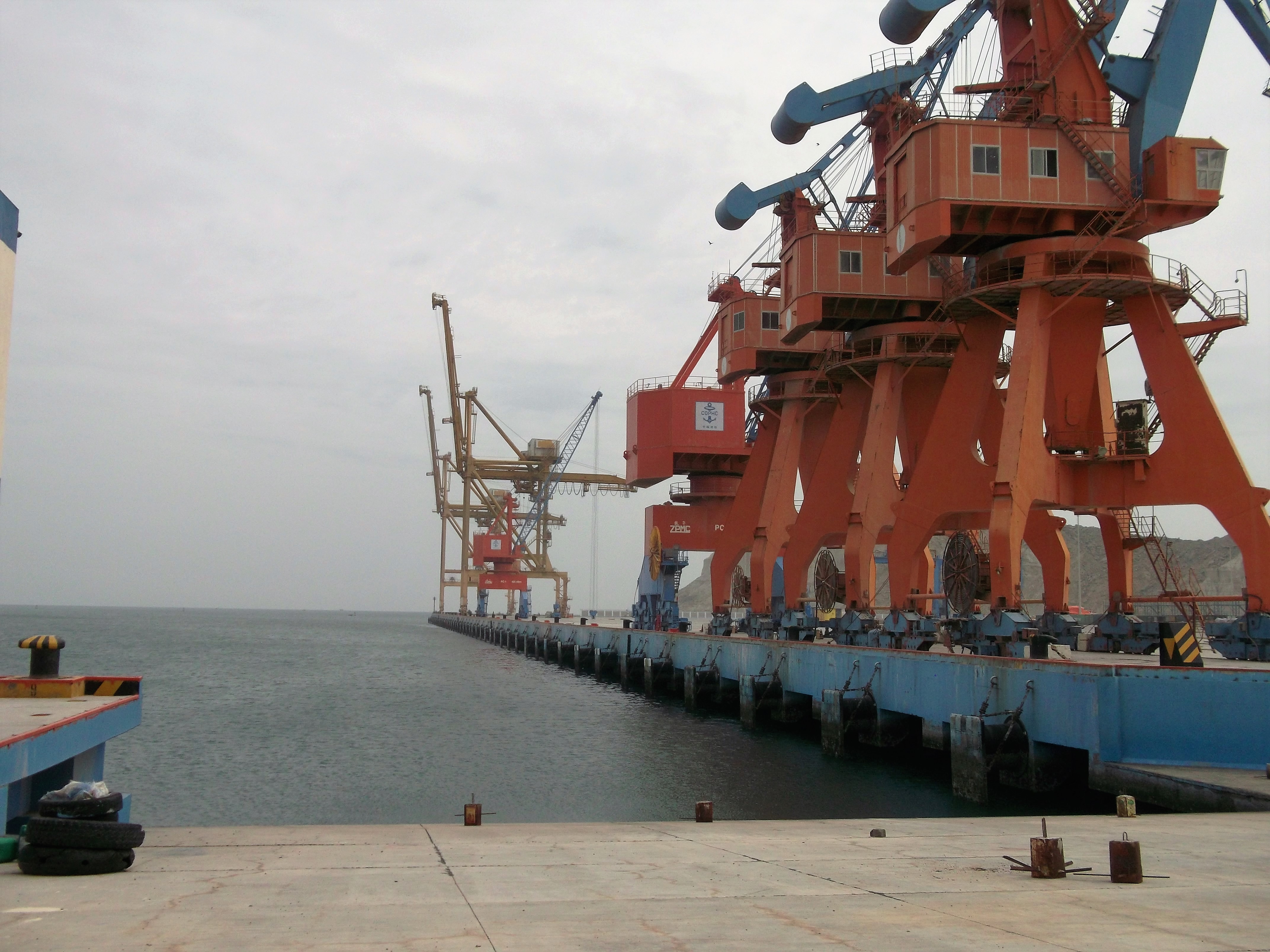
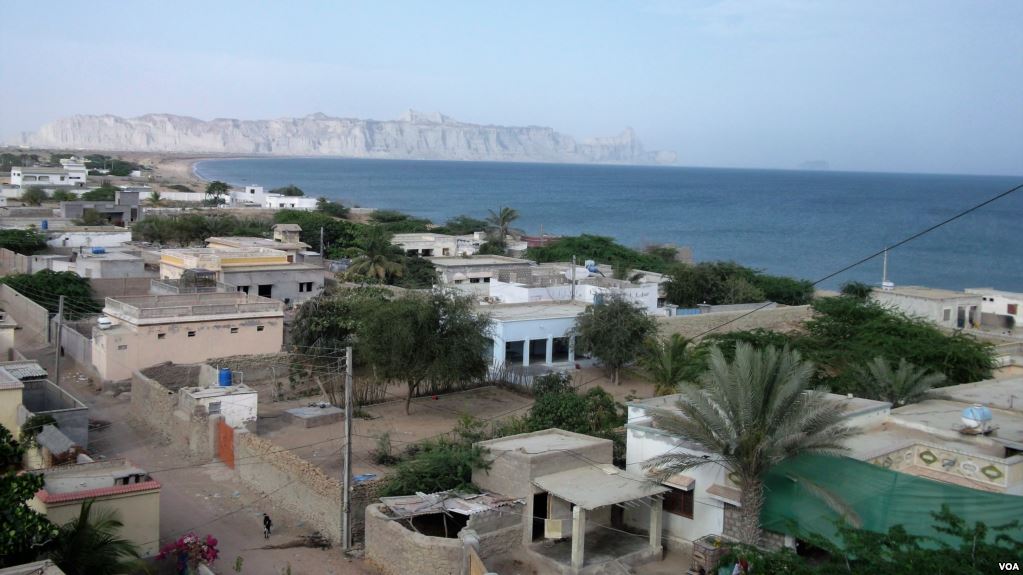
GWADAR, PAKISTAN — Over the last six months, the skyline over the sleepy fishing city of Gwadar has been transformed by machines that dredge the Arabian Sea and cranes that set up shipping berths in what is projected to become Pakistan’s biggest international port.

Infrastructure developments have enabled the hammer-shaped Gwadar peninsula to emerge as the centerpiece of China’s determined effort to shorten its trade route to the Persian Gulf and obtain access to the rich oil reserves there.

A mini-“Chinatown” has appeared, with prefabricated living quarters, a canteen and a karaoke center. After hours, the workers have the grounds to play their favorite game, badminton.

A spokesman for the Chinese team in Gwadar said in an interview that his government had invited employment bids in China, then brought the workers here.

He proudly touted the successful test run conducted by China in November when it used Pakistan’s land route from Kashgar to Gwadar to transport a convoy of 60 containers for export to the Middle East and North Africa.

Prior to that, he said, China had sailed materials through the South China Sea and the Indian Ocean to reach Gwadar.

The Chinese propose to cut down that 12,000-kilometer sea route by about one-fourth once they adopt the land route from the northwestern province of Xinjiang to Gwadar.

So eager is China to save on distance, time and expense — and the challenge posed by the U.S. Navy in the South China Sea — that it has weathered Pakistan’s unstable law-and-order situation to build its economic corridor.

Small wonder that the Chinese spokesman omitted an incident — related by locals to VOA — that the test convoy came under fire in Hoshab, Baluchistan, despite protection from a special security force.

Since then, Pakistan has enhanced its 12,000-plus security force to protect the Chinese. That has turned Gwadar into a military zone, with strict checks of vehicles and ID cards, plus an encampment of intelligence officials.

Still, Baluch insurgents use attacks on “soft targets,” like laborers from other provinces, to drive away investors from the China Pakistan Economic Corridor. On April 5, as road workers from Sindh were gunned down in Kharan in targeted killings claimed by the Baluchistan Liberation Front, former army Col. Farooq Ahmed said suspicion fell on militants operating from Afghanistan.

The Chinese, for their part, have taken heart from the security provided by Islamabad to plan ahead. A prefabricated coal plant will be brought from China to Gwadar to fire up its energy needs. Moreover, China will finance Gwadar international airport, according to the spokesman.

Distances inside Pakistan have shortened as the Frontier Works Organization builds a 3,000-km network of roads funded by Chinese investment.

4B95ACBB-2F93-40CB-B70D-43DA2818616C_w650_r0_s

Symbolizing skepticism

Despite Pakistan’s ongoing military operation against the Taliban, sporadic terror attacks are the biggest hurdle to the country’s development. After 9/11, when Pakistan allied with the U.S. in combating terrorism in Afghanistan, militant organizations put down their roots and threatened the nation from inside.

As social indicators fell and Pakistan became one of the world’s most food-insecure nations, it opened its doors to China — one of America’s rivals — to help fight poverty, a key factor in fundamentalism and terrorism.

When U.S. envoy Nikki Haley recently spoke of nations that use their United Nations veto to stop non-state actors from being designated as terrorists, it was seen as a reference to China’s refusal to let Kashmiri militant Masood Azhar be so named.

Pakistani analysts interpreted this to mean the U.S. would move closer to India, even while revisiting ties with Pakistan because of its key role in Afghanistan.

Now the road from Karachi to Gwadar is smooth and empty, with awe-inspiring, wind-carved hills and mysterious canyons that dip into golden sands that run for kilometers along the deep blue-green Arabian Sea. It has enabled locals to rediscover their country — even as some marvel at the speed of construction.

But in a country that suffers from grinding poverty, little industry and high unemployment, the benefits of China’s investment are still hard to sell to the average person.

Gwadar symbolizes the skepticism. A miniscule amount has been spent by Islamabad and Beijing on people’s welfare, including a vocational training center, a hospital and school. The peninsula’s natural beauty belies erratic electricity, scarce drinking water and lack of proper sewerage.

Gwadar Port Authority Chairman Dostain Jamaldini explains to delegations arriving daily from across the country that revenue generation is the key to uplifting the area.

He showed off a huge quadrangle in the center of Gwadar that “can even be seen on Google Earth.” There, he has recommended to Islamabad that a multipurpose lighthouse be constructed to guide incoming ships and generate revenue.

Until that happens, the fishermen who build wooden boats along Gwadar beach will likely lose their livelihood as their shanty homes are removed.

Already, the vacant plots in Gwadar’s Sinjhaar area overlooking the sea have been repossessed by the Pakistan Navy and earmarked for sale to military officials and politicians.

For the well-connected, a real estate boom is on the horizon. Trader Abbas Rashanwala said he waited for years for peace to come to Gwadar. Now his real estate business has taken off, with investors flocking in to buy land.

Many realtors are betting on Gwadar as on the stock market — making deals online or on the phone. Several sit in the Punjab, selling property they have never seen in Gwadar, all on speculation that prices will soon skyrocket.

Meanwhile, China’s investment in Gwadar is helping control maritime crime. Officials tell how traffickers from Africa and the Middle East used to dock on the beach at night to swap slaves for narcotics.

In February, 36 nations, including the U.S. and Russia, participated in the Pakistan Navy’s multinational patrolling of the Arabian Sea in a global recognition of China’s role in making the waterways safer.

Still, China’s emerging role in Pakistan has raised many questions. The most prominent criticism is that China will become Pakistan’s “East India Company” — a metaphor for the British empire’s plunder of India.

Notwithstanding the doomsayers, there also is a readiness to accept that development and peace are inextricably linked to Pakistan’s future.

http://www.voanews.com/a/pakistani-village-gwadar-china-gateway-to-middle-east/3816566.html?src=voa-editor-picks

US says ‘mother of all bombs’ hits ISIL in Afghanistan Central Command says largest US non-nuclear bomb used in combat dropped on ISIL caves and bunkers in Afghanistan.

The US has dropped a massive GBU-43 bomb, the largest non-nuclear bomb it has ever used in combat, in eastern Afghanistan on a series of caves used by the Islamic State of Iraq and the Levant (ISIL) group, the military said.

The bomb was dropped on Thursday from a MC-130 aircraft in the Achin district of Nangarhar province, close to the border with Pakistan, Pentagon spokesman Adam Stump said.

Also known as the “mother of all bombs,” the GBU-43 is a 9,797kg GPS-guided munition and was first tested in March 2003, just days before the start of the Iraq war.

The US Central Command (CENTCOM) said in a press release that the strike was designed to minimise the risk to Afghan and US forces conducting clearing operations in the area.

But the ultra-heavy explosive – equal to 11 tons of TNT with a blast radius of 1.6km on each side – could potentially cause many civilian casualties.

The bomb landed in the Momand Dara area of Achin district, according to district Governor Esmail Shinwari.

“The explosion was the biggest I have ever seen. Towering flames engulfed the area,” Shinwari told AFP news agency.

“We don’t know anything about the casualties so far, but since it is a Daesh [ISIL] stronghold we think a lot of Daesh fighters may have been killed.”

General John Nicholson, the head of US and international forces in Afghanistan, said the bomb was used against caves and bunkers used by ISIL in Afghanistan, also known as ISIS-K.

“As ISIS-K losses have mounted, they are using IEDs, bunkers and tunnels to thicken their defence.

“This is the right munition to reduce these obstacles and maintain the momentum of our offensive against ISIS-K,” Nicholson said in a statement.

ISIL’s offshoot in Afghanistan, created in 2015, is also known as the “Khorasan Province”.

Mark Kimmitt, a retired brigadier general in the US army and former deputy assistant secretary of defense, downplayed the use of the GBU-43, saying it is “just another tool the military has.”

“It allows us to go after deeply buried and hardened structures. It’s good use against tunnels and it’s also good use because it’s going to set off IEDs in the area,” he told Al Jazeera.

Kimmitt said it was not at all certain that “political authorities” were informed of the raid before it was carried out.

“Although the size of the bomb was a bit larger than normal, it was a routine military mission against a routine military target,” he said.

The White House would not confirm whether or not President Donald Trump had authorised the use of the bomb.

“Everybody knows exactly what happened and what I do is I authorise my military,” Trump told reporters.

“We have the greatest military in the world and they’ve done their job as usual. So, we have given them total authorisation.”

US officials say intelligence suggests ISIL is based overwhelmingly in Nangarhar and neighbouring Kunar province, among tens of thousands of civilians.

Estimates of the group’s strength in Afghanistan vary. US officials have said they believe its has only 700 fighters, but Afghan officials estimate it has closer to 1,500.

Western and Afghan security officials believe fighters frequently switch allegiances between armed groups, making it difficult to know who is to blame for violence

After Xi Leaves U.S., Chinese Media Assail Strike on Syria

BEIJING — With President Xi Jinping safely out of the United States and no longer President Trump’s guest, China’s state-run media on Saturday was free to denounce the missile strike on Syria, which the American president told Mr. Xi about while they were finishing dinner.

Xinhua, the state news agency, on Saturday called the strike the act of a weakened politician who needed to flex his muscles. In an analysis, Xinhua also said Mr. Trump had ordered the strike to distance himself from Syria’s backers in Moscow, to overcome accusations that he was “pro-Russia.”

That unflattering assessment reflected China’s official opposition to military interventions in the affairs of other countries. But it was also a criticism of Mr. Trump himself, who Mr. Xi had hoped was a man China could deal with.

Chinese officials had feared that the two leaders’ 24-hour encounter at Mr. Trump’s Mar-a-Lago estate in Florida might be marred by a campaign-style anti-China outburst from Mr. Trump. Instead, it was interrupted by the unexpected missile attack.

Some Chinese analysts viewed the strike’s timing as no coincidence. Mr. Trump wants China to do more to deter the development of nuclear weapons by North Korea, its ally, and these analysts viewed the Syria attack as a reminder to Mr. Xi that the United States could also attack the North, if necessary.

The missile strike on Syria overshadowed meetings that American and Chinese officials described as big-picture conversations on trade as well as North Korea, which stopped short of producing specific agreements.

Both sides agreed that the North Korean threat had reached a “very serious” stage, according to Secretary of State Rex W. Tillerson. He said the United States was prepared to take its “own course” if China did not do more to rein in the North.

But the official Chinese account of the talks in Xinhua did not mention North Korea — a burning issue for Mr. Trump, but less so for Mr. Xi. Analysts said the omission was probably intentional, a response to the attack on Syria.

Xinhua’s commentary on the Syria strike also made no reference to North Korea. But it mentioned American missile attacks on Libya in 1986 and Sudan in 1998, and scolded the United States for not achieving its “political goals” in those instances.

“It has been a typical tactic of the U.S. to send a strong political message by attacking other countries using advanced warplanes and cruise missiles,” the article said.

The state-run media offered sanitized accounts of the Mar-a-Lago talks, emphasizing the sweeping green lawns on which the leaders walked and the ornate room where the official discussions took place. Those articles omitted the surprise of the Syria attack, in keeping with the goal of presenting an uplifting account of the two leaders meeting as peers.

Mr. Tillerson told reporters that when Mr. Trump notified Mr. Xi about the Syria strike toward the end of dinner, Mr. Xi expressed understanding, because it was punishment for a chemical attack that had killed children.
The Chinese president very rarely talks to the Chinese or foreign news media, making it almost impossible to determine his opinion about the attack or how he expressed it to Mr. Trump.

But Chinese analysts, whose advice is sometimes sought by the government on foreign policy questions, were scornful of the strike, which they viewed as a powerful country attacking a nation unable to fight back. And they rejected what they viewed as an unspoken American message equating Syria, which has no nuclear arsenal, with North Korea, which has carried out five nuclear arms tests and hopes to mount a nuclear warhead on an intercontinental missile.

“I don’t deny that the United States is capable of such an attack against North Korea, but you need to see that North Korea is capable of striking back,” said Lu Chao, director of the Border Studies Institute at the Liaoning Academy of Social Sciences. “That would create chaos.”

If Syria had nuclear weapons, the United States would not dare attack it, said Shen Dingli, a professor of international relations at Fudan University in Shanghai. “Chemical weapons and nuclear weapons are totally different,” Mr. Shen said. “A chemical bomb kills dozens of people, and the atomic bomb at Hiroshima killed hundreds of thousands.”

Mr. Chen added that many Chinese were “thrilled” by the attack because it would probably result in the United States becoming further mired in the Middle East.

“If the United States gets trapped in Syria, how can Trump make America great again? As a result, China will be able to achieve its peaceful rise,” Mr. Chen said, using a term Beijing employs to characterize its growing power. “Even though we say we oppose the bombing, deep in our hearts we are happy.”

On trade, Mr. Xi and Mr. Trump agreed to a “100-day plan” that Commerce Secretary Wilbur L. Ross said would include “way stations of accomplishment.” American business executives took that to mean there had been no deep negotiations on whether China would further open its markets to American companies.

Business leaders had expected the Chinese to announce investments in the United States that would create jobs, as a way to offset some of Mr. Trump’s complaints about the countries’ trade imbalance. But Mr. Xi made no such offers, at least publicly. According to an account in Xinhua, the Chinese invited the United States to participate in a program it calls One Belt One Road, an ambitious effort to build infrastructure projects across Asia to Europe, for which China hopes it can attract some American investment.

“The Chinese did not want to create the impression that Xi went to the U.S. to make concessions to Trump, that would come across as weakness,” said Yun Sun, a senior associate in the East Asia Program at the Stimson Center in Washington.

In the preparations for the talks, Chinese officials emphasized that they expected few concrete results because they viewed the Florida encounter as a getting-to-know-you session between two big personalities. In that sense, the Chinese prevailed, Ms. Yun said.

“It will be Trump who will have difficulty explaining to his voters what he got from the Chinese,” she said.
Yufan Huang contributed research.