Pakistan has moved beyond Benazir Bhutto

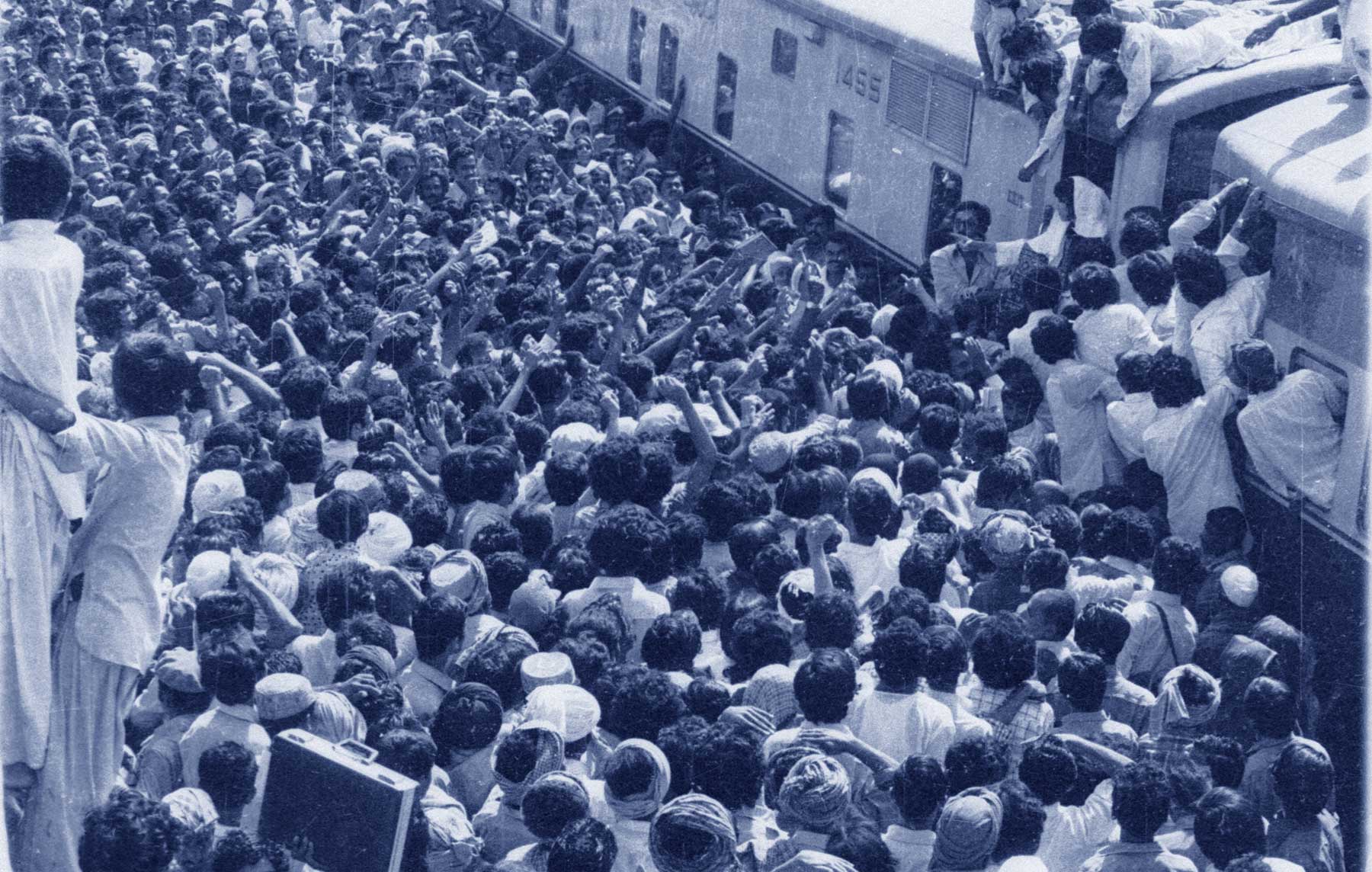
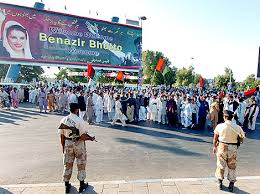
BB eighth anniversary (Credit: equoter.blogspot.com)
BB eighth anniversary
(Credit: equoter.blogspot.com)

It’s been eight years since Pakistan’s former prime minister and one of the country’s most charismatic leaders, Benazir Bhutto, was assassinated in the city of Rawalpindi during an election rally.

Her son Bilawal Zardari, whom she had designated as her political heir in her will, is due to address the Pakistan People’s Party’s (PPP) supporters in Ghari Khuda Baksh, a small town in the southern Sindh province, on Sunday. But Bilawal has neither the leadership qualities nor the support of the masses that his mother or his grandfather, Zulfikar Ali Bhutto, enjoyed. And yet the 27-year-old scion is trying his best to revive the party.

Since 2007, when Bhutto was shot dead by unknown assailants, her widower Asif Ali Zardari has been leading the party alongside his son. After Bhutto’s death, the PPP won the general election in 2008, allowing Zardari to become the president of the Islamic country, but in the 2013 parliamentary vote the party was almost wiped from the political landscape, and was reduced to its Bhutto stronghold in the Sindh province.

Zardari’s administration was marked by massive corruption scandals, incompetent governance, nepotism and the inability to rein in home-grown Islamist militants. But what dissuaded the PPP supporters most was the former government’s lack of will to bring Bhutto’s assassins to justice.

A United Nations commission, set up to investigate Bhutto’s murder at the request of the former government, revealed in its detailed 2010 report that the security arrangements for Bhutto were seriously inadequate, and that some military agencies had tried to hinder the initial investigations.

Former military ruler Pervez Musharraf has also been implicated in the Bhutto murder case. He denies any involvement and blames the Taliban. The Islamist group says it didn’t kill Bhutto.

Veteran politician and PPP senator Taj Haider refutes allegations that the former government didn’t do much to find Bhutto’s murderers.

“It was a very big controversy that resulted from Benazir’s murder,” Haider told DW. “We wanted to be on the right track, and we want to conduct the investigation on scientific lines. In the first place we involved the UN so that the wider parameters of the conspiracy behind her murder would be determined.”

The end of dynastic politics?

But the debate in Pakistani politics has now moved far beyond Bhutto’s assassination. Other big players have emerged on the political scene, such as cricketer-turned-politician Imran Khan.

The reason that these new parties resonate well with a large section of the Pakistani middle class is their emphasis on governance issues – particularly corruption and political accountability. Pakistan has moved beyond grand slogans of socialistic revolution and the charisma of the Bhutto dynasty, barring a small section of Pakistani liberal intellectuals.

New political players have emerged on the political scene, such as Imran Khan

Many urban Pakistanis believe corruption is the biggest impediment to progress in their country, and they hold their politicians responsible. These educated Pakistanis from big cities like Karachi, Lahore, Islamabad and Rawalpindi pin their hopes on the judiciary, which they think has finally gained enough independence to try corrupt legislators and politicians.

But the Pakistani anti-corruption movement is also supported by right-wing parties and the private media, besides the lawyers who initiated the movement in 2007.

“The foremost thing is to change the system. To eradicate corruption from Pakistan, we need to emphasize our morals and the accountability of politicians,” Ahmed bin Mateen, a student in Karachi, told DW.

‘The only true liberal party’

Still, the figure of Benazir Bhutto continues to inspire many liberal activists and intellectuals in Pakistan, who believe that she sacrificed her life for the consolidation and supremacy of democracy.

“The PPP is still the only truly progressive party in Pakistan,” Ahmed Murtaza, a PPP supporter in Lahore, told DW. “It is the only party that can confront the military generals and the rising Islamism in the country. Bhutto will always be our inspiration as an icon of liberal democracy.”

“The anti-corruption movements you see these days promote a right-wing agenda. Bilawal is not an ideal leader, but he is Bhutto’s son and is carrying forward her mother’s mission. We should give him some time,” he added.

‘Zardari’s PPP’

But many people in Pakistan say that Benazir Bhutto’s PPP does not exist anymore – that it died with her in 2007. They say the current PPP is simply Zardari’s party, and that it now pursues a different ideology.

Many people say Zardari’s PPP now pursues a different ideology than Bhutto’s

Naheed Khan, one of Bhutto’s closest aides, who fell out with the former president after Bhutto’s assassination, blames the new party leadership for the downfall of the PPP.

Khan told DW that the PPP’s defeat in the 2013 election was not unexpected. “The present PPP leadership is only interested in power. They have abandoned the PPP ideology,” Khan said.

Khan advised Bilawal Bhutto to revert to his mother and his grandfather’s ideology and distance himself from his unpopular father if he wanted to revive the party.

But some experts say that even Bhutto’s politics were not very progressive. During her second term as prime minister the Taliban invaded Kabul and started their ruthless Islamist rule – some say with the backing of the government in Islamabad.

 

The Child Martyrs of Pakistan

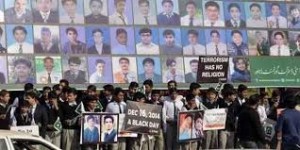
APS anniversary (Credit: newsonetv)
APS anniversary
(Credit: newsonetv)

LAHORE, Pakistan — A FEW days after the Pakistani Taliban gunned down 14-year-old Muhammad Shaheer Khan, along with at least 144 others, at the Army Public School in Peshawar last year, his mother received the black gloves he had worn to school that day.

“It was cold,” she told me, about the last morning she had seen him.

It was cold, too, on the night we met, earlier this week. We were sitting on the roof of the home of a couple, Mr. and Mrs. Aurangzeb, whose son was also massacred.

Mr. Aurangzeb has created an open-air room on his rooftop that functions as a shrine to his son and a gathering place for other mourning parents, who meet there twice a week. A poster of the photos of the murdered, mostly schoolchildren, runs the length of one wall. Green banners inscribed with Quranic verses hang on another.

It was two days before Dec. 16, the anniversary of the massacre, and six couples — bundled in overcoats, woolen scarves covering their mouths — had assembled.

When she received the black gloves, Muhammad Shaheer’s mother said, she asked her maid to wash them. “Suddenly, the maid cried, ‘There is blood in these!’ so I rushed to see. Blood was leaking from inside the gloves. I told the maid to get aside,” she said. “I will wash the gloves myself. This is my child’s blood, my own blood.” She touched her stomach. “You see, when my child was shot, he must have put his hand on his stomach to ease the pain.”

The other mothers mechanically wiped away tears.

“So I washed them myself, and the whole tub was filled with blood,” she said. “Then I took the bloodied water and watered my plants with it. It is my blood, so it will stay in my home.”

“But my tears have dried up,” her husband said. He is short and stocky, and introduced himself as a businessman. “Will you please let me talk for five minutes?” he asked, dragging a plastic chair closer to where I was sitting. “No one should interrupt me.”

“What has the government done for us? They have only given us medals. And these medals have gone black, just like their hearts. What operation is the Army doing? Which terrorists are they hanging? Why don’t they show us the photos of the dead terrorists? I would like the government to hang them in the square of this city, so I can go and spit on them. When my child and the children of these parents were killed, they took them to the hospital in Suzuki vans like cut-up pieces of meat.”

He pointed at our host. “Mr. Aurangzeb, here, his son called him from his cellphone after he was shot, to say: ‘Baba, bring me water. I am feeling thirsty.’ His father rushed to the school with two guns in his hands to kill the terrorists himself but he was not allowed in. Please excuse my language — I should not be using this word in front of women — but what have these bastards done for us other than give us rusting medals?”

In the years leading up to the massacre, a debate raged in Pakistan: Are the Taliban our enemies or are they “misguided” Muslims?

Increasingly, the latter narrative was winning out. Its greatest proponent was Imran Khan, the cricket star-turned-politician, who insisted that the government engage the Taliban in peace talks instead of hunting them down because they were “our people, Pakistanis.” The Taliban have historic grievances with the United States, the argument went, and Pakistan is caught in the middle because of its greed for American dollars. The Taliban don’t hate us — they just hate our government’s foreign policy.

The Taliban, energized by the government’s willful impotence, began to kill with impunity. In the last 10 years, more than 50,000 Pakistani civilians — innocent men, women and children — perished in the war on terror.

Then the Taliban attacked the Army Public School on Dec. 16, 2014. For years, Pakistan’s security establishment had resisted decisively moving against the Taliban; it had, in fact, nurtured some of these terrorists as assets in Afghanistan. But now the army was humiliated — an army school had been attacked, army children killed. Suddenly, the Taliban were not misguided Muslims. They were murderers. Politicians, who had previously described the terrorists in painstakingly diplomatic terms, began to curse them. The Pakistani mind-set, which had veered from lamentation (when the Taliban attacks began) to fear (when high-profile politicians began to be assassinated) to denial (when “talks” gained traction) had changed: The people were now angry.

Significantly, the establishment delicately altered the notion of martyrdom. The word for martyr in Urdu is “shaheed.” To achieve martyrdom — or shahaadat — is to be elevated to the highest ranks in heaven for a patriotic sacrifice made on earth. The word had been reserved for Pakistani soldiers killed in war. Now schoolchildren and teachers who had been killed as they sat peacefully in an auditorium were all shaheed, because the Army said so. The message was this: Our children did not die in vain; they are the reason we have gone after the people’s enemy.

Today, a year has passed. The Army Public School has undergone intensive renovation. Brass plaques inscribed with buoyant religious verses adorn the grounds. New vigor has been applied to the operation against the Pakistani Taliban in the mountains of Waziristan. The names of dead terrorists routinely appear as front-page news.

But on the Aurangzebs’ rooftop, the posters of dead children flutter in the wind. The parents, who still feel that far too little has been done, cling to their memories. “My son used to bathe so well, so well,” says Muhammad Shaheer’s mother, “that when he would come out of the shower, shining white, we would say, ‘Look, it’s Katrina Kaif!’ ” — a Bollywood actress.

Another mother looks me in the eye. “There is one thing — one word — that has given me support in this difficult time. That word is ‘shaheed.’ I don’t know how I would have survived if this word did not exist.”


How Balochistan became a part of Pakistan – a historical perspective

Balochistan consists of the south west of Pakistan. In the west it borders with Afghanistan and Iran and in the south it has the Arabian Sea. It accounts for nearly half the land mass of Pakistan and only 3.6% of its total population. The province is immensely rich in natural resources, including oil, gas, copper and gold. Despite these huge deposits of mineral wealth, the area is one of the poorest regions of Pakistan. A vast majority of its population lives in deplorable housing conditions where they don’t have access to electricity or clean drinking water.

Before the partition of India and Pakistan, Balochistan consisted of four princely states under the British Raj. These were Kalat, Lasbela, Kharan and Makran. Two of these provinces, Lasbela and Kharan, were fiduciary states placed under Khan of Kalat’s rule by the British, as was Makran which was a district of Kalat. Three months before the formation of Pakistan, Muhammed Ali Jinnah had negotiated the freedom of Baluchistan under Kalat from the British. Discussions were made about Kalat’s relationship with Pakistan as it was formed. This ensued a series of meetings between the Viceroy, as the Crown’s Representative, Jinnah and the Khan of Kalat. This resulted in a communique on August 11, 1947, which stated that:

a. The Government of Pakistan recognizes Kalat as an independent sovereign state in treaty relations with the British Government with a status different from that of Indian States.
b. Legal opinion will be sought as to whether or not agreements of leases will be inherited by the Pakistan Government.
c. Meanwhile, a Standstill Agreement has been made between Pakistan and Kalat.
d. Discussions will take place between Pakistan and Kalat at Karachi at an early date with a view to reaching decisions on Defence, External Affairs and Communications.

Referring to a telegram of October 17, 1947 from Grafftey-Smith, the Political Department, in a note on Pakistan-Kalat negotiations, says that Jinnah had second thoughts regarding the recognition of Kalat as an independent sovereign state, and was now desirous of obtaining its accession in the same form as was accepted by other rulers who joined Pakistan. The same note mentioned that an interesting situation is developing as Pakistan might accept the accession of Kalat’s two feudatories, Lasbela and Kharan.

By October 1947, Quaid-i-Azam Muhammad Ali Jinnah had a change of heart on the recognition of Kalat as an “Independent and a Sovereign State”, and wanted the Khan to sign the same form of instrument of accession as the other states which had joined Pakistan. The Khan was unwilling to abandon the nominally achieved independent status but ready to concede on defence, foreign affairs and communications. However, he was unwilling to sign either a treaty or an Instrument, until and unless he had got a satisfactory agreement on the leased areas. Fears were also being voiced that officials of the Government of Pakistan might start dealing with the two feudatories of Las Bela and Kharan, and accept their de facto accession.

By February 1948, the discussions between Kalat and the Government of Pakistan were coming to a head. The Quaid wrote to the Khan of Kalat: “I advise you to join Pakistan without further delay…and let me have your final reply which you promised to do after your stay with me in Karachi when we fully discussed the whole question in all its aspects.” On February 15, 1948, Jinnah visited Sibi, Baluchistan and addressed a Royal Durbar, where he announced that until the Pakistan Constitution is finally written in about two years’ time, he would govern the province with the help of an advisory council that he would nominate. However, the main reason for Jinnah’s visit was to persuade the Khan of Kalat to accede to Pakistan. As it transpired, the Khan failed to turn up for the final meeting with him, pleading illness. In his letter to Jinnah, he said that he had summoned both Houses of the Parliament, Dar-ul-Umara and Dar-ul-Awam, for their opinion about the future relations with the Dominion of Pakistan, and he would inform him about their opinion by the end of the month.

When the Dar-ul-Awam of Kalat met on February 21, 1948, it decided not to accede, but to negotiate a treaty to determine Kalat’s future relations with Pakistan. On March 9, 1948 the Khan received communication from JInnah announcing that he had decided not to deal personally with the Kalat state negotiations, which would henceforth be dealt with by the Pakistan Government. So far there had not been any formal negotiations but only an informal request made by Jinnah to the Khan at Sibi.

The US Ambassador to Pakistan in his dispatch home on March 23, 1948 informed that on March 18, “Kharan, Lasbela and Mekran, feudatory states of Kalat” had acceded to Pakistan. The Khan of Kalat objected to their accession, arguing that it was a violation of Kalat’s Standstill Agreement with Pakistan. He also said that while Kharan and Lasbela were its feudatories, Mekran was a district of Kalat. The British Government had placed the control of the foreign policy of the two feudatories under Kalat in July 1947, prior to partition.

On March 26, 1948, the Pakistan Army was ordered to move into the Baloch coastal region of Pasni, Jiwani and Turbat. This was the first act of aggression prior to the march on Kalat by a Pakistani military detachment on April 1, 1948. Kalat capitulated on March 27 after the army moved into the coastal region and it was announced in Karachi that the Khan of Kalat has agreed to merge his state with Pakistan. Jinnah accepted this accession under the gun. It should be noted that the Balochistan Assembly had already rejected any suggestion of forfeiting the independence of Balochistan on any pretext. So even the signature of the Khan of Kalat taken under the barrel of the gun, was not viable, because the parliament had rejected the accession and the accession was never mandated by the British Empire either, who had given Balochistan under Kalat independence before India. The sovereign Baloch state after British withdrawal from India lasted only 227 days. During this time Baluchistan had a flag flying in its embassy in Karachi where its ambassador to Pakistan lived.

To say that the Baloch have been ill-treated by all governments and military establishments since their land was illegally and forcefully taken over would be an understatement. As a result there have been continuous insurgencies, the largest of which was started in 2006 after the killing of Sardar Akber Bugti and 26 of his tribesmen by the Pakistan Army.

A 2006 report by the Human Rights Commission of Pakistan (HRCP) documented arbitrary arrests and detentions, torture, extra judicial and summary executions, disappearances and the use of excessive and indiscriminate violence by the Pakistan police, military, security agencies and intelligence forces. These figures are corroborated by Amnesty International. Kachkol Ali Baloch who is the former leader of Opposition in the Balochistan Assembly, alleged that about 4,000 people have been either missing or are detained without trial. The missing persons included around 1,000 students and political activists.  Lately his own son was kidnapped and was finally released after being held captive for 14 months.

Sardar Akhter Mengal, leader of the Baloch Nationalist Party (BNP) was one of the people arrested in 2006 on framed terrorism charges. The reality was he was planning a long march against the then President of Pakistan General Pervez Musharraf. He was later released in 2008 and all cases against him were dropped. The current Chief Minister of Balochistan, Dr. Abdul Malik Baloch, recently spoke at a seminar held in Punjab called ‘Stability in Balochistan – Challenges and possibilities”. He clearly stated that if the Baloch people are not given a right to the resources of their province, we would be looking at yet another insurgency and no one will be able to control it.

The true history of Balochistan is never shared or talked about among the general public of Pakistan. Our textbooks and other publications narrate a rhetoric which is far from the truth, and which has made the general public believe in a lie. It is the responsibility of the intellectuals, the teachers and the professors to learn and reveal the real facts according to non-tempered historical documents.

Pakistani terrorist killed in staged shootout, say police sources

LEJ Founder (Credit: tribune.com.pk)
LEJ Founder
(Credit: tribune.com.pk)

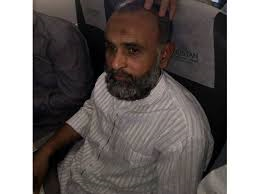
Islamabad, Nov 26 – A founder of a Pakistani terror group has been shot dead in the middle of Lahore, in an incident that senior police sources privately admitted was a killing staged by the authorities.

Haroon Bhatti, who was extradited from Dubai in September, was killed while in police custody, along with three other members of Lashkar-e-Jhangvi (LeJ). LeJ has a track record of attacks on Pakistan’s Shia minority, and intelligence officials feared it could join forces with Islamic State.

Lahore police said the men were “hardcore terrorists” involved in dozens of sectarian killings as well as the kidnapping in 2011 of Warren Weinstein, a US aid worker who was accidentally killed in a US drone strike this year.

In the official version of events, Bhatti led police to an abandoned plastic-bag factory where LeJ militants were hiding. The militants opened fire at about 12.30am, leaving Bhatti and three others dead but not injuring any police.

Residents in the Badami Bagh area said police cordoned off the small factory building during the midnight raid and that gunfire could be heard for about an hour.

Police photos of the scene showed the men lying dead in a simple concrete building, some with weapons nearby. The hands of Bhatti’s body remained bound with handcuffs. The factory’s bullet-riddled gate suggested all the gunfire had been directed into the building.

Speaking privately, three police officials told the Guardian that the “encounter” was deliberately staged to get rid of militants that Pakistan’s enfeebled judicial system would never have prosecuted.

“This had to be done to maintain peace in the province,” said a Lahore-based officer. “No one would have given evidence against them because witnesses would be brutally targeted. You can’t allow terrorists to carry on their attacks just because you don’t have any proof against them.”

So-called police “encounters” are common practice in Pakistan, and Wednesday’s incident mirrors the death in July of LeJ’s former leader Malik Ishaq and 13 of his followers in an isolated area near the town of Muzaffargarh. Ishaq was killed in a gun battle that supposedly erupted while police were taking him to identify an arms cache.


The extreme measures taken against LeJ underline a profound change of attitude on the part of the Pakistani state towards some of the country’s militant groups. In the past Ishaq had been able to act with near impunity because violent Islamist groups such as LeJ were part of the wider network of jihadi groups encouraged to fight in Afghanistan in the 1980s. In the last 18 months, however, the state has set out to crush those groups that have turned their guns on domestic targets, including religious minorities.

Khaled Ahmed, a longstanding critic of the security establishment’s use of jihadi groups, said the killings in Lahore were a significant development. “A decision has been made by the army to act against these elements who have been always attached to the army in the past,” he said, crediting the policy change to Raheel Sharif, the general who took command of Pakistan’s all-powerful army in 2013. “I think this general is all for shutting shop on these non-state actors.”

In July intelligence chiefs warned the government that LeJ was poised for a potential merger with Isis, which has not yet been able to develop a firm support base in Pakistan.

Analysts say Pakistan’s civilian government backs the tough stance against LeJ despite fears in the past of provoking an organisation with a powerful base in Punjab, the province from where the ruling Pakistan Muslim League draws most of its support.

A leading figure in the party, the Punjab home minister Shuja Khanzada, was killed in a bomb attack in April, widely seen as a revenge for the killing of Ishaq.


A Murderer — and Also a Victim of Place

Qadri supporters (Credit: pakistantoday.com)
Qadri supporters
(Credit: pakistantoday.com)

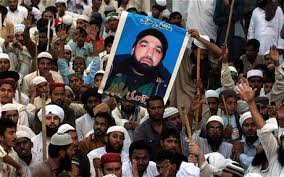
Last month I read for the first time my father’s killer’s version of what happened on the afternoon of Jan. 4, 2011. My father, Salman Taseer, was the governor of Punjab, in Pakistan, when he was shot dead by his own bodyguard in Islamabad. He was at the time defending a Christian woman accused of blasphemy.

The laws that condemned her had been instituted in the 1980s by a military dictator. Those were the years when the Saudis, the Pakistanis and — it must be said — the Americans, believing no evil to be greater than that of Communism, flirted with jihad in Afghanistan. All variety of strange fruit, including the Taliban and Al Qaeda, have come from that time.

My father’s murderer — 26 when he killed my father — is from a later, hardier crop. It may be said that he came to fruition around the same time that the Islamic State first sent its men to Syria. It is instructive to hear him speak. He is a living example of how faith can become an expression of a society’s deepest cultural tensions. Here is Malik Mumtaz Qadri:

On the faithful day, I being member of Elite Force I was deployed as one of the member of Escort Guard of Salman Taseer, the Governor Punjab. In Koh-i-Sar Market, the Governor with another after having lunch in a restaurant walked to his vehicle. In adjoining mosque I went for urinating in the washroom and for making ablution. When I came out with my gun, I came across Salman Taseer. Then I had the occasion to address him, “your honor being the Governor had remarked about blasphemy law as black law, if so it was unbecoming of you.” Upon this he suddenly shouted and said, “Not only that it is black law, but also it is my shit.” Being a Muslim I lost control and under grave and suddenly provocation, I pressed the trigger and he lay dead in front of me. I have no repentance and I did it for “Tahafuz-i- Namoos-i-Rasool” Salman offered me grave and sudden provocation. I was justified to kill him kindly see my accompanying written statement U/s 265(F)(5) of Cr. P. C.”

To read this description, translated into tortured English, and complete with a certain quality of detail, the visit to the mosque, the urinating, the prayer — the little things one does before committing an act of murder! — was to feel all the revulsion and pathos one must feel upon hearing of the crimes of a child soldier.

The judgment was meant to be happy news; the Supreme Court of Pakistan had upheld the death sentence handed down to Mr. Qadri. And yet how happy could one really feel? A young man from a poor background, who was not a criminal, had, under the influence of a bad ideology, committed a terrible crime. It was hard not to see Mr. Qadri as a victim of place. He would have been exposed on a daily basis to the hysteria whipped up on Pakistan’s television channels over my father’s description of the blasphemy law as a black law. We know that he went to nocturnal religious gatherings where he would sing hymns in praise of the Prophet Muhammad. There again, clerics inflamed with religious passion would remind Mr. Qadri of the apostasy of my father, his godlessness, the injury he had done to the revered figure of the prophet. They also actively sought volunteers to kill my father.

Mr. Qadri was surrounded by people who believed that my father’s crimes were punishable by death, and that it was incumbent upon the best Muslims to avenge them. In this parallel universe, Mr. Qadri was not just acting bravely; he was acting honorably.

Nor could the court root out the source of the evil that had motivated Mr. Qadri. In fact, Mr. Qadri’s defense sought recourse in that very idea that had led him to murder. It sought to establish the conditions under which it would be just for Mr. Qadri to kill my father. “Personal life of Salman Taseer,” the defense stated, “shows that right from early times he proved himself as an infidel … His lifestyle, faith and living with a lady of non-Muslim faith” — my mother! — “reflecting his act of living in constant state of Zinna under the pretext of marriage (not permissible in Islam) speak volume of his character and associated matters.”

The court at best could stop Mr. Qadri from playing judge and executioner; but it could not throw out the basis for his argument; it could not say that the idea of apostasy (irtad) itself was an abomination in a modern society. For were that so, there would not have been a woman rotting in jail on charges of blasphemy in the first place.

Mr. Qadri is a hero in Pakistan. There is at least one mosque named after him, so popular it’s due to double in size; people come with their children to see him in jail, and seek his blessings; he releases CDs of himself singing those hauntingly beautiful hymns in praise of the prophet. He is considered a religious hero, a mujahid.

But he is really a class hero. In societies likes ours, societies with colonial histories, religion provides the front; but what is actually going on is class warfare by other means. When Mr. Qadri’s defense gestures to my father’s “lifestyle … character and associated matters,” what they are really saying, in thinly coded language, is that he was liberal, educated, Westernized; privileged, in a word. The real danger, of course, is to the liberal state, and its values, which also come to be seen as nothing but the affectations of a godless and deracinated class.

Pakistan, by letting religion enter its bone marrow, made itself especially vulnerable; but the danger itself, of faith’s providing extra-legal legitimacy to those waging culture wars, is as real in Rowan County, Ky., as it is in Pakistan’s neighbor, India. In fact, even as all this was happening in Pakistan, the main organ of the Hindu nationalist group the R.S.S. ran a cover story, using a Vedic injunction against cow slaughter to justify the lynching of a man. It said, “The Vedas order killing of anyone who slaughters the cow. Cow slaughter is a big issue for the Hindu community. For many of us it’s a question of life and death.”

Perhaps; but for the rest of us the real question of life and death is how to defend the liberal state against culture wars that find their sanction in faith. It is no accident that it is among the least educated, most backward sections of our society that God finds his most committed soldiers. And if there is anything to be learned from that flirtation with jihad in the 1980s, it is that the only thing scarier than Marx is God fertilized with Marx.

Khanani’s arrest by US shocks money-changers

KARACHI, Nov 15: The news about the arrest of Altaf Khanani, a well-known money-changer, by US authorities has sent shockwaves among exchange companies operating in Pakistan. They fear more arrests as more and more transactions come under scrutiny across the world.

The US authorities revealed on Friday that they had arrested Altaf Khanani in September and accused his firm, Khanani Money Laundering Organisation (MLO), of laundering illicit funds for organised crime groups, drug trafficking organisations and designated terrorist groups throughout the world.

While most of the money-changers avoided discussing the issue of Altaf’s arrest, they accepted that the incident may raise pressure on them. They also expect more names to appear in the case since the man has deep connections in Pakistan.

Altaf, a Karachiite by birth, was a partner of Kalia group, one of the biggest money-changers working under the name of Khanani and Kalia. The exchange company was banned about five years ago and their offices were sealed by the FIA.

Four of their employees were jailed, but the case could not be proved against them in court. They were released, but the State Bank did not restore their licence because they were also wanted in money laundering cases in a number of countries.

The US Office of Foreign Assets Control (OFAC) on Friday designated Dubai-based money services business Al Zarooni Exchange for being owned directly or indirectly by the Khanani MLO, and for materially assisting, sponsoring, or providing financial support to the Khanani MLO.

Their properties in which the Khanani MLO or Al Zarooni Exchange has an interest, were blocked and U.S. persons were prohibited from engaging in transactions with them.

A money changer, who wished not to be identified, said Haji Haroon, another money changer, has been picked up by security agencies in connection with money laundering.

“For the last four months he has been in custody of the agency and has reportedly revealed 82 names of money changers, businessmen and politicians involved in transfer of illegal money from Pakistan,” said the money changer.

The Forex Association of Pakistan (FAP) did not betray any alarm over the arrest, maintaining that money changers in Pakistan had no links with any illicit business.

“I believe that exchange companies operating in Pakistan are not involved in this kind terrorist funding or money laundering. I don’t feel I have to worry,” said Malik Bostan, president FAP.

He said it is impossible to completely eradicate the Hundi system. It has been working world over and illegal money is transferred through these illegal channels.

Flow of illegal money is believed to be high from Pakistan particularly to Dubai, two months back Pakistan was placed among top three investors in Dubai property.

Money changers were reluctant to name names but said Khanani’s old partners and their business links in Pakistan could see trouble.

The Secretary General of Exchange Companies Association of Pakistan Zafar Paracha said there are some popular ways to send out illegal money from Pakistan: through Hundi; carrying cash on person, in form of gold and diamonds.

The transfer of wealth through diamonds has gained popularity as few months back its demand escalated without an obvious reason. Millions of dollars can be transferred through very small pack of diamond.

Crime Down in Karachi, Paramilitary in Pakistan Shifts Focus

Rangers in Karachi (Credit: jasarat.org)
Rangers in Karachi
(Credit: jasarat.org)

KARACHI, Nov 7 — Paramilitary troops have become ubiquitous around this sprawling Pakistani port city. They watch over police officers at traffic circles, their convoys patrol thoroughfares, their raids drive daily headlines.

After years of crime and militancy that had made Karachi a byword for violence, an extended operation by the paramilitary force — the Sindh Rangers, who are ultimately answerable to the powerful Pakistani military command — has been working. Officials and residents report that crime is notably down across the city.

But in the name of security, the force in recent months has also begun upending the city’s political order. The crackdown has expanded to target two powerful political parties that have long been at odds with the military establishment. And it has left a broad trail of human rights violations — including accusations of extrajudicial killings, in which officers shoot suspects after taking them into unlawful detention, according to rights advocates and members of those parties.

The crackdown, which began two years ago, was initially limited to the slums and outskirts of the city, where Taliban militants and gangsters wielded influence. But this year, the military ordered that the dragnet be thrown wider, especially targeting the Muttahida Qaumi Movement, or M.Q.M. The political party has controlled the city for decades through the powerful combination of a large ethnic support base, political acumen and armed gangs.

And in August, the Sindh Rangers arrested and brought charges of financing terrorism against Dr. Asim Hussain, a close aide to former President Asif Ali Zardari, who heads the Pakistan Peoples Party, or P.P.P. Several top leaders of the party, which in addition to its national profile controls the government of surrounding Sindh Province, have left the country, fearing arrest.

“We have dismantled the network of Taliban and criminal gangs of Lyari,” said one senior paramilitary security official, who spoke on the condition of anonymity as he was not authorized to speak to the news media. (Lyari is the name of a poor Karachi neighborhood infamous for gang wars.) “Now, it is the turn of militant wings of political parties and those who provided finances to armed groups.”

The leaders of both the parties say they are being targeted for political reasons and accuse the Rangers, and their military masters, of overstepping their mandate and meddling in civilian politics. Interviews with the police and paramilitary officials and political leaders reveal that even among those who support the military, there is a growing sense that the country’s generals have made a concerted decision to wrest Karachi from the M.Q.M.’s control.

The intervention comes as the Pakistani military — and particularly its popular top commander, Gen. Raheel Sharif — has been ascendant in the nation’s affairs over the past year, sidelining the elected government on the most critical points of foreign policy and security questions.

In Karachi, the military’s main publicity tack in justifying its crackdown on the M.Q.M. has been to challenge the conventional wisdom about the party’s methods. Rather than treating it as a political party that employs gang violence, as most analysts describe it, the military is in effect categorizing it as a militant group with a political wing.

“The party has a strong and well-organized militant group who has been involved in every sort of terrorism,” said one intelligence official, who spoke on the condition of anonymity to discuss a continuing operation. “Our main target is the M.Q.M.’s militant wing, not its political wing.”

The Rangers have staged raid after raid against the party’s interests over the past few months, including arresting senior party officials at Nine Zero, the nickname of the party’s headquarters in Karachi, long seen as above any police intervention.

Other kinds of pressure have been brought to bear as well.

Some in the local media sector say that Karachi news channels have been warned by the authorities not to cover the live speeches of Altaf Hussain, the leader of M.Q.M., who lives in London. He and his inner circle have also been the focus of a corruption and murder investigation by Scotland Yard; he is free on bail after being arrested in June.

Beyond that, there has been a rash of news reports linking the party to interests within India, adding the suggestion of treason to the other accusations against the party. The drumbeat has grown so intense that in late September, some M.Q.M. party leaders publicly urged clemency from the military and sought to dissociate the party from allegations of Indian ties.

“The M.Q.M. is a patriotic political party, and it will continue to be loyal to Pakistan without any condition,” the party said in a statement.

One result of the campaign has been a visible decline in the party’s ability to command loyalty on the street. It has long held the trump card of being able to shut down the city with protests. But on Sept. 12, a call to stage huge protests over the alleged extrajudicial killings of its workers by the Rangers failed to have much effect.

“Now, the M.Q.M. cannot close the city,” said one gas station manager. “It seems the armed workers have gone underground due to the ongoing operation.”

The M.Q.M. said that since the start of the Rangers crackdown, at least 54 of its workers have been killed in extrajudicial killings and the whereabouts of 231 activists are not known. The police and officials with the Rangers have denied those accusations.

In one case, a 40-year-old M.Q.M. activist and city employee named Sanaullah was arrested by law enforcement agencies on March 31 last year. His body was found the next day in a nearby town, and his widow, Nida Fatima, is convinced that he was summarily killed by the authorities. “If my husband was involved in any crime, he should’ve been presented in front of the court,” she said in an interview.

Although overall killings have gone down significantly in Karachi, the Human Rights Commission of Pakistan, an independent rights monitoring group, says there has been a large increase in the number of killings by the police and paramilitary force — and that not all can be explained away as shootouts with determined militants. The group says that at least 430 people were killed in shootouts with the law enforcement agencies in the first nine months of 2015.

Asad Iqbal Butt, an official with the human rights group, said that given the vast increase in detention and investigation powers given to the security agencies by recent legal changes, the killings are even more inexplicable. “After being empowered to keep a suspect in custody for 90 days for interrogation, there is no excuse for such killings,” Mr. Butt said.

Several law enforcement officials, however, insist that the majority of such so-called encounter killings have been with the Taliban and other militant or criminal syndicates that have no compunction against shooting at the police or the Rangers.

“We are fighting with well-organized militant groups that have killed more than 65 law enforcers only this year in ongoing operations,” one senior police official said.

Even as the party has come under immense pressure, political analysts say any talk of the M.Q.M.’s total disintegration is premature. That is in part because the party still maintains a vast support base among Karachi’s large ethnic Mohajir minority, which has not shown any signs of mass defection to any other party despite the recent upheaval.

Some analysts believe the politician Imran Khan and his party, Pakistan Tehreek-e-Insaf, have the most potential of any group to cut into the M.Q.M.’s influence in Karachi, especially given the widespread image of the party as being acceptable to the military.

But Talat Aslam, a senior editor at The News International in Karachi, said that Mr. Khan’s party, known as P.T.I., had not yet had much electoral success in the city and that at times it had misplayed its hand here.

“Very often, the P.T.I. gives the impression of being a force of outsiders that could arrive out of the blue to ‘liberate’ the captive and enslaved Mohajirs from the M.Q.M., which rules over them by force alone — a description that does not always go down well with the electorate,” Mr. Aslam said.

Political observers say the most likely consequence of the continuing paramilitary crackdown will be that no single political party will now be able to control the city. But for some here, particularly within the business sector, the improvement in overall violence has been worth the political upheaval.

“We do not care about the politicians,” said Atiq Mir, a leader of the local merchants’ community. “Peace is returning to Karachi because of the steps taken by the Rangers.”

Salman Masood contributed reporting from Islamabad

Musharraf challenges Mark Siegel’s charges

Mark Siegel (Credit: tribune.com.pk)
Mark Siegel
(Credit: tribune.com.pk)
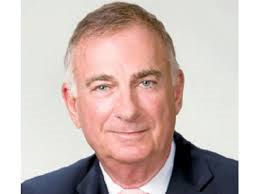
RAWALPINDI, Nov 5: Former president General (retd) Pervez Musharraf has challenged the US lobbyist Mark Siegel’s allegations against him. Musharraf through his lawyer filed a petition before the Anti-Terrorist Court (ATC), Rawalpindi Judge, Rai Muhammad Ayub Marth, here on Wednesday.

The Anti-Terrorist Court (ATC), Rawalpindi, accepted the petition of Musharraf for hearing and deferred Siegel’s cross-examination via video link which was scheduled at 7:30pm here at commissioner’s office on Wednesday. Siegel had claimed that Musharraf had threatened the late Benazir Bhutto in a phone call made to her while she was planning to return to the country after an eight-year self-imposed exile.

In a petition filed by Barrister Farogh Naseem, Musharraf asked the Anti-Terrorist Court to declare Siegel’s testimony unlawful. He said that the testimony was recorded in violation of the Code of Criminal Procedure (CrPC) as no judicial officer was presented while Siegel testified.

He also objected to Farooq H. Naek sitting next to Siegel as his advocate while he testified. The testimony lacked transparency and did not meet the requirements of the CrPC, the petitioner further said.

After accepting the petition for hearing, the court deferred Siegel’s cross-examination by Musharraf’s counsel via video link that was scheduled for 7:30pm on Wednesday. The court also issued a notice to the Federal Investigation Agency (FIA) prosecutor and adjourned the hearing till Nov 11, 2015.

On the other hand, Mark Siegel along with his lawyer Farooq H Naik was present here in the Pakistan Mission in Washington for cross-examination in Benazir murder case via video link on Wednesday.

On October 1, Siegel had recorded his statement before the ATC, Rawalpindi, where he had connected Gen Musharraf with late Benazir Bhutto’s murder. He accused him of deliberately depriving Benazir Bhutto of the security detail, despite imminent threats to her life.

He also claimed that Gen Musharraf rejected the Pakistan People’s Party (PPP) request to bring foreign security personnel with Benazir Bhutto and the request for vehicles with tinted glasses.

Musharraf had earlier rejected Siegel’s allegations. “I strongly and unequivocally reject the claim of Mark Siegel, a close adviser, paid lobbyist and co-author of the last book of former prime minister Benazir Bhutto,” he said in a statement.

“I am shocked and amazed at Siegel’s assertion that I made a threatening phone call to Ms Bhutto. This claim is entirely false, fictitious and appears to be willfully fabricated.”

Mark Siegel is the fourth prosecution witness against Gen Musharraf. Two witnesses, former interior secretary Kamal Shah and the former National Crisis Management Cell director general did not support the prosecution’s case. The third witness former Intelligence Bureau Director General Ejaz Shah was dropped by the prosecution.

Powerful Gen Raheel Sharif Eclipses Pakistan’s Prime Minister

Gen Raheel Sharif (Credit: blogs.wsj.com)
Gen Raheel Sharif
(Credit: blogs.wsj.com)

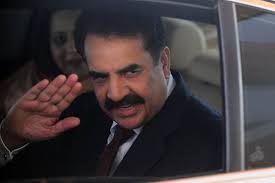
Washington/Islamabad Oct 22 —President Barack Obama met Pakistan’s prime minister, Nawaz Sharif, at the White House on Thursday. But next month, top American officials will hold talks with the man many people say calls the shots on the issues Washington cares most about: Gen. Raheel Sharif.

The chief of Pakistan’s army, Gen. Sharif has eclipsed the authority of the country’s elected leaders on critical security-policy matters, including the fight against Islamic extremists, the Afghan peace process and the country’s nuclear-weapons program, officials and analysts say.

“The civilian entities don’t have the ability to deliver on a few things at this point,” a senior U.S. official said. As for Gen. Sharif, the official said: “He can deliver.”

Gen. Sharif, who isn’t related to the prime minister, has turned himself into a cult hero by battling terrorism and restoring a measure of order in Pakistan’s biggest and most violent city, Karachi. That has bolstered the army’s standing and political power in a country where democracy has struggled to take firm root.

The improvement in Pakistan’s security situation is stark, though attacks continue —including a bombing Thursday in the southwest that killed 11. Still, the number of civilians and soldiers killed in terrorist attacks is on track to be lower this year than at any time since 2006, according to the South Asia Terrorism Portal, which tracks casualties. That has helped spark an economic rebound.

“There is God in the sky, and here on the ground there is Raheel Sharif,” said Muhammad Atiq Mir, chairman of All Karachi Tajir Ittehad, an association of small traders. Billboards in the city, paid for by local businesses, proclaim: “Thank you for saving Karachi, Raheel Sharif.”

The civilian government insists it is firmly in charge. “The prime minister is in the driving seat,” said Defense Minister Khawaja Muhammad Asif. He said it is Nawaz Sharif who is “managing the balance between institutions.”

Gen. Sharif, who is due to step down in November 2016, declined to comment.

“The army chief identifies security gaps and flags them to the government,” said a senior Pakistani army officer. “Like in any country, the military gives input.”

Pakistani politicians and political analysts, however, say the military’s sway has grown. Earlier this year, military courts were set up to try civilians for terrorism, while the military sits on new “apex committees” that oversee internal security issues across the country.

In June, Asif Zardari, who served as president of Pakistan from 2008 to 2013, gave a speech warning that the army was “stepping out of its domain.” Ayaz Amir, a former lawmaker in the prime minister’s Pakistan Muslim League-Nawaz party, said: “The army is setting the direction and taking the major decisions.”

On Tuesday, Pakistan’s leading English language newspaper, Dawn, published an editorial about the prime minister’s visit to Washington, saying: “Worryingly, for the civilian dispensation and the democratic project, Mr. Sharif has appeared an increasingly peripheral figure in shaping key national security and foreign policy issues.”

Current and former U.S. officials said they believe the prime minister had ceded control over certain security matters to Gen. Sharif, while the prime minister focused on the economy and other issues. They said the prime minister appeared comfortable with the division of labor and that Gen. Sharif had been “supportive” of civilian institutions.

In a recent meeting in Rawalpindi, Gen. Sharif told a visiting U.S. delegation how important it was to him “not to be seen as the main power” in Pakistan, according to a U.S. official who was present.

The prime minister’s visit comes as the administration moved to finalize a long-standing plan to sell up to eight additional F-16s to Pakistan, aimed at bolstering Pakistan’s counterterrorism campaign against militants..

Officials said Thursday’s meeting between Mr. Obama and the prime minister, in the absence of Gen. Sharif, was meant to highlight the importance the White House places on empowering Pakistan’s civilian government.

After the meeting, a joint statement said that the two leaders “reaffirmed that a mutual commitment to democracy is a key pillar of the U.S.-Pakistan partnership.” But given the country’s history and the role of the armed forces, U.S. officials said a transition to civilian leadership in all matters of state would take time.

In the meantime, “the U.S. can’t want something for the civilians more than they want it for themselves,” a senior administration official said ahead of the meeting.

A 59-year-old infantry officer and former commandant of Pakistan’s military academy, Gen. Sharif has won widespread approval for moving authoritatively where previous Pakistani leaders, military and civilian, have dithered.

The extent of the general’s popularity in Pakistan has prompted intense speculation that his term as army chief could be extended.

Last year, he opened a new front in the fight against extremists with an offensive in North Waziristan, a region along the Afghan border that was a haven for Pakistani Taliban, Afghan insurgents and al Qaeda—a move long advocated by the U.S. and initially opposed by the prime minister.

Army-led forces have also led a bloody fight against jihadists and criminal gangs in the country’s commercial capital, Karachi. The campaign has won Gen. Sharif plaudits, despite its reliance on what human-rights groups say are hundreds of extrajudicial executions.

Gen. Sharif also has a high profile abroad. He met the British prime minister at his official Downing Street residence earlier this year. Last year in the U.S. he met Secretary of State John Kerry and other senior officials and was awarded the U.S. Legion of Merit for his contributions to “peace and security.”

When Afghan President Ashraf Ghani made his first visit to Pakistan after being elected last year, he drove straight from the airport to see Gen. Sharif at his headquarters in Rawalpindi—before going to nearby Islamabad to meet the civilian leadership.

Officials in Washington, Kabul and New Delhi, however, also accuse the defense establishment headed by Gen. Sharif of continuing what they say is Pakistan’s policy of giving haven to the Afghan Taliban and other militant groups, and using them as proxy warriors in Afghanistan and India.

The U.S. has warned Gen. Sharif that it will withhold $300 million in military aid if Pakistan doesn’t do more to curb the Haqqani network, an insurgent group allied with the Taliban that is responsible for a series of recent deadly attacks in Kabul.

The U.S. sees the Haqqanis as an arm of Pakistan’s military intelligence agency. A Haqqani was named as the new deputy chief of the Taliban at a meeting held in Pakistan earlier this year.

The Pakistan army maintains it is taking on all militants.

“We are against use of proxies and won’t allow it on our soil,” Gen. Sharif said this month in London, according to his spokesman.

President Obama said last week that the U.S. is keen for Pakistan to use its influence on the Afghan Taliban to advance peace talks between the militants and the Afghan government.

U.S. and Afghan officials say Gen. Sharif was the force behind a brief breakthrough in the Afghan peace process earlier this year, when a group of senior Taliban were brought to meet Afghan government representatives just outside Islamabad.

In the 90-minute White House meeting President Obama “highlighted the opportunity presented by Pakistan’s willingness to facilitate a reconciliation process that would help end insurgent violence in Afghanistan”, according to the joint statement.

The U.S. has also been engaging in exploratory talks with Pakistan about a possible deal to limit the country’s growing nuclear-weapons program, seen as especially risky because of the country’s history of political instability and jihadist attacks on military installations.

However, after the White House meeting a senior Pakistani official said that Mr. Sharif told the U.S. president that Pakistan would not give up its tactical nuclear weapons —a newly developed addition to the country’s arsenal that is a particular concern for the Wasington—as long as the threat of invasion from India remained.

When Prime Minister Sharif was elected in May 2013, many believed it was a time when civilians could assert themselves and that military leaders, then criticized for inaction against terrorists, would be pushed into the background. In a sign of his intention to run foreign and defense policies, Nawaz Sharif kept both those portfolios for himself after election; he is still has no foreign minister.

The prime minister started peace talks with insurgents in North Waziristan. He also made overtures to India in an effort to ease strained ties. And he moved forward with treason charges against Pervez Musharraf, an army coup leader who also served as president.

By mid-2014, however, the political ground was starting to shift, and the prime minister pushed the military hard on issues it saw as its domain. The prosecution of Mr. Musharraf was derailed after the military stood by its former leader. After an attack on Karachi’s airport, Gen. Sharif, who had promoted counterinsurgency doctrine when he was the army’s training head—focusing the army’s targets toward terrorists rather than its traditional enemy, India—launched military operations against militants in North Waziristan in June 2014.

Later that summer, Pakistani cricket player-turned-politician Imran Khan and his supporters started a sit-in protest against alleged vote-rigging in the election that propelled Mr. Sharif to office. The demonstrations paralyzed the capital, calling for the military to intervene and unseat Mr. Sharif. Some members of Mr. Sharif’s cabinet accused military intelligence agents of fomenting the protests, something the military and Mr. Khan’s party deny.

The army chief backed Prime Minister Sharif. But the price, some senior government officials say, was high: the prime minister agreed to relinquish some powers, letting the military take charge of defense and foreign policy.


MQM appeals to establishment for clemency

Altaf Hussain (Credit: article.wn.com)
Altaf Hussain
(Credit: article.wn.com)
KARACHI, Sept 20: The Muttahida Qaumi Movement (MQM) has appealed to the ‘establishment’ to forgo what it called the bitter past and grant it clemency like the general amnesty offered to the ‘angry Baloch’ people.

“Just as clemency is being announced for the estranged Baloch people, the establishment should also heal the wounds of Mohajirs by forgetting past bitterness,” the MQM coordination committee said in a statement issued on Sunday.

Referring to reports about certain workers who had gone to India over 20 years ago and who allegedly confessed to having been trained there, the MQM said that any worker who had gone to the neighbouring country for saving his life after the launching of the June 19, 1992, army operation “did so without informing the party”.

“The MQM has nothing to do with the training of the people who had gone to India.”

It said that the MQM was a patriotic political party and it would continue to be unconditionally loyal to Pakistan.

Party says ‘bitter past’ should be forgotten and wounds of Mohajirs should be healed

Explaining the reasons behind some of its workers deciding to go to India, the statement said that after the June 1992 operation against the MQM “thousands of workers were forced to go to different parts of the country for saving their lives”.

It said that some workers had also gone to the United States, Canada, United Kingdom, Germany, France, Australia, etc., where they sought asylum.

“Some went to India for saving their lives as they could not go to any other country. These MQM workers chose to go to India because they had family ties in India, and they thought that they would not face the hardship of homelessness and hunger.

“The workers who had gone to India for saving their lives did so without informing the MQM, and this cannot be called the policy of the MQM,” it said.

The MQM said it could not even think of any plan against the country.

The committee appealed to the establishment to review its policy on the basis of these facts and urged it to “stop isolating Mohajirs” from the mainstream.

About its appeal for general amnesty, the MQM said the establishment should heal the wounds of Mohajirs, forgetting the bitter past.

“Such a step would be in the interest of the nation and the country and the MQM will extend its fullest support to it,” the statement concluded.

Published in Dawn, September 21st, 2015