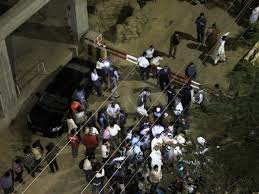
Gunmen Attack Offices of Pakistani Media Group in Karachi

Express Tribune office attacked (Credit: expresstribune.com)

ISLAMABAD, Dec 2 — Unidentified gunmen opened fire on the office of a leading news media group in Karachi on Monday evening, wounding a security guard and underscoring the threats journalists face in the country.

The motive of the attack, on the offices of the Express Media Group, remained unclear, and there was no immediate claim of responsibility.

Pakistan is one of the world’s most dangerous countries for journalists, who face frequent harassment and intimidation here from a variety of groups, including the Pakistani Taliban and other militants, state security forces and intelligence agencies, and local political and criminal groups. So far this year, at least five journalists have been killed. And 44 more have been killed over the past decade, according to the New York-based Committee to Protect Journalists.

The Express Media Group publishes an Urdu-language newspaper and an English daily, The Express Tribune, which is a partner publication of The International New York Times. The group also owns the Urdu television network Express News.

The number of attackers was not immediately clear, said Bilal Lakhani, the publisher of The Express Tribune. The gunmen opened fire on the building at 7:10 p.m. from an adjacent bridge. However, they did not try to approach the main entrance, located in a narrow, barricaded alley off the main road. Security guards on the rooftop of the building fired back, and the attackers fled, Mr. Lakhani said.

Though the Pakistani Taliban did not claim responsibility for the attack, some officials believe that recent threats suggested that they were probably behind the shooting.

Most recently, the Taliban criticized the news media for praising the Indian cricket star Sachin Tendulkar, who retired in November.

One employee of Express Media Group speculated that Monday’s attack might have been a reaction to a recent news article in The Express Tribune that said Taliban militants had been hiding in the Defense Housing Authority Phase II neighborhood, an upscale district of Karachi.

The newspaper’s office in the northwestern city of Peshawar had received threats after the killing of the Pakistani Taliban leader Hakimullah Mehsud by an American drone strike on Nov. 1, the employee said.

The attack on Monday was the second time the office had come under fire in recent months. In August, four unidentified gunmen opened fire at the office, wounding a security guard and a woman. Extortion — which is rampant in the city considered to be the country’s commercial and industrial hub — was thought to be the motive of that attack, according to police officials.

Sultan Ali Lakhani, the chief executive of Express Media Group, said that the company was taking the attacks very seriously, and that he planned to increase security at the main office.

Still, he said staff morale was “great” despite the two attacks in four months. “They are journalists,” he said. “They are used to such stuff.”
Taliban takes Revenge through Election of New Leader

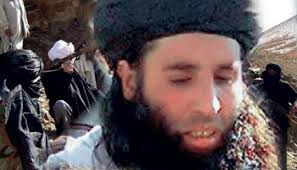
Mullah Fazlullah (Credit: thenewstribe.com)

The new head of the Pakistani Taliban, Mullah Fazlullah, has ruled out peace talks with the government, vowing revenge for his predecessor’s death.

A Taliban spokesman told the BBC the militants would instead target the military and the governing party.

Mullah Fazlullah was named the new leader six days after Hakimullah Mehsud was killed in a drone strike.

Mullah Fazlullah is a particularly ruthless commander whose men shot the schoolgirl activist Malala Yousafzai.

‘Just a trap’

Prime Minister Nawaz Sharif came to power in May pledging a negotiated settlement to the insurgency.

Mullah Fazlullah, believed to be in his mid to late 30s, led a brutal campaign in Swat between 2008 and 2009, enforcing hardline Islamic law that included burning schools, and public floggings and beheadings.

A military operation was launched to retake the area.

Mullah Fazlullah fled over the border into Afghanistan but Islamabad says he has continued to orchestrate attacks in Pakistan.

He was accused of being behind a roadside bomb in September that killed Maj Gen Sanaullah Niazi, the top commander in Swat, along with two other military personnel.

Mullah Fazlullah was known for his radio broadcasts calling for strict Islamic laws and earning him the nickname “Mullah Radio”.

In one undated video he pledges to do everything possible to introduce the laws, saying: “We will eliminate anything that will get in the way of achieving this goal: father or brother, soldier or police.”

The shooting of Malala Yousafzai in October 2012 sparked outrage in Pakistan and across the globe.

The teenager had spoken out against the Taliban’s restrictions on girls’ education.

She was airlifted to the UK for hospital treatment and now lives in Birmingham with her family.

This year Malala, now 16, addressed the UN General Assembly and won the European Union’s Sakharov human rights prize.

Prior to the latest Taliban announcement, the BBC’s M Ilyas Khan in Islamabad said that Mullah Fazlullah was not a member of the Mehsud clan and, if appointed, would face a challenge to control the Mehsud fighters, who make up the bulk of the Taliban’s manpower.

The TTP is a loose umbrella organisation of about 30 militant groups.

Khalid Haqqani has been named deputy leader of the TTP, but he is not thought to be linked to the Haqqani network that is fighting Nato-led troops in Afghanistan.

Stricken Taliban Leader’s Life style is Wake up Call

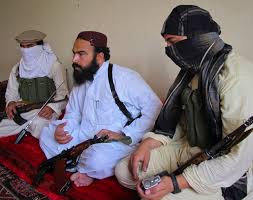
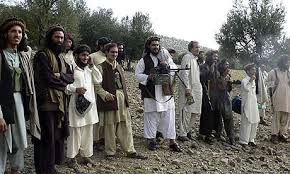
Hakeemullah & co (Credit: thegatewaypundit.com)
Hakeemullah & co
(Credit: thegatewaypundit.com)

MIRAMSHAH: With marble floors, lush green lawns and a towering minaret, the $120,000 farm where feared Pakistani Taliban leader Hakimullah Mehsud died in a US drone strike was no grubby mountain cave.

Mehsud spent his days skipping around Pakistan’s rugged tribal areas to avoid the attentions of US drones.

But his family, including two wives, had the use of an eight-roomed farmhouse set amid lawns and orchards growing apples, oranges, grapes and pomegranates.

As well as the single-storey house, the compound in Dandey Darpakhel village, five kilometres north of Miramshah, was adorned with a tall minaret, purely for decorative purposes.

Militant sources said the property in the North Waziristan tribal area was bought for Mehsud nearly a year ago for $120,000, a huge sum by Pakistani standards, by close aide Latif Mehsud, who was captured by the US in Afghanistan last month.

An AFP journalist visited the property several times when the previous owner, a wealthy landlord, lived there.

With the Pakistan army headquarters for restive North Waziristan just a kilometre away, locals thought of Mehsud’s compound as the “safest” place in a dangerous area.

Its proximity to a major military base recalls the hideout of Osama bin Laden in the town of Abbottabad, on the doorstep of Pakistan’s elite military academy.

“I saw a convoy of vehicles two or three times in this street but I never thought Hakimullah would have been living here. It was the safest place for us before this strike,” local shopkeeper Akhter Khan told AFP.

This illusion of safety was shattered on Friday when a US drone fired at least two missiles at Mehsud’s vehicle as it stood at the compound gate waiting to enter, killing the Pakistani Taliban chief and four cadres.

The area around Dandey Darpakhel is known as a hub for the Haqqani network, a militant faction blamed for some of the most high-profile attacks in Afghanistan in recent years.

Many left the area during the Taliban’s rule in Afghanistan, coming back after the US-led invasion following the 9/11 attacks.

Samiullah Wazir, a shopkeeper in the area, told AFP he would regularly see a convoy of four or five SUVs with blacked-out windows leave the compound early in the morning and return after sunset.

“We thought that somebody very important must be living in this house,”Wazir said.

“One day, I saw a man wearing a white shawl entering the house and I thought he looked like Hakimullah, but I thought ‘How can he live here because he could be easily hit by a drone strike?’” But Hakimullah it was and on Friday he returned to his compound for the final time.

“We were closing the shop when his vehicle came and was about to enter the house when a missile struck it,” Wazir said.

“Moments later, an army of Taliban came and they cordoned off the area.”

Stream of Reports Say Pakistani Taliban Leader Died in Drone Strike

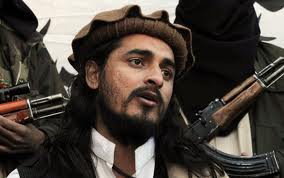
Hakeemullah Mehsud (Credit: telegraph.co.uk)

LONDON, Nov 1 — An American drone strike killed the leader of the Pakistani Taliban, Hakimullah Mehsud, on Friday, according to Pakistani intelligence officials and militant commanders in the tribal belt.

If confirmed, his death would be a major achievement for the covert C.I.A. program at a time when drones have come under renewed scrutiny over civilian casualties in both Pakistan and the United States.

While prior reports of Mr. Mehsud’s death have proved false, and the Pakistani Taliban offered no comment, there was a proliferation of accounts of his death on Friday from multiple sources, including the militants, within hours of the missile attack. Mr. Mehsud, a showy and ruthless militant leader whose group has been responsible for the death of thousands of civilians across Pakistan as well as many soldiers, had a $5 million United States government bounty on his head.

The strike occurred in Danday Darpakhel, a well-known Pakistani Taliban stronghold in the North Waziristan tribal agency, near the Afghan border.

Pakistani intelligence officials said that American drones fired at least four missiles toward a compound that had been constructed for Mr. Mehsud about a year ago, and which he has used intermittently since then.

A government official in Peshawar, citing intelligence reports, said five militant commanders had been killed in the attack, including Mr. Mehsud, his uncle and a bodyguard, and two wounded.

The strike killed Mr. Mehsud’s deputy, Abdullah Behar, who had just taken over from Latif Mahsud, a militant commander who was detained by American forces in Afghanistan last month, the official said.

“The chances of Hakimullah Mehsud being killed are pretty high,” said another Pakistani official, requesting he not be named. “Our reports said that he was there at the time of the drone strike.”

A local Taliban commander, speaking by phone and insisting on anonymity, said Mr. Mehsud had been killed. “Hakimullah has been martyred in the attack,” he said.

Haji Ghulam Jan Dawar, a resident of North Waziristan whose nephew fights with the Taliban, said he had learned that Mr. Mehsud was dead. “My nephew told me that Emir Sahib is no more,” said Mr. Dawar, employing an honorific to refer to Mr. Mehsud.

Mr. Mehsud’s death could also throw into disarray — or possibly render redundant — controversial plans by the Pakistani government to engage in peace talks with the Pakistani Taliban.

The Pakistani government did not immediately confirm the killing of Mr. Mehsud, and Chaudhry Nisar Ali Khan, the interior minister, was initially quoted as saying that the drone strike was aimed at sabotaging the peace talks.

A three-member delegation representing the Pakistani government is due to meet militant representatives in Peshawar and the town of Bannu, near the tribal belt, on Saturday.

Mr. Mehsud’s death would also represent payback, of sorts, for the C.I.A.: Mr. Mehsud orchestrated a major suicide bombing against a C.I.A. base in southern Afghanistan in 2009 that killed seven Americans and two other people.

The drone strike comes just over a week after Pakistan’s prime minister, Nawaz Sharif, met with President Obama in the White House. Mr. Sharif has repeatedly stated his opposition to drone attacks, which are a hot-button political issue in Pakistan.

“There is an across-the-board consensus in Pakistan that these drone strikes must end,” the Foreign Ministry statement said.

But steady media leaks and other reports in recent months have suggested that some senior Pakistani civilian and military leaders have quietly cooperated with the drone strikes, and even approved of some.

Still, after the strike on Friday, Pakistan’s Foreign Ministry issued a pro-forma condemnation, employing the usual language about the American action’s being a violation of Pakistan’s “sovereignty and territorial integrity.”

Reports of Mr. Mehsud’s death met an uneasy welcome across Pakistan.

Some feared a violent backlash led by militants carrying out suicide attacks across the country. Right-wing politicians described it as a setback for peace efforts.

Shireen Mazari, a leader of the Tehreek-e-Insaf party, blamed the United States for creating instability in Pakistan.

“Terrorism will increase and attacks will increase,” Ms. Mazari told the Express News television channel. “We should shoot the drones down.”

But others welcomed news of Mr. Meshud’s demise. Athar Abbas, a former army general and spokesman, said in a television interview that the United States may have “helped Pakistan, by eliminating a person who was damaging the state of Pakistan.”

Hours before the strike, three American congressmen and the American ambassador to Pakistan, Richard Olson, met with Sartaj Aziz, the prime minister’s adviser on national security and foreign affairs, in Islamabad.

In a statement, the Foreign Ministry said that Mr. Aziz had “expressed satisfaction at the upward trajectory in bilateral relations between Pakistan and the United States.”

Declan Walsh reported from London, Ishanullah Tipu Mehsud from Islamabad, and Ismail Khan from Peshawar, Pakistan. Salman Masood contributed reporting from Islamabad.


Media Watchdog Deplores Call to Attack Journalists

TTP (Credit: centralasiaonline.com)
Peshawar, Oct 22: Freedom Network expressed concern at circulation of an old Fatwa, or religious decree, attributed to Pakistani Taliban-linked clerics encouraging attacks on media for coverage of ongoing militancy in Pakistan.

“We are concerned at the circulation of the fatwa (edict) with pictures of Mr Hasan Nisar and Mr Hamid Mir, one of the country’s leading columnists and journalists, and urge the federal government of Prime Minister Nawaz Sharif to move against elements encouraging violence against media,” FN, the country’s first media watchdog organization monitoring press freedom violations and freedom of expression and online journalism, said in an alert on 22 October.

The circulation of the fatwa comes days after Federal Minister for Information and Broadcasting Pervez Rasheed committed the present government to supporting the UN Plan of Action on impunity of crimes against media in Pakistan.

A special publication by little-known ‘Jihad-e-Pakistan’ gives insight into the banned Tehreek-e-Taliban Pakistan (TTP)’s mindset about national and international media organizations and journalists working for them.

The decree, according to FN research, was issued last year when coverage of attack on Malala Yousafzai angered the TTP lobbing open threats against media organizations carrying the Malala with prominence. However, its circulation on social media has been alarming with particular reference to carrying pictures of the two senior journalists.

“It will have double-edge impact on followers of the TTP organization who may be tempted to physically assault the two journalists in particular and others in general,” FN underscored the danger to personal safety of the two and many other independent journalists due to the edict’s circulation purposely.

The Pakistani Taliban-linked religious scholars had issued the edict against the media for what they claimed journalists are “siding with secularism and the West” in the ongoing war on terror and militancy, referring to the “mujahideen” as terrorists and anti-peace, using the word of martyr for slain security forces and promoting vulgarity and obscenity among the Muslims.

Posted on a website of the Taliban militants, the decree has named certain Urdu and regional languages radio stations and called for actions against their reporters and other media persons.

The Urdu language ‘fatwa’, translated by senior journalist Tahir Khan, said that the media persons should first be given “a warning and pardoned if they stop ‘enmity with Islam’ and propaganda against Muslims.” But action should be taken in line with Jehad policy against those who continued their work.”

The decree, issued by “Shura Ulema-e-Mujahideen” of the TTP, said using the word of martyr for the slain security personnel was “part of the anti-Taliban propaganda.”

Although the TTP distanced itself from the edict but it has renewed old stance to take on such media who what the banned militant organization said was “spreading vulgarity.”

Speaking to The News newspaper, the TTP spokesman denied his organization had any connection with the fatwa. “No edict has been issued by TTP in this regard,” the spokesman, Shahidullah Shahid, told the newspaper from undisclosed location.

“The media sparks sentiments against the Muslims and the mujahideen and is showing anti-Taliban plays,” the edict said, adding media persons were using referring to the “mujahideen (a reference to the Taliban)” as “terrorist, miscreants, extremist and anti-peace” elements.

Islamabad-based senior journalists held the view that a third party might be using the fatwa to pressure independent journalists. “The circulation of this fatwa is purposely and the aim is to terrorize journalists to change current media narratives,” they confided to FN.

KP Law Minister Killed in Suicide Attack over Eid

Israrullah Gandapur (Credit: pakp.gov.pk)

PESHAWAR, Oct 16: At least eight people, including Khyber Pakhtunkhwa law minister Israrullah Gandapur, were killed Wednesday when a suicide bomber exploded outside his residence in Dera Ismail Khan, police said.

More than 30 people were wounded in the attack, including Gandapur’s elder brother, said Irfan Mahsud, the assistant commissioner in Dera Ismail Khan.

Deputy Superintendent of police, Jan Mohammad Khan, confirmed the minister’s death.

Provincial health minister Shaukat Yousafzai also confirmed Gandupar’s death. “I talked to the minister’s brother and he told me that Gandapur has been martyred,” he said.

According to eyewitnesses, the provincial law minister was exchanging Eid greetings with people at his residence in tehsil Kullachi, about 50 kilometres from Dera Ismail Khan, when the suicide bomber detonated his suicide vest.

“I saw so many dead people and injured people crying for help,” said eyewitness Haseeb Khan, whose new white holiday clothes were drenched in blood. “There were arms, legs and heads everywhere.”

It was not immediately clear who was responsible for the attack.

Gandapur was a member of the ruling party in Khyber Pakhtunkhwa province, the Pakistan Tehrik-i-Insaf (PTI), a party led by former cricketer Imran Khan which favours peace talks with the Pakistani Taliban.

He is the most senior member of the party to have been killed so far.

The Pakistani Taliban have said they are open to talks. But they also say they will not disarm, do not recognise the Pakistani constitution, and will not talk to the government until the army pulls back from their strongholds and all their prisoners are released.

Prime Minister Nawaz Sharif and President Mamnoon Hussain strongly condemned the incident.

“Pakhtunkhwa lost an astute parliamentarian, a decent Pashtun and a brave leader in the martyrdom of Israr Gandapur. May he rest in peace,” tweeted prominent politician Afrasiab Khattak.


Taliban Resurgence – The tail wags the dog

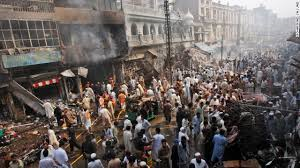
Terrorist attack in Qissa Khwani bazaar (Credit: cnn.com)
Terrorist attack in Qissa Khwani bazaar
(Credit: cnn.com)
Washington DC, Oct 3: Three consecutive terrorist attacks in Peshawar – which have killed and injured hundreds of innocent people – reflect a growing impatience of the Taliban for the “pre-selected” candidates of 2013 elections to deliver to their demands.

These terrorist attacks – waged by criminal elements in a growing array of Taliban factions – have come after a long period of inactivity. In the lull before the storm, political parties held an All Parties Conference in Islamabad to vote for talks with the TTP. Spear heading the APC were prime minister, Mian Nawaz Sharif and the king maker of the Khyber Pakhtunkhwa government, Imran Khan.

Here it is relevant to mention that just prior to this year’s elections, the Pakistan army blessed this set of politicians in their bid for power – with the end game of Afghanistan in mind.

But the army – which has since 9/11 supported the Afghan Taliban, while restraining the Pakistani Taliban – has been unable to stop the militants blow back. Instead, its strategy for a pro-Pashtun government in Afghanistan has had major consequences. As Pashtuns from both sides of the Durand line will testify, the Pak-Afghan border is a meaningless entity. A fierce Taliban resurgence in Afghanistan has emboldened their Taliban partners to attack military and state institutions in Pakistan.

In this complex scenario, the newly elected political parties like Pakistan Muslim League (Nawaz) and Pakistan Tehrik-i-Insaf – which were spared from attacks prior to the elections – are now boxed in between terrorist attacks by militants and the demand for military action against them.

The Taliban is not monolithic, but divided in a bewildering array of groups. Among those striking ferociously of late has been the faction led by Maulvi Fazlullah – who has been sheltering in Afghanistan since the military operation in Swat in 2009.

The Taliban have correctly identified the US and Pakistan military as responsible for drone strikes. However, any moral argument they had won in favor of ending the strikes.. or ending the military operation in FATA.. have been weakened by their killing of common people.

The KP government’s failure to condemn the perpetrators of civilian attacks has apparently emboldened terrorists. Adding fuel to fire, the Pakistan Tehrik-i-Insaf chief followed the massacre of Christians with the demand that the Taliban be allowed to open offices for negotiations.

Those who voted for “change,” – on the PTI’s call – have discovered that the brutal spilling of innocents blood, was not exactly the change they had in mind.

Indeed, if history is to serve as a rear view mirror, politicians need to heed that the worst terrorist attacks in Pakistan took place in 2008, after Musharraf and his coalition partners – the Mutehidda Majlis-i-Amal – concluded a series of peace accords with the Taliban. The accords were preceded by MMA-Taliban talks that looked the other way as the militants organized themselves.

In the present scenario, Taliban groups have unleashed terror against civilians even before talks have begun. Their modus operandi appears to be to keep spilling blood until the army withdraws from the tribal areas. The next step, as the Taliban declared in 2009 (prior to the Swat operation), would be to overthrow the constitution of Pakistan and avowedly implement Shariah (Islamic law). In practice, this means tribal law that ushers in pre-Islamic customary laws with a vengeance.

The TTP’s demands ought to give the army and politicians pause as to exactly who they may be negotiating with. The ruthless killing of civilians is hardly adding to the Taliban’s populist base. Perhaps overconfidence by militants that they have politicians in their pocket facilitates these rapid attacks. However, it is the politicians – and ultimately military response – that will determine the security and stability of Pakistan.

In the meantime, the PML (N) government has announced that it will first give peace a chance by holding talks with the Tehrik-i-Taliban Pakistan. At the same time, it is on record for saying that the violation of a cease-fire by the militants could result in a sustained military operation against them.

With tens of thousands already killed in Pakistan since 9/11, it is critical for the army to draw a workable strategy for the region. Given that US withdrawal from Afghanistan is in sight, Pakistan is throwing weight behind select Pushtun Taliban next door. What is important is that in pursuing the Great Game, it does not lose Pakistan.

Bloody Sunday: Hundred years of coexistence tears at Peshawar’s heart

Peshawar church massacre (Credit: lakewypilot.com)

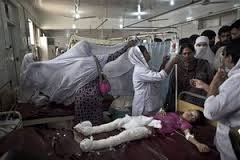
PESHAWAR: As bodies became unseemly piles in the morgue and victims offered up mangled injuries for attention, Lady Reading Hospital (LRH) was mercilessly transported back to the horrors of October 28, 2009 when a bomb exploded at Meena Bazaar.

“It is difficult to tell how many people have been killed or injured, they are just pouring in,” said LRH Chief Executive Officer Arshad Javaid initially. “This is the biggest trauma we have had to deal with since the 2009 attack, which killed 139 people.”

And no one was prepared.

The LRH chief confessed the hospital was running short of medicines, supplies, coffins and something he did not need to say out loud – space.

Pervez Masih, an eyewitness waiting to get head and chest injuries looked at, described how an ordinary weekend mass at the 130-year-old church turned into a bloody Sunday. Around 400 people, including the elderly, women and children, were at the church, he estimated. “What sounded like a minor blast occurred outside the church, but people rushed out to the main gate.” That is when the second suicide bomber, clad in a police uniform, ran at the crowd and blew himself up, said Pervez.

“We don’t understand what happened next,” he said, and he does not remember how he reached the hospital.

Principal of Geovernment High School No-4 Nothia William Ghulam and his son Neil William, a student of Khyber Medical College Peshawar, were not as fortunate as Pervez. They died in the blasts, but William Ghulam’s wife, daughter, brother Anwar and sister-in-law survived, however, not unscathed. Anwar and his wife were being treated for head, chest and hand injures at the LRH.

The aftermath of the twin suicide attack has resulted in at least 78 dead and more than 146 injured. By evening, Khyber Teaching Hospital had 25 patients – six women and three minors – and had sent 15 of their nurses to the LRH.

A jolt to the system

As the first closest point of response, the LRH took in the lion’s share of the casualties but Sunday meant lean staff; even the blood bank was shut. Doctors had to be called in; the hospital had to be woken up with a shock to its system.

The first response to any calamity or attack determines many eventualities. Most importantly, it controls the increase in fatalities and severity of injuries. This was near impossible in the attack at the church as ‘ambulances’ took the shape and form of anything with wheels and a working engine. No Rescue 1122, a few Edhi and mostly Al Khidmat ambulances were visible hurrying to the LRH. The latter eventually took bodies waiting to be buried to their homes.

Inside the hospital, while LRH doctors, nurses and staff were being called in, not much could be done about the shortage of space – the dead and the injured remained lying on the floor for nearly three to four hours.

Below ground, the LRH morgue has the official capacity to store 60 bodies. Without sufficient hands on deck, the deceased lay askew on blocks of ice. The hospital had only 52 coffins at a point when it had at least 70 bodies.

The last straw, the first brick

Above ground, the chaos only brewed chaos. As relatives collected inside the halls, there were not enough medical professionals to cater to everyone’s injuries and beds were in short supply. A majority of the injured seemed to be women and children. Distraught, with no place to even sit, loved ones raised a voice, chanting slogans against the absence of facilities and the Pakistan Tehreek-e-Insaf (PTI) government.

“Yeh zalim loug hain, yeh humain is mulk mein nahin jeenay dein geh,” cried an inconsolable family member of a deceased victim.

Younas Masih, an older adult, led the impromptu protest which resulted in some broken window panes and a rowdy crowd. “We are citizens of this country and we have equal rights like other citizens. Why is the PTI government not providing us with security and with facilities in the hospital?”

“We only ask for our rights,” said Younas. “This is a huge loss for us.”

Security lapse?

As the hospital was overrun with patients and caregivers, safety measures were invisible. Standard procedures after a blast dictate heightened security to ensure a second disaster does not follow, bur there were no policemen or private guards visible at the gates or inside.

After the hospital gained some control, LRH chief Javaid assured the victims and their worried caregivers the hospital was fully staffed and will attempt to treat every patient.

Referencing the blood bank which was shut earlier, Javaid promised the hospital was equipped with blood but encouraged people to go and donate.

Published in The Express Tribune, September 23rd, 2013.

MQM – Between a Rock & a Hard Place

Operation in Karachi (Credit: centralasiaonline.com)
Operation in Karachi
(Credit: centralasiaonline.com)
In Pakistan, the wheel of history has brought the Muttehida Qaumi Movement (MQM) up against a sheer battle for survival. Today the ethnic party of Mohajirs (Urdu speakers from India), is squeezed between a wary, experienced Punjabi prime minister and a Sindh based PPP – that no longer seeks compromise to stay in power.

Small wonder that MQM chief, Altaf Hussain – who fled to London under Prime Minister Nawaz Sharif’s first tenure – has denounced the ongoing operation in Sindh as a reminder of the “genocide of Mohajirs” suffered in 1992 under ‘Operation Clean up.’ In so doing, he has appealed to third and fourth generation of Mohajirs, whose fathers may have been killed during that decade in police encounters and extrajudicial killings.

Apparently, the MQM miscalculated when it invited the army to conduct the operation. The first sign that the operation was not to their liking, came, when it’s former MPA, Nadeem Hashmi was arrested for the murder of two policemen – and the party protested by shutting down Karachi and a few urban areas in Sindh. Hashmi’s sudden release from an anti-terrorist court would show the MQM still has political leverage.

But essentially, US plans to withdraw from Afghanistan and the election of a `Taliban friendly,’ government have contributed to the MQM’s woes. In the wake of 9/11, the party reinvented itself as the secular alternative to `Talibanization.’ However, given that the Mohajir-Pashtun conflict is ethnic in nature, the MQM went on a limb to prevent the `Pashtoonization’ of Karachi. As violence erupted in Karachi, it prevented ever migrating Pashtuns from settling there.

After 9/11, US support for Gen. Pervaiz Musharraf facilitated him to patronize the MQM – allowing the ethnic party to reach its hey day. It contributed to the longest tenure for MQM’s Ishrat ul Ebad to govern Sindh – notwithstanding the murder and army kidnapping cases lodged against him in 1992. Former president, Asif Zardari, learning from the rocky tenures of his prime minister-wife, Benazir Bhutto, molly-coddled the MQM – enabling the PPP government to complete its tenure.

The downside was that for the last five years, the MQM and the Awami National Party (representing Pushtoons) fought on ethnic basis for the control of Karachi. The PPP, saved its coalition with the two parties by desisting from action against politically affiliated criminals. Adopting the maxim `If you can’t beat them, join them,’ it patronized armed Baloch groups from Lyari to keep control.

While the PPP government abdicated power, the land mafia dug in and brutal Taliban elements entered Karachi. Murders sky rocketed and extortion, kidnappings for ransom, vehicle thefts and mobile phone snatching soared. All this happened as the US presence in Afghanistan made weapons more accessible than ever. It resulted in 7,000 people being killed in the city in the last five years alone.

Given that Karachi is the back-bone of the nation’s tax base, the business minded Sharif government has focused on returning peace to the city. Senior police officers have been transferred and Rangers deputed to crack down in Karachi. The PPP, now acting as a junior partner of Sharif’s government, coyly says it needs to act against all criminal elements, regardless of party affiliation.

However, the absence of justice in Pakistan’s political system makes the MQM woefully aware that its real “crime,” is being out of power!!

For example, Scotland Yard has only now reinvigorated the three-year-old murder case of Imran Farooq – that implicates MQM chief Altaf Hussain. As Altaf’s demi-God personality comes under challenge, his followers have passionately rallied around him in a `now or never’ battle for survival. Media reports nevertheless, talk about cracks within the MQM – among those who support Ebad’s governorship, and others who want to stay in opposition.

At the end of the day, Sindh seeks an even-handed operation that will rid the province of all criminal elements – regardless of patronage. Presently, the culture of nepotism and absence of just policies keeps people coalescing around ethnicity. In the urban areas – and a mega city like Karachi, it fans a culture of violence that promotes fear and intimidation.

Today the biggest stake holders of Sindh – Sindhis and Mohajirs – need to rid themselves of ethnic prejudices and work together to promote rational policies and good governance. That means taking a lesson from developed nations – where race, ethnicity religion, sect and gender can no longer be used to discriminate and obstruct the common good.

Taliban’s Murder Claim of Major Gen. Evokes Strong Response

General Officer Commanding Swat, Maj Gen. Sanaullah NIazi (Credit: tribune.com.pk)

Speaking as we would expect from an army chief, Chief of Army Staff (COAS) General Ashfaq Parvez Kayani has said the military would not allow terrorists to ‘coerce’ the government or people into talks, and that the army had the capability of taking the war to them. General Kayani’s strong words reflect public outrage and national revulsion over Taliban attacks that left at least eight security personnel dead within the past 48 hours. The most senior officer among them was the General-Officer-Commanding Swat, Major General Sanaullah Niazi, whose vehicle was hit by an improvised explosive device in Upper Dir. A lieutenant colonel was also killed in the attack. The army chief stressed the armed services had the ‘ability and will’ to take the battle to the terrorists and would not allow these elements to take advantage of a quest for peace.

Any talks with terrorists must take place from a powerful position; the government must not appear to be cowering before them.

Certainly, this is what seems to be happening now. Following the call by an All Parties Conference to pursue a course of dialogue to solve security issues, the Tehreek-e-Taliban Pakistan has put out a set of demands which include a troop withdrawal from tribal areas and the release of all Taliban prisoners. At the same time they seem to be bent on continuing their war against the state. Dealing with a force that speaks from a perceived position of strength by accepting any of its terms or even hinting this could happen would be a disaster; quite possibly a fatal one. No state can afford to allow itself to be weakened in this fashion.
General Kayani, whose primary role, of course, is to defend the nation, has done well to speak out forcefully. His words act as a reminder of the act of folly that political players may have been moving towards. Any talks with terrorists must take place from a powerful position; the government must not appear to be cowering before them — and the army chief’s expression of a full readiness to take them on is reassuring given the developments of the past few days and the farcical terms put down by the TTP for talks, which more and more people of rationality believe it would be foolish to attempt to pursue, at least, at the present point in time.