
Al Qaeda shifts away from base in Pakistan

Ayman Zawahiri (Credit: news24.com)

ISLAMABAD: As Al Qaeda marks its 25th anniversary this month, analysts say the recent security threat in Yemen shows the organisation’s centre of gravity is shifting away from its base in Pakistan.

US President Barack Obama has cautioned that affiliates such as Al Qaeda in the Arabian Peninsula (AQAP), a unit of the extremist group that effectively controls parts of Yemen, still pose a threat despite successful efforts to disrupt the organisation’s core leadership.

His warning came after the United States closed 19 diplomatic missions in the Middle East and Africa last week after reported intelligence intercepts from Al Qaeda suggested an attack was imminent.

Reports indicated the intercepts involved some kind of group communication between Al Qaeda supremo Ayman al-Zawahiri, and AQAP leader Nasser al-Wuhayshi.

Zawahiri assumed Al-Qaeda leadership when Osama bin Laden was killed in a US special forces raid in Pakistan in 2011 and the 62-year-old Egyptian is believed to be hiding in the border region with Afghanistan.

Rahimullah Yusufzai, an expert on Islamist groups in Pakistan, said that while the traditional core leadership of Al-Qaeda — which was was founded in Peshawar, northwest Pakistan, in 1988, still retains symbolic importance, its operational centre of gravity has moved.

“In terms of strength, of power, of effectiveness, we can say it has shifted,” he told AFP. “It is no longer Pakistan or Afganistan, so most of the fighters, most of the affiliates, are not in Pakistan and Afghanistan. By and large, the plans are not coming from Zawahiri.”

Zawahiri, who has a $25 million US government bounty on him, lacks the charisma of bin Laden but has long been seen as the brains of Al Qaeda.

Pakistani author and security analyst Imtiaz Gul said that while Al Qaeda’s operational leadership had spread into regional franchises, Zawahiri remained an “inspirational force.”

”They don’t need someone as charismatic as Osama bin Laden was and they have I think ideological ammunition, ideological fuel which is helping them stay afloat,” he told AFP.

The recent revelation of an ambitious plot in Yemen to seize control of two cities, as well as an oil export terminal, showed AQAP to be highly motivated, and Wuhayshi is believed to have been promoted to second in command of the global organisation behind Zawahiri.

Daveed Gartenstein-Ross, senior fellow at the Foundation for Defence of Democracies, in Washington, said Wuhayshi’s promotion indicated Al Qaeda was broadening the ‘core’ leadership as AQAP grew in expertise.

“When we talk about Al-Qaeda core there’s no reason it can only exist in Afghanistan-Pakistan, Wuhayshi being made the general manager, that very clearly makes him part of the core,” Gartenstein-Ross told AFP.

“We see a geographic shift towards Yemen but that’s not necessarily a shift to AQAP and away from the core, the way I see it, the core is expanding.”

Al Qaeda was established when the Soviet Union withdrew from Afghanistan, to unite disparate groups of fighters who had come to battle the occupation, with the aim of taking the jihad to a bigger, more global scale, attacking targets around the world.

But Al Qaeda franchises across the Middle East and north Africa have been increasingly active in recent years and Yemen’s geographical location makes it a more convenient base than Pakistan or Afghanistan for communicating with these groups, Gartenstein-Ross noted.

Washington has been keen to trumpet its successes against Al Qaeda’s central leadership, pointing to the bin Laden raid and commanders killed in the long-running US drone campaign in northwest Pakistan and more recently Yemen.

But a recent report by Canadian intelligence gave a more cautious assessment, pointing out Al Qaeda leadership’s resilience and adaptability in surviving for a quarter of a century in the face of a concerted onslaught.

The report also warned the withdrawal of US-led forces from Afghanistan next year, coupled with the Pakistani authorities’ apparent inability or unwillingness to crack down on the organisation, could give it the cross-border physical sanctuaries it needs to survive.

Saifullah Khan Mehsud of Islamabad’s FATA Research Center, an expert on Pakistan’s tribal belt along the Afghan border that has been an important haven for Islamist militants since the 1980s, agreed.

“If Afghanistan is able to come to a common platform, if they agree with each other to have a common political vision for the country in some kind of alliance between different groups, then it will be very difficult for Al-Qaeda to find sanctuaries there,” he said.

“But if there is civil war Al Qaeda will be in a better position to find sanctuary there.”The Taliban, which sheltered bin Laden until the US-led invasion in the wake of 9/11, has said it will not let Afghan territory be used to attack other countries.
Comprehensive security plan chalked out for Eid days

Eid security (Credit: thenews.com.pk)
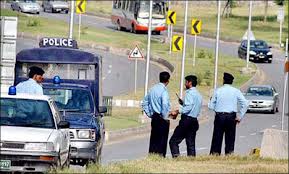
Islamabad, Aug 8: The Islamabad Capital Territory (ICT) Police have finalised a comprehensive security and patrolling plan on the eve of Eidul Fitr and also augmented the security at public places, worship places and other important buildings to thwart any untoward incident, a police spokesman said.

IGP Islamabad Sikandar Hayat has directed all officials to remain on high alert and fully prepared during Eid days. As per security plan chalked out by SSP Islamabad Muhammad Rizwan, more than 2,500 policemen would perform security duties. Patrolling would be made in various sectors to check possible house burglaries during Eid holidays. However, people have also been appealed to inform relevant police stations before their departure to native areas.

Eid prayers will be offered at 507 places in Islamabad including Masajid, Imambargahs and open places which will be covered by armed guards and policemen. Four SPs, nine ASPs/DSPs, 17 Inspectors will overall look after security arrangements in their respective jurisdictions.

Special Quick Response Force (QRF) teams have been constituted for immediate assistance to citizens while vehicles, earlier serving with various squads, will be on patrolling duty to ensure vigilance during Eid days.

Falcon squads and police commandos including contingents of lady police will also patrol in the city to ensure sense of complete security to citizens on Eid occasion.

According to the plan, policemen would also patrol in the various sectors and police in charges of circles would ensure proper security at the Eid congregations in various locations.

Superintendents of Police (SPs) will conduct checking of security and patrolling duties in their respective areas and to ensure coordination among all the mobile police teams.

More than 140 policemen lead by two SPs, two ASP/DSP, four Inspectors would be only deputed for the security at Faisal Mosque on Eid day while walk through gates and scanners would be installed as a part of security measure.

Sub-Divisional Police Officers and Station House Officers would be responsible of the security around worship places. They may be provided additional force on their request for the effective patrolling and security at Eid congregations in various sectors.

Duty rosters have been prepared by the in charges of police stations and policemen would patrol in various sectors during day and night timings to ensure protection to properties during Eid holidays.

The mobile officers and police guard posted at Mosques, Imambargahs, public/picnic places will take notice of the beggars hovering around the premises and will take legal action against them.

Special focus is to ensure safety to properties and stop incidents of theft and car-lifting during Eid holidays. As a part of security measures, police pickets would be erected at all important entry and exit points for checking of vehicles and SPs of each Zone will visit these points to brief the deployed cops about effective checking and security.

The mobile patrols and squads of Islamabad Traffic Police would also remain present in markets, shopping plazas and at prominent points during Eid congregations. Bomb disposal squad will remain available at short notice and all public places, parks, play grounds will be kept under strict vigilance and security cover.

Islamabad Traffic Police (ITP) on special directions of SSP (Traffic) Dr. Moeen Masood has made a special plan and 250 traffic personnel will be deputed at various locations lead by SP, three DSPs and 9 Inspectors. Traffic deployment in shopping areas, markets will be augmented while the patrol cars and pairs will patrol in their respective areas to facilitate the general public.

Militants kill Investigators of Slain Tourists

Gilgit Baltistan investigators killed (Credit: tribune.com.pk)

GILGIT, Aug 8: Security forces intensified search on Wednesday for militants of the Tehreek-i-Taliban Pakistan in the remote northern town of Chilas, headquarters of the Diamer district, after the killing of three high-profile security officials in the area the previous day. The TTP had claimed responsibility for the shooting.

The slain officials — an army colonel, a captain and a senior superintendent of police (SSP) — were investigating the June 23 killing of nine foreign tourists and one of their Pakistani guides in the area.

Victims of the mountain assault included climbers from China, Lithuania, Nepal, Slovakia, Ukraine and one person with joint US-Chinese citizenship. One Chinese climber had escaped the attack.

“We are at present engaged in a search operation against murderers and are very much hopeful of arresting them soon because 14 suspects have already been taken into custody and are being interrogated,” Ali Sher, Deputy Inspector General of Police who is heading the operation in the area, told Dawn.

Police said hideouts of Taliban were being raided.

Law-enforcement agencies, backed by Pakistan Army, have sealed all entry and exit points of the small town which has a population of 40,000. The town is visited by people of the entire district for different purposes.

The police official said that a rally was also held in the area to condemn the murder of the security officials.

People of the area were in a state of shock and an air of gloom and fear enveloped the area because of the rising number of acts of terror which were previously unknown to them.

The DIG said the entire populace of the area should not be linked with terrorism as this would bring nothing but destruction.

Mr Sher pointed towards activists of banned outfits, but did not say which organisation is behind the attack.

“They (militants) have undergone training at various places and are now totally brainwashed,” he said, adding that they could only be stopped if a political solution was found out.

He said that some possible attacks on other police officials were foiled after a tip-off.

“We arrested a man along with weapons who was trying to kill a superintendent of police in Astore and another in Gilgit. Both are now behind bars and they have confessed before courts. Their cases are being heard,” Mr Sher said.

He said hundreds of houses had already been searched to arrest militants wanted by police.

“Do you know I was also a target in some other areas, but Allah Almighty saved me, but the SSP fell victim,” he said.

The DIG spoke kindly about the people of Diamer, saying they had nothing to do with acts of terrorism, but some hidden powers wanted them in the arena.

Taliban free 243 prisoners in DI Khan jailbreak

Taliban jail break in DI Khan (Credit: ibtimes.com)
DERA ISMAIL KHAN/PESHAWAR, July 31: In one of the two biggest jailbreaks in the history of Pakistan, the militants on Tuesday helped 243 prisoners escape from the British-era Dera Ismail Khan Central Prison after killing 12 people, including six policemen, while five attackers were also killed. Around 300 prisoners had escaped in a similar jailbreak in Bannu when scores of militants stormed the dungeon in April last year.

Inspector General Police (IGP) Khyber Pakhtunkhwa Ihsan Ghani told The News that 60 to 70 men, armed with heavy weapons and explosives, carried out the attack during which around 250 prisoners managed to escape.

A number of hardened militants were among the inmates of the Dera Ismail Khan Central Prison. Among them was Walid Akbar, who had been awarded 1,616 years jail sentence for his involvement in bombing of the Ashura procession in the city last year.

The IGP KP, along with Inspector General Prisons Khalid Abbas and other senior officials of the Home and Tribal Affairs Department, on Tuesday reached Dera Ismail Khan from Peshawar to visit the prison.

Officials and eyewitnesses said over 100 attackers came in vehicles and also on motorbikes to storm the prison from all the four sides simultaneously as one group opened fire on a security checkpost near the jail that was built in 1854.

“The attackers killed six policemen including Mazhar Hussain, Saifullah, Rustam, Mir Zaman and Piao Sardar. Two prisoners from Multan, Sajid and Juma Malang, who had been awarded death sentences, as well as two other inmates, Akhtar Abbas and Muhammad Aslam were also killed inside their barracks,” said an official.

The official said three other people, including the watchman of a bakery, a passerby and an unknown person, were also killed while 16 persons were wounded.Curfew was clamped in Dera Ismail Khan and Tank districts after the attack and a massive search operation was launched.

Locals said they heard dozens of huge and minor explosions starting from 11:15pm on Monday that continued till 2:30am on Tuesday. “I could count over 30 explosions and it continued after that,” said a resident in Dera Ismail Khan. Due to expansion of the city and increase in the population, the prison is now located in densely populated part and the bomb blasts could be heard in the nearby localities all night. It also scared the people and prompted them not to venture outside.

Dozens of improvised explosive devices (IEDs) and other explosives were defused during an operation to sweep the prison. “The bomb disposal unit (BDU) experts defused 28 time bombs, four remote-control IEDs, a suicide jacket, five rockets and eight grenades during the search operation. The area has been cleared now,” the chief of the BDU Shafqat Malik told The News. The inmates who escaped from the cell included around 30 militants. Five women prisoners were also among those who fled during the jailbreak.

Expressing anger over the jailbreak, Khyber Pakhtunkhwa Chief Minister Pervez Khattak termed it a failure of the intelligence agencies. He ordered a probe into the jailbreak, vowing to take the strictest action against those found negligent. The joint inquiry committee that he constituted to probe the incident was asked to submit the report within 15 days.

The committee will comprise Senior Member Board of Revenue (SMBR) Waqar Ayub, Special Secretary Home Department Syed Alamgir Shah, Additional Inspector General Police (Special Branch) Akhtar Ali Shah and representative of Pakistan Army (Headquarters 11 Corps).

The chief minister said he was told by the authorities recently that adequate measures had been taken for the security of the prison. He said he would visit the jail. He directed the authorities to increase security of the prisons.

Furthermore, 27 cops, including a superintendent of police (SP), were suspended for showing negligence during the whole episode.The authorities had reportedly got reports that the militants were planning to attack the prison. Ominously, a clash inside the Dera Ismail Khan Central Prison a day earlier had resulted in injuries to two cops.

“We had taken shelter in a nearby bakery. The attackers also shot dead the watchman of the bakery when he fired two shots in the air,” said an eyewitness.

Some eyewitnesses said the police arrived too late as armed men had taken positions on all the four sides to counter them.Commissioner Dera Ismail Khan Mushtaq Jadoon told reporters that 242 prisoners had escaped during the attack. He said people were told not to come out of homes as the police and army were clearing the area.

The deputy inspector general (DIG) police, commissioner and deputy commissioner Bannu, IG Prisons and superintendent Bannu Prison were suspended over the Bannu jailbreak in April last year. Militants had helped free around 300 prisoners during the attack. Those who escaped at the time included Adnan Rashid, convicted for his involvement in the attack on the then President General Pervez Musharraf.

Taliban spokesman Shahidullah Shahid claimed that more than 250 prisoners escaped from the jail.“Majority of our people along with the freed prisoners reached a secure place. Some of our very senior people also succeeded to escape,” the spokesman claimed.

The IGP along with home secretary and an additional IG visited the prison and heard the account of the incident from the cops. The IGP suspended SP, DSP of the Elite Force and their subordinates in the area.

An inquiry committee was constituted that comprised additional inspector general of Special Branch and senior member of the Board of Revenue.The IGP also posted Ijaz Ahmad as DIG of Dera Ismail Khan. The DIG was transferred a couple of days back to Mardan.SP Elite Force Toheed and DSP Behram were among 27 cops suspended in Dera Ismail Khan.An investigation team headed by SP Investigation Dera Ismail Khan was also formed.

Pakistan’s Religious Extremists leave for Greener Pastures

Pakistan Militants (Credit: Dawn.com)

ISLAMABAD: Suleman spent years targeting members of the Shia community in his home country of Pakistan as a member of sectarian terrorist group Lashkar-e-Jhangvi (LeJ). Now he is on his way to a new sectarian battleground, Syria, where he plans to join rebels battling President Bashar Assad’s regime.

The short and stocky man, who identified himself using only his first name for fear of being targeted by authorities, is one of an increasing number of militants who have left Pakistan for Syria in recent months.

The fighters have contributed to a growing presence of extremists and complicated US efforts to help the rebels. Many fighters like Suleman believe they must help Syria’s Sunni majority defeat Assad’s Alawite regime.

The presence of religious extremists in Syria looms large over US efforts to help the rebels, especially when it comes to providing weapons that could end up in the hands of America’s enemies. The extremists have also sparked infighting with more secular rebels concerned about their increasing power. Most of the foreign fighters in Syria are from Arab countries, including Al Qaeda militants from Iraq on the rebel side and Hezbollah fighters from Lebanon on the regime’s side. The flow of militants from Pakistan adds a new element to that mix.

Pakistani Interior Ministry spokesman Omar Hamid Khan said provincial authorities throughout Pakistan deny that militants have left the country for Syria. But three Pakistani intelligence officials based in the tribal region that borders Afghanistan, as well as militants themselves, say the fighters leaving Pakistan for Syria include members of Al Qaeda, the Pakistani Taliban and the LeJ.

The fighters fall mainly into two categories. One includes foreign combatants from places like Uzbekistan, Turkmenistan and likely the Middle East who came to Pakistan’s tribal region to fight US-led forces in neighbouring Afghanistan and are now heading to Syria because they view it as the most pressing battle, said the Pakistani intelligence officials, speaking on condition of anonymity because they were not authorised to talk to the media. This group includes members Al Qaeda who trained the Pakistani Taliban in areas such as bomb-making and are now moving on to the battlefield in Syria, said Pakistani Taliban fighters, speaking on condition of anonymity.

Neither the intelligence officials nor the Pakistani militants were able to provide the total number of fighters who have left the country for Syria, or the route they were taking to get to the Middle East. An activist based in northern Syria, Mohammad Kanaan, said there are Pakistanis fighting in his area but not in large numbers. ”Most … are Arab fighters from Tunisia, Algeria, Iraq and Saudi Arabia,” he said Sunday. ”But we have seen Pakistanis and Afghans recently as well.”

The second group leaving Pakistan includes mostly domestic members of the Pakistani Taliban and LeJ who are heading to Syria, saying they are being so closely monitored by Pakistani authorities that it makes it difficult for them to carry out operations at home, said a Pakistani Taliban fighter who identified himself only as Hamza.

These militants are under surveillance because they have been detained previously in connection with attacks, or are on Pakistan’s radar because of their importance in their organisations, Hamza said. The group includes Suleman, who was detained during a 2009 attack on an intelligence building in the eastern city of Lahore that killed at least 35 people. He was eventually released, he told the AP in an interview before leaving for Syria more than a week ago.

Suleman is one of about 70 militants who have been sent to Syria in the last two months by a network jointly run by the Pakistani Taliban and LJ, Hamza said. The militants came from various parts of Pakistan, including the provinces of Balochistan, Punjab and Khyber Pakhtunkhwa (KP), and the southern city of Karachi, Hamza said.

Another group of 40, including Hamza, is expected to leave in the coming weeks, he said. These militants are not going to fight with Jabhat al-Nusra, or the Nusra Front, the most powerful Islamic militant group in Syria, Hamza said. But he did not know which group they would join. The head of the network sending these militants is a former leJ leader named Usman Ghani, Hamza said.

Another key member is a Pakistani Taliban fighter named Alimullah Umry, who is sending fighters to Ghani from KP, Hamza said.The militants are traveling to Syria by various routes, and some are taking their families. The most closely watched are secretly taking speed boats from Balochistan’s coast to the Omani capital of Muscat and then traveling onward to Syria, Hamza said.

Others are flying from Pakistan to various countries, including Sri Lanka, Bangladesh, the United Arab Emirates and Sudan, and then making their way to Syria. The financing is coming from sources in the United Arab Emirates and Bahrain, Hamza said. Suleman flew to Sudan with his wife and two children using fake passports, he said. He will leave his family in Sudan and then travel to Syria. There are families of other Pakistanis who have gone to Syria already living in Sudan and being taken care of, Suleman said. A member of Jamaat-e-Islami said a small number of its followers have also gone to fight in Syria, but not through any organised network. He spoke on condition of anonymity for fear of being persecuted by the government.

Blasts hit ISI office in Land of Sufis

ISI office targeted in Sukkur (Credit: tribune.com.pk)

KARACHI, July 25: A series of blasts rocked the southern town of Sukkur late Wednesday as militants rammed an explosive-laden vehicle into a compound of Pakistan’s premier intelligence agency, security officials said.

At least nine people were killed, including five attackers and four agency officials in what was an unprecedented attack in the otherwise peaceful town.

Police said the attackers detonated two bombs — one outside a police building and a car bomb outside the ISI office in the town, located around 500 kilometres from Karachi, the main city of Sindh province.

A police official said apparently a suicide bomber first blew himself up in front of a police building and then a second suicide bomber detonated the explosive-filled car outside the ISI office.

The terrorists had seized control of one government building, sparking a shoot-out between the militants and security forces in the high-security Barrage Colony area.

The exact number of casualties was still unclear as TV channels put the death toll between seven to ten but there was no confirmation from the hospital.

Sources told Dawn that four agency officials were among the dead including ISI’s deputy director Maj Zeeshan, Azizullah, Asghar Ali and Nazeer Ahmed. There was no official confirmation of the death of the agency officials.

Major General Rizwan Akhtar, head of the paramilitary force, Sindh Rangers said that all attackers had been killed and the ISI compound had been cleared of the militants.

“All three militants who seized the compound have also been killed and the building completely cleared of terrorists,” said Akhtar.

He said the front wall and gate of the ISI office had been blown away by the impact of the first blast.

A senior police official said it appeared to be “an organised terrorist attack”. Militants have launched such sophisticated attacks before, but Sukkur has been traditionally immune from such violence.

No group has claimed responsibility for the attack so far.

In May 2009, a suicide attack outside a police building next to the local ISI headquarters in the eastern city of Lahore killed 24 people.

In November that year a powerful car bomb ripped through ISI’s headquarters in the northwestern city of Peshawar, killing 10 people and destroying part of the fortified building.

A month later in the central city of Multan two suicide attackers fired at soldiers while driving a truck bomb past security checkpoints in an attempt to approach the local office of the ISI.

In another elaborately planned attack last year, militants attacked Kamra, a major airbase, and damaged an aircraft.

The year before, Pakistani Taliban gunmen attacked a naval base in Karachi, the country’s biggest city. Ten military personnel were killed in the 16-hour assault.

In 2009, they attacked the national army headquarters in the garrison town of Rawalpindi, close to the federal capital.

Prime Minister Nawaz Sharif has strongly condemned the attack, which he said resulted in the “loss of precious human lives and injured many”.

—DawnNews correspondent Asif Mehmood contributed to reporting.


Pakistan President’s Security Guard Killed – Washington Post

Bilal Shaikh killed (Credit: nation.com.pk)

ISLAMABAD, Pakistan — One of Pakistani President Asif Ali Zardari’s most trusted aides was killed in a suspected suicide bombing in the volatile port city of Karachi on Wednesday as he stopped his armored vehicle to buy some fruit, police said.

Pakistan has suffered a spate of attacks since Nawaz Sharif was sworn in as prime minister last month, underscoring the challenges facing the nuclear-armed nation in taming a Taliban-linked insurgency.

A senior police officer in the city said Bilal Shaikh — Zardari’s security chief, who was always spotted next to the president during public appearances — and two others were killed in a prosperous area of eastern Karachi.

“It seems that the suicide attacker walked up to Bilal Shaikh’s vehicle and blew himself up outside the front passenger seat of the vehicle where Shaikh was seated,” the officer, Raja Umar Khattab, said. About a dozen people were wounded. A police escort was accompanying Shaikh’s sport-utility vehicle at the time of the attack.

No one asserted responsibility for the blast, which took place on the eve of the start of the Muslim holy month of Ramadan, which begins in Pakistan on Thursday.

The latest wave of attacks has ended a period of relative calm after a May election that marked Pakistan’s first transition between elected civilian governments. In early June, Sharif won a parliamentary vote to become premier for the third time.

Last weekend, at least five people were killed when a bomb ripped through a busy restaurant street in the eastern city of Lahore, Sharif’s home city. On June 30, at least 28 people were killed in the southwestern city of Quetta when a suicide bomber struck in a largely Shiite neighborhood.

Shaikh, who had survived an assassination attempt near his home in Karachi about a year ago, used to change his routes several times while traveling around one of Pakistan’s most violent cities.

Like Zardari, he belonged to the Pakistan People’s Party, which had been in power before the May election. Taliban-linked militants had previously targeted the secular party.

Zardari and Sharif issued separate statements condemning the attack, a private TV channel reported.

It was the first attack in Karachi since mid-June. At least nine people were killed when a bomb targeting the convoy of a senior judge exploded in the old city area. The judge survived. The Pakistani Taliban asserted responsibility for that attack.

— Reuters

QUETTA, PESHAWARROCKED BY BLASTS: SUICIDE BOMBER KILLS 28 HAZARA MEN AND WOMEN

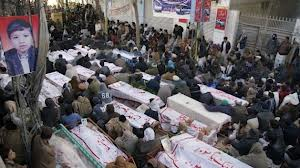
Hazara massacre in Quetta (Credit ipsnews.net)QUETTA, June 30: At least 28 men and women of Shia Hazara community were killed and 60 others injured in a suicide blast in the Aliabad area of Hazara town on Sunday night. “A suicide bomber blew himself up near a barrier close to Ali Ibn-Abu-Talib Imambargah,” DIG (Investigation) Syed Mobin Ahmed told Dawn.

The proscribed Lashkar-i-Jhangvi has claimed responsibility for the attack. A spokesman for the group who identified himself as Abubakar Siddique told a private TV channel that his group had carried out the attack in the Hazara town.

At least nine women were among the dead.

Sources said that an unidentified man on a bicycle tried to enter the area and when people standing near the barrier tried to stop him he blew himself up.

The blast occurred at the Balkhi Chowk which is near to the Imambargah.

Capital City Police Officer Mir Zubair Mehmood told reporters that prayers were being held inside the Imambargah when the blast took place.

He said the target of the bomber was Imambargah but he could not reach there because people responsible for security of the Imambargah stopped him at the barrier.

He said the head and parts of the bomber’s body had been found.

Eyewitnesses said a large number of people, including women and children, were at the place at the time of the blast.

Press photographer Saeed Ahmed told Dawn that human flesh and limbs were lying all over the place.

Soon after the blast, the sources said, security personnel rushed to the blast site and cordoned off the area. They did
not allow even rescue personnel to enter the area for fear of a second blast.

Hazara town resounded with gunfire after the explosion.

Two hand-grenades were found at the blast site which the suicide bomber reportedly carried.

The injured and the bodies were taken to the Bolan Medical College Hospital and the Combined Military Hospital.

Hospital sources said the death toll could rise because at least 10 of the injured were stated to be in serious condition.

Several nearby buildings and vehicles parked in the area were badly damaged by the blast.

This was second bomb attack in Hazara town over the past five months.

The previous blast, caused by explosive in a water-tanker on Feb 16, killed about 100 people and left over 200 injured.

Balochistan Governor Mohammad Khan Achakzai and Chief Minister Dr Abdul Malik Baloch condemned the blast and expressed grief over the loss of lives. They expressed sympathy with the bereaved families.

Official sources at the Chief Minister’s Secretariat told this reporter that the chief minister who was in Islamabad on an official visit, decided to return to Quetta after coming to know about the attack.

“The chief minister has directed officials concerned to ensure adequate medical treatment of the injured,” they said.

TTP and the Perils of Inertia

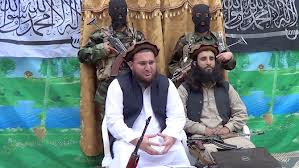
TTP spokespersons (Credit: dawn.com)
TTP spokespersons
(Credit: dawn.com)

IT is our war. It is America’s war. Thousands of Pakistanis have perished in this war. And all we do is take part in this debate. We do nothing to end it.

If one could put it down to a simple lack of will or spine it would have been bad enough. That a fair bit of the discourse on terrorism represents ideologically motivated obfuscation is unforgivable, particularly given how many compatriots have had to sacrifice so much.

The dominant argument is that Pakistan’s support to the US-led war in Afghanistan and the CIA’s drone attacks are the only drivers of terrorism in the country. Ergo, this support to the US is not just blamed for terrorism but also advanced as a justification for the mass murder of our people.

Refusal to accept this view in its entirety is immediately pounced upon as being tantamount to condoning or worse still supporting the drone attacks that mostly kill our civilians, women and children, and occasionally the militant in the tribal areas.

God help you if you happen to have doubts about talks with the Tehreek-i-Taliban Pakistan (TTP): “Amreeka key agent media mein bethey huey hein jo amn ke khilaf hein” (There are American agents in the media opposed to peace), Pakistan Tehreek-i-Insaf (PTI) leader Imran Khan said in his ‘first’ televised interview since his election campaign accident.

His utter contempt for anyone holding a view different to his own is always a bit upsetting but, on this occasion, it was reassuring because it established the PTI leader had been restored to good health and his former self.

Therefore, it wasn’t surprising to hear him say that if the US can facilitate the opening of an Afghan Taliban office in Doha and initiate a dialogue with them why couldn’t Pakistan do the same in case of the TTP.

Let me be open and admit that I have a soft corner for the great Khan. He gave me and countless others one of the finest moments of our lives by leading Pakistan to its only Cricket World Cup triumph. That is why we all forgave him for his “In the twilight of my career…” speech.

That the well-meaning, born-again Muslim then went on to a greater triumph in setting up and successfully running the Shaukat Khanum Memorial Hospital for specialised cancer care in memory of his mother who, like mine, died at the cruel hands of cancer was awe-inspiring.

So yes, I disagree with him but won’t call him Taliban Khan; even if he finds ideological compassion for the TTP and understanding for the atrocities committed by the group against thousands of Pakistanis.

He is free to call me an American agent or by whatever name he wishes because I oppose talks with the TTP. I do so because there is no parallel between that and the US starting a dialogue with the Afghan Taliban.

The US is now keen to get out of Afghanistan, a foreign country it invaded with UN approval and possibly a just cause, after the Taliban administration refused to hand over the mostly Saudi suspected perpetrators of the 9/11 attacks on US soil.

It went into the country seeking retribution. This retribution wasn’t possible without regime change. It did what it thought necessary. It may even have attained its main objective of attacking Al Qaeda in its sanctuary and denuding it of its capacity to attack the US on its soil again.

But a democracy it remains and its war-weary voting public is wary of continuing a bloody conflict which, they understand, cannot be won. So, the US has now embarked on its plan to shrink its giant footprint in that foreign country.

However, it also doesn’t wish a return of the pre-invasion situation in Afghanistan where Islamic militants from around the world found a safe haven and training ground to serve as a launching pad for their global jihad.

It wants guarantees that only the Taliban can give. It isn’t clear if, in line with ISI belief, the Taliban can return to their pre-war glory and rule over Kabul as well but it is clear to the US they’ll have large swathes of the country under their control as they do even now; hence, the talks.

If the admittedly imperfect Afghan democracy collapses post-US withdrawal so be it as long as the new power structures can guarantee no sanctuaries for global jihadis. The US doesn’t seem interested in ‘nation building’ any more. It’ll retain its drone programme, and possibly some residual air and special operations capability so nothing’s left to chance. We have our democracy to lose. Unless, that is, we actually believe that once the US has pulled out of Afghanistan or we have pulled out of the ‘US war’ all will be hunky-dory. We’ll need to forget the TTP is committed to their brand of Sharia in the country and beyond.

They find democracy, diversity of opinion and faith against their ideological beliefs. Groups of mass murderers such as the Lashkar-i-Jhangvi are either TTP allies or franchises. The TTP continues to offer sanctuaries to foreign fighters with global ambitions.

Thousands of soldiers have died clearing the bulk of the tribal areas of these militants. The TTP remains ensconced in its remaining stronghold of North Waziristan. That is where the serpent’s head is.

One would have said carry on with your obfuscation, talk about talks, do deals like in the past, if it wasn’t so dangerous. All this wasted time means wasted opportunities. The TTP gets bolder and bolder in its attacks; its ranks appear swollen by zealots; who knows what fear can do to people.

What if one day, battered by TTP’s bombings and filled with despair by the inertia of the state, more people turn to its ideology if only to find some respite, save themselves? What a horrifying thought. I’d rather be labelled an American agent and strive to salvage whatever is left of my Pakistan.

The writer is a former editor of Dawn.
abbas.nasir@hotmail.com

Militants kill 9 foreign tourists, 1 Pakistani at base of one of world’s highest mountains

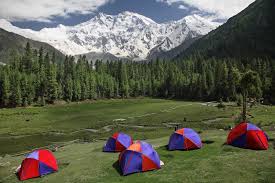
Nanga Parbat base camp (Credit: halaat.com)
Nanga Parbat base camp
(Credit: halaat.com)
ISLAMABAD, June 23 — Islamic militants wearing police uniforms shot to death nine foreign tourists and one Pakistani before dawn Sunday as they were visiting one of the world’s highest mountains in a remote area of northern Pakistan, officials said.

The foreigners who were killed included five Ukrainians, three Chinese and one Russian, said Pakistani Interior Minister Chaudhry Nisar Ali Khan. One Chinese tourist was wounded in the attack and was rescued, he said.

The local branch of the Taliban took responsibility for the killings, saying it was to avenge the death of a leader killed in a drone strike.

The shooting is likely to damage the country’s struggling tourism industry. Pakistan’s mountainous north — considered until now relatively safe — is one of the main attractions in a country beset with insurgency and other political instability.

The attack took place at the base camp of Nanga Parbat, the ninth highest mountain in the world at 8,126 meters (26,660 feet). Nanga Parbat is notoriously difficult to climb and is known as the “killer mountain” because of numerous mountaineering deaths in the past. It’s unclear if the tourists were planning to climb the mountain or were just visiting the base camp, which is located in the Gilgit-Baltistan region of Pakistan.

The gunmen were wearing uniforms used by the Gilgit Scouts, a paramilitary police force that patrols the area, said the interior minister. The attackers abducted two local guides to find their way to the remote base camp. One of the guides was killed in the shooting, and the other has been detained and is being questioned, said Khan.

“The government will take all measures to ensure the safety of foreign tourists,” said the interior minister in a speech in the National Assembly, which passed a resolution condemning the incident.

Pakistani Taliban spokesman Ahsanullah Ahsan claimed responsibility for the attack, saying their Jundul Hafsa group carried out the shooting as retaliation for the death of the Taliban’s deputy leader, Waliur Rehman, in a U.S. drone attack on May 29.

“By killing foreigners, we wanted to give a message to the world to play their role in bringing an end to the drone attacks,” Ahsan told The Associated Press by telephone from an undisclosed location.

The attackers beat up the Pakistanis who were accompanying the tourists, took their money and tied them up, said a senior local government official. They checked the identities of the Pakistanis and shot to death one of them, possibly because he was a minority Shiite Muslim, said the official, speaking on condition of anonymity because he was not authorized to talk to the media. Although Gilgit-Baltistan is a relatively peaceful area, it has experienced attacks by radical Sunni Muslims on Shiites in recent years.

The attackers took the money and passports from the foreigners and then gunned them down, said the official. It’s unclear how the Chinese tourist who was rescued managed to avoid being killed.

Local police chief Barkat Ali said they first learned of the attack when one of the local guides called the police station around 1 a.m. on Sunday.

The Pakistani government condemned the shooting in a statement sent to reporters.

“The government of Pakistan expresses its deep sense of shock and grief on this brutal act of terrorism, and extends its sympathy to the families of the victims,” said a statement issued by the Foreign Ministry. “Those who have committed this heinous crime seem to be attempting to disrupt the growing relations of Pakistan with China and other friendly countries.”

Pakistan has very close ties with neighboring China and is very sensitive to an issue that could harm the relationship. Pakistani officials have reached out to representatives from China and Ukraine to convey their sympathies, the Foreign Ministry said.

Many foreign tourists stay away from Pakistan because of the perceived danger of visiting a country that is home to a large number of Islamic militant groups, such as the Taliban and al-Qaida, which mostly reside in the northwest near the Afghan border. But a relatively small number of intrepid foreigners visit Gilgit-Baltistan during the summer to marvel at the peaks of the Himalayan and Karakoram ranges, including K2, the second highest mountain in the world.

Syed Mehdi Shah, the chief minister of Gilgit-Baltistan, condemned the attack and expressed fear that it would seriously damage the region’s tourism industry.

“A lot of tourists come to this area in the summer, and our local people work to earn money from these people,” said Shah. “This will not only affect our area, but will adversely affect all of Pakistan.”

Shah said authorities are still trying to get more information about exactly what happened to the tourists. The area where the attack occurred, Bunar Nala, is only accessible by foot or on horseback, and communications can be difficult, said Shah. Bunar Nala is on one of three routes to reach Nanga Parbat, he said.

The area has been cordoned off by police and paramilitary soldiers, and a military helicopter is searching the area, said Shah. The military plans to airlift the bodies of the foreign tourists to Islamabad, he said.

“God willing we will find the perpetrators of this tragic incident,” said Shah.

The government suspended the top police chief in Gilgit-Baltistan following the attack and has ordered an inquiry into the incident, said Khan, the interior minister.

_____

Associated Press writer Rasool Dawar contributed to this report from Peshawar, Pakistan.