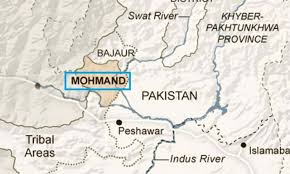
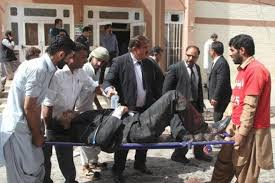
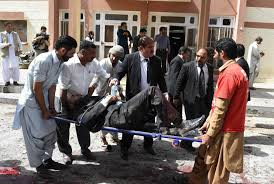
PESHAWAR, Sept 16: A suicide bomber targeted a mosque in Mohmand Agency’s Anbar tehsil during Friday prayers, leaving at least 24 people dead and 31 others injured, official of the political administration said.
Assistant Political Agent Naveed Akbar told DawnNews that the injured had been transported to hospitals in Bajaur Agency, Charsadda and Peshawar for treatment.
The bombing took place in the village of Butmaina in the Mohmand tribal district bordering Afghanistan, where the army has been fighting against Taliban militants.
Akbar said that the bomber came in as Friday prayers were in progress and blew himself up in the main hall. A curfew was later imposed in the area.
Another local government official confirmed the information.
Shireen Zada, a resident who had prayed at another mosque, said he heard the blast as he was walking home.
“I rushed to the spot and when I went inside the hall there was blood and human remains everywhere and people crying out,” he said.
“I brought my pick-up truck, loaded three wounded and drove them to the hospital in Khar,” Shireen Zada said, referring to the nearest town.
Prime Minister Nawaz Sharif later condemned the bombing, saying the government would remain steadfast in their fight against extremists.
“The cowardly attacks by terrorists cannot shatter the government’s resolve to eliminate terrorism from the country,” read a statement from Nawaz Sharif’s office.
Jamaatul Ahrar, an offshoot of the Tehrik-i-Taliban Pakistan (TTP), claimed responsibility of the attack.
On September 2, at least 14 people were killed and more than 50 wounded after a suicide bomber attacked a court in Mardan in an assault targeting legal community that was claimed by the Jamaat-ul-Ahrar Taliban faction.
The group has also said it was behind an attack on lawyers in southwest Quetta, which killed 73 people on August 8, as well as the Lahore Easter bombing that killed 75 in the country’s deadliest attack this year.
Pakistani Taliban in particular routinely attack soft targets such as courts, schools and mosques.
The army launched an operation in June 2014 in a bid to wipe out militant bases in the northwestern tribal areas and so bring an end to the bloody insurgency that has cost thousands of civilian lives since 2004. Security has since improved though scattered attacks still take place.
SHIKARPUR, Sept 13: At least 13 people, including five cops, were injured as police foiled two separate suicide blasts during Eid prayers in Shikarpur’s Khanpur tehsil on Monday.
Police sources said four suicide attackers infiltrated Khanpur during Eid prayers.
Two of the attackers targeted an Eid prayer ground where one assailant blew himself up, injuring 10 people, two of whom were policemen. The other attacker fled, police sources said.
Two other attackers targeted an imambargah but were stopped by police at the entrance on account of appearing suspicious. One of the attackers blew himself up after he was stopped by guards for a search, whereas the other was arrested, police said.
Police officer Bahardin Kerio said the second attacker, a would-be suicide bomber, was shot and wounded at the scene, after which the officers arrested him.
Three police officers were wounded in the explosion. Kerio said one of the wounded officers was in critical condition.
He added that there were hundreds of worshippers inside the imambargah at the time.
Those injured in the blast have been admitted to hospitals in Shikarpur for treatment.
Initial interrogation of the arrested attacker, Usman, revealed that the would-be bomber was a resident of Swat’s Qabal tehsil and had studied in Karachi’s Abu Huraira seminary, police sources said.
The sources added that a person named Umer brought the attackers to the imambargah on a motorbike and fled after leaving them there.
Inspector General Police (IGP) Sindh AD Khawaja reached Shikarpur following the incident. The IGP told Dawn AP that the attackers hailed from Swat but were based in Karachi and possibly had links to a seminary there which are currently being investigated.
Following the incident local leaders in Shikarpur led a protest against the attack. The IGP told protesters the police would investigate the case and requested them to lift the blockade.
No one immediately claimed responsibility for the attack.
Militants trying to disrupt construction of an “economic corridor” linking China with Pakistan’s coast have killed 44 workers since 2014, an official said on Thursday, a rising toll likely to reinforce Chinese worry about the project’s security.
The China-Pakistan Economic Corridor (CPEC) is a $46 billion network of roads, railways and energy pipelines linking western China to a deep-water port on Pakistan’s Arabian Sea coast, which passes through Pakistan’s troubled Baluchistan province.
Pakistani officials say they have taken tough measures and that security has greatly improved in Baluchistan, a resource-rich region where ethnic Baluch separatists have battled the government for years. They oppose the CPEC.
Colonel Zafar Iqbal, a spokesman for construction company Frontier Works Organisation (FWO), said all of the workers killed were Pakistani and most fell victim to roadside bombs and attacks on construction sites.
“The latest figure has climbed up to 44 deaths and over 100 wounded men on CPEC projects mainly road construction in Baluchistan, which began in 2014,” Iqbal told Reuters.
In November 2015, the official figure was 25 killed, indicating that the toll has accelerated this year.
The Pakistani projects are part of a Chinese plan to build land, sea and air routes across Asia and beyond boosting trade and winning new markets overseas for Chinese companies as domestic growth slows.
Chinese officials have appealed for improved security in Baluchistan and other regions where projects are planned or under way.
In a bid to address their fears, Pakistan last year created an army division, believed to number more than 10,000 troops, to focus specifically on protecting CPEC projects and Chinese workers.
FWO, which is owned by the Pakistani army, has been awarded the bulk of road-building contracts in Baluchistan and other volatile areas in Pakistan.
Pakistani officials concede security problems remain in Baluchistan, but say the work is progressing ahead of schedule.
About $4.5 billion of the planned investment in the corridor will go towards road infrastructure, with two-thirds of the total $46 billion investment funnelled towards energy projects.
Officials expect the CPEC projects to significantly boost Pakistan’s economic growth above the current 5 percent a year.
Overall security in Pakistan has improved over the past few years but Islamist groups, especially those linked to the Pakistani Taliban, still stage major attacks from time to time.
Last month, Islamists killed 74 people in a hospital bombing in the city of Quetta, the provincial capital of Baluchistan.
(Writing by Drazen Jorgic; Editing by Robert Birsel)
Peshawar, Sept 2: A suicide bomber has attacked a court in the northern Pakistani city of Mardan, killing at least 12 people and injuring more than 50, officials say.
The attacker threw a hand grenade before running into the court area and detonating a bomb, police told the BBC.
Also on Friday, four suicide bombers targeted a Christian neighbourhood near Peshawar before being shot dead.
Both attacks took place in Khyber Pakhtunkhwa province, and were claimed by Taliban faction Jamaat-ul-Ahrar.
Militants have targeted lawyers in the past, including a bomb attack in Quetta last month that killed 18 lawyers.
That attack was also claimed by Jamaat-ul-Ahrar.
Ijaz Khan, deputy inspector general of police for Mardan district, told reporters three lawyers and two police officers were among the dead at the courthouse.
The suicide bomber attempted to reach the court’s bar room, where several lawyers had congregated – but was shot by police before he could enter, Mr Khan said.
The president of the Mardan Bar Association, Amir Hussain, told reporters he was in a neighbouring room when the blast happened.
“There was dust everywhere, and people were crying [out] loud with pain,” he said.
Lawyers have come under attack because they are “an important part of democracy, and these terrorists are opposed to democracy”, he added in quotes carried by the AFP agency.
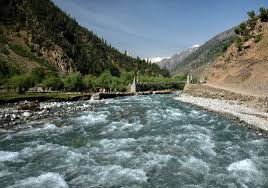
Shawwal river (Credit: flickr.com)RAWALPINDI, Sept 1: Director-General (DG) Inter-Services Public Relations (ISPR) Asim Bajwa on Thursday gave an exhaustive rundown of progress made during Operation Zarb-i-Azb.
Zarb-i-Azb commenced on June 15, 2014, after an attack on Karachi’s Jinnah International Airport. The operation which has gone on for over two years is now in its final phase.
“In 2014, the security environment when Operation Zarb-i-Azb started was such that the country faced various instances of terrorism,” the DG ISPR said. “There were 311 IED blasts, 74 attacks, and 26 suicide blasts in 2014.”
“The salient operational guidelines for Zarb-i-Azb were that it would be an indiscriminate operation, it would avoid collateral damage and it would be mindful of human rights,” he said.
________________________________________
Summary of progress made during Operation Zarb-i-Azb
War against terror has cost Pakistan $107bn
North Waziristan, Shawal, Khyber Agency cleared by Army
900 terrorists killed during Khyber I and Khyber II
66pc locals have returned to tribal areas
Daesh designs in Pakistan ‘foiled’, 309 arrested
Over 21,000 IBOs carried out across Pakistan, nearly people 1,400 arrested
536 soldiers killed, 2,272 injured during IBOs
3,500 terrorists killed in IBOs
Afghan govt, Nato forces did not take adequate action against terrorists
Poor deployment of armed forces along Afghan side of the border
Gates to be built at all crossing points along Pak-Afghan border
________________________________________
‘Afghan authorities did not take action against terrorists’
The DG ISPR displayed a map showing what he said was the concentration of terrorists in North Waziristan.
“No one could think of going to North Waziristan. It was the epicentre [of terrorism]. It was home to the largest communications infrastructure,” he said. The origin of most instances of terrorism was North Waziristan, he said.
“After the operation, when we cleared the valley, reaching Dattakhel and were moving towards the border, some terrorists came out from there via Afghanistan and reached the fringes of Khyber Agency.”
“Before we started the operation, Pakistan had informed all stakeholders ─ political, diplomatic and military ─ of the operation. The Afghan president, political govt, military leadership, Resolute Support Mission in Afghanistan were all informed of the operation and requested that if terrorists cross the border, they would have to catch them.
“They are your people, you will have to take action against them. But that didn’t happen,” Bajwa said.
‘Killed 900 terrorists during Khyber ops’
“When the terrorists went towards Khyber Agency, we relocated some forces from the North Waziristan operation [to Khyber] and conducted operations Khyber I and Khyber II.”
“We recovered weapons, ammunition, IEDs, explosives, communications equipment, hate literature and discovered tunnels,” he said.
“There was enough explosive material there to carry out five IED blasts every day for 21 years. They could have caused 134,000 casualties with the amount of material we recovered.”
“North Waziristan has very challenging terrain but despite that, our armed forces went there and cleared all their hideouts, caves and tunnels. But Khyber was even more challenging. It has snowy mountains and was home to hideouts from the Afghan war and had a very high density of IEDs.”
The Army killed 900 terrorists during the Khyber operation, Bajwa said, and dismantled the network of terrorists that was threatening areas in the immediate surroundings, such as Peshawar.
‘Shawal is like Switzerland now’
“We started operations in Shawal, where all the terrorists from North Waziristan went. It was their last stronghold and they had nowhere to go after that. The operation went well and we cleared every village, every house, every school and every mosque in Shawal.”
“Shawal is like Switzerland now,” Bajwa claimed. “The residents are slowly returning, but they want the Army to stay on and provide stability and revive the economy. Pine nuts are grown in great quantities there. Terrorists were selling them to fund themselves, but now the locals will benefit.”
‘Daesh in Pakistan planned attacks on Islamabad’s diplomatic enclave’
The DG ISPR said that Daesh ─ another name for the militant Islamic State group ─ would not be allowed to have a presence in Pakistan.
“We created a comprehensive intelligence picture and saw that Daesh was trying to come into Pakistan. They organised themselves into two groups, the Kutaiba Haris (planning wing) and Kutaiba Mubashir (militant wing) and were trying to get local criminal and terrorist groups to join them,” Bajwa said.
“Terrorists were frustrated at the time with all the Intelligence-based Operations (IBOs) going on and tried to change hats. The core group had 20-25 people,” he said. These people were responsible for the attacks on the Faisalabad Dunya office, Lahore Din News office, Express News Sargodha office, and ARY News Islamabad office, he said.
About 309 people who were part of the organisation were arrested, including Afghans and people of Middle Eastern origin. About 157 small freelance groups were also arrested, he said.
Even people who did wall-chalking and graffiti for Daesh in Pakistan for Rs1,000 were also arrested, Bajwa said.
The group had planned to attacks in the capital’s diplomatic enclave, particularly on the Ministry of Foreign Affairs and on foreign embassies, consulates and their employees, Bajwa said. They had also planned to target Islamabad airport and prominent public figures.
Border management: armed deployment low on Afghan side of border
There are 18 major crossing points between Pakistan and Afghanistan along the 2,600-kilometre-long shared border, Bajwa said. “We wanted to seal those areas so that terrorists from this side of the border don’t go there and vice versa,” he said.”
“Lots of terrorists who crossed into neighbouring districts in eastern Afghanistan have built concentration camps.”
“After clearing Fata… We began emphasising border management and the Torkham Gate was part of that. There will be proper gates made at all crossing points in addition to immigration staff posts,” the DG ISPR said. He also said hundreds of small posts will be set up where FC forces will be deployed.
“Additional FC wings will be raised, but until that happens, Army troops will provide reinforcement in many areas.”
“Other related agencies, including Nadra, will have staff posts and crossing will only be possible using valid documents on both sides of the border,” he said.
“We have posts along the border and have our own forces reinforcing the Frontier Corps, but the same kind of deployment doesn’t exist on the Afghan side of the border. Because of that void, there is a lot of presence and movement of terrorists there.”
“There will be a lot of patrolling to ensure no one can cross the border illegally. It will take time, but we are moving ahead steadily,” he said.
‘Over 21,000 IBOs carried out across Pakistan’
Intelligence-based operations (IBOs), special IBOs and combing operations have been carried out across the country, Bajwa said. The IBOs targeted terrorists, their facilitators, sleeper cells, financiers and abettors.
Around 2,578 were carried out in Balochistan, 9,308 in Punjab, 5,878 in Sindh and 3,263 in Khyber Pakhtunkhwa.
Special IBOs commenced the night the suicide blast at Lahore’s Gulshan-i-Iqbal park earlier this year, Bajwa said. So far, 477 special IBOs have been carried out, with 1,399 people apprehended.
“We have increased the scope with the leads we received… We will continue going wherever we need to without any hesitation,” he said.
‘War against terrorism has cost us $107bn’
The entire nation has borne the cost of the war against terrorism, which tallied up to $106.9 billion, Bajwa said.
During Operation Zarb-i-Azb, 536 soldiers were killed and 2,272 were injured, Bajwa said, whereas 3,500 terrorists were killed.
About 66 per cent of locals have returned to areas badly affected by terrorism. “But it is not enough that we take them back [to their homes]. We have to help them prosper by means of reconstruction efforts, ensure that the areas are better off [than before], create opportunities for livelihood and revive the local economy so that this kind of terrorism doesn’t recur.”
Infrastructural development projects in the region include a 705km road inside North and South Waziristan, a 75km road from Peshawar to Torkham, solar-powered water schemes and the Mirali Tehsil headquarters hospital, the DG ISPR said.
In addition to the above, market complexes, mosques, schools and colleges have also been built in these areas, Bajwa said.
‘Anti-Pakistan slogans will not be tolerated’
Responding to a question about Muttahida Qaumi Movement chief Altaf Hussain’s anti-Pakistan statements, Bajwa termed Hussain a foreigner residing 5,000km away from Pakistan.
“It is unacceptable for every Pakistani if Altaf Hussain raises anti-Pakistan slogans. The government is already taking action on this issue.
“There has been lots of action on the ground against his incitement to violence. People have been caught and action taken… Everything is before you,” Bajwa said.
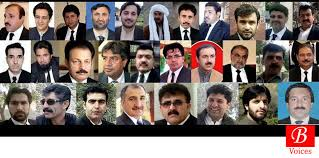
Lawyers killed in terrorist trap (Credit: Baloch voices)
QUETTA, Pakistan: Pakistani lawyer Ataullah Lango had just arrived at the Civil Hospital in the southwestern city of Quetta to mourn the slain head of his provincial bar association when he heard a loud explosion and felt the pain of glass stabbing his face.
He lost some 60 colleagues in the suicide bombing that decimated the leadership of this tight-knit legal fraternity, probably for years.
“The cream of our legal fraternity has been martyred,” Lango told Reuters at the house of the slain bar president.
“Our senior leaders … are now gone.”
Pakistan has endured a wave of militant attacks in recent years, but lawyers have not been singled out on such a scale before.
That changed on Monday when a suicide bomber struck a crowd of lawyers who had crammed into a hospital emergency department to accompany the body of Bilal Anwar Kasi, president of the 3,000-member Baluchistan Bar Association.
At least 74 people were killed, most of them lawyers, in Pakistan’s worst bombing this year, claimed by both a faction of the Pakistani Taliban, Jamaat-ur-Ahrar, and the Middle East-based Islamic State.
Across Quetta, the capital of Baluchistan province surrounded by mountains, lawyers gathered for funeral prayers on Wednesday, visited families of lost friends, shouted slogans at protests and urged the government to protect them better.
Baluchistan is no stranger to violence, with separatist fighters launching regular attacks on security forces for nearly a decade and the military striking back.
Islamist militants, particularly sectarian groups, have also launched a campaign of suicide bombings and assassinations of minority Shi’ites.
After Monday’s attack, the legal community in Baluchistan and across the country said it felt leaderless but also vowed unity.
Kasi’s younger brother, Shoaib Kasi, himself an attorney, said the attacker had “pre-planned” to first kill the bar association president and then target the hospital, knowing that mourners would gather there.
“It will take centuries for us to make up this loss,” lawyer Abdul Aziz Lehri told Reuters at the district court building, largely deserted due to a strike by his colleagues.
The president of the Supreme Court Bar Association, Ali Zafar, called the attack a “turning point”, and gave the government until Thursday to present a security plan to protect lawyers and other “soft targets”.
ANGER AND DEFIANCE
Emotions ran high at a press conference where lawyers expressed anger, particularly against the country’s powerful military, but also voiced defiance.
“We are not tense because of the terrorists,” said senior lawyer Manzoor ul Hassan. “We have sadness, of course, but no fear.”
Lawyers have held a special place in Pakistan’s democratic process.
A lawyers’ movement emerged as the vanguard of a campaign against the then army chief Pervez Musharraf after he suspended the country’s top judge in 2007 for opposing plans to extend the general’s term in office.
Lawyers organized convoys traveling from city to city to support ousted chief justice Iftikhar Chaudhry, and the government was forced to re-instate him.
Musharraf emerged from the confrontation a much diminished figured and stepped down as president in 2008.
“Lawyers were the targets, because we fight for the rights of the people,” Ali Zafar told the press conference. “They think we will be weakened … I say we will become stronger.”
Prominent lawyer Ali Ahmed Kurd said those left would carry the torch.
“The juniors who are left, they are filled with the passion for working hard, for honesty … that will make up the difference,” Kurd told Reuters in Quetta.
But he added that the lawyers of Baluchistan were afraid to call a meeting of the bar association to map out the legal fraternity’s next steps.
“If you convene a meeting now, who will come?” Kurd said. “There’s no one. None is left.”
(Writing by Mehreen Zahra-Malik; Editing by Mike Collett-White)
QUETTA / ISLAMABAD: At least 53 people killed and over 50 others were injured when a bomb exploded in Civil Hospital Quetta on Monday.
The blast, followed by firing was heard after president of Balochistan Bar Association Advocate Bilal Anwar Kasi was shot dead by unidentified assailants in Quetta.
Facebook activates ‘safety check’ feature following Quetta blast
Television footage from the site showed scenes of chaos, with panicked mourners fleeing through debris as smoke filled the corridors of the hospital’s emergency ward.
A heavy contingent of Frontier Corps and police arrived and cordoned off the hospital following the blast, restricting access to the area. According to police and rescue officials,
Kasi was targeted by two unidentified gunmen who opened fire on his car near Quetta’s Mengal Chowk on Mannu Jan road. The bar association president was shifted to Civil Hospital, where he succumbed to injuries.
The subsequent suicide attack appeared to target his mourners, Anwar ul Haq Kakar, a spokesperson for the Balochistan government, said. “It seems it was a pre-planned attack,” he said.
More than 50 mourners, including lawyers and journalists were entering the emergency department of the hospital, accompanying Kasi’s body, when the bomb went off, Faridullah, a journalist who was at the scene, told Reuters.
College principal gunned down in Quetta
Several lawyers were reported injured in the explosion and aerial firing could still be heard near the hospital’s emergency’s ward. Meanwhile, former Balochistan Bar Association president Advocate Baz Muhammad Kakar succumbed to injuries.
According to reports, Aaj TV journalist Shehzad Ahmed was also killed in the blast, while Dawn News cameraman was critically injured. Following the incident, emergency has been declared in hospitals across Quetta.
Targeted killings have become increasingly common in Quetta, the capital of a province that has seen rising violence linked to a separatist insurgency as well as sectarian tensions and rising crime. Quetta has also long been a stronghold of the Afghan Taliban. The motive behind Monday’s attacks, however, was unclear.
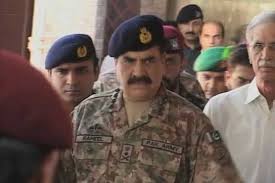
Army chief General Raheel Sharif arrived in Quetta and visited civil hospital where he inquired about the health of the injured, and was briefed about the deadly incident. Meanwhile, PM Nawaz is scheduled to arrive in Quetta shortly.
President Mamnoon, PM Nawaz strongly condemn Quetta blast
President Mamnoon Hussain and Prime Minister Nawaz Sharif strongly condemned the blast, Radio Pakistan reported.
KU professor shot dead in Karachi’s FB area
Deploring the loss of precious lives in the incident, PM Nawaz directed concerned authorities to maintain utmost vigilance and beef up security for the legal fraternity and members of civil society.
The premier said, “No one will be allowed to disturb peace in the province that has been restored due to countless sacrifices of security forces, police and the people of Balochistan.”
President Mamoon and PM Nawaz directed for provision of best treatment to those injured in the attack. Interior Minister Chaudhry Nisar Ali Khan has also condemned the blast.
RAW behind Quetta attack, claims Balochistan CM
Meanwhile, Balochistan Chief Minister Sanaullah Zehri has claimed that Monday’s attack was carried out by RAW, the Indian premier spy agency.
“I have the evidence of RAW’s involvement in Quetta’s attack which I will share with Prime Minister Nawaz Sharif and the foreign ministry,” Zehri said while speaking with the Express News.
The chief minister said he has, at times, provided evidences of Indian involvement in stoking unrest in the province. Besides ordering an inquiry the chief minister also announced three-day mourning in wake of the Quetta blast.
Commander southern command inquires after injured
Commander Southern Command Lt-Gen Amir Riaz visited the civil hospital and inquired after the injured. He also directed the authorities concerned to provide best medical facilities to those injured in the blast.
PBC calls for nationwide strike, one week of mourning
Pakistan Bar Council (PBC) on Monday called for a nationwide strike on August 9 and one week of mourning after the attack which left over people, including president of Balochistan Bar Association, dead.
PBC’s vice-chairman Dr Muhammad Farogh Naseem and chairman executive committee Abdul Fayaz strongly condemned the assassination of Kasi and the blast in Civil Hospital. They appealed the lawyers to observe a country-wide strike tomorrow i.e. Tuesday August 9 and one week of morning.
“The lawyers, while observing the strike and mourning, will hold protest meetings in their bar rooms and wear black bands to condemn the tragic incident,” a statement said.
CJP condemns Quetta attack
Chief Justice of Pakistan Justice Anwar Zaheer Jamali has strongly condemned Kasi’s assassination and the bomb blast at Civil Hospital that claimed lives of innocent lawyers and other citizens besides causing injuries to many people, a statement said.
The CJP offered his heartfelt condolences to the bereaved families and prayed for speedy recovery to the injured. He further hoped that the federal and provincial governments would leave no stone unturned to provide justice to the affected families.
Blast in Madina parking lot (Credit: siasat.com)DUBAI, July 8: Saudi Arabia identified on Thursday suspects in two of the three attacks that struck the kingdom on the same day this week, including one outside the sprawling mosque where the Prophet Muhammad (PBUH) is buried in the western city of Madina that killed four Saudi security troops.
In a statement released by the Interior Ministry late Thursday, authorities said the Madina bomber in Monday’s apparently coordinated attacks was 26-year-old Saudi national Na’ir al-Nujiaidi al-Balawi.
Three suicide bombers behind a botched attack, also Monday, outside a Shia mosque in the eastern region of Qatif in which no civilians or police were wounded, were identified as Abdulrahman Saleh Mohammed, Ibrahim Saleh Mohammed and Abdelkarim al-Hesni, all in their early 20s.
It was not immediately clear what nationality or nationalities the three carried.
The ministry said investigations following the attacks led to the arrests of 19 suspects, seven Saudi and 12 Pakistani nationals. No other details were immediately available.
On Tuesday, Saudi Arabia identified the suicide bomber who struck outside the US Consulate in Jeddah as a Pakistani resident of the kingdom who had arrived 12 years ago to work as a driver. It named him as 34-year-old Abdullah Gulzar Khan. It said he lived in the port city with “his wife and her parents.: The statement did not elaborate.
In that attack, the bomber detonated his explosives after two security guards approached him, killing himself and lightly wounding the guards, the ministry said. No consular staff were hurt. No group has yet claimed responsibility for the attacks but their nature and their apparently coordinated timing suggested the militant Islamic State (IS) group could be to blame.
Pakistan has condemned Monday’s attacks in the kingdom. There are around 9 million foreigners living in Saudi Arabia, which has a total population of 30 million. Among all foreigners living in the kingdom, Pakistanis represent one of the largest groups.
The Saudi ministry said the attacker in the Madina assault set off the bomb in a parking lot after security officers became suspicious about him. Several cars caught fire and thick plumes of black smoke were seen rising from the site of the explosion as thousands crowded the streets around the mosque.
Worshippers expressed shock that such a prominent holy site could be targeted. The Prophet Muhammad’s mosque was packed on Monday evening, during the final days of the Muslim holy month of Ramazan, which ended on Tuesday. Local media say the attacker was intending to strike the mosque when it was crowded with thousands gathered for the sunset prayer.
Saudi Arabia is part of the US-led coalition fighting IS in Iraq and Syria, and the militant group views its ruling monarchy as an enemy.
The kingdom has been the target of multiple attacks by the group that have killed dozens of people. In June, the Interior Ministry reported 26 terror attacks in the last two years.
The Islamic world, at the end of this week, looks like a series of boiling cauldrons from Dhaka to Kabul through to Istanbul and Baghdad. Islamist rage depicts itself equally violently in killing other Muslims as it does infidels. This – Islamist terror – is the common thread between terrorist acts in Mumbai, Paris, Brussels, Orlando and all over Afghanistan. From Syria-Iraq, the scourge has spread to Libya and will reach out to the rest of Africa, Europe and even the US.
Let us make no mistake that Islamist terror is thriving globally. A section of the Muslims is using extreme violence to terrorise fellow Muslims. Yet, the other hard reality is that hundreds of thousands of Muslims are willing to die and kill in the name of Islam as that see that as the way to paradise.
The other issue is whether, in all this, the Dhaka attack is a manifestation of ISIS’s presence or an example of local radical groups using the ISIS brand to seek publicity through their gruesome acts. It is doubtful if ISIS have sent their CEOs to manage things in Bangladesh. What, however, is more likely is that those Bangladeshis who had gone to Syria and Iraq have returned and are now willing to be used by one or more of the several radical organisations that still exist in the country. These could be independent acts replicated all over the world. They are more like franchises than actual branches of the main group. It is a kind of common discourse with groups acting under peer pressure knowing that the rest of us do not have an adequate reply. Drones will kill but they do not prevent the birth of other jihadists.
To understand where the world stands today perhaps a short recap of recent history is necessary. The game was played in several playing fields. Vietnam had been a Cold War disaster for the US and an early reprieve was necessary. Proxy wars in Africa had not delivered satisfactorily and Iran had slipped out of the US orbit. Brezhnev provided the opportunity to the US in December 1979 when the Soviet Union invaded Afghanistan. For the first time, the US used religion and not democracy and human rights as weapons when the Afghan jihad was launched. And for the first time in modern history, Muslims from different parts of the ummah got together to battle the Evil Empire. Ultimately, an exhausted, over-stretched Soviet Union withdrew and the Afghan mujahideen thought this was the result solely of their bravery and Islamic faith. No credit was given to the US contribution for this victory.
The 1990s were different; the US lost interest in the region. The jihadi presumed he had inherited the world because of his superior religion. When this did not happen, the mullah reverted with great vehemence to promising paradise in the other life to be attained through war and dying for the faith. Theological orthodoxy has been the ploy since then.
The US administration allowed Pakistan to develop its nuclear capability when it winked at Zia ul-Haq’s efforts to nuclearise. Pakistan launched its proxies in India (and later in Afghanistan) in the 1990s confident that it could use terror as a weapon under a nuclear umbrella. The US had fought an inconclusive war in Iraq; Saddam Husain continued to be the ruler and the Americans were seen as occupation forces in Saudi Arabia. Al Qaeda was born and Osama bin Laden swore to cleanse the Holy Land of infidel forces. September 11, 2001 brought the US back into West Asia with all its might and instead of concentrating on eradicating the threat in Afghanistan and Pakistan, Washington once again diverted its attention to Iraq. The world knows what happened there and how.
Arab Winter not Spring
Iran emerged as the strongest force in the region. The Arab Spring in Iran-backed Syria turned into a long cold bitter winter. ISIS was officially born in June 2014 when Abu Bakr Baghdadi made his sole appearance and announced the ‘caliphate’.
This is not to say that ISIS or the Al Qaeda are solely the result of US policies and interests. Local dictators and monarchs have contributed to this by suppressing any attempt at collective emancipation of their people and denied them any hope of power sharing. ISIS was helped in its phenomenal rise by the Saudis and the Qataris in their regional and sectarian battles against Iran. But even they did not expect the group to be so successful in its efforts at state-building. In fact, the caliphate would be a great danger to all the Muslim allies of the West in the region. There may be some truth in reports that the Iranians and the Saudis secretly met in an effort to try and dissolve the caliphate. Turkey tried to play the dangerous game in several ways with and against ISIS in order to contain the Kurds. The Istanbul airport bombing is the result of this double game, just as much as the recent onslaught in Baghdad with hundreds killed is obviously mean to exhibit its strength and discredit reports that its hold is slipping.
It is impossible to fully discuss here the complex nature of the relationships in West Asia, which is compounded further by the interests of other outside powers that drive the present chaos. The Al Qaeda-ISIS rivalry in West Asia is another factor that adds to the confusion. At some point they are conjoined twins – for instance Al Qaeda, ISIS, Boko Haram and the Kingdom of Saudi Arabia have the ‘Shahada’ as their banner. ISIS concentrates currently in its own region, followed by Europe and the US. It is a kind of a reverse-crusade.
While ISIS brutality is particularly frightening, there are two factors that cause greater concern. One, the deliberate use of certain Quranic verses by the ISIS to justify its brutality is accepted by a section of Muslims in different parts of the world. This frightens others, especially non-Muslims whose knowledge about Islam is bound to be inadequate. The second is that we often make the mistake of assuming that others see themselves as we see them. While the rest of us assume that everyone considers ISIS to be evil incarnate, there are others who think otherwise. For us in India, we have the problem that confirmed Pakistani terrorist organisations like the Lashkar-e-Tayyaba plan a ‘Ghazwa-e-Hind’ and dream of establishing three caliphates in India.
This fits admirably with the dreams of the Pakistani military mindset that seeks parity with India through confrontation. (Both share the same motto – ‘Jihad in the name of Allah’). Pakistani terror outfits dreamt of caliphates in India decades before Abu Bakr Baghdadi announced his caliphate in Iraq two years ago.
ISIS conceivably has no ethnic Arab presence or even interest in our region apart from the usual rhetoric. Bangladesh and Pakistan have Syria-Iraq returnees in larger numbers, who could be the vanguard of ISIS franchises. They would opt for the brand equity of ISIS and the latest attack in Dhaka was to register an international presence. Fortunately for India, we do not have those kinds of numbers in Syria or returning to wage jihad in their own country.
While one may be reasonably confident that ISIS will not make a mark in India, one should not be complacent and there is continued need to monitor the growing radicalisation of the youth in our major cities. Conscious efforts are being made to spread jihadist ideology. Inflammatory speeches and videos and violence against other sects are the usual ploys. There is little difference between Barelvi groups like the Raza academy and ISIS on theological principles such as blasphemy, apostasy and Shia Muslims. The number of Salafist mosques and madrassas all over the country has grown. These are funded illegally from abroad and tolerated and even, encouraged by state governments and the Centre. These institutions propagate Islamist supremacist ideologies that would ultimately lead to conflict.
We were lucky in Hyderabad with the recent arrest of 11 suspects alleged to be plotting terrorist strikes on behalf of ISIS. The problem is that for every terrorist plot disrupted, there could be several others in the pipeline. But to blame ISIS without evidence would be to create a scare. Since there is no real presence of ISIS capability, the only way this can happen in India is if Lashkar-e-Tayyaba wears the ISIS mask and begins to operate here. This will let Pakistan off the hook, the US would not have to push Pakistan any more and we will not be able to contemplate any action. India must not fall into the trap of changing the narrative about terrorism in the country without adequate proof.
Vikram Sood is the former chief of Research and Analysis Wing
Dozens of people have been killed in clashes between Islamic State militants and Afghan forces as the extremist movement renewed efforts to seize parts of eastern Afghanistan.
Fighters pledging allegiance to the movement, also known as Daesh, attacked police checkpoints in the Kot area of Nangarhar province.
As many as 36 attackers were reported to have been killed in the assaults, with at least another dozen police and civilians also dead from the fighting.
The assault comes just three months after the Afghan president, Ashraf Ghani, said the militant movement had been wiped out in Afghanistan.
Afghan extremist fighters set up an offshoot of the Islamic State in Iraq and Levant (Isil) in 2014 and have since fought both the Government and Taliban to increase their influence.
Saleem Khan Kunduzi, Nangarhar province governor, said: “There is no doubt that Daesh do not respect anyone.
“They kill people, regardless of whether they’re a child or a woman. They burn down madrasas, mosques and schools.”
Sediq Ansari, the head of Afghanistan’s civil society federation, blamed local leaders for failing to tackle the threat from Islamic State.
He told the Reuters news agency: “They should be accountable for every drop of blood that has been shed in Nangarhar so it becomes a lesson to other officials.”
Isil is also a bitter foe of the Taliban in Afghanistan, which it accuses of lacking Islamic zeal. The US Air Force has begun launching air strikes on its positions in the country. So far this year, between 60 and 80 American air raids have targeted Isil in Afghanistan, including those by drones and strike aircraft.
Isil’s leadership is now believed to have left Nangarhar and moved northwards into the neighbouring Kunar province. That could be the next target if the group has the strength to expand.