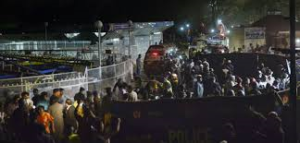
Pakistan hunts those behind attack that killed more than 70 in Lahore

Lahore massacre Credit: amny.com
Lahore massacre
Credit: amny.com

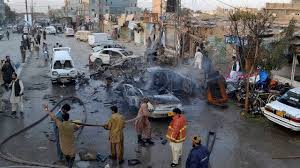
Islamabad, March 28 – Pakistani authorities are searching for fighters from a Taliban militant faction that claimed responsibility for the Easter suicide bombing of a public park in Lahore that killed at least 72 people, many of whom were thought to be children.

The first funerals for those killed were taking place on Monday as the country began a three-day mourning period.

Pakistan’s worst-ever attack on beleaguered Christians prompts warning by bishop for future of minority in Muslim countries.

The bomber blew himself up near an entrance to Gulshan-e-Iqbal Park, close to a children’s play area, on Sunday evening. The sound of the explosion was heard several kilometres away and eyewitnesses said there were big crowds in the area because of the Easter holiday.

“We must bring the killers of our innocent brothers, sisters and children to justice and will never allow these savage inhumans to over-run our life and liberty,” military spokesman Asim Bajwa said in a post on Twitter.

A faction of the Pakistani Taliban, Jamaat-ul-Ahrar, claimed responsibility for the explosion, saying it was targeted at Christians celebrating Easter. A spokesman for the group, Ehsanullah Ehsan, told the Guardian: “We have carried out this attack to target the Christians who were celebrating Easter. Also this is a message to the Pakistani prime minister that we have arrived in Punjab [the ruling party’s home province].” However the Punjab government denied the claim that the bombing was aimed exclusively at Christians, as those in the park were from all backgrounds.

“I saw body parts everywhere, especially those of young children. It was quite haunting, as many of the children’s rides were still operating, while there were dead bodies lying all around them,” said Mohammad Ali, a student who lives nearby and went to the park after hearing the blast.

Kiran Tanveer, another local resident, said: “There was a deafening noise. I immediately thought it must be a blast. I went outside to see. I saw injured people being taken and everyone running in all directions. It was a complete chaos.”

Shortly after the explosion, the area was cordoned off by law-enforcement agencies as the army and ambulances also reached the scene.

Local police said they had found one leg and the head of the suicide bomber. A police spokesman said: “He was around 23 to 25 years old. Initial reports suggest at least 20kg of explosives were used and the suicide jacket contained nuts and bolts,” a police official told local media.

An emergency was declared in the city’s hospitals and an appeal for blood donations made. Many family members were still looking for their loved ones late into the night.

Senior police official Haider Ashraf put the toll at 72 on Monday, saying at least eight children were among the dead, though other sources estimated that the proportion of children among the dead was much higher. Many of those injured were said to be in a critical condition.

Pakistan’s prime minister, Nawaz Sharif, cancelled a planned trip to the UK on Monday, where he was scheduled to stop over before heading for the US. A three-day mourning period was announced in Punjab province.

The chief of Pakistan’s army, General Raheel Sharif, who is also in charge of the country’s security policy, chaired a high-level meeting late on Sunday night, which was attended by the heads of the military and intelligence services.

Many Christians have accused the government of not doing enough to protect them, saying politicians are quick to offer condolences after an attack but slow to take any real steps to improve security.

The US National Security Council spokesman, Ned Price, said: “The United States condemns in the strongest terms today’s appalling terrorist attack in Lahore, Pakistan. This cowardly act in what has long been a scenic and placid park has killed dozens of innocent civilians and left scores injured.”

While Lahore was reeling from the attack, Islamabad, the Pakistani capital, witnessed riots erupting outside the parliament house. Supporters of Mumtaz Qadri, who was hanged last month for the murder of Punjab’s governor Salman Taseer in 2011, are staging a sit-in outside the parliament and have given the Pakistani government a list of demands, the foremost of which is the immediate execution of Aasia Bibi, a Christian woman who is on death row charged with blasphemy.

Qadri, Taseer’s bodyguard, shot him over the governor’s call to reform the blasphemy law and his support for Aasia Bibi.

Safdar Dawar contributed reporting on this from Peshawar

Brothers Among 3 Brussels Suicide Attackers

Brothers in crime (Credit: rt.com)
Brothers in crime
(Credit: rt.com)

BRUSSELS, March 23 — The Brussels suicide bombers included two Belgium-born brothers with a violent criminal past and suspected links to plotters of the Islamic State’s Paris attacks last November, the authorities said on Wednesday, raising new alarms about Europe’s leaky defenses against a militant organization that has terrorized two European capitals with seeming impunity.

One of the brothers was deported by Turkey back to Europe less than a year ago, Turkey’s president said, suspected of being a terrorist fighter intent on entering Syria, where the Islamic State is based. Despite that statement, Belgian officials said neither brother had been under suspicion for terrorism until recently, an indication of the Islamic State’s ability to remain steps ahead of European intelligence and security monitors.

At least 31 people as well as the suicide bombers died on Tuesday in the blasts — two at the Brussels international airport departure terminal from homemade bombs hidden in luggage, and one at a subway station about seven miles away in the heart of Brussels. The number of wounded climbed to 300 from 270 on Wednesday as the area slowly sought to recover from one of the deadliest peacetime assaults in Belgium’s history.

“The European values of democracy and of freedom are what was savagely assaulted by these tragic attacks,” Prime Minister Charles Michel said after meeting with his French counterpart, Manuel Valls, who said, “Our two peoples are united in this hardship.”

Many Belgians attended memorials and others stayed home from work. Subway service was reduced and the airport, now a crime scene, was to remain closed at least through Thursday. And new evidence emerged of how the magnitude of the attacks could have been far worse.

The authorities recovered two undetonated bombs at the airport that had been constructed with 20 to 40 pounds of a volatile compound known as TATP — an explosive also used in the Paris attacks — combined with ammonium nitrate and metal bolts and nails, according to an American official who had reviewed intelligence shared by Belgium. The official said they also recovered what the Belgians called a suicide belt at the site, and found two more bombs concealed in suitcases, similar to those recovered at the airport, at the residence where the bombers hailed a taxi before Tuesday morning’s attacks.

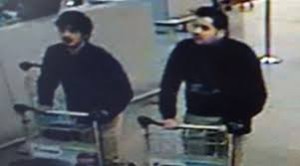
As of Wednesday evening, the police were still hunting for at least one other member of the Brussels bombing ring, a man in a white coat and dark hat seen pushing a luggage cart in an airport surveillance photo, who was believed to have escaped before the explosions. They were also trying to determine if the other suicide bomber at the airport was Najim Laachraoui, 24, a Belgian believed to be a bomb maker, who has been linked to the Paris attacks.

Advertisement

Continue reading the main story

There were indications that the Brussels bombers may have acted out of urgency because they feared discovery after the arrest on Friday in Belgium of the only remaining survivor among the Paris attackers, Salah Abdeslam, who is said to be cooperating with the authorities.

The Belgian prosecutor said the authorities found a recently composed will — which was possibly a suicide note — of the elder brother involved in the Brussels bombing, Ibrahim el-Bakraoui, 29, on a discarded computer in a garbage can. The will expressed his fear of being caught and ending up in a prison cell.

Mr. Bakraoui and the unidentified bomber blew themselves up at the Brussels airport at 7:58 a.m. Tuesday, in two explosions nine seconds apart. At 9:11 a.m., his younger brother, Khalid el-Bakraoui, 27, carried out the suicide attack at the Maelbeek subway station.

While the Belgian authorities have been credited with acting quickly in the aftermath of the assaults, there were growing questions about whether they had also suffered an enormous intelligence lapse.

The most prominent question arose from assertions by Turkey’s president, Recep Tayyip Erdogan, that his government had detained Ibrahim el-Bakraoui near the Syrian border on June 14, alerted the Belgian government that he “was a foreign terrorist fighter,” and then deported him to the Netherlands.

“Despite our warnings that this person was a foreign terrorist fighter, the Belgian authorities could not identify a link to terrorism,” Mr. Erdogan said at a news conference in Ankara.

Justice Minister Koen Geens of Belgium acknowledged that Mr. Bakraoui had been deported to Europe last year, but he told the VRT broadcasting service that he was not known to the Belgian authorities for terrorism but was a common criminal who had been given conditional release from prison.

In his own news conference, Frédéric Van Leeuw, the Belgian federal prosecutor, described the trail that led investigators to identify the brothers.

After the attacks, a taxi driver who suspected that he may have driven the bombers to the airport approached the police and led them to a house on Rue Max Roos, in the Schaerbeek neighborhood of Brussels, where he said he had picked up three men, according to Mr. Van Leeuw. There, the prosecutor said, the authorities found about 33 pounds of TATP, considered a large amount.

At the apartment in Schaerbeek, investigators also found nearly 40 gallons of acetone and nearly eight gallons of hydrogen peroxide. Acetone, a solvent in nail polish remover, and hydrogen peroxide, found in hair bleach, are among the ingredients used to make TATP. The investigators also found detonators, a suitcase full of nails and screws, and other materials that could be used to make explosive devices.

On Wednesday, the Belgian police raided a building in the Anderlecht neighborhood of Brussels. Officers in protective clothing carted out files and plastic boxes as masked officers stood guard outside. Two police officers in the neighborhood said an arrest had been made, but the identity of that person was not clear.

Several Belgian news outlets reported last week that the Bakraoui brothers, who grew up in the working-class Laeken neighborhood, were wanted for questioning in connection with a March 15 raid on an apartment in the Brussels suburb of Forest, which had been linked to the Paris attacks. It was not clear why the authorities did not formally ask the public to help find them.

Ibrahim el-Bakraoui was sentenced in 2010 to nine years in prison for shooting at police officers after a robbery attempt at a currency exchange office. It was not clear when or why he was released, or how he ended up in Turkey.

In 2011, Khalid el-Bakraoui was sentenced to five years in prison for attempted carjacking; when arrested, he was in possession of assault rifles. Interpol issued a warrant for him in August after he violated his parole. He is believed to have used a false name to rent a safe house in Charleroi, Belgium, and the apartment in Forest. Fingerprints belonging to two of the Paris attackers, Abdelhamid Abaaoud and Bilal Hadfi, were found in the Charleroi house on Dec. 9, and Mr. Abdeslam’s prints were found in the Forest apartment.

Speaking on Belgian radio on Wednesday morning, Interior Minister Jan Jambon said that the police raids would continue, and that the threat status would remain at its highest, Level, 4. “There are many hypotheses to put on the table,” he said. “It’s up to investigators to sort out fact from fiction.”

Speaking later to RTL radio, Mr. Jambon said it was also unlikely that the attacks could have been avoided even if Belgium had been at the highest threat level instead of Level 3, which was imposed after the Paris attacks.

He said Belgium had “everything possible in place to avoid a catastrophe like what happened yesterday, like other countries.”

Areas like the Brussels airport departure hall are particularly vulnerable because, as at most Western airports, bags are not searched until after check-in. That allows a would-be attacker to pack a bomb into a suitcase that could have far more space than an explosive vest and therefore be far more lethal.

In terrorism-plagued countries like Afghanistan and Iraq, and across the Middle East, bags are put through scanners when travelers enter the airport.

Captured Paris Terror Suspect Says He Planned More Attacks

Salah Abdesalam (Credit: independent.co.uk)
Salah Abdesalam
(Credit: independent.co.uk)

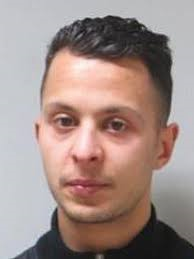
BRUSSELS, March 20—The capture of accused Paris attacker Salah Abdeslam yielded crucial insight into how he used local connections to hide in the Belgian capital for months and led to his admission he was preparing to strike again, officials said.

Friday’s arrest of Mr. Abdeslam several hundred yards from his family home has left authorities trying to determine the extent to which Europe’s most wanted man relied on friends and family to stay undetected since the Nov. 13 attacks. They said the investigation into the Paris attacks so far suggests that fighters trained in Syria could tap such a network of local sympathizers to prepare new strikes.

“We have found a lot of weapons, heavy weapons, in the first investigations and we have found a new network around him in Brussels,” Belgian Foreign Minister Didier Reynders said Sunday. He added that the French-Belgian investigation had discovered more than 30 people involved in the Paris attacks.

“But we are sure there are others,” he said.

European authorities say they are searching for at least one Syrian-trained fighter who worked with Mr. Abdeslam. And Belgian officials said the network is much larger than they previously suspected. In Brussels on Sunday, a heavy police and army presence guarded train stations and the city’s main tourist areas.

The combination of experienced jihadists with no prior connection to Belgium and individuals with local knowledge is a key focus of

investigators anxious to prevent further attacks and break open the Islamic State terror network.

Mr. Abdeslam was assisted before and after the Paris attacks by a group of at least three trained fighters with ties to Islamic State, officials said. One of the men is dead, and a second has been captured. A third—known by the alias Soufiane Kayal—remains at large, Belgian authorities said.

According to Paris prosecutors, Mr. Abdeslam told Belgian investigators that he had intended to blow himself up on Nov. 13 with other suicide bombers at the Stade de France soccer stadium. But he said he changed his plans at the last moment. Mr. Abdeslam’s lawyer said Sunday that his client was cooperating with authorities, though he planned legal action against the French prosecutor for allegedly revealing details of confidential Belgian court proceedings. Mr.

Reynders, the foreign minister, said Mr. Abdeslam told prosecutors he had been ready to carry out follow-up attacks.

Another radical fighter—an Algerian man whom police identified as Mohamed Belkaid—was shot dead last Tuesday while holding police at bay by firing a Kalashnikov from an apartment window. Mr. Abdeslam and a man believed to be a Syrian-trained fighter using the alias Amine Choukry had been hiding inside and were able to escape, authorities say.

“People are coming over from Syria constantly,” said Belgian Justice Minister Koen Geens on television on Sunday. “They are unknown to us; often they haven’t been to Europe before. That’s a challenge we face: the cooperation between local networks that are very integrated and people who are trained and come from the Middle East.”

Belgian investigators said they were struck at the fanaticism and violence they encountered in the Tuesday raid. When Mr. Belkaid opened fire with an assault rifle, he “knew he was not going to come out alive,” said one Belgian official. “This shows the level of training and determination these people have,” the official said.

Belgian officials say two months before the November Paris attacks, Mr. Abdeslam linked up with the fighters from Syria. Mr. Abdeslam picked up both Mr. Kayal and Mr. Belkaid in Budapest, where they had taken cover in the wave of Syrians fleeing war, officials said. A U.S. official said Islamic State has been hiding fighters without European passports in the flow of migrants. “They are taking advantage of the migrant crisis,” said the official.

Investigators haven’t determined precisely where Mr. Abdeslam met the other fighter, Mr. Choukry, and brought him to Brussels, but it was also allegedly ahead of the Paris attacks. The two men were stopped and fingerprinted in Germany on Oct. 3.

But it was a network of childhood friends, family members and fellow petty criminals that apparently helped Mr. Abdeslam and the Syrian-trained fighters stay under cover immediately before and after the Paris attacks, authorities said. Without their assistance, they said, he couldn’t have remained at large for four months.

A French national, the 26-year-old Mr. Abdeslam grew up in Molenbeek, a poor but gentrifying neighborhood of Brussels with a large Muslim population. Molenbeek appears to be one of the places where the Paris attackers organized the November terror assault and has long been the focus of counterterror investigations by Belgian authorities.

On the night of the Nov. 13 attacks, Mr. Abdeslam is suspected of escaping from Paris with the help of childhood friends from Molenbeek—Hamza Attou and Mohammed Amri—who drove him back to Brussels. The pair admit driving him back but say they had nothing to do with the attacks and didn’t know of his involvement.

Another Brussels friend, Ali Oulkadi, admitted to having driven Mr. Abdeslam on the day after the attacks to another Brussels district, where police later found one of Mr. Abdeslam’s hide-outs, according to his lawyer. Mr. Oulkadi said he hadn’t previously known of Mr. Abdeslam’s involvement.

Officials say Mr. Abdeslam didn’t go into hiding in Molenbeek for the entire four months. Instead, he moved around Brussels, squatting in houses that weren’t in use or abandoned—such as the apartment in

houses that weren’t in use or abandoned—such as the apartment in the Brussels neighborhood where a the gunbattle broke out on Tuesday, just a few days before his capture.

Another apartment where Mr. Abdeslam is believed to have returned to after the Nov. 13 attacks is in the neighborhood of Schaerbeek, where police said they found evidence that the suicide vests used in Paris had been assembled.

Under the Radar

From the time suspect Salah Abdeslam fled Paris after the Nov. 13 attacks, Belgian authorities believe he was hiding out in several Brussels neighborhoods. He was arrested in his home district, some 500 yards from his grandmother’s house.

Molenbeek district counselor Ahmed El Khannouss, who knew Salah Abdeslam and his family, said the fugitive couldn’t have hidden for so long if he had relied only on his childhood friends and family members.

“It’s not correct to say he was in Molenbeek all the time. He was taken to places that are cut off from society—the flat in (the Brussels district) Forest had no electricity or water. Only in the end, he spent three to four days in the basement of his cousin,” Mr. El Khannouss said.

The gunbattle on Tuesday provided investigators with the hard evidence they needed that Mr. Abdeslam was still in Brussels. The funeral this past Thursday of Mr. Abdeslam’s brother, one of the suicide attackers in Paris, also provided the investigative break that they needed to catch him.

One of the men at the funeral, Abid Aberkan, is a distant cousin of Mr. Abdeslam. According to investigators, Mr. Aberkan had offered his mother’s house to shelter Mr. Abdeslam in Molenbeek after the gunbattle. According to local officials, police began monitoring many of the people attending the funeral.

From the surveillance they learned of a mobile number possibly being used by Mr. Abdeslam. That number led police to the Molenbeek apartment where Mr. Abdeslam was hiding, the officials said.

Mr. Aberkan remains in custody after being charged with participation in the activities of a terrorist organization and for hiding criminals. Nathalie Gallant, who represents both the families of Mr. Abdeslam and of Mr. Aberkan, told Belgian television that the two families were linked but said Mr. Aberkan had nothing to do with the attacks.

—Natalia Drozdiak and Matthias Verbergt contributed to this article.

Corrections & Amplifications:
Nathalie Gallant represents the families of Salah Abdeslam and Abid Aberkan, a distant cousin of Mr. Abdeslam. An earlier version of this article misspelled Ms. Gallant’s last name. (March 20, 2016)


Pakistan attack raises tough question: should teachers shoot back?

Hamid Hossain (Credit: dawn.com)
Hamid Hossain
(Credit: dawn.com)

CHARSADDA/ISLAMABAD – Stuck  with 15 of his students on a third floor balcony of a campus building as gunmen came up the stairs, university director Mohammad Shakil urged Pakistani police arriving at the scene to toss him up a gun so he could shoot back.

“We were hiding … but were unarmed,” Shakil told Reuters, speaking after four Islamist militants attacked Bacha Khan University in Pakistan’s troubled northwest on Wednesday, killing more than 20 people.

“I was worried about the students, and then one of the militants came after us,” Shakil added. “After repeated requests, the police threw me a pistol and I fired some shots at the terrorists.” 

As more details of Wednesday’s assault emerged, attention focused on at least two members of staff who took up arms to resist attackers bent on killing them and their students.

Some hailed them as heroes, as the country digested an attack which bore similarities to the massacre, in late 2014, of 134 pupils at an army-run school in Peshawar, about 30 km (19 miles) from where this week’s violence occurred.

Others questioned whether teachers should be armed, as many are, because it goes against the ideals of the profession.

Such a dilemma may have been far from the mind of chemistry professor Hamid Hussain, as he locked himself inside a room with colleagues after gunmen stormed an accommodation block on the university campus.

When the assailants broke down the door, Hussain fired several rounds from his pistol, according to Shabir Ahmad Khan, an English department lecturer taking cover in an adjacent washroom.

“They carried on heavy shooting and I was preparing myself for death, but then they did not enter the washroom and left,” Khan recalled.

Later on in the same building, Hussain fired again at the militants to allow some of his students to get away, surviving pupils told local media. Hussain was subsequently shot and later died from his wounds.

“Kudos to professor Dr Hamid Hussain. Our hero fought bravely n saved many,” Asma Shirazi, a popular talk show host, said on Twitter.

TEACHERS’ DILEMMA

Others, too, have credited the actions of Hussain and Shakil with helping to prevent the gunmen, armed with assault rifles and hand grenades, from spilling more blood.

Bacha Khan University also employed around 50 of its own guards who, witnesses said, fought for close to an hour to keep the gunmen isolated and prevent them from entering the girl’s hostel as the police and army arrived.

Pakistan army spokesman General Asim Bajwa said the security guards responded “very well” to the attack before reinforcements reached them.

In the wake of the 2014 school massacre, teachers in Khyber Pakhtunkhwa province, where Peshawar is located, were offered weapons training. Yet some are wary of arming teachers and encouraging them to engage in battle.

Gun ownership is common in Pakistan, owing to liberal licensing laws, and particularly so in the semi-autonomous tribal belt near the Afghan border where the threat of militant violence is high.

Jamil Chitrali, president of the Khyber Pakhtunkhwa University Teaching Staff Association, said more teachers were now carrying personal weapons, as security had worsened.

“Arms are against the norms of my profession,” he said. “I am teaching principles and morality in the class. How I can carry a gun?”

WHO IS TO BLAME?

Four gunmen, all since killed, were involved in Wednesday’s attack, officials said. They used the cover of thick fog to scale the campus’ rear walls, before storming student dormitories and classrooms and executing people at will.

Some 3,000 students were enrolled at the university, many living on campus, while hundreds of visitors had arrived to hear a poetry recital to commemorate the life of local Pashtun nationalist hero and pacifist Khan Abdul Ghaffar Khan, after whom the university is named.

The provincial government declared a day of mourning on Thursday as grieving families buried their dead and survivors recalled their ordeal.

Who was to blame remains a mystery. A senior commander of the Pakistan Taliban, Umar Mansoor, on Wednesday claimed responsibility, but an official spokesman for the group later denied involvement, calling the attack “un-Islamic”.

The hardline Islamist movement was believed to be behind the school massacre just over a year ago, and educational institutions are an increasingly common target for militants wanting to frighten the public.

Pakistan has killed and arrested hundreds of suspected Taliban militants in the last year under a major crackdown against a group fighting to overthrow the government and install a strict interpretation of Islamic law.

The army said on Thursday the attack in Charsadda, near Peshawar, was coordinated from across the border inside Afghanistan, according to its investigations.

Army chief General Raheel Sharif has called Afghan President Ashraf Ghani and the U.S. commander of international forces in Afghanistan to ask their help in locating those it holds responsible for the assault, army spokesman Bajwa said on Twitter.

Guns put Sindh at the Mercy of Muggers & Target Killers

The band of stranglers engaged in ‘thuggee’ in India during the 18th and 19th centuries is estimated to have killed between 50,000 and 100,000 people. In a strikingly similar occupational pursuit, the band of assailants engaged in ‘mugging’ on the streets of Karachi appears to have done far better.

Zubair Habib, the newly appointed chief of the Citizens-Police Liaison Committee (CPLC), confirmed that in 2015 alone, 37,390 incidents of mugging at gunpoint were reported in Karachi. What he did not reveal was the fact that only one out of five victims ever bothers to lodge an FIR.

Today, ‘mugging’ is a far more sophisticated and efficient version of its forerunner – ‘thuggee’. While ‘thugs’ looped a ‘rumaal’ or an handkerchief around a victim’s neck, ‘muggers’ use sophisticated weapons. The use of weapons expedites the decision-making process and the deal is clinched within a matter of seconds.

The arrival of the British and their rigorous methods to fight crime meant that ‘thugs’ had met their match. A ‘Thuggee and Dacoity’ Department was established in 1835 and William Henry Sleeman was appointed as its first superintendent. Using simple techniques and plenty of common sense, Sleeman began to meticulously map each attack site and profile ‘thuggee’ gangs and their techniques. His specially trained police officers, disguised as merchants and travellers would infiltrate gangs and take preemptive actions to capture gangsters. The captured ‘thugs’ were given the incentive to save themselves if they informed on their accomplices. Special trial courts were set up and more than 3,700 ‘thugs’ were either hanged or ‘transported for life’. In a short span of about 10 years, Sleeman succeeded in eradicating what had plagued the Subcontinent for over two hundred years.

The Sindh police had only to follow the recipe of William Sleeman to eradicate the modern version of ‘thuggee’ in Karachi. The process can be started by identifying 10-20 intersections notorious for mugging incidents, installing cameras to cover these locations, stationing four armed policemen (in plain clothes) at each of these intersections in a manner that they have a full view of the location and by closely monitoring each intersection from a central control room. The police on duty can be alerted as soon as a mugging incident is observed (if the event has not already been detected). The police can use stun (or real) guns to disable and arrest culprits. The camera evidence should be enough to prosecute them. The element of surprise is a key factor in combating this crime. Finally, close-circuited cameras are discreetly relocated at different potential mugging sites so that muggers are never sure of when and what location is being actively monitored. It is most likely that the police would reject these simple methods and instead opt for more complex, cost-intensive and externally-funded options.

Why is the police hesitating to handle a localised version of the task that Sleeman could accomplish 200 years ago? Why has a dedicated ‘Mugging and Dacoity’ Department not been set up thus far? Why is a major part of the Sindh police employed to protect some 1,000 VIPs in the province, leaving people at the mercy of muggers and target-killers?

Along with the specially designed ‘mugger traps’, a number of other steps ought to be taken in parallel. A nationwide hotline for reporting the loss of cell phones should be advertised and implemented. Cancellation of SIM and IMEI should be made obligatory on mobile companies and the Pakistan Telecommunication Authority (PTA) as soon as information is received about a phone theft/snatching. Phones with missing or fudged IMEIs should not be allowed to operate and the PTA should assume the overall responsibility to ensure compliance. A national database of cancelled IMEIs should be maintained on the PTA’s website. The sale and purchase of phones (new and second-hand) must be traceable to equipment IMEI and the CNIC of the customer. If in the 19thcentury, William Sleeman could single-handedly eliminate ‘thuggee’ throughout India, how can a 21st century nuclear state not stop mugging in Karachi?

The writer is a management systems consultant and a freelance writer on social issues

Turkey Blames Islamic State in Istanbul Attack

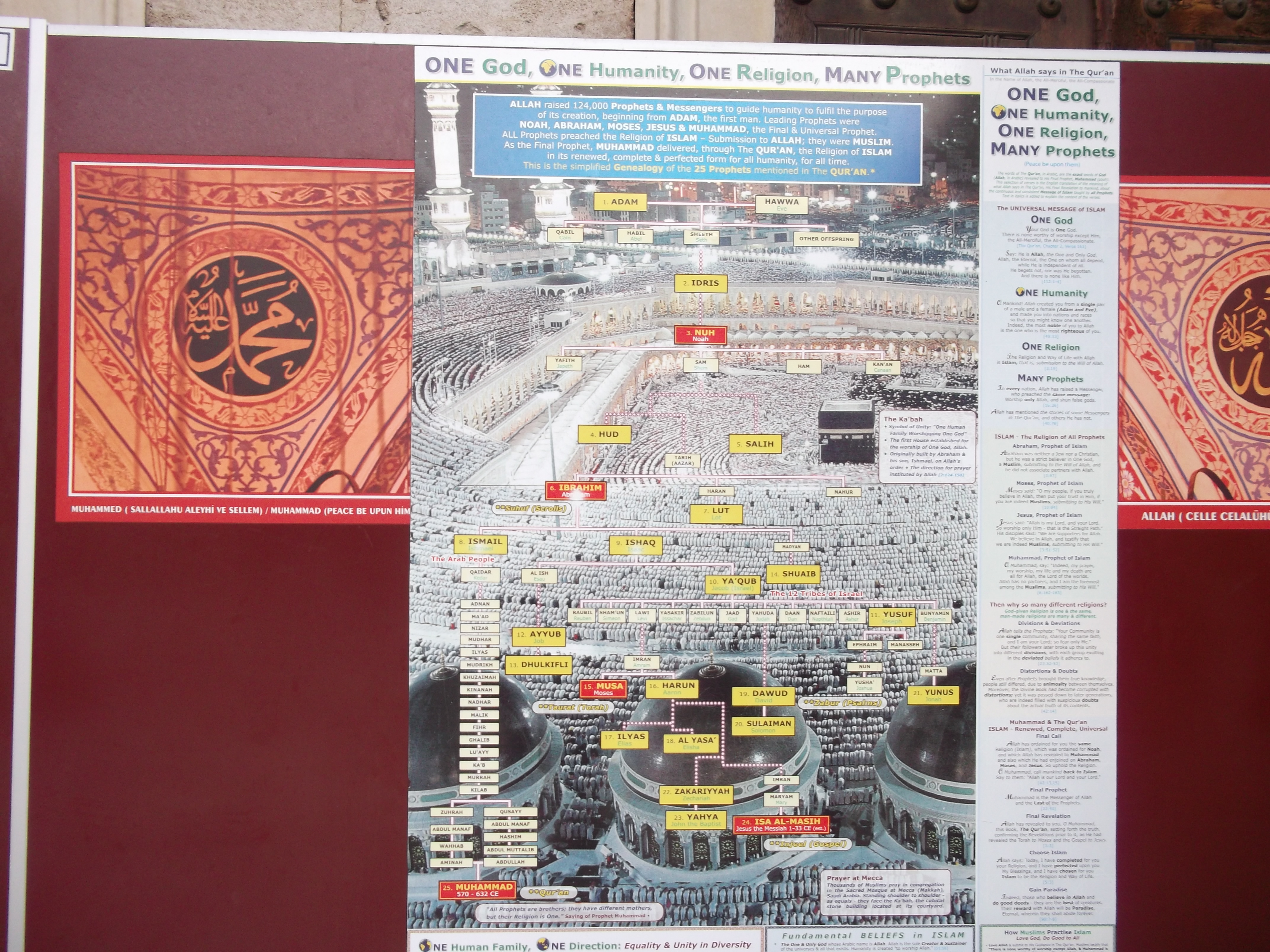
Blue Mosque (Istanbul) inscription (Credit: Photo by author)
Blue Mosque (Istanbul) inscription
(Credit: Photo by author)

ISTANBUL, Jan 12 —An Islamic State suicide bomber struck Istanbul’s historic district Tuesday, killing at least 10 people in a blow to Turkey’s vital tourism industry that comes as the U.S. and its allies are stepping up their campaign against the extremists.

The bomber—identified by Turkish authorities as a Syrian citizen born in 1988—walked up to a foreign tour group preparing to visit the Blue Mosque and other world-renowned buildings and detonated the explosives shortly after 10 a.m., officials said. At least eight of those killed and nine of the injured were from Germany, where Chancellor Angela Merkel’s open-door policy for Syrian refugees has come under increasing fire.

Turkey and the U.S. are developing new plans to choke off Islamic State supply routes by clamping down on a vital 60-mile stretch of the Turkey-Syria border, which the militants use to transport weapons, supplies and fighters in and out of their Syrian strongholds.

Ankara has asked the Pentagon to arm and train Turkish-backed Arab militants in Syria to help control their side of the border, officials said yesterday. U.S. officials say they are considering the request.

Islamic State, which has sought to extend its reach globally, has responded to the pressure by staging deadly attacks around the world, including two suicide bombings in Ankara in October that killed more than 100 people.

Tuesday’s attack may signal a new attempt by the Sunni Muslim extremist group to destabilize Turkey by targeting a crucial industry. Famously straddling the narrow Bosporus Strait between Asia and Europe, Istanbul is the world’s fifth most popular city for tourists world-wide and the third most visited in Europe after Paris and London, according to MasterCard Inc. ’s global destinations index. Some 32 million tourists visit Turkey annually, with Istanbul recording 12 million arrivals last year.

There was no immediate claim of responsibility. But Prime Minister Ahmet Davutoglu said the bomber belonged to Islamic State.

“This attack is a repercussion on Turkey of the civil war that has been going on in Syria for five years, and its related proxy wars,” said Numan Kurtulmus, Turkey’s deputy prime minister.

Firas Abi Ali, a senior analyst with IHS Country Risk, described the Islamic State attack as a risky strategic shift that would “herald a broader campaign against Turkey” and “will likely provoke a significant backlash by the Turkish government.”

Turkey’s President Recep Tayyip Erdogan pledged to press on with the fight. “Turkey is the primary target for all terrorist organizations active in the region,” he said. “Turkey will continue its determined and principled fight against terrorism until the very end.”

The German chancellor expressed her condolences to the victims’ loved ones and urged solidarity with Turkey. “Let us not forget the people in Turkey, who again and again have become targets of terror,” Ms. Merkel said.

More than 400,000 Syrians arrived in Germany last year to apply for asylum, according to government figures, part of a massive wave of migrants who crossed into Europe via Turkey.

Critics say last year’s uncontrolled migration has exposed Europe to heightened security risks, and opponents of Ms. Merkel’s welcoming policy have highlighted the possibility of Islamic State militants entering among the refugees.

Eyewitnesses and Turkish officials said the bomber appeared to target the group gathered near an ancient Egyptian obelisk, close to the entrance to the Blue Mosque compound.

“It was a single, very loud blast,” said Mahmut Karademir, a restaurant worker near the blast site. “Then people started running for their lives.”

Berlin-based Lebenslust Touristik GmbH said members of one of its tour groups were among the dead and injured.

“These are difficult hours for all of us,” said German Foreign Minister Frank-Walter Steinmeier. “Hours of mourning, of anger, and of outrage.”

Tourism makes up around 4% of Turkey’s economy and generated close to $30 billion last year, according to the government’s investment-promotion agency. Istanbul alone generated a third of that total.

Olivier Jager, chief executive of Forward Data SL, a tourism consultancy, said such attacks typically “trigger immediate travel cancellations, followed by lower volumes of new booking during some time,” a trend shown after the deadly attacks in Paris last year and a related security crackdown in Brussels.

“The time necessary for recovery will depend on the ability of the Turkish authorities to reassure leisure travelers that visiting Istanbul is safe,” said Mr. Jager.

The industry is already struggling to deal with a steep decline in Russian tourists after Turkish jets shot down a Russian warplane carrying out airstrikes along the Turkey-Syria border last fall.

Russia imposed various sanctions in response, including banning charter flights.

Mr. Kurtulmus, Turkey’s deputy prime minister, said Turkey had been systematically targeted since the July 20 bombing in the southeastern town of Suruç.

That attack, linked to Islamic State, killed 33 peace activists as they prepared to cross the border to the Syrian city of Kobani, where U.S.-backed Kurdish militants had just ousted Islamic State fighters.

Turkey soon found itself in a two-front war against Islamic State and the Kurdistan Workers’ Party, or PKK, which has been fighting for Kurdish autonomy for decades. Both groups are designated by Ankara and its Western allies as terrorist organizations.

With the peace process between Turkey and its Kurds stalled, the PKK and its affiliates have led an urban uprising in Turkey’s southeast.

They targeted a police station in Istanbul in a deadly assault in August, and claimed a mortar attack on the smaller of Istanbul’s two airports in December.

Ankara has responded by opening its air bases for U.S.-led coalition forces fighting Islamic State, launching limited airstrikes on the jihadist organization in Syria and on PKK camps in northern Iraq, and launching military operations against Kurdish insurgents in southeastern Turkey.

But the campaigns have failed to halt the death toll, as soldiers and police are killed battling the PKK, Kurdish separatists are killed by the dozens and civilians get caught in the crossfire.
—Emre Peker and Anton Troianovski in Berlin contributed to this article

Suicide bomber kills at least 15 outside Pakistan polio center

Attack on Quetta polio center (Credit: youtube.com)
Attack on Quetta polio center
(Credit: youtube.com)

Quetta, Jan 12: A suicide bomber killed at least 15 people, most of them police, outside a polio eradication center in the Pakistani city of Quetta on Wednesday, the latest militant attack on the anti-polio campaign in the country.

Two militant groups – the Pakistani Taliban and Jundullah, which has links with the Taliban and has pledged allegiance to Islamic State – separately claimed responsibility for the attack.

The bomb blew up a police van that had just arrived at the center to provide an escort for workers in a drive to immunize all children under five years old in the poor southwestern province of Baluchistan.

“It was a suicide blast, we have gathered evidence from the scene,” Ahsan Mehboob, the provincial police chief told Reuters.

“The police team had arrived to escort teams for the polio campaign.”

Ahmed Marwat, who identified himself as a commander and spokesman for Jundullah, said his group was responsible.

“We claim the bomb blast on the polio office. In the coming days, we will make more attacks on polio vaccination offices and polio workers,” he said by telephone.

The Pakistani Taliban also claimed responsibility in a statement released by their spokesman, Mohammad Khorasani.

Teams in Pakistan working to immunize children against the virus are often targeted by Taliban and other militant groups, who say the campaign is a cover for Western spies, or accuse workers of distributing drugs designed to sterilize children.

The latest attack killed at least 12 policemen, one paramilitary officer and two civilians, officials said. Twenty-five people were wounded.

Pakistan and neighboring Afghanistan are the only two countries in the world where polio remains endemic, the World Health Organization says.

The campaign to eradicate the virus in Pakistan has had some recent success, with new cases down last year, but violence against vaccination workers has slowed the effort.

(Reporting by Gul Yousafzai and Syed Raza Hassan; Additional reporting by Saud Mehsud in Dera Ismail Khan and Jibran Ahmed in Peshawar; Writing by Tommy Wilkes; Editing by Simon Cameron-Moore, Robert Birsel)

MQM Distances itself from Dr Imran Farooq’s Assassins

ISLAMABAD, Jan 8: Two men suspected of being involved in the murder of Muttahida Qaumi Movement’s self-exiled leader Dr Imran Farooq recorded their confessional statements before the Islamabad deputy commissioner on Thursday, sources said.

The FIA had arrested three suspects — Khalid Shamim, Mohsin Ali Syed and Moazzam Ali — for their alleged role in Dr Farooq’s murder.

While Shamim and Mohsin Ali confessed to their involvement, Moazzam Ali, said to be the prime suspect, was unwilling to come up with a confession, sources in the prosecution told Dawn.

In his statement recorded under Section 164 of the criminal procedure code, Mohsin said that Moazzam had handled the travel documents to live in the United Kingdom.
According to private news channel Geo News, Mohsin in his statement gave graphic details of the murder.

He said that at a university hostel in London he and his accomplice Kashif Khan Kamran, whose whereabouts are not known and may have died, prepared a plot to kill Dr Farooq.

He said they monitored the movement of Dr Farooq in London to know about his routine.

On the day of the murder, he said, he grabbed Dr Farooq while Kashif stabbed him and then bludgeoned him with a brick to ensure his death.

Shamim said that he had consented to join the murder plot because he was a diehard MQM activist, sources said.

Shamim claimed that senior MQM leader Muhammad Anwar gave the order to assassinate Dr Farooq.

The JIT constituted to investigate the murder had suggested that MQM chief Altaf Hussain regarded Dr Farooq as a threat and wanted him eliminated.

The JIT report also noted that all three suspects were members of the All Pakistan Muttahida Students Organisation, the MQM’s student wing.

The suspects were sent to Adiyala jail on 14-day judicial remand by an Islamabad anti-terrorism court.

The gruesome murder took place on Sept 16, 2010, near Dr Farooq’s London home.

The London police had named Mohsin Ali Syed and Mohammad Kashif Khan Kamran as wanted men in connection with the murder as they were in the UK when Dr Farooq was murdered. They arrested the three men during the last five years but released them later without filing any charges.

However, it was widely reported that both Mohsin and Kamran had been taken into custody by Pakistani intelligence agents the moment they landed at Karachi airport in 2010.

The third suspect, Khalid Shamim, was allegedly taken into custody in January 2011 and a petition regarding his ‘illegal detention and going missing’ was filed by his wife in the Sindh High Court.

In March last year, Moazzam was arrested at his Azizabad house for facilitating the suspects in getting a British visa.

On June 18, 2015, the Frontier Corps claimed to have arrested Mohsin and Shamim in Chaman in Balochistan.

The FC claimed that the two were illegally entering Pakistan from Afghanistan.

On Dec 5, 2015 — the day Karachi went to the local government polls — the FIA registered a murder case against MQM chief Altaf Hussain, his nephew Iftikhar Hussain, Moazzam Ali Khan, Khalid Shamim, Kashif Khan Kamran and Syed Mohsin Ali.

MQM’s reaction
Meanwhile, the MQM made it clear that none of its workers had anything to do with the assassination of Dr Farooq.

“The MQM is aware of reports in the media that individuals held in detention by Pakistani authorities have allegedly confessed to the murder of Dr Imran Farooq. We categorically state that no party personnel have had anything whatsoever to do with the tragic death of Dr Farooq. We mourn the loss of a man who was our friend and colleague for many years,” said a statement issued in Karachi on Thursday evening.
Published in Dawn, January 8th, 2016

The Child Martyrs of Pakistan

APS anniversary (Credit: newsonetv)
APS anniversary
(Credit: newsonetv)

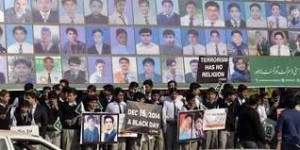
LAHORE, Pakistan — A FEW days after the Pakistani Taliban gunned down 14-year-old Muhammad Shaheer Khan, along with at least 144 others, at the Army Public School in Peshawar last year, his mother received the black gloves he had worn to school that day.

“It was cold,” she told me, about the last morning she had seen him.

It was cold, too, on the night we met, earlier this week. We were sitting on the roof of the home of a couple, Mr. and Mrs. Aurangzeb, whose son was also massacred.

Mr. Aurangzeb has created an open-air room on his rooftop that functions as a shrine to his son and a gathering place for other mourning parents, who meet there twice a week. A poster of the photos of the murdered, mostly schoolchildren, runs the length of one wall. Green banners inscribed with Quranic verses hang on another.

It was two days before Dec. 16, the anniversary of the massacre, and six couples — bundled in overcoats, woolen scarves covering their mouths — had assembled.

When she received the black gloves, Muhammad Shaheer’s mother said, she asked her maid to wash them. “Suddenly, the maid cried, ‘There is blood in these!’ so I rushed to see. Blood was leaking from inside the gloves. I told the maid to get aside,” she said. “I will wash the gloves myself. This is my child’s blood, my own blood.” She touched her stomach. “You see, when my child was shot, he must have put his hand on his stomach to ease the pain.”

The other mothers mechanically wiped away tears.

“So I washed them myself, and the whole tub was filled with blood,” she said. “Then I took the bloodied water and watered my plants with it. It is my blood, so it will stay in my home.”

“But my tears have dried up,” her husband said. He is short and stocky, and introduced himself as a businessman. “Will you please let me talk for five minutes?” he asked, dragging a plastic chair closer to where I was sitting. “No one should interrupt me.”

“What has the government done for us? They have only given us medals. And these medals have gone black, just like their hearts. What operation is the Army doing? Which terrorists are they hanging? Why don’t they show us the photos of the dead terrorists? I would like the government to hang them in the square of this city, so I can go and spit on them. When my child and the children of these parents were killed, they took them to the hospital in Suzuki vans like cut-up pieces of meat.”

He pointed at our host. “Mr. Aurangzeb, here, his son called him from his cellphone after he was shot, to say: ‘Baba, bring me water. I am feeling thirsty.’ His father rushed to the school with two guns in his hands to kill the terrorists himself but he was not allowed in. Please excuse my language — I should not be using this word in front of women — but what have these bastards done for us other than give us rusting medals?”

In the years leading up to the massacre, a debate raged in Pakistan: Are the Taliban our enemies or are they “misguided” Muslims?

Increasingly, the latter narrative was winning out. Its greatest proponent was Imran Khan, the cricket star-turned-politician, who insisted that the government engage the Taliban in peace talks instead of hunting them down because they were “our people, Pakistanis.” The Taliban have historic grievances with the United States, the argument went, and Pakistan is caught in the middle because of its greed for American dollars. The Taliban don’t hate us — they just hate our government’s foreign policy.

The Taliban, energized by the government’s willful impotence, began to kill with impunity. In the last 10 years, more than 50,000 Pakistani civilians — innocent men, women and children — perished in the war on terror.

Then the Taliban attacked the Army Public School on Dec. 16, 2014. For years, Pakistan’s security establishment had resisted decisively moving against the Taliban; it had, in fact, nurtured some of these terrorists as assets in Afghanistan. But now the army was humiliated — an army school had been attacked, army children killed. Suddenly, the Taliban were not misguided Muslims. They were murderers. Politicians, who had previously described the terrorists in painstakingly diplomatic terms, began to curse them. The Pakistani mind-set, which had veered from lamentation (when the Taliban attacks began) to fear (when high-profile politicians began to be assassinated) to denial (when “talks” gained traction) had changed: The people were now angry.

Significantly, the establishment delicately altered the notion of martyrdom. The word for martyr in Urdu is “shaheed.” To achieve martyrdom — or shahaadat — is to be elevated to the highest ranks in heaven for a patriotic sacrifice made on earth. The word had been reserved for Pakistani soldiers killed in war. Now schoolchildren and teachers who had been killed as they sat peacefully in an auditorium were all shaheed, because the Army said so. The message was this: Our children did not die in vain; they are the reason we have gone after the people’s enemy.

Today, a year has passed. The Army Public School has undergone intensive renovation. Brass plaques inscribed with buoyant religious verses adorn the grounds. New vigor has been applied to the operation against the Pakistani Taliban in the mountains of Waziristan. The names of dead terrorists routinely appear as front-page news.

But on the Aurangzebs’ rooftop, the posters of dead children flutter in the wind. The parents, who still feel that far too little has been done, cling to their memories. “My son used to bathe so well, so well,” says Muhammad Shaheer’s mother, “that when he would come out of the shower, shining white, we would say, ‘Look, it’s Katrina Kaif!’ ” — a Bollywood actress.

Another mother looks me in the eye. “There is one thing — one word — that has given me support in this difficult time. That word is ‘shaheed.’ I don’t know how I would have survived if this word did not exist.”


Tashfeen Malik Studied at Conservative Religious School In Pakistan

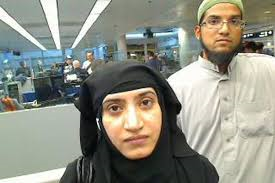
Tashfeen & Rizwan enter US in 2014 (Credit: wsj.com)
Tashfeen & Rizwan enter US in 2014
(Credit: wsj.com)

MULTAN, Dec 7— Tashfeen Malik, who went on a deadly shooting spree in California with her husband last week, studied after college at a conservative Islamic religious school here that attracts relatively well-educated and affluent women.

Officials at the Al-Huda International school said Ms. Malik took classes on the Quran for about a year until May 2014—two months before she moved to the U.S. and married a Pakistani-American man, Syed Rizwan Farook.

Earlier reports suggested she had left Pakistan after completing a university degree here in 2012. Some of her college friends said she hadn’t told them she attended classes at Al-Huda.

Al-Huda was founded in 1994 in Islamabad by a Pakistani woman, Farhat Hashmi, and now has branches around the world, including in the U.S. and Canada, according to the school.

Spokeswoman Farrukh Choudhry described Ms. Malik—who was born in a Pakistani family but grew up in Saudi Arabia—as “very loving and very obedient” while at the school. “No one would have thought that she could do something like this,” she said.

Classmates and university professors described her as traditional, but not extreme.

In a statement Monday, the school said “we cannot be held responsible for personal acts of any of our students.” It said Al-Huda promotes a “peaceful message of Islam and denounces extremism, violence and acts of terrorism.”

U.S. authorities say the 29-year-old Ms. Malik posted a message on her Facebook FB 0.99 % page Wednesday declaring her allegiance to the leader of the Islamic State extremist group, the same day she and her husband killed 14 people and injured 21 others. The couple was later killed in a shootout with police.

U.S. officials say they suspect that Ms. Malik radicalized Mr. Farook, who was born in the U.S. and worked for a county health department in San Bernardino, Calif.

Al-Huda officials in Multan, a city in central Pakistan, say Ms. Malik enrolled in their school April 2013 after completing a pharmacy degree at Bahauddin Zakariya University in the same city. She completed her last class at Al-Huda on May 3, 2014. Eight days later, she sent an email saying she was getting married and moving to the U.S., they said.

She requested information about correspondence courses and it was sent, but the school received no response, Ms. Choudhry said.

However, a woman who said she was a college friend of Ms. Malik said they went together to Al-Huda classes before Ms. Malik graduated from the university. The discrepancy couldn’t immediately be explained.

Ms. Malik appeared religious even when she started at the university in 2007, wearing a niqab—the all-covering veil that leaves only the eyes exposed—throughout her time there, according to her professors.

Unlike traditional madrassas, or religious schools, Al-Huda was founded to provide a modern Islamic education for women. In recent years, it also has begun to offer instruction to men. A poster in a shop window in Multan on Monday offered Al-Huda courses for teenage boys.


Ms. Choudhry said the group teaches students to understand the Quran. “We have no politics, no sect. We don’t touch controversial issues,” she said.

The school’s website says it aims to help students “find inner peace, develop good character, demonstrate effective interpersonal relations and become beneficial members of society working to better serve humanity.”

Critics of the group say it promotes a rigid, puritanical mind-set.

Sadaf Ahmad, author of a book on Al-Huda, said its followers have a “sense of righteousness” and their beliefs “have the potential to become de-humanizing, dangerous and harmful for others.”

Khaled Ahmed, a Lahore-based expert on religious extremism, called Al-Huda’s teachings “retrogressive.” He said because the founder, Ms. Hashmi, “is educated, speaks out against the ‘religious right’ and is a woman, other women find her teachings more acceptable and legitimate.”

He said the group is “increasing in popularity among educated, urban, upper-middle-class and upper-class women.”

Ms. Hashmi has a master’s degree in Arabic from Pakistan’s Punjab University and a Ph.D. in religious studies from the University of Glasgow in Scotland, according to her website.

Her lectures in Pakistan and abroad often attract thousands of women. Her website says most of her funding comes from students, and she claims there that she has no affiliation with any religious group.


Ms. Malik’s family, originally from Pakistan, has been based in Saudi Arabia for about 30 years. One of her brothers, reached by phone in Riyadh, said the family only learned of her role in the California assault on television.

“We are in shock,” he said. “We don’t know what happened to our life.” He described his sister as studious and quiet, and said she showed no evidence of drifting toward extremism.

“She was very normal here,” said the brother, who didn’t want his name used for fear he would lose his job. “She was living in Saudi Arabia. There is no social life here. There is no life outside, no friends.”

He said he last saw her sister around a year and a half ago. They would speak every couple of months under pressure from their mother. “My mother would say: ‘She is your sister, why are you not talking to her?’”

—Margherita Stancati in Riyadh contributed to this article.