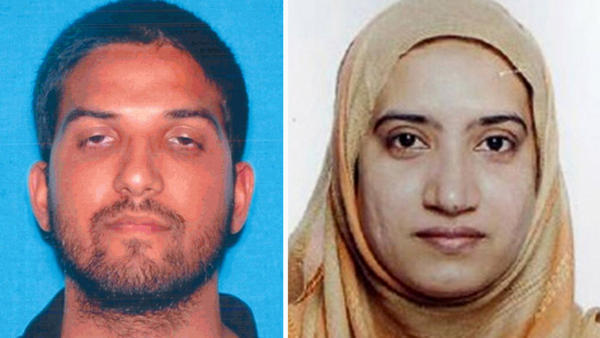
Tashfeen Malik, the 29-year-old female shooter in the deadly San Bernardino rampage, was a onetime “modern girl” who became religious during college and then began posting extremist messages on Facebook after arriving in the U.S., a family member in Pakistan told the Los Angeles Times.
The family member, in Malik’s hometown of Karor Lal Esan who asked to not be identified, said Malik’s postings on Facebook were a source of concern for her family.
“After a couple of years in college, she started becoming religious. She started taking part in religious activities and also started asking women in the family and the locality to become good Muslims. She started taking part in religious activities of women in the area,” the family member told The Times.
“She used to talk to somebody in Arabic at night on the Internet. None of our family members in Pakistan know Arabic, so we do not know what she used to discuss,” the family member said. The family speaks Urdu and a dialect of Punjabi known as Saraiki.
Malik’s paternal aunt, Hafza Batool, told a local correspondent of the BBC that the family was in a state of shock. “She was so modern. I do not know what had happened to her. She brought a bad name to our family,” Batool said.
Malik pledged allegiance on Facebook to a leader of Islamic State just as Wednesday’s attack was getting underway.
The family member who spoke with The Times anonymously said Malik, who was born in Pakistan, moved with her family to Saudi Arabia when she was a child.
Malik traveled frequently to the Punjab region of Pakistan to visit family and then returned to study pharmacology at Bahauddin Zakariya University in the city of Multan in southern Punjab to study from 2007 to 2012, the family member said.
After attending the university in Pakistan, she returned to Saudi Arabia.
Malik met her future husband, Syed Rizwan Farook, online. The couple attacked a holiday gathering of Farook’s co-workers, killing 14 people and injuring 21 others in San Bernardino on Wednesday.
Farook, 28, was born in Chicago, and was the son of Pakistani immigrants — a truck driver and a clerk at Kaiser Permanente. He grew up in Riverside and attended La Sierra High School and studied at Cal State San Bernardino, earning a degree in environmental health. He then got a job as an inspector at the San Bernardino County Department of Public Health.
The two married last year in Islam’s holy city of Mecca in Saudi Arabia, according to Farook’s co-workers. Malik was granted a conditional green card last summer after a background check by the FBI and the Department of Homeland Security, and the couple held a walima, a celebration after the wedding, at the Islamic Center of Riverside for people who couldn’t attend the Saudi ceremony; a few hundred people attended, said Nizaam Ali, who worshiped with Farook at a San Bernardino mosque.
Ali said that he had met Malik on a few occasions, but that she wore a head scarf that obscured most of her face.
“If you asked me how she looked, I couldn’t tell you,” Ali said.
Malik and Farook had a baby girl in May.
Malik’s father owns a house in the Babar Colony neighborhood of Multan, where she attended the university, and she lived there during her studies.
The family was “not too social,” a neighbor told Pakistan’s Channel 24.
“The family would visit the house every three or four months, but they hardly have established links with the people in the area,” the neighbor said.
Dr. Nisar Hussain, one of Malik’s professors in the pharmacology department during her five years at the university, told The Times she was veiled when attending the college.
“She was religious, but a very normal person as well. She was a very hardworking and submissive student. She never created any problem in the class. She was an obedient girl. I cannot even imagine she could murder people,” he said in an interview.
Malik was a good student, and at one point, was first in her class, he said. “I don’t think she had any kind of mental illness. She was among the best students, always hardworking, never created problems.
“Yes, she was religious, but not an extremist. She never tried to influence the class in the name of religion, never,” he said.
women didn’t commingle.
“Tashfeen was an individual who kept to herself most of the time,” said Mohammad Abuershaid, an attorney representing the couple’s family. She was a soft-spoken housewife who stayed at home with the baby, the lawyer said, and the couple’s life was that of a “traditional” Muslim household.
Malik belonged to an educated, politically influential family from Karor Lal Esan in the Layyah district of Pakistan. Malik Ahmad Ali Aulakh, a cousin of Malik’s father, was once a provincial minister. Residents said the Aulakh family is known to have connections to militant Islam.
“The family has some extremist credentials,” said Zahid Gishkori, 32, a resident of the Layyah district in the area who knows the family well.
FBI director James B. Comey said Friday there is no indication that “these killers were part of an organized larger group or formed part of a cell. … There is no indication they were part of a network.”
Instead, the young couple fit a profile now distressingly familiar when looking at other recent acts of terrorism in the United States.
Malik and Farook were devout Muslims but not outwardly radical. They were members of a close-knit family with ties to the community. They built and stored crude pipe bombs in their home. And their attack apparently was inspired by, but not directed by, extremists abroad.
The couple thus had more in common with the Army psychiatrist who shot up a military facility at Ft. Hood, Texas, in 2009, and the North Caucasus brothers who set off homemade bombs at the Boston Marathon in 2013, than with the Belgian and French gunmen who killed 130 people last month in Paris.
In contrast with the Paris attacks, no evidence yet indicates that Farook and Malik were part of a larger conspiracy organized by Islamic State or another militant group, or were part of a bigger terrorist cell in California.
That helped them avoid detection before Wednesday’s massacre. Indeed, the absence of warning signs has become a hallmark of recent domestic plots, analysts said.
Investigators have learned that Farook had made contact — in some cases by phone and in others via social media — with people who came up tangentially in previous federal terrorism investigations. But he had not drawn any scrutiny.
Officials said that Malik had posted a comment swearing allegiance to Islamic State on a Facebook page — but only just before the couple stormed into a holiday party at the Inland Regional Center, guns blazing.
There was “nothing of such a significance” that it drew FBI attention before the attack, Comey said.
“The challenge the U.S. faces is that there are radical individuals who are being a lot more careful, and it makes them virtually impossible to detect,” said Seth Jones, a terrorism analyst with the Rand Corp., a Santa Monica-based think tank.
That is a change from the threat Americans faced after the Sept. 11, 2001, attacks, when Al Qaeda and its supporters repeatedly sought to bomb airliners or other U.S. targets, using operatives who were trained and directed by militants abroad.
With Al Qaeda now overshadowed by Islamic State, the threat inside the United States increasingly comes from self-radicalized individuals.
Their plots are less organized and possibly less deadly, but paradoxically are harder to stop, analysts say.
“There are no direct communications or orders that you can intercept to realize that there’s a plot going on,” said Bruce Hoffman, a terrorism expert at Georgetown University. “There’s an absence of red flags.”
Investigators may find that Farook and Malik left digital or other tracks that have not yet emerged.
After Maj. Nidal Malik Hasan killed 13 people and injured more than 30 at a military processing center at Ft. Hood on Nov. 5, 2009, for example, investigators found that a Joint Terrorism Task Force knew he had been in direct contact with Anwar Awlaki, an Al Qaeda leader in Yemen who was later killed in a U.S. drone strike.
And after Dzhokhar and Tamerlan Tsarnaev killed three people and wounded more than 260 at the Boston Marathon on April 15, 2013, the Russian government said it had warned the FBI two years earlier that Tamerlan and his mother were “adherents of radical Islam” and that he was preparing to join unspecified “bandit underground groups” in Dagestan and Chechnya.
The FBI failed to follow up on the warnings, a subsequent investigation showed.
Still, the pattern of Islamic extremists operating in the U.S. without outside direction is a clear change from the period after Sept. 11, 2001, when Al Qaeda and its supporters repeatedly sought to bomb airliners or other U.S. targets with operatives who were trained and directed by militants abroad.
Those included the incident in late 2001 when a British citizen tried to detonate explosives in his shoe on a flight to Miami; a foiled 2009 plot to bomb New York City subways by an Afghan American who had trained at Al Qaeda camps; and the 2010 attempted car bombing in New York’s Times Square by a Connecticut resident who had traveled to Pakistan for training.
Al Qaeda in the Arabian Peninsula, the network’s affiliate in Yemen, hatched two other failed plots — the 2009 attempt to down a Northwest Airlines flight over Detroit by a Nigerian man with a bomb in his underwear, and a 2010 attempt to explode bombs hidden in printer cartridges aboard two U.S.-bound cargo jets.
Even before Wednesday’s attack, the FBI had about 900 active investigations of suspected Islamic State sympathizers or supporters and other homegrown extremists. Authorities have arrested 71 people on charges related to the group since March 2014, including 56 this year.
The group’s social media, propaganda videos and direct appeals have exhorted followers to launch attacks in their own countries. In recent weeks, militants have bombed a Russian aircraft over Egypt, conducted bombings in Lebanon and Libya, and shot up restaurants and other sites in Paris.
Last fall, Islamic State released a video by a spokesman, Abu Muhammad Adnani, that called for revenge against countries that sent forces to Iraq and Syria to fight them, including Australia, France, Canada and the United States.
Michael C. Leiter, a former senior counterterrorism official in the George W. Bush and Obama administrations, said that signaled a greater danger in some ways because Islamic State wasn’t trying to send operatives into the United States.
“People ask, ‘Is it directed or is it inspired?’ I think that’s entirely the wrong rubric because their direction is to inspire,” Leiter said. “They are not looking to direct attacks at all.”
Special correspondent Sahi reported from Islamabad, and Times staff writers Cloud and Bennett from Washington.
Contributing to this report were Times staff writers Soumya Karlamangla, Paloma Esquivel, Laura J. Nelson, Harriet Ryan, Dexter Thomas, Matt Hamilton, W.J. Hennigan, Peter Jamison, Jack Dolan, Richard Winton, Richard A. Serrano, Joel Rubin, Joseph Serna, Veronica Rocha, Thomas Curwen, Corina Knoll, Marisa Gerber, Ruben Vives, Hailey Branson-Potts, Sarah Parvini, Kate Mather, Taylor Goldenstein, Anh Do, Lauren Raab, Christine Mai-Duc, Stephen Ceasar, Cindy Chang, Garrett Therolf, Paresh Dave, Phil Willon and Rong-Gong Lin II.
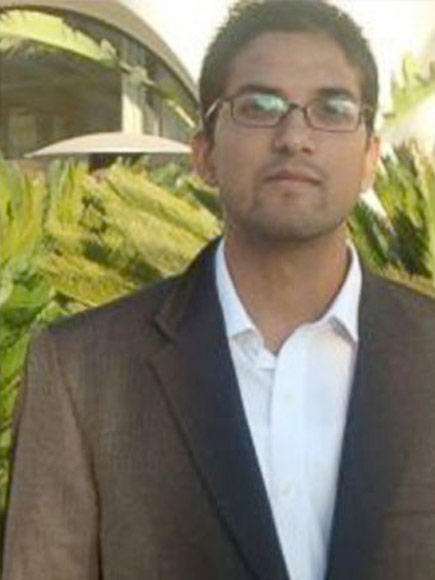
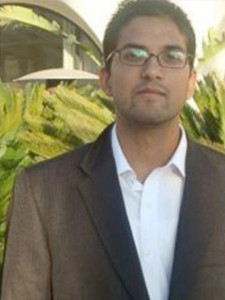
Syed Rizwan Farooq (Credit: www.people.com)Washington Dec 3 – After the mass shooting in San Bernardino, Calif., on Wednesday that left 14 people dead, details are starting to emerge about the two shooters. Here’s what we know about Syed Farook and Tashfeen Malik.
Syed Rizwan Farook was looking for a wife. On at least two online sites, he posted details for prospective brides. “Religious but modern,” he apparently wrote on one. He made a point of noting his American citizenship on another.
How he ultimately made contact with Pakistan-born Tashfeen Malik remains unclear. But family members said Farook traveled to Saudi Arabia, where Malik was living, and that they returned to Southern California as a couple and began a life in quiet Redlands, an area of ranch houses and once lush lawns now browned by drought.
Wednesday morning, they dropped off their 6-month-old daughter with Farook’s mother, according to family members. Sometime around midday, police say they donned masks and armed themselves with assault rifles and handguns before storming a holiday party hosted by the county health agency where Farook worked. At least 14 people died. Hours later, 28-year-old Farook and 27-year-old Malik were dead by police gunfire just two miles from the massacre site.
[FBI takes over shooting investigation as Obama says it’s ‘possible’ it was terrorism]
Details about the lives and views of the two suspected assailants are still incomplete. But as authorities stitch together the events surrounding the latest U.S. mass shooting, two disparate portraits emerge — one of American suburban stability and the other of immigrant reinvention — that seem to intersect somewhere in the Pakistani diaspora.
Also still puzzling investigators is what drove the two suspected attackers to turn the holiday party into a killing zone. It is extremely rare for a mass shooting in America to have multiple perpetrators — and even more so for one of them to be a woman.
“We have not ruled out terrorism,” said San Bernardino Police Chief Jarrod Burguan.
Hussam Ayloush, executive director of the Council on American-Islamic Relations in Los Angeles, told The Washington Post that Farook and Malik had been married for two years.
The couple told the grandmother that they had a doctor’s appointment and needed her to take care of the child, Ayloush said.
“I have no idea why he would do something like this,” Farhan Khan, who is married to Farook’s sister, said at a news conference held by CAIR late Wednesday night.
Farook — born in Illinois to Pakistani immigrant parents — was a San Bernardino County employee who had worked for five years as an environmental health specialist in the public health department, which was hosting the holiday party where the shooting occurred. According to state employee records, Farook’s total compensation in 2013, including salary and benefits, was $71,230.
Malik was born in Pakistan and spent time in Saudi Arabia before marrying Farook, said Ayloush, the Muslim community leader.
The California couple join a long roster of convicted and alleged mass shooters from recent years. But in contrast to many others, Farook and Malik do not appear so far to have left a digital trail that could point to their motives.
Christopher Harper-Mercer, the 26-year-old who fatally shot nine people and then killed himself at a community college in Oregon in October, left behind social media profiles that indicated an affinity with Nazism, anti-religious views and a desire to “lash out at society.”
[
Charleston, S.C., church shooting suspect Dylann Roof posted Facebook photos of himself wearing emblems of white supremacist movements, and owned a website containing a lengthy manifesto against racial minorities.
But where Farook and Malik are concerned, the traces of them that can be found on the Internet are relatively benign: a baby registry that appeared to be in Malik’s name, and undated online dating profiles that appeared to be Farook’s. Among other things, he stated an interest in target shooting.
The baby registry page cites a May due date in Riverside, which is near San Bernardino. Malik’s requests are modest: diapers, baby wash, swabs and a convertible car seat.
Another site — described as “for people with disabilities and second marriage” — includes a description that appears to match Farook.
The “About Him” section on the iMilap.com site introduces someone who works for the county as a “health, safety and envorimental [sic] inspector.” It further states that he is from a religious but modern family of four, lives with his parents and enjoys working on cars as well as “just hang out in back yard doing target pratice [sic] with younger sister and friends.”
He added that he enjoyed working on vintage and modern cars, and read religious books while enjoying eating out sometimes.
On another matchmaker site, Dubaimatrimonial.com, a person believed to be Farook described himself as having family roots in Karachi, noting he was born in Chicago and was residing in Los Angeles as an American citizen.
Farook graduated from California State University at San Bernardino with a degree in environmental health in 2009, according to the university’s commencement document.
His seemingly steady persona — high school, college, career — stands in contrast, however, with the apparently turbulent home life of his parents for more than a decade.
The couple, Rafia and Syed Farook, filed for Chapter 7 bankruptcy protection in 2002, according to county documents.
Four years later, Rafia then submitted paperwork for a separation after more than 24 years of marriage, citing verbal and physical harassment and describing her husband as “irresponsible, negligent, and an alcoholic.” Conditions were put in place for visitation with their daughter, Eba, who was born in 1991 — four years after her brother, the alleged shooter.
A series of court filings were made between 2006 and 2012 related to their separation. In one 2008 document, the hit from the U.S. financial crisis appeared to be noted: Showing the estimated value of their Riverside home at $175,000 but owing about $100,000 more. A judge granted her petition for a divorce earlier this year.
In interviews with the Los Angeles Times, Syed Farook’s co-workers in the public health department said he was “quiet and polite, with no obvious grudges.”
“He never struck me as a fanatic; he never struck me as suspicious,” Griselda Reisinger said.
Fellow inspectors Patrick Baccari and Christian Nwadike said the “tall, thin young man with a full beard” rarely started conversations, but he was well-liked and spent a lot of time in the field.
They said Farook was a devout Muslim but didn’t discuss religion at work.
Reports show that Farook inspected public pools and eating establishments. His job required him to check the cleanliness of food surfaces and cooling methods, analyze chlorine levels and test kitchen equipment.
Wednesday’s mass shooting was the deadliest in the United States since 2012, when a lone gunman killed 20 children and six adults at Sandy Hook Elementary School in Newtown, Conn.
According to CNN, of the 28 deadliest shootings in U.S. history before Wednesday, “only two have come at the hands of multiple shooters: the February 1983 killings at the Wah Mee gambling and social club in Seattle and the Columbine High School massacre in Littleton, Colorado, in 1999.”
An FBI report released last year said there were 160 “active shooter” incidents in the United States between 2000 and 2013. Among those, all but two involved a single shooter, the report states.
Islamabad, Nov 26 – A founder of a Pakistani terror group has been shot dead in the middle of Lahore, in an incident that senior police sources privately admitted was a killing staged by the authorities.
Haroon Bhatti, who was extradited from Dubai in September, was killed while in police custody, along with three other members of Lashkar-e-Jhangvi (LeJ). LeJ has a track record of attacks on Pakistan’s Shia minority, and intelligence officials feared it could join forces with Islamic State.
In the official version of events, Bhatti led police to an abandoned plastic-bag factory where LeJ militants were hiding. The militants opened fire at about 12.30am, leaving Bhatti and three others dead but not injuring any police.
Residents in the Badami Bagh area said police cordoned off the small factory building during the midnight raid and that gunfire could be heard for about an hour.
Police photos of the scene showed the men lying dead in a simple concrete building, some with weapons nearby. The hands of Bhatti’s body remained bound with handcuffs. The factory’s bullet-riddled gate suggested all the gunfire had been directed into the building.
Speaking privately, three police officials told the Guardian that the “encounter” was deliberately staged to get rid of militants that Pakistan’s enfeebled judicial system would never have prosecuted.
“This had to be done to maintain peace in the province,” said a Lahore-based officer. “No one would have given evidence against them because witnesses would be brutally targeted. You can’t allow terrorists to carry on their attacks just because you don’t have any proof against them.”
So-called police “encounters” are common practice in Pakistan, and Wednesday’s incident mirrors the death in July of LeJ’s former leader Malik Ishaq and 13 of his followers in an isolated area near the town of Muzaffargarh. Ishaq was killed in a gun battle that supposedly erupted while police were taking him to identify an arms cache.
The extreme measures taken against LeJ underline a profound change of attitude on the part of the Pakistani state towards some of the country’s militant groups. In the past Ishaq had been able to act with near impunity because violent Islamist groups such as LeJ were part of the wider network of jihadi groups encouraged to fight in Afghanistan in the 1980s. In the last 18 months, however, the state has set out to crush those groups that have turned their guns on domestic targets, including religious minorities.
Khaled Ahmed, a longstanding critic of the security establishment’s use of jihadi groups, said the killings in Lahore were a significant development. “A decision has been made by the army to act against these elements who have been always attached to the army in the past,” he said, crediting the policy change to Raheel Sharif, the general who took command of Pakistan’s all-powerful army in 2013. “I think this general is all for shutting shop on these non-state actors.”
In July intelligence chiefs warned the government that LeJ was poised for a potential merger with Isis, which has not yet been able to develop a firm support base in Pakistan.
Analysts say Pakistan’s civilian government backs the tough stance against LeJ despite fears in the past of provoking an organisation with a powerful base in Punjab, the province from where the ruling Pakistan Muslim League draws most of its support.
A leading figure in the party, the Punjab home minister Shuja Khanzada, was killed in a bomb attack in April, widely seen as a revenge for the killing of Ishaq.
Last month I read for the first time my father’s killer’s version of what happened on the afternoon of Jan. 4, 2011. My father, Salman Taseer, was the governor of Punjab, in Pakistan, when he was shot dead by his own bodyguard in Islamabad. He was at the time defending a Christian woman accused of blasphemy.
The laws that condemned her had been instituted in the 1980s by a military dictator. Those were the years when the Saudis, the Pakistanis and — it must be said — the Americans, believing no evil to be greater than that of Communism, flirted with jihad in Afghanistan. All variety of strange fruit, including the Taliban and Al Qaeda, have come from that time.
My father’s murderer — 26 when he killed my father — is from a later, hardier crop. It may be said that he came to fruition around the same time that the Islamic State first sent its men to Syria. It is instructive to hear him speak. He is a living example of how faith can become an expression of a society’s deepest cultural tensions. Here is Malik Mumtaz Qadri:
On the faithful day, I being member of Elite Force I was deployed as one of the member of Escort Guard of Salman Taseer, the Governor Punjab. In Koh-i-Sar Market, the Governor with another after having lunch in a restaurant walked to his vehicle. In adjoining mosque I went for urinating in the washroom and for making ablution. When I came out with my gun, I came across Salman Taseer. Then I had the occasion to address him, “your honor being the Governor had remarked about blasphemy law as black law, if so it was unbecoming of you.” Upon this he suddenly shouted and said, “Not only that it is black law, but also it is my shit.” Being a Muslim I lost control and under grave and suddenly provocation, I pressed the trigger and he lay dead in front of me. I have no repentance and I did it for “Tahafuz-i- Namoos-i-Rasool” Salman offered me grave and sudden provocation. I was justified to kill him kindly see my accompanying written statement U/s 265(F)(5) of Cr. P. C.”
To read this description, translated into tortured English, and complete with a certain quality of detail, the visit to the mosque, the urinating, the prayer — the little things one does before committing an act of murder! — was to feel all the revulsion and pathos one must feel upon hearing of the crimes of a child soldier.
The judgment was meant to be happy news; the Supreme Court of Pakistan had upheld the death sentence handed down to Mr. Qadri. And yet how happy could one really feel? A young man from a poor background, who was not a criminal, had, under the influence of a bad ideology, committed a terrible crime. It was hard not to see Mr. Qadri as a victim of place. He would have been exposed on a daily basis to the hysteria whipped up on Pakistan’s television channels over my father’s description of the blasphemy law as a black law. We know that he went to nocturnal religious gatherings where he would sing hymns in praise of the Prophet Muhammad. There again, clerics inflamed with religious passion would remind Mr. Qadri of the apostasy of my father, his godlessness, the injury he had done to the revered figure of the prophet. They also actively sought volunteers to kill my father.
Mr. Qadri was surrounded by people who believed that my father’s crimes were punishable by death, and that it was incumbent upon the best Muslims to avenge them. In this parallel universe, Mr. Qadri was not just acting bravely; he was acting honorably.
Nor could the court root out the source of the evil that had motivated Mr. Qadri. In fact, Mr. Qadri’s defense sought recourse in that very idea that had led him to murder. It sought to establish the conditions under which it would be just for Mr. Qadri to kill my father. “Personal life of Salman Taseer,” the defense stated, “shows that right from early times he proved himself as an infidel … His lifestyle, faith and living with a lady of non-Muslim faith” — my mother! — “reflecting his act of living in constant state of Zinna under the pretext of marriage (not permissible in Islam) speak volume of his character and associated matters.”
The court at best could stop Mr. Qadri from playing judge and executioner; but it could not throw out the basis for his argument; it could not say that the idea of apostasy (irtad) itself was an abomination in a modern society. For were that so, there would not have been a woman rotting in jail on charges of blasphemy in the first place.
Mr. Qadri is a hero in Pakistan. There is at least one mosque named after him, so popular it’s due to double in size; people come with their children to see him in jail, and seek his blessings; he releases CDs of himself singing those hauntingly beautiful hymns in praise of the prophet. He is considered a religious hero, a mujahid.
But he is really a class hero. In societies likes ours, societies with colonial histories, religion provides the front; but what is actually going on is class warfare by other means. When Mr. Qadri’s defense gestures to my father’s “lifestyle … character and associated matters,” what they are really saying, in thinly coded language, is that he was liberal, educated, Westernized; privileged, in a word. The real danger, of course, is to the liberal state, and its values, which also come to be seen as nothing but the affectations of a godless and deracinated class.
Pakistan, by letting religion enter its bone marrow, made itself especially vulnerable; but the danger itself, of faith’s providing extra-legal legitimacy to those waging culture wars, is as real in Rowan County, Ky., as it is in Pakistan’s neighbor, India. In fact, even as all this was happening in Pakistan, the main organ of the Hindu nationalist group the R.S.S. ran a cover story, using a Vedic injunction against cow slaughter to justify the lynching of a man. It said, “The Vedas order killing of anyone who slaughters the cow. Cow slaughter is a big issue for the Hindu community. For many of us it’s a question of life and death.”
Perhaps; but for the rest of us the real question of life and death is how to defend the liberal state against culture wars that find their sanction in faith. It is no accident that it is among the least educated, most backward sections of our society that God finds his most committed soldiers. And if there is anything to be learned from that flirtation with jihad in the 1980s, it is that the only thing scarier than Marx is God fertilized with Marx.
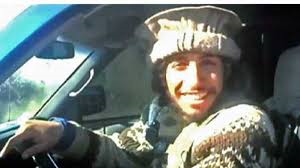
BRUSSELS, Nov 17 — When the family of Abdelhamid Abaaoud received word from Syria last fall that he had been killed fighting for the Islamic State, it rejoiced at what it took to be excellent news about a wayward son it had come to despise.
“We are praying that Abdelhamid really is dead,” his older sister, Yasmina, said at the time.
The family’s prayers — and the hopes of Western security officials — were not answered. Mr. Abaaoud, then 26, was in reality on his way back to Europe to meet secretly with Islamic extremists who shared his determination to spread mayhem. He has since been linked to a string of terrorist operations that culminated with Friday’s attacks in Paris.
“Of course, it is not joyous to make blood flow. But, from time to time, it is pleasant to see the blood of disbelievers,” Mr. Abaaoud declared in a French-language recruiting video for the Islamic State released shortly before his supposed death.
During his travels back to Europe at the end of last year, European security services picked up his trail and tracked his cellphone to Athens, according to a retired European military official. But they lost him, and soon after that he appeared to have made it back to Belgium, where he had grown up in a moderately successful family from Morocco.
At about the time Mr. Abaaoud began his return journey to Europe, Abu Muhammad al-Adnani, a leader with the Islamic State — he now has a $5 million bounty on his head, offered by the United States — made an impassioned plea for the killings of disbelievers. “If you can kill a disbelieving American or European, especially the spiteful and filthy French, then rely on Allah and kill him in any manner or way however it may be,” Mr. Adnani said in a recorded message.
Western intelligence agencies, worried that the Islamic State was planning to widen its carnage from the Middle East to Europe, tried to track a slow but steady trickle of fighters in Syria as they headed home to the Continent.
A Belgian television station reported Monday that security services had been alerted to Mr. Abaaoud’s return to Europe by a telephone call he made from Greece to an inmate, the brother of a known jihadist, in Belgium.
The realization among security officials that Mr. Abaaoud was back in Europe led to a major operation to intercept him. A safe house for militants he had helped set up in eastern Belgium was raided in January.
There, two of his comrades, including the brother of the inmate he had called, were killed. The Belgian authorities trumpeted the raid as having thwarted “a major terrorist operation.”
But it missed its principal target, Mr. Abaaoud, who then somehow made his way back to Syria, which Islamic State refers to by its historical Muslim name, “Sham.”
“Allah blinded their vision and I was able to leave and come to Sham despite being chased by so many intelligence agencies,” he later told Dabiq, a slickly produced magazine published by the Islamic State.
It is not known whether Mr. Abaaoud had any direct contact in Syria with Mr. Adnani, the architect of what the C.I.A. director, John O. Brennan, on Monday called the Islamic State’s “external operations agenda.” As a low-level fighter, Mr. Abaaoud was unlikely to have mixed with senior figures in the militant group’s hierarchy, experts in Belgium said.
But the two men shared a passion for propaganda, with Mr. Adnani serving as the Islamic State’s official spokesman and Mr. Abaaoud featured in various recruitment campaigns.
Mr. Abaaoud also had an invaluable asset for Islamic State leaders eager to take their battle to Europe — a pool of friends and contacts back home willing to carry out attacks.
Like many of the jihadists who have carried out attacks in Europe, including the brothers who attacked the French satirical magazine Charlie Hebdo in January, Mr. Abaaoud showed far more interest in thievery and drugs when he was a young man than in Islam, particularly the highly disciplined, self-sacrificing Salafi strain favored by many militants.
Nor was his family impoverished. His father, Omar, owned a clothing store off the market square in Molenbeek, a borough of Brussels, and the family lived nearby in a spacious if shabby corner home on Rue de l’Avenir — Future Street — near the local police station.
Despite his subsequent denunciations of the mistreatment suffered by Muslims in Europe, he enjoyed privileges available to few immigrants, including admission to an exclusive Catholic school, Collège Saint-Pierre d’Uccle, in an upscale residential district of Brussels.
He was given a place as a first-year student in the secondary school but stayed only one year. An assistant to Saint-Pierre’s director, who declined to give her name, said he had apparently flunked out. Others say he was dismissed for poor behavior.
He then drifted into a group of friends in Molenbeek who engaged in various petty crimes. Among his friends were Ibrahim and Salah Abdeslam, two brothers who, like Mr. Abaaoud, lived just a few blocks away and are now at the center of the investigation into the Paris attacks.
Ibrahim Abdeslam was one of the suicide bombers on Friday, and Salah Abdeslam, who rented a car in Brussels that was used to transport some of the gunmen in the attacks on Paris, is the target of an extensive manhunt.
Mr. Abaaoud was arrested for petty crime in 2010 and spent time in the same prison in Brussels where Ibrahim Abdeslam was being held, according to the spokesman for Belgium’s federal prosecutor and Ibrahim’s former lawyer. It is not known if they were in touch while in the prison, but they did not stay long. After their release, they returned to Molenbeek, often hanging out at a dingy bar known as a hangout for drug dealers.
To the dismay of his family, which had not seen him show any religious zeal, Mr. Abaaoud suddenly moved to Syria in the beginning of 2014, according to jihadi experts tracking Belgian militants.
Soon after his arrival in Syria, where he stayed for a time in a grand villa in Aleppo used to house French-speaking jihadists, he explained his choice in a video: “All my life I have seen the blood of Muslims flow. I pray that God breaks the backs of those who oppose him” and “that he exterminates them,” he said.
Early this year, the French magazine Paris Match found a film that showed Mr. Abaaoud grinning and making jokes as he dragged corpses with a pickup truck.
“I suddenly saw my picture all over the media,” he told Dabiq. He added that “thanks to Allah, the infidels were blinded by Allah” and did not spot him when he returned to Europe at the end of last year.
He also somehow persuaded his younger brother, Younes, who was still in Molenbeek and only 13, to join him in Syria. The boy left Belgium for Syria on his own without raising any suspicion from the authorities.
Mr. Abaaoud’s father joined a state prosecutor’s case against his son in May for having recruited Younes.
“I can’t take it anymore,” Omar Abaaoud told local reporters at the time. “I am on medication,” he said, adding that his son had dishonored the family. “He destroyed our families. I don’t ever want to see him again.”
His father is now living in Morocco and wants to put the property on Future Street up for sale, a family friend said.
Now, Mr. Abaaoud is suspected of being a leader of a branch of the Islamic State in Syria called Katibat al-Battar al Libi, which has its origins in Libya. This particular branch has attracted many Belgian fighters because of language and cultural ties, said Pieter van Ostaeyen, who tracks Belgian militants.
Many Belgian Muslims are of Moroccan origin, he said, and speak a dialect found in eastern Morocco that is similar to a Libyan dialect. Aymenn Jawad al-Tamimi, who studies jihadi groups at the Middle East Forum, a research center in Washington, said there was no evidence yet that the Paris attacks had been ordered by Mr. Adnani or the Islamic State’s overall leader, Abu Bakr al-Baghdadi.
But he added that the soldiers at the Libyan branch that includes Mr. Abaaoud had played a prominent role in exporting violence. One of their tasks, he said, has been to organize plots that “involved foreign fighters, sleeper cells in Europe that were connected with an operative inside of Syria and Iraq, usually in a lower to midlevel position.”
About 520 Belgian fighters have gone to Syria or Iraq to fight, making Belgium the biggest suspected source, per capita, of foreign fighters for ISIS. According to posts on Twitter and other social media accounts, the two men who were killed during the raid in Verviers, Belgium, in January were members of Katibat al-Battar.
In November 2008, a new form of terrorism filled our television screens as a 10-man cell dispatched by Pakistan-based terror group Lashkar-e-Taiba wreaked murder and mayhem across Mumbai. Choosing prominent targets filled with foreigners and Indians, the terrorists opened fire on anyone they came across, butchering 266 before dying fighting the authorities.
In so doing, they took over global headlines for days as well as bringing one of Asia’s super-cities to a standstill. Terrorist groups around the world celebrated this horror and began to discuss how they might try to emulate this success. Seven years later in Paris, the playbook has been copied.
This has been the longstanding fear of Western security agencies. Aware of the perceived success of the Mumbai attack, police and intelligence services across Europe have been ramping up their preparedness and training. Most recently, in June, the UK’s emergency and intelligence agencies did a dry run for a marauding shooter attack in London. And there have been scares. In 2010, a network of European cells that seemed to indicate al-Qaeda was attempting a Mumbai-style assault, with training camps in Pakistan’s badlands, was apparently disrupted.
Then earlier this year, Paris was racked by the Charlie Hebdo murders. But whereas those attacks, initially at least, were selective in their targets, Friday’s were utterly indiscriminate. The bombers at the stadium must have known the French President was in the environs, though they blew themselves up outside, killing whoever happened to be nearby. The other cell liberally targeted Parisians on a Friday night out. This is a markedly different form of horror and one that requires deep indoctrination, preparation and training. It is also a step up in terms of atrocity from what we had seen before in Europe. Mumbai-style terrorism has reached European shores.
At least one of the attackers has been uncovered as having some French background. While unsurprising given the threat picture that we have seen, this is particularly disturbing within the context of the sort of attack they undertook. To brutally shoot and execute fellow nationals pleading for their lives is something which would have required intense commitment. This training may have occurred in Syria, but in many ways this no longer matters. Islamic State (Isis) has shown an interest in stirring chaos and misery around the world with little apparent concern for its strategic impact.
Unlike the Madrid bombings, which had the effect of prying apart the coalition in Iraq, the attacks that Isis has inspired, instigated or directed, have been aimed at killing as many as possible in “enemy” countries and stirring tensions in societies. France in particular has been at the epicentre of this threat. In May 2014, Frenchman Mehdi Nemmouche opened fire at a Jewish Museum in Brussels killing three. He was later reported to have fought alongside Isis. In August this year, another young man with links to France, Ayoub el Khazzani, was barely prevented from shooting at passengers on a high-speed train from Amsterdam to Paris.
His background remains unclear, but he was linked to a network in Turkey that was linked to Isis and connected to Sid Ahmed Ghlam, a 24-year-old Algerian French resident who was reportedly plotting to attack churches in Paris. He was detained after he called an ambulance to his home having shot himself accidentally in the leg. He was already of concern to French security services.
And none of this is to talk about the numerous plots that French authorities have faced where individuals have launched attacks in advance of jihadist ideologies with no clear evidence of any sort of network. Around Christmas last year there was a spate of random attacks using knives or cars, and in June, Yassin Salhi decapitated his boss and tried to drive a car bomb into a chemical factory in Lyon. He strung up his boss’s head on a fence, took pictures of it with an Islamist flag and sent them to a fighter he knew in Syria.
This, sadly, is the nature of the current threat. And while obtaining the high-powered rifles required to cause such mass slaughter is much harder in the UK, it could strike here. Each wave of terrorism has to cause greater mayhem to have the same impact over time, and consequently for Isis to distinguish itself from al-Qaeda, it must create greater impact and misery.
Timeline of Paris attacks
While the UK can draw comfort from the fact weapons are harder to get here, British people abroad have fallen foul of these plots. The massacre in Sousse particularly affected British nationals, and at least one Briton was caught up in Friday’s Paris attacks. Terrorism has to continually evolve and cause greater brutality to maintain impact and attract attention. And while France is currently the epicentre, the ideology and groups are ones that are keen to equally target the UK.
Raffaello Pantucci is director of international security studies at the Royal United Services Institute
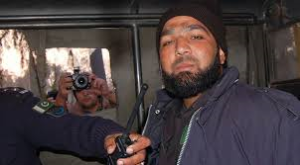
Qadri in prison van (Credit: geotv)Islamabad, Oct 7 – A former police bodyguard revered as a hero by Pakistani conservatives for killing a politician who criticised the country’s blasphemy laws has had his death sentence upheld.
In ordinary circumstances there would never be any doubt about which way the supreme court decision would go: Mumtaz Qadri is unrepentent at having shot dead Salmaan Taseer, then governor of Punjar, as he left a restaurant in a busy Islamabad market in January 2011. But moderates have claimed the ruling is a sign of a change in official attitudes towards religious extremism.
Salmaan Taseer murder case harks back to 1929 killing of Hindu publisher
Many Pakistanis argue Mumtaz Qadri should be regarded as a national hero like Ilm-Deen, who knifed the publisher of a commentary on the prophet Muhammad’s life
Read more
In the months before his murder, Taseer had sparked anger among religious conservatives by taking up the cause of Asia Bibi, a poor Christian woman who had been sentenced to death for allegedly insulting the prophet Muhammad.
Saroop Ijaz, a lawyer and head of Human Rights Watch in Pakistan, hailed the upholding of Qadri’s conviction for murder as a “brave decision” and “the first step in introducing some rational discourse on blasphemy”.
The only thing now standing between Qadri and execution is an appeal for a presidential pardon, which few expect to be granted.
Qadri’s execution will likely be seen as a key moment in the dramatic hardening of the state’s attitude towards extremists following the Taliban massacre of more than 130 schoolboys in Peshawar last year, which prompted the government to scrap an informal moratorium on the death penalty.
Public support for Qadri was so great that the army chief at the time of the murder, Gen Ashfaq Kayani, reportedly told western ambassadors he could not publicly condemn Qadri because too many of his soldiers sympathised with the killer.
Such was the controversy around Taseer that his family struggled to find a mullah to officiate at his funeral. Qadri on the other hand was greeted by lawyers at his first court hearing with a shower of rose petals.
As with other cases involving Pakistan’s notorious blasphemy laws, Bibi was convicted on the basis of allegations made by women in her village with whom she had been involved in a dispute.
Taseer, a liberal-minded business tycoon from Lahore, visited her in prison, campaigned for a presidential pardon and called the country’s hardline blasphemy legislation – which dates from the 1980s Islamist military dictatorship of Muhammad Zia-ul-Haq – a “black law”..
Qadri enjoys special prison perks and has recorded best-selling albums of devotional songs. Last year he was found to have incited a prison guard into attempting to kill an elderly British citizen held in the same building for alleged blasphemy.
His appeal hearings at the Islamabad high court attracted large crowds of banner-waving supporters from the country’s majority Barelvis, a community that prior to Taseer’s killing was seen by many western analysts as a bulwark against religious extremism.
Qadri also attracted some of the country’s most senior lawyers to his defence team, including two former judges. But three chief justices this week rejected arguments that Qadri had the right to take the law into his own hands, or that merely criticising blasphemy laws constitutes an insult against Islam.
Legal analysts said it was significant that the supreme court rejected the lower court’s decision to overturn Qadri’s conviction under the country’s terrorism legislation, which would have reduced the matter to regular statute law.
That would have relieved the state of the final decision on whether to execute Qadri and led to Taseer’s family being pressured to forgive Qadri under controversial “blood money” provisions.
Taseer’s daughter Sanam said she was against the death penalty in principle but that she would welcome the death of Qadri because of the cult-like power he enjoys from his prison cell. “He is treated like a king in prison,” she said. “Women bring him their children for him to teach.”
She said the verdict was “wonderful for the country because it shows there is rule of law”.
Zahid ur Rashidi, a religious scholar and supporter of Qadri, said the government should immediately release “our national hero” and introduce strict religious law.
“Because the legal system is un-Islamic, young people become desperate and take the law into their own hands,” he said.
In a country where Islamic extremists once operated with near impunity, in recent months the state’s attitude towards them has hardened dramatically.
In July Malik Ishaq, former leader of one of Pakistan’s most lethal anti-Shia terror groups, was killed in an apparently stage-managed police shootout. Several notorious clerics have also been arrested.
Mosharraf Zaidi, an analyst who has written angst-laden newspaper columns arguing that the Qadri-Taseer case showed the country was failing to confront its demons, said “Pakistan in 2015 now feels dramatically different”.
“We are not out of the woods yet, but the supreme court decision is a very strong sign the state is trying to recover the space it ceded to violent extremists,” he said.
PAF attack (Credit: telegraph.co.uk)PESHAWAR, Sept 18: At least 33 people, including 13 terrorists, were killed as the Pakistan Air Force (PAF) camp at Inqalab road in Peshawar’s Badaber came under attack by Tehreek-i-Taliban Pakistan (TTP) militants early Friday.
Thirteen terrorists were killed by security forces, Director-General (DG) Inter-Services Public Relations (ISPR) Major-General Asim Bajwa said on Twitter.
Sixteen people offering prayers at a mosque inside the airforce camp were killed by a group of militants, Bajwa said.
Two junior PAF technicians were killed in the attack, a PAF spokesperson said, adding that both airmen were deployed at the guardroom when the attack occurred.
Terrorists entered the camp at two points, splitting into sub-groups, Bajwa claimed. The firefight began immediately due to the quick response from security forces, he said.
The attackers were wearing constabulary uniforms.
Pakistan Army’s Captain Asfandyar was killed in the attack.
The DG ISPR said 10 soldiers were injured during an exchange of fire with terrorists — two of whom are officers.
Rescue sources, however, said 22 people have been injured, out of whom 20 have been shifted to CMH Peshawar and two have been taken to Lady Reading Hospital (LRH). An emergency has been declared in both hospitals. Dr Subhani at LRH said one unidentified body had been brought to the hospital.
TTP spokesperson Muhammad Khurasani claimed responsibility for the attack in an e-mail sent to journalists.
A search operation for hidden terrorists is underway, Bajwa said. Corps Commander Lieutenant-General Hidayatur Rehman conducted aerial surveillance of the base from a helicopter.
Around 15 people were arrested during the search operation, police said.
The attack was carried out by a group of seven to 10 terrorists, the DG ISPR said earlier, while eyewitnesses claimed they saw around six to seven terrorists dressed in black militia uniforms wearing white shoes.
A military official at the base said, “All the terrorists were wearing explosives-laden jackets and were armed with hand grenades, mortars, AK-47 rifles.”
Nearby residents said explosions and gunfire could still be heard more than three hours after the attack took place.
When the attack occurred, a heavy contingent of the Quick Reaction Force (QRF) reached the spot. An exchange of fire between the militants and security forces took place. Khyber Pakhtunkhwa (KP) police have cordoned off the area.
The DG ISPR said terrorists had attacked the guard room at the camp early in the morning. The QRF reached the scene and surrounded the attackers, isolating them.
The terrorists had been engaged and confined to a small area around the guard room area of the camp.
The Badaber camp used to be an operational airforce base. It is no longer an operational airbase but is still used as a PAF training centre.
The base is on one side of the road, while a residential estate lies on the opposite side.
COAS, CAS, Corps Commander meet
Chief of Army Staff (COAS) General Raheel Sharif reached Peshawar earlier today. He held a meeting with Corps Commander Lieutenant-General Hidayatur Rehman to discuss the terrorist attack at the Badaber PAF airforce camp.
The COAS and Corps Commander discussed the deaths of two PAF technicians who were posted at the airforce base’s guard room. The army chief was briefed about the condition of Major Haseeb of the Pakistan Army who was wounded during retaliatory action against the attackers.
Air Chief Marshal Sohail Aman also met COAS Raheel Sharif and the Corps Commander at Corps Headquarters in Peshawar. Prior to the meeting, he briefed the prime minister about the ongoing operation in Badaber over the telephone.
The Corps Commander briefed the Air Chief and COAS on the Peshawar operation.
The COAS and Chief of Air Staff visited the wounded at CMH.
They then visited Badaber airforce camp to meet PAF, Army and police personnel who defeated the attackers.
PM arrives in Peshawar
Prime Minister Nawaz Sharif has arrived in Peshawar accompanied by Minister for Information and Broadcasting Pervez Rashid. Defence Minister Khawaja Asif will also meet the premier in Peshawar.
Prime Minister is expected to first visit the 11th Corps headquarters in Peshawar where he will be briefed about the operation.
The premier is also expected to attend funeral prayers of those killed in the attack and visit patients at CMH Peshawar.
PM condemns attack
PM Nawaz Sharif strongly condemned the attack on the Badaber airforce camp.
Nawaz reiterated the nation’s resolve to continue its mission of eliminating terrorism with zeal.
The premier said he is being kept updated on the ongoing operation against terrorists. He said the armed forces of the country have the full support of the entire nation, and that networks of terrorists would soon be eliminated from Pakistan.
Nisar meets PM
Interior Minister Chaudhry Nisar called on the premier at PM House. Nisar apprised the PM about the role of civil law enforcement agencies in the terrorist attack at Badaber airforce camp.
Matters relating to the law and order situation in country were also discussed during the meeting.
KP Speaker visits LRH
Khyber Pakhtunkhwa Assembly Speaker and Acting Governor Asad Qaisar also visited LRH to inquire about the health of those injured in the attack.
On Aug 16, 2012 militants armed with rocket-propelled grenades and automatic weapons had carried out a brazen attack under cover of darkness on the Minhas base of the PAF at Kamra, The TTP had claimed responsibility for the assault on Kamra air base.
Peshawar suffered the worst terror attack in Pakistani history in December 2014 when TTP gunmen massacred more than 150 people, most of them children, at an army-run school.
But recently then there has been a lull in violence. The last deadly attack in the city came in February when three heavily armed Taliban militants stormed a Shia mosque, killing 21 people.
Military operation Zarb-i-Azb was launched against insurgent hideouts in North Waziristan on June 15 following a brazen militant attack on Karachi’s international airport and the failure of peace talks between the government and TTP negotiators.
Officials say nearly 3,000 militants have been killed since the launch of the latest offensive.
The number of attacks in Pakistan has fallen around 70 per cent this year, due to a combination of a military offensive against Taliban bases along the Afghan border and government initiatives to tackle militancy
Punjab’s Home Minister Shuja Khanzada has been killed in a suicide attack in the Pakistani province, police say.
Twelve other people died in the attack at Mr Khanzada’s office in District Attock, about 80km (50 miles) north-west of the capital, Islamabad.
Mr Khanzada was seen as the man in charge of the anti-terror campaign in Pakistan’s biggest province.
A Sunni militant group with ties to al-Qaeda has said it ordered the attack.
Lashkar-e-Jhangvi said it was in response to last month’s killing of its leader, Malik Ishaq.
Shuja Khanzada is the most senior Pakistani politician to have been killed by militants this year.
The minister’s death is being seen as a significant blow to Pakistan’s recent gains in the fight against militancy and extremism, says the BBC’s Shahzeb Jillani in Islamabad.
Our correspondent says questions are being asked about his security as the home minister had reported threats made against him.
Mr Khanzada was meeting supporters in his hometown of Attock when a large bomb exploded, causing the roof to cave in, trapping dozens under the rubble.
Leading tributes to the home minister, Prime Minister Nawaz Sharif said: “The courage and valour of Shuja Khanzada is message to the masterminds of terrorists that they are bound to be defeated.”
Lashkar-e-Jhangvi has been behind some of the most violent attacks in recent years.
It was banned in Pakistan in 2001 and designated a terrorist group by the US in 2003. It has claimed the killings of hundreds of mainly Shia civilians in Pakistan.
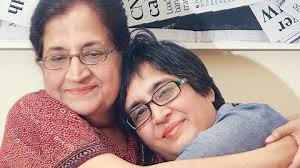
Sabeen with mother (Credit: nylive.nytimes.com)It was a 9mm gun, probably a Stoeger. Before Saad Aziz got this “samaan” through an associate, by his own admission, he had already plotted a murder. On the evening of Friday, April 24, 2015, he met four other young men, all well-educated like him, somewhere on Karachi’s Tariq Road to finalise and carry out the plot. As dusk deepened into night, they set off towards Defence Housing Society Phase II Extension on three motorcycles. Their destination: a café-cum-communal space – The Second Floor or T2F – where an event, Unsilencing Balochistan: take two, was under way. Their target: Sabeen Mahmud, 40, the founder and director of T2F.
Two of Aziz’s associates, he says, “were just roaming around in the vicinity of T2F”. A third was keeping an eye on the street outside. Aziz himself was riding a motorcycle driven by one Aliur Rehman, also mentioned as Tony in the police record. When he received the message that Mahmud had left T2F, he says, he followed her. “Suzuki Swift, AWH 541,” he repeats her car’s make and registration number.
As the car stopped at a signal less than 500 metres to the north of T2F, “Tony rode up alongside it.” Mahmud was in the driving seat, Aziz says. “Next to her was her mother, I think. That is what we found out from the news later. There was a man sitting in the back. I fired the gun four or five times at her.”
“There wasn’t one particular reason to target her; she was generally promoting liberal, secular values. There were those campaigns of hers, the demonstration outside Lal Masjid [in Islamabad], Pyaar ho jaane do (let there be love) on Valentine’s Day and so on.”
Sitting in a sparsely furnished room within Karachi Police’s Crime Investigation Department (CID), Aziz appears at ease even in blindfold. Recounting the events of that evening, he never sounds hurried or under duress.
After shooting Mahmud, he says he and Tony turned left from the signal towards Punjab Chowrangi and reached Sharae-e-Faisal, crossing Teen Talwar in Clifton on their way. While still on the motorcycle, he messaged others to get back to Tariq Road. Once there, he just picked up his motorcycle and they all dispersed. “We only got confirmation of her death later from the news,” he says. “At that moment [of shooting], there is no way of confirming if the person is dead. You just do it and get out of there.”
It was on February 13, 2015, when he says he decided that Mahmud had to die. That evening, he was at T2F, attending an event, The Karachi “Situation”: Exploring Responses. “It was something she said during the talk,” he recalls. “That we shouldn’t be afraid of the Taliban, we should stand up to them, demonstrate against them, something like that. That is when we made up our minds.” Later in the conversation, though, he adds, “There wasn’t one particular reason to target her: she was generally promoting liberal, secular values. There were those campaigns of hers, the demonstration outside Lal Masjid [in Islamabad], Pyaar ho jaane do (let there be love) on Valentine’s Day and so on.” He laughs softly, almost bashfully, as he mentions the last.
Aziz remembers visiting The Karachi “Situation” seminar with Tony who, the police say, remains on the run. Pictures and video footage of the event show Aziz sitting at the end of a row, close to the entrance. Next to him is Tony, a round-faced young man with a dark complexion. The police say he is an engineering graduate from the National University of Sciences and Technology, Rawalpindi campus. “Tony had a Twitter account under a fake name and he used to follow Sabeen’s tweets very closely,” says Aziz. He also mentions another source of information. “About four weeks [after the discussion on Karachi], when I got emails about events being held there, I sent Tony there a few times to check if her car was there. It wasn’t.”
On April 24, 2015, Aziz says, he told Tony to go there again. “When he confirmed her car was there, we made the plan there and then.”
By that time, he confesses, he had taken part in 20 major and minor “operations” in Karachi. These include an attack – just eight days before Mahmud’s assassination – on American academic Debra Lobo, who taught at a college in Karachi, bank heists to put together money for their hit-and-run activities, multiple attempts to target the police and the Rangers and grenade attacks on co-education schools in Gulshan-e-Iqbal (on February 3, 2015) and North Nazimabad (on March 18, 2015).
Nineteen days after Mahmud’s murder, Aziz says he took part in an attack that elicited worldwide shock and condemnation: the assassination of 43 members of the Ismaili Shia community, including women and children, travelling in a bus in the Safoora Goth area on the outskirts of Karachi.
Aziz appears as a mild-mannered young man of medium height and build, with a trimmed beard. He makes a little joke about how he can instantly tell which law enforcement or intelligence agency the person asking him questions belongs to. “The first thing the ISI [Inter-Services Intelligence] want to know is whether there are any links with RAW [the Indian intelligence agency]; CID is interested in the funding aspect; and the police keep hammering on about what other wardaat (hits) we’ve been involved in.”
Aziz calls himself a Salafi, though his father says the family follows Sunni, not Salafi, Islam. When an interrogator asks him why he and his associates targeted Ismaili Shias, he cites their sectarian affiliation as the reason. “It is perfectly acceptable to take the lives of women and children for that reason.”
Aziz’s radicalisation began in 2009, following a visit to Saudi Arabia for umrah with his family. Upon his return to Pakistan, he decided to read translations of the Quran. “Until then I had only read it once in Arabic.” (One investigator, however, reports that Aziz could not recite certain Quranic verses that every practising Muslim recites at least once a day during Isha prayers.)
For a while, he joined the Tableeghi Jamaat. Then, he took to attending lectures by a scholar, Shaykh Kamaluddin Ahmed, a professor at the Lahore University of Management Sciences (Lums) at the time, whose Sufi interpretation of Islam is distinct from what the Tableeghi Jamaat stands for. “But neither [Ahmed] nor Tableeghi Jamaat even discussed jihad,” he says. “It was over time, primarily through reading the Quran, that I developed an inclination towards jihad.”
Aziz then met Tony, whom he suspected had contacts with militants. Tony made him wait for some time before introducing him to one Haris, an al-Qaeda operative. “[Haris] was heading al-Qaeda’s daawati (recruitment) wing for Pakistan at the time. I joined this wing at the end of 2010,” says Aziz.
In September 2013, Haris, whose real name is said to be Abu Zar, was arrested from a hostel of the Punjab University in Lahore, along with two others, for alleged links with al-Qaeda. In the last 22 months, the authorities have not produced him in any court of law for a trial. Police sources in Lahore say Haris and his associates are in ISI’s custody. This information, however, could not be confirmed through other sources.
In 2011, Aziz went to Waziristan for training where, he says, he was attached to a group headed by Ahmad Farooq, deputy head of al-Qaeda in the subcontinent and a former student of Punjab University. (Farooq was killed in an American drone strike in January 2015 in North Waziristan.)
By 2013, Aziz says he was disillusioned and frustrated. Instead of allowing him take part in terrorist operations, his handler Haris limited him to media duties — such as managing online jihadist publications. “In mid-2013, I met Haider Abbas,” says Aziz. Abbas introduced him to Tahir Minhas alias Saeen, identified by the police as a member of al-Qaeda.
As a senior, experienced commander, Minhas set the ground rules for the group that Aziz joined. “We all used aliases; I only know Tony by his real name,” says Aziz. He got his own alias — Tin Tin. “None of us would ask for the members’ real names, addresses or anything that could identify them in case one of us was arrested. That was on Minhas’s instructions.”
The cell had no designated ‘safe house’ to meet. Minhas often called its members for meetings to Jan Japan Motors, a car auction site on the Super Highway. He also selected the targets. The attack on Mahmud, though, was different. Aziz says it was on his own initiative. “Tahir wasn’t even there that day.”
In 2014, the sudden ascendancy of the Islamic State (IS) and its territorial gains in Iraq and Syria became a lightning rod for militants across the globe. In January this year, IS announced its expansion into Khorasan, a historical region comprising parts of present-day Pakistan, Afghanistan, Iran and some Central Asian countries. Several factions of the Tehreek-e-Taliban Pakistan (TTP) immediately joined it.
“We just finished a 16-day joint investigation but we have not established any direct or indirect link between him and Daesh. Al-Qaeda’s tentacles, however, touch him in multiple ways. We are sure he is with al-Qaeda.”
“Among my acquaintances there was already a lot of discussion about the merits of al-Qaeda and Daesh [the Arabic acronym for IS]. Many of us felt that al-Qaeda was reduced to mainly talk and little action,” Aziz says. “We were in Waziristan when the creation of the [IS’s] Khorasan [chapter] was announced, and we pledged loyalty to its emir, [former TTP commander] Hafiz Saeed Khan.” (A senior official of the Intelligence Bureau in Peshawar says Khan was “in Tor Dara area in Khyber Agency’s Tirah valley in January 2015”, the time period to which Aziz refers.)
Subsequently, he says, some of his associates did pro-IS wall chalking and left propaganda pamphlets in parts of Karachi, especially at the scenes of some of the attacks they carried out. Some of the people working with him, he claims, have gone to Syria as part of an effort to strengthen their connection with the IS leadership there.
Weeks after Mahmud’s murder, Jaadu, her white Persian cat, would sit expectantly by the door of her house for hours every evening, waiting for a familiar footfall on the steps outside. Inside, her mother, Mahenaz Mahmud, sits on a chair looking like her daughter might have 20 years in the future — had she had that much time. The mother also exudes the same warmth, intelligence and artlessness as the daughter — and, since Mahmud’s death, a stoicism that would move a stone to tears.
“On April 24, Sabeen made breakfast for us (Mahenaz and Mahenaz’s mother) as usual. That was her routine. She would switch on the kettle, run to her computer, then she would put the bread in the toaster,” Mahenaz recalls with a chuckle. “She didn’t want me to have a cold slice, so she would toast the second slice only after I had finished the first.” They would usually chat away during breakfasts. “We would talk about all kinds of things.” Sometimes, Mahmud would seek her mother’s advice. “She would ask me what I thought of something being done at T2F. Sometimes we would flog some philosophical concept. We would share articles, then discuss them… there was lots that we talked about.”
That day, though, Mahenaz sensed something unusual. “I don’t know whether it was anxiety but there was some element about this Baloch missing people event, especially because of the talk that was cancelled at LUMS [under orders from the ISI],” she says. Mahmud was not moderating the session; she hadn’t even organised it. “Someone else wanted to do it and she had agreed to provide the space,” says Mahenaz. “But she talked to some people about it and then said to me “It’ll be ok, Amma””.
After breakfast, the mother went to work – she is an academic programmes advisor at a teacher training institute – but planned to attend the talk on the Baloch missing persons. “I hadn’t been to any event for a long time because I get quite exhausted by the evening but that day I had a very strong feeling that I must be around her.”
Following the event, around 9pm, Mahmud was planning to drop her mother home, pick up a friend and go to another friend’s place for dinner. “When Sabeen came out [of T2F], I remember she was in a hurry, and she told the driver to sit in the back. I got in the seat next to her and we drove off.”
A short distance away, the Sunset Boulevard traffic signal turned red and their car came to a stop. “It is impossible for me to process those five, 10 seconds,” Mahenaz says quietly. “I was talking to Sabeen, and my face was turned towards her. She was looking in front. A motorcycle came up along the side she was sitting, much too close for comfort. My eyes became riveted on a gun in someone’s hand. I said to Sabeen, “What do you think he wants? He’s got a gun.” I thought it was a mugging. All this must have taken only three or four seconds. Then the window shattered, and Sabeen’s head just tilted to one side; her eyes were open. There was not a moan, not a groan, not a whimper. Then pandemonium broke out around us.”
Mahmud was shot five times. Her mother also took two bullets: one in her back and another that, after going through Mahmud’s body, went into her arm and out again. She says she remembers feeling there was something “happening with my body but I wasn’t sure what.” She was too focussed on her daughter to be sure of anything else. “I was saying ‘Sabeen talk to me, give me some indication that you can hear what I am saying.’ Even though I knew that she had gone, somewhere there was a glimmer of hope.”
She herself was taken to the Aga Khan University Hospital for treatment. “Next morning, I started demanding that I wanted to go home. I was told that Sabeen’s body was being kept in a morgue and I thought she should be put on the way to her last journey immediately.” With a bullet still lodged in her back, she left the hospital to bury her only child.
When Mahenaz Mahmud learnt that the police had arrested some educated young men for carrying out the murder, it was a shock to her, almost a betrayal of some of her most closely held convictions. “I felt terrified. I am a person who teaches my students that we all have our biases and that we put people into boxes because we don’t have time to find out about each and every person.”
In the third week of June, T2F organised a qawwali session to celebrate her daughter’s birthday posthumously. While observing the audience from the back of the room, she couldn’t shake off a nagging thought. “I was looking at the young boys in the audience and wondering, ‘So what are they thinking? What is really going on in their head?’ Normally I wouldn’t have thought that about young people. I would be happy that all kinds of young people come to T2F. Now I am really scared about how these young men’s minds can be messed with.”
The senselessness of the murder is difficult for her to process. “I want to ask them, why? What happened to you? What was it that bothered you about Sabeen? Was it something she stood for? Did you just want to make an example out of her? Did you think that taking a human life is such a small matter? But then I realise that these people think very differently. Their paradigms are different. Their schemas are different.”
In another part of Karachi, sitting in her home studio, architect Marvi Mazhar, one of Mahmud’s closest friends, says: “I always knew. I always thought that if someone gets to her, it’ll be someone educated. Sabeen had to deal with a lot of hate speech, and from people who were all educated. They used to write, they used to tweet, they were all very tech-savvy. Every time she’d complain that these young bachas, I wish I could have chai with them, talk to them.”
Mazhar recalls an incident from last November. At the Creative Karachi Festival organised by T2F, the azan went unnoticed for a few moments in the hubbub and a young man angrily demanded that the music be stopped instantly. “Sabeen went up to the guy, took him aside and spoke to him for a while; a little later, he actually brought flowers for her by way of apology. There was this strange magic about her,” she says with a wistful smile.
In the days leading up to her death, Mahmud was particularly restless, says Mazhar. On Tuesday, April 21, there was a get-together of friends at Mazhar’s place where Mahmud was “a little agitated”. Mazhar heard her saying to someone on the phone, “If we are not going to do it now, then we won’t do it because after that I am leaving for London and I don’t have time.” She assumes this was about the talk on Baloch missing persons. “Her heart was not into this talk, mainly because she had so much going on otherwise. She believed in it, she believed that the Baloch must be given a platform. But, I felt, judging from the conversations I have had with her, she was waiting for a signal, waiting for someone to tell her not to do this.”
A sturdy metal barrier bars entry into a rough stretch at the end of Beaumont Road in Karachi’s Civil Lines. Only a few street lights illuminate the area; that, along with the dilapidated condition of the road, is perhaps deliberate, designed to make things a little more difficult for terrorists looking to target the CID headquarters that looms up on the right, after the barrier. They did exactly that on November 10, 2010, killing at least 17 people and injuring over 100 in a massive truck bombing. Access inside the CID premises now lies behind a raft of concrete barriers, designed to minimise the possibility of another attack.
Raja Umar Khattab, Senior Superintendent Police, strides into his office at around 10.30pm after taraweeh prayers. A stocky, barrel-chested man, he is wearing a bright yellow T-shirt with khaki pants, rolled up at the bottom and rubber slippers. He speaks in rapid-fire sentences; names of terrorists roll off his tongue like those of old acquaintances. Several phone calls interrupt conversation; a senior official has misplaced his cell phone and Khattab is trying to get it traced. “Sir, don’t worry. I’ll make sure it is back with you soon,” he says reassuringly.
As the CID’s lead investigator, Khattab is flushed with pride over the recent arrest of what he calls a major terrorist cell. He has no doubt the police under him have the men who killed Mahmud and committed the Safoora Goth massacre, apart from various other crimes.
Khattab believes it was a failed romantic relationship that sowed the seed for Aziz’s radicalisation.
The Sindh Rangers, too, have made a separate claim of arresting a mastermind of the attack on Ismaili Shias. “He has nothing to do with Safoora Goth incident; he never did,” says Khattab, shaking his head vigorously, when asked about the man arrested by the Rangers and reportedly linked to the detained office-bearers of the Fishermen’s Co-Operative Society. “When you go to a court to seek remand, you put in extra things. Otherwise it can get difficult to get a remand,” is how he explains the reason for the claim made by the Rangers.
More importantly, Aziz’s claim about his allegiance with IS meets with a similarly dismissive response. “We just finished a 16-day joint investigation but we have not established any direct or indirect link between him and Daesh. Al-Qaeda’s tentacles, however, touch him in multiple ways. We are sure he is with al-Qaeda,” says Khattab.
“And why should it be so surprising that these terrorists are so educated? There were always educated people in al-Qaeda. Educated people don’t join TTP. It is the madrasa-educated ones who join TTP. They have the desire for jihad but these [educated jihadis] are ideologues. They envision grander things,” he adds. And for that reason, Khattab states, they are far more dangerous: They can be anywhere — the shopping mall, the university, saying their prayers beside you.
Khattab believes it was a failed romantic relationship that sowed the seed for Aziz’s radicalisation. “He became disillusioned with worldly pursuits,” says the police officer. “When he joined Unilever for an internship [in the second half of 2010], he met Aliur Rehman – alias Tony – who was also working there.” Tony, a member of Dr Israr Ahmed’s Lahore-based Islamic movement, Tanzeem-e-Islami, was to play a vital role in Aziz’s radicalisation, inspiring him to fight for a Muslim caliphate, says the police officer.
But it was Minhas, the police claim, who turned Aziz into what he has become. In Khattab’s words: “Saad says Tahir motivated him so much that he no longer has any fear of killing people. His role in targeted killings was that of the shooter; by my reckoning, he has killed about 20 people.”
CID officials maintain that the terrorist group of which Aziz was a member had split from a larger al-Qaeda formation eight to 10 months ago. “While Tahir is its askari (militant) commander, he in turn answers to Abdullah Yousuf, who is in Helmand, Afghanistan. The other group formed by this rupture is led by Haji Sahib, Ramzi Yousef’s older brother,” says Khattab. He believes the crime spree by Aziz’s group, which hadn’t yet given itself a name, was aimed at raising its profile within the terrorist fraternity so that someone “owned” it.
Tracking down the group, he says, was not easy. They operated under aliases, did not use mobile phones and, instead, employed a Wi-Fi-based application called Talkray to communicate. The CID first picked up their trail sometime in 2014 through some men who were in prison, Khattab says. Based on the information obtained from them – he does not quite elaborate how but only says “we did some working on them” – the police picked up two former Karachi University students who had joined al-Qaeda through contacts at the campus and whose job was to maintain the organisation’s website. “We soon figured out that there is a network of educated al-Qaeda members in Gulistan-e-Jauhar, Gulshan-e-Iqbal and other areas around Karachi University,” he says.
The clues led the police to a sports teacher at Sir Syed University of Engineering and Technology, who had set up a laboratory in his house in Gulshan-e-Iqbal where, along with his son and nephew, he used to teach young men to assemble Improvised Explosive Devices. The police also found a lot of written material that led them to conclude that a large al-Qaeda group was active in Karachi. “We found out it had two wings — one askari and one daawati.” The police do not divulge whether or not they have arrested and interrogated the teacher or, for that matter, any other details about his identity and whereabouts.
While investigating the people arrested earlier, the police learnt that Minhas was the group’s commander. Born in a village in the Jhelum district of Punjab, Minhas is a resident of Kotri, near Hyderabad, and has been in and out of police’s hands since 2007. According to an official source, one looking very closely into the massacre of Ismaili Shias, Minhas, (a matriculate, according to this source), had a thriving poultry business in Kotri at one point. He is also, says the same source, rabidly anti-Shia and has been a member of Lashkar-e-Jhangvi, a banned organisation involved in hundreds of acts of sectarian and religious terrorism.
Khattab and his team of investigators describe Minhas as a highly sophisticated militant, with his own signature style. They claim to have discovered important similarities in the terrorist activities he has carried out: in all of these, silencer-fitted imported Glock, Caracal and Stoeger pistols are used; he and his associates always hit their targets in the head. “By the time the Safoora Goth massacre happened, we had gathered lots of little clues,” says Khattab.
Some other clues materialised in September 2014 after a suspect named Amir Abbas managed to escape during an encounter with the police but his wife was injured and arrested. “We found plenty of incriminating material at his house and worked on it quietly from September [2014] to April [2015], matching and cross matching the evidence,” says Khattab.
This finally led to the arrest of Minhas and his associates, including Aziz. “When we recovered their laptops, their browsing history helped us connect them to other cases. “Had we been even one day late, all these boys would have left Karachi for Quetta, Waziristan etc.”
The CID officers also show what they call a hit list. These are A-4 size prints, carrying no information about their senders and receivers, but complete with photos and addresses of the targets, which include naval officers, intelligence agency personnel, police officers, showbiz personalities, journalists, workers of non-government organisations and three fashion designers. In some cases, the prints also carry details of the targets’ daily routine. When asked why the group wanted to target fashion designers, Aziz is quoted by Khattab to have said, “You kill three. No one will design sleeveless clothes again.”
At a distance from the police’s neatly tied narration, events take a rather mysterious turn. A former academic at the Institute of Business Administration (IBA) who once taught Aziz, and who has since moved to Europe, recalls his student as “being extremely close to [an intelligence agency]”. In April 2014, this academic needed a police clearance report for some work. Having tried unsuccessfully for a week to obtain it, he asked Aziz for help. “He told me it was no problem, and that he could get it for me in 10 minutes. He was wrong; it took him an hour.” This alleged link, however, could not be verified through any other source.
Aziz’s purported reasons for having targeted Mahmud are also rather mystifying. Many Pakistanis, weary of having their lives held to ransom by rampant militancy, make anti-Taliban statements the way she made at the talk on the Karachi situation. And on February 14 this year, Aziz’s restaurant had a promotional offer targeted at customers and their “loved ones” — complete with the image of two hearts placed right next to each other. Isn’t this just another way of saying pyaar ho jaane do? His account of planning her murder also mixes up a few details. He states that Tony was unable to spot Mahmud’s car outside T2F between the February 13 talk on Karachi and the April 24 discussion on Baloch missing persons. (Mahmud did leave Karachi on February 19 for an overseas trip and returned on March 5. She briefly went out of the country again from March 25 to April 5.) Between her arrival from abroad and her assassination, there were at least five events at T2F and she was also attending to her office work at T2F every day during this period. Can, then, her murder precisely on the day of Unsilencing Balochistan: Take Two be seen as purely a coincidence?
Whatever the motivation behind his actions – whether he is serving the ends of as-yet unknown masters or assuaging his own desire to ‘right’ society’s moral compass – his confession suggests that he is part of a cell carrying out orders issued by a central command structure. This is particularly evident in the Safoora Goth incident: an attack of that size and precision cannot be carried out by a motley group of like-minded individuals.
While Aziz has been singing in police custody, his confession may not stand the test of a trial in a court of law. Confessions before the police or a JIT, or any executive authority for that matter, have no legal standing. “[Only] a confession before a judicial magistrate has legal sanctity because a judge is an independent authority,” says Karachi-based lawyer Faisal Siddiqi. “A judge is not part of the investigation so he has no vested interest [in its outcome].”
Without independently verifiable evidence, it is virtually impossible to successfully prosecute any accused on the basis of their confessions alone. Ajmal Pahari, an alleged target killer, for instance, was acquitted in 2011 notwithstanding his on-camera confession of having committed over 100 murders. (He was soon re-arrested on additional murder charges, however, and is currently behind bars.) Aziz shows little concern about his trial and punishment when asked about his future. “What are my plans now?” he says completely unfazed, and laughing slowly. “We’ll go to prison, but we’ll break out of there. Then, we’ll make plans.”